



Accountability Buddy Message: A 5-Minute Script That Helps You Actually Start

Want to try this at home? No worries! Download a copy of our SMART Goals PDF Worksheet.
*****
Most goals fail quietly. Not because people lack ambition, but because consistency is hard when no one knows what you’re trying to do.
You might start a habit with energy and good intentions. But a few busy days later, the plan fades into the background.
This is where accountability becomes powerful.
When someone else knows what you’re working on, even in a small way, it creates a gentle sense of responsibility. You’re more likely to follow through because the action is no longer invisible.
The good news is that accountability doesn’t need to be complicated.
You don’t need a coach, a mastermind group, or a complicated productivity system. Sometimes all it takes is a quick text message to someone you trust.
If you want to get more from your life, and are looking for concrete action steps to get you there, check out our Request a Coach page. It’s a “cut the fence-sitting and take action” way to tackle your issues and actually find success. To get off the fence and start to take action, click or tap here.
A simple accountability message creates structure without pressure. It turns a private intention into a shared commitment.
This works especially well for small habits.
Daily writing. A short workout. Reviewing your goals. Finishing one important task before checking social media.
The action itself may be small. But the consistency builds momentum.
Many productivity tips focus on complex systems or detailed planning. But one of the simplest productivity hacks is simply telling someone what you’re trying to do.
It makes the goal real.
In this guide, you’ll learn how to create a simple accountability buddy message that takes about five minutes to send.
You’ll choose the habit you want support with, pick the right person to ask, and use a ready-to-send script that makes it easy for someone to say yes.
If you want to get more from your life, and are looking for concrete action steps to get you there, check out our Request a Coach page. It’s a “cut the fence-sitting and take action” way to tackle your issues and actually find success. To get off the fence and start to take action, click or tap here.
This is not about pressure or perfection.
It’s about giving your goals just enough structure to help you follow through.
In our roundup of micro-moves that make starting easier, we highlighted the Accountability Buddy Message as a powerful way to add structure to your habits. Now we’re diving deeper into how a simple message and short check-ins can help you stay consistent and follow through on your goals.
Need some in depth help with goal settings, motivation or productivity ? Drop on by our directories choc full of productivity coaches, accountability coaches, and goal-setting coaches, and start reaching those goals! Or click here to have us match you to the best.
Step 1: Decide What You Want Accountability For
Before asking someone to help you stay accountable, you need clarity about the action itself.
Accountability works best when the task is simple and specific.
If the goal is vague, your accountability partner won’t know what success looks like. And neither will you.
Start by choosing one small action you want to stay consistent with.
If you want to get more from your life, and are looking for concrete action steps to get you there, check out our Request a Coach page. It’s a “cut the fence-sitting and take action” way to tackle your issues and actually find success. To get off the fence and start to take action, click or tap here.
Choose one clear goal action: Pick a specific habit or task you want to complete regularly. Examples include writing for twenty minutes, planning tomorrow’s tasks, finishing one work project step, or going for a short walk.
Clear actions are easier to report and easier to repeat.
Keep the goal small and repeatable: The best accountability habits are small enough that you can realistically do them most days. Tiny actions create consistency, and consistency builds momentum.
A small daily action is far more powerful than a large goal you rarely complete.
Decide how often you’ll check in: Choose a simple rhythm such as daily, every weekday, or three times a week. The schedule should feel easy to maintain rather than stressful.
Consistency matters more than frequency.
Define what “done” means: Decide how you will confirm the action is complete. Some people send a quick message saying “done.” Others send a short update, photo, or screenshot.
Clarity removes friction.
If you want to get more from your life, and are looking for concrete action steps to get you there, check out our Request a Coach page. It’s a “cut the fence-sitting and take action” way to tackle your issues and actually find success. To get off the fence and start to take action, click or tap here.
When you know exactly what the habit is and how you’ll report it, the accountability system becomes simple.
And simplicity is what makes it sustainable.
Step 2: Choose the Right Accountability Partner
The person you ask for accountability can make a big difference in whether the system works.
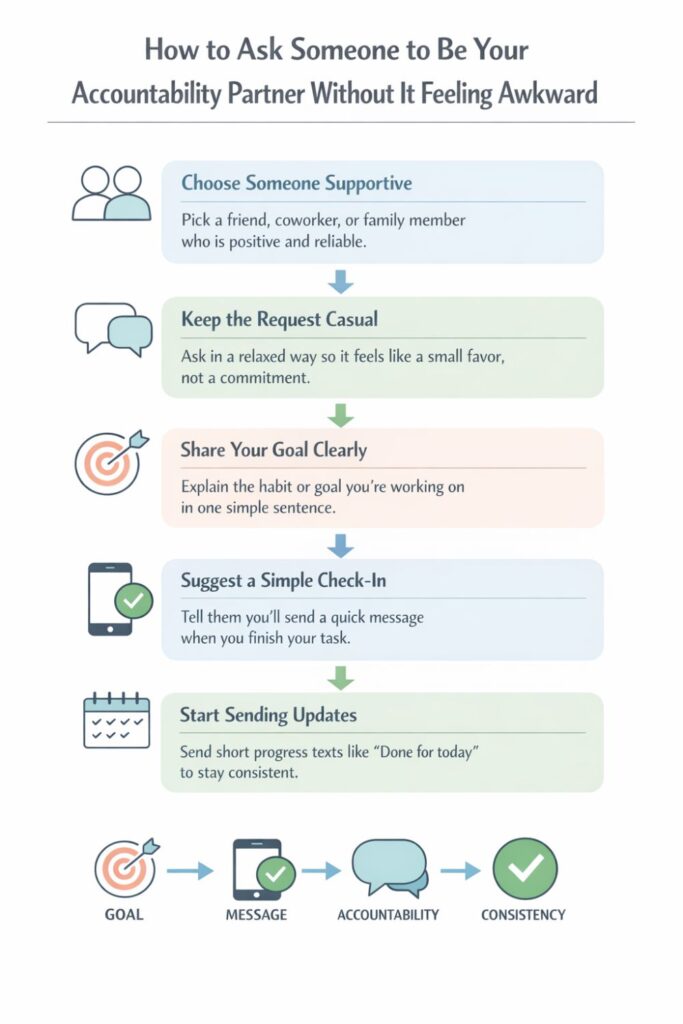
The goal isn’t to find someone strict or demanding. Instead, you want someone supportive, consistent, and easy to communicate with.
Accountability works best when the relationship feels relaxed.
Choose someone who responds consistently: A friend who usually replies to texts or messages is ideal. If someone rarely responds, the system loses its effectiveness.
You want a partner who will actually see your check-ins.
Pick someone who respects your goals: They don’t need to fully understand your project or habit. But it helps if they respect the fact that it matters to you.
If you want to get more from your life, and are looking for concrete action steps to get you there, check out our Request a Coach page. It’s a “cut the fence-sitting and take action” way to tackle your issues and actually find success. To get off the fence and start to take action, click or tap here.
Supportive curiosity goes a long way.
Consider someone working on their own goals: Many people enjoy mutual accountability. If your partner also has a habit they want to build, you can both check in with each other.
This creates a balanced dynamic.
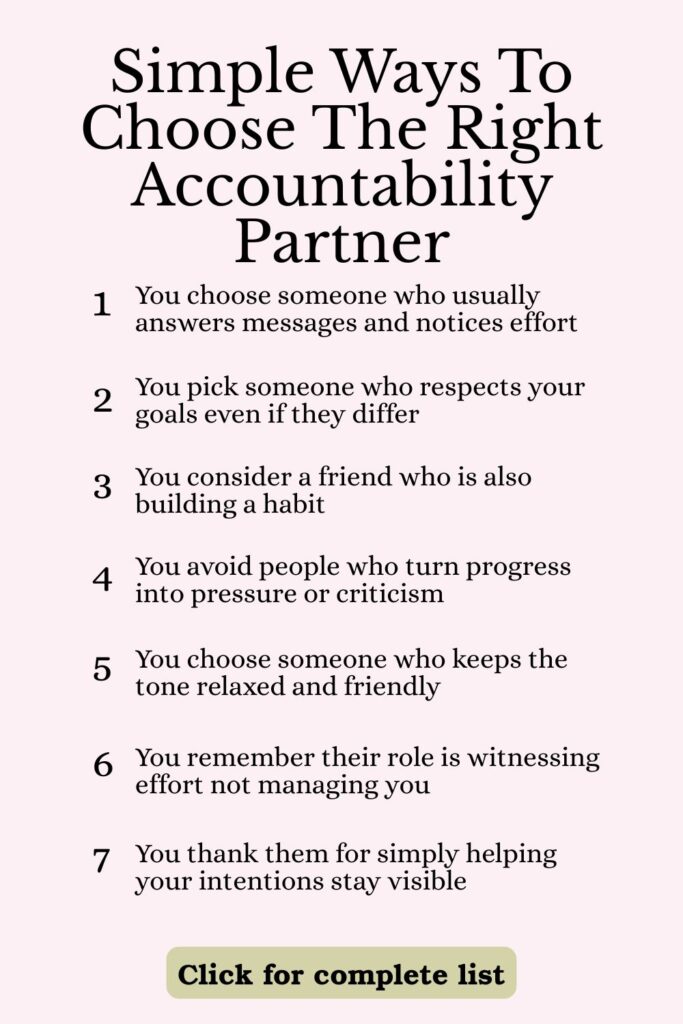
Avoid people who create pressure: Accountability should feel encouraging, not stressful. If someone tends to criticize or judge progress, they may not be the best choice.
Gentle support works better than strict enforcement.
The ideal accountability partner is someone who simply notices your effort.
They don’t need to manage your progress or push you forward.
Their role is just to witness the habit.
If you want to get more from your life, and are looking for concrete action steps to get you there, check out our Request a Coach page. It’s a “cut the fence-sitting and take action” way to tackle your issues and actually find success. To get off the fence and start to take action, click or tap here.
Sometimes that small act of being seen is enough to strengthen your self motivation and make your productivity habits stick.
Step 3: Send the Simple Accountability Text
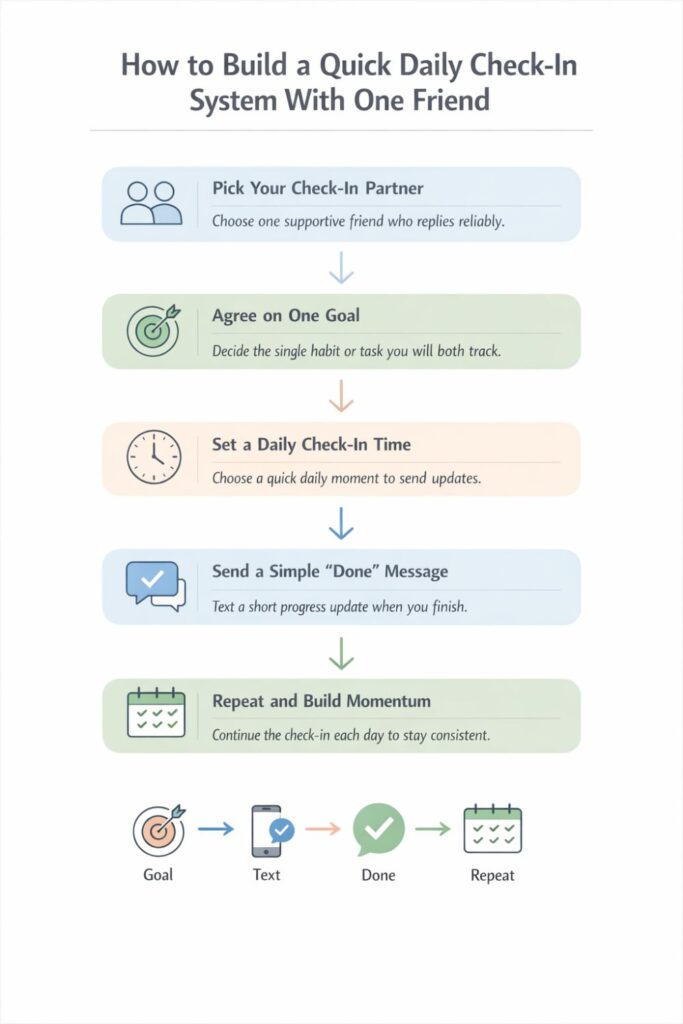
Once you know your habit and your partner, it’s time to send the message.
This step often feels awkward at first. But it becomes easier when you keep the message short and casual.
The goal is not to create a formal agreement.
It’s simply to ask someone to help you stay consistent.
Start with a friendly opener: Begin with a relaxed introduction like “Quick question” or “Can I run something by you?” This keeps the tone natural instead of serious.
People respond better to simple requests.
Explain the habit you want to stay consistent with: Briefly mention the action you’re trying to build into your routine. This helps your partner understand the purpose of the accountability.
If you want to get more from your life, and are looking for concrete action steps to get you there, check out our Request a Coach page. It’s a “cut the fence-sitting and take action” way to tackle your issues and actually find success. To get off the fence and start to take action, click or tap here.
Clarity makes it easier for them to support you.
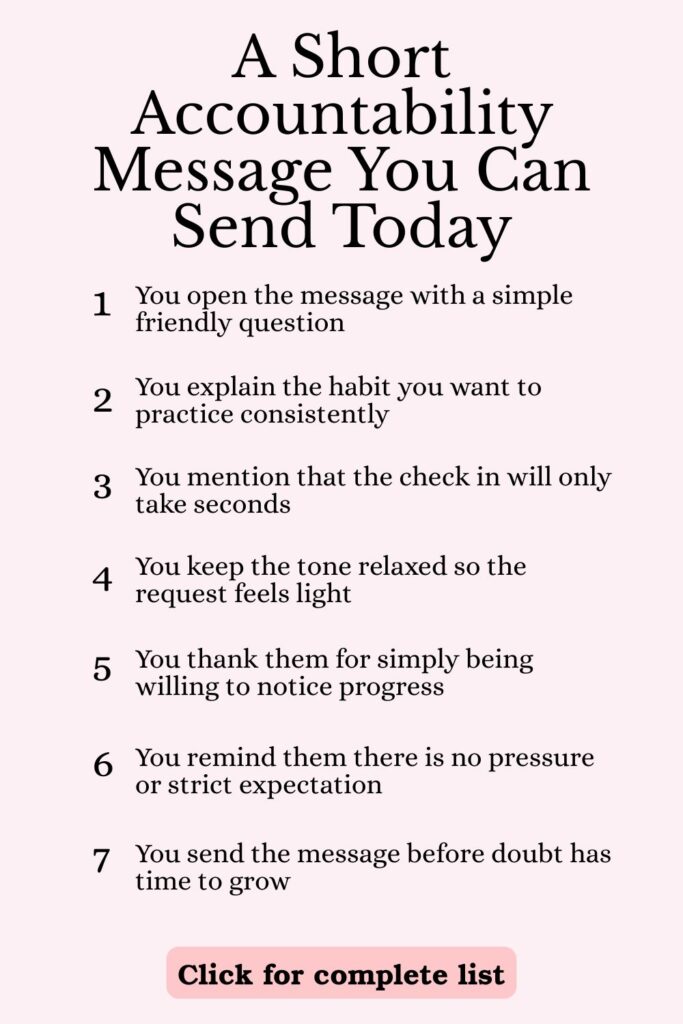
Suggest an easy check-in system: Let them know what the check-ins will look like. Usually this is just a quick message when you complete the habit.
Keeping the process simple makes it easy for them to say yes.
End with appreciation and flexibility: Let them know there’s no pressure and that you appreciate the support.
People are more likely to help when the request feels light.
Here’s a simple message you can send:
“Hey! I’m trying to stay consistent with a small daily habit. Would you be open to being my accountability buddy for a bit? I’d just send you a quick message when I finish. Totally no pressure at all—I just think it would help me stay consistent.”
That’s it.
If you want to get more from your life, and are looking for concrete action steps to get you there, check out our Request a Coach page. It’s a “cut the fence-sitting and take action” way to tackle your issues and actually find success. To get off the fence and start to take action, click or tap here.
One short message can create a structure that supports your habits and keeps your goals moving forward.
How to Keep Accountability Light (So It Actually Works)
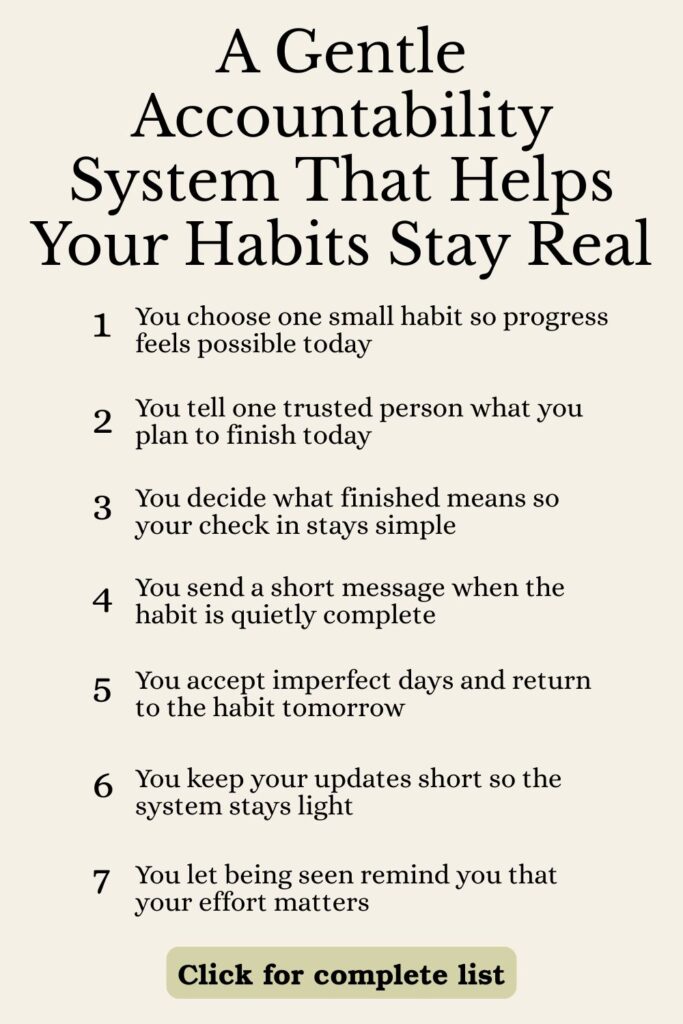
Many accountability systems fail because they become too complicated.
The original idea was simple. But over time, people add rules, long updates, or strict expectations.
Eventually the system becomes exhausting.
The best accountability setups stay light and flexible.
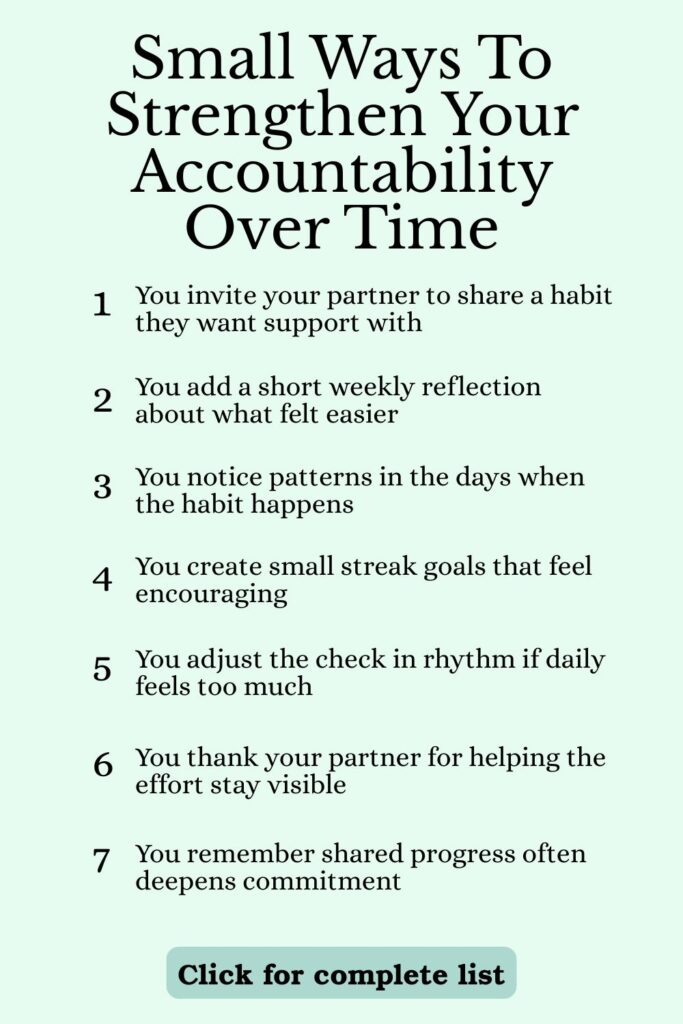
Keep updates extremely short: A one-word message like “done,” “finished,” or “complete” is often enough. You don’t need to explain the entire process.
Short check-ins remove friction.
Focus on consistency instead of perfection: Everyone misses days occasionally. The goal isn’t to avoid mistakes. It’s simply to return to the habit quickly.
If you want to get more from your life, and are looking for concrete action steps to get you there, check out our Request a Coach page. It’s a “cut the fence-sitting and take action” way to tackle your issues and actually find success. To get off the fence and start to take action, click or tap here.
Progress grows from repetition.
Avoid turning updates into performance: Your partner doesn’t need proof of productivity. The purpose of the check-in is awareness, not evaluation.
Simple honesty works best.
Celebrate streaks casually: A quick “Nice job!” or “Great streak!” message can reinforce the habit without adding pressure.
Small encouragement keeps the system positive.
When accountability stays simple, it becomes something you look forward to rather than something you avoid.
That feeling makes the habit sustainable.
Upgrade the System If You Want Stronger Momentum
Once your accountability system is working, you can make small adjustments that strengthen it.
If you want to get more from your life, and are looking for concrete action steps to get you there, check out our Request a Coach page. It’s a “cut the fence-sitting and take action” way to tackle your issues and actually find success. To get off the fence and start to take action, click or tap here.
The key is to improve the system without making it complicated.
Small upgrades create stronger momentum.
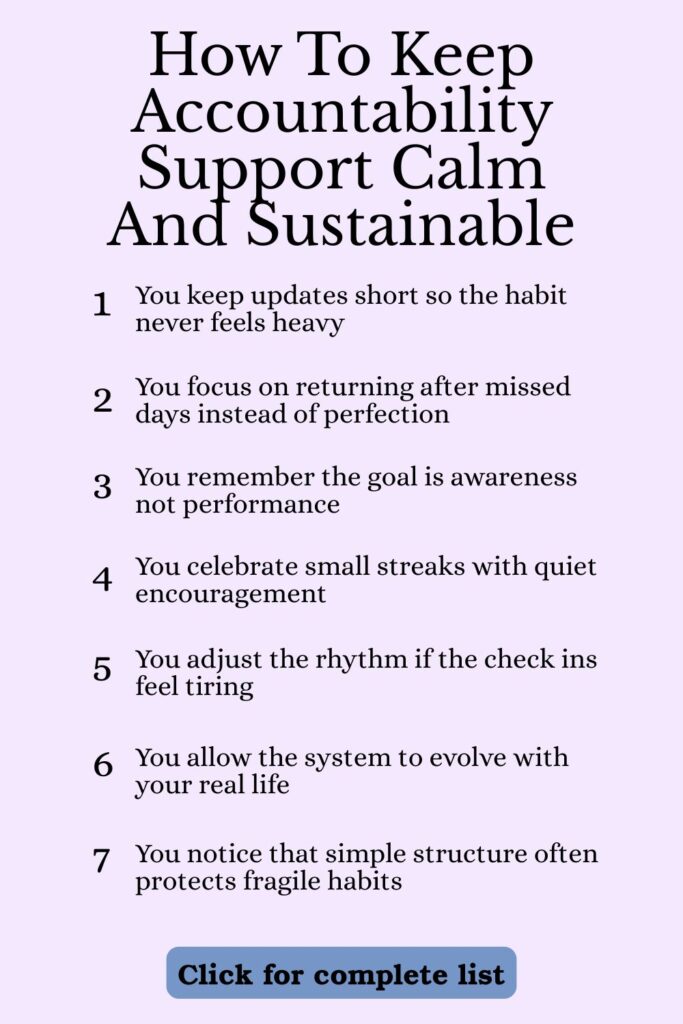
Turn it into mutual accountability: Ask your partner if they want help with one of their own goals. When both people check in, the relationship becomes more balanced.
Shared progress often increases commitment.
Add a weekly reflection message: Once a week, send a short update about how the habit is going. Mention what worked well and what you want to improve next week.
This keeps you aware of progress.
Create small streak goals: For example, aim to check in five days in a row or complete two consistent weeks. Short streaks help you stay motivated without feeling overwhelming.
Momentum grows through visible progress.
If you want to get more from your life, and are looking for concrete action steps to get you there, check out our Request a Coach page. It’s a “cut the fence-sitting and take action” way to tackle your issues and actually find success. To get off the fence and start to take action, click or tap here.
Adjust the system if needed: If daily check-ins feel too frequent, switch to every few days. If you want more structure, you might add a weekly goal review.
The system should support your rhythm.
Accountability is not about strict discipline.
It’s about creating gentle structure around your habits.
Sometimes a simple message—and someone who sees it—is all it takes to turn good intentions into real progress.
Want to try this at home? No worries! Download a copy of our SMART Goals PDF Worksheet.
*****
Need some in depth help with goal settings, motivation or productivity ? Drop on by our directories choc full of productivity coaches, accountability coaches, and goal-setting coaches, and start reaching those goals! Or click here to have us match you to the best.
If you want to get more from your life, and are looking for concrete action steps to get you there, check out our Request a Coach page. It’s a “cut the fence-sitting and take action” way to tackle your issues and actually find success. To get off the fence and start to take action, click or tap here.
If you want to get more from your life, and are looking for concrete action steps to get you there, check out our Request a Coach page. It’s a “cut the fence-sitting and take action” way to tackle your issues and actually find success. To get off the fence and start to take action, click or tap here.
Read this next

What Do You Do When Your Best Isn’t Good Enough? (Life Coaching Tips)
Break free from your fears and thoughts of inadequacy when you think you’re not good enough with these coaching tps
Read More
Motivation is What Gets You Started: Key to Motivation From a Coach
These are the 5 steps that have helped me and could help you too
Read More
Breaking Barriers For a Better Life
Break down your barriers and live the life you are dreaming of!
Read More