


Talk to a coach about Motivational coaching

Robert Bradley Singleton
Certified Master Spiritual Life Coach, Neuropsychologist, and Existential Therapist
Train with the best to be the best you! Don't...

Diana Davis-Nanasi
ICF Certified Coach, helping clients overcome self-doubt, low confidence, stress managment
I understand life can become overwhelming; I am excited to...

Robert B Singleton, MCMA, MSc.
MSc. Metaphysical Sciences; B. Div., Divinity: Mindfulness and Positive Psychology fanatic
Positive Psychology and Mindfulness Specialties; NeuroScience and Trauma-informed

Dr. Kate Watson
B.A Psychology, M.Ed. Psychological Counseling, Dr.PH in Public Health, Certified Health Coach, Certified Life Coach, Certified Mind and Body Specialist, Certified Women's Empowerment Coach, Certified Neurodiversity Coach
Dr. Kate Watson helps people with boundaries, coping strategies, and...

Stephanie Peers
Somatic Coach | Midlife Transitions, Self-Trust & Personal Growth --> (Download my free Body-Led Clarity Guide in My Store!)
Body-led coaching for midlife women ready to trust themselves, set...

Claudia Silver
HDIP CBH - Cognitive Behavioural Hypnotherapist (UK Higher Diploma)
Certified Hypnotherapist for evidence-based help with stress, specific fears and...

Mak Estill
Anxiety, Panic & Life Coach dedicated to coaching you into a life of lesser and lighter anxiety!
Founder and owner of Actionable Anxiety, a private coaching practice...

Elise Boren
Certified Life Coach, Communication Specialist and Sound Healer
Through listening and discussion we will create a plan to...
How to Keep Your New Year’s Resolution in 2026
Want to try this at home? No worries! Download a copy of our SMART Goals PDF Worksheet.
***
Every year, millions of people start the new year fired up with resolutions, gym memberships, notebooks full of goals, and a “new year, new me” attitude.
By February? Most are already back to old habits.
Not because they’re lazy or unmotivated, but because motivation fades, and systems weren’t built to take its place.
Discipline, not motivation, is what keeps you going when the excitement dies down. But discipline doesn’t show up by accident. It’s built through structure, planning, and repetition.
So if you’re serious about keeping your New Year’s resolution this time, not just for January, but all the way through 2026, this is your roadmap.

1. Set Realistic Goals
Let’s start with something simple: be realistic.
If you want to get more from your life, and are looking for concrete action steps to get you there, check out our Request a Coach page. It’s a “cut the fence-sitting and take action” way to tackle your issues and actually find success. To get off the fence and start to take action, click or tap here.
Most people set five or ten huge goals at once, and then wonder why they burn out. You can want to get fit, start a business, eat better, learn a new language, read more books, and spend more time with family, but if you treat all of them like your #1 priority, you’re setting yourself up to fail.
Here’s what you should do instead: write down your top five goals.
Then, pick one to focus on this year. That’s your key resolution, the one that gets your primary energy. The rest still matter, but they’ll live in the background through small habits and systems you maintain passively.
Think of it like this: you can either go an inch in ten directions, or a mile in one.

2. Break It Down Into Daily Actions
Once you have your main goal, write out the smallest possible daily actions that lead to it.
If your goal is to get in shape, that means exercise, hydration, and decent nutrition.
If your goal is to change careers, that means learning, networking, and applying consistently.
Don’t get caught up in perfection, focus on what actually moves the needle daily. Most goals fail because people treat them like one-time events instead of everyday processes.
Write these small actions down. Make them part of your routine until they’re as normal as brushing your teeth.
If you want to get more from your life, and are looking for concrete action steps to get you there, check out our Request a Coach page. It’s a “cut the fence-sitting and take action” way to tackle your issues and actually find success. To get off the fence and start to take action, click or tap here.

3. Create “Crappy Minimums”
Here’s where most people mess up. They build plans that only work on their best days.
Anyone can hit the gym when life’s good, when you’re rested, when your day’s going smooth. But what about when you’re sick, stressed, or exhausted?
That’s where the “crappy minimum” comes in.
A crappy minimum is the bare minimum version of your habit that you can do even on your worst day. The kind of day where you’re fighting with your partner, you caught a cold, or everything at work went sideways.
If your goal is fitness, maybe your crappy minimum is 15 push-ups or a 10-minute walk.
If your goal is learning, maybe it’s reading one page of a book or watching a 5-minute video.
The point is to keep your streak alive, because momentum matters more than perfection.
Discipline isn’t about doing everything. It’s about doing something, no matter what.
“If you have it in you, have it today.” – Shah Day, Entrepreneur Life Coach
If you want to get more from your life, and are looking for concrete action steps to get you there, check out our Request a Coach page. It’s a “cut the fence-sitting and take action” way to tackle your issues and actually find success. To get off the fence and start to take action, click or tap here.

4. Create a Tracking Sheet
You can’t manage what you don’t measure.
If you’re serious about keeping your resolution, create a simple tracking sheet, Google Sheets, a notebook, whatever works for you.
List your goal at the top and track your daily actions with checkboxes. Every day you do your habit, check it off. Every day you miss it, leave it blank.
That visual feedback is powerful. It keeps your goal at the front of your mind and builds a streak that your brain won’t want to break.
If you want to take it up a notch, color-code it, green for success, yellow for “crappy minimum,” red for missed. Over time, those colors will tell you the truth about your consistency.

5. Time-Block Your Week
You can’t hit your goals if your schedule doesn’t reflect your priorities.
Every Sunday, take time to brain dump all your tasks for the week, work, errands, appointments, personal goals, everything. Then, block your calendar in hourly segments and assign specific time slots for your key resolution.
If your resolution really matters, it needs to live in your calendar, not just in your head.
If you want to get more from your life, and are looking for concrete action steps to get you there, check out our Request a Coach page. It’s a “cut the fence-sitting and take action” way to tackle your issues and actually find success. To get off the fence and start to take action, click or tap here.
The goal here isn’t to be rigid, it’s to be intentional. You’ll never “find time” for your resolution. You have to make time for it.
6. Schedule Rest (And Protect It)
This one’s non-negotiable.
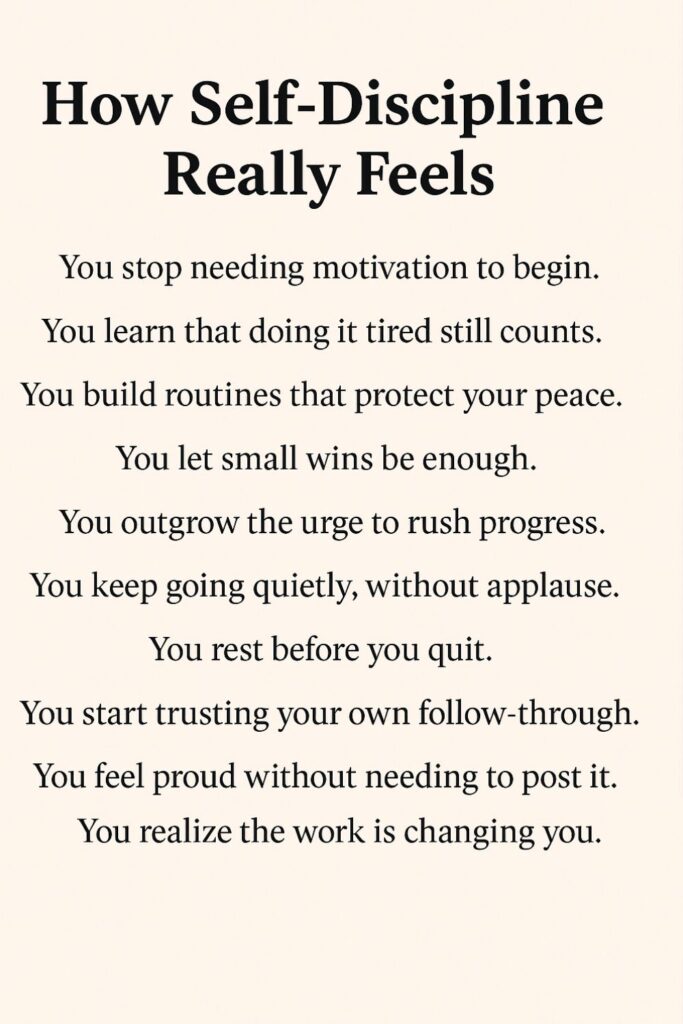
Rest isn’t a reward for discipline, it’s part of discipline. Without rest, you burn out. And when you burn out, your habits collapse.
So schedule your rest in advance. Literally block it off on your calendar. That means downtime, family time, Sabbath, whatever recharges you.
And here’s the rule: once it’s scheduled, it’s sacred. Don’t move it. Don’t say, “I’ll rest later.” If you don’t protect your rest, procrastination will always catch up and disguise itself as exhaustion.

7. Keep Weekly and Monthly Data
If you’re not tracking your progress, your brain will trick you into thinking you’re failing, or worse, it’ll forget you’re even trying.
Every week, spend 10 minutes reviewing how you did. What went well? What fell apart? Why?
Then, once a month, zoom out. Look at the bigger pattern. Is your system working? Are you getting closer to the result, or just staying busy?
If you want to get more from your life, and are looking for concrete action steps to get you there, check out our Request a Coach page. It’s a “cut the fence-sitting and take action” way to tackle your issues and actually find success. To get off the fence and start to take action, click or tap here.
Schedule these reflections in advance so they actually happen. Treat them like business meetings with yourself. You’d never skip a meeting with your boss, don’t skip the one that decides your future.

8. Acknowledge Failure (and Move On Fast)
Here’s a hard truth: you’re going to fail sometimes.
You’re going to miss a day, or a week, or fall off completely for a month. Life happens. The point isn’t to avoid failure, it’s to never let failure become permanent.
That’s why you have systems. When you miss, the system catches you. The tracking sheet reminds you. The reflection session resets you. The crappy minimum gets you back in motion.
Even Franz Kafka wrote in his diary about his constant self-loathing and how he couldn’t stick to his routines. But he kept writing anyway. That’s what matters.
You don’t have to be perfect, you just have to be relentless about restarting.
One day off won’t ruin you. Quitting will.

9. Adjust as You Go
Your first version of a plan is never the perfect version.
If you want to get more from your life, and are looking for concrete action steps to get you there, check out our Request a Coach page. It’s a “cut the fence-sitting and take action” way to tackle your issues and actually find success. To get off the fence and start to take action, click or tap here.
If you find your daily actions too easy, level them up. If they’re too hard and you keep missing, scale them down. The goal is consistency, not ego.
You want to create a plan that fits into your real life, not the fantasy version of your life where everything goes smoothly.
Discipline grows through iteration. You build it the same way Milo of Croton built strength: by gradually increasing the load, not by killing yourself on day one.

10. Little Hinges Swing Big Doors
Big transformations don’t happen overnight. They happen from small, consistent actions done over and over again.
If you follow this process, set one clear resolution, break it into daily actions, stick to your crappy minimums, track everything, review weekly, and adjust as needed, you won’t just keep your resolution. You’ll become the kind of person who doesn’t need resolutions anymore.
By the time 2027 rolls around, you’ll look back and realize the resolution you once struggled to maintain is now part of who you are. And the discipline you built chasing one goal will spill over into every other part of your life.

Don’t Chase Motivation, Build Momentum
The first week of January is easy. Everyone’s inspired. The energy is high. The dopamine’s flowing.
But real growth starts the day that excitement fades. That’s when discipline takes over.
If you want to get more from your life, and are looking for concrete action steps to get you there, check out our Request a Coach page. It’s a “cut the fence-sitting and take action” way to tackle your issues and actually find success. To get off the fence and start to take action, click or tap here.
The truth is, most people lose their resolution because they try to change their entire life at once. The secret is to simplify. Focus on one thing. Build a structure around it. Commit to showing up daily, even when it’s messy, even when you don’t feel like it.
That’s how you win long-term.
By this time next year, you won’t need another list of goals, you’ll just keep building on the foundation you already created.
You’ll realize that discipline isn’t a personality trait, it’s a skill. And once you master it, you can apply it to anything: health, business, relationships, or purpose.
So don’t start 2026 trying to be a new person. Start by proving to yourself that you can keep one promise. And once you do that, everything else follows.
Want to try this at home? No worries! Download a copy of our SMART Goals PDF Worksheet.
If you want to get more from your life, and are looking for concrete action steps to get you there, check out our Request a Coach page. It’s a “cut the fence-sitting and take action” way to tackle your issues and actually find success. To get off the fence and start to take action, click or tap here.
Read this next

Distracted All Day? Try the 25-Minute Sprint Focus Setup That Gets You Moving Fast
Try this 25-minute focus reset to cut through scattered energy, choose one clear step, and finally get moving with less pressure.
Read More
Motivational Coaching Quotes: A Gallery
Looking for inspirational motivational coaching quotes? Here’s a gallery of our best quotes to spur you on towards your goal.
Read More
The Life-Changing Shift That Finally Lets You Create The Life You Want
This simple mindset shift can help you feel clearer, steadier, and ready to build a life that finally feels like yours. Click through to read more.
Read More