


Talk to a coach about Motivational coaching

Robert Bradley Singleton
Certified Master Spiritual Life Coach, Neuropsychologist, and Existential Therapist
Train with the best to be the best you! Don't...

Diana Davis-Nanasi
ICF Certified Coach, helping clients overcome self-doubt, low confidence, stress managment
I understand life can become overwhelming; I am excited to...

Robert B Singleton, MCMA, MSc.
MSc. Metaphysical Sciences; B. Div., Divinity: Mindfulness and Positive Psychology fanatic
Positive Psychology and Mindfulness Specialties; NeuroScience and Trauma-informed

Dr. Kate Watson
B.A Psychology, M.Ed. Psychological Counseling, Dr.PH in Public Health, Certified Health Coach, Certified Life Coach, Certified Mind and Body Specialist, Certified Women's Empowerment Coach, Certified Neurodiversity Coach
Dr. Kate Watson helps people with boundaries, coping strategies, and...

Stephanie Peers
Somatic Coach | Midlife Transitions, Self-Trust & Personal Growth --> (Download my free Body-Led Clarity Guide in My Store!)
Body-led coaching for midlife women ready to trust themselves, set...

Claudia Silver
HDIP CBH - Cognitive Behavioural Hypnotherapist (UK Higher Diploma)
Certified Hypnotherapist for evidence-based help with stress, specific fears and...

Mak Estill
Anxiety, Panic & Life Coach dedicated to coaching you into a life of lesser and lighter anxiety!
Founder and owner of Actionable Anxiety, a private coaching practice...
Elise Boren
Certified Life Coach, Communication Specialist and Sound Healer
Through listening and discussion we will create a plan to...
Minimum Viable Day: The Tiny Baseline That Keeps You Consistent
Want to try this at home? No worries! Download a copy of our SMART Goals PDF Worksheet.
*****
Most productivity advice assumes that every day will be a good day.
It assumes you will have energy, focus, and motivation to complete your routines and pursue your goals. But real life doesn’t work that way.
Some days are productive and focused. Other days are slower, heavier, or unpredictable. When that happens, people often fall into an all-or-nothing pattern: if they cannot do everything, they do nothing.
This is where the idea of a Minimum Viable Day becomes powerful.
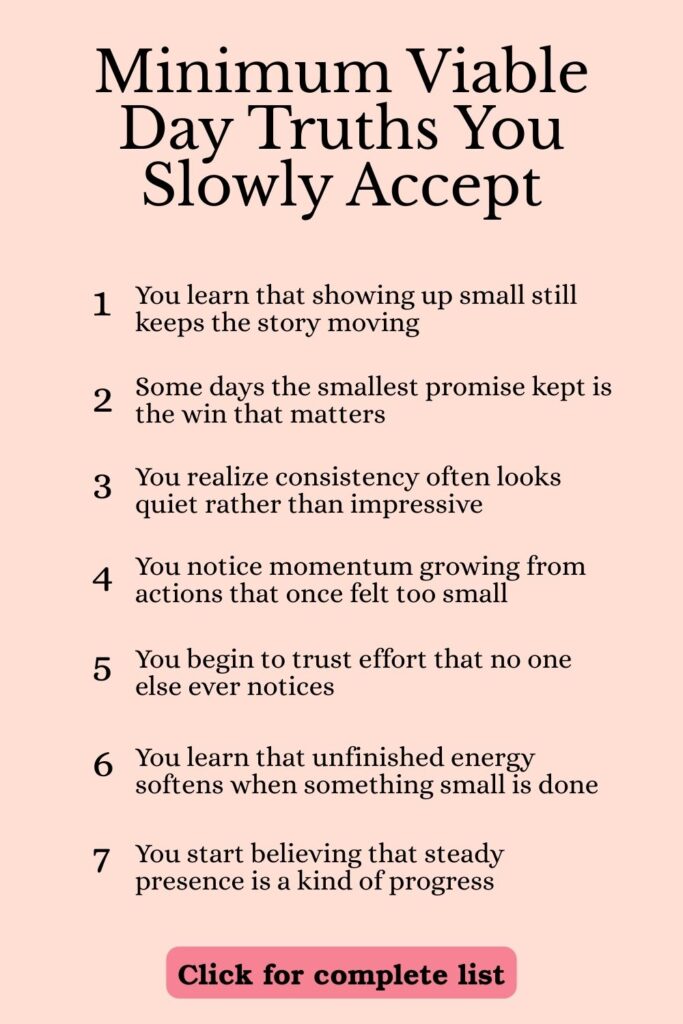
A Minimum Viable Day is a tiny set of daily habits that represent the smallest version of showing up. These actions are intentionally small so they can still happen when your energy is low.
Instead of abandoning your systems on difficult days, you simply switch to the baseline version.
If you want to get more from your life, and are looking for concrete action steps to get you there, check out our Request a Coach page. It’s a “cut the fence-sitting and take action” way to tackle your issues and actually find success. To get off the fence and start to take action, click or tap here.
This approach protects consistency. It prevents the “start over tomorrow” cycle that destroys momentum.
Over time, even the smallest habits compound into meaningful progress.
A Minimum Viable Day does not replace ambition or growth. It simply gives you a safety net so your routines stay alive when life becomes messy.
Below is a practical way to create your own Minimum Viable Day so you always have something achievable to complete.
In our roundup of micro-moves for low-motivation days, we highlighted the Minimum Viable Day as a powerful way to stay consistent without pressure. Now we’re diving deeper into how this tiny baseline works and how to build a simple checklist that keeps your daily habits going even on your lowest-energy days.
Need some in depth help with goal settings, motivation or productivity ? Drop on by our directories choc full of productivity coaches, accountability coaches, and goal-setting coaches, and start reaching those goals! Or click here to have us match you to the best.
Define Your Non-Negotiable Micro Habits
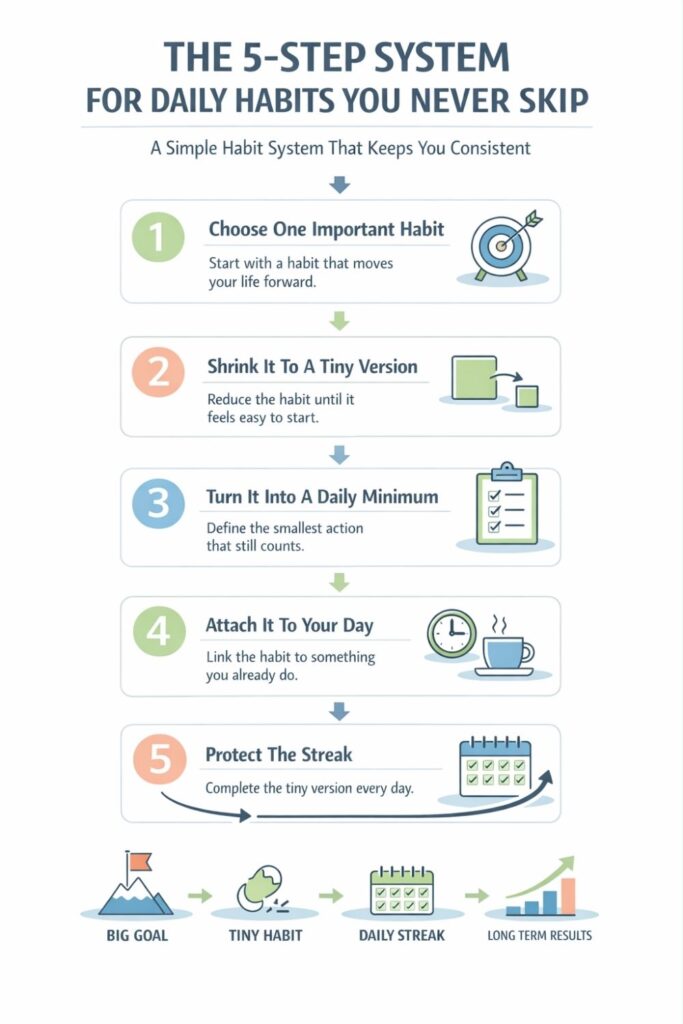
The first step in creating a Minimum Viable Day is identifying the smallest actions that still count as progress.
These are not full routines. They are the tiniest versions of habits that support the direction you want your life to move.
If you want to get more from your life, and are looking for concrete action steps to get you there, check out our Request a Coach page. It’s a “cut the fence-sitting and take action” way to tackle your issues and actually find success. To get off the fence and start to take action, click or tap here.
The purpose of these micro habits is to protect momentum on low-energy days.
Choose 3–5 core daily habits: Identify a few habits that move your life forward in meaningful ways. These might support work, health, personal growth, or learning.
Examples could include writing, reading, reviewing priorities, stretching, or journaling.
Choose habits that align with your long-term goals rather than random productivity tasks.
Shrink each habit to its smallest version: Once you select your habits, reduce each one to the smallest possible action.
Writing might become writing one sentence. Reading might become reading one page.
Exercise might become five push-ups or a one-minute stretch.
The goal is to make the action so small that resistance disappears.
If you want to get more from your life, and are looking for concrete action steps to get you there, check out our Request a Coach page. It’s a “cut the fence-sitting and take action” way to tackle your issues and actually find success. To get off the fence and start to take action, click or tap here.
Make the habits independent: Each habit should be able to stand alone. You should not need a perfect environment, a long block of time, or special preparation.
A habit that requires too much setup becomes harder to complete on low-energy days.
Independent actions make your daily habits to improve your life flexible and portable.
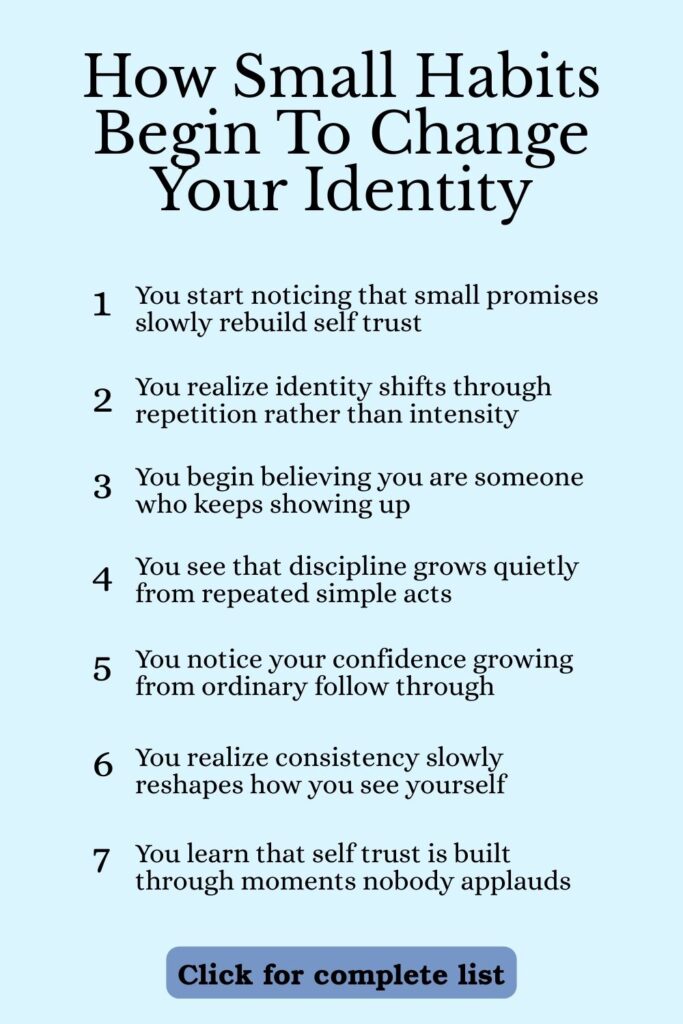
Focus on identity rather than results: The point of a Minimum Viable Day is not massive progress.
The point is reinforcing the identity of someone who shows up consistently.
Over time, this identity becomes the foundation for stronger habits for a better life.
Turn Your Minimum Viable Day Into a Simple Checklist
Once you identify your micro habits, the next step is turning them into a simple checklist.
A checklist removes decision fatigue and makes the system easier to follow when energy is low.
If you want to get more from your life, and are looking for concrete action steps to get you there, check out our Request a Coach page. It’s a “cut the fence-sitting and take action” way to tackle your issues and actually find success. To get off the fence and start to take action, click or tap here.
Instead of wondering what to do, you simply complete the list.
Write a clear daily habits checklist: List each micro habit using short, direct language.
Examples might include:
Write one sentence
Read one page
Review priorities for one minute
Stretch for one minute
Clarity is important because the checklist should feel effortless to understand.
Limit the checklist to five items or fewer: A Minimum Viable Day should feel small.
If the list becomes long, it stops feeling achievable during difficult days.
Three to five habits are enough to maintain progress without creating pressure.
If you want to get more from your life, and are looking for concrete action steps to get you there, check out our Request a Coach page. It’s a “cut the fence-sitting and take action” way to tackle your issues and actually find success. To get off the fence and start to take action, click or tap here.
This keeps your daily habits manageable even when your schedule is chaotic.
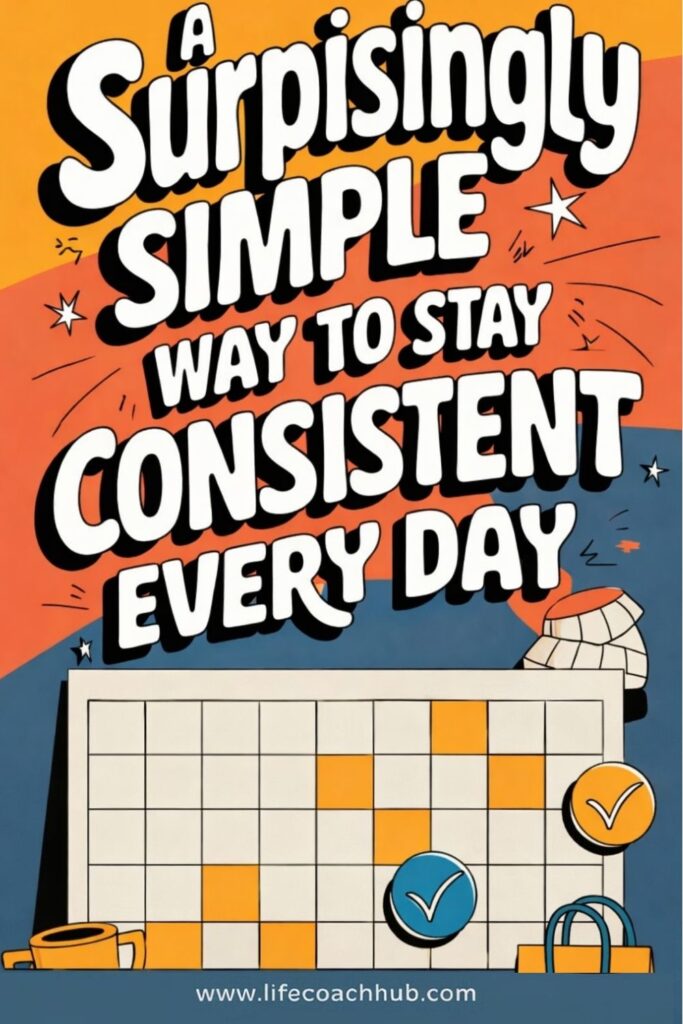
Make completion visible: Choose a simple way to track completion.
You might check boxes, cross out tasks, or use a habit tracker.
The visual signal of finishing a habit provides a small sense of reward.
That reward helps reinforce the routine and encourages repetition.
Keep the checklist accessible: Place the checklist somewhere you will see it daily.
Some people keep it on their desk. Others use a note in their phone or a small card in a notebook.
Visibility matters because habits are easier to complete when they remain top of mind.
If you want to get more from your life, and are looking for concrete action steps to get you there, check out our Request a Coach page. It’s a “cut the fence-sitting and take action” way to tackle your issues and actually find success. To get off the fence and start to take action, click or tap here.
A simple checklist turns your Minimum Viable Day into a reliable system.
Use the Minimum Viable Day on Low-Energy Days
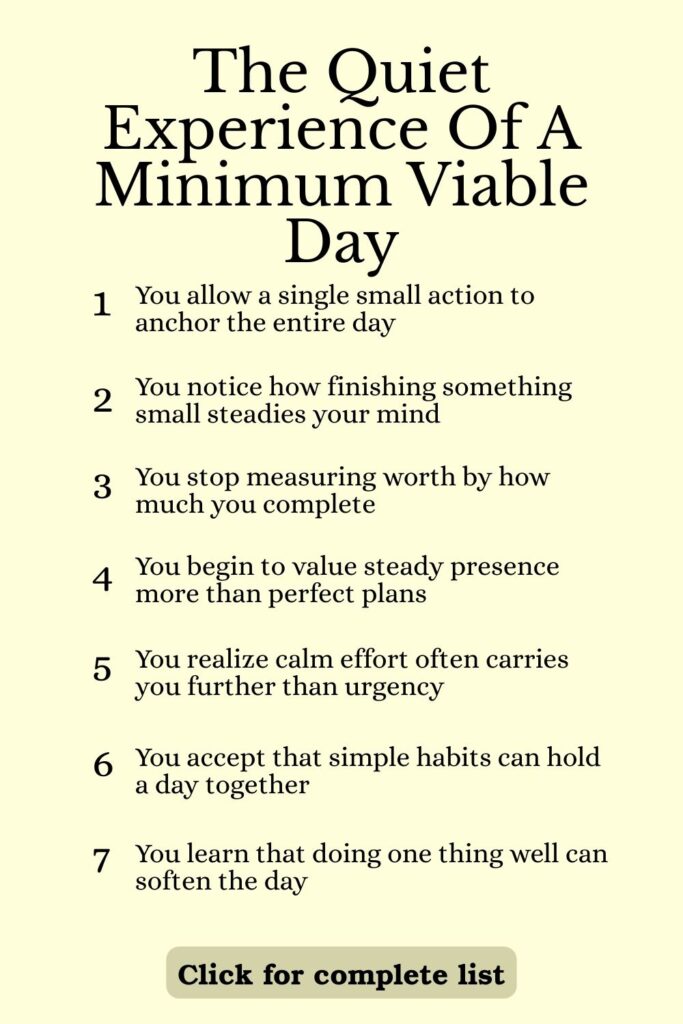
The true purpose of a Minimum Viable Day appears when motivation disappears.
Instead of abandoning your habits, you temporarily shift to the baseline version.
This simple shift protects your consistency.
Recognize when to activate the minimum version: There will be days when your normal routines feel unrealistic.
You may be tired, overwhelmed, busy, or distracted.
Rather than forcing a full routine, intentionally switch to your Minimum Viable Day.
This makes the day manageable again.
If you want to get more from your life, and are looking for concrete action steps to get you there, check out our Request a Coach page. It’s a “cut the fence-sitting and take action” way to tackle your issues and actually find success. To get off the fence and start to take action, click or tap here.
Commit to completing the checklist only: On these days, your only responsibility is completing the tiny actions on your list.
You do not need to catch up on missed work or compensate for low energy.
Completing the checklist is enough.
This mindset removes guilt and makes progress feel possible again.
Allow extra progress if energy returns: Sometimes starting with a small action unlocks motivation.
After writing one sentence, you may want to write more.
After stretching for one minute, you may continue exercising.
But the additional work is optional.
If you want to get more from your life, and are looking for concrete action steps to get you there, check out our Request a Coach page. It’s a “cut the fence-sitting and take action” way to tackle your issues and actually find success. To get off the fence and start to take action, click or tap here.
The baseline action already counts as success.
Celebrate consistency instead of intensity: Many people believe progress requires constant effort.
In reality, progress is often the result of small actions repeated over long periods of time.
A Minimum Viable Day protects your daily habits to improve your life by keeping them alive during difficult moments.
Why Tiny Habits Protect Long-Term Consistency
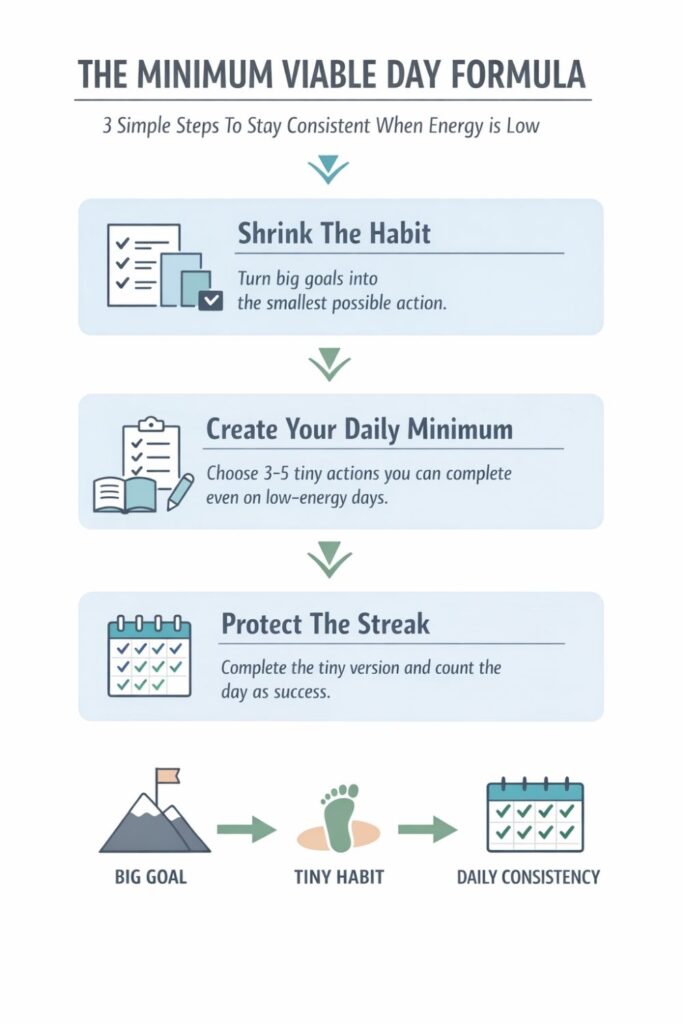
Consistency rarely fails because people lack goals.
It fails because the systems supporting those goals are too demanding to survive difficult days.
Tiny habits solve this problem by lowering the barrier to action.
Reduce resistance to starting: Large tasks trigger procrastination because they feel intimidating.
If you want to get more from your life, and are looking for concrete action steps to get you there, check out our Request a Coach page. It’s a “cut the fence-sitting and take action” way to tackle your issues and actually find success. To get off the fence and start to take action, click or tap here.
Small habits feel approachable.
Writing one sentence or reading one page feels easy enough to begin immediately.
Starting often becomes the hardest part of any task.
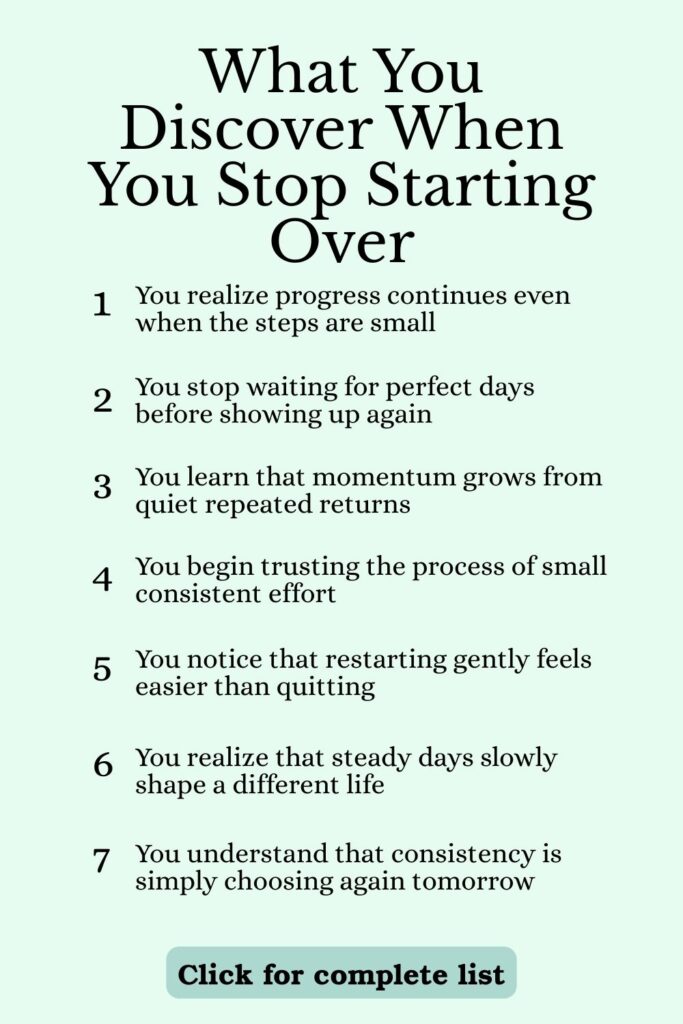
Protect your habit streak: Many people abandon their routines after missing a few days.
Once the streak breaks, motivation drops.
A Minimum Viable Day prevents this problem by keeping the streak alive.
Even the smallest action reinforces the pattern.
Build self-trust through repetition: Each completed habit becomes evidence that you follow through on your commitments.
If you want to get more from your life, and are looking for concrete action steps to get you there, check out our Request a Coach page. It’s a “cut the fence-sitting and take action” way to tackle your issues and actually find success. To get off the fence and start to take action, click or tap here.
Over time, this evidence builds confidence.
Self-trust grows from repeated actions, not occasional bursts of motivation.
Create a stable foundation for bigger goals: On high-energy days, you may naturally expand beyond the baseline.
You might read more pages, exercise longer, or work deeper on your goals.
On difficult days, you simply return to the minimum.
This flexible system keeps your habits for a better life sustainable.
Expanding the Minimum Viable Day Over Time
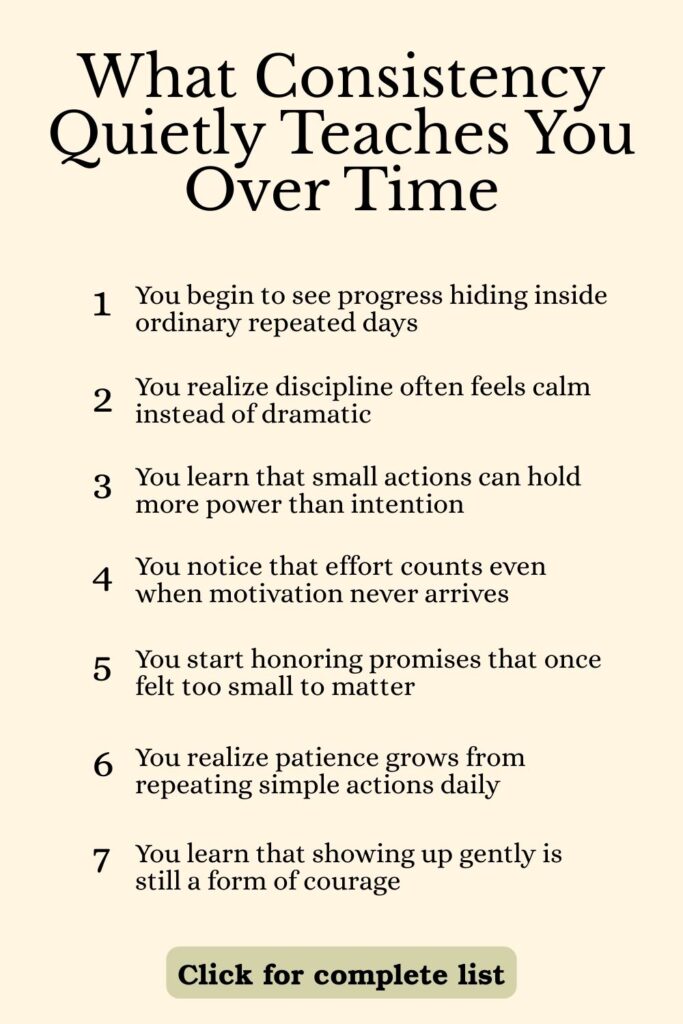
A Minimum Viable Day is not meant to stay frozen forever.
As your routines become easier and more natural, you can gradually expand them.
If you want to get more from your life, and are looking for concrete action steps to get you there, check out our Request a Coach page. It’s a “cut the fence-sitting and take action” way to tackle your issues and actually find success. To get off the fence and start to take action, click or tap here.
The key is maintaining the baseline while allowing growth.
Review your checklist monthly: Occasionally revisit your Minimum Viable Day habits.
Ask whether they still support your goals.
If something feels unnecessary or disconnected from your priorities, adjust it.
Your habits should evolve alongside your life.
Add new habits slowly: It is tempting to add many new routines once you experience progress.
However, too many habits can overwhelm your system.
Introduce new habits gradually so your structure remains stable.
If you want to get more from your life, and are looking for concrete action steps to get you there, check out our Request a Coach page. It’s a “cut the fence-sitting and take action” way to tackle your issues and actually find success. To get off the fence and start to take action, click or tap here.
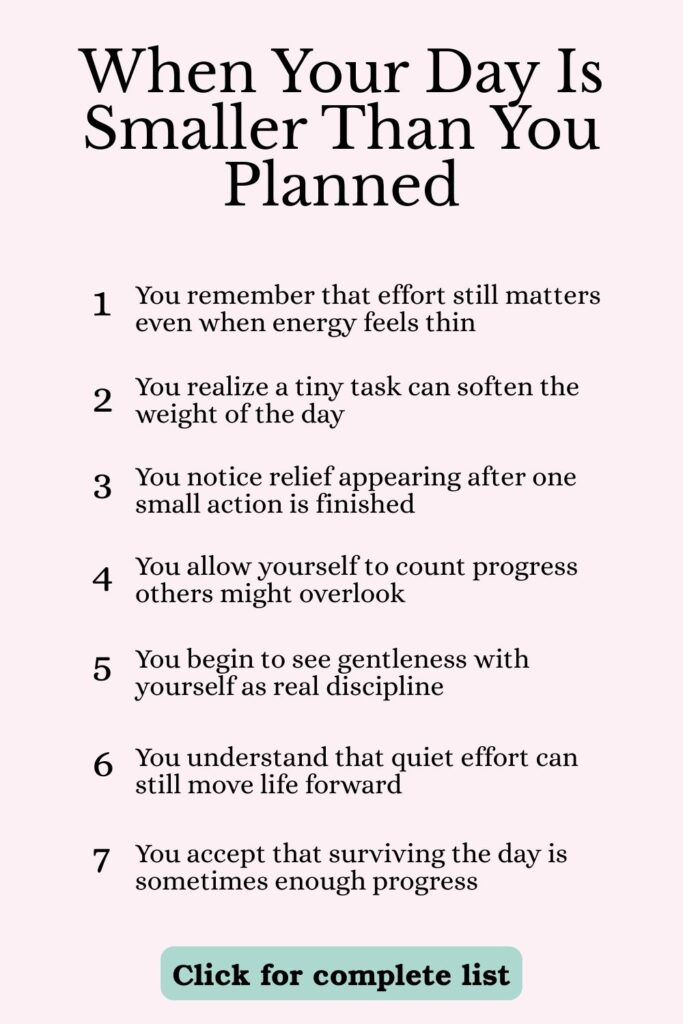
Upgrade habits in small steps: Instead of replacing a habit entirely, increase it slightly.
One page of reading might become two pages.
One sentence of writing might become a short paragraph.
Small upgrades maintain sustainability.
Keep the minimum version forever: Even as your habits grow stronger, keep the baseline version available.
Life will always include busy days, stressful periods, and low energy.
Your Minimum Viable Day checklist ensures that your daily habits continue no matter what.
Consistency is rarely about perfect performance.
If you want to get more from your life, and are looking for concrete action steps to get you there, check out our Request a Coach page. It’s a “cut the fence-sitting and take action” way to tackle your issues and actually find success. To get off the fence and start to take action, click or tap here.
It is about always having a small way to move forward.
Want to try this at home? No worries! Download a copy of our SMART Goals PDF Worksheet.
*****
Need some in depth help with goal settings, motivation or productivity ? Drop on by our directories choc full of productivity coaches, accountability coaches, and goal-setting coaches, and start reaching those goals! Or click here to have us match you to the best.
If you want to get more from your life, and are looking for concrete action steps to get you there, check out our Request a Coach page. It’s a “cut the fence-sitting and take action” way to tackle your issues and actually find success. To get off the fence and start to take action, click or tap here.
Read this next

Start Small. Every Goal Can Be Broken Down Into Small Steps
Life coaching quote of the day: Start small. Every goal can be broken down into small steps. Commit to just one small step on the path and you’re on your […]
Read More
5 Self Care Goals for the New Year (from a Motivational Coach)
Can 2023 be a great year? Are you looking forward to having a new year full of positive changes, and the ability to increase self-care, commitment, and happiness? Here are […]
Read More
Your Present Circumstances Don’t Determine Where You Can Go
Life coaching quote of the day: Your present circumstances don’t determine where you can go; they merely determine where you start. If you want to get more from your life, […]
Read More