






How To Write a Life Coaching Marketing Plan (With Free PDF Template)
Ready to get started right away? Download your free life coach marketing plan template here.
***
If you think your brilliant business idea or extraordinary life coaching services will steer you on a guaranteed path to success – think again.
With our current uncertain business conditions, offering a spectacular service may not be enough. Clients come and go, but a critical question remains – are you reaching out to the right prospects? And how confident are you that your services still solve your target clients’ needs? These are only some of the critical business issues that are solved by a marketing plan.
Let’s look at 5 more reasons why you need to create a marketing plan when you have your own life coaching business.
- Gives you an in-depth analysis of your business.
- Ensures your vision, mission, and goals fit with your marketing efforts.
- Aligns every team member towards your targets.
- Keeps your team focused on where it needs to be.
- Enhances decision-making as you tackle issues before they arise.

SEE ALSO: If you’re a coach looking to streamline your administrative tasks and save time, check out our Coaching Administration Software. It’s a simple, effective solution designed to help you focus less on paperwork and more on what matters—coaching your clients. From scheduling to client management, our software gives you the tools to run your business efficiently. Ready to reclaim your time and boost productivity? Click or tap here.
A 2020 Global Coaching Study conducted by the International Coaching Federation (ICF) revealed that in 2019, the estimated number of coaches worldwide increased to 71,000, a 33% increase from 2015. With the growth of practitioners worldwide, the number of managers and leaders getting coaching skills had also grown by almost half (46%).
These numbers only prove the increasing need and popularity of life coaching as a profession and its role in supporting the personal and professional development of individuals in general.

These numbers only prove the increasing need and popularity of life coaching as a profession and its role in supporting the personal and professional development of individuals in general. The same study also shows a 21% increase in the estimated global revenue from coaching, amounting to $2.849 billion U.S. dollars.

Revenue is a crucial indicator that, so far, you’re doing something good for your business and for the whole industry as well. Though we don’t want our eyes to be solely focused on the financial aspect, we need to put an extensive amount of consideration into our marketing strategies and performance if we wish to keep our coaching businesses thriving.
Key Takeaways
- A marketing plan turns your business goals into measurable client-getting actions. It defines who you want to reach, what you will offer, which channels you will use, what you will spend, and how you will judge results.
- Market research should change your marketing message. Use the problems, desired outcomes, objections, and language you hear from real prospects to sharpen your positioning and offers.
- Marketing channels need to work as a connected client journey. Visibility matters, but prospects also need a clear path from discovering you to trusting you, booking a conversation, and becoming a client.
- Track business outcomes, not just visibility metrics. Followers and traffic can be useful signals, but booked calls, conversion rates, paying clients, acquisition cost, renewals, and referrals tell you more.
- Treat your budget as a series of controlled tests. Give each strategy a goal, budget, timeframe, measurement, and decision rule before committing more money.
How Do You Write a Life Coaching Marketing Plan?
A life coaching marketing plan defines your target market, positioning, marketing goals, strategies, budget, and the measures you will use to determine whether those strategies are producing clients and revenue. A practical plan moves through five core areas: summarize your business and marketing direction, define your target market, choose strategies and KPIs, allocate resources, then review the results and adjust.
The plan should also show how potential clients move from first discovering you to taking action. That means connecting your SEO, social media, speaking, networking, email, directory visibility, lead magnets, and other marketing activities to a clear next step such as a consultation, coaching package, or other offer.
That structure matters in a growing profession. The International Coaching Federation’s 2025 Global Coaching Study reported 122,974 coach practitioners worldwide and estimated annual industry revenue of $5.34 billion. A larger market creates opportunity, but it also gives prospects more choices, which makes clear positioning and measurable marketing even more valuable.
SEE ALSO: If you’re a coach looking to streamline your administrative tasks and save time, check out our Coaching Administration Software. It’s a simple, effective solution designed to help you focus less on paperwork and more on what matters—coaching your clients. From scheduling to client management, our software gives you the tools to run your business efficiently. Ready to reclaim your time and boost productivity? Click or tap here.
Review of a Marketing Plan and a Business Plan
Remember how you managed to prepare your business plan?
If you recall our previous article, How to Write a Business Plan for Life Coaches (where we also offered a free business plan template), a business plan outlines the steps you need to take to reach your business goals.
It essentially consists of a detailed breakdown to help you run your coaching business, create, and achieve your goals while considering key factors such as your clients, products and services, marketing and sales, operations, and finances.
In a nutshell, a business plan provides a complete action plan to take when running your business, whereas a marketing plan is a portion of the business plan that aims to develop a marketing strategy to make your services known and remembered, reach your target audience, and lead your prospects to purchase your services.
How To Write a Life Coaching Marketing Plan
#1 Craft an Executive Summary
It takes a compelling offer driven by effective marketing to attract prospects and lead them to believe in your services. Use marketing as your bridge to connect with your target clients.
Your life coaching marketing plan needs to always be focused on delivering your brand voice. Think of your all-time favorite ad. What was it about? How did its message resonate with you?
SEE ALSO: If you’re a coach looking to streamline your administrative tasks and save time, check out our Coaching Administration Software. It’s a simple, effective solution designed to help you focus less on paperwork and more on what matters—coaching your clients. From scheduling to client management, our software gives you the tools to run your business efficiently. Ready to reclaim your time and boost productivity? Click or tap here.
Now, imagine your coaching business. How will you craft your brand’s story to be remembered?
To ensure the smooth flow of your company narrative, start by creating an executive summary. Your summary needs to be comprehensive enough to lay your vision, mission, and unique value proposition (which will be explained in detail in Step 2) for your prospects while briefly discussing your marketing goals based on the trends from your market research.
To outline your purpose, you need to tie your vision to your value proposition; in other words, why will your prospects purchase your services? Why not just buy from another coach?
You can attach some proof in your “why” through insights you gained from doing your market research. Provide a quick snapshot of the customer needs and preferences, how well your competitors are doing to serve the need, and other industry trends to add flavor and interest to your value proposition.

Depending on the type of marketing plan you’re making, whether it’s for the launch of your coaching services, a more focused social media marketing plan, or even a time-based one that accounts for a specific business season and other conditions, being consistent in your story matters.
Emphasize the bottom-line figures and expected results once your target client signs you up.
SEE ALSO: If you’re a coach looking to streamline your administrative tasks and save time, check out our Coaching Administration Software. It’s a simple, effective solution designed to help you focus less on paperwork and more on what matters—coaching your clients. From scheduling to client management, our software gives you the tools to run your business efficiently. Ready to reclaim your time and boost productivity? Click or tap here.
Putting it Into Action: Example Life Coaching Marketing Plan Executive Summary
Here is an example of the Executive Summary section for a life coach marketing plan you can draw on for inspiration.
Company name: Soulful Self Alignment
1. Executive Summary
Vision: To bring positive change and allow individuals to realize their full potential.
Mission: To inspire as many individuals as possible. To cheer them on in chasing their dreams while believing in their abilities and uncovering hidden talents.
Purpose: Every day, we want everyone to wake up, leave for work, and go to bed with a grateful heart – and it all starts by supporting them in doing something that inspires them.
Target market: Young professionals between 25 to 40 years old who suffer from a quarter-life or midlife crisis.
SEE ALSO: If you’re a coach looking to streamline your administrative tasks and save time, check out our Coaching Administration Software. It’s a simple, effective solution designed to help you focus less on paperwork and more on what matters—coaching your clients. From scheduling to client management, our software gives you the tools to run your business efficiently. Ready to reclaim your time and boost productivity? Click or tap here.
Unique Value Proposition (UVP): – Chase your dreams while you’re at them. Don’t let them chase you.
Research insights
Clients’ coaching needs/preferences:
- Clients want a mix of online and face-to-face coaching.
- Typical areas where the clients’ struggle are career paths, relationships, and life goals.
- Top 5 priorities: career, family, other relationships, saving for future needs, travel
Other Coaches/competitors’ offer/services:
There are several competitors in life coaching, particularly in the motivational coaching field. Three main competitors were identified as they all provide similar services and capture the same market; however, the number of competitors is continuously growing.
Coaching industry trends:
The impact of the global pandemic on the coaching industry has been massive, mainly on the coaching method used. From 2019 to 2021, 98.3% of coaches used online coaching (Passmore, 2021).

#2 Establish your target market

Identifying your target audience won’t be thorough without your market research findings.
You may be wondering how you can afford to conduct such a study since your hands are already full of all that’s going on in your coaching business. But believe me. It will help you a lot, whether you’re eyeing short-term goals such as reach and exposure, or long-term goals such as sustained profitability. Leave your worries aside and start with what you have.
SEE ALSO: If you’re a coach looking to streamline your administrative tasks and save time, check out our Coaching Administration Software. It’s a simple, effective solution designed to help you focus less on paperwork and more on what matters—coaching your clients. From scheduling to client management, our software gives you the tools to run your business efficiently. Ready to reclaim your time and boost productivity? Click or tap here.

The essence of conducting proper research
Market research may be quite a massive and overwhelming idea for some. But to get through the overwhelm, imagine it in its simplest sense: knowing your customers.
If you can conduct a short survey to gauge the needs and preferences of your target clients, well and good. Get ready with your open-ended and closed-ended questions, with a sprinkle of Likert scale questions.
A typical marketing questionnaire contains 3-5 sections, each section drilling down to the specifics of your respondents. These are demographics, descriptive, psychographics, products or services tried, and the purchase intention of your offered services.
Apart from a market survey, you can also perform focus group discussions (FGDs) to gain more insight into your target market’s needs, wants, and pain points. From my experience as a market researcher, FGDs are breeding grounds for bright ideas. It is also where marketers often get the “tagline” in a product or service’s promos.
Identifying your unique value proposition

Once you’ve identified your target clients, zoom in on their struggles, worries, and fears, while seeking ways where you can help them solve their pain points.
At this stage, your unique value proposition (UVP) comes in handy – a clear statement that describes to your customers why they would choose your services. In other words, what makes you different from your competitors? Build your offer from there to stand out.
SEE ALSO: If you’re a coach looking to streamline your administrative tasks and save time, check out our Coaching Administration Software. It’s a simple, effective solution designed to help you focus less on paperwork and more on what matters—coaching your clients. From scheduling to client management, our software gives you the tools to run your business efficiently. Ready to reclaim your time and boost productivity? Click or tap here.

For example, are your target client executives in a multinational company who wish to enhance their leadership skills? Then you may want to offer valuable leadership tools and techniques to support them in leading their direct reports.
Or are you catering to small and medium enterprises (SMEs) human resources departments for a motivation boost and team building? If so, you can initially provide a group session to increase their motivation and engagement that would address their concerns.
The key is understanding your target clients deeper to find practical solutions that help them live better lives.
Putting it Into Action: Example Life Coaching Marketing Plan Target Market
Let’s continue with our previous example from Step 1 by outlining an example of Soulful Self Alignment’s Target Market section of their Marketing Plan.
2. Target Market
Market research highlights
A. Quantitative/ Survey results
SEE ALSO: If you’re a coach looking to streamline your administrative tasks and save time, check out our Coaching Administration Software. It’s a simple, effective solution designed to help you focus less on paperwork and more on what matters—coaching your clients. From scheduling to client management, our software gives you the tools to run your business efficiently. Ready to reclaim your time and boost productivity? Click or tap here.
- A total of 426 respondents between the ages of 25 to 40 years old submitted their responses through SurveyMonkey.
- Findings indicate that 73.2% prefer their initial coaching session as a casual in-person talk to establish rapport and trust.
- The top 3 areas where the clients’ struggle are career paths, relationships, and life goals.
- Prospects’ top 5 priorities (in order of importance) are career, family, other relationships, saving for future needs, and travel.
B. Qualitative/ FGD results
8 respondents (25 to 40 years old) were gathered for an FGD. Below are the insights gained.
- Career path – whether their present career suits them most, how to grow in their chosen career, and not wanting to work in a stressful environment in their 50s/60s
- Relationships – not excited with the idea of settling down, balancing time among relationships (family, friends, boy/girlfriend)
- Life goals – finding a stable job that provides a steady flow of income, building different funds for emergencies, housing/properties, travel, and liquid investment
Target market
A. Demographic Description
Young professionals between 25 to 40 years old who suffer from a quarter-life or midlife crisis.
They are from middle-income families who live in the metro area, are impulsive buyers of the latest trends in fashion and technology, and want to be the first visitors to newly opened restaurants or coffee shops.
SEE ALSO: If you’re a coach looking to streamline your administrative tasks and save time, check out our Coaching Administration Software. It’s a simple, effective solution designed to help you focus less on paperwork and more on what matters—coaching your clients. From scheduling to client management, our software gives you the tools to run your business efficiently. Ready to reclaim your time and boost productivity? Click or tap here.
B. Pain points
- Career path – suitability, growth, not ending up in a stressful environment
- Relationships – settling down issues, time management
- Life goals – job security, consistent income, fund/asset management
C.Target clients’ coaching needs/preferences
- Clients prefer a mix of online and face-to-face coaching.
- Top 5 priorities: career, family, other relationships, saving for future needs, travel
Unique Value Proposition (UVP): Chase your dreams while you’re at them. Don’t let them chase you.
(Driving clients to find their passion and pursue their dreams.)

How Do You Turn Market Research Into Marketing Messages Clients Recognize?
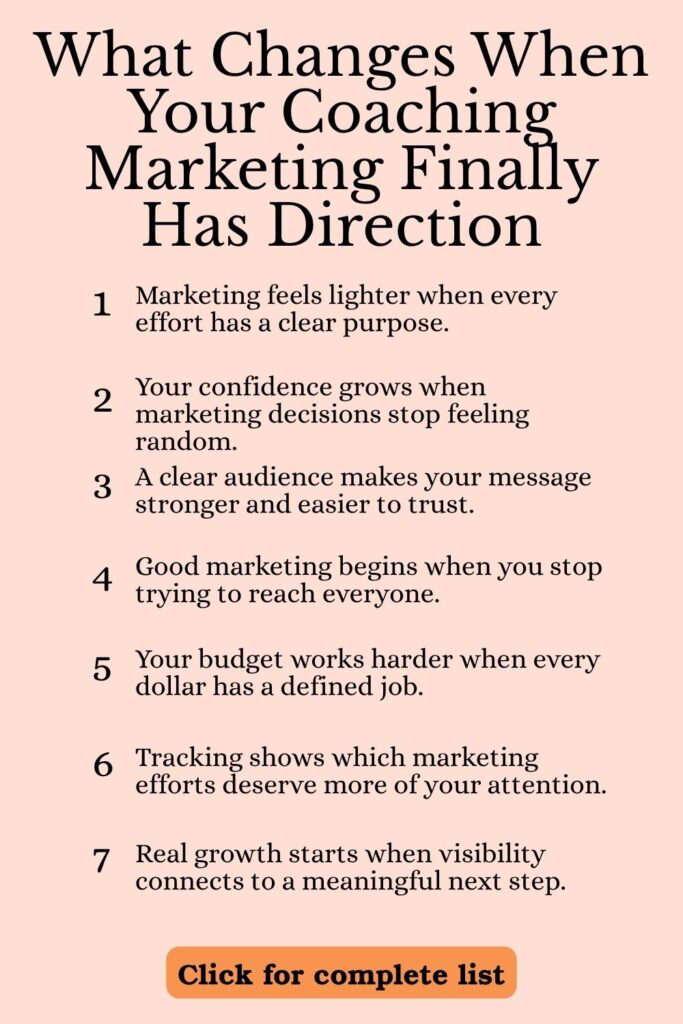
Your market research becomes useful when it changes the words, offers, and proof you put in front of prospective clients.
A demographic description such as “professionals aged 25 to 40” tells you who may buy. It does not yet tell you what will make them stop, pay attention, and believe your coaching is relevant to them.
SEE ALSO: If you’re a coach looking to streamline your administrative tasks and save time, check out our Coaching Administration Software. It’s a simple, effective solution designed to help you focus less on paperwork and more on what matters—coaching your clients. From scheduling to client management, our software gives you the tools to run your business efficiently. Ready to reclaim your time and boost productivity? Click or tap here.
Pull four things from your surveys, interviews, discovery calls, focus groups, and past client conversations:
- Problem language: What situation does the prospect actually describe?
- Desired outcome: What would they like to be different?
- Objections: What makes them hesitate about coaching or taking action?
- Proof needed: What would help them believe your approach is relevant and credible?
For example, suppose you are a career coach targeting professionals who feel stuck. Your research may show that clients rarely say, “I need greater career alignment.” Instead, they say things like, “I know I can’t do this job for another five years, but I can’t afford to make the wrong move.”
That distinction changes your marketing.
A broad message might say:
Career coaching to help you discover your purpose.
A research-led message could focus on:
SEE ALSO: If you’re a coach looking to streamline your administrative tasks and save time, check out our Coaching Administration Software. It’s a simple, effective solution designed to help you focus less on paperwork and more on what matters—coaching your clients. From scheduling to client management, our software gives you the tools to run your business efficiently. Ready to reclaim your time and boost productivity? Click or tap here.
Plan your next career move without making an expensive leap you are not ready for.
The second version reflects a specific decision your target client is already trying to make.
Use the same process when developing your unique value proposition. Your UVP should connect the problem your market recognizes with the outcome your coaching is designed to help them work toward.
This is also why your target-market research should be revisited rather than treated as a one-time exercise. If discovery calls start producing the same new objection, or several clients use the same unexpected phrase to describe what they want, capture it. Your market is telling you how it thinks about the problem.
For more detail on turning audience insight into positioning, see 5 Keys for How to Attract Your Dream Client as a Life Coach.
#3 Develop marketing strategies and set control measures
As with any successful plan, ensure you have attainable timelines along your stated goals. More importantly, set effective measures such as Key Performance Indicators (KPIs) or Objectives and Key Results (OKRs) to check your progress.

Once you’ve successfully established who you want to serve, here’s the more exciting and fun part – envisioning your marketing strategies for implementation.
SEE ALSO: If you’re a coach looking to streamline your administrative tasks and save time, check out our Coaching Administration Software. It’s a simple, effective solution designed to help you focus less on paperwork and more on what matters—coaching your clients. From scheduling to client management, our software gives you the tools to run your business efficiently. Ready to reclaim your time and boost productivity? Click or tap here.
Knowing your audience, what types of marketing appeal to them the most? Unleash your playfulness and creativity in producing marketing tactics across various media platforms. Explore diverse sales networks such as engaging direct sales, hiring sales representatives, or tapping online platforms.

To start with, write down your short-term and long-term marketing goals beside your strategies, right below your overall marketing objective. Your short-term goals are generally achieved in a year or less such as setting lower prices for promos and pay-per-click (PPC) ads. While long-term goals take more than a year to attain such as creating optimized content and maximizing the use of social media to enhance your brand awareness and recall.

What Does the Client Journey in Your Marketing Plan Look Like?
Your marketing plan should show how a stranger becomes a client, not simply list the places where you plan to promote yourself.
A useful client journey has five stages:
- Visibility: The prospect discovers you through search, social media, a webinar, podcast, speaking engagement, referral, networking event, or directory.
- Interest capture: They take a small action such as downloading a lead magnet, joining your email list, contacting you, or exploring an offer.
- Trust: They read your content, receive useful emails, attend a webinar, review your credentials, or experience part of your coaching approach.
- Conversion: They book a consultation, choose a coaching package, or purchase another appropriate offer.
- Retention and referral: They see progress, continue working with you when there is a genuine next step, and may recommend you to other people.
This is the difference between a collection of tactics and a marketing system.
Imagine a leadership coach who publishes useful LinkedIn posts but gets few clients from them. The problem may not be LinkedIn. The missing piece may be what happens after someone thinks, “This coach understands my problem.”
SEE ALSO: If you’re a coach looking to streamline your administrative tasks and save time, check out our Coaching Administration Software. It’s a simple, effective solution designed to help you focus less on paperwork and more on what matters—coaching your clients. From scheduling to client management, our software gives you the tools to run your business efficiently. Ready to reclaim your time and boost productivity? Click or tap here.
If there is no useful resource to download, no obvious way to book, and no clear coaching offer, attention has nowhere to go.
Your plan could instead map a specific path:
LinkedIn post → leadership assessment or checklist → email follow-up → discovery call → six-session leadership package
You can build the same path around SEO, webinars, podcasts, networking, or speaking. A free life coach directory listing can also function as one visibility point in that system.
For a deeper explanation of this approach, see How to Master Funnels as a Coach (and Why You Need To).
If you use LCH Core, lead magnets and a Public Store can provide entry points, client management (CRM) can hold client profiles, notes, and intake forms, and the Public Booking Page can give interested prospects a direct booking step. The Public Booking Page setup guide and Public Store guide show how those pieces work in practice.
SEE ALSO: If you’re a coach looking to streamline your administrative tasks and save time, check out our Coaching Administration Software. It’s a simple, effective solution designed to help you focus less on paperwork and more on what matters—coaching your clients. From scheduling to client management, our software gives you the tools to run your business efficiently. Ready to reclaim your time and boost productivity? Click or tap here.
The software does not decide your marketing strategy for you. Your plan still needs to answer the strategic question first: What should this person do next?
Here are some popular channels you can use with your marketing strategy.
- Email marketing
- SEO content
- Social media marketing
- Television
- Radio
- Podcast
- Print materials
- Events
- Networking
As with any successful plan, ensure you have attainable timelines along your stated goals. More importantly, set effective measures such as Key Performance Indicators (KPIs) or Objectives and Key Results (OKRs) to check your progress.
By using quantitative indicators, you get a picture of how well you’re doing and how far you have to go to reach your goal. These measures are crucial factors in your implementation as they send a signal about whether you’re on the right track or if you need to adjust your marketing efforts.

Don’t be afraid to try various advertising or promotional strategies, even more if it doesn’t break the bank. Focus on your goal, and get close and personal with your target market.
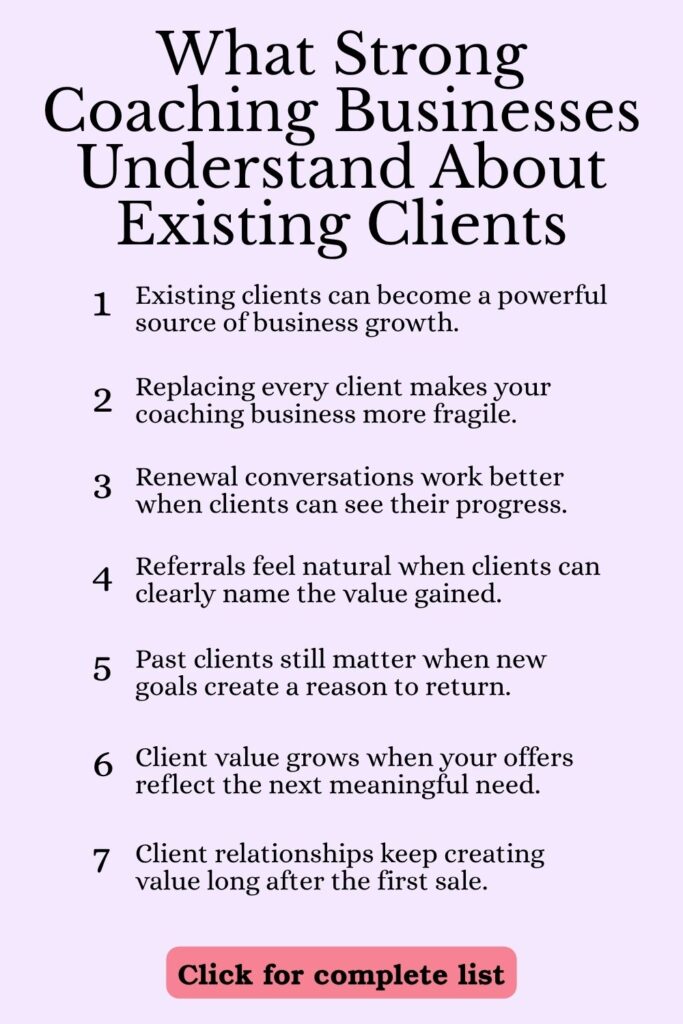
Which Marketing Metrics Actually Tell a Coach What Is Working?
The most useful marketing metrics show where prospects move forward, where they drop out, and whether your marketing produces paying clients.
SEE ALSO: If you’re a coach looking to streamline your administrative tasks and save time, check out our Coaching Administration Software. It’s a simple, effective solution designed to help you focus less on paperwork and more on what matters—coaching your clients. From scheduling to client management, our software gives you the tools to run your business efficiently. Ready to reclaim your time and boost productivity? Click or tap here.
Traffic, impressions, clicks, email subscribers, and followers can help you diagnose visibility. They should not be confused with the final business result.
Build your KPIs around the stages of your client journey.
Lead-to-call conversion rate
Booked discovery calls ÷ leads × 100
This tells you whether interested prospects are taking the next meaningful step.
Call-to-client conversion rate
New paying clients ÷ completed discovery calls × 100
This helps you judge what happens after prospects speak with you.
SEE ALSO: If you’re a coach looking to streamline your administrative tasks and save time, check out our Coaching Administration Software. It’s a simple, effective solution designed to help you focus less on paperwork and more on what matters—coaching your clients. From scheduling to client management, our software gives you the tools to run your business efficiently. Ready to reclaim your time and boost productivity? Click or tap here.
Cost per lead
Marketing spend ÷ leads generated
This is especially useful when comparing paid campaigns or other channels with clear costs.
Client acquisition cost
Marketing spend ÷ new clients generated
This brings the measurement closer to actual business value.
Marketing return
Revenue generated from tracked clients minus marketing cost, compared with the amount spent.
Be careful about treating every sale as perfectly attributable to one channel. A client may discover you through Google, read three articles, follow you on LinkedIn, join your email list, then book six weeks later.
SEE ALSO: If you’re a coach looking to streamline your administrative tasks and save time, check out our Coaching Administration Software. It’s a simple, effective solution designed to help you focus less on paperwork and more on what matters—coaching your clients. From scheduling to client management, our software gives you the tools to run your business efficiently. Ready to reclaim your time and boost productivity? Click or tap here.
That is why you should also ask new prospects a simple question: How did you first hear about me?
Consider two hypothetical channels.
Channel A sends 1,000 visitors to your site, creates 10 discovery calls, and produces two new clients.
Channel B sends only 250 visitors, creates 12 discovery calls, and produces four new clients.
If you looked only at traffic, Channel A would appear stronger. Once you follow the numbers through to clients, Channel B tells a very different story.
Your KPI should match the decision you are trying to make. If you want to know whether your content is being discovered, look at reach and qualified traffic. If you want to know whether your marketing is building your business, follow the path through inquiries, consultations, clients, revenue, renewals, and referrals.
SEE ALSO: If you’re a coach looking to streamline your administrative tasks and save time, check out our Coaching Administration Software. It’s a simple, effective solution designed to help you focus less on paperwork and more on what matters—coaching your clients. From scheduling to client management, our software gives you the tools to run your business efficiently. Ready to reclaim your time and boost productivity? Click or tap here.
Putting it Into Action: Example Life Coaching Marketing Strategies
Let’s continue with our example of Soulful Self Alignment. Here we will outline an example of the Marketing Strategies they might decide upon in their Marketing Plan.
3. Marketing Strategies
Marketing Objective: To be a market leader in the field of motivational coaching
|
Short-term Goals |
Marketing Strategy |
KPI |
|
1 Enhance brand awareness |
PPC advertising |
No. of clicks/visits |
|
2 Generate brand interest |
Email marketing |
No. of sign-ups, ROI |
|
3 Expand client base |
Attend networking events |
No. of prospects/ discovery calls after the event |
|
4 Grow connection with prospects |
Sign up business in coaching directories |
No. of paid follow-up sessions |
|
Long-term Goals |
Marketing Strategy |
KPI |
|
1 Raise brand exposure |
Social media marketing |
No. of followers |
|
2 Increase brand recognition |
Publish SEO articles on company website |
No. of website visits, conversions |
|
3 Develop brand positioning |
Conduct webinars and conferences |
Sales revenue from no. of attendees |
|
4 Boost customer retention |
Online group coaching |
Customer Lifetime Value |
Here’s how you can drill down to your marketing strategies.

The International Journal of Evidence Based Coaching and Mentoring reveals that a big chunk (41.9%) of ICF coaches’ prospects are individual professionals and executives. Referrals also appear as ICF’s primary method of drawing in clients. More than half (57.6%) of coaches admitted that their clients’ paved the way for them to gain more prospects, while 42.1% said referrals were made by other professionals.

The study also revealed that 58.9% of coaches spend less than $100 a month on marketing strategies. 27.7% of coaches allot 11-20 hours to marketing alone, while others (25.9%) spend 6-10 hours doing a mix of business activities such as marketing, professional development, and management of their business.

For a more detailed look at marketing for life coaches, please take a look at our article on this very subject!
SEE ALSO: If you’re a coach looking to streamline your administrative tasks and save time, check out our Coaching Administration Software. It’s a simple, effective solution designed to help you focus less on paperwork and more on what matters—coaching your clients. From scheduling to client management, our software gives you the tools to run your business efficiently. Ready to reclaim your time and boost productivity? Click or tap here.
#4 Determine your budget and financial resources
Ultimately, marketing your coaching business generates customers that drive sales. However, you need to strike a balance since marketing can hurt your company if it goes overboard or when you don’t stick within your budget.
Speaking of marketing strategies not breaking the bank, having a set budget in place keeps you rooted in the reality of how far you can go with your marketing strategies.

For example, as a startup, it doesn’t mean you need to entirely scrap the television ad idea. But why not try other sales channels initially that can enhance brand awareness and “park” the TV ad in the meantime? By seeking more practical methods, you allow yourself to be creative and resourceful by working with what you have.
Ultimately, marketing your coaching business generates customers that drive sales. However, you need to strike a balance since marketing can hurt your company if it goes overboard or when you don’t stick within your budget.

Here’s what you can do – for all the strategies you identified earlier:
- Note the estimated cost
- Analyze the expected timeframe for achieving your goals, and
- Check other resources you can tap into to lessen the cost
Directly linking your promotional efforts to your allowable budget and goals enhances your decision-making process if it’s sensible enough and worth it to push through such activities.

Putting it Into Action: Example Life Coaching Marketing Plan Budget
Let’s continue with our example of Soulful Self Alignment. Here we will outline an example of the Marketing Strategies they might decide upon in their Marketing Plan.
SEE ALSO: If you’re a coach looking to streamline your administrative tasks and save time, check out our Coaching Administration Software. It’s a simple, effective solution designed to help you focus less on paperwork and more on what matters—coaching your clients. From scheduling to client management, our software gives you the tools to run your business efficiently. Ready to reclaim your time and boost productivity? Click or tap here.
4. Budget
|
Marketing Strategy |
Estimated Cost per Month |
# of Months to Achieve |
Other Resources |
|
1 PPC advertising |
$300 |
6 |
Facebook, Instagram, and Pinterest ads |
|
2 Email marketing |
$100 |
6 | |
|
3 Attend networking events |
$250 |
12 |
Attend events with low rates/free memberships |
|
4 Sign up business in coaching directories |
$37 |
12 | |
|
5 Social media marketing |
$50 |
18 | |
|
6 Publish SEO articles on your website |
$2,500 |
18 |
Hire 2 writers/designers ($900/mo.) |
|
7 Conduct webinars/ conferences (With print materials); 100 participants, 4 speakers x 3 events |
$18,200 |
18 |
Self as 1 speaker, Invite speakers from universities (business, psychology) |
|
8 Online group coaching (With print materials); 25 participants |
$675 |
18 |
Send materials online |
Overall Allowable Marketing Budget: $ 2,000.00
Top 3 Marketing Strategies:
|
Marketing Strategy |
Projected Cost |
Projected Return |
Budget |
|
1 Email marketing |
600.00 |
22,800.00 |
600.00 |
|
2 Sign up business in coaching directories |
444.00 |
8,250.00 |
444.00 |
|
3 Social media marketing |
900.00 |
5,130.00 |
900.00 |
|
Total |
$ 1,944.00 |
$ 36,180.00 |
$ 1,944.00 |
Every marketing strategy definitely needs a budget. Below can be your inspiration to make yours.

How Do You Turn Your Marketing Budget Into a 90-Day Test?
A marketing budget works better when each major expense is treated as a test with a hypothesis, a limit, and a decision point.
Before spending money or committing substantial time to a strategy, write down six things:
- Hypothesis: What do you believe will happen?
- Audience: Who are you trying to reach?
- Channel: Where will you reach them?
- Investment: How much money and time will you commit?
- Success measure: What result will tell you the strategy has potential?
- Decision date: When will you continue, change, or stop the test?
For example, a business coach might decide to test LinkedIn for 90 days.
SEE ALSO: If you’re a coach looking to streamline your administrative tasks and save time, check out our Coaching Administration Software. It’s a simple, effective solution designed to help you focus less on paperwork and more on what matters—coaching your clients. From scheduling to client management, our software gives you the tools to run your business efficiently. Ready to reclaim your time and boost productivity? Click or tap here.
The hypothesis could be that publishing three useful posts each week and deliberately starting conversations with people in the target market will generate more qualified discovery calls.
The coach would then track the chain rather than simply watching follower growth:
Posts → relevant conversations → profile visits → inquiries → booked calls → paying clients
The exact targets in your test should come from your own baseline and economics, not somebody else’s marketing benchmark.
The diagnostic value comes from seeing where the chain breaks.
If posts create no relevant conversations, the topic, audience, or channel may be wrong.
SEE ALSO: If you’re a coach looking to streamline your administrative tasks and save time, check out our Coaching Administration Software. It’s a simple, effective solution designed to help you focus less on paperwork and more on what matters—coaching your clients. From scheduling to client management, our software gives you the tools to run your business efficiently. Ready to reclaim your time and boost productivity? Click or tap here.
If conversations happen but nobody books, your next step or offer may be unclear.
If people book but few become clients, examine who is reaching the call, the fit between the offer and their problem, and what happens during the sales conversation.
If clients are converting but acquisition costs are higher than the revenue the work can reasonably support, the economics need attention.
This approach also keeps you from abandoning a strategy simply because one piece underperformed. You can identify the actual weak point and test a specific change.
Longer-term channels need different expectations. SEO, for example, should not be judged after a few weeks solely by immediate sales. Early measurements may include publishing useful search-focused content, indexing, relevant rankings, qualified traffic, and inquiries, followed later by consultations and clients.
Your budget then becomes a decision tool, not simply a spending limit.
SEE ALSO: If you’re a coach looking to streamline your administrative tasks and save time, check out our Coaching Administration Software. It’s a simple, effective solution designed to help you focus less on paperwork and more on what matters—coaching your clients. From scheduling to client management, our software gives you the tools to run your business efficiently. Ready to reclaim your time and boost productivity? Click or tap here.
#5 Monitor results and tweak your marketing plan
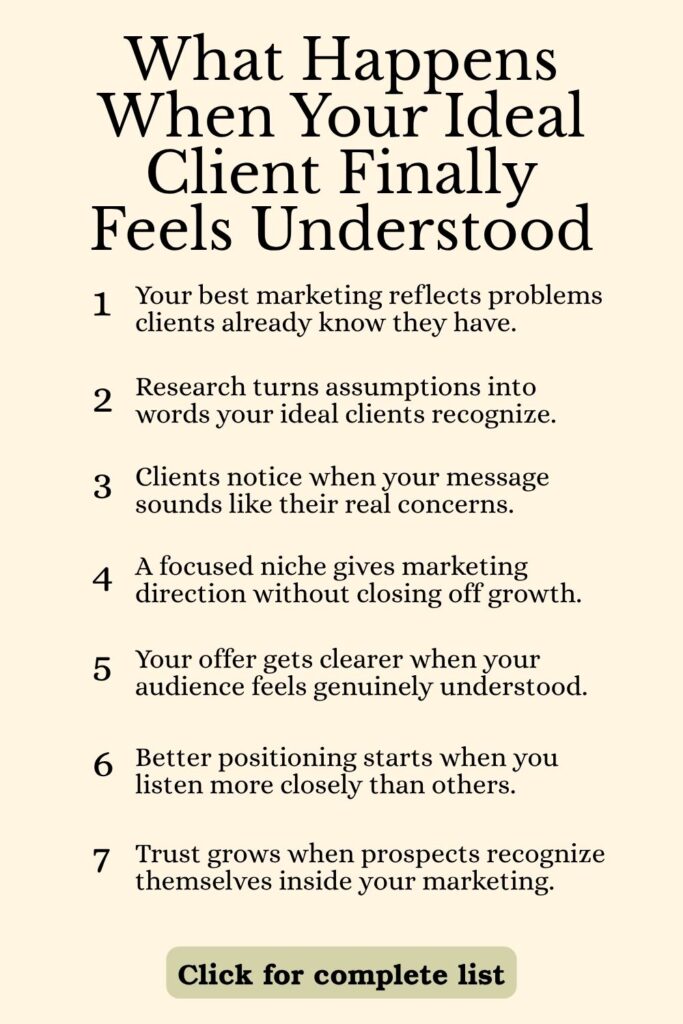
The beauty of having a plan is it allows you to think ahead so as not to get caught unaware when bad days come. Living in an uncertain world somehow eases the worry as a business owner when you have a backup.
But often, things don’t always go as we planned, and that’s when I came across this saying, “If the plan doesn’t work, change the plan, never the goal.”
Thus, when you see the results of your marketing plan and something’s not performing as how you expect it to, feel free to adjust your strategies. For example, if eventually, email marketing loses its shine as one of the top methods to enhance conversions, put more focus on social media or mobile marketing.

The crucial aspect is keeping track of your selling and promotional efforts based on your indicated metrics and timeframe. By consistently monitoring and tweaking your life coaching marketing plan, you ensure your services are in the right place and reaching the right customers.
Putting it Into Action: Example Life Coaching Marketing Plan Results Section
We’ll wrap up our exploration of Soulful Self Alignment with the Results section. Show me the money!
5. Results
|
Marketing Strategy |
Actual Cost |
Target Results |
Actual Results |
|
1 Email marketing |
600.00 |
22,800.00 |
21,300.00** |
|
2 Sign up business in coaching directories |
444.00 |
8,250.00 |
23,890.00* |
|
3 Social media marketing |
850.00 |
5,130.00 |
10,120.00*** |
|
4 Attend networking events |
500.00 |
16,500.00 |
14,900.00 |
|
5 Publish SEO articles on your website |
36,000.00 |
124,200.00 |
132,470.00 |
|
6 Conduct webinars and conferences (with print materials) |
34,000.00 |
90,000.00 |
120,324.00 |
|
7 PPC advertising |
1,800.00 |
6,000.00 |
9,980.00 |
|
8 Online group coaching |
1,800.00 |
12,174.55 |
12,100.00 |
Revised Top 3 Marketing Strategies based on Results (KPIs):
|
Marketing Strategy |
Projected Cost |
Projected Returns |
Budget |
|
1 Sign up business in coaching directories |
444.00 |
23,890.00 |
444.00 |
|
2 Email marketing |
600.00 |
21,300.00 |
600.00 |
|
3 Social media marketing |
850.00 |
10,120.00 |
850.00 |
|
Total |
$ 1,894.00 |
$ 55,310.00 |
$ 1,894.00 |
Don’t forget to monitor your results and adjust your strategies. Here’s how:
SEE ALSO: If you’re a coach looking to streamline your administrative tasks and save time, check out our Coaching Administration Software. It’s a simple, effective solution designed to help you focus less on paperwork and more on what matters—coaching your clients. From scheduling to client management, our software gives you the tools to run your business efficiently. Ready to reclaim your time and boost productivity? Click or tap here.


Should Your Marketing Plan Include Existing Clients, Renewals, and Referrals?
Your marketing plan should include existing and past clients because business growth can come from retention, appropriate next offers, referrals, and re-engagement as well as brand-new leads.
This gives you three additional marketing lanes to plan deliberately.
Retention
Decide how you will help clients see the work they are doing and the progress they are making. That might include goal reviews, completed action items, session recaps, or regular progress conversations.
Renewal or the next appropriate offer
Do not wait until the final five minutes of the final session to discover whether more work would be useful.
For example, if you sell a six-session career coaching package, you might use session five to revisit the goals established at the beginning. What has changed? What remains unresolved? Is there a genuine next stage of work?
Sometimes the right answer will be that the client is complete. Sometimes a new coaching goal, package, course, or resource will make sense.
SEE ALSO: If you’re a coach looking to streamline your administrative tasks and save time, check out our Coaching Administration Software. It’s a simple, effective solution designed to help you focus less on paperwork and more on what matters—coaching your clients. From scheduling to client management, our software gives you the tools to run your business efficiently. Ready to reclaim your time and boost productivity? Click or tap here.
Referrals and re-engagement
A client who has experienced a meaningful result may be willing to introduce someone facing a similar problem. A past client may also return months later when a new challenge appears.
This is part of thinking in terms of client lifetime value for coaches rather than treating every coaching engagement as an isolated transaction.
The timing matters.
A referral request is far more natural after a client has just described a meaningful win than after an arbitrary number of sessions. A renewal conversation is stronger when both of you can look at concrete progress and identify the next coaching objective.
If you use coaching software, this is one place where client-delivery data can support a business conversation. Goals, action items, journals, and worksheets can make the work more visible, while the Progress Stream and Engagement Report can help you review client activity and progress before a renewal or progress conversation. The LCH guide to keeping clients engaged between sessions gives a practical example of using coaching tools and the Progress Stream as part of that rhythm.
The goal is not to keep every client forever. It is to make sure a valuable coaching relationship does not end simply because nobody stopped to examine what should happen next.
SEE ALSO: If you’re a coach looking to streamline your administrative tasks and save time, check out our Coaching Administration Software. It’s a simple, effective solution designed to help you focus less on paperwork and more on what matters—coaching your clients. From scheduling to client management, our software gives you the tools to run your business efficiently. Ready to reclaim your time and boost productivity? Click or tap here.
Where LCH Core Fits
LCH Core fits after you have decided what your marketing strategy is, because software should help you run the client journey rather than replace the strategic thinking behind it.
The easiest way to see the fit is to map the tools to the stages you have already planned.
Visibility and interest: Lead magnets can give prospects a low-commitment way to enter your world. Courses and digital products can also be made available through a Public Store.
Contact and context: Client management (CRM) gives you client profiles, notes, and intake forms so information about prospects and clients is not scattered across unrelated files.
Booking: The Public Booking Page gives prospects a direct route to schedule an appropriate session.
Purchase: Payments, coaching packages, and billing connect the commercial side of the relationship to the service being purchased.
SEE ALSO: If you’re a coach looking to streamline your administrative tasks and save time, check out our Coaching Administration Software. It’s a simple, effective solution designed to help you focus less on paperwork and more on what matters—coaching your clients. From scheduling to client management, our software gives you the tools to run your business efficiently. Ready to reclaim your time and boost productivity? Click or tap here.
Onboarding: A Welcome Package can include a welcome letter, coaching agreement with electronic signature, and forms, giving a newly converted client a defined start to the relationship.
Delivery and retention: Journals, worksheets, goals, action items, and reusable resources give you concrete ways to support client work between sessions. The Progress Stream and Engagement Report give you additional ways to review participation and progress.
Scalable offers: Courses and digital products sold through a Public Store give you options beyond relying only on one-to-one sessions.
For a broader look at how these capabilities fit into a coaching business, see Best Coaching Software for Life Coaches: What to Look For Before You Choose. The product overview for LCH Core also shows how the client-management, scheduling, engagement, and offer pieces connect.

FAQ
What Should a Life Coaching Marketing Plan Include?
A life coaching marketing plan should include your target market, positioning, marketing objectives, chosen strategies, budget, KPIs, and a process for reviewing results. It should also show the path a prospect takes from first discovering you to becoming a paying client.
How Do I Create a Marketing Plan for My Coaching Business?
Start by defining who you serve and what problem your coaching is positioned to address. Then choose a small number of marketing strategies that reach those people, connect each strategy to a clear next step, allocate a realistic budget, and decide how you will measure inquiries, calls, clients, and revenue.
SEE ALSO: If you’re a coach looking to streamline your administrative tasks and save time, check out our Coaching Administration Software. It’s a simple, effective solution designed to help you focus less on paperwork and more on what matters—coaching your clients. From scheduling to client management, our software gives you the tools to run your business efficiently. Ready to reclaim your time and boost productivity? Click or tap here.
How Do Life Coaches Identify Their Target Market?
Life coaches identify their target market by combining demographic information with evidence about clients’ actual problems, goals, buying concerns, and preferences. Surveys, interviews, discovery calls, focus groups, existing client conversations, and competitor research can all give you useful information.
Which Marketing Channels Should a Life Coach Use?
Life coaches should use the channels where their target clients are realistically likely to discover, trust, and contact them. Depending on your niche, that might include SEO, email, LinkedIn, social media, referrals, networking, speaking, webinars, podcasts, or coaching directories.
Choose channels based on audience behavior and measurable results, not because you feel obligated to be everywhere.
What Marketing KPIs Should a Life Coach Track?
Life coaches should track KPIs that connect marketing activity to business results. Useful measures include qualified leads, booked discovery calls, call-to-client conversion rate, new paying clients, client acquisition cost, revenue, renewals, and referral-sourced clients.
Traffic, followers, impressions, and clicks can still be useful, but they are usually earlier indicators rather than the final result.
How Much Should a Life Coach Spend on Marketing?
A life coach should set a marketing budget that the business can afford to test without depending on speculative future sales. Assign money and time to specific strategies, define what each test is expected to produce, and increase investment only when the results justify it.
SEE ALSO: If you’re a coach looking to streamline your administrative tasks and save time, check out our Coaching Administration Software. It’s a simple, effective solution designed to help you focus less on paperwork and more on what matters—coaching your clients. From scheduling to client management, our software gives you the tools to run your business efficiently. Ready to reclaim your time and boost productivity? Click or tap here.
How Often Should You Update a Coaching Marketing Plan?
Review your marketing numbers monthly and make larger strategic decisions quarterly. A full annual review can then address bigger changes in your target market, offers, positioning, budget, and business goals.
Avoid changing tactics every few days. You need enough evidence to distinguish a weak strategy from normal short-term variation.
How Can a Life Coach Get Clients Without Relying Only on Social Media?
A life coach can get clients through search traffic, referrals, email marketing, speaking, networking, webinars, podcasts, directory visibility, partnerships, and direct outreach. The stronger approach is to combine a few relevant sources with a clear path from discovery to contact, consultation, and offer.
Final Thoughts
Most businesses are continuously evolving to keep pace with change, and customer needs and preferences. The coaching industry presents a golden opportunity as more clients embrace the value of coaching in their careers and personal lives.
As a coach, how will you position your brand and ensure that you can capture your target market?
Download your FREE Marketing plan template PDF
You’ve seen our sample marketing plan. Now it’s your turn! Download your free life coach marketing plan template here and get ready for more exciting opportunities!
SEE ALSO: If you’re a coach looking to streamline your administrative tasks and save time, check out our Coaching Administration Software. It’s a simple, effective solution designed to help you focus less on paperwork and more on what matters—coaching your clients. From scheduling to client management, our software gives you the tools to run your business efficiently. Ready to reclaim your time and boost productivity? Click or tap here.
You can also put some of those strategies into action. Get listed in our free coaching directory and check out our coaching software.
Glossary of Terms
- Vision. Your snapshot of the future and what you envision your business will achieve.
- Mission. How you will achieve your vision.
- Unique Value Proposition. The benefit you offer to your target market that is different from your competitors.
- Market research. The process of gathering information to understand your target market. Confirms and improves your business idea through consumer behavior and economic trends.
- Likert scale. Measures attitudes and opinions with a 5 or 7-point scale. It is mostly used as a satisfaction scale where your respondent identifies how satisfied or dissatisfied s/he is with a product or service. E.g. How much do you agree with this statement? “This is a great glossary” a) Strongly disagree b) Disagree c) Neutral d) Agree e) Strongly agree
- Marketing questionnaire. A list of questions used in quantitative market research to elicit responses from your target customers.
- Focus Group Discussion (FGDs). A form of qualitative research where a small group of people (often 5 to 8 respondents) with similar backgrounds or interests are gathered to discuss a topic of interest. They are often used to explore the meanings of survey findings or to collect more insight before crafting a questionnaire.
- Pain points. Current problems that your target customers experience.
- Key Performance Indicators (KPIs). A specific measure used to evaluate the performance of a project, activity, individual, or an entire organization. KPIs are closely linked with objectives and are used to evaluate targets. They also direct where resources should be allocated.
- Objectives and Key Results (OKRs). A strategic framework that is tied with key results; organizations often have 3-5 high-level objectives and 3-5 key results per objective. OKRs use specific metrics to track progress in reaching a goal. They are always quantifiable, and scores range from 0-100. OKRs also have a definite timeframe and are ambitious by nature.
Sources
International Coaching Federation. “Coaching Industry Continues Global Growth with $5.34 Billion USD Revenue, New Research Reveals.” International Coaching Federation, 16 Sept. 2025. International Coaching Federation source.
Read this next

10 Common Excuses Keeping You From Getting Paid Clients: Part 1
What is getting in the way? Ok… so we’ve established that you’re brilliant, talented, and have life experience that makes you a unique asset to others. We know you can […]
Read More
Five Marketing Benefits Every Life Coach Should Know on How to Benefit From Writing A Book
Writing a book can be a great boost to a coach–find out how to make the most of this killer strategy.
Read More
13 In Demand Lead Magnet Ideas for Coaches to Get Clients Fast
Effectively market your coaching business using these 13 in demand lead magnet ideas!
Read More