








The 3 Step Dance for Getting Coaching Clients

Could getting clients be as fun as dancing Gangnam Style?
It’s not a complicated dance. It could actually be fun and rewarding (ok, maybe not as fun as the Gangnam Style dance or even the infamous Harlem Shake)…
However, your monkey mind might be trying to tell you otherwise. Often what’s getting in the way is the fabrications your mind is making up about this process. And what’s behind that? The fear of failure, the fear of what others will think, the fear of looking silly, the fear of rejection, you name it.
But look at this dude in his cheesy suit hoppin’ around. He’s got millions of people lovin’ it, barely knowing what the hell he’s talkin’ about, and yet they join in from all around the world to do this dance right along with him.
Yes, his goal is to entertain, but if he can get out there and become a world phenomenon, no matter how briefly he is famous, you most certainly CAN connect with 10, 20, 100, or even thousands of people yourself.
Imagine how that would make a difference in your coaching business…
SEE ALSO: If you’re a coach looking to streamline your administrative tasks and save time, check out our Coaching Administration Software. It’s a simple, effective solution designed to help you focus less on paperwork and more on what matters—coaching your clients. From scheduling to client management, our software gives you the tools to run your business efficiently. Ready to reclaim your time and boost productivity? Click or tap here.
But with all this crap goin’ on in the recesses of your mind, it’s hard for clients to hire you. What often happens is…
You put a butt-load of hours into your coaching business, learning and implementing new SHINY marketing ideas, creating new programs that you pray people will love, and you keep plugging away… until, eventually, you start feeling burned out or completely FRIED.
That thing you do, this thing you love and are so super excited about, becomes something you might be thinking about giving up on.
When I was a relationship coach, I was the poster child for this. I did all of the above and then some… and I eventually gave up. It was painful and disheartening.
See, you may not have realized how your monkey mind is sabotaging you, and you may have received wrong information from others on what to do to get clients.
So let me turn the strobe light on for you and make it simple with the 3-step dance for getting clients.
SEE ALSO: If you’re a coach looking to streamline your administrative tasks and save time, check out our Coaching Administration Software. It’s a simple, effective solution designed to help you focus less on paperwork and more on what matters—coaching your clients. From scheduling to client management, our software gives you the tools to run your business efficiently. Ready to reclaim your time and boost productivity? Click or tap here.
The dance partners (clients) who ask you to dance (hire you) follow these steps:
- Somehow they hear about you and what you do.
- They have a sample (discovery) coaching session with you.
- They give you their payment information and commit to working together.
Sound simple? It can be.
The trick is understanding what makes someone willing to take each step, and what to do when they aren’t ready to move straight to the next one.
Key Takeaways
- Getting coaching clients follows three basic steps. Potential clients discover you, have a conversation to explore whether coaching is right for them, and make a financial commitment when they are ready to work together.
- Visibility alone does not create paying clients. People need to understand who you help, what problem you solve, and why taking the next step with you is worth their time.
- Discovery sessions should establish goals, needs, and fit. Asking focused questions helps prospects clarify what they want without turning your consultation into an entire free coaching session.
- A clear offer makes the buying decision easier. Prospects should understand what your coaching package includes, what it costs, and what happens after they say yes.
- Follow-up and measurement reveal missed opportunities. Tracking inquiries, bookings, completed consultations, and payments helps you identify exactly where your client-getting process needs improvement instead of constantly chasing more leads.
How Do Life Coaches Get Clients?
Life coaches get clients by helping the right people discover their services, building enough trust for a meaningful conversation, and making it easy for suitable prospects to begin a paid coaching relationship.
The process has three core stages: visibility, discovery, and commitment. Visibility introduces people to your coaching. A discovery session helps both parties understand the prospect’s goals and whether coaching is a good fit. A clear offer, agreed terms, and straightforward payment arrangements turn that decision into a professional coaching engagement.
Not everyone moves through those stages immediately. Some prospects need more information, time, or follow-up before booking. A repeatable client-getting process gives interested people a logical next step while helping coaches identify where opportunities are being lost.
SEE ALSO: If you’re a coach looking to streamline your administrative tasks and save time, check out our Coaching Administration Software. It’s a simple, effective solution designed to help you focus less on paperwork and more on what matters—coaching your clients. From scheduling to client management, our software gives you the tools to run your business efficiently. Ready to reclaim your time and boost productivity? Click or tap here.
How Do Potential Coaching Clients Hear About You?
People hear about your coaching through conversations, recommendations, content, presentations, and other opportunities to discover what you do.
I actually teach about the things you can do so people will “somehow” hear about you and what you do. But here are some fundamentals…
The opportunity to have conversations with people is endless, no matter where you are (party, grocery store, seminar, etc.). There are countless ways to meet people who may be interested in your services. Sharing what you do is one way to find clients.
People can also hear about you from articles you write and send out in newsletters, publish on your blog, or contribute to other websites.
Or from presentations you give, networking events you attend, and introductions through a joint venture partner.
These are all pieces of the marketing puzzle that get you set up for the big dance.
SEE ALSO: If you’re a coach looking to streamline your administrative tasks and save time, check out our Coaching Administration Software. It’s a simple, effective solution designed to help you focus less on paperwork and more on what matters—coaching your clients. From scheduling to client management, our software gives you the tools to run your business efficiently. Ready to reclaim your time and boost productivity? Click or tap here.
But before you go adding five new social platforms, three networking groups, and another shiny marketing strategy to your schedule, consider something.
More people hearing about you doesn’t necessarily mean more people will hire you.
According to the International Coaching Federation’s 2025 Global Coaching Study, the number of coach practitioners worldwide reached 122,974, reflecting substantial growth in the profession.
That means being visible is only part of the job. People also need a reason to pay attention to your particular coaching services.
For example, saying “I’m a life coach who helps people reach their potential” doesn’t give someone much to work with.
Saying “I help professionals who feel stuck in their careers figure out their next move” immediately gives the right person something to recognize.
SEE ALSO: If you’re a coach looking to streamline your administrative tasks and save time, check out our Coaching Administration Software. It’s a simple, effective solution designed to help you focus less on paperwork and more on what matters—coaching your clients. From scheduling to client management, our software gives you the tools to run your business efficiently. Ready to reclaim your time and boost productivity? Click or tap here.
You haven’t changed the coaching you deliver. You’ve made it easier for the people who need that coaching to recognize you.
The same principle applies to where you appear online. Your website, professional profile, articles, and social media content should all make it clear who you help and why someone might want to work with you.
A free life coach directory listing on Life Coach Hub is another place potential clients can discover your services. Make sure your profile explains your coaching specialty, the people you work with, and the outcomes your coaching is designed to support.
Now, getting noticed is wonderful.
Getting noticed by someone who actually needs your coaching? That’s where things get interesting.
Why Isn’t Visibility Enough to Get Coaching Clients?
Visibility isn’t enough because discovering a coach and trusting that coach with a personal goal are two different decisions.
SEE ALSO: If you’re a coach looking to streamline your administrative tasks and save time, check out our Coaching Administration Software. It’s a simple, effective solution designed to help you focus less on paperwork and more on what matters—coaching your clients. From scheduling to client management, our software gives you the tools to run your business efficiently. Ready to reclaim your time and boost productivity? Click or tap here.
Someone can read your article, enjoy your LinkedIn post, or listen to your presentation without being ready to book a session.
That doesn’t mean your marketing failed.
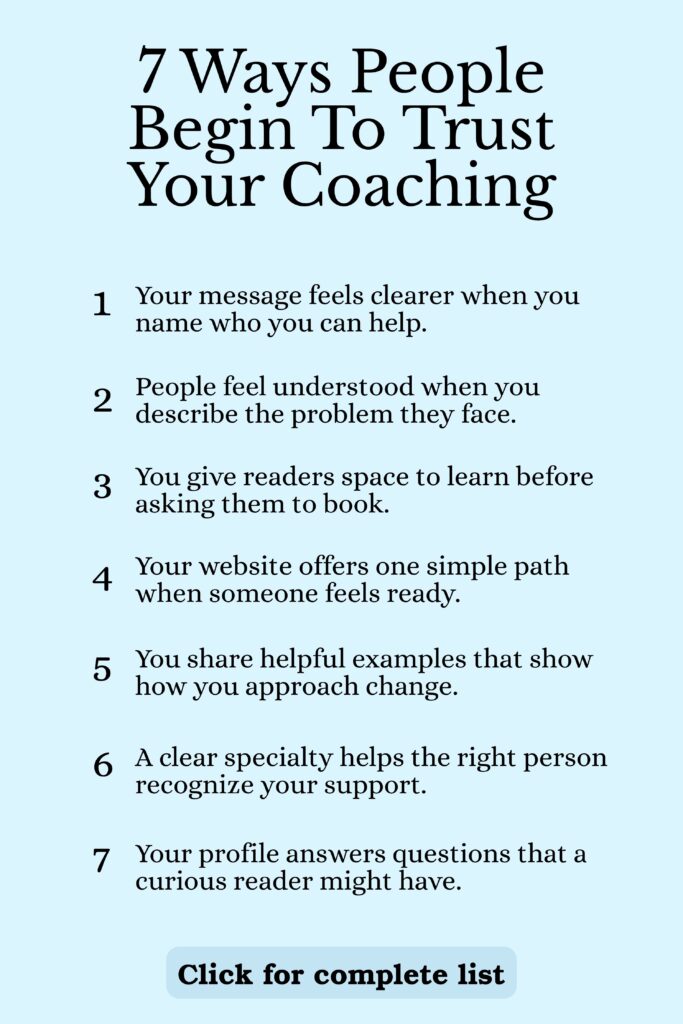
It means you have to understand the three things that happen between being noticed and being hired:
Visibility → Trust → Action
First, someone discovers you.
Then they look for reasons to believe you understand their situation and might be able to help.
SEE ALSO: If you’re a coach looking to streamline your administrative tasks and save time, check out our Coaching Administration Software. It’s a simple, effective solution designed to help you focus less on paperwork and more on what matters—coaching your clients. From scheduling to client management, our software gives you the tools to run your business efficiently. Ready to reclaim your time and boost productivity? Click or tap here.
Finally, they decide whether taking the next step is worth it.
Imagine you’re a career coach who publishes a LinkedIn post about professionals feeling stuck in jobs they’ve outgrown.
A potential client reads it and thinks, “Wow, that’s exactly what I’m dealing with.”
But they don’t book a session.
Instead, they visit your profile. They look at your website. They read another article about making a career change without starting from scratch.
Now they’re beginning to understand how you think and whether your approach makes sense for them.
SEE ALSO: If you’re a coach looking to streamline your administrative tasks and save time, check out our Coaching Administration Software. It’s a simple, effective solution designed to help you focus less on paperwork and more on what matters—coaching your clients. From scheduling to client management, our software gives you the tools to run your business efficiently. Ready to reclaim your time and boost productivity? Click or tap here.
If your content answers real questions and gives them useful insight, you’re making it easier for that person to consider working with you.
This is why constantly producing more content isn’t always the answer.
Your marketing needs to connect one useful encounter to the next.
A prospect who enjoys your content but cannot figure out what you offer may never contact you. A prospect who understands your specialty but cannot find a booking link may give up.
For a closer look at how those stages connect, see How to Master Funnels as a Coach (and Why You Need To).
Think of your marketing as an invitation to dance.
SEE ALSO: If you’re a coach looking to streamline your administrative tasks and save time, check out our Coaching Administration Software. It’s a simple, effective solution designed to help you focus less on paperwork and more on what matters—coaching your clients. From scheduling to client management, our software gives you the tools to run your business efficiently. Ready to reclaim your time and boost productivity? Click or tap here.
You want people to recognize the music, understand the steps, and feel comfortable joining in.
What Should a Prospect Do After They Discover You?
Every interested coaching prospect should have one clear, appropriate next step, whether that’s exploring a useful resource or booking a discovery session.
This is where many coaches accidentally make the dance more complicated than it needs to be.
They put enormous effort into getting attention, then send everyone to a website with a dozen different pages and no obvious starting point.
Or they expect every person who shows interest to jump straight into a discovery session.
But someone who just discovered your coaching may need a different next step from someone who’s been following you for months.
SEE ALSO: If you’re a coach looking to streamline your administrative tasks and save time, check out our Coaching Administration Software. It’s a simple, effective solution designed to help you focus less on paperwork and more on what matters—coaching your clients. From scheduling to client management, our software gives you the tools to run your business efficiently. Ready to reclaim your time and boost productivity? Click or tap here.
Think about three common situations.
The curious prospect: Someone likes your content but is still exploring their problem. Give them something useful that helps them understand it, such as a worksheet, article, or free resource.
The interested prospect: Someone understands what you do and wants to know whether your approach could help. Make your coaching services, packages, and booking information easy to find.
The ready prospect: Someone already knows they want a coach and is considering hiring you. Give them a simple way to arrange a discovery conversation.
Take a relationship coach who meets someone at a networking event.
The person mentions that communication problems have been creating tension in their marriage. They sound interested in coaching but aren’t ready to book a session.
SEE ALSO: If you’re a coach looking to streamline your administrative tasks and save time, check out our Coaching Administration Software. It’s a simple, effective solution designed to help you focus less on paperwork and more on what matters—coaching your clients. From scheduling to client management, our software gives you the tools to run your business efficiently. Ready to reclaim your time and boost productivity? Click or tap here.
Instead of forcing the conversation into a sales pitch, the coach could share a short worksheet about identifying recurring communication patterns.
The prospect gets something genuinely useful. They can explore whether the coach’s approach resonates with them and decide whether a conversation would be worthwhile.
Someone else might be ready to book immediately.
In that case, don’t make them complete five unnecessary steps before they can speak with you.
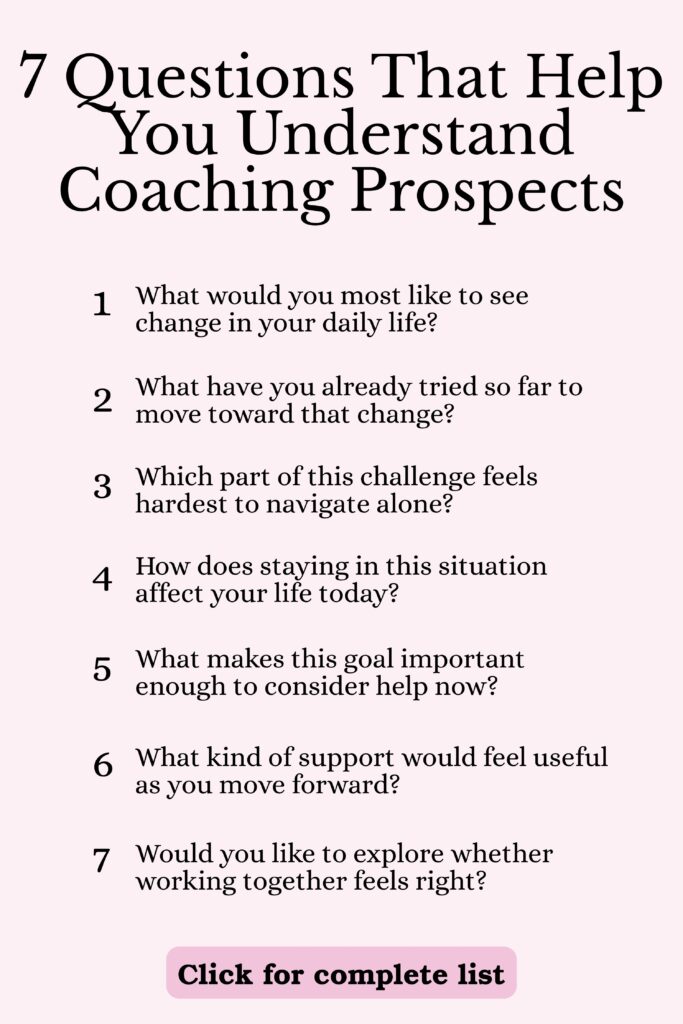
The goal is to match the invitation to where the person actually is.
You can make these paths simple with a Public Booking Page and relevant intake forms. LCH Core also allows coaches to offer lead magnets, courses, and digital products through a Public Store, creating different starting points for prospects with different levels of interest.
SEE ALSO: If you’re a coach looking to streamline your administrative tasks and save time, check out our Coaching Administration Software. It’s a simple, effective solution designed to help you focus less on paperwork and more on what matters—coaching your clients. From scheduling to client management, our software gives you the tools to run your business efficiently. Ready to reclaim your time and boost productivity? Click or tap here.
But don’t get caught up in building an elaborate marketing machine.
Start with one useful resource, one clear coaching offer, and one easy way to book a conversation.
You can build from there once you know what people respond to.
What Should Happen in a Coaching Discovery Session?
A coaching discovery session should help the prospect clarify what they want, understand the obstacles they’re facing, and decide whether working with you is the right next step.
Most coaches spend so much of their time and energy on Step 1, learning the ins and outs of marketing, creating materials, going to networking events, and trying to figure out how to get clients.
It’s sort of like the Step 1 moment Abraham-Hicks speaks about in the process of creating what you want.
SEE ALSO: If you’re a coach looking to streamline your administrative tasks and save time, check out our Coaching Administration Software. It’s a simple, effective solution designed to help you focus less on paperwork and more on what matters—coaching your clients. From scheduling to client management, our software gives you the tools to run your business efficiently. Ready to reclaim your time and boost productivity? Click or tap here.
In this case, you’re continually asking, “How do I get clients? How do I get clients?” Then you’re taking all these actions you think will get you there as you try to figure out the HOW.
And then, when someone actually requests a sample session, you blow it!!
Why?
Because your focus is scattered and misplaced.
You’re still in “getting clients mode.”
Time to be in “serving clients mode.”
SEE ALSO: If you’re a coach looking to streamline your administrative tasks and save time, check out our Coaching Administration Software. It’s a simple, effective solution designed to help you focus less on paperwork and more on what matters—coaching your clients. From scheduling to client management, our software gives you the tools to run your business efficiently. Ready to reclaim your time and boost productivity? Click or tap here.
Spend most of your discovery conversation asking potential clients about what they want, why they want it, what’s not working, why they believe it’s not working, and the impact these issues are having on their lives.
This is CRUCIAL to helping them decide whether to move to the next step.
And listen to the answers.
Not so you can jump in with your brilliant advice the second they stop talking.
Listen because you’re trying to understand the person in front of you.
A prospect who says they want more confidence might actually be struggling to speak up in meetings, negotiate their salary, or establish boundaries with their boss.
SEE ALSO: If you’re a coach looking to streamline your administrative tasks and save time, check out our Coaching Administration Software. It’s a simple, effective solution designed to help you focus less on paperwork and more on what matters—coaching your clients. From scheduling to client management, our software gives you the tools to run your business efficiently. Ready to reclaim your time and boost productivity? Click or tap here.
Those are different situations with different goals.
The more clearly you understand what someone wants to change, the easier it becomes to discuss whether your coaching services are appropriate for them.
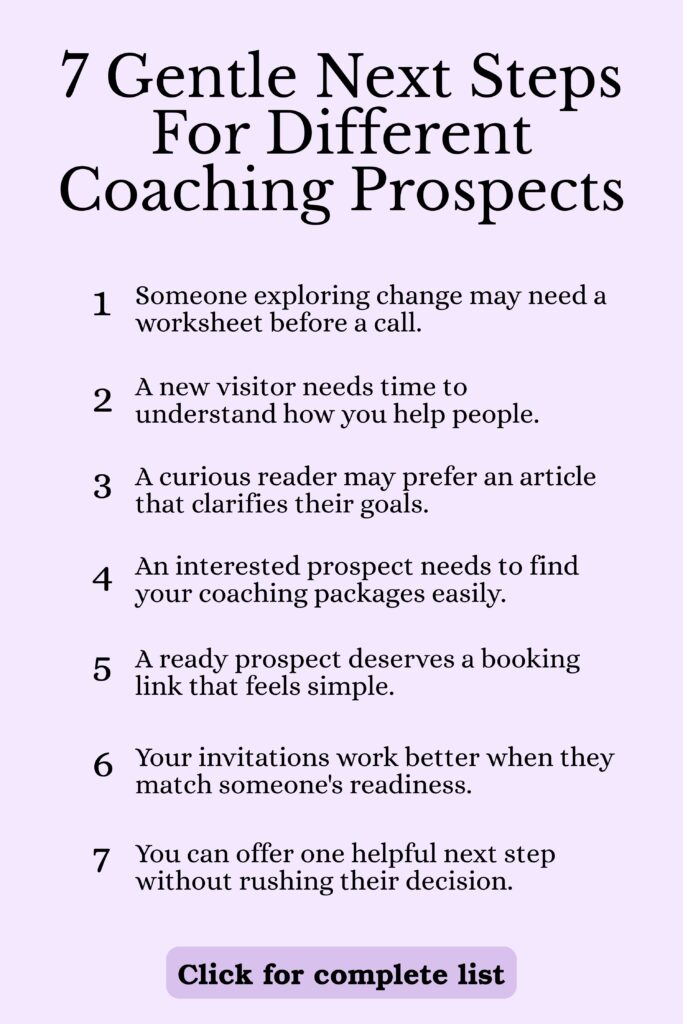
You can also make your discovery conversations more focused by collecting a little information beforehand.
For example, ask prospects what prompted them to look for coaching and what they’d most like to change. A Public Booking Page with an intake form can help gather those answers before the meeting.
Now you’re entering the conversation with some context rather than starting completely cold.
What Makes a Discovery Call Convert Without Becoming Free Coaching?
A discovery call is more effective when you guide the prospect through understanding their goal, identifying the gap, recognizing why change matters, evaluating fit, and choosing a next step.
SEE ALSO: If you’re a coach looking to streamline your administrative tasks and save time, check out our Coaching Administration Software. It’s a simple, effective solution designed to help you focus less on paperwork and more on what matters—coaching your clients. From scheduling to client management, our software gives you the tools to run your business efficiently. Ready to reclaim your time and boost productivity? Click or tap here.
You don’t need to solve their entire problem in 30 minutes.
In fact, trying to do that can make the conversation less useful.
Imagine you’re speaking with a career coaching prospect who says, “I hate my job, but I have no idea what else I could do.”
You might immediately want to brainstorm career options, suggest exercises, or give them three things to try tomorrow.
Hold that thought.
Instead, use a simple five-part conversation structure.
SEE ALSO: If you’re a coach looking to streamline your administrative tasks and save time, check out our Coaching Administration Software. It’s a simple, effective solution designed to help you focus less on paperwork and more on what matters—coaching your clients. From scheduling to client management, our software gives you the tools to run your business efficiently. Ready to reclaim your time and boost productivity? Click or tap here.
1. Goal: What do they actually want?
Ask what would be different if their situation improved.
Do they want a new job? A promotion? Better boundaries? A completely different career?
Don’t assume that “I hate my job” means “I need to leave my company.”
2. Gap: What’s stopping them?
Explore the difference between their current situation and the outcome they want.
SEE ALSO: If you’re a coach looking to streamline your administrative tasks and save time, check out our Coaching Administration Software. It’s a simple, effective solution designed to help you focus less on paperwork and more on what matters—coaching your clients. From scheduling to client management, our software gives you the tools to run your business efficiently. Ready to reclaim your time and boost productivity? Click or tap here.
Maybe they have plenty of career options but struggle to make decisions. Maybe they know exactly what they want but haven’t taken action.
Those are different coaching challenges.
3. Stakes: Why does this matter now?
Help them explain what remaining in the current situation is affecting.
For a career client, that might mean turning down opportunities, spending another year in an unsuitable role, or repeatedly postponing an important decision.
You aren’t manufacturing urgency. You’re finding out whether this is a real priority for them.
SEE ALSO: If you’re a coach looking to streamline your administrative tasks and save time, check out our Coaching Administration Software. It’s a simple, effective solution designed to help you focus less on paperwork and more on what matters—coaching your clients. From scheduling to client management, our software gives you the tools to run your business efficiently. Ready to reclaim your time and boost productivity? Click or tap here.
4. Fit: Can your coaching genuinely help?
Explain how you work and determine whether your approach matches what the person needs.
If their situation requires specialized advice or a service outside your competence, be willing to say so.
A suitable client is more valuable than a sale that was never a good fit.
5. Next step: What would working together look like?
If coaching is appropriate, explain the relevant package, what the client would receive, and how the engagement would begin.
SEE ALSO: If you’re a coach looking to streamline your administrative tasks and save time, check out our Coaching Administration Software. It’s a simple, effective solution designed to help you focus less on paperwork and more on what matters—coaching your clients. From scheduling to client management, our software gives you the tools to run your business efficiently. Ready to reclaim your time and boost productivity? Click or tap here.
This is where discovery becomes a decision instead of a conversation that simply fades away.
Notice what you haven’t done.
You haven’t spent the entire call solving their career problem for free.
You’ve helped them clarify what they want, what is getting in the way, and whether they want your support in moving forward.
That’s serving the client while respecting the purpose of the discovery session.
And there’s another benefit.
SEE ALSO: If you’re a coach looking to streamline your administrative tasks and save time, check out our Coaching Administration Software. It’s a simple, effective solution designed to help you focus less on paperwork and more on what matters—coaching your clients. From scheduling to client management, our software gives you the tools to run your business efficiently. Ready to reclaim your time and boost productivity? Click or tap here.
When you understand someone’s actual goal, you can recommend a coaching package that addresses that goal rather than presenting the same generic offer to everyone.
How Do You Turn a Good Discovery Call Into a Paid Coaching Commitment?
A discovery call becomes a paid coaching commitment when the prospect understands the value of the proposed coaching engagement, agrees to its terms, and decides to move forward.
It’s wonderful to get a financial commitment to coaching right then and there.
When people make a financial commitment, they’re choosing to invest in the process rather than simply sampling advice and deciding afterward whether the conversation was worth it.
But don’t confuse getting payment information with securing a good coaching relationship.
The prospect needs to understand what they’re buying.
SEE ALSO: If you’re a coach looking to streamline your administrative tasks and save time, check out our Coaching Administration Software. It’s a simple, effective solution designed to help you focus less on paperwork and more on what matters—coaching your clients. From scheduling to client management, our software gives you the tools to run your business efficiently. Ready to reclaim your time and boost productivity? Click or tap here.
Suppose a potential client tells you they want to become more confident speaking at work.
You’ve explored their goals, their challenges, and whether your coaching is a good fit.
Now you can recommend a package that matches what you’ve discussed.
For example, you might explain that your six-session package includes work on identifying situations where confidence breaks down, practicing new responses, and reviewing actions between sessions.
You would also explain the session length, frequency, price, cancellation arrangements, and the responsibilities each person takes on.
Then ask a straightforward question.
SEE ALSO: If you’re a coach looking to streamline your administrative tasks and save time, check out our Coaching Administration Software. It’s a simple, effective solution designed to help you focus less on paperwork and more on what matters—coaching your clients. From scheduling to client management, our software gives you the tools to run your business efficiently. Ready to reclaim your time and boost productivity? Click or tap here.
“Does that sound like the kind of support you’re looking for?”
Give them room to respond.
They may have questions about the process or what happens between sessions.
Answer those questions directly.
If they’re ready, explain how to complete the payment and agreement.
If they’re not ready, find out what information they need to make a decision.
SEE ALSO: If you’re a coach looking to streamline your administrative tasks and save time, check out our Coaching Administration Software. It’s a simple, effective solution designed to help you focus less on paperwork and more on what matters—coaching your clients. From scheduling to client management, our software gives you the tools to run your business efficiently. Ready to reclaim your time and boost productivity? Click or tap here.
The International Coaching Federation’s Code of Ethics requires ICF professionals to explain the nature of coaching and establish agreements about roles, responsibilities, confidentiality, financial arrangements, and other engagement terms before coaching begins.
That’s a useful standard for any professional coach.
Once someone commits, the practical details shouldn’t become another obstacle. Your coaching agreement, payment arrangements, and first-session information need to be clear.
LCH Core can support that transition through coaching packages, payments, billing, and a Welcome Package containing a welcome letter, coaching agreement with electronic signature, and forms. The LCH Core onboarding tutorials demonstrate how those pieces fit together.
The point isn’t to push someone across the finish line.
It’s to make the decision and the next steps clear enough that a suitable prospect can say yes with confidence.
SEE ALSO: If you’re a coach looking to streamline your administrative tasks and save time, check out our Coaching Administration Software. It’s a simple, effective solution designed to help you focus less on paperwork and more on what matters—coaching your clients. From scheduling to client management, our software gives you the tools to run your business efficiently. Ready to reclaim your time and boost productivity? Click or tap here.
What If They Don’t Say Yes on the Call?
A prospect who doesn’t buy during a discovery call is not automatically a lost client. Their answer may mean yes later, not now, or not a fit.
This is where coaches can waste a perfectly good opportunity by treating every hesitation as rejection.
Someone says, “I need to think about it,” and suddenly your monkey mind is back on the dance floor.
“They hated the session.”
“I charged too much.”
“I should have offered a discount.”
SEE ALSO: If you’re a coach looking to streamline your administrative tasks and save time, check out our Coaching Administration Software. It’s a simple, effective solution designed to help you focus less on paperwork and more on what matters—coaching your clients. From scheduling to client management, our software gives you the tools to run your business efficiently. Ready to reclaim your time and boost productivity? Click or tap here.
Maybe none of those things is true.
Before making up a story, find out what’s actually happening.
There are three useful outcomes to recognize.
Yes: They’re ready to begin.
Explain the package, confirm the agreement, arrange payment, and establish the first steps.
Not yet: They’re interested but not ready to commit.
SEE ALSO: If you’re a coach looking to streamline your administrative tasks and save time, check out our Coaching Administration Software. It’s a simple, effective solution designed to help you focus less on paperwork and more on what matters—coaching your clients. From scheduling to client management, our software gives you the tools to run your business efficiently. Ready to reclaim your time and boost productivity? Click or tap here.
Find out what’s preventing a decision.
Maybe they need to review their budget, discuss the timing with a partner, or finish an existing commitment before starting something new.
If they’re interested in future contact, agree on an appropriate follow-up.
Not a fit: Coaching with you isn’t the right choice.
Perhaps they need a different specialty, a different service, or simply don’t want coaching.
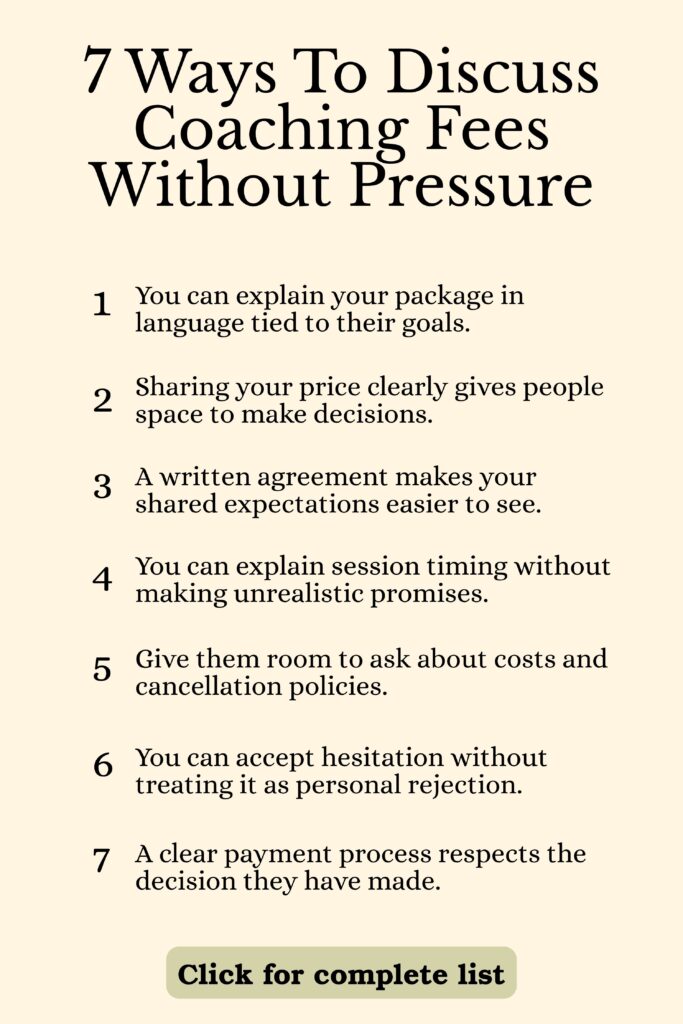
Accept that answer.
SEE ALSO: If you’re a coach looking to streamline your administrative tasks and save time, check out our Coaching Administration Software. It’s a simple, effective solution designed to help you focus less on paperwork and more on what matters—coaching your clients. From scheduling to client management, our software gives you the tools to run your business efficiently. Ready to reclaim your time and boost productivity? Click or tap here.
You don’t need to persuade everyone who speaks with you to become a client.
Consider a relationship coach speaking with someone who wants support navigating a difficult life transition.
The prospect likes the coach’s approach but says they can’t begin until next month because of existing financial commitments.
Instead of immediately offering a discount, the coach might say:
“That makes sense. Would it be useful if I checked back with you at the beginning of next month?”
If the prospect agrees, the coach records the date and follows up as promised.
SEE ALSO: If you’re a coach looking to streamline your administrative tasks and save time, check out our Coaching Administration Software. It’s a simple, effective solution designed to help you focus less on paperwork and more on what matters—coaching your clients. From scheduling to client management, our software gives you the tools to run your business efficiently. Ready to reclaim your time and boost productivity? Click or tap here.
No repeated sales messages. No guessing whether they’re interested.
Just a clear next action.
And sometimes the right next action is to share a resource that helps them think through their goals.
The important thing is to follow up based on what the person actually said, not on a generic sales schedule.
Keep a record of the prospect’s main goal, any concerns they raised, and whether they agreed to future contact. A simple spreadsheet works, or you can use client profiles and notes in a CRM.
Silence is information, but it isn’t always a final answer.
SEE ALSO: If you’re a coach looking to streamline your administrative tasks and save time, check out our Coaching Administration Software. It’s a simple, effective solution designed to help you focus less on paperwork and more on what matters—coaching your clients. From scheduling to client management, our software gives you the tools to run your business efficiently. Ready to reclaim your time and boost productivity? Click or tap here.
One appropriate follow-up might restart a conversation. Continued silence or a clear decline is a reason to stop.
That distinction helps you build stronger coaching relationships without turning into someone who chases every potential client indefinitely.
Which Step Is Actually Losing You Coaching Clients?
The easiest way to improve your client-getting process is to identify which of the three steps is failing before spending more time or money on marketing.
Because if people are already finding you but nobody is booking a discovery call, posting more content may not solve the real problem.
And if you’re booking plenty of discovery calls but very few suitable prospects become paying clients, you probably don’t have a visibility problem.
You have a different part of the dance to work on.
SEE ALSO: If you’re a coach looking to streamline your administrative tasks and save time, check out our Coaching Administration Software. It’s a simple, effective solution designed to help you focus less on paperwork and more on what matters—coaching your clients. From scheduling to client management, our software gives you the tools to run your business efficiently. Ready to reclaim your time and boost productivity? Click or tap here.
Here’s how to figure that out.
Step 1: Are people discovering you and taking action?
Look at how many inquiries you receive and how many discovery sessions get booked.
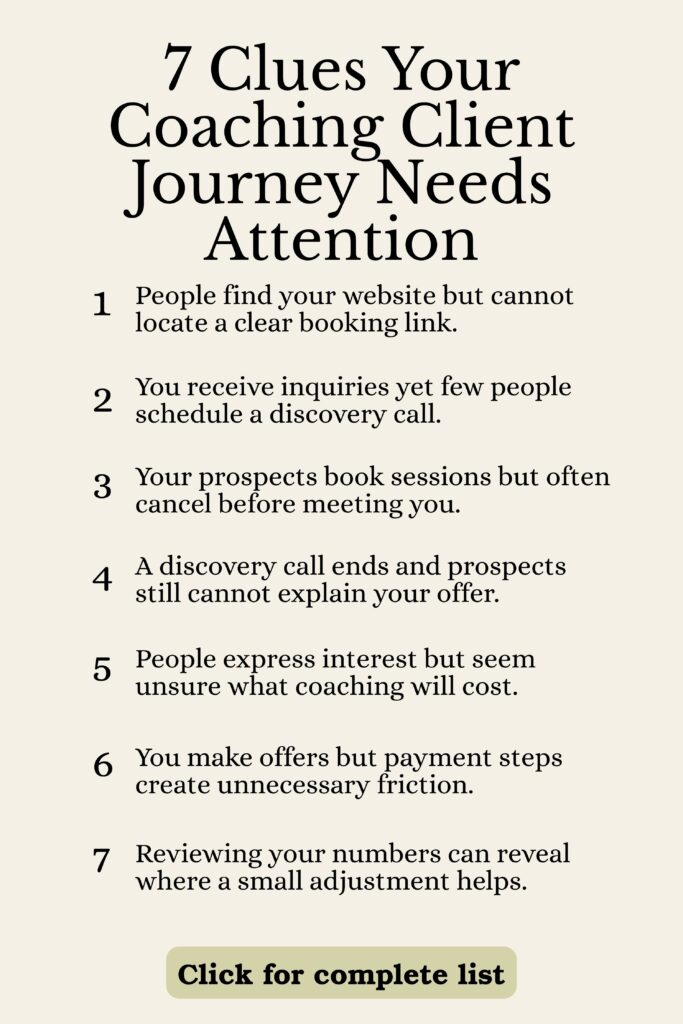
If people regularly visit your website or respond to your content but rarely contact you, examine whether your coaching offer is clear and whether the next step is easy to find.
For example, a coach receiving lots of website traffic might discover that their discovery call link is buried on a separate contact page.
Fixing that is a different task from creating more content.
SEE ALSO: If you’re a coach looking to streamline your administrative tasks and save time, check out our Coaching Administration Software. It’s a simple, effective solution designed to help you focus less on paperwork and more on what matters—coaching your clients. From scheduling to client management, our software gives you the tools to run your business efficiently. Ready to reclaim your time and boost productivity? Click or tap here.
Step 2: Are discovery sessions happening and establishing fit?
Track the number of discovery sessions booked and completed.
Then look at how many completed sessions lead to a suitable coaching offer.
If prospects repeatedly cancel or fail to attend, examine your booking process and how clearly you explain the purpose of the session.
If prospects attend but leave unsure what coaching would involve, review how you explore their goals and explain your services.
Step 3: Are suitable prospects becoming paying clients?
SEE ALSO: If you’re a coach looking to streamline your administrative tasks and save time, check out our Coaching Administration Software. It’s a simple, effective solution designed to help you focus less on paperwork and more on what matters—coaching your clients. From scheduling to client management, our software gives you the tools to run your business efficiently. Ready to reclaim your time and boost productivity? Click or tap here.
Track how many coaching offers are accepted and how many accepted offers result in completed payment.
If people express interest but don’t commit, look for repeated questions about price, scope, timing, or expectations.
A confusing package can make a good discovery session harder to convert.
You can keep this very simple.
At the end of each month, record:
- Inquiries: How many potential clients contacted you?
- Discovery bookings: How many consultations were scheduled?
- Completed sessions: How many actually took place?
- Offers made: How many suitable prospects received a coaching offer?
- Paid clients: How many completed their commitment and payment?
These numbers help you see what happens between stages.
SEE ALSO: If you’re a coach looking to streamline your administrative tasks and save time, check out our Coaching Administration Software. It’s a simple, effective solution designed to help you focus less on paperwork and more on what matters—coaching your clients. From scheduling to client management, our software gives you the tools to run your business efficiently. Ready to reclaim your time and boost productivity? Click or tap here.
For example, if 20 people inquire and only 4 book a discovery session, your inquiry-to-booking rate is 20%.
If 10 people complete discovery sessions and 3 become paying clients, your discovery-to-paid rate is 30%.
Those are illustrative figures, not industry benchmarks.
Their value comes from comparing your own results over time.
You can also record where clients originally discovered you so you know which marketing activities are producing meaningful opportunities rather than just attention.
You don’t need a complicated reporting system to begin.
SEE ALSO: If you’re a coach looking to streamline your administrative tasks and save time, check out our Coaching Administration Software. It’s a simple, effective solution designed to help you focus less on paperwork and more on what matters—coaching your clients. From scheduling to client management, our software gives you the tools to run your business efficiently. Ready to reclaim your time and boost productivity? Click or tap here.
A basic monthly scorecard makes it easier to improve one part of your process at a time.
And that’s a whole lot smarter than assuming every slow month means you need a new marketing strategy.
How Do the 3 Steps Work Together?
The three steps work together when each stage gives the prospect a clear reason and opportunity to move forward.
People discover your coaching through content, conversations, introductions, or other visibility channels.
Some will be ready to book a discovery session immediately. Others may need to explore your approach through a useful resource or another interaction.
During the discovery session, your job is to understand what they want, identify whether coaching is appropriate, and help them make an informed decision.
SEE ALSO: If you’re a coach looking to streamline your administrative tasks and save time, check out our Coaching Administration Software. It’s a simple, effective solution designed to help you focus less on paperwork and more on what matters—coaching your clients. From scheduling to client management, our software gives you the tools to run your business efficiently. Ready to reclaim your time and boost productivity? Click or tap here.
If they want to continue, you offer a clear coaching arrangement and make the commitment process straightforward.
And if they’re not ready?
You don’t throw away the relationship just because the music stopped for a moment.
You follow up appropriately when they’ve agreed to it, or you let them go when that’s the right outcome.
The more clearly you understand each stage, the less tempting it becomes to chase every new marketing idea that comes along.
You can focus on what your coaching business actually needs.
SEE ALSO: If you’re a coach looking to streamline your administrative tasks and save time, check out our Coaching Administration Software. It’s a simple, effective solution designed to help you focus less on paperwork and more on what matters—coaching your clients. From scheduling to client management, our software gives you the tools to run your business efficiently. Ready to reclaim your time and boost productivity? Click or tap here.
More visibility when the right people aren’t finding you.
A clearer invitation when people are interested but aren’t booking.
Better discovery conversations when prospects aren’t understanding the fit.
And a more straightforward offer when suitable clients are hesitating to commit.
The dance is still simple.
You just know what each step is supposed to accomplish.
SEE ALSO: If you’re a coach looking to streamline your administrative tasks and save time, check out our Coaching Administration Software. It’s a simple, effective solution designed to help you focus less on paperwork and more on what matters—coaching your clients. From scheduling to client management, our software gives you the tools to run your business efficiently. Ready to reclaim your time and boost productivity? Click or tap here.
Where LCH Core Fits
LCH Core supports the three-step client-getting process by keeping the practical work of booking, managing prospects, accepting payments, and onboarding clients connected.
The strategy comes first. The software helps you carry it out.
For Step 1, getting discovered, you can make your coaching offer easier to act on through your Public Booking Page, and use lead magnets to give interested prospects a useful starting point.
For Step 2, having the discovery conversation, a Public Booking Page allows prospects to schedule a session, while intake forms and CRM notes help you organize the information you need to prepare.
For Step 3, securing a commitment, coaching packages, payments, and billing make the financial arrangements clear. Welcome Packages then help new clients complete their coaching agreement and forms before beginning.
And the relationship doesn’t have to end with the first purchase.
SEE ALSO: If you’re a coach looking to streamline your administrative tasks and save time, check out our Coaching Administration Software. It’s a simple, effective solution designed to help you focus less on paperwork and more on what matters—coaching your clients. From scheduling to client management, our software gives you the tools to run your business efficiently. Ready to reclaim your time and boost productivity? Click or tap here.
Coaching tools such as journals, worksheets, goals, action items, and resources can support client work between sessions. The Progress Stream and Engagement Report can help coaches review client activity and progress.
When clients are ready for a suitable next step, courses and digital products through the Public Store offer other ways to work with you.
For a broader look at why those continuing relationships matter, see A Bird in the Hand: The Simple Math of Client Lifetime Value (for Coaches).
You can also explore the LCH Core video tutorials for practical demonstrations of booking, onboarding, and coaching tools.
The bigger principle is simple.
You want a clear client journey that helps interested people move from discovering your work to deciding whether coaching is right for them, then gives paying clients a professional experience that supports the relationship.
SEE ALSO: If you’re a coach looking to streamline your administrative tasks and save time, check out our Coaching Administration Software. It’s a simple, effective solution designed to help you focus less on paperwork and more on what matters—coaching your clients. From scheduling to client management, our software gives you the tools to run your business efficiently. Ready to reclaim your time and boost productivity? Click or tap here.
Frequently Asked Questions
How do life coaches get clients?
Life coaches get clients through a combination of visibility, trust-building, discovery conversations, and clear paid coaching offers. Marketing introduces people to your services, while the discovery and commitment stages help suitable prospects decide whether to work with you.
Do discovery calls actually help coaches get clients?
Discovery calls can help coaches get clients by giving prospects a chance to discuss their goals and evaluate whether the coaching relationship is a good fit. They work best when the conversation has a clear purpose rather than becoming an unstructured free session.
What should I ask during a coaching discovery call?
Ask questions that clarify the prospect’s desired outcome, current challenges, why change matters, and what support they’re seeking. Useful questions include “What would you most like to change?” and “What’s been getting in the way so far?”
Should I coach someone during a free discovery session?
A free discovery session should primarily establish goals, needs, and mutual fit rather than deliver a complete coaching intervention. You can offer a useful insight, but the prospect should leave understanding the potential value and scope of a longer coaching engagement.
What should I do when a coaching prospect says, “I need to think about it”?
Ask what information they need to make a decision and whether they’d welcome a follow-up. They may need clarification about the package, pricing, timing, or whether coaching is right for their situation. Respect their decision without manufacturing urgency.
How many times should a coach follow up with a prospect?
SEE ALSO: If you’re a coach looking to streamline your administrative tasks and save time, check out our Coaching Administration Software. It’s a simple, effective solution designed to help you focus less on paperwork and more on what matters—coaching your clients. From scheduling to client management, our software gives you the tools to run your business efficiently. Ready to reclaim your time and boost productivity? Click or tap here.
A coach should follow up according to the prospect’s expressed interest, agreed timing, and communication preferences rather than an arbitrary number. One thoughtful follow-up after a discovery session may be appropriate, while repeated unanswered messages are a reason to stop.
Do life coach directories actually help you get clients?
Life coach directories can create opportunities for potential clients to discover coaches who match their needs. A relevant profile with a clear specialty and an accessible next step can support visibility, but a directory listing does not guarantee inquiries or paying clients.
How do I know which part of my coaching sales process isn’t working?
Track inquiries, discovery bookings, completed consultations, coaching offers, and paid clients to identify where prospects stop moving forward. A low booking rate suggests a different problem from a low offer-acceptance rate, so review each stage before changing your marketing.
Now get out there and dance!
You don’t need to master every marketing trick or become a completely different person to attract coaching clients.
You need the right people to hear about you, an opportunity to understand what they want, and a clear way for them to work with you when the fit is right.
SEE ALSO: If you’re a coach looking to streamline your administrative tasks and save time, check out our Coaching Administration Software. It’s a simple, effective solution designed to help you focus less on paperwork and more on what matters—coaching your clients. From scheduling to client management, our software gives you the tools to run your business efficiently. Ready to reclaim your time and boost productivity? Click or tap here.
And when you understand how those steps connect, you can stop guessing which marketing idea to try next and start building a more consistent client-getting process.
Ready to put the steps together? Explore LCH Core to see how booking, coaching packages, client management, and onboarding can support your business.
If you found this useful, pass it along to another coach who needs a simpler way to turn interest into paying clients.
Sources
International Coaching Federation. 2025 ICF Global Coaching Study. International Coaching Federation, 2025, https://coachingfederation.org/resources/research/global-coaching-study/.
International Coaching Federation. ICF Code of Ethics. International Coaching Federation, 2024, https://coachingfederation.org/credentialing/coaching-ethics/icf-code-of-ethics/.

Read this next

What Successful Coaches Put in Their Bio That Most Coaches Leave Out
Write powerful bios to stand out from the rest. Learn how to with these awesome life coaching bio examples.
Read More
The 3 Coaching Business Habits That Quietly Make You More In-Demand
Are you following these three essential tips to making it big as a coach?
Read More
How to Master Funnels as a Coach (and Why You Need To)
If you’re like most coaches, you became a coach because you wanted to help people transform their lives, not because you wanted to learn marketing jargon like “funnels.” But here’s […]
Read More