






Great Ways to Get Coaching Clients
Marketing your coaching business doesn’t need to be a flat out sprint for the finish. You can get better results by developing lasting relationships.
Sometimes the hardest part of running your own business is winning over new clients. Cold calling can be a daunting, and often thankless task. And other types of marketing can be costly, particularly if you aren’t experienced with using them.
So with that in mind, we’ve got some game changers that don’t make you feel like you’re begging for business but rather that you’re building links with the community you serve.
Key Takeaways
– Build relationships before asking for business. Coaching clients often need to understand your approach and feel confident in your expertise before committing. Networking, niche communities, and free coaching experiences create opportunities to develop that trust.
– Make every marketing activity lead somewhere. A trade-show conversation, local newspaper feature, or group coaching event should give interested prospects a clear next step, such as downloading a useful resource or booking a consultation.
– Position your coaching around recognizable value. Higher rates alone do not create demand. A clearly defined niche, relevant coaching packages, and a specific explanation of your process help prospective clients understand what they are paying for.
SEE ALSO: If you’re a coach looking to streamline your administrative tasks and save time, check out our Coaching Administration Software. It’s a simple, effective solution designed to help you focus less on paperwork and more on what matters—coaching your clients. From scheduling to client management, our software gives you the tools to run your business efficiently. Ready to reclaim your time and boost productivity? Click or tap here.
– Follow up with interested prospects. Someone who doesn’t book immediately may still become a client. Personalized follow-up gives them another opportunity to engage when they are ready.
– Measure relationships that become clients. Track meaningful conversations, consultations, paying clients, and referrals to identify which marketing activities actually generate business.
How Can Life Coaches Get More Clients Without Hard Selling?
Life coaches can get more clients without hard selling by building relationships through networking, free coaching experiences, niche communities, referrals, and useful educational content. These approaches allow prospective clients to experience a coach’s expertise before deciding whether to purchase coaching.
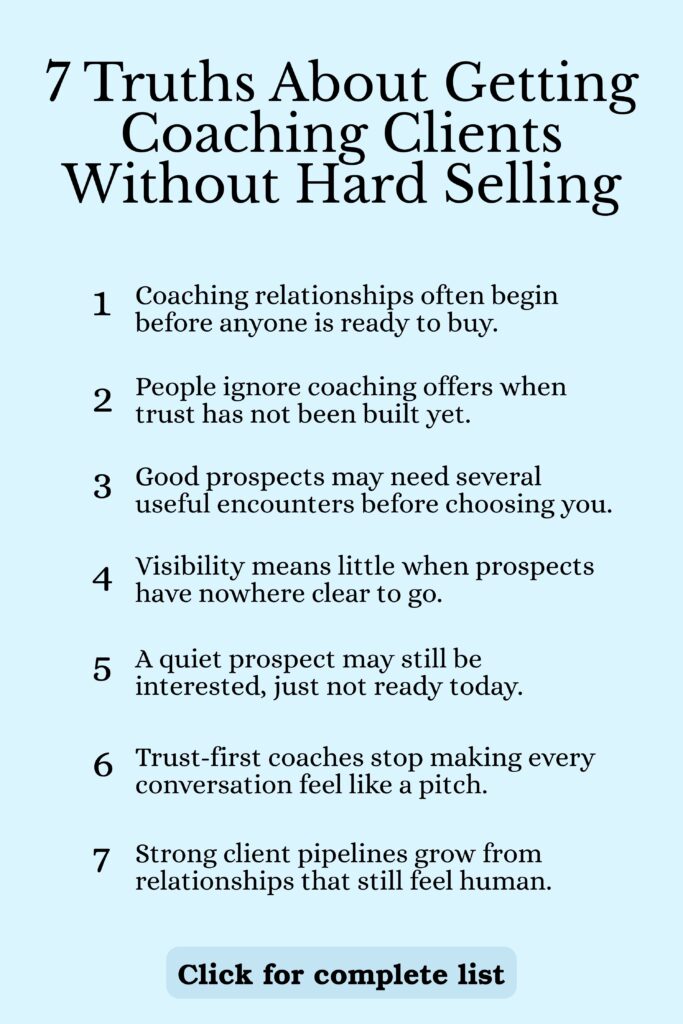
The most effective approach connects each activity to a clear next step. A conversation at a trade show might lead to a helpful resource, followed by a discovery call and eventually a paid coaching package. Each interaction gives the prospect another opportunity to assess whether the coach is right for them.
Coaches can make this process repeatable by choosing a few relevant marketing channels, following up consistently, and tracking which conversations become paying clients. The goal is not simply to reach more people. It is to develop more relationships with people who are likely to benefit from your coaching.
What Is the Relationship-to-Client Loop?
The Relationship-to-Client Loop is a six-stage process that turns initial visibility into paying coaching clients and future referrals.
SEE ALSO: If you’re a coach looking to streamline your administrative tasks and save time, check out our Coaching Administration Software. It’s a simple, effective solution designed to help you focus less on paperwork and more on what matters—coaching your clients. From scheduling to client management, our software gives you the tools to run your business efficiently. Ready to reclaim your time and boost productivity? Click or tap here.
Instead of treating every networking event or marketing activity as a separate attempt to find clients, you connect them into one repeatable process.
The six stages are:
- Visibility: Get in front of people who might need your coaching.
- Conversation: Start a meaningful exchange about their situation or goals.
- Trust: Demonstrate your expertise through helpful advice, relevant examples, or a coaching experience.
- Next step: Give interested prospects an easy way to explore working with you.
- Follow-up: Continue the relationship when someone isn’t ready to commit immediately.
- Referral: Make it easy for satisfied clients to introduce others who could benefit.
Imagine you’re a career coach attending a local professional networking event.
You meet someone considering a career change. Instead of immediately selling a coaching package, you ask what they’re finding difficult about the transition.
You discover that they’re struggling to decide whether to pursue management or change industries entirely.
You offer a short worksheet that helps them compare their options. A few days later, you follow up and invite them to a discovery call if they’d like to explore the decision further.
SEE ALSO: If you’re a coach looking to streamline your administrative tasks and save time, check out our Coaching Administration Software. It’s a simple, effective solution designed to help you focus less on paperwork and more on what matters—coaching your clients. From scheduling to client management, our software gives you the tools to run your business efficiently. Ready to reclaim your time and boost productivity? Click or tap here.
They might book immediately, or they might return several weeks later.
Either way, you’ve created a relationship with a clear path forward rather than relying on a single conversation to produce a sale.
The key is to know what should happen after each interaction. A networking event creates conversations. A useful resource builds trust. A consultation gives the prospect an opportunity to decide whether coaching is the right next step.
The following strategies work particularly well when you approach them as connected parts of that process.
Can Higher Coaching Rates Help Attract Better-Fit Clients?
The first time coach is often afraid to ask for what they’re worth. This puts off clients rather than encourages them to engage with your service. Why? It’s all about perception.
You don’t perceive fast food to have the same nutritional value as a Michelin chef’s offering, and you know that as much by the price difference as anything else.
SEE ALSO: If you’re a coach looking to streamline your administrative tasks and save time, check out our Coaching Administration Software. It’s a simple, effective solution designed to help you focus less on paperwork and more on what matters—coaching your clients. From scheduling to client management, our software gives you the tools to run your business efficiently. Ready to reclaim your time and boost productivity? Click or tap here.
Raising your rates makes you seem more appealing because it suggests that you add the same value (or more) as your price tag.
So charge what you’re worth and watch the customers start queuing.
What Makes a Higher Coaching Rate Feel Worth It?
Higher coaching rates become easier to justify when prospective clients can clearly understand your specialization, the coaching experience, and the value of the work you’re offering.
Price can influence how people perceive quality, but it doesn’t replace evidence that your coaching is relevant to their needs.
Consider two career coaches.
One charges $100 per session and describes their service as helping people achieve their goals. The other charges $175 per session and specializes in helping mid-career professionals move into leadership roles.
SEE ALSO: If you’re a coach looking to streamline your administrative tasks and save time, check out our Coaching Administration Software. It’s a simple, effective solution designed to help you focus less on paperwork and more on what matters—coaching your clients. From scheduling to client management, our software gives you the tools to run your business efficiently. Ready to reclaim your time and boost productivity? Click or tap here.
The second coach explains that their six-session package includes identifying leadership strengths, preparing for difficult workplace conversations, and creating an action plan for the first 90 days in a management role.
That doesn’t automatically make the second coach better. It does make the offer easier for a prospective client to evaluate.
Three elements make a higher-priced coaching offer more understandable:
- Specialization: Identify the specific people and problems your coaching is designed to address.
- A defined coaching process: Explain what happens during the engagement, how sessions are structured, and what clients will work on.
- Credible evidence of value: Use relevant testimonials with permission, examples of your approach, and realistic descriptions of potential outcomes.
The International Coaching Federation’s 2025 Global Coaching Study estimated that the worldwide coaching profession included 122,974 coach practitioners. In a growing field, explaining your specialization clearly helps prospective clients distinguish your services from other available options.
Before raising your rates, review the description of your coaching offer.
Could someone unfamiliar with your business understand who it’s for, what they’ll receive, and why your approach suits their particular challenge?
SEE ALSO: If you’re a coach looking to streamline your administrative tasks and save time, check out our Coaching Administration Software. It’s a simple, effective solution designed to help you focus less on paperwork and more on what matters—coaching your clients. From scheduling to client management, our software gives you the tools to run your business efficiently. Ready to reclaim your time and boost productivity? Click or tap here.
If not, improve that explanation before changing the price.
You can also make your offer easier to evaluate by presenting coaching as a structured package rather than a collection of unrelated sessions.
For example, a six-session leadership coaching package might include an initial assessment, agreed development goals, regular coaching conversations, and a final progress review.
LCH Core can support that structure through coaching packages, payments, and billing, so the practical details of purchasing coaching match the offer you’ve described.
How Can Coaches Use Trade Shows to Start Client Relationships?
Don’t go on the first day or during the peak period. Head over during the quieter moments, then you’ll find decision makers kicking their heels waiting for customers.
You’ve got to be careful, this is a relationship building exercise not a hard sell.
SEE ALSO: If you’re a coach looking to streamline your administrative tasks and save time, check out our Coaching Administration Software. It’s a simple, effective solution designed to help you focus less on paperwork and more on what matters—coaching your clients. From scheduling to client management, our software gives you the tools to run your business efficiently. Ready to reclaim your time and boost productivity? Click or tap here.
So spend some time finding out about the businesses represented, collect business cards and of course introduce yourself and what you do too.
Follow up afterwards with a meaningful e-mail, talk about what you’ve learned and give something specific to the person.
Leave a sales pitch to later contact. Make friends first.
What Should You Do After a Prospect Shows Interest but Doesn’t Book?
When someone shows interest in your coaching but doesn’t book, follow up with something relevant to the original conversation and offer one clear next step.
Silence doesn’t necessarily mean rejection. A prospect may be interested but need more information, want to compare options, or simply have other priorities.
What matters is that your follow-up gives them a useful reason to reconnect.
SEE ALSO: If you’re a coach looking to streamline your administrative tasks and save time, check out our Coaching Administration Software. It’s a simple, effective solution designed to help you focus less on paperwork and more on what matters—coaching your clients. From scheduling to client management, our software gives you the tools to run your business efficiently. Ready to reclaim your time and boost productivity? Click or tap here.
A practical approach has three parts.
1. Send a personalized follow-up.
Within a day or two of meeting someone, reference something specific you discussed.
Suppose you’re an executive coach who met an HR director at a trade show. They mentioned that newly promoted managers were struggling with delegation.
Your email could begin:
“Great meeting you yesterday. I was thinking about what you mentioned regarding managers who struggle to delegate after being promoted.”
SEE ALSO: If you’re a coach looking to streamline your administrative tasks and save time, check out our Coaching Administration Software. It’s a simple, effective solution designed to help you focus less on paperwork and more on what matters—coaching your clients. From scheduling to client management, our software gives you the tools to run your business efficiently. Ready to reclaim your time and boost productivity? Click or tap here.
That opening shows you paid attention. It is much more relevant than a generic message introducing your coaching services.
2. Offer something genuinely useful.
You might share a short worksheet with questions new managers can use before delegating an important responsibility.
The resource should relate directly to the challenge they described.
A useful resource can also help prospects experience your coaching approach before deciding whether to work with you.
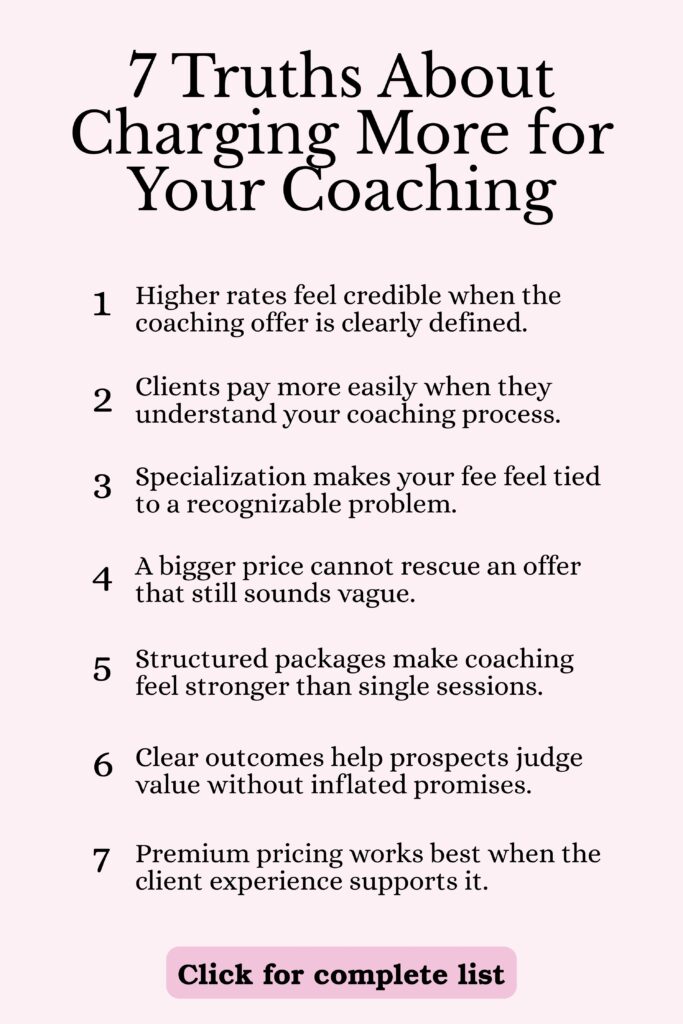
3. Suggest one next step.
SEE ALSO: If you’re a coach looking to streamline your administrative tasks and save time, check out our Coaching Administration Software. It’s a simple, effective solution designed to help you focus less on paperwork and more on what matters—coaching your clients. From scheduling to client management, our software gives you the tools to run your business efficiently. Ready to reclaim your time and boost productivity? Click or tap here.
After offering value, make it easy for the prospect to continue the conversation.
For example:
“If it would be useful, I’d be happy to spend 20 minutes discussing how this could work with your leadership team.”
Include a booking link so they can choose a convenient time.
Research published in Harvard Business Review, “The Short Life of Online Sales Leads,” found that organizations responding to online inquiries within an hour were substantially more likely to qualify those leads than organizations responding later.
That research examined business sales inquiries rather than coaching prospects, but it reinforces a useful principle: respond promptly when someone has actively expressed interest.
SEE ALSO: If you’re a coach looking to streamline your administrative tasks and save time, check out our Coaching Administration Software. It’s a simple, effective solution designed to help you focus less on paperwork and more on what matters—coaching your clients. From scheduling to client management, our software gives you the tools to run your business efficiently. Ready to reclaim your time and boost productivity? Click or tap here.
This doesn’t mean repeatedly messaging someone who hasn’t replied.
A reasonable starting process is an initial follow-up, one additional helpful message several days later, and a final invitation after another week or two. Respect a prospect’s preferences and stop when they decline or ask not to be contacted.
Keep a record of what was discussed, what you shared, and whether a next step was agreed.
For coaches managing multiple conversations, LCH Core’s client management features, including client profiles and notes, can help keep that information together. A Public Booking Page gives interested prospects a direct way to schedule a consultation.
The objective is to make reconnecting easy, not to pressure someone into buying.
Can a Free Group Coaching Event Bring In Paying Clients?
It doesn’t have to be an expensive event but invite potential clients to a free group coaching session.
SEE ALSO: If you’re a coach looking to streamline your administrative tasks and save time, check out our Coaching Administration Software. It’s a simple, effective solution designed to help you focus less on paperwork and more on what matters—coaching your clients. From scheduling to client management, our software gives you the tools to run your business efficiently. Ready to reclaim your time and boost productivity? Click or tap here.
Throw in some wine and cheese and let people enjoy themselves.
Again spend your time cultivating relationships rather than selling.
People always enjoy a party and the “feel good” factor it brings can help you build lasting links for the future.
How Do You Turn a Free Coaching Experience Into a Paid Next Step?
A free coaching event can lead to paying clients when participants experience a useful part of your coaching process and understand how to continue working with you.
The event needs a defined purpose. Simply bringing people together and hoping they eventually become clients leaves too much to chance.
Consider a career coach hosting a free 45-minute workshop called “Three Decisions to Make Before Changing Careers.”
SEE ALSO: If you’re a coach looking to streamline your administrative tasks and save time, check out our Coaching Administration Software. It’s a simple, effective solution designed to help you focus less on paperwork and more on what matters—coaching your clients. From scheduling to client management, our software gives you the tools to run your business efficiently. Ready to reclaim your time and boost productivity? Click or tap here.
The session might follow this structure:
- First 10 minutes: Help participants identify what they want to change about their current work.
- Next 15 minutes: Guide them through a simple exercise comparing career options.
- Next 15 minutes: Invite participants to identify one obstacle preventing them from making a decision.
- Final 5 minutes: Explain how they can continue exploring those decisions after the workshop.
Participants leave with a practical result: a clearer understanding of one career decision they need to make.
The coach has also demonstrated how their coaching works.
The next step should follow naturally from the experience.
At the end of the workshop, the coach could offer a downloadable career decision worksheet. Participants who want more individualized support could also be invited to book a discovery call.
This creates a straightforward process:
SEE ALSO: If you’re a coach looking to streamline your administrative tasks and save time, check out our Coaching Administration Software. It’s a simple, effective solution designed to help you focus less on paperwork and more on what matters—coaching your clients. From scheduling to client management, our software gives you the tools to run your business efficiently. Ready to reclaim your time and boost productivity? Click or tap here.
Free coaching experience → useful resource → continued contact → discovery call → paid coaching offer.
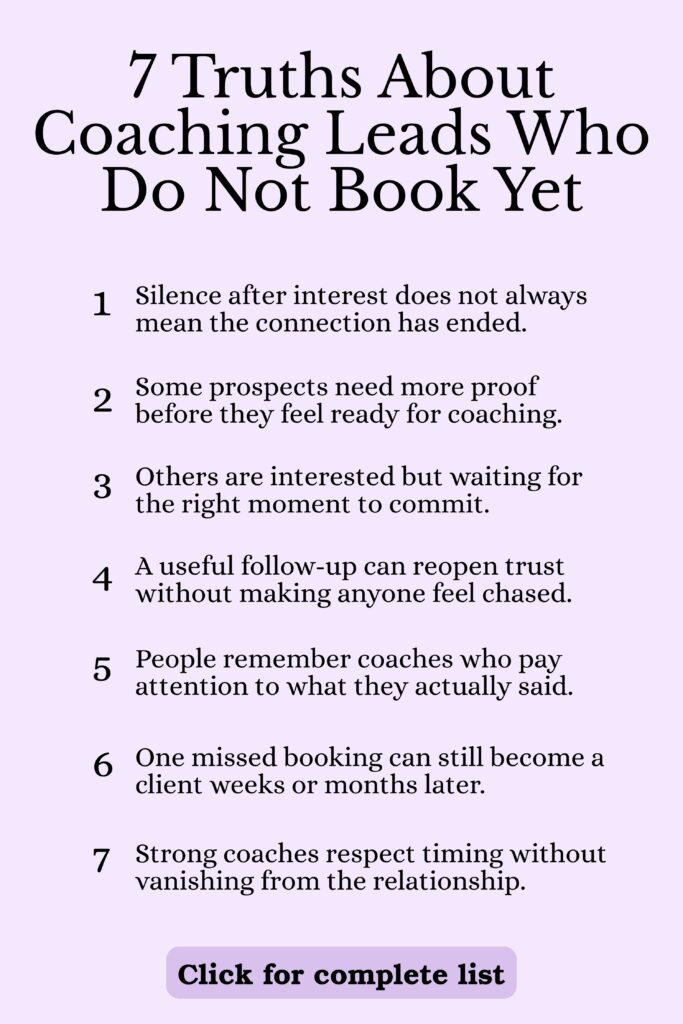
Not everyone needs to move through every stage.
Some participants may be ready to book immediately. Others may only want the worksheet. A few may return months later when their situation changes.
Make the follow-up specific to what participants experienced.
Instead of sending a generic promotional email, you might ask whether they were able to complete the exercise or whether a particular question came up afterward.
For coaches running regular workshops, a lead magnet can provide a useful next step for attendees. A Public Booking Page can handle consultation bookings, while coaching packages and payments make it easier for interested participants to move into a defined paid engagement.
SEE ALSO: If you’re a coach looking to streamline your administrative tasks and save time, check out our Coaching Administration Software. It’s a simple, effective solution designed to help you focus less on paperwork and more on what matters—coaching your clients. From scheduling to client management, our software gives you the tools to run your business efficiently. Ready to reclaim your time and boost productivity? Click or tap here.
The free experience should be valuable on its own. The paid offer provides deeper, more personalized support for people who want it.
[Retain original coaching quote image here: “Spend your time cultivating relationships rather than selling.”]
How Can Coaches Use Local Media to Build Authority?
There is such a thing as free publicity. Contact your local newspaper and ask them if one of their reporters would like a free session (or series of sessions) in exchange for a write up.
Alternatively why not put together a coaching column and offer it to your local paper for free in exchange for a small plug for your business at the end.
How Do You Become Known Inside Your Coaching Niche?
Get proactive, join local groups for others working in your niche, find internet forums and discussion groups and take part.
Show interest in every person you come in to contact with in your niche and listen to what they need and want.
SEE ALSO: If you’re a coach looking to streamline your administrative tasks and save time, check out our Coaching Administration Software. It’s a simple, effective solution designed to help you focus less on paperwork and more on what matters—coaching your clients. From scheduling to client management, our software gives you the tools to run your business efficiently. Ready to reclaim your time and boost productivity? Click or tap here.
Take the time to market yourself without marketing at all. Be helpful, be knowledgeable, share your expertise without flaunting it.
You can also strengthen your online visibility with a free life coach directory listing on Life Coach Hub. A profile gives prospective clients another place to learn about your coaching specialty and decide whether your services match what they’re looking for.
How Do Referrals Fit Into Relationship-Based Client Acquisition?
Referrals turn successful coaching relationships into introductions to people who already have a reason to trust your expertise.
The strongest referral opportunities usually arise when a client has experienced a meaningful result and can clearly describe what your coaching helped them accomplish.
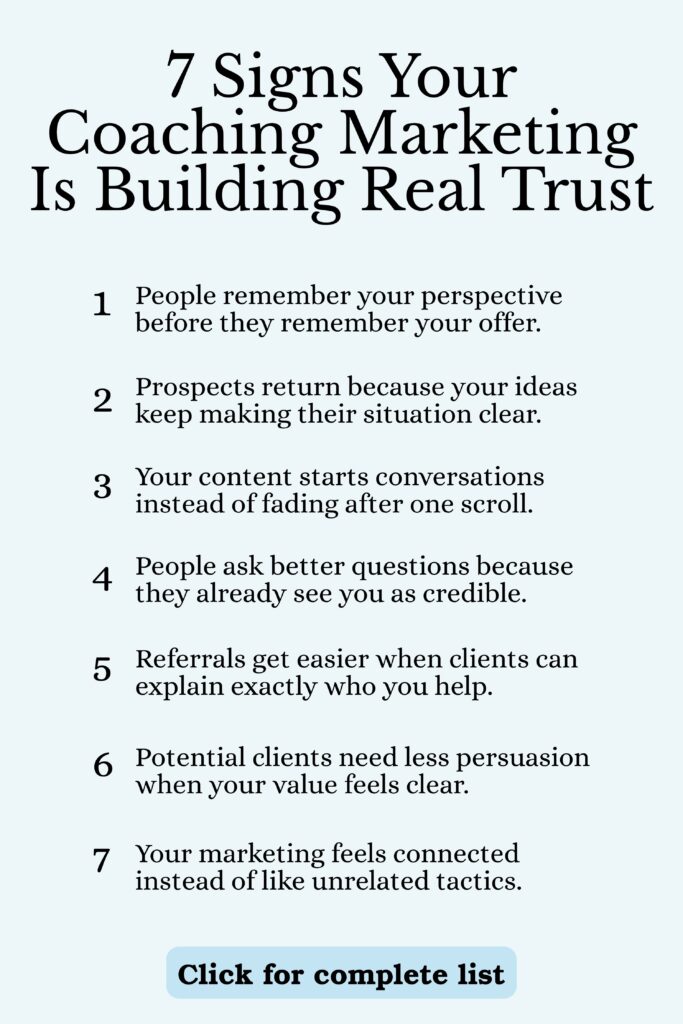
That doesn’t mean asking every client for referrals after every session.
Instead, pay attention to moments when clients recognize their progress.
SEE ALSO: If you’re a coach looking to streamline your administrative tasks and save time, check out our Coaching Administration Software. It’s a simple, effective solution designed to help you focus less on paperwork and more on what matters—coaching your clients. From scheduling to client management, our software gives you the tools to run your business efficiently. Ready to reclaim your time and boost productivity? Click or tap here.
Imagine you’re coaching a newly promoted manager who initially struggled to delegate responsibilities.
After several sessions, they tell you they’ve successfully handed over a major project and are spending more time on strategic work.
That’s an opportunity to acknowledge their progress and, if the relationship feels appropriate, ask whether they know someone facing a similar challenge.
You might say:
“I’m glad you’ve been able to put those changes into practice. If you know another manager who’s struggling with that transition, I’m always happy to have an introductory conversation.”
Specific referral requests are easier to act on than general requests.
SEE ALSO: If you’re a coach looking to streamline your administrative tasks and save time, check out our Coaching Administration Software. It’s a simple, effective solution designed to help you focus less on paperwork and more on what matters—coaching your clients. From scheduling to client management, our software gives you the tools to run your business efficiently. Ready to reclaim your time and boost productivity? Click or tap here.
“Do you know any newly promoted managers who could use support?” gives someone a clearer picture than “Please send people my way.”
You can make introductions easier by giving clients a short description of your coaching specialty and a link they can share.
For example, a leadership coach might provide this description:
“I work with first-time managers who want to become more confident with delegation, difficult conversations, and leading their teams.”
A prospective client who receives that introduction can then decide whether to book a discovery call.
A Public Booking Page provides a convenient destination for those referrals without requiring the existing client to coordinate schedules.
SEE ALSO: If you’re a coach looking to streamline your administrative tasks and save time, check out our Coaching Administration Software. It’s a simple, effective solution designed to help you focus less on paperwork and more on what matters—coaching your clients. From scheduling to client management, our software gives you the tools to run your business efficiently. Ready to reclaim your time and boost productivity? Click or tap here.
Referrals can also come from professional relationships outside your client base.
A career coach might build a relationship with a résumé writer, recruiter, or interview preparation specialist. Those professionals may encounter people who need longer-term support with career decisions.
The relationship works best when each professional understands what the other does and can make appropriate introductions without promising business in return.
For more on the connection between client relationships, referrals, and long-term revenue, see A Bird in the Hand: The Simple Math of Client Lifetime Value (for Coaches).
A referral is not a guaranteed client. It is an introduction that starts a new relationship with some existing context and credibility.
Which Client-Getting Activities Are Actually Working?
The client-getting activities worth repeating are the ones that produce meaningful conversations, qualified consultations, and paying clients relative to the time and money invested.
SEE ALSO: If you’re a coach looking to streamline your administrative tasks and save time, check out our Coaching Administration Software. It’s a simple, effective solution designed to help you focus less on paperwork and more on what matters—coaching your clients. From scheduling to client management, our software gives you the tools to run your business efficiently. Ready to reclaim your time and boost productivity? Click or tap here.
Attending networking events, publishing content, and hosting free workshops can all create visibility. But visibility alone doesn’t tell you whether an activity is helping your coaching business grow.
A simple monthly scorecard can reveal which activities deserve more attention.
Track five things:
- Meaningful conversations: How many people discussed a coaching-related need with you?
- Contacts captured: How many interested people gave permission for you to stay in touch?
- Consultations booked: How many people scheduled a discovery or introductory session?
- Clients won: How many prospects purchased coaching?
- Acquisition source: Which event, referral, publication, or online channel introduced them to you?
You don’t need complicated analytics to start.
A spreadsheet with the date, prospect’s name, source, next step, and outcome is enough to identify useful patterns.
Suppose you spend a month testing two strategies.
SEE ALSO: If you’re a coach looking to streamline your administrative tasks and save time, check out our Coaching Administration Software. It’s a simple, effective solution designed to help you focus less on paperwork and more on what matters—coaching your clients. From scheduling to client management, our software gives you the tools to run your business efficiently. Ready to reclaim your time and boost productivity? Click or tap here.
Your trade-show attendance produces 20 new contacts, three discovery calls, and one paying client.
Meanwhile, a local newspaper column produces just two inquiries, but both people book consultations and one purchases a coaching package.
The trade show produced more contacts, but the newspaper column produced a comparable number of clients from fewer inquiries.
That doesn’t automatically make the newspaper the better channel.
You still need to consider the cost of attending the trade show, the time required to write the column, the value of each coaching package, and whether either activity can be repeated.
The most useful measure is not how many people noticed you. It’s how many suitable prospects moved toward becoming clients.
SEE ALSO: If you’re a coach looking to streamline your administrative tasks and save time, check out our Coaching Administration Software. It’s a simple, effective solution designed to help you focus less on paperwork and more on what matters—coaching your clients. From scheduling to client management, our software gives you the tools to run your business efficiently. Ready to reclaim your time and boost productivity? Click or tap here.
You can also calculate a simple consultation-to-client conversion rate:
Consultation-to-client conversion rate = Paying clients ÷ Completed consultations × 100
If you complete eight consultations and two people purchase coaching, your conversion rate is 25%.
That figure becomes more useful when you track it over several months and compare similar types of consultations.
Don’t draw major conclusions from one event or a handful of inquiries.
A small number of high-value clients may make a channel worthwhile even when it generates fewer leads.
SEE ALSO: If you’re a coach looking to streamline your administrative tasks and save time, check out our Coaching Administration Software. It’s a simple, effective solution designed to help you focus less on paperwork and more on what matters—coaching your clients. From scheduling to client management, our software gives you the tools to run your business efficiently. Ready to reclaim your time and boost productivity? Click or tap here.
LCH Core’s client profiles and notes can help you keep relevant prospect information organized. You can record where a relationship began, what the person was interested in, and which next step was discussed.
Review your results monthly and ask three practical questions:
- Which activity introduced the most suitable prospects?
- Which activity produced the most paying clients relative to its cost?
- Which activity can I realistically repeat next month?
Use the answers to choose where to invest your next round of marketing effort.
Where LCH Core Fits
LCH Core fits into relationship-based client acquisition by helping coaches manage the practical steps between meeting a prospective client, booking a consultation, and delivering paid coaching.
The relationship-building still comes from you. The software supports the process once someone expresses interest.
For example, consider a coach who meets a prospective client at a professional networking event.
SEE ALSO: If you’re a coach looking to streamline your administrative tasks and save time, check out our Coaching Administration Software. It’s a simple, effective solution designed to help you focus less on paperwork and more on what matters—coaching your clients. From scheduling to client management, our software gives you the tools to run your business efficiently. Ready to reclaim your time and boost productivity? Click or tap here.
After discussing the person’s goals, the coach offers a useful worksheet and suggests a discovery call.
The prospect books through a Public Booking Page and completes an intake form explaining what they want help with.
The coach can review that information before the consultation rather than spending the first part of the conversation collecting basic details.
If the prospect decides to work with the coach, a coaching package gives them a defined engagement to purchase.
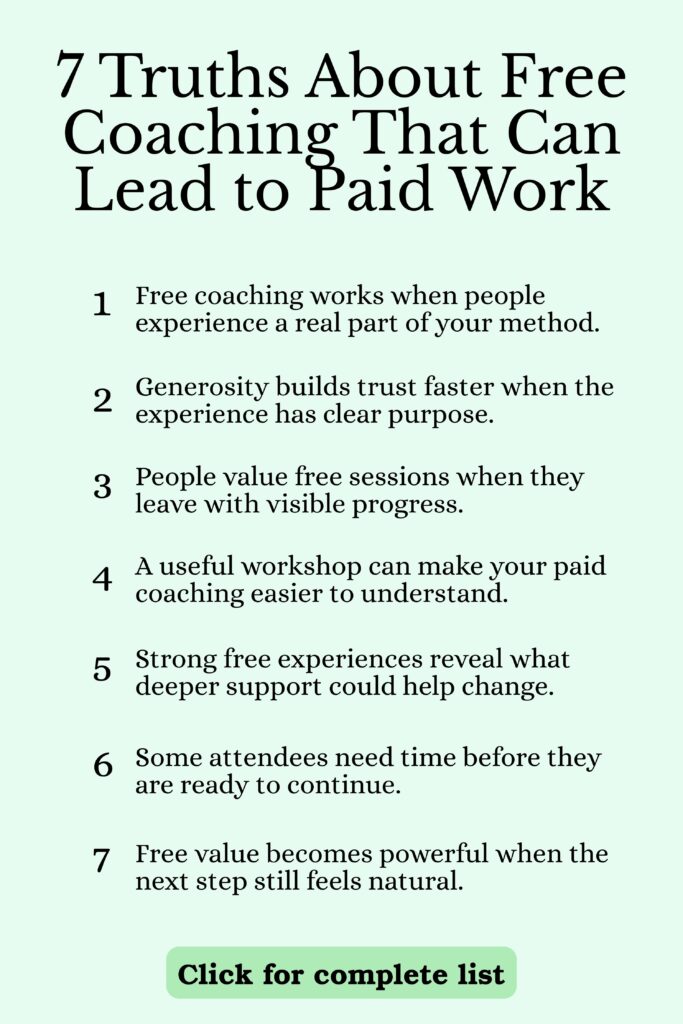
A Welcome Package can then provide the welcome letter, coaching agreement with electronic signature, and forms needed to begin working together.
Once coaching starts, goals, worksheets, journals, and action items can help clients apply what they discuss during sessions.
SEE ALSO: If you’re a coach looking to streamline your administrative tasks and save time, check out our Coaching Administration Software. It’s a simple, effective solution designed to help you focus less on paperwork and more on what matters—coaching your clients. From scheduling to client management, our software gives you the tools to run your business efficiently. Ready to reclaim your time and boost productivity? Click or tap here.
The Progress Stream and Engagement Report can support reviews of client activity and progress as the relationship develops.
For coaches who want to offer useful resources before or alongside one-to-one coaching, lead magnets, courses, and digital products sold through a Public Store create additional ways for people to engage.
The important distinction is that getting a lead and converting a lead are different jobs.
A directory profile, networking event, or media appearance might introduce someone to your coaching. A clear offer, a useful conversation, and an easy booking process help that person decide what to do next.
If you’re considering how to organize those steps, How to Master Funnels as a Coach (and Why You Need To) explains how attraction, nurturing, conversion, and retention work together.
You can also compare the wider set of client management, booking, onboarding, and coaching tools in Best Coaching Software for Life Coaches: What to Look For Before You Choose.
SEE ALSO: If you’re a coach looking to streamline your administrative tasks and save time, check out our Coaching Administration Software. It’s a simple, effective solution designed to help you focus less on paperwork and more on what matters—coaching your clients. From scheduling to client management, our software gives you the tools to run your business efficiently. Ready to reclaim your time and boost productivity? Click or tap here.
The objective is a consistent experience. Someone who expresses interest should know how to take the next step, and someone who becomes a client should have a clear path into the coaching relationship.
Frequently Asked Questions
How do life coaches get their first clients?
Life coaches can get their first clients through personal and professional networks, niche communities, introductory workshops, referrals, and direct conversations with people who need their services.
Start by defining the specific problem your coaching addresses, then identify where people facing that problem already spend time. Offer a clear introductory conversation rather than trying to sell a large package immediately.
What is the best way to get coaching clients without cold calling?
Relationship-based networking is a practical way to attract coaching clients without cold calling.
Participate in relevant professional communities, offer useful resources, host small coaching events, and develop referral relationships. Make sure interested people have an easy way to book a consultation.
How do you turn networking contacts into coaching clients?
You turn networking contacts into coaching clients by following up personally, demonstrating relevant expertise, and offering a clear next step.
SEE ALSO: If you’re a coach looking to streamline your administrative tasks and save time, check out our Coaching Administration Software. It’s a simple, effective solution designed to help you focus less on paperwork and more on what matters—coaching your clients. From scheduling to client management, our software gives you the tools to run your business efficiently. Ready to reclaim your time and boost productivity? Click or tap here.
Reference the original conversation, share something useful, and invite the person to explore coaching if their situation calls for it. Avoid treating every new contact as someone who should immediately purchase a package.
Should life coaches offer free coaching sessions to attract clients?
Free coaching sessions can help attract paying clients when they demonstrate your approach and lead naturally to a defined paid service.
Keep the free experience focused on a specific problem or decision. Explain what participants will gain and how more personalized coaching differs from the introductory experience.
How much should a life coach charge?
A life coach should set rates that reflect their experience, specialization, target market, delivery costs, and the value of the coaching engagement.
Research comparable offers, calculate the income needed to sustain your practice, and test whether prospective clients understand what your packages include. Higher prices alone do not establish credibility.
How often should you follow up with a coaching lead?
A coaching lead should receive a timely initial response followed by a small number of relevant, respectful follow-ups if they have expressed interest and haven’t made a decision.
SEE ALSO: If you’re a coach looking to streamline your administrative tasks and save time, check out our Coaching Administration Software. It’s a simple, effective solution designed to help you focus less on paperwork and more on what matters—coaching your clients. From scheduling to client management, our software gives you the tools to run your business efficiently. Ready to reclaim your time and boost productivity? Click or tap here.
For example, send a personalized message within one or two days, share a useful resource several days later, and make one final invitation after another week or two. Respect requests to stop contacting them.
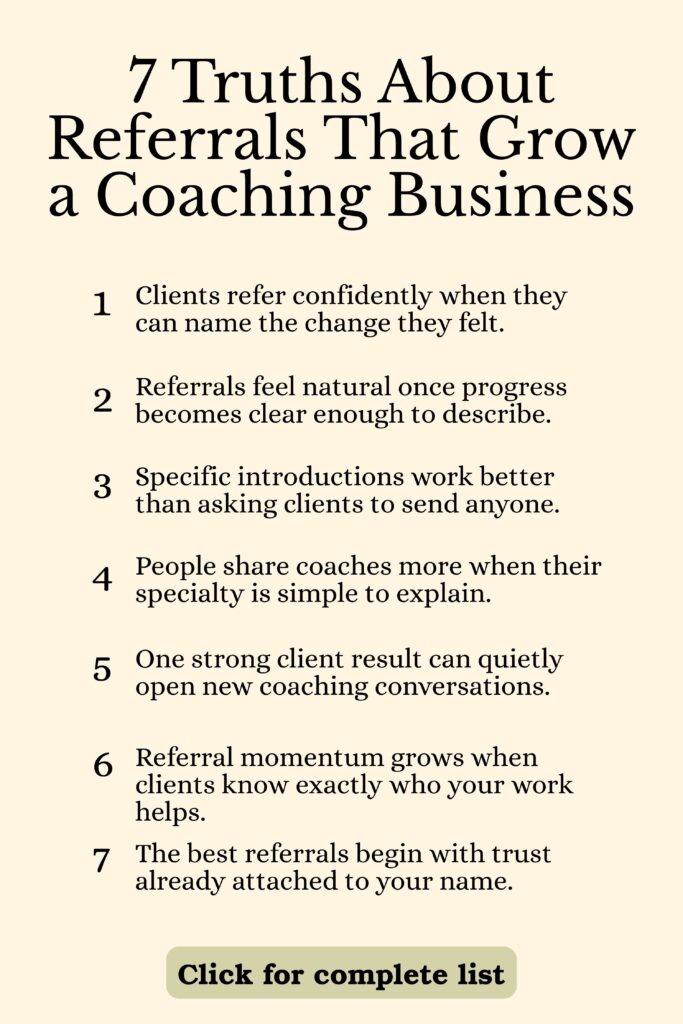
How can life coaches get more referrals?
Life coaches can get more referrals by helping clients recognize their progress and making specific, appropriate introduction requests.
When a client describes a meaningful result, ask whether they know someone facing a similar challenge. Provide a short explanation of who you help and an easy way for the referred person to contact you.
Can a coaching directory help you find new clients?
A coaching directory can help prospective clients discover your services and assess whether your specialization matches their needs.
A clear profile should explain who you coach, the problems you help with, and what someone can expect from working with you. Directory visibility works best alongside networking, useful content, and a reliable consultation process.
Which Client-Getting Strategy Should You Try First?
None of these marketing activities involve the hard sell, but they’re all powerful ways to win new clients without appearing threatening.
SEE ALSO: If you’re a coach looking to streamline your administrative tasks and save time, check out our Coaching Administration Software. It’s a simple, effective solution designed to help you focus less on paperwork and more on what matters—coaching your clients. From scheduling to client management, our software gives you the tools to run your business efficiently. Ready to reclaim your time and boost productivity? Click or tap here.
They’ll boost your revenue, set you apart as an approachable expert in your field and they’re much more fun than cold calling.
Start with the activity that gives you the most realistic access to people who need your particular coaching specialty.
If you coach newly promoted managers, that might mean attending a local HR networking event. If you help people navigate career changes, a free workshop with a professional association might be a better fit.
Choose one activity and commit to testing it for 30 days.
Decide how you’ll start conversations, what useful resource or experience you’ll offer, and how interested people can book a consultation.
Then track the results.
SEE ALSO: If you’re a coach looking to streamline your administrative tasks and save time, check out our Coaching Administration Software. It’s a simple, effective solution designed to help you focus less on paperwork and more on what matters—coaching your clients. From scheduling to client management, our software gives you the tools to run your business efficiently. Ready to reclaim your time and boost productivity? Click or tap here.
You don’t need to be everywhere to build a profitable coaching business. You need a repeatable way to meet the right people, earn their trust, and help them take the next step.
For coaches who want their booking, client management, onboarding, and coaching delivery organized in one place, LCH Core coaching software can support that process.
The strongest client relationships rarely begin with a hard sell. They begin with a useful conversation and a reason to continue it.
Sources
International Coaching Federation. 2025 ICF Global Coaching Study. International Coaching Federation, 2025. https://coachingfederation.org/resources/research/global-coaching-study/.
Oldroyd, James B., Kristina McElheran, and David Elkington. “The Short Life of Online Sales Leads.” Harvard Business Review, 1 Mar. 2011. https://hbr.org/2011/03/the-short-life-of-online-sales-leads
Read this next

Five Marketing Benefits Every Life Coach Should Know on How to Benefit From Writing A Book
Writing a book can be a great boost to a coach–find out how to make the most of this killer strategy.
Read More
How to Market your Life Coaching Business with the Help of Webinars: 9 Tips
Learn how to promote your coaching business with the help of webinars
Read More
5 Keys For How to Attract your Dream Client as a Life Coach (Crushing it Guide)
Attracting your dream client is an exciting and challenging feat that requires you to find your purpose!
Read More