






Create Irresistible Offers by Knowing the “Secret Psychology” of Potential Clients

What Is the “Secret Psychology” of Potential Clients?
What is it that your potential clients (Mr. or Ms. Right Client) REALLY want and how can you create offers that are irresistible to them?
To really know what they want you must uncover their biggest challenges, stuck points, pain in the ass problems, juicy dreams & deepest desires.
Key Takeaways
- Sell the result your clients want, not just the coaching they need. Potential clients are more interested in solving a recognizable problem than purchasing an abstract process such as personal growth, mindset work, or self-discovery.
- Use your clients’ actual words to understand their desires. Discovery calls, intake questions, and recurring client concerns reveal the situations people want to change and the outcomes they are willing to pursue.
- Look beneath the practical goal to identify its emotional meaning. Someone seeking a relationship, career change, or confidence boost may also be seeking security, freedom, recognition, connection, or greater control over their future.
- Turn those insights into a specific, credible coaching offer. Define the desired outcome, the problem your coaching addresses, the process clients will experience, and the support included in the package.
- Test your offer before committing to a full launch. Qualified inquiries, consultation bookings, objections, and actual purchases provide more useful evidence of demand than compliments or enthusiastic reactions alone.
How Do You Create Coaching Offers That Clients Actually Want?
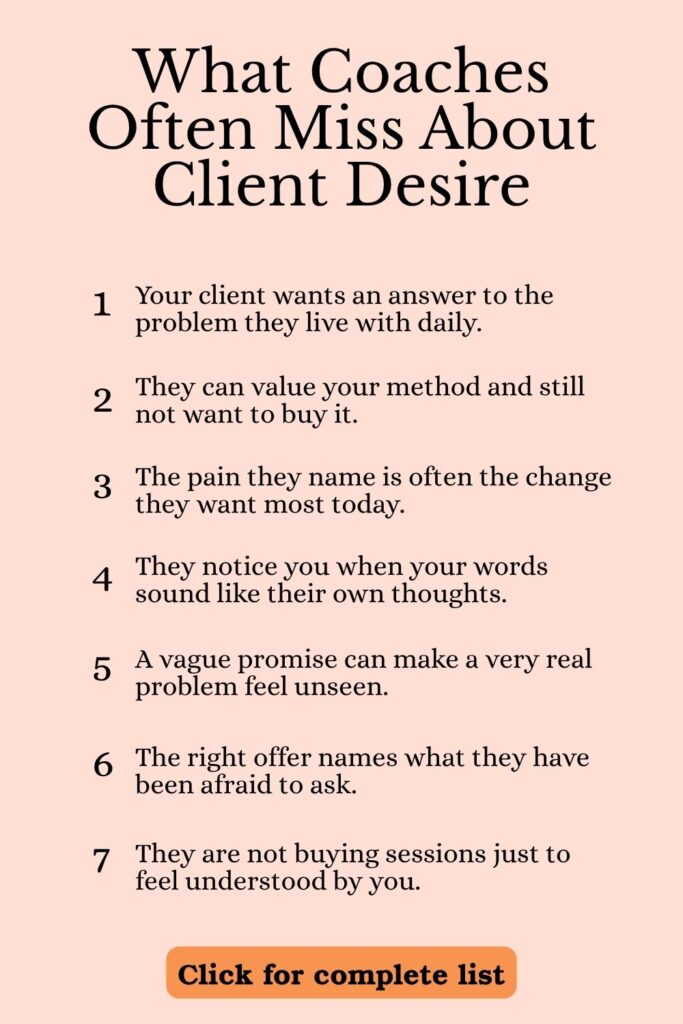
You create coaching offers that clients actually want by identifying a specific problem they are motivated to solve, understanding the result they hope to achieve, and presenting your coaching as a credible path toward that outcome. The strongest offer connects what clients already want with the practical support you can provide.
Start by listening to the language potential clients use when describing their frustrations, goals, and desired changes. Then turn those insights into an offer that clearly explains who it helps, what clients will work toward, how the coaching works, and what they receive.
An irresistible coaching offer isn’t necessarily one that promises dramatic results. It’s one that makes the right client think, “That’s exactly what I’ve been looking for.”
How Can You Discover What Your Ideal Coaching Clients Really Want?
The most reliable way to discover what your ideal coaching clients want is to listen to how they describe their problems before you start telling them what they need.
SEE ALSO: If you’re a coach looking to streamline your administrative tasks and save time, check out our Coaching Administration Software. It’s a simple, effective solution designed to help you focus less on paperwork and more on what matters—coaching your clients. From scheduling to client management, our software gives you the tools to run your business efficiently. Ready to reclaim your time and boost productivity? Click or tap here.
You may know that your clients could benefit from stronger boundaries, better self-esteem, or a healthier mindset. But those aren’t necessarily the things they’re searching for when they decide to hire a coach.
They’re searching for answers to problems that feel urgent and personal.
A relationship coaching prospect might say:
- “We keep having the same argument.”
- “I feel like we’re roommates.”
- “I don’t know whether I should stay or leave.”
- “I keep attracting the wrong people.”
- “I’m tired of dating people who won’t commit.”
Notice how specific those statements are.
Nobody is asking for six sessions of emotional awareness training. They’re describing situations they want to change.
Start collecting those exact phrases.
SEE ALSO: If you’re a coach looking to streamline your administrative tasks and save time, check out our Coaching Administration Software. It’s a simple, effective solution designed to help you focus less on paperwork and more on what matters—coaching your clients. From scheduling to client management, our software gives you the tools to run your business efficiently. Ready to reclaim your time and boost productivity? Click or tap here.
Look at the questions people ask during discovery calls, the emails they send before booking, and the concerns that repeatedly appear in your coaching conversations.
You can also ask prospective clients a few focused questions:
- What’s happening in your life that made you look for coaching now?
- What have you already tried to change this situation?
- What’s the most frustrating part of the problem?
- What would you love to be different three months from now?
- How would you know that working with a coach had been worthwhile?
Pay particular attention to the answers that keep appearing.
If several relationship coaching prospects describe feeling more like roommates than romantic partners, that’s useful information. You have discovered a recognizable problem that your offer can address.
You could position your coaching around helping couples rebuild closeness rather than using a broad promise such as “transform your relationship.”
The client’s language tells you how to describe the result. Your expertise tells you how to help them work toward it.
SEE ALSO: If you’re a coach looking to streamline your administrative tasks and save time, check out our Coaching Administration Software. It’s a simple, effective solution designed to help you focus less on paperwork and more on what matters—coaching your clients. From scheduling to client management, our software gives you the tools to run your business efficiently. Ready to reclaim your time and boost productivity? Click or tap here.
For a more systematic approach, keep a simple record of the phrases you hear, the situations behind them, and the outcomes clients describe.
If you use LCH Core, its client management tools let you organize client profiles, notes, and intake forms so those insights don’t disappear after each conversation. The LCH Core video tutorials also cover organizing client information and using coaching forms.
Over time, you’ll have something far more useful than a collection of guesses about your ideal client. You’ll have real language to inform your coaching offers.
Why Do Clients Buy Results Instead of Coaching Methods?
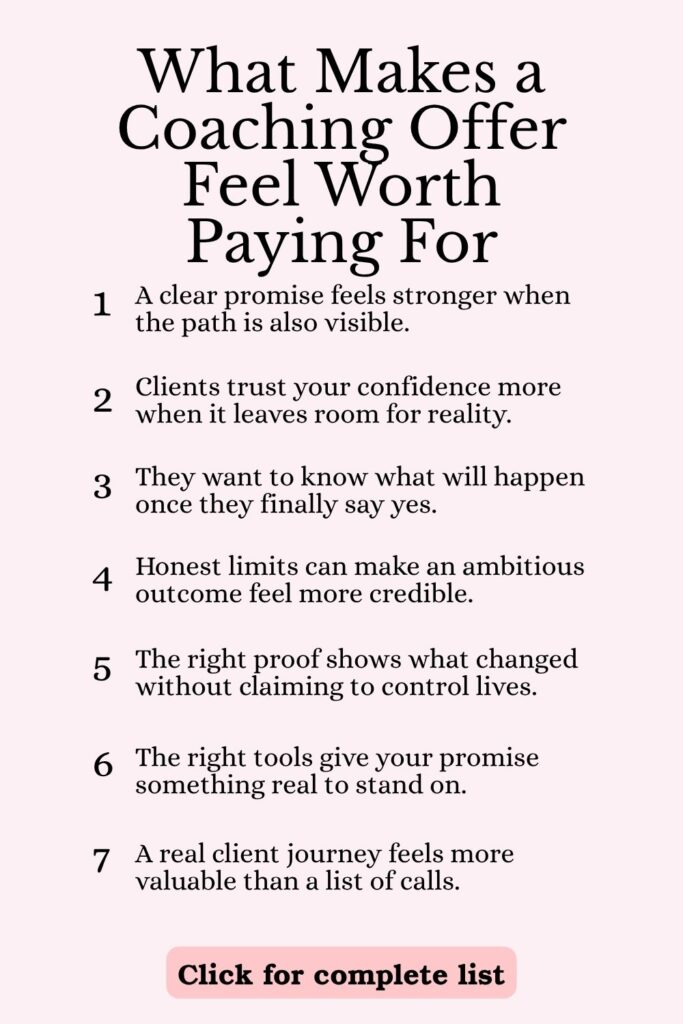
Let’s look at relationship & sexuality coaching clients. What do they REALLY want?
- To feel a deeper connection to their partner
- To satisfy their partner in bed
- To repair or resolve a potential break-up
- To get their ex back
- To be multi-orgasmic
- To feel attractive
- To feel “wanted” by their partner
- To find the right partner
- To last longer in bed
- To learn how to keep a partner
- To get married
- To heal after an affair and move forward
- To learn how to date successfully
- To make a boring sex life fresh again
Many coaches make the mistake of focusing on what they think clients need and don’t look at what the client truly wants (or at least what the client “thinks” they want).
Even though you think they need to love themselves more, or work on their self-esteem, or have some spiritual practices (even though you may totally be right), the client is looking for the result. We have to meet Mr. or Ms. Right Client where their minds are at.
SEE ALSO: If you’re a coach looking to streamline your administrative tasks and save time, check out our Coaching Administration Software. It’s a simple, effective solution designed to help you focus less on paperwork and more on what matters—coaching your clients. From scheduling to client management, our software gives you the tools to run your business efficiently. Ready to reclaim your time and boost productivity? Click or tap here.
The great thing is that while you help them get what they think they want (to get their ex back, to find the right partner, to be great in bed, etc.), along the way they can also get what they really need (to love themselves, etc.).
Clients “should want” to have unconditional love in their relationships. Most people would agree that this would be a very good thing, but this isn’t at the forefront of their minds as something they’re hungry for.
What they may be hungry for is having things go back to the way they were in the beginning of their relationship. They want to fall in love all over again. They want their relationship to feel fresh, hot and new.
What they “need” may be to love themselves and each other unconditionally, look for the best in each other and not try to change each other.
But that’s not what they’re gonna buy. That’s not what’s going to sell.
Those may be the “tools,” but they’re not the results they want.
SEE ALSO: If you’re a coach looking to streamline your administrative tasks and save time, check out our Coaching Administration Software. It’s a simple, effective solution designed to help you focus less on paperwork and more on what matters—coaching your clients. From scheduling to client management, our software gives you the tools to run your business efficiently. Ready to reclaim your time and boost productivity? Click or tap here.
Truth is, the only reason anyone wants anything is because they believe they will feel good in the having of it.
So what clients are looking for is the feelings and the situations that seem like they’ll create them. That’s what you want to offer them.
For example: A woman might want to feel “secure” and loved in her relationship. So you may teach: “How to inspire your man’s total devotion to you” to help women connect with their man deeply and emotionally.
Example: A man might want to feel “confident” pleasing his woman in bed. So you may teach: “The secrets to blowing your woman’s mind in bed” to help men understand what their woman really wants and to feel confident satisfying them every time.
How Do You Uncover the Emotional Motivation Behind a Client’s Goal?
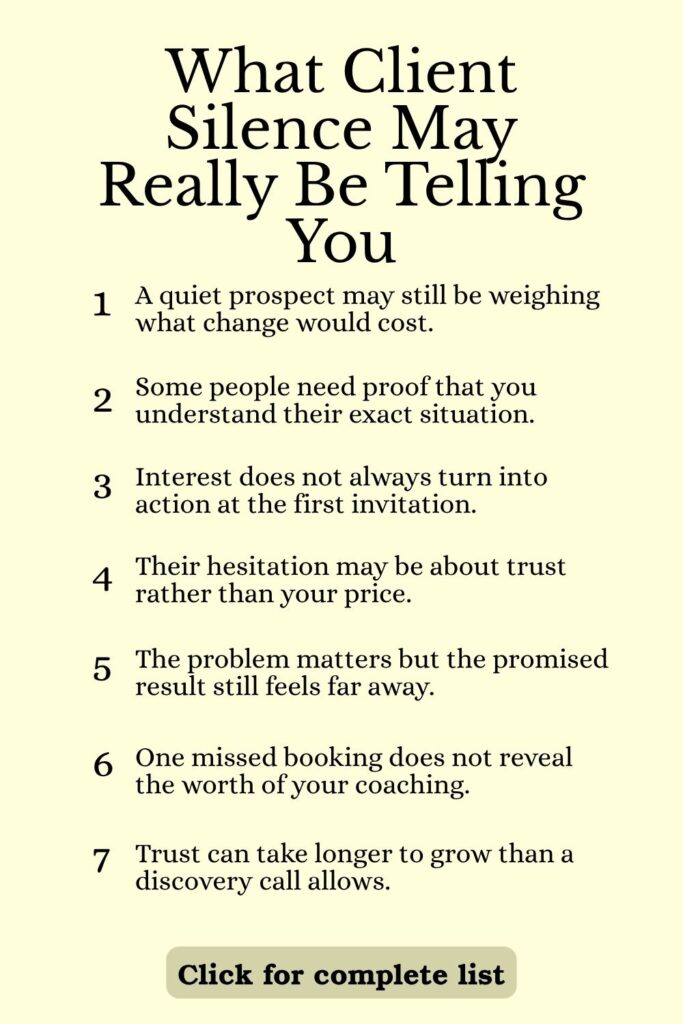
You uncover the emotional motivation behind a client’s goal by asking what achieving that goal would change in their everyday life, and why that change matters to them.
The first answer someone gives you is often the visible goal. The deeper motivation becomes clearer when you explore what that result represents.
SEE ALSO: If you’re a coach looking to streamline your administrative tasks and save time, check out our Coaching Administration Software. It’s a simple, effective solution designed to help you focus less on paperwork and more on what matters—coaching your clients. From scheduling to client management, our software gives you the tools to run your business efficiently. Ready to reclaim your time and boost productivity? Click or tap here.
A useful way to do this is with the Five Whys technique, a questioning method that explores the reasons behind a stated problem or desire.
You don’t have to ask “why” five times in a row. In fact, that can make a coaching conversation feel like an interrogation.
Instead, use the principle behind the technique: keep exploring until you understand the motivation beneath the initial answer.
Let’s say you’re speaking with a woman who wants to get married.
You ask what she’s hoping to achieve through coaching.
“I want to find someone who’s ready for marriage.”
SEE ALSO: If you’re a coach looking to streamline your administrative tasks and save time, check out our Coaching Administration Software. It’s a simple, effective solution designed to help you focus less on paperwork and more on what matters—coaching your clients. From scheduling to client management, our software gives you the tools to run your business efficiently. Ready to reclaim your time and boost productivity? Click or tap here.
You ask what has made that difficult.
“I keep dating men who don’t want anything serious.”
You ask what bothers her most about those experiences.
“I feel like I’m wasting years on relationships that aren’t going anywhere.”
You ask what she would like to feel differently when dating.
“I want to feel confident that I’m choosing someone who wants the same future I do.”
SEE ALSO: If you’re a coach looking to streamline your administrative tasks and save time, check out our Coaching Administration Software. It’s a simple, effective solution designed to help you focus less on paperwork and more on what matters—coaching your clients. From scheduling to client management, our software gives you the tools to run your business efficiently. Ready to reclaim your time and boost productivity? Click or tap here.
Now you’ve discovered something useful.
Her stated goal is marriage. Her immediate problem is choosing compatible partners. Her emotional desire is confidence and security about her future.
That’s much more specific than simply knowing she wants a husband.
It also gives you a better foundation for your offer.
Instead of advertising “Marriage Coaching for Single Women,” you might create an offer around recognizing relationship compatibility, dating with clear intentions, and avoiding relationships that don’t align with long-term goals.
The coaching may still involve self-esteem, boundaries, communication, and personal beliefs. But those become the methods you use to help her work toward the outcome she values.
SEE ALSO: If you’re a coach looking to streamline your administrative tasks and save time, check out our Coaching Administration Software. It’s a simple, effective solution designed to help you focus less on paperwork and more on what matters—coaching your clients. From scheduling to client management, our software gives you the tools to run your business efficiently. Ready to reclaim your time and boost productivity? Click or tap here.
There’s another benefit to exploring motivation this way.
You avoid making assumptions about what a client really wants.
Two people might both say they want to get married. One may want emotional security. Another may want to build a family. A third may be questioning whether marriage is actually the right choice.
Their coaching goals won’t necessarily be identical.
A simple worksheet can help clients explore these distinctions. Have them identify their desired outcome, why it matters, what currently stands in the way, and what meaningful progress would look like.
That gives you a clearer picture of what they’re buying into, and it gives the client a clearer picture of what they’re working toward.
SEE ALSO: If you’re a coach looking to streamline your administrative tasks and save time, check out our Coaching Administration Software. It’s a simple, effective solution designed to help you focus less on paperwork and more on what matters—coaching your clients. From scheduling to client management, our software gives you the tools to run your business efficiently. Ready to reclaim your time and boost productivity? Click or tap here.
How Do You Turn Client Desires Into a Compelling Coaching Offer?
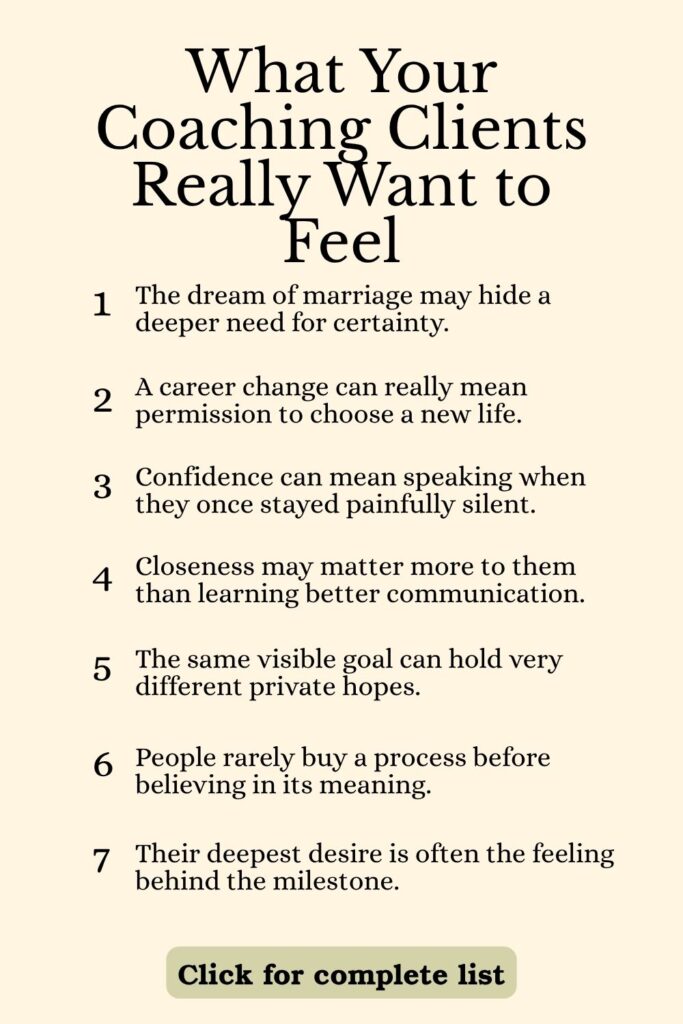
You turn client desires into a compelling coaching offer by connecting a specific outcome to a recognizable problem, a realistic coaching process, and a clear set of deliverables.
The mistake many coaches make is starting with the package itself.
Six sessions. Weekly calls. Worksheets. Email support.
Those details matter, but they don’t explain why someone should want the package in the first place.
Start with the transformation the client is looking for, then work backward to the coaching that can support it.
Here’s a simple four-part process.
SEE ALSO: If you’re a coach looking to streamline your administrative tasks and save time, check out our Coaching Administration Software. It’s a simple, effective solution designed to help you focus less on paperwork and more on what matters—coaching your clients. From scheduling to client management, our software gives you the tools to run your business efficiently. Ready to reclaim your time and boost productivity? Click or tap here.
1. Identify the desired outcome.
What does your potential client want to be different?
For a relationship coaching client, the answer might be feeling emotionally connected to their partner again.
For a career coaching client, it might be finding a career direction they’re excited to pursue.
Keep the outcome specific enough that someone can recognize themselves in it.
2. Define the problem standing in the way.
What is preventing the client from getting that result?
A couple may be stuck in recurring arguments that leave both partners feeling unheard.
SEE ALSO: If you’re a coach looking to streamline your administrative tasks and save time, check out our Coaching Administration Software. It’s a simple, effective solution designed to help you focus less on paperwork and more on what matters—coaching your clients. From scheduling to client management, our software gives you the tools to run your business efficiently. Ready to reclaim your time and boost productivity? Click or tap here.
A career coaching client may have several possible directions but no clear way to compare them.
Your offer becomes more compelling when it connects the desired outcome to a problem the client already recognizes.
3. Explain the coaching process.
What will you actually help the client do?
For the relationship client, you might help them identify recurring conflict patterns, practice expressing needs without blame, and create new habits for staying connected.
For the career client, you might explore their strengths, evaluate career options, and develop a practical transition plan.
This is where your coaching expertise comes in.
SEE ALSO: If you’re a coach looking to streamline your administrative tasks and save time, check out our Coaching Administration Software. It’s a simple, effective solution designed to help you focus less on paperwork and more on what matters—coaching your clients. From scheduling to client management, our software gives you the tools to run your business efficiently. Ready to reclaim your time and boost productivity? Click or tap here.
4. Make the offer tangible.
What does the client receive, and how will the coaching be delivered?
A relationship coaching package might include:
- Six private coaching sessions
- An initial relationship goals assessment
- Communication worksheets
- Weekly exercises to practice between sessions
- A final review of progress and next steps
Now the client can see both the result they’re working toward and the support they’ll receive.
Compare these two offers.
Before: Six Sessions of Relationship Coaching
After: Rebuild Your Connection: A Six-Session Coaching Program for Couples Who Keep Having the Same Arguments
SEE ALSO: If you’re a coach looking to streamline your administrative tasks and save time, check out our Coaching Administration Software. It’s a simple, effective solution designed to help you focus less on paperwork and more on what matters—coaching your clients. From scheduling to client management, our software gives you the tools to run your business efficiently. Ready to reclaim your time and boost productivity? Click or tap here.
The second offer tells the client who it’s for, what problem it addresses, and what they’re working toward.
It doesn’t promise that every relationship will be saved. It gives the right couple a reason to investigate further.
Once you’ve developed the offer, you can organize it as a coaching package with a clear description, session structure, and payment terms.
LCH Core supports coaching packages, payments, and billing, so the practical details of the offer can match the outcome-focused description. The coaching offers and lead magnets tutorial collection provides guidance on setting up offers and related coaching tools.
The goal isn’t to make your package sound bigger than it is.
It’s to make the value of your coaching immediately understandable.
SEE ALSO: If you’re a coach looking to streamline your administrative tasks and save time, check out our Coaching Administration Software. It’s a simple, effective solution designed to help you focus less on paperwork and more on what matters—coaching your clients. From scheduling to client management, our software gives you the tools to run your business efficiently. Ready to reclaim your time and boost productivity? Click or tap here.
What Does an Irresistible Coaching Offer Look Like in Practice?
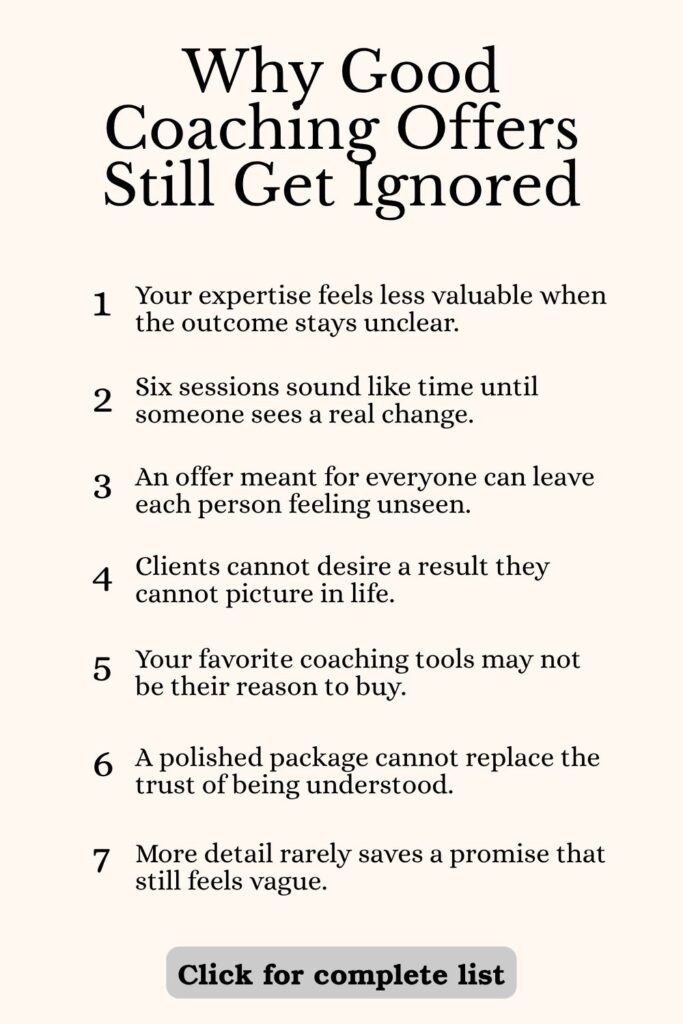
An irresistible coaching offer connects a problem clients already recognize with a desirable outcome and a believable way to work toward it.
You can apply that principle across almost any coaching niche.
The key is to stop describing your coaching category and start describing what the client wants to change.
Example 1: Relationship Coaching
Generic offer: “Improve Your Relationship Communication”
What the client says: “We keep having the same fight, and nothing ever gets resolved.”
SEE ALSO: If you’re a coach looking to streamline your administrative tasks and save time, check out our Coaching Administration Software. It’s a simple, effective solution designed to help you focus less on paperwork and more on what matters—coaching your clients. From scheduling to client management, our software gives you the tools to run your business efficiently. Ready to reclaim your time and boost productivity? Click or tap here.
What they want: To stop repeating painful arguments and feel understood by their partner.
A more compelling offer:
Stop Having the Same Argument: A Six-Week Relationship Communication Program
The coaching might focus on identifying recurring conflict triggers, practicing new ways to express needs, and creating agreements for handling difficult conversations.
The offer addresses a situation the client already recognizes.
Example 2: Career Coaching
SEE ALSO: If you’re a coach looking to streamline your administrative tasks and save time, check out our Coaching Administration Software. It’s a simple, effective solution designed to help you focus less on paperwork and more on what matters—coaching your clients. From scheduling to client management, our software gives you the tools to run your business efficiently. Ready to reclaim your time and boost productivity? Click or tap here.
Generic offer: “Career Clarity and Personal Development Coaching”
What the client says: “I know I need a change, but I have no idea what to do next.”
What they want: Confidence about their next career move and a realistic plan for making it happen.
A more compelling offer:
Find Your Next Career Direction: A Four-Week Decision and Action Program
The coach might help the client identify career priorities, compare realistic options, evaluate practical constraints, and create a 90-day action plan.
SEE ALSO: If you’re a coach looking to streamline your administrative tasks and save time, check out our Coaching Administration Software. It’s a simple, effective solution designed to help you focus less on paperwork and more on what matters—coaching your clients. From scheduling to client management, our software gives you the tools to run your business efficiently. Ready to reclaim your time and boost productivity? Click or tap here.
The client isn’t buying four conversations about career development.
They’re investing in a structured process for making a decision they’ve been putting off.
Example 3: Confidence Coaching
Generic offer: “Build Self-Esteem and Personal Confidence”
What the client says: “I never speak up in meetings, even when I know I have something valuable to say.”
What they want: To contribute confidently, be taken seriously, and stop missing opportunities to demonstrate their abilities.
SEE ALSO: If you’re a coach looking to streamline your administrative tasks and save time, check out our Coaching Administration Software. It’s a simple, effective solution designed to help you focus less on paperwork and more on what matters—coaching your clients. From scheduling to client management, our software gives you the tools to run your business efficiently. Ready to reclaim your time and boost productivity? Click or tap here.
A more compelling offer:
Speak Up With Confidence: A Coaching Program for Professionals Who Want Their Voices Heard
The coaching could include identifying situations that trigger hesitation, practicing responses, preparing for important conversations, and reviewing real-world experiences between sessions.
Notice the pattern.
The offer isn’t built around a vague promise to become a better version of yourself.
It’s built around something the client can recognize in their actual life.
SEE ALSO: If you’re a coach looking to streamline your administrative tasks and save time, check out our Coaching Administration Software. It’s a simple, effective solution designed to help you focus less on paperwork and more on what matters—coaching your clients. From scheduling to client management, our software gives you the tools to run your business efficiently. Ready to reclaim your time and boost productivity? Click or tap here.
That specificity also helps you decide what belongs inside the package.
If the offer is about speaking up in meetings, the coaching tools should support that goal. A practice worksheet, an action item for the next meeting, and a reflection journal afterward all make sense.
A generic collection of unrelated exercises doesn’t.
LCH Core lets coaches create reusable worksheets, journals, goals, and action items that can be assigned to clients as part of the coaching process. Those tools can help connect the promise made before purchase with the work clients do afterward.
The more closely your coaching experience matches the result you advertise, the easier it becomes for clients to understand what they’re paying for.
How Do You Identify What Your Ideal Marriage Coaching Clients Want?
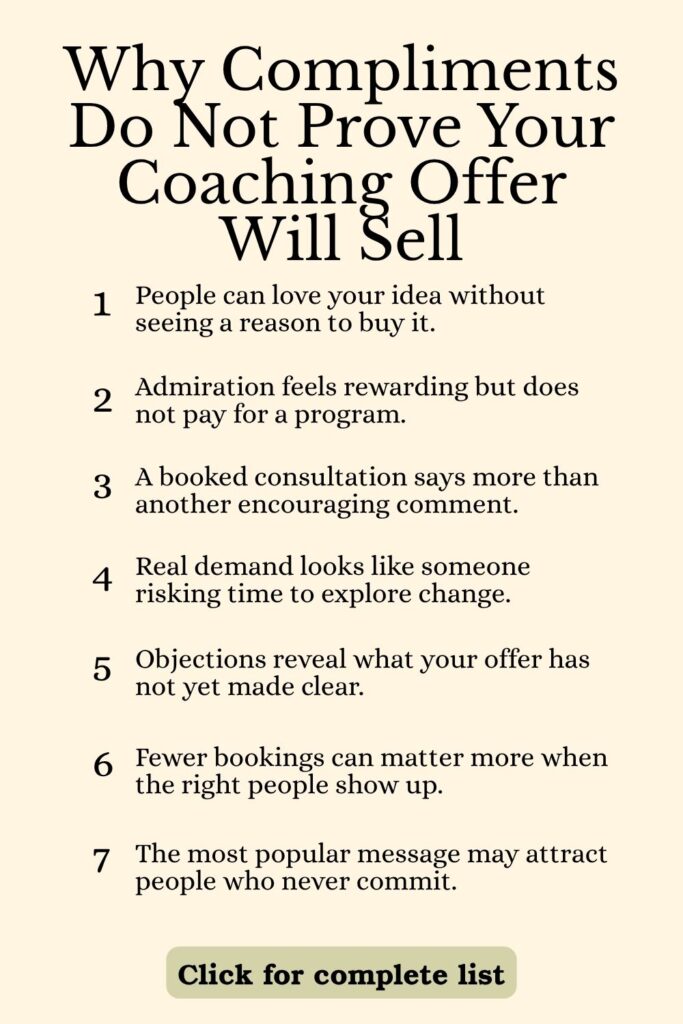
Say you’re a “Get Hitched” (Marriage) Coach.
SEE ALSO: If you’re a coach looking to streamline your administrative tasks and save time, check out our Coaching Administration Software. It’s a simple, effective solution designed to help you focus less on paperwork and more on what matters—coaching your clients. From scheduling to client management, our software gives you the tools to run your business efficiently. Ready to reclaim your time and boost productivity? Click or tap here.
What are the pains, problems, challenges, desires and dreams of people that want to get married? Fill in the blanks…
Start by writing down what your potential clients might actually say.
For example:
- “I’m tired of dating people who don’t want a serious relationship.”
- “I want to find someone who shares my values.”
- “I’m worried I’m going to waste another five years with the wrong person.”
- “I want to feel confident about choosing a life partner.”
- “I want a relationship that’s actually going somewhere.”
Now look at the emotions behind those statements.
Someone who says they’re tired of dating people who won’t commit may want certainty about where a relationship is heading.
Someone who worries about choosing the wrong partner may want confidence in their judgment.
SEE ALSO: If you’re a coach looking to streamline your administrative tasks and save time, check out our Coaching Administration Software. It’s a simple, effective solution designed to help you focus less on paperwork and more on what matters—coaching your clients. From scheduling to client management, our software gives you the tools to run your business efficiently. Ready to reclaim your time and boost productivity? Click or tap here.
Someone who wants to get married may be dreaming about companionship, building a family, or sharing a future with someone.
Your job is to discover which desires matter most to the clients you actually want to coach.
Try completing these statements:
- My ideal client is frustrated because __________.
- They’ve already tried __________.
- What they really want to experience is __________.
- The result they’re hoping coaching will help them achieve is __________.
- The coaching methods I can use to support that result are __________.
Once you can answer those questions, you have the beginnings of a much more compelling offer.
Instead of simply selling marriage coaching, you could create a program focused on helping commitment-minded singles recognize compatibility, make more intentional dating decisions, and build healthier relationships.
That’s an offer built around the client’s desired outcome, supported by your coaching expertise.
SEE ALSO: If you’re a coach looking to streamline your administrative tasks and save time, check out our Coaching Administration Software. It’s a simple, effective solution designed to help you focus less on paperwork and more on what matters—coaching your clients. From scheduling to client management, our software gives you the tools to run your business efficiently. Ready to reclaim your time and boost productivity? Click or tap here.
What Makes a Coaching Offer Credible Instead of Too Good to Be True?
A credible coaching offer promises a desirable direction of change while clearly explaining the process, support, and evidence behind that promise.
It’s tempting to make your offer sound as dramatic as possible.
“Get Your Ex Back in 30 Days!”
“Find Your Soulmate in Six Weeks!”
“Become Completely Confident After Three Sessions!”
These promises may attract attention, but they also create expectations that a coach cannot reliably control.
SEE ALSO: If you’re a coach looking to streamline your administrative tasks and save time, check out our Coaching Administration Software. It’s a simple, effective solution designed to help you focus less on paperwork and more on what matters—coaching your clients. From scheduling to client management, our software gives you the tools to run your business efficiently. Ready to reclaim your time and boost productivity? Click or tap here.
You can’t guarantee that someone’s ex will return, that a particular person will fall in love with them, or that every client will achieve the same result on the same schedule.
What you can explain is how your coaching helps clients make meaningful progress toward the outcome they want.
A useful way to check your offer is with three questions: Promise, Process, and Proof.
1. Promise: What are you helping the client work toward?
Make the outcome specific, desirable, and realistic.
Instead of “Get Your Ex Back in 30 Days,” consider “Understand What Went Wrong and Make Confident Decisions About Reconciliation.”
That still speaks to someone who wants to repair a relationship, but it doesn’t promise control over another person’s feelings or choices.
SEE ALSO: If you’re a coach looking to streamline your administrative tasks and save time, check out our Coaching Administration Software. It’s a simple, effective solution designed to help you focus less on paperwork and more on what matters—coaching your clients. From scheduling to client management, our software gives you the tools to run your business efficiently. Ready to reclaim your time and boost productivity? Click or tap here.
2. Process: How will your coaching help?
Show the client what happens between the first session and the end of the program.
A relationship coaching process might include examining recurring patterns, identifying personal needs, practicing difficult conversations, and deciding what a healthy relationship would require.
This makes the offer more substantial than an appealing headline.
3. Proof: Why should someone trust you to help?
Give potential clients credible reasons to believe you understand their situation.
That might include relevant coaching experience, qualifications, clearly explained methods, or testimonials from previous clients who have agreed to share their experiences.
Be specific about what the evidence demonstrates.
SEE ALSO: If you’re a coach looking to streamline your administrative tasks and save time, check out our Coaching Administration Software. It’s a simple, effective solution designed to help you focus less on paperwork and more on what matters—coaching your clients. From scheduling to client management, our software gives you the tools to run your business efficiently. Ready to reclaim your time and boost productivity? Click or tap here.
A testimonial saying “I learned how to set boundaries and communicate my needs” supports a different claim from “My coach saved my marriage.”
The first describes a skill the client developed. The second attributes a complex relationship outcome to the coach.
You can also build credibility by explaining exactly what the client receives before they purchase.
A clearly described package, an understandable payment arrangement, and a professional onboarding process all help set expectations.
For example, LCH Core’s Welcome Packages can include a welcome letter, coaching agreement with electronic signature, and intake forms. The Welcome Packages video tutorial explains how coaches can organize these materials.
The client knows what they’re agreeing to and what happens next.
SEE ALSO: If you’re a coach looking to streamline your administrative tasks and save time, check out our Coaching Administration Software. It’s a simple, effective solution designed to help you focus less on paperwork and more on what matters—coaching your clients. From scheduling to client management, our software gives you the tools to run your business efficiently. Ready to reclaim your time and boost productivity? Click or tap here.
An irresistible offer should make clients excited about what’s possible without misleading them about what’s certain.
How Can You Test Your Coaching Offer Before Launching It?
You can test a coaching offer before launching it by presenting a clear version to qualified prospects and measuring whether they take meaningful steps toward working with you.
You don’t need to spend months building an elaborate program before discovering whether anyone wants to buy it.
Start with a focused offer, a specific audience, and a simple way for interested people to respond.
Step 1: Create two versions of your offer message.
Let’s say you’re a relationship coach helping couples who feel disconnected.
You might test these two descriptions:
SEE ALSO: If you’re a coach looking to streamline your administrative tasks and save time, check out our Coaching Administration Software. It’s a simple, effective solution designed to help you focus less on paperwork and more on what matters—coaching your clients. From scheduling to client management, our software gives you the tools to run your business efficiently. Ready to reclaim your time and boost productivity? Click or tap here.
Version A: Rebuild Emotional Connection With Your Partner
Version B: Stop Having the Same Relationship Arguments
Both could lead to the same underlying coaching program.
But they speak to different motivations.
Version A focuses on the desired experience. Version B focuses on a recurring frustration.
You want to discover which message resonates more strongly with the clients you’re trying to reach.
SEE ALSO: If you’re a coach looking to streamline your administrative tasks and save time, check out our Coaching Administration Software. It’s a simple, effective solution designed to help you focus less on paperwork and more on what matters—coaching your clients. From scheduling to client management, our software gives you the tools to run your business efficiently. Ready to reclaim your time and boost productivity? Click or tap here.
Step 2: Put each message in front of relevant prospects.
You might use your existing audience, a small email list, relevant social media content, or conversations with people who fit your ideal client profile.
Keep the offer itself consistent so you can learn about the difference in messaging.
If you’re testing on social media, use a comparable audience and similar posting conditions where possible.
Step 3: Give people a clear next step.
Don’t ask only, “Do you like this idea?”
People may compliment an offer without having any intention of buying it.
Instead, invite interested prospects to book a discovery call or inquire about the program.
SEE ALSO: If you’re a coach looking to streamline your administrative tasks and save time, check out our Coaching Administration Software. It’s a simple, effective solution designed to help you focus less on paperwork and more on what matters—coaching your clients. From scheduling to client management, our software gives you the tools to run your business efficiently. Ready to reclaim your time and boost productivity? Click or tap here.
A discovery call can reveal whether the problem feels important enough for someone to invest in solving it.
If you’re using LCH Core, a Public Booking Page gives prospects a way to book a free consultation. The Public Booking Page setup guide explains how to publish the page and share its link.
Step 4: Track what people actually do.
Look at four useful signals:
- Qualified inquiries: How many people who fit your target audience ask about the offer?
- Consultation bookings: How many interested prospects take the next step?
- Recurring objections: What concerns repeatedly prevent people from moving forward?
- Purchases: How many qualified prospects actually become paying clients?
Suppose Version B generates more consultation bookings, but the people who book aren’t interested in a structured coaching program.
Meanwhile, Version A generates fewer bookings but attracts prospects who understand the process and are willing to invest.
That tells you something important.
SEE ALSO: If you’re a coach looking to streamline your administrative tasks and save time, check out our Coaching Administration Software. It’s a simple, effective solution designed to help you focus less on paperwork and more on what matters—coaching your clients. From scheduling to client management, our software gives you the tools to run your business efficiently. Ready to reclaim your time and boost productivity? Click or tap here.
The message generating the most attention isn’t necessarily the one attracting the right clients.
Step 5: Refine the offer using what you’ve learned.
If prospects like the outcome but hesitate over the price, investigate whether they understand what’s included and how the program will help.
If they understand the offer but say the problem isn’t urgent, you may need to reconsider your audience or positioning.
If several qualified prospects want a shorter initial commitment, you could test a smaller introductory package before offering a longer program.
Avoid changing the headline, price, audience, and package structure simultaneously. Otherwise, you won’t know which change affected the response.
A small test won’t prove that an offer will succeed in a larger market. It can, however, reveal misunderstandings and objections before you invest heavily in launching it.
SEE ALSO: If you’re a coach looking to streamline your administrative tasks and save time, check out our Coaching Administration Software. It’s a simple, effective solution designed to help you focus less on paperwork and more on what matters—coaching your clients. From scheduling to client management, our software gives you the tools to run your business efficiently. Ready to reclaim your time and boost productivity? Click or tap here.
You can also make the offer easier to discover.
A free life coach directory listing on Life Coach Hub gives you another place to describe your specialty and help potential clients find you.
For a broader look at how to connect visibility, lead generation, consultations, and paid services, see How to Master Funnels as a Coach (and Why You Need To).
The goal is to find evidence that the right clients recognize the problem, want the outcome, and see enough value in your approach to take action.
Where LCH Core Fits

LCH Core fits into offer creation by helping coaches organize what clients want, turn those insights into coaching packages, and deliver the experience they’ve promised.
The offer itself still starts with understanding your client.
SEE ALSO: If you’re a coach looking to streamline your administrative tasks and save time, check out our Coaching Administration Software. It’s a simple, effective solution designed to help you focus less on paperwork and more on what matters—coaching your clients. From scheduling to client management, our software gives you the tools to run your business efficiently. Ready to reclaim your time and boost productivity? Click or tap here.
No software can decide what your ideal client wants or create a meaningful coaching promise without your expertise.
But once you’ve identified the problem and designed your program, you need a practical way to manage the process.
Here’s how the pieces fit together.
Understand what clients want.
Use client profiles, notes, and intake forms to record goals, concerns, and recurring challenges.
This information can help you recognize patterns across client conversations while keeping each client’s personal information confidential.
SEE ALSO: If you’re a coach looking to streamline your administrative tasks and save time, check out our Coaching Administration Software. It’s a simple, effective solution designed to help you focus less on paperwork and more on what matters—coaching your clients. From scheduling to client management, our software gives you the tools to run your business efficiently. Ready to reclaim your time and boost productivity? Click or tap here.
Turn the desired outcome into an offer.
Create a coaching package with a clear description of the sessions, support, and payment arrangements.
If your program includes between-session work, you can prepare reusable worksheets, journals, goals, and action items.
Give interested prospects a next step.
A Public Booking Page allows prospective clients to book a free discovery call.
For coaches who offer additional ways to engage, lead magnets can introduce potential clients to their approach. Courses and digital products can also be made available through a Public Store.
SEE ALSO: If you’re a coach looking to streamline your administrative tasks and save time, check out our Coaching Administration Software. It’s a simple, effective solution designed to help you focus less on paperwork and more on what matters—coaching your clients. From scheduling to client management, our software gives you the tools to run your business efficiently. Ready to reclaim your time and boost productivity? Click or tap here.
The LCH Core video tutorials explain how these tools work together.
Deliver what your offer promises.
After someone becomes a client, a Welcome Package can provide the welcome letter, coaching agreement with electronic signature, and relevant forms.
During coaching, assign tools that support the specific outcome the client purchased the program to work toward.
For example, if your offer promises to help clients make more confident career decisions, their worksheets, goals, and action items should support that decision-making process.
Make progress visible.
SEE ALSO: If you’re a coach looking to streamline your administrative tasks and save time, check out our Coaching Administration Software. It’s a simple, effective solution designed to help you focus less on paperwork and more on what matters—coaching your clients. From scheduling to client management, our software gives you the tools to run your business efficiently. Ready to reclaim your time and boost productivity? Click or tap here.
Use the Progress Stream and Engagement Report to review client activity and engagement.
You can then discuss what the client has completed, what has changed, and what still needs attention.
This connects the original coaching promise to the client’s actual experience.
For a deeper explanation of how visible progress, retention, and follow-on offers relate to business growth, see A Bird in the Hand: The Simple Math of Client Lifetime Value (for Coaches).
The bigger principle is simple.
Your offer attracts the right client. Your coaching delivers the value. Your systems help you deliver that value consistently.
SEE ALSO: If you’re a coach looking to streamline your administrative tasks and save time, check out our Coaching Administration Software. It’s a simple, effective solution designed to help you focus less on paperwork and more on what matters—coaching your clients. From scheduling to client management, our software gives you the tools to run your business efficiently. Ready to reclaim your time and boost productivity? Click or tap here.
That’s where LCH Core coaching software can support a growing coaching business.
Frequently Asked Questions About Coaching Offers
1. How do I create a coaching offer that attracts paying clients?
Create a coaching offer around a specific problem your ideal clients already want to solve. Explain the desired outcome, who the program is for, how your coaching helps, and exactly what the client receives.
A clear offer gives qualified prospects a reason to consider working with you rather than simply comparing session prices.
2. How do I find out what my ideal coaching clients really want?
Find out what your ideal coaching clients want by collecting their actual words from discovery calls, inquiries, intake forms, and coaching conversations.
Look for recurring frustrations, desired outcomes, and situations that motivate people to seek help. Use those patterns to guide your offer messaging.
3. What’s the difference between what coaching clients want and what they need?
What coaching clients want is usually the outcome they’re actively seeking, while what they need may include the skills, habits, or changes that help them work toward it.
SEE ALSO: If you’re a coach looking to streamline your administrative tasks and save time, check out our Coaching Administration Software. It’s a simple, effective solution designed to help you focus less on paperwork and more on what matters—coaching your clients. From scheduling to client management, our software gives you the tools to run your business efficiently. Ready to reclaim your time and boost productivity? Click or tap here.
For example, someone may want a committed relationship but benefit from learning to recognize compatibility, communicate expectations, and establish boundaries.
4. How do I describe my coaching services in a way that sells?
Describe your coaching services by leading with the client’s problem and desired result, then explaining the process and support you provide.
“Six sessions to explore recurring relationship conflicts and practice healthier communication” is more informative than simply advertising “Six Coaching Sessions.”
5. What should I include in a coaching package?
A coaching package should include a clear objective, defined session structure, relevant coaching tools, payment terms, and an explanation of what clients can expect.
You might also include worksheets, action items, goal reviews, or other resources that directly support the outcome the client wants.
6. How do I make my coaching offer stand out from other coaches?
Make your coaching offer stand out by focusing on a specific client situation and showing how your approach addresses it.
SEE ALSO: If you’re a coach looking to streamline your administrative tasks and save time, check out our Coaching Administration Software. It’s a simple, effective solution designed to help you focus less on paperwork and more on what matters—coaching your clients. From scheduling to client management, our software gives you the tools to run your business efficiently. Ready to reclaim your time and boost productivity? Click or tap here.
A program for professionals who struggle to speak up in meetings is easier for that audience to recognize than a broad confidence coaching package.
7. How can I test whether people will pay for my coaching offer?
Test whether people will pay for your coaching offer by presenting it to qualified prospects and measuring consultations, objections, and actual purchases.
Positive comments can be encouraging, but purchasing behavior provides stronger evidence of willingness to pay.
8. Can I create an irresistible coaching offer without promising guaranteed results?
Yes, you can create an irresistible coaching offer without guaranteeing outcomes by making the desired result compelling and the coaching process credible.
Be specific about what you provide, what clients will work on, and what progress may look like, while acknowledging that results depend on circumstances and client participation.
What’s the Bottom Line for Creating Irresistible Coaching Offers?
If you meet them where their minds are, you’ll be able to make irresistible offers that have Mr. or Ms. Right Client eager to invest in your services.
SEE ALSO: If you’re a coach looking to streamline your administrative tasks and save time, check out our Coaching Administration Software. It’s a simple, effective solution designed to help you focus less on paperwork and more on what matters—coaching your clients. From scheduling to client management, our software gives you the tools to run your business efficiently. Ready to reclaim your time and boost productivity? Click or tap here.
The secret is understanding what your potential clients are already hungry for.
They may need greater self-esteem, better boundaries, stronger communication skills, or a new perspective. But what they’re actively looking for is often something much more specific.
A relationship that feels loving again.
The confidence to pursue a new career.
The ability to stop repeating the same painful patterns.
A clear path toward the future they’ve been dreaming about.
SEE ALSO: If you’re a coach looking to streamline your administrative tasks and save time, check out our Coaching Administration Software. It’s a simple, effective solution designed to help you focus less on paperwork and more on what matters—coaching your clients. From scheduling to client management, our software gives you the tools to run your business efficiently. Ready to reclaim your time and boost productivity? Click or tap here.
When you understand those desires, you can create coaching offers that speak directly to them.
Then make sure your coaching process can genuinely support the outcome you’re promising.
Start with what your clients want. Build the coaching around what will help them get there. Make the value clear enough that the right people recognize it immediately.
That’s how you turn your expertise into an offer people are excited to explore.
Sources
Life Coach Hub. “Getting Set Up on LCH Core: Video Tutorials to Run Your Coaching Business.” Life Coach Hub, https://lifecoachhub.com/support/coaches/getting-started/tutorial-videos/. Accessed 15 Oct. 2026.
Life Coach Hub. “How Do I Set Up My Public Booking Page?” Life Coach Hub, https://lifecoachhub.com/support/coaches/leads/setting-up-your-public-booking-page/. Accessed 15 Oct. 2026.
SEE ALSO: If you’re a coach looking to streamline your administrative tasks and save time, check out our Coaching Administration Software. It’s a simple, effective solution designed to help you focus less on paperwork and more on what matters—coaching your clients. From scheduling to client management, our software gives you the tools to run your business efficiently. Ready to reclaim your time and boost productivity? Click or tap here.
Life Coach Hub. “Coaching Software Features.” Life Coach Hub, https://coaching-software.lifecoachhub.com/features/. Accessed 15 Oct. 2026.
Read this next

Getting Clear About Your Coaching Niche
If you’ve ever struggled to get clients to invest in your services you may very well have… an unclear niche!
Read More
Five Marketing Benefits Every Life Coach Should Know on How to Benefit From Writing A Book
Writing a book can be a great boost to a coach–find out how to make the most of this killer strategy.
Read More
Top 10 Life Coach Content Ideas: A Complete Guide for Coaches to Write Great Social Media Posts
Writing great social media posts can boost your coaching business–learn how with these tips
Read More