


Talk to a coach about Motivational coaching

Robert Bradley Singleton
Certified Master Spiritual Life Coach, Neuropsychologist, and Existential Therapist
Train with the best to be the best you! Don't...

Diana Davis-Nanasi
ICF Certified Coach, helping clients overcome self-doubt, low confidence, stress managment
I understand life can become overwhelming; I am excited to...

Robert B Singleton, MCMA, MSc.
MSc. Metaphysical Sciences; B. Div., Divinity: Mindfulness and Positive Psychology fanatic
Positive Psychology and Mindfulness Specialties; NeuroScience and Trauma-informed

Dr. Kate Watson
B.A Psychology, M.Ed. Psychological Counseling, Dr.PH in Public Health, Certified Health Coach, Certified Life Coach, Certified Mind and Body Specialist, Certified Women's Empowerment Coach, Certified Neurodiversity Coach
Dr. Kate Watson helps people with boundaries, coping strategies, and...

Angela Inman
Board Certified Coach
Coach with a Board Certified Coach to gain clarity, confidence,...

Claudia Silver
HDIP CBH - Cognitive Behavioural Hypnotherapist (UK Higher Diploma)
Certified Hypnotherapist for evidence-based help with stress, specific fears and...

Mak Estill
Anxiety, Panic & Life Coach dedicated to coaching you into a life of lesser and lighter anxiety!
Founder and owner of Actionable Anxiety, a private coaching practice...

Elise Boren
Certified Life Coach, Communication Specialist and Sound Healer
Through listening and discussion we will create a plan to...

The Weekly Check-In Hack That Can Change How Fast You Move Forward
Want to try this at home? No worries! Download a copy of our SMART Goals PDF Worksheet.
*****
Why You’re Not Off Track—You’re Just Not Measuring
Most people don’t fall behind because they lack motivation. They fall behind because they don’t have a clear way to see if what they’re doing is working.
That’s the frustrating part. You can feel busy, even productive, and still have no real idea if you’re moving forward.
A simple scoreboard fixes that.
It turns effort into something visible. Instead of guessing, you start seeing patterns. Instead of hoping things improve, you can actually track whether they are.
- You stop relying on feelings
- You start relying on data
- You make decisions based on reality, not assumptions
This matters more than people realize.
Your brain is wired to respond to visible progress. When you can see movement, even small wins, it creates a feedback loop that keeps you going. That’s why systems like this work so well; they tap into how motivation actually works, not how we wish it worked .
If you want to get more from your life, and are looking for concrete action steps to get you there, check out our Request a Coach page. It’s a “cut the fence-sitting and take action” way to tackle your issues and actually find success. To get off the fence and start to take action, click or tap here.
But here’s the key: this only works if it stays simple.
You don’t need a complex tracking system. You don’t need 10 metrics. You don’t need a perfect plan.
You need:
- A few clear signals that show progress
- A way to see them consistently
- A habit of reviewing them regularly
That’s it.
If you’ve ever felt like you “know what to do” but still aren’t doing it, this is the missing piece. Not more information. Not more motivation.
Just a simple way to keep yourself on track.
Need some in depth help with goal settings, motivation or productivity ? Drop on by our directories choc full of productivity coaches, accountability coaches, and goal-setting coaches, and start reaching those goals! Or click here to have us match you to the best.
Build Your Simple Scoreboard
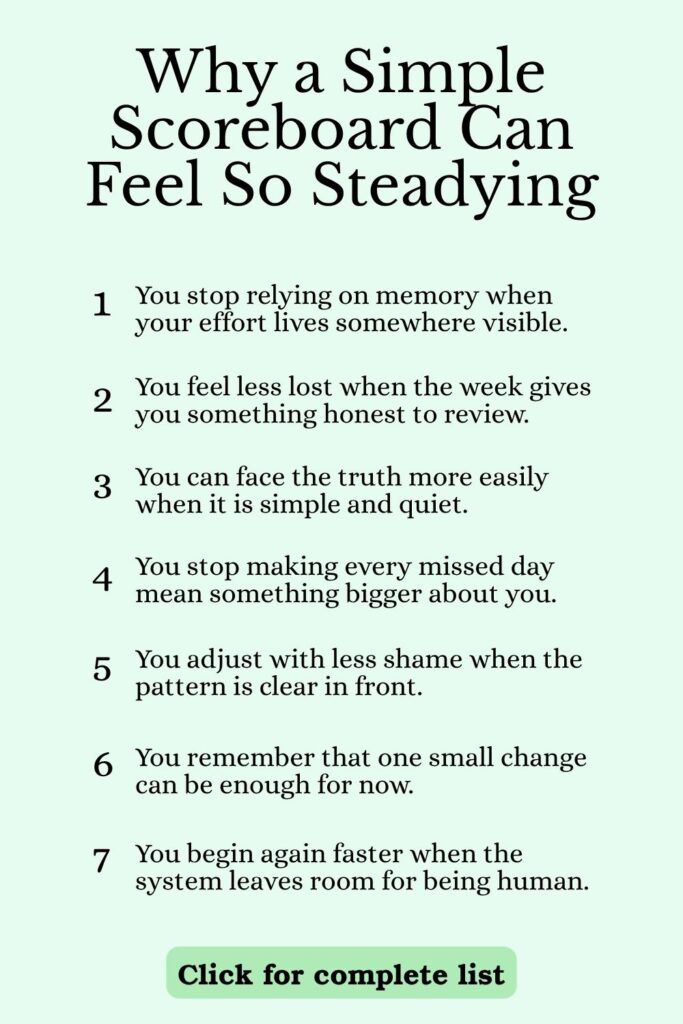
The biggest mistake people make is trying to track everything.
If you want to get more from your life, and are looking for concrete action steps to get you there, check out our Request a Coach page. It’s a “cut the fence-sitting and take action” way to tackle your issues and actually find success. To get off the fence and start to take action, click or tap here.
It feels responsible. It feels thorough. But it quietly kills consistency.
A scoreboard only works if it’s simple enough to use every day.
Choose 1–3 metrics that actually matter:
Pick actions or outcomes that directly reflect progress toward your goal. If the metric doesn’t move the result, it doesn’t belong on your board.
- Start with your goal and ask: “What proves I’m making progress?”
- Focus on actions you control (calls made, workouts done, hours focused)
- Avoid vague metrics like “worked hard” or “tried my best”
- Keep it brutally simple; fewer metrics means more follow-through
If you’re unsure what to track, this is where outside perspective helps. A coach can often spot the one or two actions that matter most much faster than you can on your own.
Create a visible and frictionless tracker:
Your scoreboard should take seconds to update and be impossible to ignore.
- Use a notebook, whiteboard, or simple digital tracker
- Set it up so you can scan it in a few seconds
- Use checkmarks, tallies, or numbers
- Place it somewhere you’ll see daily
If you’re working with a coach or accountability partner, choose a format that’s easy to share. That alone increases consistency.
The goal isn’t to impress anyone. It’s to remove friction.
If it feels like effort to track, you won’t do it. If it feels automatic, you will.
If you want to get more from your life, and are looking for concrete action steps to get you there, check out our Request a Coach page. It’s a “cut the fence-sitting and take action” way to tackle your issues and actually find success. To get off the fence and start to take action, click or tap here.
Use a Weekly Review to Stay on Track
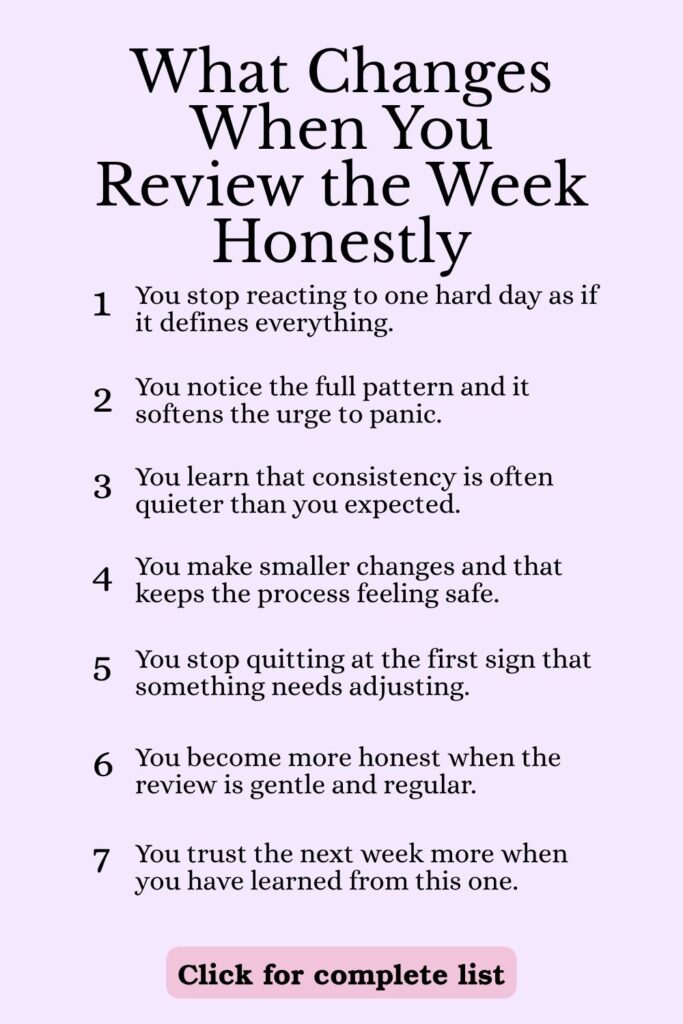
Tracking alone isn’t enough.
If you don’t step back and look at the pattern, your scoreboard becomes just another habit with no direction.
The weekly review is where the system actually works.
Review your scoreboard at the same time each week:
Pick a consistent time and treat it like a standing appointment.
- Choose a day you can stick to (Sunday works well for most people)
- Look at the full week, not individual days
- Ask: “Did I show up consistently?”
- Focus on patterns, not perfection
This doesn’t need to take long. Ten minutes is enough.
What matters is that it happens every week.
If you’re working with a coach, this becomes even more powerful. Instead of skipping or rushing through it, you show up prepared because someone else is part of the process.
Adjust your actions, not your goals:
Most people quit too early because they misread the data.
If you want to get more from your life, and are looking for concrete action steps to get you there, check out our Request a Coach page. It’s a “cut the fence-sitting and take action” way to tackle your issues and actually find success. To get off the fence and start to take action, click or tap here.
- If you missed your metric, simplify it
- If it was too easy, raise the bar slightly
- If you kept hitting friction, identify what caused it
- Choose one small adjustment for the next week
That’s it. One adjustment.
A coach can help here by keeping you from overreacting. One bad week doesn’t mean your system is broken. It usually just means something needs a small tweak.
Consistency beats intensity every time.
Make the Scoreboard Drive Behavior Automatically
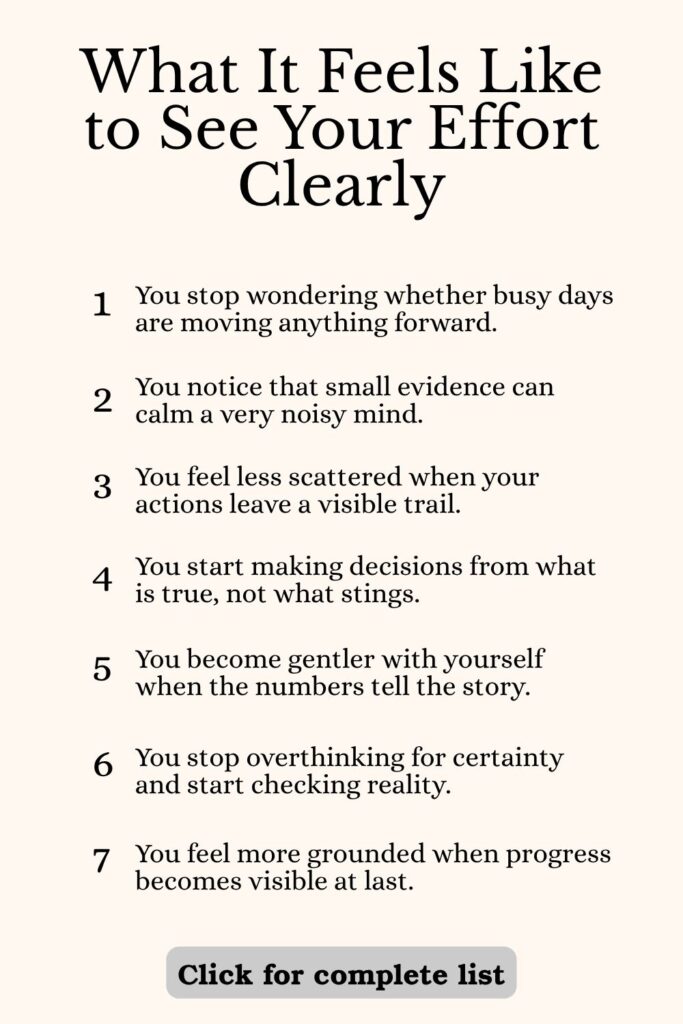
The scoreboard works best when it stops feeling like a task.
You don’t want to “remember” to use it. You want it to happen automatically.
Tie your scoreboard to a daily trigger:
Attach it to something you already do so it becomes part of your routine.
- Update it right after finishing work
- Or before you relax for the night
- Or after a daily habit like brushing your teeth
- Keep it under 30 seconds
The simpler the action, the more consistent it becomes.
If you’re accountable to someone else, this gets even easier. You’re not just tracking for yourself anymore. You’re tracking because it will be seen.
If you want to get more from your life, and are looking for concrete action steps to get you there, check out our Request a Coach page. It’s a “cut the fence-sitting and take action” way to tackle your issues and actually find success. To get off the fence and start to take action, click or tap here.
Let visibility create accountability:
Your scoreboard should act like a mirror, not a judgment tool.
- Don’t hide missed days
- Let streaks and gaps stay visible
- Use the pattern to guide your next action
- Focus on getting back on track quickly
You don’t need to overanalyze it.
Seeing the pattern is often enough.
And when that visibility extends beyond you, through a coach or accountability partner, it becomes even harder to ignore. Not in a pressured way. In a grounded, steady way that keeps you moving.
Avoid the Most Common Scoreboard Mistakes
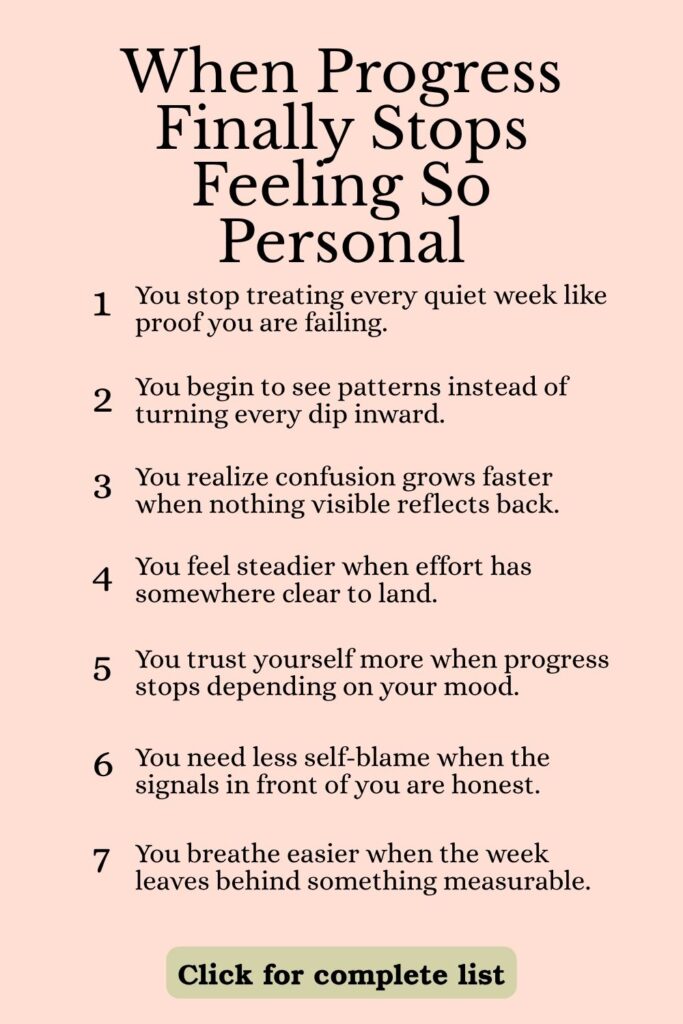
Most scoreboard systems don’t fail because they’re ineffective.
They fail because they become too complicated to maintain.
Don’t track too many things at once:
More metrics feel productive, but they dilute focus.
- If you feel overwhelmed, cut back to one metric
- Prioritize what creates the biggest impact
- Keep your attention on what actually matters
- Treat your scoreboard like a spotlight
If you’re tempted to add more, that’s usually a sign you need less.
If you want to get more from your life, and are looking for concrete action steps to get you there, check out our Request a Coach page. It’s a “cut the fence-sitting and take action” way to tackle your issues and actually find success. To get off the fence and start to take action, click or tap here.
A coach can help you simplify here. What feels important isn’t always what’s effective.
Don’t confuse tracking with progress:
Just because you’re recording something doesn’t mean it’s working.
- Revisit whether your metrics connect to real results
- Remove anything that doesn’t drive outcomes
- Focus on actions that create momentum
- Adjust when something feels off
Tracking is only useful if it leads to change.
Getting outside input can make this much clearer. It’s easier to spot misaligned metrics when you’re not inside your own assumptions.
Turn the Scoreboard Into a Long-Term System
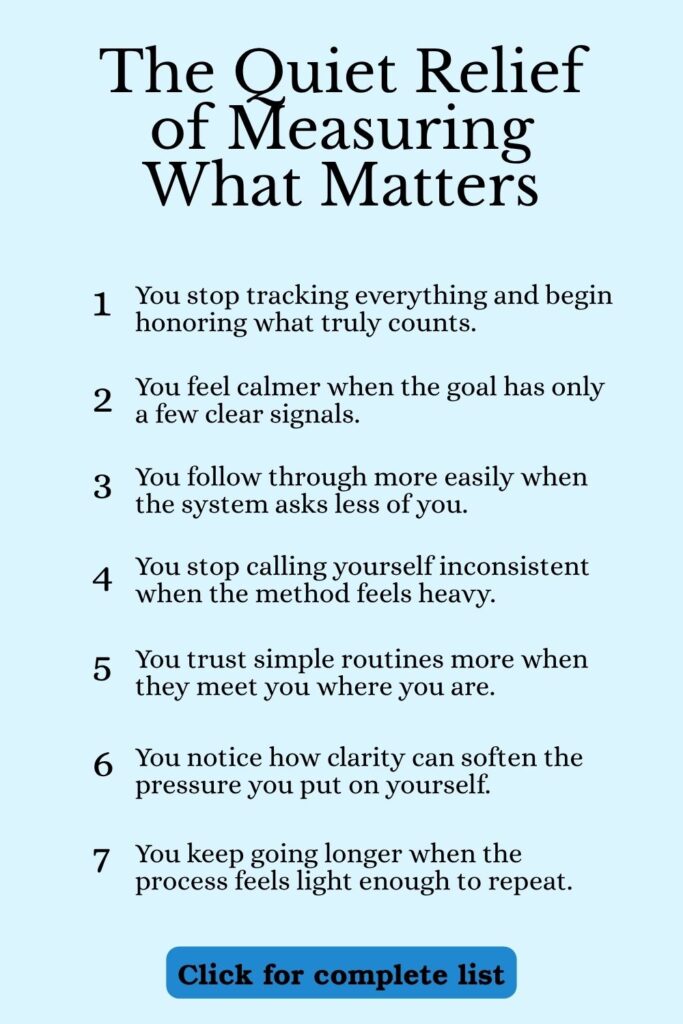
The goal isn’t to use a scoreboard for a few weeks.
It’s to build something you can rely on long term.
Evolve your metrics as your goals change:
What works now won’t always be the right focus later.
- Review your metrics monthly
- Replace outdated actions with better ones
- Keep the number of metrics small
- Let your system grow without becoming complex
A coach can help you decide when to pivot and when to stay consistent. That balance is where most people get stuck.
If you want to get more from your life, and are looking for concrete action steps to get you there, check out our Request a Coach page. It’s a “cut the fence-sitting and take action” way to tackle your issues and actually find success. To get off the fence and start to take action, click or tap here.
Use your scoreboard to build identity, not just results:
Over time, the scoreboard becomes more than a tracking tool.
It becomes proof of who you are.
- Someone who shows up consistently
- Someone who follows through
- Someone who adjusts instead of quitting
Focus on streaks. Focus on patterns.
Let small wins reinforce your identity.
Accountability support can accelerate this shift. When someone else reflects your consistency back to you, it becomes easier to believe it.
The Simpler You Make It, The More It Works
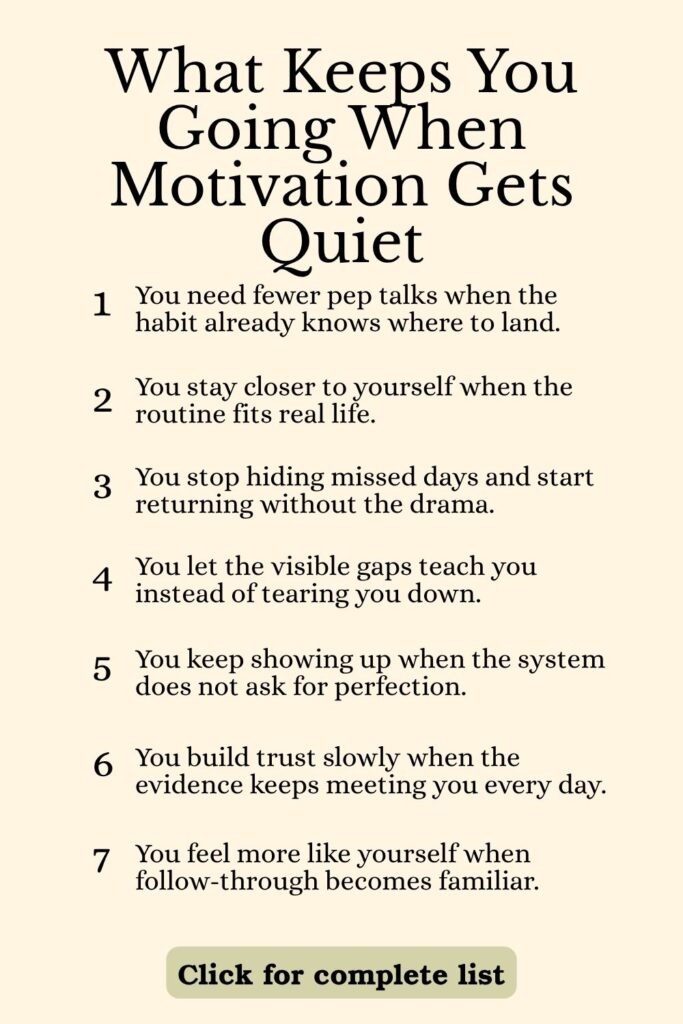
A simple scoreboard removes guesswork.
It shows you, clearly and honestly, whether you’re doing what matters.
You don’t need more motivation. You need something you can see.
If you want to get more from your life, and are looking for concrete action steps to get you there, check out our Request a Coach page. It’s a “cut the fence-sitting and take action” way to tackle your issues and actually find success. To get off the fence and start to take action, click or tap here.
- Pick 1–3 metrics
- Track them daily
- Review them weekly
- Adjust as you go
If you want extra support, bring someone into the process. The right accountability can turn a good system into one you actually stick with.
Because in the end, this isn’t about tracking.
It’s about closing the gap between what you know and what you do.
*****
Want to try this at home? No worries! Download a copy of our SMART Goals PDF Worksheet.
Need some in depth help with goal settings, motivation or productivity ? Drop on by our directories choc full of productivity coaches, accountability coaches, and goal-setting coaches, and start reaching those goals! Or click here to have us match you to the best.
If you want to get more from your life, and are looking for concrete action steps to get you there, check out our Request a Coach page. It’s a “cut the fence-sitting and take action” way to tackle your issues and actually find success. To get off the fence and start to take action, click or tap here.
Read this next

Breaking Barriers For a Better Life
Break down your barriers and live the life you are dreaming of!
Read More
Why Procrastination is Bad: Stop Procrastinating About Procrastination!
How to overcome procrastination
Read More
What’s Holding You Back?
Are you destined for something more? Clean out the clutter that is holding you back & discover your inner greatness
Read More