


Talk to a coach about Organizational coaching

Crystal Faulk
ACC
I help overwhelmed women in transition gain clarity, confidence, and...

Terrie Hein
Certified Life Coach, Certified Insight Coach Practitioner
Coaching to declutter your life, organize your goals, and cook...

Dr Charlene Ashley
Doctorate - Behaviours
I coach individuals to design fulfilling lives through structure, clarity,...

Paloma Chiara

Lana's Gymnastics Club
"Where the best in gymnastics meets fun. Where every child is a star"
lgclubny.com

Anna Sosnina
ICF (ACC)
ICF ACC certified coach, founder of EssorVie Coaching, passionate about...

Travis Brown
Professional Life coach
With experience in guiding clients to achieve goals, build confidence,...

Lynn Yang
Certified Christian Leadership Coaching (CCLC)
I will help you gain new insights, habits, and plans...




Wall Closet Design Ideas That Maximize Height
Are you all about style, decor and organization? Download a copy of our Decluttering Workbook.
*****
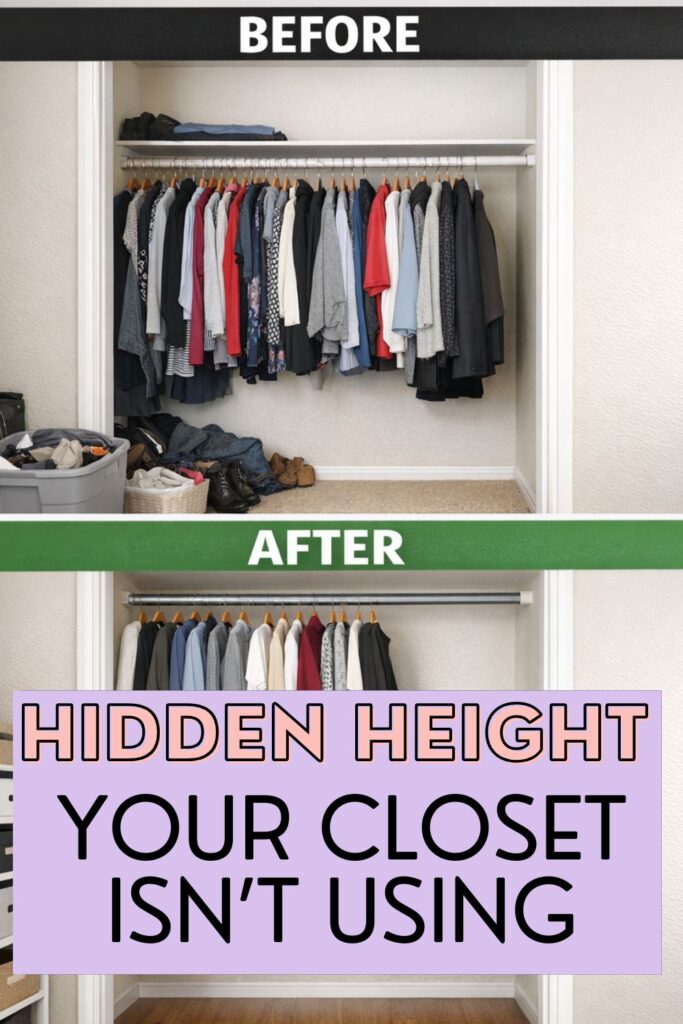
Most wall closets waste their most valuable asset: vertical space.
The rod sits at a standard height. A single shelf floats above it. Everything above that becomes empty air or a chaotic pile of rarely used items.
In small rooms, that unused height is the difference between a closet that feels cramped and one that feels custom.
Instead of thinking about storage horizontally, the key is designing from floor to ceiling. With the right strategy — higher rods, defined top-shelf zones, and layered vertical storage — the same closet can hold significantly more while still looking clean and intentional.
Picture a simple floor-to-ceiling diagram with labeled zones: everyday clothing at eye level, occasional items above, and seasonal storage at the top.
That’s the goal of this approach. You’re not just stacking things higher. You’re turning height into an organized storage system.
In our roundup of small closet fixes, we highlighted vertical design as one of the most powerful ways to gain extra storage without expanding the space. Now we’re looking more closely at how raising rods, structuring the top shelf, and layering storage upward can unlock the full height of your closet.
If you want to get more from your life, and are looking for concrete action steps to get you there, check out our Request a Coach page. It’s a “cut the fence-sitting and take action” way to tackle your issues and actually find success. To get off the fence and start to take action, click or tap here.
Need some in depth help with organization and productivity ? Drop on by our directories choc full of productivity coaches, minimalist coaches, and work/life balance coaches to get your life organized! Or click here to have us match you to the best.
Raise the Primary Rod Higher Than Standard
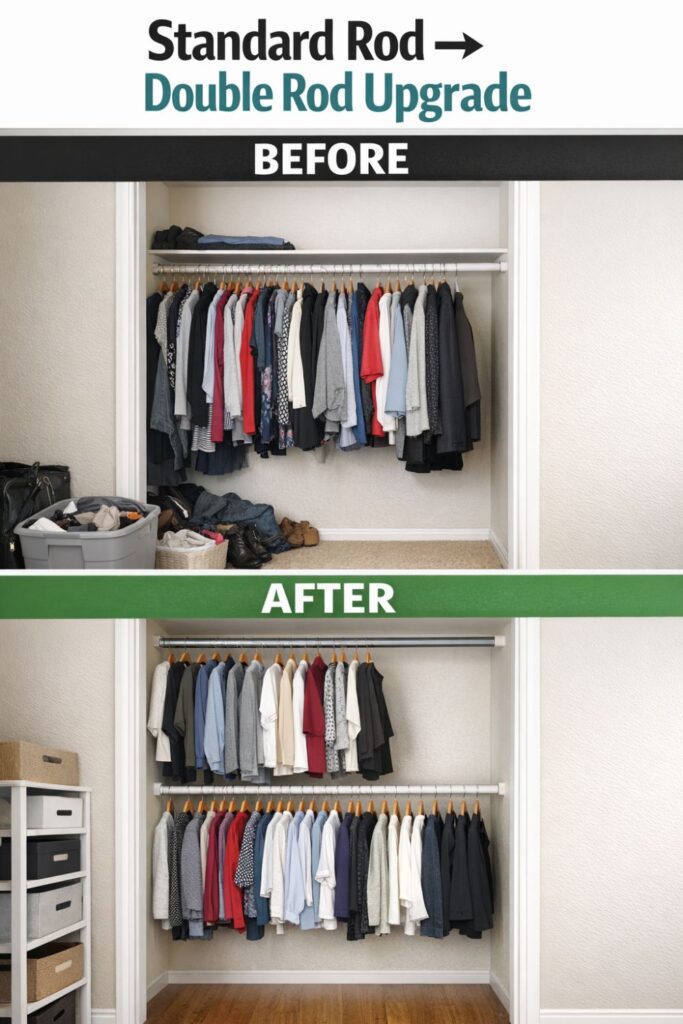
Standard rod height exists mainly for convenience, not efficiency. While it allows easy access, it often wastes a large amount of vertical space underneath.
By adjusting the rod height strategically, you can unlock space that was previously unusable.
Install a higher main rod to create vertical room: Measure the length of your longest garments — dresses, coats, or long cardigans. Add a few inches for clearance and position the rod higher than typical installations. Ideally, leave about 12–18 inches between the rod and the ceiling so there’s still room for a functional top shelf.
This simple adjustment immediately creates more vertical room below the rod.
A slightly higher rod still keeps clothing accessible while opening up space that can be used for additional storage.
Add a second lower rod for shorter garments: Once the primary rod is elevated, install a lower rod beneath it. This double-hang section works well for shirts, skirts, and folded pants that don’t require full-length hanging space.
You can dedicate one side of the closet to long garments while the other side uses a double-rod system for shorter pieces.
If you want to get more from your life, and are looking for concrete action steps to get you there, check out our Request a Coach page. It’s a “cut the fence-sitting and take action” way to tackle your issues and actually find success. To get off the fence and start to take action, click or tap here.
Visually, this often looks like a split layout: one tall hanging section on the left and a stacked double rod on the right.
With just two rods, the closet suddenly holds nearly twice as many garments while still feeling organized.
Turn the Top Shelf Into a Strategy Zone
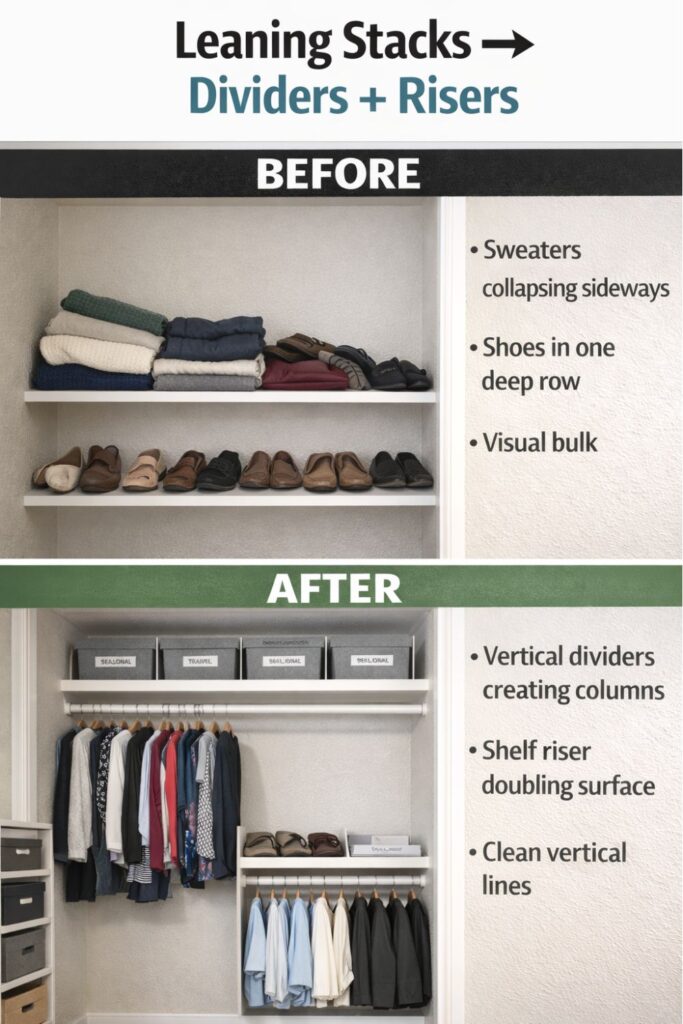
Most closets already have a top shelf, but it often becomes a dumping ground for random items.
Without a clear purpose, the shelf fills with mismatched bags, forgotten boxes, and piles that slowly collapse.
To make the most of vertical space, the top shelf needs a defined role.
Assign the shelf a specific storage purpose: Decide in advance what belongs on the top shelf. Good candidates include seasonal clothing, travel bags, memory boxes, or spare bedding. Limiting the shelf to a few defined categories prevents clutter from creeping in.
When every item has a reason to be there, the shelf stays functional.
The top shelf should act as a “rarely used storage zone,” not a catch-all for miscellaneous items.
If you want to get more from your life, and are looking for concrete action steps to get you there, check out our Request a Coach page. It’s a “cut the fence-sitting and take action” way to tackle your issues and actually find success. To get off the fence and start to take action, click or tap here.
Use matching labeled bins to contain everything: Stackable containers help keep items structured and prevent loose piles. Choose clear or uniform bins so the shelf appears cohesive rather than chaotic. Labels facing outward make it easy to identify contents without pulling everything down.
Uniform containers also help visually calm the closet.
Instead of looking like a storage attic, the shelf becomes an intentional part of the closet design — neat, accessible, and easy to maintain.
Extend Rods to Ceiling Height
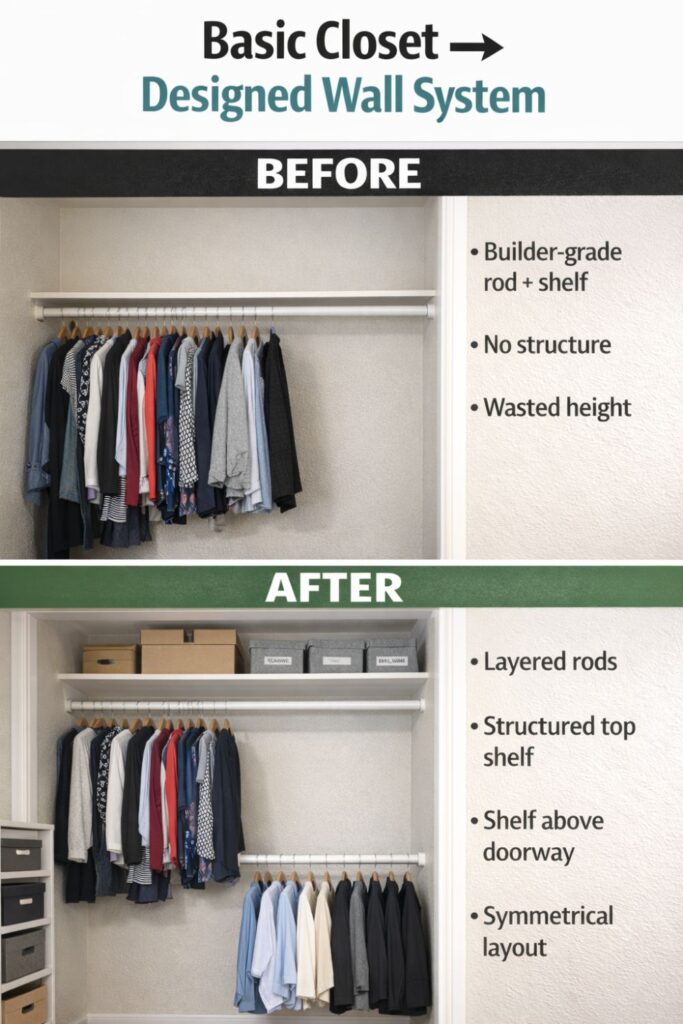
Many closets have empty space above the main rod that remains unused. In taller closets, this area can become valuable secondary hanging space.
Layering rods vertically allows you to use the full height of the wall.
Install a ceiling-height rod for rarely worn clothing: An upper rod near the ceiling is perfect for garments that don’t need daily access, such as formalwear, off-season coats, or event outfits. These pieces stay protected and organized without competing for space with everyday clothing.
Because this rod sits higher, you may occasionally use a small step stool to reach it.
However, the benefit is significant: the closet now holds multiple layers of hanging storage.
If you want to get more from your life, and are looking for concrete action steps to get you there, check out our Request a Coach page. It’s a “cut the fence-sitting and take action” way to tackle your issues and actually find success. To get off the fence and start to take action, click or tap here.
Use vertical hanging tools to maximize height: Cascading hangers, slim accessory organizers, and garment bags can help compress vertical storage without creating bulk. These tools allow you to hang multiple pieces in a single vertical line.
Instead of wasted air above the rod, the closet becomes a layered storage system.
Height transforms from unused space into structured capacity.
Add Vertical Dividers and Shelf Risers
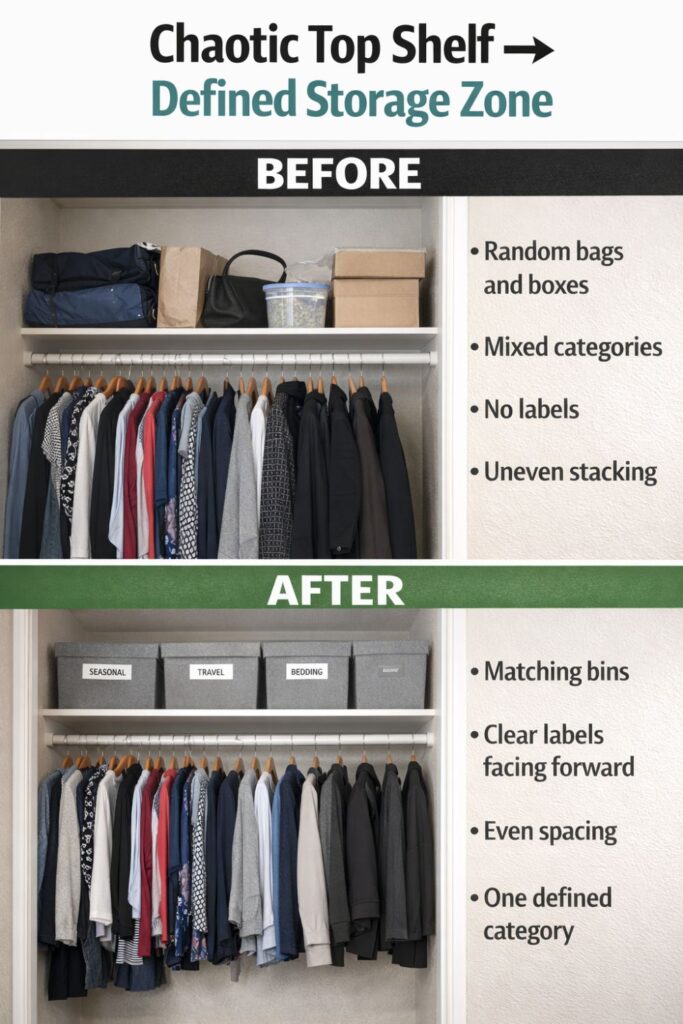
Stacking items upward works only if those stacks remain stable.
Without structure, piles of sweaters or bags quickly lean and collapse, creating visual clutter.
Vertical dividers and risers help maintain order as storage grows taller.
Install shelf dividers to organize stacks: Dividers act like bookends for clothing and accessories. They keep folded sweaters in neat columns, prevent handbags from tipping sideways, and stop piles from blending together.
By creating individual compartments within the shelf, you prevent stacks from spreading into one another.
If you want to get more from your life, and are looking for concrete action steps to get you there, check out our Request a Coach page. It’s a “cut the fence-sitting and take action” way to tackle your issues and actually find success. To get off the fence and start to take action, click or tap here.
Each category stays contained.
Use shelf risers to create extra layers: Shelf risers add a second level of storage within a single shelf. For example, shoes can sit beneath a riser while folded jeans or smaller accessories rest on top.
This doubles the usable surface without adding another shelf.
Risers are especially useful in deeper closets where a single layer leaves wasted space above shorter items.
When dividers and risers work together, tall storage becomes stable and visually clean.
Use the Wall Above the Closet Opening
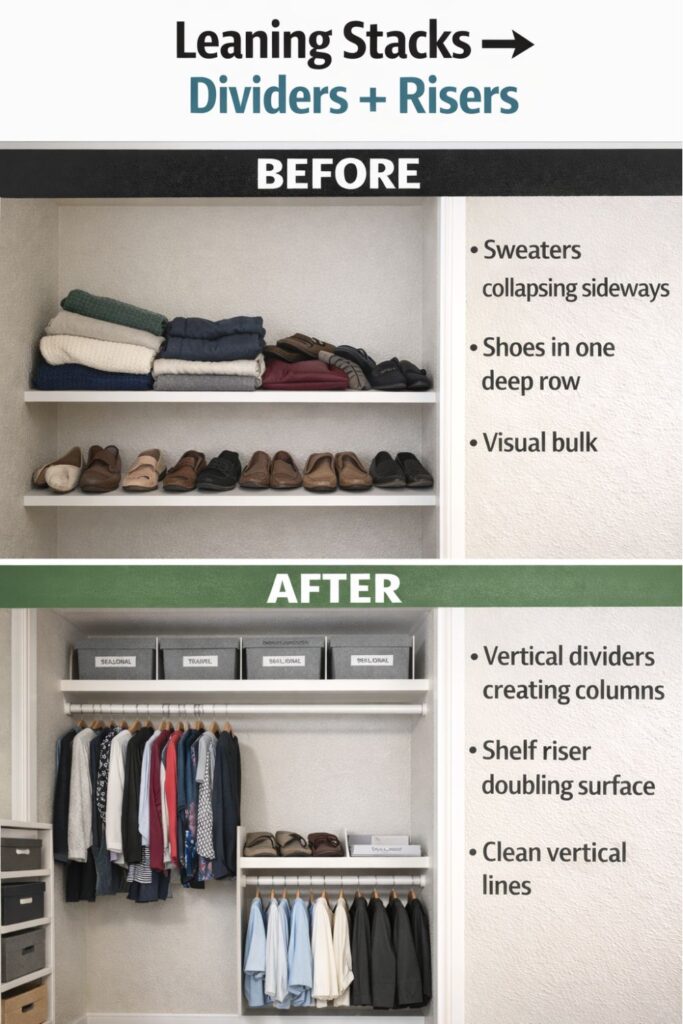
Vertical storage opportunities don’t end inside the closet frame.
The wall space above the closet door is often completely unused, even though it sits near the ceiling.
Add a floating shelf above the closet frame: A simple shelf above the doorway can hold decorative storage boxes or seasonal baskets. This area works well for items you rarely access but still want to keep within the room.
If you want to get more from your life, and are looking for concrete action steps to get you there, check out our Request a Coach page. It’s a “cut the fence-sitting and take action” way to tackle your issues and actually find success. To get off the fence and start to take action, click or tap here.
Because it sits outside the closet interior, it frees up valuable space inside.
Keep the storage light and visually balanced: Use closed boxes or woven baskets to maintain a clean appearance. Avoid overly bulky containers that make the wall feel heavy.
Symmetry also helps. Arranging containers evenly across the shelf creates a balanced look that blends into the room design.
This extension of storage upward makes the entire wall feel purposeful instead of partially unused.
Create a Floor-to-Ceiling Zoning System
The final step is turning the closet into a fully layered vertical system.
Height works best when it’s divided into clear functional zones.
Define the vertical layers intentionally: Imagine the closet divided into horizontal sections. The highest shelf near the ceiling holds rarely used storage. Just below that sits occasional clothing or seasonal pieces. Eye-level rods contain everyday garments for easy access.
Lower shelves or rods store shoes and bins, while the floor remains open except for a hamper or shoe tray.
If you want to get more from your life, and are looking for concrete action steps to get you there, check out our Request a Coach page. It’s a “cut the fence-sitting and take action” way to tackle your issues and actually find success. To get off the fence and start to take action, click or tap here.
This structure creates a natural hierarchy.
Keep everyday items at the most accessible level: Eye-level zones should always contain the clothing you wear most frequently. Items used less often move upward, while accessories and shoes stay lower.
When zones match how often items are used, the closet feels intuitive instead of complicated.
The result is a closet that uses its full height while still feeling easy to navigate.
How to Make Ceiling-Height Storage Feel Accessible
Tall storage works best when it remains practical.
Keep a slim step stool nearby: A compact folding stool stored in the closet or nearby makes it easy to reach upper shelves safely.
Rotate seasonal items regularly: Move winter coats down during colder months and store them higher in summer. This rotation keeps frequently used items within reach.
Height should expand your storage capacity without making the closet feel difficult to use.
If you want to get more from your life, and are looking for concrete action steps to get you there, check out our Request a Coach page. It’s a “cut the fence-sitting and take action” way to tackle your issues and actually find success. To get off the fence and start to take action, click or tap here.
Mistakes to Avoid When Designing Tall Closets
While vertical design is powerful, a few common mistakes can reduce its effectiveness.
Avoid overloading top shelves without containment: Loose piles quickly become unstable and messy.
Don’t install rods too high without measuring garments: Always account for the length of coats or dresses before adjusting rod height.
Pay attention to bracket strength and weight limits: Shelves and rods must support the items stored on them.
Careful planning ensures the system remains safe and functional.
Why Vertical Design Changes Everything
When you maximize vertical height in a wall closet, something interesting happens.
The floor clears instantly.
Shelves become structured instead of cluttered.
The closet begins to feel custom built.
The room didn’t get larger.
If you want to get more from your life, and are looking for concrete action steps to get you there, check out our Request a Coach page. It’s a “cut the fence-sitting and take action” way to tackle your issues and actually find success. To get off the fence and start to take action, click or tap here.
But the space finally works the way it should.
The square footage stayed the same.
The ceiling simply started doing the work.
Are you all about style, decor and organization? Download a copy of our Decluttering Workbook.
*****
Need some in depth help with organization and productivity ? Drop on by our directories choc full of productivity coaches, minimalist coaches, and work/life balance coaches to get your life organized! Or click here to have us match you to the best.
If you want to get more from your life, and are looking for concrete action steps to get you there, check out our Request a Coach page. It’s a “cut the fence-sitting and take action” way to tackle your issues and actually find success. To get off the fence and start to take action, click or tap here.
Read this next
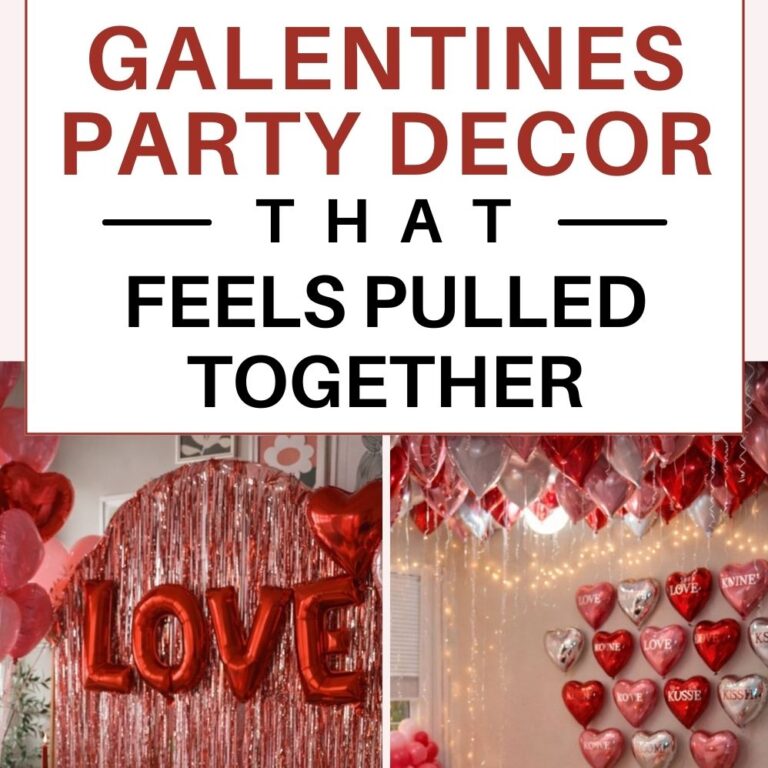
The Galentine’s Decor Trick That Makes Any Space Feel Pulled Together
Create a Galentine’s setup that feels warm, effortless, and pulled together with one simple decor trick that changes everything.
Read More
8 Iconic Holiday Movie-Inspired Wreaths to Transform Your Door This Christmas
Are you all about style, decor and organization? Download a copy of our Decluttering Workbook. **** There’s something about Christmas movies that makes us want to press pause on real […]
Read More
13 Surprising Household Items That Make Stunning Fall Decor
Are you all about style, decor and organization? Download a copy of our Decluttering Workbook. **** Fall has a way of making us want to cozy up our homes, but […]
Read More