


Talk to a coach about Organizational coaching

Crystal Faulk
ACC
I help overwhelmed women in transition gain clarity, confidence, and...

Terrie Hein
Certified Life Coach, Certified Insight Coach Practitioner
Coaching to declutter your life, organize your goals, and cook...

Dr Charlene Ashley
Doctorate - Behaviours
I coach individuals to design fulfilling lives through structure, clarity,...

Paloma Chiara

Lana's Gymnastics Club
"Where the best in gymnastics meets fun. Where every child is a star"
lgclubny.com

Anna Sosnina
ICF (ACC)
ICF ACC certified coach, founder of EssorVie Coaching, passionate about...

Tyler Fink
B.A. in Religion, Anthropology, and Philosophy. Master of Divinity (M.Div.) in Missiology
Pastor, husband, and father helping Christian men pursue faithful growth...

Travis Brown
Professional Life coach
With experience in guiding clients to achieve goals, build confidence,...



Minimal Supply Drawer for Paperwork and Daily Admin
Are you all about style, decor and organization? Download a copy of our Clutter Reset Guide.
*****
Turn One Crowded Drawer Into a Simple Daily Admin Station
You sit down to pay a bill, sign a form, or write a quick note, and somehow the task starts with a search. The pen you want has disappeared, the stamps are under a pile of receipts, and the document you need is somewhere beneath an assortment of things that never belonged together. It is a small inconvenience that can make an already busy day feel harder.
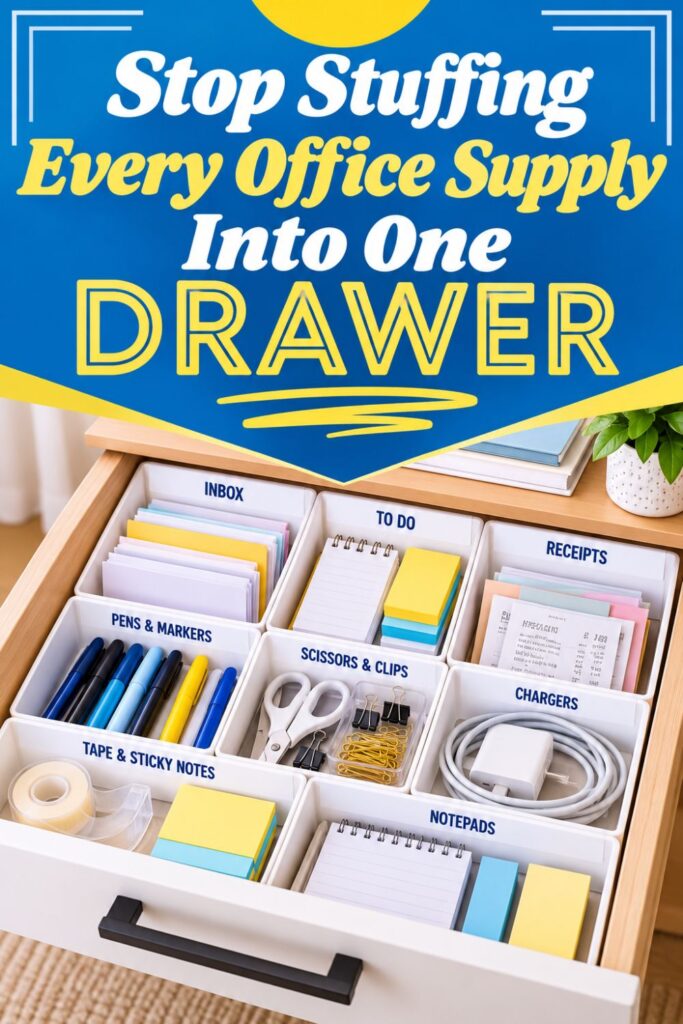
A minimal supply drawer offers a more useful answer than buying a bigger desk organizer. Instead of asking one drawer to hold every office supply and every piece of paper you own, you give it one job: support the paperwork and daily admin you actually do. Everything inside should help you start a task, finish it, or move it to the next step.
Define what daily admin means for you: Think about the paperwork you handle in an ordinary week, such as forms to sign, envelopes to address, receipts to review, or notes to file. Your drawer should support those recurring jobs rather than rare projects that need separate storage.
Choose one realistic outcome: Aim to open the drawer and find the right tool in a few seconds. A system that saves you from searching matters more than a perfectly symmetrical arrangement of matching trays.
For a busy household, the drawer might hold a working pen, postage, a small notepad, and one clearly marked spot for papers that need action. For a home business, it may include a stapler, client-related admin supplies, and a place for nonconfidential items waiting to be processed. The contents can differ while the organizing principle stays the same.
This is not about turning your desk into an empty showroom. It is about building a practical station that removes unnecessary choices at the moment you need to get something done. Start with the space you already have, make a few clear decisions, and let the way you work determine the layout.
If you want to get more from your life, and are looking for concrete action steps to get you there, check out our Request a Coach page. It’s a “cut the fence-sitting and take action” way to tackle your issues and actually find success. To get off the fence and start to take action, click or tap here.
Need some in depth help with organization and productivity ? Drop on by our directories choc full of productivity coaches, minimalist coaches, and work/life balance coaches to get your life organized! Or click here to have us match you to the best.
1. Empty the Drawer and Decide What Belongs There
The easiest way to create a useful supply drawer is to begin with an honest inventory. When you organize around the objects already packed inside, you often preserve clutter instead of fixing the problem. Clearing the drawer first gives you a chance to design it for the work you want it to do.
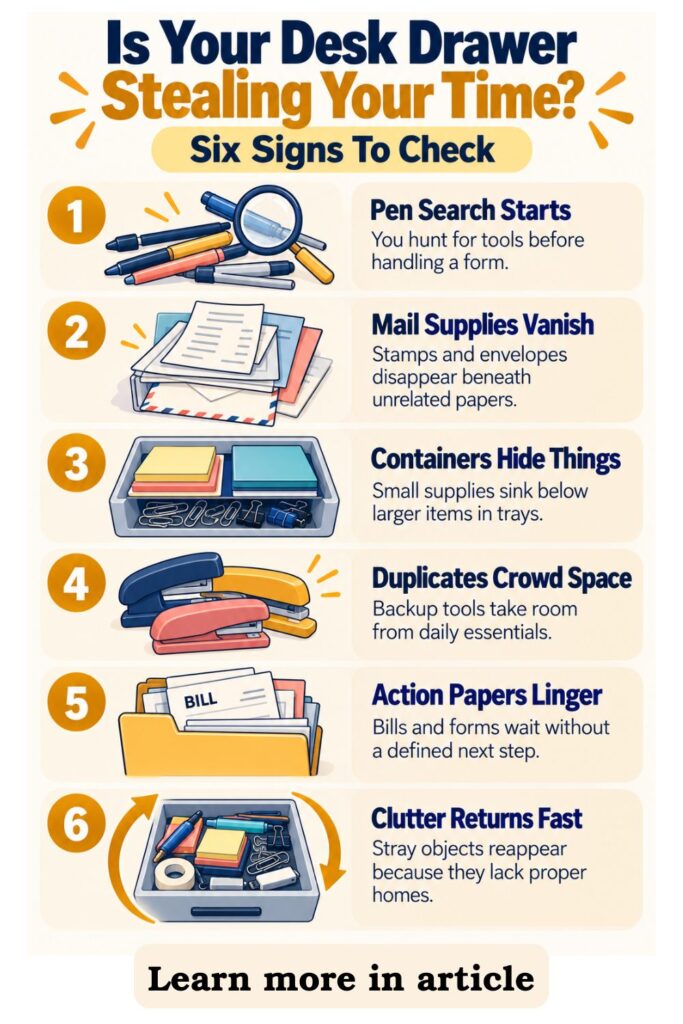
Take everything out: Place the contents on a clear surface and wipe away dust or paper scraps. Do not start arranging trays yet, because you need to see how much of the drawer is taken up by things you rarely touch.
Sort by actual use: Make three groups called daily admin, occasional supplies, and belongs elsewhere. Daily items might include your preferred pen, sticky notes, stamps, paper clips, and a few active forms. Occasional supplies might be extra notebooks, spare tape dispensers, or bulk packs of envelopes.
Remove the obvious extras: Test dried-out pens, recycle outdated notes that you no longer need, and relocate duplicates that are taking up valuable space. Keep an extra of an essential only if running out would interrupt your work and it genuinely fits.
Set a boundary for paper: Keep only paperwork that requires near-term action in or immediately beside the drawer. Important records, confidential documents, tax files, and long-term reference papers need more appropriate and secure storage than a frequently opened supply drawer.
Be careful with the category called miscellaneous. It often becomes a polite name for items that have no assigned home. If something has no clear role in paperwork or daily admin, the drawer is probably not its best location.
Before putting anything back, write a simple purpose statement: “This drawer holds the tools and active admin materials I use during the week.” That sentence is your filter when you are tempted to add another gadget or stack of paper.
If you want to get more from your life, and are looking for concrete action steps to get you there, check out our Request a Coach page. It’s a “cut the fence-sitting and take action” way to tackle your issues and actually find success. To get off the fence and start to take action, click or tap here.
The goal is not to discard everything. It is to keep the items that earn their place through regular use and give the rest a better home.
2. Measure the Space Before Choosing Your Organizers
Drawer organizers can make a messy space look tidy for a day, but the wrong ones create a different problem. Oversized trays waste valuable inches, deep containers hide small items, and rigid sets may not fit around the supplies you use most. The layout should follow the drawer, not the packaging on an organizer kit.
Measure the inside dimensions: Check the width, depth, and usable height with a tape measure. Open and close the drawer to see whether the top edge, runners, or an overhanging desk lip limit what can fit inside.
Choose the fewest containers possible: Start with small trays, adjustable dividers, or shallow boxes you already own. You may need only three or four compartments, especially if your supplies are minimal. A narrow cup-like insert can hold paper clips while a long tray can keep pens from rolling.
Test with temporary boundaries: Arrange folded cardboard strips or spare boxes in the empty drawer before buying anything. Put the actual supplies inside these temporary sections and close the drawer several times to check that nothing catches or shifts.
Leave some breathing room: Avoid filling every corner just because an organizer fits there. A little empty space makes it easier to lift out a stamp book, remove a notepad, or return a stapler without shoving neighboring items aside.
As you test, pay attention to visibility. If small objects disappear under larger tools, your organizers are too deep or the categories are too mixed. You should be able to identify what is available with one glance.
Matching containers can look satisfying, but they are not necessary. Reused boxes with trimmed edges can perform just as well when they are clean, stable, and sized to the drawer. Spend money only if the trial layout reveals a specific problem that a different insert would solve.
If you want to get more from your life, and are looking for concrete action steps to get you there, check out our Request a Coach page. It’s a “cut the fence-sitting and take action” way to tackle your issues and actually find success. To get off the fence and start to take action, click or tap here.
A well-fitted organizer makes the right action obvious. It gives each essential a clear landing place instead of turning the drawer into a miniature storage closet.
3. Divide the Drawer Into Four Easy-to-Use Zones
Once you know what fits, give the remaining supplies a layout that follows how you complete admin tasks. Rather than sorting everything only by appearance, group items by what they help you do. This simple change can reduce the number of times you have to search across the drawer for related tools.
- Create a writing zone: Place one or two reliable pens, a pencil if you use one, and a small notepad in the easiest-to-reach section. Keep your favorites here rather than a collection of promotional pens that may or may not work.
- Create a fastening zone: Group paper clips, binder clips, and a compact stapler together. Choose whichever fastening tools you actually use and avoid keeping three versions of the same item just because they came in a set.
- Create a sending zone: Give stamps, address labels, a few envelopes, or return-address supplies one shallow compartment. If you rarely mail anything, make this section smaller or combine it with the fastening zone rather than forcing an unused category.
- Create an action zone: Reserve a defined spot for a slim folder or small number of papers that need attention soon. This is not an archive and should never become the default home for every unopened letter.
Put the most frequently used tools toward the front or nearest your dominant hand. Less frequent items can sit toward the back, provided you can still see and reach them without unpacking the drawer. Keep tall objects lying flat if they interfere with opening and closing.
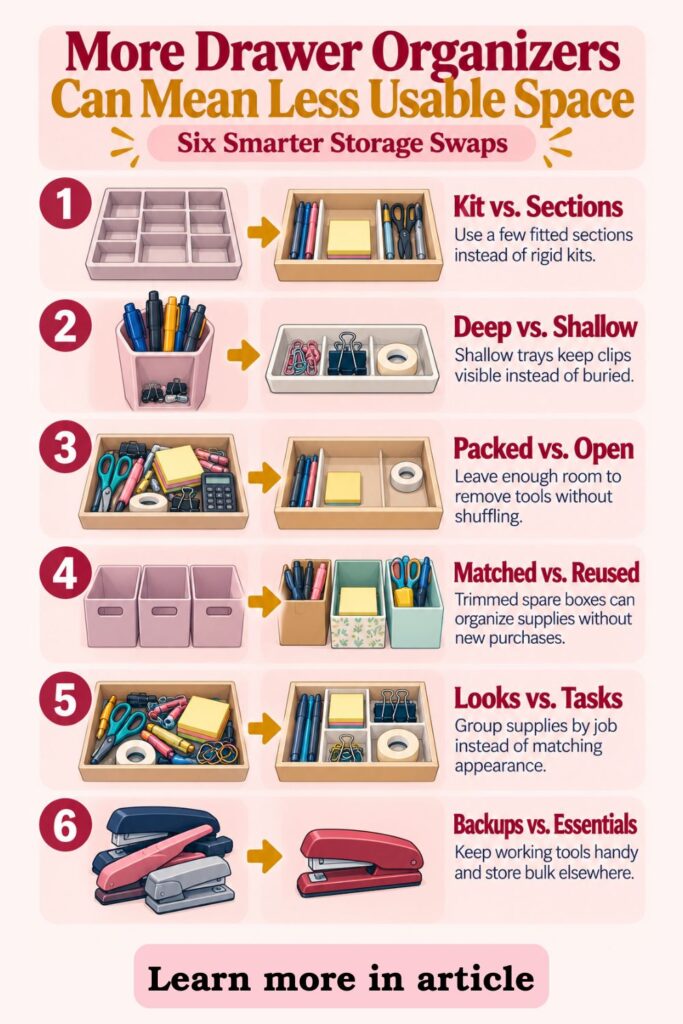
If the drawer is especially shallow, use three zones rather than squeezing in four. Combine fastening and sending supplies, then keep writing and active paperwork separate. The categories are a starting point, not rules you have to obey.
Try one real task, such as addressing an envelope or signing a form, using only what is in the drawer. Notice whether your hand naturally moves between the correct sections. Adjust the placement until the sequence feels easy, then leave the layout alone long enough to test it during a normal week.
4. Give Incoming Paperwork a Clear Next Step
A supply drawer works best when it helps paperwork move, not when it becomes a place where paper waits indefinitely. Bills, permission forms, receipts, and small reminders tend to pile up because we are unsure what to do with them next. A simple action system can prevent that uncertainty from spreading across the desk.
Capture new papers in one place: Keep a slim inbox tray on the desk or a thin folder in the drawer for papers you need to process. Choose a size that suits the space, and do not bend important documents just to force them into a shallow drawer.
Decide the next action: When you look at each paper, identify whether you need to sign it, pay it, reply to it, scan it, or file it. If a task has a deadline, put that date on your calendar or task list rather than trusting the document to remind you.
If you want to get more from your life, and are looking for concrete action steps to get you there, check out our Request a Coach page. It’s a “cut the fence-sitting and take action” way to tackle your issues and actually find success. To get off the fence and start to take action, click or tap here.
Separate action from storage: Once the paperwork is handled, move it to its permanent file, secure digital system, recycling, or shredding as appropriate. The drawer should not hold months of receipts or sensitive personal records simply because they are out of sight.
Limit how much can wait: Allow one thin folder or a small capped stack for current action papers. When that area fills, process what is there before adding another layer. A physical limit makes the buildup visible while it is still manageable.
For example, a school form comes home on Monday. You place it in the action folder, sign it that evening using the pen already in the drawer, and put it straight into the bag it needs to leave in. The folder returns to empty because the paper has moved through the process.
If your drawer cannot fit standard sheets without folding them, do not make it responsible for full-size paperwork. Keep the paper inbox immediately beside the drawer and store only the tools needed to process it inside. The station can still function as one system even when its parts occupy two places.
The important change is giving each incoming sheet a next step and an exit route.
5. Stock a Small Kit for the Admin You Actually Do
Minimal does not mean being unprepared. It means having enough of the right things to complete routine tasks without letting backup supplies crowd out everyday essentials. The easiest way to decide what stays is to build a small kit around actual actions rather than a generic office supply checklist.
Make a task-based supply list: Write down the admin jobs you do in a typical week, such as paying invoices, filling out forms, labeling envelopes, or reviewing receipts. Beside each job, list the tools you reach for. Items that appear repeatedly are strong candidates for the drawer.
Keep one working version accessible: Choose one dependable pen, one compact stapler if needed, one pad of notes, and a modest amount of clips or labels. Store backup packs in a separate supply area, not next to the single item you use each day.
If you want to get more from your life, and are looking for concrete action steps to get you there, check out our Request a Coach page. It’s a “cut the fence-sitting and take action” way to tackle your issues and actually find success. To get off the fence and start to take action, click or tap here.
Use small quantities deliberately: Keep just enough stamps, envelopes, or sticky notes for your normal rhythm. If mailing is a monthly task, a few envelopes may be plenty. If you handle frequent paper forms, a second pen and a small supply of clips may be worth the space.
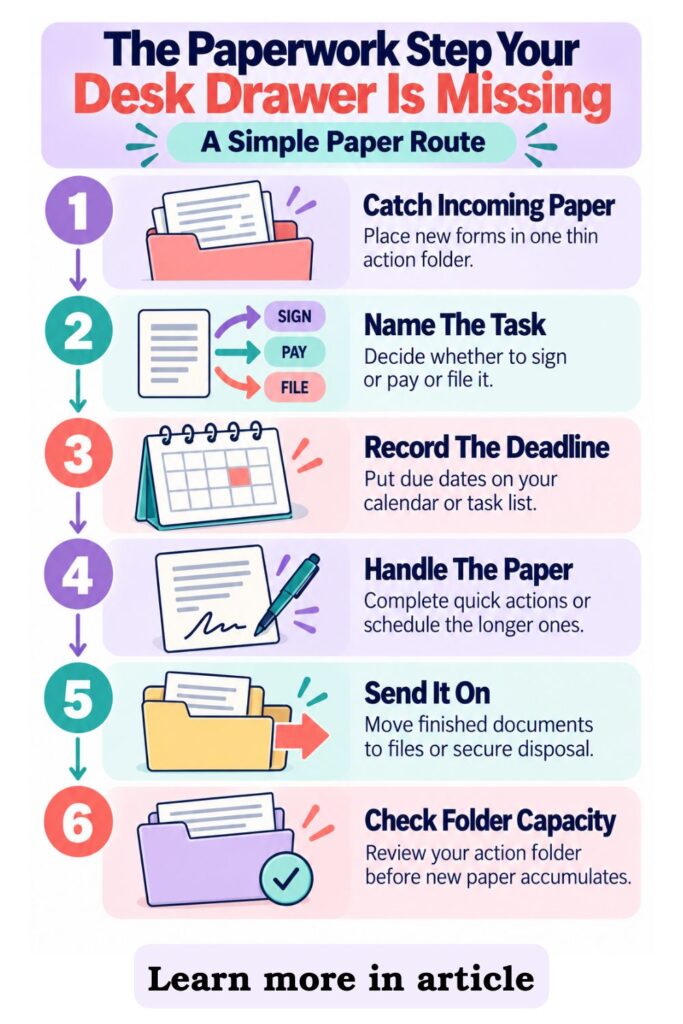
Add a simple refill rule: When you take the last envelope or open your final small stack of labels, write the item on a shopping list. Replenish only what is used rather than topping everything up automatically.
A useful test is to ask whether an item helps you do, finish, or send something. Decorative stationery you love can have a place in your workspace, but it does not automatically belong in the daily admin drawer. Neither do old chargers, mystery keys, and spare batteries unless they are genuinely part of your paperwork routine.
If more than one person uses the drawer, agree on a few shared essentials and where they belong. You do not need separate collections of pens and clips for everyone if a common supply works.
The finished kit should feel almost boring. That is a good sign: it contains familiar, reliable tools that let you focus on the task instead of the supplies.
6. Make the System Easy to Maintain in Five Minutes
Even a thoughtful drawer layout will eventually collect a few extra items. The goal is not to keep it flawless every moment. It is to have a reset simple enough that you will actually do it, especially during busy weeks when organization is not your top priority.
- Choose a regular reset cue: Link the drawer check to something already on your schedule, such as finishing Friday admin, planning Monday tasks, or paying your weekly bills. A familiar cue is often easier to remember than a separate organizing appointment.
- Return tools to their zones: Put the pen back in the writing section, gather stray clips, and move out any objects that were temporarily dropped in the drawer. If something consistently lands in the wrong place, consider whether the layout needs to change instead of blaming yourself for not following it.
- Process the action folder: Review each pending paper and decide the next visible step. Complete quick actions when possible, and schedule larger ones. Move completed paperwork to the correct storage or disposal location rather than leaving it in the drawer.
- Check for low supplies: Look for an empty stamp section, dried-out pen, or nearly finished notepad. Add only necessary replacements to your shopping list, then stop. The weekly reset should not become an excuse to browse organizer products.
To keep the task manageable, give yourself a five-minute limit. If a document requires a long phone call or detailed decision, schedule that work separately and continue resetting the drawer. The purpose is to restore the station, not complete every admin responsibility in one sitting.
If you share the space, make the categories obvious enough that anyone can return a supply without asking where it goes. Small labels may help during the first few weeks, especially when several people use the same tools. Later, you can remove them if the arrangement becomes automatic.
If you want to get more from your life, and are looking for concrete action steps to get you there, check out our Request a Coach page. It’s a “cut the fence-sitting and take action” way to tackle your issues and actually find success. To get off the fence and start to take action, click or tap here.
A useful system is one you can restore after an imperfect day. A few minutes of maintenance will usually do more than a dramatic cleanout every few months.
When the Drawer Keeps Filling Up, Fix the Habit Behind It
If your drawer looks great after a reset but becomes crowded again within days, adding more compartments probably will not solve the problem. The extra items are giving you information about the way paper and supplies move through your workspace. Treat the mess as a clue and adjust the process that created it.
Notice what repeatedly appears: For one week, pay attention to objects that enter the drawer but do not have a designated zone. It might be unopened mail, receipts from your bag, spare electronics, or notes from different projects. Write down the repeat offenders instead of reorganizing everything immediately.
Identify why they land there: Ask whether the drawer is the closest hiding spot, whether the item has no other home, or whether you are postponing a decision. Each cause suggests a different fix. Unopened mail may need a separate inbox, while an occasional charger simply needs a labeled storage location elsewhere.
Create an easier alternative: Put a recycling bin near the paper-processing area, a receipt envelope where you empty your bag, or a small tray for items that need to be returned to another room. Make the correct action as convenient as dropping something into the drawer.
Change one friction point at a time: If the action folder consistently overflows, shorten the time between paperwork reviews or reduce the number of unrelated tasks you store there. If small supplies spill, resize one divider. Test the change for a week before buying a whole new system.
Some paper clutter comes from trying to use a drawer as a reminder system. A form hidden under a notepad cannot reliably tell you when it is due. Transfer deadlines to a calendar and use the action folder only as a temporary location for the physical document.
Remember that the drawer has a limited purpose. It is a daily admin station, not a solution for household filing, digital inboxes, or every unfinished project. Keeping that boundary clear can prevent a small storage space from taking on more than it can handle.
If you want to get more from your life, and are looking for concrete action steps to get you there, check out our Request a Coach page. It’s a “cut the fence-sitting and take action” way to tackle your issues and actually find success. To get off the fence and start to take action, click or tap here.
How an Organization Coach Can Help You Build a System That Sticks
Sometimes the challenge is not understanding how to sort pens and paperwork. It is knowing which tasks deserve a place in your day, where your work keeps getting interrupted, and why the same papers are left unfinished week after week. An organization or productivity coach can help you examine those patterns and design a routine around your real circumstances.
Map your recurring admin tasks: A coach may ask you to list the forms, bills, scheduling notes, and small paperwork jobs that return each week. Together, you can separate tasks that belong at your desk from those better handled online, elsewhere in the home, or at another time.
Find the sticking point: Perhaps you can sort paperwork easily but struggle to decide what needs immediate action. Or maybe you keep purchasing organizers because the drawer feels messy again after two days. A coach can help you name the specific breakdown instead of repeating the same cleanout.
Choose one manageable change: You might agree to process the action folder every Thursday, place all incoming household mail in one tray, or keep only one week’s worth of admin materials in the drawer. Start with a change small enough to fit your schedule rather than redesigning your entire home office.
Review what happened: After trying the routine, note which steps worked and which were difficult. A coach can help you revise the plan, set realistic expectations, and build accountability without treating an occasional messy drawer as a failure.
Coaching is optional, and you do not need professional help to create an effective drawer. Many people can apply the same questions independently with a notebook and a few minutes of reflection. But if paperwork is tied to a larger pattern of missed routines or competing priorities, outside structure may be useful.
The best support should leave you with a system you understand and can maintain yourself. Your goal is not to become dependent on a perfect organizer or another person’s reminders. It is to make daily admin easier to begin, finish, and put away.
A Small Drawer That Helps You Finish the Job
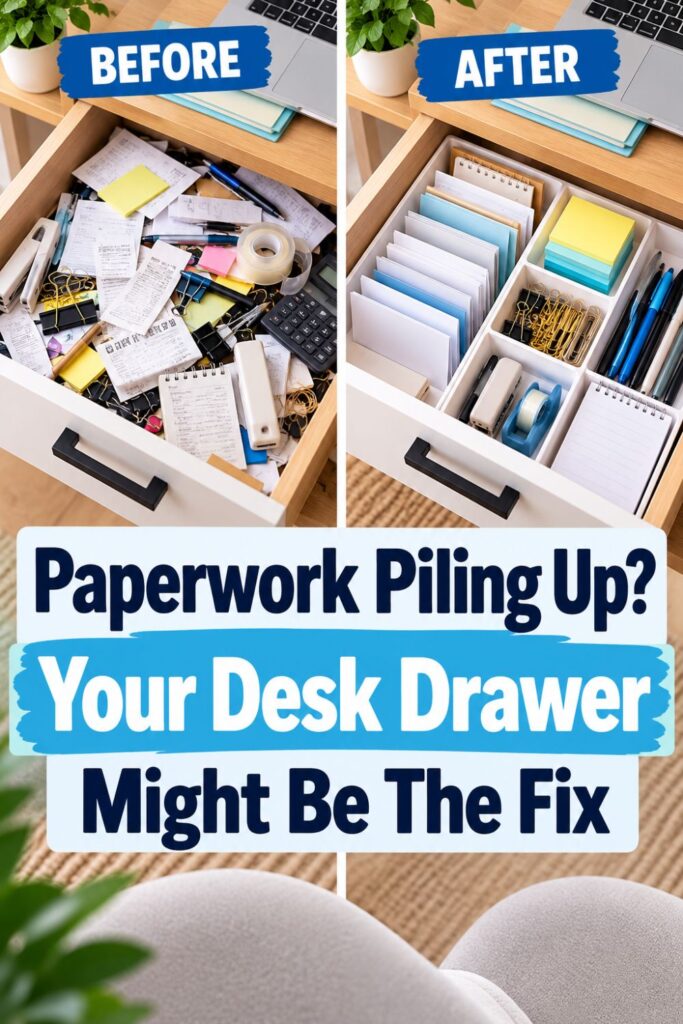
The real reward of organizing a supply drawer is not the moment it looks neat. It is the ordinary Tuesday when you need to sign a document and the pen is exactly where you expect it to be. It is paying a bill without sorting through old receipts first, or finding a stamp without emptying the whole drawer onto your desk.
If you want to get more from your life, and are looking for concrete action steps to get you there, check out our Request a Coach page. It’s a “cut the fence-sitting and take action” way to tackle your issues and actually find success. To get off the fence and start to take action, click or tap here.
A minimal drawer succeeds because its purpose is narrow. It keeps essential tools nearby, gives active paperwork a temporary home, and makes it obvious when something needs to move on. You do not need a complicated filing system inside a shallow space, and you do not need every office supply available at arm’s reach.
Start with the simplest version: Empty the drawer, choose a few essential tools, and give each group a clear section. Use temporary dividers if that is what you have. An arrangement you can test today is more valuable than a perfect setup you never start.
Practice one complete admin task: Open the drawer, retrieve what you need, handle the paper, and put the tool away. Send, file, recycle, or securely dispose of the finished document as appropriate. Notice any moment when the process feels awkward and make one small adjustment.
Protect the drawer’s purpose: When a stray item appears, decide whether it supports daily admin or needs to live elsewhere. When the action folder fills, process the papers instead of finding a larger folder to conceal them. Keep repeating these simple decisions until the layout feels familiar.
There will be weeks when the drawer gets messy. That does not mean the system failed. It means you may need a five-minute reset or a small adjustment to match the way you actually work.
The best version of this drawer is not necessarily the prettiest one. It is the one that helps you sit down, complete an everyday responsibility, and move on with your day without a scavenger hunt first.
*****
Are you all about style, decor and organization? Download a copy of our Clutter Reset Guide.
If you want to get more from your life, and are looking for concrete action steps to get you there, check out our Request a Coach page. It’s a “cut the fence-sitting and take action” way to tackle your issues and actually find success. To get off the fence and start to take action, click or tap here.
Need some in depth help with organization and productivity ? Drop on by our directories choc full of productivity coaches, minimalist coaches, and work/life balance coaches to get your life organized! Or click here to have us match you to the best.
If you want to get more from your life, and are looking for concrete action steps to get you there, check out our Request a Coach page. It’s a “cut the fence-sitting and take action” way to tackle your issues and actually find success. To get off the fence and start to take action, click or tap here.
Read this next

Spring Clean Your Life!
Get in there and you deep clean everything!
Read More
DIY Shelf Risers That Double Your Small Closet Storage
Double your closet shelf space with one simple DIY riser trick that turns messy stacks into neat, easy-to-reach storage.
Read More
The Galentine’s Formula: Decor, Tables, and Activities That Just Work
Are you all about style, decor and organization? Download a copy of our Decluttering Workbook. ***Galentine’s Day has become one of those rare gatherings that people genuinely enjoy planning for […]
Read More