


Talk to a coach about Organizational coaching

Crystal Faulk
ACC
I help overwhelmed women in transition gain clarity, confidence, and...

Terrie Hein
Certified Life Coach, Certified Insight Coach Practitioner
Coaching to declutter your life, organize your goals, and cook...

Dr Charlene Ashley
Doctorate - Behaviours
I coach individuals to design fulfilling lives through structure, clarity,...

Paloma Chiara

Lana's Gymnastics Club
"Where the best in gymnastics meets fun. Where every child is a star"
lgclubny.com

Anna Sosnina
ICF (ACC)
ICF ACC certified coach, founder of EssorVie Coaching, passionate about...

Tyler Fink
B.A. in Religion, Anthropology, and Philosophy. Master of Divinity (M.Div.) in Missiology
Pastor, husband, and father helping Christian men pursue faithful growth...

Travis Brown
Professional Life coach
With experience in guiding clients to achieve goals, build confidence,...




DIY Desk Organizer Ideas Using Things You Already Have
Are you all about style, decor and organization? Download a copy of our Clutter Reset Guide.
*****
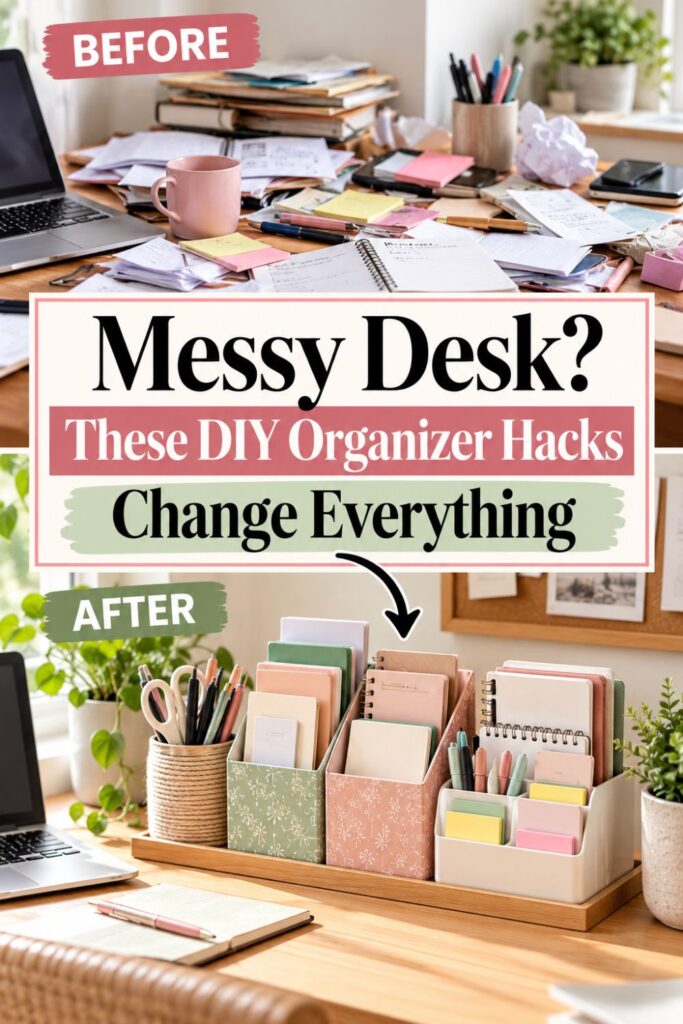
Use jars, boxes, trays, clips, and simple containers to create useful desk storage without buying a whole new setup.
You know that annoying moment when you decide your desk needs organizing, then somehow end up shopping for organizers instead of actually organizing anything?
Maybe the problem is tangled chargers. Maybe papers keep multiplying beside your laptop. Or maybe all those tiny things you use every day have nowhere to go, so your desk looks messy again approximately twelve minutes after you clean it.
But do you really need a new drawer unit, matching acrylic containers, and a perfectly coordinated desk setup? Probably not.
Some of the most useful desk organizers are already sitting in your kitchen cabinets, recycling bin, junk drawer, or closet. Binder clips can tame charging cables. A shoe box can become a paper drawer. An old mug can finally earn its keep.
So before you buy another organizer, look around. Pick the problem that is driving you the most nuts right now, then steal the fix that sounds easiest.
If you want to get more from your life, and are looking for concrete action steps to get you there, check out our Request a Coach page. It’s a “cut the fence-sitting and take action” way to tackle your issues and actually find success. To get off the fence and start to take action, click or tap here.
Need some in depth help with organization and productivity ? Drop on by our directories choc full of productivity coaches, minimalist coaches, and work/life balance coaches to get your life organized! Or click here to have us match you to the best.
How to Use Binder Clips for DIY Desk Cable Management
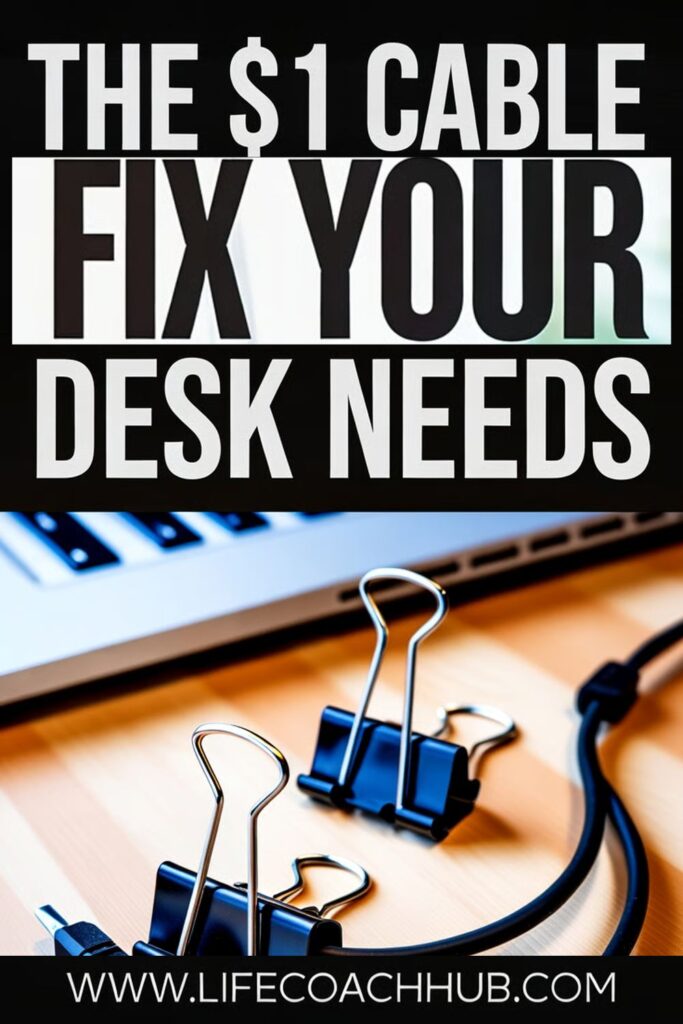
You know when your charger slips behind the desk for the third time in one day and suddenly retrieving it feels deeply personal? This binder clip trick is for that exact kind of tiny, repetitive annoyance.
- Clip cables where you actually need them instead of constantly fishing for them.
- Put those random binder clips in the junk drawer to work on cords, headphones, and longer cables.
- Make the setup neat enough that it feels intentional, not like an office-supply emergency.
The nice thing about this one is how ridiculously little you need to change. A few clips can create designated spots for the cords you reach for constantly, which means one less bit of desk chaos demanding your attention.
Try the binder clip cable trick before buying another cord organizer.
Bedroom ‘Desk Reset’ Micro-Zones for Students
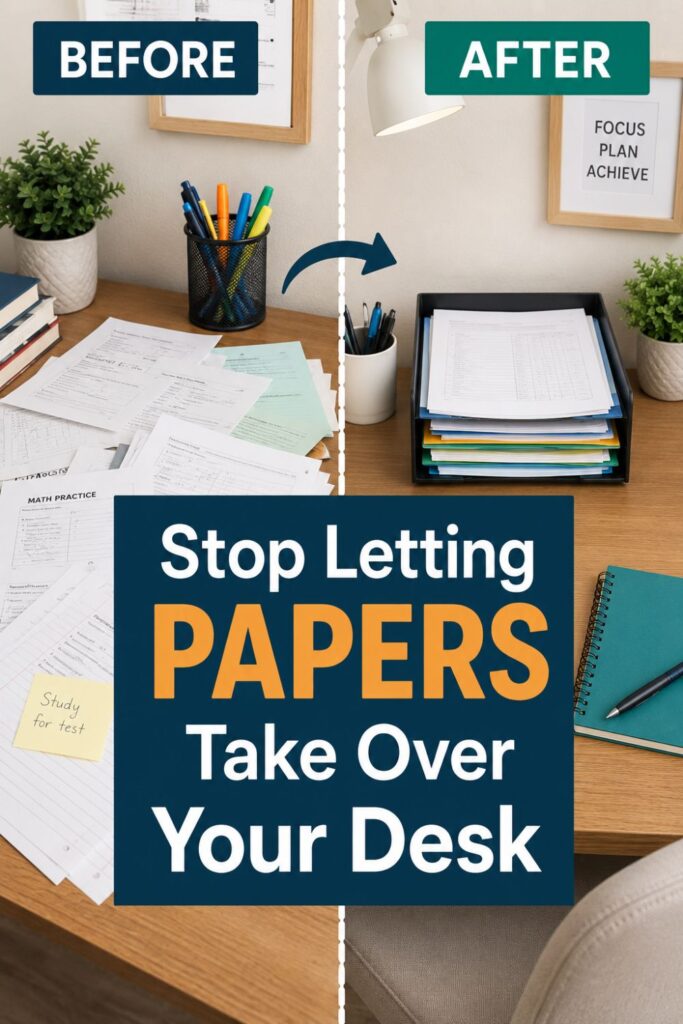
Maybe your desk technically has enough room, but you have to move notebooks, chargers, papers, pens, and yesterday’s stuff before you can actually study. That’s the problem worth fixing. Studying is already work. You shouldn’t have to clean your workspace before you’re allowed to begin.
- Give everyday study supplies tiny, obvious homes.
- Create a landing spot for the temporary stuff that never seems to have one.
- Make resetting the desk short enough that you’ll realistically do it again tomorrow.
What makes these micro-zones useful is that you don’t have to organize the whole bedroom to make studying easier. You’re just removing the little obstacles between sitting down and getting started. There are ADHD-friendly ideas here too, especially helpful if elaborate systems tend to disappear from your life after three days.
Set up a desk reset that makes tomorrow’s study session easier to start.
Repurposed Jar Station for Pens, Clips, and Small Desk Supplies
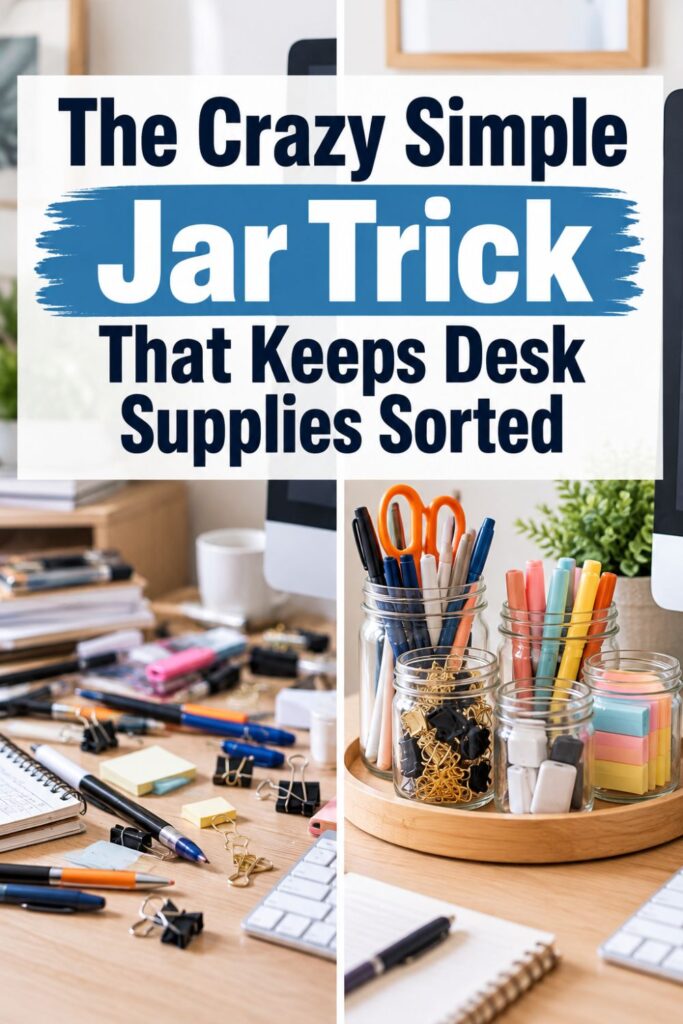
If you have six pens on the desk, three more in a drawer, scissors buried under a notebook, and absolutely no idea where the USB drive went, start here. A few jars can corral those little supplies without turning your desk into a container store.
If you want to get more from your life, and are looking for concrete action steps to get you there, check out our Request a Coach page. It’s a “cut the fence-sitting and take action” way to tackle your issues and actually find success. To get off the fence and start to take action, click or tap here.
- Match taller jars to pens, scissors, and other upright tools.
- Keep each container’s job obvious so putting things away requires almost no thought.
- Let overflowing jars tell you when it’s time to edit, not when it’s time to add another jar.
That last part is especially useful. More containers aren’t always the answer. The jar station works because it gives your most-used supplies a small, visible home while encouraging everything else to live somewhere else.
Turn the jars you already have into a desk station you’ll actually maintain.
Shoe Box Drawer System for Paperwork and Flat Desk Supplies
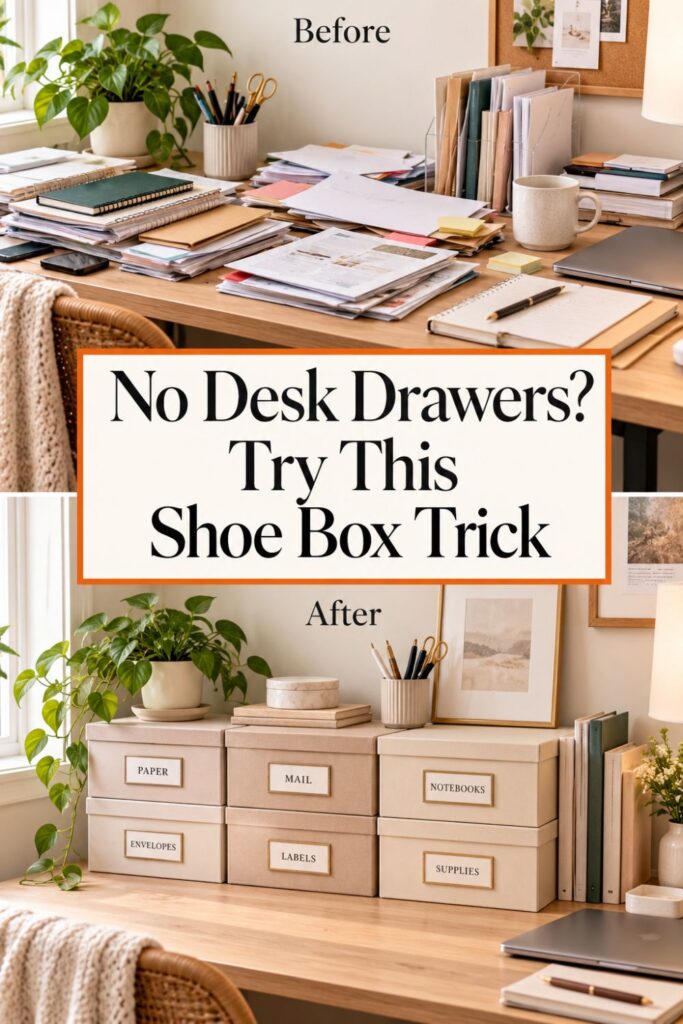
No desk drawers? Before you start pricing new furniture, go find those shoe boxes you keep saving because they’re “good boxes.” Their moment has arrived.
- Turn stackable boxes into separate homes for notebooks, stationery, labels, paper pads, or folders.
- Keep active paperwork separate from office supplies so important papers don’t vanish into storage.
- Use the size of each box as a natural limit on how much you keep.
This one is particularly handy for a small home office or shared workspace because you’re creating drawer-like storage without committing floor space to another piece of furniture. And because the boxes are cheap and flexible, you can change the system when your work changes instead of designing your life around an organizer you bought two years ago.
Build a simple shoe-box drawer system before deciding your desk needs more furniture.
Tray-Based Catchall Zone for Daily Desk Essentials
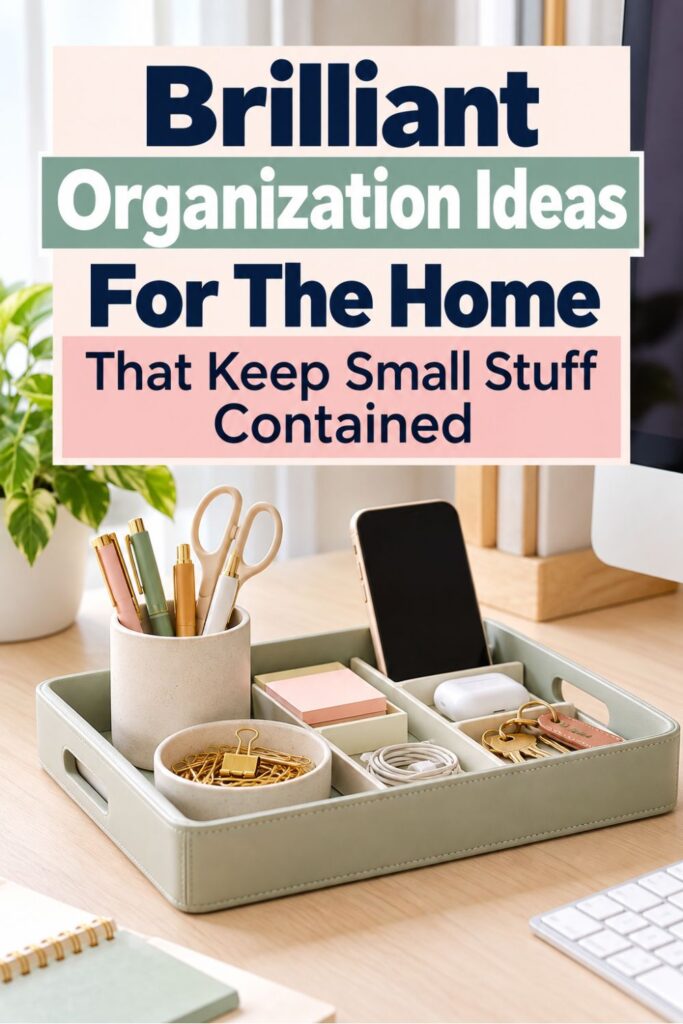
Some desk clutter isn’t really clutter. Your glasses, earbuds, favorite pen, sticky notes, and lip balm keep coming back because you genuinely use them. Hiding everything in a drawer just means you’ll pull everything back out tomorrow.
- Give daily essentials one visible boundary instead of letting them spread.
- Keep the system “one touch” so grabbing and returning something feels effortless.
- Use a quick end-of-day reset to stop the tray from quietly becoming a tiny junk drawer.
That’s what makes a catchall tray refreshingly realistic. You aren’t pretending your desk should remain completely empty. You’re giving the things that belong in your day permission to stay out, just within limits.
Create one catchall zone for the desk essentials that never stay put away.
If you want to get more from your life, and are looking for concrete action steps to get you there, check out our Request a Coach page. It’s a “cut the fence-sitting and take action” way to tackle your issues and actually find success. To get off the fence and start to take action, click or tap here.
Tissue Box Caddy for Mail, Notepads, and Loose Papers
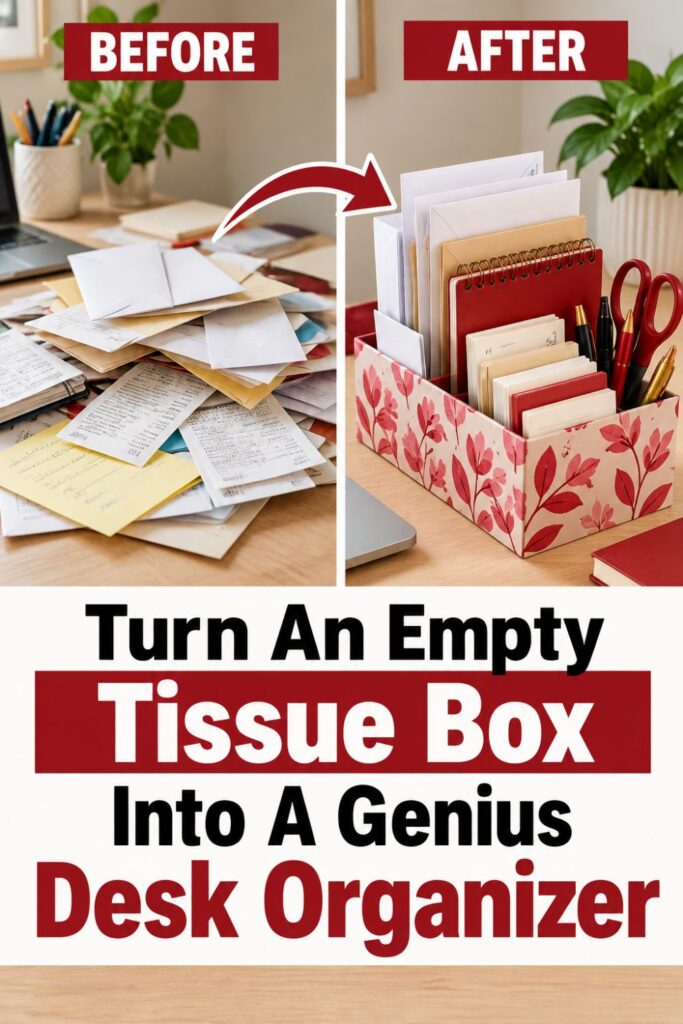
Before you recycle that empty tissue box, look at the loose papers sitting beside your computer. Mail, receipts, reminders, notes and index cards have an annoying habit of spreading because they’re not ready to be filed, but they aren’t ready to be thrown away either.
- Stand active papers upright so you can actually see them.
- Use only a couple of action-based categories instead of creating a complicated filing project.
- Let the small box fill up and remind you that something needs processing.
The clever part here is that the tissue box isn’t supposed to become permanent storage. It’s a temporary stop for papers that are moving through your day. That distinction can make a surprisingly big difference when your desk keeps getting buried under unfinished decisions.
Give your loose papers a temporary home with an empty tissue box.
Lidded Box Charging Station for Tech Accessories at Your Desk
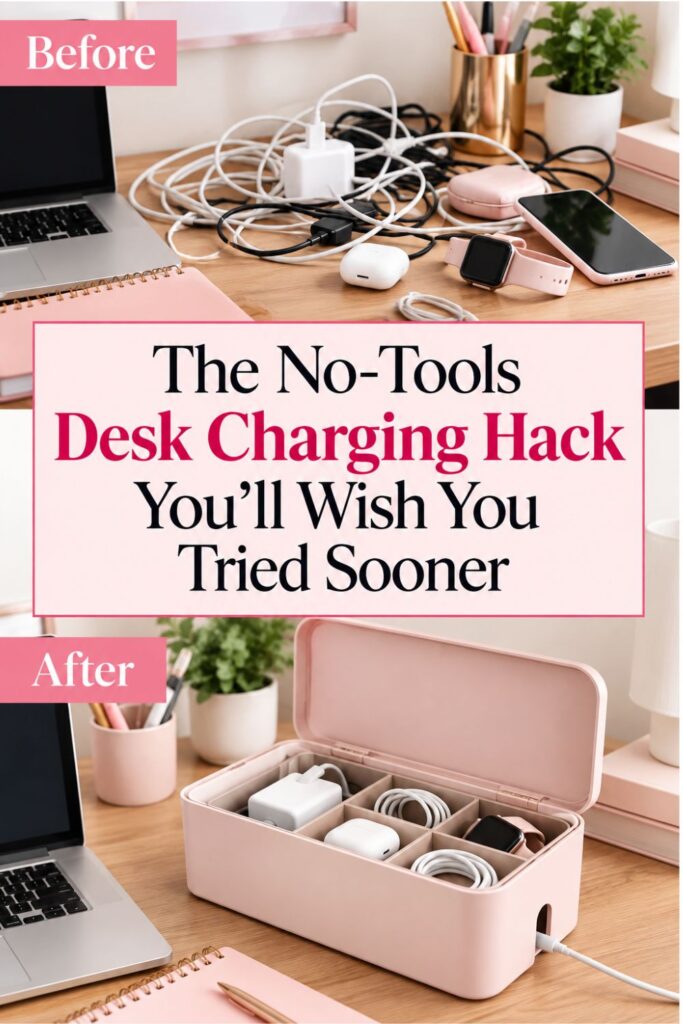
You tidy the desk, feel very accomplished, and then notice the charging cables, earbuds, power bank, smartwatch charger, and assorted tech bits still sprawled everywhere. Tech clutter is sneaky like that.
- Create one predictable place for frequently used charging gear.
- Keep cables accessible instead of building a beautiful box that’s annoying to use.
- Use a simple charge, grab, return routine so accessories stop migrating around the room.
What makes this setup worth stealing is the emphasis on convenience rather than Pinterest perfection. If you have to dismantle your organizer every time your phone needs charging, you won’t keep using it. A basic lidded box can hide visual clutter while keeping the things you genuinely use within reach.
Turn a spare lidded box into a charging station that works with your routine.
Mug-and-Bowl Supply Corral for Creative Desk Tools
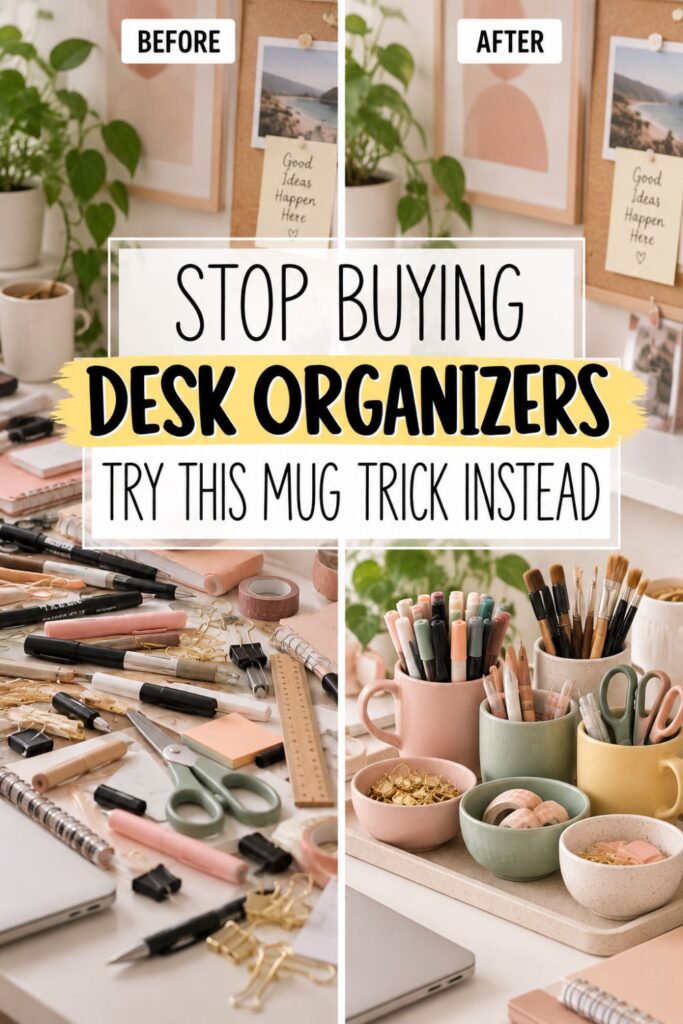
Creative desks have their own special kind of chaos. Markers need to be visible. Scissors need to be reachable. Tiny accessories disappear instantly. And somehow the mug you never drink from is taking up cabinet space while you’re shopping for a pencil cup.
You can probably see where this is going.
If you want to get more from your life, and are looking for concrete action steps to get you there, check out our Request a Coach page. It’s a “cut the fence-sitting and take action” way to tackle your issues and actually find success. To get off the fence and start to take action, click or tap here.
- Use mugs and cups for tall tools such as pens, brushes, rulers, and scissors.
- Give shallow bowls the little pieces that otherwise wander across the desk.
- Keep everyday tools separate from project-specific supplies and duplicates.
This is especially satisfying when you want organization without making your workspace feel sterile. You can cluster containers you already like into one compact supply station, then tweak the categories after you’ve actually worked with them for a while.
Raid the kitchen cupboard and build a creative supply corral from mugs and bowls.
Small-Box Inbox System for Receipts, Notes, and To-Do Papers
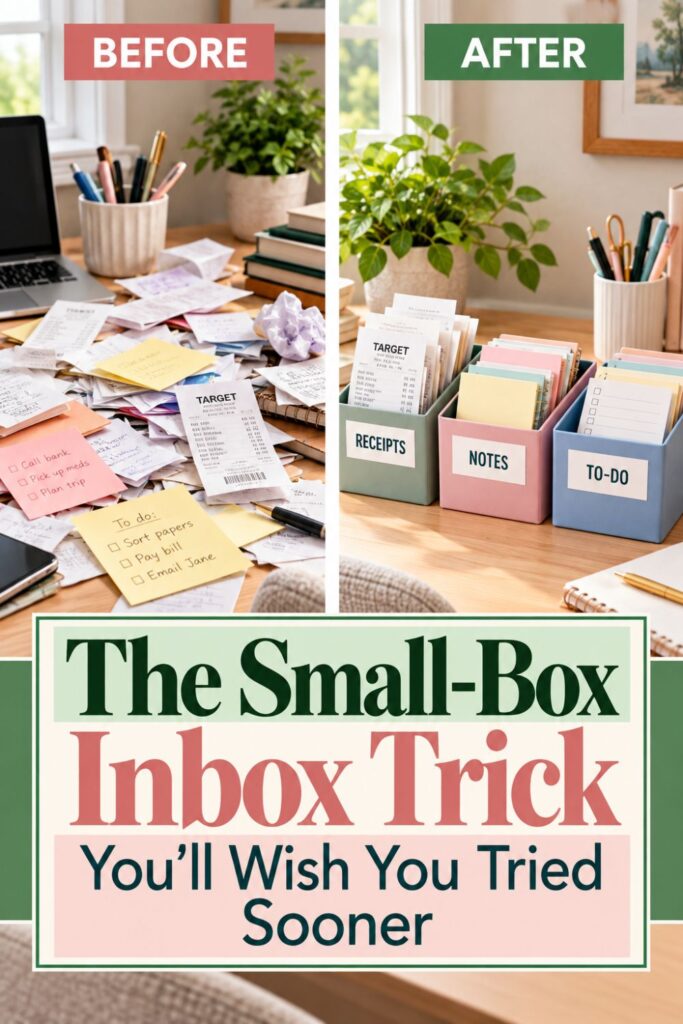
You know those papers you can’t put away because something still needs to happen with them? The receipt you need to enter. The note you need to follow up on. The form you need to deal with later. Those are often the papers that turn a reasonably tidy desk into a paper explosion.
- Give unfinished papers a few broad categories such as Receipts, Notes, and To Do.
- Drop papers quickly instead of stopping your work every time something lands on the desk.
- Process the boxes regularly so “organized” doesn’t quietly become “forgotten.”
There’s something reassuring about separating storage from unfinished action. Sometimes your paper problem isn’t that you don’t have enough filing space. You simply have a lot of small decisions waiting to be made. This system gives those decisions somewhere to wait without letting them take over your desk.
Try the small-box inbox system when unfinished paperwork keeps resurfacing.
Don’t Organize the Desk You Think You Should Have
Here’s the trap with desk organization: it’s very easy to create a system for your imaginary organized self.
Imaginary Organized You always puts the charger in a drawer. She immediately files receipts. She owns exactly three pens. Apparently she also has time to open three nested containers whenever she needs a paper clip.
Real-life you is much more useful to design around.
If you want to get more from your life, and are looking for concrete action steps to get you there, check out our Request a Coach page. It’s a “cut the fence-sitting and take action” way to tackle your issues and actually find success. To get off the fence and start to take action, click or tap here.
Notice where things naturally land. Notice what you reach for five times a day. Notice what you continually leave out even after you’ve “organized” it. Those habits aren’t automatically evidence that you’re bad at staying organized. They’re information about where your storage needs to be and how easy it needs to be to use.
That’s why a tray beside your laptop may work better than a beautiful drawer across the room, and why three open boxes might beat an elaborate filing system you avoid using.
When the Same Clutter Keeps Coming Back, Look One Step Earlier
There’s another useful pattern running through these desk fixes: recurring clutter can point to a workflow problem rather than a storage problem.
If the tissue box constantly overflows with mail, maybe the problem isn’t the tissue box. If every jar is overflowing with pens, another jar probably isn’t going to save you. If your charging station is always empty while cables remain on the desk, the charging station may simply be in the wrong place.
Before adding more storage, ask yourself one question: Why does this particular stuff keep ending up here?
Maybe you need a better landing spot. Maybe a category is too complicated. Maybe you’re keeping too many duplicates. Or maybe the item genuinely belongs right where you keep leaving it and simply needs a more intentional home there.
That’s the beauty of using jars, trays, boxes, mugs, and clips first. You can experiment cheaply. Move things around. Change your mind. Let your actual habits show you what works before spending money on a permanent solution.
Next Steps
Don’t try all nine desk fixes this afternoon. Pick the one that sounds most like your current annoyance.
If you want to get more from your life, and are looking for concrete action steps to get you there, check out our Request a Coach page. It’s a “cut the fence-sitting and take action” way to tackle your issues and actually find success. To get off the fence and start to take action, click or tap here.
Cables everywhere? Start with binder clips. Papers taking over? Try the tissue box or small-box inbox. Daily essentials drifting across the desk? Grab a tray. Pens and creative supplies multiplying? Go find a mug or jar.
Fix the friction you notice most. Once that little problem gets easier, you’ll know what deserves your attention next.
READ MORE
- How to Use Binder Clips for DIY Desk Cable Management
- Bedroom ‘Desk Reset’ Micro-Zones for Students
- Repurposed Jar Station for Pens, Clips, and Small Desk Supplies
- Shoe Box Drawer System for Paperwork and Flat Desk Supplies
- Tray-Based Catchall Zone for Daily Desk Essentials
- Tissue Box Caddy for Mail, Notepads, and Loose Papers
- Lidded Box Charging Station for Tech Accessories at Your Desk
- Mug-and-Bowl Supply Corral for Creative Desk Tools
- Small-Box Inbox System for Receipts, Notes, and To-Do Papers
Are you all about style, decor and organization? Download a copy of our Clutter Reset Guide.
Need some in depth help with organization and productivity ? Drop on by our directories choc full of productivity coaches, minimalist coaches, and work/life balance coaches to get your life organized! Or click here to have us match you to the best.
If you want to get more from your life, and are looking for concrete action steps to get you there, check out our Request a Coach page. It’s a “cut the fence-sitting and take action” way to tackle your issues and actually find success. To get off the fence and start to take action, click or tap here.
Read this next

DIY Shelf Risers That Double Your Small Closet Storage
Double your closet shelf space with one simple DIY riser trick that turns messy stacks into neat, easy-to-reach storage.
Read More
8 Iconic Holiday Movie-Inspired Wreaths to Transform Your Door This Christmas
Are you all about style, decor and organization? Download a copy of our Decluttering Workbook. **** There’s something about Christmas movies that makes us want to press pause on real […]
Read More
10 Front Door Christmas Decoration Ideas That Make Your Home Feel Magical
Make your front door feel instantly Christmas-ready with easy, magical decorating ideas that work for any porch size or budget.
Read More