


Talk to a coach about Organizational coaching

Crystal Faulk
ACC
I help overwhelmed women in transition gain clarity, confidence, and...

Terrie Hein
Certified Life Coach, Certified Insight Coach Practitioner
Coaching to declutter your life, organize your goals, and cook...

Dr Charlene Ashley
Doctorate - Behaviours
I coach individuals to design fulfilling lives through structure, clarity,...

Paloma Chiara

Lana's Gymnastics Club
"Where the best in gymnastics meets fun. Where every child is a star"
lgclubny.com

Anna Sosnina
ICF (ACC)
ICF ACC certified coach, founder of EssorVie Coaching, passionate about...

Tyler Fink
B.A. in Religion, Anthropology, and Philosophy. Master of Divinity (M.Div.) in Missiology
Pastor, husband, and father helping Christian men pursue faithful growth...

Travis Brown
Professional Life coach
With experience in guiding clients to achieve goals, build confidence,...


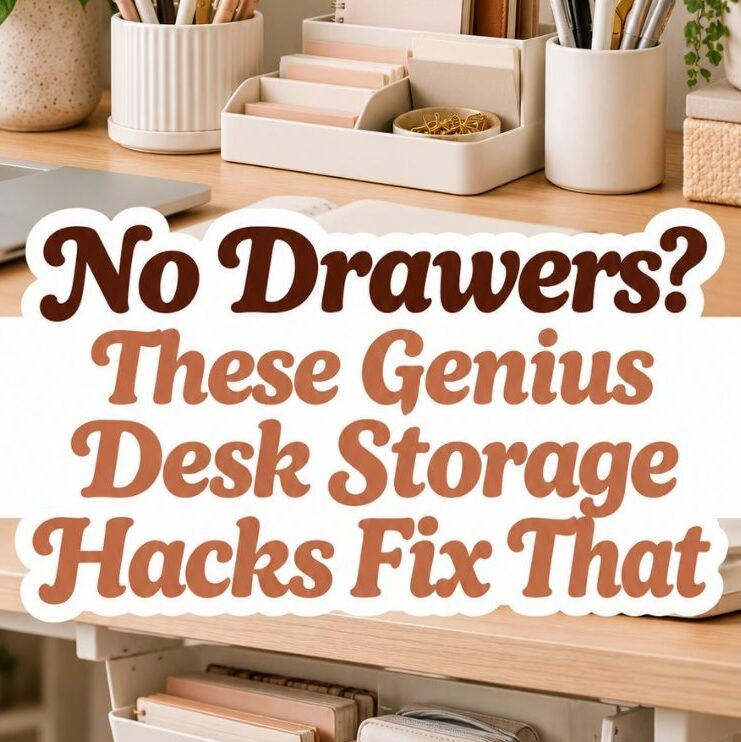
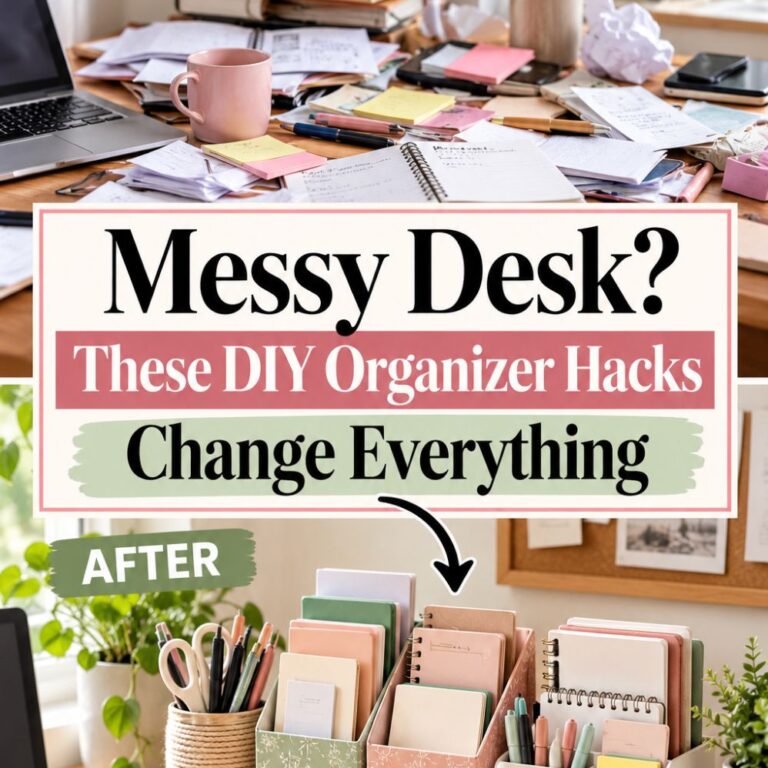


Desk Drawer Organization Ideas for Pens, Paper, and Everyday Supplies
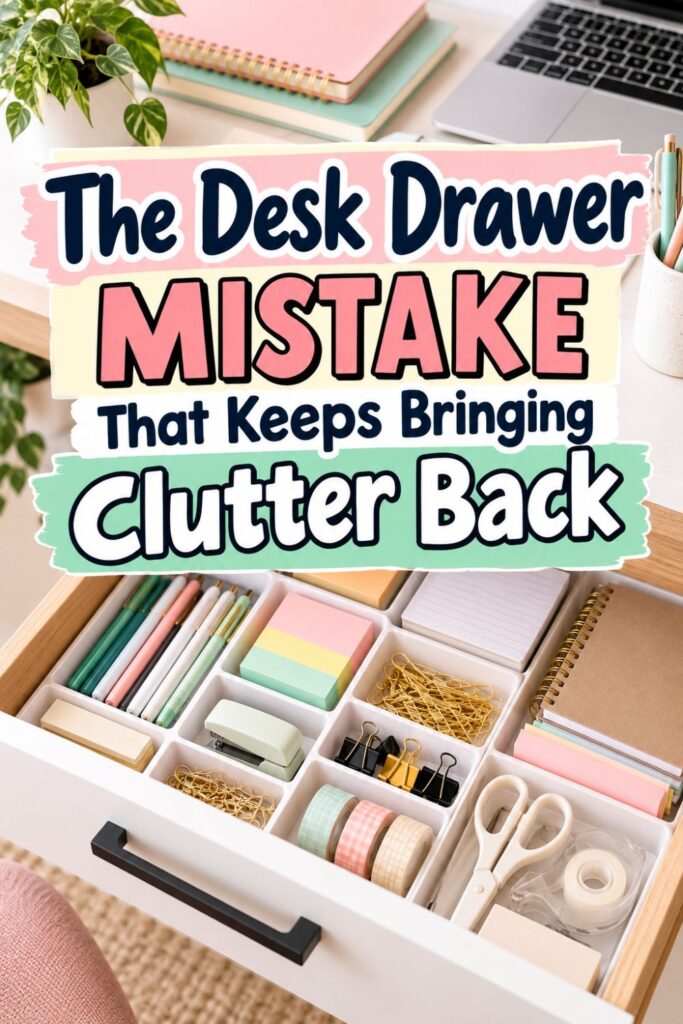
Tame the hidden mess inside your desk drawers with dividers, small containers, labels, and simple supply zones.
You know that annoying moment when you open your desk drawer for one pen and somehow end up digging through old receipts, loose paper clips, sticky notes, and three pens that don’t even work?
Or maybe you organized everything last weekend, felt ridiculously pleased with yourself, and now the drawer is already turning back into a junk pile?
The frustrating part is that you’re not asking for much. You just want to grab a highlighter, find a paper clip, or deal with a piece of paperwork without turning it into a whole search mission.
And here’s the thing: a tidy desk drawer doesn’t need fancy organizers, a huge budget, or a complete office makeover.
Sometimes you need better zones. Sometimes you need fewer supplies. And sometimes you need a system that still works when you’re busy, distracted, or sharing your desk with someone else.
These ten desk drawer organization ideas tackle different versions of that everyday mess. Pick the one that sounds most like your drawer, because there’s a good chance the fix is simpler than you think.
1. Drawer Zone Map for Everyday Desk Supplies
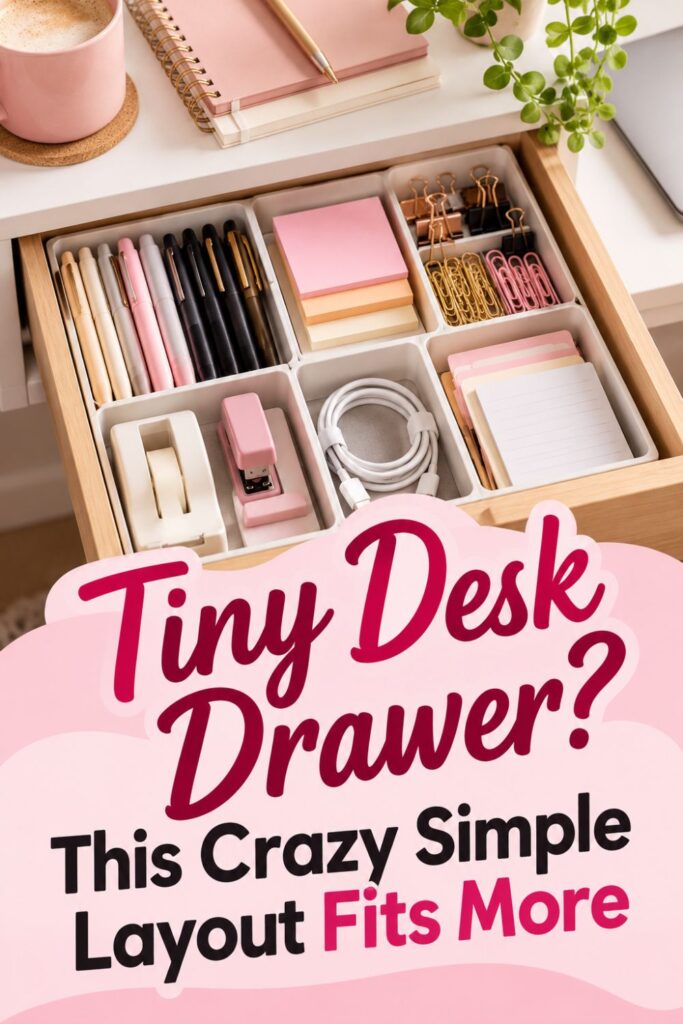
You open your drawer and everything is technically there, but nothing seems to have an actual home. Pens are mixed with tape, sticky notes are buried underneath envelopes, and you keep moving the same little objects around just to find what you need. Sound familiar? This four-zone drawer map is a great place to start when the whole drawer feels like one big pile.
If you want to get more from your life, and are looking for concrete action steps to get you there, check out our Request a Coach page. It’s a “cut the fence-sitting and take action” way to tackle your issues and actually find success. To get off the fence and start to take action, click or tap here.
- Four clear zones: Give writing tools, paper supplies, fasteners, and small tools their own spaces.
- No perfect drawer required: Tiny compartments and awkward layouts can still work.
- Organize for your habits: Put supplies where you’ll naturally reach for them.
The nice thing about a drawer zone map is that you don’t need to become a super-organized person to maintain it. You’re just making the drawer easier to understand at a glance. And if you’ve ever bought a pretty organizer that didn’t actually make finding things easier, you’ll appreciate the practical thinking behind this setup.
Give your everyday supplies a drawer layout that finally makes sense.
2. No-Mess Pen and Pencil Drawer System
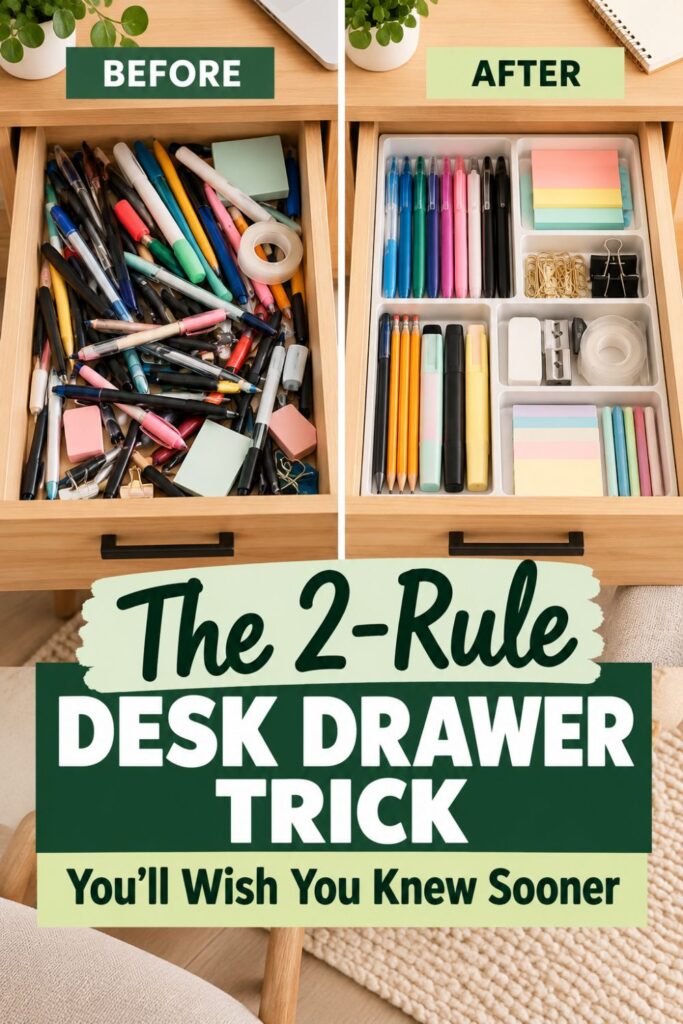
Why is finding one decent pen sometimes so difficult? You pull out a dried-up marker, a pencil with no eraser, and a handful of random writing tools before finding the one you actually like. If your pen collection is taking over your drawer, this simple sorting system might be exactly what you need.
- Stop the pen pile: Separate writing tools so you can spot what you need.
- Keep favorites close: Everyday pens shouldn’t compete with rarely used supplies.
- Make tidying quick: A two-minute weekly reset helps prevent another pileup.
What’s especially useful here is the focus on how often you actually use something. That sounds obvious until you realize your favorite pen is buried underneath twelve backups. You don’t need a separate compartment for every color or an expensive organizer. You need a setup that makes grabbing and returning your writing tools feel effortless.
Fix that messy pen drawer without turning it into a big project.
3. Sticky Note and Paper Clip Drawer Setup for Small Desks
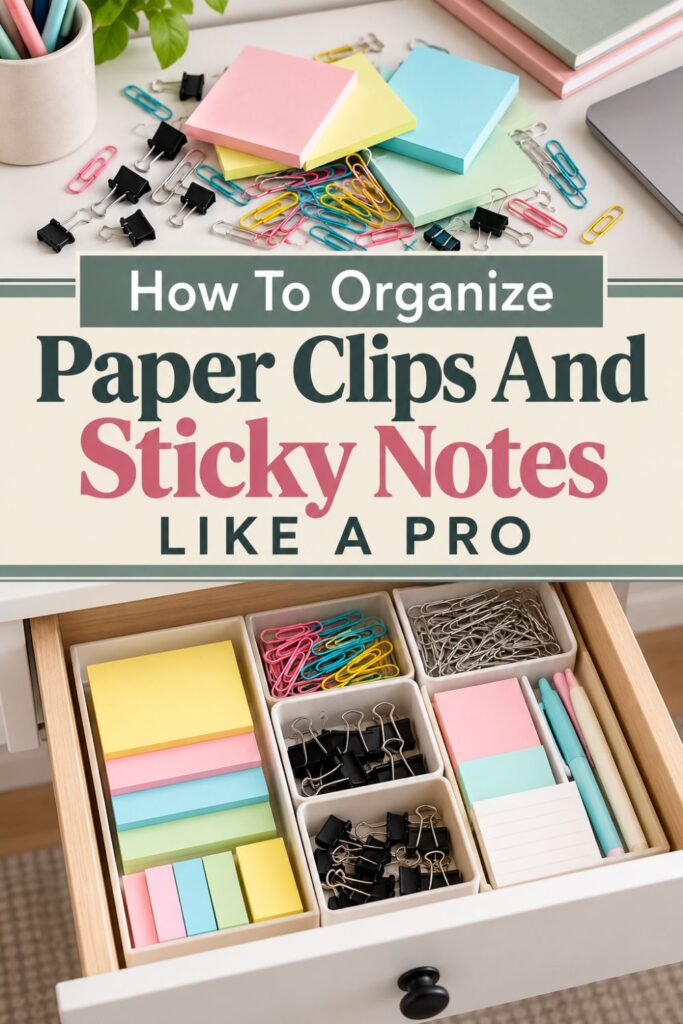
You know those tiny office supplies that somehow manage to spread everywhere? Paper clips sneak underneath sticky notes, binder clips get tangled together, and the one little sticky flag you need has disappeared. When your desk is already small, that kind of mess gets old fast. This micro-zoning setup gives all those little troublemakers somewhere to belong.
- Tiny supplies, tiny zones: Keep clips, notes, and small tools separated.
- Make limited space count: Choose compartments that fit your actual drawer.
- Keep everything steady: No more containers sliding around whenever you open the drawer.
What makes this one worth trying is how much attention it gives to the smallest supplies. They’re easy to overlook, but they’re often responsible for that scattered, messy feeling. If you have a compact desk, a shared workspace, or just one drawer for everything, you’ll find some clever ways to make the space more usable.
Give your paper clips and sticky notes a setup that stays manageable.
If you want to get more from your life, and are looking for concrete action steps to get you there, check out our Request a Coach page. It’s a “cut the fence-sitting and take action” way to tackle your issues and actually find success. To get off the fence and start to take action, click or tap here.
4. Top Drawer Reset System for Workday Essentials
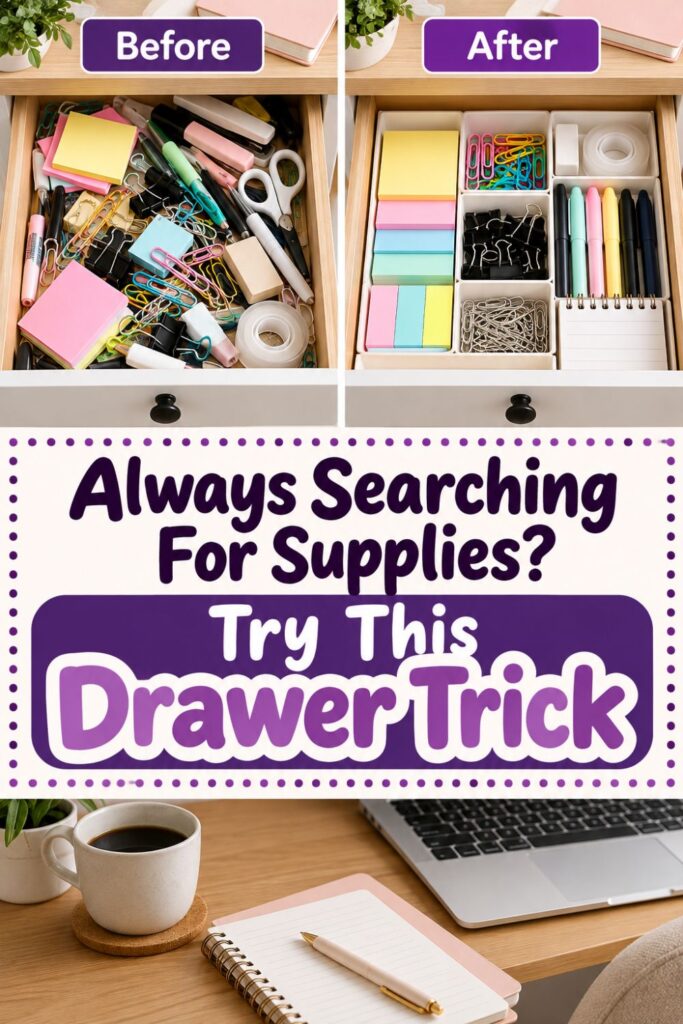
Maybe your biggest frustration isn’t the mess itself. It’s how often the drawer interrupts your work. You need a pen for a quick note, tape for a package, or a sticky note during a call, and suddenly you’re rummaging around instead of doing the task. The top drawer reset system is especially appealing if you want your workspace to feel a little more ready for whatever the day throws at you.
- Three reach-friendly zones: Keep your most-used essentials right where you need them.
- Less daily searching: Stop moving unnecessary supplies out of the way.
- A simple closing routine: Reset your drawer before tomorrow’s workday begins.
I like the thinking behind this one because it treats your top drawer as part of your daily workflow, not just extra storage. There’s also a one-week test to help you figure out whether the arrangement actually works. That’s refreshing when so many organizing systems look lovely on day one but become inconvenient once real work starts.
Set up a top drawer that makes busy workdays feel easier.
5. Catch-All Drawer Rescue Plan for Home Office Clutter
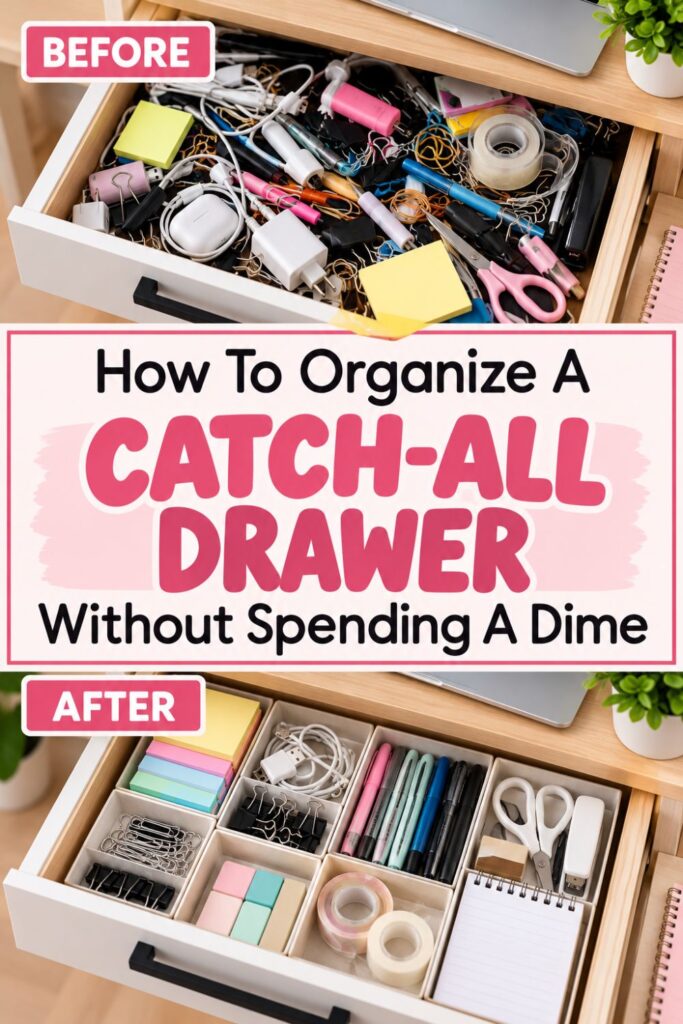
Every home office seems to have that one drawer. You know the one. It holds office supplies, old charging cables, mystery keys, expired coupons, and things you shoved away because you didn’t know where else to put them. Eventually, opening the drawer becomes mildly irritating. If yours has reached that stage, this seven-step rescue plan is probably your best starting point.
- Deal with the mystery items: Figure out what belongs and what needs to move.
- Create useful storage zones: Turn the catch-all into something you can actually use.
- Skip the shopping trip: Repurpose inexpensive containers you already have.
Here’s what feels especially refreshing: you don’t start by buying more stuff to hold your stuff. You start by making decisions about what’s taking up space. And that’s usually the part we keep avoiding. If your drawer has become the official hiding place for everything that doesn’t have a home, this is a much more sensible fix than squeezing in another plastic organizer.
Rescue your catch-all drawer before it swallows another office supply.
6. Label-First Drawer System for Shared Office Supplies
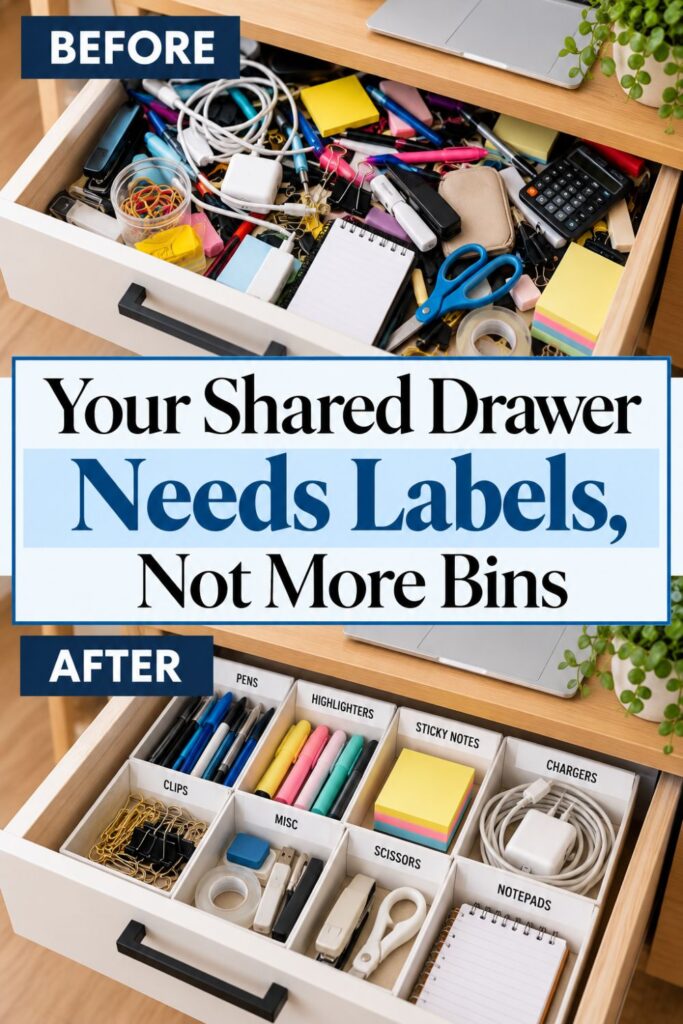
You straighten up the shared supply drawer, put everything where it belongs, and feel pretty good about it. Then someone else uses it, and somehow the scissors are with the sticky notes, the pens are scattered, and nobody knows where the staples went. If you’re tired of being the person who keeps reorganizing everyone else’s mess, the label-first method is worth a look.
- Labels come first: Decide where supplies belong before arranging containers.
- Make storage obvious: Help everyone find and return items without guessing.
- Avoid overstuffing: Give each category enough room to stay organized.
The clever part is that labels become a shared set of instructions without anyone needing an actual conversation about drawer rules. That’s useful for home offices, classrooms, coworking spaces, and desks shared with family members. You’re not relying on everyone remembering your personal organizing logic. You’re making the system easy for anyone to follow.
If you want to get more from your life, and are looking for concrete action steps to get you there, check out our Request a Coach page. It’s a “cut the fence-sitting and take action” way to tackle your issues and actually find success. To get off the fence and start to take action, click or tap here.
Make your shared supply drawer easier for everyone to use.
7. Minimal Supply Drawer for Paperwork and Daily Admin
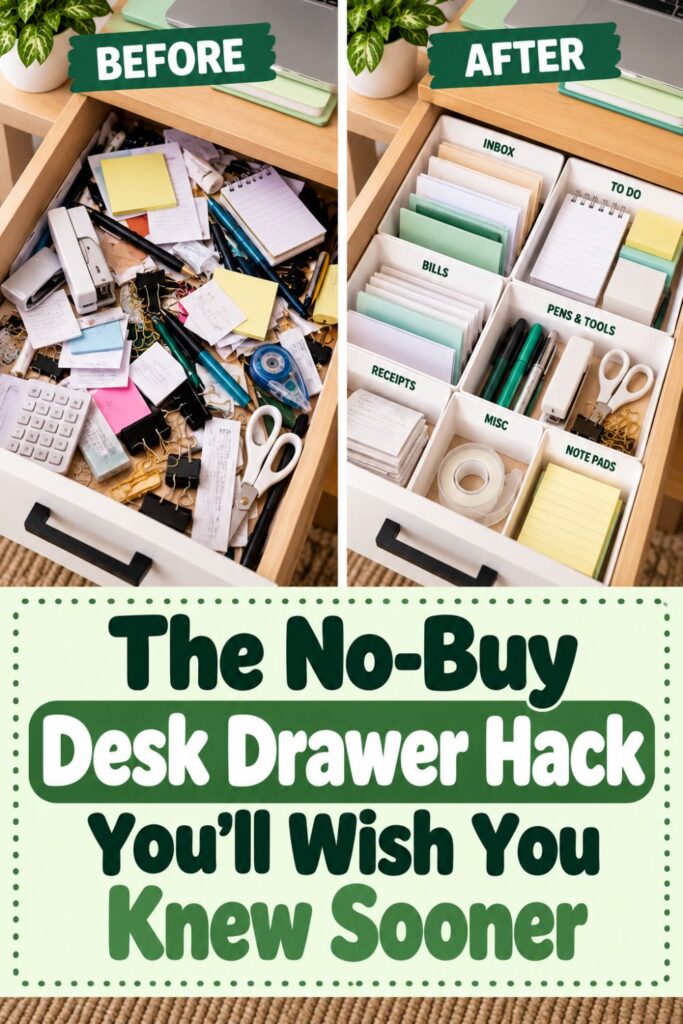
Some desk drawers don’t look especially messy until it’s time to deal with paperwork. Then you’re hunting for a working pen, searching for an envelope, wondering where the stamps went, and moving loose papers around just to find a stapler. If bills, forms, mail, and routine admin tasks always seem to take more effort than they should, a dedicated paperwork drawer could make a surprising difference.
- Keep admin essentials together: Writing tools, fasteners, mailing supplies, and active papers get practical zones.
- Give incoming papers a plan: Stop letting documents disappear into random piles.
- Keep only what earns its space: Less excess means fewer things to search through.
What I especially like is the idea of making one drawer your little admin station. Not a filing cabinet. Not an elaborate home office system. Just one reliable place for the things you reach for when life hands you another form to complete. There’s also a simple weekly reset to help keep the paperwork from quietly piling up again.
Turn one crowded drawer into a handy station for everyday paperwork.
8. Containerized Desk Drawer Setup for Tiny Office Supplies
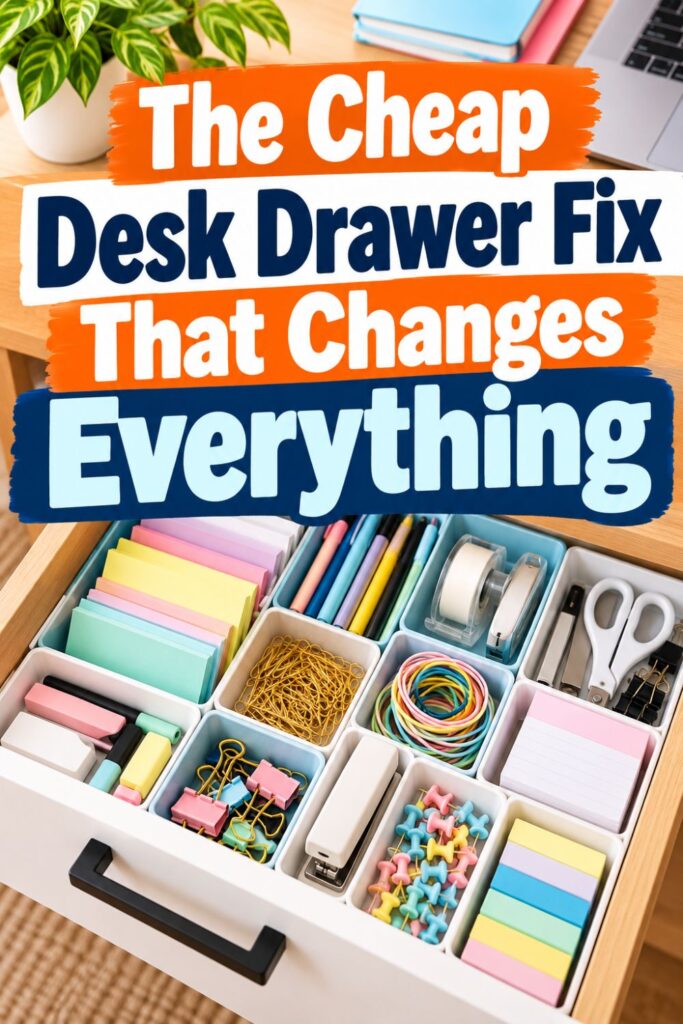
Have you ever bought a drawer organizer only to discover the compartments are all the wrong sizes? Your sticky flags don’t fit neatly, the paper clips need a smaller space, and half the organizer ends up holding nothing useful. That’s where a containerized setup gets interesting. Instead of forcing your supplies into one fixed layout, you build the layout around what you actually own.
- Mix small containers: Give erasers, clips, pushpins, and sticky flags their own spots.
- Fit the drawer you have: Customize the arrangement instead of fighting awkward dimensions.
- Change things easily: Rearrange containers when your supply needs change.
This is a particularly satisfying option if you enjoy a little DIY but don’t want a complicated project. Small trays and repurposed containers can do a lot of the work. Plus, you’ll find practical advice for keeping them from sliding around. Because an organizer that shifts into a messy pile every time you open the drawer isn’t really helping, is it?
Build a tiny-supply drawer that fits your stuff instead of the other way around.
9. Backstock Drawer System for Extra Pens, Notes, and Refills
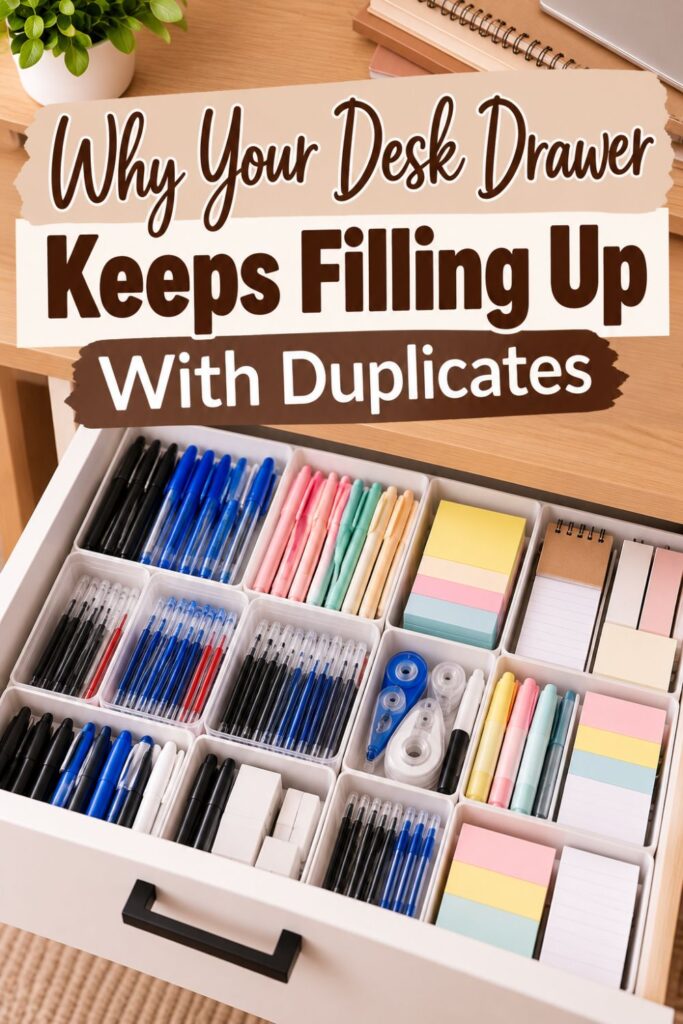
Maybe you don’t actually have too many office supplies. Maybe you’re just storing every backup, duplicate, and unopened package in the same drawer as the things you use every day. That’s an easy habit to fall into, especially when you like keeping extras on hand. But when fifteen pens compete for space with the one you’re currently using, something needs to change.
If you want to get more from your life, and are looking for concrete action steps to get you there, check out our Request a Coach page. It’s a “cut the fence-sitting and take action” way to tackle your issues and actually find success. To get off the fence and start to take action, click or tap here.
- Separate daily supplies from extras: Keep backups from taking over your working space.
- Know what you already own: Avoid buying another pack of something hiding in the drawer.
- Make small spaces work: Try a front-and-back arrangement when you only have one drawer.
The useful twist here is treating backup supplies as their own little inventory instead of letting them float around wherever there’s room. You still get to keep your extras, but they don’t need to be in your way all day. If you’re constantly finding unopened sticky notes or extra staple boxes in random places, this system is worth investigating.
Give your backup supplies a home without crowding your everyday essentials.
10. Desk Drawer Maintenance Checklist for Supplies That Drift
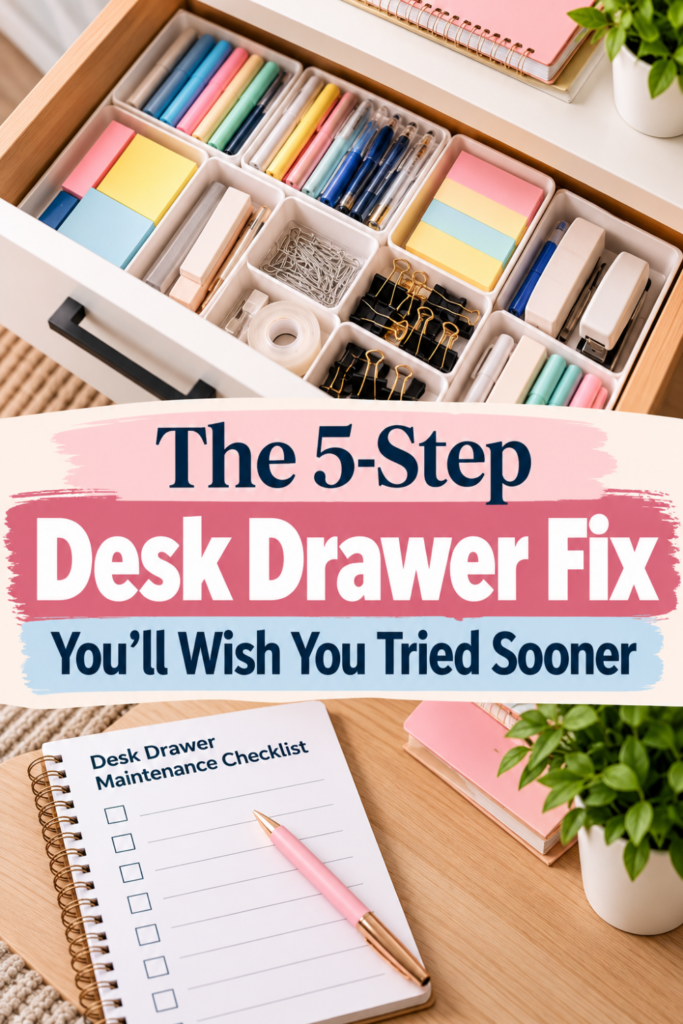
Here’s the one for anyone who’s already organized their desk drawer several times. You buy dividers, sort everything beautifully, and promise yourself you’ll keep it that way. A few weeks later, the paper clips have escaped, random receipts are appearing, and your neat little zones barely exist anymore. So what keeps happening? This maintenance checklist tackles the part of organizing that’s easy to forget: keeping the system working after the initial cleanup.
- Catch clutter early: Small daily resets stop supplies from wandering too far.
- Use a realistic schedule: Quick weekly checks are easier than another major overhaul.
- Spot repeat problems: Figure out why certain items never seem to stay put.
What makes this especially valuable is that it doesn’t assume you’re going to maintain a perfectly organized drawer every single day. Supplies move. Busy weeks happen. Someone puts something in the wrong spot. The trick is noticing those little changes before they turn into another overwhelming cleanup. If your organizers are fine but the mess keeps returning, this is the one I’d read next.
Try the maintenance checklist that helps organized drawers stay organized.
Why Your Drawer Keeps Getting Messy Even When You Own Organizers
Here’s something worth thinking about before you order another set of drawer dividers: a container doesn’t automatically solve a storage problem.
You can have matching trays, labeled compartments, and a perfectly tidy drawer on Monday. But if your favorite pen is tucked in an inconvenient corner, or you have to lift three things to reach your sticky notes, that neat arrangement is going to become annoying pretty quickly.
And what happens when an organization system feels annoying?
If you want to get more from your life, and are looking for concrete action steps to get you there, check out our Request a Coach page. It’s a “cut the fence-sitting and take action” way to tackle your issues and actually find success. To get off the fence and start to take action, click or tap here.
You stop using it.
That’s why the best desk drawer setup isn’t necessarily the prettiest one. It’s the one that makes sense when you’re rushing between meetings, finishing homework, sorting bills, or trying to get through your to-do list.
Think about the difference between the person who grabs a pen every five minutes and the person who mostly needs envelopes, stamps, and paperwork supplies. Those drawers shouldn’t look exactly alike.
If you haven’t organized your drawer yet, start with the Drawer Zone Map or Catch-All Drawer Rescue Plan. If you’ve already tried the dividers-and-containers route, the Maintenance Checklist might reveal what’s actually going wrong.
Sometimes the smartest organization change isn’t buying another container. It’s moving one frequently used item six inches closer to where your hand naturally goes.
You Don’t Need to Fix Every Drawer at Once
It’s tempting to open every desk drawer, pull everything onto the floor, and decide you’re finally going to organize your entire workspace.
And sure, that can feel exciting at first.
But then you’re surrounded by pens, tape rolls, receipts, mystery cables, and a surprising number of sticky note pads. Suddenly, your quick organization project has eaten an entire afternoon.
If you want to get more from your life, and are looking for concrete action steps to get you there, check out our Request a Coach page. It’s a “cut the fence-sitting and take action” way to tackle your issues and actually find success. To get off the fence and start to take action, click or tap here.
A smaller reset can be much more satisfying.
Think about the drawer that slows you down most often. Is it the top drawer where your everyday supplies are buried? The tiny drawer full of clips and erasers? Or the paperwork drawer that makes dealing with simple admin tasks feel unnecessarily complicated?
Start there.
You might discover that your biggest problem is simply mixing frequently used supplies with backups. Or that your containers are too large. Or that nobody in your shared workspace knows where anything belongs.
Once you solve that specific problem, the next drawer becomes easier to tackle because you’ll have a better sense of what works for you.
And don’t underestimate the relief of having just one drawer that behaves itself. Being able to open it, immediately see what you need, and close it without rearranging a pile of supplies is a small but genuinely lovely improvement to your workday.
Next Steps
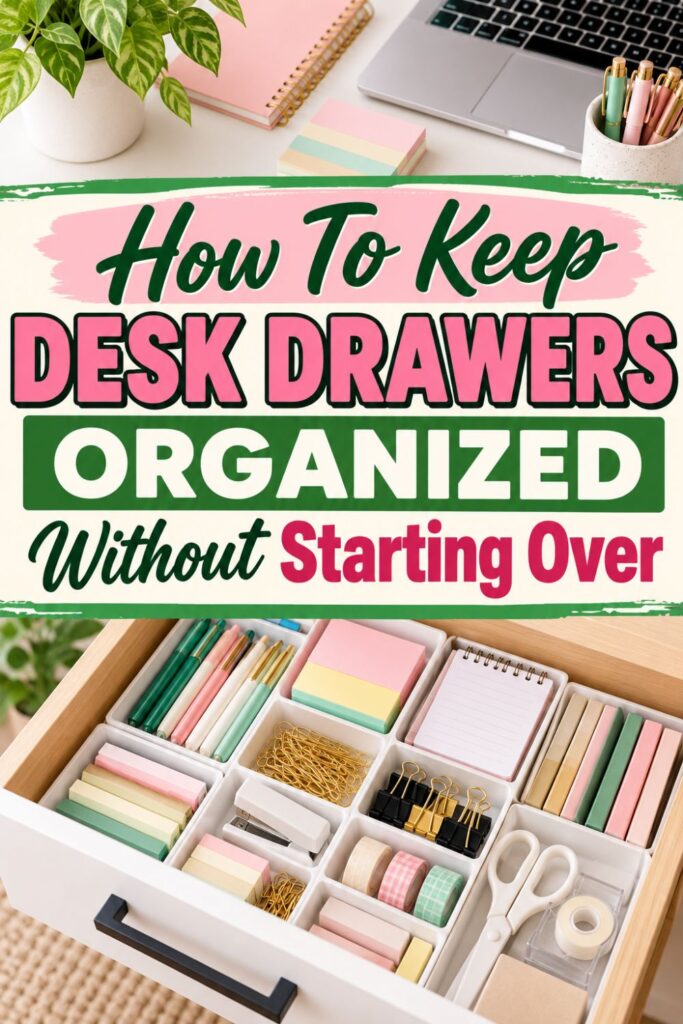
You don’t need a Pinterest-perfect desk or a drawer full of matching organizers to enjoy a calmer workspace.
Pick the article that matches your biggest frustration right now. Start with a complete drawer reset if everything is mixed together, try smaller supply zones if you have limited space, or focus on maintenance if your carefully organized drawers never seem to stay that way.
If you want to get more from your life, and are looking for concrete action steps to get you there, check out our Request a Coach page. It’s a “cut the fence-sitting and take action” way to tackle your issues and actually find success. To get off the fence and start to take action, click or tap here.
You can combine a couple of these ideas, too. A good drawer map, a few appropriately sized containers, and a quick reset habit might be all you need.
The goal isn’t to make your desk drawers look impressive. It’s to make finding a pen the easiest part of your day.
READ MORE
- Drawer Zone Map for Everyday Desk Supplies
- No-Mess Pen and Pencil Drawer System
- Sticky Note and Paper Clip Drawer Setup for Small Desks
- Top Drawer Reset System for Workday Essentials
- Catch-All Drawer Rescue Plan for Home Office Clutter
- Label-First Drawer System for Shared Office Supplies
- Minimal Supply Drawer for Paperwork and Daily Admin
- Containerized Desk Drawer Setup for Tiny Office Supplies
- Backstock Drawer System for Extra Pens, Notes, and Refills
- Desk Drawer Maintenance Checklist for Supplies That Drift
If you want to get more from your life, and are looking for concrete action steps to get you there, check out our Request a Coach page. It’s a “cut the fence-sitting and take action” way to tackle your issues and actually find success. To get off the fence and start to take action, click or tap here.
Read this next

How to Transform Household Items into Tiny Bathroom Organizing Tools
Small bathrooms don’t have to mean small solutions. In fact, when you start looking at your household items with fresh eyes, you’ll find your home is filled with organizing potential. […]
Read More
Closet Wall Organization Ideas That Use Vertical Space Better
Blank closet walls can do so much more. See the clever vertical storage ideas that make bags, shoes, shelves, and corners finally work.
Read More
A Practical Way to Use Vision Boards for Manifestation
Use your vision board in a smarter, more practical way so manifestation feels clearer, calmer, and easier to follow every day.
Read More