


Talk to a coach about Organizational coaching

Crystal Faulk
ACC
I help overwhelmed women in transition gain clarity, confidence, and...

Terrie Hein
Certified Life Coach, Certified Insight Coach Practitioner
Coaching to declutter your life, organize your goals, and cook...

Dr Charlene Ashley
Doctorate - Behaviours
I coach individuals to design fulfilling lives through structure, clarity,...

Paloma Chiara

Lana's Gymnastics Club
"Where the best in gymnastics meets fun. Where every child is a star"
lgclubny.com

Anna Sosnina
ICF (ACC)
ICF ACC certified coach, founder of EssorVie Coaching, passionate about...

Tyler Fink
B.A. in Religion, Anthropology, and Philosophy. Master of Divinity (M.Div.) in Missiology
Pastor, husband, and father helping Christian men pursue faithful growth...

Travis Brown
Professional Life coach
With experience in guiding clients to achieve goals, build confidence,...
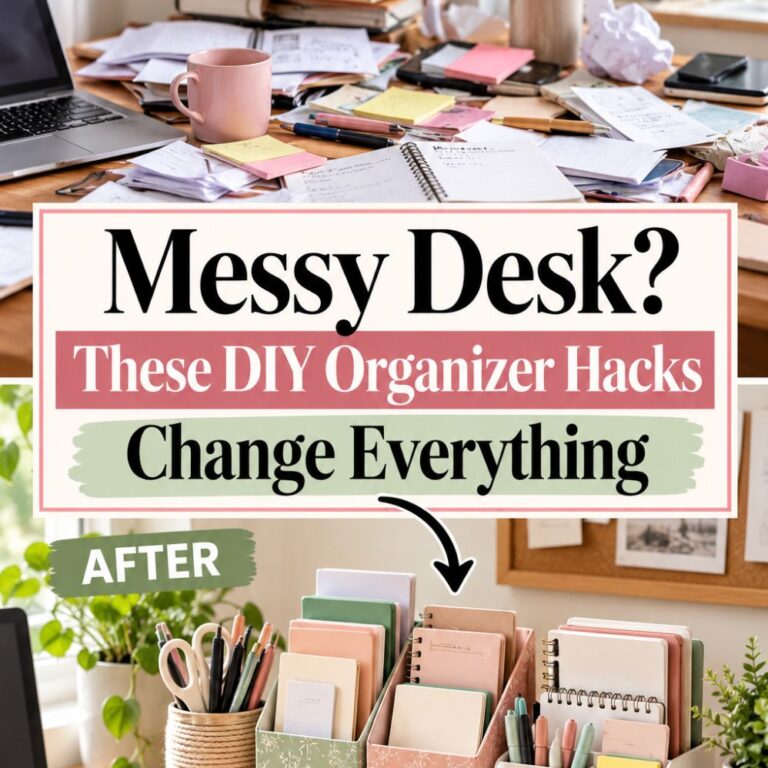





Mug-and-Bowl Supply Corral for Creative Desk Tools
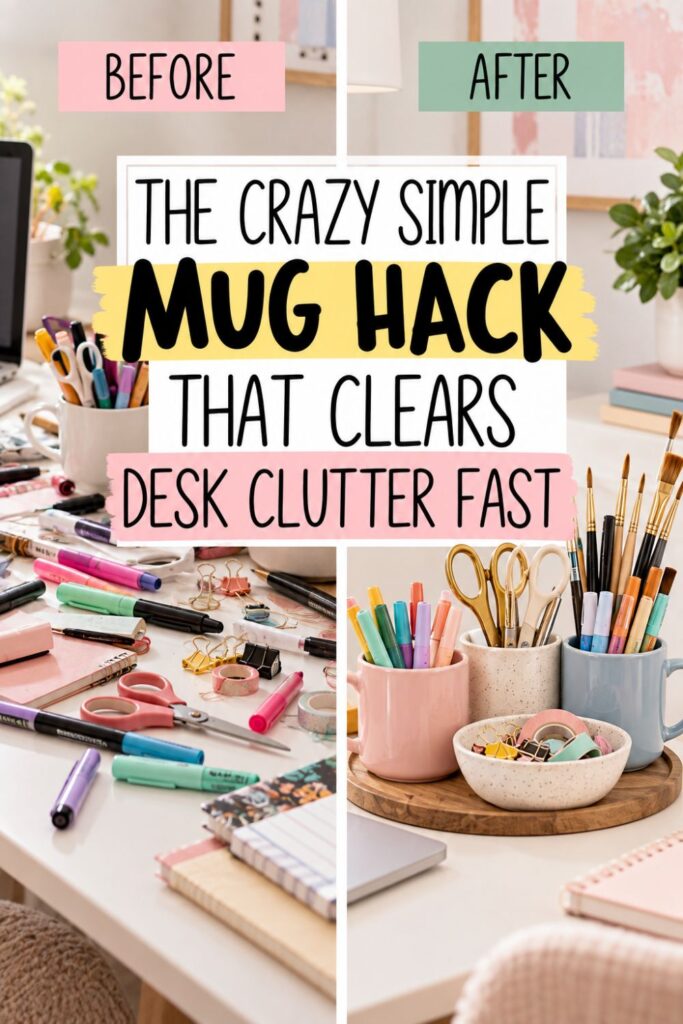
When Your Creative Supplies Need a Home, Not Another Organizer
Creative desks have a way of collecting small things. You start with a few pens and a pair of scissors, then somehow there are markers rolling around, rulers leaning against the monitor, clips scattered beside the keyboard, and three pencils hiding under a notebook.
The problem is not always that you own too much. Often, the things you use most simply do not have an easy place to go.
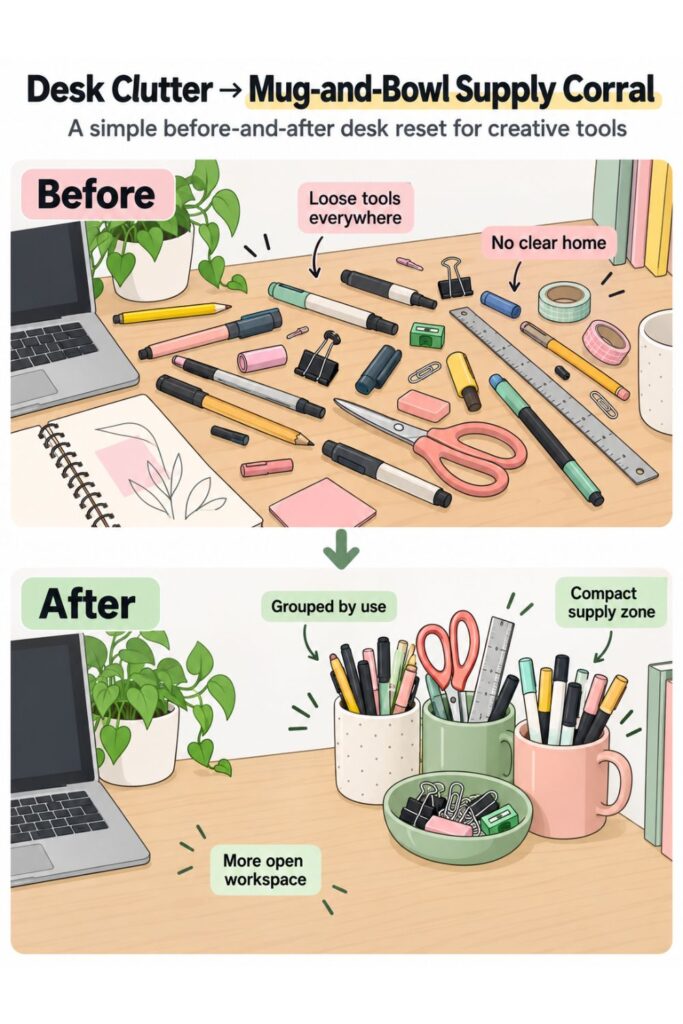
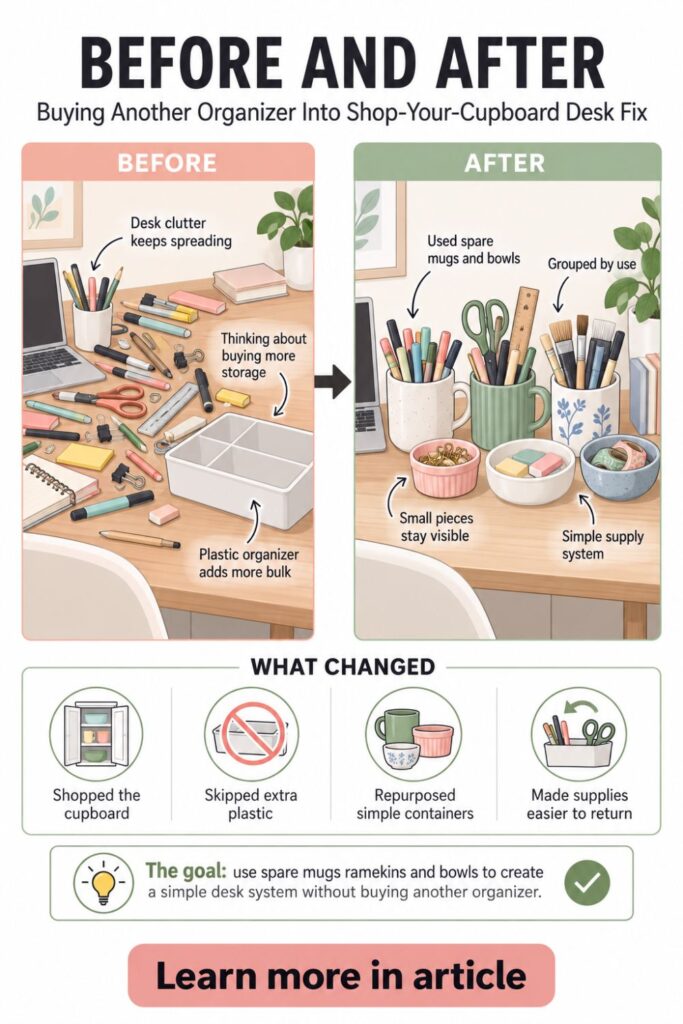
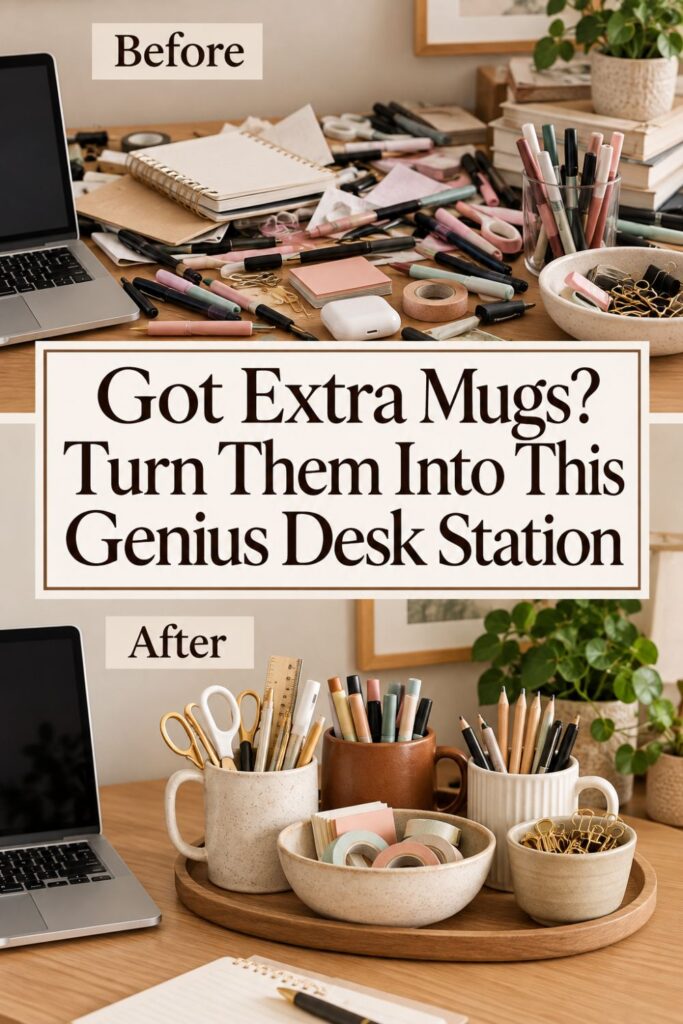
That is where a mug-and-bowl supply corral can help. Instead of buying another desk organizer, use mugs, cups, ramekins, or small bowls you already own to create a simple station for the supplies you reach for every day.
The key is not to fill random containers with random objects. The system works best when each container has a clear purpose and everything is grouped according to how you actually use it.
A few well-chosen containers can hold:
- Pens and pencils
- Markers and highlighters
- Scissors
- Paintbrushes
- Rulers
- Binder clips
- Erasers
- Pencil sharpeners
- Washi tape
- Other small creative tools
Start with the supplies that keep wandering: Look at what is regularly left on your desk at the end of the day. Those are the items that need the easiest storage, not necessarily everything you own.
Shop your kitchen or cupboards first: Pull out mugs, small bowls, ramekins, or cups that are rarely used. Matching containers are nice, but they are not necessary for the system to work.
Think function before appearance: A pretty arrangement is useful only if you can grab what you need and return it without thinking about it.
If you want to get more from your life, and are looking for concrete action steps to get you there, check out our Request a Coach page. It’s a “cut the fence-sitting and take action” way to tackle your issues and actually find success. To get off the fence and start to take action, click or tap here.
This is a low-effort desk reset because there is nothing to install, measure, drill, or assemble. You are simply giving loose supplies obvious homes using containers you probably already have.
The goal is a desk that feels easier to work at without turning organization into another project.
1. Pull the Loose Supplies Off the Desk Before Choosing Containers
It is tempting to begin by grabbing a few cute mugs and deciding what should go inside them. That often creates a system based on the containers you happen to own rather than the supplies you actually need to organize.
Start with the clutter instead.
Gather the loose tools that regularly end up across your work surface. Do not empty every drawer or tackle your entire craft collection. This is meant to be a small desk reset, so focus on the things that repeatedly migrate onto the desktop.
You might collect:
- Pens and pencils
- Markers
- Highlighters
- Scissors
- Rulers
- Paintbrushes
- Glue sticks
- Erasers
- Clips
- Pencil sharpeners
- Sticky-note flags
- Small measuring tools
Gather only the repeat offenders: Pick up the supplies that are usually sitting beside your keyboard, notebook, planner, or sketchpad. If something normally lives happily inside a drawer, leave it there.
Once everything is together, spread the items out so you can see what you have. You will probably notice that some objects naturally belong together.
If you want to get more from your life, and are looking for concrete action steps to get you there, check out our Request a Coach page. It’s a “cut the fence-sitting and take action” way to tackle your issues and actually find success. To get off the fence and start to take action, click or tap here.
Long tools such as rulers, scissors, markers, and brushes may form one group. Small objects such as clips, sharpeners, and erasers may form another.
Separate by general size first: Create loose groups for tall tools, standard pen-sized supplies, and small pieces. You are not committing to final categories yet. You are simply making it easier to see which container shapes will work.
Next, notice which supplies you use most frequently. Your favorite pen probably deserves easier access than a specialty marker you use twice a month.
Pull daily-use tools to the front: Make a small group of items you use almost every workday. These should receive the best position in the finished setup.
Finally, remove anything that does not need prime desktop space.
Move occasional-use supplies elsewhere: Specialty tools, backups, duplicates, and rarely used items can go into deeper storage. Your mug-and-bowl corral should make everyday work easier, not become a miniature storage unit for everything you own.
By sorting first, you can choose containers based on real needs and keep the finished system small.
2. Decide What Deserves a Mug and What Belongs in a Bowl
The easiest way to make this system frustrating is to put every object into the same kind of container.
If you want to get more from your life, and are looking for concrete action steps to get you there, check out our Request a Coach page. It’s a “cut the fence-sitting and take action” way to tackle your issues and actually find success. To get off the fence and start to take action, click or tap here.
A mug is excellent for some supplies and terrible for others. Small bowls work for things that would disappear inside a tall cup, while upright containers make long tools easier to see and grab.
The shape of the object should guide the shape of its storage.
Use mugs for supplies that naturally stand upright: Pens, pencils, markers, scissors, paintbrushes, and similar tools are usually easiest to store vertically. A mug keeps them contained while leaving the useful end visible.
Rulers can also work in a taller mug if the container is stable enough. If a ruler makes the mug tip or lean, store it separately or choose a wider, heavier cup.
Use shallow bowls for small pieces: Erasers, binder clips, sharpeners, tape rolls, thumb drives, rubber bands, and other short items are easier to retrieve when you can see the bottom of the container.
Think about what happens when you reach for an item. If you have to dig through several inches of pens to find an eraser, the container is too deep for that category.
A shallow bowl lets you glance down and immediately see what is available.
Match the depth to the object: The smaller the item, the shallower the container should usually be. Your goal is visibility, not simply containment.
If you want to get more from your life, and are looking for concrete action steps to get you there, check out our Request a Coach page. It’s a “cut the fence-sitting and take action” way to tackle your issues and actually find success. To get off the fence and start to take action, click or tap here.
You may also discover that one mug cannot comfortably hold every upright supply. That is not a problem.
Split crowded groups before they become annoying: If scissors block your markers or paintbrushes become tangled with pens, divide them into two practical categories.
For example:
- Mug 1: Pens, pencils, and highlighters
- Mug 2: Scissors, rulers, and cutting tools
- Mug 3: Markers and paintbrushes
- Bowl 1: Clips, erasers, and sharpeners
You do not need this exact arrangement. The right combination depends on your work.
What matters is that the container supports the way you grab the item. When tools are visible and easy to reach, putting them away becomes much easier too.
3. Give Each Container One Clear Job
A desk can technically look organized while still being frustrating to use.
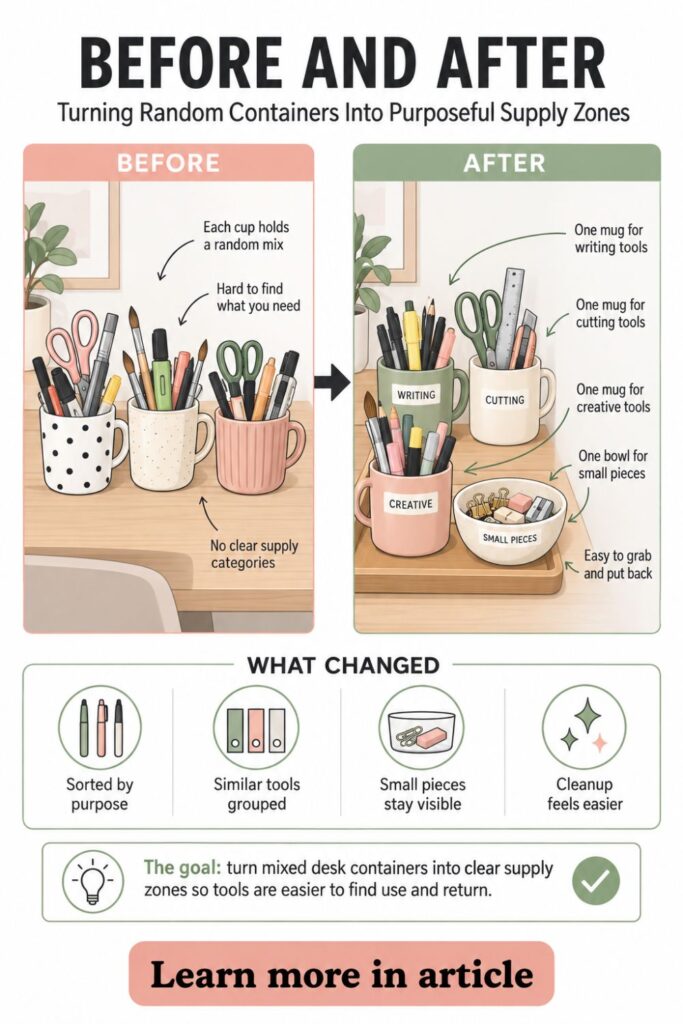
Three mugs filled with a random mixture of pens, scissors, brushes, and markers may look tidier than a pile, but you still have to search through every container to find what you need.
The next step is to give each mug or bowl a clear job.
If you want to get more from your life, and are looking for concrete action steps to get you there, check out our Request a Coach page. It’s a “cut the fence-sitting and take action” way to tackle your issues and actually find success. To get off the fence and start to take action, click or tap here.
Name the category before filling the container: Decide what each container is responsible for before dropping supplies inside. You might have one mug for writing tools, one for creative tools, and one bowl for small accessories.
The category does not have to be extremely specific. In fact, categories that are too detailed can make a low-effort system harder to maintain.
You probably do not need separate mugs for blue pens, black pens, red pens, gel pens, and pencils.
Instead, think in broad groups that make sense during your normal workday.
Possible categories include:
- Writing tools
- Markers and highlighters
- Cutting and measuring tools
- Brushes and creative tools
- Small desk accessories
Combine supplies that are normally used together: Pens and highlighters can often share a mug because you may reach for both while planning or taking notes. Scissors and rulers may make sense together if you regularly use them for paper projects.
However, items that support very different tasks may deserve separate containers even if they are similar in size.
Separate categories when mixing them creates friction: If you keep pulling paintbrushes out while searching for your everyday pen, give the brushes their own home.
If you want to get more from your life, and are looking for concrete action steps to get you there, check out our Request a Coach page. It’s a “cut the fence-sitting and take action” way to tackle your issues and actually find success. To get off the fence and start to take action, click or tap here.
There is also a point where more categories stop being helpful.
If your desk ends up with nine mugs and six bowls, you have solved one kind of clutter by creating another.
Stop once every everyday item has an obvious home: You do not need a dedicated container for every object. You need enough categories that putting something away feels almost automatic.
A good test is to pick up each item and ask, “Where does this go?”
If the answer comes immediately, the system is clear enough.
The goal is not perfect categorization. It is reducing the tiny decisions that make desk cleanup feel more difficult than it should.
4. Turn the Separate Containers Into One Supply Corral
Once your mugs and bowls have jobs, resist the urge to scatter them around the entire desk.
A pen mug beside the monitor, a bowl of clips by the keyboard, and another cup on the opposite corner can still create visual clutter. The containers are organized individually, but the desktop does not feel like one organized system.
If you want to get more from your life, and are looking for concrete action steps to get you there, check out our Request a Coach page. It’s a “cut the fence-sitting and take action” way to tackle your issues and actually find success. To get off the fence and start to take action, click or tap here.
Instead, create a single supply corral.
Think of the mugs and bowls as parts of one small station rather than separate storage pieces.
Cluster the containers together: Place the mugs and bowls close enough that they visually read as one group. This makes the setup feel intentional and keeps your supplies concentrated in a defined area.
How you arrange them matters too.
Tall containers can block shorter bowls if everything sits in one straight line.
Put taller containers behind shorter ones: Position mugs toward the back and shallow bowls toward the front. You should be able to see what is inside every container without moving another one first.
Then think about frequency of use.
Your favorite pens should not be buried behind a cup of tools you touch once a week.
If you want to get more from your life, and are looking for concrete action steps to get you there, check out our Request a Coach page. It’s a “cut the fence-sitting and take action” way to tackle your issues and actually find success. To get off the fence and start to take action, click or tap here.
Place the most-used container within easiest reach: If you are right-handed, that might mean keeping your writing mug slightly toward the right side of the corral. Left-handed users may prefer the opposite.
You can also place the entire grouping on a small tray if you already have one.
A tray is useful because it gives the station a clear boundary and makes the whole setup easy to move. It is not something you need to purchase for this project.
Use a tray only when it simplifies the setup: A tray, placemat, small board, or other flat base can help define the corral, but skip it if it simply adds another layer of clutter.
Your finished station might include two mugs and one bowl or four containers of different sizes.
The exact number matters less than the footprint.
You want one compact zone where creative supplies live, leaving the rest of the desk available for actual work.
5. Find the Desk Location That Saves Space Instead of Taking It
Even an organized supply station can become annoying if it sits in the wrong place.
If you want to get more from your life, and are looking for concrete action steps to get you there, check out our Request a Coach page. It’s a “cut the fence-sitting and take action” way to tackle your issues and actually find success. To get off the fence and start to take action, click or tap here.
A beautiful row of mugs directly in front of your monitor is still a problem if you have to move them every time you open a notebook. The same is true if scissors stick up into your sightline or your pen cup blocks the lamp switch.
Your corral should support your workspace, not compete with it.
Protect your main work surface first: Identify the portion of your desk needed for your laptop, keyboard, notebook, planner, sketchbook, or other active projects. Keep the supply corral outside that zone.
On many desks, the back corner works well because it uses space that would otherwise sit empty. Another option is the side closest to your dominant hand.
Test the corner nearest your natural reach: Sit in your normal working position and reach toward the potential location. If you can grab a pen or pair of scissors comfortably without twisting or standing up, the spot is probably practical.
Be especially careful with taller supplies.
Scissors, paintbrushes, and rulers can create unexpected visual barriers when stored upright.
Check the sightline before committing: Make sure tall objects are not covering part of the monitor, blocking a calendar, sitting in front of a window, or interfering with a desk lamp.
If you want to get more from your life, and are looking for concrete action steps to get you there, check out our Request a Coach page. It’s a “cut the fence-sitting and take action” way to tackle your issues and actually find success. To get off the fence and start to take action, click or tap here.
Then use the desk for a day.
A location that seems perfect while organizing may be less convenient once you begin working.
Perhaps your elbow keeps bumping the bowl. Maybe the pen mug sits exactly where you normally place your coffee.
Move the corral as one unit when testing locations: Instead of rearranging individual cups every time something feels wrong, shift the whole grouping until you find the spot that interferes least with your routine.
This small trial period is important because an organizer that constantly gets moved will eventually stop being used.
The best location is not necessarily the prettiest one. It is the place where supplies are easy to grab, easy to return, and comfortably outside your active work zone.
When those three things line up, the corral starts feeling like part of the desk rather than another object sitting on it.
6. Do a Two-Minute Edit After You Use It
Your first setup does not have to be perfect.
If you want to get more from your life, and are looking for concrete action steps to get you there, check out our Request a Coach page. It’s a “cut the fence-sitting and take action” way to tackle your issues and actually find success. To get off the fence and start to take action, click or tap here.
In fact, one of the easiest ways to create an organization system that actually works is to use it first and adjust it afterward. Daily behavior will quickly show you what the initial setup got right and what needs to change.
After a day or two, look at the desk before cleaning anything.
Are certain tools sitting beside their mug instead of inside it? Is one bowl untouched? Do you keep reaching around one container to access another?
Those small clues tell you more than trying to design the perfect setup in advance.
Notice which items still get left out: A supply that repeatedly sits beside its assigned container may be in the wrong category or in a location that is inconvenient to reach.
For example, you might have placed scissors with other cutting tools at the back of the station. If you use them constantly, they may deserve the front position instead.
Remove supplies you never touch: If a mug contains six markers you have not used in months, move them to deeper storage. Everyday desk space should go to everyday tools.
Next, look for crowded categories.
If you want to get more from your life, and are looking for concrete action steps to get you there, check out our Request a Coach page. It’s a “cut the fence-sitting and take action” way to tackle your issues and actually find success. To get off the fence and start to take action, click or tap here.
A container does not have to be packed to be useful. Leaving some breathing room makes it easier to remove and return supplies.
Split only the category causing trouble: If the marker mug is overloaded, create a second category or remove rarely used markers. There is no reason to redesign the entire system because one part is not working.
Keep the adjustment small.
This is supposed to be a low-effort solution, not an ongoing organizational hobby.
A simple reset can be as quick as:
- Put loose items into their homes
- Remove one or two unnecessary tools
- Shift a container forward or backward
- Wipe the small area beneath the corral
Keep the reset easy enough to repeat: If tidying the supply station takes more than a couple of minutes, simplify it.
The best organization system is not the one that looks perfect immediately after you create it. It is the one that still feels easy to use several weeks later.
7. What to Do When Your Supply Corral Starts Growing Again
The danger with any convenient container is that it eventually becomes an invitation to add more things.
If you want to get more from your life, and are looking for concrete action steps to get you there, check out our Request a Coach page. It’s a “cut the fence-sitting and take action” way to tackle your issues and actually find success. To get off the fence and start to take action, click or tap here.
One marker becomes five. A second pair of scissors appears. Someone drops a charging cable into the bowl because it is nearby. Before long, your tidy corral starts looking like the desk clutter you were trying to fix.
When that happens, do not automatically add another mug.
Overflow is usually a sign that the system needs editing.
Treat a full container as a limit: When a mug becomes difficult to use, remove something before adding anything new. Containers work best when tools can be pulled out and returned without forcing or digging.
Start by looking for duplicates.
You may genuinely need several pens or markers, but four pairs of scissors probably do not all need permanent desktop space.
Move backup supplies into secondary storage: Keep the version you use most often in the corral and move extras into a drawer, closet, cabinet, or larger craft storage area.
Project-specific supplies are another common source of overflow.
If you want to get more from your life, and are looking for concrete action steps to get you there, check out our Request a Coach page. It’s a “cut the fence-sitting and take action” way to tackle your issues and actually find success. To get off the fence and start to take action, click or tap here.
You might bring out special markers, brushes, cutting tools, or adhesive for a particular project. The problem starts when every temporary supply becomes a permanent part of the desk.
Separate everyday tools from project tools: Keep the mug-and-bowl station focused on items you use regularly. Create a temporary project container when you need additional supplies, then put those items away when the project ends.
Your needs may also change over time.
If you begin sketching daily, markers and pencils may deserve more space. If you stop using a paper planner, highlighters may no longer need a prime position.
Adjust categories when your habits change: Organization should follow your real routines instead of preserving a setup simply because it once worked.
A useful rule is simple: the corral should stay smaller than the clutter it replaced.
If the station keeps expanding across the desk, pause and edit it. A few purposeful containers are usually more useful than a large collection of cups holding things you rarely touch.
8. How an Organizing Coach Could Help When the Mess Keeps Returning
A mug-and-bowl supply corral is simple enough to set up without professional help. Still, some people find that no matter how many times they organize a desk, the clutter returns.
If you want to get more from your life, and are looking for concrete action steps to get you there, check out our Request a Coach page. It’s a “cut the fence-sitting and take action” way to tackle your issues and actually find success. To get off the fence and start to take action, click or tap here.
That does not always mean the containers are wrong.
The issue may be the workflow around them.
An organizing coach or professional organizer can sometimes help by watching how you actually use your workspace rather than simply telling you where objects should go.
Identify the point where the system creates friction: A coach may notice that your favorite tools are stored too far away, that categories require too much thought, or that frequently used supplies are hidden behind less important items.
These small issues matter because people naturally choose the easiest action.
If putting scissors away requires reaching behind the monitor, you may keep dropping them on the desk instead. Moving the mug six inches could solve more than buying a new organizer.
Build storage around real behavior: A useful organizing system should reflect how you actually work. A coach can help distinguish between the supplies you believe should be on your desk and the ones you genuinely use there.
They can also help when categories repeatedly fail.
If you want to get more from your life, and are looking for concrete action steps to get you there, check out our Request a Coach page. It’s a “cut the fence-sitting and take action” way to tackle your issues and actually find success. To get off the fence and start to take action, click or tap here.
If you keep placing markers in the pen mug even though you created a separate marker container, that behavior is useful information.
Simplify categories that never stick: Rather than forcing yourself to follow an arbitrary system, combine or rename categories until the obvious choice is also the easiest choice.
A coach may also help create a reset routine.
This could be as simple as putting tools away when you close your laptop or spending two minutes clearing the work surface at the end of the day.
Attach cleanup to something you already do: Pair the desk reset with an existing habit, such as closing your planner, plugging in your laptop, or finishing your final work task.
The goal is not a more complicated organization strategy.
It is reducing the friction that makes a simple system difficult to maintain.
A Tiny Desk System You Can Actually Keep Using
The best part of a mug-and-bowl supply corral is that it does not require a desk makeover.
If you want to get more from your life, and are looking for concrete action steps to get you there, check out our Request a Coach page. It’s a “cut the fence-sitting and take action” way to tackle your issues and actually find success. To get off the fence and start to take action, click or tap here.
You do not need matching acrylic organizers, custom drawer inserts, or a complicated labeling system. A couple of unused mugs and a small bowl may be enough to solve the part of your desk that keeps getting messy.
The key is keeping the system intentionally small.
Start with the clutter you see every day: Organize the pens, markers, scissors, rulers, and small tools that regularly spread across the desktop before worrying about anything hidden inside drawers or cabinets.
Then let the shape of each container do some of the organizing for you.
Tall tools belong where they can stand upright and stay visible. Tiny pieces belong in shallow containers where they cannot disappear.
Let mugs handle height and bowls handle small pieces: Matching the container to the item makes supplies easier to see, grab, and return.
Keep the containers together so they form one compact supply zone rather than spreading organization across the entire desk.
A simple setup might look like:
If you want to get more from your life, and are looking for concrete action steps to get you there, check out our Request a Coach page. It’s a “cut the fence-sitting and take action” way to tackle your issues and actually find success. To get off the fence and start to take action, click or tap here.
- One mug for pens and highlighters
- One mug for scissors, rulers, and longer tools
- One mug for markers or brushes
- One small bowl for clips, erasers, and sharpeners
Your version may need fewer containers or slightly different categories.
Judge the system by how easy it is to reset: At the end of the day, you should be able to put loose supplies away within a minute or two without stopping to decide where everything belongs.
Most importantly, resist the urge to keep expanding the station.
When a mug gets crowded, edit what is inside before adding another container. When your work changes, update the categories instead of protecting an outdated setup.
A useful desk does not have to be completely empty.
It simply needs enough structure that the things you use have obvious homes and enough open space remains for the work you actually want to do.
If you want to get more from your life, and are looking for concrete action steps to get you there, check out our Request a Coach page. It’s a “cut the fence-sitting and take action” way to tackle your issues and actually find success. To get off the fence and start to take action, click or tap here.
Read this next

4 Vintage Christmas Decorating Styles to Steal This Year: Victorian Elegance, Retro Glow, 70s Warmth, 90s Cheer
Are you all about style, decor and organization? Download a copy of our Decluttering Workbook. The Magic of Vintage Christmas Every holiday season, we feel that pull toward something familiar […]
Read More
Unlock the Secrets: 7 Advanced DIY Organization Hacks Most Experts Won’t Tell You
Feeling like every drawer, shelf, and surface in your life is bursting at the seams? You’re not alone. Need some in depth help with organization and productivity ? Drop on […]
Read More
Learn How to Declutter Your House: What is Your Clutter Personality?
Top four clutter personalities and quick tips to get started clearing your clutter.
Read More