





Is it Time to Start Your Coaching Business?

Pressing the start button is sometimes the hardest thing to do in life.
A career in life coaching is not for everyone. It can be a strong fit for people who want to build a business around helping others make meaningful changes, reach goals, and move forward.
If becoming a coach has been something you have been thinking about for a while, the question is not simply whether you feel inspired enough to begin. You also need to know whether the basic pieces of a workable coaching business are starting to come together.
As you decide whether it is time to start your coaching business, consider these factors.
Key Takeaways
- You need more than enthusiasm to be ready. A workable coaching business needs financial runway, a credible reason for clients to trust you, evidence of demand, a professional delivery process, and enough support to keep operating consistently.
- You do not need to quit your job immediately. Starting part-time can give you room to test your offer, pricing, marketing, and client experience before your coaching income has to support you.
- Certification can strengthen credibility. The 2025 ICF Global Coaching Study found that 73% of coaches agree clients and organizations expect coaches to hold a certification or credential.
- Interest is not the same as demand. Likes and compliments matter less than people booking calls, joining your list, buying an offer, or referring others.
- Your first goal is a working system, not a perfect business. One clear offer, one way to attract prospects, one booking path, and one professional client process are enough to start testing.
How Do You Know If It Is Time to Start Your Coaching Business?
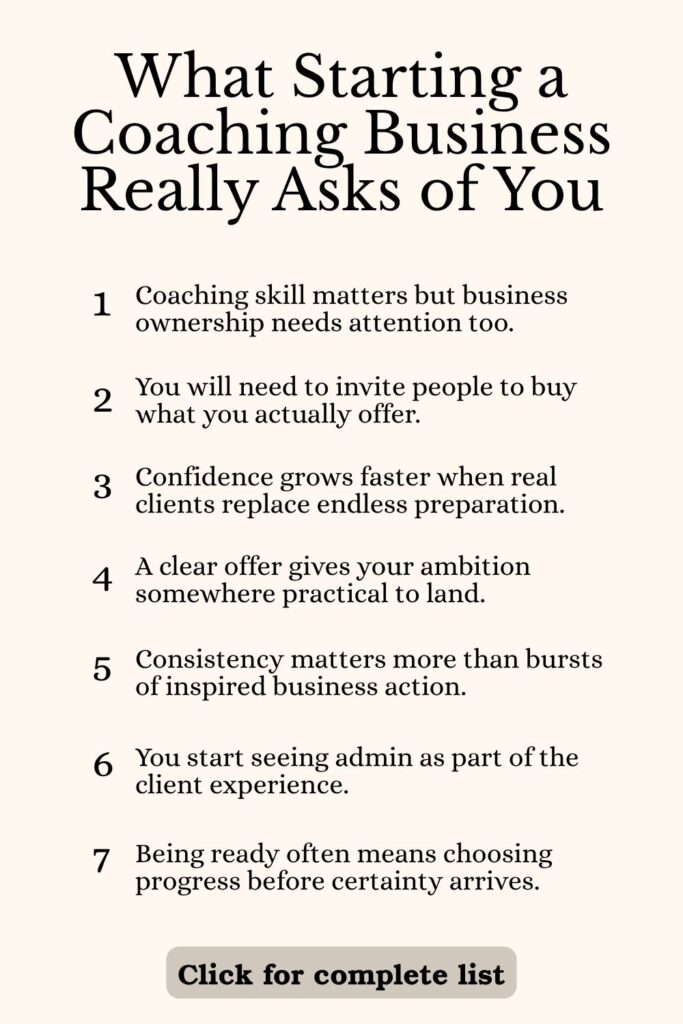
You are ready to start testing a coaching business when five things are becoming clear: you can manage the financial transition, you have enough credibility to serve clients responsibly, you know who you want to coach, you have evidence that people care about the problem you solve, and you can deliver the experience professionally.
You do not need all five areas perfected before you begin. You do need enough structure to move beyond an idea. A part-time coach with one clear package, several interested prospects, a simple onboarding process, and six months of personal financial runway may be more business-ready than someone with an impressive website but no defined client or offer.
SEE ALSO: If you’re a coach looking to streamline your administrative tasks and save time, check out our Coaching Administration Software. It’s a simple, effective solution designed to help you focus less on paperwork and more on what matters—coaching your clients. From scheduling to client management, our software gives you the tools to run your business efficiently. Ready to reclaim your time and boost productivity? Click or tap here.
Think of this as your Coaching Business Readiness Test: runway, credibility, demand, delivery, and support. Weakness in one area does not always mean “do not start.” It usually tells you what to test or build before taking a bigger financial risk.
What Kind of Coaching Business Are You Actually Starting?
You should be able to describe your first coaching offer clearly before you invest heavily in building the business around it.
“Helping people reach their potential” is a purpose. It is not yet an offer.
Run your idea through this starter offer test:
- Who is the client?
- What specific problem are they trying to solve?
- What useful outcome are they working toward?
- How will you deliver the coaching?
- What will they actually buy first?
For example, “I help women feel more confident” leaves a prospective client with a lot of unanswered questions.
“I help mid-career women prepare for promotion conversations through a four-session confidence and communication coaching package” gives you something you can actually test. You know who it is for, what the immediate problem is, what the initial outcome looks like, and what the person can buy.
SEE ALSO: If you’re a coach looking to streamline your administrative tasks and save time, check out our Coaching Administration Software. It’s a simple, effective solution designed to help you focus less on paperwork and more on what matters—coaching your clients. From scheduling to client management, our software gives you the tools to run your business efficiently. Ready to reclaim your time and boost productivity? Click or tap here.
Your first offer does not have to become your forever offer. In fact, it probably should change once you have real conversations with clients.
Start with something specific enough to test.
Once you have that first offer defined, a system such as LCH Core can help you turn it into an actual client path using coaching packages, payments, a Public Booking Page, and a Public Store rather than keeping the whole process in separate documents and messages.
Can You Afford to Start Your Coaching Business Right Now?
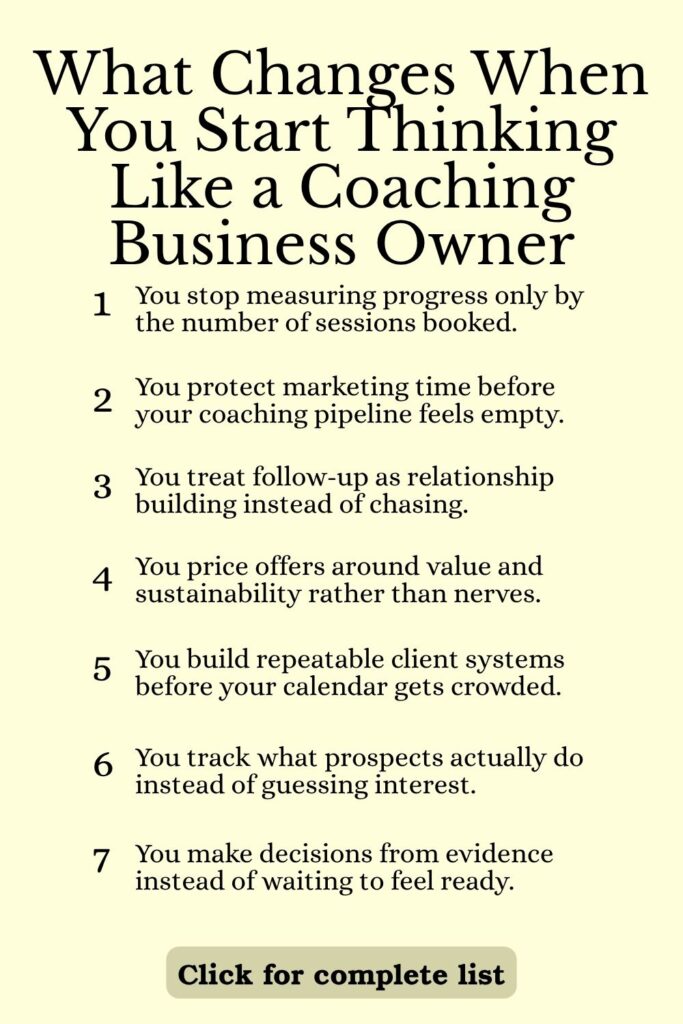
You do not need unlimited savings to start coaching, but you do need to understand what the transition will cost before you depend on the business for your income.
Starting any business requires both money and time. Even if your direct startup expenses are modest, leaving a salary too early creates another cost: the income you are no longer earning while your client base is still developing.
The U.S. Small Business Administration recommends calculating both one-time and monthly startup expenses and using those numbers to estimate profitability and your break-even point.
SEE ALSO: If you’re a coach looking to streamline your administrative tasks and save time, check out our Coaching Administration Software. It’s a simple, effective solution designed to help you focus less on paperwork and more on what matters—coaching your clients. From scheduling to client management, our software gives you the tools to run your business efficiently. Ready to reclaim your time and boost productivity? Click or tap here.
For a coaching business, work out these numbers before making a major career jump:
- Your essential personal expenses each month
- Your coaching business expenses each month
- Savings available for the transition
- Reliable income you will continue receiving
- The minimum coaching revenue you need
- The number of packages or clients required to produce that revenue
Imagine you need $4,000 per month to replace the income you plan to leave.
If your core three-month coaching package sells for $900, “I need more clients” is not a financial plan. You need to work out how many package sales, renewals, or other sources of income would realistically be required to support the switch.
This is why starting small can be smart.
You can keep your day job, begin with a limited number of clients, learn what people actually buy, and strengthen your client-getting process before your coaching income has to carry your entire household.
If you are struggling to cover your basic expenses, the pressure to make every prospect buy can also interfere with good business decisions. Give the business enough room to prove itself.
SEE ALSO: If you’re a coach looking to streamline your administrative tasks and save time, check out our Coaching Administration Software. It’s a simple, effective solution designed to help you focus less on paperwork and more on what matters—coaching your clients. From scheduling to client management, our software gives you the tools to run your business efficiently. Ready to reclaim your time and boost productivity? Click or tap here.
Have You Proved People Will Pay for Your Coaching?
You have stronger evidence for a coaching business when prospective clients move beyond saying your idea sounds good and start taking actions that require commitment.
A useful way to judge demand is a simple demand proof ladder:
- People ask you for help with the problem.
- People respond to content, conversations, workshops, or resources about it.
- People take a concrete next step, such as downloading a lead magnet or booking a consultation.
- People pay for a session, package, workshop, course, or digital product.
- Clients return, renew, or refer someone else.
The higher you move up that ladder, the stronger the evidence.
Consider a career coach who posts about workplace burnout and gets dozens of likes. That shows the subject resonates, but it does not yet tell her whether people will hire her.
She could create a focused lead magnet, invite readers to a consultation, and offer a clearly defined starter package. If people begin downloading, booking, buying, and referring, she has much stronger evidence that the business idea has commercial potential.
This is also where visibility matters. A free life coach directory listing gives prospective clients another place to discover your coaching services, but visibility works best when people have a clear next step once they find you.
SEE ALSO: If you’re a coach looking to streamline your administrative tasks and save time, check out our Coaching Administration Software. It’s a simple, effective solution designed to help you focus less on paperwork and more on what matters—coaching your clients. From scheduling to client management, our software gives you the tools to run your business efficiently. Ready to reclaim your time and boost productivity? Click or tap here.
That next step might be a lead magnet, a consultation through a Public Booking Page, or a focused offer. For a deeper look at that full journey, see How to Master Funnels as a Coach (and Why You Need To).
Do You Need a Coaching Certification Before You Start?
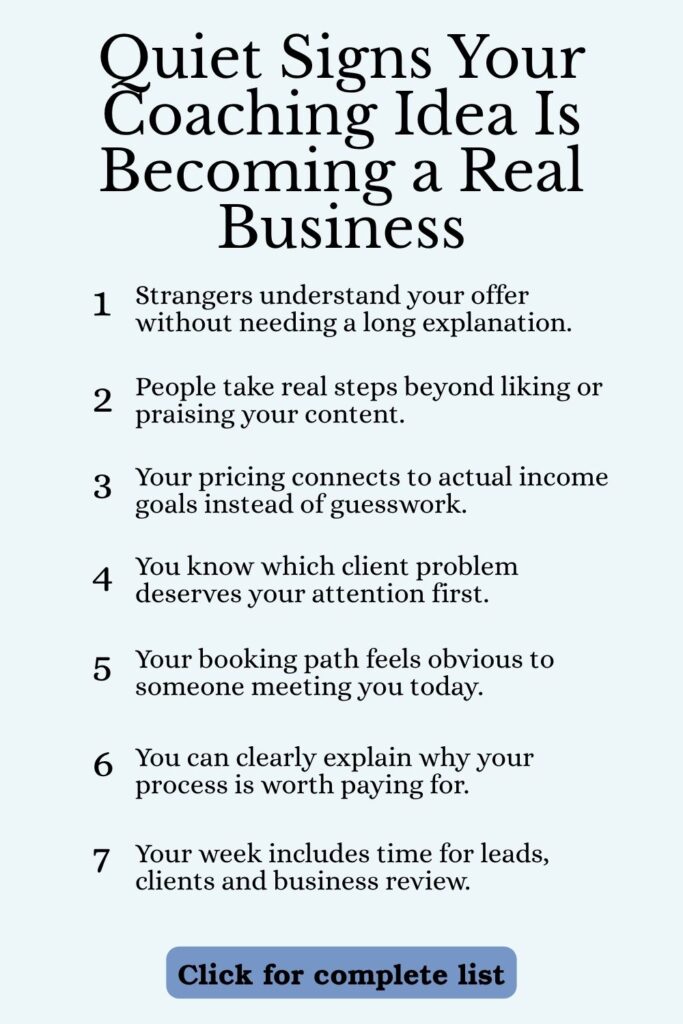
You do not always need a coaching certification to begin building a coaching business, but relevant training and recognized credentials can strengthen trust and demonstrate that you have invested seriously in your craft.
Some coaches begin after years of experience in leadership, wellness, career development, business, education, or another specialist field. Others complete coach-specific training before they take their first paying client.
Certification becomes particularly relevant when prospective clients use credentials as part of their decision.
According to the 2025 ICF Global Coaching Study, 73% of coaches agree that clients and organizations expect coaches to have a coaching certification or credential. The study was conducted by PricewaterhouseCoopers for the International Coaching Federation and included more than 10,000 respondents across 127 countries.
That does not mean another certificate automatically creates a successful practice.
SEE ALSO: If you’re a coach looking to streamline your administrative tasks and save time, check out our Coaching Administration Software. It’s a simple, effective solution designed to help you focus less on paperwork and more on what matters—coaching your clients. From scheduling to client management, our software gives you the tools to run your business efficiently. Ready to reclaim your time and boost productivity? Click or tap here.
Think about credibility more broadly:
- Have you completed suitable coach training for the work you intend to do?
- Do you understand ethical boundaries and the limits of coaching?
- Can you explain the coaching process confidently?
- Do you have relevant experience or specialist knowledge?
- Can clients see evidence that you take professional development seriously?
Certification is one credibility signal. Your coaching skill, positioning, process, experience, and client outcomes also shape whether people trust you enough to work with you.
Are You Ready to Deliver a Professional Client Experience?
You are ready to take paying clients when you know what happens from the moment someone says yes through the first session and beyond.
Many new coaches spend months thinking about their website, logo, social media, and certification. Then the first client buys, and the actual delivery process has not been built.
You do not need a complicated system. You do need answers to a few practical questions:
- How does the client book?
- How do they pay?
- What agreement do they receive?
- What information do you collect before coaching begins?
- How do you prepare for the first session?
- Where do you keep client notes?
- How will you record goals and action items?
- What happens between sessions?
- How will you review progress?
Suppose a client books on Monday.
SEE ALSO: If you’re a coach looking to streamline your administrative tasks and save time, check out our Coaching Administration Software. It’s a simple, effective solution designed to help you focus less on paperwork and more on what matters—coaching your clients. From scheduling to client management, our software gives you the tools to run your business efficiently. Ready to reclaim your time and boost productivity? Click or tap here.
If you then have to create an intake form, find an agreement, write payment instructions, search for the right worksheet, and send five separate emails, your business is not broken. You have simply discovered that your delivery system needs work.
Build that process once.
For coaches who want to keep those pieces together, LCH Core’s Welcome Package can contain a welcome letter, coaching agreement with electronic signature, forms, and resources as part of client onboarding. Client management can then keep client profiles, notes, and intake information organized.
The Welcome Package setup guide explains the workflow in more detail, and the main Life Coach Hub support center contains additional setup help.
Professional does not mean complicated. It means the client knows what happens next.
Can You Handle the Business Owner Side of Coaching?
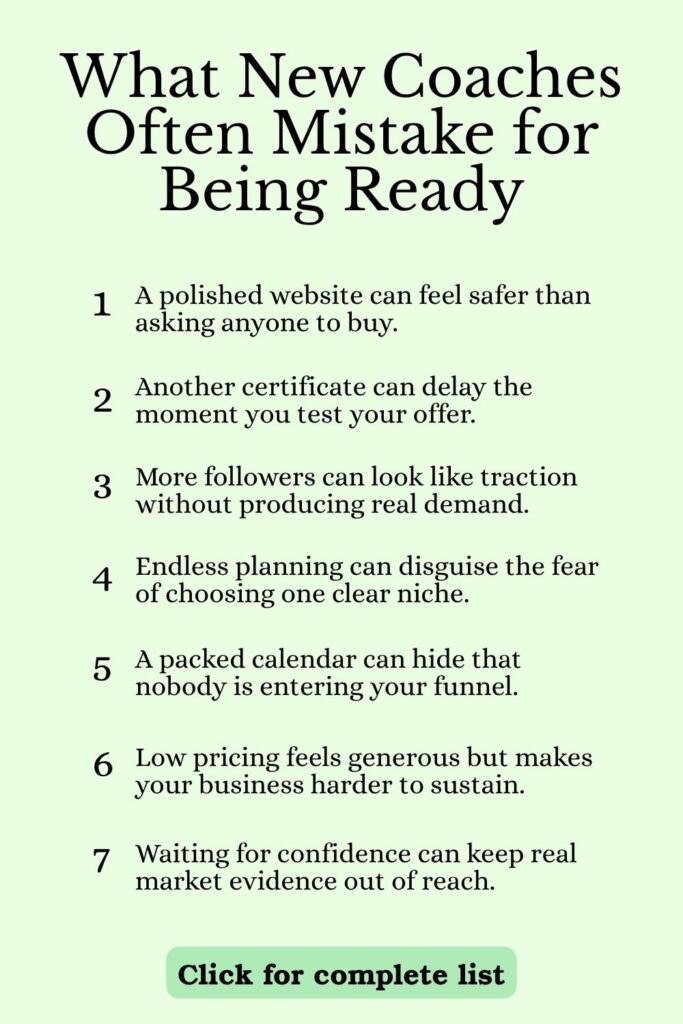
Running a coaching business means owning the work that happens outside coaching sessions, not just enjoying the coaching itself.
SEE ALSO: If you’re a coach looking to streamline your administrative tasks and save time, check out our Coaching Administration Software. It’s a simple, effective solution designed to help you focus less on paperwork and more on what matters—coaching your clients. From scheduling to client management, our software gives you the tools to run your business efficiently. Ready to reclaim your time and boost productivity? Click or tap here.
Life coaches often work independently. Some have assistants, partners, or larger teams, but many begin as the person responsible for almost everything.
That means a normal week can include several different kinds of work:
- Client delivery: sessions, notes, preparation, goals, and follow-up
- Lead generation: content, networking, referrals, or partnerships
- Sales: consultations, proposals, package conversations, and follow-up
- Administration: scheduling, payments, billing, records, and forms
- Visibility: keeping your website, directory profiles, or social channels useful
- Review: checking inquiries, bookings, conversions, revenue, and client capacity
The danger is not simply “working alone.” It is spending all week in the areas you enjoy and neglecting the activities that keep the practice alive.
One coach might happily post content every day but rarely invite anyone to book.
Another may deliver excellent coaching but put off invoices and follow-up.
A third may spend so much time tweaking the website that she has spoken to almost no prospective clients.
SEE ALSO: If you’re a coach looking to streamline your administrative tasks and save time, check out our Coaching Administration Software. It’s a simple, effective solution designed to help you focus less on paperwork and more on what matters—coaching your clients. From scheduling to client management, our software gives you the tools to run your business efficiently. Ready to reclaim your time and boost productivity? Click or tap here.
Give each business function a place in your week.
That may be one hour every Friday to review leads and money, two blocks for marketing, one block for admin, and protected time around client sessions for notes and preparation.
As your client load grows, scattered tools can make that owner workload harder to see. The guide to choosing coaching software explains how scheduling, payments, client management, onboarding, coaching tools, and progress tracking can fit into one coaching-business workflow.
Who Will Support You While You Build Your Coaching Business?
You need support to build a coaching business, but the useful kind of support is broader than having people tell you that your idea sounds exciting.
Family and friends can help, especially when starting a business changes your schedule, finances, or responsibilities.
You also need practical support.
SEE ALSO: If you’re a coach looking to streamline your administrative tasks and save time, check out our Coaching Administration Software. It’s a simple, effective solution designed to help you focus less on paperwork and more on what matters—coaching your clients. From scheduling to client management, our software gives you the tools to run your business efficiently. Ready to reclaim your time and boost productivity? Click or tap here.
Think about four categories:
- Personal support: people who understand the time and financial commitments you are making
- Peer support: other coaches or business owners who understand the realities of client work
- Expert support: mentors, trainers, accountants, lawyers, or other specialists when you need expertise outside your own
- Operational support: systems and tools that reduce repetitive work as your client list grows
Not everyone around you will be enthusiastic about your plan.
Listen carefully when someone raises a concrete concern. “How will you pay your mortgage if this takes six months?” deserves an answer.
“You’ll never make it” does not give you anything useful to work with.
The goal is not unanimous approval. It is having enough practical and emotional support to make thoughtful decisions, recover from experiments that do not work, and continue doing the work that does.
What Is Your First 90-Day Coaching Business Plan?
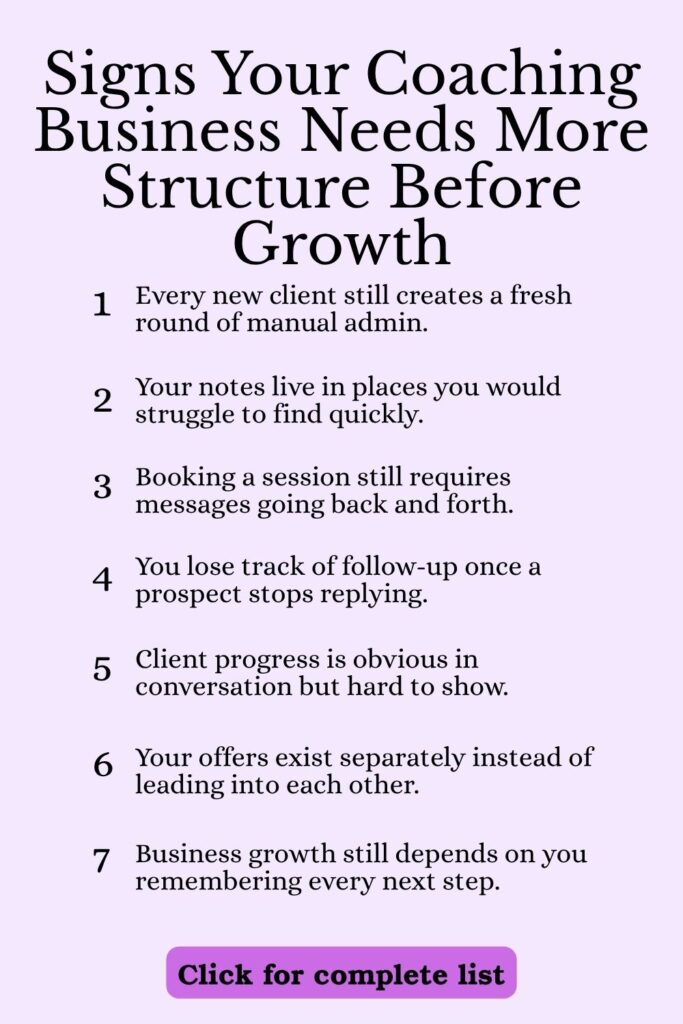
Your first 90 days should prove that you can turn a coaching idea into a repeatable path from prospect to paying client.
SEE ALSO: If you’re a coach looking to streamline your administrative tasks and save time, check out our Coaching Administration Software. It’s a simple, effective solution designed to help you focus less on paperwork and more on what matters—coaching your clients. From scheduling to client management, our software gives you the tools to run your business efficiently. Ready to reclaim your time and boost productivity? Click or tap here.
Do not make the first goal “build my entire coaching business.”
Run a 90-day test.
Days 1 to 30: Build the offer
Choose one target client and one main problem.
Define:
- One starter offer
- The result it is designed around
- The format and number of sessions
- Your starting price
- The questions you need to ask before someone begins
- The basic agreement and payment process
Talk to real people in your target market while you do this. Their language is more useful than another week spent inventing slogans alone.
SEE ALSO: If you’re a coach looking to streamline your administrative tasks and save time, check out our Coaching Administration Software. It’s a simple, effective solution designed to help you focus less on paperwork and more on what matters—coaching your clients. From scheduling to client management, our software gives you the tools to run your business efficiently. Ready to reclaim your time and boost productivity? Click or tap here.
Days 31 to 60: Build the path
Give interested people a simple route toward the offer.
That might look like:
Useful content or referral → lead magnet → consultation → coaching package
Or:
Directory profile → Public Booking Page → consultation → coaching package
SEE ALSO: If you’re a coach looking to streamline your administrative tasks and save time, check out our Coaching Administration Software. It’s a simple, effective solution designed to help you focus less on paperwork and more on what matters—coaching your clients. From scheduling to client management, our software gives you the tools to run your business efficiently. Ready to reclaim your time and boost productivity? Click or tap here.
Or simply:
Networking conversation → follow-up → consultation → coaching package
You do not need six funnels. You need one path you can actually run.
Days 61 to 90: Test the business
Now track observable behavior.
How many people did you invite to take the next step?
SEE ALSO: If you’re a coach looking to streamline your administrative tasks and save time, check out our Coaching Administration Software. It’s a simple, effective solution designed to help you focus less on paperwork and more on what matters—coaching your clients. From scheduling to client management, our software gives you the tools to run your business efficiently. Ready to reclaim your time and boost productivity? Click or tap here.
How many booked?
How many showed up?
How many bought?
What objections did you hear?
Where did people disappear?
What questions came up repeatedly?
SEE ALSO: If you’re a coach looking to streamline your administrative tasks and save time, check out our Coaching Administration Software. It’s a simple, effective solution designed to help you focus less on paperwork and more on what matters—coaching your clients. From scheduling to client management, our software gives you the tools to run your business efficiently. Ready to reclaim your time and boost productivity? Click or tap here.
If five prospects tell you the package is confusing, fix the package.
If people book consultations but do not buy, examine your offer, positioning, price, qualification, and sales conversation.
If nobody reaches the consultation stage, the problem is further up the path.
This is how a coaching business becomes clearer. You stop asking whether the idea “feels ready” and start working with evidence.
Where LCH Core Fits
A coaching business does not require complicated software on day one, but you do need a reliable system for the parts of the business you are already using.
The simplest rule is to add tools where a real workflow exists.
SEE ALSO: If you’re a coach looking to streamline your administrative tasks and save time, check out our Coaching Administration Software. It’s a simple, effective solution designed to help you focus less on paperwork and more on what matters—coaching your clients. From scheduling to client management, our software gives you the tools to run your business efficiently. Ready to reclaim your time and boost productivity? Click or tap here.
If prospects need an easier way to schedule, a Public Booking Page can give them a direct booking path. The Public Booking Page setup guide explains how the page works.
If your first clients are arriving and your onboarding is scattered, a Welcome Package can combine the welcome letter, coaching agreement with electronic signature, and forms.
If client details are beginning to spread across notebooks, email, and documents, client management (CRM) can keep client profiles, notes, and intake forms together.
If you want structured between-session work, journals, worksheets, goals, action items, and resources can support the coaching process.
If you need to review the relationship over time, the Progress Stream and Engagement Report can help you track client progress and engagement.
If you are ready to sell beyond individual appointments, courses and digital products can be offered through a Public Store. The Public Store guide covers how the Store is structured.
SEE ALSO: If you’re a coach looking to streamline your administrative tasks and save time, check out our Coaching Administration Software. It’s a simple, effective solution designed to help you focus less on paperwork and more on what matters—coaching your clients. From scheduling to client management, our software gives you the tools to run your business efficiently. Ready to reclaim your time and boost productivity? Click or tap here.
And if you are building visibility, lead magnets and your directory profile can give prospective clients additional ways to find and engage with you.
The point is not to add technology because you have decided to call yourself a business. It is to give each recurring part of the business a dependable home.
That is where LCH Core fits best: after you know what you are trying to accomplish, as the system that helps you run those client-getting, client-management, delivery, and income workflows in one place.

FAQ
How do I know if I am ready to start a coaching business?
You are ready to start testing a coaching business when you have a defined client, a clear first offer, enough credibility to serve responsibly, some financial runway, and a basic way to attract and onboard clients.
You do not need proof that the business will work forever. You need enough structure to test whether real clients will buy and benefit from what you offer.
Should I start my coaching business part-time or full-time?
Starting part-time is often the more practical choice when your coaching revenue is not yet reliable enough to replace your current income.
SEE ALSO: If you’re a coach looking to streamline your administrative tasks and save time, check out our Coaching Administration Software. It’s a simple, effective solution designed to help you focus less on paperwork and more on what matters—coaching your clients. From scheduling to client management, our software gives you the tools to run your business efficiently. Ready to reclaim your time and boost productivity? Click or tap here.
Part-time does not mean treating the business casually. Set specific hours, revenue targets, client-capacity limits, and a condition for when you would consider reducing other work.
Do I need a coaching certification before I start coaching?
A coaching certification is not universally required to start a coaching practice, but recognized training and credentials can strengthen credibility with prospective clients and organizations.
The 2025 ICF Global Coaching Study reported that 73% of coaches agree clients and organizations expect a coaching certification or credential.
How much money do I need to start a coaching business?
The amount you need depends on your personal expenses, business costs, current income, and how quickly you expect the coaching practice to produce revenue.
Calculate your one-time startup costs, recurring monthly costs, personal financial runway, package price, and break-even point before deciding how aggressively to make the transition. The SBA provides startup-cost and break-even guidance for this purpose.
How do I get my first coaching clients?
Your first coaching clients usually come from giving the right people a clear reason and an easy way to start a conversation with you.
SEE ALSO: If you’re a coach looking to streamline your administrative tasks and save time, check out our Coaching Administration Software. It’s a simple, effective solution designed to help you focus less on paperwork and more on what matters—coaching your clients. From scheduling to client management, our software gives you the tools to run your business efficiently. Ready to reclaim your time and boost productivity? Click or tap here.
Choose one audience, one problem, and one offer. Then use a small number of visibility channels such as referrals, networking, useful content, a directory profile, a lead magnet, or targeted outreach to move people toward a consultation or starter offer.
What should I set up before taking my first paid coaching client?
Before taking your first paid client, have a clear agreement, intake process, payment method, booking process, note-taking system, and a plan for goals and follow-up.
The client should know what they bought, what happens next, what is expected from both of you, and how the coaching relationship will run.
Can I start a coaching business without a website?
Yes, you can start a coaching business without a full website if prospective clients still have a credible way to learn about you, understand your offer, and take the next step.
A coach profile, professional social presence, referral network, Public Booking Page, or Public Store can give you a workable starting point while you decide whether a standalone website is worth building.
What is the biggest mistake new coaches make when starting out?
One of the most expensive early mistakes is building lots of business infrastructure before proving that people want the offer.
SEE ALSO: If you’re a coach looking to streamline your administrative tasks and save time, check out our Coaching Administration Software. It’s a simple, effective solution designed to help you focus less on paperwork and more on what matters—coaching your clients. From scheduling to client management, our software gives you the tools to run your business efficiently. Ready to reclaim your time and boost productivity? Click or tap here.
A polished brand cannot compensate for an unclear client, vague problem, confusing package, or nonexistent route from interest to purchase. Build the smallest workable offer and client path first, then improve it using real feedback.
Sources
International Coaching Federation. “ICF Global Coaching Study.” International Coaching Federation, 2025. Accessed 2 Oct. 2026. ICF Global Coaching Study.
U.S. Small Business Administration. “Plan Your Business.” U.S. Small Business Administration. Accessed 2 Oct. 2026. SBA startup cost and business planning guidance.
U.S. Small Business Administration. “Break-Even Point.” U.S. Small Business Administration. Accessed 2 Oct. 2026. SBA break-even guidance.
Read this next

How to Manage your Transition into Life Coaching
Follow these tips to ease the transition into your exciting new life coaching career.
Read More
Want a Successful Coaching Business? Stop Waiting to Feel Ready
My Journey to Being The Jorge Moral, not Jorge Moral the 3rd
Read More
What it Takes to Become a Life Coach
It takes creativity, hard work and plenty of motivation to become a successful life coach.
Read More