





The Life Coaching Opportunities Most Coaches Never Think to Explore

You have to have the right equipment if you are going to be able to catch all of the opportunities that are thrown your way in life.
In the coaching world there are many opportunities available. Many people are unfamiliar with the opportunity to have their own business and make money from something that comes naturally to them.
Having the ability to talk to someone, listen to their problems and concerns, and then help them see through the mire to find answers and solutions is a great skill. Many people do these things with friends, family, and coworkers all the time, but few realize that these abilities can form the foundation for professional coaching. They also may not realize that coaching can become a rewarding profession and a source of income.
Key Takeaways
- Coaching is a professional skill, not just friendly advice. Strong coaches use structured questions, clear agreements, and follow-through to help clients make decisions and take meaningful action toward their goals.
- Certification and licensing are different questions. Professional credentials can establish credibility, while business registration and requirements for regulated services depend on your location and the services you provide.
- A profitable coaching opportunity solves a specific problem. Start with an audience you understand, identify what potential clients need, and test a focused offer before building an extensive range of services.
- Getting clients requires a repeatable process. Combine a relevant visibility channel with a useful first step, an accessible booking process, and thoughtful follow-up instead of relying on occasional inquiries.
- Long-term coaching income comes from client outcomes and relevant offers. Track client progress, review goals regularly, and explore workshops, courses, or digital products when they address genuine demand from your audience.
What Opportunities Are Available to Life Coaches?
Life coaches can build businesses offering individual coaching, group programs, workshops, online courses, digital products, and professional training or consulting services where they have the appropriate expertise. Common areas of specialization include career transitions, confidence, leadership, personal development, and goal achievement.
You can begin with a focused coaching service and expand as you learn which problems clients are willing to pay to solve. Some coaches work privately with individuals, while others deliver programs to groups or organizations.
The strongest opportunities combine your coaching skills with a clearly defined audience, a specific client need, and a practical way to deliver results. A sustainable coaching business also needs a reliable process for attracting clients, managing engagements, and creating appropriate opportunities for clients to continue working with you.
SEE ALSO: If you’re a coach looking to streamline your administrative tasks and save time, check out our Coaching Administration Software. It’s a simple, effective solution designed to help you focus less on paperwork and more on what matters—coaching your clients. From scheduling to client management, our software gives you the tools to run your business efficiently. Ready to reclaim your time and boost productivity? Click or tap here.
What Makes Someone a Good Life Coach?
A good life coach helps clients clarify what they want, examine their choices, and take responsibility for the actions that will move them forward.
Listening is part of that process, but professional coaching requires more than being someone people naturally turn to for advice.
Consider a client who wants to change careers but cannot decide whether to leave a secure job.
A friend might suggest applying elsewhere immediately. A coach would help the client identify what they want from their next role, examine what is keeping them in their current position, and evaluate possible next steps.
One useful framework for developing these skills is the GROW coaching model.
GROW gives coaching conversations four stages:
SEE ALSO: If you’re a coach looking to streamline your administrative tasks and save time, check out our Coaching Administration Software. It’s a simple, effective solution designed to help you focus less on paperwork and more on what matters—coaching your clients. From scheduling to client management, our software gives you the tools to run your business efficiently. Ready to reclaim your time and boost productivity? Click or tap here.
- Goal: Establish what the client wants to achieve. For example, “What would a successful career change look like six months from now?”
- Reality: Examine the current situation. “What have you already tried, and what is preventing you from moving forward?”
- Options: Explore possibilities. “What alternatives could help you move toward your goal without immediately leaving your job?”
- Will: Agree on a specific next action. “What will you do before our next session, and when will you do it?”
This structure turns an open-ended conversation into a process that leads toward decisions and action.
It also helps coaches avoid one of the easiest mistakes in this profession: becoming the person who supplies all the answers.
A coach does not need to solve every problem personally. The coach’s role is to help clients develop the ability to make decisions and follow through themselves.
Professional boundaries matter just as much as questioning skills. The International Coaching Federation’s Core Competencies emphasize ethical practice, appropriate coaching agreements, and maintaining distinctions between coaching and other support professions.
If a client needs treatment for a mental health condition, that falls outside the role of an ordinary life coach unless the coach also has the appropriate professional qualifications.
Developing these distinctions early makes your coaching more credible and gives clients a clearer understanding of what they are paying for.
SEE ALSO: If you’re a coach looking to streamline your administrative tasks and save time, check out our Coaching Administration Software. It’s a simple, effective solution designed to help you focus less on paperwork and more on what matters—coaching your clients. From scheduling to client management, our software gives you the tools to run your business efficiently. Ready to reclaim your time and boost productivity? Click or tap here.
Life coaching has been around for years and has developed into an established professional field. There are organizations that offer training, and there are certifications and professional credentials you can earn. What many people don’t realize is that general life coaching does not always require a specific professional license.
That’s right! In many places, you can start a general life coaching business without holding a profession-specific coaching license. You may still need business registration or permits, and you cannot offer regulated professional services without meeting their requirements. Like any new business, turning coaching into a money-making venture takes work, but you could do it.
Few people realize that a particular college degree is not a universal requirement for general life coaching. Many life coaches get into the business because they have a common interest in listening and problem solving, and someone else who is a coach encourages them to start their own business.
Do You Need Certification or a License to Become a Life Coach?
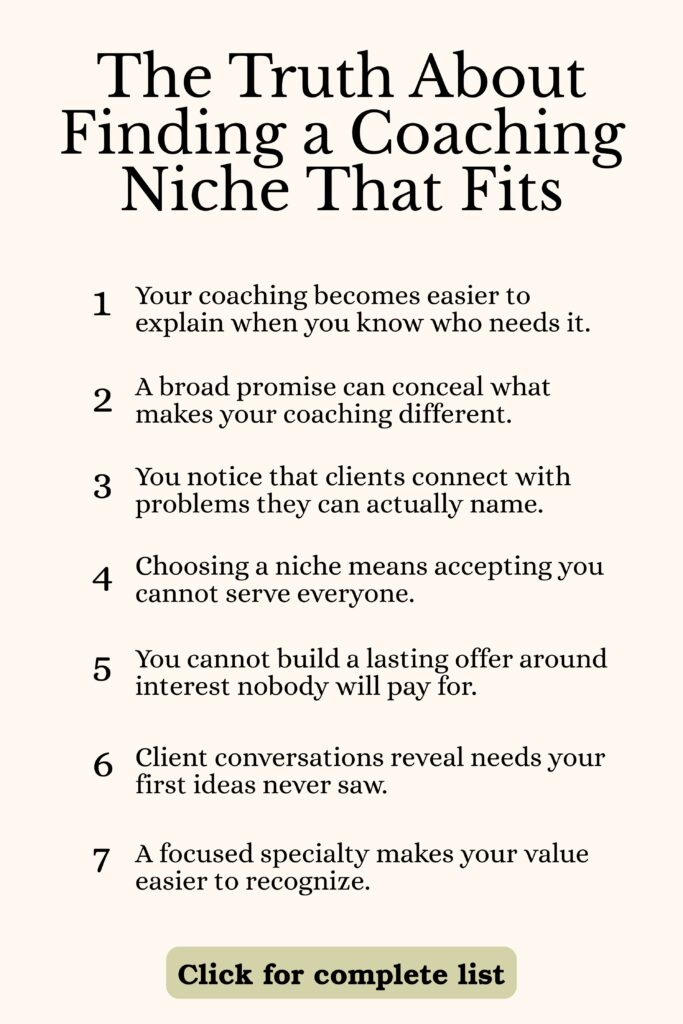
You do not necessarily need a coaching certification, college degree, or profession-specific license to offer general life coaching, but the requirements depend on where you work and the services you provide.
Three different requirements are often confused.
Professional training develops the skills you need to coach effectively. A training program might cover questioning techniques, coaching ethics, goal setting, supervised practice, and methods such as GROW.
SEE ALSO: If you’re a coach looking to streamline your administrative tasks and save time, check out our Coaching Administration Software. It’s a simple, effective solution designed to help you focus less on paperwork and more on what matters—coaching your clients. From scheduling to client management, our software gives you the tools to run your business efficiently. Ready to reclaim your time and boost productivity? Click or tap here.
Professional certification or credentials demonstrate that you have completed certain training or assessment requirements. An independent coaching credential is not the same thing as a government-issued professional license.
Business licenses and legal requirements concern your right to operate a business or provide particular services in your jurisdiction.
For example, a coach offering general career accountability sessions may have different legal obligations from someone advertising psychological treatment or another regulated service.
Before accepting paying clients, check the requirements that apply to your location and the precise services you intend to offer. The U.S. Small Business Administration’s guidance on business licenses and permits is a useful starting point for coaches operating in the United States.
Certification is also a business decision, not simply a legal question.
According to the 2025 ICF Global Coaching Study, 73% of surveyed coaches agree that clients and organizations expect coaches to hold a certification or credential.
SEE ALSO: If you’re a coach looking to streamline your administrative tasks and save time, check out our Coaching Administration Software. It’s a simple, effective solution designed to help you focus less on paperwork and more on what matters—coaching your clients. From scheduling to client management, our software gives you the tools to run your business efficiently. Ready to reclaim your time and boost productivity? Click or tap here.
That expectation may matter particularly if you plan to coach executives, seek corporate contracts, or work with organizations that have formal requirements for external professionals.
If you are already coaching clients, you can evaluate training by asking what it will improve in your actual practice.
Will you receive feedback on your coaching sessions? Will you learn a method you can apply immediately? Will the qualification be recognized by the clients or organizations you want to work with?
A training investment should develop a useful skill or improve your professional credibility, ideally both.
There are a lot of online classes available that can further your understanding and knowledge about the field of life coaching. These provide opportunities to develop your own skills and build your business. You can also use the internet to connect with potential clients or find mentoring to help you develop your coaching practice.
Which Life Coaching Opportunities Are Worth Pursuing?
The most promising coaching opportunity is one where your experience, your target clients’ needs, and their willingness to pay for support overlap.
SEE ALSO: If you’re a coach looking to streamline your administrative tasks and save time, check out our Coaching Administration Software. It’s a simple, effective solution designed to help you focus less on paperwork and more on what matters—coaching your clients. From scheduling to client management, our software gives you the tools to run your business efficiently. Ready to reclaim your time and boost productivity? Click or tap here.
Life coaching covers many specialties, but trying to offer every kind of coaching can make it difficult for potential clients to understand why they should choose you.
A narrower starting point gives you a clearer message and a more specific service to develop.
Consider several possible opportunities.
Career coaching: Helping professionals navigate job changes, promotion decisions, or career direction.
Confidence coaching: Supporting clients who want to act more confidently in specific situations, such as speaking up at work or making decisions.
Leadership coaching: Helping managers strengthen decision-making, delegation, and accountability.
SEE ALSO: If you’re a coach looking to streamline your administrative tasks and save time, check out our Coaching Administration Software. It’s a simple, effective solution designed to help you focus less on paperwork and more on what matters—coaching your clients. From scheduling to client management, our software gives you the tools to run your business efficiently. Ready to reclaim your time and boost productivity? Click or tap here.
Life transition coaching: Supporting clients as they make practical decisions around major changes, such as retirement or a return to work.
Goal and accountability coaching: Helping clients turn a meaningful goal into achievable actions and consistent follow-through.
Each opportunity presents a different set of client needs.
A coach who previously worked in human resources, for example, might have useful experience supporting professionals through career transitions. But experience alone does not establish that people will purchase the service.
Before committing to a specialty, test it against three questions:
- Can you competently help with the problem? Identify the skills, experience, and training that make you suited to this work.
- Can you identify potential clients? Look for people who already discuss the problem in professional communities, search results, or conversations.
- Can you describe a service worth paying for? Define what clients will work on, how coaching will help, and what progress could look like.
Suppose you are considering career transition coaching.
SEE ALSO: If you’re a coach looking to streamline your administrative tasks and save time, check out our Coaching Administration Software. It’s a simple, effective solution designed to help you focus less on paperwork and more on what matters—coaching your clients. From scheduling to client management, our software gives you the tools to run your business efficiently. Ready to reclaim your time and boost productivity? Click or tap here.
You could speak with five professionals who are actively considering changing jobs. Ask what decisions they are struggling with, what they have already tried, and what kind of support would help them move forward.
If several people describe the same challenge, such as choosing between career directions, you have a useful starting point for a focused coaching service.
You can then test an offer built around that challenge rather than investing months developing a broad program.
This approach is especially useful for established coaches who want to expand into a new specialty. It allows you to test opportunities without rebuilding your entire coaching business.
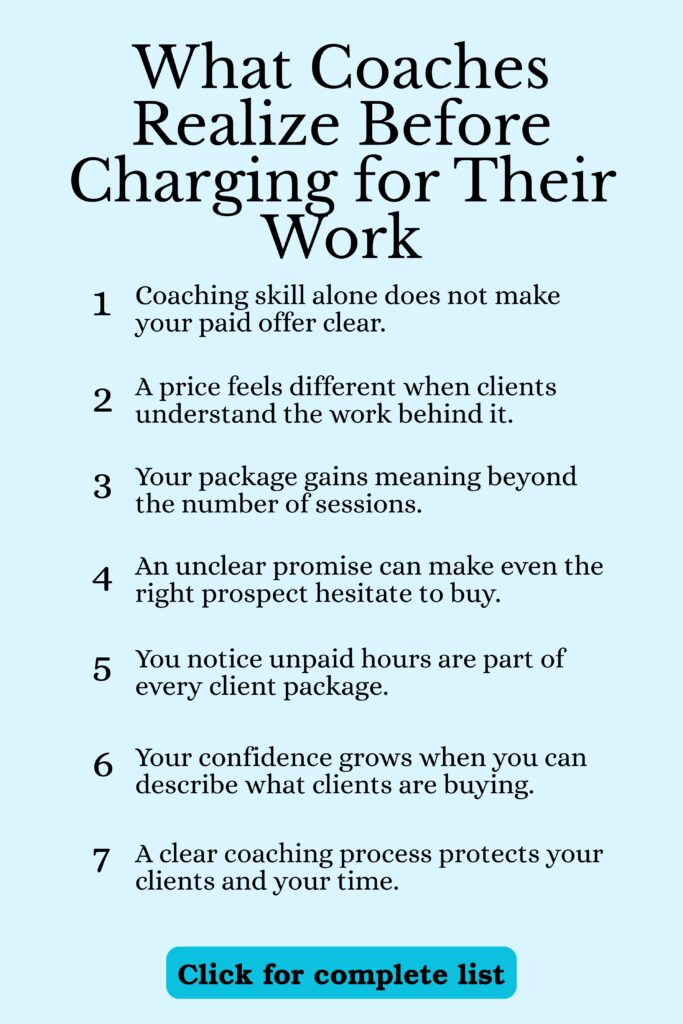
How Do You Turn Your Coaching Skills Into a Paid Service?
You turn coaching skills into a paid service by defining who you help, what they want to achieve, and how you will support them through a structured coaching engagement.
Potential clients need to understand what they are buying. A vague promise of personal growth gives them less to evaluate than a clear description of the problem you help them work through.
SEE ALSO: If you’re a coach looking to streamline your administrative tasks and save time, check out our Coaching Administration Software. It’s a simple, effective solution designed to help you focus less on paperwork and more on what matters—coaching your clients. From scheduling to client management, our software gives you the tools to run your business efficiently. Ready to reclaim your time and boost productivity? Click or tap here.
Start with one specific coaching offer.
A career coach, for example, could design a six-session program for professionals preparing to make a career change.
The package might include an initial goal-setting session, structured decision-making exercises, sessions to work through obstacles, and a final review of the client’s action plan.
The coach is not promising that the client will secure a new job. The offer provides a defined coaching process that helps the client make decisions and take practical steps.
A clear paid offer should answer five questions:
- Who is this coaching for?
- What challenge or goal will the engagement address?
- How many sessions or weeks are included?
- What additional support, exercises, or resources will clients receive?
- What does the package cost, and how will payment work?
Once these details are settled, you can test your offer with potential clients.
SEE ALSO: If you’re a coach looking to streamline your administrative tasks and save time, check out our Coaching Administration Software. It’s a simple, effective solution designed to help you focus less on paperwork and more on what matters—coaching your clients. From scheduling to client management, our software gives you the tools to run your business efficiently. Ready to reclaim your time and boost productivity? Click or tap here.
Discovery conversations can reveal whether people understand the offer, whether the outcome matters to them, and what objections prevent them from committing.
Pay attention to the questions prospects repeatedly ask.
If several people are confused about the difference between your six-session package and individual appointments, your offer description may need more clarity.
If prospects understand the service but cannot see how it relates to their circumstances, your target audience or promised focus may be too broad.
You can also compare the economics of individual sessions and packages.
For example, consider how much preparation, administration, and follow-up each client requires. A package should be priced with these activities in mind, not simply by multiplying your usual hourly session rate.
SEE ALSO: If you’re a coach looking to streamline your administrative tasks and save time, check out our Coaching Administration Software. It’s a simple, effective solution designed to help you focus less on paperwork and more on what matters—coaching your clients. From scheduling to client management, our software gives you the tools to run your business efficiently. Ready to reclaim your time and boost productivity? Click or tap here.
Packages can also make the coaching relationship easier to manage because both coach and client know the agreed structure from the beginning.
Once the offer is established, LCH Core can help manage coaching packages, payments, and billing. These tools handle the operational side of a service you have already designed.
If you want to compare the systems involved in selling and delivering coaching, the guide to choosing coaching software for life coaches explains what matters beyond basic appointment scheduling.
How Can New Life Coaches Find Their First Paying Clients?
New life coaches can find their first paying clients by building a simple path from initial interest to a coaching conversation and then to a relevant paid offer.
The goal is not to appear on every marketing platform. It is to help the right people discover you, understand what you offer, and take the next step.
Start with one source of visibility.
SEE ALSO: If you’re a coach looking to streamline your administrative tasks and save time, check out our Coaching Administration Software. It’s a simple, effective solution designed to help you focus less on paperwork and more on what matters—coaching your clients. From scheduling to client management, our software gives you the tools to run your business efficiently. Ready to reclaim your time and boost productivity? Click or tap here.
For a career coach, that might mean sharing useful career decision-making content on LinkedIn, participating in relevant professional communities, or building relationships with people who work with career changers.
The content should address problems the coach is qualified to help solve.
Instead of posting general encouragement about following your dreams, a career coach could explain three questions professionals should answer before accepting a new position.
That gives potential clients a reason to recognize the coach’s expertise.
The next step is offering something useful that helps interested people move closer to a decision.
A lead magnet can work well here.
SEE ALSO: If you’re a coach looking to streamline your administrative tasks and save time, check out our Coaching Administration Software. It’s a simple, effective solution designed to help you focus less on paperwork and more on what matters—coaching your clients. From scheduling to client management, our software gives you the tools to run your business efficiently. Ready to reclaim your time and boost productivity? Click or tap here.
For example, the career coach could create a short worksheet called “Five Questions to Clarify Your Next Career Move.”
The worksheet gives prospects a practical starting point and introduces the questions the coach uses in their work.
A free discovery call can provide another entry point, especially for people who already know they want help.
Make the next step visible wherever potential clients encounter your work.
The free life coach directory listing on Life Coach Hub is one way to make your specialty, background, and services available to people looking for coaching support.
You can also use a Public Booking Page to let interested prospects choose an available consultation time. The Public Booking Page setup guide explains how to configure sessions and share your booking link.
SEE ALSO: If you’re a coach looking to streamline your administrative tasks and save time, check out our Coaching Administration Software. It’s a simple, effective solution designed to help you focus less on paperwork and more on what matters—coaching your clients. From scheduling to client management, our software gives you the tools to run your business efficiently. Ready to reclaim your time and boost productivity? Click or tap here.
The opportunity is not over when someone expresses interest but fails to book immediately.
A prospect may need more information, may be comparing services, or may not be ready to commit.
Keep a record of inquiries and follow up appropriately with people who have agreed to hear from you.
For example, after a discovery call, you could send a short message summarizing the service discussed, answering any outstanding questions, and providing a clear way to proceed.
If the prospect does not purchase, respect their decision rather than repeatedly pushing the same offer.
You can learn more about connecting these steps in How to Master Funnels as a Coach (and Why You Need To).
SEE ALSO: If you’re a coach looking to streamline your administrative tasks and save time, check out our Coaching Administration Software. It’s a simple, effective solution designed to help you focus less on paperwork and more on what matters—coaching your clients. From scheduling to client management, our software gives you the tools to run your business efficiently. Ready to reclaim your time and boost productivity? Click or tap here.
A simple, repeatable client journey is more useful than collecting inquiries without a plan for what happens next.
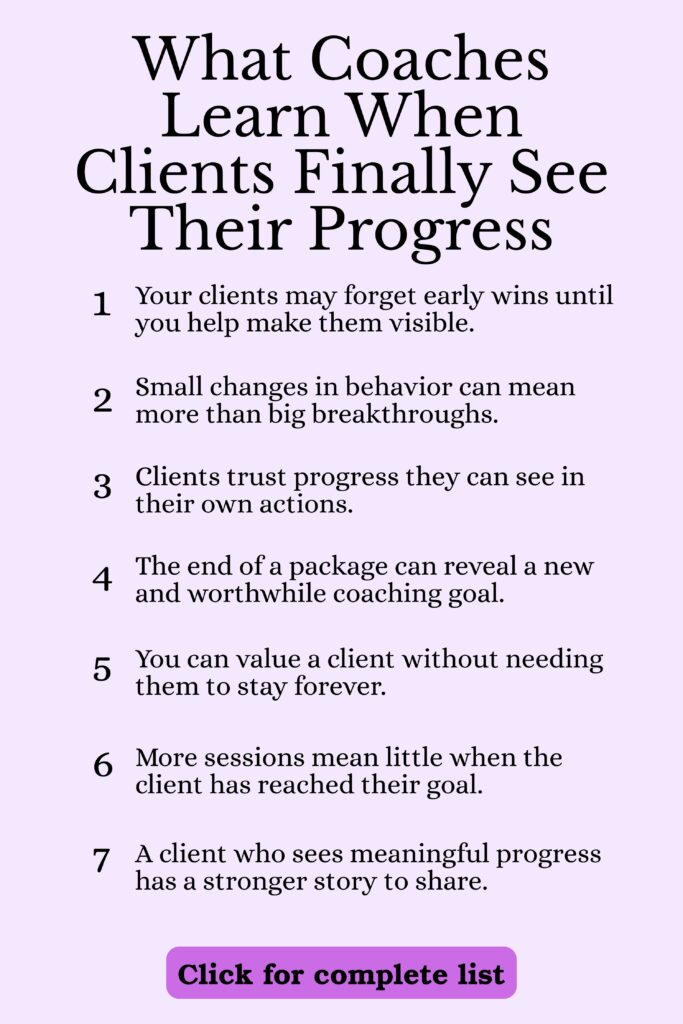
How Do You Turn First-Time Clients Into Long-Term Coaching Relationships?
You build long-term coaching relationships by helping clients recognize their progress, follow through between sessions, and identify meaningful next goals when their original engagement ends.
Client retention begins with a clear understanding of what the client wants to accomplish.
During onboarding, establish the client’s starting point and define what progress would look like.
A confidence coach might work with a client who avoids speaking during team meetings.
Instead of setting a vague goal such as “become more confident,” the coach and client could agree on observable actions.
SEE ALSO: If you’re a coach looking to streamline your administrative tasks and save time, check out our Coaching Administration Software. It’s a simple, effective solution designed to help you focus less on paperwork and more on what matters—coaching your clients. From scheduling to client management, our software gives you the tools to run your business efficiently. Ready to reclaim your time and boost productivity? Click or tap here.
For example, the client might aim to contribute one idea during each weekly meeting and eventually volunteer to lead a short presentation.
Over the following weeks, the coach can review what happened, what the client tried, and which situations remain difficult.
This creates a record of progress that is more useful than simply asking whether the client feels better.
Progress reviews are especially valuable toward the end of a coaching package.
Imagine that after six sessions, the client has started contributing regularly during meetings but still avoids presenting to senior leaders.
The coach can review the original goal, identify the changes already made, and discuss whether further coaching would serve a new objective.
SEE ALSO: If you’re a coach looking to streamline your administrative tasks and save time, check out our Coaching Administration Software. It’s a simple, effective solution designed to help you focus less on paperwork and more on what matters—coaching your clients. From scheduling to client management, our software gives you the tools to run your business efficiently. Ready to reclaim your time and boost productivity? Click or tap here.
That conversation might lead to another engagement focused on leadership communication.
It might also reveal that the client has achieved what they needed and is ready to finish.
Both outcomes can reflect a successful coaching relationship.
Long-term client value does not require keeping every client indefinitely. It comes from delivering useful results, maintaining professional relationships, and offering further support when there is a genuine reason to do so.
A simple client management system makes this easier to carry out.
In LCH Core, a Welcome Package can organize the welcome letter, coaching agreement with electronic signature, and intake forms before coaching begins.
SEE ALSO: If you’re a coach looking to streamline your administrative tasks and save time, check out our Coaching Administration Software. It’s a simple, effective solution designed to help you focus less on paperwork and more on what matters—coaching your clients. From scheduling to client management, our software gives you the tools to run your business efficiently. Ready to reclaim your time and boost productivity? Click or tap here.
During the engagement, goals, journals, worksheets, and action items can help clients continue their work between sessions.
The Progress Stream provides a way to review the coaching work over time, while the Engagement Report can help coaches examine client participation.
These records also make progress-review conversations more specific.
For a deeper explanation of how retention, repeat engagements, and referrals contribute to coaching income, see A Bird in the Hand: The Simple Math of Client Lifetime Value (for Coaches).
The result is a coaching relationship built around meaningful progress rather than simply filling the next available session.
How Can Life Coaches Earn Money Beyond One-to-One Sessions?
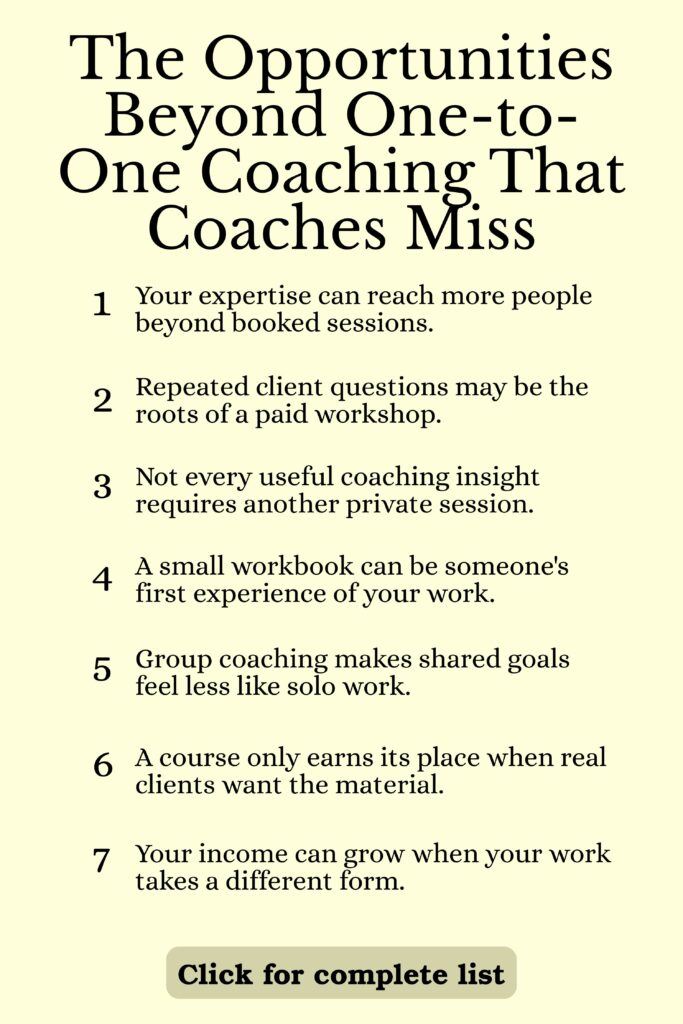
Life coaches can expand their income opportunities by turning suitable parts of their expertise into group programs, workshops, courses, digital resources, and other services that do not depend entirely on individual appointments.
SEE ALSO: If you’re a coach looking to streamline your administrative tasks and save time, check out our Coaching Administration Software. It’s a simple, effective solution designed to help you focus less on paperwork and more on what matters—coaching your clients. From scheduling to client management, our software gives you the tools to run your business efficiently. Ready to reclaim your time and boost productivity? Click or tap here.
One-to-one coaching remains valuable, but it has an obvious capacity limit.
If you only sell individual sessions, the number of clients you can serve depends heavily on the hours you have available.
Expanding your services allows you to offer your expertise in different formats.
This is already common among professional coaches.
According to the 2025 ICF Global Coaching Study, 60% of surveyed coaches also provide training, while 57% offer consulting services alongside coaching.
The important question is which additional service makes sense for your audience.
SEE ALSO: If you’re a coach looking to streamline your administrative tasks and save time, check out our Coaching Administration Software. It’s a simple, effective solution designed to help you focus less on paperwork and more on what matters—coaching your clients. From scheduling to client management, our software gives you the tools to run your business efficiently. Ready to reclaim your time and boost productivity? Click or tap here.
Group coaching can work when several clients share a similar goal and would benefit from learning alongside one another.
A career coach might run a small group for professionals considering their next career move.
Participants could work through decision-making exercises individually, discuss obstacles together, and receive coaching around their next actions.
Workshops are useful when clients need a focused learning experience.
For example, a leadership coach might offer a two-hour workshop on delegating responsibilities effectively.
The workshop could introduce a practical delegation framework, demonstrate how to assign responsibilities clearly, and give participants time to apply it to their current work.
SEE ALSO: If you’re a coach looking to streamline your administrative tasks and save time, check out our Coaching Administration Software. It’s a simple, effective solution designed to help you focus less on paperwork and more on what matters—coaching your clients. From scheduling to client management, our software gives you the tools to run your business efficiently. Ready to reclaim your time and boost productivity? Click or tap here.
Online courses are more appropriate when you have material that can be taught and applied without requiring constant individual interaction.
A coach who repeatedly explains the same goal-setting method could develop lessons, worksheets, and exercises that participants complete at their own pace.
Digital products offer another entry point.
A career coach might sell a career decision workbook. A leadership coach could create a delegation planning worksheet or a structured goal-review template.
These products can provide value independently or complement a coaching engagement.
However, creating more products does not automatically create more revenue.
SEE ALSO: If you’re a coach looking to streamline your administrative tasks and save time, check out our Coaching Administration Software. It’s a simple, effective solution designed to help you focus less on paperwork and more on what matters—coaching your clients. From scheduling to client management, our software gives you the tools to run your business efficiently. Ready to reclaim your time and boost productivity? Click or tap here.
A course that takes months to develop but attracts few buyers may be less profitable than a small workshop that meets an immediate client need.
Before developing a major new offer, test the concept.
If clients repeatedly ask for help with the same challenge, try a live workshop first. Observe which exercises participants use, which questions they ask, and whether there is demand for additional support.
That feedback can guide a more substantial course or digital product.
You can also consider how your services relate to one another.
Someone might begin with a workbook, attend a workshop, and later decide they want individual coaching.
SEE ALSO: If you’re a coach looking to streamline your administrative tasks and save time, check out our Coaching Administration Software. It’s a simple, effective solution designed to help you focus less on paperwork and more on what matters—coaching your clients. From scheduling to client management, our software gives you the tools to run your business efficiently. Ready to reclaim your time and boost productivity? Click or tap here.
Another client might complete a coaching package and then use a self-paced course to continue practicing the skills they developed.
These are different ways to serve the same audience, not simply more things to sell.
When your offers are ready, the Public Store in LCH Core provides a place to sell courses and digital products. The LCH Core video tutorial library includes guidance on creating offers and using the store.
Start with an additional service that solves a problem you already understand. Expand when clients demonstrate that the new format provides value.
Where LCH Core Fits

LCH Core fits into a coaching business by helping you manage the practical work that connects an interested prospect with a professional coaching engagement and a clear client experience.
A coach needs more than a calendar and somewhere to store client notes. The business also needs a way to organize client information, handle payments, deliver coaching materials, and review progress.
SEE ALSO: If you’re a coach looking to streamline your administrative tasks and save time, check out our Coaching Administration Software. It’s a simple, effective solution designed to help you focus less on paperwork and more on what matters—coaching your clients. From scheduling to client management, our software gives you the tools to run your business efficiently. Ready to reclaim your time and boost productivity? Click or tap here.
The work can be organized around three priorities.
Getting clients: Give prospects a clear service to consider and an accessible way to book a conversation. Lead magnets and a Public Booking Page can support that first step.
Keeping clients: Establish goals, collect intake information, and make coaching work visible between sessions. Client profiles, a Welcome Package, coaching tools, the Progress Stream, and the Engagement Report can support a consistent experience.
Developing income opportunities: Make it practical to sell the services you have already designed. Coaching packages, billing, courses, and digital products support different ways of delivering your expertise.
You do not need to build every part of this system immediately.
If you have one established coaching offer, begin by organizing the booking, onboarding, and delivery process for that offer.
SEE ALSO: If you’re a coach looking to streamline your administrative tasks and save time, check out our Coaching Administration Software. It’s a simple, effective solution designed to help you focus less on paperwork and more on what matters—coaching your clients. From scheduling to client management, our software gives you the tools to run your business efficiently. Ready to reclaim your time and boost productivity? Click or tap here.
Once it works reliably, you can add other services that match your clients’ needs.
The LCH Core Launchpad setup guide explains how to approach these operational steps in a practical order. You can also review how LCH Core connects client management, coaching delivery, and business operations as your practice develops.
Frequently Asked Questions About Life Coaching Opportunities
What career opportunities are available to life coaches?
Life coaches can offer individual coaching, group programs, workshops, and educational products or pursue relevant opportunities in organizations. Specialties include career development, leadership, confidence, personal development, and life transitions.
Can you become a life coach without a degree?
Yes, you can become a general life coach without a particular college degree in many jurisdictions. Relevant experience, professional training, and practical coaching skills can help establish credibility, although certain employers or coaching specialties may have additional requirements.
Do life coaches need certification to get paying clients?
No, a coaching certification is not universally required to attract paying clients. However, credentials can demonstrate professional training and may be especially useful when seeking corporate contracts or working with clients who expect formal qualifications.
How much money can you make as a life coach?
Life coaching income depends on your prices, paying client volume, delivery costs, and the services you offer. To estimate your own potential revenue, multiply the number of packages or sessions you realistically expect to sell by their prices, then account for business expenses and unpaid working time.
SEE ALSO: If you’re a coach looking to streamline your administrative tasks and save time, check out our Coaching Administration Software. It’s a simple, effective solution designed to help you focus less on paperwork and more on what matters—coaching your clients. From scheduling to client management, our software gives you the tools to run your business efficiently. Ready to reclaim your time and boost productivity? Click or tap here.
What type of life coaching is most profitable?
No single coaching specialty is consistently the most profitable for every coach. Profitability depends on demand, pricing, client acquisition costs, delivery time, and retention. A focused coaching service with repeatable delivery and reliable demand may outperform a broader offer with higher advertised prices.
How do beginner life coaches find their first clients?
Beginner coaches can find their first clients through referrals, relevant communities, professional networking, useful content, and accessible discovery calls. Start with a defined audience and one offer, then provide a clear next step for people who express interest.
Can you start a life coaching business part-time?
Yes, you can start a life coaching business part-time while maintaining other employment. Set realistic availability, choose a manageable client load, and account for preparation, follow-up, and administration alongside your coaching sessions.
How can life coaches earn income without coaching one-to-one?
Life coaches can earn income through group programs, workshops, courses, and digital products. Choose formats based on problems your clients already need help solving, then test demand before investing heavily in creating new material.
Like any other new business, you must set your goals and standards and then work hard to learn all that you can about your profession.
Decide which clients you want to serve, develop a coaching process you can deliver consistently, and keep reviewing what works as your business grows.
SEE ALSO: If you’re a coach looking to streamline your administrative tasks and save time, check out our Coaching Administration Software. It’s a simple, effective solution designed to help you focus less on paperwork and more on what matters—coaching your clients. From scheduling to client management, our software gives you the tools to run your business efficiently. Ready to reclaim your time and boost productivity? Click or tap here.
This, along with believing in yourself and the good that you can do, will go a long way toward helping you become an excellent life coach with a business of your own.
Sources
International Coaching Federation. “2025 ICF Global Coaching Study.” International Coaching Federation, 2025, https://coachingfederation.org/resources/research/global-coaching-study/.
International Coaching Federation. “ICF Core Competencies.” International Coaching Federation, https://coachingfederation.org/credentialing/coaching-competencies/icf-core-competencies/.
U.S. Small Business Administration. “Apply for Licenses and Permits.” U.S. Small Business Administration, https://www.sba.gov/business-guide/launch-your-business/apply-licenses-permits.
Read this next

How to Become a Christian Life Coach
Eight Steps to Becoming a Christian Life Coach
Read More
How to Manage your Transition into Life Coaching
Follow these tips to ease the transition into your exciting new life coaching career.
Read More
Is it Time to Start Your Coaching Business?
You want to start your own coaching business, but is it the right time?
Read More