






Want a Successful Coaching Business? Stop Waiting to Feel Ready

There is a difference between having a dream and building a life that can hold it.
As a coach, you probably see that difference all the time. A client can want a different career, a stronger relationship, or a completely different future. Wanting it matters. But the future only starts changing when something becomes different in the decisions they make today.
The same is true in your coaching business. Maybe your dream is to leave your job and coach full time. Maybe you want to raise your fees, launch a group program, speak on bigger stages, or finally put your coaching in front of more people.
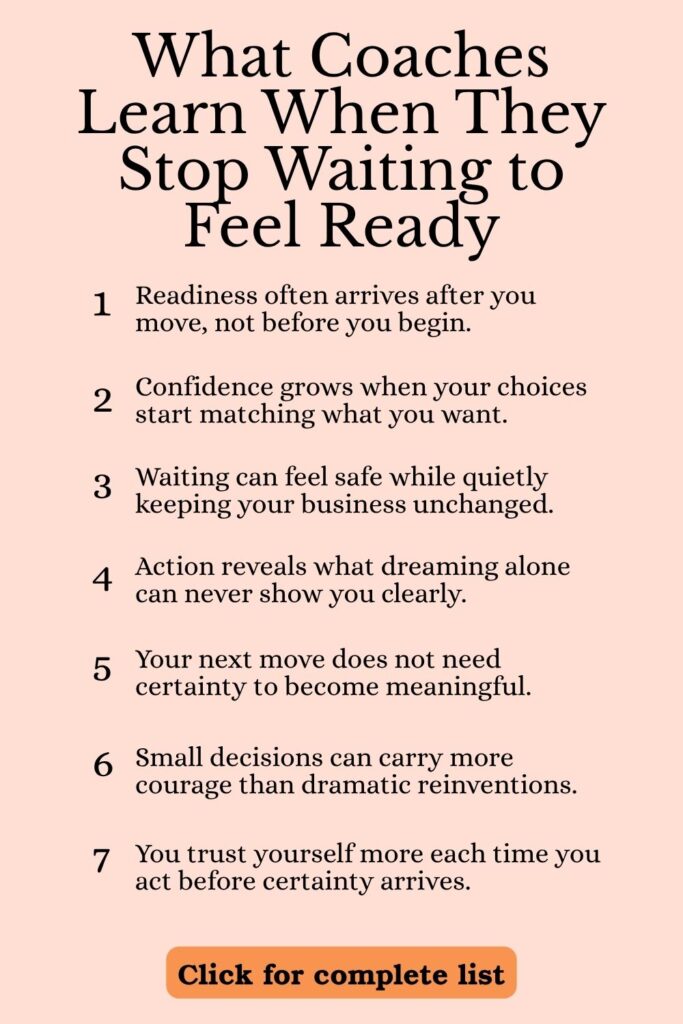
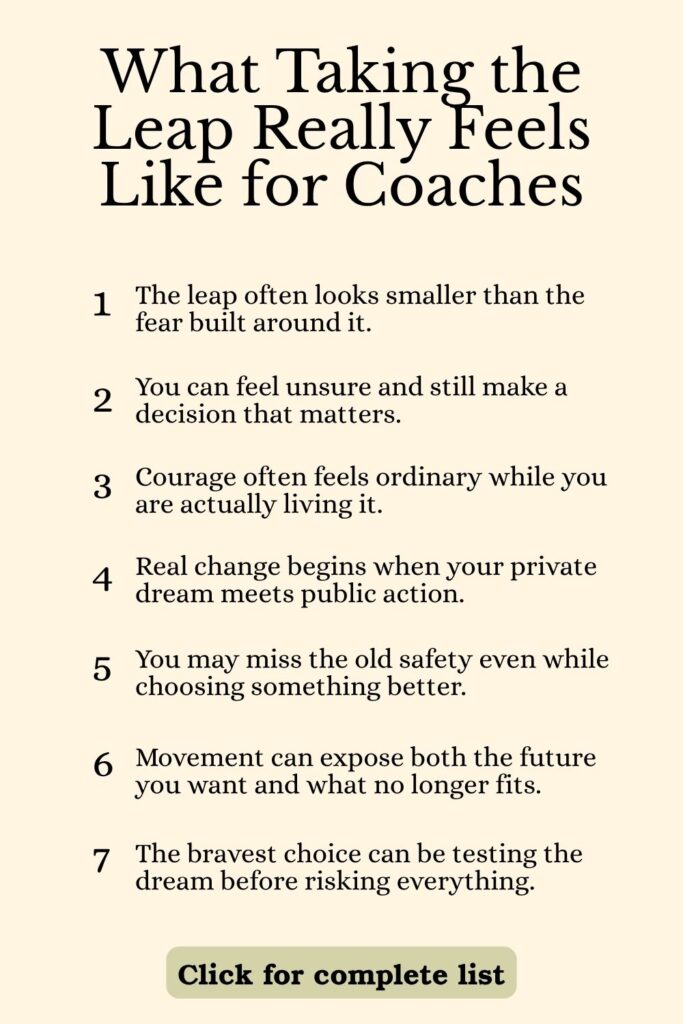
Taking the leap does not mean making the biggest possible move. It means turning the future you want into a decision you are prepared to act on.
it’s time now to act on your dreams quote
Key Takeaways
- A dream needs a decision. Imagining a better future can give you direction, but progress begins when you choose a specific action that changes your current reality.
- The obstacle matters as much as the goal. WOOP asks you to define your Wish, Outcome, Obstacle, and Plan so you confront what repeatedly blocks follow-through.
- Specific plans beat vague intentions. An if-then plan gives you a predetermined response when procrastination, perfectionism, avoidance, or another predictable obstacle appears.
- Taking the leap does not require reckless risk. For a coach, the leap may be publishing an offer, testing a price, inviting five prospects, or opening a real booking path.
- Action creates information. Sometimes the next move confirms your direction. Sometimes it shows you that the offer, audience, timing, or plan needs to change.
How Do You Take Action on Your Dreams?
You take action on your dreams by defining what you actually want, identifying the obstacle most likely to stop you, and deciding what you will do when that obstacle appears. A dream becomes actionable when it moves from “someday” to a specific behavior you can perform and observe.
One practical framework for doing this is WOOP, which stands for Wish, Outcome, Obstacle, Plan. It combines a picture of the future you want with an honest look at what is currently getting in the way, then turns that obstacle into a concrete response.
SEE ALSO: If you’re a coach looking to streamline your administrative tasks and save time, check out our Coaching Administration Software. It’s a simple, effective solution designed to help you focus less on paperwork and more on what matters—coaching your clients. From scheduling to client management, our software gives you the tools to run your business efficiently. Ready to reclaim your time and boost productivity? Click or tap here.
For a coach, that might mean replacing “I want a successful coaching business” with something you can test in reality: “I will define one coaching package, put a price on it, invite five relevant prospects to discuss it, and review what I learn.”
What Made Me Finally Take the Leap?
“I wanted to be The Jorge Moral, not Jorge Moral the 3rd”
I grew up somewhat spoiled in Peru, under the umbrella of relative financial safety that my grandfather’s success and then my father’s success provided, and one under which I joyfully lounged as I grew up. When you grow up with just enough money that things coming easy is the norm rather than the exception, you borrow its cover of power rather easily, even if that’s not your own money. Like an old coat that is too large for you and clearly tailored for someone else, you still wear it simply because it still makes things easy around you.
You only need to look at any of the spoiled kids of successful, hard-working people to understand what I mean. Generational money brings safety, but it can spoil people who don’t understand how it was built.
What Did Money Teach Me About Success?
They don’t understand the value of that money, just as I didn’t understand the value of the money that my father had. I loved it, till that day I didn’t, because I realized what the cost of borrowing the power of that money was: I was never going to grow beyond it.
If I kept hiding behind the money and success of my father, I would only ever be his successor. I would only ever be Jorge Moral, the 3rd. I didn’t want that! I wanted to be The Jorge Moral, not the latest Jorge in the line.
SEE ALSO: If you’re a coach looking to streamline your administrative tasks and save time, check out our Coaching Administration Software. It’s a simple, effective solution designed to help you focus less on paperwork and more on what matters—coaching your clients. From scheduling to client management, our software gives you the tools to run your business efficiently. Ready to reclaim your time and boost productivity? Click or tap here.
That was going to be difficult if I didn’t make my own path, and if I didn’t shed the coat of familiarity and comfort that family had pre-made for me.
My father needed to step away from the business when I was 18 due to some personal reasons, and as the assigned successor, I was asked to step in. I managed to run it well till my father could get back to it, but it made me realize that this was it.
This was going to be the extent of my life here in Peru. I would, one day, take over from my father and maybe grow the business, and we’ll always be comfortable and have enough money to have a good life, but I will never be my own person.
I understood, in that moment of handing the business back to my father, that I wanted to at least try making an identity for myself, if possible at all.
What Did It Take to Build an Identity of My Own?
Soon enough, I left for America with nothing from my family because if I had taken that money, it would mean that the success or failure would not be mine alone. It would always be a by-product of my father’s money, and that was exactly what I didn’t want.
As a spoiled kid in Peru, I thought service work and cleaning work to be beneath me, and here in America I was cleaning bathrooms and serving the rich, hoping to afford cable someday. I ate Ramen noodles and spaghetti for more nights than I can remember and dreamt of the food back home.
SEE ALSO: If you’re a coach looking to streamline your administrative tasks and save time, check out our Coaching Administration Software. It’s a simple, effective solution designed to help you focus less on paperwork and more on what matters—coaching your clients. From scheduling to client management, our software gives you the tools to run your business efficiently. Ready to reclaim your time and boost productivity? Click or tap here.
Because of my job as a server, I heard of the mortgage industry, and I saw that if I were a cut-throat sales person, I could make money. The next stage of my life was just that, chasing money as a mortgage broker, but I realized that this was not the life I wanted.
After all, if money is all that I needed to have a good life, I could have had that with my family, and this was still not me.
The biggest thing that my family’s money afforded me was the experience of having had it, and the knowledge that money alone isn’t enough. You need more in life.
If you keep chasing money, it’ll take over your life, and you’ll still not go as far as you’d like.
How Did Coaching Help Me Change Direction?
In my search for this unexplainable sense of “more”, I found coaching.
SEE ALSO: If you’re a coach looking to streamline your administrative tasks and save time, check out our Coaching Administration Software. It’s a simple, effective solution designed to help you focus less on paperwork and more on what matters—coaching your clients. From scheduling to client management, our software gives you the tools to run your business efficiently. Ready to reclaim your time and boost productivity? Click or tap here.
I consulted a coach who made me recognize that because I had lived a period in my life where I felt the lack of money very acutely, I was currently spending all my time chasing after it. I kept hoping to pad my life with enough money that I’ll never have to feel that way again.
Then, it struck me that even though I refused to admit it, I was trapped in a primitive mindset of my own making, and I’d have to break out of it or else I will never take risks again.
This epiphany and the coaching I received freed me from my white padded room of safety and chaos that I had built.
I realized then that I didn’t want to just make money. I wanted to create impact, transform people’s lives, and get rewarded financially as a consequence of that.
This forced me to take accountability for my own mental health. After all, if I weren’t healthy myself, how could I help people get to a better place?
How Did I Turn Insight Into a Coaching Business?
Success is all about taking action, which is central to coaching
SEE ALSO: If you’re a coach looking to streamline your administrative tasks and save time, check out our Coaching Administration Software. It’s a simple, effective solution designed to help you focus less on paperwork and more on what matters—coaching your clients. From scheduling to client management, our software gives you the tools to run your business efficiently. Ready to reclaim your time and boost productivity? Click or tap here.
I took charge of my own life and built my coaching practice with that as one of the cornerstones of its foundation.
What mattered was not that every decision I made after leaving Peru turned out to be the right one. They did not.
What mattered was that action exposed the difference between the future I imagined and the life I was actually building. The mortgage business taught me that lesson as clearly as coaching eventually did.
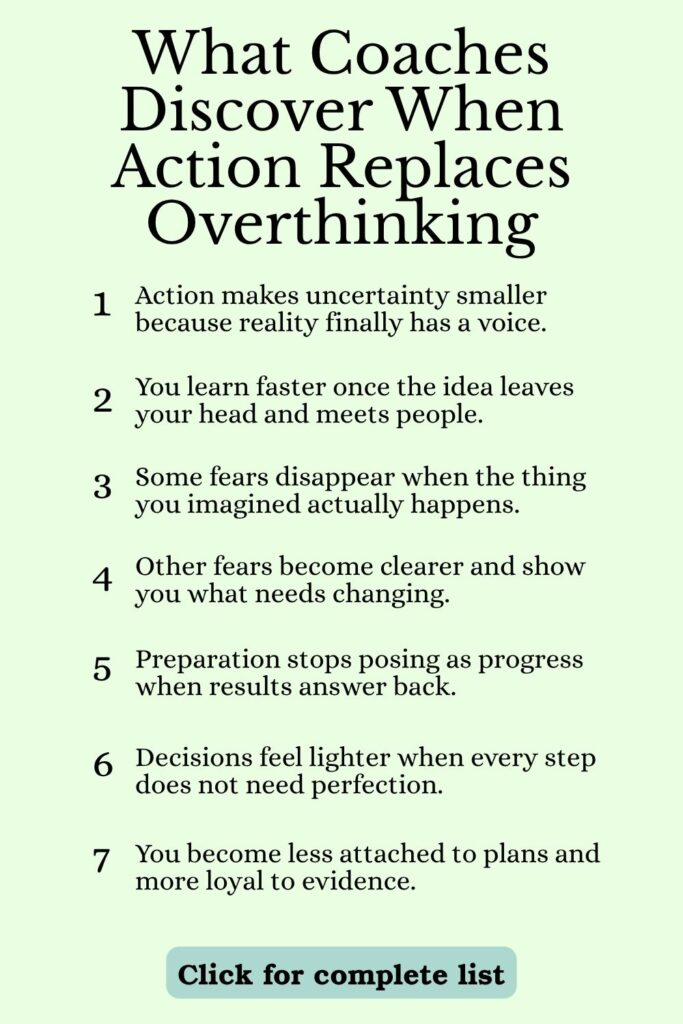
That is one of the reasons I think action is so powerful. It does more than move you forward. It gives you evidence.
Why Isn’t Wanting the Dream Enough?
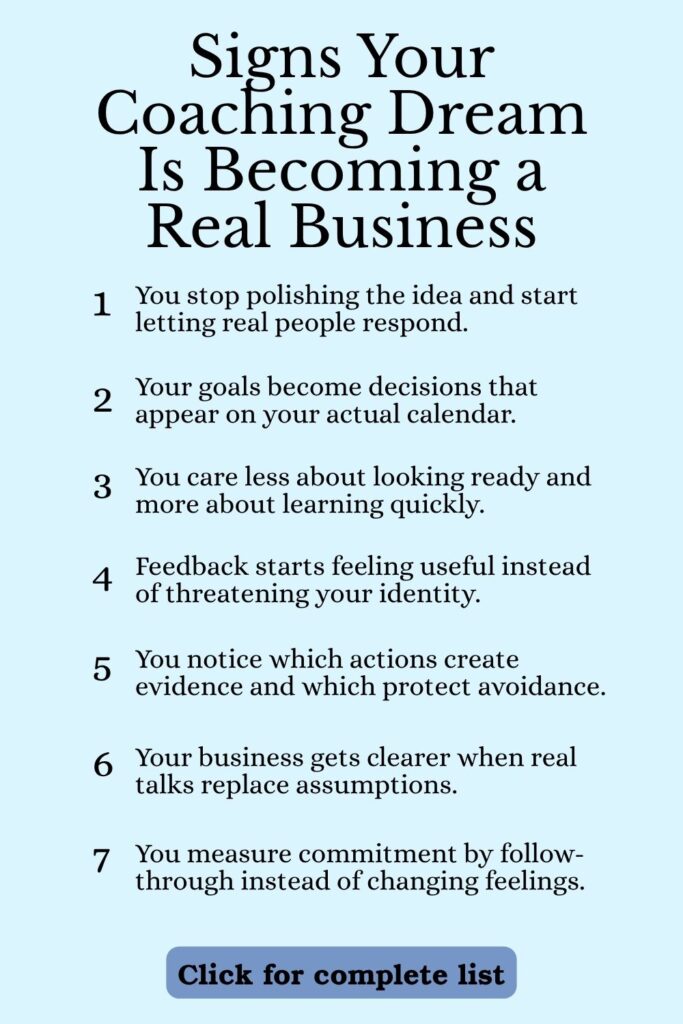
Wanting a dream is not enough because imagining the desired future and doing what is required to reach it are two different psychological processes.
Gabriele Oettingen and Klaus Michael Reininger reviewed research on what psychologists call mental contrasting. Their work describes a surprising problem with positive fantasies. Imagining a highly desirable future can feel good, but positive fantasizing by itself does not necessarily produce the effort required to create that future.
SEE ALSO: If you’re a coach looking to streamline your administrative tasks and save time, check out our Coaching Administration Software. It’s a simple, effective solution designed to help you focus less on paperwork and more on what matters—coaching your clients. From scheduling to client management, our software gives you the tools to run your business efficiently. Ready to reclaim your time and boost productivity? Click or tap here.
That distinction matters in a coaching business.
You can imagine a booked-out practice, a waiting list, a successful group program, or a stage full of people listening to your ideas. You can redesign your website around it. You can brainstorm names. You can spend weeks improving your slides.
None of those activities necessarily test whether the dream can become a business.
Suppose your goal is to launch a six-person group coaching program. You spend a month making the workbook beautiful, building a curriculum, and choosing a program name.
You still have not asked anyone to buy it.
The first meaningful action may be far less impressive: speak to five people who match your intended audience and ask whether the problem you want to solve is urgent enough that they would invest in solving it.
SEE ALSO: If you’re a coach looking to streamline your administrative tasks and save time, check out our Coaching Administration Software. It’s a simple, effective solution designed to help you focus less on paperwork and more on what matters—coaching your clients. From scheduling to client management, our software gives you the tools to run your business efficiently. Ready to reclaim your time and boost productivity? Click or tap here.
That action puts the dream in contact with reality.
How Does WOOP Turn a Dream Into a Decision?
WOOP turns a dream into a decision by moving through four concrete questions: Wish, Outcome, Obstacle, Plan.
The framework gives you a way to want something without stopping at the wanting.
- Wish: What do you want?
- Outcome: What would the most meaningful result look like?
- Obstacle: What inside your current behavior or thinking is most likely to interfere?
- Plan: What specific action will you take when that obstacle appears?
WOOP is a science-based mental strategy built around these four steps.
Take a coach who wants to launch a first group program.
Wish: Launch a six-person career coaching group next quarter.
SEE ALSO: If you’re a coach looking to streamline your administrative tasks and save time, check out our Coaching Administration Software. It’s a simple, effective solution designed to help you focus less on paperwork and more on what matters—coaching your clients. From scheduling to client management, our software gives you the tools to run your business efficiently. Ready to reclaim your time and boost productivity? Click or tap here.
Outcome: Help six clients through the method at once while testing a more scalable offer.
Obstacle: Every time it is time to promote the program, the coach decides the curriculum needs more work.
Plan: If I catch myself editing the curriculum during my sales block, then I will send three invitations before making another edit.
Notice what changed.
“Launch a program” is an ambition. “If I start polishing instead of selling, I send three invitations first” is a decision.
You can use the same method for raising fees, pitching a workshop, publishing your first coaching offer, starting a newsletter, or approaching potential referral partners.
SEE ALSO: If you’re a coach looking to streamline your administrative tasks and save time, check out our Coaching Administration Software. It’s a simple, effective solution designed to help you focus less on paperwork and more on what matters—coaching your clients. From scheduling to client management, our software gives you the tools to run your business efficiently. Ready to reclaim your time and boost productivity? Click or tap here.
The goal becomes more usable because you have defined what threatens it.
What Is the Obstacle You Keep Carrying With You?
The obstacle worth examining is usually the recurring behavior between you and the result, not a vague label such as “fear” or “lack of confidence.”
That distinction matters because you cannot act directly on “I need to become more confident.” You can act on what you repeatedly do when confidence drops.
A coach may say, “I need more visibility.”
Look closer and the observable pattern might be that she writes podcast pitches but never sends them.
Another coach says, “I need to earn more.”
SEE ALSO: If you’re a coach looking to streamline your administrative tasks and save time, check out our Coaching Administration Software. It’s a simple, effective solution designed to help you focus less on paperwork and more on what matters—coaching your clients. From scheduling to client management, our software gives you the tools to run your business efficiently. Ready to reclaim your time and boost productivity? Click or tap here.
His observable pattern is that every time a prospect asks about pricing, he offers a discount before the prospect has objected.
Another says, “I want scalable income.”
Yet every available business-development hour goes into taking another 1:1 client because building and selling a new offer feels less certain.
Now you have something to work with.
You are not trying to defeat a personality trait. You are identifying the moment where the old behavior keeps winning.
This is also why the same obstacle can survive a huge external change.
SEE ALSO: If you’re a coach looking to streamline your administrative tasks and save time, check out our Coaching Administration Software. It’s a simple, effective solution designed to help you focus less on paperwork and more on what matters—coaching your clients. From scheduling to client management, our software gives you the tools to run your business efficiently. Ready to reclaim your time and boost productivity? Click or tap here.
I left Peru. I gave up the protection of my family’s money. Externally, almost everything had changed.
Yet I still managed to create another version of safety by chasing money relentlessly in the mortgage industry.
Changing your surroundings can be powerful. It does not automatically change the pattern you carry into those surroundings.
How Do You Turn an Obstacle Into an If-Then Plan?
You turn an obstacle into an if-then plan by deciding in advance what you will do when the predictable obstacle appears.
Psychologists call these implementation intentions. Instead of relying on “I intend to do this,” you connect a recognizable situation with a specific response.
If X happens, then I will do Y.
SEE ALSO: If you’re a coach looking to streamline your administrative tasks and save time, check out our Coaching Administration Software. It’s a simple, effective solution designed to help you focus less on paperwork and more on what matters—coaching your clients. From scheduling to client management, our software gives you the tools to run your business efficiently. Ready to reclaim your time and boost productivity? Click or tap here.
Peter Gollwitzer and Paschal Sheeran examined implementation intentions in a 2006 meta-analysis published in Advances in Experimental Social Psychology. Across 94 independent tests, they found a positive medium-to-large overall effect on goal attainment, reported as d = .65.
That does not mean an if-then statement guarantees success. It means that specifying when, where, or how you will respond can make a goal easier to execute than leaving the response undecided.
For a coach, that might look like this:
If I start rewriting my offer instead of contacting prospects, then I will send three invitations before editing again.
If Friday arrives and I am delaying a finished post because it does not feel perfect, then I will publish the completed version before noon.
If I start telling myself I need another certification before testing the offer I am already qualified to deliver, then I will interview three potential clients before enrolling in anything.
SEE ALSO: If you’re a coach looking to streamline your administrative tasks and save time, check out our Coaching Administration Software. It’s a simple, effective solution designed to help you focus less on paperwork and more on what matters—coaching your clients. From scheduling to client management, our software gives you the tools to run your business efficiently. Ready to reclaim your time and boost productivity? Click or tap here.
The official WOOP guidance makes the same point about specificity. A useful plan connects a particular obstacle with one concrete response.
You are removing one decision from the difficult moment.
Instead of asking, “What should I do now?” when the obstacle appears, you have already answered.
What Does “Taking the Leap” Actually Look Like in a Coaching Business?
Taking the leap in a coaching business means doing something that exposes your offer, expertise, or decision to real-world feedback.
You do not have to quit your job tomorrow or spend thousands of dollars on a launch to prove that you are serious.
Suppose your goal is to start a coaching practice. A real first sequence could be:
SEE ALSO: If you’re a coach looking to streamline your administrative tasks and save time, check out our Coaching Administration Software. It’s a simple, effective solution designed to help you focus less on paperwork and more on what matters—coaching your clients. From scheduling to client management, our software gives you the tools to run your business efficiently. Ready to reclaim your time and boost productivity? Click or tap here.
- Define one coaching offer for one recognizable problem.
- Decide what you will charge.
- Speak directly with five people who fit the intended client.
- Give interested prospects a clear way to book.
- Onboard the first paying client and deliver the work.
- Review what prospects and clients actually responded to.
Now the dream has contact with reality.
If you use LCH Core, this is where software can become useful after the business decision has already been made. You can give prospects a booking route through a Public Booking Page, organize prospect and client information through client management (CRM), create coaching packages and handle payments, then use a Welcome Package to collect forms and start the client relationship.
The Public Booking Page setup guide shows how coaches can publish the page and share the booking link once they have a session ready for prospects.
If visibility is part of your next move, a free life coach directory listing gives you another place where people looking for coaching can discover you. It is one visibility channel, not a substitute for having an offer and a process for turning interest into a real conversation.
That distinction matters. Getting seen is only the beginning. How to Master Funnels as a Coach (and Why You Need To) looks at the wider path from attracting interest through nurturing, conversion, and retention.
If your dream is speaking rather than building a new practice, the same principle applies. “I want to give a TED Talk” is still a dream. Defining one signature idea, writing a short talk, delivering it somewhere smaller, recording it, and pitching three appropriate opportunities creates evidence you can use.
SEE ALSO: If you’re a coach looking to streamline your administrative tasks and save time, check out our Coaching Administration Software. It’s a simple, effective solution designed to help you focus less on paperwork and more on what matters—coaching your clients. From scheduling to client management, our software gives you the tools to run your business efficiently. Ready to reclaim your time and boost productivity? Click or tap here.
The leap is the point where somebody or something outside your own imagination gets to respond.
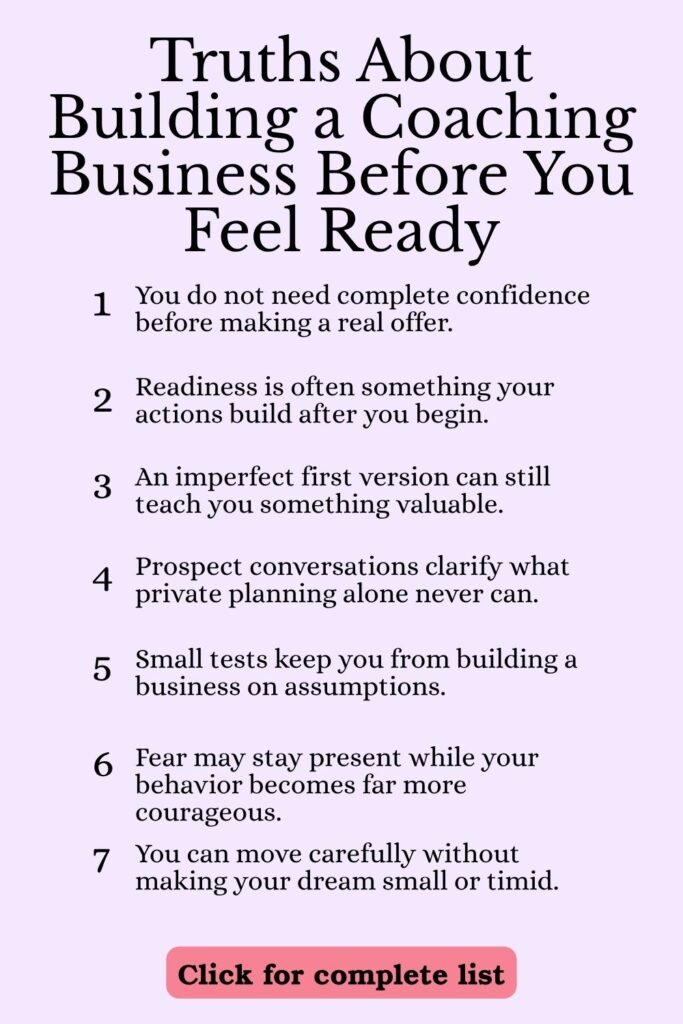
When Should You Persist, and When Should You Pivot?
You should persist when the goal still matters and the evidence suggests the path is workable, but pivot when repeated action shows that the current route is not producing enough evidence to justify repeating it unchanged.
Taking action does not mean stubbornly doing the same thing forever.
Mental contrasting is useful partly because it connects desire with reality. Research reviewed by Oettingen and Reininger suggests that this process can support commitment to wishes people judge as feasible while helping them loosen commitment to wishes that appear less feasible.
Imagine a coach launches a paid workshop.
Nobody buys.
SEE ALSO: If you’re a coach looking to streamline your administrative tasks and save time, check out our Coaching Administration Software. It’s a simple, effective solution designed to help you focus less on paperwork and more on what matters—coaching your clients. From scheduling to client management, our software gives you the tools to run your business efficiently. Ready to reclaim your time and boost productivity? Click or tap here.
Persistence does not necessarily mean launching the identical workshop again next month with another batch of social posts.
Action has produced information. Now use it.
Were people interested in the problem but not the format? Did conversations reveal that the promise was too broad? Did the right prospects see it? Were people willing to book private coaching around the same problem but not a workshop?
Your next action might be interviewing prospects, tightening the outcome, changing the audience, testing a different price, reducing the scope, or deciding that another offer deserves your attention instead.
That is not abandoning action. It is responding to what action taught you.
My own story worked the same way.
SEE ALSO: If you’re a coach looking to streamline your administrative tasks and save time, check out our Coaching Administration Software. It’s a simple, effective solution designed to help you focus less on paperwork and more on what matters—coaching your clients. From scheduling to client management, our software gives you the tools to run your business efficiently. Ready to reclaim your time and boost productivity? Click or tap here.
Leaving Peru was action.
Entering the mortgage industry was action.
Realizing that the mortgage industry was not the life I wanted, and changing direction again, was also action.
Sometimes courage means continuing.
Sometimes courage means admitting that movement has shown you a better direction.
Where LCH Core Fits
LCH Core fits after the decision, when the action you chose needs a repeatable business process around it.
SEE ALSO: If you’re a coach looking to streamline your administrative tasks and save time, check out our Coaching Administration Software. It’s a simple, effective solution designed to help you focus less on paperwork and more on what matters—coaching your clients. From scheduling to client management, our software gives you the tools to run your business efficiently. Ready to reclaim your time and boost productivity? Click or tap here.
The software does not decide what your dream should be. It can help you turn decisions you have already made into a system you can keep using.
For example:
- If your action is start taking discovery calls, a Public Booking Page can give prospects a direct booking route.
- If your action is create a consistent client start, a Welcome Package can combine your welcome letter, coaching agreement with electronic signature, and forms. The Welcome Package onboarding guide explains how that process works.
- If your action is make client follow-through more visible, you can assign goals, action items, journals, worksheets, and resources, then review activity through the Progress Stream. The Progress Stream guide explains what coaches can see there.
- If your action is build something beyond 1:1 sessions, courses and digital products can be sold through a Public Store. The Public Store guide shows how offers can be made available in one public-facing place.
The Engagement Report can also help you review client engagement rather than relying entirely on memory, while client management (CRM) keeps client profiles, notes, and intake information connected to the relationship.
That is the useful role of a business system. It helps a decision survive beyond the burst of motivation that created it. LCH’s internal product materials likewise connect client records, coaching tools, progress tracking, onboarding, offers, and scheduling as parts of the same coaching workflow.

FAQ
How do I take action on a dream when I do not feel ready?
You can take action before you feel completely ready by choosing a small step that creates useful real-world feedback. Readiness does not need to mean certainty. For a coach, sending three invitations to discuss a new offer can teach you more than another month of privately refining it.
What is the WOOP method for achieving goals?
WOOP is a mental strategy built around Wish, Outcome, Obstacle, and Plan. You identify what you want, picture the desired result, identify the main internal obstacle, then create a plan for responding when that obstacle appears.
SEE ALSO: If you’re a coach looking to streamline your administrative tasks and save time, check out our Coaching Administration Software. It’s a simple, effective solution designed to help you focus less on paperwork and more on what matters—coaching your clients. From scheduling to client management, our software gives you the tools to run your business efficiently. Ready to reclaim your time and boost productivity? Click or tap here.
What is an implementation intention in coaching?
An implementation intention is an if-then plan that links a predictable situation to a specific response. A coach might help a client replace “I will work on my confidence” with “If I avoid speaking in Monday’s meeting because I feel nervous, then I will ask one prepared question before the meeting ends.”
How do I turn a big coaching-business goal into a realistic first step?
Turn a large goal into the smallest action that exposes an important assumption to reality. If you want to launch group coaching, for example, your first useful test might be five conversations with intended clients rather than building the entire program.
How do I know whether fear is holding me back or warning me about a bad decision?
Look at both the obstacle and the available evidence. If the goal still makes sense but you repeatedly avoid the same necessary behavior, fear may be interfering with execution. If repeated tests show weak demand, poor fit, or unacceptable tradeoffs, the plan itself may need to change.
What should I do first when I want to start a coaching business?
Start by defining who you want to coach, what problem you will help them work on, and one clear way they can work with you. Then test that offer through real conversations before building a complicated business around assumptions.
Should I quit my job before starting a coaching business?
You do not need to quit your job before testing whether your coaching business can attract paying clients. Many coaches can reduce risk by validating an offer, talking to prospects, and gaining initial clients before making a larger employment decision.
How do I know when to keep pursuing a coaching goal and when to pivot?
Keep pursuing the goal when it remains meaningful and your actions are producing evidence of a workable path. Pivot when repeated attempts expose a consistent problem with the audience, offer, timing, economics, or strategy that cannot be fixed simply by doing more of the same.
SEE ALSO: If you’re a coach looking to streamline your administrative tasks and save time, check out our Coaching Administration Software. It’s a simple, effective solution designed to help you focus less on paperwork and more on what matters—coaching your clients. From scheduling to client management, our software gives you the tools to run your business efficiently. Ready to reclaim your time and boost productivity? Click or tap here.
What I Believe About Taking Action
I will leave you with the life lesson that I hold most close to me: the difference between those who are successful and fulfilled versus those who aren’t is the very act of taking action.
But I do not mean constant motion for the sake of motion.
Action is choosing a future, confronting what stands between you and it, deciding what you will do next, and letting reality answer back.
Sometimes that answer will be yes.
Sometimes it will be not yet.
Sometimes it will tell you that you have been climbing the wrong mountain entirely.
SEE ALSO: If you’re a coach looking to streamline your administrative tasks and save time, check out our Coaching Administration Software. It’s a simple, effective solution designed to help you focus less on paperwork and more on what matters—coaching your clients. From scheduling to client management, our software gives you the tools to run your business efficiently. Ready to reclaim your time and boost productivity? Click or tap here.
Every serious move I made gave me information I could not have received by thinking about it from somewhere safe. Leaving Peru did that. Chasing money did that. Finding coaching did that. Building a coaching practice did that.
When you act on your dreams, you make the distance between your current life and your desired life smaller. Just as importantly, you discover whether the destination you imagined is truly the one you want.
Choose your next real move.
Then make it.
If your next move is building a clearer system around the coaching business you are creating, you can explore LCH Core.
Sources
Gollwitzer, Peter M., and Paschal Sheeran. “Implementation Intentions and Goal Achievement: A Meta-Analysis of Effects and Processes.” Advances in Experimental Social Psychology, vol. 38, 2006, pp. 69-119. Elsevier. ScienceDirect and DOI record
SEE ALSO: If you’re a coach looking to streamline your administrative tasks and save time, check out our Coaching Administration Software. It’s a simple, effective solution designed to help you focus less on paperwork and more on what matters—coaching your clients. From scheduling to client management, our software gives you the tools to run your business efficiently. Ready to reclaim your time and boost productivity? Click or tap here.
Oettingen, Gabriele, and Klaus Michael Reininger. “The Power of Prospection: Mental Contrasting and Behavior Change.” Social and Personality Psychology Compass, vol. 10, no. 11, Nov. 2016, pp. 591-604. Wiley. Wiley Online Library
“WOOP: Wish, Outcome, Obstacle, Plan.” WOOP My Life. Official WOOP website
Read this next

How to Become a Christian Life Coach
Eight Steps to Becoming a Christian Life Coach
Read More
The Life Coaching Opportunities Most Coaches Never Think to Explore
There is a great big world of opportunity for life coaches and many don’t realize how easy it is to get involved.
Read More
Should You Be a Life Coach?
Life coaching can be a fun, rewarding career, but is it right for you?
Read More