




What it Takes to Become a Life Coach
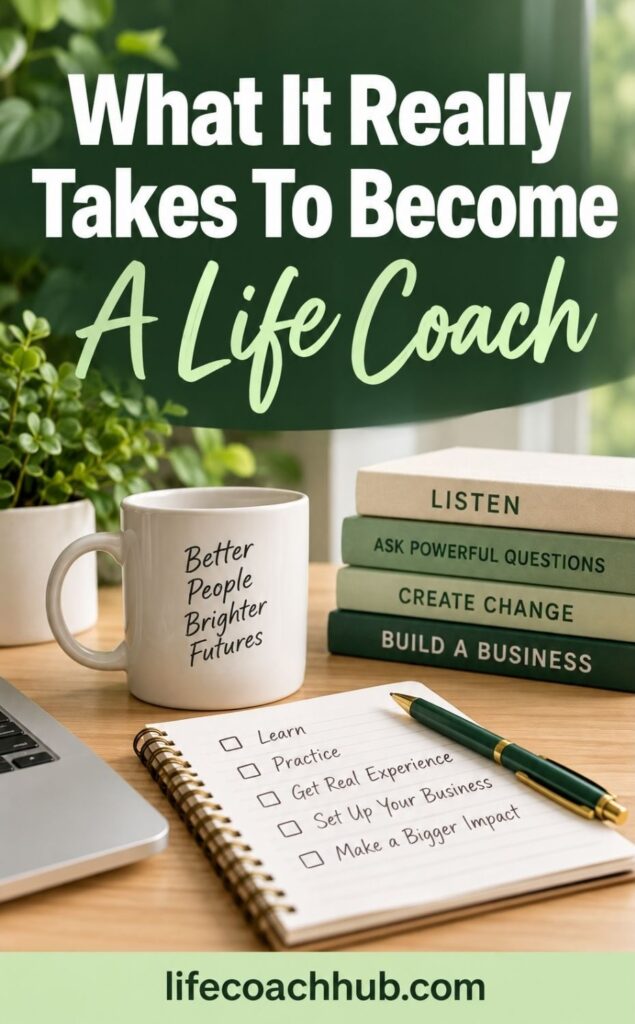
Do you have what it takes to fight through the rapids and become a successful life coach?
Becoming a life coach can be a very rewarding career. Because coaching is not regulated in exactly the same way everywhere, it can be easy to confuse a relatively low barrier to entering the profession with being ready to coach professionally.
Those are not the same thing.
There are skills required to coach people well. There are also business systems required to turn that ability into a functioning coaching practice. You need both.
Key Takeaways
- Professional coaching requires more than being good with people. You need listening, questioning, ethical boundaries, clear agreements, client-led decision making, and a method for turning insight into action.
- Certification and licensing are different questions. Legal requirements vary by location and type of work, while professional credentials can demonstrate training and matter to clients evaluating a coach.
- Good coaching is not the same as giving good advice. Your job is usually to help clients examine their thinking, identify options, make decisions, and take ownership of what happens next.
- A coaching practice needs a repeatable client system. Visibility, booking, intake, agreements, payments, records, coaching delivery, progress reviews, and follow-up all need somewhere to happen.
- You can test your readiness before building a full practice. Practice the coaching, client administration, scheduling, follow-up, and marketing behaviors the job actually requires.
What Does It Take to Become a Life Coach?
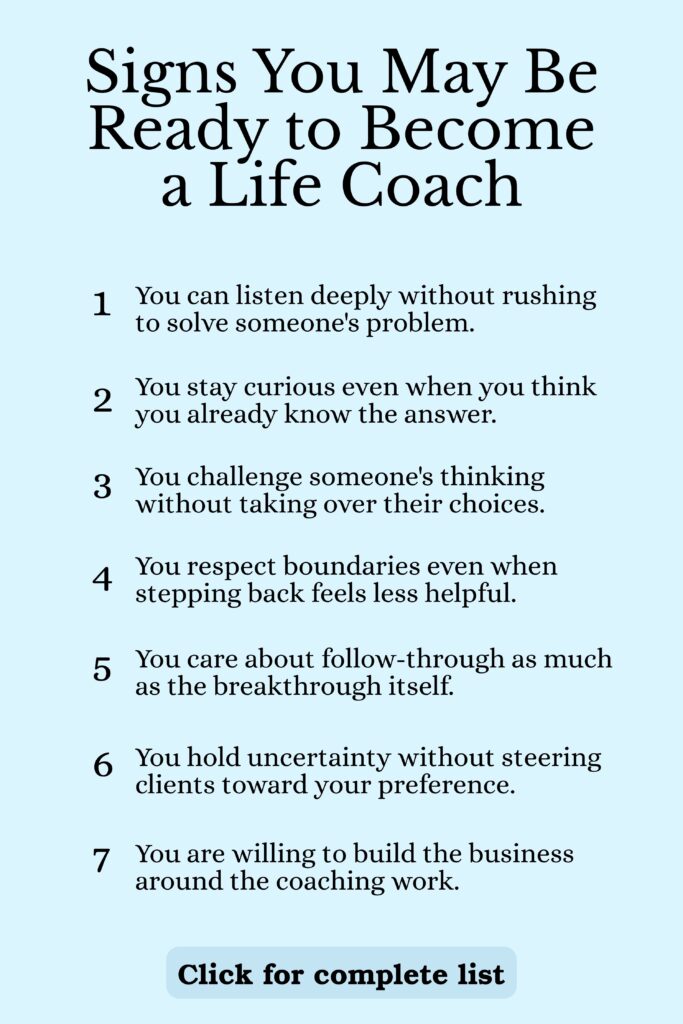
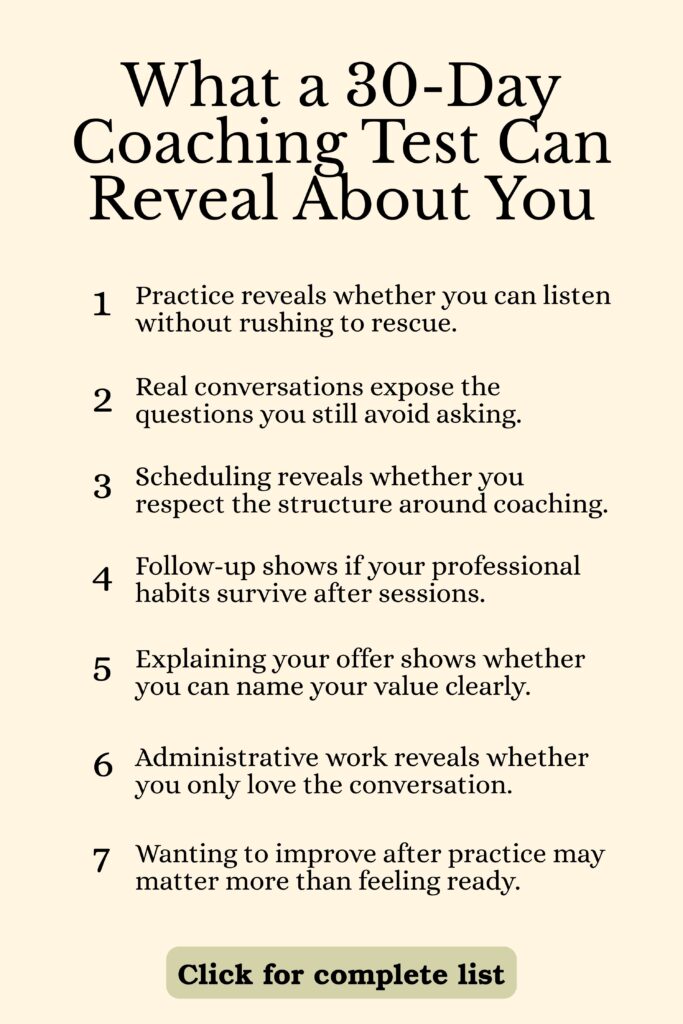
Becoming a capable life coach requires coaching skills, professional boundaries, ethical judgment, and enough business ability to consistently attract, onboard, serve, and manage clients.
You need to listen closely, ask useful questions, help clients turn insight into action, and recognize where coaching stops and another professional service may be needed. You also need practical systems for agreements, records, scheduling, payments, client progress, and getting new clients.
SEE ALSO: If you’re a coach looking to streamline your administrative tasks and save time, check out our Coaching Administration Software. It’s a simple, effective solution designed to help you focus less on paperwork and more on what matters—coaching your clients. From scheduling to client management, our software gives you the tools to run your business efficiently. Ready to reclaim your time and boost productivity? Click or tap here.
Training or a professional credential can strengthen your preparation and credibility, but neither replaces the everyday behaviors that make someone effective in a real coaching relationship.
What People Skills Does a Life Coach Need?
Life coaching depends heavily on your ability to work with people, but those skills need to produce useful coaching behavior rather than simply make you pleasant to talk to.
Motivator: Encouragement has a place in coaching, but motivation is not simply cheering somebody on. A coach can help a client reconnect an action to a meaningful goal, examine why they keep avoiding it, choose a realistic next step, and take responsibility for following through.
Good listener: A life coach needs to be a good listener. This helps you gather information, but skilled listening goes further. You need to notice patterns, changes in language, hesitation, assumptions, emotions, and what the client keeps returning to.
Good communicator: A life coach needs to express ideas clearly while avoiding the temptation to dominate the conversation. Sometimes that means asking a precise question. Sometimes it means reflecting something the client has said in a way that helps them hear their own thinking more clearly.
Creative thinker: Coaching often requires flexibility. A client may understand a problem intellectually but remain stuck in the same behavior. A strong coach can change the question, introduce a useful exercise, test an assumption, or help the client examine the problem from another angle.
SEE ALSO: If you’re a coach looking to streamline your administrative tasks and save time, check out our Coaching Administration Software. It’s a simple, effective solution designed to help you focus less on paperwork and more on what matters—coaching your clients. From scheduling to client management, our software gives you the tools to run your business efficiently. Ready to reclaim your time and boost productivity? Click or tap here.
How Do You Know Whether You’re Coaching Instead of Just Giving Advice?
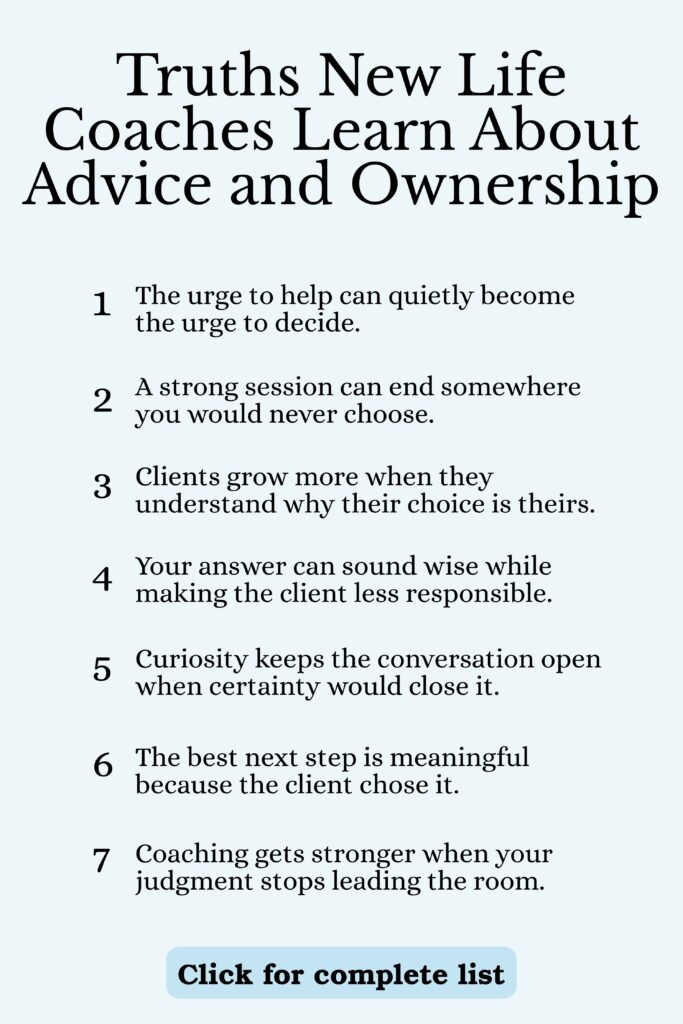
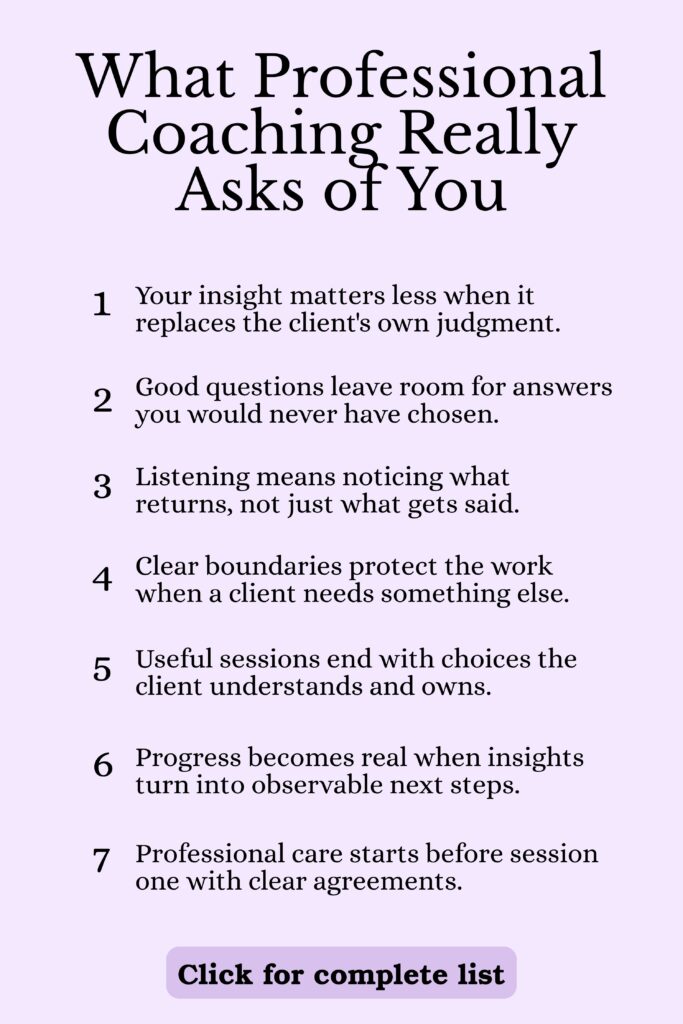
You are coaching when the client remains responsible for thinking, choosing, and acting rather than simply carrying out the solution you would choose for them.
Imagine a career-coaching client says, “I hate my job. Should I quit?”
Advice begins with your answer.
“You should leave. Life is too short.”
Coaching begins somewhere else.
You might first clarify what the client wants from the conversation. Are they trying to decide whether to resign now? Understand why they are unhappy? Compare options? Work out whether the problem is the role, employer, manager, industry, or something outside work?
SEE ALSO: If you’re a coach looking to streamline your administrative tasks and save time, check out our Coaching Administration Software. It’s a simple, effective solution designed to help you focus less on paperwork and more on what matters—coaching your clients. From scheduling to client management, our software gives you the tools to run your business efficiently. Ready to reclaim your time and boost productivity? Click or tap here.
Then you listen for what is actually driving the decision.
The client may eventually decide to quit. They may decide to stay for six months while building savings. They may discover that they want a different role inside the same company.
The important distinction is ownership.
A useful test is:
Whose judgment is doing most of the work?
If you repeatedly diagnose the problem, tell the client what it means, and prescribe what to do next, you may have moved into consulting, mentoring, or advising.
SEE ALSO: If you’re a coach looking to streamline your administrative tasks and save time, check out our Coaching Administration Software. It’s a simple, effective solution designed to help you focus less on paperwork and more on what matters—coaching your clients. From scheduling to client management, our software gives you the tools to run your business efficiently. Ready to reclaim your time and boost productivity? Click or tap here.
If you help the client examine assumptions, uncover options, decide what matters, and commit to an action they understand and own, you are operating much closer to a coaching model.
This is also why tools should follow the coaching conversation rather than replace it. After a client decides what they will do, LCH Core can be used to assign a goal, action item, journal, or worksheet that supports the decision and makes the follow-through visible.
Do You Need Certification or a License to Become a Life Coach?
Certification and licensing are different, and the requirements that apply to your coaching practice depend on where you operate and what services you provide.
A professional coaching credential usually demonstrates that you have completed defined training or assessment requirements through a coaching organization. A government license gives legal authorization to practice a regulated profession.
Do not assume that calling a service “coaching” automatically exempts you from regulations that may apply to the work you are actually doing. Check the requirements that apply in your location, particularly if your services move into areas governed by healthcare, mental health, financial, legal, or other regulated professional standards.
Even where a particular coaching credential is not legally required, credentials can matter commercially.
SEE ALSO: If you’re a coach looking to streamline your administrative tasks and save time, check out our Coaching Administration Software. It’s a simple, effective solution designed to help you focus less on paperwork and more on what matters—coaching your clients. From scheduling to client management, our software gives you the tools to run your business efficiently. Ready to reclaim your time and boost productivity? Click or tap here.
According to the 2025 ICF Global Coaching Study, 73% of coaches agree that clients and organizations expect coaches to have a coaching certification or credential. That does not mean every prospective client will demand one, but it is a useful signal about professional expectations in the market.
Think of training and credentials as evidence, not magic.
A certificate cannot make a weak listener into a strong coach by itself. Good training can, however, give you a framework for practicing skills, receiving feedback, learning ethical boundaries, and understanding what professional coaching is supposed to look like.
What Does a Professional Coaching Relationship Require?
A professional coaching relationship needs a clear agreement, useful client information, focused coaching work, documented next actions, and periodic review.
A simple client workflow looks like this:
1. Agree on the relationship
SEE ALSO: If you’re a coach looking to streamline your administrative tasks and save time, check out our Coaching Administration Software. It’s a simple, effective solution designed to help you focus less on paperwork and more on what matters—coaching your clients. From scheduling to client management, our software gives you the tools to run your business efficiently. Ready to reclaim your time and boost productivity? Click or tap here.
Before coaching starts, clarify what coaching will cover, what it will not cover, confidentiality, responsibilities, scheduling, fees, cancellations, and how either party can end the relationship.
The current ICF Code of Ethics specifically requires ICF professionals to establish agreements covering the nature of coaching, roles, responsibilities, confidentiality, financial arrangements, and other parts of the engagement.
2. Understand what the client wants
Collect enough information to understand why the client is seeking coaching and what they want to work toward.
You do not need a 40-question interrogation.
You do need enough context to avoid spending the first paid session discovering information that could reasonably have been collected beforehand.
SEE ALSO: If you’re a coach looking to streamline your administrative tasks and save time, check out our Coaching Administration Software. It’s a simple, effective solution designed to help you focus less on paperwork and more on what matters—coaching your clients. From scheduling to client management, our software gives you the tools to run your business efficiently. Ready to reclaim your time and boost productivity? Click or tap here.
3. Coach toward an agreed focus
A client may arrive with five problems. That does not mean all five belong in today’s session.
Clarify the result they want from the conversation and coach toward it.
4. Turn insight into an observable next step
If the session ends with “I feel clearer,” ask what that clarity changes.
Maybe the client will have a difficult conversation by Friday. Maybe they will research three career options. Maybe they will block two hours to finish the proposal they have avoided for a month.
SEE ALSO: If you’re a coach looking to streamline your administrative tasks and save time, check out our Coaching Administration Software. It’s a simple, effective solution designed to help you focus less on paperwork and more on what matters—coaching your clients. From scheduling to client management, our software gives you the tools to run your business efficiently. Ready to reclaim your time and boost productivity? Click or tap here.
A decision becomes more useful when it has somewhere to go.
5. Review the pattern over time
Coaching should not become a string of disconnected conversations.
Return to goals, actions, recurring obstacles, decisions, and evidence of progress. That allows both coach and client to see what is changing and what still needs attention.
The operational side of this can be kept much cleaner when the workflow lives in one place. Client management can hold client profiles, notes, and intake forms. A Welcome Package can include a welcome letter, coaching agreement with electronic signature, and forms. Goals and action items can then capture what the client chooses to work on.
The Welcome Package guide shows how that onboarding process can be structured in practice.
SEE ALSO: If you’re a coach looking to streamline your administrative tasks and save time, check out our Coaching Administration Software. It’s a simple, effective solution designed to help you focus less on paperwork and more on what matters—coaching your clients. From scheduling to client management, our software gives you the tools to run your business efficiently. Ready to reclaim your time and boost productivity? Click or tap here.
What Business Skills Does a Life Coach Need?
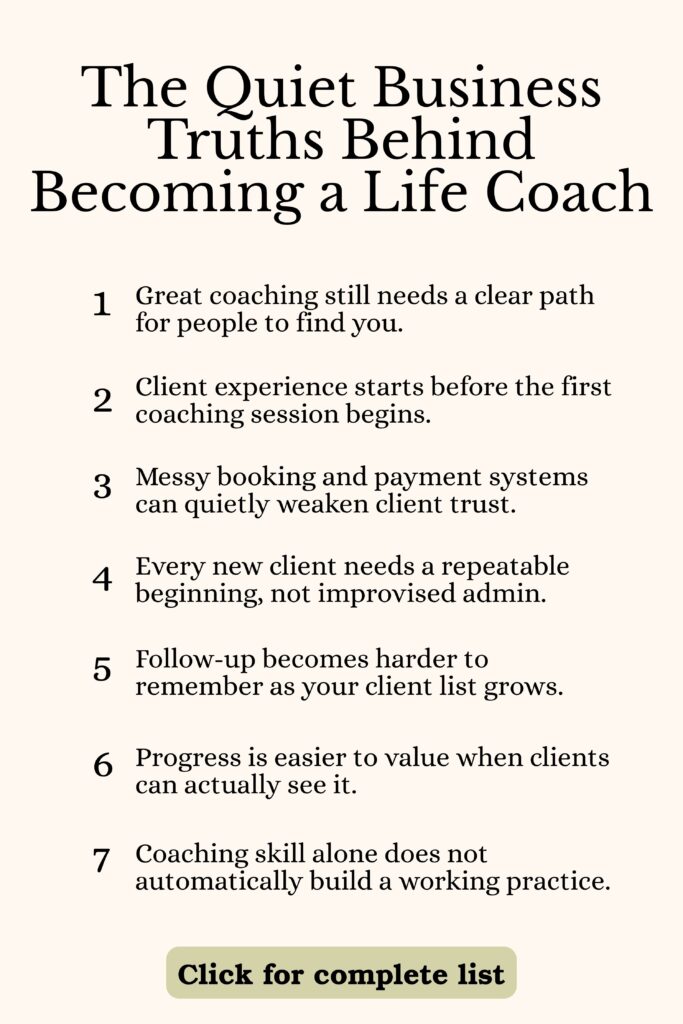
A life coach needs enough business skill to consistently manage clients, protect their time, get paid, and create opportunities for new clients to find them.
You do not need to become an accountant, professional marketer, and operations manager overnight. You do need systems that prevent basic business tasks from being handled from memory.
- Record keeping: Track client information, agreements, appointments, payments, notes, actions, and progress. Poor record keeping eventually creates missed details, duplicated work, weak follow-up, and avoidable client confusion.
- Marketing and visibility: New clients need a way to discover you, understand what you help with, and take a next step. That may involve referrals, networking, search, social media, speaking, content, a directory profile, partnerships, or other channels. The useful question is not “Which marketing tactic should every coach use?” It is “Where do suitable prospects find me, and what happens after they do?”
- Scheduling: Protect both your time and the client’s. Define when people can book, how much notice you require, what happens when somebody cancels, and how much space you need between sessions. A calendar filled with preventable conflicts is an operating problem, not simply an inconvenience.
- Payments and packages: Decide what you are selling, how the client pays, when payment is due, what is included, and what happens when a package ends. A vague offer creates vague expectations.
- Follow-up: Decide what happens after an inquiry, a discovery call, a completed package, or a period of silence. Relying on yourself to “remember to get back to them” becomes increasingly unreliable as the business grows.
These functions are not separate from coaching quality.
If a client waits three days for basic onboarding information, cannot tell when their next session is, or receives conflicting payment instructions, their experience of your coaching business has already started.
What Is the Minimum Business System a New Coach Needs?
A new coach needs one clear path that takes a person from discovering the practice to becoming and remaining an organized client.
The path can be simple:
SEE ALSO: If you’re a coach looking to streamline your administrative tasks and save time, check out our Coaching Administration Software. It’s a simple, effective solution designed to help you focus less on paperwork and more on what matters—coaching your clients. From scheduling to client management, our software gives you the tools to run your business efficiently. Ready to reclaim your time and boost productivity? Click or tap here.
Visibility → next step → booking → onboarding → payment → coaching → progress → follow-up
You can audit your own business by walking through that sequence.
Visibility: How does somebody appropriate for your coaching discover you?
Next step: What can they do when they become interested?
Booking: Can they choose a suitable time without a long email exchange?
Onboarding: How do they receive the agreement and provide the information you need?
SEE ALSO: If you’re a coach looking to streamline your administrative tasks and save time, check out our Coaching Administration Software. It’s a simple, effective solution designed to help you focus less on paperwork and more on what matters—coaching your clients. From scheduling to client management, our software gives you the tools to run your business efficiently. Ready to reclaim your time and boost productivity? Click or tap here.
Payment: When and how do they pay?
Coaching: Where do notes, goals, actions, and resources live?
Progress: How do you know what has changed over several weeks or months?
Follow-up: What happens if the prospect is not ready today, or when an existing package reaches its end?
This reveals gaps very quickly.
A coach may be posting on LinkedIn three times a week but have no clear booking path.
SEE ALSO: If you’re a coach looking to streamline your administrative tasks and save time, check out our Coaching Administration Software. It’s a simple, effective solution designed to help you focus less on paperwork and more on what matters—coaching your clients. From scheduling to client management, our software gives you the tools to run your business efficiently. Ready to reclaim your time and boost productivity? Click or tap here.
Another may generate plenty of discovery calls but rebuild the same agreement and intake email from scratch every time somebody becomes a client.
Another may deliver excellent sessions but have no reliable way to look back and show a client what has changed since week one.
Marketing alone does not fix those breaks.
If getting clients is part of your goal, How to Master Funnels as a Coach goes deeper into the complete path from visibility through nurturing and conversion.
You can also create a free life coach directory listing as one visibility source. The listing gets you found. You still need a clear next step once somebody is interested.
For coaches using LCH Core, the Public Booking Page can give prospects a direct booking route. The Public Booking Page setup guide explains how to configure that path, including intake information.
SEE ALSO: If you’re a coach looking to streamline your administrative tasks and save time, check out our Coaching Administration Software. It’s a simple, effective solution designed to help you focus less on paperwork and more on what matters—coaching your clients. From scheduling to client management, our software gives you the tools to run your business efficiently. Ready to reclaim your time and boost productivity? Click or tap here.
If the prospect is interested but not ready to book, a useful lead magnet can give them a lower-commitment first step. The lead magnet guide explains how that can fit into the client journey.
The principle is simple: do not keep adding marketing activity until you know what happens to the interest you already generate.
How Can You Test Whether Coaching Is the Right Career Before You Go All In?
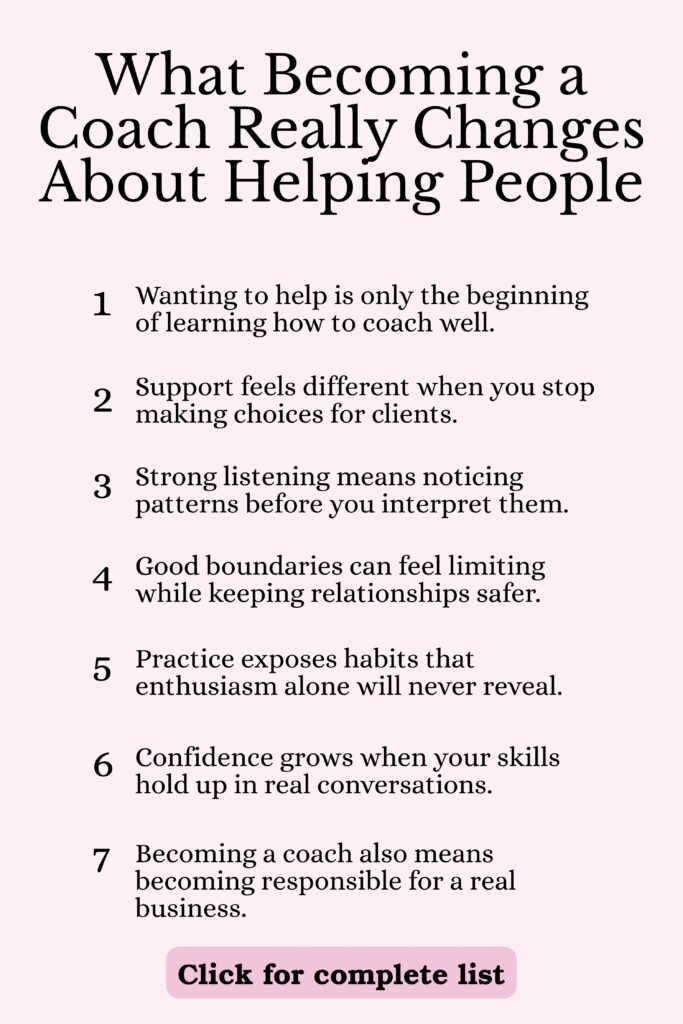
You can test whether coaching fits you by practicing the actual work for 30 days rather than judging the career from the parts that sound appealing.
Test three roles.
The coach
Run several structured practice sessions with appropriate volunteers or peers.
SEE ALSO: If you’re a coach looking to streamline your administrative tasks and save time, check out our Coaching Administration Software. It’s a simple, effective solution designed to help you focus less on paperwork and more on what matters—coaching your clients. From scheduling to client management, our software gives you the tools to run your business efficiently. Ready to reclaim your time and boost productivity? Click or tap here.
Notice what happens when somebody talks for 15 minutes about a problem you think you understand.
Can you resist solving it for them?
Can you listen long enough to discover that the problem they first described is not the problem they actually want to work on?
Can you ask a useful follow-up instead of waiting for your turn to speak?
The operator
Run the practice as if the sessions were real client appointments.
SEE ALSO: If you’re a coach looking to streamline your administrative tasks and save time, check out our Coaching Administration Software. It’s a simple, effective solution designed to help you focus less on paperwork and more on what matters—coaching your clients. From scheduling to client management, our software gives you the tools to run your business efficiently. Ready to reclaim your time and boost productivity? Click or tap here.
Schedule them.
Send the information required beforehand.
Start and finish on time.
Keep appropriate notes.
Record agreed actions.
Follow up when you said you would.
SEE ALSO: If you’re a coach looking to streamline your administrative tasks and save time, check out our Coaching Administration Software. It’s a simple, effective solution designed to help you focus less on paperwork and more on what matters—coaching your clients. From scheduling to client management, our software gives you the tools to run your business efficiently. Ready to reclaim your time and boost productivity? Click or tap here.
This tells you whether you enjoy only the conversation or whether you can also manage the structure around it.
The business owner
Choose one simple coaching offer and explain it to real people.
You do not need an elaborate launch.
Try describing who it is for, what the coaching helps them work on, how the process works, and what somebody should do if they are interested.
Notice which part you avoid.
SEE ALSO: If you’re a coach looking to streamline your administrative tasks and save time, check out our Coaching Administration Software. It’s a simple, effective solution designed to help you focus less on paperwork and more on what matters—coaching your clients. From scheduling to client management, our software gives you the tools to run your business efficiently. Ready to reclaim your time and boost productivity? Click or tap here.
Some aspiring coaches happily practice coaching for months but never tell anyone they are available.
Others enjoy marketing but become uncomfortable when a client sits down and expects them to hold a focused coaching conversation.
Both discoveries are useful.
At the end of the month, review observable evidence:
- Which coaching skills repeatedly felt weak?
- Which parts improved with practice?
- Did you follow through on the administrative work?
- Were you willing to talk about your offer?
- Did the actual work make you want to get better at it?
That is a more useful readiness test than asking whether you are “passionate about helping people.”
Where LCH Core Fits
LCH Core fits after you have decided how clients should move through your coaching business.
SEE ALSO: If you’re a coach looking to streamline your administrative tasks and save time, check out our Coaching Administration Software. It’s a simple, effective solution designed to help you focus less on paperwork and more on what matters—coaching your clients. From scheduling to client management, our software gives you the tools to run your business efficiently. Ready to reclaim your time and boost productivity? Click or tap here.
The software does not decide how you coach. It can support the repeatable workflow around the coaching.
For example:
- A prospect wants to talk: Use a Public Booking Page for scheduling and booking.
- A prospect becomes a client: Use client management with client profiles, notes, and intake forms.
- The relationship begins: Use a Welcome Package with a welcome letter, coaching agreement with electronic signature, and forms.
- The client commits to action: Assign journals, worksheets, goals, action items, or resources when they support the coaching.
- You need to review progress: Use the Progress Stream to see coaching activity together and the Engagement Report to review engagement.
- You sell structured coaching: Manage payments, coaching packages, and billing.
- You want additional ways to deliver your expertise: Sell courses and digital products through a Public Store.
The Progress Stream guide explains how sessions, notes, coaching tools, and client activity can be viewed together. The Public Store guide shows how courses, digital products, coaching packages, and free offers can be made available from one public-facing place.
If you want a broader look at what should sit inside a connected coaching system, Best Coaching Software for Life Coaches: What to Look For Before You Choose covers the full client journey.
The point of LCH Core is not to add more technology to your business. It is to give the client journey you have already designed a consistent place to run.
Frequently Asked Questions About Becoming a Life Coach
Do you need a certification to become a life coach?
A certification or professional coaching credential is not the same thing as legal permission to practice, but it can demonstrate training and professional preparation. Credential expectations can also affect how prospective clients and organizations evaluate coaches, so consider the market you want to serve as well as your training needs.
SEE ALSO: If you’re a coach looking to streamline your administrative tasks and save time, check out our Coaching Administration Software. It’s a simple, effective solution designed to help you focus less on paperwork and more on what matters—coaching your clients. From scheduling to client management, our software gives you the tools to run your business efficiently. Ready to reclaim your time and boost productivity? Click or tap here.
Do life coaches need a license?
Licensing requirements depend on your location and the services you actually provide. Check the laws and professional regulations that apply where you practice, particularly if your work overlaps services normally provided by regulated health, mental health, legal, or financial professionals.
What skills do you need to become a successful life coach?
A life coach needs active listening, strong questioning, clear communication, professional boundaries, ethical judgment, and the ability to help clients turn reflection into client-owned action. Running a coaching business also requires basic skills in client management, marketing, scheduling, payments, record keeping, and follow-up.
Can you become a life coach with no previous coaching experience?
You can begin training without previous professional coaching experience, but you still need practice before assuming that interest in coaching equals competence. Structured practice, feedback, observation, training, and supervised or mentor-supported development can help turn concepts into repeatable coaching behavior.
How do new life coaches get their first clients?
New life coaches get clients by creating visibility among a defined audience and giving interested people a clear next step. Referrals, networking, directories, content, speaking, partnerships, lead magnets, and discovery calls can all work, but the method needs a path from initial attention to an actual conversation or offer.
What systems does a new life coach need?
A new life coach needs a simple way to manage discovery, booking, agreements, intake, payments, client records, coaching actions, progress, and follow-up. The system does not have to be complicated, but each important step needs an owner, a place, and a repeatable process.
How do I know whether I am coaching or giving advice?
You are coaching when the client remains responsible for examining the issue, choosing the direction, and deciding what they will do. If you routinely tell clients what their problem is and prescribe the answer, you are moving closer to advising, consulting, or mentoring.
SEE ALSO: If you’re a coach looking to streamline your administrative tasks and save time, check out our Coaching Administration Software. It’s a simple, effective solution designed to help you focus less on paperwork and more on what matters—coaching your clients. From scheduling to client management, our software gives you the tools to run your business efficiently. Ready to reclaim your time and boost productivity? Click or tap here.
How do I know whether life coaching is the right career for me?
Life coaching may be a good career fit if you enjoy the actual discipline of coaching and are willing to run the business that supports it. Test real coaching conversations, administration, follow-up, scheduling, and client acquisition rather than judging the career only by how much you enjoy helping people.
Are You Ready to Become a Life Coach?
Being a good life coach takes more than wanting to make a difference in people’s lives.
You need to be able to listen without taking over. You need to know when to ask another question instead of supplying an answer. You need clear professional boundaries, a repeatable way to manage the client relationship, and enough business discipline to keep the practice functioning when your calendar gets busy.
You do not have to master everything before you begin developing as a coach.
You do need to know what you are practicing.
Build the coaching skill. Build the client system. Test both in the real world.
SEE ALSO: If you’re a coach looking to streamline your administrative tasks and save time, check out our Coaching Administration Software. It’s a simple, effective solution designed to help you focus less on paperwork and more on what matters—coaching your clients. From scheduling to client management, our software gives you the tools to run your business efficiently. Ready to reclaim your time and boost productivity? Click or tap here.
That combination gives you something much more useful than simply being able to call yourself a life coach. It gives you the foundation for becoming a coach clients can trust and a coaching business that can actually operate.
Sources
International Coaching Federation. “ICF Global Coaching Study.” International Coaching Federation, 2025. ICF Global Coaching Study.
International Coaching Federation. “2025 ICF Core Competencies.” International Coaching Federation, 2025. ICF Core Competencies.
International Coaching Federation. “ICF Code of Ethics.” International Coaching Federation, effective 1 Apr. 2025. ICF Code of Ethics.
Read this next

The Life Coaching Opportunities Most Coaches Never Think to Explore
There is a great big world of opportunity for life coaches and many don’t realize how easy it is to get involved.
Read More
How to Become a Self-Love Coach: Definitive Guide
Learn how to help people heal in the best way – self-love.
Read More
How to Become a Christian Life Coach
Eight Steps to Becoming a Christian Life Coach
Read More