


Talk to a coach about Organizational coaching

Crystal Faulk
ACC
I help overwhelmed women in transition gain clarity, confidence, and...

Terrie Hein
Certified Life Coach, Certified Insight Coach Practitioner
Coaching to declutter your life, organize your goals, and cook...

Dr Charlene Ashley
Doctorate - Behaviours
I coach individuals to design fulfilling lives through structure, clarity,...

Paloma Chiara

Lana's Gymnastics Club
"Where the best in gymnastics meets fun. Where every child is a star"
lgclubny.com

Anna Sosnina
ICF (ACC)
ICF ACC certified coach, founder of EssorVie Coaching, passionate about...

Tyler Fink
B.A. in Religion, Anthropology, and Philosophy. Master of Divinity (M.Div.) in Missiology
Pastor, husband, and father helping Christian men pursue faithful growth...

Travis Brown
Professional Life coach
With experience in guiding clients to achieve goals, build confidence,...




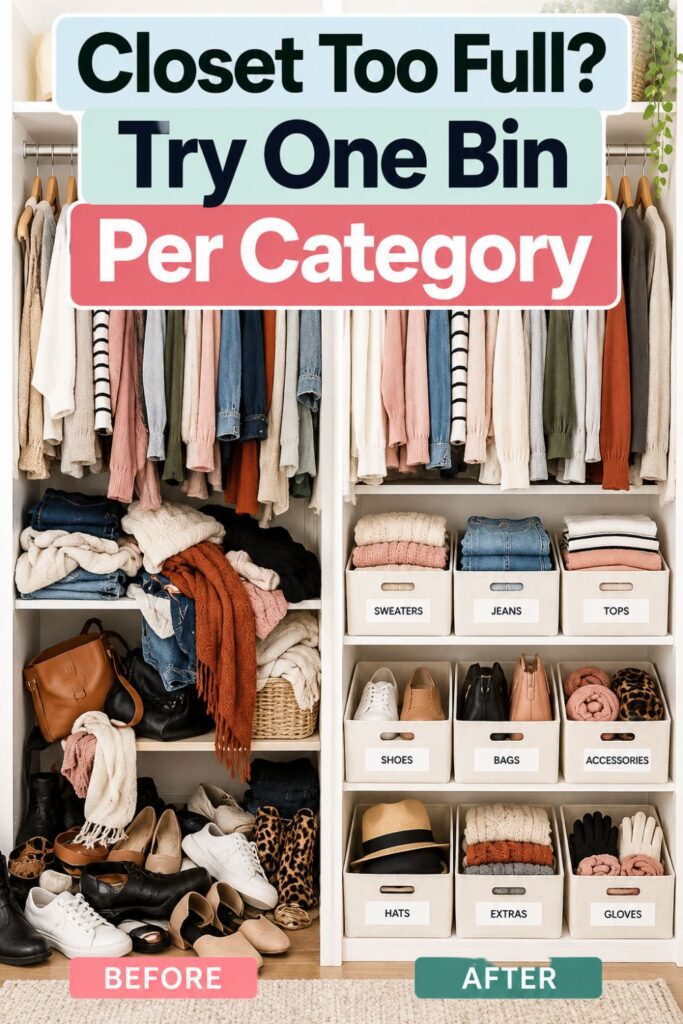
Closet ‘One Bin Per Category’ Starter System
Are you all about style, decor and organization? Download a copy of our Clutter Reset Guide.
*****
A Simple Way To Start When Your Closet Feels Too Full
A messy closet can make getting dressed feel harder than it needs to be. The problem is not always that you own too much. Sometimes the real problem is that every small category has blended into one crowded pile.
That is where the one bin per category system helps. Instead of emptying the whole closet, buying a full set of organizers, or trying to create a perfect makeover, you start with one small area and give each category a simple home.
This system works especially well when your closet is small, cluttered, or hard to maintain. It also works when your brain gets tired of making decisions every time you put something away.
The goal is not to create a magazine closet. The goal is to make your closet easier to use tomorrow morning.
Use this starter system when you want:
- A simple closet reset without pulling everything out
- A way to organize loose items like socks, belts, scarves, shoes, and extras
- A practical setup that does not require matching bins
- An ADHD-friendly system with fewer decisions
- A one-time setup you can maintain with quick resets
Start with one messy spot: Choose the shelf, floor area, or pile that bothers you most. Do not begin with the entire closet unless you truly have the time and energy.
Use what you already own: Shoe boxes, small baskets, fabric bins, and clear containers can all work. The container only needs to hold one category clearly.
If you want to get more from your life, and are looking for concrete action steps to get you there, check out our Request a Coach page. It’s a “cut the fence-sitting and take action” way to tackle your issues and actually find success. To get off the fence and start to take action, click or tap here.
Aim for obvious, not perfect: A bin labeled “Workout Clothes” is better than a beautiful unlabeled basket that becomes a mystery pile. The easier the system is to understand, the more likely you are to keep using it.
This method gives your closet a clear starting point. Once every category has a small home, the clutter stops feeling random and starts feeling fixable.
Need some in depth help with organization and productivity ? Drop on by our directories choc full of productivity coaches, minimalist coaches, and work/life balance coaches to get your life organized! Or click here to have us match you to the best.
1. Pick The Closet Zone That Causes The Most Daily Friction
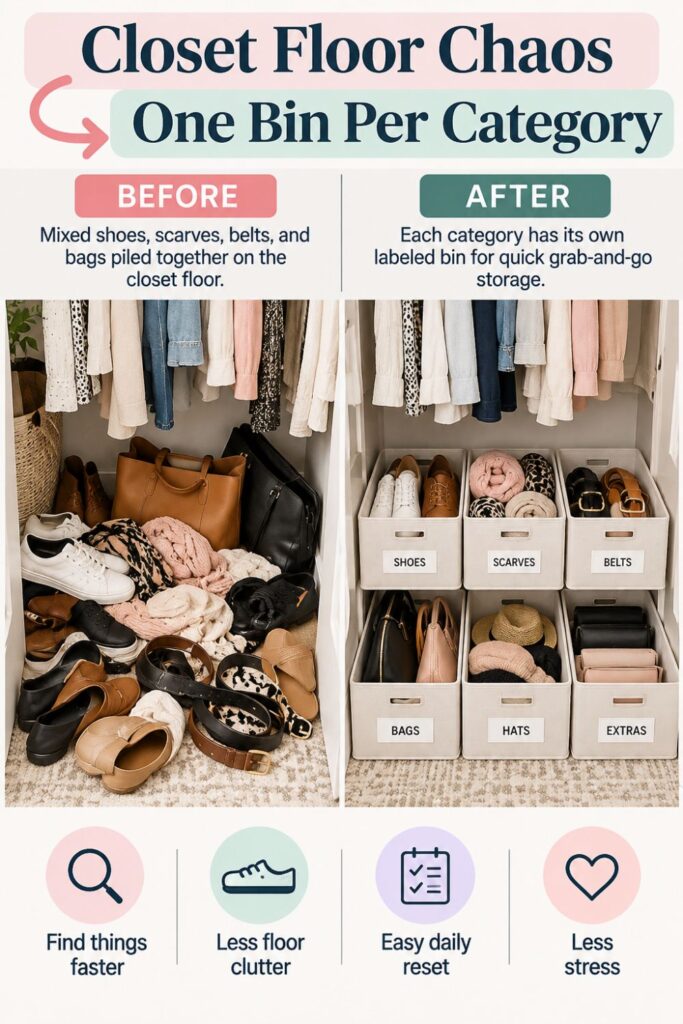
The best place to start is not always the biggest mess. It is the area that interrupts your day the most. A closet shelf that looks chaotic but rarely gets touched may not be as urgent as the floor pile you step over every morning.
Look for the spot that makes getting dressed slower, more frustrating, or more repetitive. Maybe your shoes always spill into the walking space. Maybe your accessories disappear into a basket. Maybe your clean laundry never makes it past the closet shelf because there is no clear place for it.
This first zone should be small enough to finish in one session. You are not trying to solve every closet problem today. You are creating one working system that proves the whole closet can become easier.
Choose one daily pain point: Pick the area that makes you sigh, search, dig, or delay. That is usually the best first target.
Keep the zone physically limited: Use one shelf, one floor section, one hanging-side area, or one pile. A clear boundary keeps the project from expanding too far.
If you want to get more from your life, and are looking for concrete action steps to get you there, check out our Request a Coach page. It’s a “cut the fence-sitting and take action” way to tackle your issues and actually find success. To get off the fence and start to take action, click or tap here.
Name the problem clearly: Instead of saying “my closet is a disaster,” get specific. Try “my belts have no home,” “my shoes are blocking the floor,” or “my extra basics are mixed with daily clothes.”
Once you name the exact problem, the solution becomes simpler. You are not organizing a closet. You are creating a home for one type of clutter.
Before you sort anything, decide where the bins can actually live. This matters in a small space because a good system has to fit the closet you have. If the containers only work when everything is perfectly folded, stacked, and lined up, they will probably fail during real life.
A better starter system leaves room for quick use. You should be able to pull out a bin, drop items back in, and see what belongs there without rearranging the whole closet.
2. Sort Items Into Broad Categories First
Before you assign bins, you need to understand what categories are actually causing the clutter. This step is easy to skip, but it is the part that keeps you from creating containers that do not match your real life.
Start by pulling out only the items from your chosen zone. Do not empty the whole closet. If you chose one shelf, sort only that shelf. If you chose one floor pile, sort only that pile.
Place items into broad groups on the bed, floor, or a nearby surface. You are looking for patterns, not perfection. If several items seem to belong together in your mind, that is probably a useful category.
Useful closet categories might include:
If you want to get more from your life, and are looking for concrete action steps to get you there, check out our Request a Coach page. It’s a “cut the fence-sitting and take action” way to tackle your issues and actually find success. To get off the fence and start to take action, click or tap here.
- Socks
- Belts
- Scarves
- Workout clothes
- Pajamas
- Shoe care
- Off-season extras
- Backup basics
- Special occasion pieces
- Items to repair
- Items to decide on later
Make quick category piles: Put similar items together without overthinking every single piece. The goal is movement, not a perfect filing system.
Keep categories broad: Use categories that are easy to remember. “Workout” is usually easier to maintain than separate bins for leggings, sports bras, tank tops, and gym socks.
Separate daily items from occasional items: Anything you use often should be easier to reach. Anything you use rarely can go higher, lower, farther back, or into a less convenient bin.
If an item does not fit anywhere, do not let it stop the process. Create one small “Decide Later” pile. This keeps the project moving and prevents one confusing item from taking over the whole session.
Be careful not to create too many categories. A small closet usually works better with fewer, stronger categories. The more categories you create, the more decisions you have to make every time you put something away.
At the end of this step, you should be able to point to each pile and describe its purpose in a few words. If you cannot explain a category quickly, it may need to be simplified.
3. Assign One Bin To Each Category
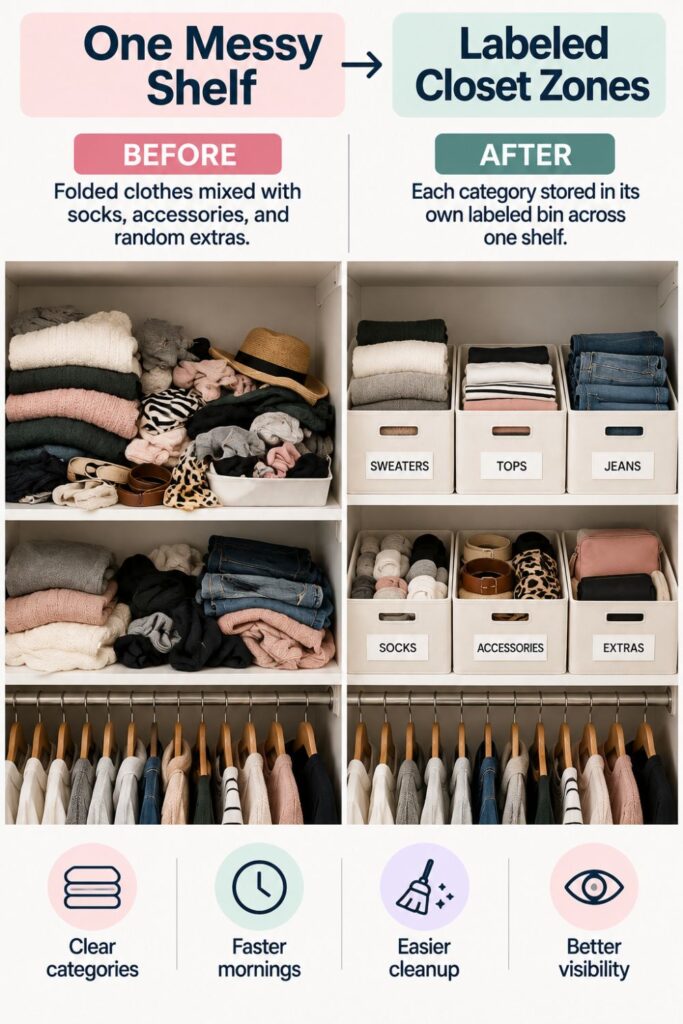
Once your categories are clear, give each one its own container. This is the heart of the one bin per category system. One category gets one bin, and that bin becomes the official home for those items.
You do not need fancy organizers for this to work. In fact, simple containers can be better at the beginning because they let you test the system before spending money. Shoe boxes are especially useful because they are small, sturdy, and easy to label.
If you want to get more from your life, and are looking for concrete action steps to get you there, check out our Request a Coach page. It’s a “cut the fence-sitting and take action” way to tackle your issues and actually find success. To get off the fence and start to take action, click or tap here.
Use containers that match the size of the category. A tiny group of belts does not need a huge basket. A bulky group of scarves may need a wider bin. The container should make the category easier to use, not hide the mess in a bigger box.
Match the bin to the category: Pick a container that holds the items comfortably. The best bin is the one that makes the category easy to see and easy to return.
Use shoe boxes for small categories: Shoe boxes are great for socks, belts, hair accessories, shoe care items, extra hangers, and small seasonal pieces.
Avoid oversized containers: Big bins can become clutter traps. If the bin is too large, you may keep adding unrelated items just because there is room.
Leave breathing room: Try not to fill any bin to the top. A bin that is about three-quarters full is easier to use because you can move items around without everything spilling over.
If one category does not fit in one bin, pause before grabbing a larger container. Ask whether the category is too broad. For example, “Accessories” might need to become “Belts” and “Scarves.” “Extras” might need to become “Winter Extras” and “Backup Basics.”
The container should create a natural limit. When the bin is full, that category is asking for a decision. You can remove items, split the category, or choose a more realistic storage spot.
This step turns loose clutter into defined homes. Once every category has a container, the closet starts to feel less like a pile and more like a simple map.
If you want to get more from your life, and are looking for concrete action steps to get you there, check out our Request a Coach page. It’s a “cut the fence-sitting and take action” way to tackle your issues and actually find success. To get off the fence and start to take action, click or tap here.
4. Label The Bins So The System Stays Obvious
Labels are what make this system easy to maintain. Without labels, bins can slowly turn into mystery containers. With labels, every category has a name, and your brain does not have to remember where everything goes.
The label does not need to be pretty. It needs to be clear. A strip of painter’s tape and a marker can work just as well as printed labels, especially while you are testing the system.
Use plain words that describe what belongs inside. Avoid cute names that only make sense on the day you create them. “Everyday Socks” is easier to use than “Cozy Things.” “Shoe Care” is clearer than “Closet Stuff.”
Use plain-language labels: Choose labels that are boring, direct, and easy to understand. If someone else opened your closet, they should know what goes in the bin.
Place labels where your eyes land: Put the label on the front edge of the bin, not the lid or the bottom. You should be able to read it without moving the container.
Make labels easy to change: Use removable labels while you test the setup. Categories often shift once you live with the system for a week.
Use bigger text if needed: If you are organizing a deep shelf or dim closet, make the labels large enough to read quickly. Small labels are easy to ignore.
This is especially helpful for ADHD-friendly organization because labels reduce the number of invisible decisions. You do not have to remember where the extra socks go. You only have to match the item to the label.
If you want to get more from your life, and are looking for concrete action steps to get you there, check out our Request a Coach page. It’s a “cut the fence-sitting and take action” way to tackle your issues and actually find success. To get off the fence and start to take action, click or tap here.
Labels also make cleanup faster. When clothes, accessories, or extras are left out, you can return them to the right place without debating. That small reduction in friction matters.
If a label starts feeling wrong, change it. The system should match how you naturally think about your things. A label that sounds perfect but confuses you in real life is not the right label.
The best labels make the closet feel obvious. They turn “where does this go?” into “this already has a place.”
5. Place The Most-Used Bins In The Easiest Spots
A bin system only works if the layout supports your daily habits. If you use something all the time but store it on the top shelf, you will probably stop putting it away. The best closet setup makes the most-used categories the easiest to reach.
Start by ranking your bins by how often you use them. Daily items should get prime space. Occasional items can go in the back, on a higher shelf, or in a lower spot that takes a little more effort.
Prime space usually means the area between your shoulders and knees. This is the part of the closet you can reach without bending, stretching, or moving three other things first. In a small closet, this space is limited, so use it carefully.
Put daily bins at the front: Socks, workout clothes, daily accessories, or grab-and-go items should be easy to see and pull out.
Move rarely used bins away from prime space: Off-season extras, sentimental items, backup basics, and special occasion pieces can go higher, lower, or farther back.
If you want to get more from your life, and are looking for concrete action steps to get you there, check out our Request a Coach page. It’s a “cut the fence-sitting and take action” way to tackle your issues and actually find success. To get off the fence and start to take action, click or tap here.
Use the floor with intention: Floor bins can work well for shoes, slippers, bags, or bulky categories, but they should not block hanging clothes or make the closet harder to open.
Avoid stacking too many bins: Stacked bins look neat at first, but they are harder to maintain if you have to unstack them every time. Stack only when the category is used rarely.
A small closet does not have to hold every category equally. Some categories deserve better placement because you use them more often. Others can be less convenient because they do not need daily access.
After placing the bins, test the movement. Pull out one item and put it back. If returning the item feels annoying, the bin may be in the wrong spot.
The right layout should make the organized choice easier than the messy choice. That is the real secret. When the bin is easy to reach, you are more likely to use it without forcing yourself.
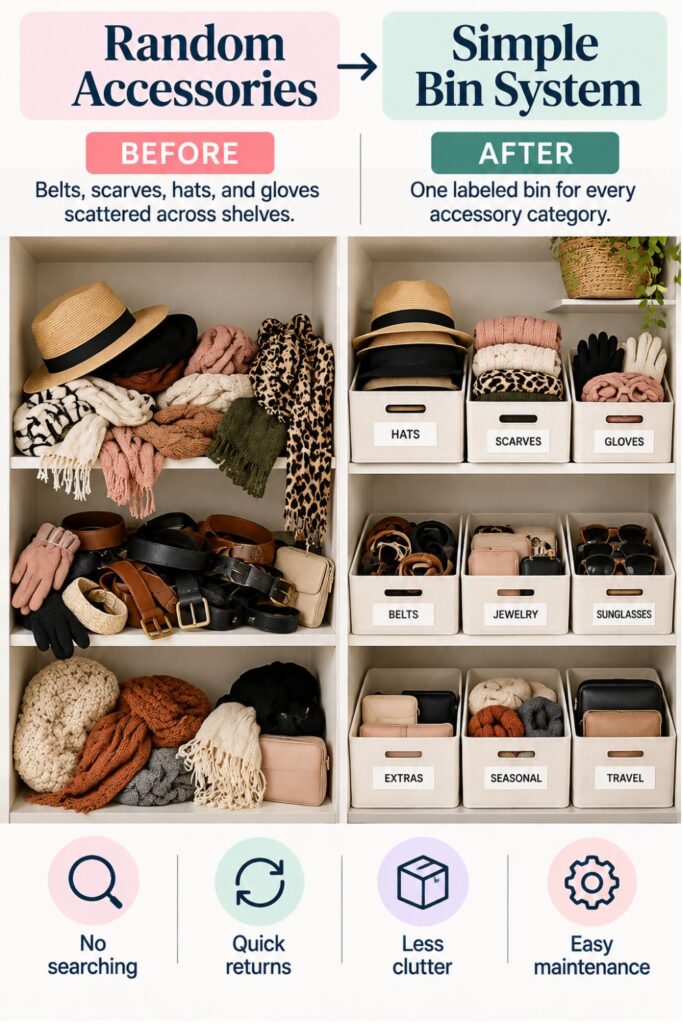
6. Use A Simple Closet Bin Checklist
A checklist helps you finish the system without overcomplicating it. It also gives you a way to evaluate each bin before you decide the closet is “done.” This is helpful because a bin can look organized but still be hard to use.
Work through one bin at a time. Do not worry about making every container match. Focus on whether each category has a clear job, a good container, and a spot that makes sense.
A simple closet bin checklist can look like this:
If you want to get more from your life, and are looking for concrete action steps to get you there, check out our Request a Coach page. It’s a “cut the fence-sitting and take action” way to tackle your issues and actually find success. To get off the fence and start to take action, click or tap here.
- Does this bin have one clear category?
- Is the label easy to read?
- Can I reach the bin without moving too much?
- Is the bin easy to pull out and put back?
- Is there room inside, or is it already overfilled?
- Would I know where to return these items on a busy day?
- Does this category need to be split into two smaller categories?
Check the category name: Make sure the bin has one clear purpose. If the label says “Random,” “Miscellaneous,” or “Stuff,” the category probably needs more thought.
Check the container size: The bin should fit the category without cramming. If it is too small, items will spill out. If it is too large, unrelated items may sneak in.
Check the return path: Try putting one item away as if you were tired, distracted, or rushing. If it takes too many steps, simplify the setup.
Check for overflow: If the bin is full immediately, decide whether to remove items, split the category, or move part of it somewhere else.
This checklist keeps the system practical. It helps you notice problems before they become daily annoyances.
You can also use the checklist during quick resets. If one bin keeps failing, the checklist can show you why. Maybe the label is too vague. Maybe the bin is too deep. Maybe the category is too broad.
A good checklist does not make the project bigger. It keeps the system honest, simple, and usable.
7. Make The System Easier For ADHD-Friendly Maintenance
The best ADHD-friendly organization systems are visible, simple, and forgiving. They do not rely on perfect memory or constant motivation. They make it easier to do the next small action.
If you want to get more from your life, and are looking for concrete action steps to get you there, check out our Request a Coach page. It’s a “cut the fence-sitting and take action” way to tackle your issues and actually find success. To get off the fence and start to take action, click or tap here.
For this closet system, that means fewer categories, clearer labels, and containers that are easy to access. If the system only works when you have lots of energy, it is probably too complicated. The goal is to build something that still works on an average day.
Visibility matters. Closed bins can look neat, but they can also hide what is inside. If you tend to forget what you own, open bins, low-front containers, or clear boxes may work better.
Keep categories visible: Choose containers that let you see the contents when possible. If you use closed boxes, make the labels extra clear.
Reduce decision points: Do not create five categories when two will do. “Workout” and “Sleepwear” may be easier than sorting every item by fabric, season, or exact use.
Use a reset bin: Add one small bin for items that need to be put away later. This gives clutter a temporary landing spot without letting it take over the floor.
Set a tiny reset rule: Choose a reset that feels almost too easy, such as emptying the reset bin every Sunday or checking one shelf after laundry.
The reset bin is important because real life will interrupt the system. You may not always have the energy to put every item in the perfect category. A temporary bin gives you a middle step that is still better than dropping items anywhere.
Just make sure the reset bin does not become permanent storage. Keep it small so it fills quickly and reminds you to clear it.
If you want to get more from your life, and are looking for concrete action steps to get you there, check out our Request a Coach page. It’s a “cut the fence-sitting and take action” way to tackle your issues and actually find success. To get off the fence and start to take action, click or tap here.
It also helps to use labels that match your natural language. If you always think “comfy clothes,” label the bin “Comfy Clothes.” If you think “workout stuff,” use that phrase. Your system should speak the way your brain already speaks.
ADHD-friendly organization is not about trying harder. It is about removing extra steps until the system becomes easy to return to.
8. How An Organizing Coach Could Help You Set This Up Faster
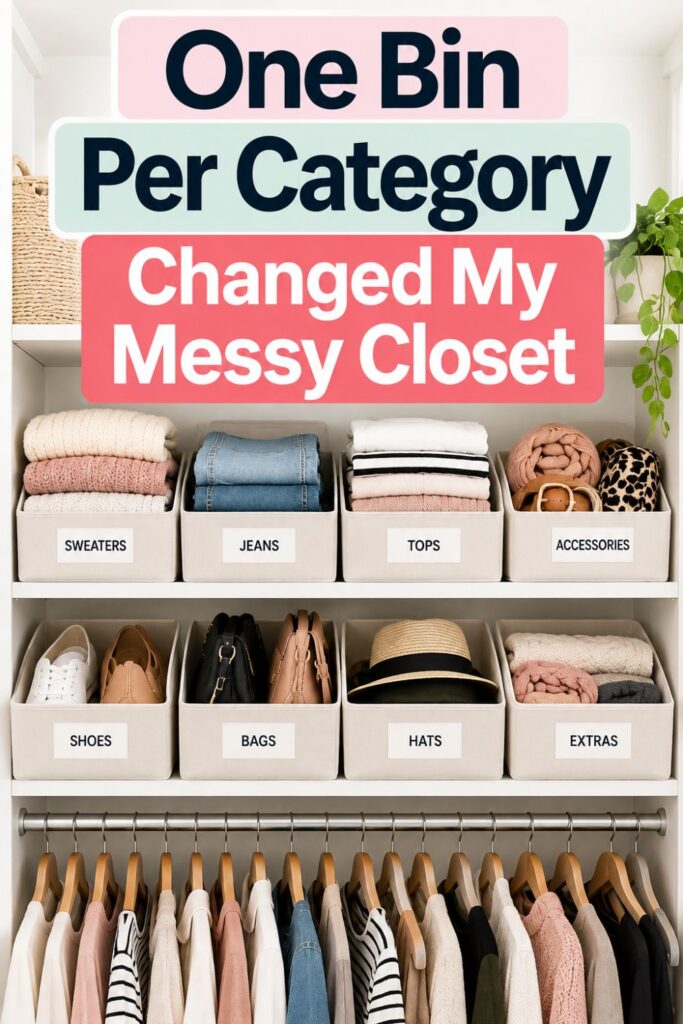
An organizing coach can be helpful when you know your closet is not working but cannot see the best way to fix it. Sometimes the problem is not effort. It is that you are too close to the clutter to spot the simplest categories.
A coach can help you turn a messy closet into a practical system without pushing you into a full makeover. For this type of setup, the coach’s role is not to make your closet perfect. It is to help you create a system that fits your space, habits, and energy.
They may start by asking how you get dressed, where clutter builds up, and which items you reach for most. These questions matter because a useful closet should be organized around your real routines, not an ideal version of your life.
Identify your real categories: A coach can help you notice whether your items should be sorted by type, frequency, season, activity, or daily routine.
Reduce overcomplication: If you tend to create too many categories, a coach can help you simplify. Fewer bins often make the system easier to maintain.
Choose better placement: A coach can help decide which bins deserve prime closet space and which ones can move to less convenient spots.
If you want to get more from your life, and are looking for concrete action steps to get you there, check out our Request a Coach page. It’s a “cut the fence-sitting and take action” way to tackle your issues and actually find success. To get off the fence and start to take action, click or tap here.
Build a maintenance habit: A coach can help you set a simple reset routine that fits your schedule, such as after laundry, before the workweek, or once a month.
This can be especially useful if you have tried organizing before and the system always falls apart. A coach can help you look at why it failed. Maybe the containers were too hard to reach. Maybe the labels were too vague. Maybe the categories did not match how you actually use your clothes.
You can also use a self-coaching approach if you are doing this alone. Ask yourself:
- What category keeps becoming clutter?
- What would make this easier to put away?
- What label would make sense when I am tired?
- What bin would I actually use?
The right support helps you build a system that feels realistic, not forced.
The Small Closet Win That Makes Everything Easier
The one bin per category system works because it gives clutter a clear place to go. It does not require a custom closet, matching containers, or a weekend-long reset. It only asks you to start with one messy zone and turn loose items into simple categories.
That is what makes it so useful for small closets. When space is limited, every category needs a boundary. A bin creates that boundary without requiring a full renovation or a complicated storage plan.
Once the system is in place, your closet becomes easier to read. You can see where socks belong. You can find the scarf bin. You know where shoe care items go. You stop relying on memory and start relying on visible homes.
The setup can stay very simple:
If you want to get more from your life, and are looking for concrete action steps to get you there, check out our Request a Coach page. It’s a “cut the fence-sitting and take action” way to tackle your issues and actually find success. To get off the fence and start to take action, click or tap here.
- Pick one messy closet zone
- Sort items into broad categories
- Give each category one bin
- Label every bin clearly
- Place daily items where they are easiest to reach
- Use a small reset bin for anything that needs attention later
Start small on purpose: The smaller the first setup, the more likely you are to finish it. A finished shelf is more useful than an entire closet pulled apart and abandoned.
Let the system evolve: Your first labels may not be perfect. Your first bin choices may change. That is normal. A starter system is allowed to improve over time.
Use the bin as a limit: When one category starts overflowing, treat it as a signal. You may need to declutter, split the category, or rethink where those items belong.
This is not about becoming a perfectly organized person. It is about making your closet easier to use with less effort.
A few labeled bins can change the way the whole closet feels. They give your things a place to land, give your space clearer boundaries, and give you a simple reset point when clutter starts creeping back in.
*****
Are you all about style, decor and organization? Download a copy of our Clutter Reset Guide.
Need some in depth help with organization and productivity ? Drop on by our directories choc full of productivity coaches, minimalist coaches, and work/life balance coaches to get your life organized! Or click here to have us match you to the best.
If you want to get more from your life, and are looking for concrete action steps to get you there, check out our Request a Coach page. It’s a “cut the fence-sitting and take action” way to tackle your issues and actually find success. To get off the fence and start to take action, click or tap here.
If you want to get more from your life, and are looking for concrete action steps to get you there, check out our Request a Coach page. It’s a “cut the fence-sitting and take action” way to tackle your issues and actually find success. To get off the fence and start to take action, click or tap here.
Read this next

The DIY Christmas Wreaths Formula for Busy Holiday Weekends
Are you all about style, decor and organization? Download a copy of our Decluttering Workbook. Why We Love a Quick Holiday Project There’s something magical about creating a Christmas wreath […]
Read More
DIY Shelf Risers That Double Your Small Closet Storage
Double your closet shelf space with one simple DIY riser trick that turns messy stacks into neat, easy-to-reach storage.
Read More
4 Christmas Living Room Styles That Reveal Your Holiday Personality
Are you all about style, decor and organization? Download a copy of our Decluttering Workbook. **** Your living room already knows your holiday personality; it shows up in the textures […]
Read More