


Talk to a coach about Organizational coaching

Crystal Faulk
ACC
I help overwhelmed women in transition gain clarity, confidence, and...

Terrie Hein
Certified Life Coach, Certified Insight Coach Practitioner
Coaching to declutter your life, organize your goals, and cook...

Dr Charlene Ashley
Doctorate - Behaviours
I coach individuals to design fulfilling lives through structure, clarity,...

Paloma Chiara

Lana's Gymnastics Club
"Where the best in gymnastics meets fun. Where every child is a star"
lgclubny.com

Anna Sosnina
ICF (ACC)
ICF ACC certified coach, founder of EssorVie Coaching, passionate about...

Tyler Fink
B.A. in Religion, Anthropology, and Philosophy. Master of Divinity (M.Div.) in Missiology
Pastor, husband, and father helping Christian men pursue faithful growth...

Travis Brown
Professional Life coach
With experience in guiding clients to achieve goals, build confidence,...


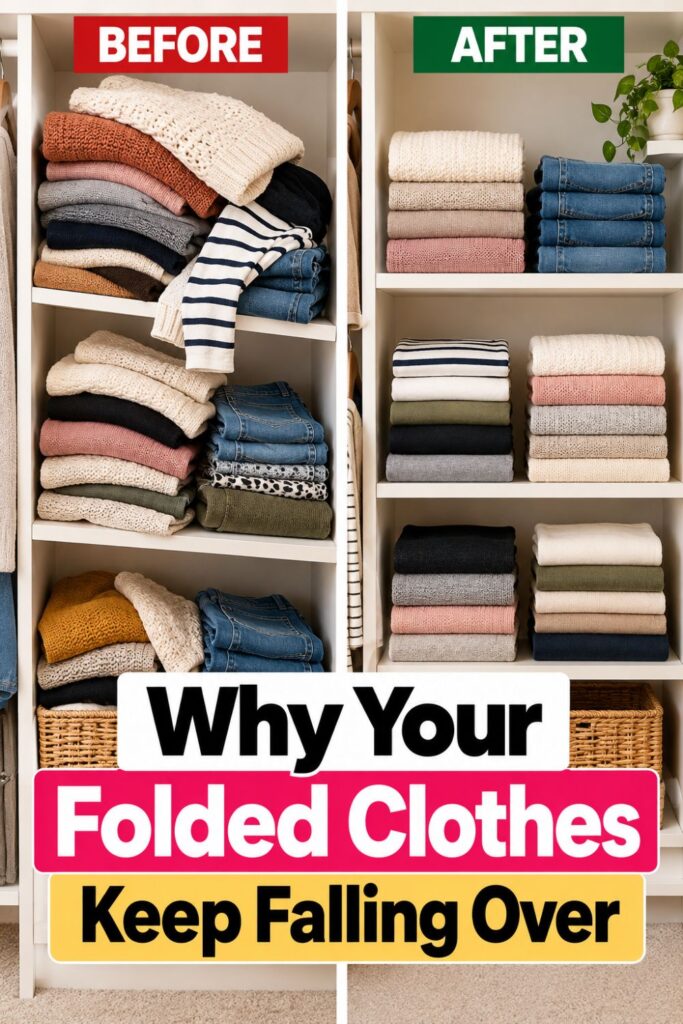
Closet Shelf Folding Method That Saves Space
Are you all about style, decor and organization? Download a copy of our Clutter Reset Guide.
*****
Closet shelves can look organized for one day, then fall apart the second laundry comes back in. The problem usually is not that you are messy. It is that every item is folded a little differently, stacked a little too high, and returned to a shelf with no clear home.
A simple folding method fixes more than the clothes. It fixes the way the shelf works. When every item folds into a similar shape, stacks sit straighter, categories stay visible, and you do not have to dig through five things to find one shirt.
This method is especially helpful for small closets because shelf space has to work harder. You may not have extra drawers, extra cabinets, or a whole closet system. You may only have one or two shelves, a few stacks, and the need to make them stop collapsing every time you get dressed.
The goal is not to create a perfect closet that looks staged. The goal is to create a shelf routine that works when you are busy, tired, distracted, or doing laundry in between everything else. A slightly imperfect stack in the right place is still easier to maintain than a beautiful pile with no system behind it.
This folding method uses a few simple rules:
- Fold the same way every time.
- Keep stacks short enough to stay stable.
- Give every category its own shelf zone.
- Use risers, trays, or labels when the shelf needs more structure.
- Reset the shelf in a few minutes instead of waiting for a full closet cleanout.
Once the method is set up, it becomes easier to see what you own, put clean laundry away, and keep folded clothes from turning into one blended pile. The best part is that you do not need a complicated organizing project to start. You only need one shelf, one folding shape, and a simple return routine you can repeat.
If you want to get more from your life, and are looking for concrete action steps to get you there, check out our Request a Coach page. It’s a “cut the fence-sitting and take action” way to tackle your issues and actually find success. To get off the fence and start to take action, click or tap here.
Need some in depth help with organization and productivity ? Drop on by our directories choc full of productivity coaches, minimalist coaches, and work/life balance coaches to get your life organized! Or click here to have us match you to the best.
Why Your Closet Shelves Keep Turning Into Toppling Stacks
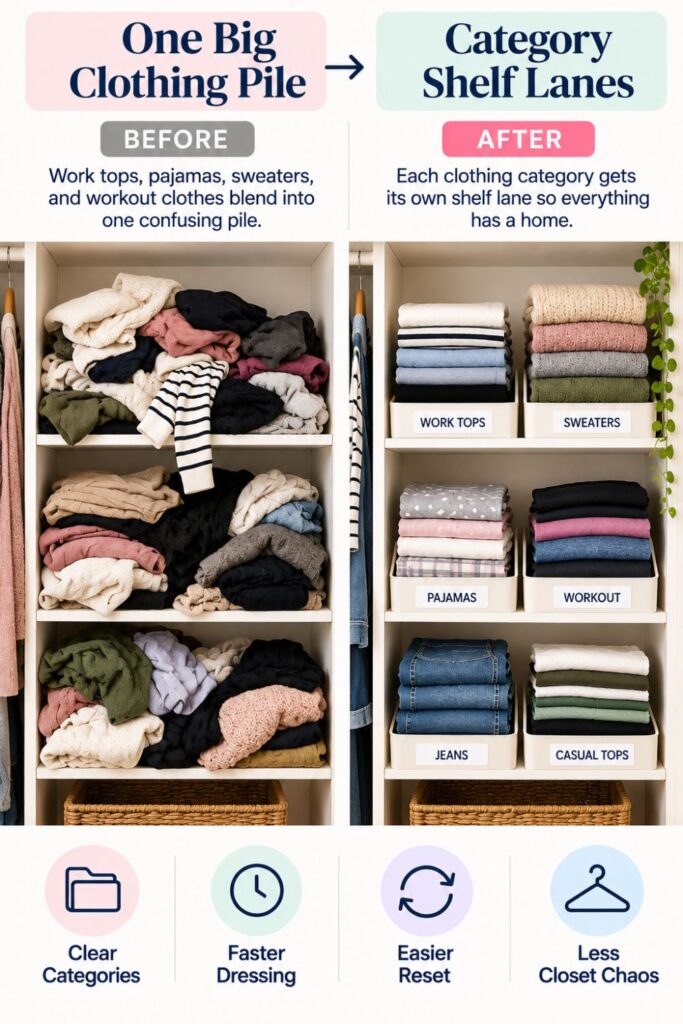
A closet shelf usually falls apart because the stack has no structure. Clothes are folded into different widths, categories are mixed together, and the pile gets too tall to hold itself up. Once one item is pulled from the middle, the whole stack leans forward or slides into the next pile.
This is why a shelf can look neat right after you organize it but become chaotic a few days later. The shelf may be technically sorted, but it is not easy to use. If the system only works when nobody touches it, it is not a working system.
The real issue is often one of these problems:
- The folded items are different sizes.
- The stacks are too high.
- Daily clothes are buried behind occasional clothes.
- Categories are mixed together.
- There is no visual boundary between piles.
- Clean laundry has no obvious return spot.
When those problems happen together, the shelf becomes a guessing game. You pull one item out, realize it is not the right one, shove it back, and the stack starts to shift. Over time, the whole shelf becomes a pile of “I will fix this later.”
A better method starts with consistency. If every shirt, sweater, or pair of leggings is folded into a similar shape, the stack becomes more stable. If each category has a shelf lane, you can return clothes without thinking too hard. If the piles are shorter, you can grab one item without disturbing everything else.
This is where folding becomes part of closet organization, not just laundry. You are not folding to make clothes look nice for a few hours. You are folding so your closet can function throughout the week.
For small spaces, this matters even more. A tiny closet does not have room for mystery piles. Every shelf needs a job, every stack needs a boundary, and every folded item needs to return to the same kind of shape each time.
If you want to get more from your life, and are looking for concrete action steps to get you there, check out our Request a Coach page. It’s a “cut the fence-sitting and take action” way to tackle your issues and actually find success. To get off the fence and start to take action, click or tap here.
Step 1: Choose One Folding Shape For The Whole Shelf
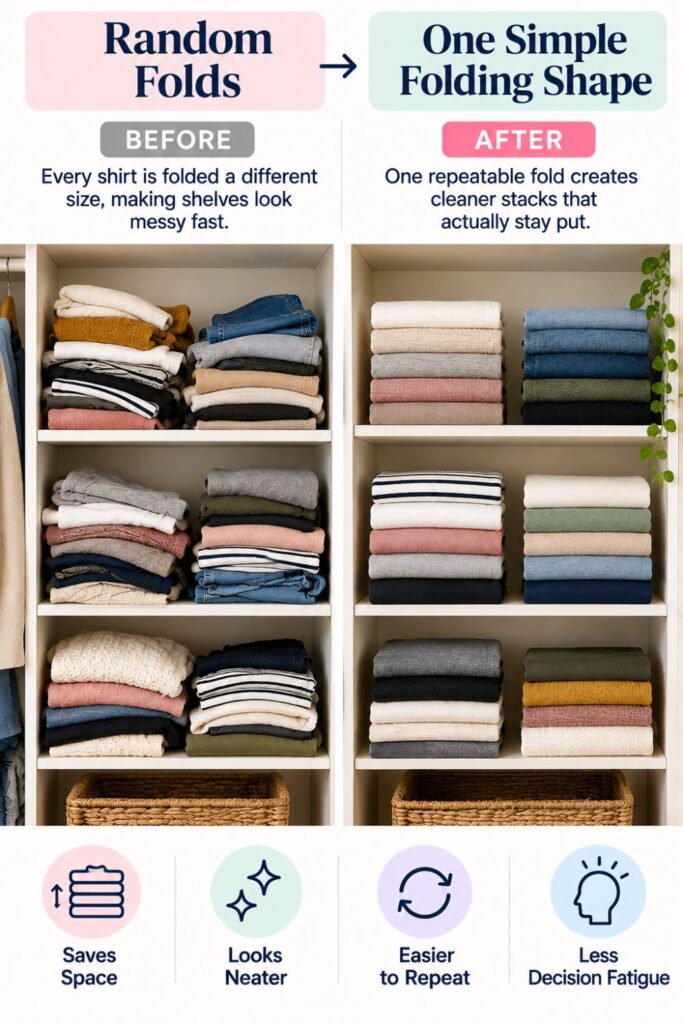
The fastest way to calm a messy closet shelf is to stop folding each item differently. When one shirt is wide, another is narrow, and another is thick and lumpy, the stack cannot sit evenly. It leans, slides, and collapses because the base is inconsistent.
Start by choosing one default folding shape for the main category on that shelf. For most folded clothes, a simple rectangle works best. The exact fold does not matter as much as repeating it every time.
Use this as your basic folding rule:
- Fold the item into a clean rectangle.
- Make the width close to the width of the stack.
- Keep the front edge smooth and easy to see.
- Avoid folding items so wide that they hang over the shelf.
- Avoid folding items so tiny that they disappear behind bigger pieces.
For shirts, fold both sides inward, bring the bottom up, then fold again if needed. For leggings, fold them in half lengthwise, then fold into thirds or halves depending on shelf depth. For sweaters, avoid over-folding bulky fabric because it creates thick stacks that topple faster.
The shelf depth matters too. If your closet shelf is shallow, your fold should be flatter and not too deep. If the shelf is deep, you can fold slightly longer, but you still want the front edge to line up so the stack looks visible from the closet opening.
Think of the fold as the shelf’s building block. When every block is close to the same shape, the whole shelf is easier to maintain.
This is also what makes the method low effort after the first setup. You are not deciding how to fold each item every time. You are repeating one shape until it becomes automatic.
If perfection slows you down, aim for “close enough.” The fold does not need to look like a store display. It only needs to be consistent enough that your stack stands up, fits the shelf, and makes the category easy to see.
If you want to get more from your life, and are looking for concrete action steps to get you there, check out our Request a Coach page. It’s a “cut the fence-sitting and take action” way to tackle your issues and actually find success. To get off the fence and start to take action, click or tap here.
Step 2: Sort Clothes Into Shelf Categories Before You Fold
Folding before sorting can make the shelf harder to organize. You end up with a neat stack of random items, then have to decide where everything goes afterward. That creates extra decisions and makes it easier for categories to get mixed again.
Instead, sort first. Make small piles by category before you start folding. This helps you see what actually belongs on the shelf and how much space each group needs.
Try simple categories like:
- Work tops
- Casual tops
- Workout clothes
- Pajamas
- Jeans
- Sweaters
- Lounge clothes
- Seasonal extras
The best categories are based on how you get dressed, not just what the clothing item is. For example, a work cardigan and a weekend hoodie might both be “tops,” but you probably do not reach for them in the same moment. They deserve different zones if mixing them slows you down.
Use the question, “Would I look for these at the same time?” If the answer is yes, they can probably share a zone. If the answer is no, they need separate stacks or separate shelf lanes.
This is especially helpful in a small closet because you do not have space for vague categories. A shelf labeled “shirts” can still become messy if it includes work shirts, sleep shirts, old tees, and workout tanks. A shelf with clearer zones is easier to use.
Sorting first also keeps you from stacking too much in one place. You may discover that one category is too large for the shelf, while another category only needs a small tray or half a lane. That information helps you set up the space more honestly.
For ADHD-friendly organization, fewer categories are usually better at the beginning. Do not create ten tiny zones if three or four larger zones would be easier to remember. You can always make the system more specific later, once the main routine feels natural.
If you want to get more from your life, and are looking for concrete action steps to get you there, check out our Request a Coach page. It’s a “cut the fence-sitting and take action” way to tackle your issues and actually find success. To get off the fence and start to take action, click or tap here.
Step 3: Build Shorter Stacks That Do Not Collapse
Tall stacks look like they save space, but they often create more mess. The higher the pile, the more pressure sits on the bottom items. The moment you pull something from the middle, the stack shifts, leans, or falls into the next category.
Shorter stacks are easier to use because they are more stable. They also make it easier to see what is available. Instead of one tall pile where half the items are hidden, you can create two or three smaller stacks that stay upright.
A good shelf stack should pass the grab test. You should be able to pull out one item without the entire pile collapsing. If the stack fails that test, it is too tall, too mixed, or folded too unevenly.
Use these stack rules:
- Keep daily-use stacks low and easy to reach.
- Place bulky items in their own stack.
- Do not mix slippery fabrics with heavy items.
- Avoid stacking more than one category together.
- Split tall piles into two shorter piles when possible.
Shelf risers are useful when your shelf has unused height. Many closets have a tall gap above folded clothes, but without a riser, that space does nothing. A riser turns one vertical shelf space into two shorter zones.
For example, instead of one tall pile of sweaters, you could place heavier sweaters underneath the riser and lighter cardigans on top. Instead of stacking jeans with leggings, you could keep jeans below and workout clothes above.
This is vertical storage without making the shelf harder to use. The point is not to cram more onto the shelf. The point is to use height in a way that keeps categories separated and visible.
If you do not have a riser yet, you can still apply the same principle. Make shorter side-by-side stacks instead of one tall stack. The space may not look as full, but it will be much easier to maintain.
If you want to get more from your life, and are looking for concrete action steps to get you there, check out our Request a Coach page. It’s a “cut the fence-sitting and take action” way to tackle your issues and actually find success. To get off the fence and start to take action, click or tap here.
A stable shelf is not the one that holds the most clothes. It is the one you can use without destroying the system every morning.
Step 4: Use Micro-Zones So Every Folded Category Has A Home
Micro-zoning means giving each small category a specific place instead of letting the whole shelf become one open landing pad. It does not have to be complicated. You are simply telling each type of clothing where to live.
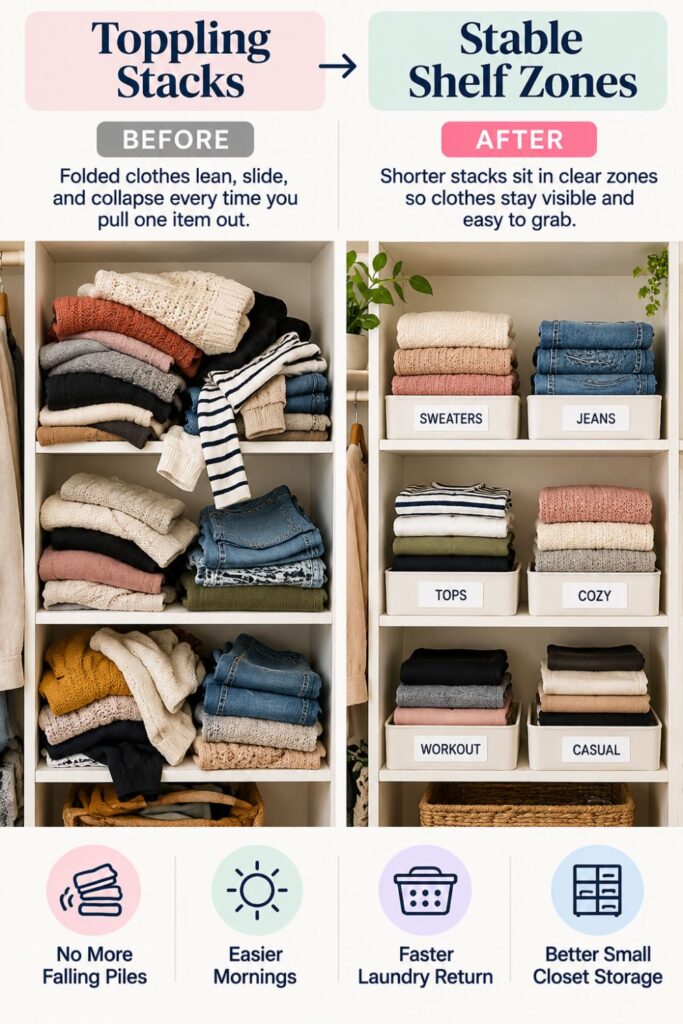
Start by dividing the shelf into lanes. The left side might be work tops, the middle might be casual tops, and the right side might be lounge clothes. If the shelf is narrow, the zones may run front to back instead of side to side.
The key is that each zone has a job.
A simple shelf might look like this:
- Left lane: Work tops
- Middle lane: Everyday tees
- Right lane: Pajamas or lounge clothes
- Top riser: Lightweight extras
- Tray: Small slippery items
This makes the shelf easier to reset because you are not asking, “Where should this go?” every time you fold laundry. You already know. It goes back to its lane.
Trays are helpful for items that do not stack well. Camisoles, workout tanks, scarves, soft shorts, and small accessories can spread across the shelf if they are left loose. A tray keeps those pieces contained so they do not drift into the neighboring stack.
You can also use a tray as a “current week” zone. For example, folded workout clothes for the week can go in one tray, while the rest stay in a stack nearby. This works well for busy professionals who want grab-and-go clothes without digging every morning.
If you want to get more from your life, and are looking for concrete action steps to get you there, check out our Request a Coach page. It’s a “cut the fence-sitting and take action” way to tackle your issues and actually find success. To get off the fence and start to take action, click or tap here.
Micro-zones also help when you share a closet. Each person or category gets a clearer boundary, which reduces the slow creep of one pile taking over the whole shelf.
For ADHD-friendly use, make the zones visual. Use the edge of a riser, a tray, a divider, or a label to show where one category ends and the next begins. The less you have to remember, the easier the system is to keep.
Micro-zoning is not about making the closet more detailed. It is about making the next action obvious.
Step 5: Label The Shelf So The System Stays Obvious
Labels can feel unnecessary when you are the one who created the system. You know where everything goes on the day you organize it. The problem is that future you may be tired, rushing, carrying laundry, or trying to get ready in five minutes.
That is when labels help.
A label is not there to make the closet look fancy. It is there to remove one tiny decision. When the shelf says Work Tops, Gym, Pajamas, or Jeans, you do not have to pause and remember the plan.
Good shelf labels are simple and broad. If labels are too specific, the system becomes harder to maintain. For example, “Black Short Sleeve Work Tops” may be too narrow. “Work Tops” is usually enough.
Use labels like:
If you want to get more from your life, and are looking for concrete action steps to get you there, check out our Request a Coach page. It’s a “cut the fence-sitting and take action” way to tackle your issues and actually find success. To get off the fence and start to take action, click or tap here.
- Work Tops
- Casual Tees
- Gym
- Pajamas
- Sweaters
- Jeans
- Lounge
- Off Season
- Weekly Outfits
Place the label where you naturally look when you open the closet. The front edge of a shelf, the front of a tray, or the lip of a bin works well. If the label is hidden, it will not guide the habit.
Labels are especially useful after laundry. Clean clothes often become clutter because the return decision takes too much effort. A clear label lets you fold and place the item without rethinking the closet.
They also help if you get distracted halfway through putting clothes away. You can come back later and pick up the routine faster because the shelf still tells you what belongs where.
If you dislike visible labels, use subtle ones. Small neutral labels, removable tape, or simple tag holders can work. The style does not matter as much as the cue.
Labeling is really a maintenance tool. It supports the habit after the organizing energy wears off. The easier the system is to read, the easier it is to use on an ordinary day.
Step 6: Create A 5-Minute Laundry Return Routine
A closet shelf does not stay organized because you did one big reset. It stays organized because clean clothes have a quick way to return. That is why a folding method needs a laundry routine attached to it.
The routine should be short enough that you will actually do it. Five minutes is a useful starting point because it feels contained. You are not committing to reorganizing the whole closet. You are only returning folded clothes to their zones.
Use this simple routine:
If you want to get more from your life, and are looking for concrete action steps to get you there, check out our Request a Coach page. It’s a “cut the fence-sitting and take action” way to tackle your issues and actually find success. To get off the fence and start to take action, click or tap here.
- Sort clothes by shelf category.
- Fold each category into the same shape.
- Stack the category together.
- Return the stack to its labeled zone.
- Push the front edges back into line.
- Stop when the shelf is functional again.
The order matters. If you fold random pieces from the laundry basket, you create tiny decisions over and over. If you sort first, you can move through each category faster.
This routine also works well as a micro-ritual. A micro-ritual is a small repeatable action that signals, “This is how I finish the task.” In this case, the laundry is not finished when the clothes are folded. It is finished when the stacks are back in their shelf zones.
If five minutes is too much, start with one shelf category. Fold and return only work tops, pajamas, or gym clothes. One completed category is better than a full basket that sits untouched for three days.
For busy professionals, the routine can be tied to the part of laundry that already happens. For example, fold work clothes first so your weekday outfits are ready. Then return casual or lounge items after.
For ADHD-friendly maintenance, use a visible timer, music, or a short checklist. The goal is to make the task feel finite. When the reset has a clear beginning and end, it becomes much easier to start.
Step 7: Habit-Stack The Folding Method Onto Something You Already Do
A closet routine works better when it is attached to a habit you already have. This is habit stacking. Instead of relying on motivation, you connect the new folding behavior to an existing action.
For example, you might decide:
- After laundry dries, I fold by category.
- After I fold a category, I return it to the shelf.
- After I get dressed, I straighten the stack I touched.
- After Sunday planning, I reset my work clothes zone.
- After I put pajamas away, I check the pajama stack.
The habit should be small and specific. “Keep my closet organized” is too vague. “After I fold work tops, I put them in the Work Tops zone” is clear enough to follow.
If you want to get more from your life, and are looking for concrete action steps to get you there, check out our Request a Coach page. It’s a “cut the fence-sitting and take action” way to tackle your issues and actually find success. To get off the fence and start to take action, click or tap here.
This is where the folding method becomes easier over time. You are no longer rebuilding the shelf from scratch. You are repeating a small pattern that keeps the shelf from drifting too far.
A 30-second closet touch-up can also help. After you pull an item from a stack, gently square up the front edge before closing the closet. This tiny action prevents leaning piles from becoming a bigger mess later.
The best habit stack is the one that fits your real life. If mornings are chaotic, do not plan a morning reset. If laundry day is already stressful, make the routine smaller. If Sunday is when you plan outfits, attach the shelf reset to that moment.
You can also create a phrase to make the habit easier to remember. Try something like:
- Fold, stack, return.
- Sort first, fold second.
- One shelf, five minutes.
- Same fold, same home.
The phrase may sound simple, but that is the point. The easier the routine is to repeat, the less energy it takes to maintain.
A closet shelf does not need constant organizing. It needs small repeatable habits that keep it from becoming a full reset project again.
Step 8: Make The System ADHD-Friendly And Low Effort
An ADHD-friendly closet shelf should be easy to see, easy to return to, and easy to recover when it gets messy. The goal is not to create a system with too many tiny rules. The goal is to reduce the number of decisions needed to put clothes away.
Start with fewer zones than you think you need. Three clear categories are better than twelve categories you cannot maintain. You can always add detail later if the system feels too broad.
If you want to get more from your life, and are looking for concrete action steps to get you there, check out our Request a Coach page. It’s a “cut the fence-sitting and take action” way to tackle your issues and actually find success. To get off the fence and start to take action, click or tap here.
For example, begin with:
- Work
- Casual
- Lounge
Once that feels easy, you can separate work tops from work layers, or casual tees from weekend clothes. But the first version should feel almost too simple.
Use visual boundaries wherever possible. The shelf should show you what to do before you have to think about it. A riser creates a boundary. A tray creates a boundary. A label creates a boundary. Even a gap between two stacks can be a visual cue.
Low-effort systems also need permission to be imperfect. If every fold has to be exact, the routine may become too annoying to repeat. Instead, aim for functional consistency. Similar size, same zone, stable stack.
Helpful ADHD-friendly rules include:
- Keep daily items in the easiest reach spot.
- Avoid hidden stacks behind other stacks.
- Use open trays instead of closed boxes for frequent items.
- Keep labels short.
- Do not over-sort.
- Reset one category at a time.
The system should also be easy to recover. A bad week should not ruin the whole closet. If the shelf gets messy, you should be able to return to the labels, trays, and zones without starting over.
This is why structure matters. The riser, tray, label, and folding shape all act like guardrails. Even when the shelf gets messy, the basic layout still tells you how to put it back.
An ADHD-friendly closet is not about being perfectly organized. It is about making the right action obvious, quick, and forgiving.
If you want to get more from your life, and are looking for concrete action steps to get you there, check out our Request a Coach page. It’s a “cut the fence-sitting and take action” way to tackle your issues and actually find success. To get off the fence and start to take action, click or tap here.
Quick Shelf Folding Checklist
A checklist helps turn the folding method into a repeatable routine. You do not have to remember every detail or redesign the shelf each time. You can follow the same steps until the method becomes automatic.
Use this checklist when you first set up the shelf, then again whenever the stack starts to drift.
First, clear one shelf or one section of a shelf. Do not empty the entire closet unless you have the time and energy for it. Starting small makes the task easier to finish.
Then follow these steps:
- Choose one shelf category to fix first.
- Sort those clothes into simple groups.
- Pick one folding shape for that category.
- Fold each item into a similar size.
- Build short stacks instead of one tall pile.
- Place daily-use items in the easiest reach zone.
- Add a riser if the shelf has unused vertical space.
- Use a tray for small or slippery items.
- Label each category zone.
- Push the front edges of stacks into a clean line.
- Remove anything that does not belong on that shelf.
After the shelf is set up, use a shorter maintenance checklist:
- Fold by category.
- Return clothes to the label.
- Straighten the stack you touched.
- Reset one messy zone at a time.
- Stop when the shelf is usable again.
This checklist is especially useful after laundry. Instead of folding everything and hoping it fits, you are folding with a destination in mind. The shelf tells you where each item goes, and the fold helps each category stay stable.
If the checklist feels too long, choose only three steps:
- Sort.
- Fold.
- Return.
That is enough to keep the routine moving. The extra details are there when you want a cleaner reset, but the basic method should still work on a busy day.
If you want to get more from your life, and are looking for concrete action steps to get you there, check out our Request a Coach page. It’s a “cut the fence-sitting and take action” way to tackle your issues and actually find success. To get off the fence and start to take action, click or tap here.
The point of the checklist is not to make closet care feel like another chore. It is to make the next step clear, so you can finish faster and avoid rebuilding the same shelf over and over.
Simple Shelf Template You Can Copy
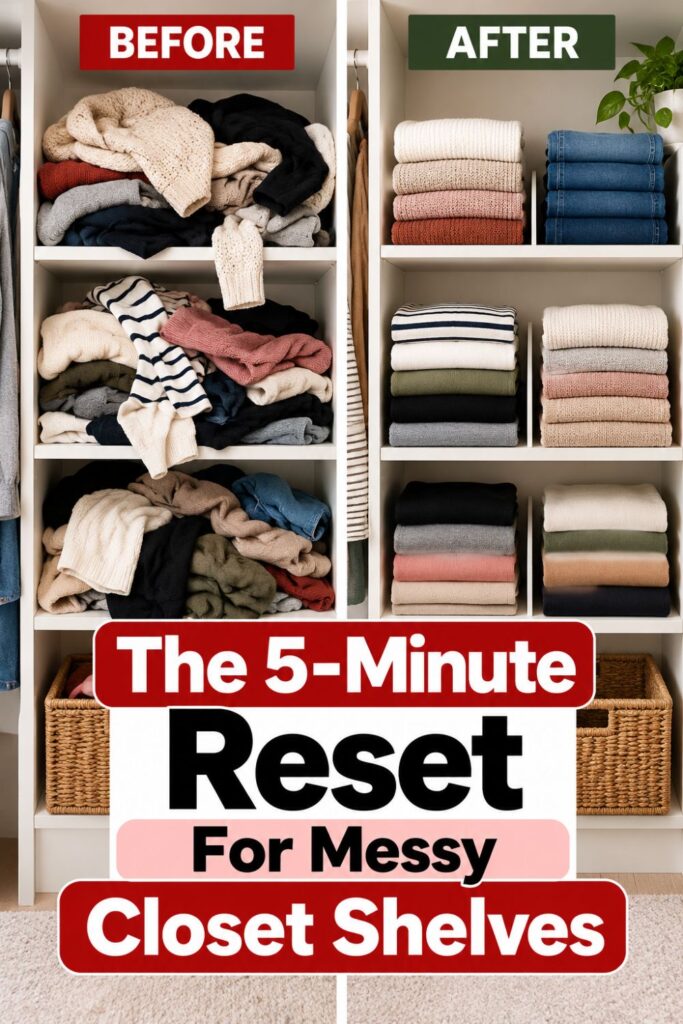
A shelf template gives you a starting point when you do not know where everything should go. You can adjust the layout later, but having a basic map helps prevent the shelf from turning into one open pile again.
Start by thinking about shelf height. The easiest shelves to reach should hold the clothes you use most often. Higher or lower shelves can hold items you use less often, heavier items, or backup pieces.
A simple closet shelf layout might look like this:
- Top shelf: Off-season clothes, backup basics, special occasion items
- Eye-level shelf: Work tops, casual tops, daily folded clothes
- Lower shelf: Jeans, sweatshirts, thick sweaters, heavier items
- Tray zone: Small pieces, slippery items, weekly outfit pieces
- Riser zone: Lightweight stacks above heavier stacks
If you only have one shelf, divide it into lanes instead of levels. The left side can hold work clothes, the center can hold casual clothes, and the right side can hold lounge or sleep clothes.
For a deep shelf, avoid hiding daily items in the back. Use the back for less-used pieces, or place a labeled tray there so the items can slide forward as a group. Loose stacks in the back usually become forgotten clutter.
For a narrow shelf, think vertically. A shelf riser can turn one shelf into two layers without needing a full closet makeover. Keep heavier or bulkier pieces below and lighter pieces above.
For a busy morning routine, place your most-used category in the easiest spot. If you reach for work tops five days a week, they should not be behind sweaters you wear twice a month.
If you want to get more from your life, and are looking for concrete action steps to get you there, check out our Request a Coach page. It’s a “cut the fence-sitting and take action” way to tackle your issues and actually find success. To get off the fence and start to take action, click or tap here.
This template is not meant to be perfect. It is meant to give every shelf area a role. When each zone has a job, the closet becomes easier to read and easier to reset.
Once the template is in place, the folding method keeps it working. The shelf map gives clothes a home. The consistent fold helps them fit that home.
How An Organization Coach Could Help You Fix Shelf Chaos Faster
An organization coach can help when you keep reorganizing the same shelf but it never stays fixed. Sometimes the problem is not the folding method itself. The problem is that the shelf setup does not match your habits, your mornings, or the amount of clothing you actually own.
A coach can look for the pattern behind the mess. For example, your stacks may collapse because they are too tall. Your laundry may sit out because the return zones are unclear. Your categories may be too specific, too broad, or based on an ideal version of your routine instead of your real one.
A coach may help you answer questions like:
- Which clothes do you reach for most often?
- Which categories are always mixed together?
- Where does clean laundry get stuck?
- Which items are too bulky for the shelf?
- Which zones need labels, trays, or risers?
- What part of the routine feels hard to repeat?
This kind of support can be helpful if you feel like you know what the closet should look like, but you cannot make the system stick. A coach can simplify the setup, reduce the number of decisions, and create a maintenance routine that fits how you already live.
For busy professionals, a coach might focus on getting-dressed speed. That could mean creating a workwear shelf, a weekly outfit tray, or a laundry return rhythm that keeps weekday clothes ready.
For ADHD-friendly organization, a coach might focus on visual cues and recovery. The goal would not be a perfect closet. It would be a closet that is easy to understand, easy to reset, and forgiving when life gets busy.
If you want to get more from your life, and are looking for concrete action steps to get you there, check out our Request a Coach page. It’s a “cut the fence-sitting and take action” way to tackle your issues and actually find success. To get off the fence and start to take action, click or tap here.
You do not need a coach to use this folding method. But if your closet keeps falling apart no matter how often you reset it, outside eyes can help you see which part of the system is creating friction.
Sometimes one small change, like shorter stacks or clearer shelf zones, can make the whole closet easier to maintain.
The Small Folding Rule That Makes The Whole Closet Easier
The simplest rule is this: fold the same way every time, then return the item to the same kind of home. That is what makes the shelf easier to use. Not perfection, not expensive organizers, and not a full closet makeover.
Consistency is what saves space. When folded items are close to the same shape, stacks sit cleaner. When stacks are shorter, they stay upright. When categories have clear zones, you can see what you own without digging through everything.
This method also makes your closet easier to recover. Real life will still happen. Laundry will pile up. Mornings will be rushed. A stack may lean or a tray may get too full. The difference is that the system gives you a way back.
Instead of asking, “Where does all of this go?” you can return to the same steps:
- Sort by category.
- Fold into the same shape.
- Stack short.
- Return to the label.
- Reset the front edge.
That small routine keeps the shelf from becoming a bigger project. It also helps you stop treating closet organization like something you have to redo from scratch every few weeks.
A good shelf system should make daily life easier. You should be able to open the closet and quickly see work clothes, casual clothes, lounge clothes, or whatever categories matter most to you. You should be able to put away clean laundry without turning it into another decision-heavy task.
If you want to get more from your life, and are looking for concrete action steps to get you there, check out our Request a Coach page. It’s a “cut the fence-sitting and take action” way to tackle your issues and actually find success. To get off the fence and start to take action, click or tap here.
Start with one shelf if the whole closet feels like too much. Pick one category, choose one fold, and create one clear zone. Once that shelf feels easier, move to the next one.
Small closet organization works best when the system is simple enough to repeat. Fold the same way, keep the stacks visible, and give every category a home. That is the folding method that saves space and keeps your shelves from toppling again.
*****
Are you all about style, decor and organization? Download a copy of our Clutter Reset Guide.
Need some in depth help with organization and productivity ? Drop on by our directories choc full of productivity coaches, minimalist coaches, and work/life balance coaches to get your life organized! Or click here to have us match you to the best.
If you want to get more from your life, and are looking for concrete action steps to get you there, check out our Request a Coach page. It’s a “cut the fence-sitting and take action” way to tackle your issues and actually find success. To get off the fence and start to take action, click or tap here.
Read this next
Budget-Friendly DIY Organization Hacks: How to Save Big with Clever Tricks
We all dream of a Pinterest-worthy home where every item has its place, but getting organized can often feel expensive. Between custom storage bins, acrylic drawer systems, and built-in shelving, […]
Read More
10 Christmas Table Decoration & Centerpiece Ideas Designers Swear By (Super Simple Settings to Copy)
Are you all about style, decor and organization? Download a copy of our Decluttering Workbook. **** Most people think Christmas table décor requires elaborate centerpieces, matching dish sets, and hours […]
Read More
Clearing Out Your Life’s Clutter
Are you overwhelmed and stressed out because of all the clutter in your life?
Read More