


Talk to a coach about Motivational coaching

Robert Bradley Singleton
Certified Master Spiritual Life Coach, Neuropsychologist, and Existential Therapist
Train with the best to be the best you! Don't...

Diana Davis-Nanasi
ICF Certified Coach, helping clients overcome self-doubt, low confidence, stress managment
I understand life can become overwhelming; I am excited to...

Robert B Singleton, MCMA, MSc.
MSc. Metaphysical Sciences; B. Div., Divinity: Mindfulness and Positive Psychology fanatic
Positive Psychology and Mindfulness Specialties; NeuroScience and Trauma-informed

Dr. Kate Watson
B.A Psychology, M.Ed. Psychological Counseling, Dr.PH in Public Health, Certified Health Coach, Certified Life Coach, Certified Mind and Body Specialist, Certified Women's Empowerment Coach, Certified Neurodiversity Coach
Dr. Kate Watson helps people with boundaries, coping strategies, and...

Stephanie Peers
Somatic Coach | Midlife Transitions, Self-Trust & Personal Growth --> (Download my free Body-Led Clarity Guide in My Store!)
Body-led coaching for midlife women ready to trust themselves, set...

Claudia Silver
HDIP CBH - Cognitive Behavioural Hypnotherapist (UK Higher Diploma)
Certified Hypnotherapist for evidence-based help with stress, specific fears and...

Mak Estill
Anxiety, Panic & Life Coach dedicated to coaching you into a life of lesser and lighter anxiety!
Founder and owner of Actionable Anxiety, a private coaching practice...

Elise Boren
Certified Life Coach, Communication Specialist and Sound Healer
Through listening and discussion we will create a plan to...


Vision Board Categories That Keep Big Goals From Turning Into a Mess

Want to try this at home? No worries! Download a copy of our SMART Goals PDF Worksheet.
****
Most vision boards don’t fail because you picked the wrong goals. They fail because everything is crammed together with no structure.
Career goals sit next to health habits, money targets overlap with lifestyle dreams, and your brain ends up trying to focus on everything at once. That kind of visual noise doesn’t motivate you. It overwhelms you.
When everything feels equally important, nothing actually moves forward.
A well-organized vision board works differently. It gives your brain clear lanes to follow. It separates priorities so each area gets attention instead of competing for it.
This is where categories change everything.
Instead of asking your brain to process a chaotic mix of images and ideas, you’re creating a system. Each section has a purpose. Each goal has a place. Each glance at your board becomes easier to understand.
You’re not just collecting inspiration. You’re designing clarity.
If you want to get more from your life, and are looking for concrete action steps to get you there, check out our Request a Coach page. It’s a “cut the fence-sitting and take action” way to tackle your issues and actually find success. To get off the fence and start to take action, click or tap here.
And clarity is what turns a vision board from something you look at occasionally into something that quietly shapes your daily decisions.
In our original roundup of vision board ideas, we mentioned keeping things organized, and now we’re breaking down how vision board categories can help you turn big goals into something clear and manageable.
In this guide, you’ll learn how to break your board into clean, intentional categories so your goals stop competing and start working together.
Need some in depth help with goal settings, motivation or productivity ? Drop on by our directories choc full of productivity coaches, accountability coaches, and goal-setting coaches, and start reaching those goals! Or click here to have us match you to the best.
Build Clear Goal Categories Before You Add Anything
- List your main life areas: Write down 3–5 core categories like career, health, finances, relationships, and personal growth so your board reflects your whole life—not just one priority.

Start by zooming out. If you only focus on one area, your board becomes unbalanced, and other parts of your life get neglected without you noticing.
Think in terms of life buckets. What areas actually shape your daily experience?
- Limit categories to what you can focus on: Too many sections create the same chaos you’re trying to avoid, so keep it tight and realistic.
Five strong categories will always outperform ten scattered ones. The goal is clarity, not coverage.
If you hesitate when naming a category, it probably doesn’t need to be there.
If you want to get more from your life, and are looking for concrete action steps to get you there, check out our Request a Coach page. It’s a “cut the fence-sitting and take action” way to tackle your issues and actually find success. To get off the fence and start to take action, click or tap here.
- Define what success looks like in each category: Add 1–2 specific outcomes per area so each section has direction instead of vague inspiration.
“Be healthier” is too broad. “Work out three times a week” or “build a consistent morning routine” gives your brain something concrete to latch onto.
Each category should answer one question: what does progress actually look like here?
- Assign each goal to only one category: Avoid overlap so your brain knows exactly where to focus when you look at your board.
If one image represents multiple goals, it creates confusion. Your brain has to interpret instead of act.
Clear categories remove that friction. You instantly know what you’re looking at—and what it means.

Design Your Vision Board Layout to Match Your Categories
- Divide your board into clear sections: Physically or digitally split your board into zones so each category has its own space and doesn’t compete visually.
Think of your board like a map. Each section should feel like its own area, not something bleeding into everything else.
Even subtle spacing can make a big difference in how your brain processes it.
- Keep each section visually consistent: Use similar colors, styles, or image types within each category to make it easy to scan and understand.
When visuals feel cohesive, your brain groups them faster. That means less effort and more clarity every time you look.
Consistency turns your board from random images into something structured and readable.
If you want to get more from your life, and are looking for concrete action steps to get you there, check out our Request a Coach page. It’s a “cut the fence-sitting and take action” way to tackle your issues and actually find success. To get off the fence and start to take action, click or tap here.
- Balance space based on priority: Give more room to areas that matter most right now, instead of forcing equal sizing across everything.

Not every category deserves equal weight all the time. If career is your focus this season, let it take up more space.
Your board should reflect your current priorities, not an idealized version of balance.
- Use labels or subtle markers: Add small headers or visual cues so each section is instantly recognizable at a glance.
You don’t need bold titles everywhere, but a simple cue helps your brain orient quickly.
The faster you understand your board, the more often you’ll actually use it.
Add Goals Without Letting Categories Overlap
- Choose visuals that clearly belong to one category: Avoid images that represent multiple goals to prevent mental confusion.
A single image should tell a single story. If it tries to represent everything, it ends up meaning nothing.
Clarity always beats creativity here.
- Keep each section focused on one theme: Don’t mix habits, outcomes, and identities randomly—group similar types of goals together.
For example, a health section might include routines, not just outcomes. A career section might focus on milestones, not vague success imagery.
This creates a stronger internal logic your brain can follow.
If you want to get more from your life, and are looking for concrete action steps to get you there, check out our Request a Coach page. It’s a “cut the fence-sitting and take action” way to tackle your issues and actually find success. To get off the fence and start to take action, click or tap here.
- Limit the number of items per category: Too many images dilute focus, so prioritize only what truly matters this season.
If everything is on the board, nothing stands out.
You want each item to feel intentional, not decorative.
- Check for visual competition: Step back and make sure no section overwhelms the others or pulls attention away unintentionally.
Your eye should move naturally across the board, not get stuck in one corner.
If one section dominates visually, it may be pulling focus away from goals that still matter.

Use Categories to Guide Weekly Focus and Action
- Pick one category to focus on each week: Rotate attention so all areas progress instead of competing daily.
Trying to work on everything every day leads to burnout. Focusing on one category at a time creates momentum.
It gives your effort direction.
- Translate each category into small actions: Turn visuals into 1–2 weekly steps so your board drives behavior, not just inspiration.
A vision board without action stays decorative.
Each category should connect to something you can actually do this week.
If you want to get more from your life, and are looking for concrete action steps to get you there, check out our Request a Coach page. It’s a “cut the fence-sitting and take action” way to tackle your issues and actually find success. To get off the fence and start to take action, click or tap here.
- Review balance across categories regularly: Notice if one area is being ignored and adjust your focus accordingly.
Your board helps you spot imbalance early.
If one section hasn’t been touched in weeks, it’s a signal—not a failure.
- Update categories as priorities change: Life shifts, so your board should evolve to reflect what matters now—not what mattered months ago.
A static board becomes background noise.
A living board stays relevant and keeps pulling your attention back in.

How to Fix a Vision Board That Already Feels Cluttered
- Audit your current board: Identify which items don’t clearly belong to a category and remove or reassign them.
Clutter usually comes from unclear purpose.
If you can’t explain why something is there, it’s probably not helping you.
- Group similar goals together: Cluster items into natural categories before redesigning the layout.
Start by organizing, not decorating.
You’ll often see patterns emerge once everything is grouped.
If you want to get more from your life, and are looking for concrete action steps to get you there, check out our Request a Coach page. It’s a “cut the fence-sitting and take action” way to tackle your issues and actually find success. To get off the fence and start to take action, click or tap here.
- Remove duplicate or competing goals: If two visuals represent the same idea, keep the strongest one.
Repetition doesn’t strengthen clarity. It weakens it.
Choose the image that creates the clearest reaction.
- Rebuild using clean sections: Start fresh with defined zones instead of trying to tweak a messy layout.
Sometimes small fixes aren’t enough.
A clean reset can give you a structure that actually works.

When to Combine Categories (And When Not To)
Want to try this at home? No worries! Download a copy of our SMART Goals PDF Worksheet.
Need some in depth help with goal settings, motivation or productivity ? Drop on by our directories choc full of productivity coaches, accountability coaches, and goal-setting coaches, and start reaching those goals! Or click here to have us match you to the best.
- Combine categories only when they naturally overlap: For example, personal growth and mindset can live together if they support the same outcomes.
Some areas reinforce each other. When they do, combining them can simplify your board without losing clarity.
The key is alignment, not convenience.
If you want to get more from your life, and are looking for concrete action steps to get you there, check out our Request a Coach page. It’s a “cut the fence-sitting and take action” way to tackle your issues and actually find success. To get off the fence and start to take action, click or tap here.
- Avoid combining high-effort areas: Career and health often need separate focus to prevent one from dominating.
These areas demand different types of energy.
When combined, one usually takes over.
- Watch for hidden competition: If one category consistently pulls attention away, it likely needs its own space.
Your behavior will tell you what your structure isn’t.
Pay attention to where your focus naturally goes.
- Adjust based on your current season of life: Simplify categories during busy periods and expand them when you have more capacity.
Your board should support your life, not add pressure to it.
The right structure is the one you can actually maintain.
If you want to get more from your life, and are looking for concrete action steps to get you there, check out our Request a Coach page. It’s a “cut the fence-sitting and take action” way to tackle your issues and actually find success. To get off the fence and start to take action, click or tap here.
Read this next

Celebrity Gossip: 6 Ways Lindsay Lohan Would Benefit From a Life Coach
How could film star Lindsay Lohan benefit from a professional life coach?
Read More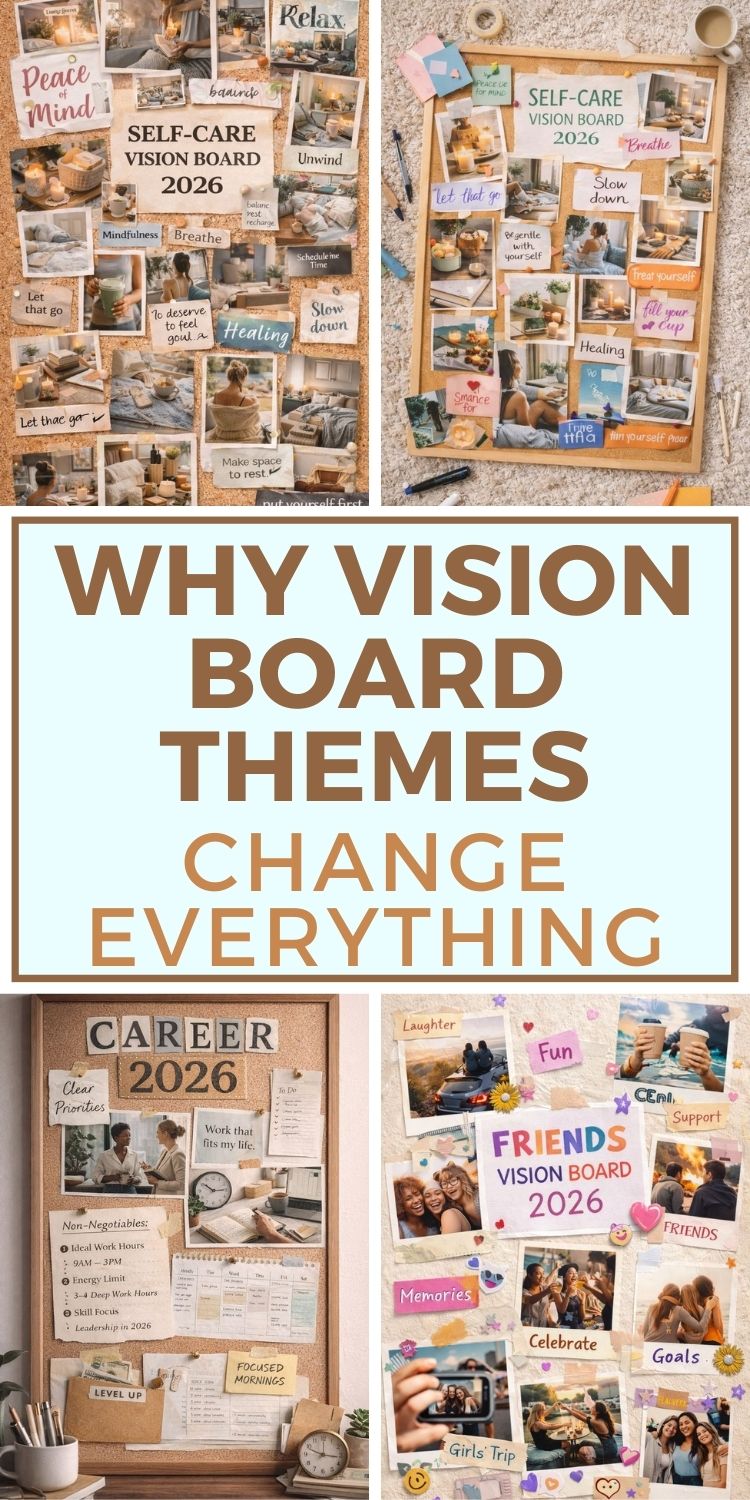
The Hidden Power Behind Vision Board Themes Nobody Talks About
Vision boards work best when they stop being random pictures and start becoming a clear theme. Click through to see the simple shift that helps your goals feel focused, aligned, and easier to follow.
Read More
How to Set Goals
Sure, you have goals. Everyone does. There is a big difference, however, between goals and goal setting.
Read More