




The 3 Questions Every Coach Should Answer Before Building Their Business
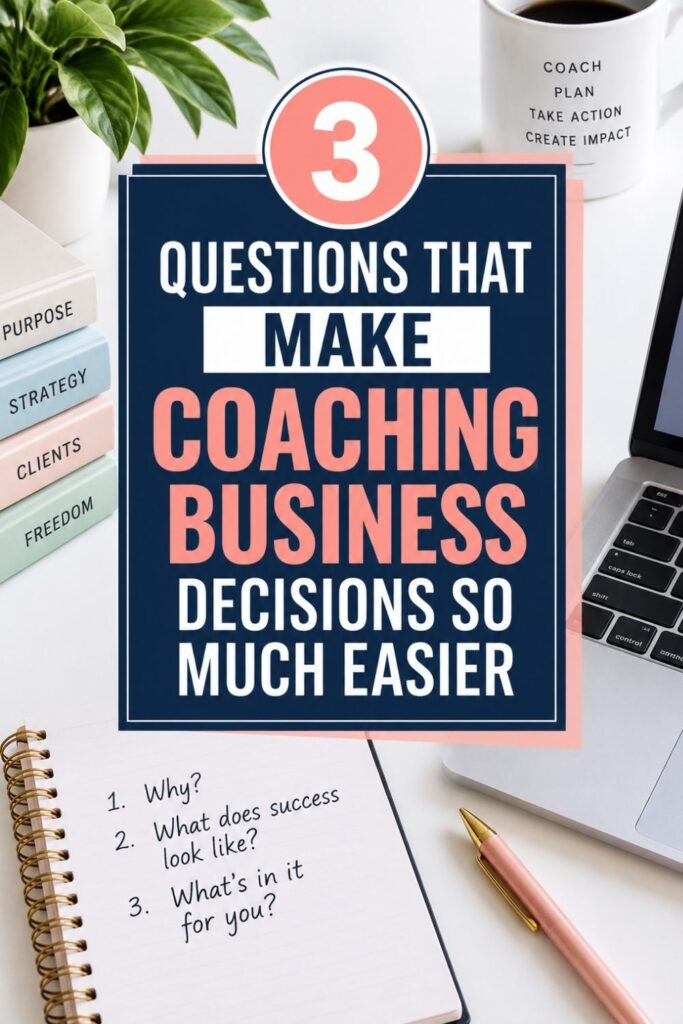
Figure out how you are serving your life purpose in order to serve your clients. Ask yourself, “What’s in it for me?”
Do you dread the moment when someone asks you, “What is your purpose in life?” or “What is the purpose of your business?”
Do you have a smooth response that flows like a gentle stream? Or do you stammer with ums and ahs and feel uncomfortable?
Create a balanced purpose statement by answering the following questions over a 15-minute break or between calls. You’ll create your own amazing moment as you start to realize your purpose!
Key Takeaways
- Your purpose needs three ingredients: why you became a coach, what meaningful success looks like, and what that success gives you personally. Together, they turn a vague calling into a usable statement.
- Purpose is not the same as a goal: purpose explains why the work matters, goals define measurable outcomes, and strategy describes how you will reach them.
- Your success scenario should be concrete: define client impact, business results, and the capacity you want to work within, rather than using revenue as your only measure.
- A useful purpose should guide real decisions: it should help you decide which clients, offers, visibility opportunities, and projects deserve your time, and which attractive distractions do not.
- Your purpose can change as your coaching business changes: review it when your niche, offers, life circumstances, or preferred way of coaching shifts, rather than treating one statement as permanent.
How Do You Create a Life Purpose Statement as a Coach?
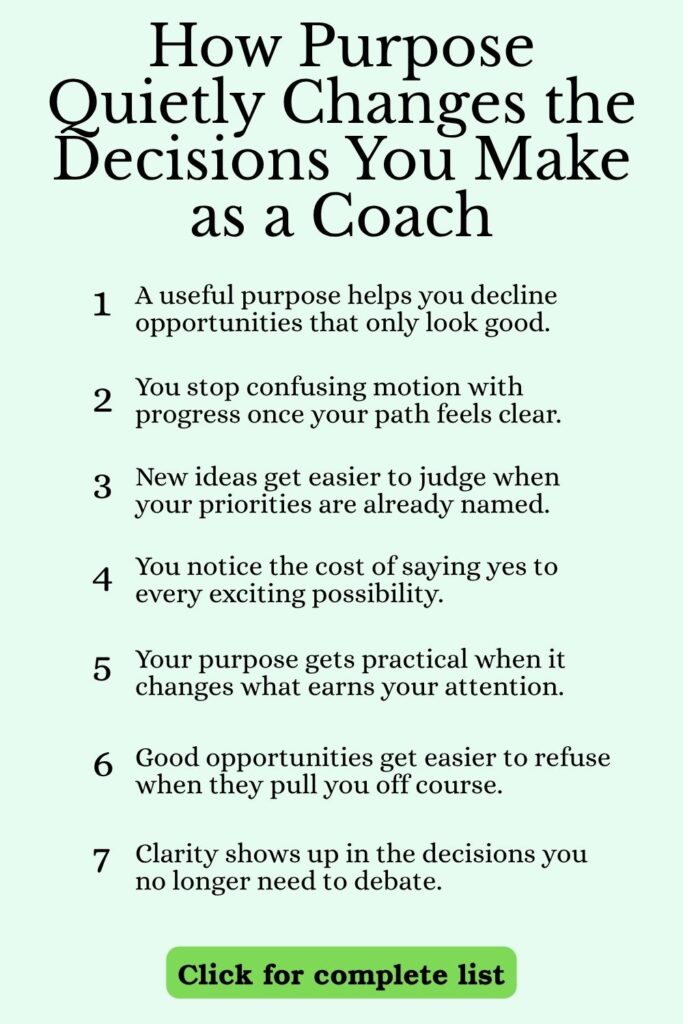
You create a life purpose statement as a coach by answering three questions: why you became a coach, what meaningful success would look like, and what achieving that success would give you personally.
Your answer should connect meaning with evidence. “I want to help people transform” explains very little. Which people? What kind of change? What would tell you that your coaching business is doing what you hoped it would do?
SEE ALSO: If you’re a coach looking to streamline your administrative tasks and save time, check out our Coaching Administration Software. It’s a simple, effective solution designed to help you focus less on paperwork and more on what matters—coaching your clients. From scheduling to client management, our software gives you the tools to run your business efficiently. Ready to reclaim your time and boost productivity? Click or tap here.
A useful purpose statement does not need to explain the rest of your life. It needs to be specific enough to guide the clients you serve, the business you build, and the opportunities you accept.
What Is the Difference Between Your Purpose, Your Goals, and Your Business Strategy?
Your purpose, goals, and strategy do three different jobs, and separating them makes the rest of this exercise much easier.
Purpose answers why. Why do you want to do this work? What change matters enough that you want to build a coaching business around it?
Goals answer what. What measurable results would show that the business is moving in the direction you intended?
Strategy answers how. What will you actually do to reach those goals?
Imagine a career coach who left a senior corporate role after realizing how many capable women were getting stuck between strong technical performance and leadership.
SEE ALSO: If you’re a coach looking to streamline your administrative tasks and save time, check out our Coaching Administration Software. It’s a simple, effective solution designed to help you focus less on paperwork and more on what matters—coaching your clients. From scheduling to client management, our software gives you the tools to run your business efficiently. Ready to reclaim your time and boost productivity? Click or tap here.
Her purpose might be helping women make that transition without spending years doubting whether they belong at the next level.
Her goal might be to coach 30 newly promoted leaders this year and build a coaching business that generates $120,000.
Her strategy might include a six-month private coaching package, leadership workshops, referral partnerships, weekly LinkedIn content, and a discovery-call process.
All three matter. They just should not be mistaken for one another.
Step 1: Why Did You Become a Coach?
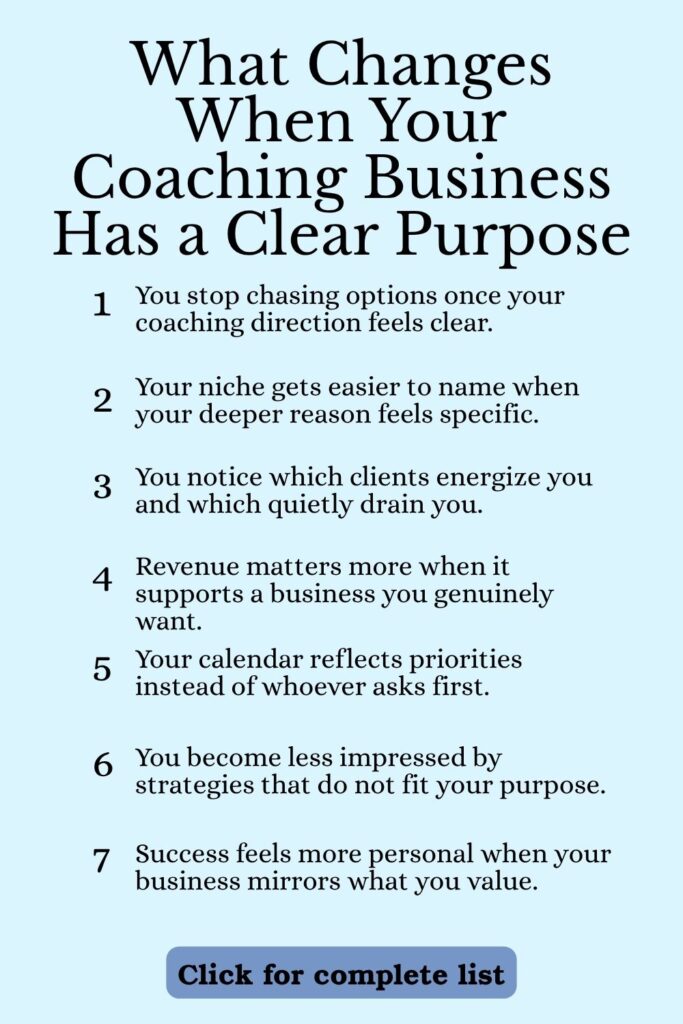
Think back and reflect on who you were and what you were feeling before you sought help and achieved your transformation.
Look beyond “I like helping people.” Most coaches do.
SEE ALSO: If you’re a coach looking to streamline your administrative tasks and save time, check out our Coaching Administration Software. It’s a simple, effective solution designed to help you focus less on paperwork and more on what matters—coaching your clients. From scheduling to client management, our software gives you the tools to run your business efficiently. Ready to reclaim your time and boost productivity? Click or tap here.
What experience made this work matter to you?
Perhaps you changed careers after years in the wrong profession. Maybe you learned how to lead after becoming a manager with no support. Perhaps you rebuilt your confidence after a difficult transition and now recognize the same pattern in your clients.
You do not have to coach people who have lived your exact story. The point is to identify the part of the work that carries real meaning for you.
Step 2: What Would Your Best Success Scenario Look Like?
As a coach you normally ask others to visualize their best scenario. Now, I’d like you to take a moment and visualize what would make all your efforts worthwhile.
Think in terms of measurable, quantifiable outcomes.
What would you want to be able to point to twelve months from now and say, “Yes. This is what I was trying to build”?
SEE ALSO: If you’re a coach looking to streamline your administrative tasks and save time, check out our Coaching Administration Software. It’s a simple, effective solution designed to help you focus less on paperwork and more on what matters—coaching your clients. From scheduling to client management, our software gives you the tools to run your business efficiently. Ready to reclaim your time and boost productivity? Click or tap here.
How Specific Should Your Success Scenario Be?
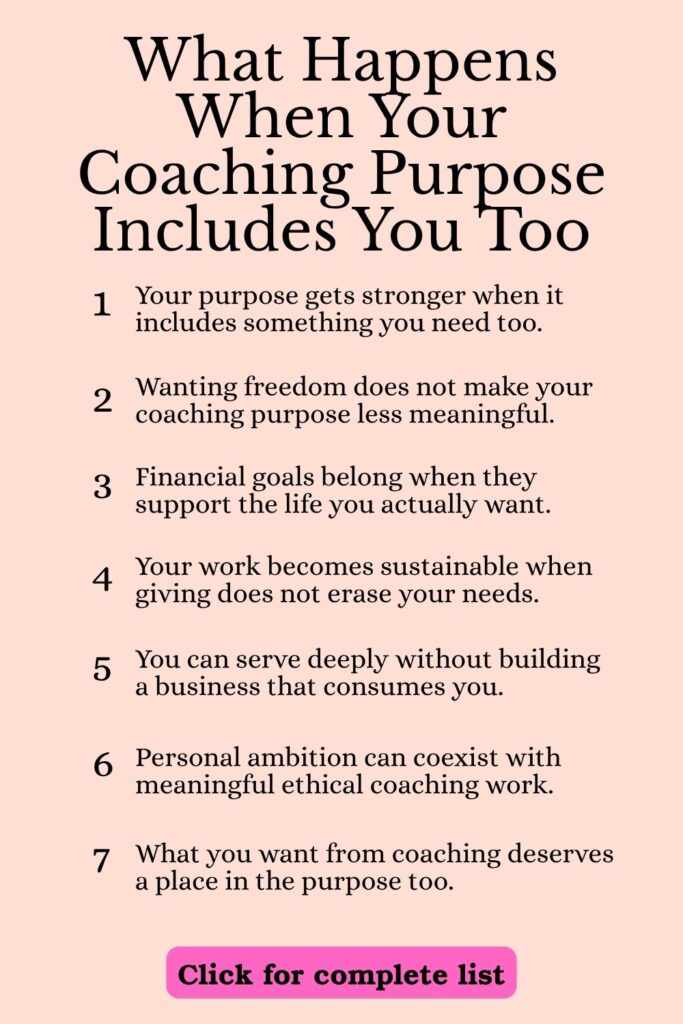
Your success scenario should be specific enough that you could recognize whether you are moving toward it.
A simple way to build it is to define three kinds of success:
- Client impact: Who do you want to help, and what observable progress would matter?
- Business results: What revenue, client, package, renewal, or offer targets would make the business viable?
- Capacity: How much do you actually want to coach, create, market, or manage each week?
Suppose your first answer is, “I want a successful executive coaching business.”
That gives you very little to work with.
A clearer version might be: “I want to work with 20 leadership clients this year, help them make measurable progress on goals such as delegation and difficult conversations, generate $150,000 from coaching and workshops, and keep my private coaching schedule to three days a week.”
Now you have something you can test decisions against.
SEE ALSO: If you’re a coach looking to streamline your administrative tasks and save time, check out our Coaching Administration Software. It’s a simple, effective solution designed to help you focus less on paperwork and more on what matters—coaching your clients. From scheduling to client management, our software gives you the tools to run your business efficiently. Ready to reclaim your time and boost productivity? Click or tap here.
Do not make revenue your only measure. A coach can hit a revenue target while building a business they dislike running.
If client impact is part of your success scenario, LCH Core can help you keep the evidence connected to the client through goals, action items, notes, and the Progress Stream. That makes it easier to compare the impact you intended to create with what is actually happening in your coaching relationships.
Step 3: What’s in It for You?
Your purpose should include what you want from the work too.
Put your first two answers together, then ask what reaching that version of success would make possible for you.
Perhaps you want financial independence. More control over your schedule. Enough income to stop taking unrelated consulting work. The opportunity to write a book. The credibility to speak at conferences. More time for deep client work and less time spent taking every opportunity that comes along.
There is nothing wrong with having something in it for you.
SEE ALSO: If you’re a coach looking to streamline your administrative tasks and save time, check out our Coaching Administration Software. It’s a simple, effective solution designed to help you focus less on paperwork and more on what matters—coaching your clients. From scheduling to client management, our software gives you the tools to run your business efficiently. Ready to reclaim your time and boost productivity? Click or tap here.
A purpose that requires you to keep giving while ignoring your own needs is unlikely to produce the kind of coaching business you actually want to run.
How Do You Turn the Three Answers Into One Purpose Statement?
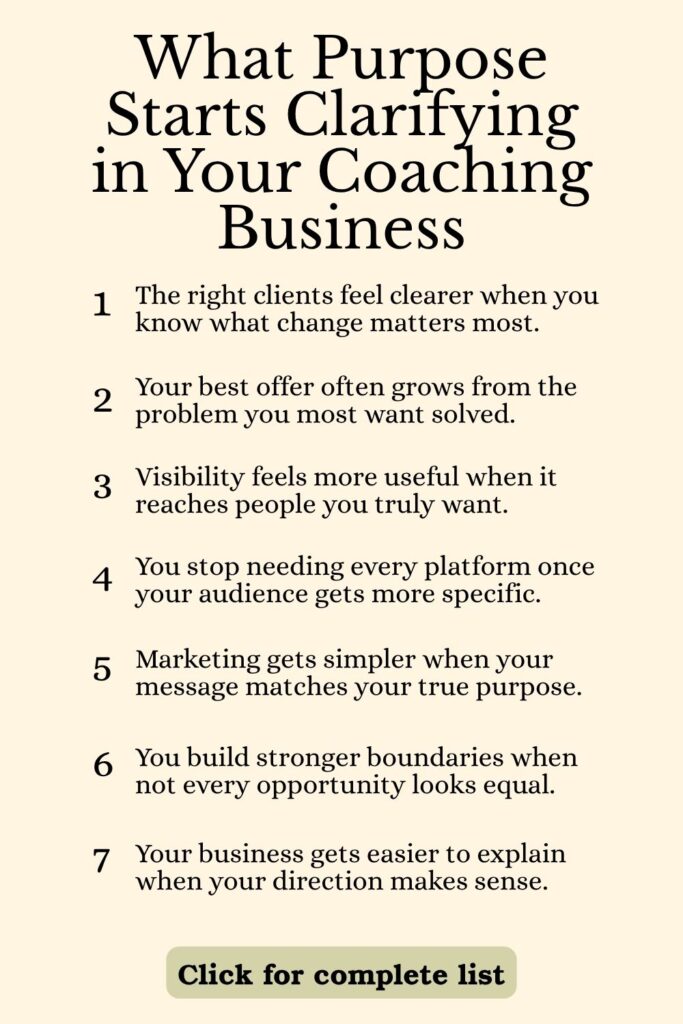
You turn the three answers into a purpose statement by combining why you care, who or what you want to change, what meaningful success looks like, and why that outcome matters to you.
You can use this simple structure:
I coach [people or problem] because [reason this work matters to me]. I want to help [specific impact or outcome] while building [meaningful business outcome], because that gives me [personal reason the success matters].
You do not have to publish that exact sentence on your website. It is primarily a decision-making tool for you.
For example:
SEE ALSO: If you’re a coach looking to streamline your administrative tasks and save time, check out our Coaching Administration Software. It’s a simple, effective solution designed to help you focus less on paperwork and more on what matters—coaching your clients. From scheduling to client management, our software gives you the tools to run your business efficiently. Ready to reclaim your time and boost productivity? Click or tap here.
“I coach women stepping into senior leadership because I know how isolating that transition can be when strong technical performance suddenly is not enough. I want to help 30 leaders a year become stronger at delegation, difficult conversations, and leading teams, while building a high-income coaching practice that gives me space for private coaching, writing, and speaking.”
Compare that with:
“My purpose is to empower people to become the best version of themselves.”
The second statement sounds positive, but almost any coach could use it.
The first one tells you which clients fit, which results matter, which opportunities support the plan, and which ones probably do not.
Does Your Purpose Reflect What You Actually Value?
A useful purpose should reflect what you genuinely want, not the version of success you think a coach is supposed to want.
SEE ALSO: If you’re a coach looking to streamline your administrative tasks and save time, check out our Coaching Administration Software. It’s a simple, effective solution designed to help you focus less on paperwork and more on what matters—coaching your clients. From scheduling to client management, our software gives you the tools to run your business efficiently. Ready to reclaim your time and boost productivity? Click or tap here.
This distinction has research behind it. Psychologists Kennon Sheldon and Andrew Elliot describe self-concordant goals as goals that fit a person’s developing interests and core values. Their research found that people pursuing more self-concordant goals tended to put more sustained effort into them and were more likely to attain them.
That makes this worth checking before you turn your purpose into a business plan.
Ask yourself:
- Would I still want this if nobody in my industry could see it?
- Do I want the work involved, or only the status attached to the result?
- Does this business model suit the way I actually like to coach?
- Am I choosing this because it fits me, or because successful coaches around me seem to be doing it?
A coach may say she wants a huge online course business because scalable income sounds attractive.
But perhaps the work she enjoys most is spending six months with a small number of high-level clients, seeing the patterns across their sessions, and helping them make difficult changes.
That does not mean she should never create a course.
SEE ALSO: If you’re a coach looking to streamline your administrative tasks and save time, check out our Coaching Administration Software. It’s a simple, effective solution designed to help you focus less on paperwork and more on what matters—coaching your clients. From scheduling to client management, our software gives you the tools to run your business efficiently. Ready to reclaim your time and boost productivity? Click or tap here.
It means a business built almost entirely around course creation may not be the best expression of the purpose she just identified.
How Can Your Purpose Shape Your Niche, Offers, and Visibility?
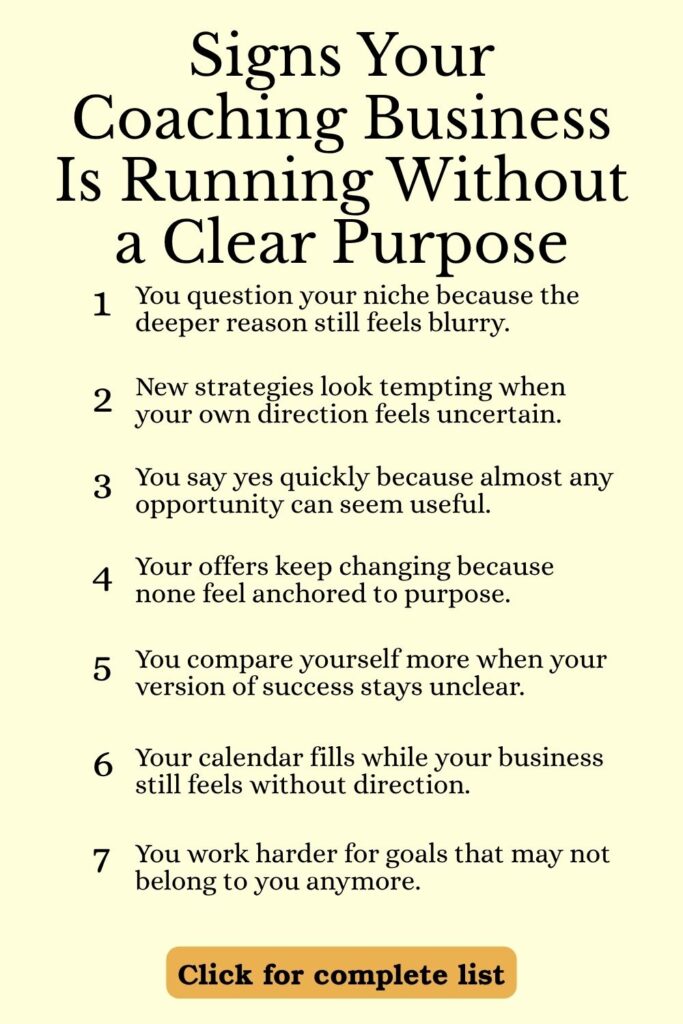
Your purpose can make your niche, offers, and marketing much clearer because it gives you a specific person and result to organize them around.
Go back to the leadership coach.
If her purpose is helping newly promoted managers make the jump from expert contributor to effective leader, her niche becomes easier to describe.
Her offers can focus on the problems those clients repeatedly face: delegation, difficult conversations, managing former peers, boundaries, feedback, and leading through uncertainty.
Her content can address those situations instead of publishing broad posts about “reaching your potential.”
SEE ALSO: If you’re a coach looking to streamline your administrative tasks and save time, check out our Coaching Administration Software. It’s a simple, effective solution designed to help you focus less on paperwork and more on what matters—coaching your clients. From scheduling to client management, our software gives you the tools to run your business efficiently. Ready to reclaim your time and boost productivity? Click or tap here.
Even her visibility choices change. A leadership podcast, an HR partnership, and a LinkedIn article read by new managers may deserve more attention than a generic social platform where she has accumulated followers who are unlikely to need her coaching.
This is where purpose becomes commercially useful. It stops being a statement you wrote once and becomes a filter for where you put your time.
If you are mapping the path from visibility to actual clients, How to Master Funnels as a Coach (and Why You Need To) goes deeper into how attraction, nurturing and conversion connect.
Once you know whom you want to serve, tools can support that direction. In LCH Core, you can make relevant sessions available through your Public Booking Page, sell coaching packages, courses or digital products through your Public Store, and use lead magnets as an entry point for people who are interested but not yet ready to buy.
For another visibility point, create a free life coach directory listing that reflects the same niche and problem instead of presenting yourself as a coach for everyone.
How Can Your Purpose Guide Your Business Decisions?
Your purpose becomes useful when it helps you say yes to the right opportunities and no to attractive distractions.
SEE ALSO: If you’re a coach looking to streamline your administrative tasks and save time, check out our Coaching Administration Software. It’s a simple, effective solution designed to help you focus less on paperwork and more on what matters—coaching your clients. From scheduling to client management, our software gives you the tools to run your business efficiently. Ready to reclaim your time and boost productivity? Click or tap here.
Coaches get offered plenty of “shiny objects”: a new social platform, a collaboration, another certification, a course idea, a speaking opportunity, a mastermind, or an entirely new niche.
Run each one through four questions:
- Purpose: Does this help me serve the people or transformation I said matters?
- Goal: Does it move one of my current measurable goals forward?
- Cost: What time, money, or attention will this require?
- Tradeoff: What will receive less attention if I say yes?
Suppose a coach’s purpose centers on helping senior professionals navigate career change, and her current strategy is building a strong referral network with recruiters and former clients.
She is then invited to spend six weeks creating a broad “find your passion” course for a completely different audience.
It might be a perfectly good opportunity.
It still might be the wrong opportunity for her right now.
SEE ALSO: If you’re a coach looking to streamline your administrative tasks and save time, check out our Coaching Administration Software. It’s a simple, effective solution designed to help you focus less on paperwork and more on what matters—coaching your clients. From scheduling to client management, our software gives you the tools to run your business efficiently. Ready to reclaim your time and boost productivity? Click or tap here.
You can make this filter even more concrete with an if-then rule.
Research by Peter Gollwitzer and Paschal Sheeran examined implementation intentions, plans that connect a specific situation with a predetermined response. Their meta-analysis of 94 independent tests found a medium-to-large positive effect on goal attainment.
For a coach, an implementation intention might look like this:
If a new opportunity does not serve my target clients or move one of my three current goals forward, then I will decline it rather than adding it to my plan.
That turns your purpose from an idea into a decision rule.
When Should You Revisit Your Coaching Purpose?
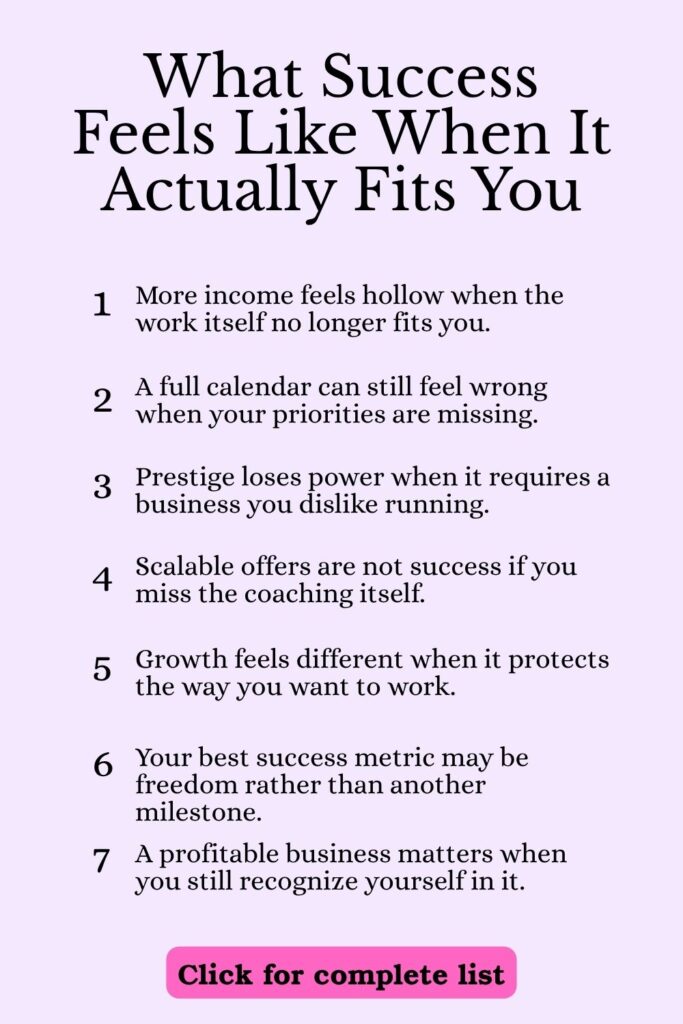
You should revisit your coaching purpose when something material about your work, clients, priorities, or capacity has changed.
SEE ALSO: If you’re a coach looking to streamline your administrative tasks and save time, check out our Coaching Administration Software. It’s a simple, effective solution designed to help you focus less on paperwork and more on what matters—coaching your clients. From scheduling to client management, our software gives you the tools to run your business efficiently. Ready to reclaim your time and boost productivity? Click or tap here.
Do not rewrite it every time you have a slow month or see another coach doing something interesting.
Useful triggers include:
- Your best clients are consistently different from the clients you originally expected to serve.
- You are moving from private coaching toward group work, courses, or digital products.
- Your strongest work has shifted toward a different problem or stage of the client journey.
- Your financial needs or available working hours have changed significantly.
- Your existing success scenario no longer feels meaningful even when you imagine achieving it.
- Your business has already reached the goal that shaped your current purpose.
A quarterly check can be simple.
Read your statement and ask, “Is this still what I am building?”
Once a year, do the three questions again from scratch before looking at last year’s answers.
The differences can be revealing.
SEE ALSO: If you’re a coach looking to streamline your administrative tasks and save time, check out our Coaching Administration Software. It’s a simple, effective solution designed to help you focus less on paperwork and more on what matters—coaching your clients. From scheduling to client management, our software gives you the tools to run your business efficiently. Ready to reclaim your time and boost productivity? Click or tap here.
Where LCH Core Fits
LCH Core fits after you have decided what kind of coaching business you want to build, because software can support your direction but it cannot choose that direction for you.
If your purpose depends on deep client work, client management with profiles, notes, intake forms, journals, worksheets, goals and action items can keep that work organized.
If professional onboarding matters, a Welcome Package can contain a welcome letter, coaching agreement with electronic signature, and forms.
If your business goals include making progress more visible, the Progress Stream and Engagement Report give you ways to review what is happening across the coaching relationship.
If your purpose points toward a business that reaches people beyond private sessions, courses, digital products and lead magnets can sit inside the Public Store.
If you want a broader look at how these systems fit together, Best Coaching Software for Life Coaches: What to Look For Before You Choose covers the larger coaching-business system.
SEE ALSO: If you’re a coach looking to streamline your administrative tasks and save time, check out our Coaching Administration Software. It’s a simple, effective solution designed to help you focus less on paperwork and more on what matters—coaching your clients. From scheduling to client management, our software gives you the tools to run your business efficiently. Ready to reclaim your time and boost productivity? Click or tap here.
The important order is purpose first, system second. Once the direction is clear, LCH Core can help you run the client management, scheduling, payments, onboarding, coaching delivery, progress tracking and offer structure behind it.
Frequently Asked Questions
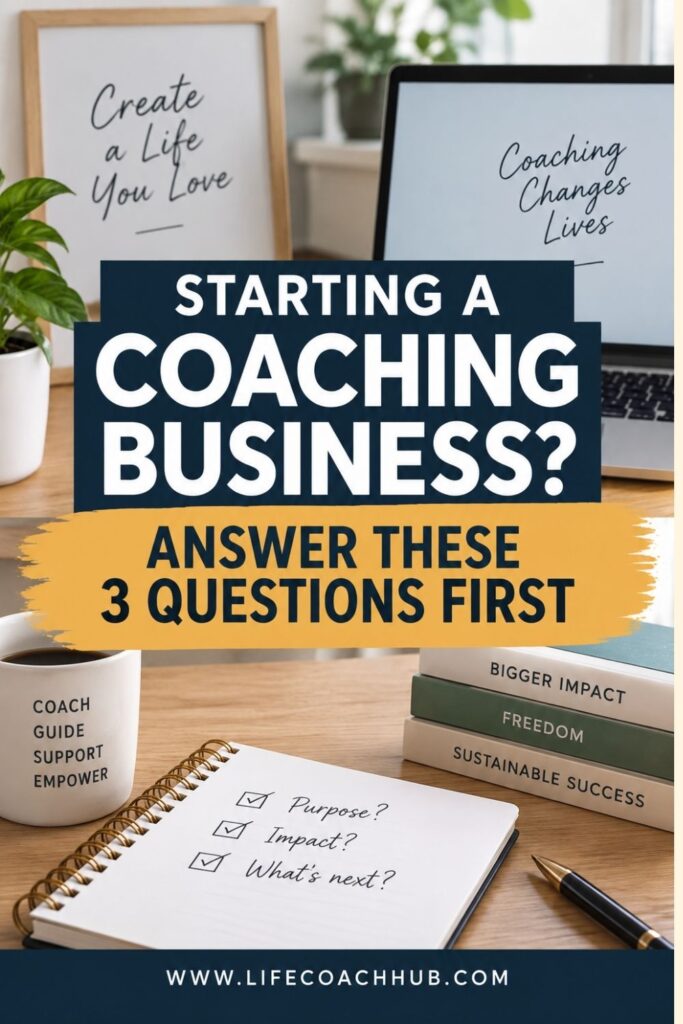
How do I find my purpose as a life coach?
Start with why you became a coach, define what meaningful success would look like, then identify what achieving that success would give you personally. The overlap between those three answers gives you a much more useful purpose than trying to invent an inspirational slogan.
What should a coaching purpose statement include?
A coaching purpose statement should include why the work matters, who or what you want to affect, what success would look like, and why that success matters to you. It can include business and personal outcomes as long as they genuinely belong in your definition of success.
What is the difference between a coaching purpose, mission, niche, and goal?
Your purpose explains why the work matters, your niche identifies the people or problem you focus on, and your goals define measurable results you want to achieve. A mission usually describes what your business intends to do in service of that broader purpose.
How specific should a life purpose statement be?
A useful purpose statement should be specific enough to help you make decisions. If the statement could apply equally well to a career coach, health coach, leadership coach, and relationship coach, it probably needs another round of clarification.
Can my coaching purpose include income and lifestyle goals?
Yes, your coaching purpose can include income and lifestyle goals because your coaching business also has to work for you. The useful question is whether those outcomes support a way of working you actually want, rather than becoming the entire purpose by themselves.
SEE ALSO: If you’re a coach looking to streamline your administrative tasks and save time, check out our Coaching Administration Software. It’s a simple, effective solution designed to help you focus less on paperwork and more on what matters—coaching your clients. From scheduling to client management, our software gives you the tools to run your business efficiently. Ready to reclaim your time and boost productivity? Click or tap here.
How do I know if my coaching business reflects my purpose?
Compare your purpose with your calendar, client list, offers, marketing activity, and current goals. If most of your time goes toward work that has little connection to the people, impact, or business you said you wanted, there is a gap between the statement and the business.
Can my coaching purpose change over time?
Yes, your coaching purpose can change as your experience, clients, business model, and priorities change. A purpose statement should guide your current direction, not lock you into a decision you made years ago.
How can my coaching purpose help me choose a niche or offer?
Your purpose can narrow the clients and outcomes that deserve the most attention. Once you know the change you most want to create, it becomes easier to build offers around the recurring problems that lead to that change.
What Should You Do With Your Purpose Now?
Your purpose does not need to predict the rest of your coaching career. It needs to be clear enough to guide the season of business you are in now.
Take your three answers and write one working statement.
Then put it somewhere you will actually see it when decisions are being made.
SEE ALSO: If you’re a coach looking to streamline your administrative tasks and save time, check out our Coaching Administration Software. It’s a simple, effective solution designed to help you focus less on paperwork and more on what matters—coaching your clients. From scheduling to client management, our software gives you the tools to run your business efficiently. Ready to reclaim your time and boost productivity? Click or tap here.
Before you create the next offer, join the next platform, accept the next collaboration, or reshape your entire business because somebody else’s model looks exciting, read it again.
Ask one simple question:
Does this move me toward the coaching business I said I wanted to build?
That is where a purpose statement starts earning its place.
Sources
Sheldon, Kennon M., and Andrew J. Elliot. “Goal Striving, Need Satisfaction, and Longitudinal Well-Being: The Self-Concordance Model.” Journal of Personality and Social Psychology, vol. 76, no. 3, 1999, pp. 482–497. https://doi.org/10.1037/0022-3514.76.3.482.
Gollwitzer, Peter M., and Paschal Sheeran. “Implementation Intentions and Goal Achievement: A Meta-Analysis of Effects and Processes.” Advances in Experimental Social Psychology, vol. 38, 2006, pp. 69–119. https://doi.org/10.1016/S0065-2601(06)38002-1.
SEE ALSO: If you’re a coach looking to streamline your administrative tasks and save time, check out our Coaching Administration Software. It’s a simple, effective solution designed to help you focus less on paperwork and more on what matters—coaching your clients. From scheduling to client management, our software gives you the tools to run your business efficiently. Ready to reclaim your time and boost productivity? Click or tap here.
Read this next

Coaching Business Resource: Private Practice Hub
Coaching Business Resource: Private Pracitce Hub
Read More
When Being A Good Coach Isn’t Enough
How to create a powerful and sustainable practice as a coach.
Read More
Take Your Coaching Business to the Next Level
If you want greater success and abundance as a life coach, you need to take your business to the next level.
Read More