


Talk to a coach about Confidence coaching

Crystal Faulk
ACC
I help overwhelmed women in transition gain clarity, confidence, and...

Stephanie Peers
Somatic Coach | Midlife Transitions, Self-Trust & Personal Growth --> (Download my free Body-Led Clarity Guide in My Store!)
Body-led coaching for midlife women ready to trust themselves, set...

Charity Archie
Several Life Coaching Certifications-Intentional Holistic Life Coach
Charity Aumora dedicated to promoting a positive clear & intentional...

Menna Jones
Certified Health & Wellness Coach (Real Balance Global Wellness)
Health & Wellness Coaching For Women Going Through Menopause
Daryll Mackey
Coach, speaker and DISC Practitioner JohnC. Maxwell
Empowering growth through knowledge and connection. Unlock your potential and...

Alena Zhaliazniak
MSc, holistic life coach, PQ Positive Intelligence
"A ray of light shining through iron" is the meaning...

Mak Estill
Anxiety, Panic & Life Coach dedicated to coaching you into a life of lesser and lighter anxiety!
Founder and owner of Actionable Anxiety, a private coaching practice...

Maria J Brando
Psychosynthesis Life Coach and Financial Coach. BCC, MBA.
Reconnect with your intuition. Look within, listen deeply, and discover...



What If the Path You’re Supposed to Follow Isn’t Right for You?
Why Do We Believe There Is Only One Right Path?
Many of us have a path that we’re heading down towards a certain goal.
- This can be a good thing but the trouble with it is that many of us feel that there’s only one path that we could possibly take in order to be happy.
- This can be due to pressure society puts on us to live a “normal” life or it could be pressure we put on ourselves.
So many people believe that you HAVE to go to college, HAVE to get married, and HAVE to have kids in order to have any chance at being happy.
High schools rarely tell students that there are ways to become successful without college. “You could go to trade school or start a business” is rarely the advice high school administrators give to their students.
They instead act like anyone who doesn’t go onto to get a college degree is doomed to a life of poverty.
This has led so many students to go to college when it wasn’t the right option for them. 43% of these students end up dropping out and gaining nothing but debt.
And many college graduates that majored in the liberal arts end up having to take jobs that don’t require a college degree. And still the push to take the “one and only true path” continues.
Key Takeaways
- There is rarely only one workable path. Social expectations can make college, marriage, parenthood, or a particular profession feel mandatory, even when several realistic options are available.
- Unexpected opportunities can be explored deliberately. Planned Happenstance Theory shows how curiosity, persistence, flexibility, optimism, and reasonable risk-taking can turn an unplanned event into a serious possibility.
- A new direction should be tested before it is idealized. Short courses, informational interviews, sample projects, volunteering, and job shadowing reveal more than imagining how a career might feel.
- Fit requires evidence from real experience. Interest, growing competence, practical constraints, employment demand, and willingness to handle the difficult parts all matter when assessing a path.
- Changing direction is not automatically failure. Sometimes persistence is the right response. Other times, a thoughtful pivot or clear decision to stop protects your time, money, health, and future choices.
How Do You Find Your Own Path in Life?

You find your own path by exploring realistic options, testing them in small ways, and paying attention to what the experience teaches you. You do not need to identify one perfect destination before taking your next step.
A useful path fits more than your interests. It also needs to work with your abilities, values, financial needs, health, responsibilities, and willingness to perform the ordinary parts of the work.
If you want to get more from your life, and are looking for concrete action steps to get you there, check out our Request a Coach page. It’s a “cut the fence-sitting and take action” way to tackle your issues and actually find success. To get off the fence and start to take action, click or tap here.
Direction usually becomes clearer through action. A class, conversation, volunteer project, temporary role, or sample assignment can reveal possibilities that careful thinking alone may never uncover.
What Is Planned Happenstance, and Why Does It Matter?
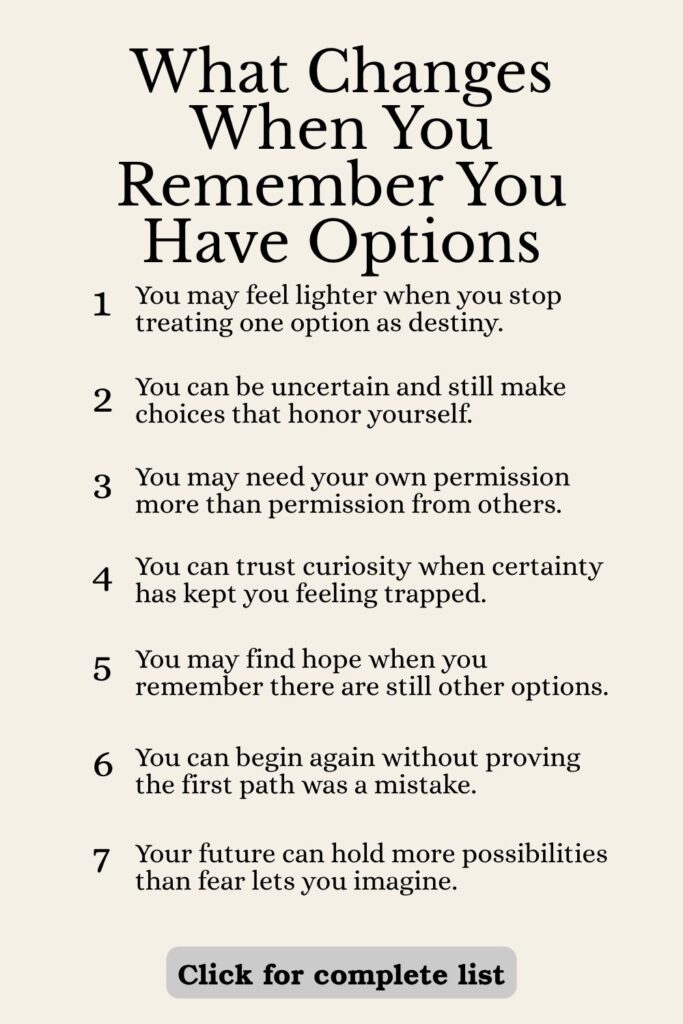
Planned happenstance is the practice of creating opportunities to encounter, recognize, and act on possibilities you could not have predicted.
Career researchers Kathleen Mitchell, Al Levin, and John Krumboltz developed Planned Happenstance Theory to challenge the idea that career planning should eliminate uncertainty. Their framework treats unexpected events as possible sources of learning, especially when people deliberately take part in exploratory activities.
That does not mean waiting for luck to choose your future. It means placing yourself in situations where useful discoveries can happen.
You might take a class outside your original plan, talk to someone with an unfamiliar job, attend an industry event, volunteer for a different responsibility, or try a project that uses a skill you have never tested.
My discovery of life coaching followed this pattern. I was not searching for a permanent alternative to graduate school. I was looking for training that might strengthen a future application.
The discovery was unexpected. Choosing to investigate it was not.
That distinction matters. You cannot schedule every opportunity, but you can decide whether to dismiss an unfamiliar option or learn enough to evaluate it.
If you want to get more from your life, and are looking for concrete action steps to get you there, check out our Request a Coach page. It’s a “cut the fence-sitting and take action” way to tackle your issues and actually find success. To get off the fence and start to take action, click or tap here.
How Did I Find a Different Career Path?

I struggled with this myself for years. You see, before becoming a life coach, I felt that the only way I could possibly achieve a career that would support me was to go to graduate school.
At the end of my college years, I was accepted into a few graduate schools for social work and was planning on attending right away.
But I was struggling a lot with my mental health so I had to put off going but I always planned on eventually going. I felt like a failure for putting graduate school off because I felt like I didn’t have enough skills to get a job where I could succeed without a graduate school diploma. I felt hopeless.
Fast forward 5 years later and I still believed that graduate school was the only path for me.
I had changed my mind several times about which graduate school to go to but I still completely believed that without graduate school I would be a failure. I had thought about social work, counseling, school library science, behavioral analysis, and school counseling.
They were different fields but they all required a Masters. It made me very anxious to think about all I would have to do to get into a graduate school and then deal with the pressures of being a graduate student. But then I learned about life coaching.
Not only did it not require a graduate degree, but it seemed like the perfect job for me because it involves helping people and I would get to work from home on my own schedule. And I found it so randomly.
I actually wasn’t even looking for something to do as a job. I was just looking to see if I could get trained in it in order to add something to my resume for graduate school. But as I looked into it it seemed more and more intriguing. I took a class in it and found it so fascinating.
If you want to get more from your life, and are looking for concrete action steps to get you there, check out our Request a Coach page. It’s a “cut the fence-sitting and take action” way to tackle your issues and actually find success. To get off the fence and start to take action, click or tap here.
I felt that I could help people through it, which has always been a passion of mine, without needing a graduate school degree. I don’t know for a fact if it will be the right path for me but I now realize that there are options.
Which Skills Help You Turn an Unexpected Opportunity Into a Real Option?
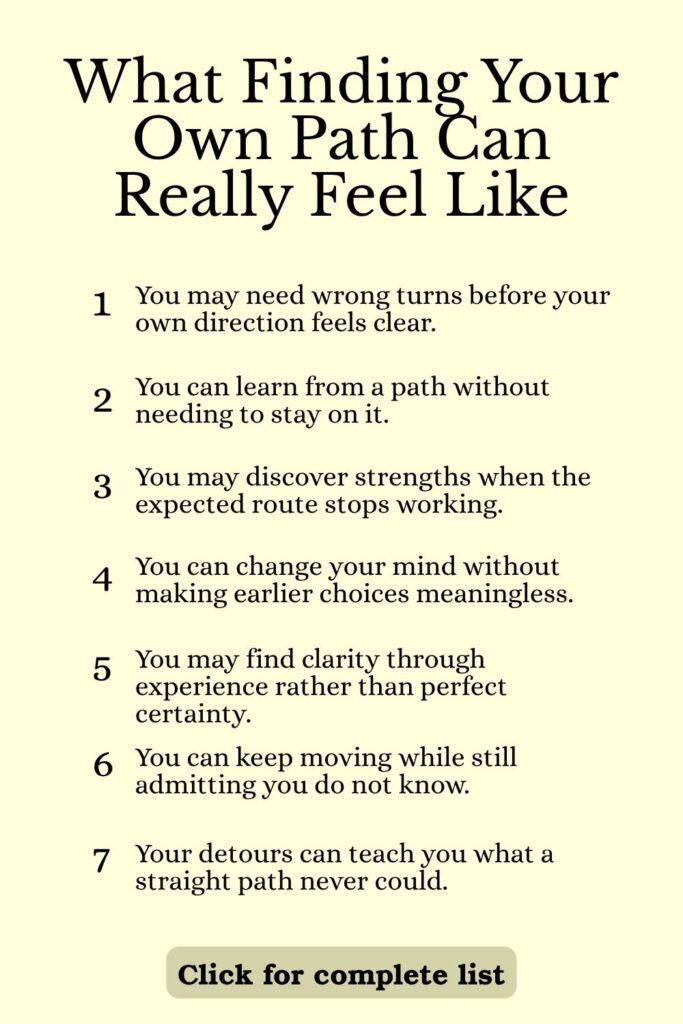
Five practical skills help turn an unexpected possibility into something you can investigate seriously: curiosity, persistence, flexibility, optimism, and reasonable risk-taking.
Curiosity helps you move beyond the first description of an option. Instead of asking, “Does coaching sound interesting?” you might ask how coaches find clients, what training involves, what a typical week looks like, and which parts of the work are difficult.
Persistence keeps the exploration moving after the initial excitement fades. That may mean finishing an introductory course, contacting three professionals after the first person does not reply, or practicing a skill long enough to see whether you can improve.
Flexibility allows the path to change shape. Someone interested in counseling may discover that they prefer career advising, peer support, coaching, case management, or educational programming.
Optimism means treating a possibility as worth examining, not assuming that it will work. You can believe a new direction may be viable while still checking its costs, requirements, and limitations.
Reasonable risk-taking means accepting a manageable amount of uncertainty. Paying for one introductory course is different from taking on years of debt before you have spoken to anyone doing the job.
These skills can become uneven. You may be curious but never take action. You may be persistent but so committed to the original plan that you ignore new evidence.
If you want to get more from your life, and are looking for concrete action steps to get you there, check out our Request a Coach page. It’s a “cut the fence-sitting and take action” way to tackle your issues and actually find success. To get off the fence and start to take action, click or tap here.
A career coach might help you identify which skill is missing, prepare questions for an informational interview, and set a deadline for one concrete exploratory action.
Why Doesn’t the Same Path Work for Everyone?
I’m not alone in believing that there is only one path to success. Many people feel that they can only get a good job if they go to college.
They feel they can only have a fulfilling relationship if they get married. And they may feel they may only find deeper meaning in their lives if they have children.
Now don’t get me wrong, there’s nothing wrong with any of those paths. They do work very well for many people. But the fact is that they don’t work for everyone so they should not be marketed as the “only path that will make you happy.”
People are all different in so many ways. We all have different skills, different weaknesses, and different desires. What works amazingly for one person may work terribly for another.
And that’s ok. We just have to learn that it can take quite some time to figure out what path is right to take.
How Can You Test a New Path Without Betting Everything on It?
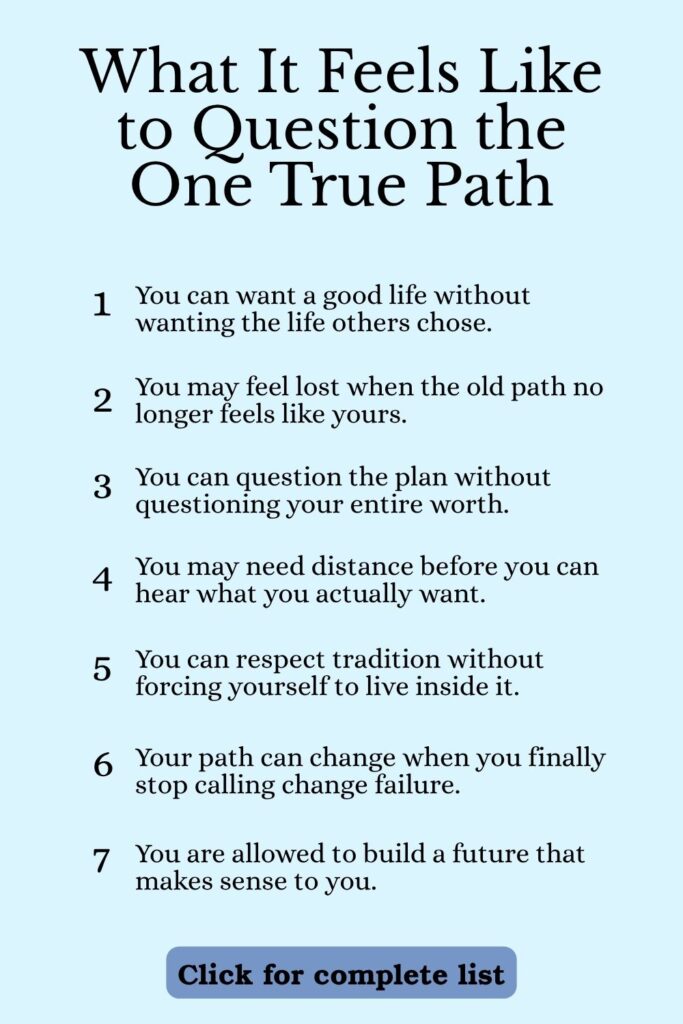
You can test a new path by creating a small experiment that exposes you to the real work without requiring a permanent commitment.
Start with a question that can be answered through experience. “Would I enjoy instructional design?” is too broad. “Do I enjoy turning complicated information into a clear 15-minute lesson?” can be tested.
If you want to get more from your life, and are looking for concrete action steps to get you there, check out our Request a Coach page. It’s a “cut the fence-sitting and take action” way to tackle your issues and actually find success. To get off the fence and start to take action, click or tap here.
A useful career experiment might include:
- Interviewing two people in the field. Ask what they do repeatedly, what beginners misunderstand, and which parts of the job drain their energy.
- Completing a realistic sample task. Write a mock grant proposal, build a short training module, conduct a practice coaching conversation, or create a simple project plan.
- Taking one introductory course. Choose something that includes exercises, feedback, or assignments rather than passive videos alone.
- Observing the work. Shadow someone, attend a professional meeting, or volunteer in a setting where the work happens.
- Trying a limited commitment. Freelance, volunteer, assist with a project, or take a short-term role before reorganizing your life around the new direction.
For example, someone thinking about becoming a teacher could tutor weekly before enrolling in a certification program. The experiment would reveal whether they enjoy explaining concepts, preparing materials, correcting misunderstandings, and working with the same learner over time.
Someone considering coaching could complete a foundational class, practice structured conversations, and ask for feedback. Enjoying advice-giving is not enough. The person needs to experience listening, questioning, maintaining boundaries, and helping someone choose their own actions.
Set a date for reviewing the experiment. A career coach can help you define what the test is meant to reveal and keep you from changing the question whenever the results become uncomfortable.
What Evidence Shows That a Path Actually Fits You?
A path fits when repeated experience provides evidence that you can do the work, develop the necessary skills, tolerate its demands, and build a workable life around it.
Interest matters, but interest in the idea of a career can disappear when you encounter its routine tasks. Someone may love the idea of social work but dislike documentation, agency rules, crisis situations, and the education required for their preferred role.
Use a simple Path Experiment Scorecard after each exploratory experience:
- Interest: Did the actual task hold my attention?
- Skill development: Did I improve with instruction or practice?
- Difficult parts: Am I willing to handle the less appealing parts regularly?
- Practical fit: Can the training, schedule, cost, and working conditions fit my life?
- Opportunity: Are there realistic jobs, clients, apprenticeships, or advancement routes?
- Values: Does the work allow me to contribute in a way that matters to me?
- Outside feedback: What did an instructor, supervisor, client, or experienced professional observe?
No single answer settles the decision. Look for a pattern across several experiences.
If you want to get more from your life, and are looking for concrete action steps to get you there, check out our Request a Coach page. It’s a “cut the fence-sitting and take action” way to tackle your issues and actually find success. To get off the fence and start to take action, click or tap here.
Education should be assessed with the same care. According to the U.S. Bureau of Labor Statistics, workers age 25 and older with a bachelor’s degree had median weekly earnings of $1,543 and a 2.5 percent unemployment rate in 2024. Workers with a high school diploma had median weekly earnings of $930 and a 4.2 percent unemployment rate. Those averages show that education can carry substantial economic value, but they cannot tell you which degree, trade, business, or profession fits your situation.
The useful question is not simply, “Does college pay?” It is, “Does this particular program, at this cost, prepare me for work I have investigated and am willing to do?”
When Should You Persist, Pivot, or Stop?

You should persist when the direction still fits and the main obstacle is a skill, resource, or adjustment that can realistically improve.
For example, struggling during the first month of a demanding course does not prove that the field is wrong for you. You may need tutoring, a different study schedule, clearer feedback, or more practice.
You should pivot when part of the direction fits but the current version does not.
A teacher who loves designing lessons but dislikes managing a classroom might explore instructional design, curriculum development, tutoring, or educational publishing. The original experience was not wasted. It identified which part of the work was worth carrying forward.
You should stop when repeated evidence shows that the cost or mismatch is unlikely to change.
That evidence might include serious health consequences, debt you cannot justify, working conditions you are unwilling to accept, no interest in the daily tasks, or several well-designed experiments producing the same negative result.
If you want to get more from your life, and are looking for concrete action steps to get you there, check out our Request a Coach page. It’s a “cut the fence-sitting and take action” way to tackle your issues and actually find success. To get off the fence and start to take action, click or tap here.
A simple decision check can help:
- Persist: What specific ability or condition needs more time?
- Pivot: Which part fits, and which part needs to change?
- Stop: What repeated evidence tells me this route is no longer worth pursuing?
Set a review date instead of reconsidering the decision every morning. Give yourself enough time to gather evidence, then make the next choice with the information you have.
How Do You Handle Pressure to Choose the Conventional Path?
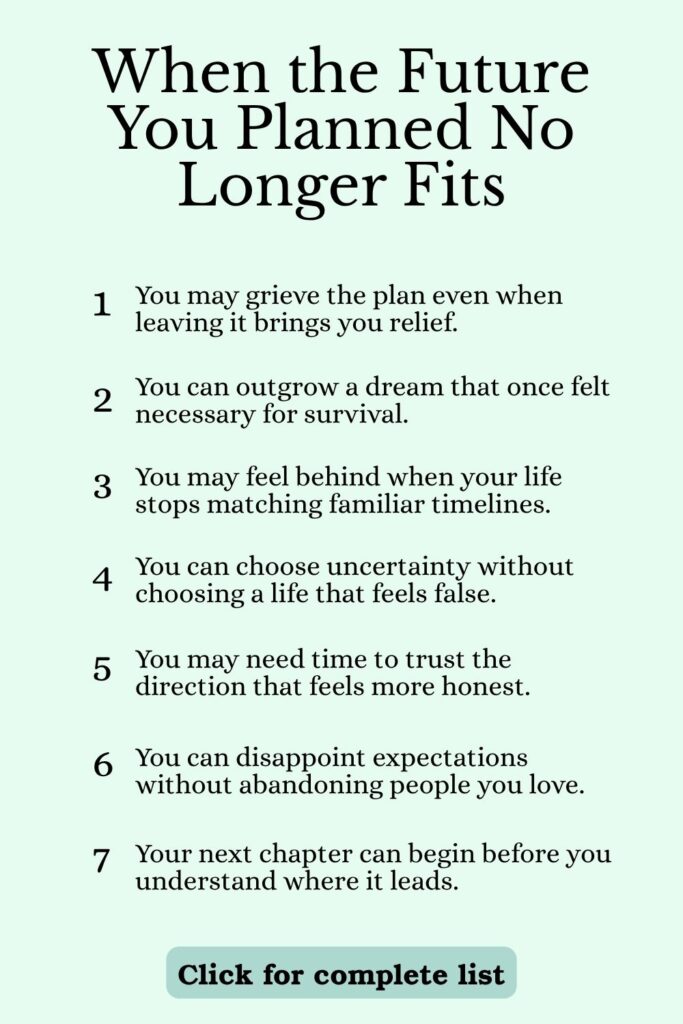
You handle pressure to follow a conventional path by showing that your choice is being tested and evaluated, not made through impulse alone.
People may raise practical concerns because they care about you. They may also repeat assumptions about status, security, marriage, education, or work without examining whether those assumptions apply to your life.
Separate useful questions from pressure based mainly on convention.
A useful question sounds like, “How will you pay for the training?” or “What jobs does this qualification prepare you for?” Those questions can improve your plan.
Conventional pressure sounds like, “People like us do not do that,” or “You will regret it because this is not how life is supposed to go.” Those statements describe someone else’s expectations, not the evidence behind your decision.
You can respond with specifics:
If you want to get more from your life, and are looking for concrete action steps to get you there, check out our Request a Coach page. It’s a “cut the fence-sitting and take action” way to tackle your issues and actually find success. To get off the fence and start to take action, click or tap here.
“I am not quitting tomorrow. I am taking one course, interviewing three people in the field, and reviewing what I learn in two months.”
“I have compared the cost of graduate school with two alternative training routes. I am investigating all three before applying.”
“I understand that marriage and children matter to you. I am not going to make either decision to meet a timeline that does not fit me.”
You do not have to convince every person that your path is correct. You do need to understand your own reasoning well enough to explain what you are testing, what risks you have considered, and when you will review the decision.
A communication or relationship coach might role-play the conversation with you, help you answer predictable objections, and practice ending the discussion when it becomes repetitive or disrespectful.
Frequently Asked Questions
How Do I Know if I Am on the Right Path in Life?
You are probably on a workable path when real experience shows growing interest, ability, and practical fit. Look for patterns across several weeks or months rather than using one good or bad day as the verdict.
A workable path does not need to feel easy. It should give you reasons to continue that are stronger than fear, status, or pressure from other people.
Is It Normal to Change Career Paths More Than Once?
Changing career paths more than once is a common response to new experience, changing responsibilities, and better information. A decision that fit you at 22 may not fit your health, priorities, or opportunities at 35.
If you want to get more from your life, and are looking for concrete action steps to get you there, check out our Request a Coach page. It’s a “cut the fence-sitting and take action” way to tackle your issues and actually find success. To get off the fence and start to take action, click or tap here.
The goal is not to avoid every change. The goal is to make each change more informed than the last.
How Can I Explore a New Career Without Quitting My Current Job?
You can explore a new career through limited experiments outside your current working hours. Informational interviews, short courses, volunteer projects, job shadowing, and small freelance assignments can reveal what the work actually involves.
Choose one experiment that answers a specific question. Do not try to recreate the entire career before deciding whether it deserves further investigation.
How Long Should I Test a New Career Path?
A career path should be tested long enough to move beyond first impressions and complete at least one realistic task. For some options, that may take a few weeks. Others may require a semester, project cycle, or temporary role.
Set the review date before starting. Decide which evidence you will collect so the test does not continue indefinitely.
Is College Necessary for a Successful Career?
College is necessary for some careers, valuable for many others, and unnecessary for certain occupations and businesses. The correct decision depends on the work you want, the credential it requires, the program’s cost, and the opportunities available afterward.
Compare specific programs and outcomes. “College or no college” is too broad to produce a useful decision.
What Is Planned Happenstance Theory?
Planned Happenstance Theory is a career-development framework that treats unexpected events as possible learning opportunities. It encourages people to take exploratory actions that increase their chances of discovering useful options.
If you want to get more from your life, and are looking for concrete action steps to get you there, check out our Request a Coach page. It’s a “cut the fence-sitting and take action” way to tackle your issues and actually find success. To get off the fence and start to take action, click or tap here.
The framework does not ask you to leave your future to chance. It teaches you to become better prepared to notice and investigate what chance brings.
What Should I Do if My Family Disapproves of My Career Choice?
You should explain the evidence, experiments, and practical planning behind your career choice. Clear details often lead to a more useful conversation than trying to prove that your entire future is certain.
You can listen to concrete concerns without giving someone else authority over the final decision.
Can a Career Coach Help Me Choose a Path?
A career coach can help you compare options, design small experiments, prepare informational interviews, and review the evidence you collect. The coach should help you improve your decision process rather than choose a career for you.
Specific support might include role-playing a networking conversation, examining assumptions about salary or status, and creating accountability for the next exploratory action.
What Belief About Your Future Needs Questioning?
There are literally hundreds of thousands (if not millions) of types of jobs out there. Given, you can’t try all of them but experiencing a few different ones can help you figure out more what you would like to do.
If we convince ourselves that there’s only one path then if that path is not working out we will feel like a failure. But it may be that we just need to try something different.
There’s a quote by Albert Einstein I always liked: “If you judge a fish by its ability to climb a tree it’s going to spend it’s whole life thinking its stupid.”
If you want to get more from your life, and are looking for concrete action steps to get you there, check out our Request a Coach page. It’s a “cut the fence-sitting and take action” way to tackle your issues and actually find success. To get off the fence and start to take action, click or tap here.
In order to continue to feel good about our futures we must all question our beliefs about “the one true path.”
Rachel Alison Kaplan, Life Coach
Sources
Mitchell, Kathleen E., S. Al Levin, and John D. Krumboltz. “Planned Happenstance: Constructing Unexpected Career Opportunities.” Journal of Counseling & Development, vol. 77, no. 2, Spring 1999, pp. 115-124. Wiley Online Library, https://doi.org/10.1002/j.1556-6676.1999.tb02431.x.
U.S. Bureau of Labor Statistics. “Education Pays, 2024.” Career Outlook, May 2025, https://www.bls.gov/careeroutlook/2025/data-on-display/education-pays.htm. Accessed 5 Aug. 2026.
If you want to get more from your life, and are looking for concrete action steps to get you there, check out our Request a Coach page. It’s a “cut the fence-sitting and take action” way to tackle your issues and actually find success. To get off the fence and start to take action, click or tap here.
Read this next

Quotes About Self Confidence: Inspiring Be Confident Quotes!
Quotes about self confidence: Learn the art of being confident with these be confident quotes!
Read More
How to Deal With Fear Like a Fighter
Fear shows up long before the moment that matters. It shows up in the locker room, in the quiet before action, in the pause before commitment. Most people try to […]
Read More
How to Develop Unshakable Self-Confidence in 30 Days
You wanna boost your self-confidence, and you’re tired of being insecure. You’re done playing small. You’re ready to show up in life with more energy, more presence, and more certainty. […]
Read More