


Talk to a coach about Organizational coaching

Crystal Faulk
ACC
I help overwhelmed women in transition gain clarity, confidence, and...

Terrie Hein
Certified Life Coach, Certified Insight Coach Practitioner
Coaching to declutter your life, organize your goals, and cook...

Dr Charlene Ashley
Doctorate - Behaviours
I coach individuals to design fulfilling lives through structure, clarity,...

Paloma Chiara

Lana's Gymnastics Club
"Where the best in gymnastics meets fun. Where every child is a star"
lgclubny.com

Anna Sosnina
ICF (ACC)
ICF ACC certified coach, founder of EssorVie Coaching, passionate about...

Travis Brown
Professional Life coach
With experience in guiding clients to achieve goals, build confidence,...

Lynn Yang
Certified Christian Leadership Coaching (CCLC)
I will help you gain new insights, habits, and plans...





How to Build a Modern Thanksgiving Tablescape That Feels Warm, Not Overdone
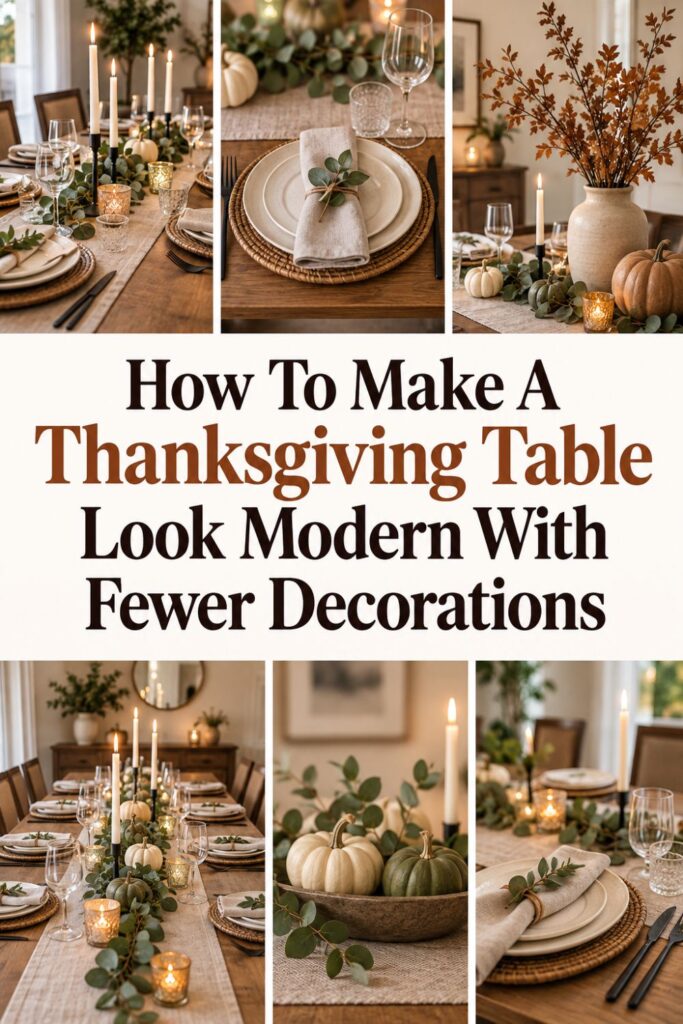
A Thanksgiving table does not need to be covered in orange pumpkins, patterned linens, oversized floral arrangements, and piles of seasonal decorations to feel special. A modern Thanksgiving tablescape can feel just as warm and inviting while using far fewer pieces.
The key is to make each choice intentional. Instead of decorating every available inch, focus on clean lines, repeated shapes, a restrained color palette, subtle texture, and warm candlelight.
Black and white can create the crisp contrast that gives the table its modern edge. Muted neutrals such as cream, beige, taupe, natural wood, and soft brown keep that contrast from feeling cold or too formal.
The result is a table that feels polished without looking like it took all day to assemble.
This approach is especially useful when you want Thanksgiving to feel beautiful but do not have hours to spend arranging decor before guests arrive. Once you understand the formula, you can reuse it every year with small changes.
A simple modern table usually needs only a few core ingredients:
- One restrained color palette: Limit yourself to two or three main tones so the table looks cohesive from end to end.
- One consistent place setting: Repeat the same plates, glasses, napkins, and flatware around the table instead of making every seat different.
- One centerpiece direction: Choose candles, branches, a low vessel, or another simple focal point rather than combining several centerpiece ideas.
- One subtle Thanksgiving detail: Use a seasonal element to signal the occasion without letting it dominate the entire table.
The goal is not to make the table look empty. It is to create enough breathing room that the pieces you do use become more noticeable.
Once you begin thinking in terms of contrast, repetition, texture, and editing, putting together a modern Thanksgiving tablescape becomes much easier.
If you want to get more from your life, and are looking for concrete action steps to get you there, check out our Request a Coach page. It’s a “cut the fence-sitting and take action” way to tackle your issues and actually find success. To get off the fence and start to take action, click or tap here.
Need some help with style or organization? Drop on by our directories choc full of image coaches, organization coaches and minimalist coaches to help make your spaces beautiful. Or click here to have us match you to the best.
1. Choose Your Modern Thanksgiving Color Formula First
Before you pull out plates, napkins, candles, or centerpiece pieces, decide what colors will actually appear on the table. This one step prevents the setup from becoming a collection of individually pretty items that do not quite work together.
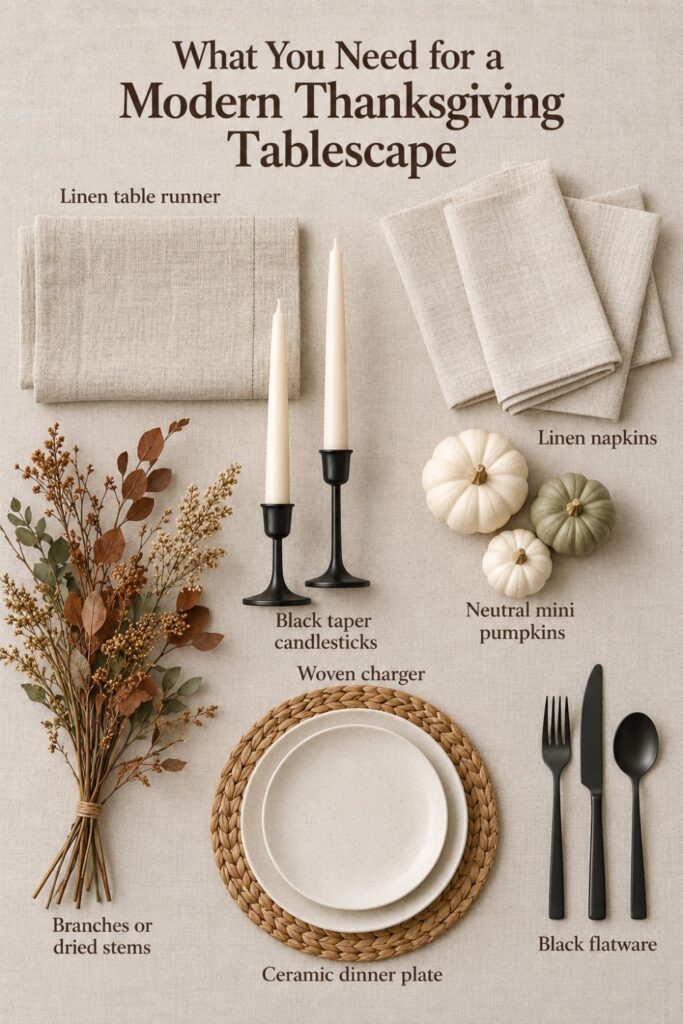
A modern Thanksgiving table usually looks strongest when the palette is tightly controlled. Instead of using every traditional fall color, choose one dominant neutral, one contrasting tone, and one warming shade.
For example, you might use white as the main color, black for contrast, and natural wood to soften the overall effect. Another table could combine cream, charcoal, and taupe.
Use this simple formula:
- Choose your dominant neutral: Pick white, ivory, beige, soft taupe, or natural wood. This should cover most of the visual space on the table.
- Add one strong contrast: Black is an easy choice for a modern table. Use it in flatware, plates, candlesticks, napkins, or small accessories.
- Choose one warming tone: Add wood, linen, soft brown, muted tan, or another warm neutral so the table does not feel stark.
- Repeat instead of adding: Once the palette is established, repeat those colors rather than bringing in new shades every time the table feels incomplete.
This is where restraint makes a big difference.
If the table already includes white plates, black candlesticks, beige linen, and natural wood, you probably do not need orange napkins, burgundy flowers, gold chargers, green glassware, and copper pumpkins too.
Try standing a few feet away from the table after your first few pieces are in place. If your eye immediately understands the color story, you are on the right track.
If you want to get more from your life, and are looking for concrete action steps to get you there, check out our Request a Coach page. It’s a “cut the fence-sitting and take action” way to tackle your issues and actually find success. To get off the fence and start to take action, click or tap here.
If your attention jumps from one unrelated color to another, simplify.
A tightly edited palette gives you more freedom later because even inexpensive or mismatched pieces can feel coordinated when they share the same visual language.
2. Build a Clean Foundation Without Over-Layering the Table
Once the palette is decided, create the visual foundation of the table. This is the layer everything else will sit on, so keeping it simple makes the rest of the styling much easier.
Start by deciding whether the table itself should be visible.
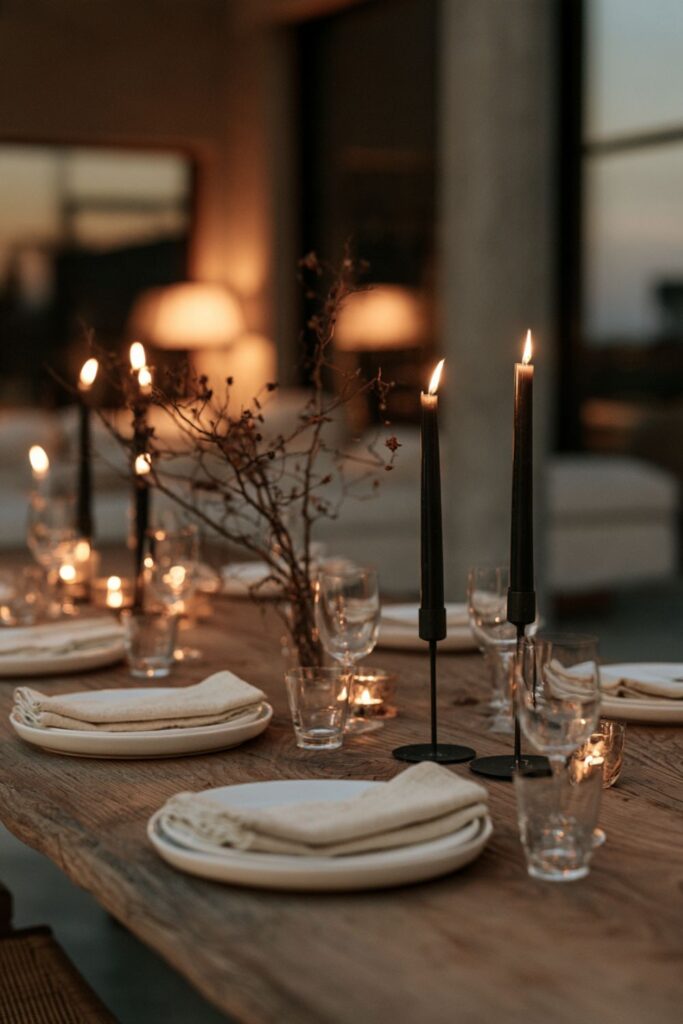
A warm wooden dining table can become part of the neutral color scheme, which means you may not need a full tablecloth at all. Leaving some wood exposed can instantly add warmth to a black-and-white setup.
If the tabletop is not something you want to feature, choose a plain cloth in white, cream, oatmeal, beige, taupe, or charcoal.
Then resist the temptation to keep layering.
You usually do not need a tablecloth, runner, placemats, chargers, decorative fabric, and extra textiles all at once. A modern tablescape often looks stronger when one or two of those elements are removed.
If you want to get more from your life, and are looking for concrete action steps to get you there, check out our Request a Coach page. It’s a “cut the fence-sitting and take action” way to tackle your issues and actually find success. To get off the fence and start to take action, click or tap here.
Use this quick foundation check:
- Choose one main linen layer: Use either a tablecloth or a runner as your primary base.
- Let good surfaces show: If the wood or stone underneath fits the palette, allow some of it to remain visible.
- Keep the lines clean: Straight runners, simple folds, and uncomplicated edges support the modern look.
- Avoid decorative clutter at the base: If the empty table already feels busy before you add plates, simplify now.
Texture can still play an important role. A slightly rumpled linen runner, for example, can soften crisp plates and dark flatware without adding another color.
The foundation should give the eye somewhere to rest.
Before moving on, look at the table from the doorway or from several feet away. You should see a clear surface with a strong overall direction, not a collection of layers competing for attention.
If it already feels calm and intentional, you have created the right base for everything that follows.
3. Create Modern Place Settings With a Simple Layering Formula
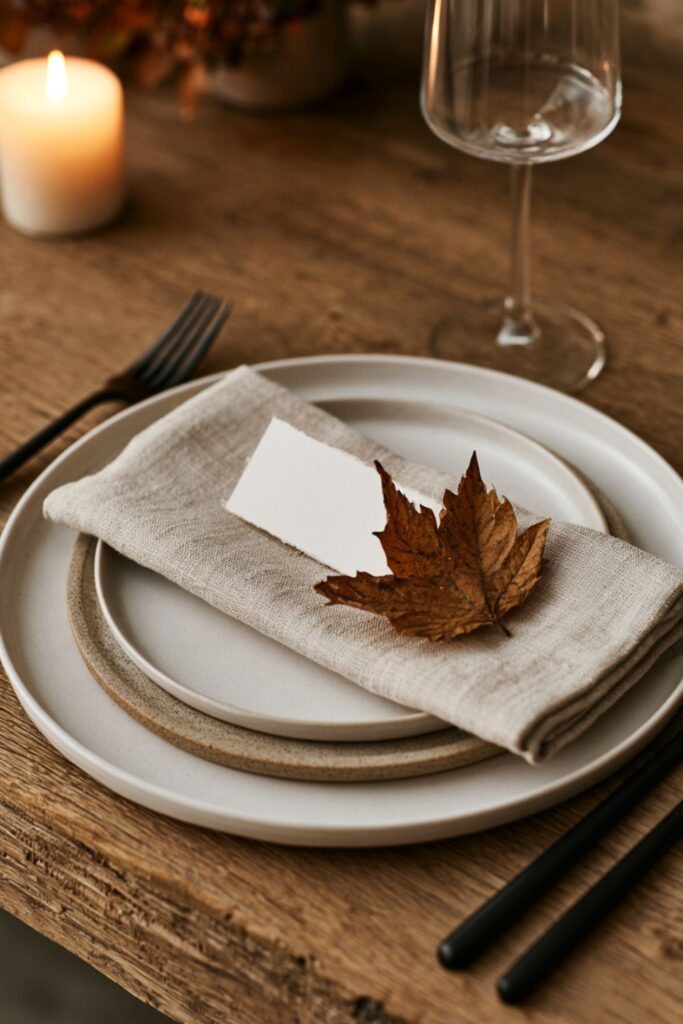
Place settings are one of the easiest ways to make a Thanksgiving table look intentional because they naturally repeat around the table. When every seat follows the same simple formula, that repetition becomes part of the design.
You do not need a complicated stack of dishes to create impact.
Start with the pieces guests will actually use. A dinner plate, one smaller plate or bowl if needed, flatware, glassware, and a napkin are often enough.
If you want to get more from your life, and are looking for concrete action steps to get you there, check out our Request a Coach page. It’s a “cut the fence-sitting and take action” way to tackle your issues and actually find success. To get off the fence and start to take action, click or tap here.
Then create contrast within that small group.
A few combinations that work well include:
- White plates with black accents: Add black flatware, a charcoal napkin, or a black-edged glass.
- Black plates with pale linens: Cream or beige napkins soften the darker plate and keep the setup inviting.
- Neutral stoneware with one graphic detail: Use matte ceramics with slim black flatware or a dark place card.
- White-on-white with texture: Combine white plates with linen napkins and add contrast through candles or the centerpiece instead.
Keep napkin styling uncomplicated.
A clean rectangle folded beneath the flatware, a loose knot placed on the plate, or a simple fold across the center is enough. Intricate napkin designs can quickly pull the table away from the pared-back aesthetic.
If you want each seat to feel distinctly Thanksgiving, add one very small seasonal touch.
This could be a handwritten place card, a tiny sprig, a single dried leaf, or a simple name tag tied with natural string.
The key is consistency. If one setting has a dark napkin, another has gold flatware, and another has a patterned plate, the visual rhythm begins to disappear.
Set one place completely before doing the others. Once that first setting looks right, copy it around the table.
If you want to get more from your life, and are looking for concrete action steps to get you there, check out our Request a Coach page. It’s a “cut the fence-sitting and take action” way to tackle your issues and actually find success. To get off the fence and start to take action, click or tap here.
That turns styling into a repeatable process instead of eight separate decorating decisions.
4. Use Candles to Add the Warmth the Neutral Palette Needs
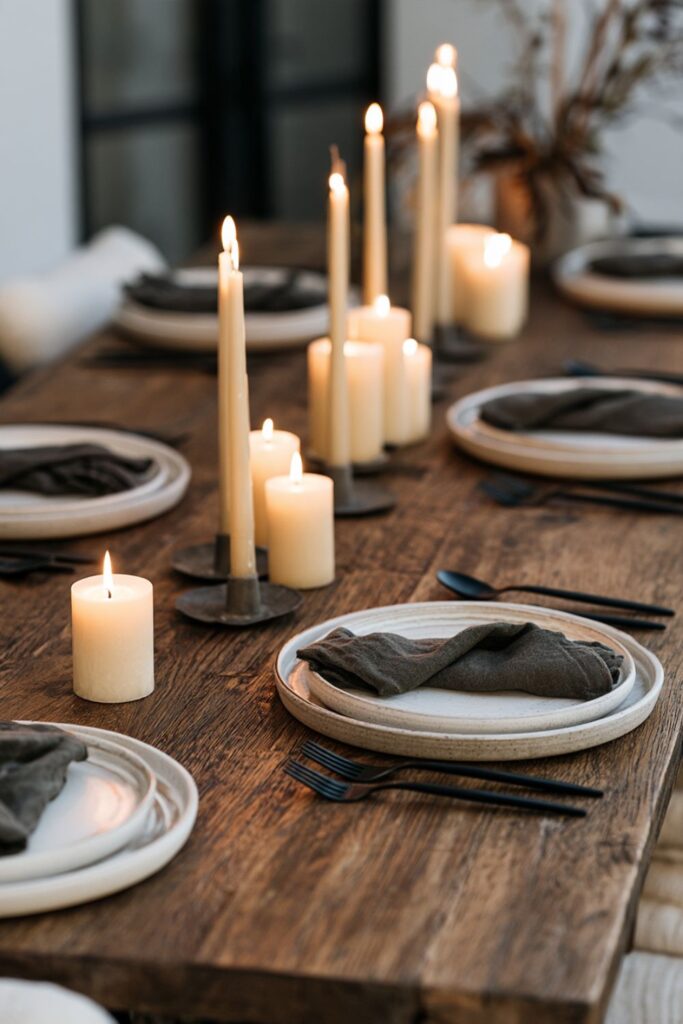
Black, white, and muted neutrals can look beautifully sophisticated, but they can also feel a little cool if every surface is crisp and structured. Candlelight is one of the easiest ways to bring warmth back into the table without adding more color or clutter.
Think of candles as part of the overall composition rather than a final decorative extra.
Start by choosing one candle style.
Slim taper candles are especially effective on a modern table because their vertical lines add height without taking up much surface space. Simple pillars can work too, particularly on a larger table, while low votives create a softer and more relaxed look.
Keep the candle colors connected to your palette.
Good options include:
- Black candles: These create strong graphic contrast and work especially well with white dishes.
- White or ivory candles: These keep the table light and allow dark candlesticks to provide contrast.
- Taupe or beige candles: These add softness while staying within a neutral color story.
- Clear glass votives: These provide warmth without introducing another visual element.
Once you choose the type, repeat it.
If you want to get more from your life, and are looking for concrete action steps to get you there, check out our Request a Coach page. It’s a “cut the fence-sitting and take action” way to tackle your issues and actually find success. To get off the fence and start to take action, click or tap here.
Three or five candles placed along the center of the table will usually look more deliberate than several unrelated candle styles scattered between other decorations.
Height matters too.
You want enough variation to create movement, but not so much that guests are trying to talk through a wall of candles. Keep taller pieces slim, or mix them with lower candles to preserve sightlines across the table.
Do not underestimate what happens once the candles are lit.
Warm light softens black elements, brings dimension to neutral linens, and makes simple glassware sparkle. It can give a very minimal table the sense of occasion that people often try to create with much more decor.
Before adding another decorative object, try lighting the candles first. You may discover that the table already feels finished.
5. Build a Centerpiece That Uses More Empty Space Than Stuff
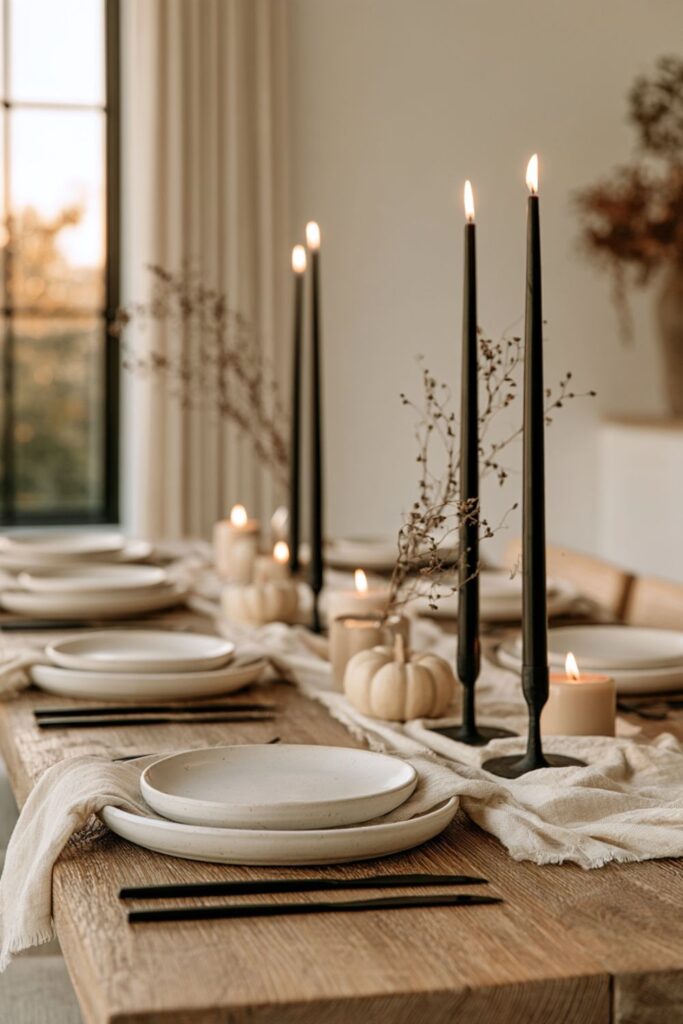
The centerpiece is where modern Thanksgiving tables can easily become overdecorated. It is tempting to keep adding pieces because the middle of the table looks empty while you are standing close to it.
That empty space is not necessarily a problem.
If you want to get more from your life, and are looking for concrete action steps to get you there, check out our Request a Coach page. It’s a “cut the fence-sitting and take action” way to tackle your issues and actually find success. To get off the fence and start to take action, click or tap here.
On a pared-back table, negative space is part of the design. It allows individual objects to stand out and gives guests room for serving dishes, glasses, and conversation.
Start by choosing one centerpiece direction.
You might use:
- A line of candles: Repeat matching candlesticks or votives down the center.
- One low vessel: Fill a simple bowl or vase with branches, greenery, or another restrained natural element.
- A few sculptural branches: Use them sparingly in a narrow container.
- A small clustered arrangement: Group two or three pieces rather than spreading decorations across every inch.
- A candle and natural element combination: Keep the materials limited and repeat the same forms.
Avoid combining every option.
If you already have a row of dramatic black tapers, you may not need a large floral arrangement between them. If a sculptural branch arrangement is doing the visual work, let it remain the focal point.
Also consider height carefully.
A centerpiece should decorate the table without making conversation awkward. Low arrangements and tall, narrow pieces tend to work better than wide arrangements that block sightlines.
When you think the centerpiece is finished, try one final editing trick.
If you want to get more from your life, and are looking for concrete action steps to get you there, check out our Request a Coach page. It’s a “cut the fence-sitting and take action” way to tackle your issues and actually find success. To get off the fence and start to take action, click or tap here.
Remove one item.
Step back and look again. If the centerpiece looks clearer and more deliberate, leave that piece out.
This is especially helpful with modern decor because the strongest arrangement is often one step simpler than your first instinct.
The goal is not to fill the center of the table. It is to create a focal line that visually connects the place settings while leaving plenty of breathing room around it.
6. Add Texture Without Adding More Colors
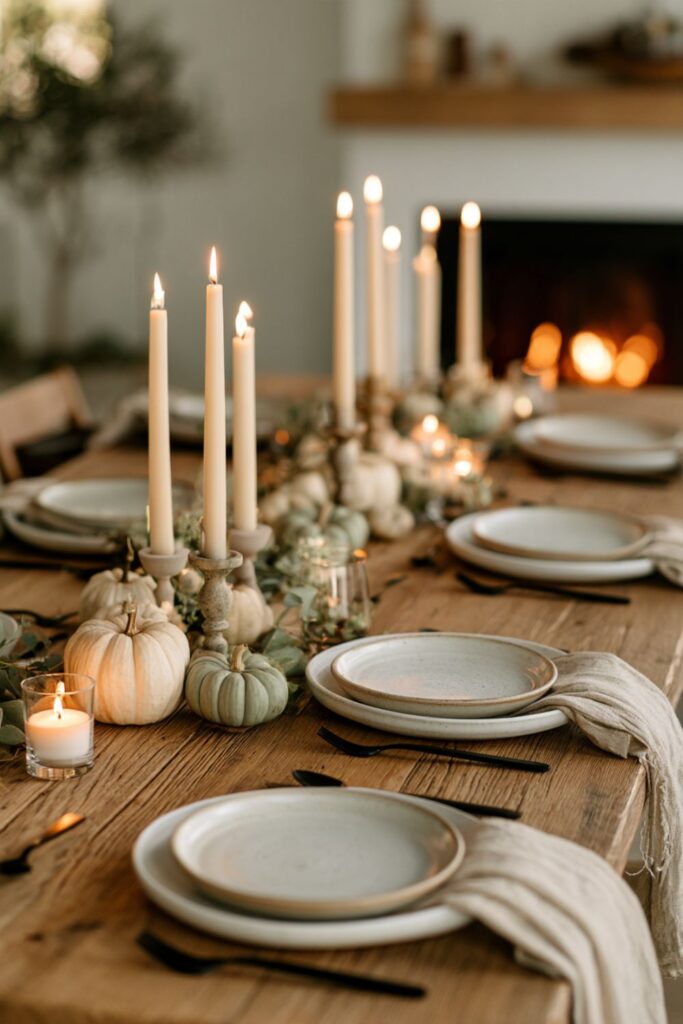
A neutral tablescape can start to feel flat if every piece has the same smooth finish. The solution is not necessarily more color. Often, what the table really needs is more texture.
Texture creates visual depth while allowing you to keep the palette restrained.
For example, a white ceramic plate and a white linen napkin may technically be the same color, but they reflect light differently. That difference makes the table feel layered without making it busier.
Look for contrast between materials such as:
If you want to get more from your life, and are looking for concrete action steps to get you there, check out our Request a Coach page. It’s a “cut the fence-sitting and take action” way to tackle your issues and actually find success. To get off the fence and start to take action, click or tap here.
- Matte ceramics and clear glass
- Soft linen and polished flatware
- Natural wood and smooth stoneware
- Ribbed glass and plain plates
- Woven textiles and sleek candlesticks
You do not need to use every material at once.
Choose two or three textures and repeat them. A linen runner, matte plates, and glass candle holders may be enough to create the depth you need.
Natural materials are especially useful in a modern Thanksgiving setting because they soften graphic black-and-white combinations.
A pale wooden serving board, linen napkins, dried branches, or a simple ceramic bowl can add warmth without changing the overall color story.
Try to balance hard and soft surfaces.
If you have glossy black plates, dark metal flatware, and glass candle holders, introduce something tactile such as washed linen. If the table already has lots of fabric and raw wood, a little polished metal or clear glass can provide contrast.
The important thing is to avoid making every item a statement piece.
If everything has a dramatic texture, unusual shape, or distinctive finish, the table becomes visually noisy again.
If you want to get more from your life, and are looking for concrete action steps to get you there, check out our Request a Coach page. It’s a “cut the fence-sitting and take action” way to tackle your issues and actually find success. To get off the fence and start to take action, click or tap here.
Choose one or two materials that deserve attention, then let the rest stay quiet.
This is what makes a neutral table feel rich rather than plain. The interest comes from the way surfaces interact, not from adding more colors or decorations.
7. Add Thanksgiving Details Without Losing the Modern Look
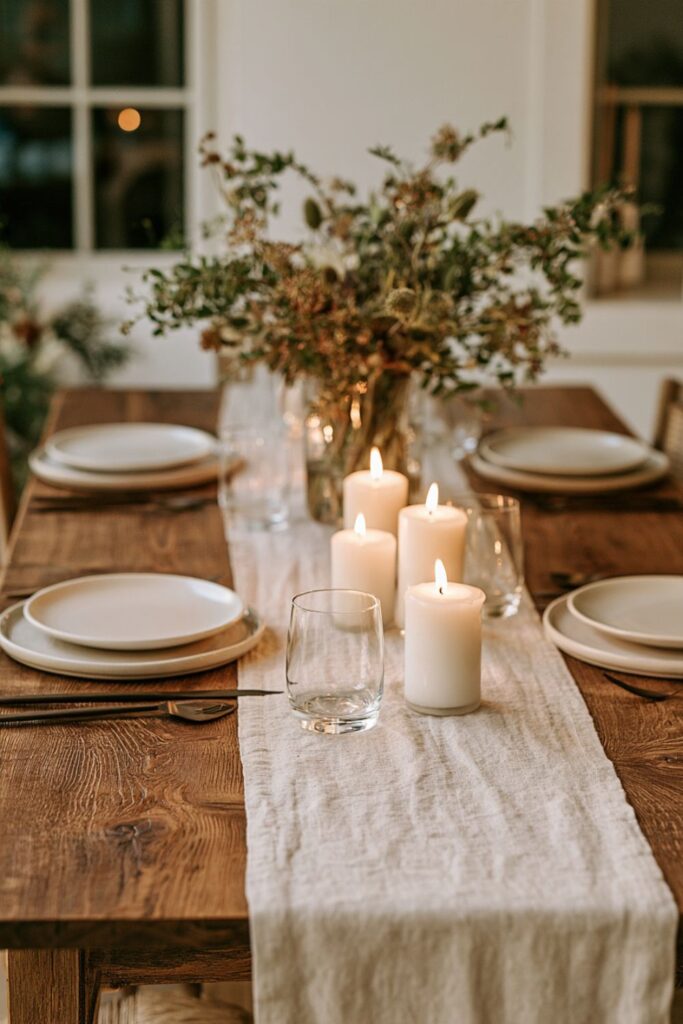
A modern table still needs to feel like Thanksgiving rather than an attractive dinner setup that could belong to any season. The trick is to use seasonal details as a quiet signal instead of making them the entire theme.
Choose one Thanksgiving reference and let it repeat gently through the table.
You might use:
- Small neutral pumpkins: Look for white, cream, pale green, or natural varieties.
- Dried leaves: Use one at each setting or scatter a few down the center.
- Pears or seasonal fruit: Their sculptural shapes can add a subtle harvest feeling.
- Branches or dried stems: These bring in nature without requiring a large floral arrangement.
- Wheat or grasses: Use them sparingly for texture and seasonal warmth.
- Simple gratitude cards: Add a small handwritten prompt or name card at each seat.
The important part is translating the seasonal detail into your existing palette.
If bright orange pumpkins would interrupt a black, white, and taupe table, use pale pumpkins or another natural element instead. The Thanksgiving reference should work with the design rather than forcing the design to change around it.
One small detail at each place setting can be especially effective because repetition gives it visual significance.
If you want to get more from your life, and are looking for concrete action steps to get you there, check out our Request a Coach page. It’s a “cut the fence-sitting and take action” way to tackle your issues and actually find success. To get off the fence and start to take action, click or tap here.
For example, a single dried leaf beneath each name card may communicate the season more elegantly than a large pile of decorative leaves across the center.
Be careful with themed objects.
Turkey figurines, novelty napkin rings, patterned plates, mini signs, pumpkin-shaped bowls, and printed tablecloths can all be festive, but combining several of them will quickly change the look.
Pick one seasonal cue and trust it.
When someone sees the complete table, the Thanksgiving feeling should come from the gathering, the warmth, the natural textures, the candlelight, and the carefully chosen seasonal reference.
It does not need to be announced by every object on the table.
8. Set the Whole Table in the Right Order When Time Is Tight
One of the easiest ways to make holiday decorating feel exhausting is to jump between tasks. You start arranging candles, remember the napkins are still in a drawer, move the centerpiece, search for glasses, and suddenly the dining room is covered in half-finished decisions.
A simple setup order makes the process much faster.
If you want to get more from your life, and are looking for concrete action steps to get you there, check out our Request a Coach page. It’s a “cut the fence-sitting and take action” way to tackle your issues and actually find success. To get off the fence and start to take action, click or tap here.
Use the same sequence every time:
- Set the foundation first: Put down the tablecloth or runner, or clear and polish the exposed tabletop. This establishes the usable space and the main background color.
- Complete the place settings second: Add plates, napkins, flatware, glasses, and any small place cards. Finish every seat before decorating the center.
- Build the centerpiece third: Add your candles, vessel, branches, or other primary centerpiece elements.
- Add Thanksgiving details last: Use leaves, small pumpkins, fruit, or another restrained seasonal cue only after the main table is complete.
- Do one editing pass: Straighten repeated elements, remove unnecessary pieces, and check that there is still room for food and serving dishes.
This order works because function comes before decoration.
You know exactly how much space guests need before you start filling the middle of the table. It also prevents you from creating a centerpiece you love and then discovering there is nowhere practical to put water glasses or serving bowls.
If you are hosting after a busy workweek, complete as much as possible the night before.
Set clean plates, glassware, napkins, and non-perishable decor early. Leave only fresh elements, food, and candle lighting for the final stretch.
The less you have to decide on Thanksgiving Day, the easier it is to enjoy the table rather than constantly adjusting it.
A good modern setup should look thoughtful without requiring constant styling.
Use This Modern Thanksgiving Tablescape Template Every Year
Once you find a table formula that works, there is no reason to reinvent the entire setup every Thanksgiving. Create a simple template you can reuse, then change one or two elements each year when you want the table to feel fresh.
If you want to get more from your life, and are looking for concrete action steps to get you there, check out our Request a Coach page. It’s a “cut the fence-sitting and take action” way to tackle your issues and actually find success. To get off the fence and start to take action, click or tap here.
Start by recording the basic formula.
You can save it in your phone, add it to a holiday planning document, or write it on a note that stays with your Thanksgiving decor.
Use these prompts:
- Dominant neutral: ___
- Contrast color: ___
- Warming neutral: ___
- Foundation: bare table / tablecloth / runner
- Dinnerware: ___
- Napkin style: ___
- Flatware: ___
- Glassware: ___
- Centerpiece direction: ___
- Candle style: ___
- Thanksgiving detail: ___
- Serving pieces needed: ___
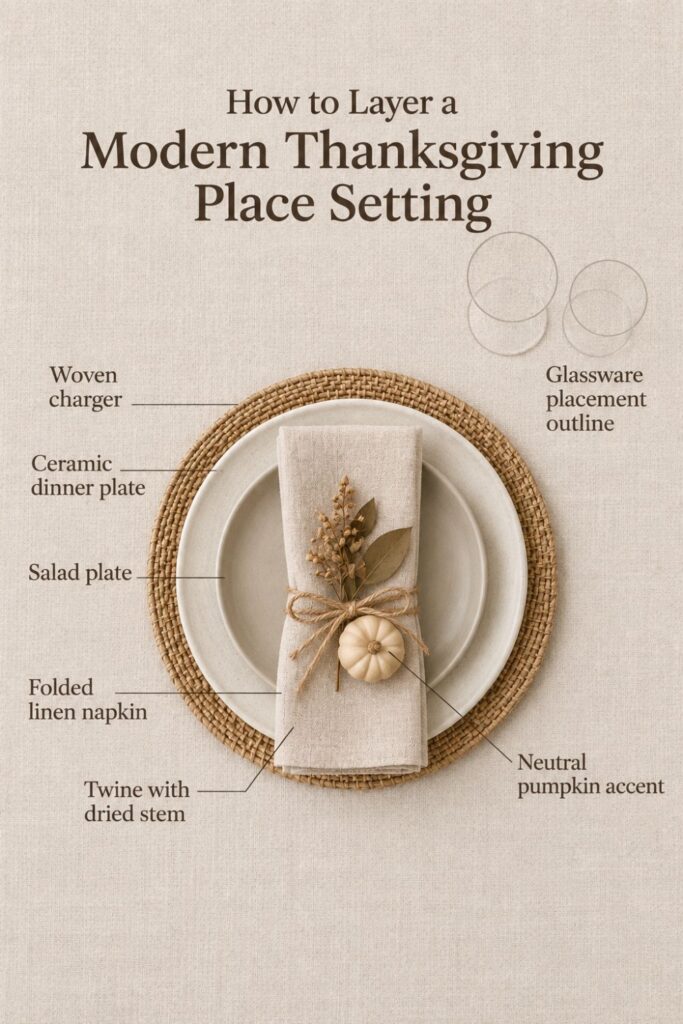
Take a quick photo after the table is finished too.
You are not saving the photo because next year’s table needs to look identical. You are saving yourself from having to remember which combinations worked.
Maybe you discover that six black candlesticks felt crowded but four looked perfect. Perhaps cream napkins worked better than charcoal ones, or the table felt more relaxed without placemats.
Write those things down.
The template also makes shopping more intentional.
If you want to get more from your life, and are looking for concrete action steps to get you there, check out our Request a Coach page. It’s a “cut the fence-sitting and take action” way to tackle your issues and actually find success. To get off the fence and start to take action, click or tap here.
Instead of wandering through seasonal aisles looking for something that might work, you can identify the actual gap. If your formula is already complete, you may not need anything new at all.
If you do want a change, replace one category.
Switch black candles for ivory ones, trade dried branches for pears, or change the napkin texture while keeping the rest of the formula intact.
That gives you a fresh Thanksgiving tablescape without starting from zero or accumulating another box of holiday decorations.
How an Organizing Coach Could Make Holiday Decorating Easier
If holiday decorating regularly turns into searching through bins, buying duplicates, or spending hours deciding what goes together, the real issue may not be decorating skill. It may be the system behind the decorating.
An organizing coach can help identify where the process becomes unnecessarily difficult.
For some people, the problem is too much seasonal decor. For others, Thanksgiving linens are stored in one place, candle holders in another, serving pieces somewhere else, and place cards in a drawer no one remembers.
The goal would be to reduce those friction points.
If you want to get more from your life, and are looking for concrete action steps to get you there, check out our Request a Coach page. It’s a “cut the fence-sitting and take action” way to tackle your issues and actually find success. To get off the fence and start to take action, click or tap here.
A practical system might include:
- Create one Thanksgiving table kit: Store the specific linens, candle holders, place-setting extras, and small seasonal accents you use together.
- Separate versatile decor from holiday-only decor: Black candlesticks, neutral napkins, glass votives, and wooden serving pieces can often stay with everyday entertaining supplies.
- Limit duplicate categories: Decide how many runners, napkin sets, candle styles, or seasonal centerpiece pieces you realistically need.
- Create a setup checklist: Record the order in which you set the table so you do not have to reconstruct the process every year.
- Store a reference photo: Keep one image of the finished setup with the holiday supplies or in a clearly labeled digital folder.
An organizing coach can also help with the decision-making side.
If you tend to keep decor because it might be useful someday, you can create clearer rules for what deserves storage space. Items that do not fit your preferred color palette, table size, or decorating style may not need to stay simply because they are technically Thanksgiving decor.
That makes future decorating faster because the choices available to you are already good choices.
You open the bin and see coordinated pieces you actually use rather than sorting through years of unrelated seasonal purchases.
For a busy household, that kind of system can make the difference between decorating feeling like another project and decorating feeling manageable.
A Modern Table Is Mostly About Knowing What Not to Add
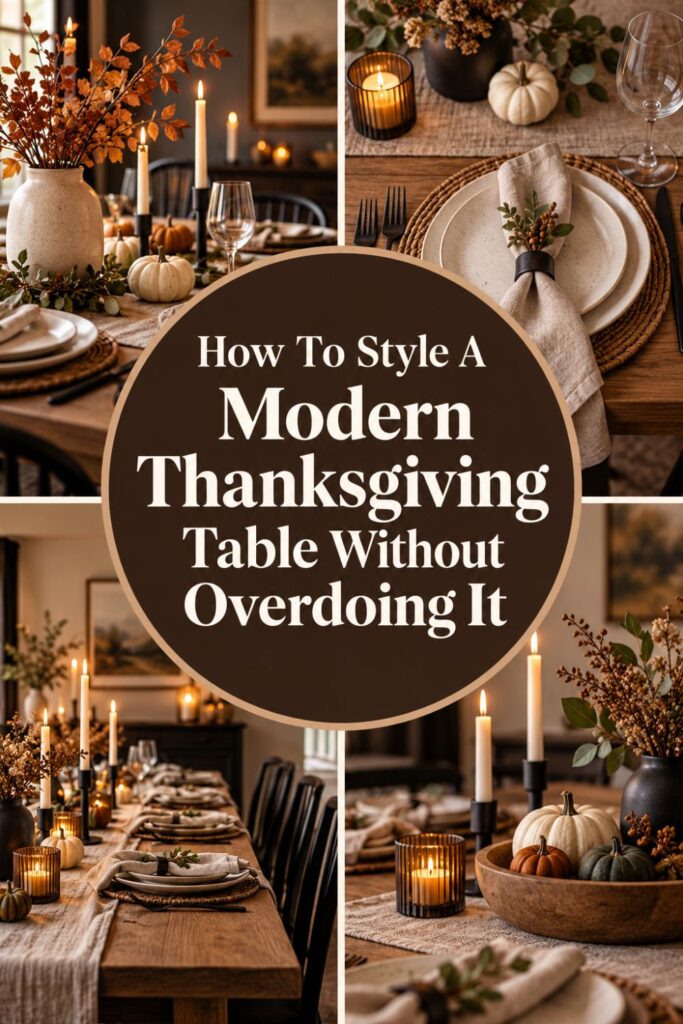
A successful modern Thanksgiving table is not defined by how much decor you manage to fit onto it. It is defined by how clearly every piece contributes to the finished look.
Clean lines give the table structure. Repeated place settings create visual rhythm. Black and white provide contrast, while muted neutrals and natural materials soften the overall effect.
If you want to get more from your life, and are looking for concrete action steps to get you there, check out our Request a Coach page. It’s a “cut the fence-sitting and take action” way to tackle your issues and actually find success. To get off the fence and start to take action, click or tap here.
Then candlelight brings everything together.
The most useful question to ask as you finish the table is not, “What else could I add?”
Ask, “Does anything still need to be here?”
That shift can completely change the way you decorate.
If removing a charger makes the plates look cleaner, leave it out. If the centerpiece already feels complete with candles and branches, you do not need to add pumpkins simply because it is Thanksgiving.
If the exposed table adds warmth, you may not need another textile layer.
Before guests arrive, do one final check:
- Can everyone see across the table comfortably?
- Is there space for food and serving pieces?
- Does the palette still feel consistent?
- Is the Thanksgiving detail noticeable without dominating the setup?
- Can you remove anything without losing the overall effect?
Then stop styling.
If you want to get more from your life, and are looking for concrete action steps to get you there, check out our Request a Coach page. It’s a “cut the fence-sitting and take action” way to tackle your issues and actually find success. To get off the fence and start to take action, click or tap here.
A pared-back Thanksgiving table can still feel generous, festive, and welcoming. In many cases, the extra breathing room makes the meal itself feel more important because guests are not sitting behind piles of decorations.
That is the real advantage of a modern tablescape.
You are creating a beautiful setting for Thanksgiving, but the table is still designed for people to gather, eat, talk, and enjoy being together.
When the table feels calm, warm, cohesive, and ready for the meal, it is finished.
Need some help with style or organization? Drop on by our directories choc full of image coaches, organization coaches and minimalist coaches to help make your spaces beautiful. Or click here to have us match you to the best.
If you want to get more from your life, and are looking for concrete action steps to get you there, check out our Request a Coach page. It’s a “cut the fence-sitting and take action” way to tackle your issues and actually find success. To get off the fence and start to take action, click or tap here.
Read this next
Easter Flower Arrangements That Feel Luxe Without The Florist Price Tag
Create luxe-looking Easter flower arrangements with grocery store blooms, simple vases, and easy tricks that make your table feel fresh fast.
Read More
Unlock the Secrets: 7 Advanced DIY Organization Hacks Most Experts Won’t Tell You
Feeling like every drawer, shelf, and surface in your life is bursting at the seams? You’re not alone. Need some in depth help with organization and productivity ? Drop on […]
Read More
Learn How to Declutter Your House: What is Your Clutter Personality?
Top four clutter personalities and quick tips to get started clearing your clutter.
Read More