


Talk to a coach about Wellness coaching
Dr Soraya Sawicki, DSW, CPC, RMT
DSW, CPC, CSC, RMT
Personalized wellness coaching for stress relief, energy, and inner harmony.
Robert Bradley Singleton
Certified Master Spiritual Life Coach, Neuropsychologist, and Existential Therapist
Train with the best to be the best you! Don't...
Crystal Faulk
ACC
I help overwhelmed women in transition gain clarity, confidence, and...

Dr. Kate Watson
B.A Psychology, M.Ed. Psychological Counseling, Dr.PH in Public Health, Certified Health Coach, Certified Life Coach, Certified Mind and Body Specialist, Certified Women's Empowerment Coach, Certified Neurodiversity Coach
Dr. Kate Watson helps people with boundaries, coping strategies, and...
A. Nya ~ Savvy Soul Life
CPC, MSLC
Life, wellness, creativity, mindfulness & spiritual coaching for personal strengthening...
Katerina Markadakis
Author of Legacy of Avoidance and Legacy of Letting Go. Relationship Recovery & Divorce Coach specializing in healing, emotional resilience, boundaries, and life transitions.
Helping people heal after divorce, heartbreak, and life transitions.
Tobias Kemper
Transformation Guide - LCI/CDP
Personal Transformation / Life Balance / Spiritual Growth / Life...
Charity Archie
Several Life Coaching Certifications-Intentional Holistic Life Coach
Charity Aumora dedicated to promoting a positive clear & intentional...

Yin Yoga for Calm Seekers: The Slow, Deep Practice That Restores Body and Mind
Life can be loud—meetings, phone notifications, endless to-do lists—and for some personalities, the ultimate goal isn’t to go faster, but to slow down. If you find yourself craving moments of stillness, deep exhalations, and the quiet hum of your own breath, Yin Yoga is your perfect match.
This style is the antidote to the high-speed, high-output world most of us live in. It’s not about chasing intensity—it’s about cultivating peace. If you’re a calm seeker (or want to become one), Yin Yoga meets you where you are and gently guides you into a slower, more restorative rhythm.
In our original roundup of Which Yoga Style Fits Your Personality? Find Out Here!, we featured Yin Yoga as the sanctuary for calm seekers, and now we’re taking a closer look at how to create a slow, restorative practice that melts away tension and restores balance.
Need some in depth health and wellness guidance? Drop on by our directories choc full of wellness coaches, health coaches, fitness coaches, stress management coaches, and energy coaches to get your calm on. Or click here to have us match you to the best.

What It Actually Looks Like

A Yin Yoga class is slow, quiet, and deeply grounding. Instead of flowing quickly between poses, you’ll settle into each posture and hold it for three to five minutes—sometimes even longer. The pace allows you to fully relax your muscles and work into the body’s connective tissues—ligaments, fascia, and joints—areas often overlooked in faster practices.
Typical Yin poses are supported with props like bolsters, blankets, or blocks, making them accessible for all body types and flexibility levels. The lighting is often dim, the music (if any) is soft and soothing, and the instructor’s voice becomes a gentle guide rather than a drill sergeant.
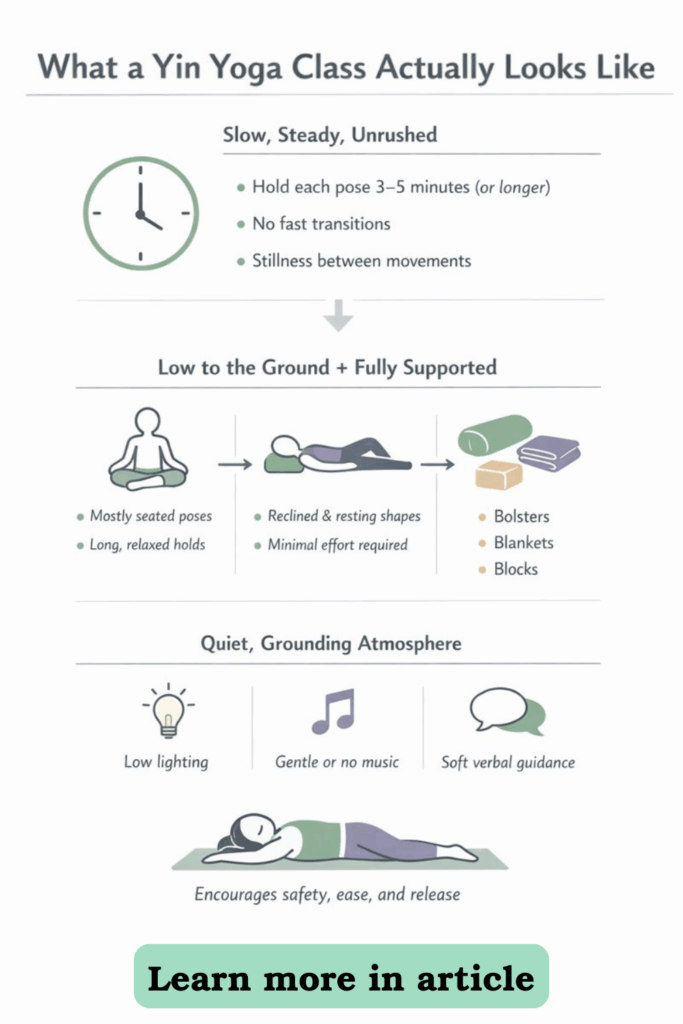
You may spend the majority of class close to the ground in seated or reclined positions, which naturally encourages a sense of safety and release.
The Physical Benefits

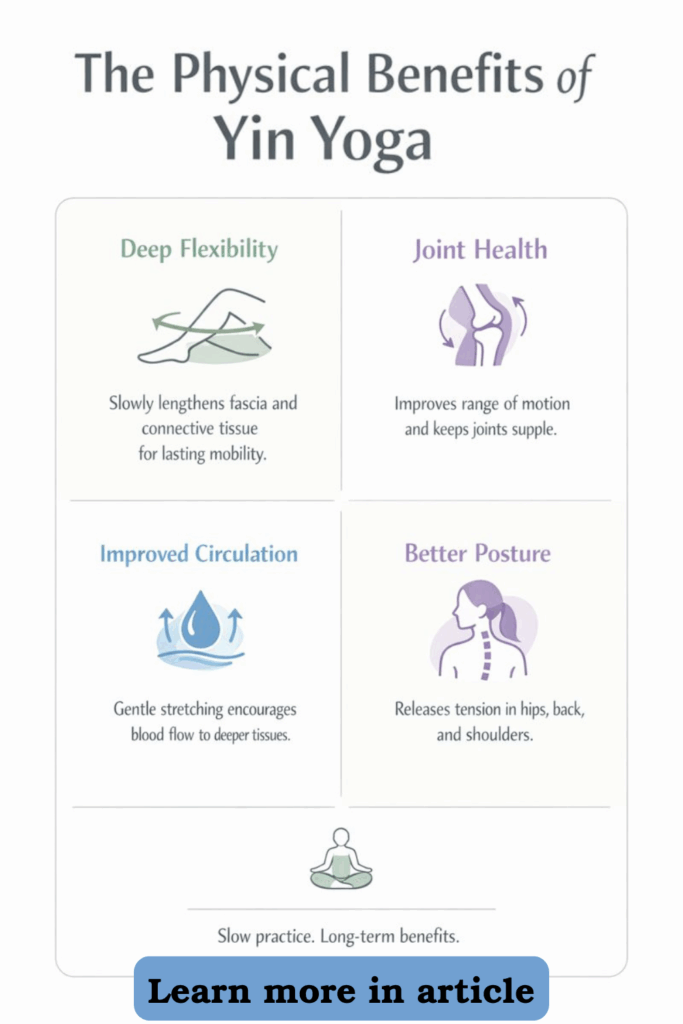
- Deep Flexibility: Slowly lengthens fascia and connective tissue for lasting mobility.
- Joint Health: Improves range of motion and keeps joints hydrated and supple.
- Improved Circulation: Gentle stretching encourages blood flow to deeper tissues.
- Better Posture: Loosens chronically tight areas like hips, lower back, and shoulders.
The Mental Benefits

For a calm seeker, the mental side of Yin Yoga is equally—if not more—important:
If you want to get more from your life, and are looking for concrete action steps to get you there, check out our Request a Coach page. It’s a “cut the fence-sitting and take action” way to tackle your issues and actually find success. To get off the fence and start to take action, click or tap here.
- Nervous System Reset: Activates the parasympathetic nervous system, reducing stress and anxiety.
- Mindfulness Practice: Extended holds become mini meditations in themselves.
- Patience & Presence: Teaches you to be comfortable in stillness, even when the mind wanders.
- Emotional Release: The slowness often allows stored tension and emotions to surface and dissolve.
Why It Works for Your Personality

Yin Yoga honors the fact that rest is productive. If you’re naturally introspective, empathetic, or sensitive to your environment, this style helps you recharge without overstimulating your mind or body.
For those who live in a fast-paced or high-stress world, Yin becomes the balance—the grounding cord that keeps you centered and steady. Even if you don’t think of yourself as “naturally calm,” practicing Yin regularly can help you cultivate that calm over time.
How to Get Started & Succeed

- Find the Right Environment: Choose a studio or online class with a quiet, comfortable space and minimal distractions.
- Gather Props: Bolsters, blankets, and blocks make a huge difference in comfort.
- Dress Comfortably: Soft, breathable fabrics help you settle in for long holds.
- Release the Pressure to ‘Achieve’: This is not a competition—there’s no “best” in Yin Yoga.
- Embrace the Stillness: Your mind may resist at first. That’s normal. Keep breathing and notice how it changes over time.

Common Poses You’ll See in Yin Yoga

- Butterfly Pose: A seated forward fold with the soles of the feet together, opening the hips and stretching the spine.
- Dragon Pose: A deep lunge that releases hip flexors and quadriceps.
- Sphinx Pose: A gentle backbend that strengthens the spine while opening the chest.
- Caterpillar Pose: A seated forward fold that lengthens hamstrings and calms the nervous system.
- Reclined Bound Angle Pose (Supta Baddha Konasana): Lying on the back with knees open and feet together, often supported by props for deep relaxation.
- Shoelace Pose: A seated hip opener that also stretches the outer thighs and lower back.
- Twisted Roots: A supine twist that releases tension in the spine and shoulders.
- Happy Baby Pose: Gently opens the hips and stretches the inner thighs.
- Melting Heart Pose (Anahatasana): A chest-opener that also lengthens the spine and shoulders.
- Child’s Pose (Balasana): A grounding, restorative forward fold to rest the mind and body.

If you want to get more from your life, and are looking for concrete action steps to get you there, check out our Request a Coach page. It’s a “cut the fence-sitting and take action” way to tackle your issues and actually find success. To get off the fence and start to take action, click or tap here.
Read this next

How to Transform Everyday Items into Yoga Props for Beginners
Let’s get one thing straight: you do not need a $98 cork yoga block or a boutique bolster embroidered with moon phases to start your practice. If you’ve got a […]
Read More
The Top 6 Safe Coping Skills: Advice From a Life Coach
Do you know how to cope effectively? Grab these top coaching skills from a coach.
Read More
Which Yoga Style Fits Your Personality? Find Out Here!
Yoga isn’t just one thing—it’s a world of styles, each with its own pace, focus, and energy. Some practices are physically intense, while others are slow and meditative. Some aim […]
Read More