


Talk to a coach about Organizational coaching

Crystal Faulk
ACC
I help overwhelmed women in transition gain clarity, confidence, and...

Terrie Hein
Certified Life Coach, Certified Insight Coach Practitioner
Coaching to declutter your life, organize your goals, and cook...
Dr Charlene Ashley
Doctorate - Behaviours
I coach individuals to design fulfilling lives through structure, clarity,...

Paloma Chiara

Lana's Gymnastics Club
"Where the best in gymnastics meets fun. Where every child is a star"
lgclubny.com

Anna Sosnina
ICF (ACC)
ICF ACC certified coach, founder of EssorVie Coaching, passionate about...

Tyler Fink
B.A. in Religion, Anthropology, and Philosophy. Master of Divinity (M.Div.) in Missiology
Pastor, husband, and father helping Christian men pursue faithful growth...

Travis Brown
Professional Life coach
With experience in guiding clients to achieve goals, build confidence,...




The Green Thanksgiving Table Trick You’ll Wish You Tried Sooner
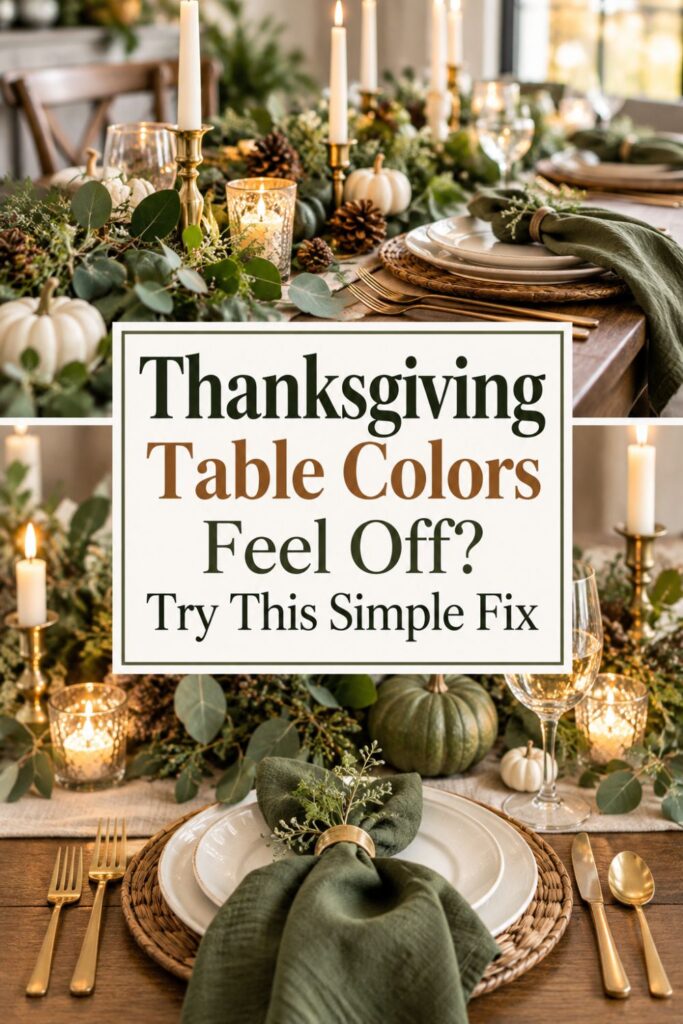
A Green Thanksgiving Table Can Feel Just as Seasonal as Orange and Brown
A Thanksgiving table does not have to be covered in orange pumpkins, red leaves, and brown plaid to feel warm and seasonal. Green and blue can create an equally inviting holiday table, especially when you choose the shades carefully and repeat them throughout the setting.
The secret is to start with a clear color direction instead of collecting decorations first. Olive green creates a warm, earthy look. Dark green feels richer and moodier. Blue and white can make the table feel fresh and elegant while still working beautifully for a late fall gathering.
Once you have chosen your main palette, the rest of the table becomes much easier to plan.
Choose your main color story: Decide whether olive green, dark green, or blue and white will be the dominant look before choosing napkins, plates, greenery, or centerpiece pieces.
Add one supportive neutral: White, cream, beige, wood tones, and warm metallics can give stronger colors enough space to stand out without making the table feel busy.
Repeat your colors intentionally: Carry the same shades through several parts of the table instead of using a different color for every decorative element.
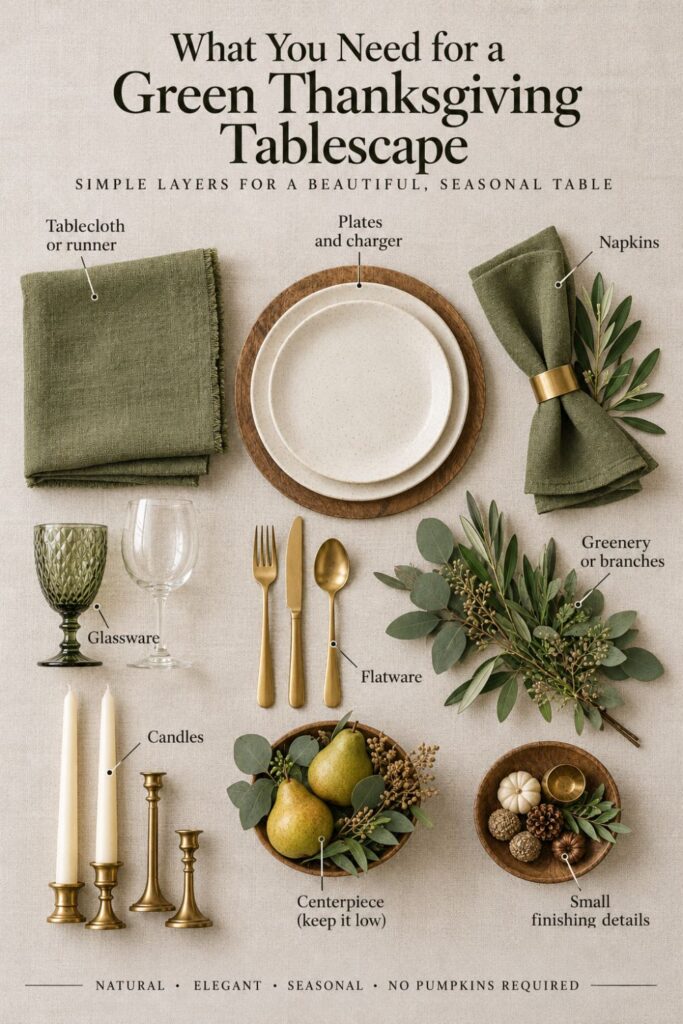
A simple Thanksgiving tablescape can usually be built from a few key layers:
- A runner or tablecloth
- Plates and napkins
- Glassware and flatware
- Greenery or branches
- One central arrangement
- A few small finishing details
You do not need every item to match exactly. In fact, slight variations often make a table feel more relaxed and collected.
If you want to get more from your life, and are looking for concrete action steps to get you there, check out our Request a Coach page. It’s a “cut the fence-sitting and take action” way to tackle your issues and actually find success. To get off the fence and start to take action, click or tap here.
What matters most is that the colors appear often enough to feel deliberate.
The following setups use the same basic decorating formula but show how dramatically the mood can change depending on the palette. Whether you prefer warm olive, dramatic emerald, or crisp blue and white, the goal is to create a table that looks thoughtfully styled without making Thanksgiving dinner harder to serve.
Need some help with style or organization? Drop on by our directories choc full of image coaches, organization coaches and minimalist coaches to help make your spaces beautiful. Or click here to have us match you to the best.
1. Start With One Green or Blue Thanksgiving Color Story
The easiest way to make a Thanksgiving table look pulled together is to decide on the color palette before you start decorating.
Without a clear palette, it is surprisingly easy to add one pretty thing after another until the table feels crowded and disconnected. Choosing your colors first gives every later decision a simple question: does this belong with the look I am creating?
Pick your dominant color: Choose olive green, forest green, emerald, muted blue, navy, or another specific shade as the color people should notice first.
Avoid starting with a vague idea such as “green and blue.” That leaves too many options open. A table based on olive and cream will feel very different from one built around emerald, navy, and white.
Choose a neutral foundation: Select white, cream, beige, natural wood, or another quiet neutral to balance the stronger color.
If you want to get more from your life, and are looking for concrete action steps to get you there, check out our Request a Coach page. It’s a “cut the fence-sitting and take action” way to tackle your issues and actually find success. To get off the fence and start to take action, click or tap here.
The neutral may appear in:
- Plates
- Tablecloths
- Napkins
- Candles
- Serving dishes
- Chairs or surrounding decor
Add one smaller accent: Once the dominant color and neutral are established, choose one accent such as brass, gold, brown, silver, or a second shade of blue.
Keep this accent limited. It should support the palette rather than compete with it.
Create a simple color ratio: Let the main color appear repeatedly, use the neutral across larger areas, and reserve the accent for smaller details.
You do not need to measure the percentages precisely. The goal is simply to avoid giving every color equal visual weight.
Finally, place several possible items on the table before committing. Put down one napkin, one plate, a section of greenery, and one centerpiece item.
Stand back and look at them together.
If something suddenly feels too bright, too cool, or unrelated to the other pieces, remove it now. Editing at this stage is much easier than trying to fix a crowded table after everything has been arranged.
If you want to get more from your life, and are looking for concrete action steps to get you there, check out our Request a Coach page. It’s a “cut the fence-sitting and take action” way to tackle your issues and actually find success. To get off the fence and start to take action, click or tap here.
2. How to Build an Olive Green Thanksgiving Tablescape
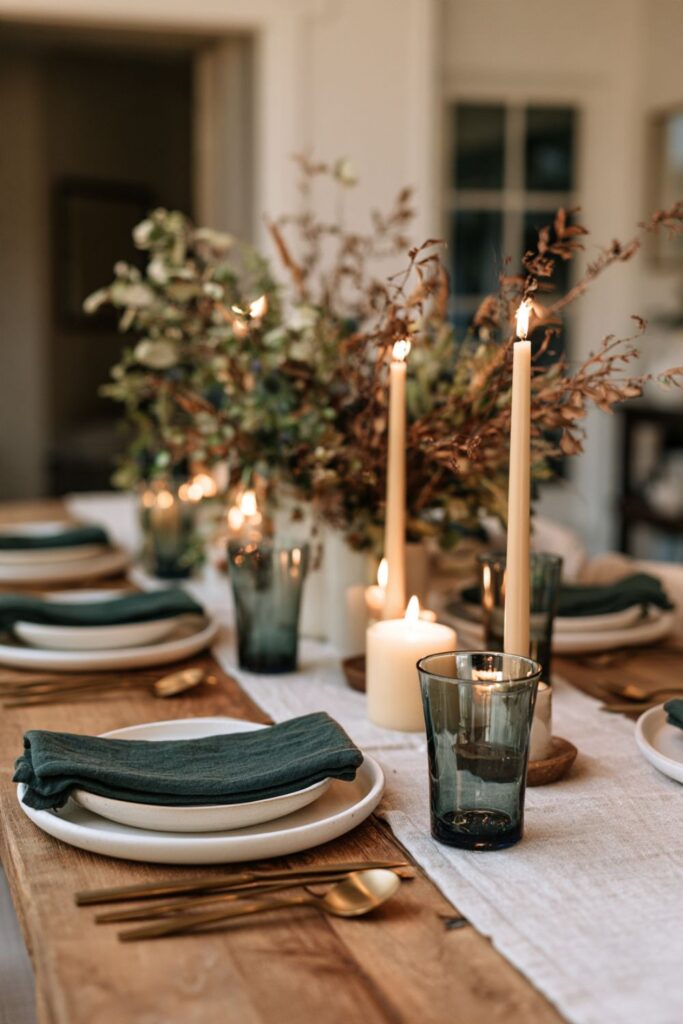
Olive green is one of the easiest ways to create a green Thanksgiving tablescape because it already feels connected to autumn.
Unlike bright leafy greens, olive has a muted quality that works naturally with brown, cream, gold, wood, and other traditional fall colors. It can make the table feel seasonal without relying on the usual orange-heavy Thanksgiving palette.
Make olive your anchor: Start with one noticeable olive element such as napkins, a runner, placemats, or greenery.
You do not need all four. One larger olive feature plus a few smaller repetitions is usually enough to establish the palette.
Warm the table with earthy neutrals: Pair olive with cream plates, natural wood, woven textures, muted gold, tan, or warm brown.
These colors prevent olive from feeling too cool or spring-like.
A simple combination might include:
- Olive linen napkins
- Cream dinnerware
- Natural wood chargers
- Brass or gold flatware
- Muted greenery
- Brown or beige linen
Choose greenery with similar undertones: Look for eucalyptus, olive branches, dried leaves, or other muted greenery rather than very bright green foliage.
If you want to get more from your life, and are looking for concrete action steps to get you there, check out our Request a Coach page. It’s a “cut the fence-sitting and take action” way to tackle your issues and actually find success. To get off the fence and start to take action, click or tap here.
This keeps the centerpiece connected to the rest of the palette.
Use rust or gold sparingly: If you want a stronger autumn signal, introduce a small amount of rust, amber, bronze, or gold.
A little goes a long way. One warm accent repeated several times will usually look more polished than adding several different fall colors.
Keep the centerpiece natural: Build the center of the table with low greenery, branches, seasonal fruit, or other organic textures.
The result should feel layered but relaxed.
Olive green works especially well if you already own neutral tableware because the color can be introduced mainly through textiles and foliage. You can create a completely different Thanksgiving look without replacing your plates, glasses, or serving pieces.
That makes this palette both practical and visually flexible.
3. How to Make Dark Green Feel Rich Enough for Thanksgiving
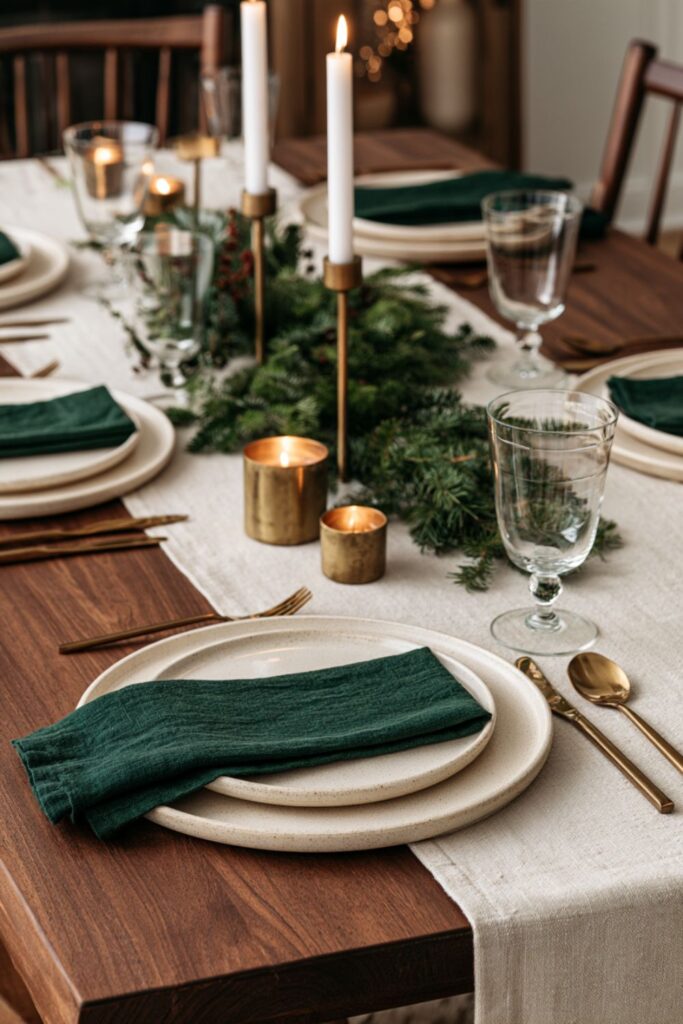
Dark green creates a Thanksgiving table that feels dramatic, elegant, and slightly unexpected.
If you want to get more from your life, and are looking for concrete action steps to get you there, check out our Request a Coach page. It’s a “cut the fence-sitting and take action” way to tackle your issues and actually find success. To get off the fence and start to take action, click or tap here.
Forest green and emerald can both work beautifully, but they need enough contrast around them. If every surface is dark, the table may begin to feel heavy rather than rich.
The goal is to give the darker color room to stand out.
Choose one deep green: Decide whether you are working with emerald, forest, bottle green, or another dark shade.
Using several dark greens together can work, but starting with one dominant shade makes the table much easier to control.
Add lighter pieces for contrast: Place cream, ivory, or white next to the deep green so the color does not visually take over the table.
You might use:
- White dinner plates
- Cream napkins
- Pale candles
- Clear glassware
- Light linen
- Neutral serving dishes
Introduce blue carefully: Dark green pairs beautifully with navy, sapphire, and other jewel-like blues.
Use blue as a secondary color rather than another dominant shade. A blue glass, patterned plate, or small textile detail can create depth without turning the table into a two-color competition.
If you want to get more from your life, and are looking for concrete action steps to get you there, check out our Request a Coach page. It’s a “cut the fence-sitting and take action” way to tackle your issues and actually find success. To get off the fence and start to take action, click or tap here.
Bring in a warm metallic: Brass, antique gold, or another warm metallic can help dark green feel more appropriate for Thanksgiving.
Metallic accents are especially effective in small doses, such as flatware, candleholders, or napkin rings.
Distribute dark colors evenly: Avoid placing all of the deep green in the centerpiece.
Repeat it at individual place settings so the whole table feels connected. A dark green napkin at each seat is often enough to create this effect.
Before adding more decor, stand several feet away and look at the table as a whole.
Dark colors have stronger visual weight than pale ones. If the table already looks full, resist the urge to keep decorating.
A few deliberate pieces can make a dark green Thanksgiving tablescape feel much more luxurious than a table filled with competing accessories.
4. How to Create a Blue and White Thanksgiving Table Without Making It Feel Wintry
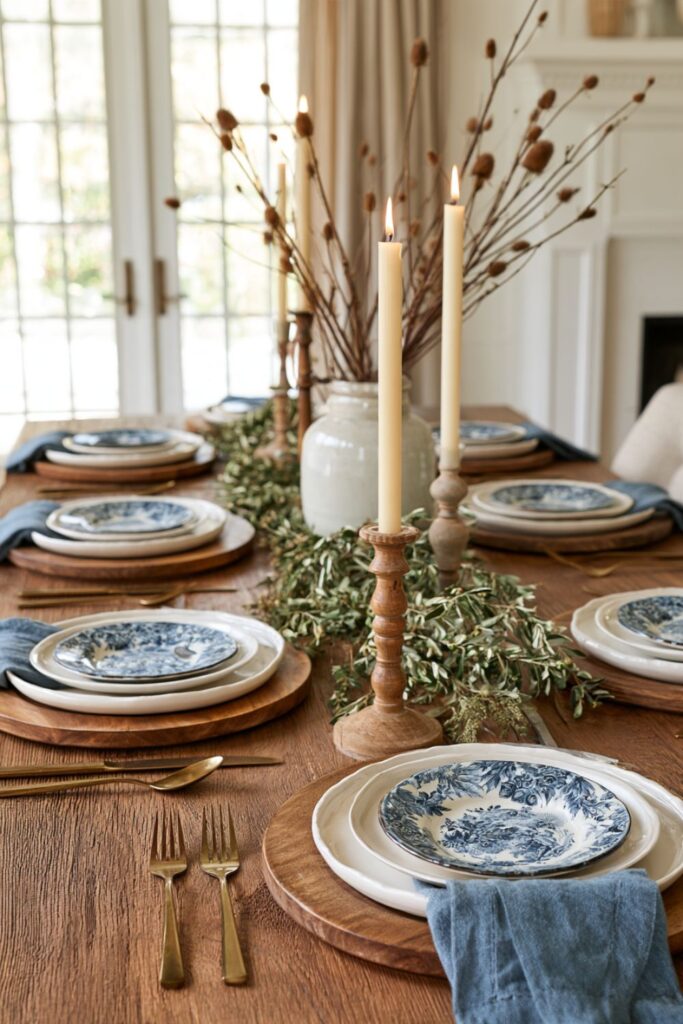
Blue and white can look beautiful on a Thanksgiving table, but it needs a few warmer elements to keep the setting from feeling like Christmas or winter decor.
If you want to get more from your life, and are looking for concrete action steps to get you there, check out our Request a Coach page. It’s a “cut the fence-sitting and take action” way to tackle your issues and actually find success. To get off the fence and start to take action, click or tap here.
The easiest approach is to let white create the foundation and use blue as a repeated accent.
Start with a generous amount of white: Use white plates, cream linens, pale serving dishes, or another light base.
This creates visual breathing room and allows your chosen blue to stand out.
Choose one blue family: Decide whether the table will use soft dusty blue, icy blue, navy, or a deeper traditional blue.
Avoid combining every blue you own unless the pieces already share a similar undertone.
Warm the palette naturally: Add wood, woven textures, greenery, brown branches, linen, or warm metallics.
These materials immediately shift the table toward fall without requiring orange or red.
For example, you could combine:
If you want to get more from your life, and are looking for concrete action steps to get you there, check out our Request a Coach page. It’s a “cut the fence-sitting and take action” way to tackle your issues and actually find success. To get off the fence and start to take action, click or tap here.
- White plates
- Blue napkins
- Natural wood chargers
- Greenery
- Brass flatware
- Clear glassware
- Cream candles
Use pattern strategically: Blue and white patterned dishes can become a strong design feature, particularly if the rest of the table remains simple.
If the plates are heavily patterned, keep the runner and napkins quieter.
Add Thanksgiving texture: Natural branches, dried foliage, seed pods, linen, and greenery can give the table enough autumn character to ground the cooler palette.
This is particularly useful if you prefer a cleaner decorating style and do not want literal turkey or pumpkin decorations.
Finally, check how the palette feels under evening lighting.
Cool blue can look very different once candles and warmer indoor lights are turned on. What looks crisp during the day may become surprisingly cozy at dinner.
That contrast is part of what makes blue and white such an interesting Thanksgiving option. It feels fresh and different while still working beautifully with natural seasonal textures.
5. Use the Table Runner to Establish the Palette Before You Decorate
The runner is one of the easiest places to establish the direction of your Thanksgiving tablescape.
If you want to get more from your life, and are looking for concrete action steps to get you there, check out our Request a Coach page. It’s a “cut the fence-sitting and take action” way to tackle your issues and actually find success. To get off the fence and start to take action, click or tap here.
Because it runs through the center of the table, it naturally connects the centerpiece, serving area, and place settings. Choosing it early can make the rest of the decorating process much simpler.
Choose the runner after deciding on your palette: If olive green is your main color, an olive runner can immediately establish the look.
If your plates or napkins already provide plenty of color, choose a cream or neutral runner instead.
Think about contrast: A dark table may benefit from a lighter runner, while a pale table can handle a richer green or blue.
You want the layers to remain visible rather than blending together.
Use texture as part of the design: Linen, gauze, cotton, and woven fabrics can add softness without introducing another color.
This is especially helpful when your palette is limited.
Consider these combinations:
If you want to get more from your life, and are looking for concrete action steps to get you there, check out our Request a Coach page. It’s a “cut the fence-sitting and take action” way to tackle your issues and actually find success. To get off the fence and start to take action, click or tap here.
- Olive runner with cream plates
- Neutral runner with emerald napkins
- White runner with blue patterned dishes
- Natural linen with olive greenery
- Cream runner with navy accents
Build outward from the center: Once the runner is in place, position the centerpiece along its length before setting the remaining decorative elements.
This makes it easier to judge how much space is actually available.
Leave some runner visible: Do not cover the entire surface with bowls, candles, greenery, and decorations.
Visible fabric helps the eye understand the table’s structure and prevents the center from looking cluttered.
If you are using several small centerpiece elements rather than one arrangement, place them along the runner in a loose rhythm.
Repeat similar shapes or colors instead of lining up many unrelated objects.
The runner does not need to be the most exciting part of the table. Its job is to create a visual foundation that makes everything placed on top of it feel connected.
When that layer works, the rest of the Thanksgiving tablescape becomes noticeably easier to style.
If you want to get more from your life, and are looking for concrete action steps to get you there, check out our Request a Coach page. It’s a “cut the fence-sitting and take action” way to tackle your issues and actually find success. To get off the fence and start to take action, click or tap here.
6. Build a Low Greenery Centerpiece That Does Not Fight With Dinner
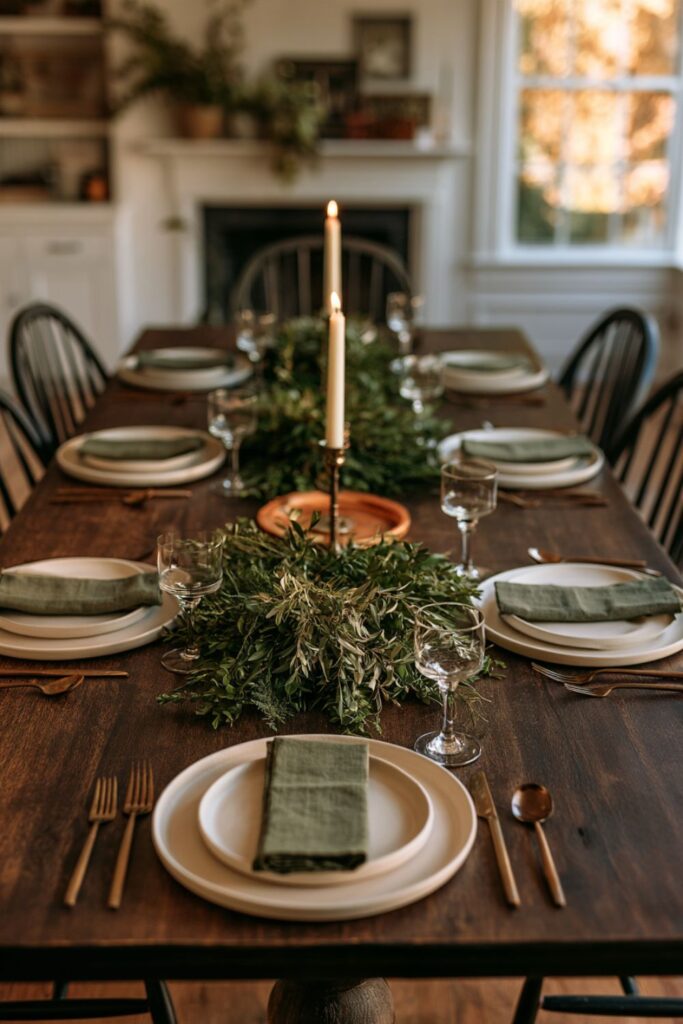
A Thanksgiving centerpiece should make the table feel special without making dinner harder.
Huge arrangements can look impressive in photographs, but they are much less appealing when guests cannot see each other or there is nowhere to place the serving dishes.
A low greenery centerpiece gives you color and texture while keeping the table practical.
Mark your available space first: Set out dinner plates and a few serving dishes before building the centerpiece.
This immediately shows you how much room you can realistically use.
Start with greenery: Arrange branches, eucalyptus, olive stems, or other foliage through the center of the table.
Keep the greenery loose rather than forming a thick wall.
Build in layers: Add a few supporting elements after the greenery is positioned.
If you want to get more from your life, and are looking for concrete action steps to get you there, check out our Request a Coach page. It’s a “cut the fence-sitting and take action” way to tackle your issues and actually find success. To get off the fence and start to take action, click or tap here.
Possible additions include:
- Low candles
- Small seasonal fruit
- Natural branches
- Brass candleholders
- Small ceramic pieces
- Muted fall leaves
- Simple glass containers
Repeat the table colors: If the table is olive and cream, keep most centerpiece elements inside that palette.
For an emerald and navy setting, introduce those colors selectively through smaller details.
Control the height: Sit in one of the dining chairs while arranging the table.
If you cannot comfortably see the chair opposite you, the centerpiece is probably too tall.
Leave intentional gaps: Greenery does not have to form one continuous strip.
Small openings create space for serving dishes and make the arrangement feel lighter.
You can also divide the centerpiece into three or five low clusters. Repeating similar greenery or containers will keep the separate groups visually connected.
If you want to get more from your life, and are looking for concrete action steps to get you there, check out our Request a Coach page. It’s a “cut the fence-sitting and take action” way to tackle your issues and actually find success. To get off the fence and start to take action, click or tap here.
Once the arrangement looks finished, remove one or two pieces and look again.
Centerpieces often improve when they are edited slightly. Thanksgiving tables already become visually busy once food, glasses, serving utensils, and guests are added.
A centerpiece that feels slightly restrained before dinner will often feel exactly right once the meal begins.
7. Coordinate the Place Settings So Every Seat Belongs to the Same Table
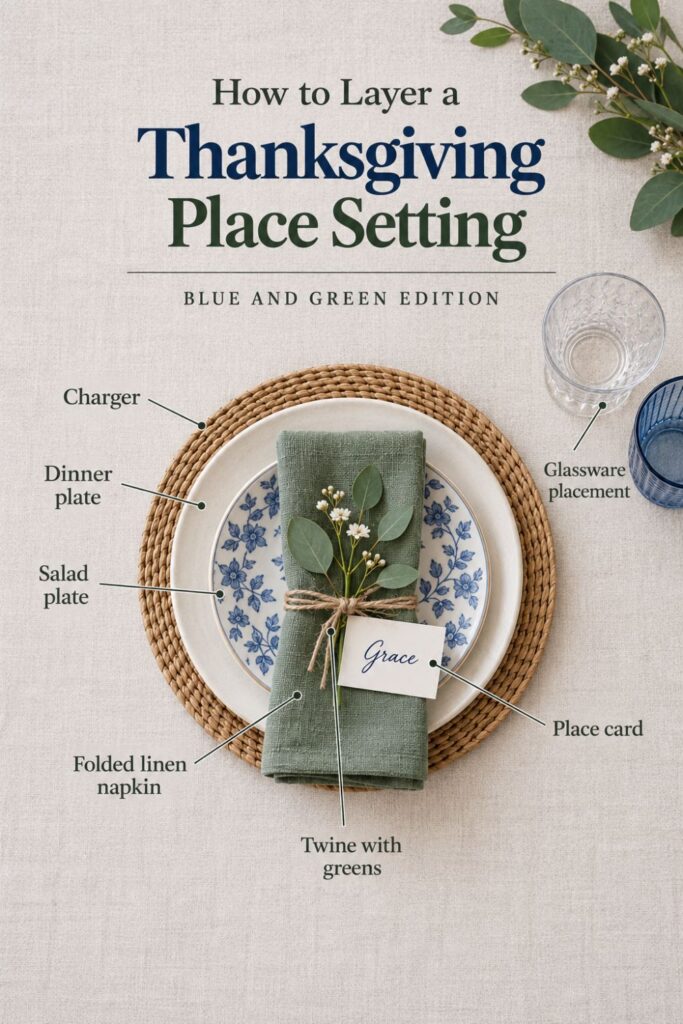
Place settings are where your color palette becomes consistent enough to make the entire table feel intentional.
You do not need elaborate layers at every seat. A simple repeated color cue can connect the whole table.
Create one finished place setting first: Before setting every seat, completely style one.
Arrange the plate, napkin, glassware, flatware, charger, and any small decorative detail. Then stand back and decide whether it feels balanced.
This sample becomes your template for the rest of the table.
If you want to get more from your life, and are looking for concrete action steps to get you there, check out our Request a Coach page. It’s a “cut the fence-sitting and take action” way to tackle your issues and actually find success. To get off the fence and start to take action, click or tap here.
Choose one repeated color detail: Use the same olive napkin, dark green plate, blue glass, or another recognizable element at every setting.
That repetition creates visual rhythm.
Keep the base pieces consistent: If possible, use similar plates and glassware throughout the table.
The decorations can vary slightly without making the setting feel random.
A simple place setting might include:
- Neutral dinner plate
- Green or blue napkin
- Coordinating flatware
- Clear or lightly tinted glass
- Small sprig of greenery
- Optional place card
Echo the centerpiece gently: Bring a small detail from the center of the table into each setting.
A single leaf, branch tip, herb sprig, or matching color is enough.
Avoid placing bulky decorative pieces directly on plates unless guests can remove them easily.
If you want to get more from your life, and are looking for concrete action steps to get you there, check out our Request a Coach page. It’s a “cut the fence-sitting and take action” way to tackle your issues and actually find success. To get off the fence and start to take action, click or tap here.
Check spacing before adding more layers: Each guest needs comfortable room for their plate, utensils, glass, and hands.
A beautiful place setting that feels cramped is not actually serving the table well.
Finally, look at all the settings together.
If one color appears too strongly at each seat, simplify the centerpiece. If the settings look disconnected from the center, repeat one of their colors there.
The goal is not perfect matching.
It is visual conversation. The centerpiece, runner, and individual seats should feel like they are all using different pieces of the same Thanksgiving decorating language.
8. Make Green and Blue Read as Thanksgiving, Not Just a Pretty Dinner Table
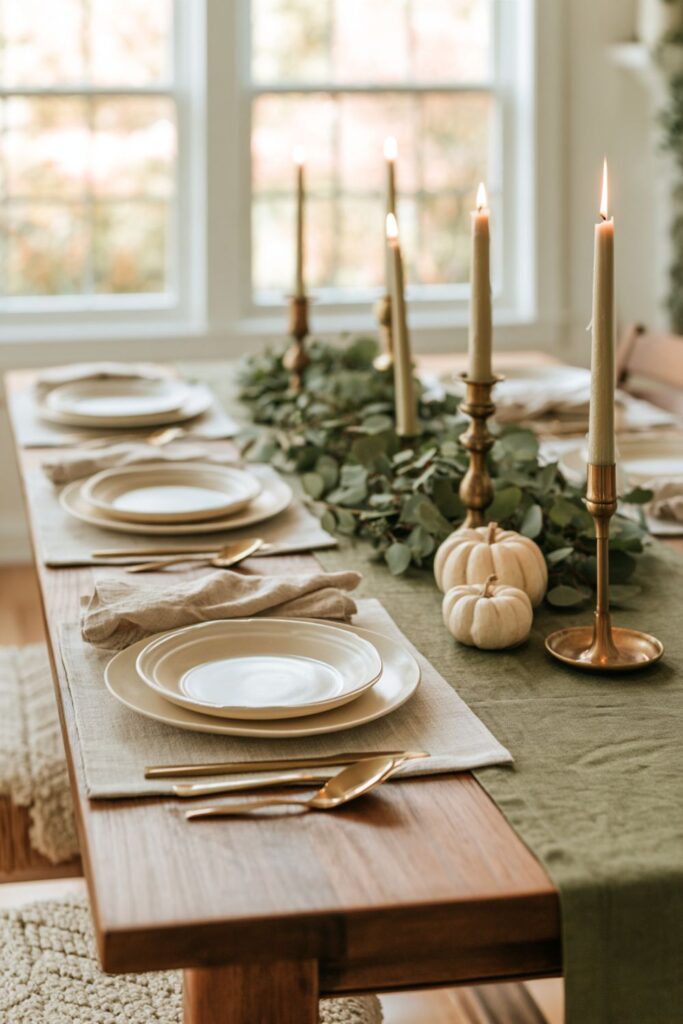
One of the biggest challenges with an unconventional Thanksgiving palette is making sure the table still feels appropriate for the occasion.
Green and blue can easily drift toward spring, winter, or everyday dinner decor if the supporting materials do not provide enough seasonal context.
If you want to get more from your life, and are looking for concrete action steps to get you there, check out our Request a Coach page. It’s a “cut the fence-sitting and take action” way to tackle your issues and actually find success. To get off the fence and start to take action, click or tap here.
The fix is to use texture and natural elements rather than automatically adding more traditional colors.
Bring in natural materials: Wood, woven fibers, linen, branches, leaves, and greenery instantly make a cool palette feel warmer.
These textures connect the table to the season without requiring obvious Thanksgiving decorations.
Use autumn tones sparingly: If your table needs more warmth, add small amounts of brown, bronze, muted gold, rust, or amber.
You do not need all of them.
One warm accent repeated around the table is usually enough.
Choose seasonal shapes carefully: Pears, branches, leaves, nuts, or other natural objects can suggest harvest season without becoming overly themed.
Avoid introducing random fall colors: It can be tempting to add orange simply because the table is for Thanksgiving.
If you want to get more from your life, and are looking for concrete action steps to get you there, check out our Request a Coach page. It’s a “cut the fence-sitting and take action” way to tackle your issues and actually find success. To get off the fence and start to take action, click or tap here.
If orange does not belong with your chosen palette, leave it out.
A cohesive blue, white, green, and wood table will usually look more intentional than one with several unrelated “Thanksgiving” colors added afterward.
Check the room around the table: Your tablescape does not exist in isolation.
If the surrounding dining room already contains warm wood, neutral walls, or autumn decor, the table may need fewer seasonal details than you think.
Take a quick photograph before guests arrive.
Photos make color imbalance surprisingly easy to spot. You may notice that one end of the table is much darker, one centerpiece element dominates everything else, or the green appears only in one area.
Make small adjustments rather than redesigning the entire setup.
When the palette is repeated consistently and supported by seasonal texture, green and blue can feel completely at home on a Thanksgiving table.
If you want to get more from your life, and are looking for concrete action steps to get you there, check out our Request a Coach page. It’s a “cut the fence-sitting and take action” way to tackle your issues and actually find success. To get off the fence and start to take action, click or tap here.
Create a Thanksgiving-Day Setup System So the Table Is Easy to Rebuild
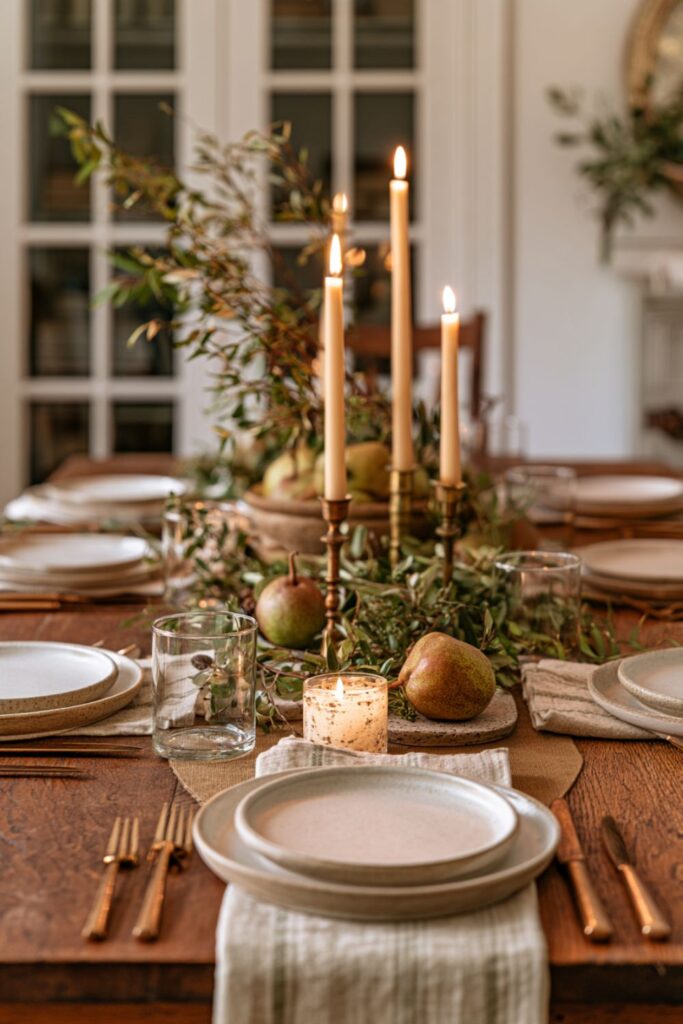
A beautiful Thanksgiving table becomes much more useful when you can recreate it without spending the entire morning rearranging napkins and wondering where everything is supposed to go.
The easiest solution is to treat the tablescape as a small setup system.
Stage everything by category: Before you begin, group similar items together.
Create separate groups for:
- Linens
- Plates and chargers
- Glassware
- Flatware
- Centerpiece materials
- Candles
- Place cards
- Small decorative details
This prevents you from repeatedly walking through the house looking for one missing item.
Set the largest layers first: Begin with the tablecloth or runner, then place the major centerpiece components and dinner plates.
Smaller details should come later.
Photograph your test setting: If you experimented with the table the day before, take a photo of one completed place setting.
If you want to get more from your life, and are looking for concrete action steps to get you there, check out our Request a Coach page. It’s a “cut the fence-sitting and take action” way to tackle your issues and actually find success. To get off the fence and start to take action, click or tap here.
Anyone helping can then copy the arrangement without needing detailed instructions.
Use a clean candle jar for tiny setup pieces: Repurpose an empty candle jar as a temporary holder for small items such as napkin rings, place-card clips, spare greenery ties, or other pieces that tend to disappear during decorating.
Once setup is finished, move the jar away from the dining table unless it genuinely belongs in the finished arrangement.
Leave food space on purpose: Decide before decorating where large serving bowls, platters, or bread baskets will go.
This prevents the common Thanksgiving problem of creating a beautiful centerpiece and then dismantling half of it when dinner is served.
Finish with a quick reset shortly before guests arrive.
Straighten the runner, align the chairs, remove packaging and tools, adjust any uneven place settings, and check the centerpiece from seated height.
A repeatable setup makes the table feel easier every year because you are refining a system rather than inventing Thanksgiving from scratch each time.
If you want to get more from your life, and are looking for concrete action steps to get you there, check out our Request a Coach page. It’s a “cut the fence-sitting and take action” way to tackle your issues and actually find success. To get off the fence and start to take action, click or tap here.
How an Organizational Coach Could Simplify Holiday Hosting
Holiday decorating often feels difficult because dozens of small decisions happen at the same time.
The table itself may not be complicated, but it sits inside a much larger Thanksgiving project involving food, guests, cleaning, shopping, timing, and serving.
An organizational coach could help simplify that process by turning vague plans into a clear sequence of decisions.
Separate planning from setup: Decide the palette, guest count, serving style, table layout, and decorating limits before Thanksgiving Day.
This allows the actual setup to become execution rather than another round of decision-making.
Create a reusable hosting checklist: Write down the basic order that works for your home.
For example:
- Confirm guest count
- Decide menu
- Choose color palette
- Gather tableware
- Test one place setting
- Build centerpiece
- Identify serving space
- Set table
- Complete final reset
Reduce unnecessary options: If you have several runners, multiple napkin colors, three sets of plates, and several centerpiece ideas, more choice may actually make decorating harder.
If you want to get more from your life, and are looking for concrete action steps to get you there, check out our Request a Coach page. It’s a “cut the fence-sitting and take action” way to tackle your issues and actually find success. To get off the fence and start to take action, click or tap here.
An organizational coach might encourage you to create simple decision rules.
For example, choose the runner first and eliminate any napkin that does not work with it.
Assign staging zones: Keep food preparation, tableware, decor, and items waiting to be used in separate areas.
This prevents Thanksgiving setup from becoming one large pile of unrelated things.
Review the system afterward: After dinner, note what worked and what caused unnecessary effort.
Did guests keep moving one centerpiece piece? Was the runner constantly getting caught under serving dishes? Did you prepare decorative place settings that no one really noticed?
Those observations are useful.
The goal is not to create an increasingly elaborate Thanksgiving table every year. It is to create a system that makes hosting feel more manageable while still allowing the table to look thoughtful and special.
If you want to get more from your life, and are looking for concrete action steps to get you there, check out our Request a Coach page. It’s a “cut the fence-sitting and take action” way to tackle your issues and actually find success. To get off the fence and start to take action, click or tap here.
Good organization makes room for creativity because fewer practical details are competing for your attention.
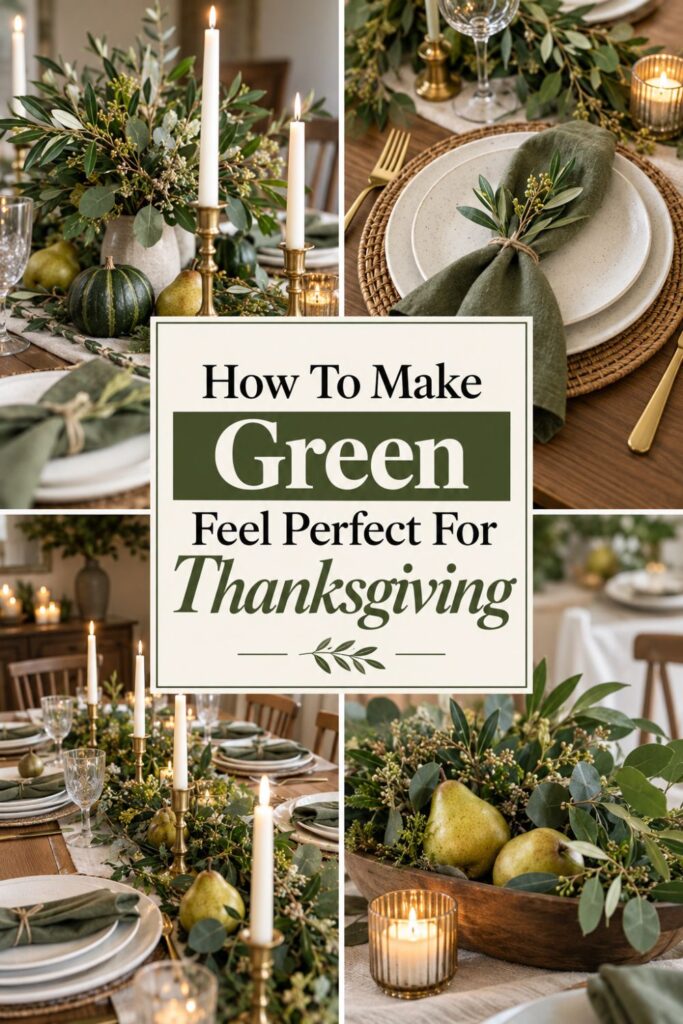
Let the Color Palette Do the Decorating
A memorable Thanksgiving tablescape does not require dozens of decorations.
When the color palette is strong and consistent, the runner, place settings, greenery, centerpiece, and natural textures can create most of the visual impact on their own.
Start by deciding what kind of mood you want.
Choose olive for warmth: Olive green works beautifully with cream, brown, wood, muted gold, and natural foliage.
It feels relaxed, earthy, and closely connected to traditional fall decorating.
Choose dark green for drama: Emerald and forest green create a richer atmosphere, particularly when balanced with cream, white, brass, or deep blue.
Use the darker shades strategically so the table still feels open and comfortable.
If you want to get more from your life, and are looking for concrete action steps to get you there, check out our Request a Coach page. It’s a “cut the fence-sitting and take action” way to tackle your issues and actually find success. To get off the fence and start to take action, click or tap here.
Choose blue and white for freshness: Blue and white can create a crisp, elegant Thanksgiving setting when grounded with natural greenery, wood, linen, or warm metallic accents.
Whichever direction you choose, the basic formula remains the same:
- Select one dominant color
- Add a supportive neutral
- Choose one restrained accent
- Establish the palette with linens
- Repeat it at each place setting
- Build one low centerpiece
- Introduce natural seasonal texture
- Remove anything that distracts from the color story
The final step is often editing.
Once your table appears complete, look for anything that seems unrelated to the rest of the setting. Removing one unnecessary color or decorative object can make the elements you keep feel more intentional.
And remember that the table will change once Thanksgiving dinner begins.
Food, glasses, serving dishes, people, and conversation become part of the scene. Your decorating does not have to fill every inch before guests arrive.
A green Thanksgiving tablescape works best when the palette provides the personality while the actual table remains comfortable enough for the gathering itself.
That balance is what makes the setup feel finished rather than simply decorated.
If you want to get more from your life, and are looking for concrete action steps to get you there, check out our Request a Coach page. It’s a “cut the fence-sitting and take action” way to tackle your issues and actually find success. To get off the fence and start to take action, click or tap here.
Need some help with style or organization? Drop on by our directories choc full of image coaches, organization coaches and minimalist coaches to help make your spaces beautiful. Or click here to have us match you to the best.
If you want to get more from your life, and are looking for concrete action steps to get you there, check out our Request a Coach page. It’s a “cut the fence-sitting and take action” way to tackle your issues and actually find success. To get off the fence and start to take action, click or tap here.
Read this next
DIY Desk Organizer Ideas Using Things You Already Have
Are you all about style, decor and organization? Download a copy of our Clutter Reset Guide. ***** Use jars, boxes, trays, clips, and simple containers to create useful desk storage […]
Read More
How to Make Your Front Door the Star of Christmas (With the Right Wreath)
Are you all about style, decor and organization? Download a copy of our Decluttering Workbook. **** Your front door is where holiday magic begins. It’s the first glimpse guests get […]
Read More
Easy DIY Front Porch Christmas Decorations That Look Straight Out of a Magazine
Create a gorgeous DIY Christmas porch without spending a fortune—these cozy decorating tricks make your entry feel festive fast.
Read More