






The Pricing Mistake That Keeps Good Coaches Underpaid

Can You Get Paid Well for Doing Work You Love?
We all love coaching. It’s a great profession that allows us to help so many people. In fact, it’s so rewarding that we most likely came to it because we love helping family and friends with their problems and at some stage decided that it would be a great way to earn a living.
Wow, earning a living doing what you love! How possible it that
The problem is that we love it so much that we’d do it for nothing anyway and most likely have in the past. Because of this, it can be very difficult to make the switch between doing it as a part of being a supportive friend and doing it as a professional by making it into a coaching business.
Key Takeaways
- Your coaching price is not a measure of your personal worth. Price should reflect the offer, the client problem, your expertise, the level of support involved, your market, and what your business needs to remain viable.
- Undercharging is often a business problem disguised as a confidence problem. Guilt and money beliefs matter, but so do weak offers, unclear outcomes, and prices chosen without doing the math.
- Clients need to understand what they are buying. A specific coaching process with clear goals, milestones, accountability, and support is easier to value than a vague promise to “change your life.”
- Your price needs a financial floor. If your fee cannot cover non-billable time, expenses, taxes, and the income you need, the coaching model is not sustainable.
- Free and lower-cost coaching can be strategic. Pro bono work, lead magnets, beta programs, and entry offers are different from dropping your price whenever a prospect hesitates.
Why Do Coaches Undercharge for Their Services?
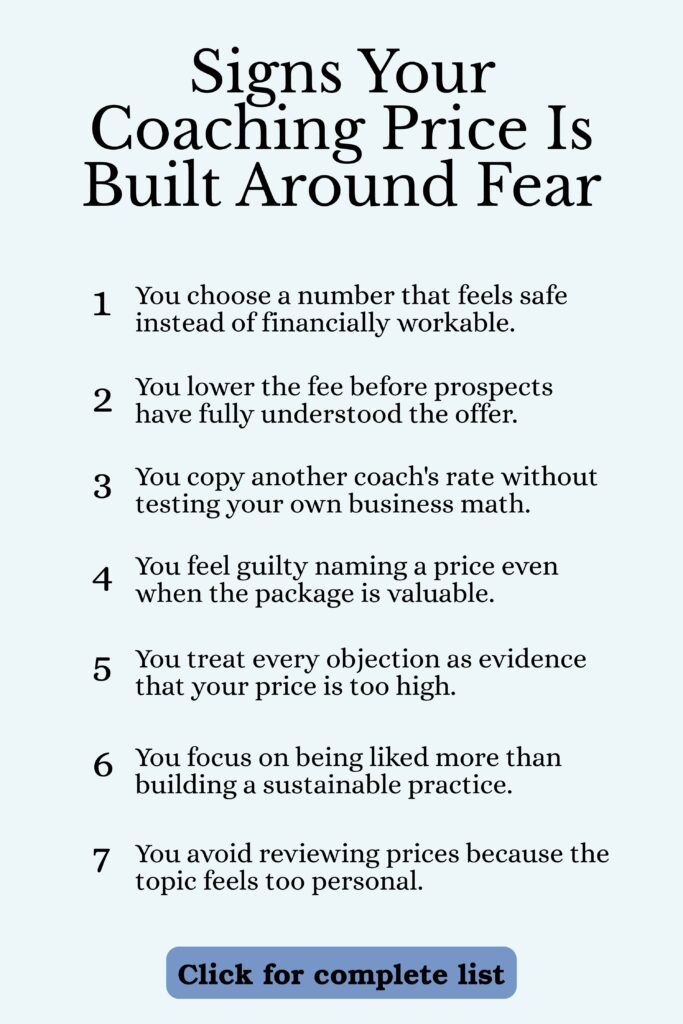
Coaches often undercharge because they mix together three different things: their personal worth, the value coaching creates for a client, and the price of a specific coaching offer. Add a natural desire to help people, discomfort around money, and fear that a higher price will drive prospects away, and an experienced coach can still struggle to name a fee confidently.
A sustainable coaching price should be based on more than confidence. Look at the problem you help solve, the coaching experience you provide, your expertise, the amount of access and support involved, the market you serve, your business costs, and the number of clients you can realistically serve.
The goal is not to prove that you are “worth” a certain dollar amount. It is to build an offer that creates identifiable value and price it in a way that works for both the client and the coaching business.
SEE ALSO: If you’re a coach looking to streamline your administrative tasks and save time, check out our Coaching Administration Software. It’s a simple, effective solution designed to help you focus less on paperwork and more on what matters—coaching your clients. From scheduling to client management, our software gives you the tools to run your business efficiently. Ready to reclaim your time and boost productivity? Click or tap here.
Are You Undervaluing Your Coaching Skills?
So many people in heart centred businesses like coaches, therapists and healers find themselves struggling to earn a living.
Now we’ve all mostly heard the hype, seen the webinars and teleseminars about how to earn 6 figure income from coaching. I’m not going there with this article. But I do believe that many of us undervalue ourselves and what we do.
Coaching brings great value to people. I’ve certainly gained so much from being in coaching programmes myself. In fact, I wouldn’t even be writing this article if it weren’t for coaching and the techniques I’ve used on myself that have drastically changed my mindset about myself and the value I can bring to my coaching.
What Value Does Coaching Actually Create?
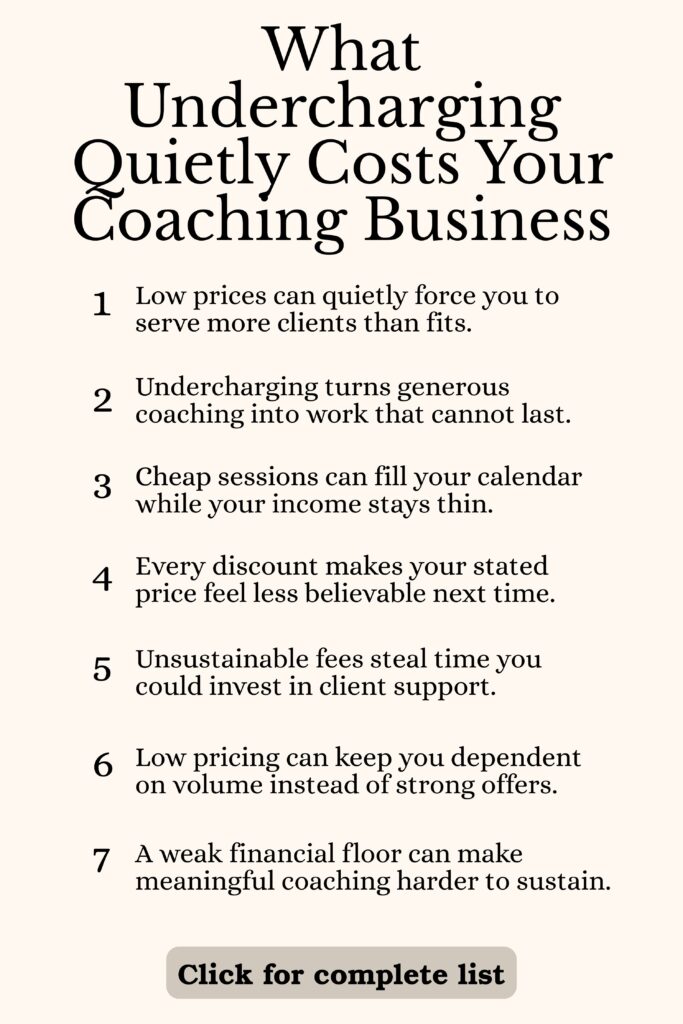
So what value do we offer:
We change people’s lives for the better
We teach people techniques and strategies that they can use for the rest of their lives.
We educate people about how they can take control of their lives and value themselves.
We help people find loving and lasting relationships.
We show people how to market themselves in business.
We empower people, lead them to success and a way to obtain more freedom and security.
How Do You Define the Value of Your Coaching?
So what is all of this worth?
It’s virtually priceless. It’s worth more than any of us could really charge.
SEE ALSO: If you’re a coach looking to streamline your administrative tasks and save time, check out our Coaching Administration Software. It’s a simple, effective solution designed to help you focus less on paperwork and more on what matters—coaching your clients. From scheduling to client management, our software gives you the tools to run your business efficiently. Ready to reclaim your time and boost productivity? Click or tap here.
If we can’t see the value in our own services how are we supposed to expect potential clients to perceive our value.
Asking for money for what we do can be the most difficult thing a coach does. Yet we would fearlessly coach our clients toward acknowledging their own value and if we are coaching business professionals we’d steer them toward charging their value.
But what about our own value? When clients don’t want to pay for our services it’s a sure sign that they don’t value what we have to offer and they don’t value themselves enough to invest in their own transformation. Yet we often drop our prices down so low that we can barely make a living doing it. We loose and so does our client.
Although it’s true that some people can’t afford coaching, there are certainly people out there who can find the money if they really want something that is of value to them.
If we don’t charge our value than we can’t afford to be in business. If we want to be able to help people who are in financial circumstances where they can’t afford coaching (I mean really not be able to afford it) then we need to have a mix of clients. By doing so, we will be able to afford to coach at lower rates or even for free.
Remember there are many people out there who can really afford $100 to $250 an hour for coaching. So why aren’t we allowing them into our businesses?
SEE ALSO: If you’re a coach looking to streamline your administrative tasks and save time, check out our Coaching Administration Software. It’s a simple, effective solution designed to help you focus less on paperwork and more on what matters—coaching your clients. From scheduling to client management, our software gives you the tools to run your business efficiently. Ready to reclaim your time and boost productivity? Click or tap here.
What Beliefs Keep Coaches Undercharging?
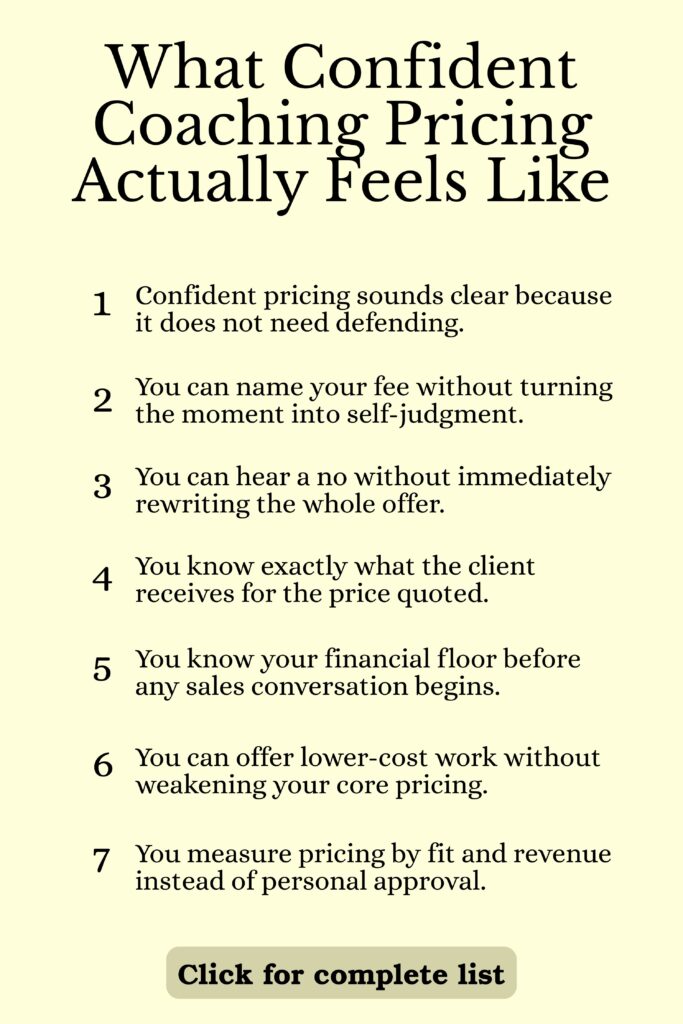
We are doing what we love and are used to doing it with friends and family and not charging for it.
We are natural helpers and want to help people. We help friends and family without even thinking in terms of reward or payment.
We feel guilty asking for money in return for our services because we feel that if we really care about people then we shouldn’t charge people or seem like we are making money out of their misery. Many of us are programmed to believe that we shouldn’t receive anything in return for helping others.
Many coaches have spiritual beliefs that are incongruent with making money. How many of us believe that caring spiritual people shouldn’t be concerned about money.
The difference is that if you’re in business then you have to care about money. You shouldn’t think of helping others and money as mutually exclusive. Energy out = Energy in. You give out and receive back.
So how do you change this incongruence between helping people and asking for your value in return. All you have to do is change your money mindset and realize that what you have to offer is priceless.
Is “Charge Your Worth” Actually the Right Way to Price Coaching?
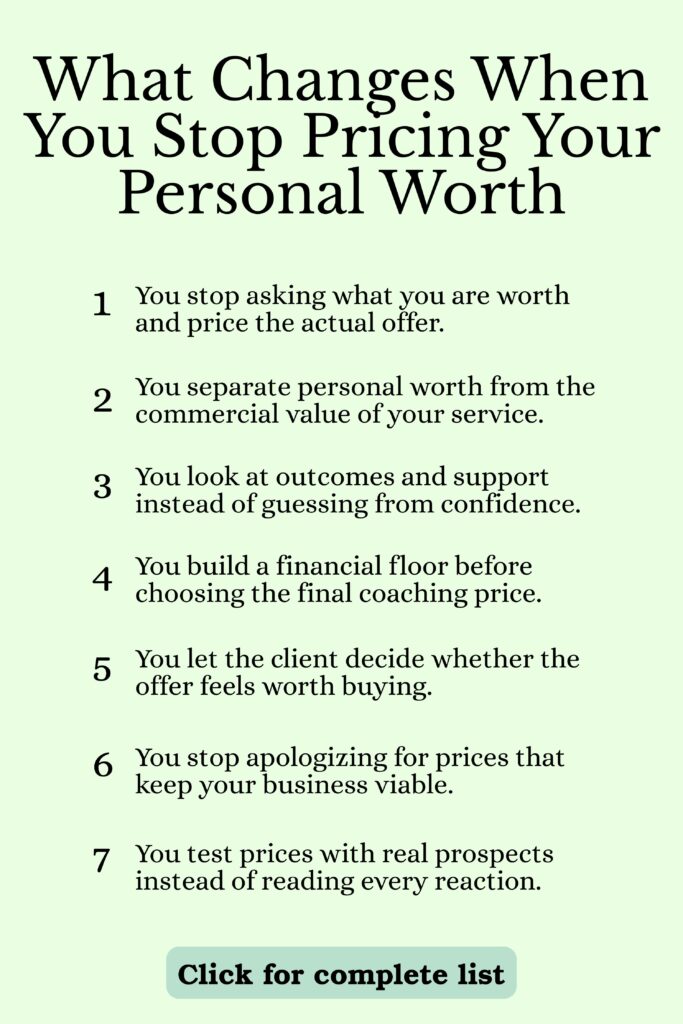
“Charge your worth” is useful as a confidence reminder, but it is a poor pricing formula because you are not the product and your personal worth does not have an hourly rate.
Two excellent coaches can charge very different prices without one being more worthy than the other.
Imagine a career coach helping recent graduates choose their first career path and an executive coach working privately with senior leaders preparing for board-level roles. Their experience, buyers, stakes, budgets, access, and coaching engagements may be completely different.
That means pricing starts with the offer.
SEE ALSO: If you’re a coach looking to streamline your administrative tasks and save time, check out our Coaching Administration Software. It’s a simple, effective solution designed to help you focus less on paperwork and more on what matters—coaching your clients. From scheduling to client management, our software gives you the tools to run your business efficiently. Ready to reclaim your time and boost productivity? Click or tap here.
Ask concrete questions:
- What problem or goal brings the client to you?
- What does the coaching engagement actually include?
- How long does the client work with you?
- What level of access or accountability do you provide?
- How specialized is your expertise?
- Who is paying, the individual client or an organization?
- What alternatives is the client comparing you with?
You can still challenge guilt, shame, or beliefs that make charging difficult. Those beliefs absolutely can affect the number you are willing to say out loud.
But do not make your self-esteem responsible for doing the job of pricing strategy.
You are pricing a professional service, not putting a monetary value on yourself.
What Are Coaching Clients Actually Paying For?
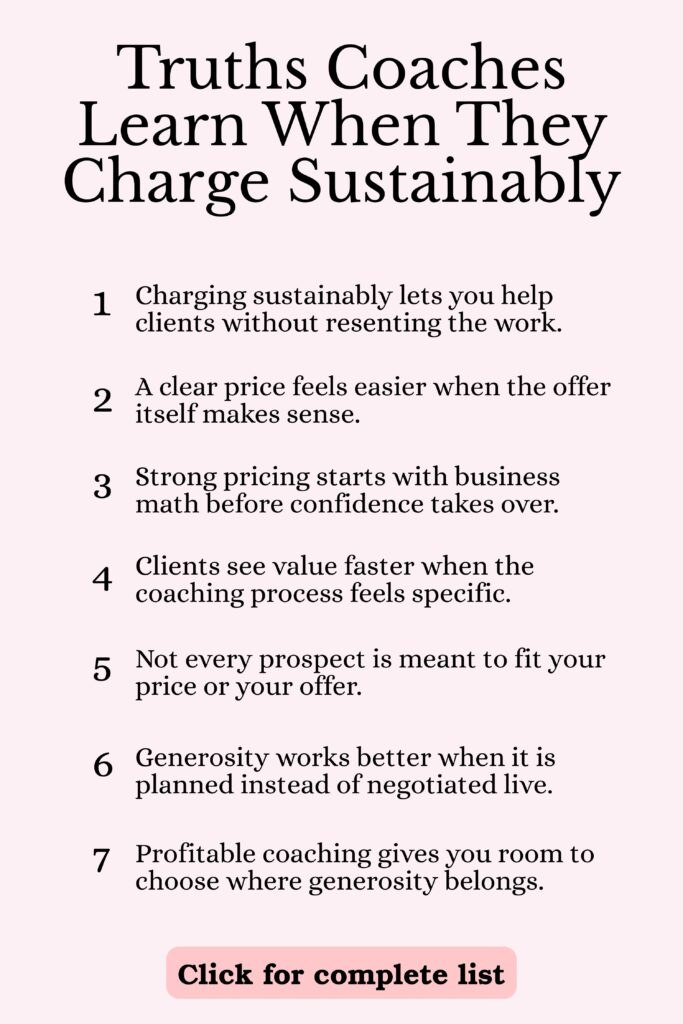
Clients are paying for a structured path toward an outcome they care about, not simply for access to an hour of your time.
That distinction becomes powerful when you look at what happens inside good coaching.
SEE ALSO: If you’re a coach looking to streamline your administrative tasks and save time, check out our Coaching Administration Software. It’s a simple, effective solution designed to help you focus less on paperwork and more on what matters—coaching your clients. From scheduling to client management, our software gives you the tools to run your business efficiently. Ready to reclaim your time and boost productivity? Click or tap here.
A client may be paying for help clarifying a decision they have avoided for six months. Another may need accountability for executing a career transition. Another may need an experienced outside perspective while stepping into leadership for the first time.
The value becomes easier to see when you can name the work.
For example, compare these two offers:
Offer A: Six life coaching sessions.
Offer B: A six-session career transition program that helps the client define their target role, identify barriers, make a transition plan, set weekly actions, review progress, and adjust the plan when something stalls.
Both may involve six conversations. The second makes the process much easier for a prospective client to understand.
SEE ALSO: If you’re a coach looking to streamline your administrative tasks and save time, check out our Coaching Administration Software. It’s a simple, effective solution designed to help you focus less on paperwork and more on what matters—coaching your clients. From scheduling to client management, our software gives you the tools to run your business efficiently. Ready to reclaim your time and boost productivity? Click or tap here.
You can make that value visible during delivery too. Goals, action items, journals, worksheets, and progress records turn coaching from a series of conversations into work the client can see accumulating over time.
If you use LCH Core, those coaching tools can be assigned and reused, while the Progress Stream gives you a way to see activity and progress across the coaching relationship.
That does not create the value. Your coaching does. It simply makes the work and follow-through easier to see.
What Is the Minimum Your Coaching Business Can Afford to Charge?
Your coaching business needs a minimum viable price before you ever start asking what the market might pay.
A simple starting calculation is:
Desired annual compensation + annual business costs + tax and financial buffer ÷ realistic annual billable hours = minimum required revenue per billable hour
SEE ALSO: If you’re a coach looking to streamline your administrative tasks and save time, check out our Coaching Administration Software. It’s a simple, effective solution designed to help you focus less on paperwork and more on what matters—coaching your clients. From scheduling to client management, our software gives you the tools to run your business efficiently. Ready to reclaim your time and boost productivity? Click or tap here.
The critical word is billable.
If you work 40 hours a week, you cannot assume all 40 can be sold to clients. You also need time for consultations, preparation, notes, follow-up, bookkeeping, professional development, marketing, administration, and running the business.
Suppose you need your coaching business to generate $90,000 before personal taxes and you realistically expect 600 paid coaching hours during the year.
$90,000 ÷ 600 = $150.
That does not automatically mean every session should cost $150. Packages, group work, courses, digital products, and other revenue may change the economics.
It does tell you something useful: a business based entirely on $60 private coaching sessions is unlikely to produce those numbers under that capacity model.
SEE ALSO: If you’re a coach looking to streamline your administrative tasks and save time, check out our Coaching Administration Software. It’s a simple, effective solution designed to help you focus less on paperwork and more on what matters—coaching your clients. From scheduling to client management, our software gives you the tools to run your business efficiently. Ready to reclaim your time and boost productivity? Click or tap here.
Market benchmarks are context, not pricing instructions. According to the International Coaching Federation’s 2023 Global Coaching Study, the average reported fee for a one-hour coaching session in 2022 was $244 USD. The regional averages ranged from $114 in Latin America and the Caribbean to $277 in Western Europe.
That range is exactly why copying somebody else’s hourly rate is not a pricing strategy.
Your niche, location, experience, buyer, delivery model, demand, business costs, and offer all matter.
How Can Coaches Charge More Confidently?
Aside from that, think about the following things when you are hesitant about charging your worth:
You are in business. Business is about making a living, end of story. Ask yourself, do you want to earn your living by living your heartfelt purpose. That will require sacrifices – sacrifices of your programmed beliefs around money and your value.
Is helping people of value to you? Is it of value to them? Money is a way of measuring value in our western culture. How much value do you give to what you do? If you were to use money as a measurement of what you do for people, how much would it be?
People in general don’t value what they don’t pay for. If you are practically giving away your services will your clients really put in the work they need to succeed?
Take a hard look at your feelings of worthiness, shame and guilt about what you would like to charge and then challenge those feelings. Find the negative beliefs behind those feelings and question them.
Challenge those beliefs around spirituality and money. Is money really the horrible, hairy scary monster we’ve been led to believe it is? Money is just neutral energy really. It’s what people bring to it that makes all the difference. Money can be used to help and it can be used to harm. The choice is always with people and not the object itself.
Since we challenge our clients, we also need to challenge our own beliefs about ourselves, what we do for others and our value and money. It’s the only way we can start to thrive.
Let’s face it, If we can’t thrive helping others then how can we really help them thrive.
SEE ALSO: If you’re a coach looking to streamline your administrative tasks and save time, check out our Coaching Administration Software. It’s a simple, effective solution designed to help you focus less on paperwork and more on what matters—coaching your clients. From scheduling to client management, our software gives you the tools to run your business efficiently. Ready to reclaim your time and boost productivity? Click or tap here.
Should You Charge by the Hour or Package Your Coaching?
Coaching packages often make more sense when the client is buying a process rather than a single isolated conversation.
Hourly pricing is simple. A client knows exactly what a session costs, and it can work well for occasional coaching, follow-up sessions, or clients who genuinely need flexibility.
The downside is that it encourages both you and the client to think in units of time.
“How much is one hour with you?”
That can hide what the client is actually buying.
Suppose a leadership coach charges $200 per session. Six sessions cost $1,200.
SEE ALSO: If you’re a coach looking to streamline your administrative tasks and save time, check out our Coaching Administration Software. It’s a simple, effective solution designed to help you focus less on paperwork and more on what matters—coaching your clients. From scheduling to client management, our software gives you the tools to run your business efficiently. Ready to reclaim your time and boost productivity? Click or tap here.
Now consider a three-month leadership coaching engagement. It still contains six sessions, but it also has a defined starting point, agreed goals, action items between meetings, progress reviews, and a clear point at which the client and coach assess what has changed.
The coach has not padded the offer. They have simply described the coaching relationship as a process instead of six blocks of 60 minutes.
Packages can also make revenue easier to forecast because you are not depending on the client deciding after every session whether to book another.
This connects directly to client lifetime value, which is the revenue created across the whole client relationship rather than through one transaction. Life Coach Hub’s guide to client lifetime value for coaches explores how retention, appropriate next offers, and referrals change that calculation.
If you use LCH Core, payments, coaching packages, and billing can be managed within the same coaching system. The LCH Core Help Center is also available when you need setup guidance.
The format should follow the coaching relationship, not the other way around.
SEE ALSO: If you’re a coach looking to streamline your administrative tasks and save time, check out our Coaching Administration Software. It’s a simple, effective solution designed to help you focus less on paperwork and more on what matters—coaching your clients. From scheduling to client management, our software gives you the tools to run your business efficiently. Ready to reclaim your time and boost productivity? Click or tap here.
How Can You Raise Your Coaching Prices Without Guessing?
You can raise coaching prices more intelligently by testing a specific price with new prospects and measuring what actually happens.
A price increase does not need to begin with every existing client.
Choose a clearly defined offer and quote the new price to incoming qualified prospects for a meaningful test period. Then track the numbers instead of judging the change by the first person who says no.
For example, suppose you raise a package from $1,200 to $1,500.
Before the increase, 20 qualified consultations produced 10 clients. Revenue from those new clients was $12,000.
At the new price, 20 comparable consultations produce nine clients. Revenue is $13,500.
SEE ALSO: If you’re a coach looking to streamline your administrative tasks and save time, check out our Coaching Administration Software. It’s a simple, effective solution designed to help you focus less on paperwork and more on what matters—coaching your clients. From scheduling to client management, our software gives you the tools to run your business efficiently. Ready to reclaim your time and boost productivity? Click or tap here.
Your conversion rate fell from 50% to 45%, but revenue from the same number of consultations increased.
That tells a very different story from, “Someone told me $1,500 was too expensive, so the price must be wrong.”
Track at least these signals together:
- qualified inquiries
- consultations booked
- clients who buy
- reasons prospects give for not buying
- revenue per new client
- total revenue generated from the same volume of opportunities
Also pay attention to which prospects object.
If your ideal prospects continue buying but low-fit inquiries disappear, a lower conversion rate may not be a problem. If your strongest prospects repeatedly understand the value but cannot justify the offer, look again at the price, positioning, or package.
Price is a business hypothesis.
SEE ALSO: If you’re a coach looking to streamline your administrative tasks and save time, check out our Coaching Administration Software. It’s a simple, effective solution designed to help you focus less on paperwork and more on what matters—coaching your clients. From scheduling to client management, our software gives you the tools to run your business efficiently. Ready to reclaim your time and boost productivity? Click or tap here.
Test it with evidence.
When Does Free or Lower-Cost Coaching Make Business Sense?
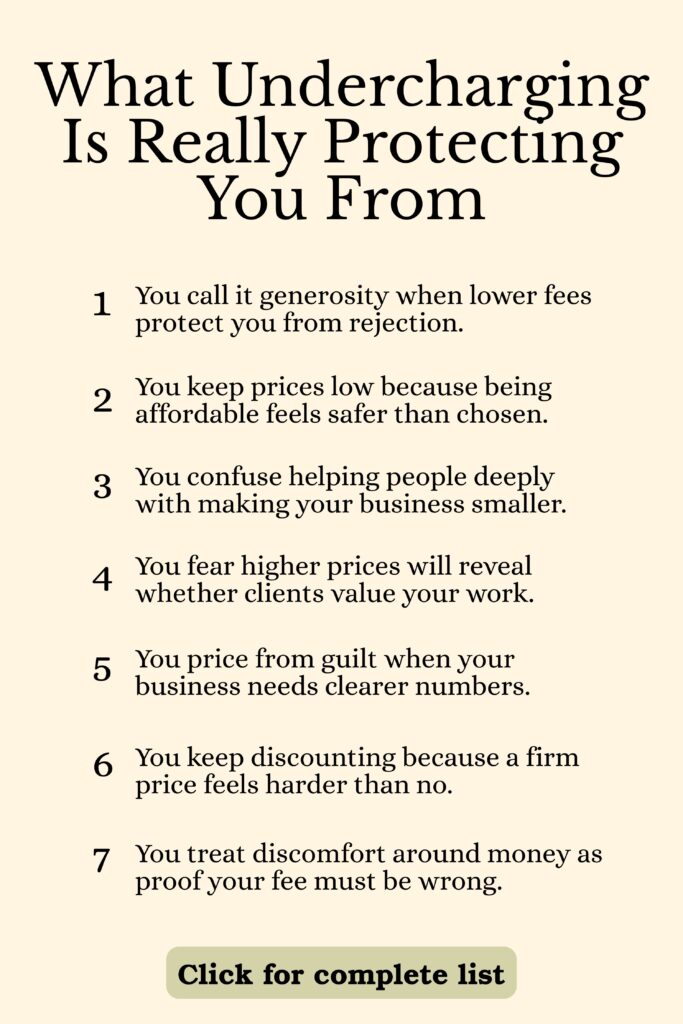
Free or lower-cost coaching makes sense when it serves a deliberate purpose in your business, not when you reduce your fee because asking for the real price feels uncomfortable.
Free does not automatically mean worthless.
Research by Kristina Shampanier, Nina Mazar, and Dan Ariely found what they called the zero-price effect. In their experiments, a zero price changed consumer choices in a way that could not be explained simply by subtracting the cost from the benefit. Free offers can have a distinctive appeal of their own.
For a coach, the useful question is therefore not, “Should I ever give something away?”
Ask, “What job is this free or lower-cost offer doing?”
SEE ALSO: If you’re a coach looking to streamline your administrative tasks and save time, check out our Coaching Administration Software. It’s a simple, effective solution designed to help you focus less on paperwork and more on what matters—coaching your clients. From scheduling to client management, our software gives you the tools to run your business efficiently. Ready to reclaim your time and boost productivity? Click or tap here.
A free offer can make sense when you are:
- testing a new coaching method with a small beta group
- deliberately reserving a limited number of pro bono places
- offering a discovery conversation
- using a lead magnet to introduce prospects to your thinking
- creating an accessible first step before a larger commitment
Compare that with a coach who normally charges $2,000 for a program but drops the price to $1,000 every time a prospect hesitates.
That is not an accessibility strategy. It teaches the coach that their stated price disappears under pressure and makes revenue unpredictable.
A much cleaner model might be a $2,000 core engagement, two planned pro bono places each quarter, and one free resource that prospective clients can use before deciding whether coaching is right for them.
LCH Core supports lead magnets if you want a free resource to sit at the beginning of that path. A broader coaching funnel can then help you think through what happens after someone first encounters your work.
Generosity and a profitable coaching business are not opposites. The difference is whether you choose the generosity intentionally or use discounting to escape an uncomfortable money conversation.
SEE ALSO: If you’re a coach looking to streamline your administrative tasks and save time, check out our Coaching Administration Software. It’s a simple, effective solution designed to help you focus less on paperwork and more on what matters—coaching your clients. From scheduling to client management, our software gives you the tools to run your business efficiently. Ready to reclaim your time and boost productivity? Click or tap here.
Where LCH Core Fits
LCH Core fits after you have made the strategic decisions about what you offer, what it costs, and how clients will work with you. Software should run the system you have designed, not decide your value for you.
For pricing and delivery, that can mean managing payments, coaching packages, and billing in one place.
For demonstrating value during the coaching relationship, you can assign journals, worksheets, goals, action items, and resources. The Progress Stream and Engagement Report can help you review what is happening across the client’s coaching journey.
For new prospects, the Public Booking Page gives people a clear way to book with you. Client management keeps profiles, notes, and intake forms organized once people enter your business. Courses and digital products can also be sold through the Public Store when you want income that is not tied entirely to private sessions. These capabilities align with the current LCH Core feature set.
Visibility is another part of the equation. You can also create a free life coach directory listing on Life Coach Hub so prospective clients have another way to discover you.
The practical sequence stays simple: determine your value proposition, choose your offer, price it sustainably, make it easy to find and buy, then give clients a coaching experience that makes the value visible.
SEE ALSO: If you’re a coach looking to streamline your administrative tasks and save time, check out our Coaching Administration Software. It’s a simple, effective solution designed to help you focus less on paperwork and more on what matters—coaching your clients. From scheduling to client management, our software gives you the tools to run your business efficiently. Ready to reclaim your time and boost productivity? Click or tap here.

Frequently Asked Questions About Coaching Prices
How much should a life coach charge per session?
A life coach should charge an amount that fits their market, expertise, offer, delivery costs, capacity, and business model rather than copying one universal industry rate.
For context, ICF’s 2023 Global Coaching Study reported an average one-hour coaching fee of $244 USD in 2022, but regional averages varied substantially.
How do I know if I am undercharging for coaching?
You are probably undercharging if your current prices cannot produce a sustainable income at the number of clients you can realistically serve.
Calculate your required annual business revenue, realistic billable capacity, costs, and non-billable workload before deciding whether a fee is financially viable.
Should coaches charge by the hour or sell coaching packages?
Coaches should use packages when clients are buying an ongoing process and use individual-session pricing when standalone or flexible sessions genuinely fit the service.
A package can make goals, time frame, support, and the overall coaching process easier for a client to understand.
SEE ALSO: If you’re a coach looking to streamline your administrative tasks and save time, check out our Coaching Administration Software. It’s a simple, effective solution designed to help you focus less on paperwork and more on what matters—coaching your clients. From scheduling to client management, our software gives you the tools to run your business efficiently. Ready to reclaim your time and boost productivity? Click or tap here.
How do I raise my coaching prices without losing all my clients?
Raise your price first for new prospects and measure the effect on qualified inquiries, conversion, and revenue.
Existing clients can be handled separately according to your agreements, relationship, and pricing policy.
Should a new coach charge less than an experienced coach?
A new coach may charge less while building experience, but being new does not require charging an unsustainably low fee.
Price the actual offer, consider your existing expertise and target client, and make sure the business mathematics still work.
Is it okay to offer coaching for free?
Yes, free coaching can make sense when it has a clear purpose such as pro bono service, beta testing, discovery, or lead generation.
It becomes a problem when “free” is the default response to discomfort about asking for payment.
SEE ALSO: If you’re a coach looking to streamline your administrative tasks and save time, check out our Coaching Administration Software. It’s a simple, effective solution designed to help you focus less on paperwork and more on what matters—coaching your clients. From scheduling to client management, our software gives you the tools to run your business efficiently. Ready to reclaim your time and boost productivity? Click or tap here.
What should be included in a coaching package?
A coaching package should clearly explain the length of the engagement, number or frequency of sessions, the coaching focus, and any genuine between-session support included.
Do not add filler simply to make the package look bigger. Include elements that support the client’s coaching process.
How often should a coach review their prices?
A coach should review pricing whenever costs, positioning, demand, expertise, target clients, capacity, or the structure of the offer changes materially.
An annual review is also useful even when you decide to leave the price exactly where it is.
Sources
International Coaching Federation. 2023 ICF Global Coaching Study: Executive Summary. International Coaching Federation, 2023. 2023 ICF Global Coaching Study Executive Summary.
Shampanier, Kristina, Nina Mazar, and Dan Ariely. “Zero as a Special Price: The True Value of Free Products.” Marketing Science, vol. 26, no. 6, 2007, pp. 742–757. INFORMS. https://doi.org/10.1287/mksc.1060.0254. Zero as a Special Price: The True Value of Free Products.
SEE ALSO: If you’re a coach looking to streamline your administrative tasks and save time, check out our Coaching Administration Software. It’s a simple, effective solution designed to help you focus less on paperwork and more on what matters—coaching your clients. From scheduling to client management, our software gives you the tools to run your business efficiently. Ready to reclaim your time and boost productivity? Click or tap here.
Read this next

Why You’re Not Greedy For Charging Higher Fees & 6 Reasons Undercharging Hurts Your Business
Find out why it’s time to value your services and start charging more for coaching
Read More
How to Coach at Your Best: The Importance of Self Coaching
Check in to make sure you’re using your coaching skills to coach yourself, and walk your talk where it really counts
Read More
Three Awesome Tips for Coaches
Learn the art of selling dreams, a tip for discovery sessions, and the problem with hiding out
Read More