






5 Ways You Help Clients Even When You Think “I’m Not Perfect Yet”

Why Do Coaches Think They Need to Be Perfect?
One of the most common concerns I hear from coaches is:
“How can I get clients and help other people transform their lives when I haven’t cleaned up all my own stuff yet?”
“How can I help when I’m not there yet?”
Almost everyone who starts a business helping people runs into this question.
Even when you are reaching for a new level of success, you may think, “I still have ups and downs in this area. Who am I to teach someone else?”
Deep down, you know you can help people. But the fear keeps slowing you down.
SEE ALSO: If you’re a coach looking to streamline your administrative tasks and save time, check out our Coaching Administration Software. It’s a simple, effective solution designed to help you focus less on paperwork and more on what matters—coaching your clients. From scheduling to client management, our software gives you the tools to run your business efficiently. Ready to reclaim your time and boost productivity? Click or tap here.
It makes you postpone your offer. Rewrite your website for the tenth time. Avoid discovery calls. Collect another certification without using the skills you already have.
That is where you need a better test than “Do I finally feel ready?”
Key Takeaways
- Perfection is not a coaching qualification. Clients need a coach with relevant competence, a clear process, sound boundaries, and the ability to support client-owned decisions.
- Feeling like a fraud is not proof that you are one. Test the feeling against your training, experience, scope, method, feedback, and observable client progress.
- Lived experience can strengthen your coaching. It becomes valuable when you can use what you learned without making the client follow your path or manage your emotions.
- A responsible coach knows when to refer. Confidence does not make every issue coachable, and uncertainty does not make every issue outside your scope.
- Confidence grows from evidence and repetition. Clear agreements, documented goals, client actions, progress reviews, reflection, and continued learning give you something stronger than motivational self-talk.
Can You Be a Good Life Coach If You Don’t Have Everything Figured Out?
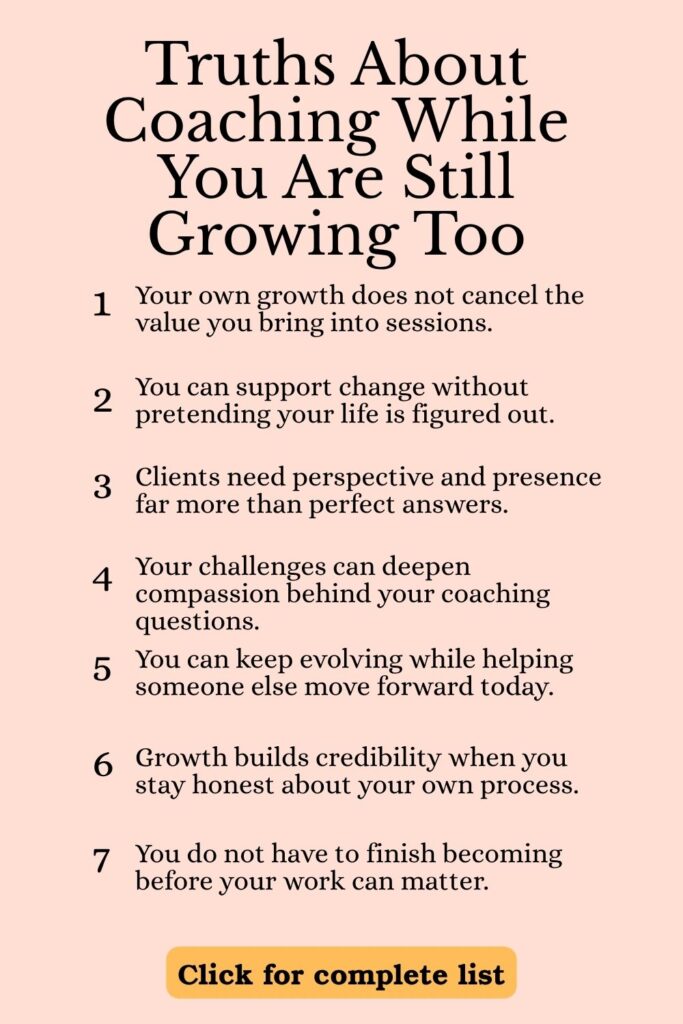
Yes, you can be a good life coach without having every part of your own life figured out. Your job is not to model a flawless life. Your job is to coach competently, stay within your scope, create a useful process, and help clients think, choose, act, and evaluate their progress.
Personal struggle does not automatically make you unqualified. It can give you empathy, pattern recognition, and practical insight. The deciding question is whether you can keep the work centered on the client rather than using the client relationship to resolve your own unfinished business.
You do not need to be perfect. You do need to be responsible, honest about what you can offer, and willing to keep developing your skills.
Are You Underqualified or Experiencing Impostor Feelings?
You are not automatically underqualified because you feel like a fraud, but you should test that feeling against evidence.
SEE ALSO: If you’re a coach looking to streamline your administrative tasks and save time, check out our Coaching Administration Software. It’s a simple, effective solution designed to help you focus less on paperwork and more on what matters—coaching your clients. From scheduling to client management, our software gives you the tools to run your business efficiently. Ready to reclaim your time and boost productivity? Click or tap here.
A systematic review by Dena Bravata and colleagues examined 62 studies involving 14,161 participants. Estimates of impostor phenomenon ranged from 9 percent to 82 percent, largely because researchers used different populations, measurements, and cutoffs. The useful conclusion is not that a certain percentage of coaches have it. It is that professional doubt is common, and the feeling alone is a poor measure of competence.
Use the Ready-Enough Coaching Test instead:
- Competence: Do you have relevant knowledge, training, experience, or demonstrated skill?
- Scope: Is the client asking for something that belongs in coaching and within your area of practice?
- Structure: Can you guide the client through a clear process instead of relying only on your personal story?
- Support: Do you have a way to reflect, seek guidance, continue learning, and refer when necessary?
A career coach who has completed relevant training and built a clear job-transition process may be ready to help someone through a layoff, even if the coach still has occasional career doubts.
A coach who feels extremely confident but has no process, no boundaries, and no understanding of the client’s issue may not be ready.
Your emotional certainty is not the standard. Your professional behavior is.
Do Coaches Need to Be Perfect to Help Clients?
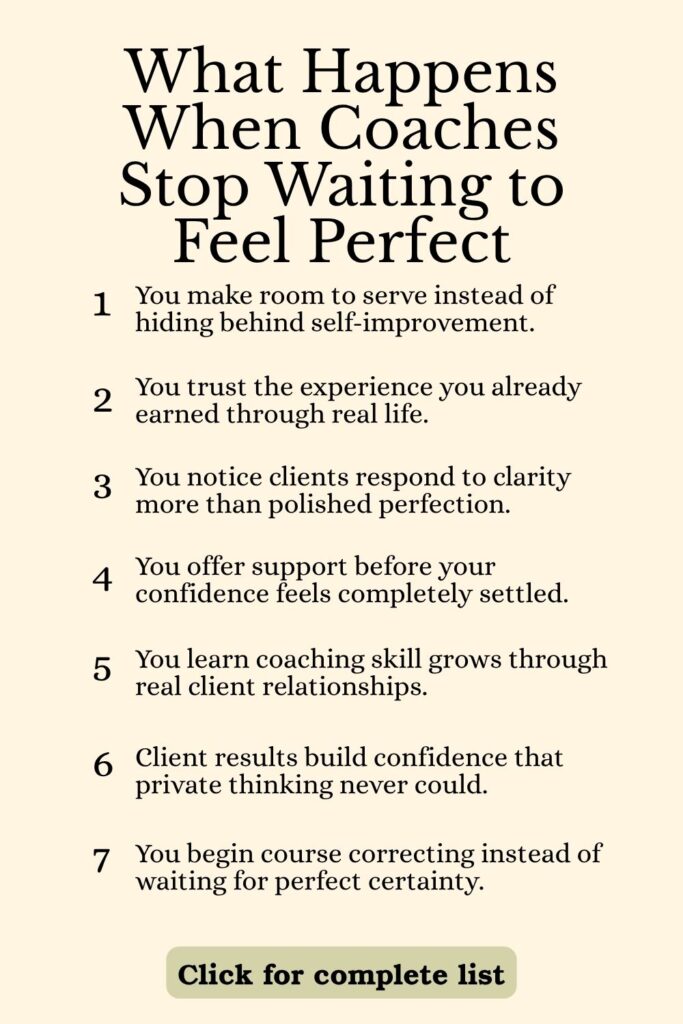
Coaches do not need to be perfect, and pretending to be perfect can make the coaching relationship less honest and less useful.
SEE ALSO: If you’re a coach looking to streamline your administrative tasks and save time, check out our Coaching Administration Software. It’s a simple, effective solution designed to help you focus less on paperwork and more on what matters—coaching your clients. From scheduling to client management, our software gives you the tools to run your business efficiently. Ready to reclaim your time and boost productivity? Click or tap here.
Show me someone who has everything together every day of their life, and I’ll show you someone performing for the room.
There are challenges along the way. That comes with being human.
I have challenges. You have challenges. Your clients have challenges.
Working through your own problems can make you more knowledgeable, observant, compassionate, and useful. You begin to recognize patterns. You learn which questions create movement. You stop being shocked when progress is uneven.
The current International Coaching Federation Code of Ethics explicitly recognizes that coaches are human and are not meant to be perfect. It also expects coaches to own mistakes, continue learning, represent their abilities accurately, and work within the boundaries of their competence. Imperfection is accepted. Carelessness is not.
If I had waited until I was perfect, I would not have helped the people I have helped along the way.
SEE ALSO: If you’re a coach looking to streamline your administrative tasks and save time, check out our Coaching Administration Software. It’s a simple, effective solution designed to help you focus less on paperwork and more on what matters—coaching your clients. From scheduling to client management, our software gives you the tools to run your business efficiently. Ready to reclaim your time and boost productivity? Click or tap here.
Your challenges can become assets. But only when you turn them into learning rather than credentials you awarded yourself.
When Does Lived Experience Make You More Useful?
Lived experience makes you more useful when it gives you insight without making you the center of the client’s session.
Your story may help you understand the terrain. It does not mean your route is the route your client should take.
A divorce coach might understand the fear, practical disruption, and identity questions that come with ending a marriage. That experience becomes a coaching asset when the coach can support a client who chooses reconciliation, separation, or more time to decide.
It becomes a liability when the coach pushes every client toward the decision that worked for her.
Use four questions to test whether your lived experience is ready to support your coaching:
SEE ALSO: If you’re a coach looking to streamline your administrative tasks and save time, check out our Coaching Administration Software. It’s a simple, effective solution designed to help you focus less on paperwork and more on what matters—coaching your clients. From scheduling to client management, our software gives you the tools to run your business efficiently. Ready to reclaim your time and boost productivity? Click or tap here.
- Can you discuss the experience without needing the client to reassure you?
- Can you remain curious when the client wants something different from what you wanted?
- Can you offer a process beyond telling your story?
- Can you recognize when the client needs support you are not qualified to provide?
People often want coaches who understand real bills, difficult bosses, business setbacks, complicated relationships, and goals that took longer than expected.
Relatability builds trust. Process turns that trust into useful coaching.
Is “I’m Not Perfect Yet” an Upper Limit Problem?
“I’m not perfect yet” is sometimes a protective thought designed to keep you from taking a visible, uncomfortable step.
You are about to market your program, raise your price, contact a potential client, or lead a workshop. Suddenly, your mind produces a complete list of every mistake you have ever made.
Some coaches call this an Upper Limit problem. You are moving beyond what feels familiar, so part of you looks for a convincing reason to retreat.
But do not label every concern an Upper Limit problem. Some concerns contain useful information.
SEE ALSO: If you’re a coach looking to streamline your administrative tasks and save time, check out our Coaching Administration Software. It’s a simple, effective solution designed to help you focus less on paperwork and more on what matters—coaching your clients. From scheduling to client management, our software gives you the tools to run your business efficiently. Ready to reclaim your time and boost productivity? Click or tap here.
Fear is usually vague and global:
“I have no right to coach anyone.”
A genuine competence gap is specific and actionable:
“I do not know how to establish a coaching agreement for this kind of engagement.”
“I have never coached this issue, and it may fall outside my training.”
“I can explain the idea, but I do not yet have a process for helping a client apply it.”
SEE ALSO: If you’re a coach looking to streamline your administrative tasks and save time, check out our Coaching Administration Software. It’s a simple, effective solution designed to help you focus less on paperwork and more on what matters—coaching your clients. From scheduling to client management, our software gives you the tools to run your business efficiently. Ready to reclaim your time and boost productivity? Click or tap here.
Specific gaps can be addressed through education, practice, supervision, clearer positioning, or referral.
Vague fear only asks you to hide.
Look at the belief. Thank the protective part of you for trying to prevent embarrassment. Then ask a harder question:
“What evidence would show that I can serve this client responsibly?”
What Evidence Should Replace the Feeling of Readiness?
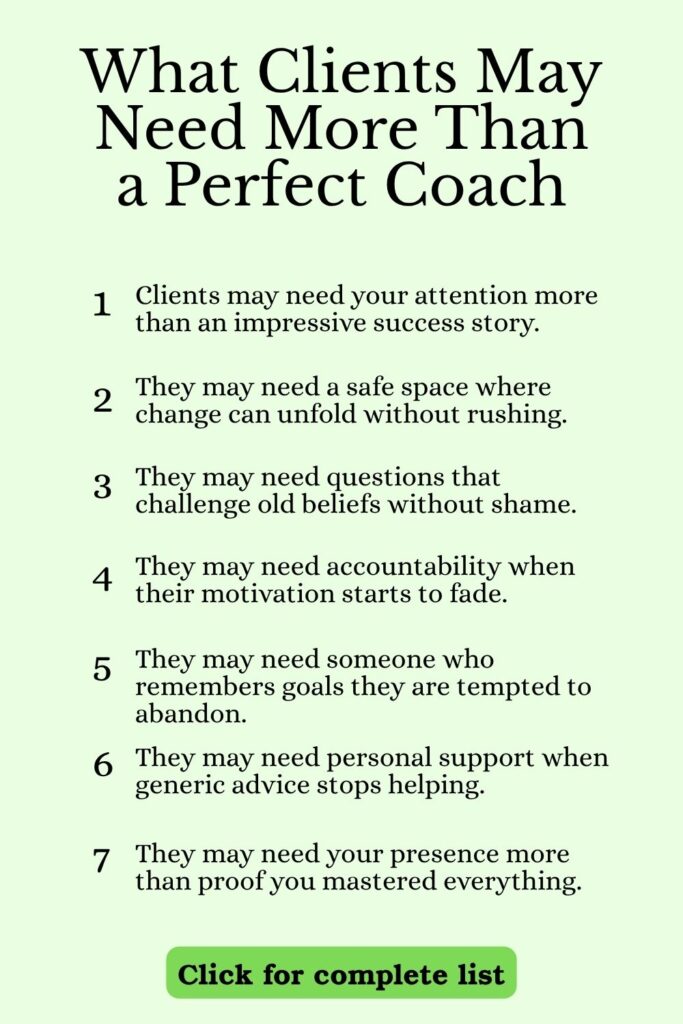
Readiness should be based on observable evidence, not on whether you wake up feeling confident that day.
Build a Coach Evidence Ledger with six categories:
SEE ALSO: If you’re a coach looking to streamline your administrative tasks and save time, check out our Coaching Administration Software. It’s a simple, effective solution designed to help you focus less on paperwork and more on what matters—coaching your clients. From scheduling to client management, our software gives you the tools to run your business efficiently. Ready to reclaim your time and boost productivity? Click or tap here.
- Relevant preparation: Training, education, work experience, or lived experience connected to the problem you coach.
- Defined scope: A clear statement of what you help with and what you do not provide.
- Repeatable process: Questions, exercises, stages, or a framework you can use without forcing every client into the same answer.
- Client action: Decisions made, conversations completed, habits tested, offers launched, boundaries set, or other observable follow-through.
- Client feedback: Specific comments about what became clearer, easier, or more actionable.
- Professional reflection: Notes about what worked, what stalled, and what you need to adjust or learn.
For example, a new business coach might review ten sessions and notice that clients consistently leave with a clearer offer and complete their next sales action. That is evidence.
The same coach might notice that clients understand the strategy but rarely follow through between sessions. That is evidence too. It points toward strengthening accountability rather than declaring the entire coaching method a failure.
LCH Core can make this easier to review. Client management keeps client profiles, notes, and intake forms together. Goals, action items, and the Progress Stream give you a clearer record of what was agreed and what happened next.
Once your scope and evidence are clear, a free life coach directory listing can help prospective clients find you and understand the specific result you are equipped to support.
Do not market yourself as perfect. Market yourself as clear, credible, and useful.
How Do You Help Clients Before You Feel Fully Ready?
You help clients before you feel fully ready by providing perspective, structure, attention, and accountability they cannot easily create alone.
SEE ALSO: If you’re a coach looking to streamline your administrative tasks and save time, check out our Coaching Administration Software. It’s a simple, effective solution designed to help you focus less on paperwork and more on what matters—coaching your clients. From scheduling to client management, our software gives you the tools to run your business efficiently. Ready to reclaim your time and boost productivity? Click or tap here.
You are not selling a perfect personal history.
You are offering a working relationship that helps a client move.
Here are five ways you already create value.
1. How Do You Show Clients What’s Possible?
You show clients what is possible by demonstrating that change can be approached through decisions, experiments, and consistent action rather than perfect certainty.
People resist change even when they desperately want it.
It can feel risky to change a career, start a business, end a damaging pattern, speak up, or commit to a goal. Your client may be thinking:
SEE ALSO: If you’re a coach looking to streamline your administrative tasks and save time, check out our Coaching Administration Software. It’s a simple, effective solution designed to help you focus less on paperwork and more on what matters—coaching your clients. From scheduling to client management, our software gives you the tools to run your business efficiently. Ready to reclaim your time and boost productivity? Click or tap here.
“Can I trust myself to do this?”
“What if I fall back into my old ways?”
“What if I fail again?”
You do not answer those questions by showing them a spotless life.
You answer by helping them see a believable next move.
A coach building her first profitable offer may not have created a seven-figure business. She can still show another coach how to interview prospective clients, identify a recurring problem, define a clear outcome, and test a paid offer.
SEE ALSO: If you’re a coach looking to streamline your administrative tasks and save time, check out our Coaching Administration Software. It’s a simple, effective solution designed to help you focus less on paperwork and more on what matters—coaching your clients. From scheduling to client management, our software gives you the tools to run your business efficiently. Ready to reclaim your time and boost productivity? Click or tap here.
She is not claiming to have completed every level of the journey.
She is showing what the next level looks like.
2. How Much Further Ahead Do You Need to Be?
You only need to be far enough ahead to recognize the terrain, provide a sound process, and avoid pretending you know what you do not know.
Back in the day, I helped non-coaches get clients. They were daycare owners, financial advisors, and other service providers.
Even while I was still building my own business, I knew more about marketing, sales, and managing the energy required to keep showing up than many of the people I served.
They did not need me to have mastered every possible business problem.
SEE ALSO: If you’re a coach looking to streamline your administrative tasks and save time, check out our Coaching Administration Software. It’s a simple, effective solution designed to help you focus less on paperwork and more on what matters—coaching your clients. From scheduling to client management, our software gives you the tools to run your business efficiently. Ready to reclaim your time and boost productivity? Click or tap here.
They needed help with the problem in front of them.
They had breakthroughs on calls. They used what they learned. They changed the way they marketed and sold.
You may be a few steps ahead of a coach who has never had a discovery call, never packaged a service, or never followed up with an interested prospect.
Your job is not to pretend you have reached the end of the road.
Reach back with a process that helps the person behind you take the next few steps.
3. Why Does a Coaching Container Matter More Than Perfection?
A clear coaching container matters more than perfection because transformation usually requires continuity, expectations, practice, and review.
SEE ALSO: If you’re a coach looking to streamline your administrative tasks and save time, check out our Coaching Administration Software. It’s a simple, effective solution designed to help you focus less on paperwork and more on what matters—coaching your clients. From scheduling to client management, our software gives you the tools to run your business efficiently. Ready to reclaim your time and boost productivity? Click or tap here.
A focused one-off session can be useful for a defined decision or immediate problem. It is less suited to changing a pattern the client has repeated for years.
A strong coaching container includes:
- A defined outcome
- Clear coach and client responsibilities
- A realistic duration
- Regular sessions
- Work between sessions
- Progress reviews
- A clear completion or renewal point
Suppose a client wants to become more consistent about marketing her coaching business.
One conversation may help her identify that she avoids following up because she fears sounding pushy. A coaching container gives her time to write a follow-up process, test it, review the responses, notice where she still hesitates, and adjust.
That is where confidence is built. Through repeated behavior, not one powerful conversation.
A Welcome Package in LCH Core can support that container with a welcome letter, a coaching agreement with electronic signature, and forms. You can then assign reusable or schedulable worksheets, goals, and action items as the engagement continues.
SEE ALSO: If you’re a coach looking to streamline your administrative tasks and save time, check out our Coaching Administration Software. It’s a simple, effective solution designed to help you focus less on paperwork and more on what matters—coaching your clients. From scheduling to client management, our software gives you the tools to run your business efficiently. Ready to reclaim your time and boost productivity? Click or tap here.
The tool does not create the container. Your coaching design does. The tool helps you deliver it consistently.
4. What Can Personal Support Offer That Content Cannot?
Personal support gives clients context, pattern recognition, and relevant feedback that a generic course or social media post cannot provide.
There is something you can offer that many large programs cannot: your attention.
A client may understand a time-management strategy perfectly and still avoid the one task connected to selling.
A video can explain time blocking. A coach can notice that the client completes administrative tasks every morning but repeatedly moves outreach to tomorrow.
That is not a scheduling problem. It is a pattern.
SEE ALSO: If you’re a coach looking to streamline your administrative tasks and save time, check out our Coaching Administration Software. It’s a simple, effective solution designed to help you focus less on paperwork and more on what matters—coaching your clients. From scheduling to client management, our software gives you the tools to run your business efficiently. Ready to reclaim your time and boost productivity? Click or tap here.
Personal support helps you ask:
“What happens right before you decide not to send the message?”
“What are you predicting the other person will think?”
“What smaller version of the action would still move this forward?”
This does not mean being available every hour of the day.
Strong support has boundaries. It gives the client access to the right reflection, question, or resource at the right point in the process.
SEE ALSO: If you’re a coach looking to streamline your administrative tasks and save time, check out our Coaching Administration Software. It’s a simple, effective solution designed to help you focus less on paperwork and more on what matters—coaching your clients. From scheduling to client management, our software gives you the tools to run your business efficiently. Ready to reclaim your time and boost productivity? Click or tap here.
Journals, worksheets, goals, action items, and resources in LCH Core can help continue that work between sessions without turning your coaching relationship into nonstop messaging.
5. Why Is Accountability Valuable While You Are Still Growing?
Accountability is valuable because clients often need help turning a sincere intention into visible follow-through.
I say you “get to” hold clients accountable because it is one of the most practical parts of coaching.
Accountability is not policing. It is not catching the client doing something wrong.
It means:
- Making the commitment specific
- Agreeing on what completion will look like
- Reviewing what happened
- Identifying the real obstacle
- Adjusting the next action
- Returning ownership to the client
A client says she will contact five prospective referral partners.
SEE ALSO: If you’re a coach looking to streamline your administrative tasks and save time, check out our Coaching Administration Software. It’s a simple, effective solution designed to help you focus less on paperwork and more on what matters—coaching your clients. From scheduling to client management, our software gives you the tools to run your business efficiently. Ready to reclaim your time and boost productivity? Click or tap here.
At the next session, she has contacted none.
Weak accountability says, “You need to try harder this week.”
Useful accountability asks what happened between the commitment and the action. Perhaps she did not know what to say. Perhaps five felt too exposed. Perhaps she spent three hours perfecting a message instead of sending it.
Now you have something coachable.
The client might write one simple message during the session, send it to one person, and schedule the next four actions.
Goals, action items, and the Progress Stream in LCH Core can keep those commitments visible. The Engagement Report can help you review engagement patterns instead of relying on vague impressions about whether the client is participating.
SEE ALSO: If you’re a coach looking to streamline your administrative tasks and save time, check out our Coaching Administration Software. It’s a simple, effective solution designed to help you focus less on paperwork and more on what matters—coaching your clients. From scheduling to client management, our software gives you the tools to run your business efficiently. Ready to reclaim your time and boost productivity? Click or tap here.
Most clients are not only investing in information.
They are investing in the structure and accountability that help them finally use what they know.
How Do You Know When Not to Coach?
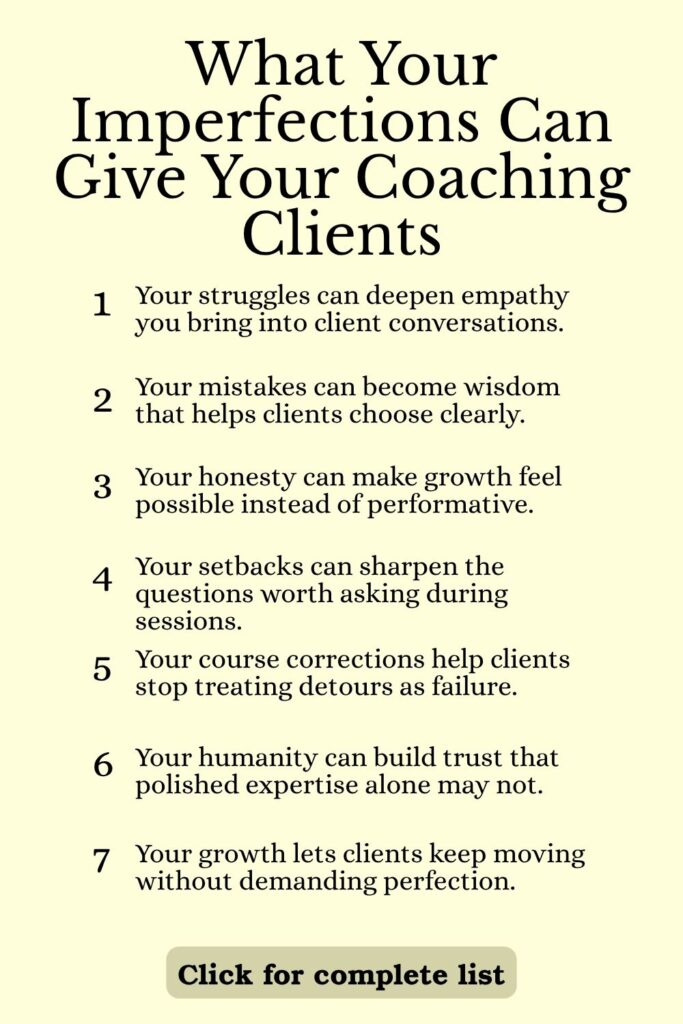
You should not coach an issue when it falls outside your competence, your agreement, or the appropriate scope of coaching.
Use a green, amber, and red decision guide.
Green means continue coaching:
- The client has a future-focused goal.
- The issue fits your stated niche and preparation.
- The client can reflect, make decisions, and take action.
- You have a suitable coaching process.
A career client feels nervous about an upcoming interview and wants to improve her preparation, communication, and follow-through. That can fit career coaching.
SEE ALSO: If you’re a coach looking to streamline your administrative tasks and save time, check out our Coaching Administration Software. It’s a simple, effective solution designed to help you focus less on paperwork and more on what matters—coaching your clients. From scheduling to client management, our software gives you the tools to run your business efficiently. Ready to reclaim your time and boost productivity? Click or tap here.
Amber means pause, clarify, or seek guidance:
- You feel strongly triggered or unusually invested in the client’s decision.
- The issue is adjacent to your experience but outside your usual scope.
- The client expects advice, diagnosis, or treatment you cannot provide.
- You are uncertain whether coaching is still the right service.
Amber does not always mean ending the relationship. It means slowing down enough to protect the client and the quality of the work.
Red means refer or involve another qualified professional:
- The client’s needs exceed your training or experience.
- The issue requires diagnosis or treatment.
- The client is struggling to function in daily life.
- A safety concern is present.
The International Coaching Federation’s referral guidelines state that coaches should not diagnose or treat, and should draw the line when a client needs help outside the coach’s qualifications, experience, or agreement.
A clear coaching agreement can define the scope from the beginning. Including that agreement in a Welcome Package gives both you and the client a concrete reference point if the work begins moving beyond what was agreed.
Knowing when not to coach does not weaken your authority.
SEE ALSO: If you’re a coach looking to streamline your administrative tasks and save time, check out our Coaching Administration Software. It’s a simple, effective solution designed to help you focus less on paperwork and more on what matters—coaching your clients. From scheduling to client management, our software gives you the tools to run your business efficiently. Ready to reclaim your time and boost productivity? Click or tap here.
It proves you can be trusted with it.
How Do You Build Confidence Without Making Clients Your Practice Ground?
You build legitimate coaching confidence through prepared practice, documented reflection, and targeted improvement.
Every client will teach you something. That does not mean clients should be exposed to careless experiments, unclear boundaries, or a method you cannot explain.
Use this professional development loop:
- Prepare around a defined outcome. Know what the client wants from the engagement or session.
- Coach within the agreement. Do not chase every interesting topic that appears.
- Record decisions and actions. Capture the important insight, goal, commitment, or experiment.
- Review what happened. Look for movement, avoidance, confusion, and repeated patterns.
- Seek outside perspective when needed. Use mentor coaching, coaching supervision, peer consultation, or further education.
- Adjust the process. Change the question, exercise, structure, or expectation based on evidence.
A coach might notice that three clients have left sessions with ambitious action plans but completed very little.
Instead of deciding she is a terrible coach, she reviews the pattern.
SEE ALSO: If you’re a coach looking to streamline your administrative tasks and save time, check out our Coaching Administration Software. It’s a simple, effective solution designed to help you focus less on paperwork and more on what matters—coaching your clients. From scheduling to client management, our software gives you the tools to run your business efficiently. Ready to reclaim your time and boost productivity? Click or tap here.
The next time, she asks the client to choose one action, name the likely obstacle, reduce the action until it feels executable, and decide when it will happen.
That is professional growth. Specific. Testable. Useful.
Client notes, goals, action items, the Progress Stream, and the Engagement Report can help you see these patterns over time. The purpose is not to collect more data. It is to make better coaching decisions.
Where LCH Core Fits
LCH Core fits after you have defined your scope and coaching process, because a tool should support responsible coaching rather than replace it.
It can help you create a clearer client experience in several practical ways:
- Establish the relationship: Use a Welcome Package with a welcome letter, coaching agreement with electronic signature, and forms.
- Understand the client: Keep client profiles, notes, and intake forms in client management.
- Turn insight into action: Assign reusable or schedulable journals, worksheets, goals, action items, and resources.
- Review progress: Use the Progress Stream and Engagement Report to identify activity, follow-through, and gaps.
- Create a professional buying path: Offer scheduling through a Public Booking Page and manage payments, coaching packages, and billing.
- Build additional ways to work with you: Sell courses and digital products through a Public Store or use lead magnets to introduce prospective clients to your work.
The goal is not to look impressive because you have software.
SEE ALSO: If you’re a coach looking to streamline your administrative tasks and save time, check out our Coaching Administration Software. It’s a simple, effective solution designed to help you focus less on paperwork and more on what matters—coaching your clients. From scheduling to client management, our software gives you the tools to run your business efficiently. Ready to reclaim your time and boost productivity? Click or tap here.
The goal is to give clients a clear, organized process that helps them understand what they are working toward and what happens next. You can review the approved LCH Core coaching features when deciding which parts genuinely fit your coaching model.
Frequently Asked Questions
Can I coach clients on a problem I still struggle with myself?
Yes, you can coach a problem you still encounter when you have enough competence, perspective, and emotional distance to keep the work centered on the client. Your current struggle becomes a concern when you need the client to choose your solution or validate your experience.
How do I know whether I am qualified enough to coach someone?
You are qualified enough when the client’s goal fits your competence, scope, process, and agreement. Review your training, relevant experience, method, boundaries, and ability to refer rather than judging readiness by confidence alone.
Is feeling like a fraud the same as being unqualified?
No, feeling like a fraud is not the same as being unqualified. Impostor feelings can exist alongside real skill, while overconfidence can exist without sufficient skill.
How much further ahead of a client does a life coach need to be?
A life coach needs to be far enough ahead to recognize patterns, facilitate a useful process, and avoid misleading the client. You do not need to have achieved every result the client wants.
When should a life coach refer a client to a therapist?
A life coach should refer when the client needs diagnosis, treatment, crisis support, or help beyond the coach’s qualifications and agreement. Significant difficulty functioning in daily life is another strong indicator that additional professional support may be needed.
SEE ALSO: If you’re a coach looking to streamline your administrative tasks and save time, check out our Coaching Administration Software. It’s a simple, effective solution designed to help you focus less on paperwork and more on what matters—coaching your clients. From scheduling to client management, our software gives you the tools to run your business efficiently. Ready to reclaim your time and boost productivity? Click or tap here.
Do life coaches need mentor coaching or coaching supervision?
Life coaches benefit from mentor coaching or coaching supervision when they need feedback on technique, ethical judgment, boundaries, recurring client patterns, or their own reactions. Outside perspective is especially valuable when the coach feels stuck, triggered, or unusually certain about what a client should do.
How can a new coach build confidence before getting many clients?
A new coach builds confidence through focused practice, clear session outcomes, documented client actions, feedback, reflection, and gradual specialization. Confidence becomes stronger when it is attached to evidence rather than positive thinking alone.
How much of their personal story should a coach share?
A coach should share only the part of a personal story that directly serves the client’s goal. Keep it brief, avoid turning the session toward your experience, and return the attention to what the client is noticing or choosing.
What Happens When You Stop Waiting for Perfect?

Perfection was never the entry requirement. Responsible usefulness is.
Do not let “I’m not there yet” become an excuse to hide your gifts.
Also, do not use “nobody is perfect” as an excuse to avoid training, boundaries, preparation, or honest reflection.
SEE ALSO: If you’re a coach looking to streamline your administrative tasks and save time, check out our Coaching Administration Software. It’s a simple, effective solution designed to help you focus less on paperwork and more on what matters—coaching your clients. From scheduling to client management, our software gives you the tools to run your business efficiently. Ready to reclaim your time and boost productivity? Click or tap here.
Everyone starts with no clients.
Every capable coach was once less experienced than they are now.
The more people you help responsibly, the more evidence you collect. You see which questions unlock clarity. You learn where clients stall. You sharpen your process. You become more precise about who you help and what you help them do.
Every client can be a learning experience without becoming an experiment.
Reach out your hand. Help the person you are equipped to help. Keep learning as your business and responsibilities grow.
You do not have to be perfect.
SEE ALSO: If you’re a coach looking to streamline your administrative tasks and save time, check out our Coaching Administration Software. It’s a simple, effective solution designed to help you focus less on paperwork and more on what matters—coaching your clients. From scheduling to client management, our software gives you the tools to run your business efficiently. Ready to reclaim your time and boost productivity? Click or tap here.
You do have to be on your path, paying attention, and willing to become better.
Sources
Bravata, Dena M., et al. “Prevalence, Predictors, and Treatment of Impostor Syndrome: A Systematic Review.” Journal of General Internal Medicine, vol. 35, 2020, pp. 1252–1275. Springer Nature, https://link.springer.com/article/10.1007/s11606-019-05364-1/.
International Coaching Federation. “ICF Code of Ethics.” International Coaching Federation, effective 1 Apr. 2025, https://coachingfederation.org/credentialing/coaching-ethics/icf-code-of-ethics/.
International Coaching Federation. Referring a Client to Therapy: A Set of Guidelines. International Coaching Federation, n.d., https://coachingfederation.org/wp-content/uploads/2024/12/icf-research-guide-referring-client-to-therapy.pdf.
Read this next

Top 10 Life Coach Content Ideas: A Complete Guide for Coaches to Write Great Social Media Posts
Writing great social media posts can boost your coaching business–learn how with these tips
Read More
What Most Coaches Get Wrong About Selling Their Services
Many coaches are not making enough money because they aren’t selling their coaching. Are you one of them?
Read More
7 Proofs That Strong Public Speaking Can Attract Coaching Clients
Get more clients as a coach by using public speaking
Read More