


Talk to a coach about Relationship coaching

Dr Soraya Sawicki, DSW, CPC, RMT
DSW, CPC, CSC, RMT
Personalized wellness coaching for stress relief, energy, and inner harmony.

Daniel Herron
CPLC
You know what it's like to avoid, to push away....

Dr. Kate Watson
B.A Psychology, M.Ed. Psychological Counseling, Dr.PH in Public Health, Certified Health Coach, Certified Life Coach, Certified Mind and Body Specialist, Certified Women's Empowerment Coach, Certified Neurodiversity Coach
Dr. Kate Watson helps people with boundaries, coping strategies, and...

James Morrison
Relationship Coach Certified, PGCert Psych
Attentive listener, experienced life coach specializing in relationships.

Jeff Batton
the coach of what not to do!
I specialize in identifying underlying patterns in your life that...

Lee Wilson
Master Diploma, Marriage Counseling
Breakup recovery & relationship coach with 20+ yrs experience and...

Dr. Patty ll Beach
Metaphysician, Doctor of Divinity & Spirituality
Intuitive Psychic Life Coach & Metaphysician for Spiritual Awakening

Ivy Lofberg
Member of Relationship Coaching Institute, IAC-accredited Professional Coach, OneSpirit Interfaith Minister
Author of 5 G.R.E.A.T Laws of Dating, dedicated to helping...

Secret Santa Gift Baskets Under $20 That Look Like You Spent Twice That

A Thoughtful Secret Santa Gift Doesn’t Need a Big Budget
Secret Santa sounds simple until you have to buy a present for a coworker you know mostly through meetings and coffee breaks. You want something thoughtful, but the spending limit is $20, and a random collection of discount-store finds can look exactly like that.
A small, coordinated gift basket solves both problems. When the items belong together and the presentation looks intentional, a modest gift can feel generous without pretending to cost more than it did.
The trick is to think like someone assembling a tiny gift collection, not someone trying to fill a basket with as many products as possible. One useful main item, a complementary extra, a small treat, and a reusable container usually make a stronger impression than six unrelated trinkets.
You do not need special crafting skills or an entire afternoon. Most of the work happens before assembly, when you decide what to spend, choose a theme, and buy items that fit both the container and one another.
This guide uses a straightforward five-part shopping formula:
- The container: A small basket, tin, tray, or reusable bin that suits the gifts.
- The anchor: One appealing main item that gives the basket a clear purpose.
- The companion: Something useful that naturally pairs with the anchor.
- The treat: A small addition that makes the gift feel festive.
- The finish: Simple tissue, ribbon, and a holiday tag that pull everything together.
The price of each component matters, but so do its size, color, and position in the finished gift. A basket can look crowded despite containing expensive things, or polished despite having only three inexpensive items.
For a workplace exchange, thoughtfulness also means choosing something easy to enjoy. You can personalize the basket without guessing at a coworker’s private life, buying heavily scented products, or making the gift too intimate.
Start with the budget, then follow the steps in order. By the time you tie the ribbon, you will have a Christmas Secret Santa basket that looks planned, feels useful, and stays under $20.
If you want to get more from your life, and are looking for concrete action steps to get you there, check out our Request a Coach page. It’s a “cut the fence-sitting and take action” way to tackle your issues and actually find success. To get off the fence and start to take action, click or tap here.
Need some relationship guidance? Drop on by our directories choc full of relationship coaches and dating coaches to help make your love life the best it can be. Or click here to have us match you to the best.
1. Split Your $20 Budget Before Buying Anything
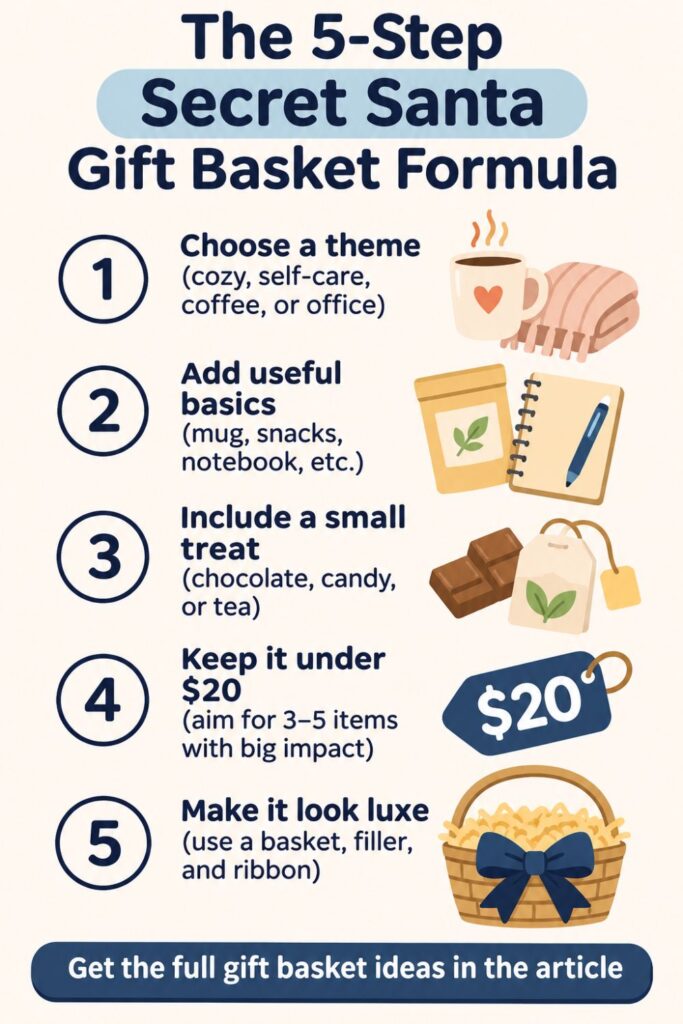
The easiest way to overspend on a homemade gift basket is to count only the gifts. A $7 mug, a few snacks, and a notebook may sound affordable, but a container, ribbon, tissue paper, and sales tax can quietly push the total past $20.
Set a target of about $17 for items and packaging before tax. That gives you up to $3 of breathing room, although the exact amount you need depends on local tax and your purchases.
Use this starting budget when planning your shopping list:
| Component | Target Spending |
|---|---|
| Container | $3 |
| Main gift or anchor | $7 |
| Complementary item | $4 |
| Small treat | $2 |
| Tissue, ribbon, and tag | $1 |
| Tax or price buffer | $3 |
| Maximum total | $20 |
These are spending allowances, not guaranteed store prices. If your container costs $1 instead of $3, move the $2 savings to the main gift or keep it as extra room under the limit.
Buy the anchor first: It should be the item your coworker notices immediately and could enjoy on its own. Look for a mug, small notebook, compact desk accessory, or other everyday object that feels attractive and useful at your target price.
Price the container second: Find something just large enough for the selected items. A container that costs more than the anchor is usually a signal to rethink the plan, especially when your goal is a practical gift rather than decorative packaging.
Treat extras as optional: A few chocolates or tea packets can round out the basket, but they should not force you over budget. If prices run high, skip a fourth item before sacrificing the quality of the main gift.
If you want to get more from your life, and are looking for concrete action steps to get you there, check out our Request a Coach page. It’s a “cut the fence-sitting and take action” way to tackle your issues and actually find success. To get off the fence and start to take action, click or tap here.
Keep a running total on your phone as you shop, including packaging supplies. Do a final calculation before checking out, and remember that your actual limit is below $20 after tax, not merely $20 on the shelf labels.
2. Choose One Theme That Makes Everything Look Coordinated
A theme is what turns several small purchases into a gift. Without one, the recipient sees a mug, a pen, and candy; with one, those same purchases might become a cozy work-break basket that makes immediate sense.
Start with a category that is pleasant and workplace appropriate. Coffee breaks, tea time, desk essentials, or a winter snack break offer enough flexibility to shop affordably without relying on highly personal tastes.
Begin with one recognizable idea: If you choose a coffee-break theme, the anchor could be a mug and the companion could be a single-serve coffee assortment. For a desk theme, start with a notebook and add a coordinated pen set rather than an unrelated kitchen gadget.
Use color as your shortcut to a polished look: Pick two main colors and, if needed, one neutral. Forest green and cream, red and white, or kraft brown with a small gold accent can feel festive without requiring every product to have Christmas graphics.
Match the mood, not every label: Packaging rarely comes in perfectly coordinated shades. You can create visual consistency through the container, tissue paper, ribbon, and arrangement while letting a few product labels remain visible.
Before buying anything beyond the anchor, ask three quick questions:
- Does this item support the theme or make the main gift more useful?
- Does its size fit the container I have in mind?
- Will its color or packaging work with the overall presentation?
If an item fails two of these tests, leave it behind. Cheap extras are rarely bargains when they make the finished gift look cluttered.
If you want to get more from your life, and are looking for concrete action steps to get you there, check out our Request a Coach page. It’s a “cut the fence-sitting and take action” way to tackle your issues and actually find success. To get off the fence and start to take action, click or tap here.
Think about your recipient’s workplace habits only when you have reliable clues. A coworker who brings tea to meetings might appreciate a tea basket, while an unfamiliar colleague may be easier to shop for with neutral stationery or sealed treats.
You do not have to invent an elaborate theme name or buy matching branded products. A simple, consistent purpose will do more for the basket’s appearance than novelty decorations, and it will make the next shopping steps much easier.
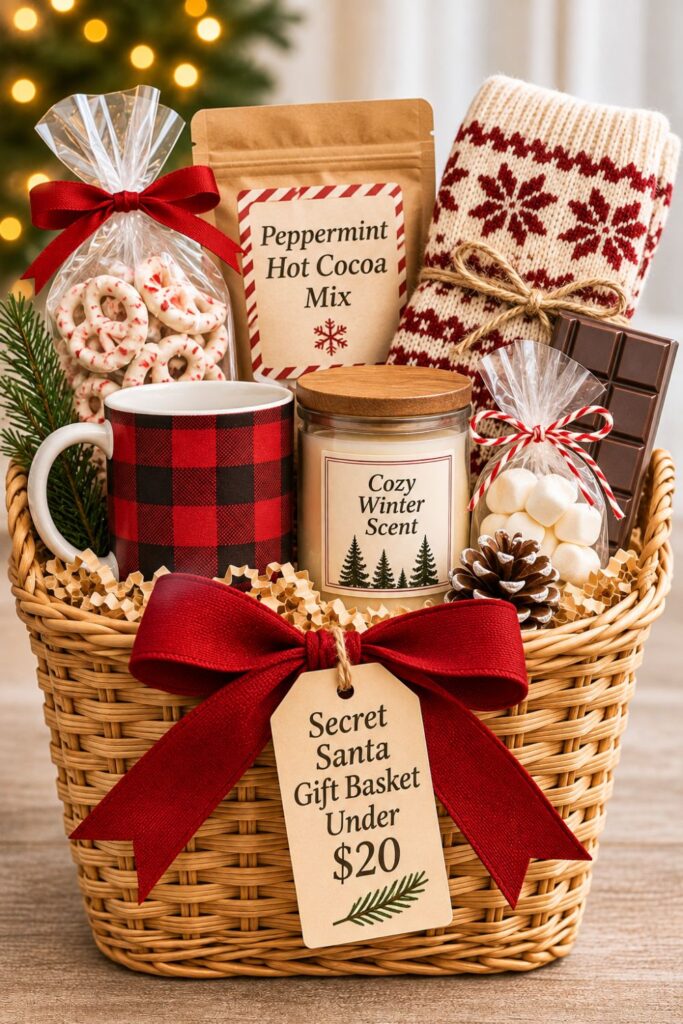
3. Use the Anchor-and-Extras Formula to Make Less Feel Like More
Once you have a theme, resist the urge to fill every inch with merchandise. A successful under-$20 basket usually needs one anchor, one useful companion, and one small treat rather than a long list of tiny objects.
Give the anchor the largest share of the budget because it carries the gift’s value. It should be something your coworker could reasonably keep or use, even after the seasonal treats are gone.
Choose an anchor with visual presence: A solid-colored mug, a nicely bound notebook, or a compact reusable food container can provide a clear centerpiece. Favor good proportions and an appealing finish over flashy packaging that may not fit your theme.
Add a companion that creates a useful pairing: Put cocoa packets with a mug, pens with a notebook, or snack packs with a reusable container. The connection makes the basket look thoughtfully assembled and saves the recipient from wondering why the items are grouped together.
Finish with a small treat: Wrapped chocolates, biscuits, or a couple of festive sweets add a friendly holiday touch without taking over the basket. Choose individually packaged items so they remain clean and easy to share or take home.
Here are three ways the same formula could work:
If you want to get more from your life, and are looking for concrete action steps to get you there, check out our Request a Coach page. It’s a “cut the fence-sitting and take action” way to tackle your issues and actually find success. To get off the fence and start to take action, click or tap here.
- Cozy break: Mug, cocoa packets, and a small wrapped chocolate.
- Desk refresh: Notebook, coordinated pens, and a packaged snack.
- Tea moment: Reusable tin or cup, tea sachets, and a sealed biscuit packet.
These are combinations to shop for, not fixed-price bundles. Compare the actual prices where you shop, and swap items as needed to stay within your allowances.
Leave food in its sealed retail wrapper, even if the label clashes slightly with the color palette. You can turn it so the most attractive side faces forward, but ingredient and allergen information should remain available.
Before adding a fourth product, set the first three items together. If they already communicate the theme clearly, use the remaining money for a better container or cleaner presentation rather than more filler.
4. Pick a Container That Looks Good and Serves a Purpose
The container does two jobs: it presents the gift and becomes part of what the recipient takes home. Choosing a useful container makes your $20 stretch further because the packaging itself has a purpose beyond Christmas morning.
Traditional wicker baskets can work, but they are not the only option. A shallow storage bin, sturdy tin, compact tray, or small fabric basket can look just as intentional, especially when it fits the contents closely.
Shop for proportions before decoration: Set your potential anchor next to the container and imagine the companion item beside it. Aim for enough room to show each item clearly, with little wasted space around the edges.
Match the shape to the contents: A low, wide tray works well for snack packets and horizontal items. A deeper bin can support a mug or notebook standing upright, although you may need folded paper underneath to raise shorter pieces into view.
Choose a second use your coworker might appreciate: A small desk bin could hold stationery later, while a tin might store tea or small household items. Reusability makes the gift feel considered without requiring an extra purchase.
If you want to get more from your life, and are looking for concrete action steps to get you there, check out our Request a Coach page. It’s a “cut the fence-sitting and take action” way to tackle your issues and actually find success. To get off the fence and start to take action, click or tap here.
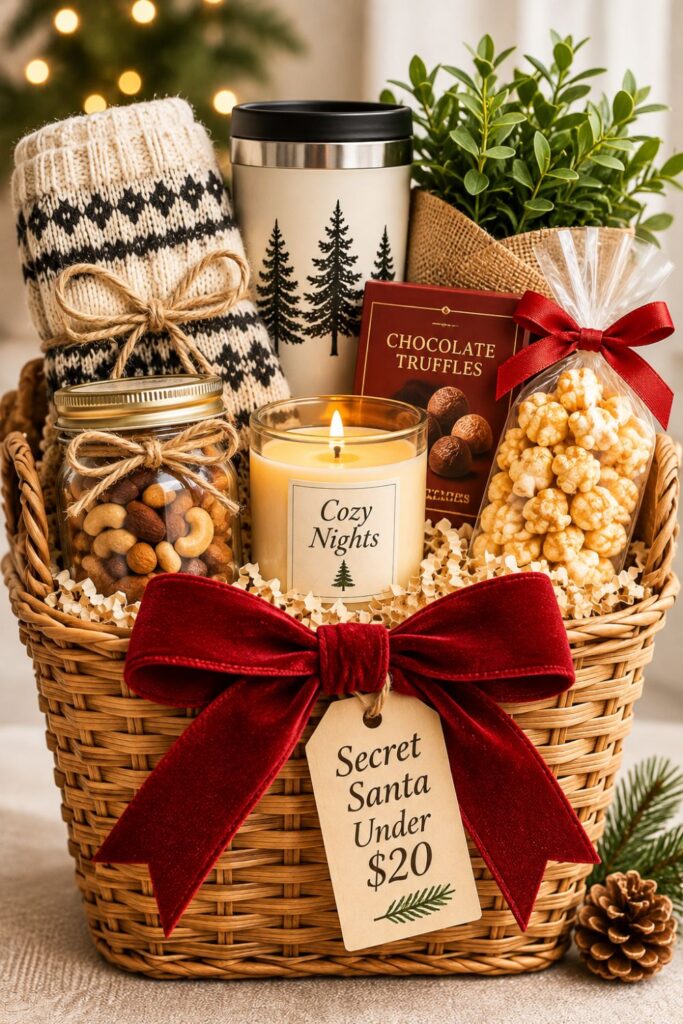
Inspect the finish and stability: Check that the container has no sharp edges, broken handles, loose weaving, or rough surfaces. A simple, sturdy container looks more polished than an ornate one that feels flimsy.
Avoid a common budget-basket mistake: choosing the container first because it looks festive, then spending more to make it appear full. A large basket can swallow three gifts and leave them looking lonely at the bottom.
If you already own a clean, unused container in good condition, consider repurposing it. Just be sure it looks gift-worthy, with no old labels, scratches, or signs of wear that make it feel like an afterthought.
Take a moment to test the arrangement before paying. If the items fit snugly and are easy to see, you have found the right size, even if the container is much smaller than a store-bought holiday hamper.
5. Arrange the Basket to Look Fuller Without Buying More
Presentation is where a modest gift basket starts to look more expensive. You do not need extra products to create fullness; you need the existing items to sit at different heights and face the person who will open the gift.
Begin by clearing a table and removing unnecessary outer sleeves from nonfood products where appropriate. Keep labels, instructions, and all sealed food packaging intact so the contents remain safe and recognizable.
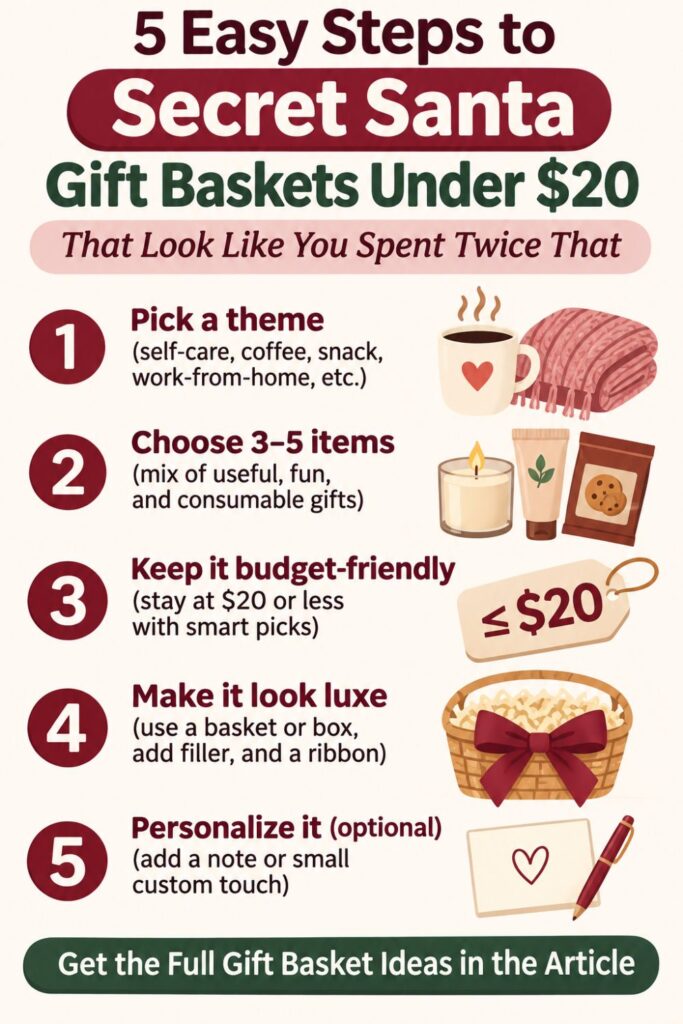
Build a supportive base: Place clean crumpled kraft paper or folded tissue paper at the bottom of the container. Add enough to raise the products near the rim, but not so much that they become unstable or appear ready to fall out.
Give the anchor the best position: Put the largest or tallest item toward the back or slightly off center. Turn its most attractive side forward and check that it does not hide the companion item behind it.
If you want to get more from your life, and are looking for concrete action steps to get you there, check out our Request a Coach page. It’s a “cut the fence-sitting and take action” way to tackle your issues and actually find success. To get off the fence and start to take action, click or tap here.
Layer smaller items toward the front: Position medium pieces at an angle beside the anchor, then place the treat where it can be spotted easily. Aim for a gentle height difference from back to front rather than one flat row.
Fill gaps with restraint: Tuck small folds of tissue paper around the edges to support items and cover the base. The paper should frame the gifts, not form a towering cloud that makes the basket look artificially stuffed.
Use a simple front-view check before wrapping:
- Can you identify the theme in a few seconds?
- Is the main gift clearly visible?
- Do the smaller items look secure rather than squeezed in?
- Does the container look full without appearing overcrowded?
If the basket looks uneven, rotate a product, adjust the filler, or move the anchor an inch. Small placement changes often improve the appearance more than adding another inexpensive item.
Finally, gently lift the container and make sure nothing slides or tips. A good Secret Santa basket should look attractive on a desk and survive the trip home without requiring the recipient to rebuild it.
6. Finish With Christmas Packaging That Looks Polished
Wrapping is the finishing touch, not a separate decorating project. A neat ribbon, restrained colors, and a readable tag can make an inexpensive basket look thoughtfully prepared without using up the remaining budget.
Start with the palette you chose earlier. If the container and products are already colorful, use plain ribbon or tissue rather than introducing additional Christmas patterns.
Choose one primary finishing material: A ribbon around the container may be enough if the contents are secure. If you need to contain loose items, use clear wrapping and gather it neatly above the basket, leaving the main gift visible from the front.
If you want to get more from your life, and are looking for concrete action steps to get you there, check out our Request a Coach page. It’s a “cut the fence-sitting and take action” way to tackle your issues and actually find success. To get off the fence and start to take action, click or tap here.
Keep the ribbon proportional: A narrow ribbon suits a small mug or tin, while a slightly wider one can balance a shallow basket. Tie a simple bow, trim the ends evenly, and avoid adding several competing bows or ornaments.
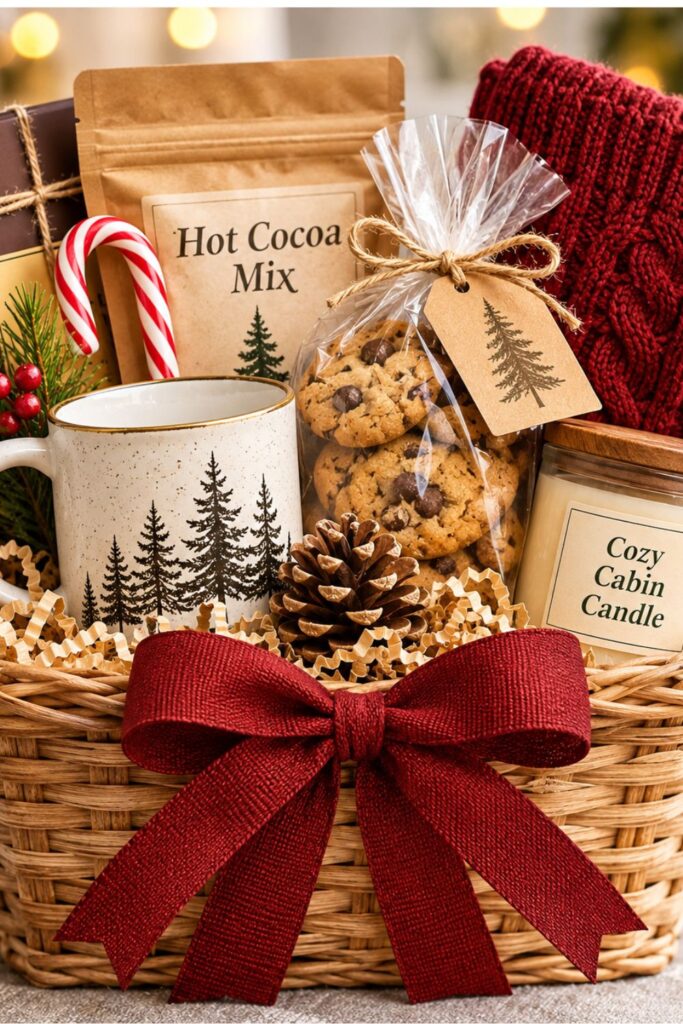
Write a short coworker-friendly message: Try “Wishing You a Cozy Christmas” for a warm gift or “A Little Holiday Break for You” for a snack basket. A specific but professional note feels more personal than an expensive decorative tag.
Hide the evidence of hurried assembly: Remove price stickers where possible, straighten crumpled labels, and tuck away loose tape. Check the back as well as the front, since the recipient will handle the entire container.
If you are using materials left from other gifts, make sure they are clean and uncreased. Reusing a good ribbon or spare tissue paper saves money, but visibly worn wrapping works against the polished look you are trying to create.
Keep a final checklist beside the basket:
- The main gift and supporting items are visible.
- All contents are stable and appropriately sealed.
- The tag is attached and the message is readable.
- No price stickers or receipts are accidentally displayed.
- The total cost, including tax, is below $20.
Then stop decorating. A clean finish usually feels more confident than one more bow, bell, or piece of filler, and it keeps this a genuinely low-effort project.
7. Adapt the Same Formula for Different Coworkers
One of the best features of this basket method is that you can change the theme without changing your budget. The container, anchor, companion, treat, and finishing steps stay the same, so personalizing the gift does not turn into a new shopping project.
Start with what you genuinely know about the recipient. Notice ordinary preferences such as a favorite hot drink or an enthusiasm for stationery, but avoid guessing about personal care routines, dietary needs, or private hobbies.
If you want to get more from your life, and are looking for concrete action steps to get you there, check out our Request a Coach page. It’s a “cut the fence-sitting and take action” way to tackle your issues and actually find success. To get off the fence and start to take action, click or tap here.
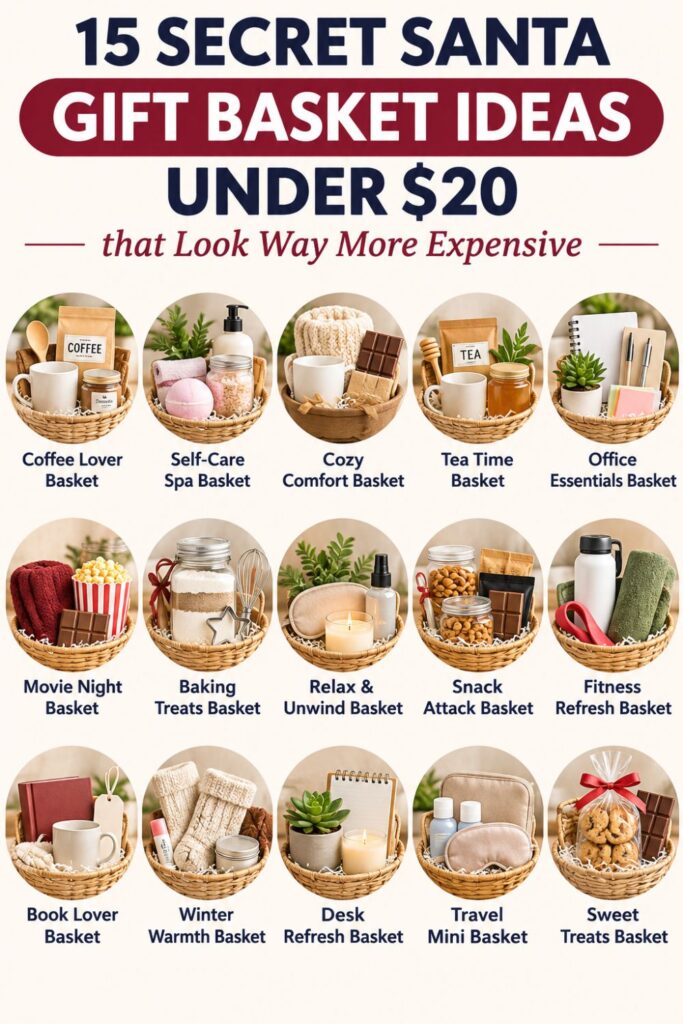
For the coffee-break coworker: Choose a simple mug as the anchor, add a small coffee assortment or cocoa packets, and include a wrapped biscuit. Use cream or dark green tissue and keep the contents visible so the basket reads as a ready-made break.
For the organized desk lover: Start with a notebook or compact desk organizer and add pens, sticky notes, or another useful companion. Finish with a sealed snack, then use a small reusable bin or tray that could remain on a desk afterward.
For the winter-comfort coworker: Make the anchor a sturdy cup or attractive reusable tin, then add tea or cocoa and a seasonal treat. Choose soft neutrals with one festive accent so the gift feels cozy without depending on novelty Christmas merchandise.
You can also make a more neutral version for a coworker you barely know. A practical notebook, an understated pen, and a small packaged treat are usually easier to tailor than perfume, bath products, or highly specific novelty gifts.
Before committing to food, check any dietary restrictions that have been shared with you. If you are unsure, choose a nonfood companion item or a clearly labeled packaged option rather than assuming every recipient can eat the same treats.
Keep the same quality test for every version: would the anchor still be a pleasant gift if the extras were removed? If not, shift more of the budget toward it and simplify the remaining items.
The result is a basket that feels chosen for a particular coworker, even though the shopping and assembly process remains easy to repeat.
8. Create a Holiday Gift Planning System You Can Reuse
Once you have made one Secret Santa basket successfully, save the formula instead of starting from scratch next Christmas. A small amount of organization now can turn future gift exchanges into a quick shopping task rather than a last-minute scramble.
If you want to get more from your life, and are looking for concrete action steps to get you there, check out our Request a Coach page. It’s a “cut the fence-sitting and take action” way to tackle your issues and actually find success. To get off the fence and start to take action, click or tap here.
Begin with a simple note on your phone or computer. Record what you bought, what each item cost, how you arranged the basket, and which supplies you already had on hand.
Save a reusable shopping checklist: Keep the five categories in the same order: container, anchor, companion, treat, and finishing supplies. Add a line for sales tax so you remember to protect the actual $20 limit.
Photograph the finished arrangement: Take one picture from the front and one from above. Next year, these images will remind you how much filler you used, which container size worked, and where you positioned the main gift.
Store leftover supplies together: Put spare gift tags, ribbon, and clean tissue paper in one small labeled box. Before shopping for another holiday exchange, check that box so you do not accidentally buy materials you already own.
Make one shopping trip easier: List your desired anchor choices before entering a store, then look for a coordinating container and companion item. If your first choice is too expensive, use a planned substitute rather than wandering the aisles collecting unrelated bargains.
If holiday spending and preparation routinely feel overwhelming, an organizational coach could help you establish a simple seasonal planning routine. That might include a gift budget, storage system, shared family checklist, and calendar reminders, all designed to reduce repeat decisions.
You do not need coaching to make one gift basket, of course. The useful lesson is that a repeatable system can save both time and money when your calendar fills up with school, office, family, and neighborhood exchanges.
After the holiday, keep only the notes that genuinely helped. A short list and one photo are often more useful than an elaborate spreadsheet you will never open again.
If you want to get more from your life, and are looking for concrete action steps to get you there, check out our Request a Coach page. It’s a “cut the fence-sitting and take action” way to tackle your issues and actually find success. To get off the fence and start to take action, click or tap here.
The Secret to a $20 Basket That Feels Like More
Need some relationship guidance? Drop on by our directories choc full of relationship coaches and dating coaches to help make your love life the best it can be. Or click here to have us match you to the best.
A thoughtful Secret Santa gift is not measured by the number of objects you manage to squeeze inside a container. It is measured by whether the items make sense together, feel pleasant to receive, and show that you put a little care into choosing them.
That is why the simplest basket formula works so well. One appealing anchor provides the substance, a useful companion adds purpose, a small treat creates a festive moment, and a reusable container brings everything together.
The budget matters because it makes you selective. When you reserve money for packaging and tax before shopping, you can choose better combinations instead of scrambling to remove items at the checkout.
The styling matters for a different reason. Coordinated colors, a properly sized container, and a few thoughtful placement adjustments give inexpensive items the polished appearance that makes the basket feel like a complete gift.
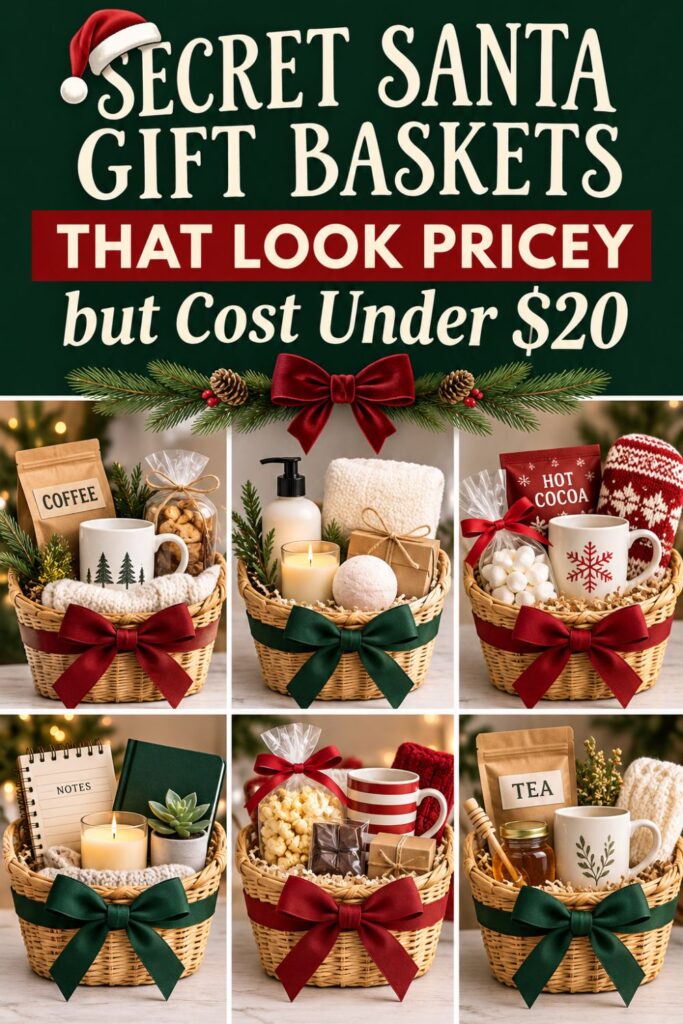
Before you head out, use this quick planning checklist:
- Choose the theme: Coffee break, tea moment, desk essentials, or another coworker-friendly idea.
- Set the spending plan: Aim for about $17 before tax, including the container and wrapping.
- Find the anchor: Select one useful item that looks appealing on its own.
- Choose two extras: Add one related companion and one small treat or finishing item.
- Test the fit: Make sure all pieces sit comfortably in the container without large empty gaps.
- Style and secure: Raise the items with clean paper, arrange them at different heights, and add a neat tag.
If you already have wrapping materials at home, use them before buying new ones. If the recipient has a known preference, let that guide your theme, but do not feel pressured to build something elaborate.
Most importantly, give yourself permission to stop when the basket looks complete. More items do not automatically make a better gift, and a crowded collection can lose the thoughtful feeling you worked to create.
If you want to get more from your life, and are looking for concrete action steps to get you there, check out our Request a Coach page. It’s a “cut the fence-sitting and take action” way to tackle your issues and actually find success. To get off the fence and start to take action, click or tap here.
With a clear theme, a sensible budget, and a little attention to presentation, you can bring a Secret Santa basket to the office that feels generous, useful, and festive while keeping the entire cost below $20.
If you want to get more from your life, and are looking for concrete action steps to get you there, check out our Request a Coach page. It’s a “cut the fence-sitting and take action” way to tackle your issues and actually find success. To get off the fence and start to take action, click or tap here.
Read this next

8 Coaching Tips To Improve Your Online Dating Profile with Funny “Pros and Cons of Dating Me”
Humor is the best way to make your online dating profile stand out. Take it from a dating coach!
Read More
British, Ukrainian, Tall, Shy: Tips on Dating Different Types of Men From a Dating Coach
Dating experiences vary due to behavioral, geographical, and cultural differences. Find your perfect match!
Read More
The TRUTH About Saving Your Marriage
In this insightful and transformative video, viewers are taken on an explorative journey to understand the complexities, challenges, and potential solutions for revitalizing and strengthening a marriage. The video commences […]
Read More