




Keys to a Healthy Relationship
How Do You Develop a Healthy Relationship?
A healthy relationship requires two healthy parties growing together.
There has been a surge of requests from individuals looking to develop a “healthy relationship.” Unfortunately, what many people do not realize is that if they are not healthy themselves, looking for a healthy relationship is a futile endeavor. This is because a healthy relationship requires two healthy parties growing together. That cannot occur, however, if one person is unhealthy.
Key Takeaways
- Healthy relationships start with individual responsibility. Each person must notice their own patterns, name harmful behavior honestly, and work on the part they can control instead of expecting a partner to repair everything.
- Clear communication works best when it is specific. Describe the behavior, explain its effect, and make a practical request rather than relying on blame, mind-reading, silence, or broad accusations.
- Conflict needs openness, empathy, and a pause when emotions spike. Healthy couples can disagree while protecting respect, listening to each other’s viewpoint, and returning to the issue after they can speak clearly.
- Apologies need visible follow-through. Commitment to change appears in repeated actions, such as keeping agreements, revisiting difficult conversations, sharing responsibilities, and correcting old patterns when they reappear.
- Compromise should protect both people. A workable agreement asks each partner to move without requiring one person to erase their needs, accept repeated disrespect, or carry the entire relationship alone.
What Are the Keys to a Healthy Relationship?
A healthy relationship is built through mutual respect, honest communication, trust, boundaries, shared responsibility, and consistent follow-through. Both people need room to express their needs, disagree safely, and ask for change without punishment, contempt, or coercion.
Building a healthy relationship requires more than good intentions. Each partner must admit their patterns, make specific requests, regulate strong reactions, repair harm, and turn apologies into visible behavior. Regular check-ins can help address small problems before they become recurring fights.
A relationship is not healthy when one person must stay silent, shrink their needs, or accept disrespect to keep the peace. Compromise should involve movement from both people, and responsibility should never be confused with taking blame for someone else’s choices.
Why Does Personal Responsibility Matter in a Healthy Relationship?
The key to being in a healthy relationship is to first look and check the unhealthiness within you before trying to unite with someone else. You won’t be able to tell unless you are honest with yourself.
- The first step in this process would be to admit that there are areas which need addressing
- It is important to be open and willing to try new things
- There must be a willingness to commit and invest in change
What Is the Process for Creating a Healthy Relationship?

The process is simple:
Why Is Admission the First Step?
Perhaps most relationships have their fair share of highs and lows. Fun times, problems, and adjustments just go in circles – they never stop.
So, if you ever get caught between an obstacle in your relationship, be honest with yourself and your partner. Assess what led to that situation and plan how you could resolve the issue.
If you want to get more from your life, and are looking for concrete action steps to get you there, check out our Request a Coach page. It’s a “cut the fence-sitting and take action” way to tackle your issues and actually find success. To get off the fence and start to take action, click or tap here.
Only those with the courage to admit something’s wrong can successfully move to the next step.
How Does Openness Help a Relationship?
There’s no other way to address your concerns but to face it head-on. Only when you learn to respectfully agree to disagree, can you openly discuss and resolve things.
Healthy couples don’t shy away from expressing disagreements. Why? Since it’s all part of growing and building a healthy relationship.
Talk things out and understand each other’s viewpoints. If you need to be calm to properly convey your thoughts, allow yourself to spend a few moments to collect yourself.

But your readiness to speak about the problem at hand is only half the battle. Practice empathy and respect as if you were talking with a friend. Keep in mind your goal in speaking about the issue, that is to develop your relationship. Not to prove who’s right or wrong.
Bottom line is there’s no other way to address your concerns but to face it head-on. Only when you learn to respectfully agree to disagree, can you openly discuss and resolve things.
Why Does Commitment to Change Matter?
The reality is, you can’t control the people around you, even your partner. But you can control yourself. Commit to change and start building a healthy relationship.
Remember the phrase, “everything changes; nothing stays the same”? It pretty much applies nearly to all things – in business, life in general, and even in relationships!
If all else that surrounds us changes, but we don’t, what will happen to us?
Likewise, when you face an issue with your relationship and your partner is willing to change, but you don’t accept your flaws, what will become of your relationship?
If you want to get more from your life, and are looking for concrete action steps to get you there, check out our Request a Coach page. It’s a “cut the fence-sitting and take action” way to tackle your issues and actually find success. To get off the fence and start to take action, click or tap here.
The reality is, you can’t control the people around you, even your partner. But you can control yourself. Commit to change and start building a healthy relationship.
It is only then can you emerge into the individual that you would like to be.
What Does Admission Actually Look Like in a Real Relationship?
Admission is not just saying, “I know I’m not perfect.”
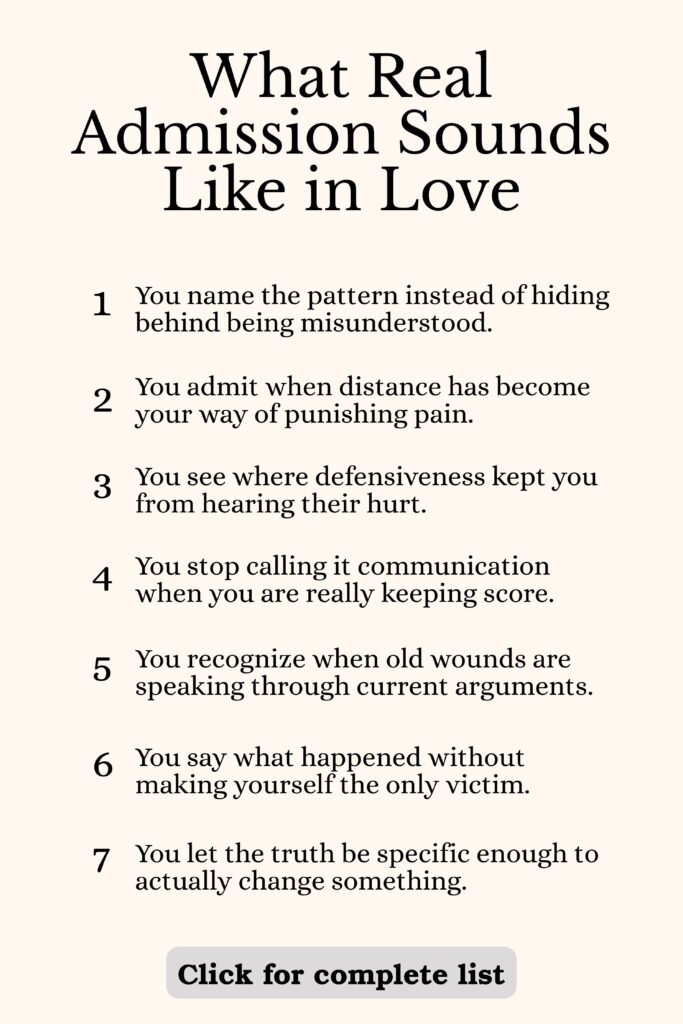
That is too vague to change anything.
Real admission sounds more like this:
- “I get quiet when I feel criticized, then I punish you with distance.”
- “I say I’m fine, but I expect you to notice I’m upset.”
- “I bring up old problems when we’re trying to solve a current one.”
- “I agree in the moment, then resent you later.”
That level of honesty gives the relationship something real to work with.
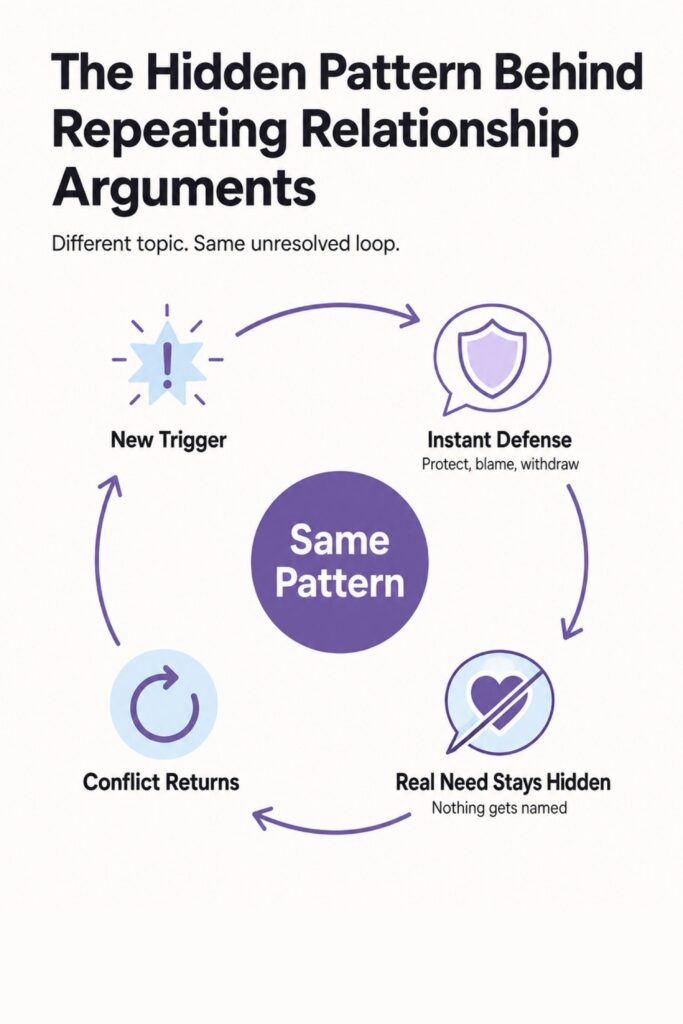
For example, maybe every disagreement about money turns into a fight about respect. The actual issue may not be the bill, the budget, or who spent what. The pattern may be that one partner feels controlled while the other feels unsupported.
Once you name the pattern, you can stop fighting the wrong problem.
If you want to get more from your life, and are looking for concrete action steps to get you there, check out our Request a Coach page. It’s a “cut the fence-sitting and take action” way to tackle your issues and actually find success. To get off the fence and start to take action, click or tap here.
A relationship coach can sometimes help here by listening for the repeated loop. Not to pick a side, but to help both people see what keeps happening before the conversation falls apart.
What Is the Difference Between Taking Responsibility and Taking the Blame?
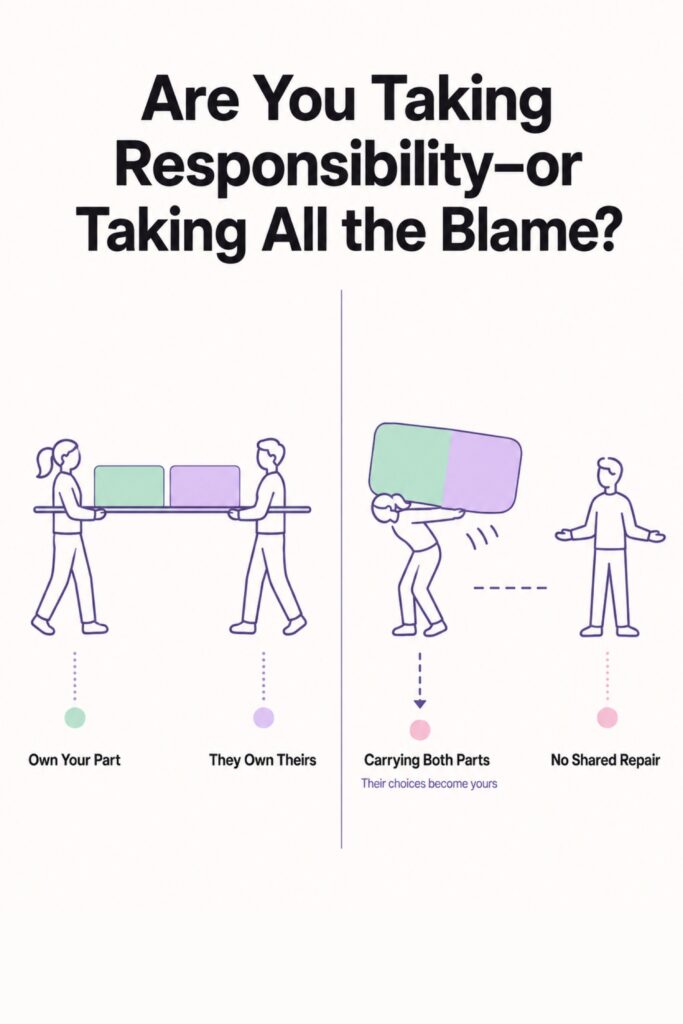
Looking at your own part does not mean carrying the whole relationship on your back.
That is where many people get confused.
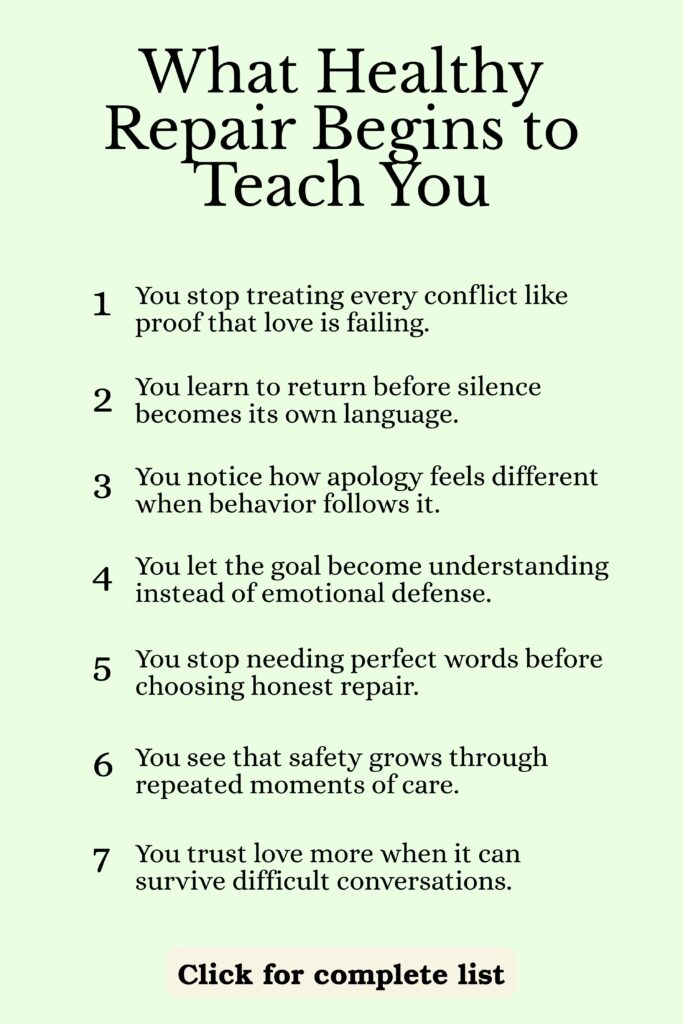
Taking responsibility sounds like, “I raised my voice, and I need to handle that differently.”
Taking the blame sounds like, “If I were calmer, maybe they would not keep disrespecting me.”
Those are not the same thing.
A healthy relationship needs honesty from both people. If one person keeps apologizing just to end the tension, the relationship may look peaceful on the outside while resentment builds underneath.
For example, if your partner cancels plans repeatedly and you always say, “It’s okay,” when it is not okay, you are not creating peace. You are training yourself to disappear from the relationship.
If you want to get more from your life, and are looking for concrete action steps to get you there, check out our Request a Coach page. It’s a “cut the fence-sitting and take action” way to tackle your issues and actually find success. To get off the fence and start to take action, click or tap here.
A more honest response might be:
“I understand things come up, but when plans change at the last minute often, I feel like our time is not being protected. I need us to plan differently.”
That is responsibility with a boundary.
Not blame. Not attack. Not silence.
How Can You Practice Openness Without Turning Every Conversation Into a Fight?
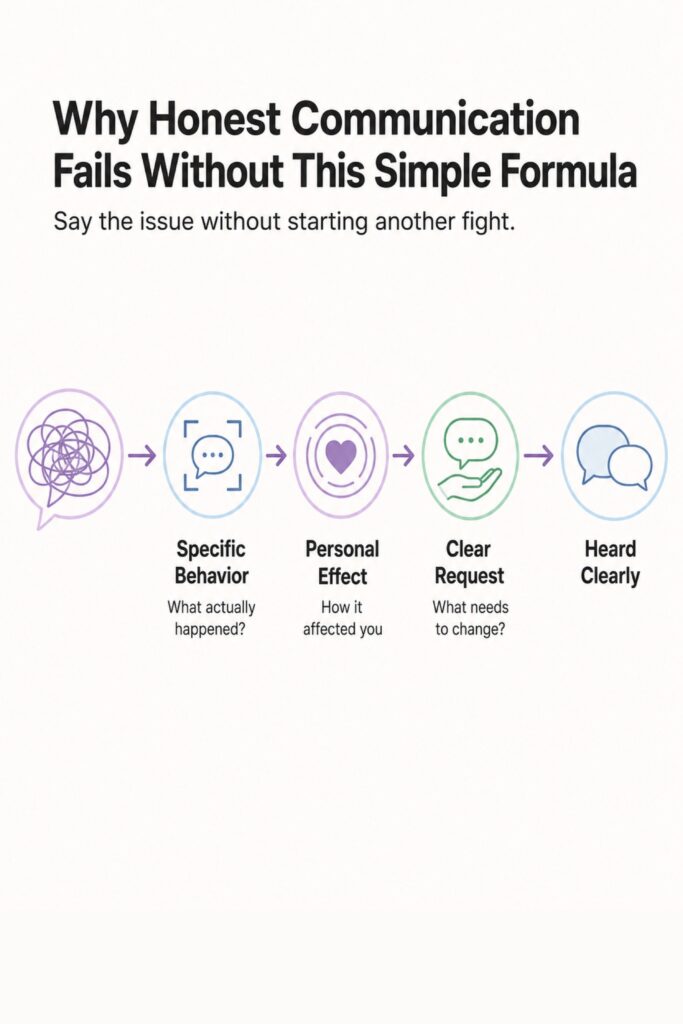
Openness does not mean saying every thought the second it appears.
That can turn honesty into damage.
A better goal is to say the real thing in a way your partner can actually hear.
Instead of:
If you want to get more from your life, and are looking for concrete action steps to get you there, check out our Request a Coach page. It’s a “cut the fence-sitting and take action” way to tackle your issues and actually find success. To get off the fence and start to take action, click or tap here.
“You never listen to me.”
Try:
“When I’m talking and the subject changes quickly, I feel dismissed. I need you to stay with me for a minute before we move on.”
That gives your partner something specific to respond to.
The same applies to everyday tension.
If the issue is housework, do not start with “I do everything around here.”
Try:
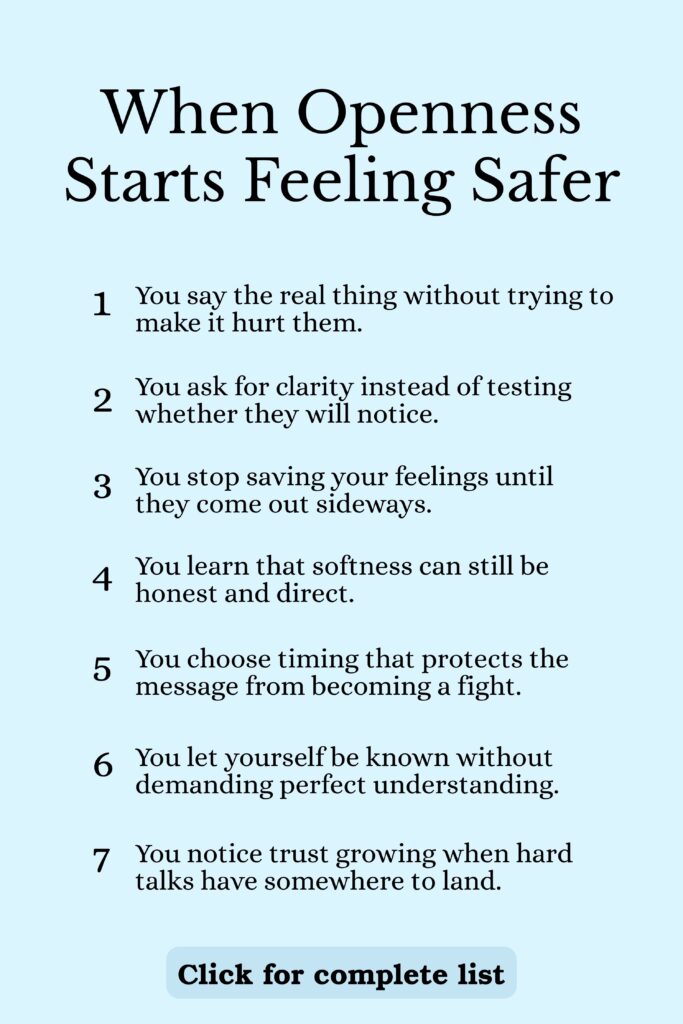
“I’m handling dinner, laundry, and school forms most nights. I need us to divide the weekday routine more clearly.”
If you want to get more from your life, and are looking for concrete action steps to get you there, check out our Request a Coach page. It’s a “cut the fence-sitting and take action” way to tackle your issues and actually find success. To get off the fence and start to take action, click or tap here.
If the issue is emotional distance, do not start with “You don’t care anymore.”
Try:
“I miss feeling close to you. Can we put our phones away for dinner twice this week and actually talk?”
Openness works better when it names the behavior, the effect, and the request.
A communication coach may help couples practice this in real time. Sometimes the issue is not that you do not know what you feel. It is that the words come out sharp, vague, or too late.
How Does the Pause Before You Respond Method Work?

Some relationship problems get worse in the first ten seconds after someone feels hurt.
That is when tone changes. Eyes roll. Doors close. Old arguments walk right back into the room.
A short pause can protect the conversation from becoming something you both regret.
If you want to get more from your life, and are looking for concrete action steps to get you there, check out our Request a Coach page. It’s a “cut the fence-sitting and take action” way to tackle your issues and actually find success. To get off the fence and start to take action, click or tap here.
The American Psychological Association recommends calming down before trying to resolve conflict when anger is high.
Try this simple pattern:
- Pause: Stop yourself from answering immediately.
- Name it privately: “I feel embarrassed,” “I feel accused,” or “I feel ignored.”
- Choose the real request: What do you actually need right now?
- Respond to that request, not the emotional spike.
For example, your partner says, “You always make this about you.”
Your first instinct may be to defend yourself.
Instead, you might say:
“I want to respond, but I’m getting defensive. Give me a minute so I can say this clearly.”
That one sentence changes the direction of the conversation.
It does not solve everything. But it keeps the moment from turning into another round of blame, interruption, and emotional cleanup.
If you want to get more from your life, and are looking for concrete action steps to get you there, check out our Request a Coach page. It’s a “cut the fence-sitting and take action” way to tackle your issues and actually find success. To get off the fence and start to take action, click or tap here.
This is especially useful for couples who repeat the same fight with different details. The topic changes, but the pattern stays the same.
What Does Commitment to Change Look Like After an Apology?
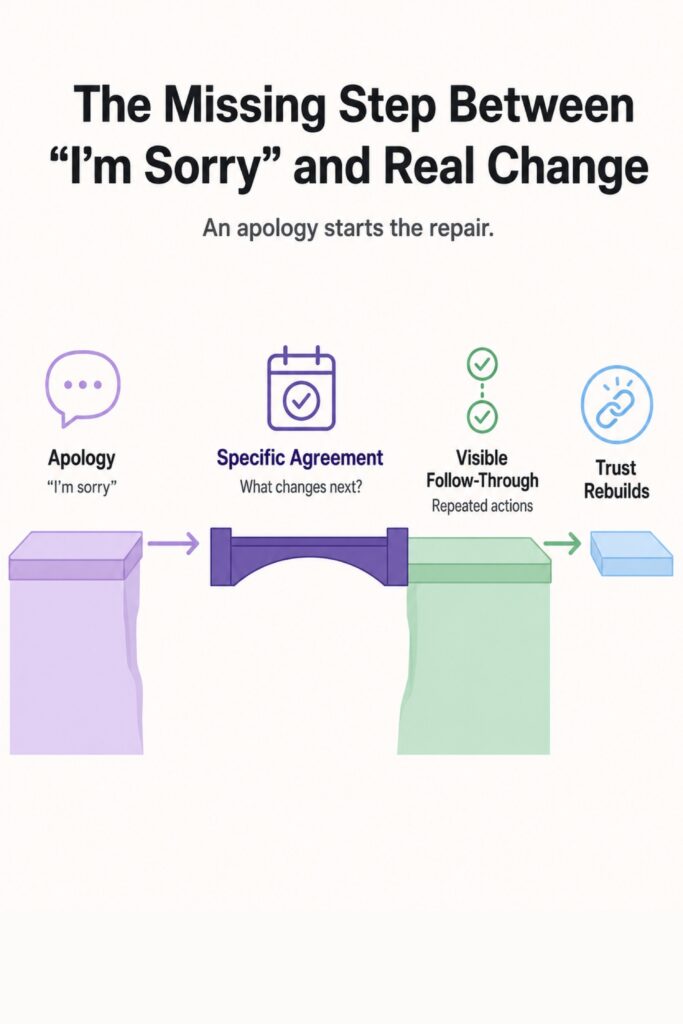
An apology is only the beginning.
The real question is what changes after it.
If someone says, “I’m sorry I shut down,” commitment looks like coming back to the conversation later instead of pretending it never happened.
If someone says, “I’m sorry I keep interrupting,” commitment looks like catching themselves mid-sentence and saying, “Go ahead, I cut you off.”
If someone says, “I’m sorry I haven’t been present,” commitment looks like putting the phone away, making the plan, and showing up when they said they would.
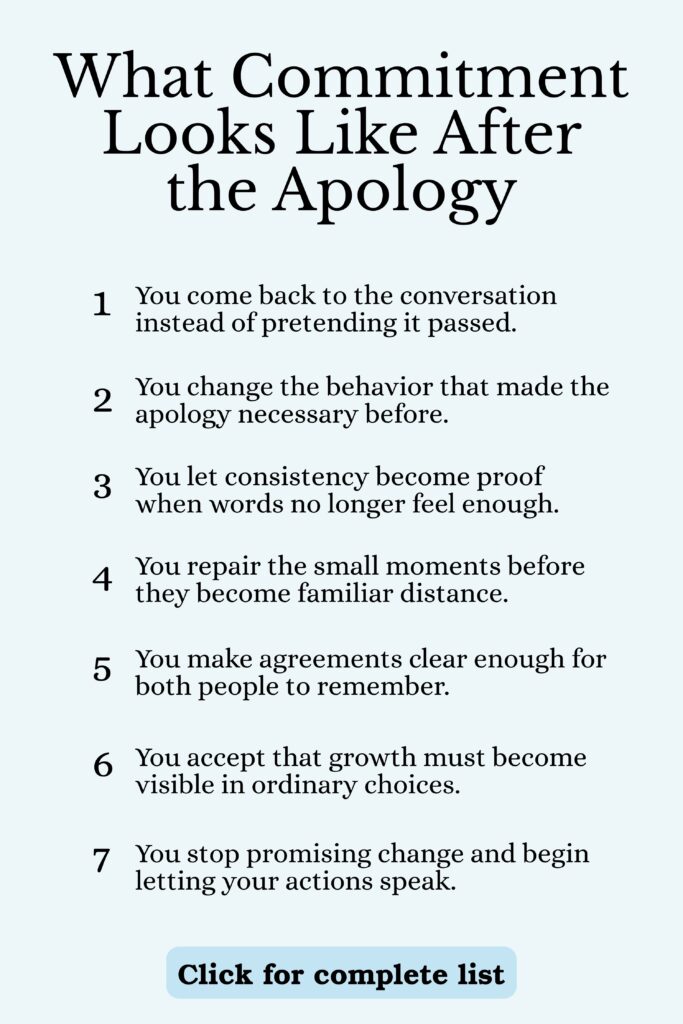
Change becomes believable when it is visible.
Small proof matters.
If you want to get more from your life, and are looking for concrete action steps to get you there, check out our Request a Coach page. It’s a “cut the fence-sitting and take action” way to tackle your issues and actually find success. To get off the fence and start to take action, click or tap here.
- The issue gets revisited after emotions cool down
- The same hurtful joke stops
- The budget conversation gets scheduled before the money is spent
- The partner who needs space also agrees on when they will come back
- The person asking for more help names the exact task instead of hoping it gets noticed
A relationship coach can help turn vague promises into specific agreements. Not “I’ll do better,” but “I’ll handle bath time on Tuesday and Thursday, and we’ll check in Sunday night.”
That is the kind of change a relationship can actually feel.
When Is Compromise Healthy, and When Does It Become Self-Abandonment?
Compromise should not require one person to keep shrinking.
Healthy compromise has movement on both sides.
For example, one partner wants to spend every holiday with extended family. The other wants quiet time at home. A workable compromise might be Thanksgiving with family, Christmas morning at home, and a clear plan before the season begins.
Both people give something. Both people keep something.
That is very different from one person saying yes every time to avoid tension.
Self-abandonment often sounds polite at first:
If you want to get more from your life, and are looking for concrete action steps to get you there, check out our Request a Coach page. It’s a “cut the fence-sitting and take action” way to tackle your issues and actually find success. To get off the fence and start to take action, click or tap here.

- “Whatever you want is fine.”
- “I don’t want to make it a big deal.”
- “It’s easier if I just handle it.”
- “I’ll get over it.”
But the body keeps score in practical ways.
You stop looking forward to plans. You become irritated over small things. You feel lonely even when you are together. You start seeing your partner as another responsibility instead of someone you can relax with.
A healthier compromise might sound like:
“I can do dinner with your family this weekend, but I need Sunday afternoon free. I don’t want to start the week exhausted.”
That is not selfish.
That is a clear limit with a workable offer.
A relationship or boundaries coach may help someone practice saying these things without overexplaining, apologizing too much, or backing down the second the other person seems disappointed.
How Can You Use the 3 C’s for a Simple Relationship Check-In?
The 3 C’s work best when they become part of normal life, not something you only talk about during a crisis.
If you want to get more from your life, and are looking for concrete action steps to get you there, check out our Request a Coach page. It’s a “cut the fence-sitting and take action” way to tackle your issues and actually find success. To get off the fence and start to take action, click or tap here.
Try using them as a short weekly check-in.
Keep it simple.
Communication: What needs to be said clearly this week?
Maybe one of you has been quiet about feeling overloaded with the kids, work, errands, or emotional labor. This is where you name the thing before it turns into a fight.
Commitment: What did we say we would do, and did we do it?
This could be paying a bill, planning a date night, being home on time, following through with chores, or checking in after a hard conversation.
Compromise: Where do we need a fair adjustment?
Maybe one partner needs more rest. Maybe the other needs more affection. Maybe the weekend plan only works if both people get some of what they need.
If you want to get more from your life, and are looking for concrete action steps to get you there, check out our Request a Coach page. It’s a “cut the fence-sitting and take action” way to tackle your issues and actually find success. To get off the fence and start to take action, click or tap here.
A real check-in might sound like this:
“This week, I need to talk about the evening routine. I’m doing dinner and cleanup most nights, and I’m getting short with everyone. Can we switch cleanup to you on Monday, Wednesday, and Friday?”
That is concrete.
No guessing. No mind-reading. No waiting until resentment makes the conversation heavier than it needed to be.
Frequently Asked Questions About Healthy Relationships
What are the 3 C’s in a healthy relationship?
A healthy relationship is probably what every couple wishes to have. So how do you build one? Focus on the 3 C’s – communication, commitment, and compromise.
Communication breaks barriers and enhances understanding despite your differences. The American Psychological Association identifies communication and regular check-ins as key parts of a healthy relationship. Commitment strengthens your relationship as you make a conscious effort to nurture it. Finally, compromise encourages openness and acceptance of each other’s differences in opinions, values, and priorities. It’s thinking beyond who’s right or wrong. But considering the best decision and action as lifetime partners.
What are the ingredients of a healthy relationship?
Turns out there’s a not-so-secret recipe for creating a happy and healthy relationship.
- Find your happiness within
- Express your emotions: be honest and transparent
- Learn to compromise
- Allot time for self-care
- Engage in difficult conversations – don’t avoid them!
- Show kindness with your words and actions
- Create healthy boundaries
What are the five pillars of a healthy relationship?

Relationships have varying strengths, needs, and challenges. But as different as they are, nothing can win against a relationship with a proper foundation. Ensure your relationships are built on solid ground with these five pillars: love, communication, trust, truthfulness, and affection.
If you want to get more from your life, and are looking for concrete action steps to get you there, check out our Request a Coach page. It’s a “cut the fence-sitting and take action” way to tackle your issues and actually find success. To get off the fence and start to take action, click or tap here.
The Centers for Disease Control and Prevention also emphasizes managing feelings and communicating in a healthy way as important skills for creating and maintaining healthy relationships.
What Are the Signs of a Healthy Relationship?
A healthy relationship includes mutual respect, honest communication, trust, boundaries, shared decision-making, and room for each person to maintain an individual life. Conflict may happen, but neither person should need fear, silence, or self-erasure to keep the relationship stable.
How Do Healthy Couples Handle Conflict?
Healthy couples handle conflict by naming the specific issue, listening to each other, regulating strong reactions, and agreeing on a practical next step. They focus on solving the current problem rather than proving who is right or bringing every previous disagreement into the conversation.
Can an Unhealthy Relationship Become Healthy?
An unhealthy relationship can become healthier when both people recognize the pattern, accept responsibility, respect boundaries, and sustain new behavior over time. Change is unlikely when only one person participates or when coercion, threats, intimidation, or violence continue.
How Often Should Couples Have a Relationship Check-In?
Couples can benefit from a short weekly check-in that covers communication, commitments, responsibilities, and any adjustments they need. The goal is not to manufacture problems, but to address ordinary concerns before silence, assumptions, or resentment make them harder to resolve.
When Should Couples Seek Relationship Coaching?
Couples may consider relationship coaching when they repeat the same communication patterns, struggle to make clear requests, or need structure for shared goals and agreements. Relationship coaching is not a replacement for specialized domestic violence or mental health support when abuse, threats, fear, or safety concerns are present.
Healthy relationships are built in these ordinary moments. The small repair. The honest request. The changed behavior. The willingness to come back to the table and try again with something more useful than blame.
Sources
American Psychological Association. “Happy Couples: How to Keep Your Relationship Healthy.” American Psychological Association, 1 Jan. 2020, https://www.apa.org/topics/marriage-relationships/healthy-relationships. Accessed 21 July 2026.
If you want to get more from your life, and are looking for concrete action steps to get you there, check out our Request a Coach page. It’s a “cut the fence-sitting and take action” way to tackle your issues and actually find success. To get off the fence and start to take action, click or tap here.
American Psychological Association. “Four Ways to Strengthen Couples’ Relationships Now.” American Psychological Association, 12 June 2020, https://www.apa.org/topics/covid-19/strengthen-couples-relationships. Accessed 21 July 2026.
Centers for Disease Control and Prevention. “Teen Dating Violence.” Intimate Partner Violence Prevention, 14 Jan. 2025, https://www.cdc.gov/intimate-partner-violence/about/about-teen-dating-violence.html. Accessed 21 July 2026.
If you want to get more from your life, and are looking for concrete action steps to get you there, check out our Request a Coach page. It’s a “cut the fence-sitting and take action” way to tackle your issues and actually find success. To get off the fence and start to take action, click or tap here.
Read this next

Signs Your Spouse Is Cheating and Having An Affair
Do you suspect that your spouse might be having an affair, a.k.a. unfaithful but can’t put your finger on why? Are you feeling uneasy about changes in your relationship? Do […]
Read More
What is a healthy relationship?
What is the best type of relationship? Hint… ballet dancing is a clue!
Read More
Top Seven Benefits of Relationship Coaching
Change your relationship status from fine to spectacular with the help of relationship coaching.
Read More