


Talk to a coach about Organizational coaching

Dr Soraya Sawicki, DSW, CPC, RMT
DSW, CPC, CSC, RMT
Personalized wellness coaching for stress relief, energy, and inner harmony.

Robert Bradley Singleton
Certified Master Spiritual Life Coach, Neuropsychologist, and Existential Therapist
Train with the best to be the best you! Don't...

Lisa Rogers
Certified Professional Coach | 500-Hour Yoga Teacher | Meditation Instructor | Trauma-Informed, IFS-, CBT-, DBT-, and Polyvagal-Informed Coach | High-Conflict Mediation Trained | HSP Specialist
Healing mind, body & spirit through coaching, meditation, and nervous...

Daniel Herron
CPLC
You know what it's like to avoid, to push away....

Matthew Walley
Frame of Mind Coaching Certified
Mindset Coach helping people gain awareness around their thinking and...

Robert B Singleton, MCMA, MSc.
MSc. Metaphysical Sciences; B. Div., Divinity: Mindfulness and Positive Psychology fanatic
Positive Psychology and Mindfulness Specialties; NeuroScience and Trauma-informed

Maiysha Clairborne
MD, Master NLP Coach & Hypnotist

Crystal Faulk
ACC
I help overwhelmed women in transition gain clarity, confidence, and...

Bifold Closet Door Storage Without Damage
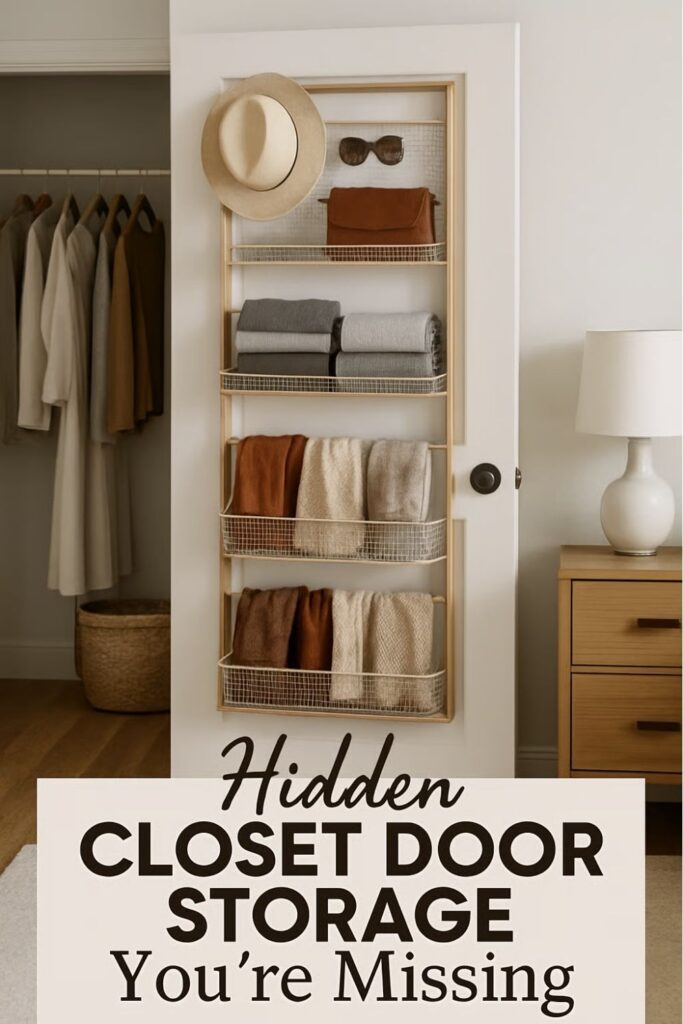
Are you all about style, decor and organization? Download a copy of our Clutter Reset Guide.
****
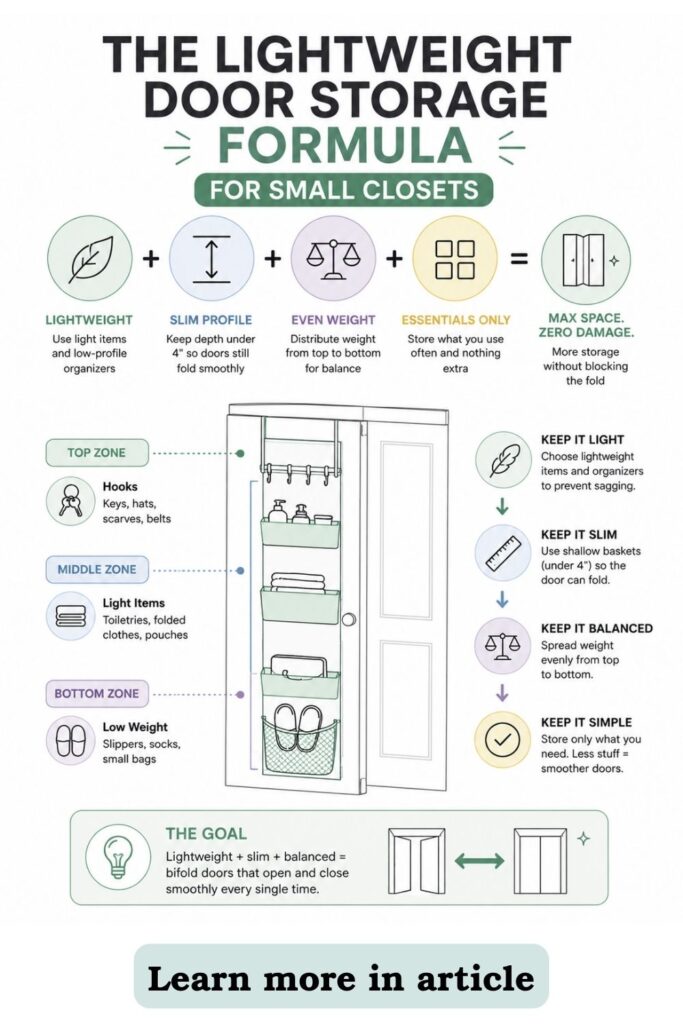
Small closets can feel impossible when every shelf, rod, and floor corner is already full. But before you buy another bulky organizer, it is worth looking at one overlooked spot: the inside of your bifold closet doors.
Bifold doors are tricky because they fold instead of swinging open like a regular door. That means you cannot treat them like a standard flat storage surface. Heavy racks, deep baskets, and bulky shoe organizers can block the fold, scrape the frame, or make the doors harder to open.
The good news is that you can still use bifold doors for extra storage without drilling. The key is to choose lightweight items, renter-safe tools, and slim vertical layouts that move with the door instead of fighting it.
This setup works especially well for small accessories, daily grab items, closet tools, scarves, belts, tote bags, or slim pouches. It is not meant to replace shelves or drawers. Think of it as a helper zone for the small things that usually disappear, pile up, or clutter the closet floor.
Before adding anything, your first job is to understand how your specific door moves. From there, you can choose the right type of organizer, place it safely, and keep the system simple enough to maintain.
Need some in depth help with organization and productivity ? Drop on by our directories choc full of productivity coaches, minimalist coaches, and work/life balance coaches to get your life organized! Or click here to have us match you to the best.
If you want to get more from your life, and are looking for concrete action steps to get you there, check out our Request a Coach page. It’s a “cut the fence-sitting and take action” way to tackle your issues and actually find success. To get off the fence and start to take action, click or tap here.
1. Check How Your Bifold Door Actually Moves Before Adding Storage
Before you hang anything on a bifold closet door, slow down and watch how the door works. This step is easy to skip, but it is what keeps your storage setup from becoming annoying later.
Bifold doors do not open in one flat motion. They bend at the center, slide along a track, and often sit close to the closet frame. If you place storage in the wrong spot, it can pinch, scrape, swing, or stop the door from closing all the way.
Open and close the door slowly: Stand in front of the closet and move the door a few times. Watch the hinge area, the top track, the side frame, and the inside panel as the door folds.
Pay attention to where the panels overlap or come close to touching anything. These are the areas you should avoid. The safest storage zones are usually on the flatter parts of each panel, away from the center fold.
Mark the safe storage zones: Use painter’s tape to outline the areas that stay clear while the door moves. This gives you a visual guide before you buy or place organizers.
You do not need exact measurements at first. Just mark the spaces that seem usable, then test them. Hold a notebook, folded towel, or thin box against the marked area and open the door again.
Test the depth before choosing storage: Bifold doors often have less clearance than they seem to. A pocket that looks slim when empty may stick out too far once filled.
Try these quick tests:
If you want to get more from your life, and are looking for concrete action steps to get you there, check out our Request a Coach page. It’s a “cut the fence-sitting and take action” way to tackle your issues and actually find success. To get off the fence and start to take action, click or tap here.
- Hold a folded towel against the door and close it
- Hold a small pouch where you want a pocket
- Test the door halfway open and fully open
- Check whether anything hits hanging clothes inside the closet
Avoid the fold seam completely: Do not place hooks, rods, pockets, or strips across the center hinge. That area needs to bend freely every time the door opens.
If you only take one thing from this step, let it be this: the door movement decides the storage layout, not the other way around.
2. Choose Lightweight Items That Belong on the Door
Once you know where storage can safely go, decide what actually belongs on the door. This is where the system either becomes useful or turns into one more clutter zone.
The best bifold door storage is lightweight, slim, and easy to grab. It should hold small items that get lost in drawers or pile up on shelves. If an item is heavy, bulky, fragile, or awkward, it probably belongs somewhere else.
Sort by weight first: Gather the items you wish you had a better place for, then separate them into light, medium, and heavy categories. Only the light category should be considered for the door.
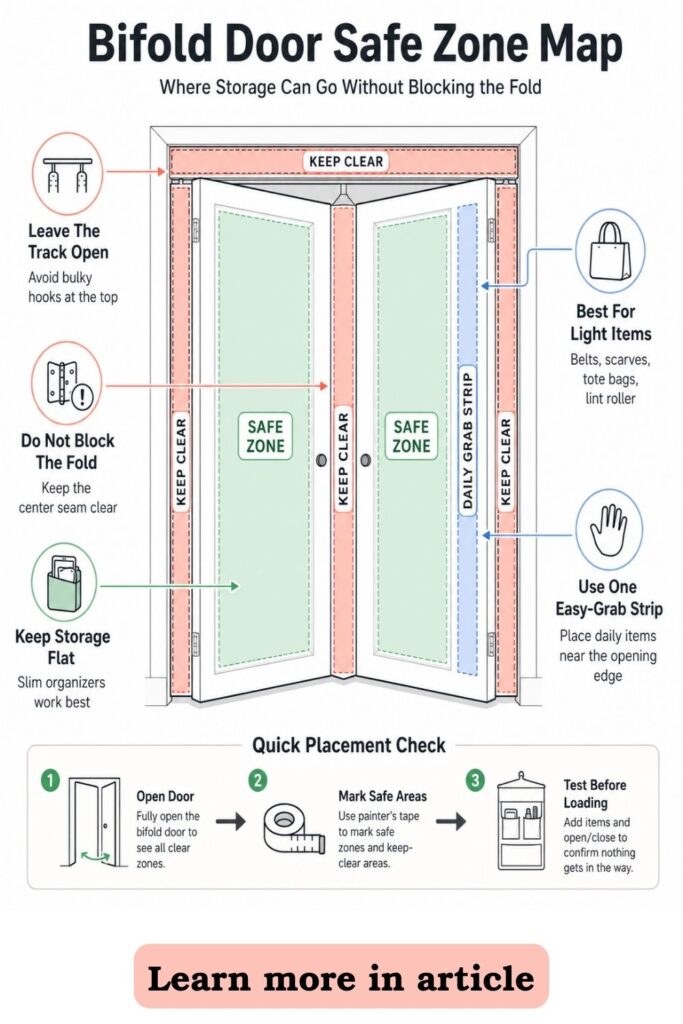
Good options include:
- Belts
- Scarves
- Lint rollers
- Sunglasses pouches
- Hair ties or clips in a small pouch
- Lightweight hats
- Reusable tote bags
- Jewelry bags
- Small clothing care tools
- Shoe polish cloths
- Travel pouches
Keep bulky items off the bifold door: Avoid anything that makes the door heavier or thicker. Shoes, large bottles, sweaters, books, cleaning products, and full-size baskets are usually too much.
Even if a product says it can hold the weight, your bifold door may not be the right surface for it. The hinges, track, and panels are not designed for the same kind of load as a wall or shelf.
If you want to get more from your life, and are looking for concrete action steps to get you there, check out our Request a Coach page. It’s a “cut the fence-sitting and take action” way to tackle your issues and actually find success. To get off the fence and start to take action, click or tap here.
Group items by daily use: Put the things you use most often in the easiest-to-reach zone. Items you only need occasionally can sit higher or lower.
For example, you might make one panel your “daily grab” zone with a belt, lint roller, tote bag, and clothing brush. The other panel could hold seasonal accessories or backup pouches.
Limit each section to one category: A door organizer works better when each area has a clear purpose. One hook can hold belts. One pocket can hold hair accessories. One small strip can hold closet tools.
When the door becomes a catchall, it stops helping. The goal is not to fill every inch. The goal is to give homeless items a specific place that makes your closet easier to use.
3. Use an Over-the-Door Organizer Only If It Fits the Bifold Frame
Over-the-door organizers can be useful, but they are not always a perfect match for bifold closet doors. Many are designed for standard doors that swing open in one piece. Bifold doors need a lighter, slimmer, more flexible version.
Before buying one, check the top of your door. Some bifold doors sit close to the track, which means thick hooks may block the door from sliding properly. Others have enough clearance for slim hooks, but only if the organizer is not overloaded.
Measure the door thickness: Look at the top edge of the door and measure how thick it is. Then compare that with the hook size on the organizer.
If the hook is too loose, the organizer may wobble. If it is too tight, it may scrape the door or stop it from closing. If the hook touches the top track, skip this option.
If you want to get more from your life, and are looking for concrete action steps to get you there, check out our Request a Coach page. It’s a “cut the fence-sitting and take action” way to tackle your issues and actually find success. To get off the fence and start to take action, click or tap here.
Choose slim fabric or mesh pockets: Soft organizers are usually better than rigid racks. Fabric and mesh can flex slightly as the bifold door moves, while hard plastic or metal racks may hit the frame.
Look for organizers with shallow pockets. Deep shoe pockets may sound useful, but they can stick out too far once filled. For bifold doors, flatter is usually better.
Trim the load down: You do not have to use every pocket just because it is there. Fill only the sections that stay flat and do not interfere with the door.
A good use for a slim organizer might be:
- One row for scarves
- One row for small accessories
- One row for hair tools without cords
- One row for closet supplies
Test before committing: Hang the organizer empty first. Open and close the door several times. Then add items one row at a time and test again.
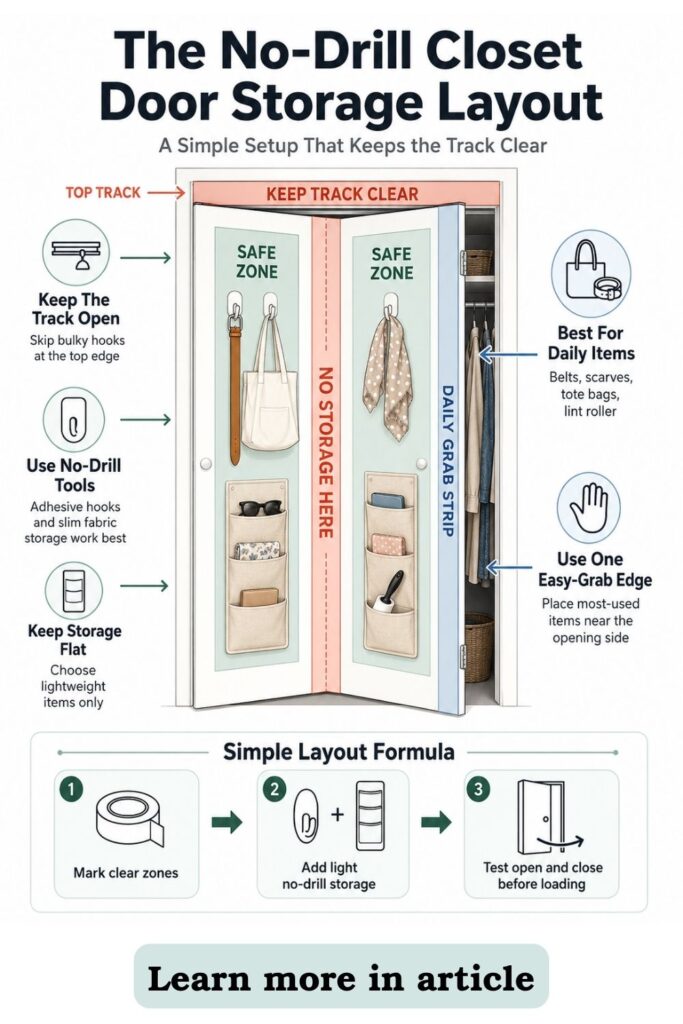
If the door starts dragging, catching, or feeling heavy, remove items immediately. A bifold door organizer should make the closet easier to use, not make the door feel like a chore.
4. Create Mini Zones With Command Strips and Adhesive Hooks
Adhesive hooks are one of the easiest renter-friendly ways to use a bifold closet door. They are small, flexible, and easy to arrange in vertical rows. They also let you create storage only where you need it, instead of covering the whole door.
The biggest mistake with adhesive hooks is treating them like permanent hardware. They are helpful, but they have limits. Surface prep, weight ratings, and placement all matter.
If you want to get more from your life, and are looking for concrete action steps to get you there, check out our Request a Coach page. It’s a “cut the fence-sitting and take action” way to tackle your issues and actually find success. To get off the fence and start to take action, click or tap here.
Clean the surface first: Wipe the inside of the door before adding any adhesive. Dust, oil, and old cleaning residue can stop hooks from sticking well.
Use rubbing alcohol if the product instructions allow it. Let the surface dry completely before applying the hook. Do not rush this part, especially on painted, glossy, or textured doors.
Use hooks for repeatable categories: Adhesive hooks work best for items that already have loops, handles, or holes. This keeps the setup simple and avoids bulky containers.
Good hook categories include:
- Belts
- Lightweight tote bags
- Hats
- Necklaces in soft pouches
- Scarves
- Lanyards
- Small measuring tape
- Clothing brush
- Lint roller with a hanging hole
Follow the weight rating carefully: Check the package weight limit and stay under it. A hook that says it holds two pounds may not perform the same on every door surface.
If you are hanging something you grab often, go even lighter. Repeated pulling can weaken adhesive over time.
Let adhesive cure before loading: Many adhesive hooks need time to bond before you add weight. Follow the package instructions and wait before hanging anything.
It can feel annoying to wait, but this helps prevent the hook from peeling off later. Once the hooks are ready, start with one item per hook and test the door movement again.
If you want to get more from your life, and are looking for concrete action steps to get you there, check out our Request a Coach page. It’s a “cut the fence-sitting and take action” way to tackle your issues and actually find success. To get off the fence and start to take action, click or tap here.
A vertical row of three to five hooks can add a surprising amount of useful storage without making the bifold door feel crowded.
5. Add Tension Rods for Soft Vertical Storage Zones
Tension rods can work on or near bifold closet doors, but they need to be used carefully. They are best for very light items and soft storage zones, not heavy hanging systems.
In many cases, the tension rod may work better inside the closet near the door opening rather than directly on the door panel. But if your bifold door has a stable recessed area or a safe support setup, a small rod can help organize scarves, belts, or soft accessories.
Choose a narrow tension rod: Look for a lightweight rod that fits the exact area you want to use. Avoid long, heavy rods because they need more pressure to stay in place.
The rod should feel secure without being cranked tightly. Too much pressure can damage trim, leave marks, or strain thin panels.
Use rods for fabric items: Tension rods are best for things that drape softly and do not pull hard on the surface. Avoid anything that swings heavily when the door moves.
Good options include:
- Scarves
- Thin belts
- Soft headbands
- Lightweight fabric totes
- Ribbon rolls
- S-hooks with very small accessories
Keep rods short and low-pressure: Do not over-tighten a tension rod against a bifold door. The goal is gentle support, not a forceful hold.
If you want to get more from your life, and are looking for concrete action steps to get you there, check out our Request a Coach page. It’s a “cut the fence-sitting and take action” way to tackle your issues and actually find success. To get off the fence and start to take action, click or tap here.
If you feel like you need a lot of pressure to keep the rod up, that location is probably not right. Use adhesive hooks or a soft organizer instead.
Test with the door in motion: After adding the rod, open and close the door several times. Watch for swinging, scraping, or twisting.
If items move too much, reduce the load or switch to hooks. Tension rods can be helpful, but they are not the safest choice for every bifold setup.
Used carefully, a small rod can create a neat vertical zone for fabric items that usually end up tangled. Just keep it light, simple, and easy to remove.
6. Build a “Daily Grab” Strip Near the Door Edge
A daily grab strip is one of the most practical ways to use bifold closet door space. Instead of trying to store everything, you create one narrow area for the items you reach for all the time.
This works because small closet mess often comes from repeat-use items. A belt gets tossed on the floor. A tote bag lands on a shelf. A lint roller disappears under clothes. A daily grab strip gives those items a visible home.
Choose the most useful items: Pick five to eight items you regularly need while getting dressed or leaving the room. Keep the list short so the strip stays clean and easy to use.
Good daily grab items include:
If you want to get more from your life, and are looking for concrete action steps to get you there, check out our Request a Coach page. It’s a “cut the fence-sitting and take action” way to tackle your issues and actually find success. To get off the fence and start to take action, click or tap here.
- Favorite belt
- Lint roller
- Clothing brush
- Reusable tote
- Sunglasses pouch
- Small accessory pouch
- Hat
- Outfit planning note pad
Place them where your hand naturally lands: The best spot is usually near the opening side of the door, not the folding hinge. You want the items to be easy to reach without awkward bending or twisting.
Stand in front of the closet and pretend you are getting ready. Where would you naturally reach? That is usually the best zone.
Use a vertical layout: A narrow column keeps the storage contained. You can use adhesive hooks, a slim pocket strip, or a small hanging organizer that does not interfere with the door.
A vertical layout also makes the system easier to scan. You can see everything at once instead of digging through a pocket full of random items.
Leave breathing room: Do not place hooks too close together. Each item should hang freely without covering the next one.
The daily grab strip should feel like a shortcut. If you have to untangle things or move three items to reach one, it is too crowded. Remove anything you do not use often and keep only the pieces that earn their spot.
7. Make a Tiny Closet Door Checklist So the System Stays Useful
A bifold door storage setup can start out neat and still become messy if there are no rules for what belongs there. A tiny checklist keeps the door from becoming a place where random items collect.
This does not need to be complicated. You can write the checklist on a sticky note, a small label, a notes app, or the inside of a closet bin. The point is to create a quick reminder of what the door is supposed to hold.
If you want to get more from your life, and are looking for concrete action steps to get you there, check out our Request a Coach page. It’s a “cut the fence-sitting and take action” way to tackle your issues and actually find success. To get off the fence and start to take action, click or tap here.
List what belongs on the door: Write down the specific categories that are allowed. Keep the list short and realistic.
For example:
- Belts
- Scarves
- Lint roller
- Tote bag
- Sunglasses pouch
- Clothing brush
- Small accessory pouch
This helps you avoid the “just for now” clutter that slowly takes over a storage zone.
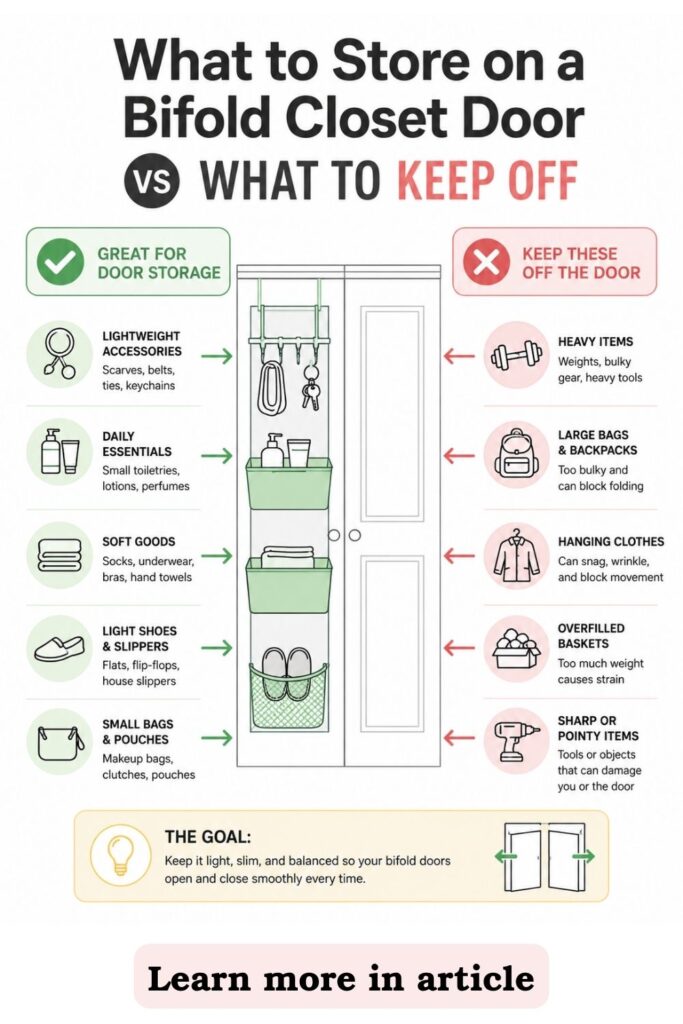
Add a weight rule: Bifold doors are not built for heavy storage. A simple weight rule can prevent accidental overloading.
You might use a rule like:
- Nothing heavier than a full water bottle
- No shoes on the door
- No bottles or tools
- One item per hook
- Pockets must stay flat
Choose a rule that is easy to remember. The more specific it is, the easier it is to follow.
Check the fold path weekly: Once a week, open and close the door and make sure nothing has shifted into the hinge area. Look for items that swing, scrape, or block the track.
This takes less than a minute and can save you from long-term annoyance.
If you want to get more from your life, and are looking for concrete action steps to get you there, check out our Request a Coach page. It’s a “cut the fence-sitting and take action” way to tackle your issues and actually find success. To get off the fence and start to take action, click or tap here.
Reset the door once a month: Remove anything you have stopped using. Return stray items to their real homes. Replace anything that keeps falling or feels awkward to grab.
A checklist turns the door into a small system instead of a temporary fix. That is what keeps it useful after the first week.
8. Use the Closet Interior to Support the Door Storage
The inside of the bifold door should not work alone. It should support the rest of the closet. When the door storage connects to what is already inside, the whole closet feels easier to use.
This is especially important in a small closet because every zone needs a job. If the door holds random items that do not relate to the closet layout, it may add visual clutter instead of solving the problem.
Move related items nearby: Think about what you store on the door and what it should connect to inside the closet.
If the door holds belts, place pants or work clothes nearby. If the door holds scarves, keep jackets or seasonal pieces close. If the door holds a lint roller and clothing brush, place them near the outfits that need quick care.
This makes the door feel like part of the routine instead of a separate storage add-on.
Create a backup bin: Not everything can go on the door, and that is okay. Use one small bin, basket, or shelf container inside the closet for extras.
If you want to get more from your life, and are looking for concrete action steps to get you there, check out our Request a Coach page. It’s a “cut the fence-sitting and take action” way to tackle your issues and actually find success. To get off the fence and start to take action, click or tap here.
For example, the door might hold your three most-used scarves, while the bin holds the rest. The door might hold one tote bag, while the shelf holds backups.
Match the door zones to closet zones: If your closet has two sides, give each door panel a related purpose.
One side could support work clothes:
- Belt
- Lint roller
- Work tote
- Small accessory pouch
The other side could support casual clothes:
- Hat
- Scarf
- Everyday bag
- Seasonal extras
Keep the door from doing too much: The door should hold small helpers, not everything that does not fit elsewhere.
If the door starts carrying too many categories, pause and look inside the closet. You may need a shelf bin, slim drawer, hanger organizer, or floor basket instead.
The best setup makes the door and closet work together. The door handles the quick-grab items. The closet handles the bulk.
9. What an Organizing Coach Could Help You Figure Out
If your closet keeps getting messy even after adding storage, the issue may not be the organizer. It may be that the closet does not match your habits yet.
If you want to get more from your life, and are looking for concrete action steps to get you there, check out our Request a Coach page. It’s a “cut the fence-sitting and take action” way to tackle your issues and actually find success. To get off the fence and start to take action, click or tap here.
An organizing coach can help you look beyond the product and figure out why the system keeps breaking down. This is especially useful if you keep buying bins, hooks, or organizers but still feel like nothing has a reliable home.
Identify the real storage problem: A coach can help you figure out whether the issue is lack of space, too many items, unclear categories, or a routine that does not fit your day.
For example, you may think you need more door storage, but the real problem might be that seasonal items are taking up daily-use space. Or you may have enough room, but the most-used items are stored too far from where you need them.
Create a decision rule: A coach can help you decide what earns a spot on the door. This matters because bifold door storage has limited space and weight capacity.
A simple decision rule might be:
- I use it at least twice a week
- It is lightweight
- It does not block the fold
- It is easier to use when visible
- It supports getting dressed or leaving the room
Turn the setup into a habit: Storage only works when it is easy to maintain. A coach can help you create a quick reset routine that fits your actual life.
That might be a two-minute Sunday reset or a one-minute nightly check where you return belts, bags, and accessories to their door spots.
Adjust the system after real use: After one or two weeks, a coach can help you notice what worked and what did not. Maybe the hooks are too high. Maybe the tote bag belongs by the entryway. Maybe the door should hold fewer things.
If you want to get more from your life, and are looking for concrete action steps to get you there, check out our Request a Coach page. It’s a “cut the fence-sitting and take action” way to tackle your issues and actually find success. To get off the fence and start to take action, click or tap here.
The goal is not a perfect closet. It is a closet that supports how you really live.
10. Damage-Free Mistakes to Avoid With Bifold Closet Doors
Damage-free storage sounds simple, but there are a few mistakes that can make bifold doors harder to use. The goal is to add space without creating scratches, adhesive damage, blocked tracks, or strained hardware.
Because bifold doors move differently from standard doors, they need a lighter touch. A product that works beautifully on a regular bedroom door may be too bulky for a closet door that folds.
Do not overload the door: Too much weight can make the door drag, shift, or feel harder to open. It can also cause adhesive hooks to peel off or make over-the-door hooks press into the top edge.
If the door feels heavier after adding storage, take that seriously. Remove items until the door moves smoothly again.
Do not block the track: The top rail is what helps the bifold door open and close properly. Keep hooks, hangers, and organizer hardware away from the track.
Check the top edge after installing anything over the door. If the hook rubs, scrapes, or makes the door feel uneven, it is not a good fit.
Do not use permanent hardware: If you are renting or trying to protect the door, avoid screws, nails, anchors, and drilled hooks. Even small holes can be a problem later.
If you want to get more from your life, and are looking for concrete action steps to get you there, check out our Request a Coach page. It’s a “cut the fence-sitting and take action” way to tackle your issues and actually find success. To get off the fence and start to take action, click or tap here.
Use removable options instead:
- Adhesive hooks
- Command Strips
- Slim over-the-door hooks
- Soft fabric organizers
- Lightweight removable clips
- Small tension rods where safe
Do not cover every inch: A packed door may look efficient, but it often becomes hard to use. When every space is filled, items overlap, swing, and hide each other.
Leave some blank space around the hinge, the top track, and the handle area. Blank space is not wasted. It helps the door move and makes the storage easier to scan.
Damage-free storage works best when it is light, simple, and easy to remove.
11. The Simple Door Storage Setup That Usually Works Best
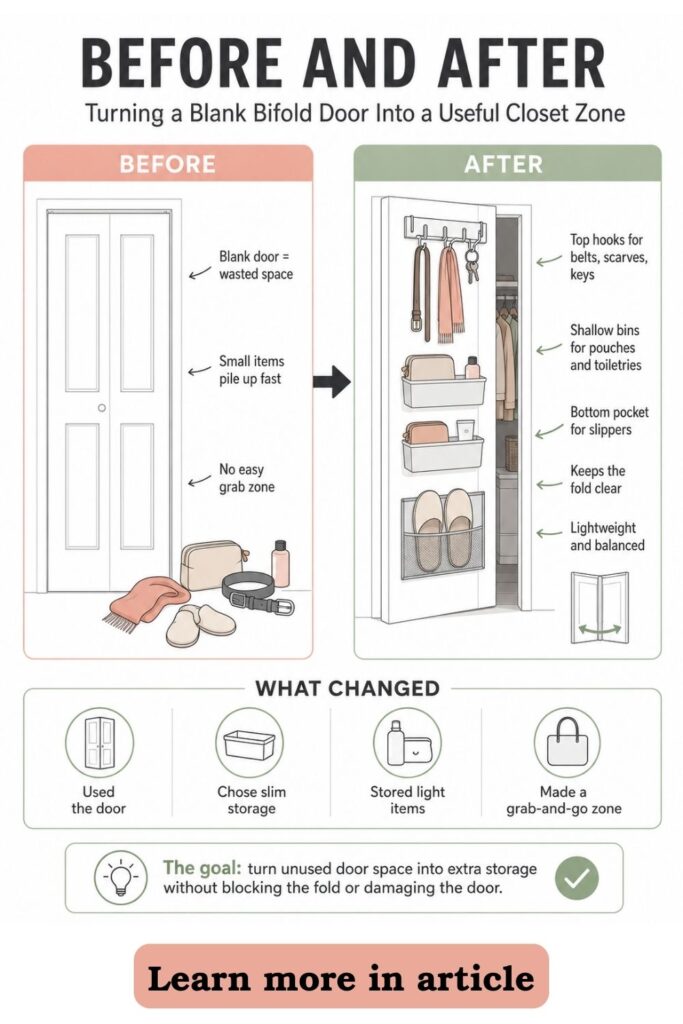
If you are not sure where to start, begin with a small setup instead of a full door makeover. Bifold closet doors do best with a few intentional storage zones, not a heavy organizer covering every panel.
A simple setup also gives you room to test what your closet actually needs. You may discover that three hooks solve the biggest problem, or that a slim pocket strip works better than a full organizer.
Start with one slim organizer: Choose either a soft over-the-door organizer or a vertical row of adhesive hooks. Do not install every possible storage tool at once.
If you choose a soft organizer, use only the flattest pockets at first. If you choose hooks, start with three to five.
If you want to get more from your life, and are looking for concrete action steps to get you there, check out our Request a Coach page. It’s a “cut the fence-sitting and take action” way to tackle your issues and actually find success. To get off the fence and start to take action, click or tap here.
This keeps the door light and gives you a clear first test.
Add one specialty zone: Once the first zone works, add one small helper for the messiest category.
That might be:
- A hook strip for belts
- A small pouch for hair accessories
- A slim pocket for lint rollers and clothing tools
- A mini rod for scarves
- A tote hook near the opening edge
Choose the category that causes the most daily frustration. Do not add a zone just because there is empty space.
Test the setup for one week: Use the closet normally for several days. Notice what you actually reach for, what falls off, what gets ignored, and what blocks the door.
Ask yourself:
- Does the door still open smoothly?
- Are the items easy to see?
- Do I put things back without thinking too hard?
- Is anything too heavy?
- Is anything stored here just because I had no better idea?
Edit before expanding: After the test week, remove what does not belong. Then decide whether you need more storage.
Most of the time, the best door setup is smaller than expected. A few useful hooks and one slim pocket can make a closet feel more functional without turning the door into a crowded display.
If you want to get more from your life, and are looking for concrete action steps to get you there, check out our Request a Coach page. It’s a “cut the fence-sitting and take action” way to tackle your issues and actually find success. To get off the fence and start to take action, click or tap here.
12. A Small Closet Door Can Still Add Real Storage
Bifold closet doors are not meant to carry heavy storage, but they can still solve annoying closet problems. The trick is to treat the door as a slim helper zone, not a full replacement for shelves, drawers, or bins.
When you work with the folding motion, the door becomes much easier to use. You avoid the hinge area, keep the track clear, and choose storage that stays flat when the door opens and closes.
A few lightweight tools can make a big difference. Adhesive hooks can hold belts, scarves, hats, and tote bags. A soft organizer can hold small accessories. A carefully placed tension rod can corral fabric items. A daily grab strip can keep your most-used pieces from ending up on the closet floor.
The best part is that this approach does not require drilling. That makes it especially helpful for renters, temporary spaces, shared bedrooms, dorm-style storage, or anyone who wants more function without permanent changes.
Start small. Pick one door panel, one category, and one storage method. Test it for a week before adding more.
A good bifold door setup should do three things:
- Keep the door moving smoothly
- Give small items a clear home
- Make your closet easier to use every day
If the system feels crowded, simplify it. If items are too heavy, move them inside the closet. If something keeps falling, it probably belongs somewhere else.
You do not need a perfect closet to make better use of the space you already have. With a few renter-safe choices and a careful layout, the back of a bifold door can become a practical little storage zone that works quietly in the background.
If you want to get more from your life, and are looking for concrete action steps to get you there, check out our Request a Coach page. It’s a “cut the fence-sitting and take action” way to tackle your issues and actually find success. To get off the fence and start to take action, click or tap here.
****
Are you all about style, decor and organization? Download a copy of our Clutter Reset Guide.
Need some in depth help with organization and productivity ? Drop on by our directories choc full of productivity coaches, minimalist coaches, and work/life balance coaches to get your life organized! Or click here to have us match you to the best.
If you want to get more from your life, and are looking for concrete action steps to get you there, check out our Request a Coach page. It’s a “cut the fence-sitting and take action” way to tackle your issues and actually find success. To get off the fence and start to take action, click or tap here.
Read this next
DIY Shelf Risers That Double Your Small Closet Storage
Double your closet shelf space with one simple DIY riser trick that turns messy stacks into neat, easy-to-reach storage.
Read More
The Secret to a Welcoming Fall Porch (That Looks Straight Out of a Hallmark Movie)
Are you all about style, decor and organization? Download a copy of our Decluttering Workbook. **** There’s something about a Hallmark fall porch that feels instantly peaceful. The kind of […]
Read More
Which Thanksgiving Tablescape Matches Your Personality? Vintage, Modern, Simple, or Elegant
Are you all about style, decor and organization? Download a copy of our Decluttering Workbook. **** Thanksgiving is more than a meal—it’s a gathering of personalities, stories, and traditions. The […]
Read More