


Talk to a coach about Relationship coaching

Dr Soraya Sawicki, DSW, CPC, RMT
DSW, CPC, CSC, RMT
Personalized wellness coaching for stress relief, energy, and inner harmony.

Daniel Herron
CPLC
You know what it's like to avoid, to push away....

Dr. Kate Watson
B.A Psychology, M.Ed. Psychological Counseling, Dr.PH in Public Health, Certified Health Coach, Certified Life Coach, Certified Mind and Body Specialist, Certified Women's Empowerment Coach, Certified Neurodiversity Coach
Dr. Kate Watson helps people with boundaries, coping strategies, and...

Lisa Brewer
Certified Grief & Loss Coach
Supporting one’s own grief & loss journey alongside stress mgmt...

James Tillman
Licensed Professional Clinical Counselor (CA), Gottman Level 3 trained, M.A. in Mental Health Counseling, M.Div., with 15+ years helping individuals and couples using evidence-based, practical, and faith-compatible relationship coaching.
Helping couples move beyond conflict to rediscover connection, love, and...

Shaunna Rodriguez
Certified Christian Coach, Board Certified Mental Health & Wellness Coach, Ordained Minister.
Compassionate coach helping you heal, grow, and thrive with purpose.

Chavisa Horemans
MA, CDC, CTRC, ICF
Effective empowering coaching support for women navigating trauma, divorce &...

Josh Dolin
Certified Life Coach (100% Online) | Purpose Pathfinder™ | Personal Growth & Fulfillment Coach
Helping people rediscover purpose, gain clarity, and create meaningful change.


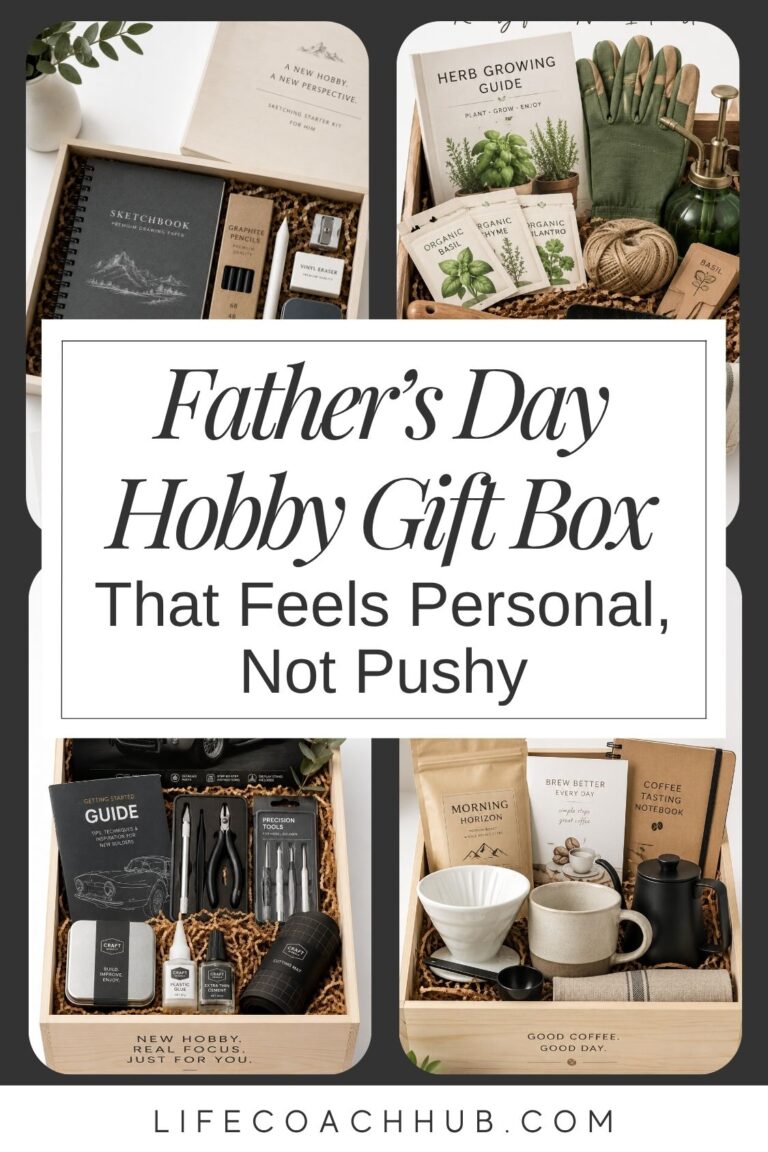



Everyday Carry Gift Kit for Handy Dads

An everyday carry gift kit is perfect for the dad who always seems to have the thing someone needs. A pen, a flashlight, a small tool, a charger, a wipe, a clip, a tiny fix for an annoying problem. Instead of giving him one bigger gift he may or may not use, this kind of kit gives him a set of small, practical helpers he can actually reach for.
The key is to avoid turning it into a random pile of gadgets. A good everyday carry kit should feel compact, intentional, and easy to use. It should be built around the little problems Dad runs into during normal life, not around novelty items that look cool for five minutes and then disappear into a drawer.
This is also a great gift when you want something thoughtful but not too expensive. You can keep it under $50 by choosing one slightly nicer anchor item, then filling in with affordable basics that make the whole kit feel complete.
Think of it like a mini problem-solving station. It could live in his glove box, backpack, desk drawer, work bag, garage shelf, or entryway basket. The best version is the one that fits how he already moves through the day.
A few good everyday carry kit themes include:
- A commuter kit for the car
- A desk kit for work-from-home dads
- A pocket repair kit for handy dads
- A garage helper kit for small fixes
- A tech-ready kit for chargers and cords
The goal is not to stuff in as many items as possible. The goal is to give him a small, useful set that feels like it was made for the way he already helps, fixes, organizes, and solves things.
Need some family guidance? Drop on by our directories choc full of family coaches to help make your love life the best it can be. Or click here to have us match you to the best.
Start With One Main Carry Container
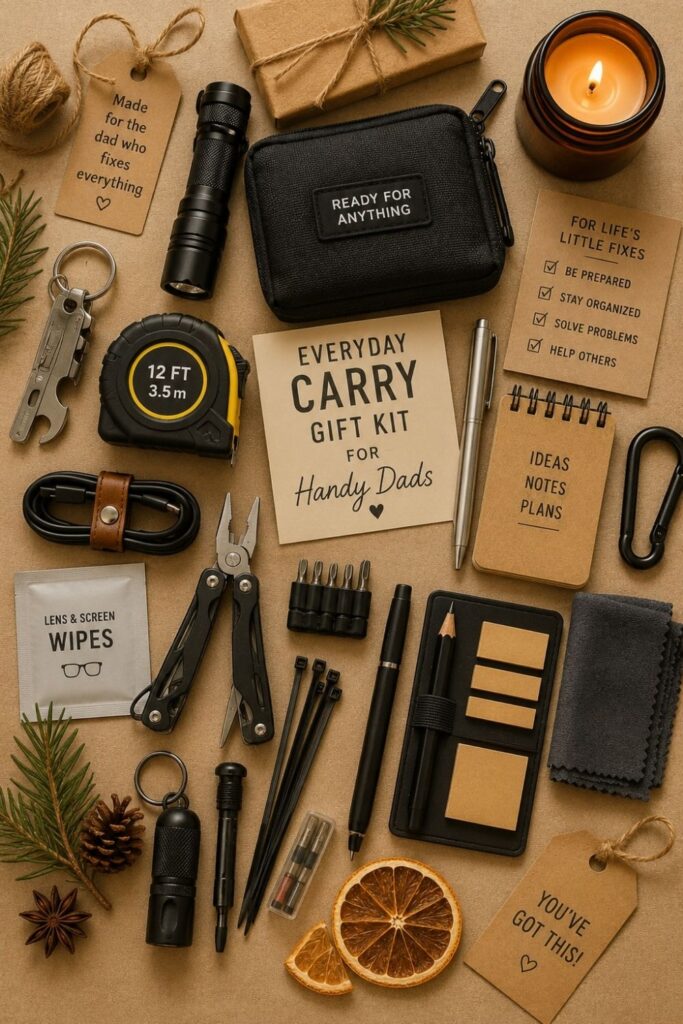
The container sets the tone for the whole gift. Before choosing any small tools or add-ons, decide where Dad is most likely to keep the kit. This helps you avoid buying a pouch that is too bulky, too flimsy, or too awkward for everyday use.
If you want to get more from your life, and are looking for concrete action steps to get you there, check out our Request a Coach page. It’s a “cut the fence-sitting and take action” way to tackle your issues and actually find success. To get off the fence and start to take action, click or tap here.
Choose a compact base: Pick a small zip pouch, mini tool roll, hard case, drawer tray, or slim organizer that can hold several items without becoming bulky. A soft zip pouch works well if the kit will go in a backpack, glove box, or work bag. A hard case is better if the items include anything sharp, fragile, or likely to get crushed.
A small tray can work if Dad likes keeping useful things near his desk, nightstand, or entryway. This is a good choice for dads who do not actually carry much in their pockets but still like having everything in one place.
Match it to where he’ll use it: Choose a pocket-sized pouch for dads who like to carry things daily, a glove box case for commuting dads, or a drawer tray for dads who prefer keeping tools at home or work. The more naturally the kit fits into his routine, the more likely he is to use it.
A few container ideas to consider:
- Small canvas zip pouch
- Mini tackle box
- Slim tech organizer
- Compact tool roll
- Hard-shell travel case
- Shallow desk tray
- Small metal tin
- Clear zipper pouch
Try to keep the container small enough that it still feels easy to grab. If the base is too large, the kit may turn into storage instead of carry. Handy dads usually appreciate convenience, so the best container is one that makes the items easy to see, reach, and put back.
You can also choose a container based on his style. A rugged canvas pouch feels right for garage dads. A clean black case feels better for office or commuter dads. A clear pouch works well if kids are helping assemble the gift because the contents become part of the presentation.
Build Around Daily Mini Problems
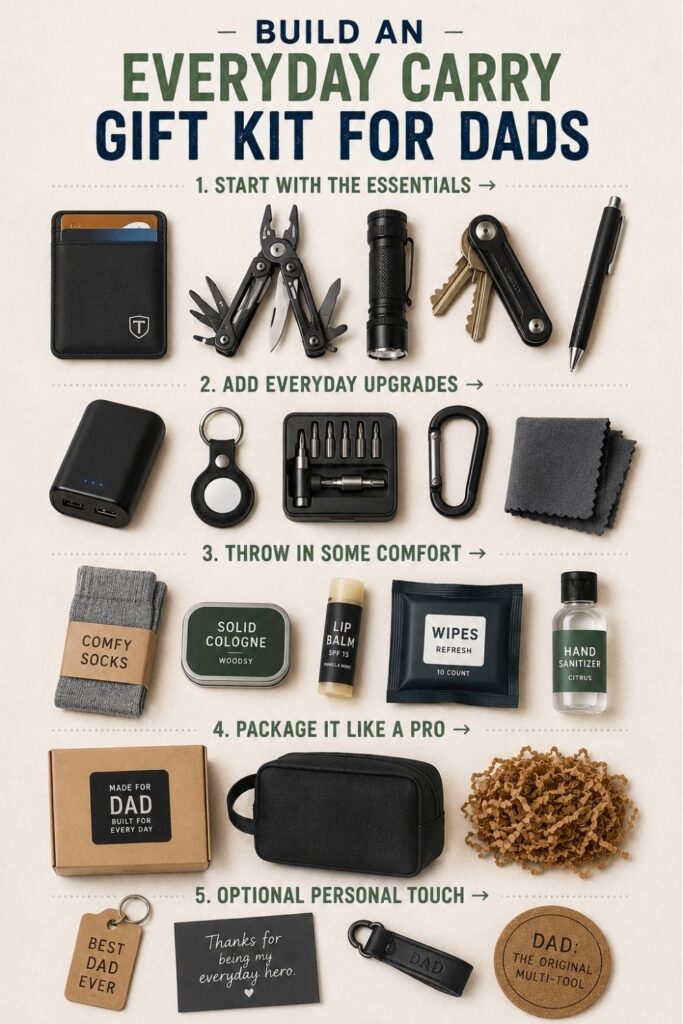
The best everyday carry kits are built around real moments. Instead of starting with a shopping list, think about the small problems Dad solves again and again. These are the moments that make the gift useful.
Maybe he is always looking for a pen. Maybe he opens packages with his keys. Maybe he fixes loose screws, charges everyone’s phone, wipes fingerprints off his glasses, or measures little things around the house. Those small habits tell you exactly what belongs in the kit.
If you want to get more from your life, and are looking for concrete action steps to get you there, check out our Request a Coach page. It’s a “cut the fence-sitting and take action” way to tackle your issues and actually find success. To get off the fence and start to take action, click or tap here.
List the tiny problems he solves often: Think about loose screws, packages that need opening, phone batteries running low, glasses getting smudged, or small measurements he checks around the house. You can also notice where he gets interrupted during the day. Does someone ask him for scissors? A charger? Tape? A flashlight?
This step keeps the kit from becoming generic. A dad who works at a computer may need cord wraps and screen wipes more than a tiny level. A dad who spends time in the garage may appreciate a pencil, tape measure, and small bit holder. A dad who commutes may use a flashlight, phone cable, tire gauge, and stain wipe more than desk supplies.
Choose items for those moments: Add useful basics like a compact flashlight, small tape measure, microfiber cloth, mini notebook, pen, keychain tool, or cord organizer so every piece has a reason to be there. Each item should answer a simple question: “When would he actually use this?”
Helpful everyday carry items include:
- Compact flashlight
- Mini tape measure
- Pocket notebook
- Reliable pen
- Microfiber cloth
- Charging cable
- Cord wrap
- Small utility blade
- Keychain bottle opener
- Tiny screwdriver set
- Reusable zip ties
- Adhesive cable clips
Do not worry about making the kit look fancy at this stage. Focus on usefulness first. A gift like this becomes thoughtful when it feels specific to the person, not when it includes the most expensive items.
One simple way to plan it is to choose three daily problem categories. For example: fixing, cleaning, and charging. Then choose two or three items for each category. That gives the kit structure without making it feel overpacked.
Keep the Kit Practical Instead of Novelty-Heavy
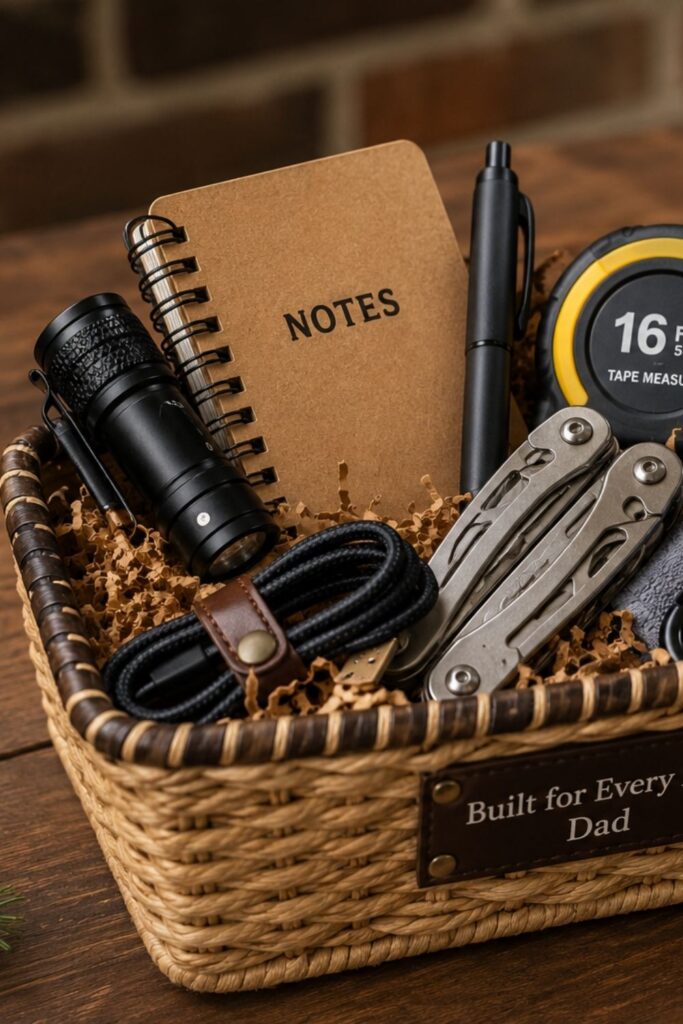
Everyday carry gifts can go wrong when they lean too hard into novelty. Tiny gadgets, joke tools, oversized “survival” items, and complicated multi-use objects may look fun in a product photo, but they are not always useful in real life. A practical dad will usually appreciate simple things that work better than clever things that take effort to figure out.
Skip joke fillers: Avoid gag gifts, oversized multi-tools, or items that look fun but would be awkward to carry or rarely used. If something only makes sense because it is funny, it probably does not belong in an everyday carry kit. Save the joke item for the card, not the main gift.
If you want to get more from your life, and are looking for concrete action steps to get you there, check out our Request a Coach page. It’s a “cut the fence-sitting and take action” way to tackle your issues and actually find success. To get off the fence and start to take action, click or tap here.
This does not mean the kit has to feel boring. It can still feel personal, organized, and satisfying to open. The difference is that every item should have a job. A useful kit feels thoughtful because it respects his daily life.
Prioritize items with repeat use: Choose things he can reach for weekly, such as a magnetic bit holder, compact utility blade, small level, charging cable, or reusable cable ties. Items that solve repeat problems will make the gift feel valuable long after the first day.
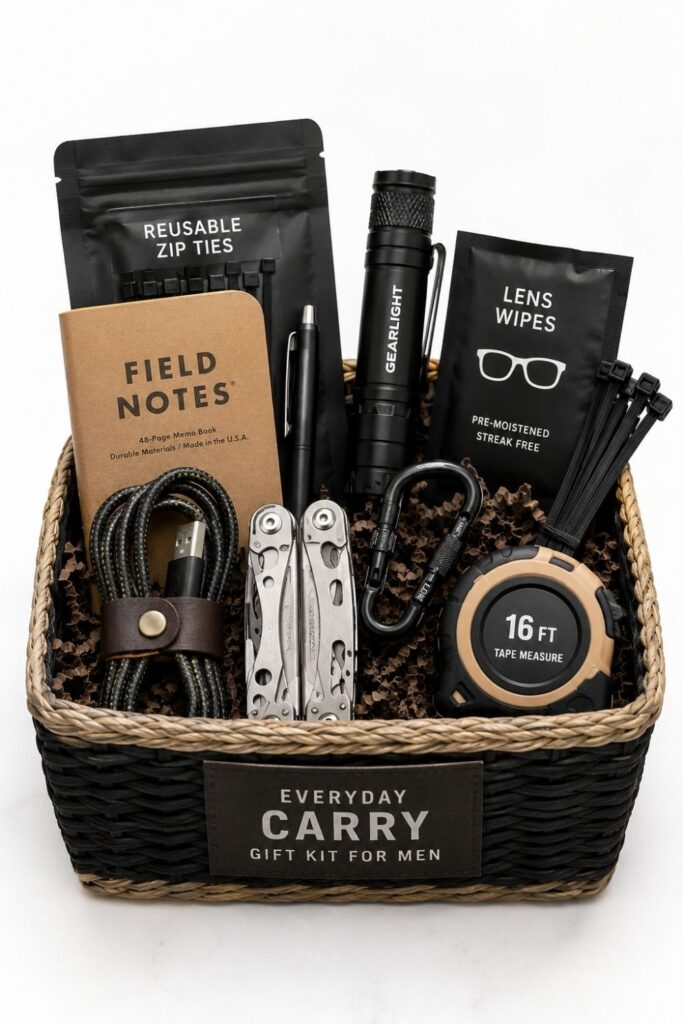
A practical kit might include:
- One cutting or opening tool
- One writing item
- One measuring item
- One light source
- One cleaning item
- One cable or tech item
- One small organizing item
This structure helps you avoid stuffing the kit with random pieces just to make it look fuller. A smaller kit with five genuinely useful items is better than a packed kit with fifteen things he will never touch.
Also think about comfort and safety. Avoid anything sharp if younger kids will be giving the gift unless an adult is handling the assembly. If you include a blade, small tool, or batteries, make sure they are secure inside the pouch.
Practical does not mean impersonal. You can still choose items in his favorite color, pick brands he likes, or include one little upgrade he would not buy for himself. The trick is to make the kit feel like a better version of things he already uses.
Stay Under $50 Without Making It Feel Cheap
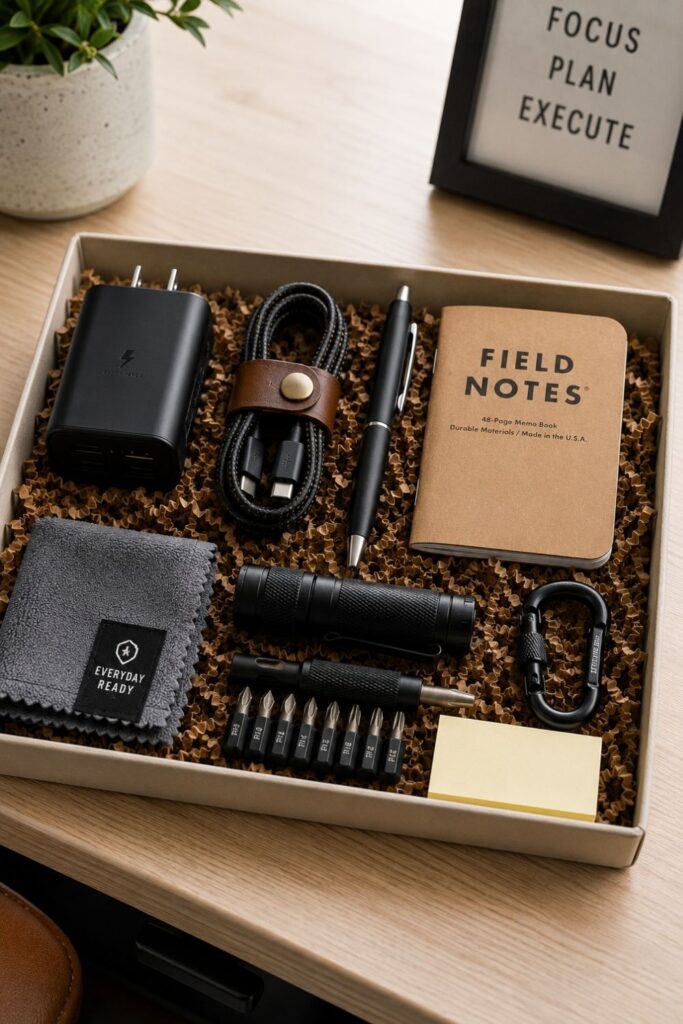
An everyday carry gift kit is one of those gifts where a small budget can still go a long way. Because the items are compact, you can build something that feels full and useful without spending too much. The key is to choose where to spend a little more and where to save.
Pick one anchor item: Choose one slightly nicer item, like a strong mini flashlight, quality pocket notebook, compact multi-tool, or durable pouch. This gives the whole kit a more gift-worthy feeling. The anchor item should be something Dad will notice and use, not just something that looks impressive in the basket.
If you want to get more from your life, and are looking for concrete action steps to get you there, check out our Request a Coach page. It’s a “cut the fence-sitting and take action” way to tackle your issues and actually find success. To get off the fence and start to take action, click or tap here.
For a handy dad, a good anchor item might be a compact flashlight with a sturdy clip. For a desk dad, it might be a well-made notebook or a simple tech organizer. For a commuter dad, it might be a small tire pressure gauge or hard-shell glove box case.
Fill in with low-cost helpers: Add affordable but useful extras like replacement batteries, adhesive cable clips, lens wipes, zip ties, small carabiners, or a slim pen to make the kit feel complete. These items are inexpensive, but they make the gift more useful because they support the main theme.
A simple under-$50 budget could look like this:
- $12 to $18 for the pouch or anchor item
- $8 to $12 for a flashlight, tool, or charger
- $5 to $8 for a notebook or pen
- $5 to $8 for wipes, clips, ties, or small add-ons
- $5 to $10 for packaging, card, or extra filler
You do not need every item to be brand new or fancy-looking. A clean, simple presentation can make affordable items feel intentional. Matching colors, grouped categories, and a handwritten note can do a lot of the work.
One smart budget trick is to buy multi-packs and split them into several gifts. A pack of microfiber cloths, cable ties, pens, or lens wipes can be divided into kits for Dad, Grandpa, uncles, or other practical gift recipients.
Also avoid buying too many versions of the same thing. One good pen is better than five random pens. One strong flashlight is better than three weak ones. A smaller, better-edited kit will feel more thoughtful than a crowded one.
Organize the Kit by Use Case
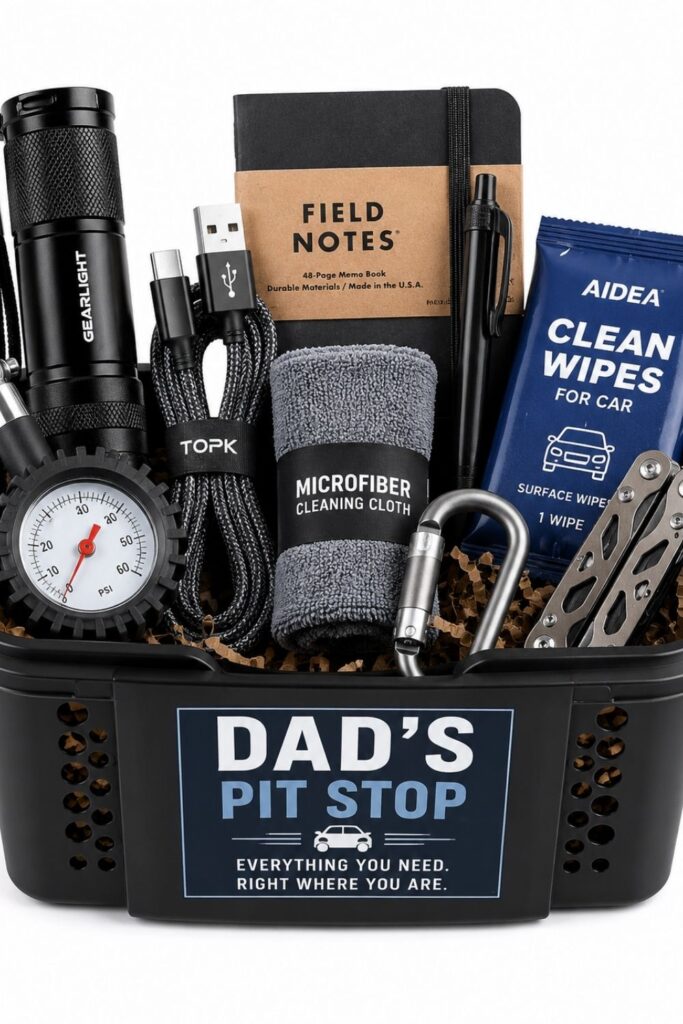
Once you have the items, the way you arrange them matters. A useful kit should be easy to understand as soon as Dad opens it. If everything is loose in a bag, the gift may feel more like a junk drawer than a helpful everyday carry set.
Group items into mini zones: Put tech items together, quick-fix items together, and personal comfort items together so the kit feels intentional instead of random. This makes the gift easier to use and also makes it look better when opened.
If you want to get more from your life, and are looking for concrete action steps to get you there, check out our Request a Coach page. It’s a “cut the fence-sitting and take action” way to tackle your issues and actually find success. To get off the fence and start to take action, click or tap here.
For example, a commuter kit could have one section for car items, one section for tech items, and one section for cleanup items. A desk kit could have writing tools, screen cleaning items, and cord organization in separate areas. A garage kit could group measuring tools, marking tools, and small repair helpers.
Make it easy to unpack: Use small envelopes, elastic loops, labeled compartments, or tiny zip bags so he can see what each item is for without digging. You can label the sections with simple phrases like “quick fixes,” “tech backup,” or “clean-up helpers.”
Possible mini zones include:
- Quick fixes: mini screwdriver, zip ties, bit holder, small tape measure
- Tech backup: charging cable, cord wrap, cable clip, USB adapter
- Clean and polish: microfiber cloth, lens wipes, stain wipe
- Notes and reminders: notebook, pen, sticky tabs
- Car-ready: tire gauge, flashlight, emergency cash envelope
The organization does not need to be complicated. Even a simple pouch with three smaller bags inside can work. The point is to make the items easy to find when he needs them.
This is also where the gift becomes more visual. A neatly arranged kit feels satisfying to open because each piece has a place. If kids are helping, they can lay everything out by category before packing it. That turns the gift into a small project they can understand and take pride in.
Try not to overfill the container. Leave a little breathing room so Dad can add his own items later. A practical dad may want to customize it once he sees how useful it is, and that is actually a sign the gift worked.
Add a Personal Touch That Still Feels Useful
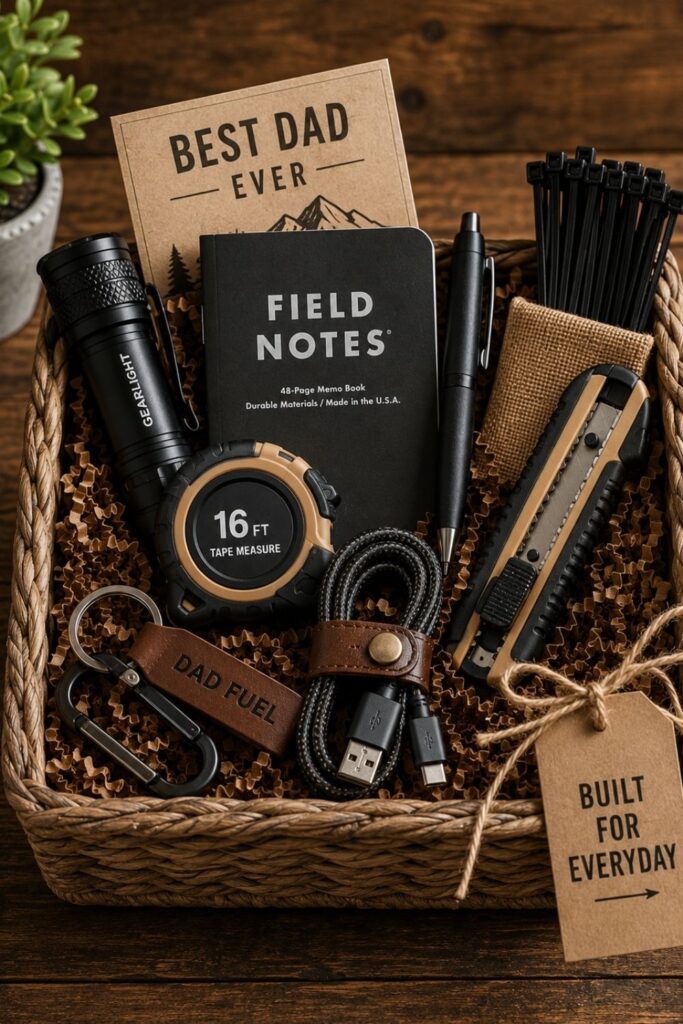
A practical gift can still feel personal. In fact, the personal touch is what keeps an everyday carry kit from feeling like a random shopping basket. The goal is to add something warm without making the kit less useful.
Include a simple note card: Write a short note explaining why you chose the items, such as “for the dad who always fixes the little things.” This gives the gift emotional meaning without turning it into something overly sentimental. It also helps Dad understand that the kit was built around what he actually does for the family.
If you want to get more from your life, and are looking for concrete action steps to get you there, check out our Request a Coach page. It’s a “cut the fence-sitting and take action” way to tackle your issues and actually find success. To get off the fence and start to take action, click or tap here.
You could also include a small card that lists what is inside and when he might use each item. This works especially well if kids are giving the gift because it makes the kit feel handmade and thoughtful.
Example note ideas:
- “For all the little things you fix before anyone else notices.”
- “For the car, the desk, the garage, and every small problem in between.”
- “A tiny kit for the dad who is always prepared.”
- “Because you somehow always have what everyone needs.”
Add one custom detail: Choose his favorite color, add a small label, include a tiny checklist, or pick a pouch that matches his car, garage, office, or everyday style. Custom does not have to mean expensive. It just means the kit feels like it belongs to him.
You can personalize it by adding:
- A name label on the pouch
- A favorite color zipper pull
- A handwritten checklist
- A photo tucked inside the case
- A small “Dad’s Fix-It Kit” tag
- A refill note for batteries, wipes, or pens
- A card from the kids explaining their favorite item
The personal detail should not take over the gift. Keep it small and practical so it fits the everyday carry theme. A bulky keepsake may look sweet, but if it makes the pouch harder to use, it could get removed right away.
A good personal touch feels like a quiet reminder that the kit was made for him. It says, “We notice what you do,” without needing to be dramatic.
How an Organization Coach Could Help Make This Gift Better
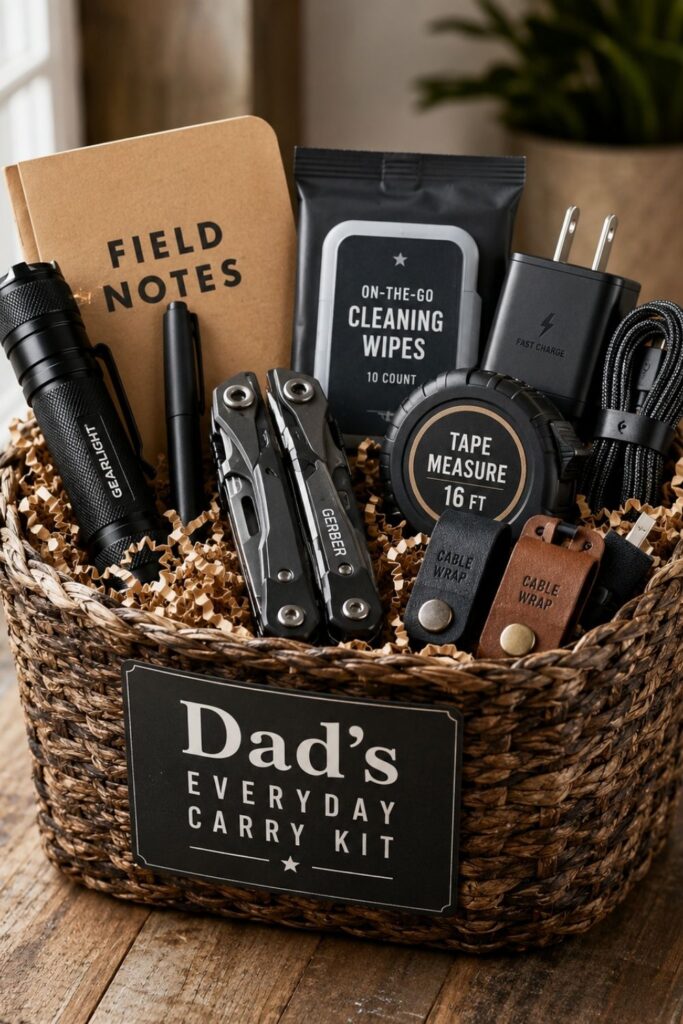
An everyday carry kit is really a tiny organization system. That is why thinking like an organization coach can make the gift much better. Instead of just choosing useful objects, you are thinking about where the items should live, how they will be used, and what small frustrations they can remove from Dad’s day.
Think through his routines: An organization coach could help identify where small daily friction happens, like the car, work bag, garage bench, or entryway. For this gift, you can do the same thing by watching where Dad usually looks for things.
If you want to get more from your life, and are looking for concrete action steps to get you there, check out our Request a Coach page. It’s a “cut the fence-sitting and take action” way to tackle your issues and actually find success. To get off the fence and start to take action, click or tap here.
Does he search for a charger before leaving the house? Does he keep tools scattered in different drawers? Does he use his phone flashlight because there is never a real flashlight nearby? Does he keep receipts, notes, or measurements on random scraps of paper?
Those little patterns point to the best version of the kit.
Turn the kit into a usable system: Instead of giving random items, the coach-style approach would make the kit part of a simple habit, such as keeping one pouch in the car and restocking it monthly. This is what makes the gift continue working after the first week.
You can make the system easier by adding a small refill card. It could list items that may need replacing, such as batteries, wipes, bandages, or pens. That way Dad does not have to remember what belongs in the kit.
A coach-style kit might include:
- A home base location
- A short checklist of items
- A refill reminder
- A “return items here” label
- A small empty pocket for Dad’s own additions
This approach is especially useful for practical dads because they often like gifts that solve a real problem. The kit becomes more than a present. It becomes a small tool for staying prepared.
You can also create different zones for different parts of life. One pouch can go in the car, while a small tray stays on the desk. Or the main kit can stay in his work bag, with a few duplicate items in the glove box. The more the setup matches his routine, the more useful it becomes.
Smart Add-On Ideas Based on His Personality
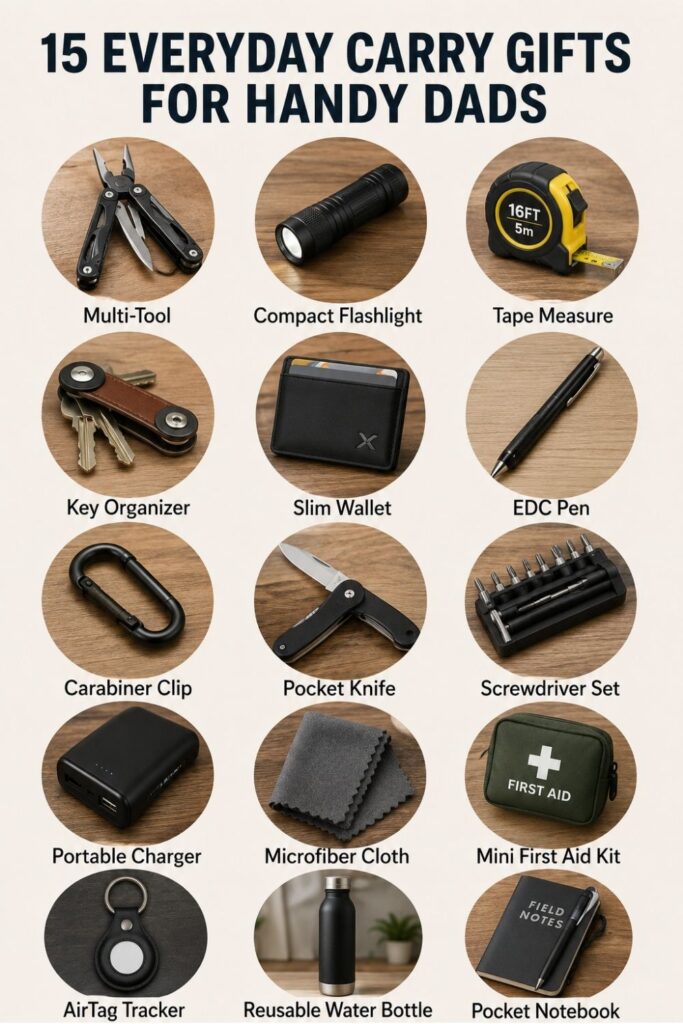
The easiest way to make an everyday carry kit feel thoughtful is to match it to Dad’s personality. Not every dad needs the same mini tools. A commuter dad, desk dad, and fix-it dad may all appreciate practical gifts, but their daily problems look different.
If you want to get more from your life, and are looking for concrete action steps to get you there, check out our Request a Coach page. It’s a “cut the fence-sitting and take action” way to tackle your issues and actually find success. To get off the fence and start to take action, click or tap here.
For the commuter dad: Add a phone cable, tire pressure gauge, compact flashlight, stain wipe, and small notepad. These items are useful for dads who spend time in the car, run errands, or like being prepared on the road.
A commuter kit could also include:
- Carabiner clip
- Travel tissue pack
- Hand wipes
- Parking meter change
- Sunglasses cloth
- Emergency contact card
Keep this version glove-box friendly. Avoid anything that could melt, leak, or get damaged in heat.
For the fix-it dad: Add a mini tape measure, pencil, bit holder, small level, zip ties, and pocket utility tool. This version is great for dads who are always adjusting, measuring, tightening, hanging, or repairing something around the house.
A fix-it kit could also include:
- Small roll of electrical tape
- Painter’s tape wrapped around a card
- Mini screwdriver
- Magnetic tray
- Work gloves folded flat
- Compact hardware envelope
This kit works best in a tool roll, small box, or sturdy pouch.
For the desk dad: Add a cable wrap, screen cloth, compact charger, sticky notes, pen, and mini screwdriver. This version is helpful for dads who spend time at a computer, work from home, manage paperwork, or like keeping their desk tidy.
A desk kit could also include:
If you want to get more from your life, and are looking for concrete action steps to get you there, check out our Request a Coach page. It’s a “cut the fence-sitting and take action” way to tackle your issues and actually find success. To get off the fence and start to take action, click or tap here.
- Page flags
- USB adapter
- Lens wipes
- Small notebook
- Keyboard brush
- Cable labels
The point is not to choose the most masculine or gadget-heavy items. The point is to choose the items that match the way he spends his time. That is what makes the gift feel personal.
You can also blend categories. A dad who commutes and works at a desk may need tech and car items. A dad who fixes things and grills outside may appreciate a flashlight, clips, pencil, and wipes. Use his actual habits as the guide.
Make It Feel Gift-Ready Without Overpacking
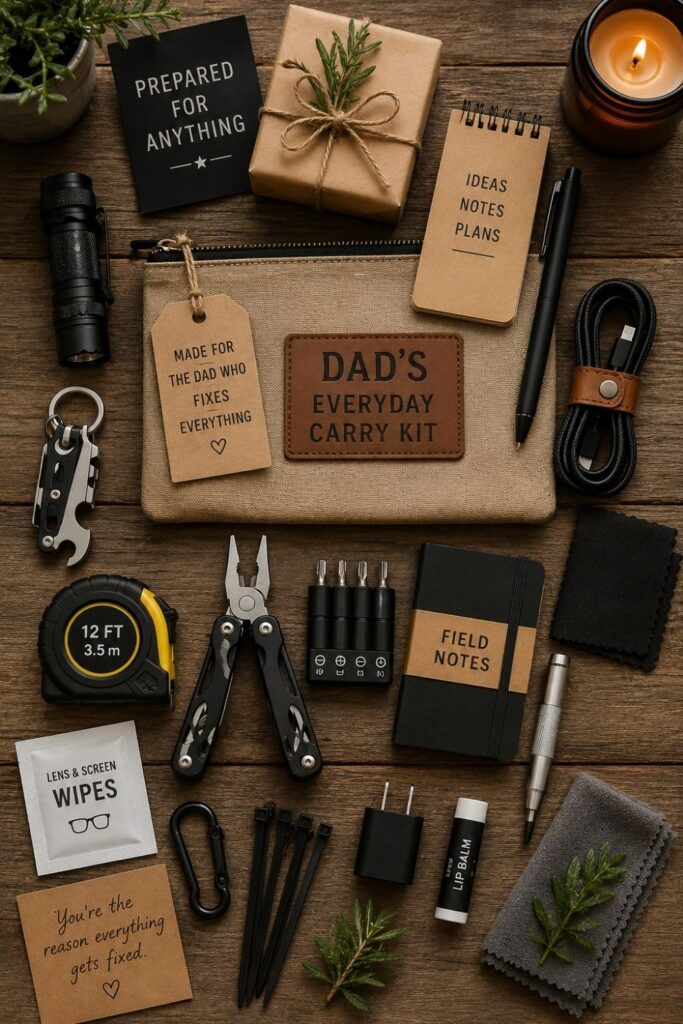
Presentation matters, especially when the gift is made from small practical items. Without thoughtful packaging, an everyday carry kit can look like a supply run. With simple presentation, it feels intentional and gift-worthy.
Use simple presentation: Place the pouch or case inside a small box, shallow basket, or gift bag with tissue paper so the kit still feels like a present. You do not need elaborate wrapping. A clean box, kraft paper tag, or folded note can make the whole thing feel finished.
If the container itself is attractive, leave it partly visible. For example, you can place a canvas pouch in a small basket with a note card tucked on top. If using a hard case, open it and arrange the items neatly before wrapping the outside with ribbon or twine.
Keep the layout visible: Arrange the items neatly before wrapping, because part of the appeal is seeing how many useful little pieces fit into one compact kit. This is especially true if the gift is from kids. The visual “look what we made for you” moment is part of the fun.
Ways to make it gift-ready:
- Add a tag with the kit name
- Use tissue paper in one color
- Tie the pouch with string or ribbon
- Include a contents card
- Arrange items by size
- Put smaller items in labeled envelopes
- Add one handwritten note on top
Avoid overpacking the kit just to make it look fuller. If the zipper strains or the box will not close, remove a few items. A crowded kit is harder to use and less satisfying to open.
If you want to get more from your life, and are looking for concrete action steps to get you there, check out our Request a Coach page. It’s a “cut the fence-sitting and take action” way to tackle your issues and actually find success. To get off the fence and start to take action, click or tap here.
You can make a small kit feel substantial by arranging it well. Put the anchor item in the center, then group the smaller items around it. If using a basket, place taller items in the back and flatter items in front.
A practical dad will probably care more about usefulness than fancy packaging, but the presentation still shows effort. It makes the gift feel planned instead of thrown together.
Final Takeaway
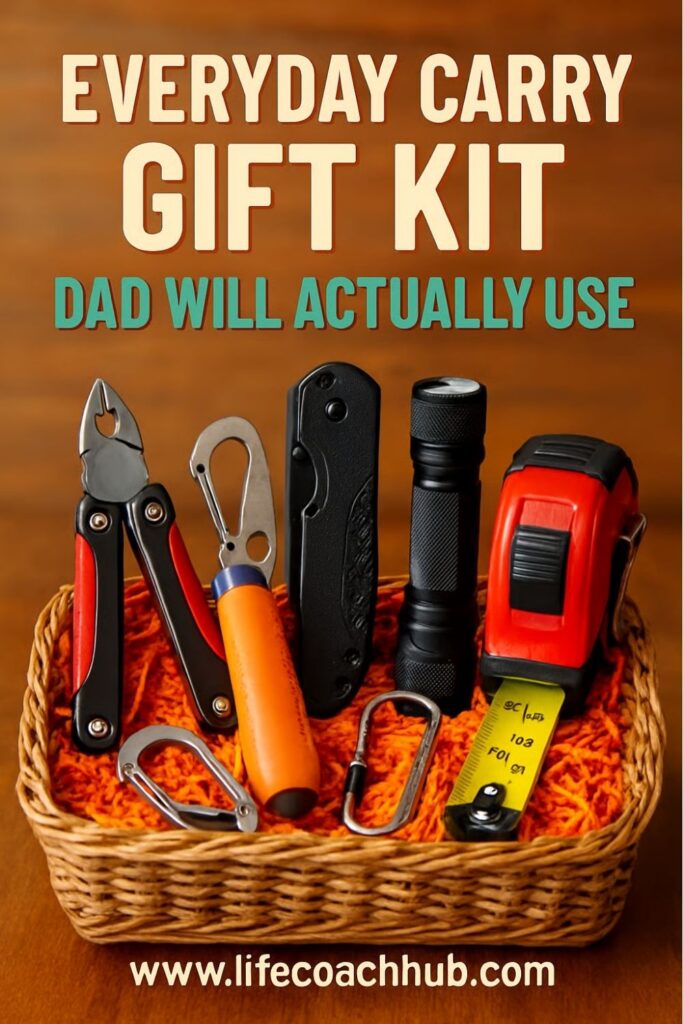
An everyday carry gift kit works best when it feels like a dad-specific problem-solving set, not just a pile of small gadgets. The most useful version starts with a compact container, then adds items that fit the little problems Dad handles all the time.
Focus on what he actually uses: Choose items based on his routines, not just what looks interesting online. A dad who drives every day may use a glove box kit constantly. A dad who works at a desk may appreciate clean cables, a better pen, and a screen cloth. A dad who fixes things around the house may reach for a small tape measure, flashlight, and zip ties again and again.
Keep the kit simple enough to maintain: Do not make it so full that he has to reorganize it before using it. Leave space for him to add his own items, and include a small refill note if the kit has wipes, batteries, or other replaceable pieces.
The best part of this gift is that it can feel thoughtful without being expensive. You can build it under $50, tailor it to his personality, and make it feel personal with one simple note. It is practical, compact, and easy to customize.
A good everyday carry kit tells Dad that you notice the small ways he helps. It gives him tools for the little fixes, quick saves, and everyday moments where he likes being prepared. And because everything fits into one small pouch, case, or basket, it feels useful without adding clutter.
That is what makes this kind of gift work so well. It is not flashy. It is not complicated. It is just a smart, practical collection of things he can actually use.
If you want to get more from your life, and are looking for concrete action steps to get you there, check out our Request a Coach page. It’s a “cut the fence-sitting and take action” way to tackle your issues and actually find success. To get off the fence and start to take action, click or tap here.
Need some family guidance? Drop on by our directories choc full of family coaches to help make your love life the best it can be. Or click here to have us match you to the best.
If you want to get more from your life, and are looking for concrete action steps to get you there, check out our Request a Coach page. It’s a “cut the fence-sitting and take action” way to tackle your issues and actually find success. To get off the fence and start to take action, click or tap here.
Read this next

A Tool Chest for your Relationships
The power to change your current relationship is inside of you right now. Find out what’s in your tool chest?
Read More
How To Save Your Marriage By Yourself
Embarking on the journey to mend a marriage single-handedly can appear daunting, especially when it seems like you’re the only one invested in repairing the bond. Yet, it’s crucial to […]
Read More
What Makes An Ex Realize They Love You?
Rekindling Love: The Journey to Winning Your Ex Back Introduction: In the labyrinth of human emotions that follow a breakup, many navigate the turbulent desire to reunite with a lost […]
Read More