


Talk to a coach about Wellness coaching

Dr Soraya Sawicki, DSW, CPC, RMT
DSW, CPC, CSC, RMT
Personalized wellness coaching for stress relief, energy, and inner harmony.

Robert Bradley Singleton
Certified Master Spiritual Life Coach, Neuropsychologist, and Existential Therapist
Train with the best to be the best you! Don't...

Crystal Faulk
ACC
I help overwhelmed women in transition gain clarity, confidence, and...

Dr. Kate Watson
B.A Psychology, M.Ed. Psychological Counseling, Dr.PH in Public Health, Certified Health Coach, Certified Life Coach, Certified Mind and Body Specialist, Certified Women's Empowerment Coach, Certified Neurodiversity Coach
Dr. Kate Watson helps people with boundaries, coping strategies, and...

A. Nya ~ Savvy Soul Life
CPC, MSLC
Life, wellness, creativity, mindfulness & spiritual coaching for personal strengthening...

Tobias Kemper
Transformation Guide - LCI/CDP
Personal Transformation / Life Balance / Spiritual Growth / Life...

Charity Archie
Several Life Coaching Certifications-Intentional Holistic Life Coach
Charity Aumora dedicated to promoting a positive clear & intentional...

Shaunna Rodriguez
Certified Christian Coach, Board Certified Mental Health & Wellness Coach, Ordained Minister.
Compassionate coach helping you heal, grow, and thrive with purpose.



The Top Ten Regrets of the Dying (And How We Can Learn From Them)

Leave the phone at home!
What Might You Regret Not Doing?
Regret rarely begins with one dramatic mistake. It grows through ordinary decisions repeated for months or years.
You keep postponing the trip. You stay quiet during another disrespectful conversation. You work through another weekend, check your phone through another dinner, or tell yourself you will take better care of your health later.
Each decision may seem small. The pattern is not.
The ten regrets below are not a universal ranking. They represent recurring gaps between what people say they value and what their daily behavior shows.
Bronnie Ware helped popularize several of these themes in The Top Five Regrets of the Dying, a memoir based on her experiences as a palliative carer. Her work is a personal account, not a representative scientific ranking.
The useful question is not, “Will I regret this someday?” It is, “What evidence already suggests that this regret is developing?”
Key Takeaways
- Regret usually grows from repeated postponement. A missed trip or difficult conversation matters less than the pattern of continually delaying health, relationships, autonomy, experience, or presence.
- Your behavior is stronger evidence than your stated values. Calendars, spending, messages, work hours, and recurring decisions reveal what is actually receiving your time and attention.
- Major changes deserve a decision screen. Check the duration, pattern, cost, and controllability of a bad job or relationship before acting impulsively or accepting it indefinitely.
- One specific action beats ten emotional promises. A scheduled call, phone-free dinner, protected exercise period, or 20 minutes of career research creates evidence that your direction is changing.
- Regret becomes useful when it produces a reviewable experiment. Choose one possible future regret, define a small corrective action, and set a date to assess what happened.
What Do People Regret Most at the End of Life?
Common end-of-life regrets center on neglected relationships, unspoken feelings, postponed experiences, ignored health, excessive work, weak boundaries, and failing to be present for ordinary life.
If you want to get more from your life, and are looking for concrete action steps to get you there, check out our Request a Coach page. It’s a “cut the fence-sitting and take action” way to tackle your issues and actually find success. To get off the fence and start to take action, click or tap here.
The exact list differs from person to person. The recurring issue is a gap between what someone considered meaningful and where that person actually placed time, courage, attention, and energy.
Living with fewer regrets does not require eliminating every mistake. It requires noticing a costly pattern while you still have enough choice to change it.
What Do These Regrets Have in Common?
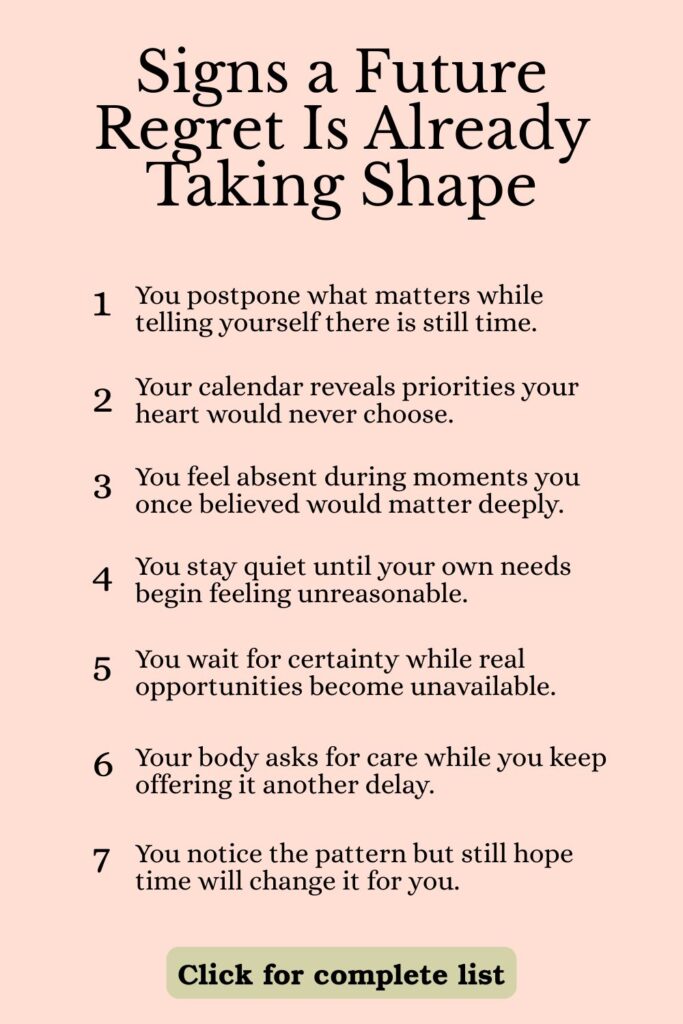
These regrets share one pattern: a meaningful part of life was repeatedly postponed until the available choices became narrower.
Researchers Shai Davidai and Thomas Gilovich found across six studies that people’s most enduring regrets were more often connected to gaps between their actual and ideal selves than to failures involving duties and obligations. People remained especially troubled by the aspirations, possibilities, and versions of themselves they had not pursued.
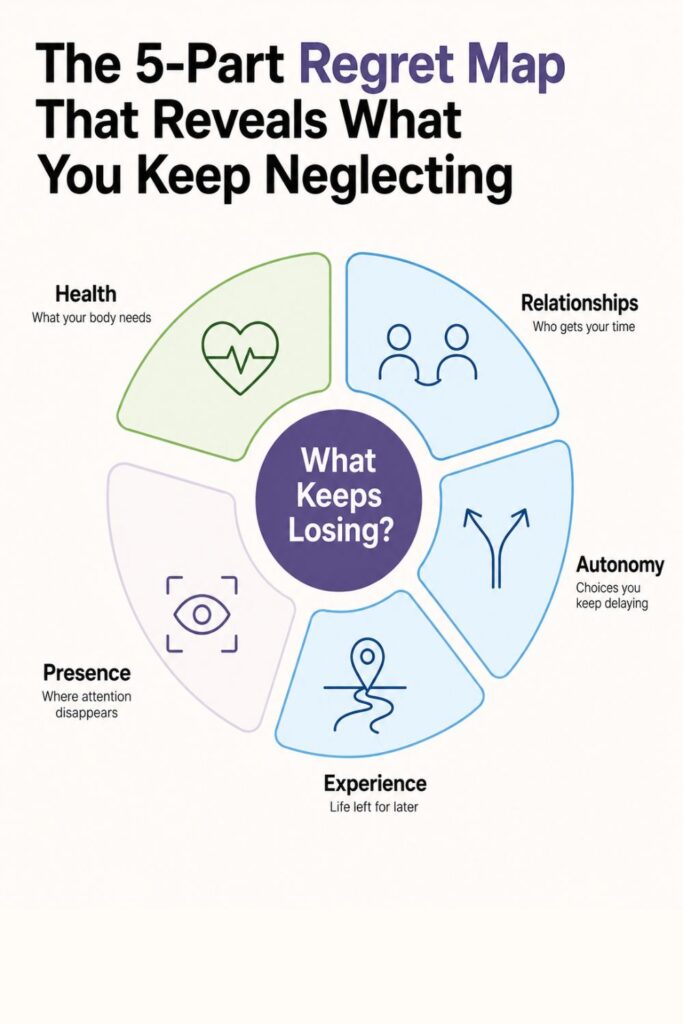
You can organize many future regrets into five domains:
- Health: How you treat the body that carries you through your life
- Relationships: What you express, repair, protect, or leave
- Autonomy: Whether you make decisions or continually surrender them
- Experience: What you explore before time, money, or mobility changes
- Presence: Whether you participate in your life or remain distracted from it
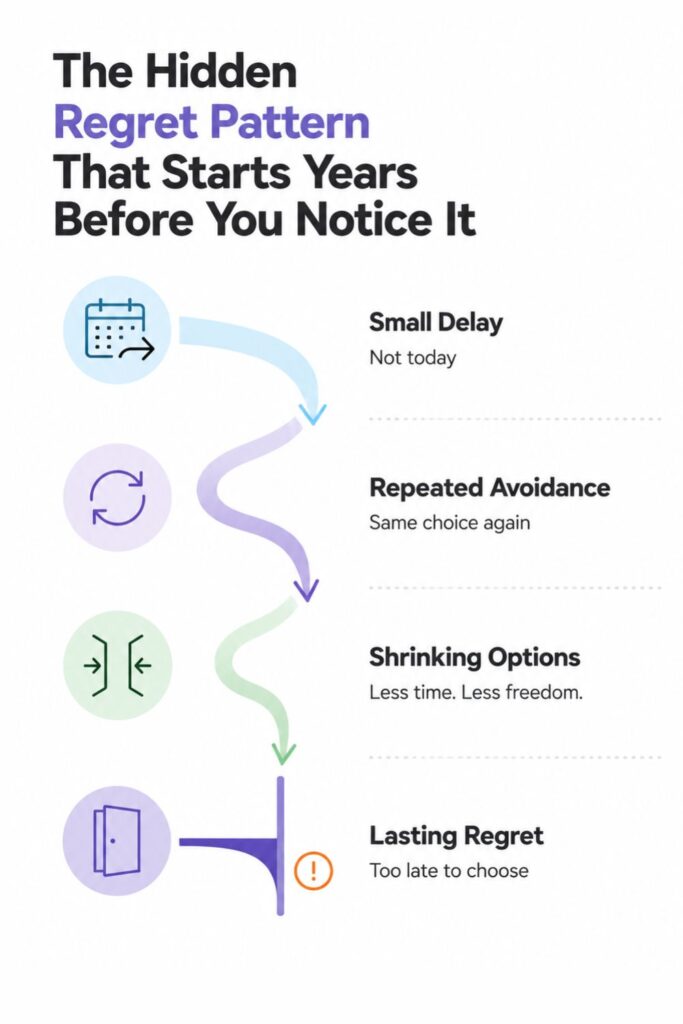
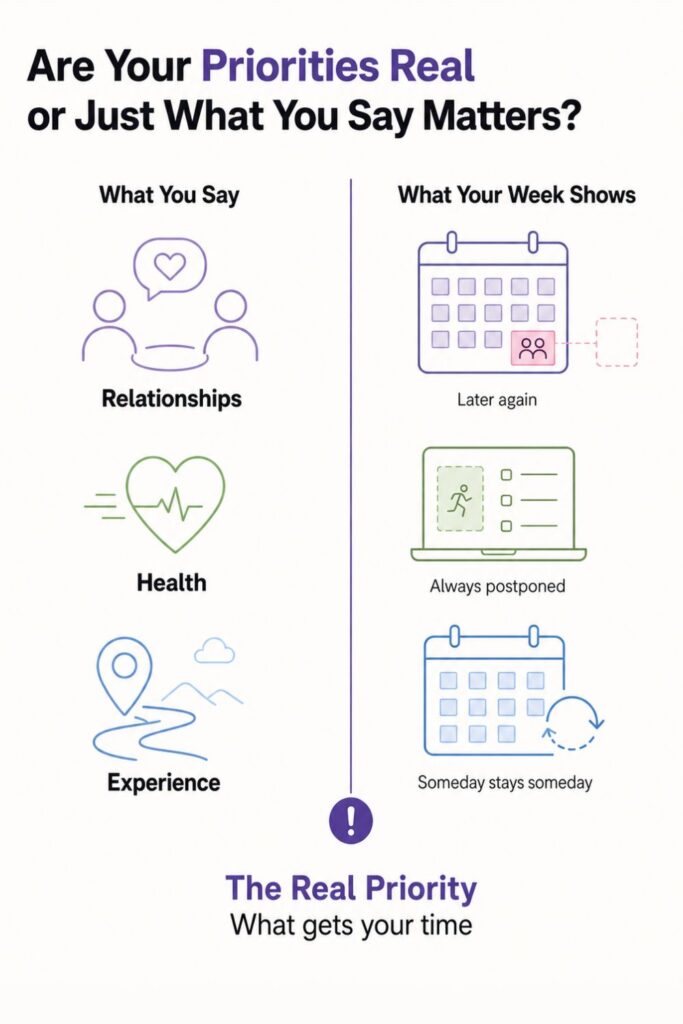
A Regret Map compares those domains with real evidence.
You may say relationships come first, but your calendar shows six late work nights and no uninterrupted time with the people you love. You may value health, but keep cancelling every activity that supports it.
A life coach might ask a client to bring a calendar, bank statement, message history, and list of postponed decisions. That creates a more useful conversation than asking the client to describe their values in abstract terms.
If you want to get more from your life, and are looking for concrete action steps to get you there, check out our Request a Coach page. It’s a “cut the fence-sitting and take action” way to tackle your issues and actually find success. To get off the fence and start to take action, click or tap here.
Will You Regret Not Travelling While You Had the Chance?
The regret is rarely that you missed one famous destination. It is that you kept treating meaningful experiences as something you would earn later.
Travel does not have to mean an expensive international vacation. It might mean visiting a friend in another state, taking a train to a nearby city, camping for one night, or finally seeing the place two hours away that you have discussed for years.
Start with the real constraint.
If money is the problem, choose a realistic destination and calculate the monthly amount required. If time is the problem, block the dates before your calendar fills. If confidence is the problem, begin with a day trip or travel with someone experienced.
“Someday” is not a plan. A destination, budget, date, and first booking are.
Could You Regret Not Protecting Your Skin Earlier?
Protecting your skin now removes one preventable source of future regret.
A tan may feel important for a week. The effects of repeated exposure accumulate for much longer.
Build protection into the activity instead of relying on a last-minute decision. Keep what you need near the door, in your car, or inside the bag you take outdoors. Follow current medical guidance that fits your skin, health history, and circumstances.
If you want to get more from your life, and are looking for concrete action steps to get you there, check out our Request a Coach page. It’s a “cut the fence-sitting and take action” way to tackle your issues and actually find success. To get off the fence and start to take action, click or tap here.
The goal is not to fear the sun. It is to stop treating basic protection as something future you can repair easily.
Could You Regret Not Staying Physically Active?
Staying active becomes more sustainable when movement fits your actual life rather than an imagined perfect routine.
The gym is only one option. Walking, swimming, dancing, cycling, gardening, hiking, recreational sport, and short home workouts all count as ways to use your body regularly.
Choose movement using three practical questions:
- Can I access it consistently?
- Do I dislike it so much that I will keep avoiding it?
- Can I fit it into a normal week rather than an ideal week?
Someone who hates gyms but enjoys walking with a neighbor does not need a more impressive plan. They need Tuesday and Thursday walks placed on the calendar.
When Is It Time to Leave a Bad Relationship?
It may be time to leave when fear, coercion, repeated disrespect, manipulation, or emotional depletion have become the relationship’s normal pattern.
A difficult period is not automatically a bad relationship. People can experience grief, financial pressure, illness, parenting conflict, or temporary disconnection without the relationship becoming fundamentally unsafe or destructive.
Look at repeated behavior rather than isolated promises.
If you want to get more from your life, and are looking for concrete action steps to get you there, check out our Request a Coach page. It’s a “cut the fence-sitting and take action” way to tackle your issues and actually find success. To get off the fence and start to take action, click or tap here.
Does the person acknowledge harm without blaming you? Do agreed changes last longer than a few days? Can you disagree without being threatened, humiliated, controlled, or punished?
Where the relationship is safe enough for joint work, a relationship coach may help a couple practice specific requests, establish boundaries, and examine recurring conflict patterns. Immediate danger, coercion, or abuse requires appropriate specialist and safety support, not a communication exercise.
Why Do People Regret Not Saying “I Love You”?
People regret unspoken love because the opportunity to express it does not remain available forever.
Say the words when they are honest. Express gratitude while the person can hear it. Apologize while repair is still possible.
You do not have to demand the same words in return. The purpose is to communicate what is true, not to force a particular response.
This applies beyond romantic relationships. Tell a friend what their loyalty meant. Tell a teacher what changed because of them. Tell a sibling that you value the history you share.
A message sent today is more useful than a perfect speech postponed for another year.
When Is It Time to Leave a Terrible Job?
Leaving a terrible job should be a planned decision, not an impulsive escape or an endlessly postponed fantasy.
If you want to get more from your life, and are looking for concrete action steps to get you there, check out our Request a Coach page. It’s a “cut the fence-sitting and take action” way to tackle your issues and actually find success. To get off the fence and start to take action, click or tap here.
Start by naming what makes the job terrible.
Is the problem the manager, workload, schedule, culture, compensation, role, industry, commute, or complete lack of progression? Different problems require different exits.
Then build a practical runway:
- Update your resume and work samples
- Calculate the minimum income you need
- Research realistic roles and salary ranges
- Contact people working in those roles
- Apply while you still have income where possible
- Document serious workplace problems
- Decide what would make you stay and what would not
A career coach might review your evidence, challenge an unrealistic escape plan, rehearse a negotiation, and hold you accountable for weekly applications.
Walking out may feel powerful for five minutes. Leaving with options gives you more control over what happens next.
How Can You Tell a Hard Season From a Life That No Longer Fits?
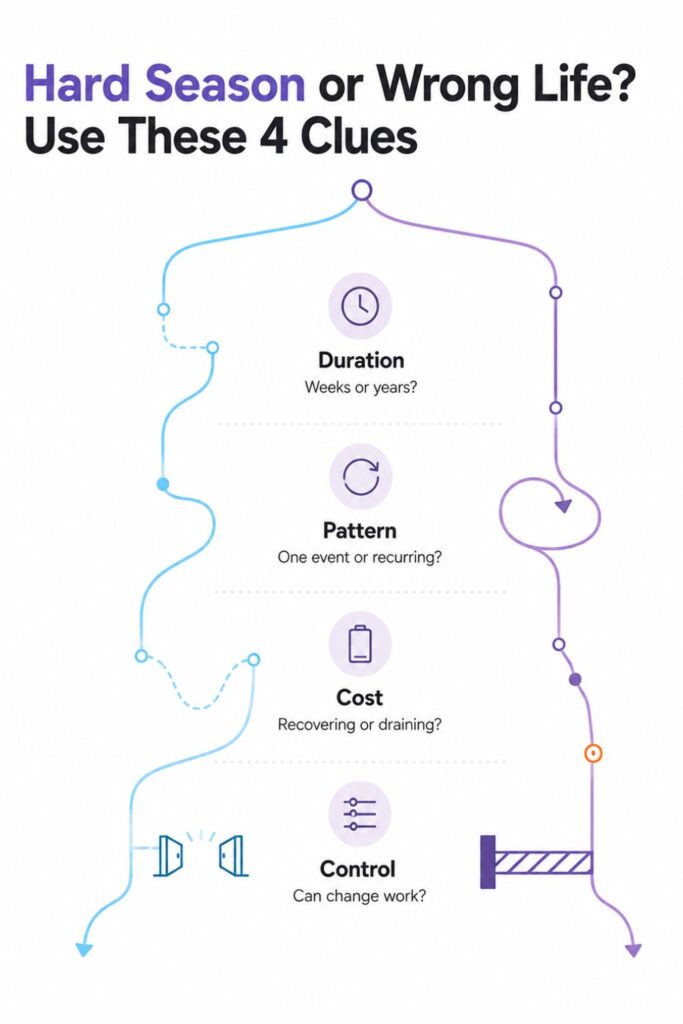
A hard season is temporary and responsive to change. A life that no longer fits keeps producing the same damaging pattern despite serious attempts to improve it.
Use four tests.
- Duration: Has the problem lasted for several difficult weeks, or has it shaped your life for years?
- Pattern: Was there one painful event, or does the same behavior keep returning?
- Cost: What is happening to your health, finances, confidence, work, or relationships?
- Control: Can a boundary, negotiation, treatment plan, schedule change, or role change realistically improve the situation?
A demanding three-month project is different from years of intimidation and unpaid expectations. A relationship under temporary caregiving pressure is different from one where fear and contempt are routine.
If you want to get more from your life, and are looking for concrete action steps to get you there, check out our Request a Coach page. It’s a “cut the fence-sitting and take action” way to tackle your issues and actually find success. To get off the fence and start to take action, click or tap here.
Write the answers down. Memory can soften a repeating pattern after one good week.
Do not ask only, “Can I tolerate this?” Ask, “What evidence suggests this can become meaningfully different?”
What Happens When Fear Keeps You From Trying New Things?
Fear becomes costly when it makes every unfamiliar experience wait for certainty that never arrives.
Adventure does not require cliff diving, solo backpacking, or an expensive trip. It might mean applying for an ambitious role, taking a dance class, attending an event alone, speaking in public, learning an instrument, or ordering food you cannot pronounce confidently.
Use a risk ladder.
Place the smallest version of the experience at the bottom and the most challenging version at the top. Then choose a step that creates discomfort without creating unnecessary danger.
For public speaking, the ladder might be:
- Ask one question during a small meeting
- Give a two-minute update
- Lead part of a workshop
- Deliver a full presentation
You do not need to feel fearless before taking the first step. You need a step small enough to complete and meaningful enough to count.
If you want to get more from your life, and are looking for concrete action steps to get you there, check out our Request a Coach page. It’s a “cut the fence-sitting and take action” way to tackle your issues and actually find success. To get off the fence and start to take action, click or tap here.
Why Do People Regret Holding Grudges?
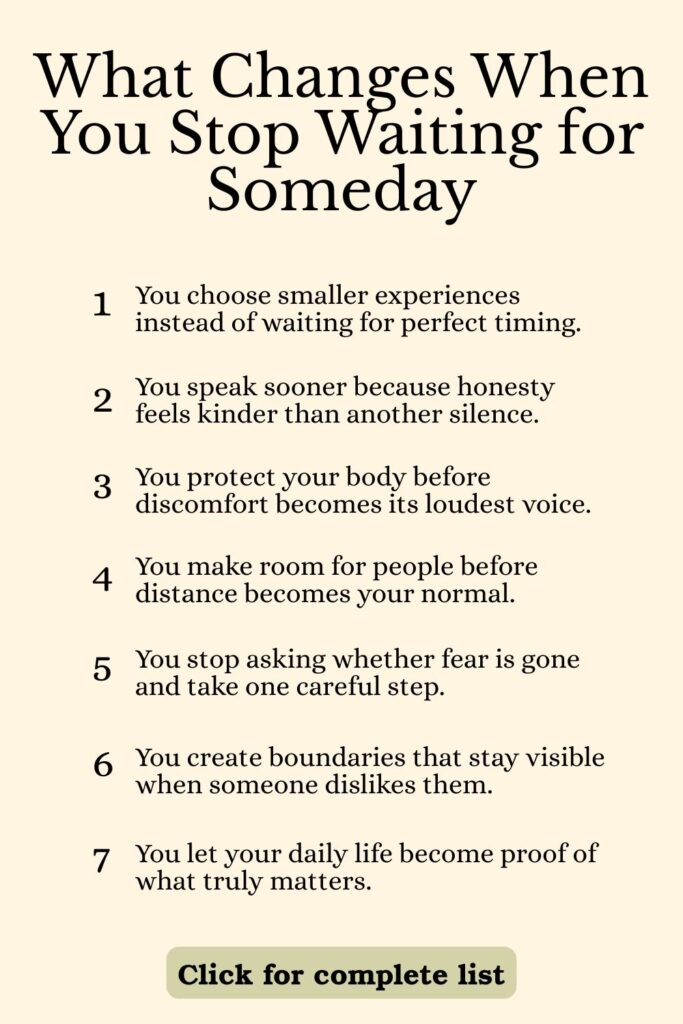
Letting go of a grudge means ending its control over your attention, not giving the other person access to you again.
Forgiveness, reconciliation, and trust are separate decisions.
You can stop replaying an old argument without pretending it did not matter. You can release the wish to punish someone while keeping a firm boundary. You can accept that an apology may never arrive.
Ask what the grudge currently requires from you.
Does it make you check the person’s social media, repeat the story to new people, avoid shared spaces, or relive the conversation every time their name appears?
Choose one behavior to stop feeding. Mute the account. Stop requesting updates from mutual friends. Write what you wish you could say, then keep the letter private.
Release is often behavioral before it becomes emotional.
What Does It Cost You Not to Stand Up for Yourself?
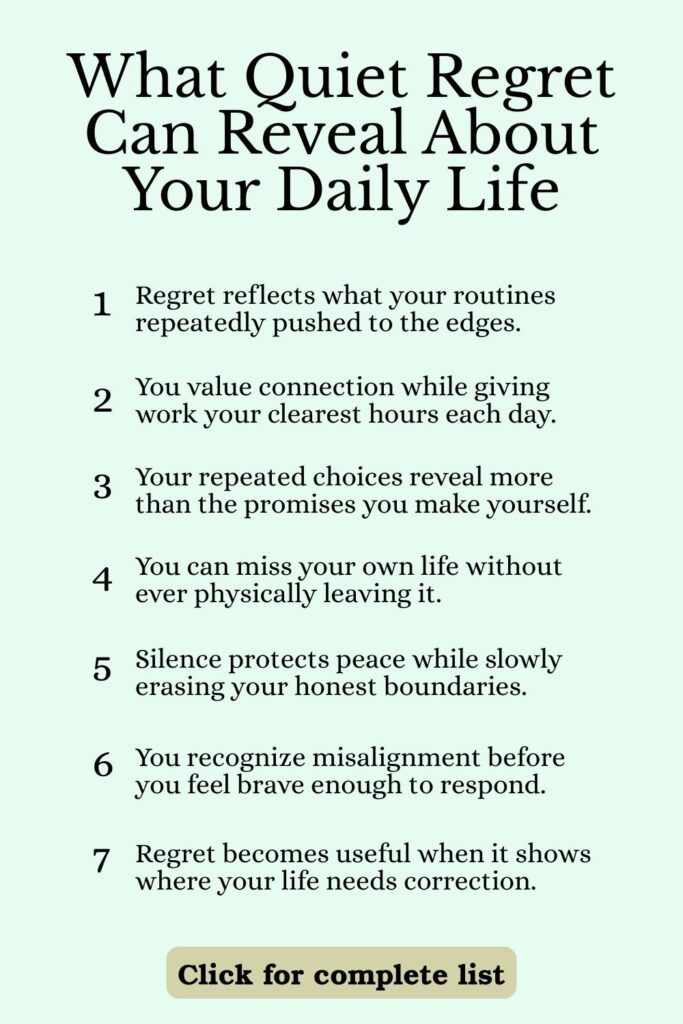
Repeated silence can teach other people that your time, limits, and preferences are negotiable.
If you want to get more from your life, and are looking for concrete action steps to get you there, check out our Request a Coach page. It’s a “cut the fence-sitting and take action” way to tackle your issues and actually find success. To get off the fence and start to take action, click or tap here.
Standing up for yourself does not require shouting or winning every disagreement. It means making your position clear enough that another person cannot honestly claim they did not know it.
Use a simple boundary structure:
- Name the behavior: “The deadline has changed three times this week.”
- State the effect: “I cannot reorganize the team’s work at a few hours’ notice.”
- Make the request: “Future changes need to reach me by noon the previous day.”
- State your response: “If that does not happen, I will keep the original schedule.”
A communication or leadership coach might role-play the conversation, remove apologetic filler, and give feedback on tone, wording, and follow-through.
A boundary that disappears when challenged is only a preference. Decide what you will actually do if the behavior continues.
What Do You Miss When You Never Put Your Phone Away?
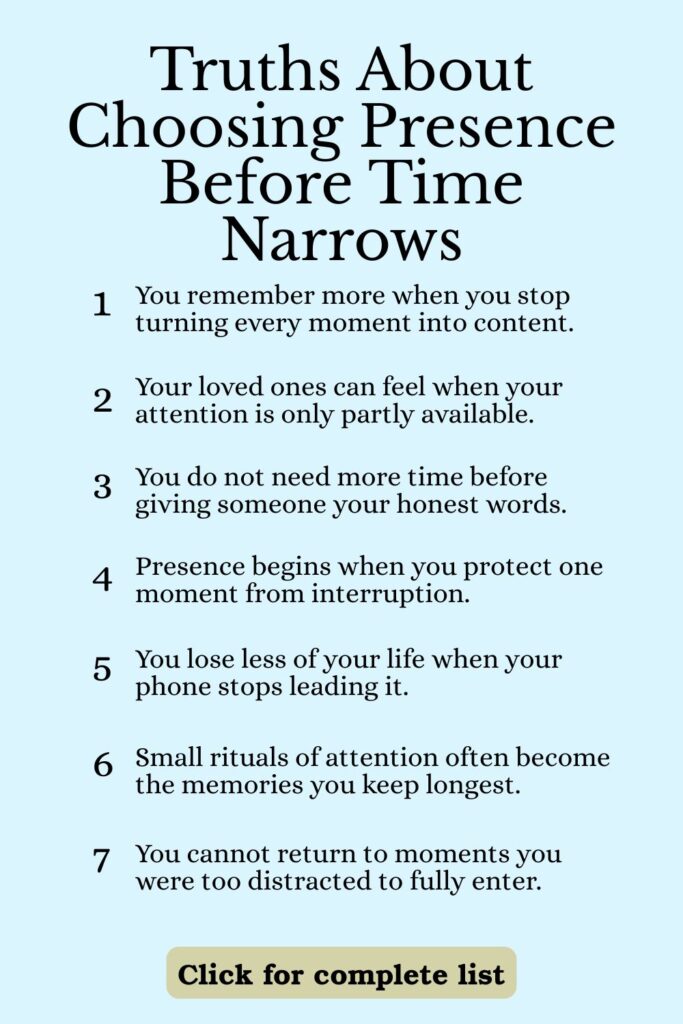
Constant phone use can turn meaningful experiences into background activity.
You may be physically present at dinner while responding to messages. You may watch a child’s performance through a screen, take 40 photographs, and remember little about how the room felt.
Leave the phone at home when that is practical. When it is not, create friction between the impulse and the device.
Put it in another room. Turn off nonessential notifications. Remove social apps from the home screen. Use a watch instead of checking the time on a device full of distractions.
If you want to get more from your life, and are looking for concrete action steps to get you there, check out our Request a Coach page. It’s a “cut the fence-sitting and take action” way to tackle your issues and actually find success. To get off the fence and start to take action, click or tap here.
The goal is not to reject technology. It is to decide when your attention is available for sale and when it is not.
What Does Being Present Look Like in Real Life?
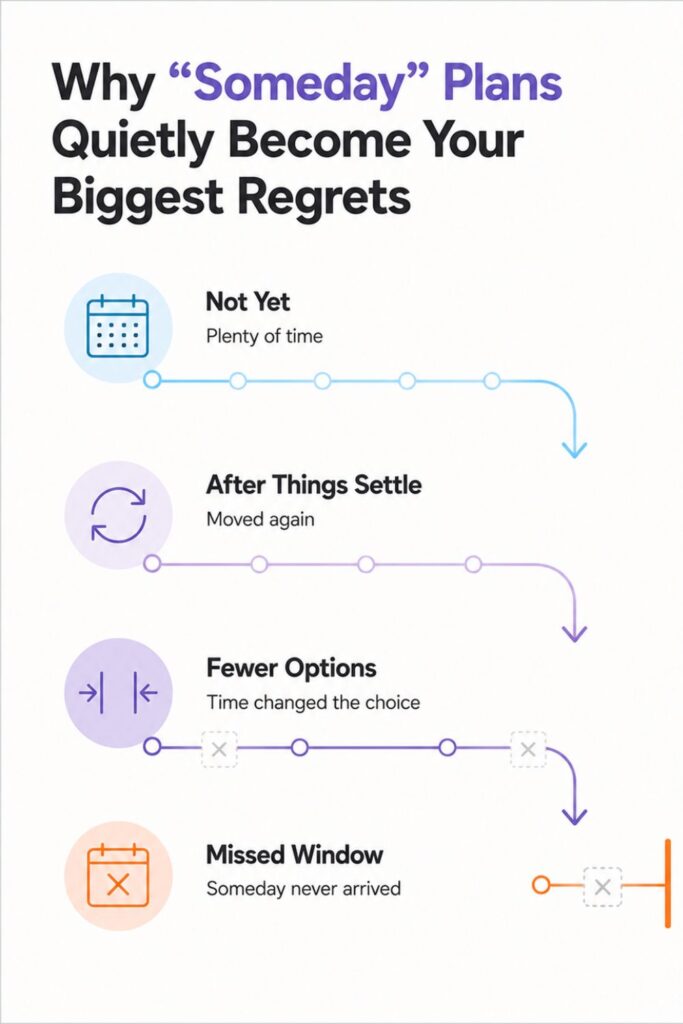
Presence becomes practical when an activity has rules that protect it from interruption.
Try a three-rule experiment for one week:
- Keep one meal each day phone-free
- Put phones out of sight during important conversations
- Experience the first 20 minutes of an event before taking photographs
Watch what changes.
Do conversations last longer? Do you notice when someone is uncomfortable or excited? Do you remember more detail afterward? Does the urge to check your phone weaken after the first few minutes?
A family or relationship coach might help people create shared device rules rather than making one person the household enforcer. The rules should describe observable behavior, such as where phones go and when they return.
“Be more present” is vague. “Phones stay in the hallway during dinner” can actually be tested.
Could Working Too Much Become One of Your Biggest Regrets?
Could Working Too Much Become One of Your Biggest Regrets?
If you want to get more from your life, and are looking for concrete action steps to get you there, check out our Request a Coach page. It’s a “cut the fence-sitting and take action” way to tackle your issues and actually find success. To get off the fence and start to take action, click or tap here.
Working too much becomes costly when your job funds a life you rarely have time to experience.
Look beyond the total number of hours. Examine what those hours repeatedly replace.
Are you missing medical appointments, meals with family, sleep, exercise, friendships, hobbies, or the ordinary unplanned time in which relationships often deepen?
Then examine the financial side honestly. Some people work long hours because survival requires it. Others keep increasing their lifestyle costs, then work more to support purchases they have little time to use.
Self-employment is not an automatic solution. Running a business can create freedom, but it can also produce unstable income, weak boundaries, and longer working days.
The better question is, “What kind of work arrangement gives me enough income, control, recovery, and meaningful time?”
That answer might involve a new job, fewer expenses, stronger boundaries, a different schedule, or a carefully planned business. It should not begin with a dramatic resignation and no financial runway.
How Do You Run a Regret-to-Action Audit?
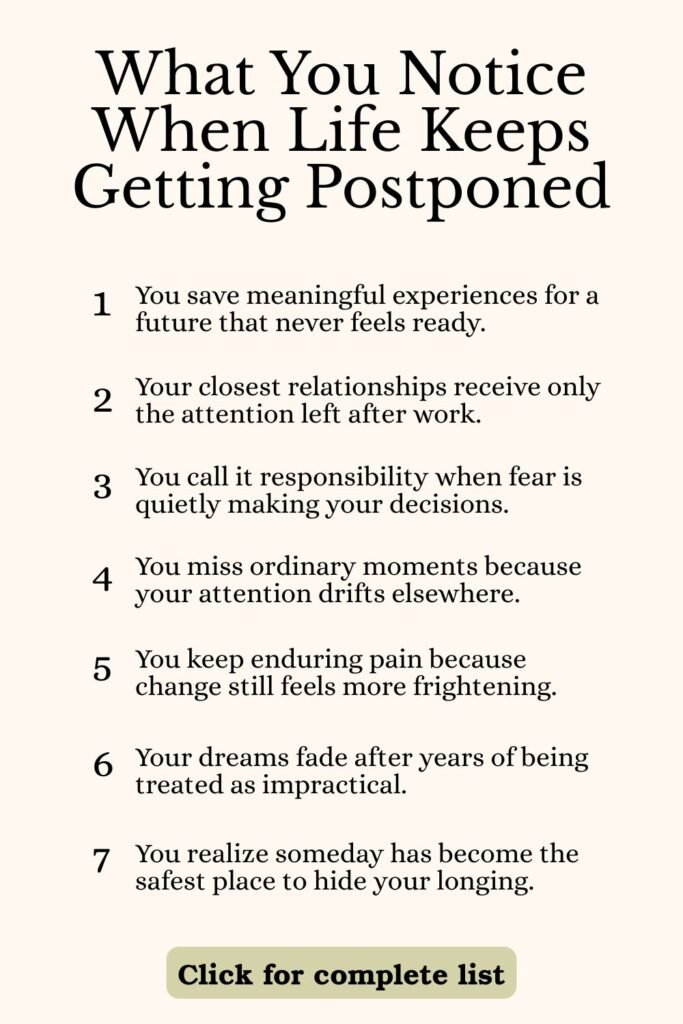
A Regret-to-Action Audit turns a vague fear about the future into one decision you can examine now.
If you want to get more from your life, and are looking for concrete action steps to get you there, check out our Request a Coach page. It’s a “cut the fence-sitting and take action” way to tackle your issues and actually find success. To get off the fence and start to take action, click or tap here.
Choose one of the five domains: health, relationships, autonomy, experience, or presence. Then complete four steps.
- Name the possible regret: “I may regret losing contact with my sister.”
- Find current evidence: “We have exchanged three short messages in six months.”
- Choose the smallest corrective action: “I will call her this Sunday.”
- Set a review date: “I will review this in four weeks.”
The action should be small enough to complete without rebuilding your entire life.
“I will prioritize my health” is too vague. “I will walk for 20 minutes after lunch on Monday, Wednesday, and Friday” gives you something to observe.
A life coach might challenge you to choose one domain instead of creating a list of 15 urgent changes. The review then focuses on evidence: Did the action happen? What blocked it? What should change next?
How Do You Turn One Regret Into a 30-Day Experiment?
You turn regret into action by linking one specific situation to one specific response.
This is sometimes called an implementation intention. The structure is simple:
When situation X occurs, I will perform action Y.
Peter Gollwitzer and Paschal Sheeran’s meta-analysis of 94 independent tests found that implementation intentions had a medium-to-large positive effect on goal attainment. Their research showed why specifying when, where, and how an action will occur is more useful than relying on a broad intention.
If you want to get more from your life, and are looking for concrete action steps to get you there, check out our Request a Coach page. It’s a “cut the fence-sitting and take action” way to tackle your issues and actually find success. To get off the fence and start to take action, click or tap here.
Compare these plans:
“I need to use my phone less.”
“When dinner begins, I will leave my phone in the hallway.”
“I should consider a new career.”
“When Friday lunch ends, I will spend 20 minutes researching one role.”
“I need stronger boundaries.”
“When someone asks for an immediate answer, I will say, ‘Let me check what I have committed to and come back to you tomorrow.’”
Run the plan for 30 days. Track completed actions rather than judging your motivation or personality.
If you want to get more from your life, and are looking for concrete action steps to get you there, check out our Request a Coach page. It’s a “cut the fence-sitting and take action” way to tackle your issues and actually find success. To get off the fence and start to take action, click or tap here.
If the plan fails, adjust the trigger, action, or environment. Do not turn one missed attempt into evidence that change is impossible.
What Should You Review Before Another Year Passes?
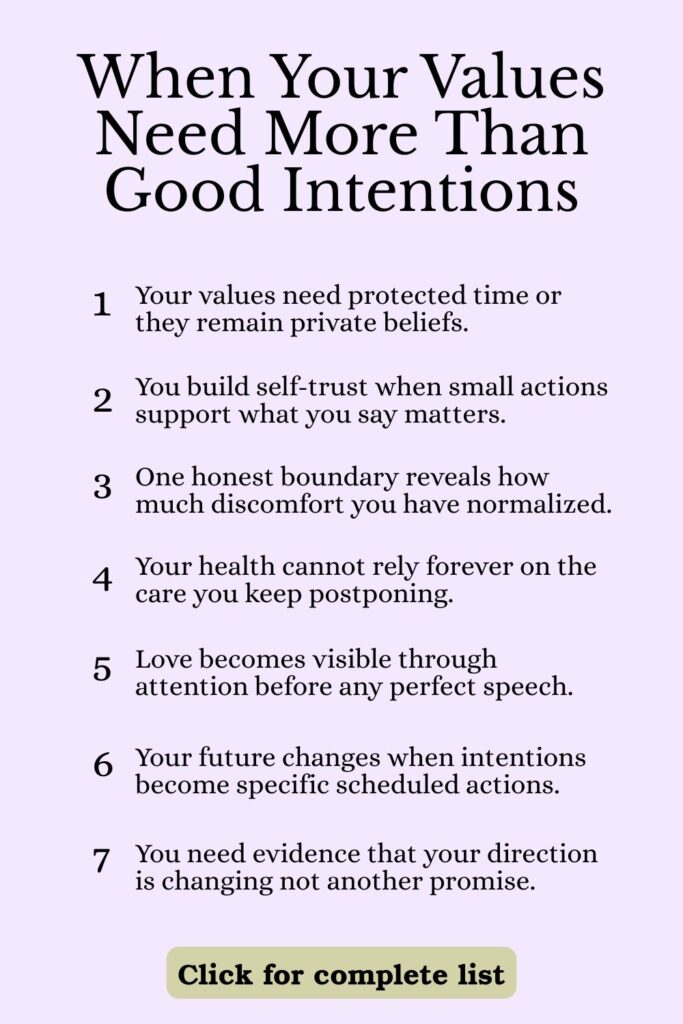
An annual regret review should compare what you intended to value with what received your time.
Review the same five domains each year.
- Health: What did you do regularly for your future physical well-being?
- Relationships: Who received meaningful, uninterrupted attention?
- Autonomy: Which decision did you make instead of continually postponing?
- Experience: What happened because you deliberately scheduled it?
- Presence: How often were you fully involved in the activity in front of you?
Use evidence.
Look at your calendar, photographs, appointments, messages, travel bookings, work hours, purchases, and completed plans. These records reveal patterns that memory may overlook.
Then choose one adjustment for the coming year. Not a total reinvention. One correction that changes where your life is heading.
Frequently Asked Questions
What do people regret most at the end of life?
People commonly regret neglecting relationships, leaving feelings unspoken, postponing meaningful experiences, working too much, ignoring their health, and failing to make independent choices. There is no single universal ranking that applies to every person.
How can I live with fewer regrets?
You can live with fewer regrets by comparing your stated priorities with your repeated behavior and correcting one important gap at a time. Use your calendar, spending, messages, and decisions as evidence.
If you want to get more from your life, and are looking for concrete action steps to get you there, check out our Request a Coach page. It’s a “cut the fence-sitting and take action” way to tackle your issues and actually find success. To get off the fence and start to take action, click or tap here.
Can regret be useful?
Regret can be useful when it identifies a pattern you still have the power to change. It becomes unproductive when it produces only repeated self-criticism without repair, learning, or action.
How do I know whether to leave a bad job or relationship?
Examine the duration, pattern, cost, and controllability of the situation. Repeated harm with little credible change deserves a different response from a temporary difficulty that improves with boundaries, support, or practical adjustments.
How can I stop working too much without risking my finances?
Start by calculating your essential expenses, identifying which work hours are genuinely necessary, and building a gradual transition plan. Options may include reducing lifestyle costs, changing roles, renegotiating responsibilities, or developing another income source before leaving.
How can I become more present and use my phone less?
Create observable rules that remove the phone from specific moments. Start with one phone-free meal, one protected conversation, or a fixed place where devices stay during family time.
How do I let go of a grudge without reconnecting with someone?
You can release a grudge while maintaining distance, boundaries, and a decision not to restore trust. Stop behaviors that keep the conflict active, such as monitoring the person or repeatedly seeking updates.
What should I do when I regret a missed opportunity?
Identify whether a smaller or different version of the opportunity is still available. You may not be able to recreate the past, but you can often act on the underlying value through another trip, conversation, application, class, or relationship.
What Will You Change Before Another Year Passes?

Choose one possible future regret.
Find the current evidence that it is already developing. Then choose one action small enough to complete and meaningful enough to change the pattern.
If you want to get more from your life, and are looking for concrete action steps to get you there, check out our Request a Coach page. It’s a “cut the fence-sitting and take action” way to tackle your issues and actually find success. To get off the fence and start to take action, click or tap here.
Call the person. Book the appointment. Research the role. Protect the dinner. Plan the trip. State the boundary.
Put a review date on your calendar.
You do not need to solve your entire life today. You need to stop pretending that the decision will become easier simply because you postpone it.
Sources
Davidai, Shai, and Thomas Gilovich. “The Ideal Road Not Taken: The Self-Discrepancies Involved in People’s Most Enduring Regrets.” Emotion, vol. 18, no. 3, 2018, pp. 439–452.
Gollwitzer, Peter M., and Paschal Sheeran. “Implementation Intentions and Goal Achievement: A Meta-Analysis of Effects and Processes.” Advances in Experimental Social Psychology, vol. 38, 2006, pp. 69–119.
Ware, Bronnie. The Top Five Regrets of the Dying: A Life Transformed by the Dearly Departing. Revised ed., Hay House, 2019.
If you want to get more from your life, and are looking for concrete action steps to get you there, check out our Request a Coach page. It’s a “cut the fence-sitting and take action” way to tackle your issues and actually find success. To get off the fence and start to take action, click or tap here.
Read this next

Focus on the Positive
Start each day with a positive thought. Push negativity to the side. Eat a healthy breakfast and get a little exercise. Help clear your mind. Definitely stop and smell the […]
Read More
Reiki for the Grounded Achiever: The Energy Healing Practice for Women Who Never Stop Moving
You’ve got goals. A business to run. Maybe a household too. You’re the one others depend on—organized, focused, high-capacity. You keep everything on track, but lately? Something feels off. You […]
Read More
How to Transform Everyday Items into Yoga Props for Beginners
Let’s get one thing straight: you do not need a $98 cork yoga block or a boutique bolster embroidered with moon phases to start your practice. If you’ve got a […]
Read More