


Talk to a coach about Family coaching

Dr Soraya Sawicki, DSW, CPC, RMT
DSW, CPC, CSC, RMT
Personalized wellness coaching for stress relief, energy, and inner harmony.

A.C. Pickard
Emotion Mastery Coach | Creator of the M.A.S.T.E.R. Method™ | Certified Emotional Intelligence Life Coach | B.S. Social Sciences
Emotion Mastery Coach for thoughtful adults who know better and...

Bear Paddle Swim School
Swim Lessons
bearpaddle.com

Karen Stockham
I'm a licensed psychotherapist and Certified Clini-Coach with over 30 years of experience helping adults heal from trauma and family estrangement. Sign-up for a FREE 30-minute discovery call today.
I offer online coaching sessions for individuals, couples, and families.

Shaunna Rodriguez
Certified Christian Coach, Board Certified Mental Health & Wellness Coach, Ordained Minister.
Compassionate coach helping you heal, grow, and thrive with purpose.

Grace Baik
Certified Coach in Trauma healing, Nutrition, and Life Coaching
A holistic approach to unlocking cycles, healing, and walking in...

Tod Brown
BA in Psychology and Counseling / ADR Credentialed / Mental Health First Aid Certified / 20 Plus years of experience to share with you!
Public Speaking Coach Life & Family Coach / ADR Conflict...

Anna D Sobel
Masters in Early Childhood Education
Veteran educator helping you raise confident, capable learners with clarity...





Dad Storytelling Keepsake Box for Fathers Who Love Family Memories
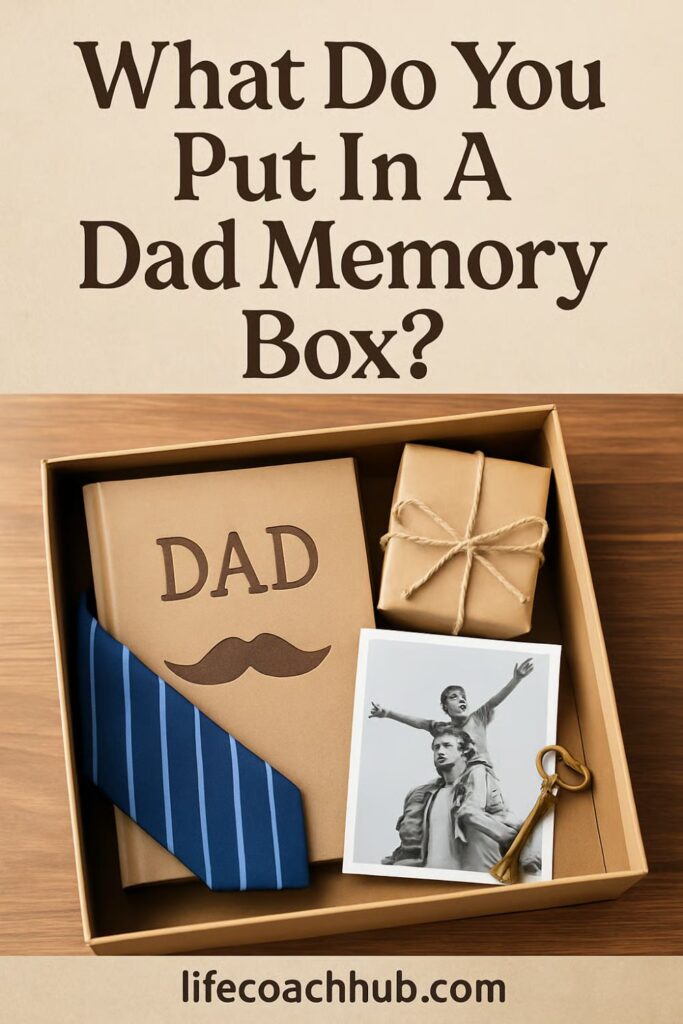
A Memory Gift That Gives Dad More Than Something to Open
Some dads do not need another gadget, another shirt, or another random thing that gets tucked in a drawer. What they really value are the moments that remind them of who they are to their family. A storytelling keepsake box is built for that kind of dad.
This gift is not just a box of photos. It is a way to gather the small stories that usually live in passing comments, old albums, inside jokes, saved cards, and half-remembered family moments. When you put them together with care, they become something Dad can return to again and again.
Start with the real purpose of the box: Decide what you want Dad to feel when he opens it. Maybe you want him to feel appreciated. Maybe you want him to laugh at old memories. Maybe you want him to see how many ordinary moments became part of the family story.
This purpose will guide every choice you make, from the photos you include to the prompts you write.
A good storytelling keepsake box can include:
- Handwritten memory notes
- Printed photos with captions
- Small mementos
- Story prompt cards
- Letters from family members
- Blank cards for future memories
- A guide card explaining the box
Focus on stories instead of perfect presentation: The box does not need to look expensive to feel meaningful. What matters most is that every item inside has a reason for being there.
A blurry photo from a camping trip may mean more than a formal portrait. A child’s old drawing may matter more than a polished card. A handwritten note about a tiny everyday habit can feel more personal than a long speech.
Make it easy for him to use later: Think about how Dad will actually interact with the box. He may open it slowly, one item at a time. He may sit with the family and read pieces aloud. He may keep it somewhere private and revisit it quietly.
If you want to get more from your life, and are looking for concrete action steps to get you there, check out our Request a Coach page. It’s a “cut the fence-sitting and take action” way to tackle your issues and actually find success. To get off the fence and start to take action, click or tap here.
Organize it so he does not have to figure it out. The easier it is to open and understand, the more likely it is to become a lasting keepsake instead of a one-time gift.
Need some family guidance? Drop on by our directories choc full of family coaches to help make your love life the best it can be. Or click here to have us match you to the best.
Choose the Right Box Before You Add Anything
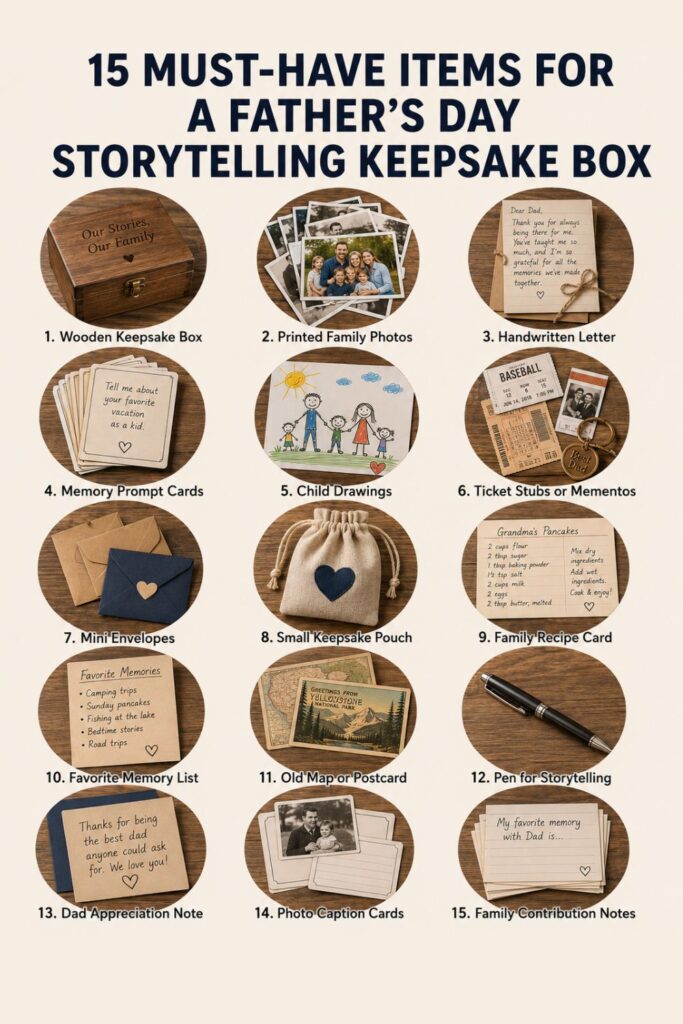
The box itself sets the tone for the whole gift. Before you start gathering notes, photos, and mementos, choose something sturdy enough to last and simple enough to feel like Dad will actually use it. The goal is not to impress him with fancy packaging. The goal is to give the memories a home.
Pick a box that feels worth saving: Look for a container that feels substantial, but not so delicate that he will be afraid to touch it. A wooden keepsake box works well for a classic look. A photo storage box is practical and easy to organize. A cigar-style box, archival box, or simple lidded memory box can also work beautifully.
The best box depends on Dad’s personality. If he likes clean and practical things, choose something simple with clear sections. If he loves old objects, a vintage-looking box may feel more fitting. If he appreciates handmade gifts, a plain box that you decorate or label yourself can feel more personal.
Match the size to the amount of memories: A box that is too large can make the gift feel unfinished. A box that is too small can make everything feel cramped. Start by deciding what you want to include.
Use a small box if you are creating a tight, curated gift with:
- 10 to 20 memory cards
- A few favorite photos
- One or two small mementos
- A short letter
Use a medium box if you want to include:
If you want to get more from your life, and are looking for concrete action steps to get you there, check out our Request a Coach page. It’s a “cut the fence-sitting and take action” way to tackle your issues and actually find success. To get off the fence and start to take action, click or tap here.
- Photo bundles
- Several envelopes
- Prompt cards
- Notes from multiple family members
- A few flat keepsakes
Use a larger box only if you have meaningful objects to include, such as small tools, children’s drawings, old cards, maps, ticket stubs, or other memory pieces.
Create simple sections inside: A keepsake box can quickly become messy if everything is loose. Add structure before you add the emotional pieces.
You can use:
- Mini envelopes
- Divider cards
- Ribbon-tied bundles
- Small folders
- Labeled photo sleeves
- Paper bands around grouped notes
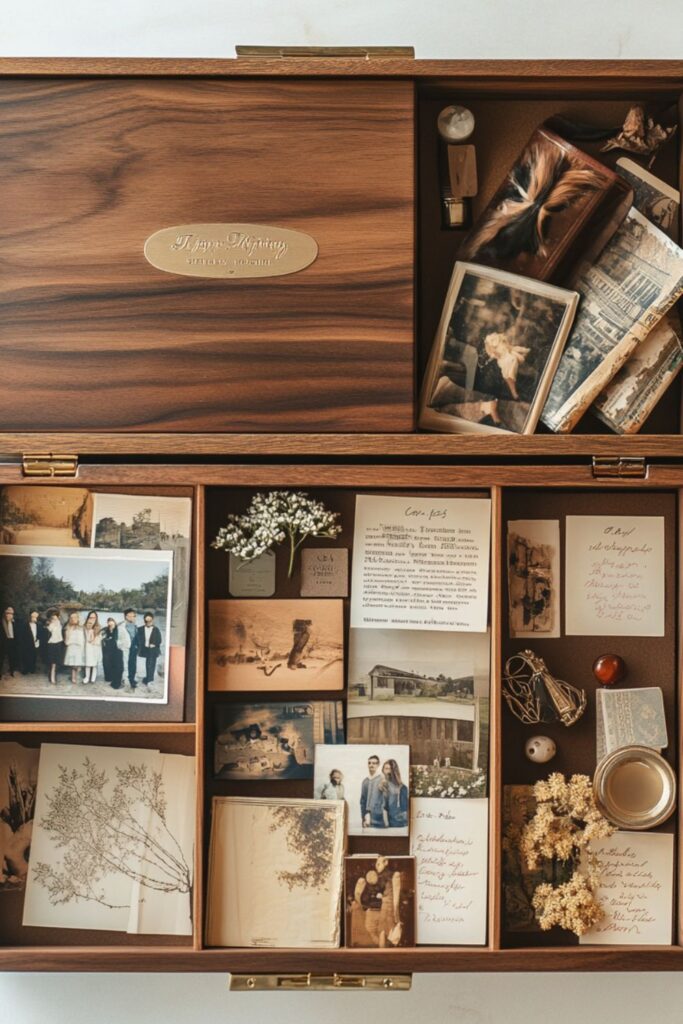
This makes the gift feel intentional. It also helps Dad move through the box without feeling like he has to sort it himself.
Build the Memory Theme Around Dad’s Favorite Family Moments
A storytelling keepsake box works best when it has a clear emotional direction. Without a theme, the box can feel like a random collection of photos and paper. With a theme, it starts to feel like a story made just for him.
Choose one clear memory angle: Think about the kinds of family memories Dad naturally holds onto. Does he talk about family trips? Does he save every card? Does he tell the same funny stories at dinner? Does he remember milestones, small traditions, or things the kids said when they were little?
You can build the box around a theme like:
- Things Dad taught us
- Our favorite family adventures
- Everyday moments we still remember
- Dad’s funniest family stories
- Milestones we shared with you
- Reasons we love being your family
- Memories from the kids
- Lessons we learned from Dad
- The little things you did that mattered
The theme does not have to be complicated. It just needs to give the box a clear center.
If you want to get more from your life, and are looking for concrete action steps to get you there, check out our Request a Coach page. It’s a “cut the fence-sitting and take action” way to tackle your issues and actually find success. To get off the fence and start to take action, click or tap here.
Use the theme to decide what belongs: Once you choose the angle, use it as a filter. If the theme is “things Dad taught us,” include stories about lessons, skills, advice, and quiet examples he set. If the theme is “family adventures,” focus on trips, outings, funny mishaps, and places you explored together.
This keeps the box from becoming cluttered. It also makes each item feel connected to the next.
Before adding something, ask:
- Does this item fit the theme?
- Will Dad understand why it is included?
- Does it bring back a specific memory?
- Does it show something meaningful about him?
- Would this feel better in another gift?
Keep the emotional thread consistent: The box can be nostalgic, funny, tender, practical, or a mix. But it should not feel scattered.
If you want a warm and reflective box, use thoughtful captions and memory notes. If you want something playful, include jokes, funny photos, and casual prompts. If the gift is meant to honor a milestone, keep the tone a little more intentional.
This does not mean every piece has to be serious. Often the most meaningful family memories are funny, messy, or ordinary. The key is making sure the box feels like one complete gift, not a pile of unrelated moments.
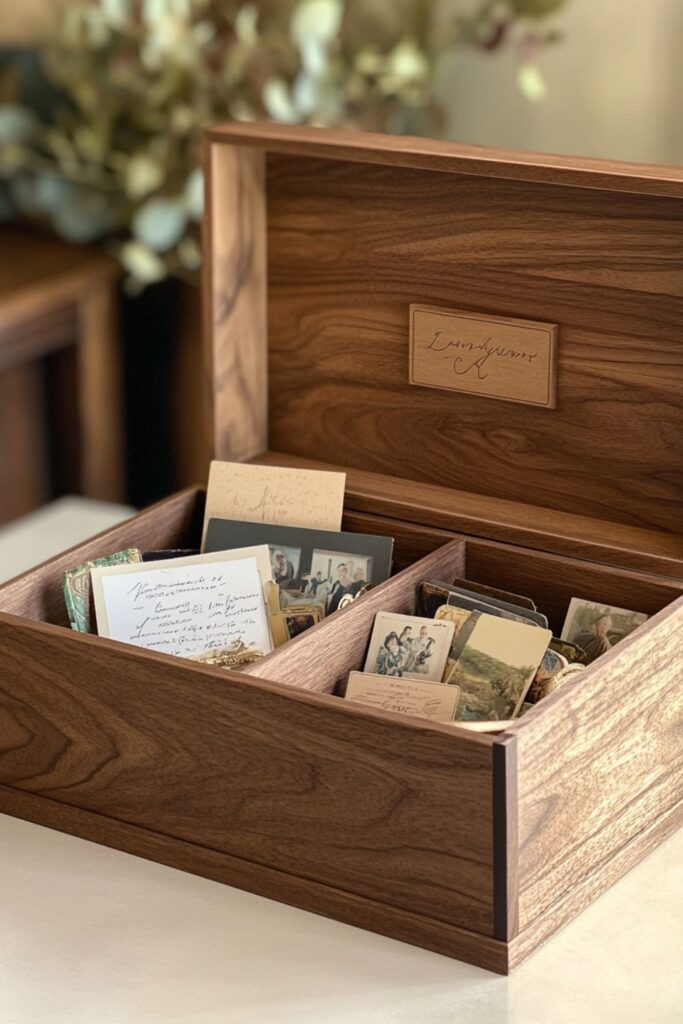
Add Notes That Turn Small Memories Into Something He Can Keep
The notes are the heart of the storytelling keepsake box. Photos show what happened, but notes explain why it mattered. They turn a simple object into a memory Dad can hold in his hands.
Write short memory notes first: Start with small, specific moments. Do not pressure yourself to write one perfect letter right away. A collection of short notes can feel more natural and easier to read.
If you want to get more from your life, and are looking for concrete action steps to get you there, check out our Request a Coach page. It’s a “cut the fence-sitting and take action” way to tackle your issues and actually find success. To get off the fence and start to take action, click or tap here.
Good memory notes might be about:
- A time Dad showed up when someone needed him
- A funny thing he always says
- A lesson he taught without realizing it
- A trip that became part of family history
- A small routine that made home feel steady
- A moment when he made someone feel safe
- Something he fixed, built, cooked, explained, or carried
- A memory from childhood that still stands out
Specific notes are stronger than general praise. “You always made pancakes on Saturday mornings, even when we made a mess of the kitchen” feels more vivid than “You are a great dad.”
Use a simple note formula: If you are not sure what to write, use a three-part structure. It keeps the note clear without making it feel stiff.
Try this:
- What happened
- Why it mattered
- What we still remember about you
For example:
“Remember when the car broke down on the way to the lake, and you turned the whole delay into a roadside picnic? I still remember how you made everyone laugh instead of letting the day feel ruined. That is one of the things I love most about you. You always found a way to make the moment feel okay.”
That kind of note does not need to be long. It just needs to feel true.
Mix handwriting with printed cards: Handwritten notes feel personal, especially from children or close family members. Printed notes can be easier to read and can make the box feel more polished.
If you want to get more from your life, and are looking for concrete action steps to get you there, check out our Request a Coach page. It’s a “cut the fence-sitting and take action” way to tackle your issues and actually find success. To get off the fence and start to take action, click or tap here.
You can combine both by printing the main cards and adding small handwritten messages at the bottom. Or you can ask each family member to handwrite one card and print the rest.
The variety can make the box feel more human. It shows that real people contributed, not just one person assembling a gift.
Include Photos With Captions That Tell the Story
Photos are powerful because they bring Dad back to a moment instantly. But photos become even stronger when you add captions that explain why the memory matters. A caption can turn a simple picture into a tiny family story.
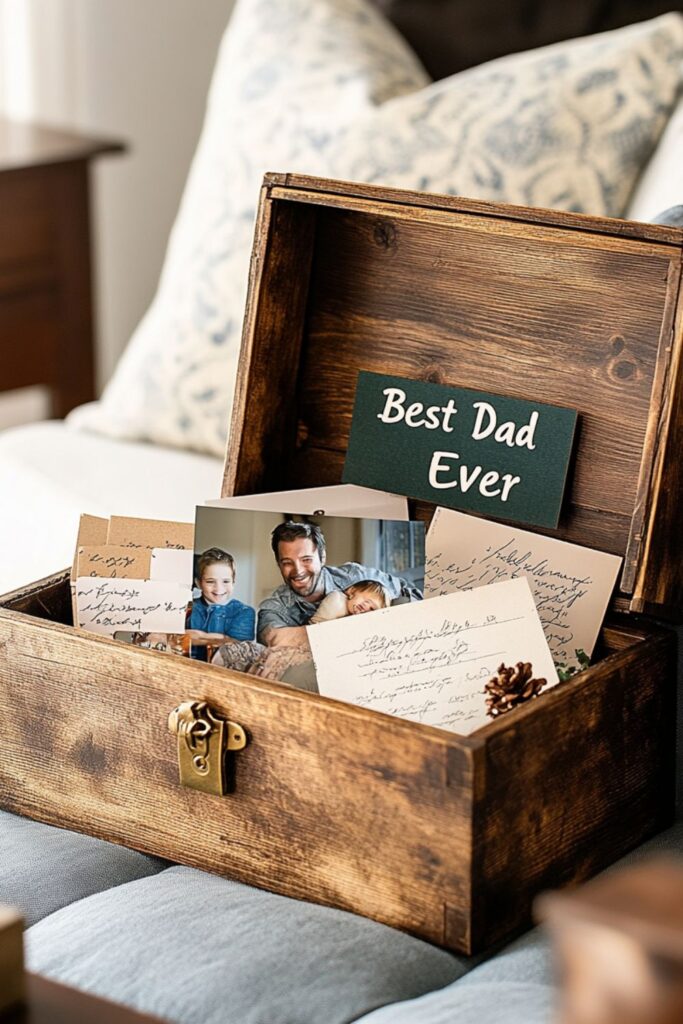
Choose photos that need a little explanation: Do not only choose the most polished pictures. The best photos for this kind of gift are often the ones that have a story behind them.
Look for photos like:
- Dad holding a baby or grandchild
- A backyard project in progress
- A family trip that went slightly wrong
- A holiday morning
- A messy birthday table
- A candid laugh
- Dad teaching someone how to do something
- A photo from an old house, car, trip, or family tradition
- A quiet moment that captures who he is
A perfect photo is not always the most meaningful one. A slightly blurry picture can feel priceless if it captures a moment everyone remembers.
Add a caption behind each photo: Write a short caption on the back of the photo or on a card attached to it. Include the date if you know it, but do not worry if you do not.
A strong caption can include:
If you want to get more from your life, and are looking for concrete action steps to get you there, check out our Request a Coach page. It’s a “cut the fence-sitting and take action” way to tackle your issues and actually find success. To get off the fence and start to take action, click or tap here.
- Who is in the photo
- Where it happened
- What was going on
- Why the moment mattered
- A funny or tender detail Dad may have forgotten
For example:
“Summer trip to the lake, probably 2008. This was right after you taught us how to skip rocks, and everyone got way too competitive. You acted like it was just a simple afternoon, but this is one of those memories that still feels like childhood.”
That caption gives the photo emotional weight.
Group photos into mini story sets: Instead of placing all photos loose in the box, create small bundles. This makes the experience easier to follow and more enjoyable.
You could group them by:
- Family trips
- Holidays
- Dad and the kids
- Things Dad built or fixed
- Everyday home moments
- Funny family memories
- Big milestones
- Old favorite places
Tie each bundle with ribbon or place it in a labeled envelope. This makes the box feel like a collection of little chapters.
Add Small Mementos That Make the Box Feel Real
Small mementos make the keepsake box feel tactile and personal. They bring texture to the gift. They also help Dad remember moments that photos and words alone may not fully capture.
Choose mementos with a story attached: The best mementos are not random objects. They are small pieces of family history. They should connect to a real moment, habit, place, or relationship.
If you want to get more from your life, and are looking for concrete action steps to get you there, check out our Request a Coach page. It’s a “cut the fence-sitting and take action” way to tackle your issues and actually find success. To get off the fence and start to take action, click or tap here.
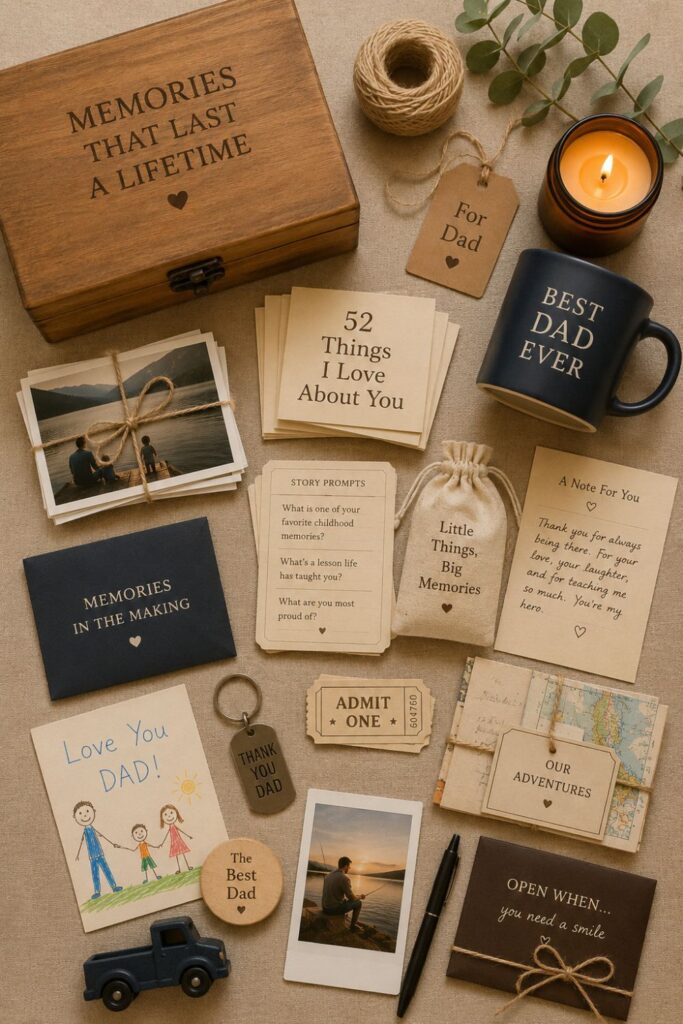
Possible mementos include:
- A ticket stub from a game or concert
- A copy of an old recipe card
- A child’s drawing
- A small map from a trip
- A pressed leaf from a family walk
- A keychain from a vacation
- A scorecard from a game
- A photocopy of an old letter
- A small note someone saved
- A label from something he made or repaired
- A printed screenshot of a meaningful message
If the original item is too fragile or valuable, use a copy. You do not need to risk damaging something important just to include it in the box.
Label every object clearly: A memento may be meaningful to you, but Dad may not instantly remember why it is there. Add a tag or small card explaining the story.
Write:
- What the item is
- When or where it came from
- Who it connects to
- Why it belongs in the box
For example:
“This is a copy of the map from the road trip where we got lost and ended up finding that tiny diner you still talk about. We kept it because the detour became better than the plan.”
That one sentence turns the object into a story.
Avoid cluttering the box with filler: It can be tempting to add lots of little extras because they look nice. Try not to. This gift works best when every piece matters.
If you want to get more from your life, and are looking for concrete action steps to get you there, check out our Request a Coach page. It’s a “cut the fence-sitting and take action” way to tackle your issues and actually find success. To get off the fence and start to take action, click or tap here.
Before adding a memento, ask:
- Does this have a real memory attached?
- Will Dad recognize it?
- Can I explain why it matters in one or two sentences?
- Does it make the box stronger?
- Is it worth keeping long term?
A few meaningful objects are better than a box full of filler. The goal is not to make the box look full. The goal is to make every piece feel worth saving.
Create Story Prompts That Invite Dad to Add His Own Memories
The keepsake box does not have to be only about memories you give to Dad. It can also invite him to add his own stories. This is what makes the gift feel alive instead of finished.
Write prompts that feel natural to answer: Avoid questions that sound too formal or heavy. Dad should feel invited, not put on the spot. The best prompts are simple, specific, and easy to answer in his own voice.
You can include prompts like:
- What is a family moment you never want to forget?
- What is one thing your dad or grandfather taught you?
- What is a story from your childhood we should know?
- What was one of your proudest moments as a dad?
- What is a family tradition you hope continues?
- What is one lesson you learned the hard way?
- What is a funny memory you still think about?
- What is something small that always made home feel like home?
- What advice would you give the next generation?
- What is a story we always make you retell?
These prompts help preserve stories that might otherwise never be written down.
Include prompts for different moods: Not every question needs to be emotional. Some dads open up more easily through practical, funny, or nostalgic prompts.
Create a mix of categories:
If you want to get more from your life, and are looking for concrete action steps to get you there, check out our Request a Coach page. It’s a “cut the fence-sitting and take action” way to tackle your issues and actually find success. To get off the fence and start to take action, click or tap here.
- Funny stories
- Childhood memories
- Family lessons
- Dad advice
- Favorite places
- Holiday memories
- Proud moments
- Everyday routines
- Things he wants remembered
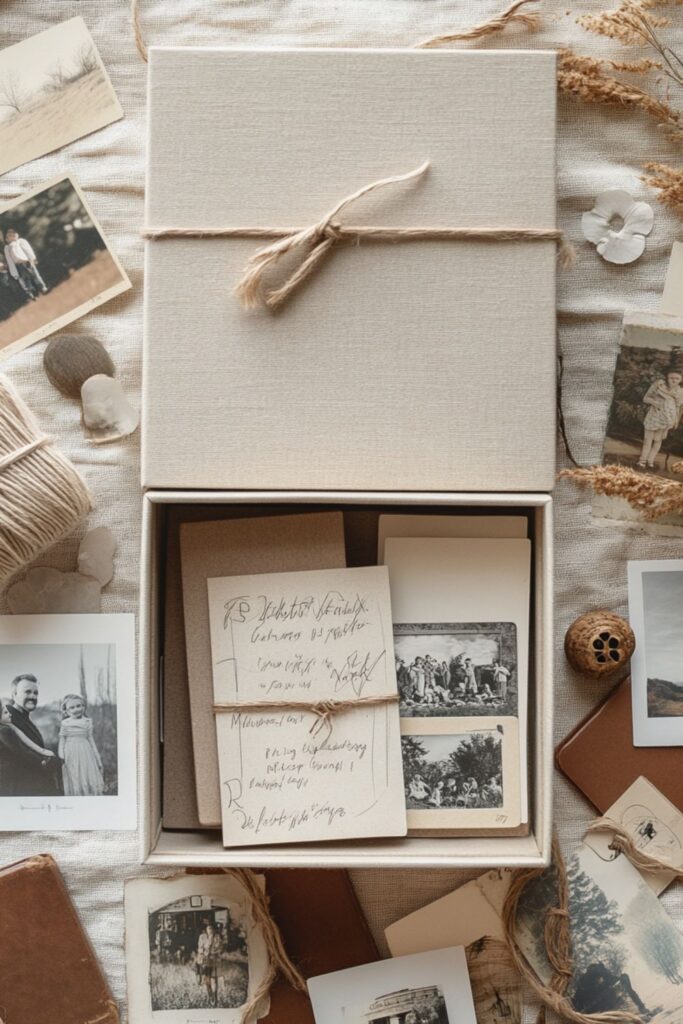
This gives him options. If one question feels too serious, he can answer another.
Make the response format easy: Do not make the process feel like homework. Add blank cards, a small notebook, or folded prompt slips. Keep the writing space small enough that he does not feel pressured to write a full essay.
You can label a section:
- Dad’s Stories
- Your Turn
- Stories We Still Need From You
- Memories To Add Later
- The Next Chapter
Add a pen if you want to make it extra easy. You can also include a note saying he does not have to answer everything at once. The box can grow over time, one story at a time.
Invite Family Members to Contribute Without Making It Complicated
A storytelling keepsake box becomes even more meaningful when several family members contribute. But too many open-ended requests can make the project feel overwhelming. The trick is to make participation simple.
Give each person one simple assignment: Instead of asking everyone to “send something for Dad,” give them a clear task. People are much more likely to help when they know exactly what to do.
You can ask each person to contribute one of the following:
- One favorite memory with Dad
- One photo and a short caption
- One thing Dad taught them
- One funny story
- One sentence that starts with “I’ll always remember…”
- One note of appreciation
- One small memento with a label
- One prompt they want Dad to answer
This keeps the project moving and avoids vague responses.
If you want to get more from your life, and are looking for concrete action steps to get you there, check out our Request a Coach page. It’s a “cut the fence-sitting and take action” way to tackle your issues and actually find success. To get off the fence and start to take action, click or tap here.
Set a clear format for contributions: Give family members a simple structure so the box feels cohesive. You do not need every note to sound the same, but you do want the pieces to feel like they belong together.
You might ask for:
- 3 to 6 sentences
- One specific memory
- Plain language
- No need to be formal
- A photo if they have one
- A short caption if they are sending an image
You can say something like:
“Please send one specific memory of Dad. It can be funny, sweet, practical, or small. Try to include what happened and why you still remember it.”
That gives people enough direction without making it difficult.
Include voices from different generations: If possible, gather memories from children, adult children, grandchildren, a spouse, siblings, close friends, or extended family. Different people will remember different sides of Dad.
One person may remember him teaching a skill. Another may remember his humor. Someone else may remember how he helped during a hard time. Together, those perspectives create a fuller picture.
If young kids are contributing, let them draw a picture or answer a simple question. Their words do not need to be polished. In fact, the imperfect wording is often what makes those contributions so special.
If you want to get more from your life, and are looking for concrete action steps to get you there, check out our Request a Coach page. It’s a “cut the fence-sitting and take action” way to tackle your issues and actually find success. To get off the fence and start to take action, click or tap here.
The goal is not to create a perfect tribute. It is to gather real family voices in one place.
Add a “Memory Map” So the Box Feels Like a Story
Once you have notes, photos, mementos, and prompts, you need a way to make the box feel easy to understand. A simple “memory map” can guide Dad through the gift and make the experience feel more intentional.
Create a simple guide card: Place a card at the top of the box that explains what is inside. This does not need to be long. It just needs to help him understand the heart of the gift.
You could write:
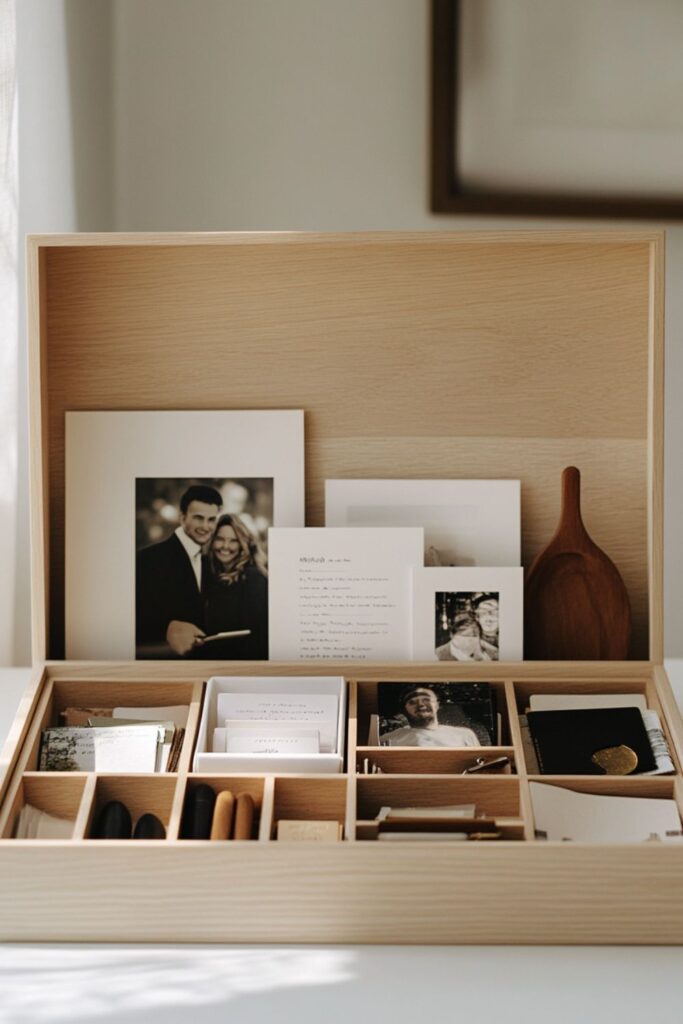
“This box is filled with memories, stories, photos, and little pieces of family life that remind us of you. Some are moments we remember. Some are prompts for stories we hope you’ll add. Open it slowly, come back to it whenever you want, and know that every piece was chosen because it means something.”
This opening card gives the box emotional context. It also helps Dad know he does not have to go through everything at once.
Arrange the contents in a meaningful order: Decide how you want the box to unfold. You can organize it in several ways.
Try arranging by:
If you want to get more from your life, and are looking for concrete action steps to get you there, check out our Request a Coach page. It’s a “cut the fence-sitting and take action” way to tackle your issues and actually find success. To get off the fence and start to take action, click or tap here.
- Timeline, from early memories to recent ones
- Family member, with each person’s contributions grouped together
- Theme, such as lessons, laughter, trips, and traditions
- Item type, with notes, photos, prompts, and mementos in separate sections
- Emotion, such as funny, proud, grateful, nostalgic, and future memories
There is no single right order. Choose the one that makes the contents easiest to enjoy.
Add a few “open when” labels: These make the box feel interactive and personal. They also give Dad a reason to revisit it later.
Ideas include:
- Open when you want to laugh
- Open when you miss old family trips
- Open when you want to remember how loved you are
- Open when you want a story from the kids
- Open when you want to add your own memory
- Open when you need a reminder of what you mean to us
These small labels turn the keepsake box into an experience. Dad can come back to different parts depending on the moment.
How a Coach Could Help Turn Family Memories Into a Legacy Project
A dad storytelling keepsake box can be a simple homemade gift, but it can also become part of a bigger legacy project. This is where a family coach, legacy coach, or organizational coach could be genuinely helpful. They can help turn scattered memories into something structured, meaningful, and easier to complete.
Use coaching-style questions to go deeper: Many families want to preserve stories but do not know what to ask. A coach can help create questions that bring out values, lessons, turning points, and memories instead of generic answers.
A coach might help the family explore questions like:
- What family stories do we keep repeating?
- What has Dad taught us by example?
- What moments shaped the family?
- What stories would we regret not saving?
- What values show up again and again in Dad’s life?
- What do younger family members need to hear from him?
These questions help the project move beyond “nice memories” and into something more lasting.
If you want to get more from your life, and are looking for concrete action steps to get you there, check out our Request a Coach page. It’s a “cut the fence-sitting and take action” way to tackle your issues and actually find success. To get off the fence and start to take action, click or tap here.
Create a simple collection plan: Family memory projects can get messy fast. People forget to send notes. Photos are scattered across phones. Someone has old albums. Someone else has the best stories but never writes them down.
A coach can help organize the process by deciding:
- Who will contribute
- What each person will send
- What the main theme will be
- Which stories should be prioritized
- How the memories will be sorted
- When the box should be finished
- How future memories can be added
This can be especially useful for milestone gifts, retirement gifts, big birthdays, Father’s Day, or family reunion projects.
Turn the box into an ongoing tradition: A coach can also help the family think beyond the first gift. Instead of making the box once and putting it away, the family can add to it every year.
You might add:
- A yearly Father’s Day note
- A new photo from each grandchild
- One family lesson learned that year
- A holiday memory card
- A new prompt for Dad to answer
- A yearly “story we do not want to forget”
This turns the keepsake box into a living family archive. It becomes something Dad can keep, add to, and eventually pass along.
Ways to Personalize the Box for Different Kinds of Dads
Not every dad connects with sentimental gifts in the same way. Some dads love emotional letters. Some prefer humor. Some appreciate practical organization. Some will never say much, but will quietly keep every card forever. Personalizing the box to his style makes the gift feel more natural.
Make it practical for a no-fuss dad: If Dad does not like overly decorative gifts, keep the box clean and simple. Use plain envelopes, clear labels, and short memory cards. Avoid too many ribbons, embellishments, or dramatic wording.
If you want to get more from your life, and are looking for concrete action steps to get you there, check out our Request a Coach page. It’s a “cut the fence-sitting and take action” way to tackle your issues and actually find success. To get off the fence and start to take action, click or tap here.
For a practical dad, include:
- Simple photo captions
- Short notes
- Clearly labeled sections
- A sturdy box
- Easy-to-read cards
- A few meaningful objects
- Blank cards for future additions
This version feels thoughtful without being too ornate. It lets the meaning come from the memories, not the presentation.
Make it emotional for a sentimental dad: If Dad saves old cards, loves family photos, or gets emotional over handwritten notes, lean into that. Add longer letters, childhood pictures, old messages, and prompts about family legacy.
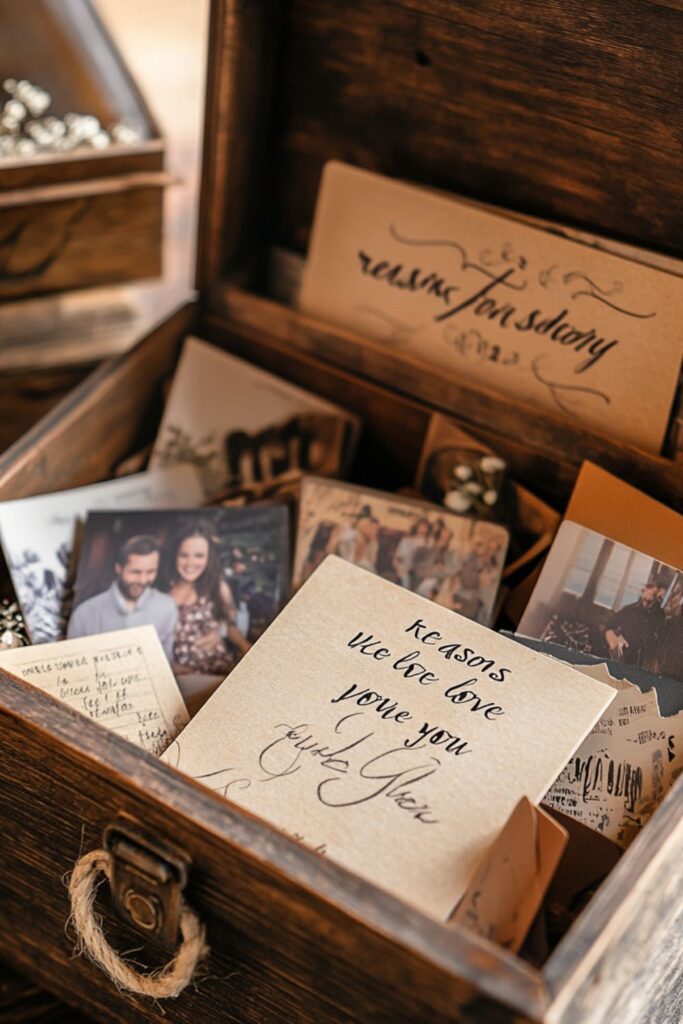
For a sentimental dad, include:
- Handwritten letters
- Favorite old photos
- Notes from children or grandchildren
- “Things you taught us” cards
- A final appreciation letter
- Family tradition prompts
- Meaningful mementos with detailed labels
This version can be more reflective and heartfelt. It gives him something to read slowly and revisit often.
Make it playful for a funny dad: If Dad is known for jokes, stories, teasing, or funny family moments, make the box warm but lighthearted. Emotional does not have to mean serious.
For a playful dad, include:
- Dad joke cards
- Funny photo captions
- Inside joke notes
- “Remember when…” prompts
- Family sayings
- Lighthearted awards
- A section for ridiculous family memories
You could create labels like “Classic Dad Moments” or “Stories You Refuse To Stop Telling.” This keeps the gift aligned with who he really is.
If you want to get more from your life, and are looking for concrete action steps to get you there, check out our Request a Coach page. It’s a “cut the fence-sitting and take action” way to tackle your issues and actually find success. To get off the fence and start to take action, click or tap here.
The best version of the box is the one that feels like Dad. Not a generic keepsake. Not a Pinterest-perfect display. A gift built around his actual personality, memories, and family role.
A Gift He Can Keep Coming Back To
The most meaningful part of a dad storytelling keepsake box is that it does not have to be finished forever. It can begin as a gift and become a family tradition. That is what makes it different from something he opens once and forgets.
End with one anchor note: Place a final card or letter inside the box that explains why you made it. This note should bring the whole gift together.
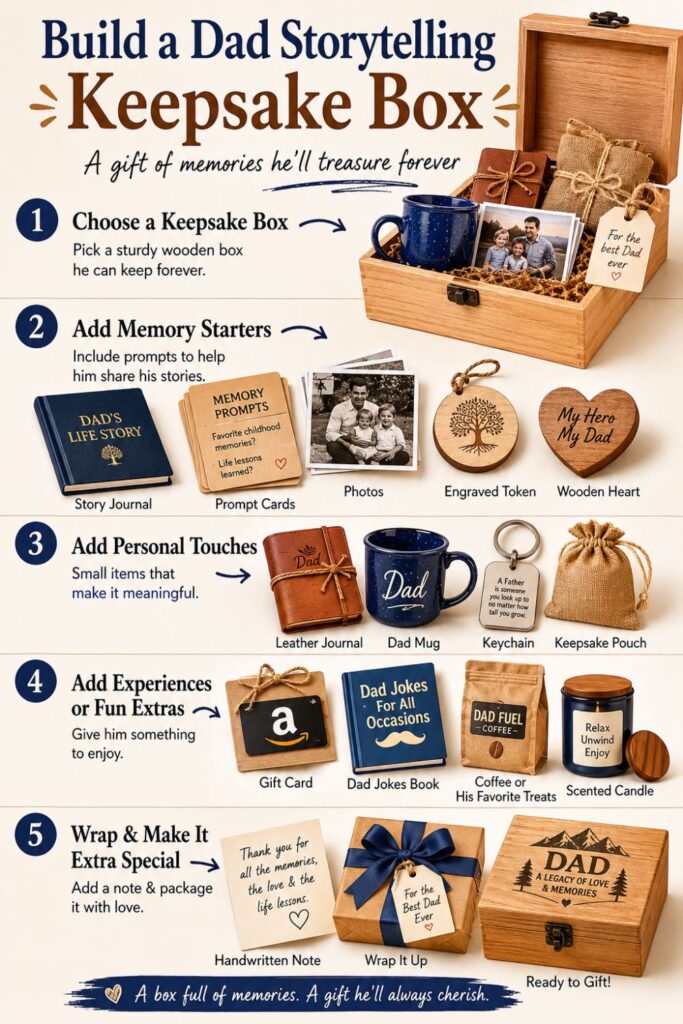
You do not have to make it overly formal. Just say what is true.
You might write:
“We made this box because so many of our favorite memories have you in them. Some are big moments, but a lot of them are small ones that shaped our family in quiet ways. We wanted you to have a place where those stories could live, and where new ones can be added over time.”
That kind of note gives the box meaning beyond the objects inside.
Leave room for future memories: Add a few blank cards or an empty envelope labeled “For the next story.” This small detail changes the feeling of the gift. It tells Dad the story is still going.
If you want to get more from your life, and are looking for concrete action steps to get you there, check out our Request a Coach page. It’s a “cut the fence-sitting and take action” way to tackle your issues and actually find success. To get off the fence and start to take action, click or tap here.
You can include sections like:
- Memories to Add Later
- Next Year’s Notes
- Stories We Still Need
- Future Family Moments
- Dad’s Additions
This makes the box useful beyond the day he receives it.
Make the keepsake feel usable, not untouchable: Some memory gifts feel too precious to handle. This one should feel different. Dad should be able to open it, read through it, add to it, and share pieces with the family.
Encourage him to use it in whatever way feels right. He can read one note at a time. He can pull it out during holidays. He can answer prompts slowly. He can show parts to grandchildren someday.
A storytelling keepsake box is not just about preserving the past. It is about giving Dad a way to see how deeply his everyday presence has mattered.
And for a father who loves family memories, that may be the kind of gift he keeps closer than anything you could buy.
Need some family guidance? Drop on by our directories choc full of family coaches to help make your love life the best it can be. Or click here to have us match you to the best.
If you want to get more from your life, and are looking for concrete action steps to get you there, check out our Request a Coach page. It’s a “cut the fence-sitting and take action” way to tackle your issues and actually find success. To get off the fence and start to take action, click or tap here.
Read this next

Behavioral Issues in Children Under Five: Tackling Meals and Bedtime
If you are having difficulty getting your child to eat a meal or going to bed here some tips that will help.
Read More
Four Tips To Building Self Esteem In Children
Children with healthy self-esteem feel good about themselves, relate well to others, behave more appropriately.
Read More
Father’s Day Gifts from Kids (Toddler to Teen): 12 Easy, Meaningful Ideas
Practical, sentimental, and age-appropriate picks kids can make or buy—organized by child age and effort level. You know that weird gift-giving moment when Dad says he “doesn’t need anything,” but […]
Read More