






Are You Building a Real Business or Just Infatuated With the Idea?

New love affairs are so exciting. Your energy levels peak, you spend most of your time thinking about your new partner and hate being separated from them. It is all roses and sunshine: you don’t see flaws in your partner, and you just know it is going to work. Life is perfect.
Starting a new business is similar. In the beginning you are full of energy and optimism. You spend days and nights thinking about the business, and you spend as much time as possible working on your business. It can’t fail, right?

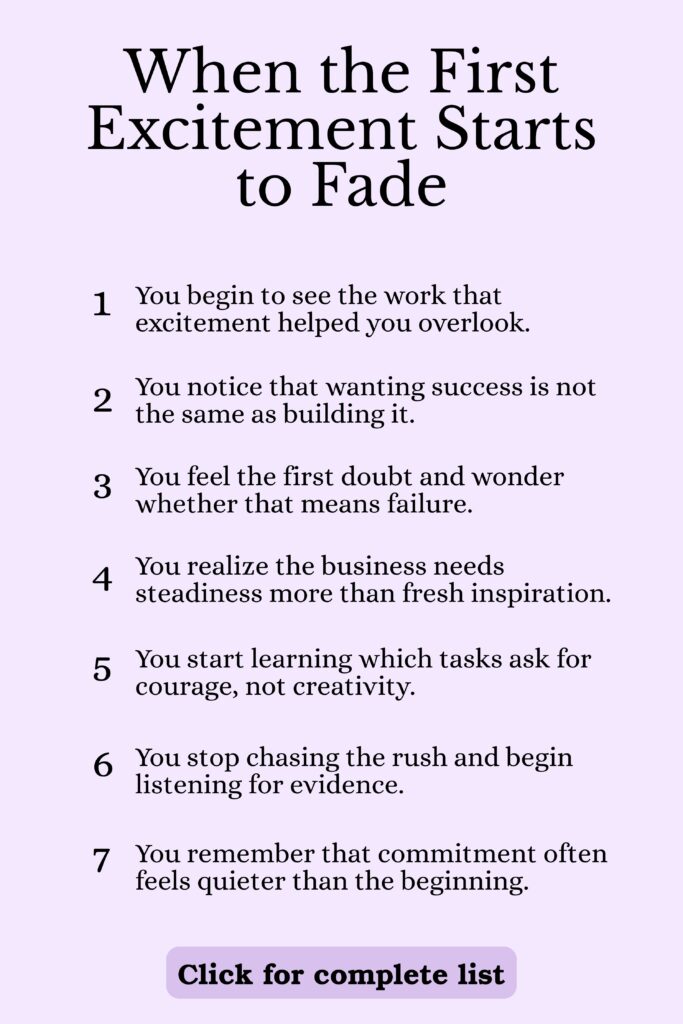
However just like a romance, the rose coloured glasses soon come off. You start to realise that it requires a lot more work than you originally thought, and it isn’t as exciting as it was in the beginning. Instant success isn’t happening and you begin to doubt whether it is really worth your while. You get despondent and start to notice the obstacles originally overlooked. For both a love affair and a new business venture, this is the point at which you either truly commit to making it work or you throw in the towel.
To avoid being another start-up statistic there are a few measures you can take.
Key Takeaways
- Excitement is a starting signal, not proof. Early energy can help you act, but demand, pricing, costs, and customer behavior determine whether the idea can support a real business.
- Passion needs a practical foundation. A strong venture combines genuine commitment with market research, financial preparation, clear boundaries, and a realistic view of the work required.
- Commitment shows up in repeatable actions. Tracking numbers, following up with prospects, improving the offer, and completing revenue-producing tasks matter more than constantly chasing fresh ideas.
- Problems should be diagnosed, not dramatized. A slow month, refund, unclear offer, or delivery issue provides specific evidence about what needs to change. One setback is not a complete verdict.
- Regular reviews protect the business. Monthly check-ins help you separate growing pains from red flags, identify what produces revenue, and make one clear adjustment before small problems become expensive patterns.
Why Is Starting a New Business Like a New Romance?
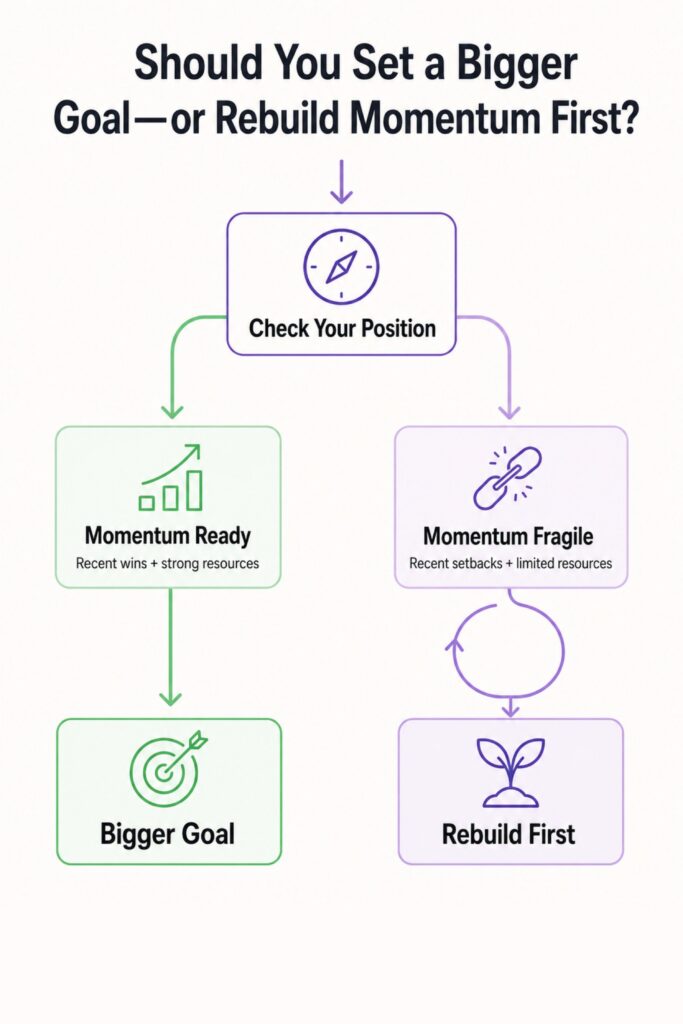
Starting a new business is like a new romance because both often begin with intense excitement, optimism, and selective attention. In the early stage, you see the potential more clearly than the limitations, which can make you underestimate the money, time, market demand, boundaries, and repeatable work involved.
The comparison becomes most useful after the honeymoon phase. A viable business is sustained by evidence, realistic expectations, consistent action, honest check-ins, and a willingness to address problems before they become patterns. The U.S. Small Business Administration recommends examining demand, market size, competition, pricing, startup costs, and the competitive landscape before making major commitments.
Are You Passionate and Realistic About the Business?

Before throwing in your day job to start up your own business, ensure that you are passionate about the service or product you want to offer. If making money is the only reason for starting your own business then it will be extremely hard to keep going when times get tough. Passion about what you do will help motivate you during the rough patches.
Of course you need to be realistic as well. Weigh up the pros and cons of starting the business venture, assess the alternatives and ensure that the project is really viable. Do a health check on your finances. Do you have sufficient funds to keep you going for a while? After all, success is rarely achieved overnight and being constantly worried about your income will increase your stress levels tenfold. The chances are you will lose sight of why you started your business and it will actually become a burden and not the pleasant experience you originally set out to have.
If you want to get more from your life, and are looking for concrete action steps to get you there, check out our Request a Coach page. It’s a “cut the fence-sitting and take action” way to tackle your issues and actually find success. To get off the fence and start to take action, click or tap here.
What Achievable Business Goals Should You Set?

Jumping into a business without proper planning is risky. The U.S. Small Business Administration describes a business plan as a roadmap for structuring, running, and growing a business. Make sure that you have a detailed business plan in place covering all your bases from finance to marketing, to target demographics. Create a mission statement that clearly states your objectives.
Break your overall business objective into achievable, measureable goals and set milestone dates for achieving these goals. These should contain the detailed tasks that you need to complete in order to turn your business into a success. Make sure that you analyse your goals in detail, for instance how are you going to achieve them, what resources do you require, what obstacles could prevent you from achieving them and how can you overcome these obstacles?
How Should You Reward Business Progress?
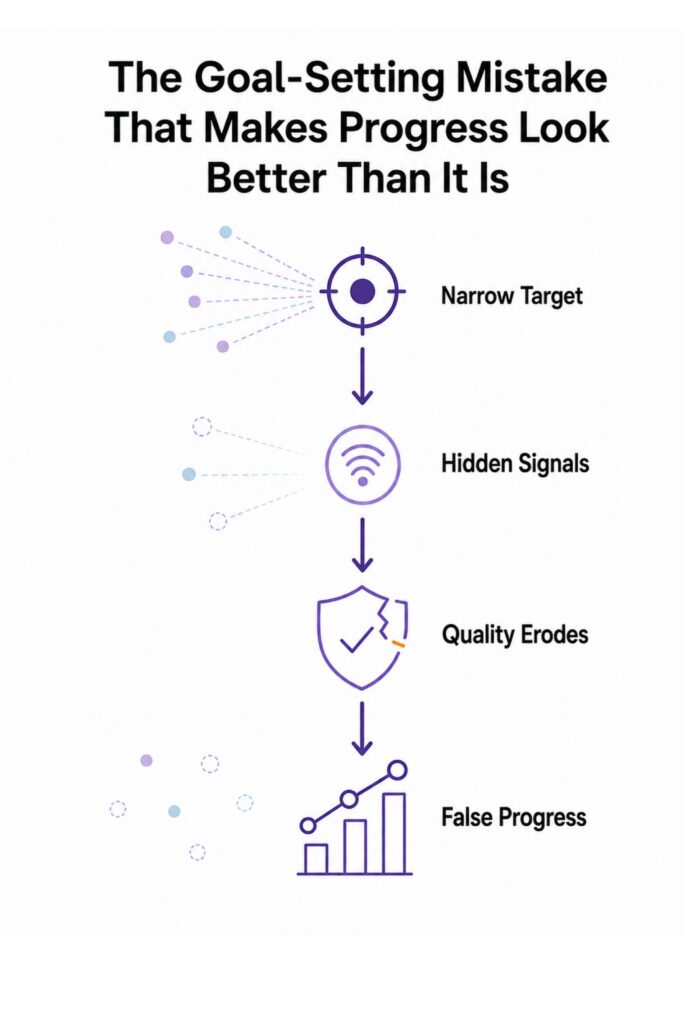
It is important to celebrate every success you achieve, even your minor goals. This does mean throwing a party every time you hit a milestone. Just take time to pat yourself on the back for a job well done, buy yourself a chocolate bar as reward or take your family out for dinner. To take time out to reward yourself gives you a chance to review what you have achieved and keeps you in a positive frame of mind. It provides an incentive to carry on, even if you aren’t pulling in the big bucks yet.
Who Should Support You as You Build the Business?
Going it alone can be daunting; there are going to be times when you feel it is just too hard and you will want to quit. Having supportive people around you, whether they are family, friends or a business coach, will help motivate you and give you the encouragement to carry on. They can also help you navigate obstacles, give you impartial advice, and support when you are in a negative space. Support makes you realise that you aren’t alone and that others genuinely want you to be a success. It can propel you forwards.
How Should You Respond to Business Obstacles?

Everyone who has ever tried something new has faced obstacles and challenges. Don’t view them as negatives. Obstacles and challenges are vital to your learning experience, they help to get you on the right path, and they make you think outside the box. View every negative experience as an opportunity to grow, an opportunity to explore avenues you previously would not have considered. Remember that it is just a bump in the road and that if you are really committed to achieving success you will find a way to overcome it.
Just like a budding new romance, a business venture will have its ups and downs. There will be times when you feel so positive and enthusiastic about your future, and there will be times when it feels like it is just too much hard work. If you really want to make it a success you have to be truly committed to the idea, to bringing it to fruition. You will need to persevere and always remember why you started the business in the first place. You need to keep your passion for your business alive.
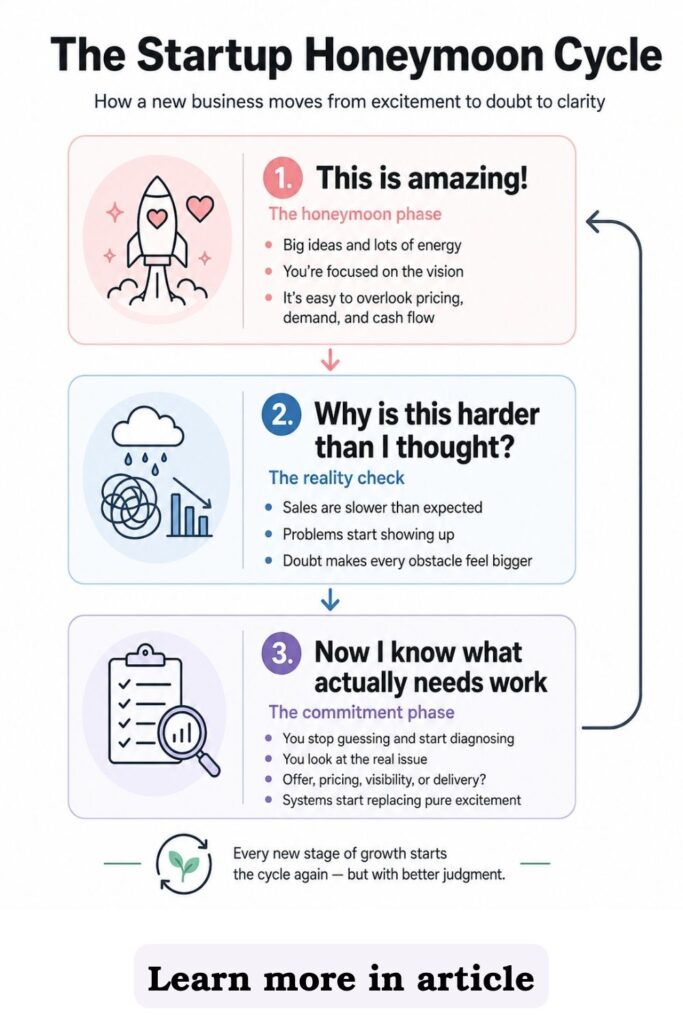
What Does the Business Honeymoon Phase Make You Overlook?
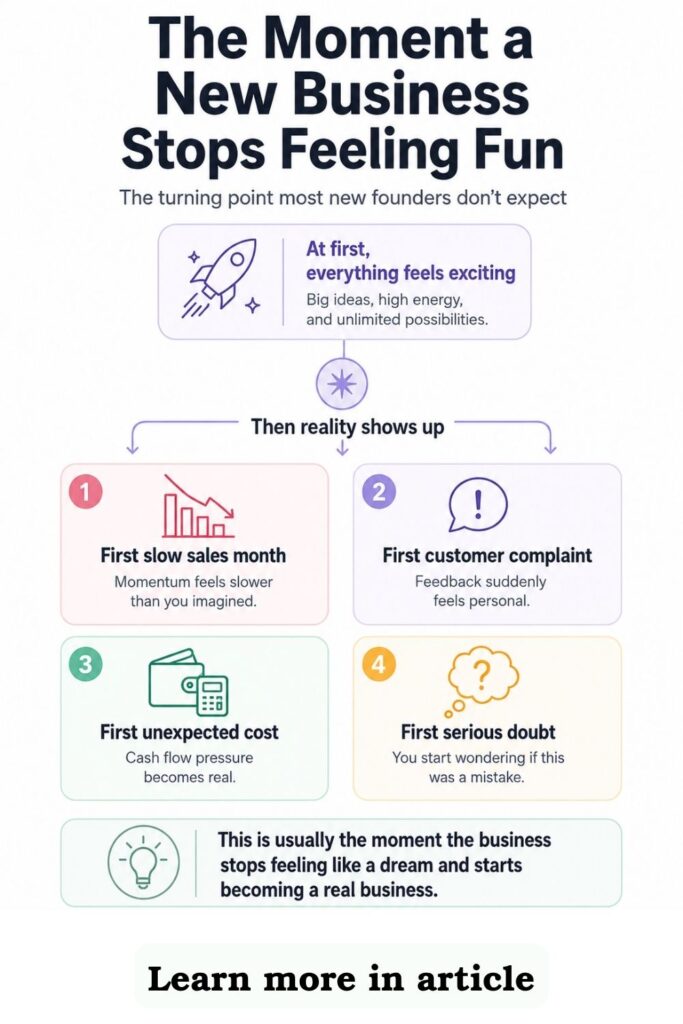
In the beginning, the business can feel like the best idea you have ever had.
You picture the happy customers, the flexible schedule, the extra income, the beautiful website, the freedom of finally doing something that belongs to you. That rush is useful. It gets you moving.
If you want to get more from your life, and are looking for concrete action steps to get you there, check out our Request a Coach page. It’s a “cut the fence-sitting and take action” way to tackle your issues and actually find success. To get off the fence and start to take action, click or tap here.
But just like a new romance, excitement can make you skip over details that deserve a closer look.
You might ignore questions like:
- Will strangers actually pay for this?
- Can I explain the offer clearly in one sentence?
- Do I know where my first customers will come from?
- Can I afford three slow months?
- Am I solving a real problem or just creating something I personally like?
The U.S. Small Business Administration recommends researching demand, market size, market saturation, pricing, and competitors before committing heavily to a business idea.
A classic example is the person who starts a handmade candle business because friends keep saying, “You should sell these.” That is lovely encouragement, but it is not the same as market demand.
A better test is simple and concrete. Put together one small offer, show it to people who are not close friends, and see whether they ask buying questions. Not compliments. Buying questions.
Questions like:
- “How much is it?”
- “Can I order one for next week?”
- “Do you make these in larger sizes?”
- “Can I send this as a gift?”
That is the business version of seeing how someone behaves after the first few dates. Less fantasy. More evidence.
A business coach can be useful at this stage because they can help you separate enthusiasm from proof. Not to kill the idea, but to test it before you pour too much money, time, and emotion into it.
If you want to get more from your life, and are looking for concrete action steps to get you there, check out our Request a Coach page. It’s a “cut the fence-sitting and take action” way to tackle your issues and actually find success. To get off the fence and start to take action, click or tap here.
What Happens When Reality Starts Testing the Business?
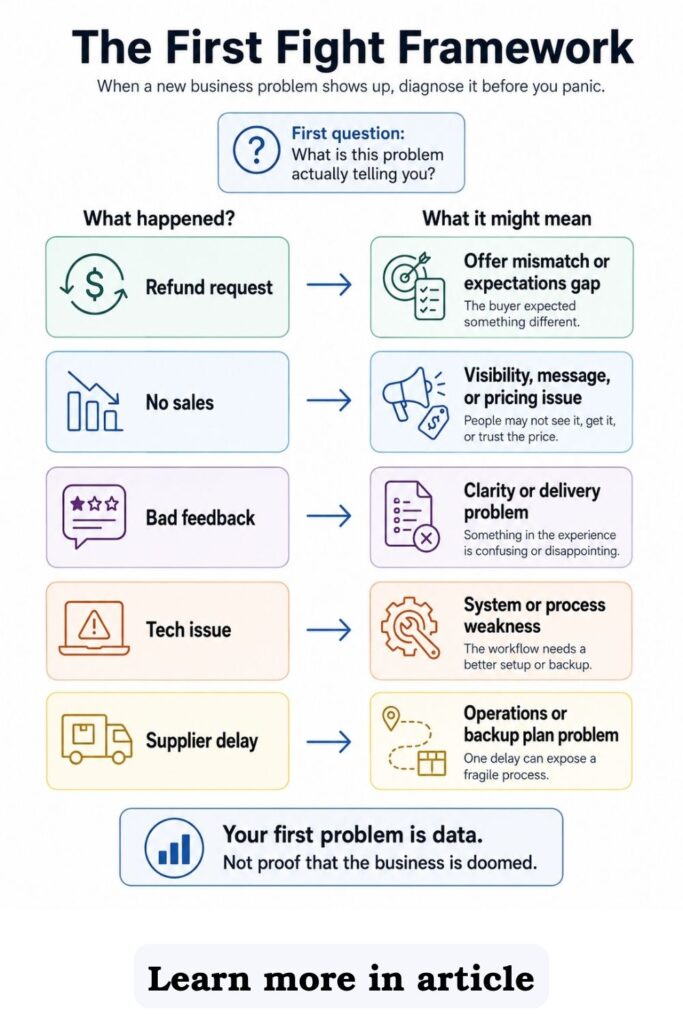
Every new business has a first fight.
It might be your first bad review, your first refund request, your first month with barely any sales, or the first time a supplier lets you down right before an order is due.

This is where many people panic.
They take one hard moment and turn it into a full verdict:
- “This will never work.”
- “I’m not cut out for this.”
- “Nobody wants what I’m selling.”
- “I should just quit.”
But a rough patch is not always a sign that the whole venture is wrong. Sometimes it is just information.
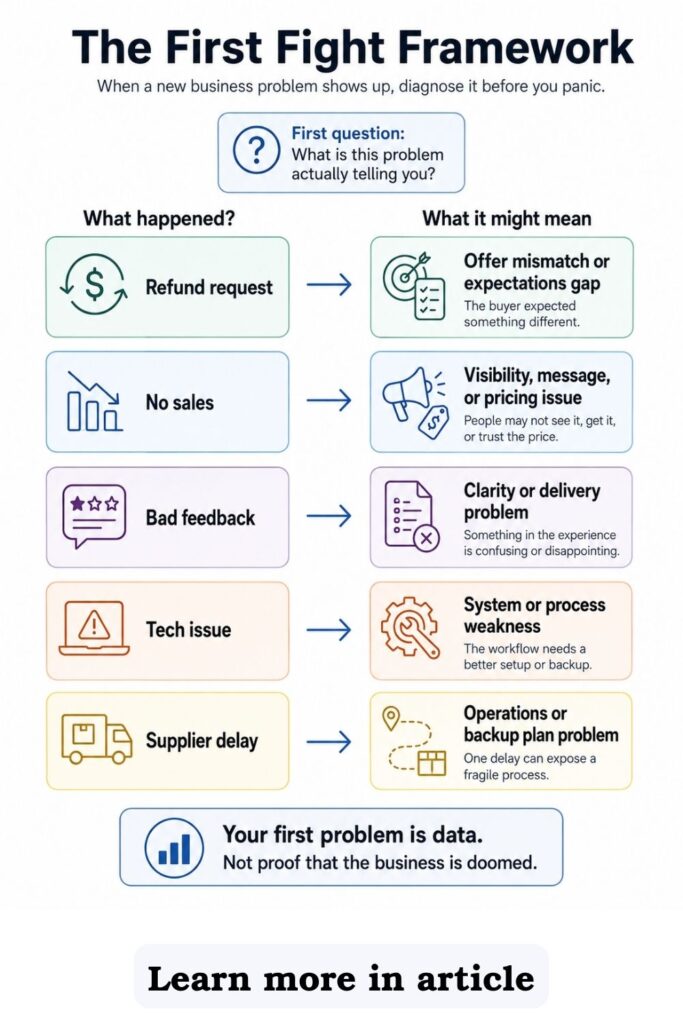
If a customer complains that delivery took too long, you may have a fulfillment problem. If people click on your product but do not buy, you may have a pricing, trust, or offer problem. If nobody clicks at all, you may have a visibility or messaging problem.
Those are very different issues.
Treat the first serious problem like a diagnostic moment. Ask:
If you want to get more from your life, and are looking for concrete action steps to get you there, check out our Request a Coach page. It’s a “cut the fence-sitting and take action” way to tackle your issues and actually find success. To get off the fence and start to take action, click or tap here.
- What exactly happened?
- Where did the process break down?
- Was this a one-off problem or a repeated pattern?
- What would prevent the same issue next time?
If three people ask whether you offer payment plans, that is not random. If customers keep asking what is included, your offer may not be clear enough. If you sell well but feel constantly exhausted, your delivery process may be too hands-on for the price.

A business coach or leadership coach can help here by looking at the pattern with you. They might help you role-play a difficult customer conversation, rewrite an unclear offer, or create a simple review process so every problem becomes usable data.
Are You Committed to the Business or Infatuated With the Idea?
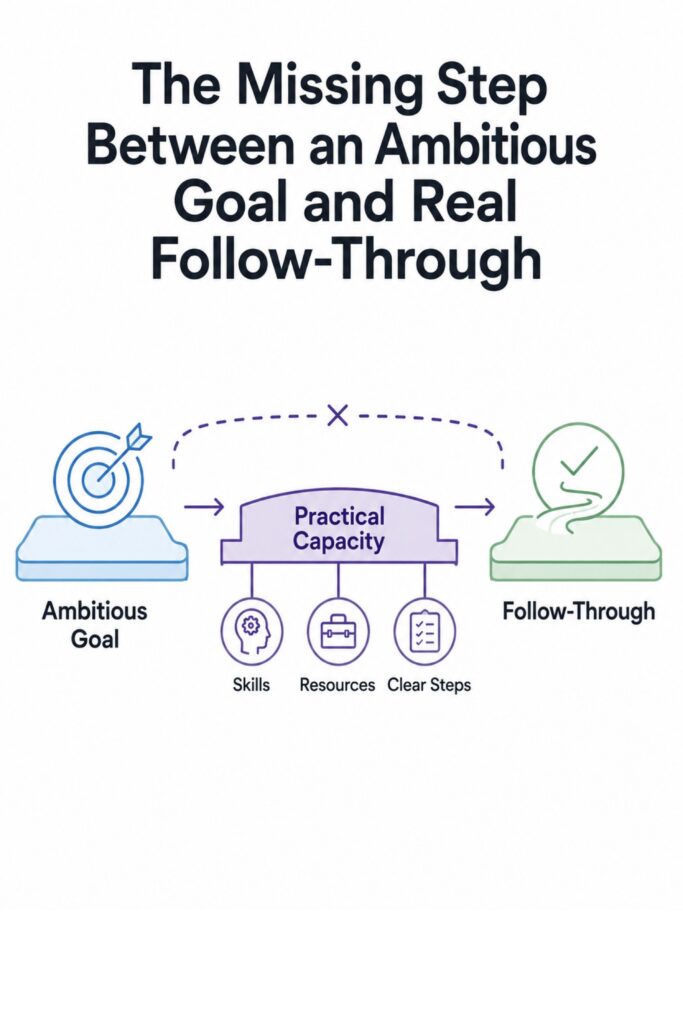
Passion feels exciting.
Commitment often looks boring.
It looks like sending follow-up emails when you would rather redesign your logo. It looks like checking your numbers when you would rather brainstorm new ideas. It looks like showing up for the less glamorous parts of the business because they are what keep it alive.
Infatuation says, “I love this idea.”
Commitment says, “I am willing to do the repeatable work this idea requires.”
That might mean:
If you want to get more from your life, and are looking for concrete action steps to get you there, check out our Request a Coach page. It’s a “cut the fence-sitting and take action” way to tackle your issues and actually find success. To get off the fence and start to take action, click or tap here.
- Tracking income and expenses every Friday
- Following up with warm leads every Monday
- Posting or pitching consistently, even when engagement is quiet
- Asking customers why they did or did not buy
- Improving the offer instead of constantly starting over
For example, say someone wants to become a freelance designer. They love choosing fonts, building a portfolio, and imagining dream clients. But they avoid sending proposals, asking for testimonials, or discussing budgets.
That is not a creativity problem. It is a business behavior problem.
The business cannot grow on excitement alone. It needs a system for the parts you resist.
This is where accountability can make a real difference. A business coach might help you choose three weekly actions that actually move revenue forward, then review whether you did them. Not in a vague motivational way. In a clear “what happened, what got in the way, what changes next week” way.
What Should You Decide Before the Business Gets Messy?
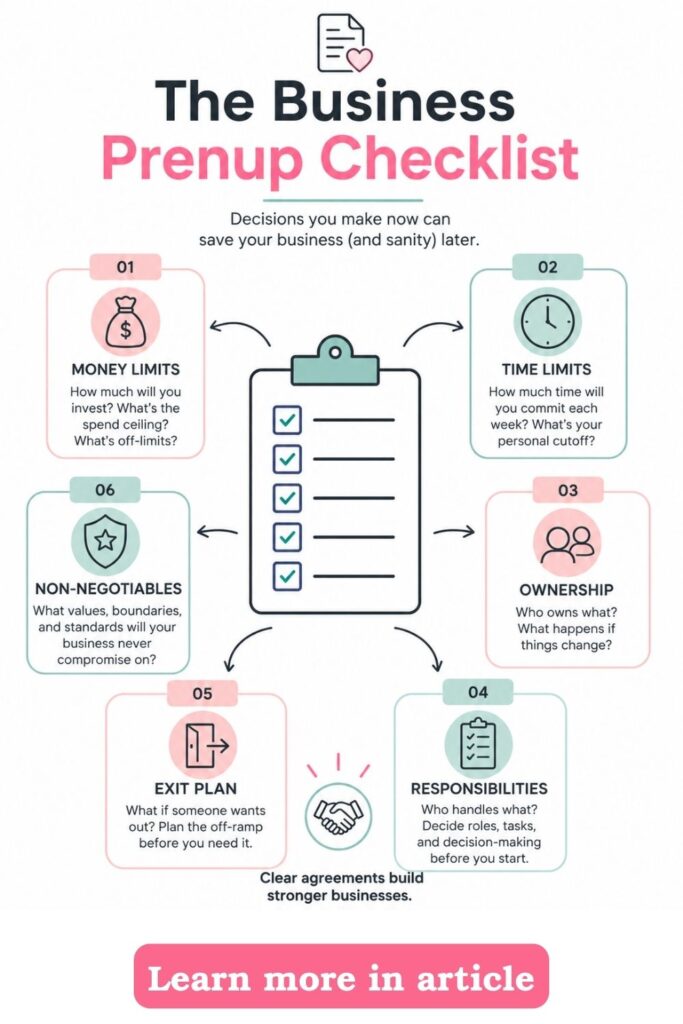
A new romance feels strange when you start talking about money, boundaries, and what happens if things go wrong.
A new business is the same.
You may not want to think about failure, conflict, or limits when everything still feels full of possibility. But those decisions are much easier to make before pressure hits.
Your business prenup does not have to be complicated. It just needs to answer the questions people often avoid.
If you want to get more from your life, and are looking for concrete action steps to get you there, check out our Request a Coach page. It’s a “cut the fence-sitting and take action” way to tackle your issues and actually find success. To get off the fence and start to take action, click or tap here.
For a solo business, that might include:
- How much money am I willing to invest before I pause and reassess?
- How many months can I cover my personal expenses?
- What tasks will I not do for clients, even if they ask?
- What hours am I willing to work?
- What signs would tell me this offer needs to change?
For a partnership, it needs to go further:
- Who owns what percentage?
- Who makes final decisions?
- How are profits split?
- Who handles refunds, complaints, and admin?
- What happens if one person wants out?
- Who owns the website, customer list, files, and social accounts?
Two friends can start a business with the best intentions and still end up resentful because one person is answering customers at 10 p.m. while the other is “handling ideas.” That imbalance will not fix itself through goodwill.
Get the awkward details out of your head and onto paper.
A business coach, leadership coach, or even a small business attorney can help you spot the gaps before they become expensive. Especially if money, ownership, or client responsibility is involved.
What Actually Keeps a New Business Alive?
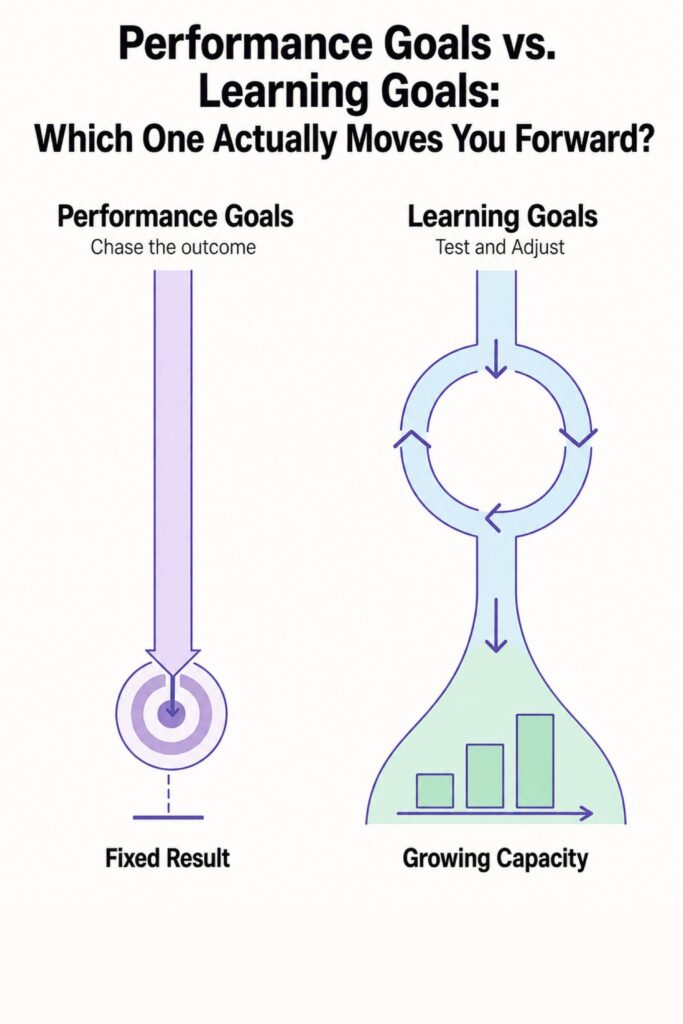
In a relationship, love is not just what you feel. It is what you repeatedly do.
The same is true for a business.
You can love your business and still neglect the parts that keep it healthy. You can care deeply about your work and still avoid the uncomfortable tasks that make it sustainable.
If you want to get more from your life, and are looking for concrete action steps to get you there, check out our Request a Coach page. It’s a “cut the fence-sitting and take action” way to tackle your issues and actually find success. To get off the fence and start to take action, click or tap here.
A business has its own practical “love languages.”
They might look like:
- Sales activity: reaching out, following up, pitching, making offers
- Customer care: replying promptly, fixing mistakes, asking for feedback
- Cash-flow tracking: knowing what came in, what went out, and what is due next
- Offer refinement: improving what you sell based on real customer behavior
- Marketing consistency: showing up where your customers actually are
- Rest and boundaries: building a pace you can maintain
The tricky part is that many founders spend time on the business activities that feel emotionally rewarding, not the ones that produce results.
You might spend three hours changing your brand colors because it feels productive. Meanwhile, the sales page still does not explain who the offer is for, what problem it solves, or how to buy it.
You might plan a new product because the current one is not selling. But if the real issue is that nobody is seeing the current offer, a new product will not fix that.
A simple check helps:
Is this task making the business clearer, easier to buy from, easier to deliver, or easier to sustain?
If not, it may be a distraction dressed up as care.
If you want to get more from your life, and are looking for concrete action steps to get you there, check out our Request a Coach page. It’s a “cut the fence-sitting and take action” way to tackle your issues and actually find success. To get off the fence and start to take action, click or tap here.
A business coach can help you notice where your energy is going. Sometimes the work is not doing more. It is choosing the right kind of attention.
How Can You Tell Business Red Flags From Growing Pains?
Not every struggle means the business is failing.
And not every struggle means you should keep pushing.
Some problems are growing pains. Others are red flags. The skill is learning to tell the difference before you either quit too early or stay too long with something that is not working.
A growing pain usually has a fixable cause.
For example:
- People ask questions but do not buy: your offer may need clearer pricing, proof, or explanation.
- Customers buy once but do not return: the product may need better follow-up, packaging, onboarding, or results.
- You are getting sales but feel exhausted: your process may need boundaries, automation, or a higher price.
- Your launch was quiet: your audience may be too small, or the message may not have reached enough people.
A red flag is different.
A red flag often shows up as repeated evidence that the foundation is weak.
If you want to get more from your life, and are looking for concrete action steps to get you there, check out our Request a Coach page. It’s a “cut the fence-sitting and take action” way to tackle your issues and actually find success. To get off the fence and start to take action, click or tap here.
For example:
- People understand the offer but still do not want it
- You keep discounting just to get any sales
- The cost to deliver is higher than the money coming in
- Customers are confused even after you explain it several ways
- You dread doing the actual work, not just the admin around it
Say you offer social media packages for small local businesses. If five owners say, “I need this, but I cannot afford that price,” you may need a smaller entry offer or a different market. That is a growing pain.
But if they say, “We do not care about social media and get all our customers through referrals,” you may be selling to the wrong buyer. That is a more serious signal.
The goal is not blind persistence. It is informed persistence.
A business coach can help you sort through the evidence without making decisions from panic or pride. They can help you look at customer behavior, numbers, and your own capacity, then decide whether to adjust, pause, or pivot.
How Should You Run a Monthly Business Check-In?
A business needs regular check-ins, just like a relationship does.
Not a dramatic crisis meeting. A steady review before small issues become big ones.
Once a month, sit down with your numbers, your calendar, and your customer feedback. Give yourself 45 minutes. No guessing. No vague “it felt busy” conclusions.
If you want to get more from your life, and are looking for concrete action steps to get you there, check out our Request a Coach page. It’s a “cut the fence-sitting and take action” way to tackle your issues and actually find success. To get off the fence and start to take action, click or tap here.
Ask yourself:
- What brought in money this month?
- What took a lot of time but produced very little?
- Which offer got the most interest?
- Where did people hesitate before buying?
- What did customers ask for repeatedly?
- Which task did I keep avoiding?
- What needs to change next month?
The answers may surprise you.
You may realize that one small offer is outperforming the big one you keep promoting. Or that most of your inquiries come from referrals, not Instagram. Or that your most profitable work is also the work you keep putting off because it feels more intimidating.
That is useful.
Turn the review into one decision for the next month. Not ten. One.

For example:
- Raise the price on the service that keeps overfilling your calendar
- Rewrite the offer page because buyers keep asking the same questions
- Stop promoting the product nobody clicks on
- Follow up with every warm lead within 48 hours
- Block one admin day so client work stops taking over every evening
A coach can help make this review more honest. Especially if you tend to avoid numbers, overcommit, or keep changing direction before anything has enough time to work.
The point is not to judge the business every month. It is to stay in conversation with it.
If you want to get more from your life, and are looking for concrete action steps to get you there, check out our Request a Coach page. It’s a “cut the fence-sitting and take action” way to tackle your issues and actually find success. To get off the fence and start to take action, click or tap here.
Frequently Asked Questions

Why is starting a business like starting a relationship?
Starting a business is like starting a relationship because early excitement can make potential feel more visible than risk. Long-term success requires realistic expectations, communication, commitment, boundaries, and consistent work after the initial enthusiasm fades.
How can I tell whether a business idea is viable?
A business idea is more likely to be viable when target customers understand the offer, show a willingness to pay, and can be reached at a sustainable cost. Test the smallest practical version before investing heavily in branding, inventory, equipment, or technology.
What should I decide before launching a new business?
Decide how much money, time, and energy you are willing to invest before reassessing the idea. You should also define your target customer, offer, pricing, operating boundaries, financial runway, and signs that would trigger an adjustment or pivot.
How can I tell a growing pain from a business red flag?
A growing pain usually has an identifiable and fixable cause, while a red flag points to repeated weakness in the business foundation. Look for patterns in customer demand, profitability, delivery costs, workload, and buying behavior rather than reacting to one difficult incident.
When should I pivot a new business?
You should consider a pivot when repeated evidence shows that the current offer, audience, pricing, or delivery model is not working. A pivot changes a specific part of the business based on evidence rather than abandoning the entire venture after one setback.
How often should I review my business performance?
Review your business performance at least once a month. Examine revenue, expenses, customer questions, lead sources, conversion points, workload, and the activities that produced the strongest results.
Can a business coach help with a new venture?
A business coach can help you test assumptions, identify patterns, set measurable priorities, and follow through on revenue-producing work. Coaching can also provide an outside perspective when enthusiasm, fear, pride, or frustration is affecting your decisions.
That is how you keep the passion alive without pretending passion is enough.
If you want to get more from your life, and are looking for concrete action steps to get you there, check out our Request a Coach page. It’s a “cut the fence-sitting and take action” way to tackle your issues and actually find success. To get off the fence and start to take action, click or tap here.
Sources
U.S. Small Business Administration. “Market Research and Competitive Analysis.” U.S. Small Business Administration, https://www.sba.gov/business-guide/plan-your-business/market-research-competitive-analysis. Accessed 21 July 2026.
U.S. Small Business Administration. “Write Your Business Plan.” U.S. Small Business Administration, https://www.sba.gov/business-guide/plan-your-business/write-your-business-plan. Accessed 21 July 2026.
If you want to get more from your life, and are looking for concrete action steps to get you there, check out our Request a Coach page. It’s a “cut the fence-sitting and take action” way to tackle your issues and actually find success. To get off the fence and start to take action, click or tap here.
Read this next

Business Coaching VS Training in the Workplace (What’s the ROI?)
Find out why business management coaching is not “instead of” but “as well as” training for your managers.
Read More
I Think Most Business Coaches Are Full of Hot Air!
Are business coaches overrated?
Read More
What Do You Do When You Fall Out Of Love With Your Business
8 Ways To Fall Back In Love With Your Business
Read More