


Talk to a coach about Organizational coaching

Crystal Faulk
ACC
I help overwhelmed women in transition gain clarity, confidence, and...

Terrie Hein
Certified Life Coach, Certified Insight Coach Practitioner
Coaching to declutter your life, organize your goals, and cook...

Dr Charlene Ashley
Doctorate - Behaviours
I coach individuals to design fulfilling lives through structure, clarity,...

Paloma Chiara

Lana's Gymnastics Club
"Where the best in gymnastics meets fun. Where every child is a star"
lgclubny.com

Anna Sosnina
ICF (ACC)
ICF ACC certified coach, founder of EssorVie Coaching, passionate about...

Travis Brown
Professional Life coach
With experience in guiding clients to achieve goals, build confidence,...

Lynn Yang
Certified Christian Leadership Coaching (CCLC)
I will help you gain new insights, habits, and plans...
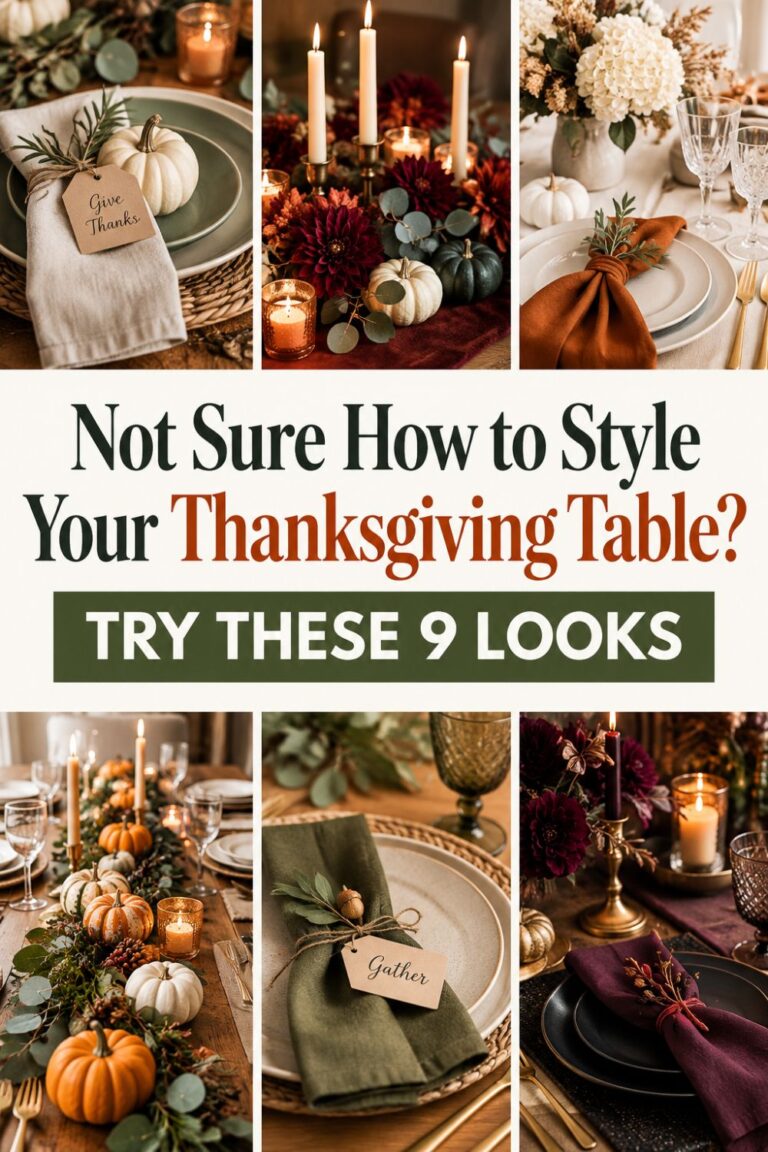



How to Style a Relaxed Table for a Crowd
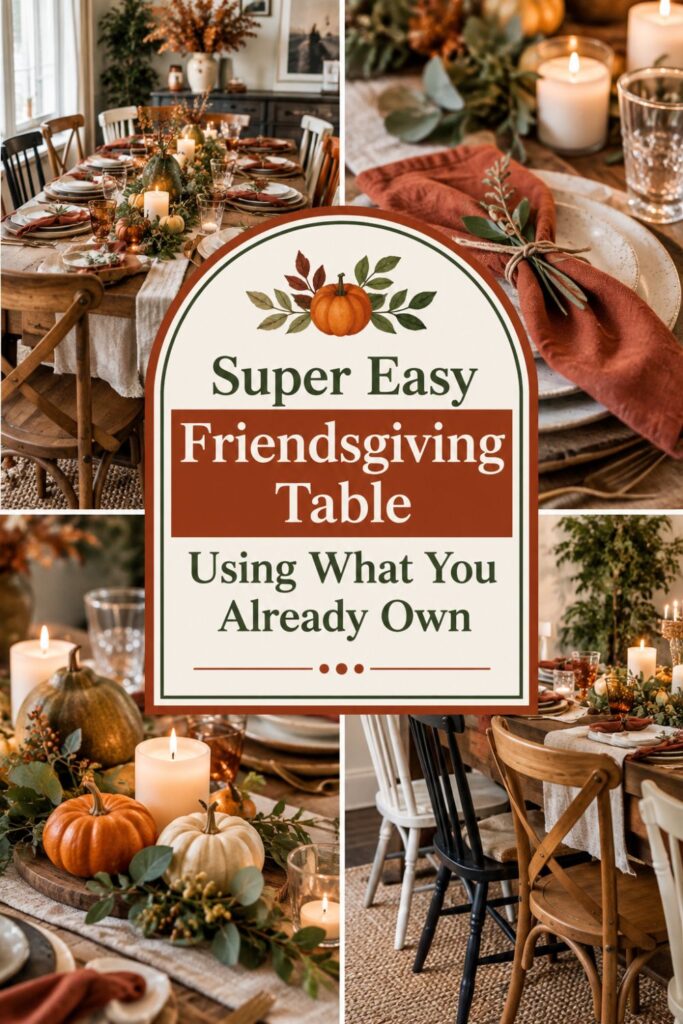
Friendsgiving is one of those gatherings that rarely looks perfectly planned, and that is part of the charm. Someone brings the mashed potatoes, someone else brings dessert, and at least one guest walks through the door carrying a folding chair because you ran out of matching seats three people ago.
That does not mean your table has to look thrown together.
A relaxed Friendsgiving tablescape can feel warm, pulled together, and intentionally styled even when the chairs do not match and half the serving pieces came from different kitchens. The trick is to stop trying to create a formal Thanksgiving table and instead focus on a few visual elements that make everything feel connected.
Start with the table itself. A simple runner, an earthy fall color palette, a low centerpiece, and repeated details at each place setting can do far more than matching furniture ever could.
You also want the table to work for real people. Guests need room for plates, drinks, elbows, serving dishes, and conversations. If someone shows up unexpectedly, you should be able to squeeze in another chair without taking the whole tablescape apart.
That means your priorities are simple:
- Create enough comfortable seating for the crowd.
- Use a limited color palette to make everything feel connected.
- Keep the centerpiece low and easy to move.
- Choose place settings that are simple rather than formal.
- Repurpose what you already own before buying more decor.
- Leave enough flexibility for extra food and extra guests.
Think of the table as the anchor for the whole room. If the center of the table looks cohesive, mismatched chairs start to look collected rather than accidental.
Friendsgiving is supposed to feel welcoming. Your table should help create that feeling, not give you another complicated holiday project to finish before everyone arrives.
If you want to get more from your life, and are looking for concrete action steps to get you there, check out our Request a Coach page. It’s a “cut the fence-sitting and take action” way to tackle your issues and actually find success. To get off the fence and start to take action, click or tap here.
Need some help with style or organization? Drop on by our directories choc full of image coaches, organization coaches and minimalist coaches to help make your spaces beautiful. Or click here to have us match you to the best.
1. Plan the Table for People Before You Decorate It
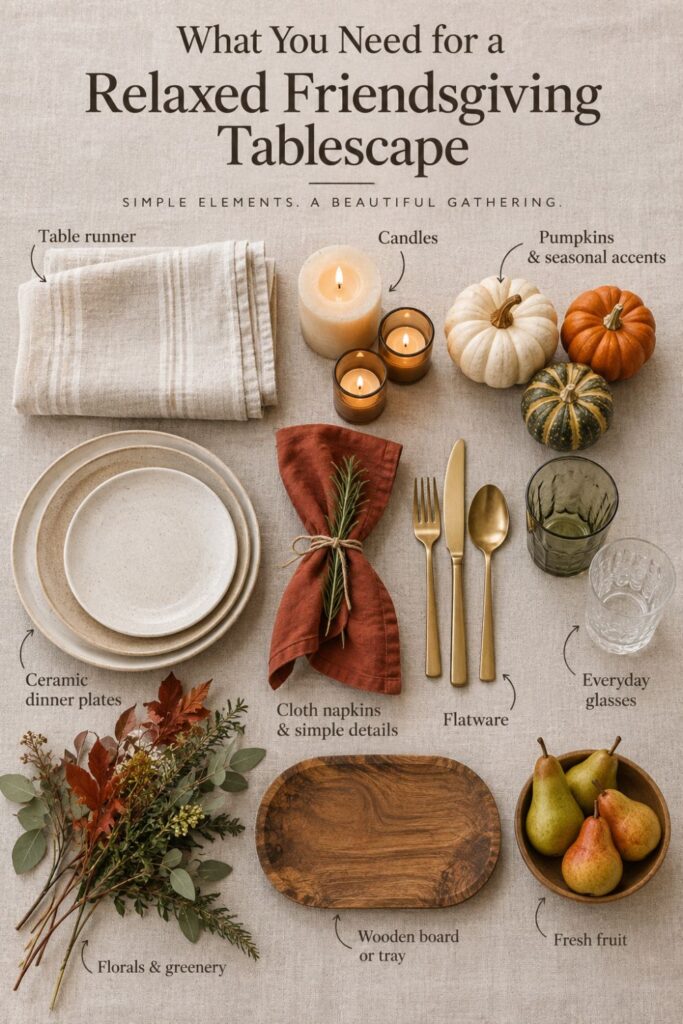
The easiest way to make a Friendsgiving table uncomfortable is to start decorating before you know where everyone is going to sit. A centerpiece may look beautiful on an empty table, but it becomes much less useful once ten people need somewhere to put their plates.
Start with the chairs.
Bring every chair you expect to use into the dining area before you add runners, candles, pumpkins, or place settings. Include dining chairs, folding chairs, stools, desk chairs, and any extras your guests are bringing.
Arrange the actual seating first: Put every expected chair around the table and check whether guests can sit down without bumping into another chair or blocking a walkway.
Then sit in several of the seats yourself. This is the fastest way to spot awkward spacing that looks fine from across the room.
Pay attention to:
- Wide chair legs that take up more space than expected
- Armchairs that need extra room
- Folding chairs that sit lower or higher than dining chairs
- Corners where two guests may compete for elbow space
- Walkways between the table and nearby furniture
Leave one flexible seating area: Keep one end or corner of the table slightly less crowded so you have somewhere to add another chair if an extra guest appears.
If you want to get more from your life, and are looking for concrete action steps to get you there, check out our Request a Coach page. It’s a “cut the fence-sitting and take action” way to tackle your issues and actually find success. To get off the fence and start to take action, click or tap here.
Once the seating works, decide what actually needs to remain on the dining table.
Large casseroles, pitchers, drink dispensers, dessert trays, and backup plates can quickly overwhelm the surface. Move as many of those items as possible to a kitchen counter, console, side table, or buffet area.
Protect the eating space: Give each guest enough clear tabletop for a plate, glass, utensils, and comfortable movement before you start filling the middle with decorations.
This is especially important at Friendsgiving because the menu often grows throughout the evening. Guests arrive carrying dishes you were not expecting, and those dishes need somewhere to go.
Planning for people first makes every decorating decision easier afterward. Instead of trying to squeeze guests around the decor, you build the decor around the people.
2. Use One Earthy Fall Palette to Pull Mismatched Chairs Together
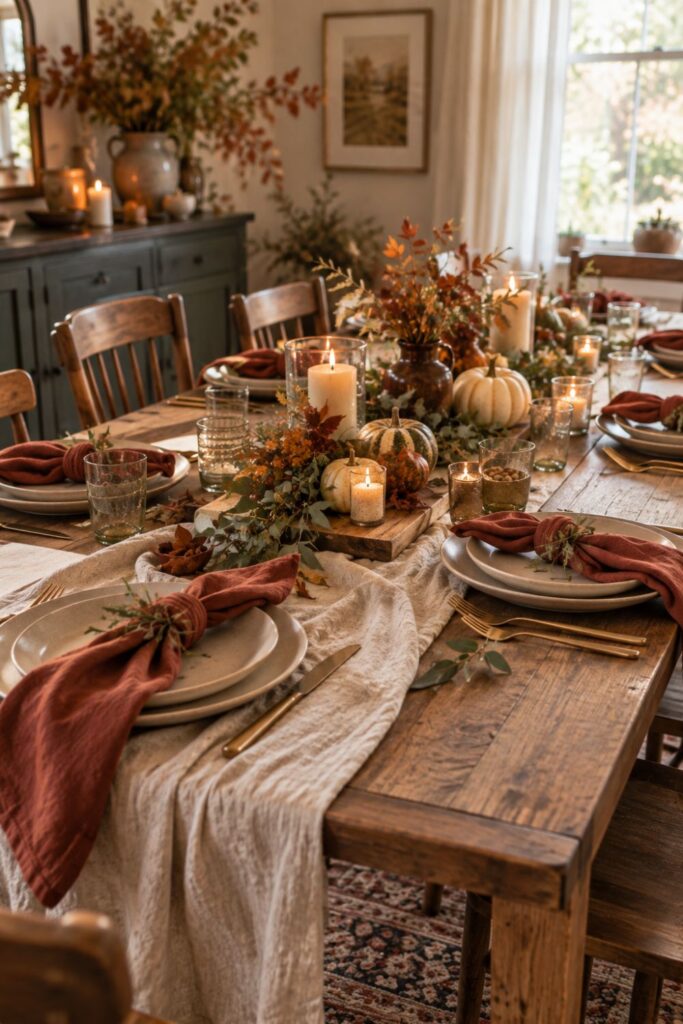
When the chairs do not match, your color palette becomes one of the easiest ways to make the table feel intentional.
You do not need to coordinate every object in the room. In fact, trying to match every chair, plate, glass, and napkin usually creates more work than necessary.
Instead, choose three or four colors and repeat them across the table.
If you want to get more from your life, and are looking for concrete action steps to get you there, check out our Request a Coach page. It’s a “cut the fence-sitting and take action” way to tackle your issues and actually find success. To get off the fence and start to take action, click or tap here.
Build an earthy fall color story: Start with shades such as rust, olive green, warm brown, muted gold, cream, or soft beige. Choose colors that already appear in your home so you do not have to buy an entirely new set of decorations.
A simple combination might be:
- Cream table linens
- Rust napkins
- Olive greenery
- Warm wood accents
Another option could use brown, gold, and soft neutral tones with a little deep green.
The exact colors matter less than the repetition.
Repeat each color more than once: If you use rust-colored napkins, bring a touch of rust into the centerpiece. If your centerpiece contains olive leaves, repeat that green in a few small details elsewhere on the table.
This repetition gives the eye something consistent to follow. Guests notice the coordinated table before they notice that one person is sitting on a wooden dining chair and another is sitting on a black folding chair.
Texture also helps create a cozy feeling.
Use materials such as:
If you want to get more from your life, and are looking for concrete action steps to get you there, check out our Request a Coach page. It’s a “cut the fence-sitting and take action” way to tackle your issues and actually find success. To get off the fence and start to take action, click or tap here.
- Linen or cotton
- Natural wood
- Woven baskets
- Matte ceramics
- Dried leaves
- Branches or herbs
- Kraft paper
- Soft fabric
Let texture replace extra decorations: A rumpled linen runner and a wooden serving board can add more warmth than a table crowded with themed Thanksgiving decorations.
You do not need to disguise mismatched chairs with chair covers or elaborate accessories. Let them be different.
The table should provide the visual consistency.
When the center of the room has a strong fall palette, the mismatched furniture starts to feel like part of the relaxed Friendsgiving atmosphere. The result feels welcoming and collected instead of overly staged.
3. Make the Table Runner Do Most of the Visual Work
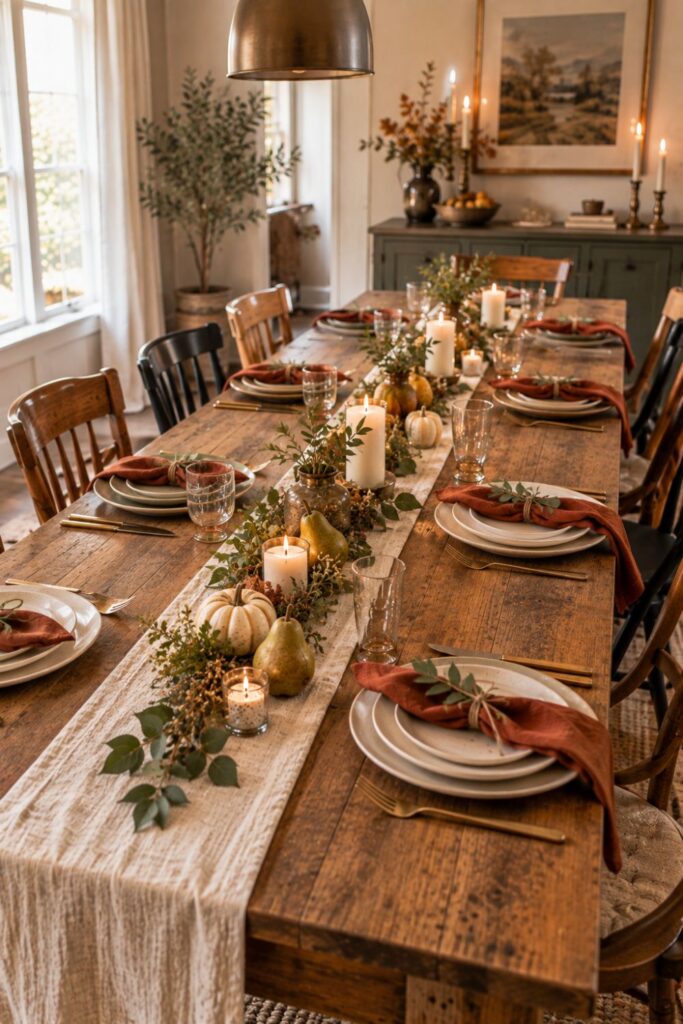
A table runner is one of the most useful decorating tools for a relaxed Friendsgiving because it creates a strong visual line without taking up much space.
It also helps connect a table surrounded by mismatched seating.
Choose one continuous center line: Run fabric or another simple material down the middle of the table so the eye travels from one end to the other. This immediately gives the tablescape structure.
You do not have to buy a dedicated Thanksgiving runner.
If you want to get more from your life, and are looking for concrete action steps to get you there, check out our Request a Coach page. It’s a “cut the fence-sitting and take action” way to tackle your issues and actually find success. To get off the fence and start to take action, click or tap here.
Look around your home first.
You may already have something that works, including:
- A neutral scarf
- A narrow throw
- A folded tablecloth
- A piece of linen or cotton fabric
- Kraft paper
- Several overlapping cloth napkins
- A lightweight woven textile
Repurpose what you already own: Choose a material that fits your earthy fall palette and is narrow enough to leave plenty of room for plates and glasses.
A runner should support the meal, not compete with it.
If the fabric spreads too far across the table, fold it lengthwise until you have a simple strip through the center. You want enough exposed tabletop on each side for comfortable place settings.
Do not worry if the runner looks slightly relaxed or imperfect. A perfectly pressed formal cloth can actually feel less appropriate for a casual Friendsgiving than a soft textile with natural folds.
Keep the runner practical: Make sure it lies flat enough that glasses will not wobble and serving dishes can sit safely nearby.
You can also use the runner to establish boundaries for the centerpiece. Keep most decorative items within the width of the runner instead of allowing pumpkins, candles, branches, and bowls to spread toward the plates.
If you want to get more from your life, and are looking for concrete action steps to get you there, check out our Request a Coach page. It’s a “cut the fence-sitting and take action” way to tackle your issues and actually find success. To get off the fence and start to take action, click or tap here.
That simple rule helps prevent clutter.
If you expect extra guests, avoid covering every inch of the runner with decorations. Leave a few gaps where centerpiece pieces can be shifted or removed.
The runner becomes the foundation of the whole tablescape. Once it is in place, you already have a visual structure for the centerpiece, candles, serving pieces, and place settings.
That is why this one simple element can make a mismatched Friendsgiving table feel surprisingly pulled together.
4. Build a Low Centerpiece That Can Handle a Crowd
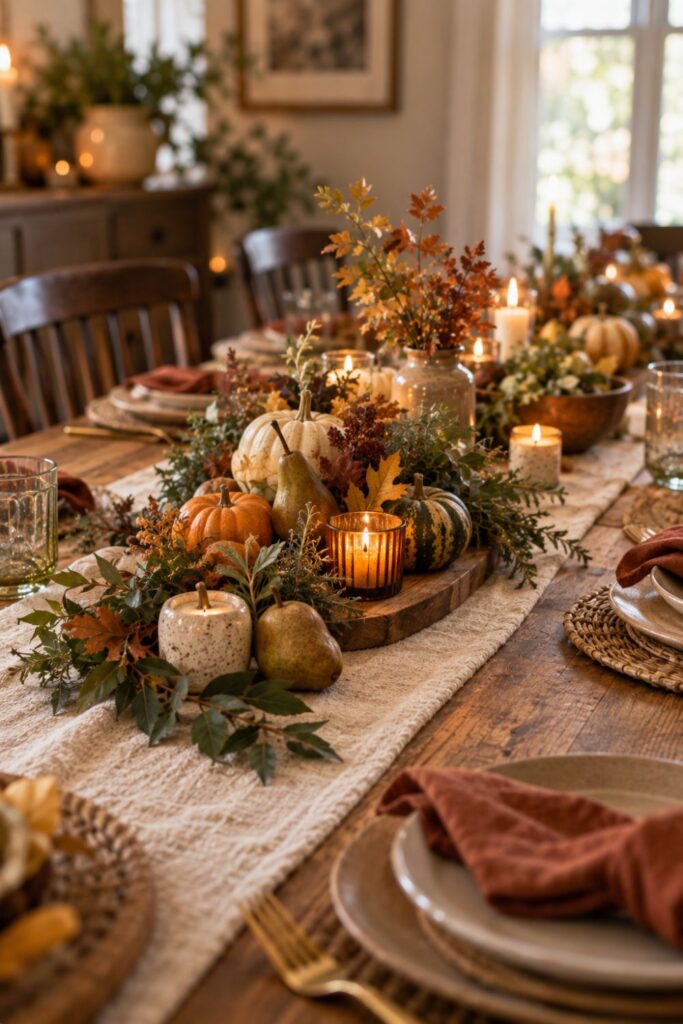
A beautiful centerpiece should make the table feel special without making dinner harder.
For Friendsgiving, that usually means keeping everything low, simple, and easy to move.
Tall arrangements can look dramatic in photographs, but they quickly become frustrating when guests have to lean sideways to talk to the person across from them.
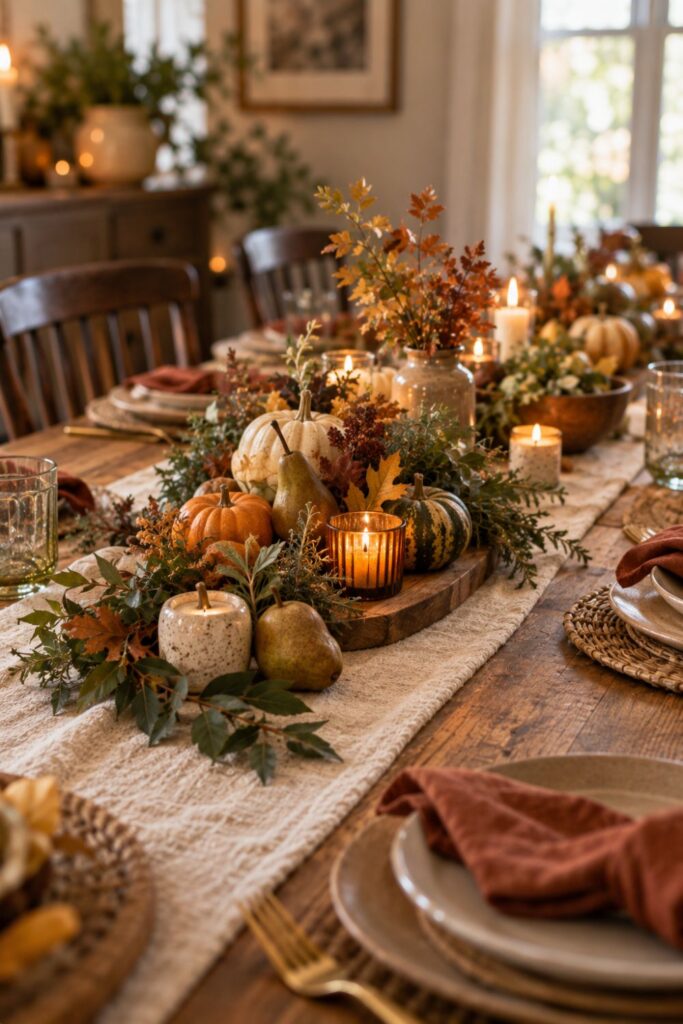
Start with one low anchor: Choose a shallow bowl, wooden board, tray, basket, serving platter, or a small group of low containers as the foundation of your centerpiece.
If you want to get more from your life, and are looking for concrete action steps to get you there, check out our Request a Coach page. It’s a “cut the fence-sitting and take action” way to tackle your issues and actually find success. To get off the fence and start to take action, click or tap here.
Then add a few seasonal elements.
You might use:
- Mini pumpkins
- Pears or apples
- Pinecones
- Clipped branches
- Fall leaves
- Fresh herbs
- Small candles
- Dried flowers
- Acorns
- Greenery
Build in small clusters: Instead of creating one giant centerpiece, arrange several smaller groupings along the runner. Small clusters are easier to shift when someone needs room for another serving dish.
Repurposing works especially well here.
A drinking glass can become a bud vase. A cutting board can become a centerpiece base. A soup bowl can hold pears or small pumpkins. Empty jars can hold clipped branches.
Shop your kitchen before the decor aisle: Look for containers, boards, glasses, and bowls that fit your color palette before buying anything new.
Once the centerpiece is assembled, sit down.
This step matters more than it sounds.
If you want to get more from your life, and are looking for concrete action steps to get you there, check out our Request a Coach page. It’s a “cut the fence-sitting and take action” way to tackle your issues and actually find success. To get off the fence and start to take action, click or tap here.
Test the view from every seat: Make sure guests can see the faces of the people sitting across from them. If a branch, candle, or vase blocks someone’s view, lower it or move it.
You should also leave a little open space between clusters.
That breathing room makes the table feel less crowded and gives you places to set down gravy, bread, or another dish that arrives unexpectedly.
Finally, make at least part of the centerpiece removable. If the table fills up during dinner, you should be able to lift away one tray or bowl without rebuilding everything.
The best Friendsgiving centerpiece feels festive when guests arrive and flexible once dinner begins.
5. Use Simple Place Settings to Make Every Seat Feel Intentional
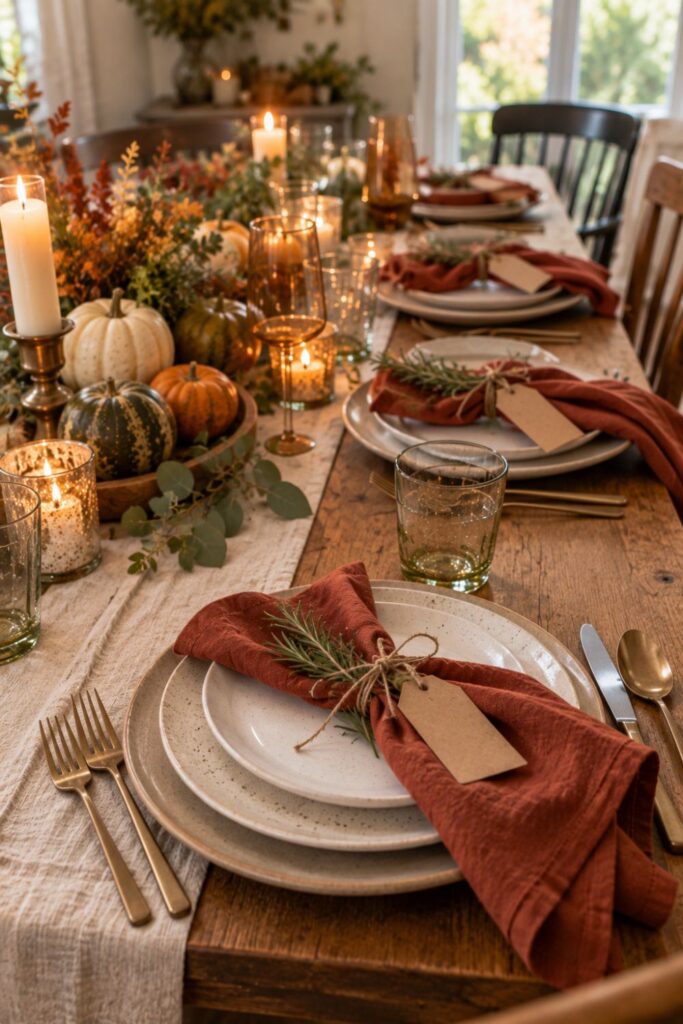
You do not need formal china or matching dinnerware to make a Friendsgiving table feel thoughtfully styled.
You need repetition.
When one or two details appear at every seat, even mismatched plates and glasses start to look intentional.
If you want to get more from your life, and are looking for concrete action steps to get you there, check out our Request a Coach page. It’s a “cut the fence-sitting and take action” way to tackle your issues and actually find success. To get off the fence and start to take action, click or tap here.
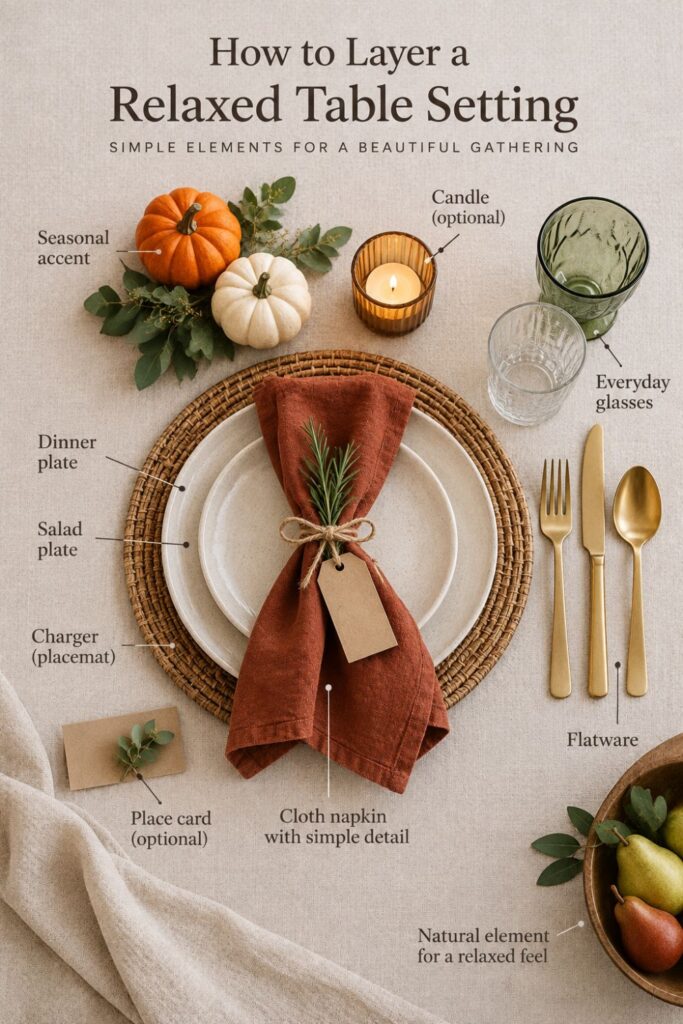
Choose one repeated element: Use the same napkin treatment, glass style, place card, herb sprig, or simple color at each setting. This gives every guest a visual connection to the rest of the table.
Napkins are especially useful because they add color without using much space.
You might fold them simply beside the plate, place them underneath the fork, or tie them loosely with kitchen twine.
Keep each setting practical: Start with the dinner plate, glass, napkin, and utensils people will actually use. Add extra bowls, forks, or glasses only if the menu requires them.
Friendsgiving is usually better suited to simple settings than a complicated formal arrangement.
If you do not have enough matching plates, do not panic.
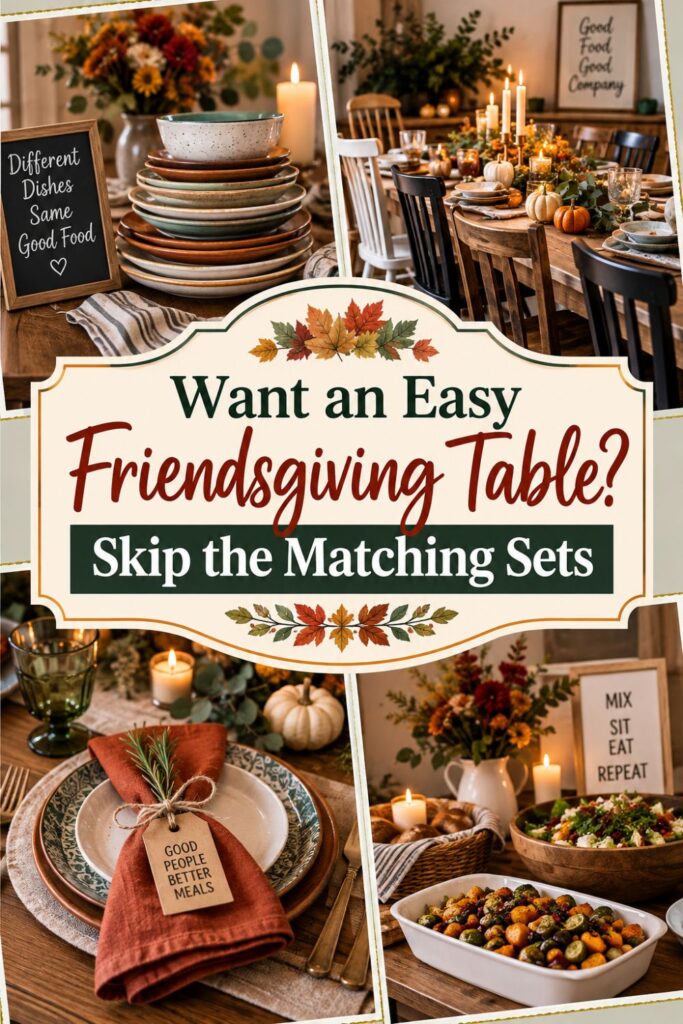
Mix dishes in a pattern: Alternate between two sets or group similar colors together rather than handing out completely random pieces. A repeated pattern makes mismatched dinnerware feel planned.
For example, you could alternate white plates and cream plates down the table. You could also use different plate styles while repeating the same napkin at every seat.
If you want to get more from your life, and are looking for concrete action steps to get you there, check out our Request a Coach page. It’s a “cut the fence-sitting and take action” way to tackle your issues and actually find success. To get off the fence and start to take action, click or tap here.
Small place markers can help too.
A handwritten name card, sprig of rosemary, fall leaf, or simple strip of kraft paper can make a seat feel personal without adding clutter.
Prepare extra place settings nearby: Keep two or three spare plates, napkins, glasses, and utensil sets stacked together on a nearby surface.
This is one of the easiest ways to make your table flexible.
If an unexpected guest arrives, you can create another place in less than a minute instead of digging through drawers while everyone watches.
The goal is not perfect symmetry. It is making each person feel as though there was a place waiting for them.
That feeling matters much more than whether every fork came from the same set.
6. Make Bring-Your-Own Chairs Look Like Part of the Plan
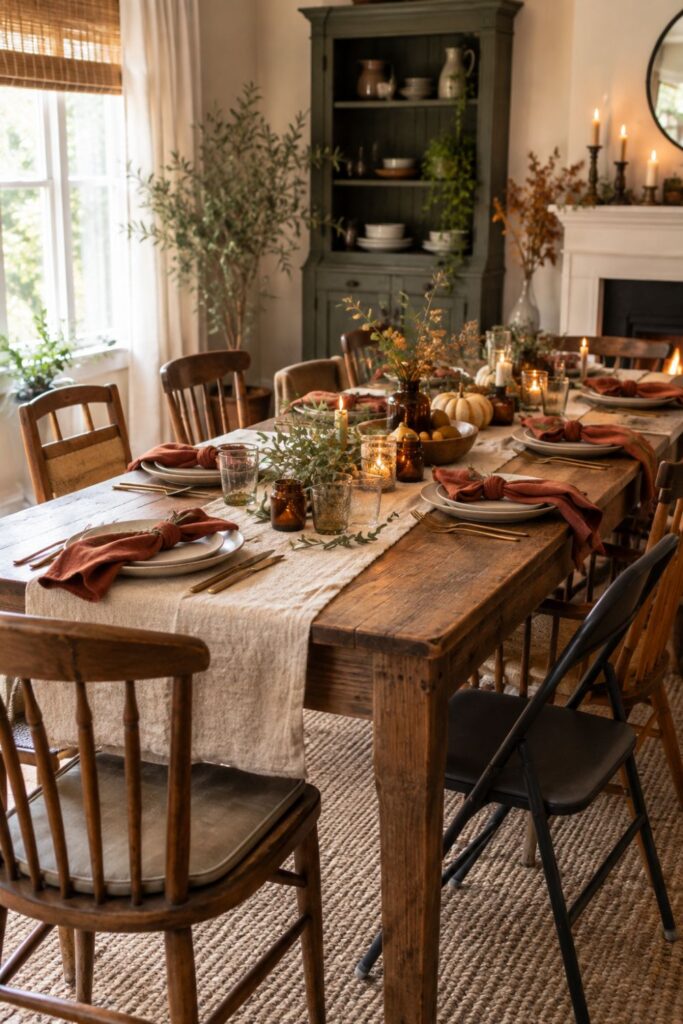
Mismatched chairs are not a decorating failure. At Friendsgiving, they can actually reinforce the relaxed feeling of the gathering.
If you want to get more from your life, and are looking for concrete action steps to get you there, check out our Request a Coach page. It’s a “cut the fence-sitting and take action” way to tackle your issues and actually find success. To get off the fence and start to take action, click or tap here.
The key is arranging them thoughtfully.
If all the matching dining chairs sit together while every folding chair is grouped at one end, the extra seating looks obviously temporary.
Mix different chair styles throughout the table: Place borrowed and folding chairs between your regular dining chairs so the variety feels distributed rather than separated.
You can also pay attention to visual weight.
A dark, bulky chair may look better opposite another larger chair rather than beside three very light chairs.
Balance the heavier pieces: Spread large, dark, or visually strong chairs around the table so one side does not feel much heavier than the other.
Height matters too.
Some folding chairs sit lower than standard dining chairs. A stool may sit higher. If possible, test the seating before guests arrive so no one feels awkwardly positioned at the table.
If you want to get more from your life, and are looking for concrete action steps to get you there, check out our Request a Coach page. It’s a “cut the fence-sitting and take action” way to tackle your issues and actually find success. To get off the fence and start to take action, click or tap here.
Do not try to decorate every chair into submission.
Chair covers, ribbons, bows, and elaborate accessories often create more work and can make folding or borrowed chairs harder to move.
Let the tabletop create cohesion: Use your runner, repeated napkins, earthy color palette, centerpiece, and place settings to connect the scene visually.
That is usually enough.
You also want to check the floor around every chair.
Folding-chair legs can extend farther than you expect, and wide chairs can block important walkways.
Protect the traffic flow: Make sure guests can move between the table and the kitchen, buffet, or bathroom without squeezing behind someone’s chair every time.
If one chair creates a bottleneck, move it before dinner begins.
If you want to get more from your life, and are looking for concrete action steps to get you there, check out our Request a Coach page. It’s a “cut the fence-sitting and take action” way to tackle your issues and actually find success. To get off the fence and start to take action, click or tap here.
Finally, resist the urge to apologize for mismatched seating.
A room filled with different chairs can look warm, spontaneous, and full of life. That fits Friendsgiving perfectly.
The visual message is simple: we made room for everyone.
That is far more inviting than a perfectly matched table with no space left for one more friend.
7. Set Up a Self-Serve Zone So the Table Stays Relaxed
Even a beautifully arranged Friendsgiving table can become chaotic once every guest starts adding food to it.
The easiest solution is to give large serving pieces another home.
Create a separate serving zone: Use a kitchen counter, console table, desk, bar cart, side table, or sturdy bench as a temporary buffet area.
This keeps the dining table available for plates, glasses, conversation, and a few smaller serving dishes.
If you want to get more from your life, and are looking for concrete action steps to get you there, check out our Request a Coach page. It’s a “cut the fence-sitting and take action” way to tackle your issues and actually find success. To get off the fence and start to take action, click or tap here.
Think about the flow of the meal.
If everyone needs to reach across the table for casseroles, bread, drinks, and condiments, your carefully planned tablescape will disappear underneath serving ware within minutes.
A self-serve area prevents that.
Group items by purpose: Put dinner dishes together, drinks together, and desserts together so guests can quickly understand where to go.
You might arrange the room like this:
- Dinner dishes on the kitchen counter
- Drinks on a small side table
- Dessert on another surface until later
- Extra plates and napkins near the buffet
- Condiments grouped in a small tray
This setup can also help with dietary dishes.
If someone brings a vegetarian, gluten-free, or allergy-sensitive dish, keeping it in a clear serving area makes it easier to identify without crowding the dining table.
Repurpose furniture you already have: A desk pushed against a wall or a console cleared for the evening may be all you need.
If you want to get more from your life, and are looking for concrete action steps to get you there, check out our Request a Coach page. It’s a “cut the fence-sitting and take action” way to tackle your issues and actually find success. To get off the fence and start to take action, click or tap here.
You do not have to create a formal buffet.
Keep backup items nearby too.
Extra forks, napkins, serving spoons, trivets, glasses, and plates should all have an obvious home.
Create one backup station: Put those extras together before guests arrive so you are not opening six different cupboards during dinner.
This is especially helpful when friends bring unexpected dishes that need serving spoons or heat-safe surfaces.
By moving the practical clutter away from the dining table, you protect the cozy visual effect you created.
More importantly, you make it easier for everyone to help themselves without interrupting conversation.
A relaxed table works best when the rest of the room supports it.
If you want to get more from your life, and are looking for concrete action steps to get you there, check out our Request a Coach page. It’s a “cut the fence-sitting and take action” way to tackle your issues and actually find success. To get off the fence and start to take action, click or tap here.
8. Use a Quick Setup Order So You Are Not Decorating All Afternoon
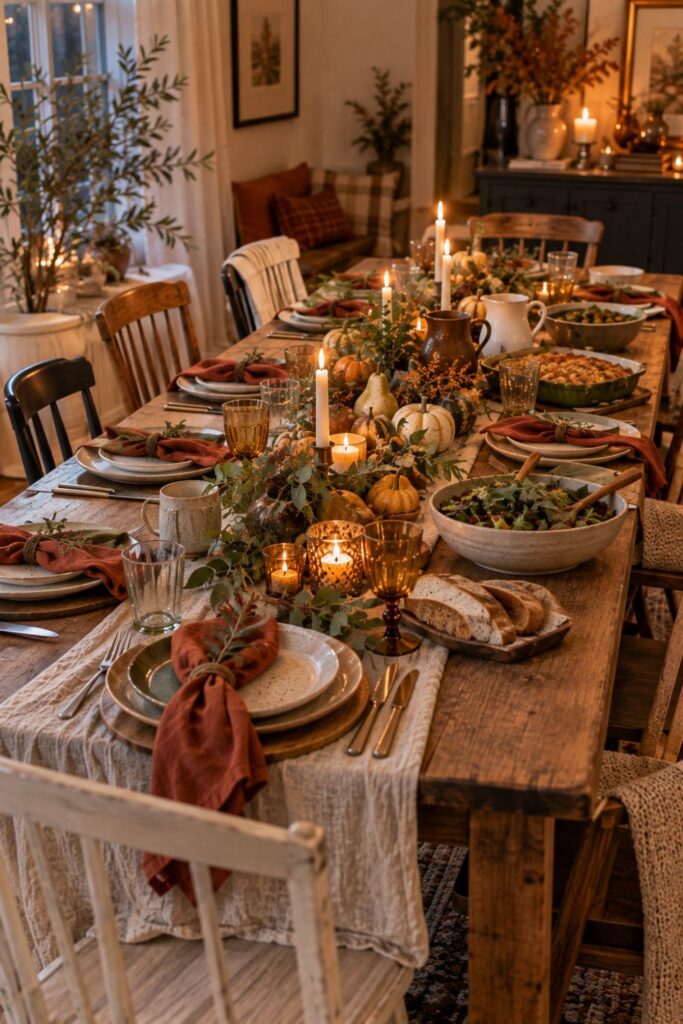
Friendsgiving decorating does not need to become a full-day project.
A simple setup order can save time because each step gives you the information you need for the next one.
Instead of bouncing between place settings, candles, chairs, and serving dishes, work in layers.
Step 1: Set every chair in place: Arrange the permanent chairs first, then add borrowed, folding, or expected bring-your-own seating. Check spacing and walkways before moving on.
Step 2: Add the runner: Once you know how the table will be used, place your runner or repurposed fabric down the center.
This establishes the visual line for everything else.
Step 3: Build the centerpiece: Add your low centerpiece clusters while the table is still mostly empty. Keep pieces inside the runner area and leave open gaps for food.
Step 4: Add place settings: Put down plates, glasses, utensils, and napkins based on where the chairs actually sit rather than trying to create mathematically perfect spacing.
If you want to get more from your life, and are looking for concrete action steps to get you there, check out our Request a Coach page. It’s a “cut the fence-sitting and take action” way to tackle your issues and actually find success. To get off the fence and start to take action, click or tap here.
This is especially useful when some chairs are wider than others.
Step 5: Prepare the serving zone: Move large platters, drinks, desserts, backup dishes, and extra utensils to their own surface.
Step 6: Add final cozy details: Only now should you decide whether the table needs candles, extra foliage, small pumpkins, or another decorative touch.
This last step is where many people accidentally overdecorate.
If the table already feels warm and balanced, stop.
You do not need to use every fall decoration you own.
A quick final check can help:
- Can everyone sit comfortably?
- Can guests see across the table?
- Is there room for glasses and plates?
- Can another chair be added if necessary?
- Is there somewhere for an unexpected dish?
- Can the centerpiece be moved easily?
If the answer is yes, your table is ready.
If you want to get more from your life, and are looking for concrete action steps to get you there, check out our Request a Coach page. It’s a “cut the fence-sitting and take action” way to tackle your issues and actually find success. To get off the fence and start to take action, click or tap here.
A setup system like this keeps decorating practical. You spend less time rearranging things and more time getting ready to enjoy the people who are coming.
9. How to Handle Surprise Guests Without Ruining the Table
Friendsgiving guest lists have a habit of changing.
Someone asks if they can bring a roommate. Another friend suddenly becomes free. A partner you thought was working ends up coming after all.
A flexible tablescape makes those changes much easier.
Create an expansion point before guests arrive: Leave one end, corner, or side of the table slightly less decorated than the rest. You do not need to leave an obvious empty seat. Just avoid packing every inch with centerpiece pieces.
This gives you somewhere to squeeze in another chair.
Your centerpiece should help rather than hurt.
Use modular decorations: Several small bowls, candles, jars, or clusters are easier to rearrange than one huge floral installation.
If you want to get more from your life, and are looking for concrete action steps to get you there, check out our Request a Coach page. It’s a “cut the fence-sitting and take action” way to tackle your issues and actually find success. To get off the fence and start to take action, click or tap here.
If another guest arrives, simply remove or shift one cluster.
The same idea applies to place settings.
Build a small guest-ready backup kit: Keep a few extra plates, glasses, napkins, and utensils together on a nearby surface.
You can even prepare a couple of spare place cards if you are using them.
When someone arrives unexpectedly, adding another seat becomes a quick adjustment instead of a scramble.
Do not worry if the extra plate or chair is different.
Repeat one element from the main table and the new setting will immediately feel more connected.
For example:
If you want to get more from your life, and are looking for concrete action steps to get you there, check out our Request a Coach page. It’s a “cut the fence-sitting and take action” way to tackle your issues and actually find success. To get off the fence and start to take action, click or tap here.
- Use the same napkin
- Add the same rosemary sprig
- Use the same style of place card
- Repeat one color from the tablescape
Connect the new seat with one repeated detail: You do not need a matching plate, chair, and glass to make the addition look intentional.
It also helps to keep your serving arrangement flexible.
If a surprise guest means the table is suddenly tighter, move another serving bowl or pitcher to the buffet zone rather than forcing everything to stay on the dining table.
The best Friendsgiving setup assumes that plans may change.
Making room for another person should feel like part of the gathering, not a decorating emergency.
A table that can expand gracefully is often more useful than one that looks flawless before anyone arrives.
10. Borrow an Organizational Coach’s Approach to Holiday Hosting
A useful way to simplify Friendsgiving is to think less like a decorator and more like an organizational coach.
Instead of asking, “How can I make this table perfect?” ask, “What needs to work for this gathering to feel successful?”
If you want to get more from your life, and are looking for concrete action steps to get you there, check out our Request a Coach page. It’s a “cut the fence-sitting and take action” way to tackle your issues and actually find success. To get off the fence and start to take action, click or tap here.
That small change can remove a surprising amount of pressure.
Define what “done” means before you start: Your goal might be that everyone has a comfortable seat, guests can see each other, food has somewhere to go, and the room feels warm.
Once those things are true, the table is already working.
Everything else is optional.
Try dividing your setup into two lists.
Must-have:
- Enough chairs
- Comfortable spacing
- Plates, glasses, and utensils
- A clear serving area
- A simple centerpiece
- Room for food
Nice-to-have:
- Extra candles
- Elaborate napkin folds
- Decorative pumpkins at every seat
- Fancy place cards
- Multiple layers of table linens
- Additional seasonal accessories
This prevents decorative details from stealing time from the things guests actually need.
If you want to get more from your life, and are looking for concrete action steps to get you there, check out our Request a Coach page. It’s a “cut the fence-sitting and take action” way to tackle your issues and actually find success. To get off the fence and start to take action, click or tap here.
Reduce the number of decisions: Choose your color palette, centerpiece formula, napkin style, and serving location ahead of time.
Once those decisions are made, stop reconsidering them.
You can also create a repeatable setup sequence for future gatherings.
For example:
- Chairs
- Runner
- Centerpiece
- Place settings
- Serving area
- Final details
Follow the same order every time: A simple routine reduces mental clutter and makes hosting easier with practice.
Finally, observe how your guests actually use the room.
Where do they put coats? Where do drinks accumulate? Which side of the table becomes crowded? Where does everyone naturally stand before dinner?
Those clues can improve your next gathering.
If you want to get more from your life, and are looking for concrete action steps to get you there, check out our Request a Coach page. It’s a “cut the fence-sitting and take action” way to tackle your issues and actually find success. To get off the fence and start to take action, click or tap here.
An organizational coach would focus on what works in real life, not what looks perfect in theory.
That is also a great rule for Friendsgiving. Build a table around the way people actually gather, eat, move, and talk.
11. The Best Friendsgiving Tables Feel Collected, Not Perfect
A Friendsgiving table does not need matching chairs, expensive dinnerware, or a professionally arranged centerpiece to feel beautiful.
It needs warmth, repetition, and enough flexibility for real people.
That is what makes this kind of gathering different from a formal holiday dinner.
The mismatched chairs are not something you have to hide. They tell part of the story. Someone brought one from the kitchen. Someone borrowed one from a neighbor. Someone walked in carrying a folding chair under one arm and dessert under the other.
That is Friendsgiving.
Your job is simply to give all of those different pieces a common visual home.
If you want to get more from your life, and are looking for concrete action steps to get you there, check out our Request a Coach page. It’s a “cut the fence-sitting and take action” way to tackle your issues and actually find success. To get off the fence and start to take action, click or tap here.
Start with one cozy fall palette: Repeat a few earthy colors throughout the table so everything feels related.
Create a strong center line: Use a simple runner to visually connect the table from one end to the other.
Keep the centerpiece low: Build small, movable clusters that add warmth without blocking conversation.
Repeat something at every seat: A napkin, place card, glass, or tiny seasonal detail can make mismatched settings feel intentional.
Leave room for real life: Keep serving dishes elsewhere when possible, protect comfortable eating space, and plan for another chair or unexpected dish.
Most importantly, do not keep decorating after the table already feels welcoming.
More pumpkins will not necessarily make the evening better. Another layer of linens will not make your friends feel more included.
The most memorable part of the table will be the people sitting around it.
If you want to get more from your life, and are looking for concrete action steps to get you there, check out our Request a Coach page. It’s a “cut the fence-sitting and take action” way to tackle your issues and actually find success. To get off the fence and start to take action, click or tap here.
A relaxed Friendsgiving tablescape works because it supports that moment rather than competing with it.
Let the chairs be mismatched. Let the runner have a few natural folds. Let your centerpiece use things you already own.
Make enough room for everyone, including the person who texts twenty minutes before dinner asking, “Is it too late if I come?”
If you can pull up one more chair and say yes, your table is doing exactly what it should.
Need some help with style or organization? Drop on by our directories choc full of image coaches, organization coaches and minimalist coaches to help make your spaces beautiful. Or click here to have us match you to the best.
If you want to get more from your life, and are looking for concrete action steps to get you there, check out our Request a Coach page. It’s a “cut the fence-sitting and take action” way to tackle your issues and actually find success. To get off the fence and start to take action, click or tap here.
Read this next

13 Surprising Household Items That Make Stunning Fall Decor
Are you all about style, decor and organization? Download a copy of our Decluttering Workbook. **** Fall has a way of making us want to cozy up our homes, but […]
Read More
Easter Decor Ideas That Feel Intentional (Not Overdone)
Simple Easter decor formulas for porches, doors, mantels, and entryways that feel collected, cozy, and easy to reuse every spring.
Read More
Organizational Skills Coaching
Don’t let your life spin out of control. Learn to lose the clutter and concentrate on what’s important.
Read More