


Talk to a coach about Organizational coaching

Crystal Faulk
ACC
I help overwhelmed women in transition gain clarity, confidence, and...

Terrie Hein
Certified Life Coach, Certified Insight Coach Practitioner
Coaching to declutter your life, organize your goals, and cook...

Dr Charlene Ashley
Doctorate - Behaviours
I coach individuals to design fulfilling lives through structure, clarity,...

Paloma Chiara

Lana's Gymnastics Club
"Where the best in gymnastics meets fun. Where every child is a star"
lgclubny.com

Anna Sosnina
ICF (ACC)
ICF ACC certified coach, founder of EssorVie Coaching, passionate about...

Travis Brown
Professional Life coach
With experience in guiding clients to achieve goals, build confidence,...

Lynn Yang
Certified Christian Leadership Coaching (CCLC)
I will help you gain new insights, habits, and plans...






How to Make a Dark Thanksgiving Table Feel Warm, Romantic and Expensive
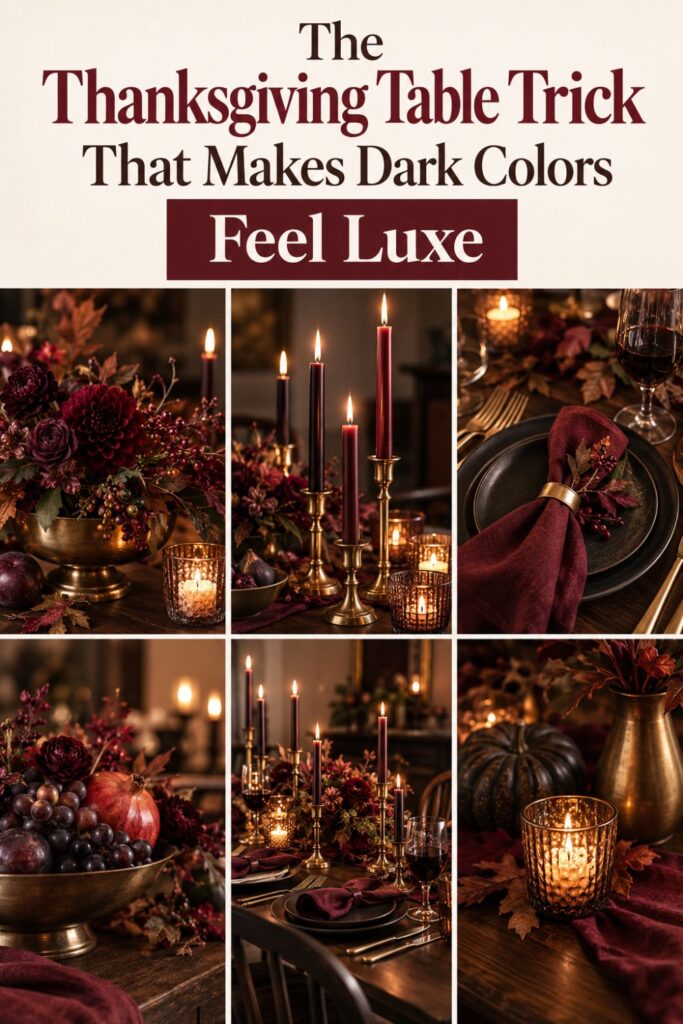
Thanksgiving decor does not have to mean bright orange pumpkins, pale neutrals, and rustic farmhouse details. If you want your dinner table to feel richer and more atmospheric, a moody Thanksgiving tablescape can create an entirely different kind of holiday gathering.
Think burgundy linen, deep brown wood, black accents, antique gold, low florals, and plenty of flickering candlelight. The colors are darker, but the overall effect should still feel warm and inviting rather than gloomy.
The secret is balancing those deeper tones carefully. Too much black can make the table feel severe, while too many metallic pieces can push the look toward formal or flashy. Burgundy, brown, and warm candlelight soften everything and give the table the cozy Thanksgiving atmosphere it still needs.
Before buying anything new, decide what kind of mood you want to create.
- Choose your overall direction: Decide whether you want romantic, old-world, rustic-luxe, dramatic, or slightly modern styling. This gives you a filter for every decorative decision that follows.
- Choose your darkest color: Decide whether black or deep brown will form the visual base of the table. One should usually dominate while the other becomes an accent.
- Choose your warmest element: Burgundy, wine, oxblood, dark cranberry, or another deep red tone can keep the darker palette from feeling cold.
- Plan around the meal itself: Count plates, glassware, serving dishes, and guests before filling the center of the table with decor.
Most importantly, remember that this table will eventually be filled with people and food. The tablescape should create atmosphere without becoming an obstacle.
A moody Thanksgiving table works best when the styling feels intentional before guests arrive, then quietly fades into the background once dinner begins.
Need some help with style or organization? Drop on by our directories choc full of image coaches, organization coaches and minimalist coaches to help make your spaces beautiful. Or click here to have us match you to the best.
Build a Burgundy, Brown, Black and Gold Color Formula
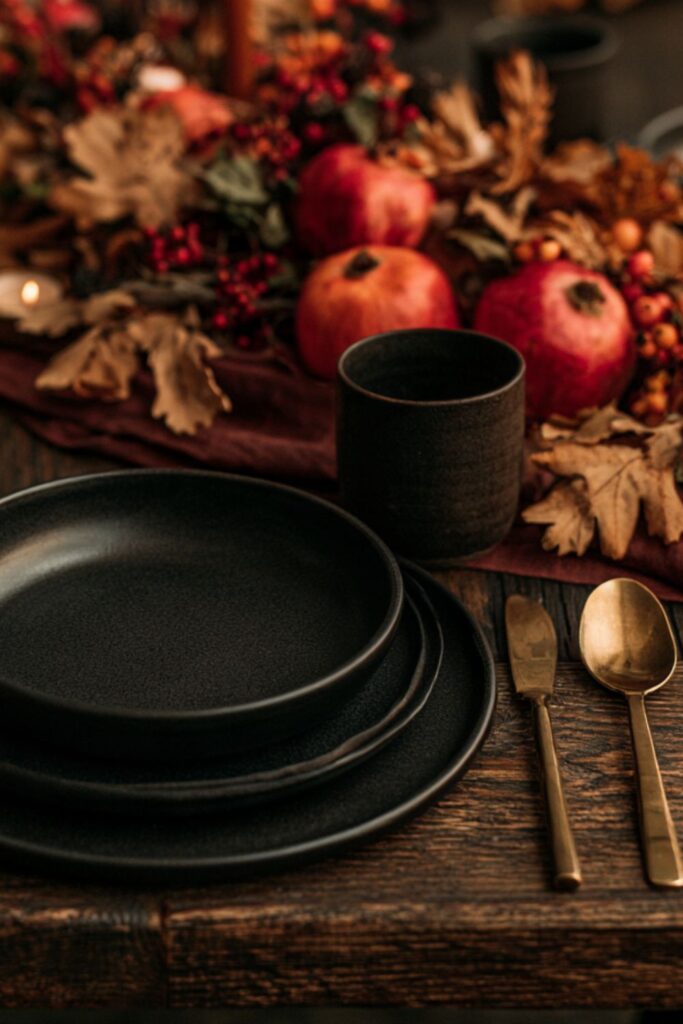
A dark Thanksgiving table becomes much easier to style when you stop treating every color equally. Instead, give each shade a specific job.
If you want to get more from your life, and are looking for concrete action steps to get you there, check out our Request a Coach page. It’s a “cut the fence-sitting and take action” way to tackle your issues and actually find success. To get off the fence and start to take action, click or tap here.
Burgundy brings richness. Brown creates warmth. Black provides contrast. Gold reflects the candlelight and makes everything feel more luxurious.
Start by choosing one color to cover the largest visual area. If you have a beautiful dark wood dining table, let the brown wood become your natural foundation. If your table is pale, you might use a chocolate brown or black tablecloth instead.
Then layer the remaining colors in smaller amounts.
- Use burgundy for softness and depth: Burgundy napkins, taper candles, flowers, glassware, berries, grapes, or small decorative details can distribute the jewel-toned color throughout the table.
- Use deep brown to ground the palette: Bring in walnut wood, chocolate linen, brown pottery, dried leaves, woven textures, or darker natural materials.
- Use black for definition: Black plates, candlesticks, menus, napkins, or flatware can give the table structure. Avoid making every layer black because you still want to see the individual pieces.
- Use gold as a highlight: Antique brass candlesticks, gold flatware, metallic rims, napkin rings, and small vessels catch the candlelight beautifully.
Try repeating each important color at least two or three times along the table. One burgundy napkin surrounded by brown and black can look accidental, while burgundy repeated through napkins, flowers, and candles feels deliberate.
You can also vary the exact shades slightly. Merlot, oxblood, dark cranberry, and plum can live together much more naturally than twelve pieces in precisely the same red.
The goal is not perfect matching. You want the colors to look collected and layered, as though the table came together gradually rather than arriving as one coordinated boxed set.
Create the Dark Base Layers of the Tablescape
Once your palette is established, build the table from the bottom upward. Starting with the largest layers first makes it much easier to control how dramatic the final result becomes.
Begin with the dining table itself. A dark wood table can often remain uncovered because the wood already gives you the brown foundation you need. If your table is white, pale, or very contemporary, a black, charcoal, burgundy, or deep brown tablecloth can instantly shift the mood.
If you want to get more from your life, and are looking for concrete action steps to get you there, check out our Request a Coach page. It’s a “cut the fence-sitting and take action” way to tackle your issues and actually find success. To get off the fence and start to take action, click or tap here.
Next, introduce a softer layer through the center.
- Choose a runner with texture: Washed linen, gauze, velvet, or subtly woven fabric adds softness without introducing another busy pattern.
- Let the runner move naturally: A slightly relaxed runner often works better for this look than perfectly pressed fabric with sharp edges.
- Avoid over-layering textiles: You usually need either a strong tablecloth plus a simple runner or an exposed table plus a more dramatic runner. Too many overlapping fabrics can quickly become heavy.
From there, start adding materials that contrast with one another.
Smooth black plates look richer beside rumpled linen. Clear glassware adds lightness beside dark ceramics. Brass flatware catches light beside matte brown wood.
That material contrast becomes especially important in a moody palette because many of your colors are naturally dark. If every object has the same finish, individual pieces can visually disappear into one another.
Leave some empty space too.
You do not need to cover every inch of the dining table. Visible sections of wood or cloth give your eye somewhere to rest and help the individual decorative layers stand out.
Before adding the centerpiece, stand back and look at the base alone. You should already see a clear rhythm of dark, warm, soft, and reflective surfaces.
If the table looks flat at this stage, do not fix it by adding more objects. Add a different texture first. Often, linen, glass, metal, or wood provides exactly the contrast the table is missing.
If you want to get more from your life, and are looking for concrete action steps to get you there, check out our Request a Coach page. It’s a “cut the fence-sitting and take action” way to tackle your issues and actually find success. To get off the fence and start to take action, click or tap here.
Build a Low, Moody Thanksgiving Centerpiece
The centerpiece should anchor the table without taking over the dinner. A large arrangement can look beautiful in a photograph, but Thanksgiving guests still need to see one another, pass food, and reach their glasses.
For a moody table, think long and low rather than tall and dramatic.
You could begin with a shallow bowl, several small vessels, a loose botanical arrangement running along the center, or clusters of flowers and natural materials arranged between candles.
Then build gradually.
- Start with burgundy: Dark red dahlias, mums, roses, berries, grapes, pomegranates, plums, or richly colored foliage can bring the jewel-tone palette into the center.
- Add deep brown texture: Branches, dried leaves, seed pods, wood elements, nuts, dried stems, or dark foliage help the centerpiece feel appropriate for Thanksgiving.
- Use darker greenery sparingly: A little green can provide contrast, but you do not need enough foliage to turn the arrangement into a traditional floral centerpiece.
- Repeat gold in small doses: A brass bowl, antique-gold vessel, or a few gold-toned decorative pieces can connect the arrangement to your flatware and candles.
Do not worry about making both sides perfectly symmetrical.
A slightly irregular arrangement often feels more natural and romantic. Let one cluster sit slightly higher, allow a stem to trail in one direction, or group fruit unevenly rather than creating exact mirror images.
Keep checking the centerpiece from seated height as you work. Something that looks low while you are standing can still block a guest’s face once everyone sits down.
Also consider how quickly the centerpiece can be adjusted. Thanksgiving tables often need more room once serving dishes appear.
If you want to get more from your life, and are looking for concrete action steps to get you there, check out our Request a Coach page. It’s a “cut the fence-sitting and take action” way to tackle your issues and actually find success. To get off the fence and start to take action, click or tap here.
Using several smaller clusters instead of one enormous arrangement gives you flexibility. You can remove one section during dinner without dismantling the entire look.
The finished centerpiece should feel abundant without looking crowded. When you add the candles next, those darker natural materials will begin to glow rather than simply sitting in the middle of the table.
Create the Candlelit Layer That Makes the Table Feel Moody
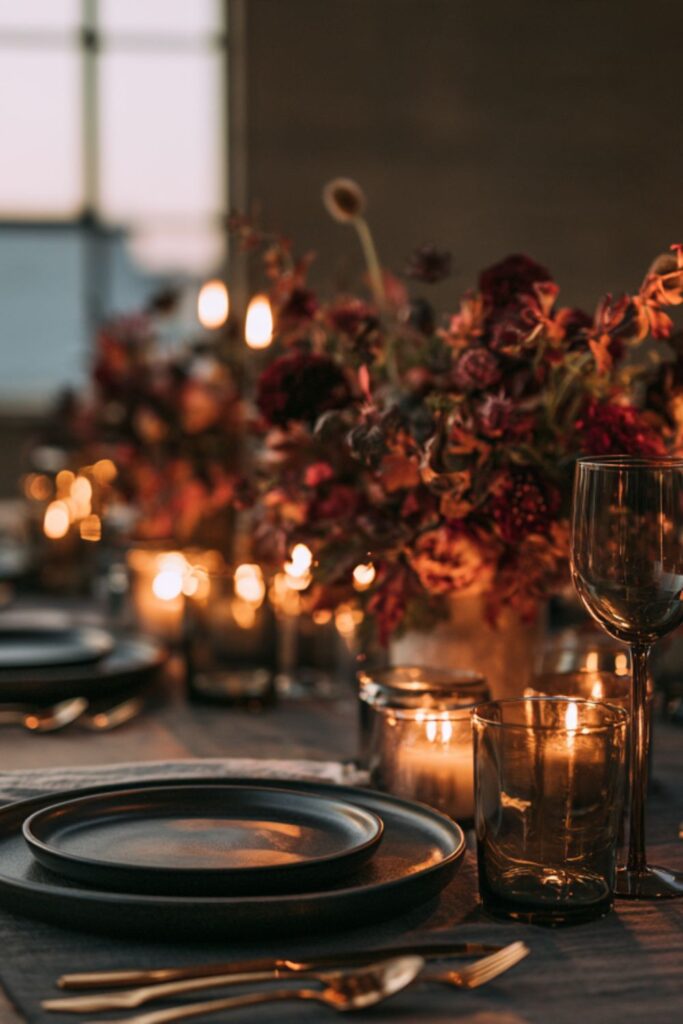
Candlelight is what turns a dark Thanksgiving palette into an atmosphere.
Without it, burgundy, brown, and black can look heavy. With warm flickering light, those same colors become richer, softer, and more intimate. Gold surfaces begin to glow, glass catches small reflections, and the entire table feels more layered.
Instead of relying on one pair of tall candlesticks, create several small pools of light.
- Vary the candle height: Mix low votives with medium and tall tapers so the light appears at different levels.
- Repeat candles along the table: Place candles throughout the tablescape instead of concentrating every flame in the exact center.
- Choose colors deliberately: Burgundy, dark brown, black, taupe, ivory, or warm cream candles can all work with the palette.
- Mix holder finishes: Combine aged brass, dark metal, glass, or simple ceramic holders rather than using a completely identical set.
- Protect the dining area: Keep flames away from dried leaves, loose fabric, flowers, serving areas, and anything guests may accidentally reach across.
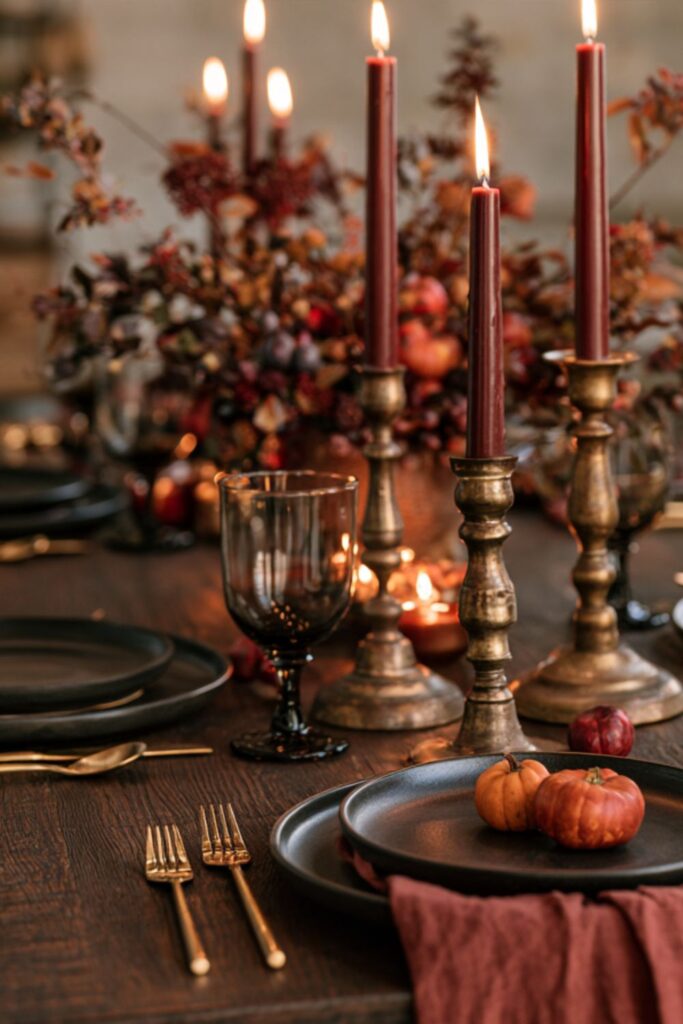
Try not to create a straight military row of candlesticks unless you want the table to feel quite formal. Slightly irregular spacing usually creates a softer, more collected effect.
You should also think about what the gold elements will look like once the candles are lit. Place a few reflective pieces close enough to catch the glow. Gold flatware, brass holders, metallic rims, or tinted glass can make a surprising difference after dark.
Always test the candles before Thanksgiving evening.
If you want to get more from your life, and are looking for concrete action steps to get you there, check out our Request a Coach page. It’s a “cut the fence-sitting and take action” way to tackle your issues and actually find success. To get off the fence and start to take action, click or tap here.
Sit in different chairs and check whether a taper blocks anyone’s face. Make sure wax cannot drip onto something delicate and confirm that the table still has room for glasses and serving pieces.
If open flames are not practical for your household, good-quality flameless candles can still provide warm pools of light. What matters most is distributing the glow across the table rather than leaving one bright spot surrounded by darkness.
Style Black-and-Gold Place Settings Without Making Them Feel Formal
Black and gold can easily look elegant, but they can also become overly formal if every piece feels polished and perfect. For Thanksgiving, you usually want something softer and more welcoming.
The easiest approach is to choose one dark anchor for each place setting.
That could be a black dinner plate, charcoal charger, black napkin, dark menu card, or smoky glass. You do not need all of them at once.
Once the anchor is in place, add warmth and texture around it.
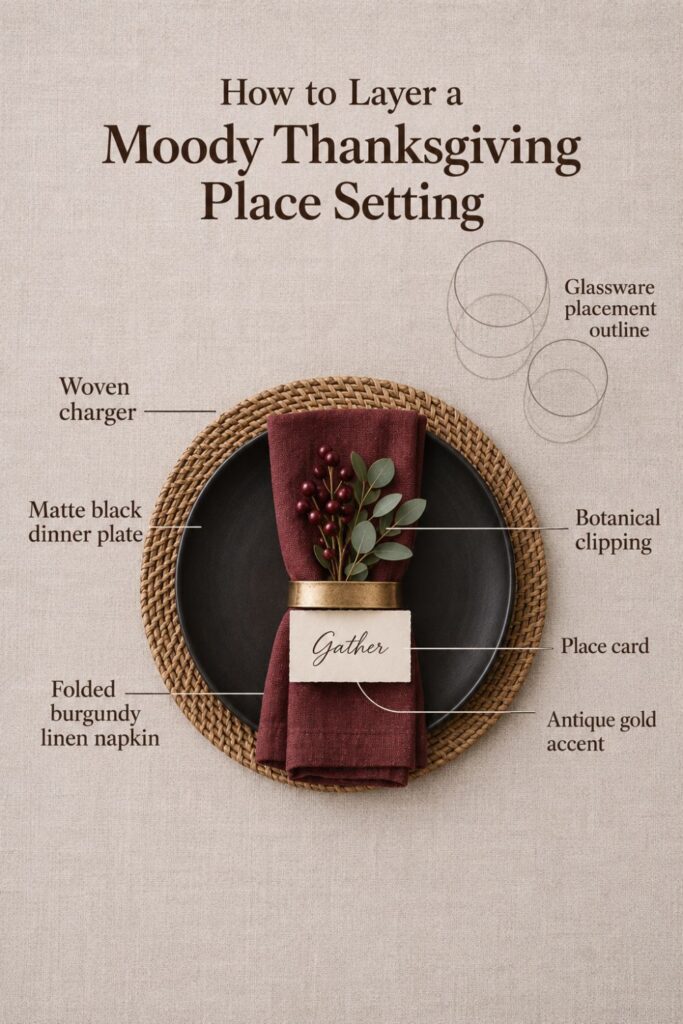
- Introduce gold as a detail: Gold flatware, an antique brass napkin ring, a metallic plate edge, or a tiny gold place-card holder can provide enough shine.
- Repeat burgundy nearby: A wine-colored linen napkin, dark red botanical clipping, berry detail, or small place card accent connects each setting to the centerpiece.
- Use texture to soften the formality: Slightly rumpled linen, handmade pottery, natural wood, or organic botanical elements keep black and gold from feeling like banquet decor.
- Keep the glassware visually light: Clear, amber, smoke, or gently tinted glasses can provide contrast without making the place setting look busy.
Layer plates only when you actually need them. A stack of charger, dinner plate, salad plate, bowl, napkin, and decorative object may look impressive before dinner but can create unnecessary clutter for guests.
A simpler arrangement often feels more confident.
If you want to get more from your life, and are looking for concrete action steps to get you there, check out our Request a Coach page. It’s a “cut the fence-sitting and take action” way to tackle your issues and actually find success. To get off the fence and start to take action, click or tap here.
You can also add one personal Thanksgiving detail at each seat. A handwritten name card, tiny gratitude prompt, short note, or botanical clipping can make the table feel thoughtful without requiring another major decorative layer.
Step back occasionally and compare the place settings with the centerpiece. They should look like parts of the same story.
If the center is already highly detailed, simplify the individual settings. If the centerpiece is restrained, you can allow a little more personality at each seat.
The final effect should feel polished enough for a special holiday dinner while still comfortable enough that guests immediately feel welcome sitting down.
Repurpose Empty Candle Jars Without Making the Table Look DIY
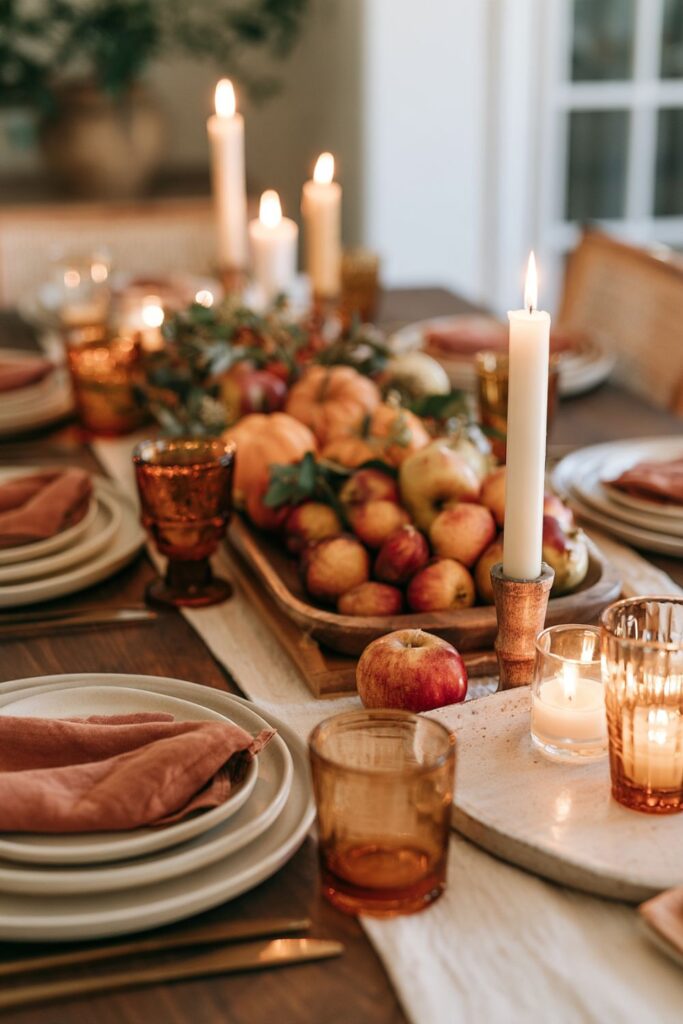
A moody Thanksgiving table often involves several candles, which means matches, lighters, spare tea lights, and candle tools can quickly end up scattered around the room.
An empty candle jar can become a simple way to keep those small supplies together while still fitting the decor.
This works especially well on a nearby buffet, sideboard, bar cart, console, or kitchen counter. The jar does not need to sit in the middle of the tablescape itself.
Start by choosing an empty jar that already works with your color palette. Amber glass, smoky brown, black, clear glass, or metallic containers are especially easy to blend into a dark Thanksgiving setup.
If you want to get more from your life, and are looking for concrete action steps to get you there, check out our Request a Coach page. It’s a “cut the fence-sitting and take action” way to tackle your issues and actually find success. To get off the fence and start to take action, click or tap here.
- Clean the jar thoroughly: Remove old wax, the wick base, labels, and any sticky residue so it looks intentional rather than recycled at the last minute.
- Choose one purpose: Use the jar for matches, a slim lighter, a candle snuffer, spare tea lights, or another small candle-related supply.
- Style the area around it: Place the jar near a small tray, stack of napkins, extra candles, or another practical hosting item so it feels like part of a planned candle station.
- Keep practical clutter contained: Avoid filling the jar with a random assortment of objects simply because they fit.
The useful part of this trick is that everything you need to maintain the candlelight stays in one place. If a taper goes out during dinner or you need another tea light before guests arrive, you are not opening several drawers looking for supplies.
Keep the candle station close enough to access but far enough from the main dining table that it does not compete with the centerpiece.
After Thanksgiving, the same jar can continue storing candle tools rather than returning to a junk drawer.
That makes this small decorative detail part of a repeatable holiday system. You get a cleaner hosting setup, an attractive place for otherwise awkward supplies, and one less collection of small items floating around the house before guests arrive.
Do an Evening Lighting Test Before Thanksgiving Dinner
A moody Thanksgiving table should always be tested under evening lighting.
Something that looks balanced and beautiful at two in the afternoon can become almost invisible once the sun sets. Black dishes disappear against dark linens, flowers lose their color, and one bright overhead light can completely flatten the romantic mood you worked to create.
A simple lighting test lets you fix those problems before guests arrive.
Wait until evening, or darken the room as much as possible, then recreate the lighting you expect to use during dinner.
If you want to get more from your life, and are looking for concrete action steps to get you there, check out our Request a Coach page. It’s a “cut the fence-sitting and take action” way to tackle your issues and actually find success. To get off the fence and start to take action, click or tap here.
- Turn off harsh overhead lights: Use lamps, sconces, dimmers, candles, or other warm sources whenever practical.
- Light every candle: You need to see the full effect rather than judging the table with only one or two flames burning.
- Look for dead zones: Notice where sections of the centerpiece, plates, or glassware disappear into darkness.
- Add reflection where needed: Glass, brass, gold flatware, or a lighter ceramic detail can bring definition back without introducing a bright new color.
- Check faces from seated height: Sit in several chairs and make sure guests will be able to see each other comfortably.
Take a quick photo too.
A photograph can reveal awkward gaps, overly crowded sections, and uneven pools of light that your eye may ignore while you are standing in the room.
If one section feels too dark, resist the urge to add a large bright decoration. Often the easiest solution is simply another votive, a slightly lighter napkin, clear glass, or one reflective object.
If the table feels too bright, remove something shiny or lower the surrounding room lighting rather than adding more black.
The evening test is also the best time to check candle safety. Make sure flames are not sitting underneath leaves or close to loose fabric and that guests will not need to reach directly over them.
Once the lighting works, photograph the finished arrangement from above and from seated height. Those photos become a useful reference when you recreate the table next Thanksgiving.
Make the Moody Table Work During the Actual Meal
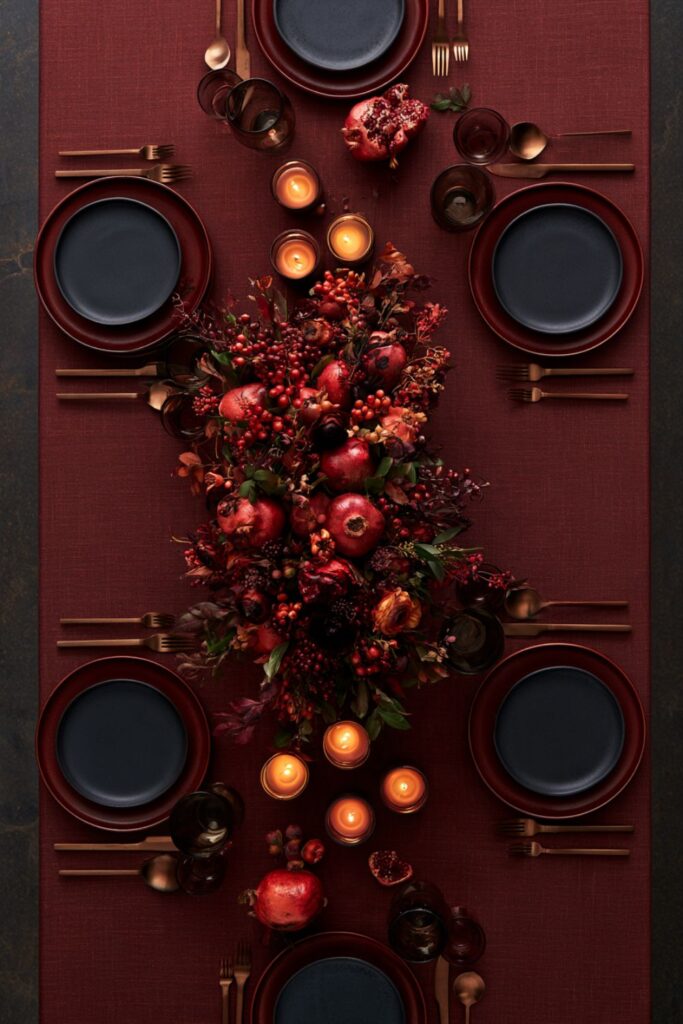
A beautiful tablescape is only successful if dinner can actually happen around it.
Thanksgiving creates more practical pressure than many other meals because the table may need to accommodate serving bowls, gravy, drinks, bread, side dishes, and additional plates. If every inch is already filled with decorations, your carefully styled centerpiece may become frustrating within minutes.
If you want to get more from your life, and are looking for concrete action steps to get you there, check out our Request a Coach page. It’s a “cut the fence-sitting and take action” way to tackle your issues and actually find success. To get off the fence and start to take action, click or tap here.
Decide how food will be served before the final setup.
If you are serving everything from a buffet or kitchen island, you can keep more decor on the dining table. If serving dishes will remain on the table, create space for them from the beginning.
- Reserve serving zones: Leave intentional gaps where large bowls or platters can be placed without moving candles at the last second.
- Build the centerpiece in sections: Use several small floral and candle clusters rather than one arrangement that occupies the entire center.
- Keep some candles independent: If part of the centerpiece needs to move, you still want enough candlelight remaining to maintain the atmosphere.
- Make decorations easy to lift: Avoid complicated arrangements where flowers, vines, candles, and objects are tangled together.
- Protect conversation space: Guests should be able to lean forward, pass dishes, and see across the table comfortably.
You can also plan a tiny reset between dinner and dessert.
Once large serving dishes are cleared, straighten napkins, remove empty bottles, tidy the center, and replace any candle that has burned too low. It should take only a few minutes.
This keeps the table feeling special later in the evening without requiring a completely new dessert setup.
Remember that perfection is not the goal once everyone sits down. Glasses will move, napkins will unfold, serving spoons will appear, and the centerpiece may shift.
That is exactly what should happen.
Your tablescape is creating the setting for Thanksgiving, not becoming the main event. If the arrangement can adapt gracefully as the meal unfolds, you have designed something much more useful than a table that only looks good before anyone touches it.
If you want to get more from your life, and are looking for concrete action steps to get you there, check out our Request a Coach page. It’s a “cut the fence-sitting and take action” way to tackle your issues and actually find success. To get off the fence and start to take action, click or tap here.
Turn the Tablescape Into a Repeatable Holiday Setup
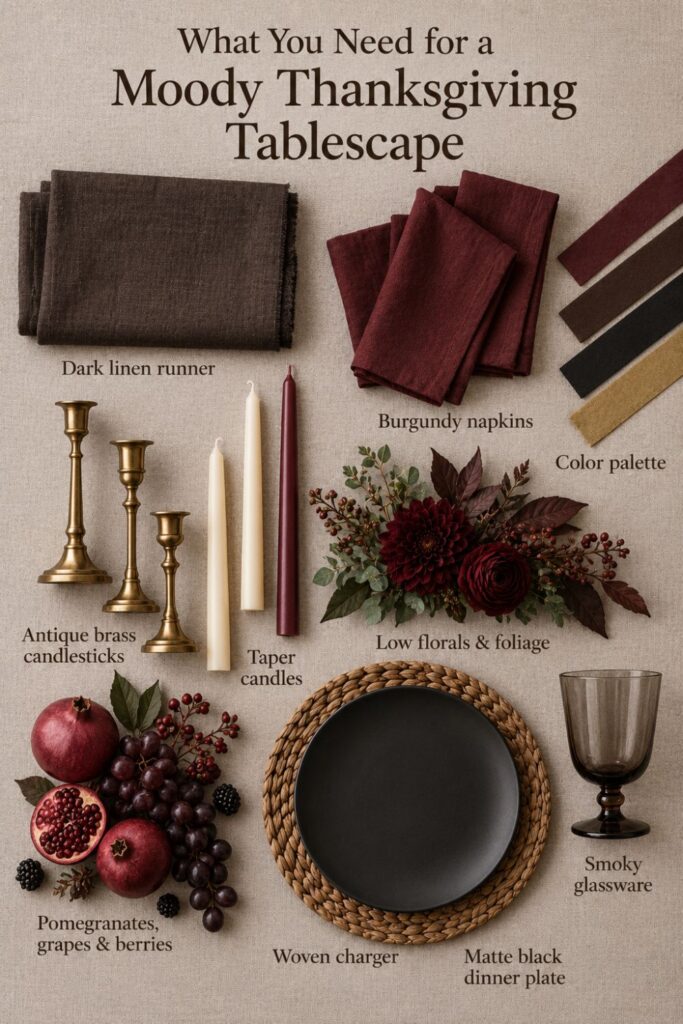
If you love the finished table, do not rely on your memory to recreate it next year.
A few minutes of documentation and organization after Thanksgiving can turn this one tablescape into a repeatable holiday setup. You will still be able to change the creative details, but you will not need to reinvent the entire process.
Begin with photographs.
Take one picture of the completed table, then capture individual layers whenever you pack things away.
- Photograph the base: Record the tablecloth, runner, and basic placement.
- Photograph the centerpiece: Capture how the flowers, fruit, foliage, and candles were distributed.
- Photograph one place setting: This gives you an instant reference for plates, napkins, glassware, and gold details.
- Create a simple inventory: Note which decorative pieces belong specifically to this look.
- Store related pieces together: Keep candleholders, napkin rings, place cards, and small decorative accessories in the same labeled container whenever possible.
A basic hosting checklist can make the setup even easier.
Separate tasks into what can happen several days before Thanksgiving, what should happen the day before, and what needs to happen shortly before guests arrive. That prevents decorating from competing with cooking during the final hour.
If holiday hosting repeatedly becomes chaotic, an organizational coach could also help turn the process into a simpler system. The goal would not be to tell you how to decorate your table.
Instead, a coach might help you identify where preparation becomes stressful, decide what should be stored together, create realistic preparation stages, delegate tasks, and build a repeatable routine around hosting.
If you want to get more from your life, and are looking for concrete action steps to get you there, check out our Request a Coach page. It’s a “cut the fence-sitting and take action” way to tackle your issues and actually find success. To get off the fence and start to take action, click or tap here.
That can be particularly useful if you love creating beautiful gatherings but tend to start every holiday from scratch.
Leave some flexibility in the system, though.
Your table should not look identical every year. Keep the basic burgundy, brown, black, gold, and candlelit framework, then change the flowers, textiles, fruit, place cards, or another creative layer.
You get consistency without losing the fun of creating something new.
When the Candles Are Lit

The best moody Thanksgiving tablescape is not necessarily the one with the most decorations.
It is the one where every major choice supports the same feeling. Deep burgundy brings richness, brown adds natural warmth, black creates contrast, and gold catches the soft light from the candles.
Once those elements are working together, you can stop adding.
Take one final look at the table before guests arrive.
If you want to get more from your life, and are looking for concrete action steps to get you there, check out our Request a Coach page. It’s a “cut the fence-sitting and take action” way to tackle your issues and actually find success. To get off the fence and start to take action, click or tap here.
- Remove anything competing with the centerpiece: If several objects are demanding attention, edit rather than adding more.
- Check every seat: Make sure each guest has enough room for plates, glasses, elbows, and conversation.
- Light the candles early enough to settle in: A room immediately feels different once several flames are glowing across the table.
- Lower the surrounding lighting: Let the candles, gold details, glassware, and darker colors create the atmosphere.
- Keep practical supplies nearby: Matches, a lighter, extra napkins, and anything else you might need during dinner should be accessible without sitting on the dining table.
Then stop styling.
When guests arrive, the table will gain the layers you cannot arrange ahead of time. Glasses will fill, plates will move, serving dishes will appear, napkins will unfold, and people will lean across the candles to talk.
Those changes do not ruin the tablescape. They complete it.
That is especially important with a romantic, moody table because the real appeal is not simply the dark color palette. It is the intimacy those colors and lights create once everyone is gathered together.
You do not need an enormous floral arrangement or expensive matching dinnerware to achieve that effect.
A thoughtful color formula, layered materials, low centerpiece, strategically placed candles, and a few reflective gold details can completely change an ordinary dining table.
When the overhead lights go down and the candles begin reflecting against the burgundy, black, brown, and gold, the table should feel warm, dramatic, and unmistakably Thanksgiving.
Need some help with style or organization? Drop on by our directories choc full of image coaches, organization coaches and minimalist coaches to help make your spaces beautiful. Or click here to have us match you to the best.
If you want to get more from your life, and are looking for concrete action steps to get you there, check out our Request a Coach page. It’s a “cut the fence-sitting and take action” way to tackle your issues and actually find success. To get off the fence and start to take action, click or tap here.
If you want to get more from your life, and are looking for concrete action steps to get you there, check out our Request a Coach page. It’s a “cut the fence-sitting and take action” way to tackle your issues and actually find success. To get off the fence and start to take action, click or tap here.
Read this next

How to Decorate for Christmas Based on Your Aesthetic: The Luxury Lover, Modern Minimalist, Vintage Soul & Boho Dreamer
Are you all about style, decor and organization? Download a copy of our Decluttering Workbook. **** Your Christmas decor says more about you than any trend ever could. It’s not […]
Read More
Rustic, Modern, Farmhouse or Minimalist? What’s Your Christmas Mantle Style
Are you all about style, decor and organization? Download a copy of our Decluttering Workbook. **** The mantle is the fastest way to make a room feel like Christmas without […]
Read More
How to Get Vision Board Inspiration Without Looking at Images First
Start your 2026 vision board with clarity, not random images. This simple reset shows how to choose direction before inspiration.
Read More