



Vision Board Examples: How to Use Them in a Way That Actually Helps

Want to try this at home? No worries! Download a copy of our SMART Goals PDF Worksheet.
****
Vision board examples can be helpful — or completely misleading.
Most examples you see online are visually appealing but functionally empty. They show finished boards without explaining how or why the images were chosen, or how the board is meant to be used once it’s complete.
This section is not about copying someone else’s vision board.
It’s about understanding how to interpret examples so they help you clarify your own direction instead of distracting you from it.
In our original roundup of vision board ideas, we included a few example styles, and now we’re taking a closer look at how to actually use vision board examples in a way that supports real decisions instead of just looking good.
Need some in depth help with goal settings, motivation or productivity ? Drop on by our directories choc full of productivity coaches, accountability coaches, and goal-setting coaches, and start reaching those goals! Or click here to have us match you to the best.
If you want to get more from your life, and are looking for concrete action steps to get you there, check out our Request a Coach page. It’s a “cut the fence-sitting and take action” way to tackle your issues and actually find success. To get off the fence and start to take action, click or tap here.
Why Most Vision Board Examples Don’t Help

The problem with most examples isn’t that they’re wrong. It’s that they’re incomplete.
They show:
- Aesthetic
- Mood
- Outcome
But they don’t show:
- The thinking behind the board
- The constraints that shaped it
- The behaviors it’s meant to reinforce
When you look at examples without context, it’s easy to start comparing instead of learning. You try to recreate the look rather than understand the structure.
A useful example doesn’t tell you what to want. It shows you how choices were made.
How to Look at Vision Board Examples Productively
When you see a vision board example, don’t ask:
“Do I like this?”

Instead, ask:
- What kind of year does this board seem built for?
- What kind of days would this reinforce?
- What behaviors does this make feel normal?
These questions shift your focus from appearance to function.
If you want to get more from your life, and are looking for concrete action steps to get you there, check out our Request a Coach page. It’s a “cut the fence-sitting and take action” way to tackle your issues and actually find success. To get off the fence and start to take action, click or tap here.
If you can’t tell what kind of life the board is supporting, it’s probably decorative rather than practical.
Example 1: A Minimal, Schedule-Focused Vision Board
This type of board often includes:
- Clean workspaces
- Open calendars
- Simple routines
- Neutral or muted colors

What it’s reinforcing:
- Predictability
- Fewer transitions
- Focused time blocks
How to use this example:
Don’t copy the images. Notice the emphasis on structure and space. If your goal is a calmer, more controlled year, this type of board works because it normalizes steadiness rather than intensity.
This example is helpful if you’re trying to reduce overwhelm or decision fatigue.
Example 2: An Environment-Driven Vision Board
These boards focus heavily on:
- Rooms
- Layouts
- Light
- Physical surroundings
What it’s reinforcing:

- How environment shapes behavior
- The importance of visual calm
- Fewer distractions
How to use this example:
Pay attention to how much space is left empty. The absence of clutter is part of the message. If you’re craving clarity, this kind of board helps by reinforcing how physical space affects mental space.
If you want to get more from your life, and are looking for concrete action steps to get you there, check out our Request a Coach page. It’s a “cut the fence-sitting and take action” way to tackle your issues and actually find success. To get off the fence and start to take action, click or tap here.
The lesson isn’t “have a better home.” It’s “create conditions that make certain behaviors easier.”
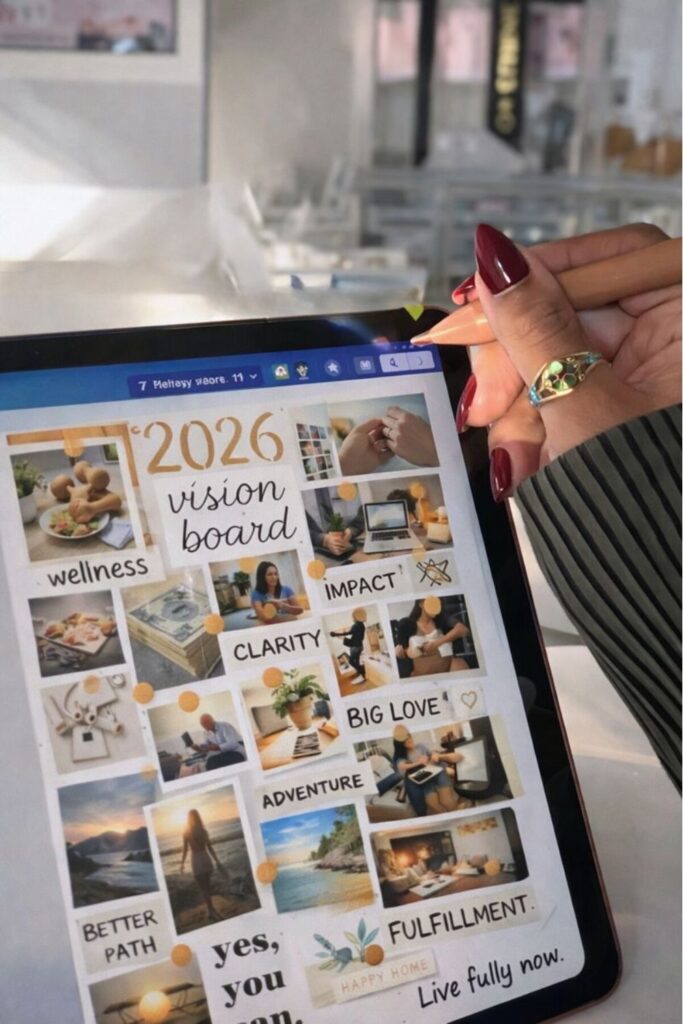
Example 3: A Routine-Based Vision Board
These boards show:
- Morning or evening rituals
- Daily movement
- Repeated habits
- Ordinary moments
What it’s reinforcing:
- Consistency
- Rhythm
- Small, repeatable actions
How to use this example:
This is useful if you tend to think in big goals but struggle with follow-through. The power here is in making the ordinary feel intentional.
Instead of asking what you want to achieve, this kind of board helps you ask how you want your days to unfold.
Example 4: A Directional, Symbol-Light Vision Board
Some boards include a small number of symbolic images alongside realistic photos.
What it’s reinforcing:
- Long-term direction
- Identity shifts
- Values rather than tasks
How to use this example:
Notice how sparingly symbolism is used. It works because it’s anchored to real life. If symbolism starts to dominate, the board loses clarity.
If you want to get more from your life, and are looking for concrete action steps to get you there, check out our Request a Coach page. It’s a “cut the fence-sitting and take action” way to tackle your issues and actually find success. To get off the fence and start to take action, click or tap here.
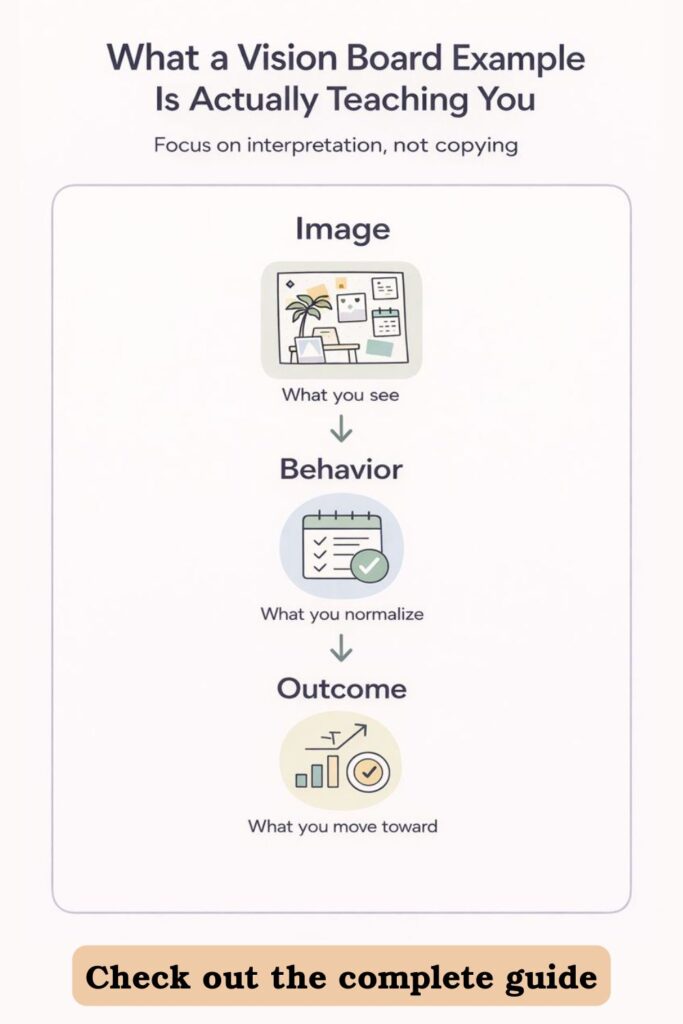
The takeaway here is balance — symbols should point toward behavior, not replace it.
What All Helpful Vision Board Examples Have in Common
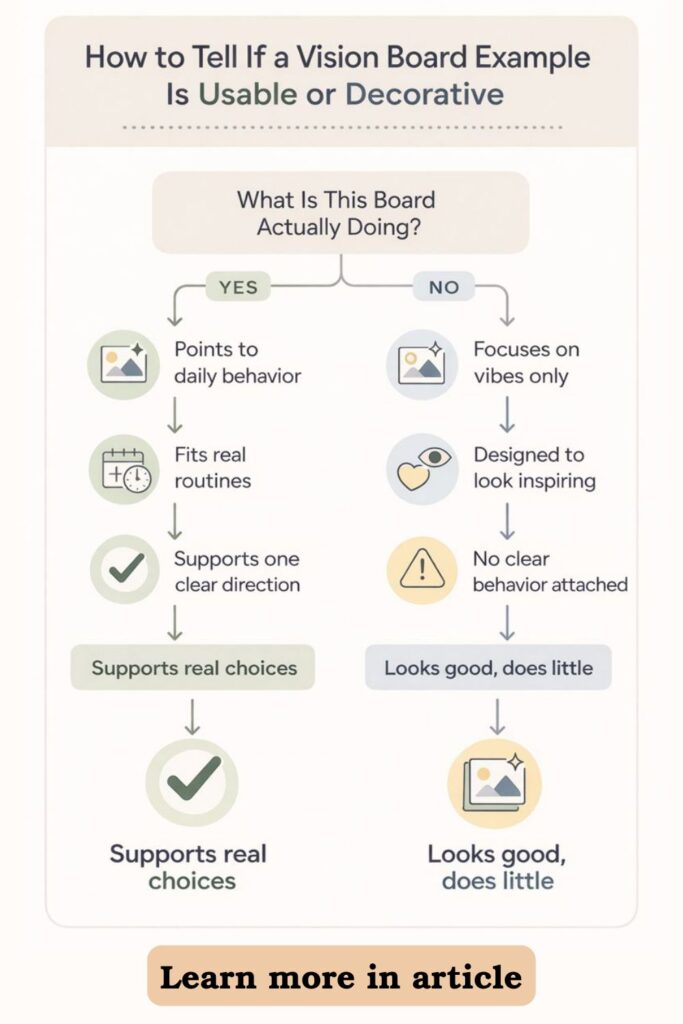
Regardless of style, usable examples tend to share a few traits:
- A clear focus on one life direction
- Limited, intentional imagery
- Visual consistency
- A sense of calm rather than urgency
They don’t try to impress. They try to support.
If an example feels overwhelming, busy, or performative, it’s likely designed for aesthetics rather than use.
How to Adapt an Example Without Copying It
The goal isn’t to recreate someone else’s board. It’s to extract the principle behind it.
For example:
- If an example emphasizes empty space, ask where you need more margin in your life.
- If it emphasizes routine, ask which routines actually support you.
- If it emphasizes environment, ask what physical changes would make your days easier.
Use examples as prompts, not templates.
Avoid the Trap of Visual Comparison
It’s easy to assume that a more visually refined board is a better one.
If you want to get more from your life, and are looking for concrete action steps to get you there, check out our Request a Coach page. It’s a “cut the fence-sitting and take action” way to tackle your issues and actually find success. To get off the fence and start to take action, click or tap here.
That’s not true.
A board that looks simple or understated can be far more effective if it reflects your real life and real constraints.
If an example makes you feel behind or inadequate, it’s not a good reference point. The right example should help you clarify, not compete.
When Vision Board Examples Are Doing Their Job
Examples are helpful when they:
- Give language to something you already sense
- Help you articulate your direction more clearly
- Show you possibilities without creating pressure
They’re not meant to tell you what your vision should be. They’re meant to show you how vision can be structured.
Using Examples as Part of the Whole Process
Want to try this at home? No worries! Download a copy of our SMART Goals PDF Worksheet.
Need some in depth help with goal settings, motivation or productivity ? Drop on by our directories choc full of productivity coaches, accountability coaches, and goal-setting coaches, and start reaching those goals! Or click here to have us match you to the best.

Vision board examples come last for a reason.
If you want to get more from your life, and are looking for concrete action steps to get you there, check out our Request a Coach page. It’s a “cut the fence-sitting and take action” way to tackle your issues and actually find success. To get off the fence and start to take action, click or tap here.
Once you’ve clarified direction, chosen an aesthetic, and selected meaningful images, examples can help you refine details. Used too early, they derail the process.
When used at the right moment, they can:
- Confirm your choices
- Offer small refinements
- Show alternate ways to express the same direction
That’s when examples stop being distracting and start being useful.
A good vision board doesn’t come from copying what looks good. It comes from understanding what works — and applying it in a way that fits your life.
If you want to get more from your life, and are looking for concrete action steps to get you there, check out our Request a Coach page. It’s a “cut the fence-sitting and take action” way to tackle your issues and actually find success. To get off the fence and start to take action, click or tap here.
Read this next
The Secret Formula for Choosing the Perfect Christmas Tree Color Palette
Are you all about style, decor and organization? Download a copy of our Decluttering Workbook.**** Choosing a Christmas tree color palette might feel intimidating, but a simple design formula makes […]
Read More
Rustic, Modern, Farmhouse or Minimalist? What’s Your Christmas Mantle Style
Are you all about style, decor and organization? Download a copy of our Decluttering Workbook. **** The mantle is the fastest way to make a room feel like Christmas without […]
Read More
Easter Flower Arrangements That Feel Luxe Without The Florist Price Tag
Create luxe-looking Easter flower arrangements with grocery store blooms, simple vases, and easy tricks that make your table feel fresh fast.
Read More