


Talk to a coach about Wellness coaching
Dr Soraya Sawicki, DSW, CPC, RMT
DSW, CPC, CSC, RMT
Personalized wellness coaching for stress relief, energy, and inner harmony.

Jennifer Loehding
Success Architect | Certified DreamBuilder Coach | Certified NEUROFIT Trainer™ | Certified Keto, Carnivore, PSMF and Supplement Coach
Life, business, health, and wellness coaching for balanced personal and...
Crystal Faulk
ACC
I help overwhelmed women in transition gain clarity, confidence, and...

Dr. Kate Watson
B.A Psychology, M.Ed. Psychological Counseling, Dr.PH in Public Health, Certified Health Coach, Certified Life Coach, Certified Mind and Body Specialist, Certified Women's Empowerment Coach, Certified Neurodiversity Coach
Dr. Kate Watson helps people with boundaries, coping strategies, and...

Mark Gordon
Certified Life Coach (ICF Accredited), Certified Transformation & CBT Life Coach
I empower people in their midlife, who feel stuck, gain...
A. Nya ~ Savvy Soul Life
CPC, MSLC
Life, wellness, creativity, mindfulness & spiritual coaching for personal strengthening...
Menna Jones
Following the International Coaching Federation's Professional Health and Wellbeing Coach Path
Health & Wellness Coaching For Anyone Living With Long-Term Health...

Steve Rotermund
Relationships/Codependency/ Recovery Coach/ Spiritual
Romans 12:10: "Be devoted to one another in love. Honor...



Kundalini Yoga for Mindful Healers: The Inner-Transforming Practice That Awakens Your Energy

You’re drawn to practices that nourish more than just the body—you want transformation from the inside out. Whether you’re seeking emotional clarity, spiritual growth, or a deeper sense of connection, Kundalini Yoga offers a unique blend of movement, meditation, and breathwork that can shift your energy in profound ways.
If you’re the kind of person who’s curious about the deeper layers of well-being—beyond just physical fitness—Kundalini is your ideal match. It’s designed for those who value inner healing as much as outer strength.
In our original roundup of Which Yoga Style Fits Your Personality? Find Out Here!, we highlighted Kundalini Yoga as the path for mindful healers, and now we’re diving into the movements, breathwork, and meditations that awaken your energy from within.
Need some in depth health and wellness guidance? Drop on by our directories choc full of wellness coaches, health coaches, fitness coaches, stress management coaches, and energy coaches to get your calm on. Or click here to have us match you to the best.
What It Actually Looks Like

A Kundalini class is different from any other yoga style you may have tried. While it includes physical postures (asanas), much of the practice revolves around kriyas—a set of repetitive movements, breathing techniques (pranayama), chanting (mantra), and meditation. These are designed to awaken and move energy through the body, often described as “kundalini energy” resting at the base of the spine.
You might find yourself:
- Chanting mantras to focus the mind.
- Breathing in rhythmic patterns to energize or calm the body.
- Repeating dynamic movements for several minutes to strengthen and awaken specific areas.
- Sitting in stillness for deep meditation and integration.
It’s not unusual to leave class feeling lighter, clearer, and more centered—sometimes with a surprising sense of emotional release.
The Physical Benefits

- Energy Boost: Breathwork and movement increase vitality.
- Improved Circulation: Dynamic kriyas stimulate the whole body.
- Postural Strength: Many kriyas work core stability and spinal alignment.
- Lung Capacity: Powerful breathing exercises strengthen respiratory health.
The Mental & Emotional Benefits

- Clarity of Mind: Reduces mental clutter and improves focus.
- Emotional Balance: Helps process and release stored emotions.
- Inner Connection: Strengthens self-awareness and intuition.
- Stress Reduction: Deep meditation and breathwork calm the nervous system.
Why It Works for Your Personality
The Mindful Healer thrives when there’s a purpose behind every movement—and Kundalini offers that in abundance. Each kriya has a specific intention, whether it’s to release fear, open the heart, or strengthen the nervous system. You’re not just “working out”—you’re aligning body, mind, and spirit toward a common goal.
If you want to get more from your life, and are looking for concrete action steps to get you there, check out our Request a Coach page. It’s a “cut the fence-sitting and take action” way to tackle your issues and actually find success. To get off the fence and start to take action, click or tap here.
If you’ve ever felt like traditional workouts leave something missing—like the deeper, soulful piece—Kundalini fills that gap. It’s less about performance and more about transformation.
How to Get Started & Succeed

- Find a Qualified Teacher: Kundalini techniques are powerful—guidance matters.
- Wear Comfortable, Breathable Clothing: Many practitioners choose white for its symbolism, but it’s not required.
- Bring an Open Mind: Some practices may feel unusual at first—lean into the experience.
- Start Slow: Even 20 minutes of daily breathwork or meditation can make a difference.
- Honor the Integration: Take time after each session to sit quietly and absorb the effects.
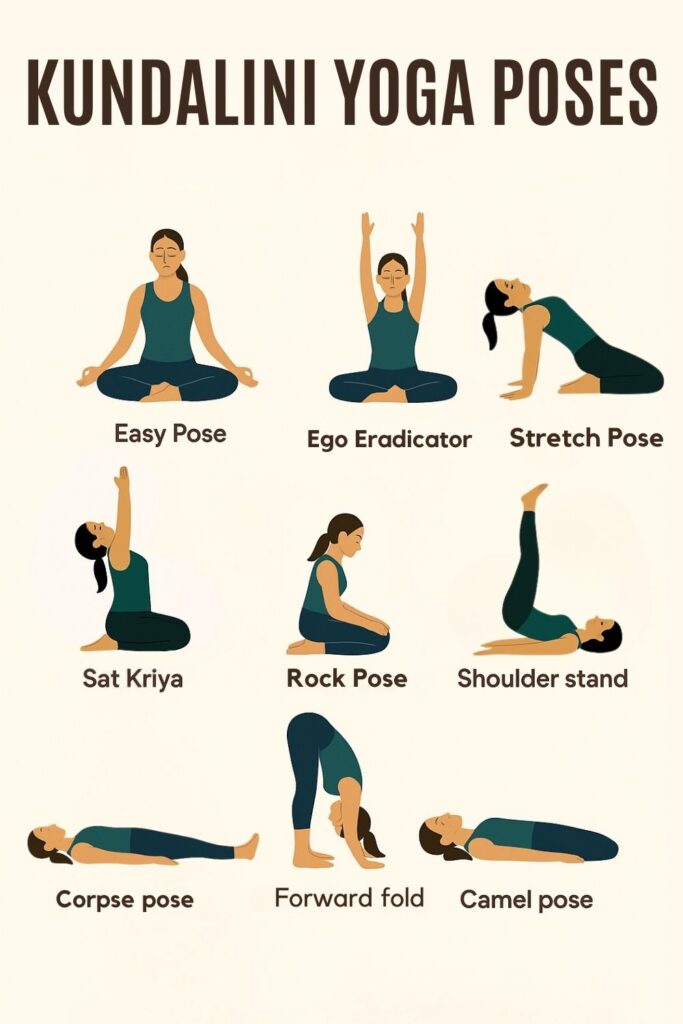
Common Poses You’ll See in Kundalini Yoga

Kundalini Yoga blends physical postures with breathwork, mantra, and meditation, so its poses often appear as part of dynamic kriyas (repetitive movement sequences with specific intentions). Common postures include:
- Easy Pose (Sukhasana): A comfortable cross-legged seat for meditation, chanting, or breathwork.
- Spinal Flex: Sitting in Easy Pose and rhythmically flexing the spine forward and back to energize the body.
- Ego Eradicator: Sitting tall with arms raised in a V-shape and Breath of Fire to clear mental fog.
- Stretch Pose: Lying on your back with head, feet, and arms lifted, engaging the core with Breath of Fire.
- Sat Kriya: Sitting on the heels with arms overhead, chanting “Sat Nam” while rhythmically engaging the navel.
- Frog Pose: A dynamic squat movement to build leg strength and stimulate energy flow.
- Shoulder Stand (Sarvangasana): Supports circulation and energetic balance.
- Camel Pose (Ustrasana): Opens the chest and heart center, often paired with mantra or breathwork.
- Rock Pose (Vajrasana): Sitting on the heels for digestion-focused breathwork or meditation.
- Corpse Pose (Savasana): A final rest to integrate the physical and energetic effects of the practice.
These poses, often combined with powerful breathing techniques and chanting, make Kundalini a deeply transformative style that works on multiple levels—physical, emotional, and spiritual.
If you want to get more from your life, and are looking for concrete action steps to get you there, check out our Request a Coach page. It’s a “cut the fence-sitting and take action” way to tackle your issues and actually find success. To get off the fence and start to take action, click or tap here.
Read this next

Happiness as a Goal: Coach Tracy Hamilton
Tracy Hamilton talks about how happiness and goal-setting are intertwined for her clients in this exclusive interview.
Read More
How to Avoid Negative Thoughts
Why do bad things happen to good people? It’s all in your mindset.
Read More
Having A Successful Life Abroad
Creating a road map for a successful life abroad
Read More