





The Procrastination Trap That Keeps Stealing Your Time
Procrastination is often treated as a joke, but its consequences can be serious. Repeated delay can contribute to missed opportunities, damaged trust, financial penalties, rushed work, and neglected health decisions.
Calling procrastination a bad habit does not fully explain what is happening. The pattern can affect your confidence because you repeatedly watch yourself make plans, avoid them, and then deal with the consequences.
Life may begin to feel unmanageable when important tasks are delayed until they become emergencies. The unpaid bill becomes a late fee. The unfinished application becomes a missed deadline. The avoided conversation becomes a larger conflict.
Key Takeaways
- Procrastination is unnecessary delay: It happens when you postpone an intended action even though you expect the delay to make your situation worse.
- The task is not always the real problem: You may be avoiding boredom, uncertainty, frustration, possible failure, criticism, or another uncomfortable feeling connected to the task.
- Four drivers explain many delays: Low confidence, low immediate value, easy distractions, and distant consequences can each make action less likely.
- The solution must match the cause: Confusion requires information or instruction, while distraction requires environmental changes. Emotional resistance may require practice, support, or a smaller first exposure.
- Progress is behavioral: You are improving when you start closer to the planned time, complete clearer checkpoints, estimate tasks more accurately, and recover from missed commitments without abandoning the goal.
What Is Procrastination?
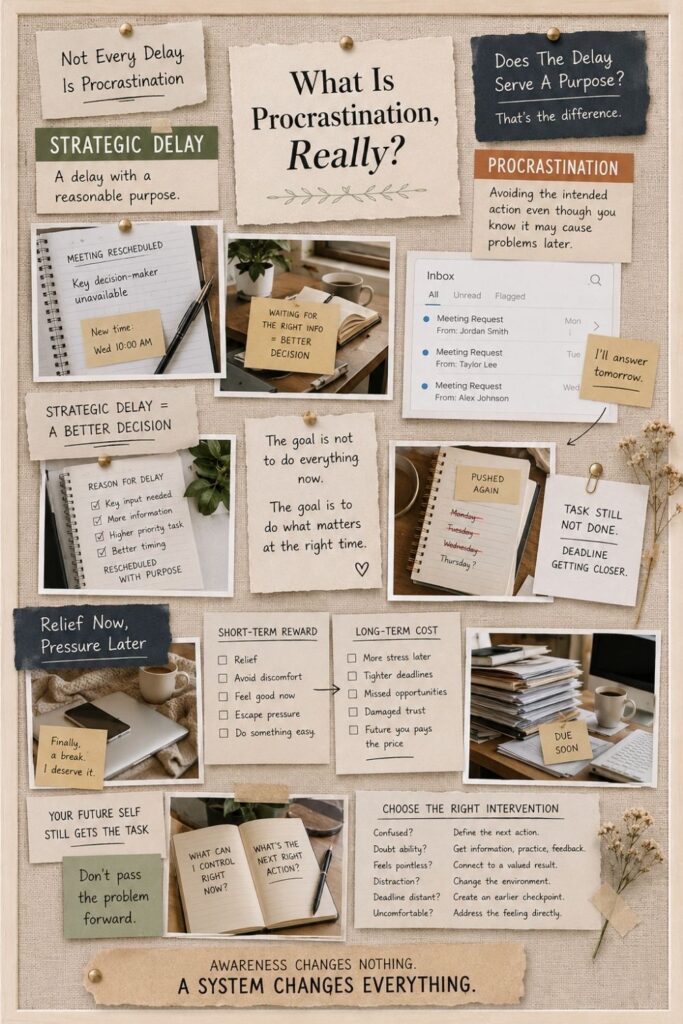
Procrastination is the voluntary and unnecessary delay of an intended action despite expecting to be worse off because of the delay. It is not simply doing something later. A delay may be sensible when you need more information, have a higher priority, or are waiting for circumstances that genuinely improve the decision.
The difference is whether the postponement serves a reasonable purpose. Rescheduling a meeting because a key decision-maker cannot attend is strategic delay. Ignoring the meeting request for a week because you feel uncomfortable answering it is more likely to be procrastination.
Procrastination usually provides a small reward now, such as relief from discomfort, while transferring the task and its consequences to your future self.
Why Do We Procrastinate Even When We Know Better?
Procrastination becomes more likely when a task feels difficult, unrewarding, distracting, or too distant from its consequences.
If you want to get more from your life, and are looking for concrete action steps to get you there, check out our Request a Coach page. It’s a “cut the fence-sitting and take action” way to tackle your issues and actually find success. To get off the fence and start to take action, click or tap here.
Temporal Motivation Theory describes this through four factors:
Motivation = Expectancy × Value ÷ (1 + Impulsiveness × Delay)
You do not need to calculate the equation. You can use its four parts to understand what is happening.
- Expectancy: How likely do you believe success is?
- Value: How useful, meaningful, or rewarding does the task feel?
- Impulsiveness: How easily does something else capture your attention?
- Delay: How far away is the reward or consequence?
A job seeker may avoid an application because they expect rejection. That is low expectancy.
A freelancer may postpone bookkeeping because it feels boring and produces no immediate reward. That is low value.
A student may intend to study but repeatedly open social media. That is high impulsiveness.
Someone may delay saving for retirement because the benefit feels decades away. That is a long delay.
Piers Steel’s 2007 meta-analysis examined 691 correlations and identified task aversiveness, task delay, self-efficacy, impulsiveness, distractibility, and self-control as important factors in procrastination. The review found much weaker connections with traits such as rebelliousness and sensation seeking.
If you want to get more from your life, and are looking for concrete action steps to get you there, check out our Request a Coach page. It’s a “cut the fence-sitting and take action” way to tackle your issues and actually find success. To get off the fence and start to take action, click or tap here.
This means procrastination is not adequately explained by accusing yourself of being lazy or irresponsible. You need to identify what is weakening motivation for the task in front of you.
What Are the Signs of Procrastination?
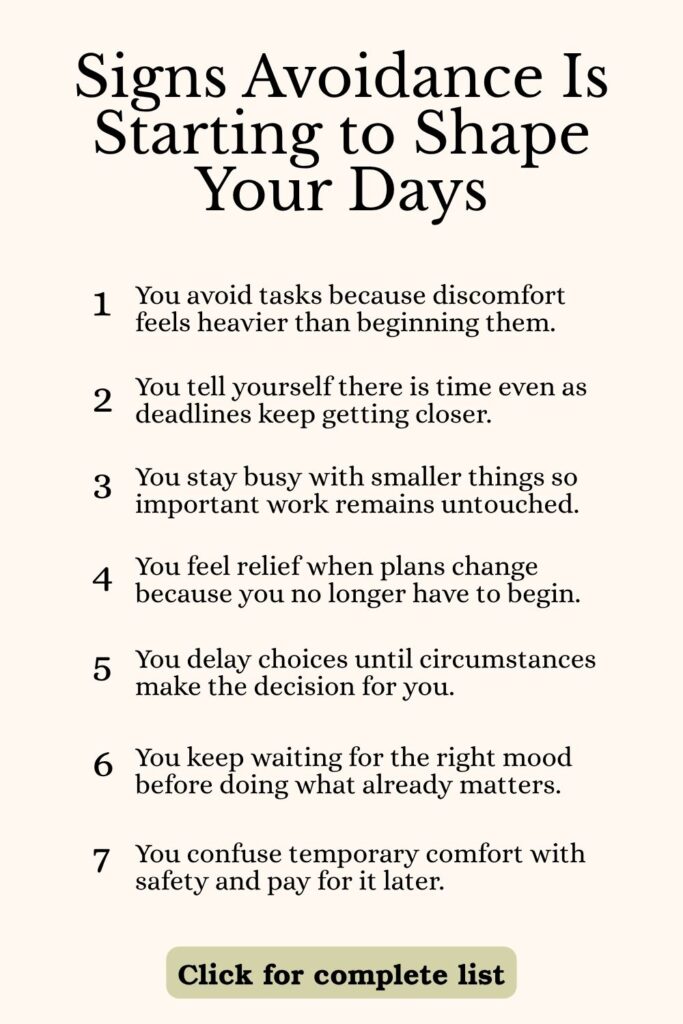
The clearest signs of procrastination are repeated, observable delays that work against your own intentions.
You may be procrastinating when you:
- Start important tasks later than you planned
- Replace a high-priority task with easier, lower-priority work
- Spend more time organizing the work than doing it
- Wait for pressure, motivation, or the “right mood” before starting
- Consistently underestimate how long tasks will take
- Arrive late because you planned for an ideal journey with no delays
- Make detailed promises to yourself without defining the first action
- Feel immediate relief when you postpone something, followed by guilt or greater pressure
- Keep changing the system instead of using it
- Tell yourself that tomorrow’s version of you will be more focused
Productive-looking avoidance is especially easy to miss.
You may clean your desk instead of writing the proposal. You may research workout plans instead of taking a walk. You may rewrite your to-do list instead of making the call at the top of it.
The substitute task is not always useless. It is simply less important than the action you intended to take.
Setting your clock ten minutes ahead is another common workaround. It may create temporary urgency, but it does not improve your ability to estimate travel time or begin getting ready when you intended.
Which Procrastination Driver Is Controlling This Task?
You can usually choose a better response by identifying whether expectancy, value, impulsiveness, or delay is driving the avoidance.
If you want to get more from your life, and are looking for concrete action steps to get you there, check out our Request a Coach page. It’s a “cut the fence-sitting and take action” way to tackle your issues and actually find success. To get off the fence and start to take action, click or tap here.
Choose one task you have postponed. Not “get my life organized.” Choose something observable, such as “email the accountant,” “complete the first page of the application,” or “schedule the dentist appointment.”
Then ask four questions.

1. Do I know how to complete the next step?
If the answer is no, expectancy may be low.
You may need instructions, an example, feedback, or a smaller action. “Prepare the budget” may need to become “download last month’s bank transactions.”
A career coach might discover that a client is not avoiding job applications because of poor discipline. The client may not know how to explain a six-month employment gap. Reviewing sample language and practicing the explanation addresses the actual barrier.
2. Does this task feel useful or rewarding right now?
If the answer is no, value may be low.
Connect the task to an outcome that matters. Bookkeeping may feel dull, but knowing your actual monthly income may help you decide whether you can reduce freelance hours or make a planned purchase.
You can also create a small immediate reward. Finish entering the current month’s expenses, then take your coffee break.
If you want to get more from your life, and are looking for concrete action steps to get you there, check out our Request a Coach page. It’s a “cut the fence-sitting and take action” way to tackle your issues and actually find success. To get off the fence and start to take action, click or tap here.
3. What distraction usually wins?
If you can name it quickly, impulsiveness may be high.
Do not depend on resisting the same distraction repeatedly. Put the phone in another room, close the extra tabs, log out of the site, or work somewhere the usual distraction is unavailable.
4. Does the consequence feel too far away?
If the deadline is weeks or months away, delay may be weakening motivation.
Create an intermediate checkpoint with a visible result. Instead of “finish the presentation by the 30th,” set “choose the argument and collect three supporting figures by Friday.”
The same avoided task can have different causes for different people. A generic time-management tip will not solve all four.
How Can You Overcome Procrastination?
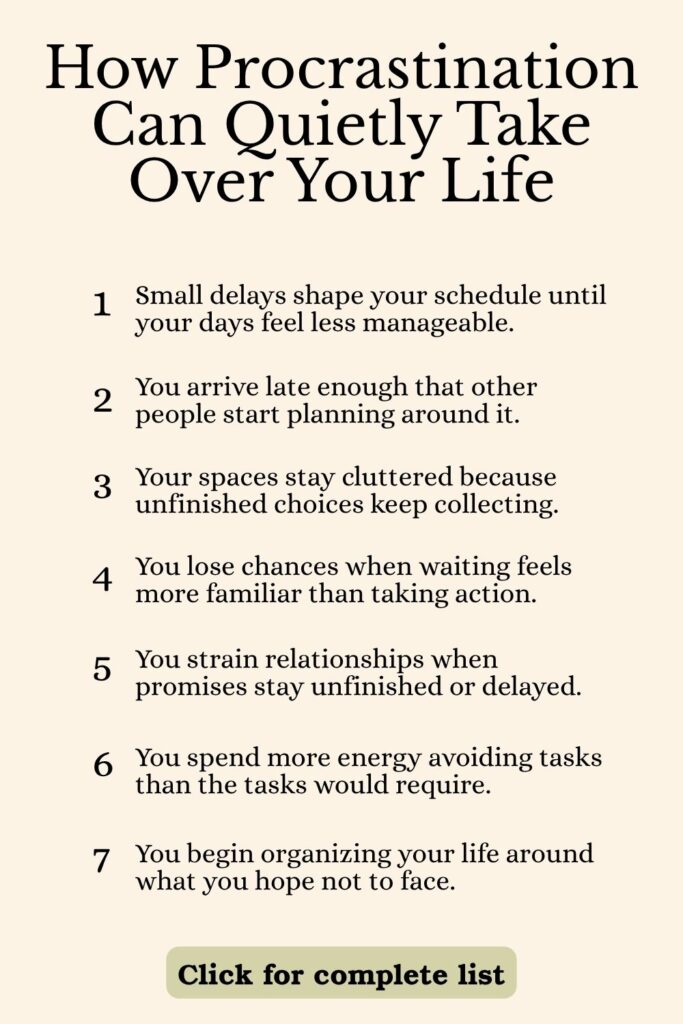
You overcome procrastination by changing the conditions that make delay more rewarding than action.
Determination may help you begin once. A workable system helps you begin repeatedly.
Start with one specific task and match the intervention to the cause:
If you want to get more from your life, and are looking for concrete action steps to get you there, check out our Request a Coach page. It’s a “cut the fence-sitting and take action” way to tackle your issues and actually find success. To get off the fence and start to take action, click or tap here.
- If you are confused, define the next physical action.
- If you doubt your ability, get information, practice, or feedback.
- If the task feels pointless, connect it to a valued result.
- If distraction keeps winning, change the environment.
- If the deadline feels distant, create an earlier checkpoint.
- If the task creates an uncomfortable feeling, address the feeling directly.
Support can be useful when you repeatedly misdiagnose the problem. A coach, mentor, manager, teacher, or trusted colleague may notice that you are treating uncertainty as a scheduling issue or treating distraction as a lack of ambition.
Are You Avoiding the Task or the Feeling the Task Creates?
Procrastination often protects you from an uncomfortable feeling for a few minutes rather than protecting you from the task itself.
A task may produce boredom, frustration, uncertainty, resentment, embarrassment, or fear of criticism. When you avoid it, the feeling briefly becomes less intense.
That relief reinforces the delay.
Sirois and Pychyl describe procrastination as a form of short-term mood repair. The present self escapes discomfort, while the future self inherits the unfinished task and its consequences.
Consider what may be happening beneath familiar delays:
- You avoid opening a bank statement because you fear what it will confirm.
- You postpone giving feedback because you expect the employee to become defensive.
- You keep editing your résumé because submitting it creates the possibility of rejection.
- You delay calling a contractor because you do not want to make an expensive decision.
- You ignore a medical appointment reminder because you are anxious about the examination.
Ask yourself:
“What feeling disappears for a few minutes when I choose not to begin?”
If you want to get more from your life, and are looking for concrete action steps to get you there, check out our Request a Coach page. It’s a “cut the fence-sitting and take action” way to tackle your issues and actually find success. To get off the fence and start to take action, click or tap here.
Then make the first action small enough that you can experience the feeling without being consumed by the entire task.
You might open the bank statement without trying to solve the financial problem immediately. You might draft the first two sentences of the feedback conversation without sending a meeting invitation yet.
A leadership coach might role-play a delayed performance conversation with a manager. The manager can practice the opening, receive feedback on tone, and prepare for likely responses. The task becomes less threatening because it is no longer completely unknown.
What Are You Avoiding, and What Will Delay Cost You?
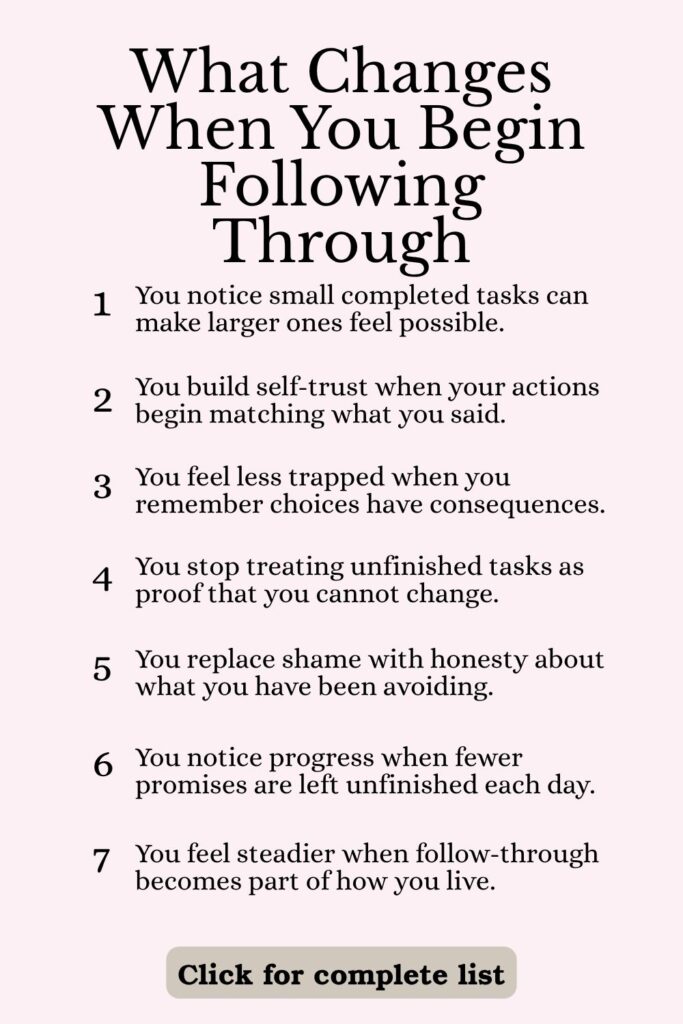
A useful procrastination list connects each avoided task to its cause, likely consequences, and next action.
Choose three tasks you have delayed. For each task, write down:
- The task: What specific action have you postponed?
- The trigger: What thought, feeling, or obstacle appears when you consider starting?
- The driver: Is the main issue expectancy, value, impulsiveness, or delay?
- The probable cost: What is realistically likely to happen if you continue postponing it?
- The first action: What can you complete in ten minutes or less?
For example:
- The task: Send the revised contract.
- The trigger: Fear that the client will reject the new price.
- The driver: Low expectancy and emotional avoidance.
- The probable cost: The project cannot begin, and the client may question your reliability.
- The first action: Read the pricing paragraph aloud and revise any unclear sentence.
Avoid turning every consequence into a disaster. “I will lose everything” rarely helps you think clearly.
Use the most probable consequence. The late form may produce a fee. The delayed conversation may allow a misunderstanding to continue. The unfinished application may miss the hiring deadline.
If you want to get more from your life, and are looking for concrete action steps to get you there, check out our Request a Coach page. It’s a “cut the fence-sitting and take action” way to tackle your issues and actually find success. To get off the fence and start to take action, click or tap here.
You can also list activities you start easily. Ask what makes them different.
Perhaps they offer an immediate reward, require little uncertainty, or give you visible progress. Those clues can help you redesign the task you are avoiding.
Which Time-Management Changes Actually Reduce Procrastination?
Time management reduces procrastination when it makes the next action clear, immediate, and difficult to avoid.
A task on a calendar is not automatically a startable task. “Work on taxes from 9 to 11” still leaves dozens of decisions unresolved.
A stronger plan would be:
- Open the tax folder at 9:00
- Download income statements
- List missing documents
- Email the accountant before 10:00
- Enter expenses for January and February
Break larger activities into steps that produce visible evidence of completion.
Developing a routine can also reduce the number of decisions required. If you review invoices every Friday at 2:00, you no longer have to choose a new time each week.
Set intermediate deadlines rather than relying only on the final deadline. A report due on the 30th might have separate dates for the outline, data, first draft, and review.
If you want to get more from your life, and are looking for concrete action steps to get you there, check out our Request a Coach page. It’s a “cut the fence-sitting and take action” way to tackle your issues and actually find success. To get off the fence and start to take action, click or tap here.
Changing “I have to” to “I choose to” can be useful when it restores a real sense of agency. It should not be used to pretend an unpleasant obligation is enjoyable.
You may not want to file the insurance form. You can still choose to file it because the alternative is losing coverage or paying more.
Make the choice and its consequences explicit:
- I can complete the form today and protect the coverage.
- I can delay it and accept the risk of missing the deadline.
- I can ask for help if I do not understand the form.
That is more useful than repeating an inspiring phrase while leaving the task unchanged.
Why Do Your Time Estimates Keep Failing?
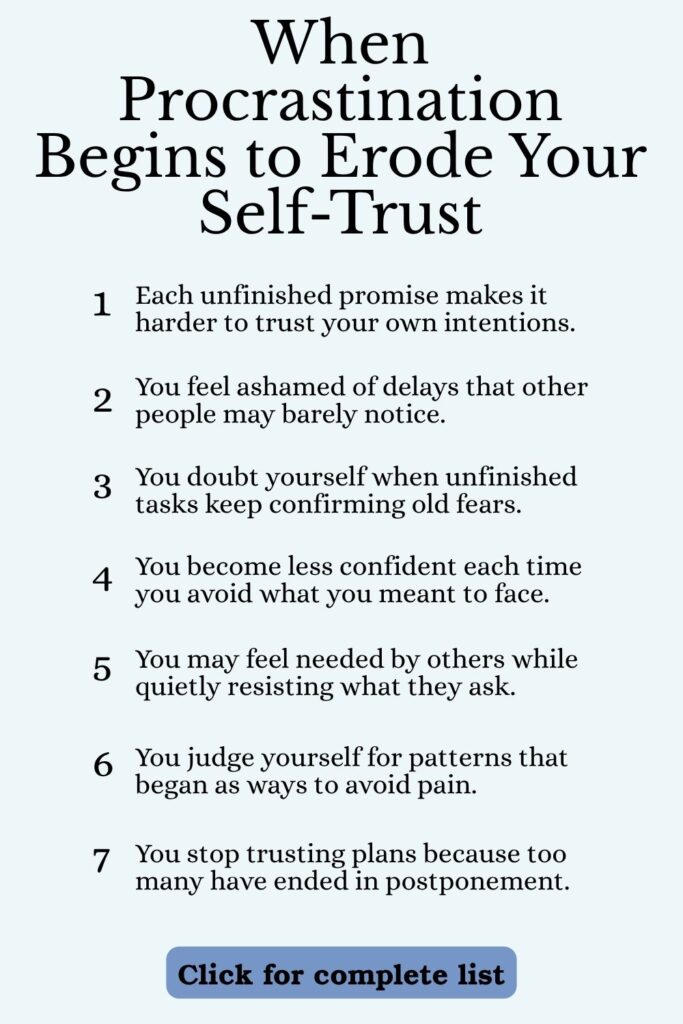
Your time estimates often fail because you imagine a smooth future plan instead of using evidence from similar tasks.
“Prepare the presentation” may sound like one two-hour activity.
In reality, it may require:
- Finding the latest figures
- Deciding what the audience needs to know
- Choosing the main argument
- Creating the slides
- Checking the numbers
- Asking for feedback
- Revising the structure
- Rehearsing
- Exporting and testing the final file
This prediction error is known as the planning fallacy.
If you want to get more from your life, and are looking for concrete action steps to get you there, check out our Request a Coach page. It’s a “cut the fence-sitting and take action” way to tackle your issues and actually find success. To get off the fence and start to take action, click or tap here.
In their 1994 research, Roger Buehler, Dale Griffin, and Michael Ross found that people made overly optimistic completion-time predictions across academic and nonacademic tasks. Participants tended to focus on how the current task could unfold while giving too little weight to relevant past experience.
Use reference-class forecasting instead.
Ask:
- How long did the last comparable task take?
- Which steps did I forget when I estimated it?
- What interruptions usually occur?
- How much revision was required?
- What happened the last time I said, “This should only take an hour”?
If the last three client proposals required four to six hours, do not schedule the next one for ninety minutes because you hope to be more efficient.
A productivity coach might have a client record predicted and actual task times for two weeks. The point is not to judge the client. It is to replace optimistic guesses with usable evidence.
What Does a Complete Anti-Procrastination Plan Look Like?
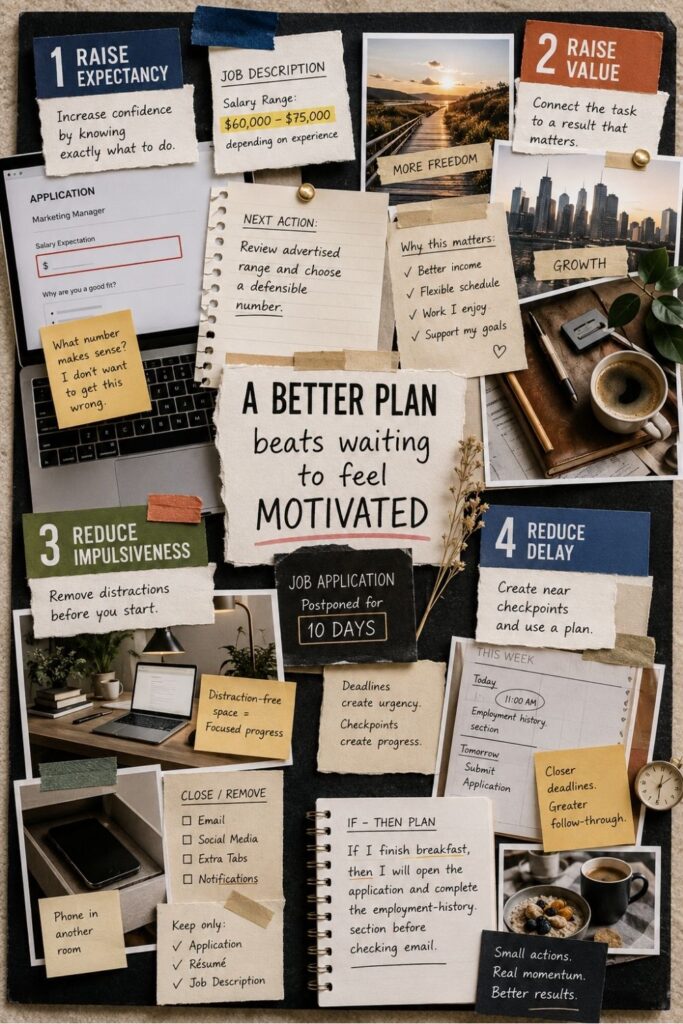
A complete anti-procrastination plan raises expectancy and value while reducing impulsiveness and delay.
Suppose you have postponed a job application for ten days.
1. Raise expectancy
Identify the part you do not know how to handle.
If you want to get more from your life, and are looking for concrete action steps to get you there, check out our Request a Coach page. It’s a “cut the fence-sitting and take action” way to tackle your issues and actually find success. To get off the fence and start to take action, click or tap here.
Perhaps the application asks for a salary expectation, and you are afraid of entering the wrong figure.
Your next action is not “finish application.” It is “review the advertised range and choose a defensible number.”
2. Raise value
Connect the application to a result you care about.
The form itself may have little value. The possibility of better hours, higher pay, or more meaningful work may matter considerably.
Write that result at the top of your notes. This keeps the task connected to its purpose.
3. Reduce impulsiveness
Remove the predictable distraction before starting.
Put your phone in another room. Close email. Keep only the application, résumé, and job description open.
Do this before you rely on willpower.
If you want to get more from your life, and are looking for concrete action steps to get you there, check out our Request a Coach page. It’s a “cut the fence-sitting and take action” way to tackle your issues and actually find success. To get off the fence and start to take action, click or tap here.
4. Reduce delay
Create a near checkpoint.
Instead of waiting for the closing date next week, decide that the employment-history section will be completed by 11:00 today and the final application will be submitted tomorrow.
An if-then plan can make the starting cue more concrete:
If I finish breakfast, then I will open the application and complete the employment-history section before checking email.
The plan works because each action addresses a particular barrier. It does not depend on suddenly feeling inspired.
When Is Procrastination More Than a Habit?
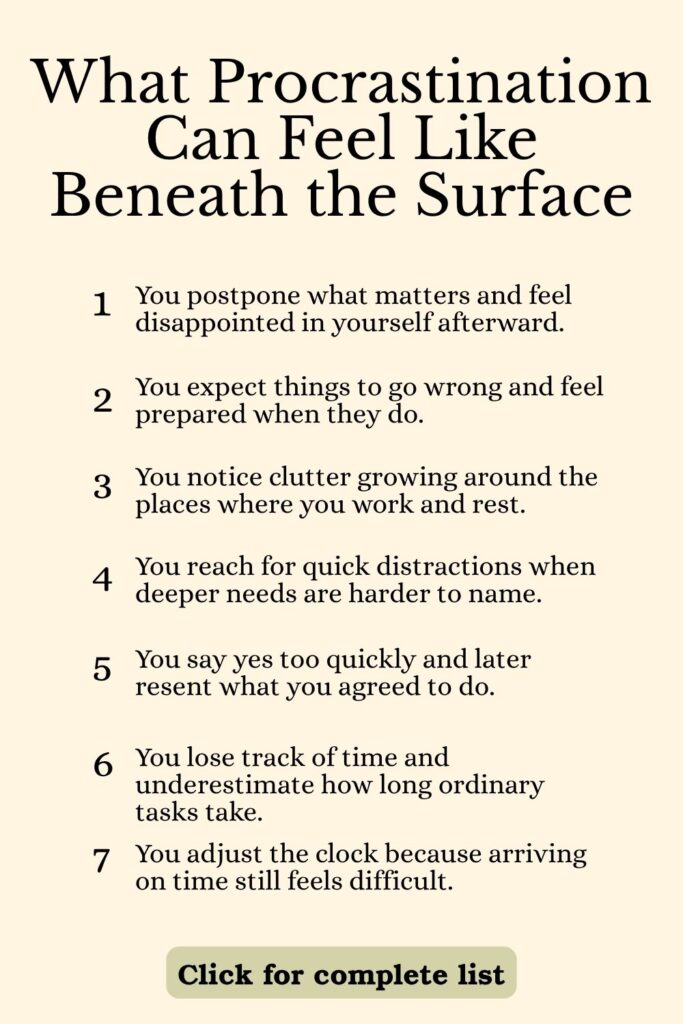
Procrastination requires additional support when it repeatedly causes serious impairment or occurs alongside other significant symptoms.
Consider speaking with a qualified mental health or medical professional when procrastination:
- Regularly threatens your employment, education, finances, health, or relationships
- Makes ordinary responsibilities consistently unmanageable
- Occurs alongside persistent anxiety, low mood, attention difficulties, or major sleep disruption
- Produces intense shame, hopelessness, or distress
- Continues despite repeated, structured attempts to change the pattern
- Involves avoiding urgent medical, legal, financial, or safety matters
Procrastination is a behavior pattern. It is not, by itself, proof of ADHD, anxiety, depression, or another condition.
If you want to get more from your life, and are looking for concrete action steps to get you there, check out our Request a Coach page. It’s a “cut the fence-sitting and take action” way to tackle your issues and actually find success. To get off the fence and start to take action, click or tap here.
Coaching may be useful for defining actions, practicing difficult situations, creating feedback loops, and maintaining accountability. Diagnosis and mental health treatment belong to appropriately licensed professionals.
A 2018 systematic review and meta-analysis by Alexander Rozental and colleagues examined 21 treatment comparisons involving 718 participants. Psychological treatments showed a small overall benefit compared with inactive controls, but the effects varied substantially between studies, and the authors called for stronger randomized trials.
The finding supports a realistic conclusion. Structured help may be useful, but no single technique should be presented as a guaranteed cure.
Frequently Asked Questions About Procrastination
What is the difference between procrastination and laziness?
Procrastination is delaying an intended action despite expecting negative consequences, while laziness usually describes an unwillingness to exert effort. A person who procrastinates may care deeply about the task and spend considerable energy worrying about it.
Why do I procrastinate on things I want to do?
You may procrastinate on a desired goal because one part of the process creates uncertainty, boredom, fear, or delayed rewards. Wanting the final result does not mean every step toward it feels valuable or safe.
Is procrastination a time-management problem or an emotion-regulation problem?
Procrastination can involve both time management and emotion regulation. Scheduling may help when the problem is unclear timing, but it will not fully resolve fear of failure, resentment, uncertainty, or task aversiveness.
Can perfectionism cause procrastination?
Perfectionistic standards can contribute to procrastination when starting or submitting work creates a risk of falling short. The delay may take the form of endless research, repeated revisions, or waiting until there is not enough time to produce the imagined perfect result.
Why do deadlines make me productive at the last minute?
Deadlines can increase motivation by making the consequence immediate. The distant task suddenly becomes urgent, which temporarily reduces the effect of delay in the Procrastination Equation.
If you want to get more from your life, and are looking for concrete action steps to get you there, check out our Request a Coach page. It’s a “cut the fence-sitting and take action” way to tackle your issues and actually find success. To get off the fence and start to take action, click or tap here.
How do I stop procrastinating when a task feels too big?
Reduce the task to one visible action that can be started immediately. “Organize the house” might become “put every item on the kitchen counter into one of three boxes: keep, move, or discard.”

Is procrastination related to ADHD, anxiety, or depression?
Procrastination can occur alongside ADHD, anxiety, depression, and other conditions, but procrastination alone does not establish a diagnosis. A qualified professional can assess whether a broader condition is affecting attention, motivation, energy, or emotional regulation.
When should I seek help for procrastination?
Seek help when repeated delay causes serious consequences, major distress, or persistent difficulty managing ordinary responsibilities. The appropriate support may include a therapist, doctor, coach, teacher, manager, or another professional, depending on the underlying problem.
How Do You Know You Are Making Progress?
You are making progress when your behavior changes, even if you still feel some resistance.
Look for evidence such as:
- Starting closer to the time you planned
- Completing intermediate checkpoints
- Estimating tasks more accurately
- Catching avoidance substitutions sooner
- Making distractions less accessible before working
- Asking for information instead of remaining stuck
- Recovering from a missed day without abandoning the whole plan
- Keeping small commitments more consistently
Doing what you said you would do builds evidence that you can rely on yourself. That evidence raises expectancy, which makes future action easier.
Small completed tasks matter when they strengthen follow-through. They become less useful when you use them to avoid the important task indefinitely.
Do not confuse responsibility with shame. Responsibility asks, “What caused the delay, and what needs to change before the next attempt?”
If you want to get more from your life, and are looking for concrete action steps to get you there, check out our Request a Coach page. It’s a “cut the fence-sitting and take action” way to tackle your issues and actually find success. To get off the fence and start to take action, click or tap here.
Shame says, “This delay proves something is wrong with me.”
Review the behavior. Identify the driver. Adjust the plan. Then complete the next visible action.
That is how a pattern begins to change.
Sources
Buehler, Roger, Dale Griffin, and Michael Ross. “Exploring the ‘Planning Fallacy’: Why People Underestimate Their Task Completion Times.” Journal of Personality and Social Psychology, vol. 67, no. 3, 1994, pp. 366–81. MIT, https://web.mit.edu/curhan/www/docs/Articles/biases/67_J_Personality_and_Social_Psychology_366%2C_1994.pdf.
Rozental, Alexander, et al. “Targeting Procrastination Using Psychological Treatments: A Systematic Review and Meta-Analysis.” Frontiers in Psychology, vol. 9, 2018, article 1588, https://www.frontiersin.org/journals/psychology/articles/10.3389/fpsyg.2018.01588/full.
Sirois, Fuschia M., and Timothy A. Pychyl. “Procrastination and the Priority of Short-Term Mood Regulation: Consequences for Future Self.” Social and Personality Psychology Compass, vol. 7, no. 2, 2013, pp. 115–27. White Rose Research Online, https://eprints.whiterose.ac.uk/id/eprint/91793/1/Compass%20Paper%20revision%20FINAL.pdf.
Steel, Piers. “The Nature of Procrastination: A Meta-Analytic and Theoretical Review of Quintessential Self-Regulatory Failure.” Psychological Bulletin, vol. 133, no. 1, 2007, pp. 65–94. PubMed, https://pubmed.ncbi.nlm.nih.gov/17201571/.
If you want to get more from your life, and are looking for concrete action steps to get you there, check out our Request a Coach page. It’s a “cut the fence-sitting and take action” way to tackle your issues and actually find success. To get off the fence and start to take action, click or tap here.
Read this next

How to Make the Most of Your Time
Never enough time is there? Find out how to make more time for the things you really enjoy.
Read More
Top Tools for Better Time Management
There are lots of time management tools, and if you want to stay on top of things, you should start using these. A calendar or other schedule is vital, but if you […]
Read More
Follow The 80/20 Rule
Life coaching quote of the day: Follow the 80/20 rule. 20% of your time produces 80% of your results. Don’t waste your time trying to get the last 20% done […]
Read More