






New Coach? This Is the Client-Getting System You Need Before You Post More Content
How Can You Land Your First or Next Coaching Client?
Getting coaching clients becomes easier when you stop treating client generation as a collection of disconnected marketing activities and build one clear path from interest to a paid coaching relationship.
You need an offer people can understand, places where the right prospects can discover you, a simple next step, and a way to follow up when someone shows interest. That gives you something you can improve instead of starting from zero every time you need another client.
Key Takeaways
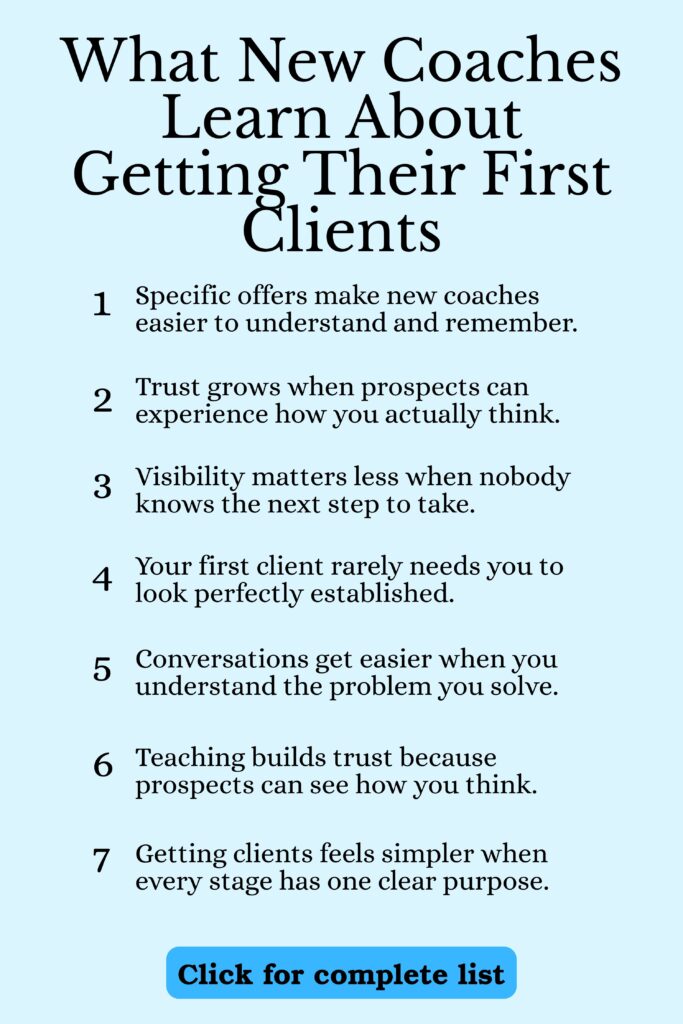
- Start with one specific result. A new coach is easier to understand and refer when prospects can quickly see who the offer is for, what problem it addresses, and what changes.
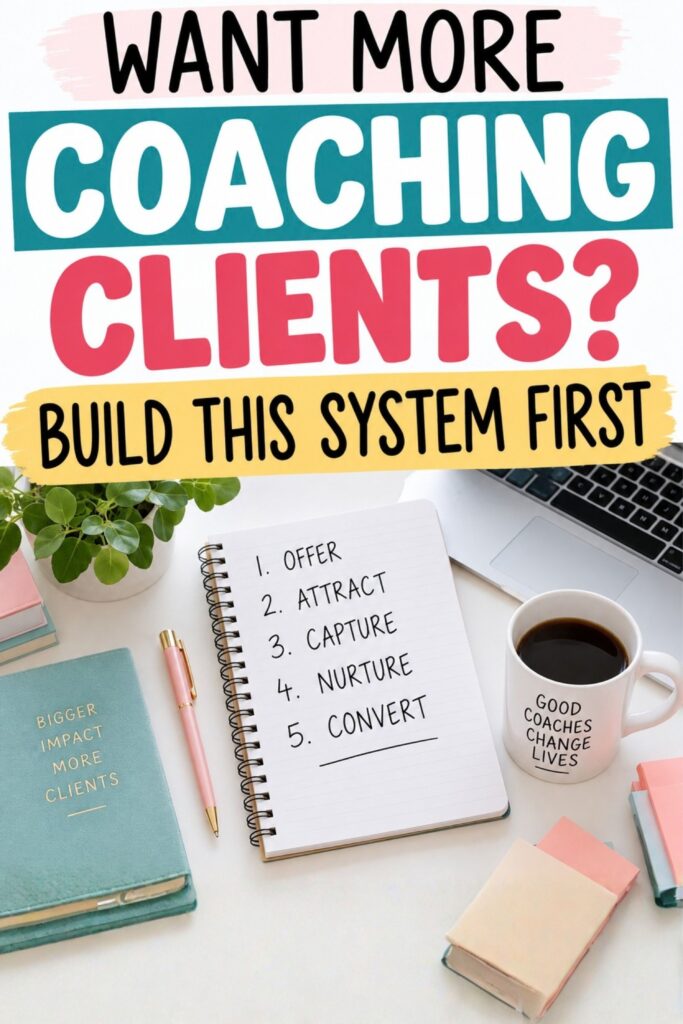
- Build a path, not random marketing. Use a simple sequence: Offer → Attract → Capture → Nurture → Convert, so interested people always have a clear next step.
- Teach to create evidence of expertise. Share useful explanations, frameworks, and resources that let prospects experience how you think before you ask them to buy coaching.
- Follow up after interest appears. A good conversation is not the finish line. Record what mattered, send something relevant, and invite the person to the next appropriate step.
- Track the conversion points. Count conversations, captured contacts, booked consultations, attended consultations, and new clients so you can see where your client-getting system is leaking.
How Do You Get Your First Coaching Clients as a New Coach?
You get your first coaching clients by creating one clear path from a specific problem to a specific paid offer. Define who you help and what result you help them work toward, get in front of those people, give interested prospects an easy next step, follow up, and invite the right prospects into coaching.
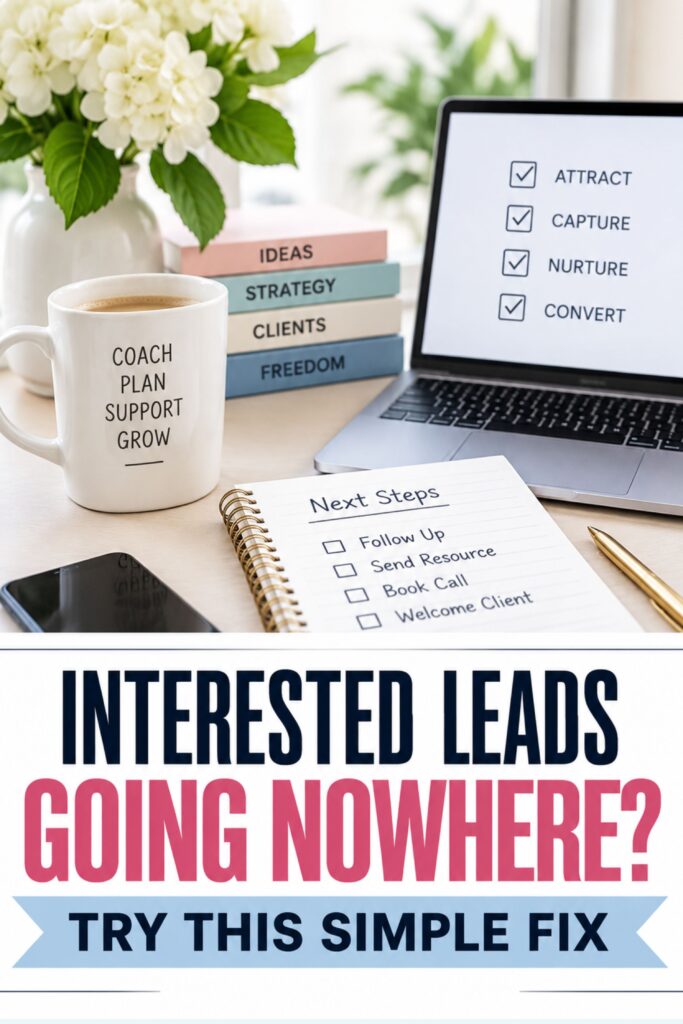
A useful way to structure that path is Offer → Attract → Capture → Nurture → Convert. Your offer gives people a reason to care. Attraction puts you in front of them. Capture gives them a low-commitment way to raise their hand. Nurturing builds familiarity and trust. Conversion turns genuine interest into a clear coaching decision.
You do not need ten marketing channels to make this work. You need a path that makes the next step obvious.
Who Exactly Is Your First Coaching Offer For?
Your first offer should make one particular type of prospect immediately think, “That sounds like it was created for me.”
SEE ALSO: If you’re a coach looking to streamline your administrative tasks and save time, check out our Coaching Administration Software. It’s a simple, effective solution designed to help you focus less on paperwork and more on what matters—coaching your clients. From scheduling to client management, our software gives you the tools to run your business efficiently. Ready to reclaim your time and boost productivity? Click or tap here.
Use three pieces:
- Person: Who is dealing with the problem?
- Problem: What are they trying to change, fix, decide, or achieve?
- Result: What concrete progress will your coaching help them make?
“I provide leadership coaching” gives a prospect very little to grab onto. “I help newly promoted managers lead their first team without second-guessing every difficult conversation” gives both the coach and the prospect something much more concrete to discuss.
Specificity matters in a growing profession. The International Coaching Federation’s 2025 Global Coaching Study reports 122,974 coach practitioners worldwide, up 15% since 2023. That does not mean you need an extremely narrow niche, but it does make a generic description of “life coaching for anyone who wants change” harder to distinguish from thousands of other offers.
A useful test is simple. Could somebody who hears about your coaching describe, in one sentence, who they should refer to you? If not, tighten the person, problem, or result before you add more marketing.
What Can You Help a Client Achieve in 30 Days?
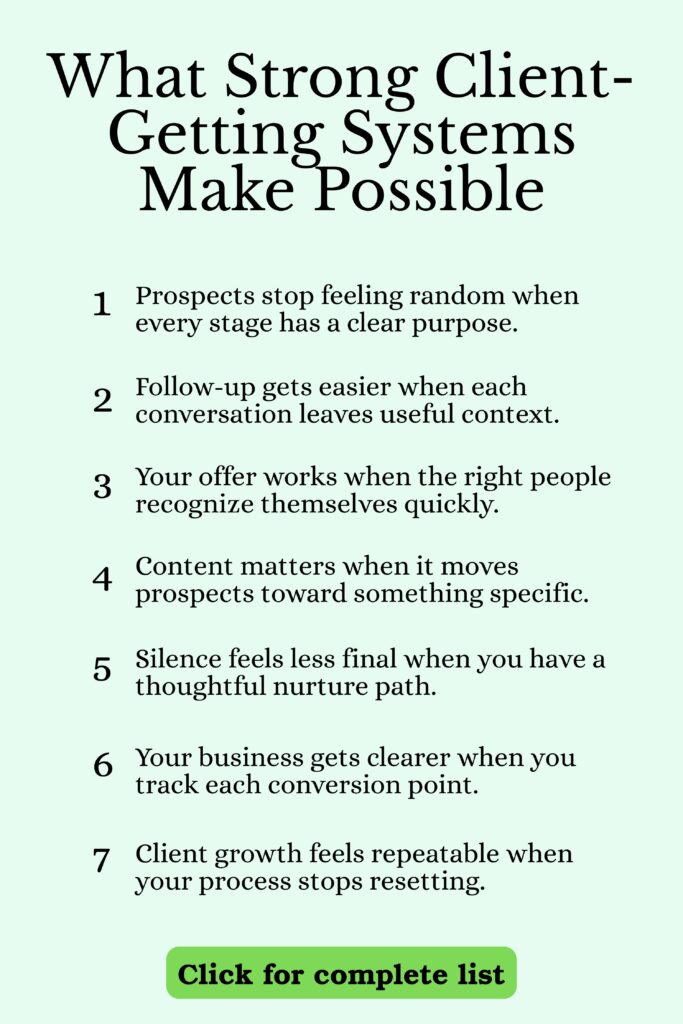
In today’s economy, people want solutions quickly. It doesn’t matter that they’ve been struggling for months or years with an issue, behavior, or circumstance. When they are ready for a change, it has to be quick.
Rather than wage a losing battle trying to convince your next prospect that your 6-month program is the answer, why not create a 30-day program that delivers a specific outcome? Just repurpose your existing program into smaller modules.
SEE ALSO: If you’re a coach looking to streamline your administrative tasks and save time, check out our Coaching Administration Software. It’s a simple, effective solution designed to help you focus less on paperwork and more on what matters—coaching your clients. From scheduling to client management, our software gives you the tools to run your business efficiently. Ready to reclaim your time and boost productivity? Click or tap here.
What Is the Easiest Next Step a Prospect Can Take?
A prospect needs a smaller next step between “I just discovered this coach” and “I’m ready to buy a coaching program.”
Match that step to the amount of trust the prospect already has.
Someone who has only seen one LinkedIn post may be ready to download a useful checklist. Someone who has followed you for three months may be ready for a discovery call. Someone who has already attended one of your workshops may be ready for a paid starter session.
For example, a career coach could create a short Career Change Readiness Worksheet. At the end, the natural next step might be a 20-minute consultation for people who have identified a decision they want help working through.
The principle is one stage, one action. Do not give a prospect seven buttons and ask them to choose among a newsletter, webinar, course, discovery call, assessment, membership, and three coaching packages.
If you want the mechanics in one place after you have designed that path, LCH Core can support lead magnets, while the Public Booking Page gives prospects a direct way to book a session. The Public Booking Page setup guide shows how the booking flow works. Coaches selling courses or digital products can also organize those through a Public Store, with a separate Public Store support guide.
SEE ALSO: If you’re a coach looking to streamline your administrative tasks and save time, check out our Coaching Administration Software. It’s a simple, effective solution designed to help you focus less on paperwork and more on what matters—coaching your clients. From scheduling to client management, our software gives you the tools to run your business efficiently. Ready to reclaim your time and boost productivity? Click or tap here.
The tool comes after the decision. First decide what the prospect’s most logical next step is.
How Can You Turn What You Know Into Revenue?
When your knowledge solves a problem your market already cares about, teaching can become the bridge between expertise and paid coaching.
How Does Educating Your Market Create Coaching Opportunities?
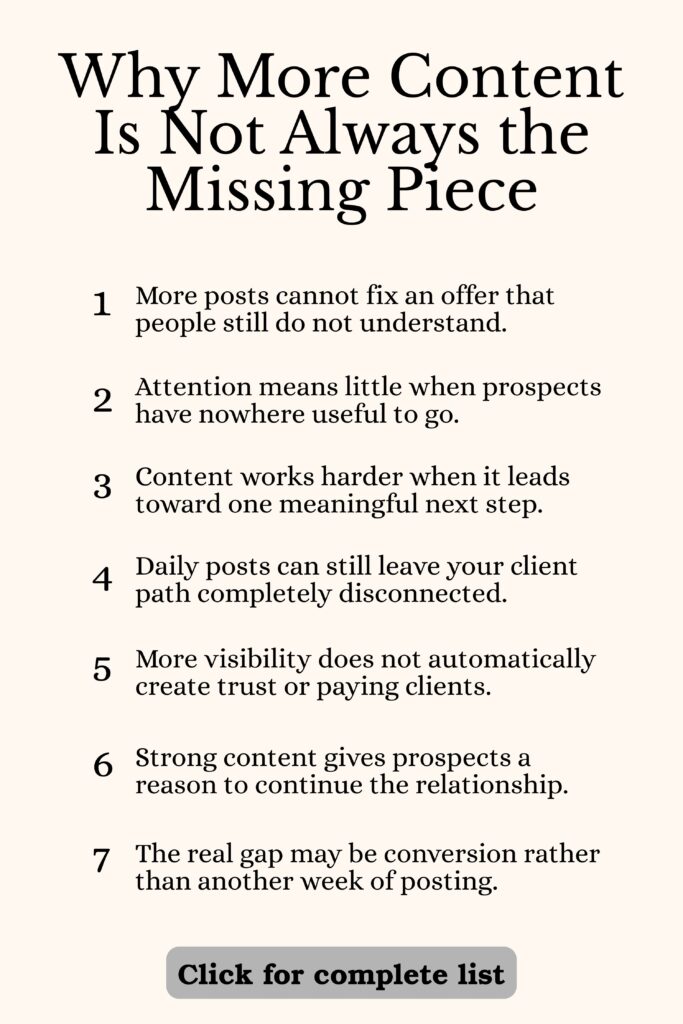
Educating your market on what they don’t know will help you discover new opportunities.
Let’s say that you are a health coach that helps those with diabetes design action plans for a healthy lifestyle after the diagnosis. There is so much to know and to be concerned with that could be lessened by having an advocate. You can be their advocate by knowing more than they do about ways to have a healthy lifestyle.
When you show up as a coach in your field with piles of resources, activities, and information to share, your business takes on a different focus. You become the expert, the advocate, people suffering with diabetes need. Now, your coaching makes sense!
How Do You Turn What You Know Into Proof?
You turn expertise into proof by letting prospects see how you diagnose a problem, organize information, and move someone toward a useful next step.
SEE ALSO: If you’re a coach looking to streamline your administrative tasks and save time, check out our Coaching Administration Software. It’s a simple, effective solution designed to help you focus less on paperwork and more on what matters—coaching your clients. From scheduling to client management, our software gives you the tools to run your business efficiently. Ready to reclaim your time and boost productivity? Click or tap here.
A simple pattern is Teach → Demonstrate → Invite.
First, teach one small idea your prospect can use. A leadership coach might explain the difference between giving corrective feedback and unloading frustration on an employee.
Next, demonstrate how you work with that idea. You might show three questions you use to prepare for a difficult feedback conversation, or share a short worksheet that separates the behavior, its impact, and the requested change.
Then invite the person to the next logical step. That could be completing the worksheet, booking a conversation, or exploring the coaching offer that addresses the larger problem.
This is more convincing than repeatedly telling people you are an expert because the prospect gets to experience a small piece of your thinking.
It also gives every piece of educational content a job in your client path. If you want to build out that journey more fully, How to Master Funnels as a Coach (and Why You Need To) explains how attraction, nurturing, conversion, retention, and additional offers connect.
SEE ALSO: If you’re a coach looking to streamline your administrative tasks and save time, check out our Coaching Administration Software. It’s a simple, effective solution designed to help you focus less on paperwork and more on what matters—coaching your clients. From scheduling to client management, our software gives you the tools to run your business efficiently. Ready to reclaim your time and boost productivity? Click or tap here.
Where Can You Meet More of the People You Want to Coach?
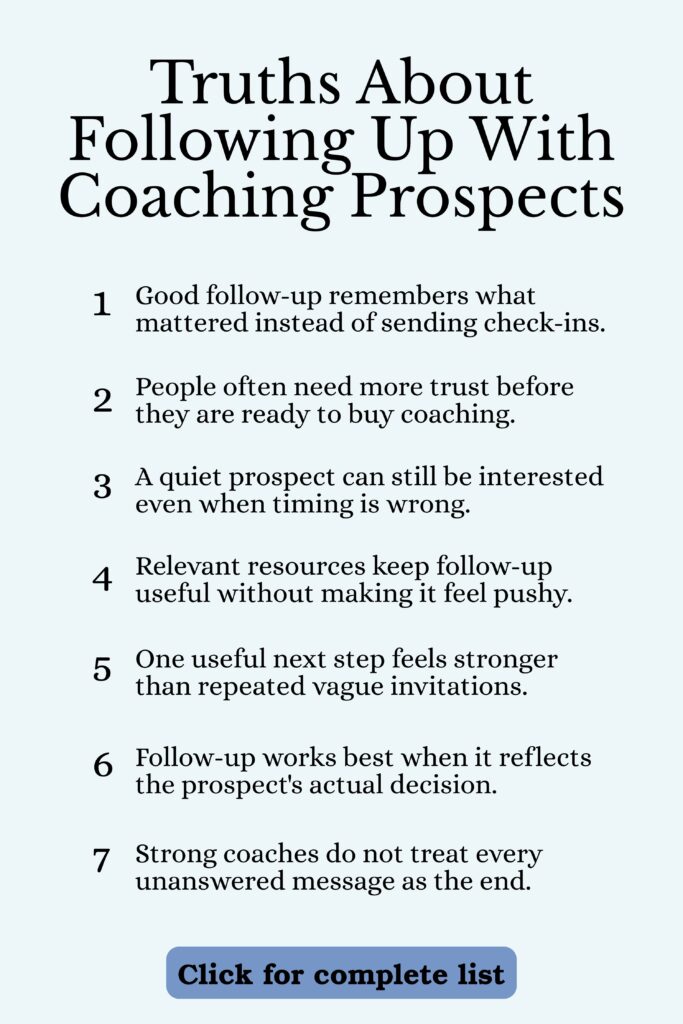
You generate more opportunities when you deliberately spend time in places where your target clients already talk about the problems you help solve.
Do not translate “be everywhere” into “open an account on every platform.” A career coach might get better information from a professional association, LinkedIn conversations, alumni groups, and local networking events than from trying to post every day on six social networks.
Listen for recurring language. What questions keep appearing? What decisions are people stuck on? What have they already tried? Those conversations tell you how your market describes the problem in its own words.
Being findable matters too. Alongside your own networking and visibility channels, you can create a free life coach directory listing so people already looking for coaching have another way to discover you.
What Will You Say When the Conversation Starts?
Practice what you would say to start a conversation with a stranger.
One of the greatest fears new coaches have is coming across as a beginner. They feel their lack of confidence will show up before they do. So, talking with complete strangers becomes a chore.
SEE ALSO: If you’re a coach looking to streamline your administrative tasks and save time, check out our Coaching Administration Software. It’s a simple, effective solution designed to help you focus less on paperwork and more on what matters—coaching your clients. From scheduling to client management, our software gives you the tools to run your business efficiently. Ready to reclaim your time and boost productivity? Click or tap here.
Think differently and you’ll get a different result. Having a conversation about the weather could lead to talking about health issues. Or talking with a mom about schools could lead to her struggle with the children.
When you know who you want to help and understand the nuances of their life, having meaningful conversations can become like a game. Strive to learn their story and build a relationship where you genuinely care.
What Should You Do After a Promising Conversation?
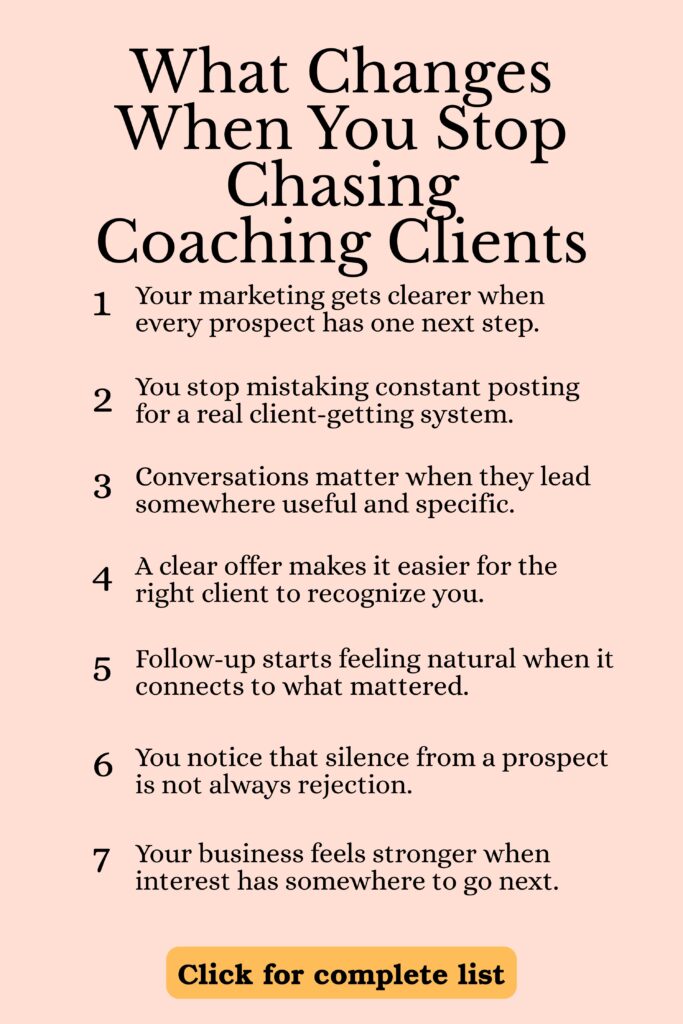
After a promising conversation, capture what mattered and create one relevant reason to continue the relationship.
Use a simple three-step follow-up:
- Record the signal. Note the problem, goal, timing, or concern the person actually mentioned.
- Send something relevant. Share one resource, question, worksheet, or useful piece of information connected to that conversation.
- Offer one next step. If there is a genuine fit, invite them to a consultation, starter session, or relevant coaching package.
Imagine a career coach meets someone who says, “I know I want out of my job, but I can’t tell whether I need a new company or a completely new career.”
A useful follow-up is not, “Just checking in to see whether you want coaching.”
SEE ALSO: If you’re a coach looking to streamline your administrative tasks and save time, check out our Coaching Administration Software. It’s a simple, effective solution designed to help you focus less on paperwork and more on what matters—coaching your clients. From scheduling to client management, our software gives you the tools to run your business efficiently. Ready to reclaim your time and boost productivity? Click or tap here.
A stronger follow-up could reference that exact decision, send a short exercise for comparing the two options, and invite the person to talk if they want help working through what the exercise uncovers.
If you manage a growing number of these conversations, a CRM keeps them from disappearing into your inbox. In LCH Core, client profiles and notes can be used to keep the relevant context together, and the client-management support guide covers how client information and notes are organized.
The point is not aggressive follow-up. It is avoiding the common mistake of treating every conversation that does not produce an immediate sale as finished.
How Do You Know Which Part of Your Client-Getting System Is Broken?
You find the weak point in your client-getting system by tracking each step separately instead of judging marketing by the single question, “Did I get a client?”
Track five numbers each week:
- Relevant conversations started
- Interested contacts captured
- Consultations booked
- Consultations attended
- New clients
The pattern tells you where to look.
SEE ALSO: If you’re a coach looking to streamline your administrative tasks and save time, check out our Coaching Administration Software. It’s a simple, effective solution designed to help you focus less on paperwork and more on what matters—coaching your clients. From scheduling to client management, our software gives you the tools to run your business efficiently. Ready to reclaim your time and boost productivity? Click or tap here.
If you have almost no conversations, your visibility or outreach is the likely constraint.
If plenty of people talk to you but almost nobody takes a next step, inspect your offer and your call to action. The prospect may not understand what you help with or what to do next.
If ten people book consultations and six fail to attend, examine the booking and reminder process.
If consultations happen but very few prospects become clients, review the fit between the people you are attracting, the problem discussed on the call, and the coaching offer you are presenting.
Do not respond to every weak number by “posting more.” Fix the stage where people are actually dropping out.
Where LCH Core Fits
LCH Core fits after you have decided how you want prospects to move from first contact to coaching client, because software can run the process but it cannot decide the strategy for you.
SEE ALSO: If you’re a coach looking to streamline your administrative tasks and save time, check out our Coaching Administration Software. It’s a simple, effective solution designed to help you focus less on paperwork and more on what matters—coaching your clients. From scheduling to client management, our software gives you the tools to run your business efficiently. Ready to reclaim your time and boost productivity? Click or tap here.
For the client path in this framework, the tools line up naturally:
- Attract: lead magnets give people a useful first interaction with your work.
- Capture: the Public Booking Page gives interested prospects a place to book directly.
- Organize: client management (CRM) keeps client profiles, notes, and intake forms together.
- Convert: coaching packages, payments, and billing give an interested prospect a defined way to buy.
- Onboard: a Welcome Package can bring together the welcome letter, coaching agreement with electronic signature, and forms once somebody becomes a client.
- Deliver: journals, worksheets, goals, action items, and reusable resources support the work after the sale.
- Track: the Progress Stream and Engagement Report help you review client activity and progress.
- Expand: courses and digital products can be sold through the Public Store when they make sense as part of your offer mix.
If you are setting up those pieces for the first time, the LCH Core video tutorial library walks through the core workflows.
The useful question is not, “Which features can I turn on?” It is, “What should happen next when somebody becomes interested in working with me?” Once that path is clear, LCH Core can help you run the operational pieces without rebuilding the process for every prospect and client.
FAQ
How do I get my first coaching client with no audience?
You can get your first coaching client without an audience by starting with direct relationships rather than waiting to build a large following. Define who you help, talk to people in that market, teach something useful, and give interested people a clear next step.
What should I offer as a new life coach?
A new life coach should start with a clearly defined offer built around one recognizable problem and outcome. A focused starter package or short program is usually easier to explain and test than several loosely defined services.
Should a new coach offer free discovery calls?
A free discovery call can work well when the prospect needs a conversation before deciding whether coaching is a fit. Give the call a specific purpose and length so it does not become an unpaid coaching session without a clear decision point.
SEE ALSO: If you’re a coach looking to streamline your administrative tasks and save time, check out our Coaching Administration Software. It’s a simple, effective solution designed to help you focus less on paperwork and more on what matters—coaching your clients. From scheduling to client management, our software gives you the tools to run your business efficiently. Ready to reclaim your time and boost productivity? Click or tap here.
How long should my first coaching package be?
Your first coaching package should be long enough to support the result you are promising, rather than based on an arbitrary industry standard. A 30-day program can work for a tightly defined outcome, while more complex changes may require a longer engagement.
How do I find people who might need coaching without being pushy?
Find potential coaching clients by participating in places where your target market already discusses the problem you solve. Ask questions, listen, teach where useful, and invite people to a next step only when the conversation shows a genuine fit.
How often should I follow up with a potential coaching client?
You should follow up when you have a relevant reason to continue the conversation rather than sending repeated generic check-ins. Reference what the person told you, provide something useful, and make the next action clear.
Do I need a website before I can get coaching clients?
You do not need a full website before you can get your first coaching clients. You do need a credible way for prospects to understand what you offer, learn enough about you to establish trust, and take the next step.
What numbers should a new coach track when trying to get clients?
A new coach should track relevant conversations, interested contacts captured, consultations booked, consultations attended, and new clients. Those five numbers show whether the problem is visibility, lead capture, attendance, or conversion.
Sources
International Coaching Federation. “ICF Global Coaching Study | Insights on Professional Coaching.” International Coaching Federation, 2025. ICF Global Coaching Study. Accessed 22 Sept. 2026.
SEE ALSO: If you’re a coach looking to streamline your administrative tasks and save time, check out our Coaching Administration Software. It’s a simple, effective solution designed to help you focus less on paperwork and more on what matters—coaching your clients. From scheduling to client management, our software gives you the tools to run your business efficiently. Ready to reclaim your time and boost productivity? Click or tap here.
Read this next
Coaches Who Get Clients Online Don’t Just Post More. They Build This
Discover important marketing tips that can help you to attract clients and give your coaching business a boost.
Read More
7 Proofs That Strong Public Speaking Can Attract Coaching Clients
Get more clients as a coach by using public speaking
Read More
Hot Topics in Life Coaching: Personal Development Topics that Will Get You More Course Clients
Helpful course ideas for coaching courses that can help to bring in more clients.
Read More