


Talk to a coach about Interpersonal skills coaching

Dr. Kate Watson
B.A Psychology, M.Ed. Psychological Counseling, Dr.PH in Public Health, Certified Health Coach, Certified Life Coach, Certified Mind and Body Specialist, Certified Women's Empowerment Coach, Certified Neurodiversity Coach
Dr. Kate Watson helps people with boundaries, coping strategies, and...
Menna Jones
Certified Health & Wellness Coach (Real Balance Global Wellness)
Health & Wellness Coaching For Women Going Through Menopause

A.C. Pickard
Emotion Mastery Coach | Creator of the M.A.S.T.E.R. Method™ | Certified Emotional Intelligence Life Coach | B.S. Social Sciences
Emotion Mastery Coach for thoughtful adults who know better and...

Andrea and Jeremie King
Real Talk For Men - Coaching and Courses
Inner Clarity - Outer Harmony - Real Results - One...

Lisa Flynn
BA, RYT 200, Certified Mastery Method Coach (ICF accredited)
I help 30-40-year-olds build deeper connections, speak confidently, & live...

Amy Thiessen
BComm, MA, Master’s in Clinical Psychology (MAP), Professional Certified Coach (PCC), Somatic Experiencing Practitioner (SEP)
Services Transform the way others hear you — and the...

Rachel E Serrano
BA in Pyschlogy, training in advanced Motivational Interviewing, and CBT and DBT training.
You are more powerful than you think. You’re already here,...

Ben Bharat Berwing
ICF PCC & ACTC | Certified Transformative Coach | TEDx Speaker
ICF PCC & ACTC coach for life transitions, Simple Living...


How to Set Healthy Boundaries in Your Relationships
Good boundaries are important to healthy relationships.
Boundaries are beautiful! Have you ever heard the expression, “good fences make good neighbors?” It’s true and here is why.
Key Takeaways
- Healthy boundaries define acceptable behavior. They clarify what you allow, what you do not allow, and what action you will take when a limit is crossed.
- Awareness comes before communication. You need to notice the beliefs, roles, habits, and situations that push you toward automatic agreement or delayed resentment.
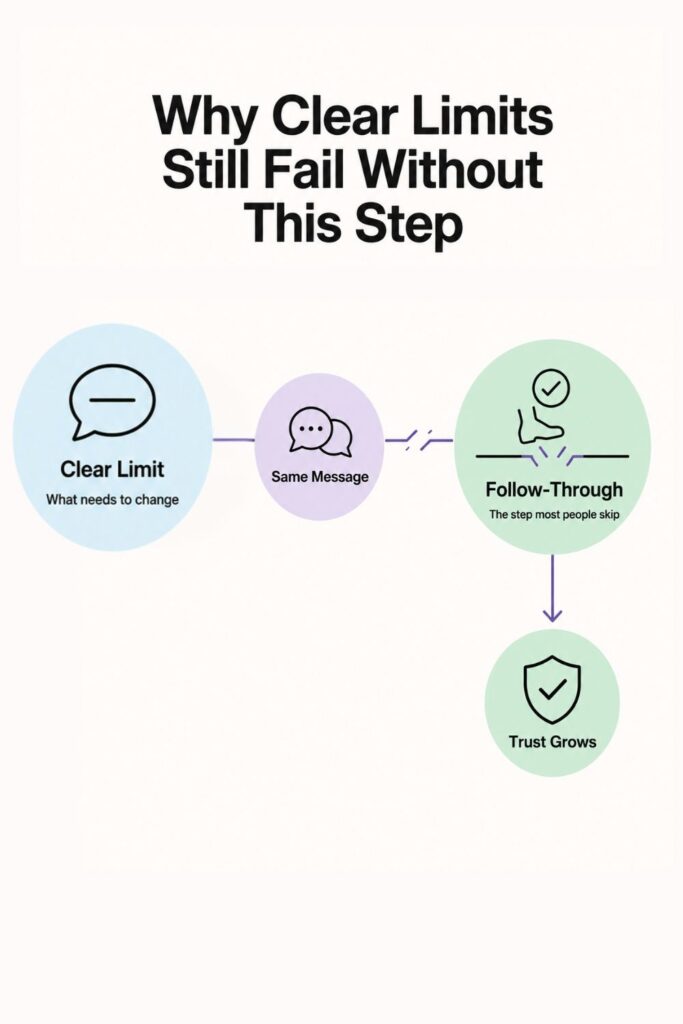
- A complete boundary includes follow-through. Naming a limit without deciding what you will do if it continues leaves the boundary dependent on someone else’s cooperation.
- Consistency makes boundaries credible. Repeating the same response calmly teaches other people what to expect and prevents one-time rules from collapsing under pressure.
- Boundaries should be calibrated over time. You can loosen or reinforce a limit when real behavior, changing circumstances, or rising resentment shows the current perimeter is no longer effective.
How Do You Set Healthy Boundaries in Relationships?
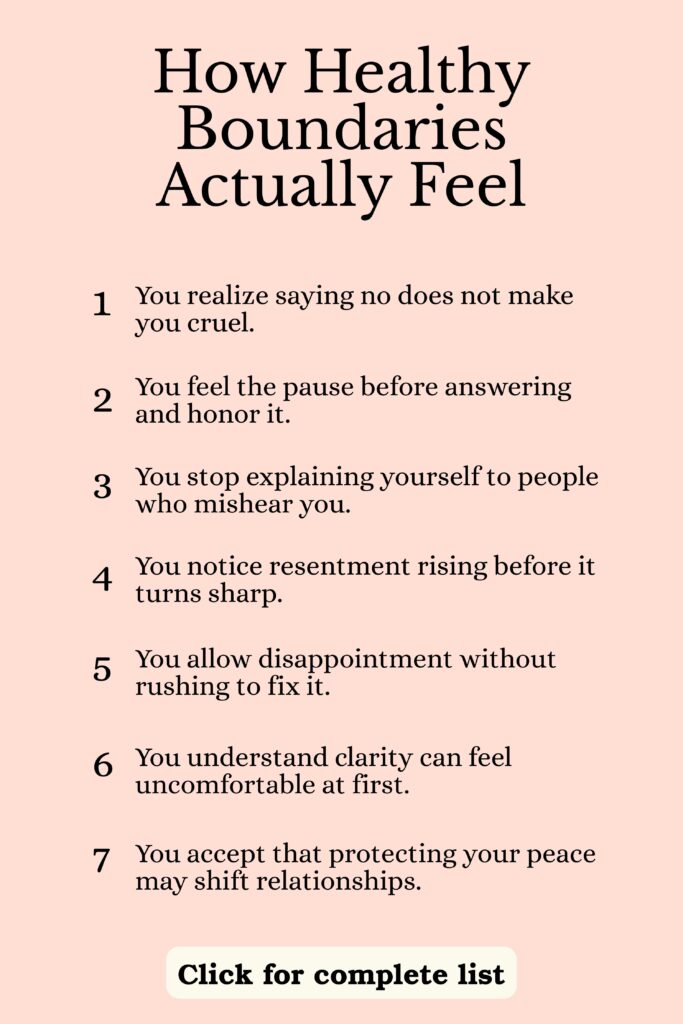
Healthy boundaries are set by identifying what matters to you, deciding what behavior you will and will not accept, communicating the limit clearly, and following through consistently. A boundary is not a demand that another person change. It is a statement of what you will do when a limit is crossed.
Use the MAP process by noticing the belief or pattern driving your automatic response, defining your Mindful Autonomous Perimeter, choosing a practical response, and calibrating it based on what happens. Healthy boundaries are clear enough to act on, flexible enough to adjust, and consistent enough that other people know what to expect.
Why Do Healthy Relationships Need Boundaries?
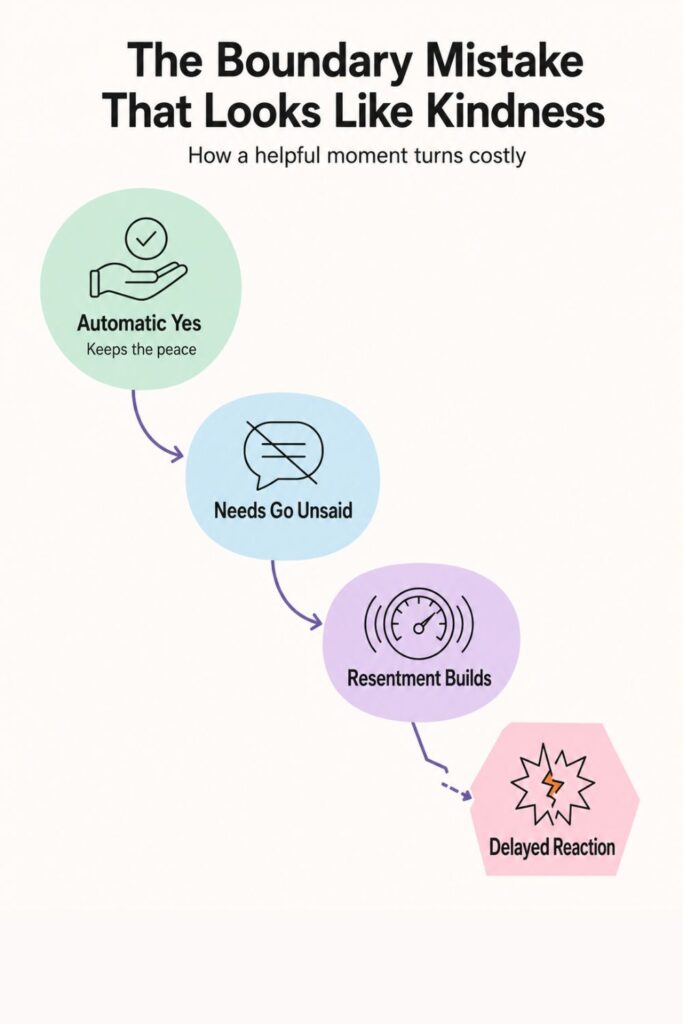
Without proper boundaries, relationships will not function well.
Sometimes, establishing boundaries is a bit like a balancing act. Boundaries that are too loose can leave you trampled on. Boundaries that are too strict can leave you isolated. Boundaries that are inconsistently reinforced leave you scorned. Boundaries that are too self serving are distasteful.
But boundaries that have been artfully crafted are healthy and beautiful. They are beautiful because no one gets trampled on, no one is isolated, no one feels mocked and no one feels taken advantage of.
How Do Boundaries Create Function and Flow?
If you struggle with crafting the perfect boundaries with others, or even with one specific individual, Life Coaching can help you navigate the balancing act. Your relationships will be more flexible and consist of more ease and flow.
If you want to get more from your life, and are looking for concrete action steps to get you there, check out our Request a Coach page. It’s a “cut the fence-sitting and take action” way to tackle your issues and actually find success. To get off the fence and start to take action, click or tap here.
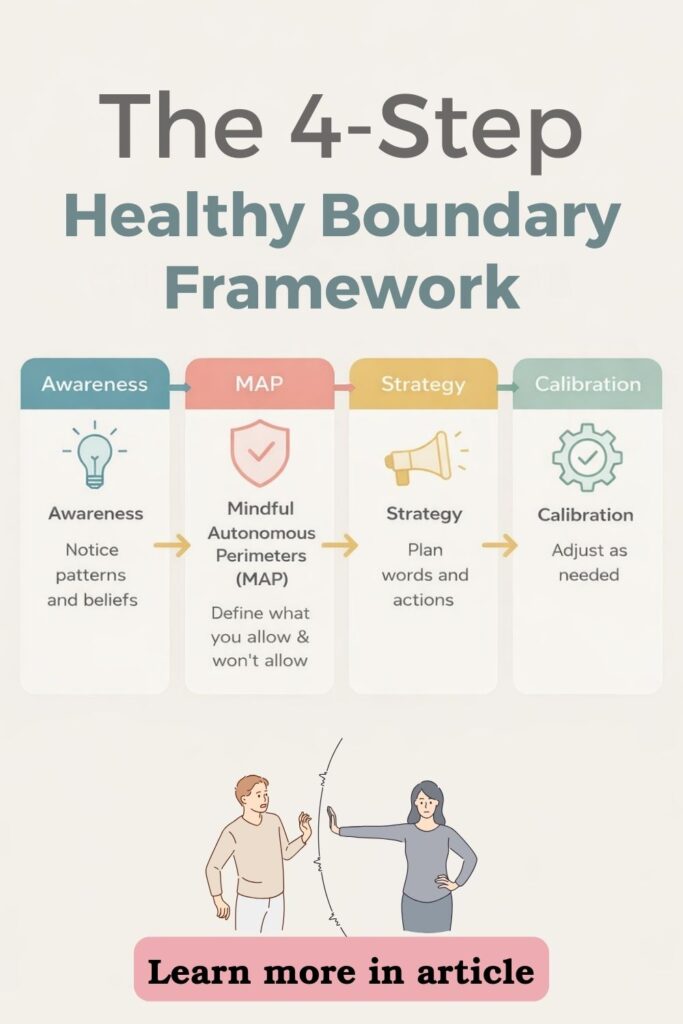
There are four concrete steps to crafting healthy boundaries. An experienced Life Coach will walk you through and customize the progressive steps, so that dysfunctional relationships become more fulfilling.
What Is Step One for Setting Healthy Boundaries?
The first step involves levels of awareness. Awareness of your identity, your purpose, your beliefs and values, your skills and capabilities, your behaviors and your environment all play into your decision orientation when establishing or failing to establish proper boundaries.
What Is Step Two for Setting Healthy Boundaries?
The next step is to establish your MAP – Mindful Autonomous Perimeters. Each MAP will vary from Client to Client and is dependent on personal boundary struggles. A Client who struggles with consistent reinforcement of boundaries will have a decidedly different MAP than the Client who suffers difficulties from boundaries which are too strict.
What Is Step Three for Setting Healthy Boundaries?
The third step in creating healthy, effective boundaries is to adapt strategies and techniques to uphold the MAP. Strategies may include unhooking when someone pushes your buttons and techniques to identify various types of chronic over-steppers and their standard operating procedures.
What Is Step Four for Setting Healthy Boundaries?
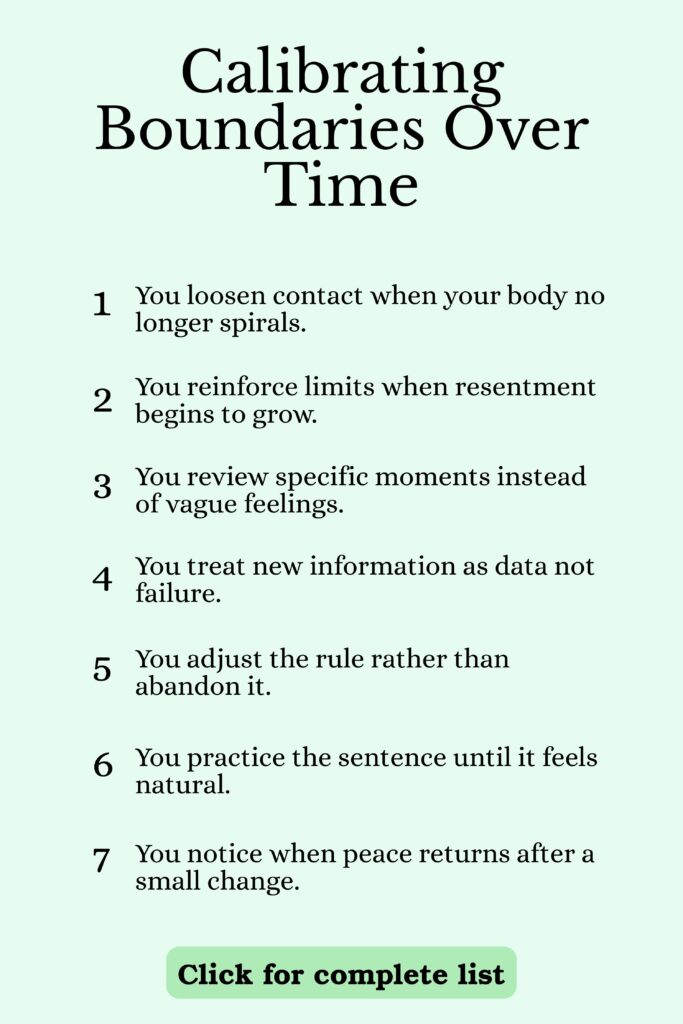
Calibration is the last step in establishing healthier boundaries. It may be necessary to forward pace for a time and practice your MAP, tweaking it until satisfactory and effective results are achieved.
What Can You Do This Week to Create Healthier Boundaries?
What can you do this week to create healthier boundaries in your life? Let me know in the comments below.
What Does Boundary Awareness Look Like in Real Life?
Awareness isn’t a personality quiz. It shows up in moments.
You agree to host a family dinner you don’t want to host. You’re tired. Your week is packed. But you say yes anyway.
If you want to get more from your life, and are looking for concrete action steps to get you there, check out our Request a Coach page. It’s a “cut the fence-sitting and take action” way to tackle your issues and actually find success. To get off the fence and start to take action, click or tap here.
Two days later, you’re snapping at your partner and slamming cabinet doors.
That’s Step One.
Look at it closely:
- Identity: “I’m the responsible one.”
- Belief: “If I say no, I’m selfish.”
- Behavior: Automatic yes.
- Environment: A family that expects you to absorb stress.
Nothing mystical. Just observable.
When you slow this down, you see the real decision point. Not the dinner. The belief.
A relationship or communication coach would pause right there. They might ask you to repeat the exact sentence you said. Then practice a different one out loud. Not in theory. In your voice.
That’s awareness. Specific. Traceable. Actionable.
What Is the Boundary Triangle Inside Your MAP?
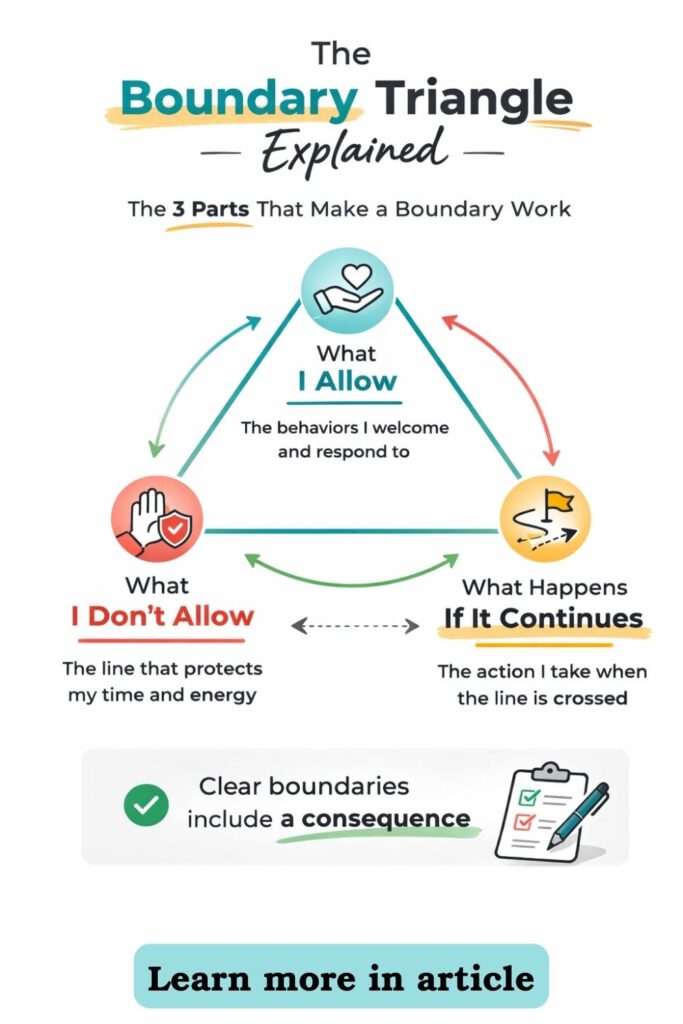
Your MAP isn’t just a feeling. It needs structure.
If you want to get more from your life, and are looking for concrete action steps to get you there, check out our Request a Coach page. It’s a “cut the fence-sitting and take action” way to tackle your issues and actually find success. To get off the fence and start to take action, click or tap here.
Think of it as a simple triangle:
- What I allow
- What I don’t allow
- What I will do if it continues
Most people stop at the second line. That’s why nothing changes.
Example:
“I don’t take work calls after 7pm.”
That’s a preference.
Now complete the triangle:
“I don’t take work calls after 7pm. If one comes in, I let it go to voicemail. If it keeps happening, I’ll bring it up directly.”
That’s a boundary.
If you want to get more from your life, and are looking for concrete action steps to get you there, check out our Request a Coach page. It’s a “cut the fence-sitting and take action” way to tackle your issues and actually find success. To get off the fence and start to take action, click or tap here.
A career or leadership coach often works on the third point. The consequence. They’ll have you rehearse the “if this continues” sentence until it doesn’t make your throat tighten.
Because the third point is where you usually cave.
What Are the Four Most Common Boundary Failure Patterns?
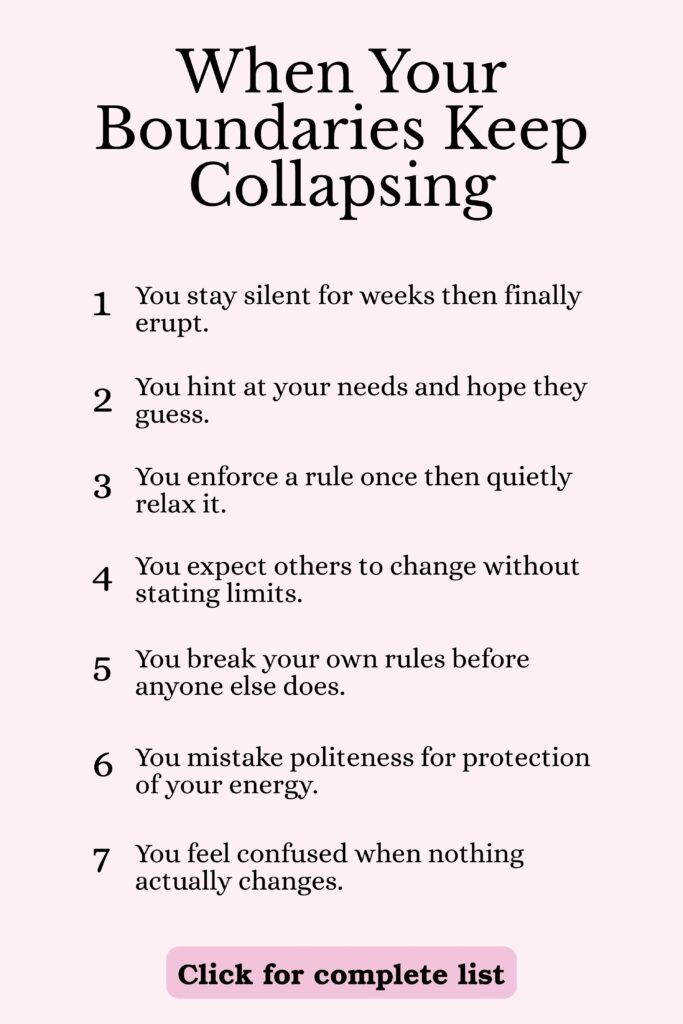
If your boundaries keep collapsing, it’s usually one of these.
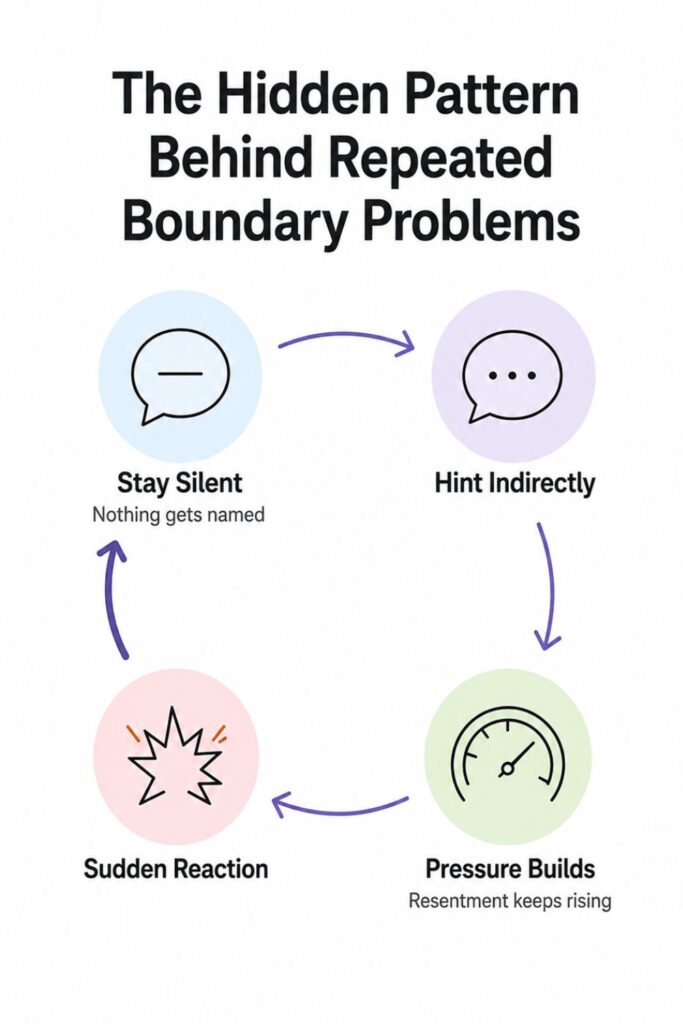
1. The Delayed Explosion
You say nothing for weeks. Then you unload all of it in one argument.
You skipped awareness and strategy. You absorbed. Then detonated.
2. The Polite Hint
You say, “It’s fine,” but your tone changes. You hope they notice.
They don’t. Because you never stated the perimeter.
3. The One-Time Rule
You enforce it once. It works. Then you get tired and let it slide.
If you want to get more from your life, and are looking for concrete action steps to get you there, check out our Request a Coach page. It’s a “cut the fence-sitting and take action” way to tackle your issues and actually find success. To get off the fence and start to take action, click or tap here.
Calibration never happened.
4. The Self-Betrayal
You make a rule for others. Then you break it first.
You say you won’t check email at night. You check it anyway. Now no one takes the rule seriously.
A coach will often identify which pattern you default to. Then you work on interrupting that specific loop. Not all of them. Just yours.
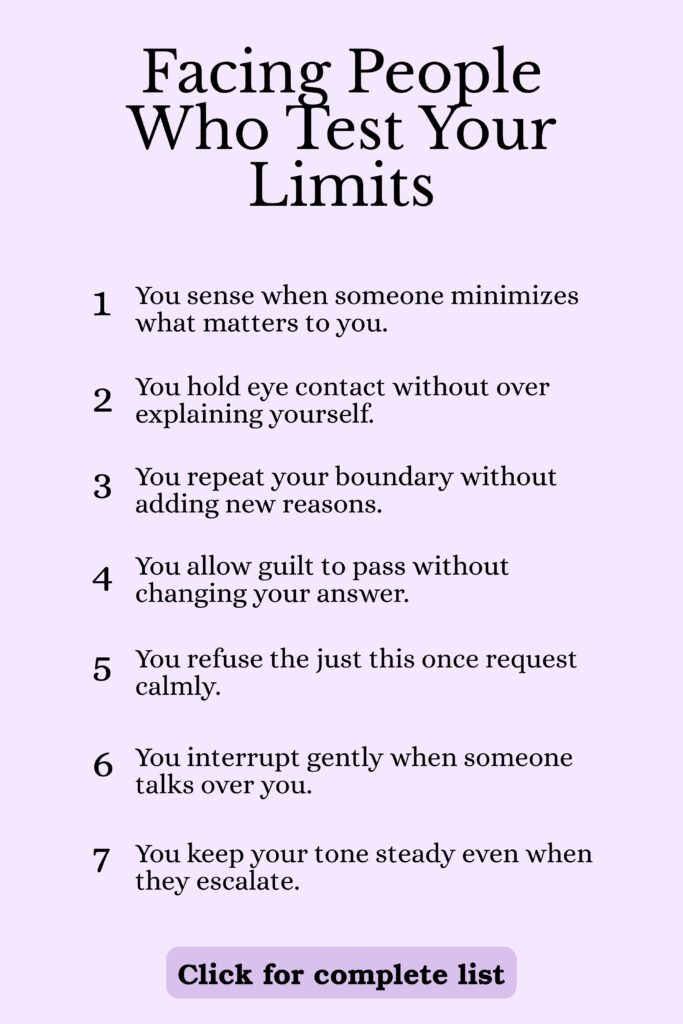
How Do You Handle Chronic Boundary Pushers?

Some people don’t miss your hints. They test them.
You’ll recognize them by pattern.
The Minimizer
“You’re overreacting.”
Response:
“It may not feel big to you. It matters to me.”
If you want to get more from your life, and are looking for concrete action steps to get you there, check out our Request a Coach page. It’s a “cut the fence-sitting and take action” way to tackle your issues and actually find success. To get off the fence and start to take action, click or tap here.
The Emotional Lever
After you say no, they cry or guilt you.
Response:
“I care about you. And my answer is still no.”
The Boundary Tester
“Just this once.”
Response:
“If I make an exception, it becomes the rule.”
The Steamroller
Talks over you. Decides for you.
Response:
“Stop. I’m not finished.”
Simple sentences. Calm tone. No essays.
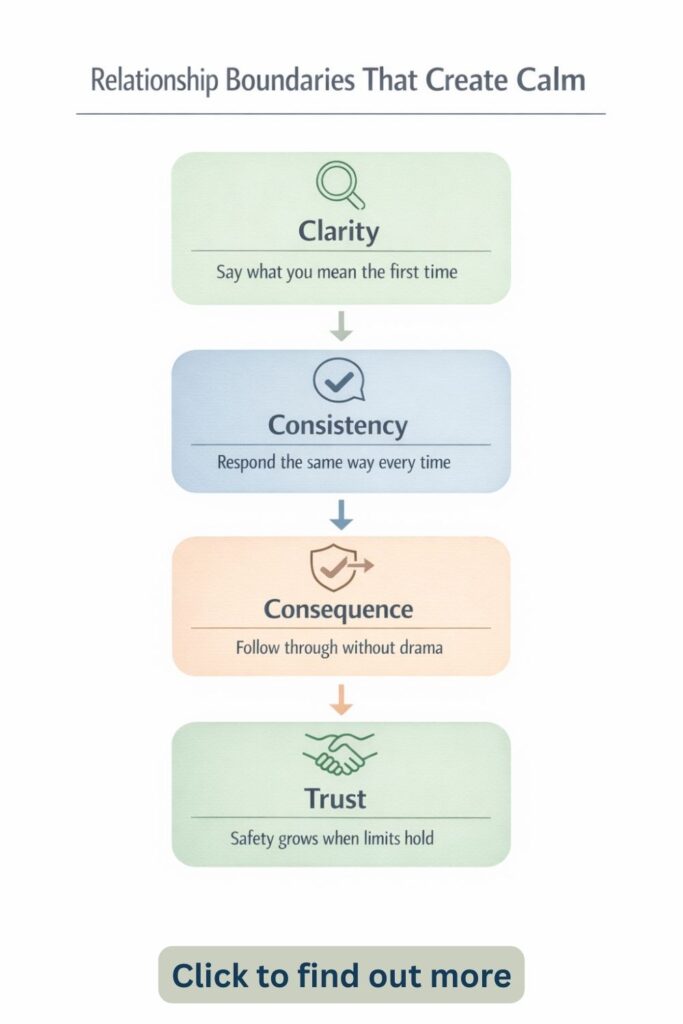
A relationship coach might role-play these with you. They’ll play the minimizer. The tester. You practice holding eye contact and not explaining yourself to exhaustion.
If you want to get more from your life, and are looking for concrete action steps to get you there, check out our Request a Coach page. It’s a “cut the fence-sitting and take action” way to tackle your issues and actually find success. To get off the fence and start to take action, click or tap here.
You build steadiness through repetition.
What Does Boundary Calibration Look Like in Action?
Calibration is adjustment based on reality. Not emotion.
Example of loosening:
You needed no contact after a breakup. Six months later, you can attend the same event without spiraling. You adjust the perimeter.
Example of reinforcing:
You tried being flexible with a client who texts at midnight. It keeps happening. You return to structured communication.
A useful gauge:
If resentment is rising, something needs recalibration.
That doesn’t mean you failed. It means data changed.
If you want to get more from your life, and are looking for concrete action steps to get you there, check out our Request a Coach page. It’s a “cut the fence-sitting and take action” way to tackle your issues and actually find success. To get off the fence and start to take action, click or tap here.
A coach might review specific incidents with you. Not vague feelings. “What happened Tuesday at 9:42pm?” Concrete details help you tweak the MAP instead of scrapping it.
How Does the Nervous System Affect Boundary-Setting?
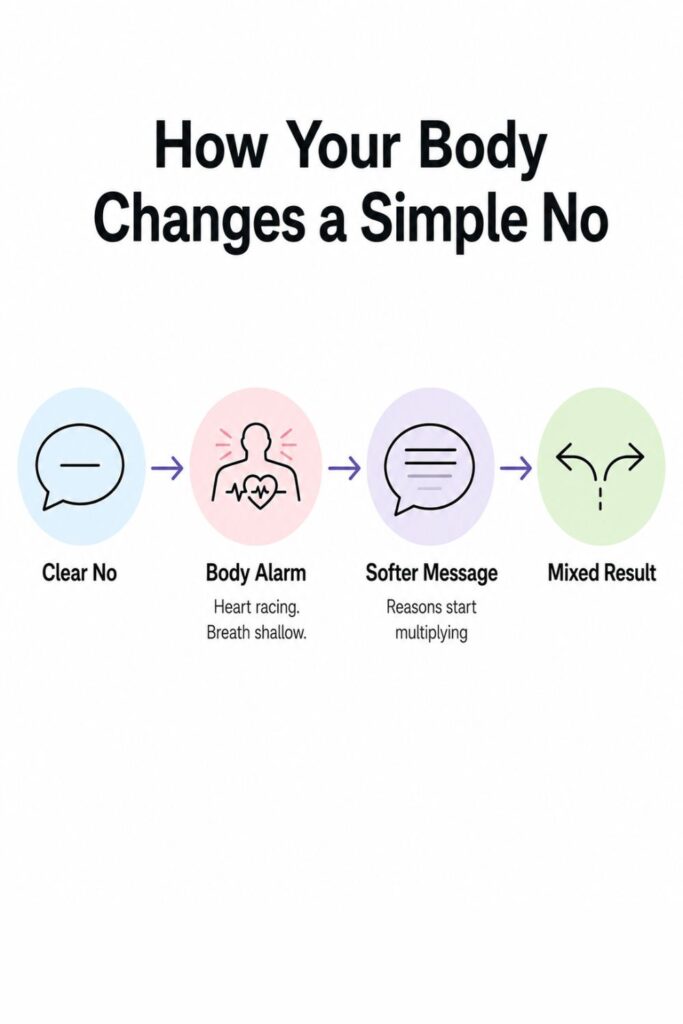
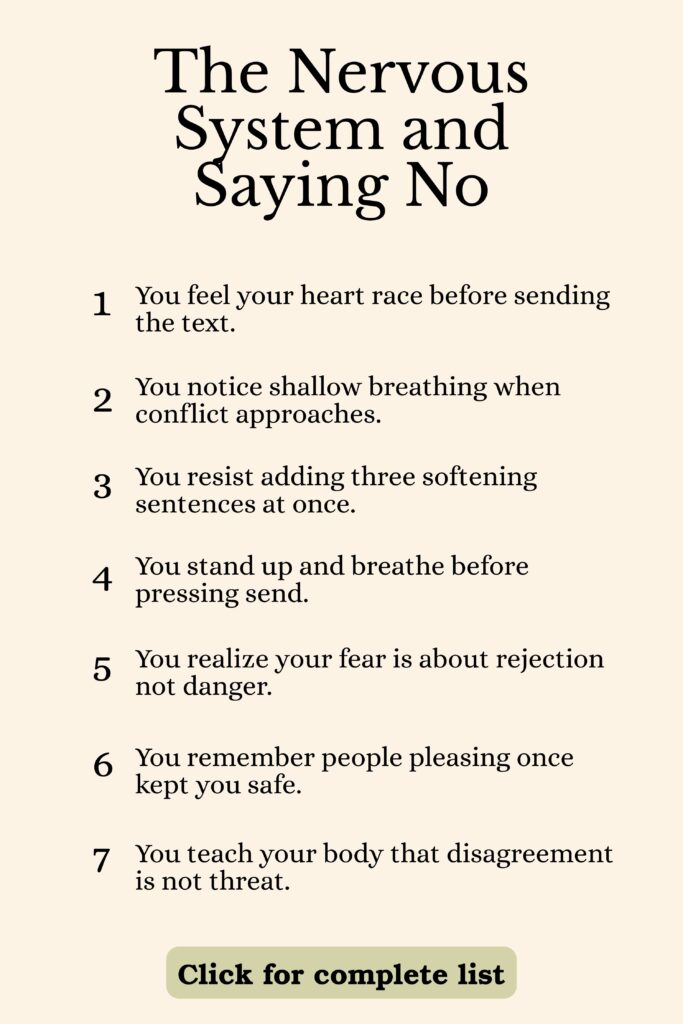
If your heart races before you send a boundary text, that’s not weakness.
That’s your nervous system reacting to perceived rejection. A 2003 Science study by Naomi Eisenberger, Matthew Lieberman, and Kipling Williams found that social exclusion engaged neural systems also involved in the distress of physical pain.
For many people, people-pleasing started as survival. Approval meant safety. Disapproval meant threat.
So when you type, “I’m not available for that,” your body reacts as if you’re about to be excluded from the tribe.
You might notice:
- Shallow breathing
- Tight chest
- Urge to add three softening sentences
Pause.
Stand up. Breathe slowly. Read the sentence out loud. Then send it.
If you want to get more from your life, and are looking for concrete action steps to get you there, check out our Request a Coach page. It’s a “cut the fence-sitting and take action” way to tackle your issues and actually find success. To get off the fence and start to take action, click or tap here.
Some communication coaches literally rehearse boundary statements while you regulate your breathing. Not to make you perfect. To teach your body that conflict isn’t danger.
Boundaries are behavioral. But they are also physiological.
Frequently Asked Questions About Healthy Boundaries
What are examples of healthy boundaries in a relationship?
Healthy boundaries include limits around time, communication, privacy, physical space, money, work availability, and emotional support. A boundary might mean refusing to discuss a private topic, ending a conversation when someone becomes insulting, or declining calls outside agreed hours.
How do you set boundaries without hurting someone?
You set boundaries without unnecessary harm by being clear, specific, and respectful. State what you need without attacking the other person’s character, apologizing repeatedly, or giving a long defense of your decision.
What should you do when someone ignores your boundary?
When someone ignores your boundary, repeat it once and follow through with the action you already named. A boundary becomes effective through your response, not through repeated attempts to persuade the other person to agree.
Why do you feel guilty when you set boundaries?
You may feel guilty because saying no conflicts with beliefs about being helpful, responsible, agreeable, or easy to love. Guilt does not automatically mean the boundary is unfair. It may mean you are interrupting an old pattern.
What is the difference between a boundary and an ultimatum?
A boundary controls your response, while an ultimatum tries to control another person’s choice through a threat. A boundary says what you will do if a situation continues. It does not guarantee that the other person will change.
How do you know if your boundaries are too strict?
Your boundaries may be too strict if they block safe connection, leave no room for context, or isolate you from relationships you value. Calibration allows you to protect yourself without treating every situation or person as equally threatening.
If you want to get more from your life, and are looking for concrete action steps to get you there, check out our Request a Coach page. It’s a “cut the fence-sitting and take action” way to tackle your issues and actually find success. To get off the fence and start to take action, click or tap here.
Can boundaries improve a relationship?
Yes, boundaries can improve a relationship by making expectations, limits, and consequences clearer. They reduce guessing, hidden resentment, and indirect communication when both people understand what is acceptable and what will happen when a limit is crossed.
What Boundary Scripts Work in High-Stakes Situations?
You don’t need poetry. You need clarity.
Work
“I’m not available outside business hours. I’ll respond tomorrow.”
Family
“I’m not discussing that topic.”
Dating
“I’m looking for consistency. If that’s not where you are, I understand.”
Friendship
“I can support you. I can’t be your only support.”
Each one connects back to the four steps:
- You know what you value.
- You defined the perimeter.
- You chose a strategy.
- You know what you’ll do if it’s ignored.
Say it once. Calmly.
If you want to get more from your life, and are looking for concrete action steps to get you there, check out our Request a Coach page. It’s a “cut the fence-sitting and take action” way to tackle your issues and actually find success. To get off the fence and start to take action, click or tap here.
Then follow through.
That’s where healthy relationships start to function differently.
Sources
Eisenberger, Naomi I., et al. “Does Rejection Hurt? An fMRI Study of Social Exclusion.” Science, vol. 302, no. 5643, 10 Oct. 2003, pp. 290–92. PubMed, https://pubmed.ncbi.nlm.nih.gov/14551436/.
If you want to get more from your life, and are looking for concrete action steps to get you there, check out our Request a Coach page. It’s a “cut the fence-sitting and take action” way to tackle your issues and actually find success. To get off the fence and start to take action, click or tap here.
Read this next

How to Not Be Judgmental: Seven Steps
Judging others? Find out how to use your judgmental thoughts as a gift to greater self-awareness
Read More
What’s Your Personality Type? Why You Can Know Your Type and Still Be Constantly Misunderstood
Learn how to adapt your communication techniques to your personality to receive better results.
Read More
A Key to Emotional Balance: Strategies for Effective Emotional Regulation
Understanding Why it is Important to Know How to Regulate Your Emotions
Read More