





What Makes Christian Life Coach Training So Different?

Why learn from a Christian life coach trainer?
I am passionate about Christian Life Coaching. I LOVE Christian Life Coach Training.
Raising up a generation of believers who are equipped to minister with authenticity, listen (and really mean it!), ask questions instead of giving advice and move other Christ followers into actual transformation… what gets better than that?
People will ask me, “Is it different? Is Christian Life Coach Training really any different than your typical Life Coach Training?”
I answer with an emphatic, “Yes.”
Key Takeaways
- Christian life coach training changes the lens, not the need for coaching skill. Faith may shape the conversation, but deep listening, strong questions, client ownership and action still matter.
- Belief is only the starting point. Effective Christian coaching moves through belief, discernment, agency and action so spiritual reflection leads somewhere concrete.
- Faith integration should not become spiritual direction by default. Prayer, Scripture and theological discussion work best when they serve the client’s stated goals and preserve the client’s responsibility for decisions.
- Authenticity does not mean unrestricted self-disclosure. Your experience belongs in the conversation only when sharing it clearly benefits the client rather than shifting attention back to you.
- Professional boundaries matter in Christian coaching. A coach needs to recognize when a conversation has moved into mentoring, pastoral care, consulting or mental health treatment and respond accordingly.
How Is Christian Life Coach Training Different From Regular Life Coach Training?
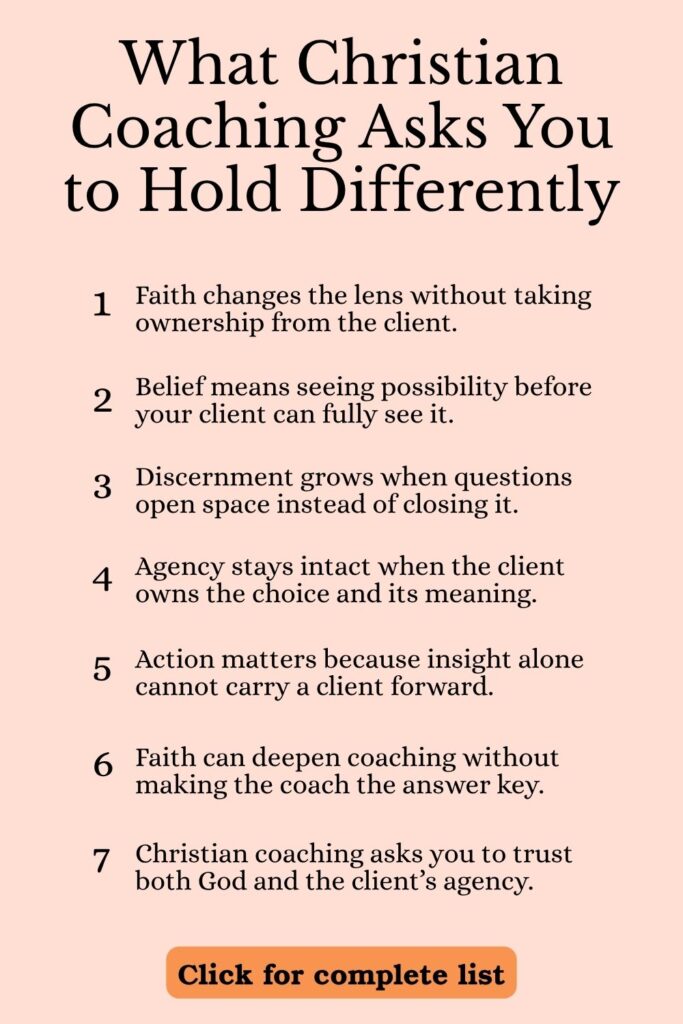
Christian life coach training is different because it teaches you to coach through a Christian worldview while still preserving the client’s responsibility to think, discern, decide and act.
SEE ALSO: If you’re a coach looking to streamline your administrative tasks and save time, check out our Coaching Administration Software. It’s a simple, effective solution designed to help you focus less on paperwork and more on what matters—coaching your clients. From scheduling to client management, our software gives you the tools to run your business efficiently. Ready to reclaim your time and boost productivity? Click or tap here.
Faith may become part of the coaching conversation through questions about calling, identity, values, stewardship, prayer, Scripture or a client’s relationship with God. But Christian coaching is still coaching when the client is doing the thinking rather than receiving a ready-made answer from the coach.
That distinction matters. Adding Christian language to advice does not automatically make the interaction Christian coaching. The deeper difference is the lens through which you listen, question, challenge, encourage and help a client move toward action.
Why Does Belief Change the Way a Christian Coach Coaches?
It’s different because it means approaching life coaching from the foundational paradigm of belief. Belief in that person. But bigger than that… belief in the God who not only made that person, but made a way for that person to overcome.
Whether it’s internal or external barriers that hold your client back, as a Christian Life Coach Trainer, I know that YOU, her coach, can trust that the God you both serve is more committed to your client’s success than you are.
What Is the Belief, Discernment, Agency, Action Lens?
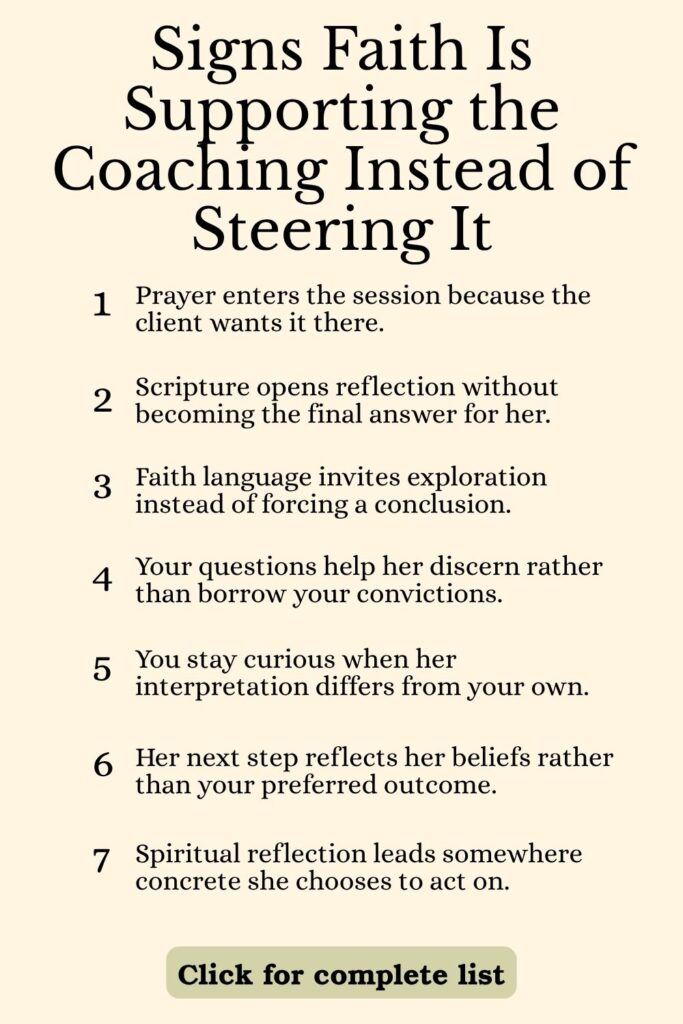
A useful way to translate Christian coaching from conviction into practice is to move through four stages: Belief, Discernment, Agency and Action.
Belief means you refuse to coach the client as though her current struggle is the complete story. You listen for strengths, possibility, past evidence of courage and the capacities she may not currently see.
SEE ALSO: If you’re a coach looking to streamline your administrative tasks and save time, check out our Coaching Administration Software. It’s a simple, effective solution designed to help you focus less on paperwork and more on what matters—coaching your clients. From scheduling to client management, our software gives you the tools to run your business efficiently. Ready to reclaim your time and boost productivity? Click or tap here.
Discernment means you help her slow down enough to examine what she believes, what she fears, what she values and where she senses God leading. You ask instead of announcing.
Agency means the decision remains hers. You can challenge assumptions and invite deeper spiritual reflection, but you do not become the person who decides God’s will on her behalf.
Action turns the conversation into something observable. What will she do? What conversation will she have? What will she stop postponing? What will she pray through, research, test or decide before you meet again?
Consider a client who says, “I think I’m supposed to leave my job.”
Belief says, “You are capable of examining this honestly.”
Discernment asks, “What makes this feel like calling rather than frustration?”
SEE ALSO: If you’re a coach looking to streamline your administrative tasks and save time, check out our Coaching Administration Software. It’s a simple, effective solution designed to help you focus less on paperwork and more on what matters—coaching your clients. From scheduling to client management, our software gives you the tools to run your business efficiently. Ready to reclaim your time and boost productivity? Click or tap here.
Agency asks, “What do you believe your next faithful step is?”
Action asks, “What will you do before our next conversation to test that?”
Now the faith component is doing real work inside a coaching process.
What Changes in Christian Coaching, and What Stays the Same?
The worldview changes in Christian coaching, but the core discipline of coaching does not.
A Christian coach still needs to listen deeply, notice patterns, ask questions that create awareness and help the client translate insight into client-owned action. The International Coaching Federation’s current Core Competencies likewise emphasize listening in the context of a client’s values and beliefs, evoking awareness and partnering with the client around growth and action.
That becomes especially important when a client asks a question like, “What do you think God wants me to do?”
SEE ALSO: If you’re a coach looking to streamline your administrative tasks and save time, check out our Coaching Administration Software. It’s a simple, effective solution designed to help you focus less on paperwork and more on what matters—coaching your clients. From scheduling to client management, our software gives you the tools to run your business efficiently. Ready to reclaim your time and boost productivity? Click or tap here.
It can be tempting to answer.
But the stronger coaching move may be:
“What makes you think God may be leading you in that direction?”
Or:
“What feels aligned with your convictions here, and what feels driven by fear?”
Or:
SEE ALSO: If you’re a coach looking to streamline your administrative tasks and save time, check out our Coaching Administration Software. It’s a simple, effective solution designed to help you focus less on paperwork and more on what matters—coaching your clients. From scheduling to client management, our software gives you the tools to run your business efficiently. Ready to reclaim your time and boost productivity? Click or tap here.
“What would you need to understand more clearly before you could make this decision faithfully?”
You are still bringing faith into the room. You are simply resisting the temptation to become the answer key.
Why Does Authenticity Matter in Christian Coaching?
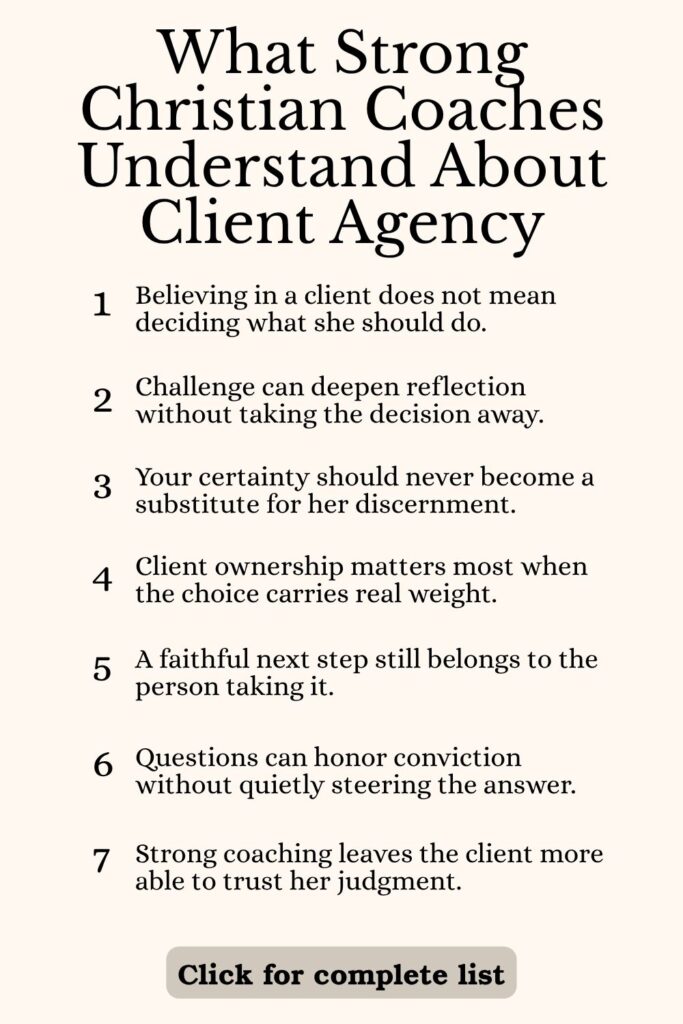
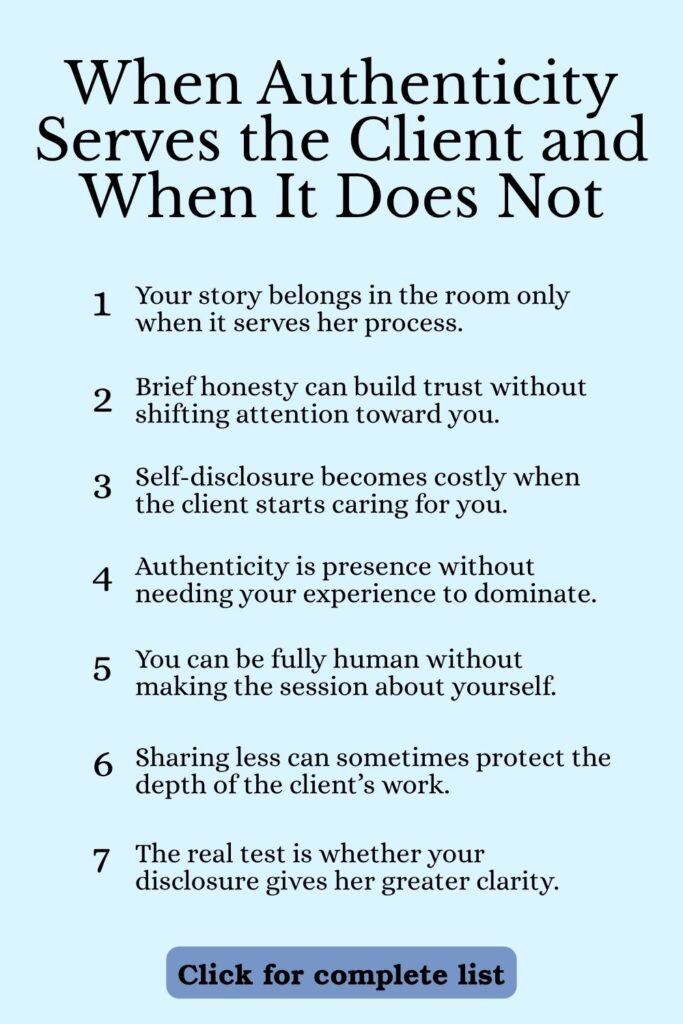
Christian Life Coach Training is different because it calls you to bring your authentic self to the table so your clients can do the same.
Not some air-brushed version of you that you want your clients to see. But YOU. With all your messiness and all your glory.
It calls you to bring your full story and share it like you believe that the God you serve really meant it when He said it will all work together for your good. And for your client’s.
When Does Authenticity Become Oversharing?
Authenticity becomes oversharing when your story begins serving you more than it serves your client.
SEE ALSO: If you’re a coach looking to streamline your administrative tasks and save time, check out our Coaching Administration Software. It’s a simple, effective solution designed to help you focus less on paperwork and more on what matters—coaching your clients. From scheduling to client management, our software gives you the tools to run your business efficiently. Ready to reclaim your time and boost productivity? Click or tap here.
That does not mean you should become distant or strangely anonymous. Your humanity can build trust. A brief personal example can help a client feel seen or recognize that change is possible.
The question is what happens after you share.
Before telling your story, ask yourself:
- Will this help the client understand herself more clearly?
- Can I share it briefly without turning the session toward my experience?
- Am I sharing because it serves her, or because I feel an urge to explain myself, bond with her or prove credibility?
Imagine you are coaching a woman going through divorce and you have gone through one yourself.
A short disclosure such as, “I recognize some of what you’re describing from my own experience,” may create connection.
A ten-minute account of what your former spouse did, what your pastor said and how you rebuilt your life has now changed the center of gravity. Your client is listening to you when the session was supposed to help you listen to her.
SEE ALSO: If you’re a coach looking to streamline your administrative tasks and save time, check out our Coaching Administration Software. It’s a simple, effective solution designed to help you focus less on paperwork and more on what matters—coaching your clients. From scheduling to client management, our software gives you the tools to run your business efficiently. Ready to reclaim your time and boost productivity? Click or tap here.
Authenticity is not measured by how much of yourself you reveal. It is measured by whether the real you can be present without needing to make the conversation about you.
How Do You Bring Faith Into Coaching Without Taking Over the Client’s Discernment?
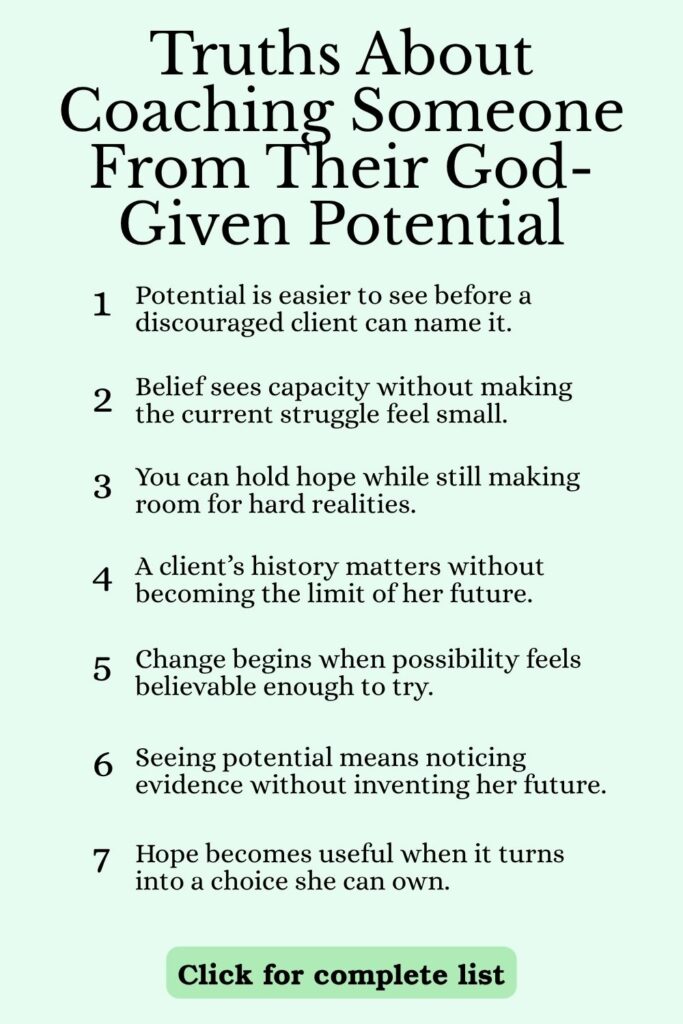
You bring faith into coaching most effectively by making it part of the client’s exploration rather than using it to replace the client’s exploration.
Sometimes that means asking permission.
“Would it be useful to look at this through the lens of your faith?”
“Would you like to bring Scripture into this conversation?”
“Would prayer help you think more clearly about what comes next?”
SEE ALSO: If you’re a coach looking to streamline your administrative tasks and save time, check out our Coaching Administration Software. It’s a simple, effective solution designed to help you focus less on paperwork and more on what matters—coaching your clients. From scheduling to client management, our software gives you the tools to run your business efficiently. Ready to reclaim your time and boost productivity? Click or tap here.
Those questions keep faith explicit without assuming that you know which spiritual practice the client needs in that moment.
This becomes even more important when you and your client interpret a situation differently. Sharing the same Christian faith does not mean sharing every theological conclusion, church background, conviction or interpretation.
Your job as coach is not to win the theological point.
The International Coaching Federation’s current Code of Ethics calls coaches to maintain appropriate boundaries, recognize their own biases and be aware of the client’s spiritual practice as one dimension of human difference.
So if a client reaches a conclusion you would not personally make, the coaching question is not automatically, “How do I correct her?”
A better starting point is, “Have I helped her examine this honestly, thoughtfully and in alignment with the beliefs she says matter to her?”
SEE ALSO: If you’re a coach looking to streamline your administrative tasks and save time, check out our Coaching Administration Software. It’s a simple, effective solution designed to help you focus less on paperwork and more on what matters—coaching your clients. From scheduling to client management, our software gives you the tools to run your business efficiently. Ready to reclaim your time and boost productivity? Click or tap here.
What Does It Mean to Coach Someone From Their Potential?
Christian Life Coach Training is different because it compels you to embrace your client with her fullest potential… now.
It demands that you see what God has seen all along.
The twenty-five year old who “failed to launch” now working for one of the top salons in the state.
The young woman who determined to be invisible sharing the Gospel publicly.
The depressed middle aged widower now remarried and moving towards his dream of owning his own business.
I’ve seen all of this.
SEE ALSO: If you’re a coach looking to streamline your administrative tasks and save time, check out our Coaching Administration Software. It’s a simple, effective solution designed to help you focus less on paperwork and more on what matters—coaching your clients. From scheduling to client management, our software gives you the tools to run your business efficiently. Ready to reclaim your time and boost productivity? Click or tap here.
And there’s more.
More individuals who want to live life to its fullest and their own potential to its max.
What Does Faith-Integrated Coaching Look Like in a Real Session?
Faith-integrated coaching becomes concrete when belief and spiritual reflection produce a decision the client owns and an action the client can actually take.
Imagine a client who says, “I believe God may be calling me to start my own business, but leaving my salary feels irresponsible.”
You can move through the four-part lens.
Belief: Explore the evidence she already has about her abilities, resources and resilience. What has she successfully built, managed or learned before?
SEE ALSO: If you’re a coach looking to streamline your administrative tasks and save time, check out our Coaching Administration Software. It’s a simple, effective solution designed to help you focus less on paperwork and more on what matters—coaching your clients. From scheduling to client management, our software gives you the tools to run your business efficiently. Ready to reclaim your time and boost productivity? Click or tap here.
Discernment: Explore what “calling” means to her. What part of the idea feels deeply aligned? What part may simply be frustration with her current job? What principles from her faith does she want this decision to honor?
Agency: Put the choice back where it belongs. She may ultimately leave, stay or create a gradual transition. Your role is to help her think well enough to own that decision.
Action: Choose a next step that generates useful information. She might calculate six months of expenses, speak with three people already working in the field or test her offer with two paying clients before resigning.
That last step matters because transformation cannot live only inside an inspiring conversation.
If you use LCH Core, this is a natural place for the tool to support the coaching rather than lead it. A client-owned commitment can be captured as a goal or action item, while journals, worksheets and resources can support reflection between sessions. Life Coach Hub’s guide to using action items with coaching clients shows the practical side of turning a session commitment into follow-through.
The coaching created the action. The system simply helps you keep it visible.
SEE ALSO: If you’re a coach looking to streamline your administrative tasks and save time, check out our Coaching Administration Software. It’s a simple, effective solution designed to help you focus less on paperwork and more on what matters—coaching your clients. From scheduling to client management, our software gives you the tools to run your business efficiently. Ready to reclaim your time and boost productivity? Click or tap here.
Where Does Christian Coaching Stop and Mentoring, Pastoral Care, or Therapy Begin?
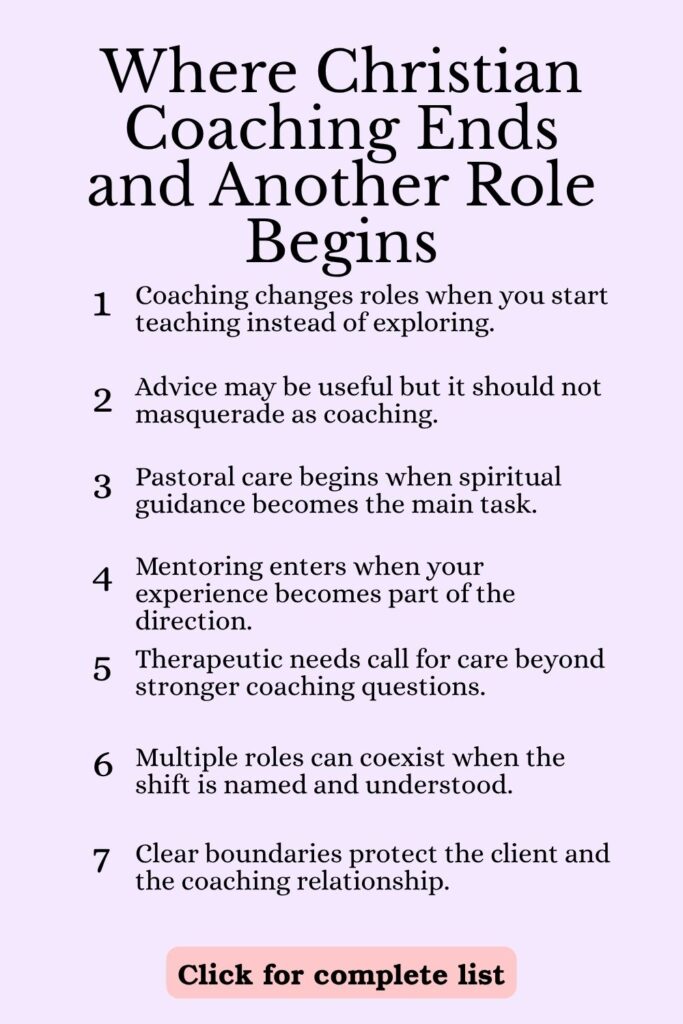
Christian coaching stops being purely coaching when you move from helping the client discover and act on her own insight into another professional role.
The distinction becomes easier when you look at what the client is actually asking you to do.
“Help me work out what I really want and what I should do next.”
That fits naturally within coaching.
“Teach me what Scripture says about marriage.”
That may be mentoring, teaching or pastoral care, depending on your training and the relationship you have established.
SEE ALSO: If you’re a coach looking to streamline your administrative tasks and save time, check out our Coaching Administration Software. It’s a simple, effective solution designed to help you focus less on paperwork and more on what matters—coaching your clients. From scheduling to client management, our software gives you the tools to run your business efficiently. Ready to reclaim your time and boost productivity? Click or tap here.
“Tell me what you did when you went through this.”
You may choose to share experience, but you are temporarily moving toward mentoring. Name the shift rather than quietly changing the rules of the conversation.
“I am having panic attacks and need help treating them.”
That calls for appropriately qualified mental health care rather than simply deeper coaching questions.
The International Coaching Federation’s 2025 Code of Ethics specifically recognizes that coaches may have other professional roles and says the coach is responsible for disclosing when acting in a capacity other than the coaching role.
That is especially useful for Christian coaches because the boundaries can become blurry quickly. You may be a coach who is also a ministry leader, Bible teacher, counselor, pastor or mentor.
SEE ALSO: If you’re a coach looking to streamline your administrative tasks and save time, check out our Coaching Administration Software. It’s a simple, effective solution designed to help you focus less on paperwork and more on what matters—coaching your clients. From scheduling to client management, our software gives you the tools to run your business efficiently. Ready to reclaim your time and boost productivity? Click or tap here.
You do not necessarily have to be only one thing.
You do need to know which thing you are being in the moment.
What Should You Look for in Christian Life Coach Training?
Strong Christian life coach training should teach both faith integration and the actual craft of coaching.
Look beyond whether a program uses Christian language. Ask what you will be able to do differently by the end of it.
A useful training program should give you substantial practice in:
- Listening without rushing to advice
- Asking questions that create insight rather than steer toward your preferred answer
- Helping clients clarify beliefs, values, goals and decisions
- Turning insight into specific, client-owned action
- Working with prayer, Scripture and faith language appropriately
- Handling differences in theology or conviction without taking over
- Recognizing coaching, mentoring, pastoral and therapeutic boundaries
- Receiving feedback on real or simulated coaching conversations
- Setting expectations and agreements for the coaching relationship
Professional credibility is also worth examining as you compare training options. According to the International Coaching Federation’s 2025 Global Coaching Study, 73% of coaches agree that clients and organizations expect coaches to hold a coaching certification or credential.
SEE ALSO: If you’re a coach looking to streamline your administrative tasks and save time, check out our Coaching Administration Software. It’s a simple, effective solution designed to help you focus less on paperwork and more on what matters—coaching your clients. From scheduling to client management, our software gives you the tools to run your business efficiently. Ready to reclaim your time and boost productivity? Click or tap here.
That does not mean every Christian coach must pursue the same credential or training route.
It does mean “Christian” should not become an excuse for weak coaching education.
Faith and skill belong together.
How Do You Help a Client Move From a “Bookshelf Dream” to Action?
Christian Life Coach Training equips you to help that individual make their “bookshelf dream” a reality.
A dream stops living on the bookshelf when the client can name what she believes, discern what matters, choose her own next move and actually take it.
Belief.
SEE ALSO: If you’re a coach looking to streamline your administrative tasks and save time, check out our Coaching Administration Software. It’s a simple, effective solution designed to help you focus less on paperwork and more on what matters—coaching your clients. From scheduling to client management, our software gives you the tools to run your business efficiently. Ready to reclaim your time and boost productivity? Click or tap here.
Discernment.
Agency.
Action.
That is where a hopeful conversation begins to become transformation.
Where LCH Core Fits
LCH Core fits after your coaching process is clear, by giving you a practical place to organize the client journey without dictating how you coach or how you integrate your faith.
For example, your client management system can hold client profiles, notes and intake forms. A Welcome Package can give a new client a welcome letter, coaching agreement with electronic signature and forms before your work begins. Life Coach Hub’s Welcome Package guide walks through that process.
SEE ALSO: If you’re a coach looking to streamline your administrative tasks and save time, check out our Coaching Administration Software. It’s a simple, effective solution designed to help you focus less on paperwork and more on what matters—coaching your clients. From scheduling to client management, our software gives you the tools to run your business efficiently. Ready to reclaim your time and boost productivity? Click or tap here.
After sessions, journals, worksheets, goals, action items and reusable resources can support whatever commitments came out of the coaching. The Progress Stream can then help you see the client’s sessions, notes, coaching tools and activity together rather than treating every session like an isolated conversation. Learn how the Progress Stream works
If you are moving from training into building a visible coaching practice, the business side matters too. Life Coach Hub offers a free life coach directory listing so potential clients can find out who you are and what you coach. For the wider client-getting system behind that visibility, How to Master Funnels as a Coach (and Why You Need To) explains the path from attracting interest through nurturing, conversion and retention.
The technology should never become the coaching method. Its job is to make the method you already believe in easier to deliver consistently.

FAQ
What is Christian life coach training?
Christian life coach training teaches coaching skills within a Christian worldview. It commonly combines listening, questioning, goal setting and action with intentional exploration of faith, values, calling, identity and spiritual discernment.
How is Christian life coaching different from regular life coaching?
Christian life coaching explicitly allows a client’s Christian faith to become part of the coaching process. The coach can explore spiritual beliefs and practices while still helping the client generate her own insight, decisions and actions.
Is Christian life coaching the same as biblical counseling?
Christian life coaching and biblical counseling are not automatically the same thing. Coaching generally focuses on awareness, decisions, goals and forward action, while counseling may involve a different purpose, method, professional scope or level of clinical care depending on the practitioner.
SEE ALSO: If you’re a coach looking to streamline your administrative tasks and save time, check out our Coaching Administration Software. It’s a simple, effective solution designed to help you focus less on paperwork and more on what matters—coaching your clients. From scheduling to client management, our software gives you the tools to run your business efficiently. Ready to reclaim your time and boost productivity? Click or tap here.
Can a Christian life coach pray with a client?
A Christian life coach can include prayer when it fits the coaching agreement, the coach’s scope and the client’s wishes. Asking whether prayer would be helpful keeps the practice intentional rather than assuming every Christian client wants prayer used in every session.
Can Christian life coaches use Scripture during coaching?
Christian life coaches can use Scripture when it supports the client’s stated goals and faith framework without replacing the client’s own thinking. Scripture can open reflection, but quoting a verse should not become a shortcut around listening, questioning and discernment.
What is the difference between a Christian life coach and a Christian mentor?
A Christian life coach primarily helps clients discover their own insight and decide what they will do, while a mentor more readily shares experience, advice and direction. One person may serve in both roles, but the client should know when the nature of the relationship changes.
Do you need certification to become a Christian life coach?
Certification requirements depend on the jurisdiction, market and type of work you plan to do, but substantive coach training can strengthen both your skills and professional credibility. ICF research also shows growing client and organizational expectations around coaching credentials.
What should Christian life coach training teach?
Christian life coach training should teach real coaching skills alongside faith integration. Look for active listening, powerful questioning, client agency, ethics, boundaries, goal and action work, supervised practice and a thoughtful approach to prayer, Scripture and theological differences.
Are You Ready for the Challenge?
Are you ready for the challenge?
SEE ALSO: If you’re a coach looking to streamline your administrative tasks and save time, check out our Coaching Administration Software. It’s a simple, effective solution designed to help you focus less on paperwork and more on what matters—coaching your clients. From scheduling to client management, our software gives you the tools to run your business efficiently. Ready to reclaim your time and boost productivity? Click or tap here.
The challenge is not simply learning more Christian coaching language. It is becoming the kind of coach who can believe deeply, listen carefully, ask instead of assume, protect the client’s agency and help conviction become action.
And if you are building the business systems around that work, LCH Core can give you one place to organize the client side of your practice so the administration does not become the thing taking your attention away from coaching.
Sources
International Coaching Federation. “2025 ICF Core Competencies.” International Coaching Federation, 2025. Accessed 28 Sept. 2026. 2025 ICF Core Competencies.
International Coaching Federation. “ICF Code of Ethics.” International Coaching Federation, effective 1 Apr. 2025. Accessed 28 Sept. 2026. ICF Code of Ethics.
International Coaching Federation. “ICF Global Coaching Study.” International Coaching Federation, 2025. Accessed 28 Sept. 2026. 2025 ICF Global Coaching Study.
Read this next

How to Become a Certified Life Coach
Want to be a life coach? Find out how you can easily choose the right program without becoming overwhelmed.
Read More
How to Get ICF Certification: Level 1, 2, ACSTH, ACTP, CCE, Making Sense of it All
It’s not super easy navigating how the ICF gives out certifications and accredits organizations. We break it down.
Read More
The Call of a Christian Life Coach
Is becoming a Christian Life Coach your calling? It means diving soul deep into trials but also celebrating joys …
Read More