


Talk to a coach about Organizational coaching

Crystal Faulk
ACC
I help overwhelmed women in transition gain clarity, confidence, and...

Terrie Hein
Certified Life Coach, Certified Insight Coach Practitioner
Coaching to declutter your life, organize your goals, and cook...

Dr Charlene Ashley
Doctorate - Behaviours
I coach individuals to design fulfilling lives through structure, clarity,...

Paloma Chiara

Lana's Gymnastics Club
"Where the best in gymnastics meets fun. Where every child is a star"
lgclubny.com

Anna Sosnina
ICF (ACC)
ICF ACC certified coach, founder of EssorVie Coaching, passionate about...

Tyler Fink
B.A. in Religion, Anthropology, and Philosophy. Master of Divinity (M.Div.) in Missiology
Pastor, husband, and father helping Christian men pursue faithful growth...

Travis Brown
Professional Life coach
With experience in guiding clients to achieve goals, build confidence,...


You Organized It… But Then It Fell Apart. This Common Mistake Is Why
You had the best intentions. You cleared the clutter. You bought the bins. You labeled, folded, sorted, and styled. For a while, everything looked perfect.
Then, slowly but surely, it unraveled. Bins started overflowing. Labels peeled off. Drawers turned into junk catchalls again. And suddenly, you were right back where you started.
You didn’t fail. You just skipped one critical step: the maintenance plan.
Even the best systems fall apart without follow-through. In our roundup, we explain why maintenance isn’t extra—it’s the whole strategy. And how to make it stick. Now we’re zooming in on each one, unpacking how these mistakes happen and what smarter, simpler swaps look like in real life.
Need some in depth help with organization and productivity ? Drop on by our directories choc full of productivity coaches, accountability coaches, goal-setting coaches, time management coaches and even work/life balance coaches to get your life organized! Or click here to have us match you to the best.
Why Most Organization Systems Don’t Stick
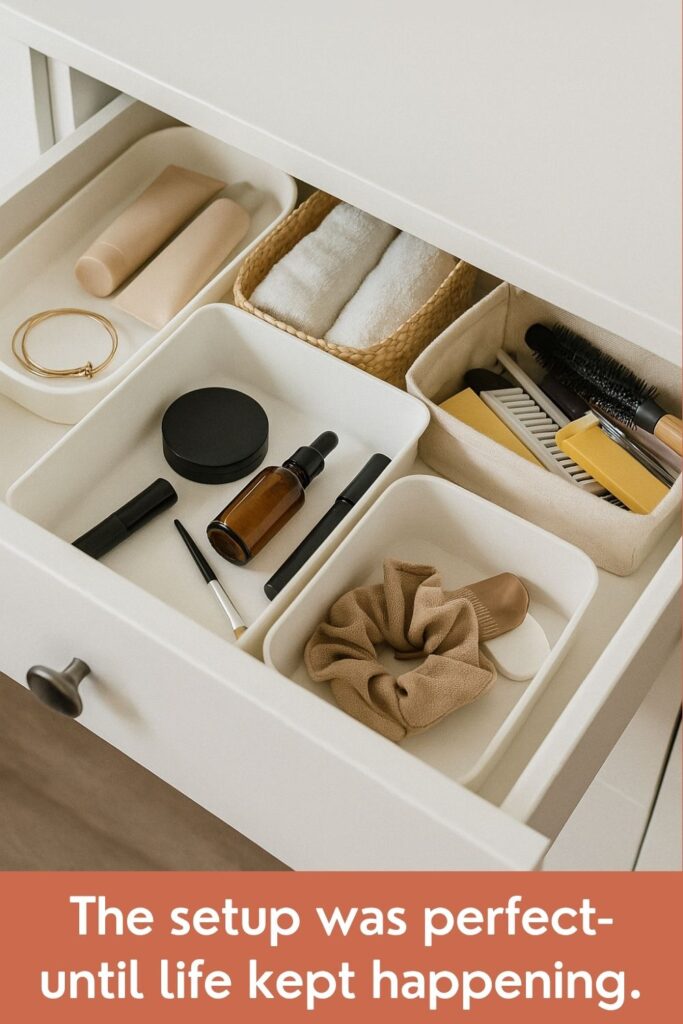
Most people treat organizing like a one-time project. You go all in on a weekend, put everything in its place, and expect it to stay that way. But life doesn’t freeze just because your system is “done.”
Without a built-in rhythm to revisit, reset, and reassess, even the prettiest, most Instagram-worthy system will break down. And the more people who interact with that space—partners, kids, guests—the faster it happens.
The Real Problem: No Maintenance Plan
Here’s what usually goes wrong:
If you want to get more from your life, and are looking for concrete action steps to get you there, check out our Request a Coach page. It’s a “cut the fence-sitting and take action” way to tackle your issues and actually find success. To get off the fence and start to take action, click or tap here.
- There’s no plan for restocking or rotating. Things like batteries, snacks, toiletries, and office supplies run out—but no one notices until the system collapses.
- It’s not clear who’s maintaining it. If only you know the system rules, everyone else defaults to whatever’s easiest.
- It wasn’t built for growth. Systems that don’t leave space to evolve with your life (new hobbies, new family members, shifting routines) get overwhelmed fast.
- There’s no reset routine. Without scheduled touchpoints, clutter creeps back in, unnoticed until it’s taken over.
The Fix: Maintenance Is the System
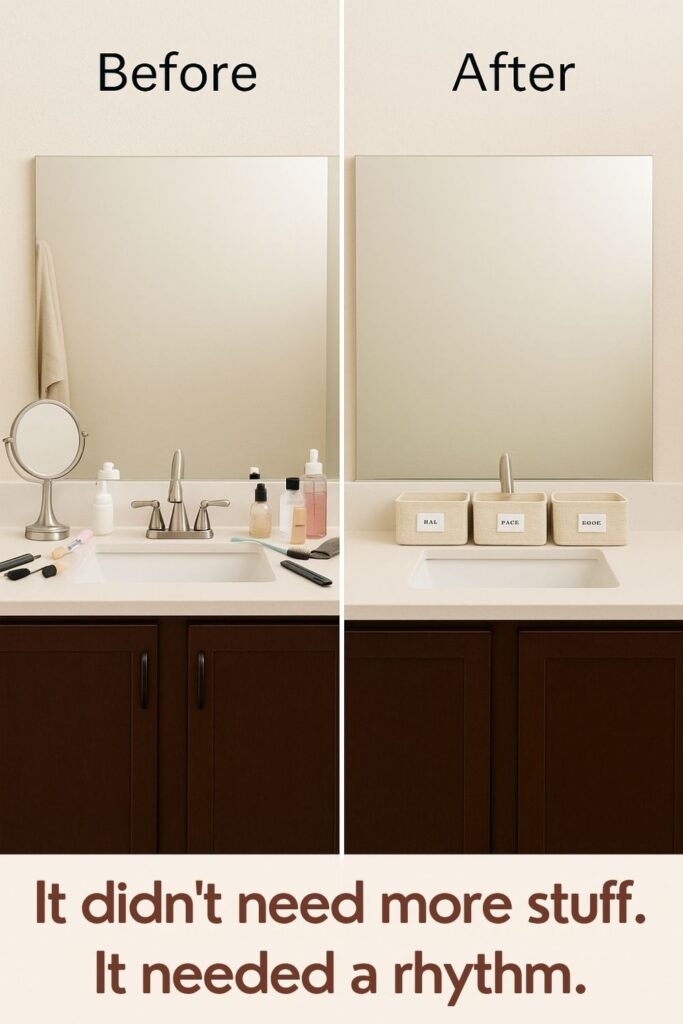
The best systems don’t rely on you being superhuman. They rely on simplicity, rhythm, and shared ownership. When the system is easy to reset, it lasts.
Here’s how to make that happen:
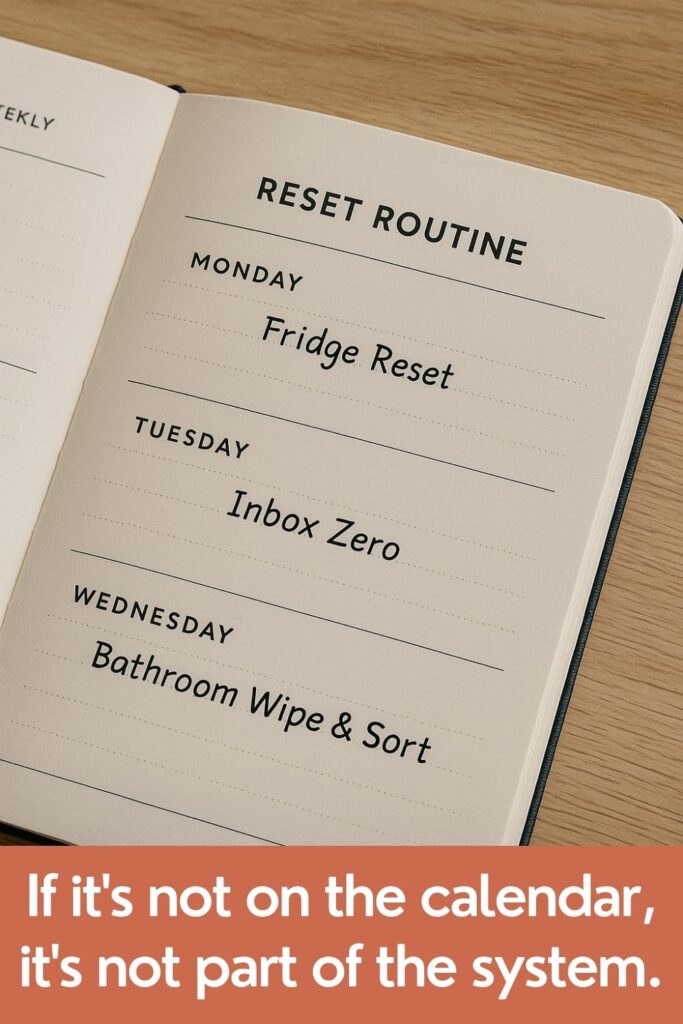
- Schedule regular resets. Choose a natural rhythm and stick with it. Sunday fridge refresh. Friday desk sweep. End-of-month closet edit. Put it on your calendar.
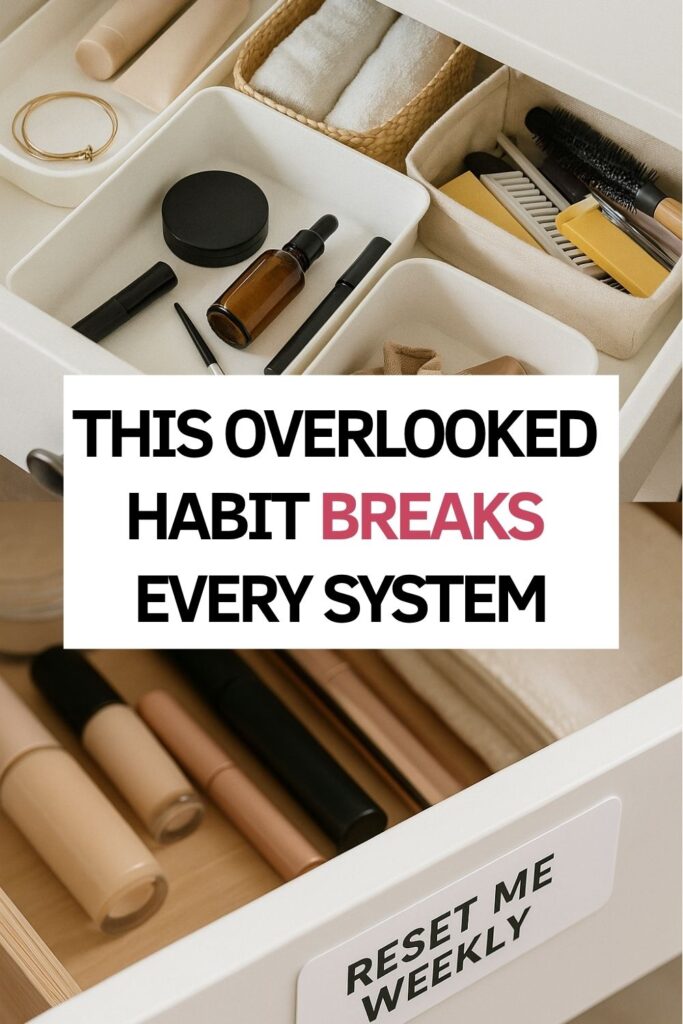
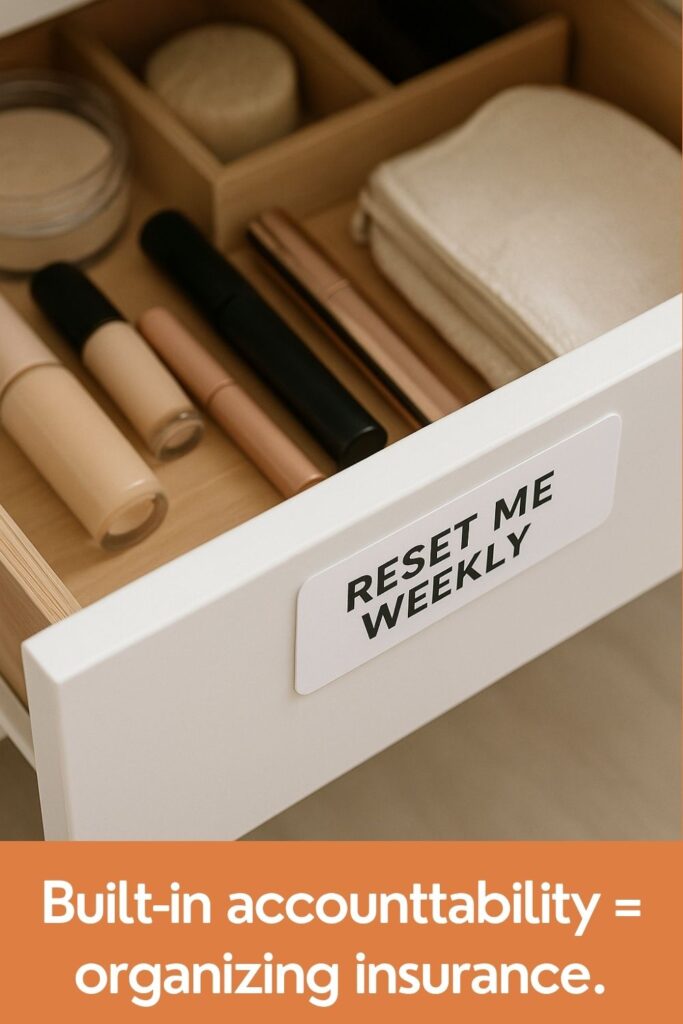
- Post a checklist. Keep it simple and visible. A “Weekly Reset” posted inside a drawer or cabinet makes it easier to stay on track. Even better—laminate it.
- Assign ownership. If more than one person uses the space, more than one person should maintain it. Kids can own toy bin resets. Partners can tackle office supply restocks.
- Leave buffer space. Overstuffed bins = broken systems. Leave 10–20% open in every container or shelf so your space can “breathe.”
- Revisit quarterly. Life changes. Your systems should too. Review what’s working and tweak what’s not.
It’s Not Too Late
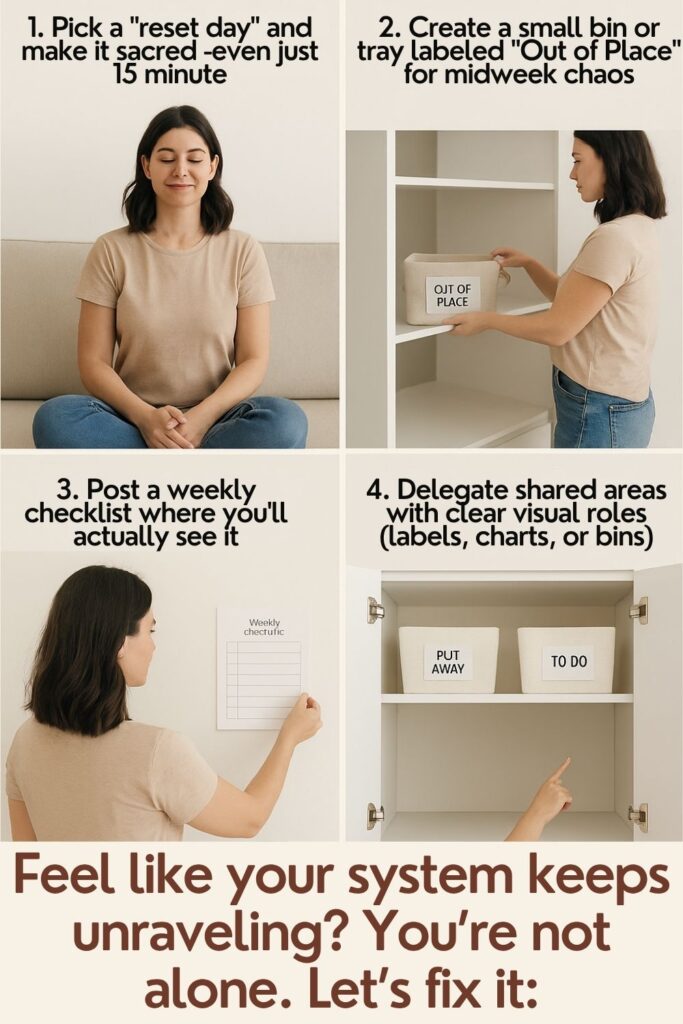
Feel like your system keeps unraveling? You’re not alone. Let’s fix it:
- Pick a “reset day” and make it sacred—even just 15 minutes
- Create a small bin or tray labeled “Out of Place” for midweek chaos
- Post a weekly checklist where you’ll actually see it
- Delegate shared areas with clear visual roles (labels, charts, or bins)
It’s not about doing more—it’s about doing less, but more often.
If you want to get more from your life, and are looking for concrete action steps to get you there, check out our Request a Coach page. It’s a “cut the fence-sitting and take action” way to tackle your issues and actually find success. To get off the fence and start to take action, click or tap here.
Read this next

10 Front Door Christmas Decoration Ideas That Make Your Home Feel Magical
Make your front door feel instantly Christmas-ready with easy, magical decorating ideas that work for any porch size or budget.
Read More
11 Cute Pumpkin Carving and Painting Ideas Inspired by Pop Culture
Are you all about style, decor and organization? Download a copy of our Decluttering Workbook. **** Pumpkin carving is a timeless Halloween tradition — but your designs don’t have to […]
Read More
DIY Walk-In Closet Ideas That Feel Custom Without the Custom Price
Want a walk-in closet that looks custom without the custom price? These clever DIY storage ideas make every inch work harder.
Read More