






How Hypnotherapy Can Help Your Life

Got a habit you want to change, a fear that keeps controlling your decisions, or a reaction that seems to happen before you can stop it? Hypnotherapy may be one option worth exploring.
The fictional version of hypnosis usually involves a sinister hypnotist taking control of an unwilling person. Clinical hypnotherapy looks very different. You remain involved in the process, and the work is directed toward a goal you have chosen.
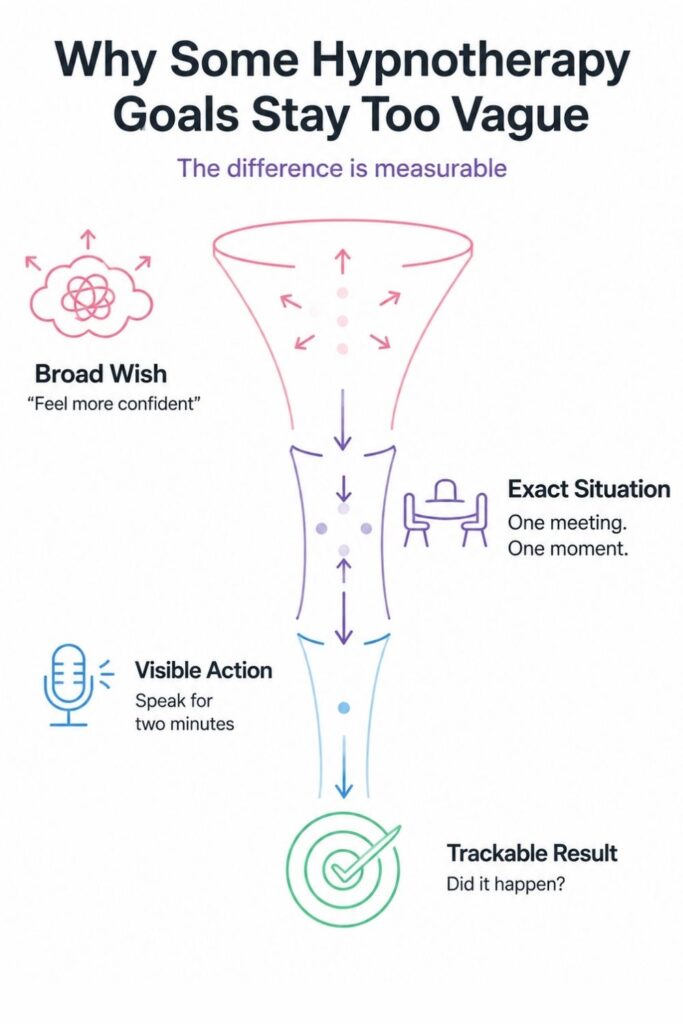
That goal also needs to be specific. “Make me confident” is difficult to measure. Speaking for two minutes in a team meeting without making an excuse to leave is something you can practice, observe, and review.
Key Takeaways
- Hypnotherapy uses focused attention, not mind control. You remain able to hear, evaluate, reject suggestions, and stop the process, even when you are deeply absorbed.
- A useful session has a defined target. “Feel confident” is vague, while speaking for two minutes in a meeting without leaving gives you something observable to practice and measure.
- The evidence is condition-specific. Research is stronger for pain and distress around some medical procedures than for sweeping claims about weight loss, confidence, or permanent habit change.
- Results depend on more than belief. Treatment fit, practitioner skill, responsiveness to suggestion, between-session practice, and the way progress is measured can all affect the outcome.
- Hypnotherapy should complement appropriate care. It should not replace necessary medical treatment, evidence-based psychotherapy, or surgery, and the practitioner should be qualified to work with the underlying problem.
What Is Hypnotherapy?
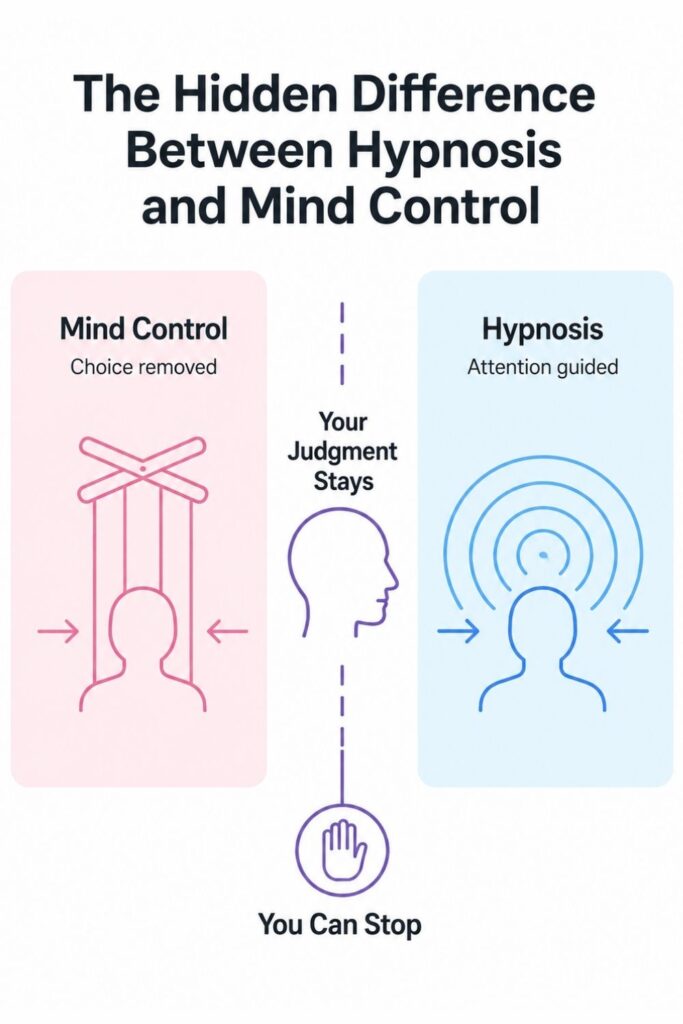
Hypnotherapy is the therapeutic use of hypnosis, a state of focused attention in which a practitioner uses suggestions, imagery, and guided mental rehearsal to support a specific change.
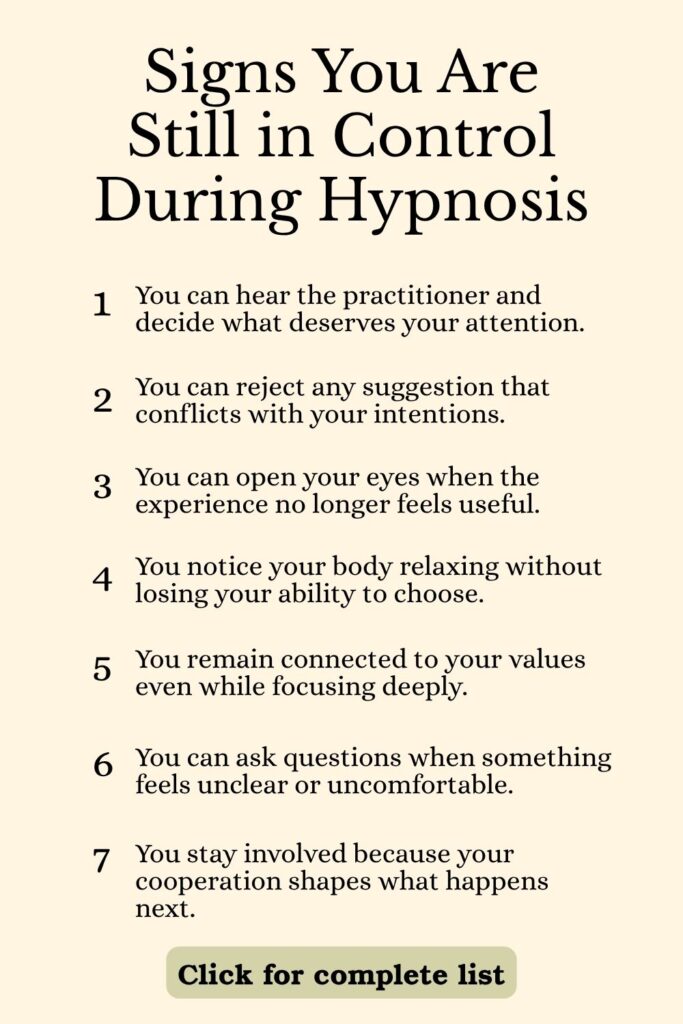
You are not unconscious during hypnosis. You can normally hear the practitioner, notice what is happening, evaluate a suggestion, and decide whether you want to follow it.
Hypnotherapy may be used as a standalone technique in some situations or as one part of a broader medical or psychological treatment plan. The appropriate approach depends on the problem being addressed and the practitioner’s qualifications.
Can You Be Hypnotized Against Your Will?
Hypnosis does not remove your judgment, values, or ability to stop participating.
A practitioner can invite you to focus on an image, sensation, memory, or suggested response. They cannot force you to accept every suggestion simply because you are hypnotized.
If you want to get more from your life, and are looking for concrete action steps to get you there, check out our Request a Coach page. It’s a “cut the fence-sitting and take action” way to tackle your issues and actually find success. To get off the fence and start to take action, click or tap here.
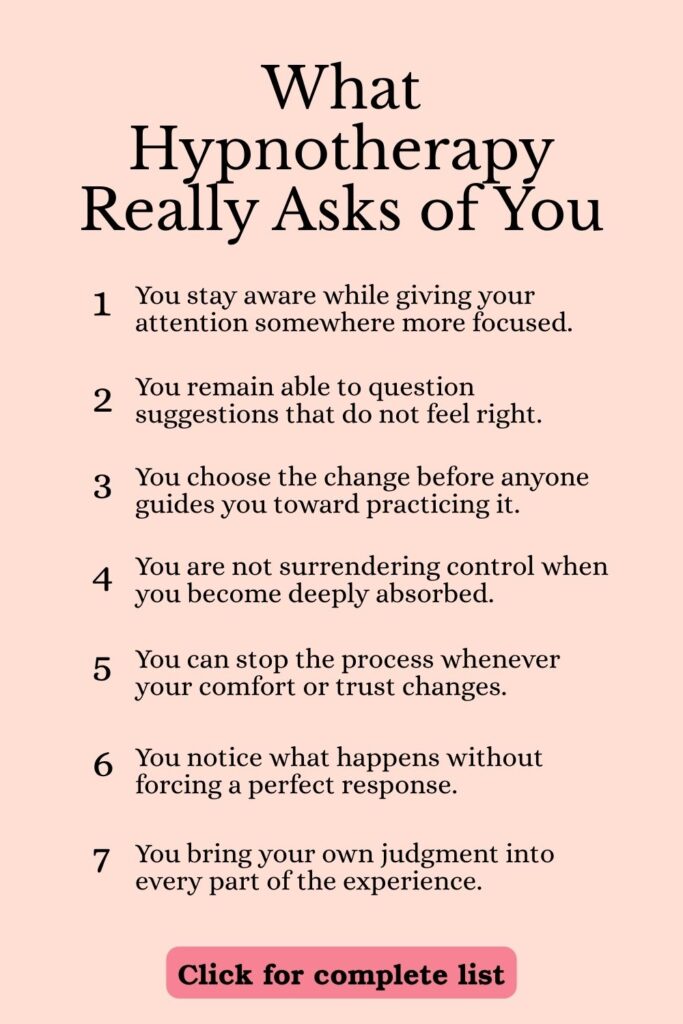
Your cooperation still matters. That does not mean you must believe every promise or surrender control. It means you need to be willing to follow the focusing exercise and consider suggestions connected to a goal you have already chosen.
Imagine that you want to become more comfortable speaking in public. A practitioner might ask you to picture yourself walking to the front of a room, noticing your feet on the floor, taking one steady breath, and beginning your first sentence.
You can engage with that rehearsal, change the image, ask the practitioner to stop, or reject a suggestion that does not feel appropriate.
Are You Asleep During Hypnosis?
You are usually awake and aware during hypnosis, even when your body feels deeply relaxed.
The confusion comes partly from the language surrounding hypnosis. Practitioners may ask you to close your eyes, slow your breathing, relax your muscles, or count downward. From the outside, that can look like sleep.
The mental task is different. Instead of losing awareness, you are directing attention toward a narrower set of experiences.
You might focus on:
- A physical sensation
- A mental image
- The practitioner’s voice
- A rehearsed behavior
- A different way of responding to a familiar trigger
Deep relaxation is not required for every hypnotic technique. Someone may use focused imagery while sitting upright, speaking, or actively rehearsing a situation.
If you want to get more from your life, and are looking for concrete action steps to get you there, check out our Request a Coach page. It’s a “cut the fence-sitting and take action” way to tackle your issues and actually find success. To get off the fence and start to take action, click or tap here.
The goal is not to become unconscious. It is to become absorbed enough in the exercise that a new response can be explored without the usual stream of distractions taking over.
What Happens During a Hypnotherapy Session?
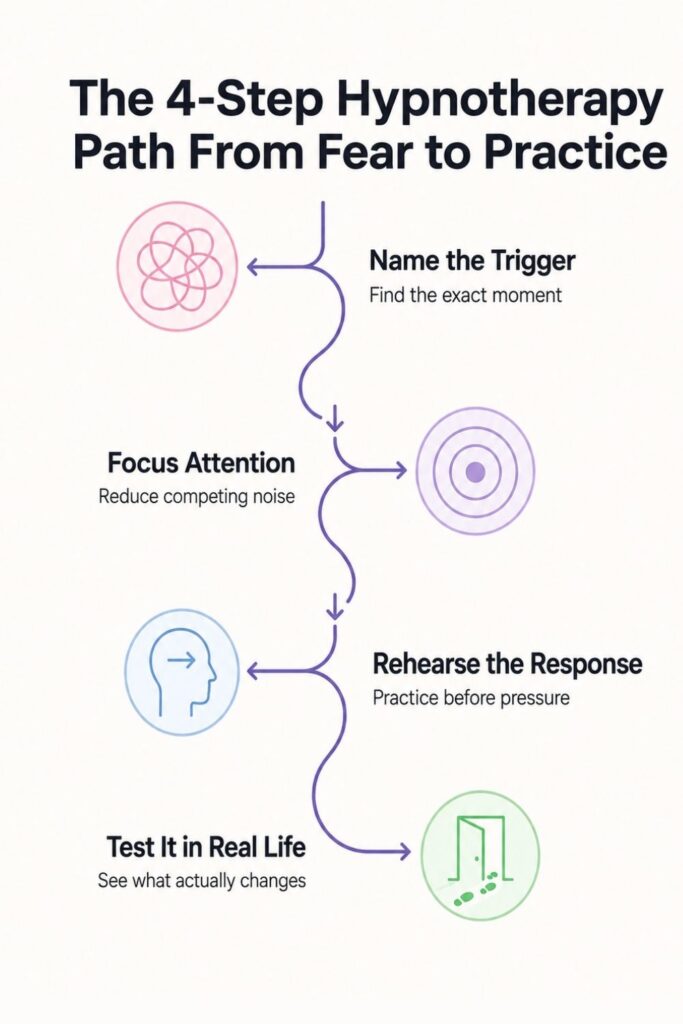
A structured hypnotherapy session usually moves from a defined problem to focused practice and then back to real-life application.
1. Define the target
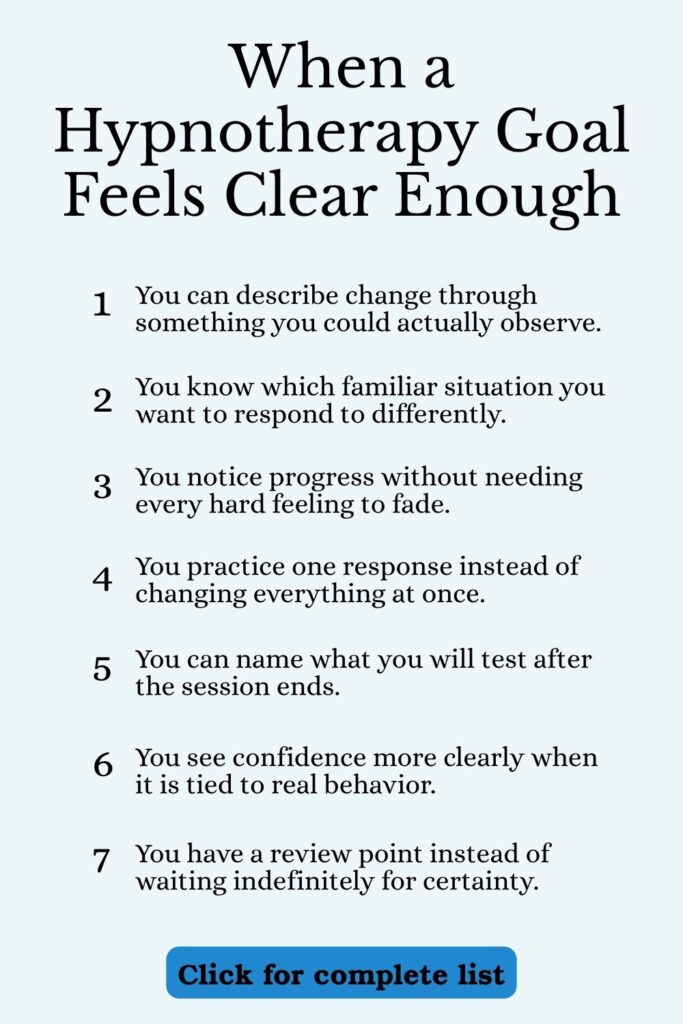
The practitioner should first clarify what you want to change and how you will recognize progress.
“Stop being anxious” is too broad. A more useful target might be:
- Stay in a crowded store for 15 minutes
- Complete a dental appointment without cancelling
- Give the opening minute of a presentation without rushing
- Delay a habitual snack for ten minutes and make a deliberate choice
- Fall asleep without checking the clock repeatedly
The target should describe something you can observe.
2. Focus your attention
The practitioner then guides you into a more concentrated state. This is often called an induction.
An induction may involve breathing, counting, visual imagery, muscle relaxation, or focusing on a fixed point. It is a way of directing attention, not a test you must pass.
3. Rehearse the new response
Once your attention is focused, the practitioner introduces suggestions connected to the target.
If you want to get more from your life, and are looking for concrete action steps to get you there, check out our Request a Coach page. It’s a “cut the fence-sitting and take action” way to tackle your issues and actually find success. To get off the fence and start to take action, click or tap here.
For public-speaking anxiety, you might mentally rehearse standing up, feeling your heart beat faster, keeping both feet planted, slowing your first sentence, and continuing even if your voice shakes.
The useful suggestion is not, “You will never feel nervous again.” It is, “You can notice the nerves and still begin.”
4. Test it outside the session
The session matters most when the new response is tested in daily life.
A communication or leadership coach might support this stage by running presentation role-plays, reviewing recordings, or giving feedback on pacing and delivery. The hypnotherapist addresses the therapeutic goal. The coach helps turn that work into observable performance.
How Does Hypnotherapy Work?
Hypnotherapy works by combining focused attention with suggestion, imagery, expectation, and mental rehearsal.
It is sometimes described as direct access to the unconscious mind. That description can make the process sound more mysterious and settled than it is.
A more practical way to understand hypnosis is as guided rehearsal under concentrated attention.
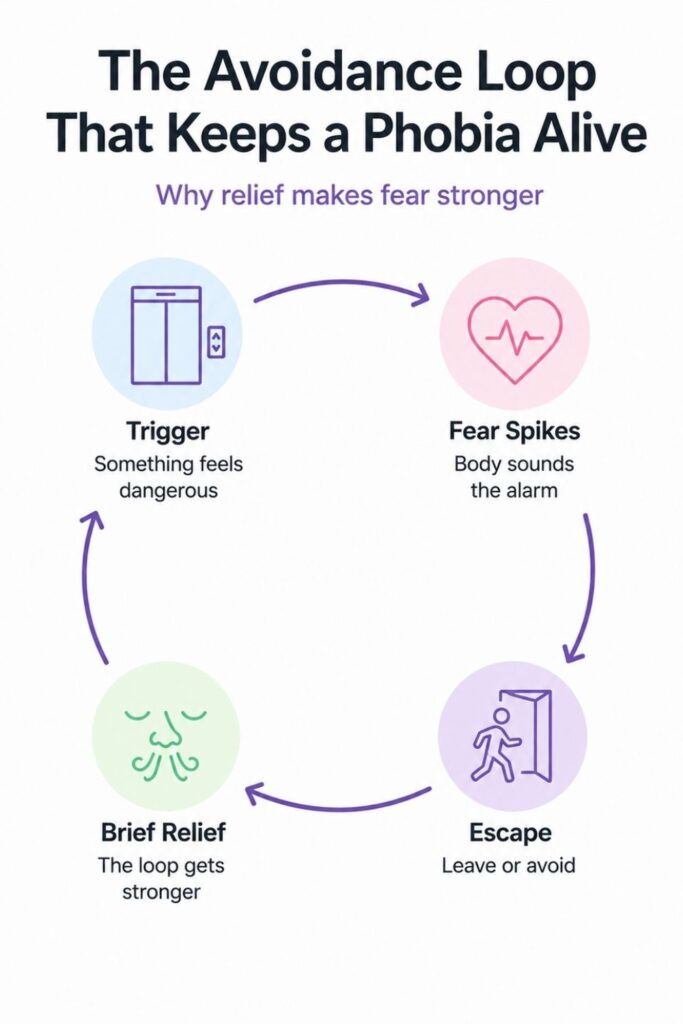
Consider someone who fears elevators. Their usual pattern may happen quickly:
If you want to get more from your life, and are looking for concrete action steps to get you there, check out our Request a Coach page. It’s a “cut the fence-sitting and take action” way to tackle your issues and actually find success. To get off the fence and start to take action, click or tap here.
- They see the elevator.
- Their body becomes tense.
- They imagine being trapped.
- They leave or take the stairs.
- The immediate relief reinforces the avoidance.
A hypnotic exercise might slow that sequence down. The person imagines approaching the elevator, notices the first physical reaction, rehearses a steadying response, steps inside, and remains there long enough to discover that anxiety can rise and fall without controlling the decision.
Imagery alone is not the same as confronting a real elevator. It can, however, help someone rehearse what they will do when the real trigger appears.
The value is not in pretending the fear never existed. It is in practicing a more useful response before the situation happens again.
What Can Hypnotherapy Help With?

Hypnotherapy has stronger research support for some problems than for others, so its usefulness should be judged by the condition being treated rather than by broad claims about the power of hypnosis.
A 2024 overview published in Frontiers in Psychology examined 49 meta-analyses containing 261 distinct randomized controlled trials. The strongest bodies of evidence involved pain and medical procedures, although the researchers also found considerable variation in study quality and results.
A practical evidence map looks like this:
Areas with a more substantial research base
Hypnosis has been studied in connection with:
- Pain management
- Distress surrounding some medical procedures
- Certain functional symptoms
- Some applications alongside established psychological treatment
This does not mean every person will respond or that hypnosis replaces the treatment ordinarily used for the condition.
If you want to get more from your life, and are looking for concrete action steps to get you there, check out our Request a Coach page. It’s a “cut the fence-sitting and take action” way to tackle your issues and actually find success. To get off the fence and start to take action, click or tap here.
Areas that require more careful evaluation
Claims involving habits, smoking, sleep, anxiety, confidence, phobias, and weight loss need to be examined individually.
A study showing a benefit for pain during a medical procedure does not automatically support a claim that hypnosis can permanently remove any habit or fear.
The questions to ask are:
- What exact outcome was studied?
- Was hypnosis compared with an active treatment or with no treatment?
- How many people participated?
- Was the improvement still present later?
- Is the practitioner qualified to treat the underlying condition?
“Hypnosis works” is too broad to be useful. “This hypnotic intervention improved this outcome for this group under these conditions” is a more accurate way to read the evidence.
Can Hypnotherapy Produce Weight Loss Without Surgery?
Hypnotherapy should not be presented as a substitute for medically indicated bariatric surgery.
Some practitioners market a “virtual gastric band,” in which a person is guided to imagine that they have undergone a gastric-band procedure. The imagery is intended to influence eating behavior, portion choices, or feelings of fullness.
The claim that this is equivalent to surgery is not supported by the available evidence.
A 2016 pilot study followed 30 adults for 24 weeks and compared virtual gastric-band hypnotherapy with relaxation hypnotherapy and a self-directed diet. The researchers found no statistically significant difference in weight loss between the two hypnotherapy groups.
If you want to get more from your life, and are looking for concrete action steps to get you there, check out our Request a Coach page. It’s a “cut the fence-sitting and take action” way to tackle your issues and actually find success. To get off the fence and start to take action, click or tap here.
That finding does not show that focused relaxation, suggestion, or behavioral support can never play a role in weight management. It does show why virtual surgery should not be described as a demonstrated replacement for an actual medical procedure.
Weight change can involve medical conditions, medication, sleep, eating patterns, activity, environment, and psychological factors. A responsible plan may require input from a physician, registered dietitian, or qualified mental health professional.
Why Does Hypnotherapy Work Better for Some People Than Others?
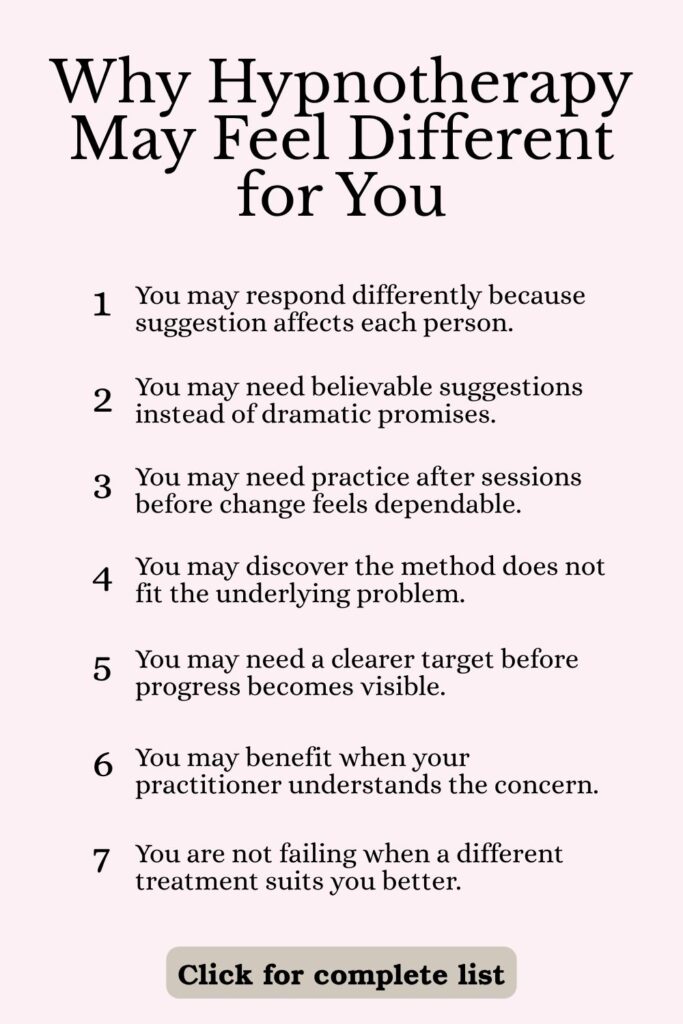
Hypnotherapy produces different results because the person, problem, method, and measurement process all affect the outcome.
Trust is only one small part of the picture. A person should not be blamed for an unsuccessful treatment because they supposedly failed to “go with the flow.”
Four practical variables deserve attention.
The target may be too vague
“Be happier” gives the practitioner no clear behavior to work with.
“Attend one social event this month and remain for 30 minutes” creates a target that can be rehearsed and measured.
The method may not fit the problem
A habit linked to boredom is different from a compulsion, an addiction, a trauma response, or a side effect of medication.
If you want to get more from your life, and are looking for concrete action steps to get you there, check out our Request a Coach page. It’s a “cut the fence-sitting and take action” way to tackle your issues and actually find success. To get off the fence and start to take action, click or tap here.
Using the same generic relaxation recording for each problem ignores those differences.
The suggestions may not feel believable
A suggestion such as “You are completely fearless” may create immediate resistance.
A more credible suggestion might be, “You can notice fear, slow your breathing, and take the next planned step.”
Practice may stop at the session door
Mental rehearsal needs a connection to real behavior.
Someone working on public-speaking anxiety may need to practise introductions, attend meetings, record short presentations, and review what happened. A career coach could help with role-play and feedback while a qualified therapist handles the clinical anxiety.
Progress comes from testing the response, not merely enjoying the feeling of relaxation.
How Can You Tell Whether Hypnotherapy Is Helping?
You can evaluate hypnotherapy by comparing a clear baseline with a specific behavioral or symptom target.
Use four checkpoints.
If you want to get more from your life, and are looking for concrete action steps to get you there, check out our Request a Coach page. It’s a “cut the fence-sitting and take action” way to tackle your issues and actually find success. To get off the fence and start to take action, click or tap here.
1. Record the baseline
Write down what is happening before treatment begins.
For example:
- You avoid elevators five times a week.
- You cancel half of your dental appointments.
- You rate your presentation anxiety as 9 out of 10.
- You wake and check the clock four times most nights.
- You smoke in the car every weekday morning.
A vague memory of how you used to feel is less useful than a simple record.
2. Choose the target behavior
Define what improvement would look like.
For example:
- Take the elevator twice this week.
- Complete the scheduled dental visit.
- Deliver the first three minutes of a presentation at a planned pace.
- Leave the clock turned away during the night.
- Drive to work once without smoking.
3. Track what actually happens
Record the behavior, not just whether the session felt powerful.
A session can feel deeply relaxing without changing the target behavior. Another session may feel ordinary but lead to a meaningful change during the week.
A habit coach can help with consistent tracking and accountability when the goal is within coaching scope.
If you want to get more from your life, and are looking for concrete action steps to get you there, check out our Request a Coach page. It’s a “cut the fence-sitting and take action” way to tackle your issues and actually find success. To get off the fence and start to take action, click or tap here.
4. Set a review point
Agree in advance on when progress will be reviewed.
Ask:
- Has the target behavior changed?
- Is the change large enough to matter?
- Is it continuing outside the session?
- Are there unwanted effects?
- Should the method be adjusted?
- Would another treatment be more appropriate?
Open-ended treatment without a review point makes it difficult to tell whether you are progressing or simply continuing.
How Do You Choose a Qualified Hypnotherapist?
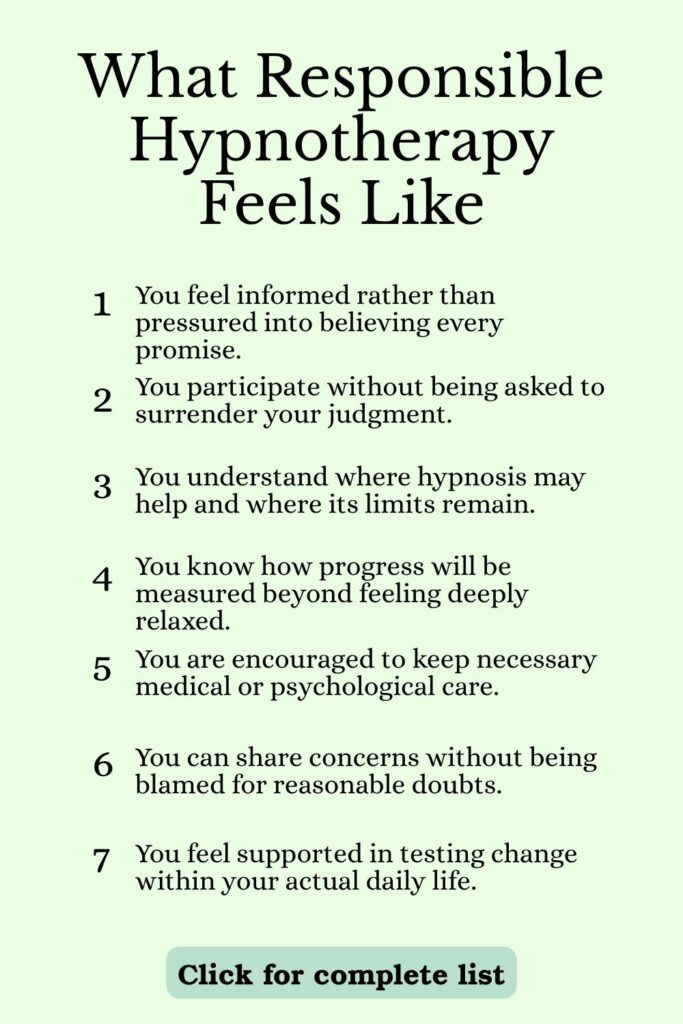
Choose a hypnotherapist who is qualified to address the underlying problem, not simply someone who has learned a hypnotic induction script.
Rules and professional titles vary by location, so do not rely on the word “certified” alone. Find out what the certification involved and whether the practitioner has a relevant healthcare or mental health qualification.
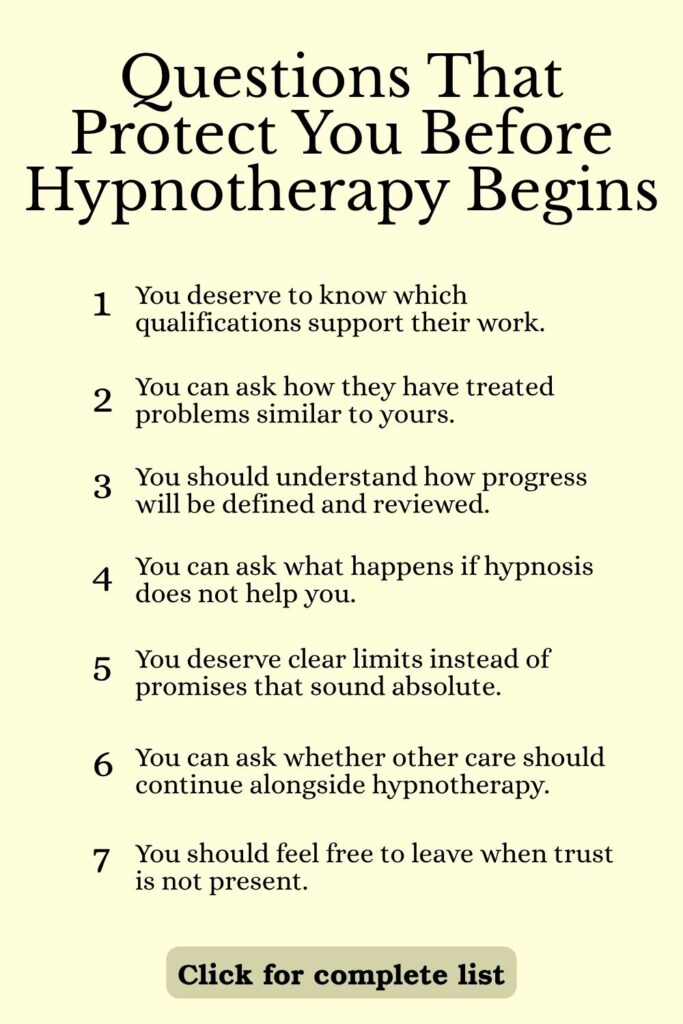
Ask these questions before beginning:
- What professional qualification do you hold?
- What hypnosis-specific training have you completed?
- How much experience do you have with this particular problem?
- How will we define and measure progress?
- What approach will you recommend if hypnosis is not helping?
- Will you coordinate with my physician or therapist when appropriate?
- What risks or limitations should I understand?
Be cautious when a practitioner:
- Guarantees a result
- Claims hypnosis works for nearly everyone
- Blames unsuccessful treatment entirely on your attitude
- Says you must surrender control
- Encourages you to stop prescribed treatment
- Promises to recover perfectly accurate hidden memories
- Presents imagined surgery as equivalent to medical surgery
- Treats serious symptoms without relevant clinical qualifications
A trustworthy practitioner should be able to explain both what hypnosis may help with and where its limits are.
If you want to get more from your life, and are looking for concrete action steps to get you there, check out our Request a Coach page. It’s a “cut the fence-sitting and take action” way to tackle your issues and actually find success. To get off the fence and start to take action, click or tap here.
Frequently Asked Questions About Hypnotherapy
Can hypnotherapy make you do something against your will?
No, hypnotherapy does not remove your ability to judge, refuse, or stop. You remain an active participant and can reject suggestions that conflict with your intentions or values.
Are you asleep during hypnotherapy?
No, you are usually awake and aware during hypnotherapy. You may feel deeply relaxed, but you can normally hear the practitioner and respond when needed.
What problems can hypnotherapy help with?
Hypnotherapy may help with certain pain, medical-procedure, behavioral, and psychological concerns. The quality of evidence varies by condition, so the treatment should be matched to a specific problem rather than presented as a universal solution.
Does hypnotherapy work for everyone?
No, hypnotherapy does not produce the same response in every person. Results can be influenced by the target, treatment method, responsiveness to suggestion, practitioner skill, practice, and whether hypnosis is appropriate for the underlying problem.
How many hypnotherapy sessions do you need?
Hypnotherapy may involve one session or a longer course, depending on the goal and the response to treatment. The practitioner should explain the initial plan and set a point at which progress will be reviewed.
Is hypnotherapy safe?
Hypnotherapy is generally used as a complementary approach, but it is not suitable for every person or condition. Medical symptoms, severe mental health symptoms, trauma, psychosis, or concerns involving memory should be discussed with an appropriately qualified healthcare professional.
How do you know whether a hypnotherapist is qualified?
A qualified hypnotherapist should have training relevant to both hypnosis and the condition being treated. Ask about professional licenses, clinical experience, supervision, treatment methods, and how results will be measured.
Can hypnotherapy replace medication, psychotherapy, or surgery?
No, hypnotherapy should not automatically replace medication, psychotherapy, or surgery. Any change to an established medical or mental health treatment should be discussed with the clinician responsible for that care.
If you want to get more from your life, and are looking for concrete action steps to get you there, check out our Request a Coach page. It’s a “cut the fence-sitting and take action” way to tackle your issues and actually find success. To get off the fence and start to take action, click or tap here.
Is Hypnotherapy Right for You?
Hypnotherapy may be worth exploring when you have a specific goal, realistic expectations, and access to a practitioner qualified to address the underlying problem.
Start by naming the change in observable terms.
Instead of “I want more confidence,” try:
- I want to speak once during each team meeting.
- I want to complete an upcoming flight without cancelling.
- I want to reduce how often I perform a specific habit.
- I want to practise a planned response when a familiar trigger appears.
Then ask what evidence supports hypnosis for that goal, how progress will be measured, and what will happen if the approach does not help.
Hypnotherapy is not mind control, sleep, virtual surgery, or a guaranteed shortcut. Used responsibly, it is a focused therapeutic method that may help you practise a different response and test that response where it matters, in your actual life.

Sources
Rosendahl, Jenny, Cameron T. Alldredge, and Antonia Haddenhorst. “Meta-Analytic Evidence on the Efficacy of Hypnosis for Mental and Somatic Health Issues: A 20-Year Perspective.” Frontiers in Psychology, vol. 14, 2024, article 1330238. https://doi.org/10.3389/fpsyg.2023.1330238. Read the full study from Frontiers in Psychology.
Greetham, Stephanie, Sarah Goodwin, Liz Wells, Claire Whitham, Huw Jones, Alan Rigby, Thozhukat Sathyapalan, Marie Reid, and Stephen Atkin. “Pilot Investigation of a Virtual Gastric Band Hypnotherapy Intervention.” International Journal of Clinical and Experimental Hypnosis, vol. 64, no. 4, 2016, pp. 419–433. https://doi.org/10.1080/00207144.2016.1209037. View the study record and abstract on PubMed.
If you want to get more from your life, and are looking for concrete action steps to get you there, check out our Request a Coach page. It’s a “cut the fence-sitting and take action” way to tackle your issues and actually find success. To get off the fence and start to take action, click or tap here.
Read this next

The Five Best NLP Techniques for Self-improvement (Basic NLP Skills)
The five core techniques of NLP can act as a powerful key to self-transformation. Learn all about them here!
Read More
How to Get the Most Out of Self-Hypnosis
Many people have heard of the concept of self-hypnosis, but most people don’t look at the facts before they start.
Read More
What NLP is Really About: How To Re-Write Your Story With Open Acceptance
Discover NLP as a practical, science-backed method for aligning your thoughts (neuro), words (linguistic), and behaviours (programming) with the life you want to create. But not your ego self. Your […]
Read More