


Why Life Feels Less Fun as You Get Older, and How to Change That

Laughter and fun can bring needed balance to a life filled with responsibilities.
Do you sometimes feel too busy to have fun? Work, errands, family needs, and unfinished tasks can expand until they occupy every available hour.
Fun came naturally when you were a child because enjoyment did not need to be productive. As an adult, you may feel that free time must be earned, justified, or used efficiently.
That pattern can leave you technically resting without feeling interested, playful, or refreshed. Having more fun starts with figuring out what kind of enjoyment is actually missing.
Key Takeaways
- Fun needs the right ingredients. Activities often feel more satisfying when they provide choice, a manageable challenge, connection with other people, or a useful combination of all three.
- Small windows still count. A five-minute song break, a 20-minute walk, or one chapter of a book can interrupt a week built entirely around obligations.
- Your old interests need a smaller doorway. You do not have to restart a hobby at full intensity. Begin with the easiest version you can realistically repeat.
- Pleasure changes when performance takes over. Tracking, comparing, monetizing, or posting every enjoyable activity can turn recreation into another job. Protect some experiences from measurement.
- A short audit beats guesswork. Track what you chose, how engaged you felt, and how you felt afterward. Keep what works, modify what almost works, and drop what does not.
How Can You Have More Fun in Everyday Life?
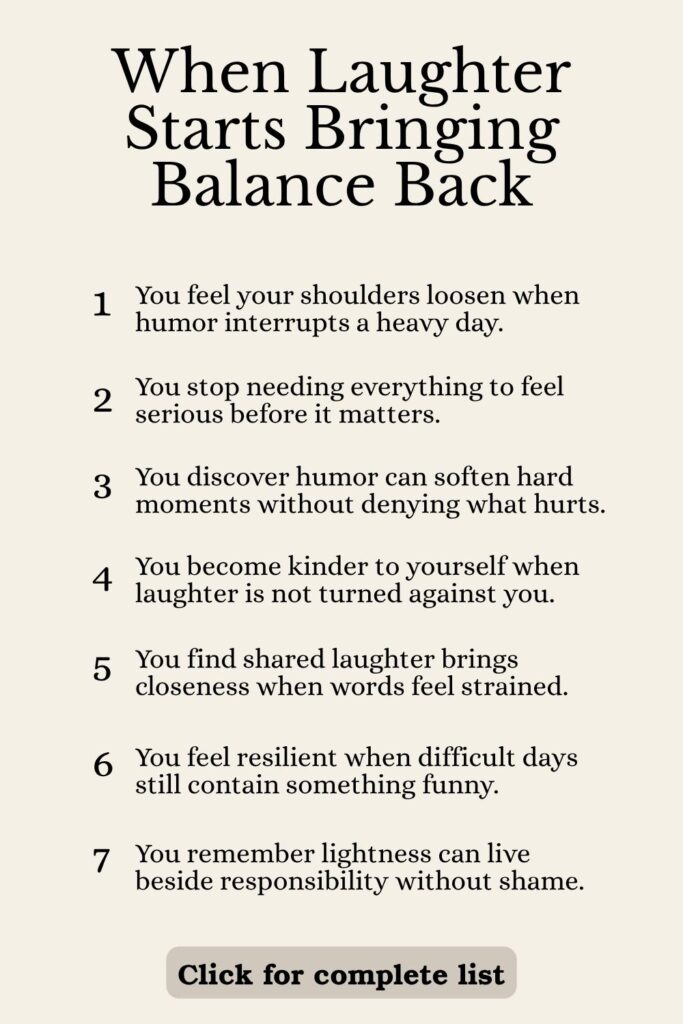
You can have more fun by choosing activities that fit your available time, energy, interests, and social needs, then protecting space for them before your schedule fills completely.
Look for three ingredients: choice, challenge, and connection. Choose activities you genuinely want to do, include enough challenge to hold your attention, and create opportunities to enjoy something with other people.
Start small. One repeatable 20-minute activity usually has more value than an ambitious plan that stays on your calendar for three weeks and never happens.
What Kind of Fun Are You Missing?
You can find more satisfying activities by identifying whether you need more choice, challenge, or connection.
If you want to get more from your life, and are looking for concrete action steps to get you there, check out our Request a Coach page. It’s a “cut the fence-sitting and take action” way to tackle your issues and actually find success. To get off the fence and start to take action, click or tap here.
This framework is a practical adaptation of Self-Determination Theory. Psychologists Richard Ryan and Edward Deci describe autonomy, competence, and relatedness as basic psychological needs connected to motivation and well-being.
In everyday life, those needs can help you recognize three kinds of fun:
- Choice: You are doing something because you want to, not because it is expected.
- Challenge: The activity absorbs you, stretches a skill, or gives you something interesting to solve.
- Connection: You share attention, laughter, effort, or discovery with another person.
An activity may provide more than one ingredient. A dance class could offer choice, challenge, and connection. A crossword puzzle might mainly provide challenge. An unhurried coffee with a close friend may provide choice and connection.
Ask yourself three questions:
- Did I choose this freely?
- Did it hold my attention?
- Did it help me feel connected?
Your answers can explain why some forms of leisure feel flat. You may spend three hours watching shows and still crave challenge. You may have several demanding hobbies but need relaxed time with people who make you laugh.
A life coach might review an ordinary week with you and look for the missing ingredient. The goal would not be to prescribe a hobby. It would be to design one small experiment based on how your days actually work.
How Can You Make Time for Fun When Life Is Busy?
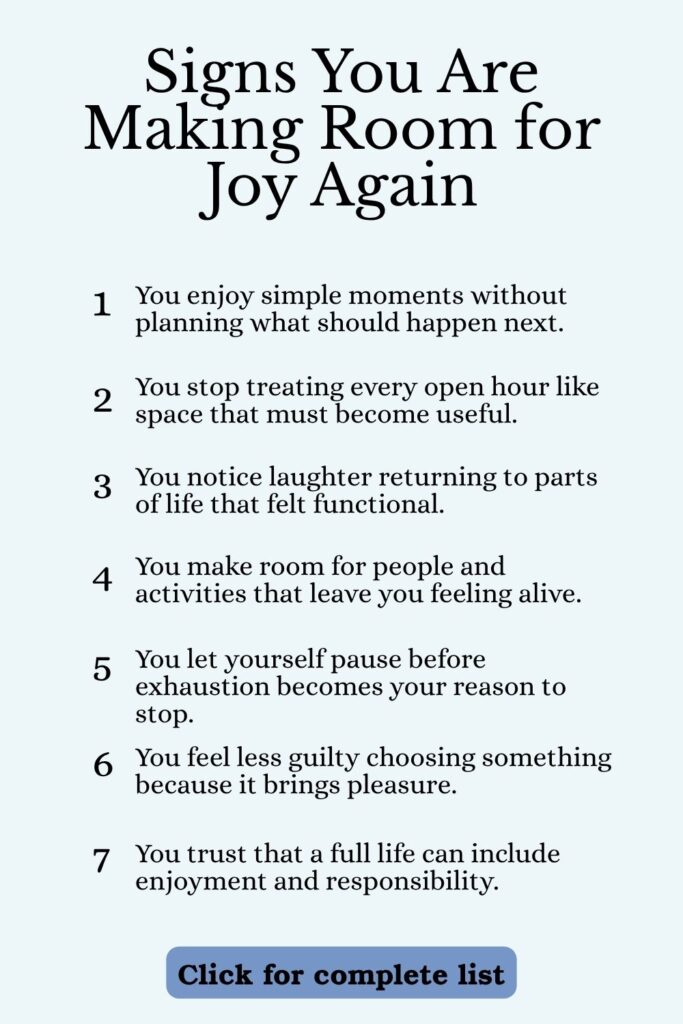
You make time for fun by protecting a realistic amount of time before lower-priority tasks consume it.
You do not need an entire free day. Start with a minimum viable appointment, such as 20 minutes twice a week or one longer block every weekend.
If you want to get more from your life, and are looking for concrete action steps to get you there, check out our Request a Coach page. It’s a “cut the fence-sitting and take action” way to tackle your issues and actually find success. To get off the fence and start to take action, click or tap here.
Put it on the calendar with a specific activity attached. “Have fun” is easy to ignore. “Walk to the used bookstore Saturday at 11” gives you a decision you can follow.
Research led by Sarah Pressman examined 1,399 participants across four studies. Greater participation in enjoyable leisure activities was associated with several psychological and physical measures related to well-being, although the research showed association rather than proof of cause and effect.
Look at what repeatedly blocks your plans.
If leaving home feels like too much work after a long day, choose something nearby. If finding childcare cancels every plan, arrange alternating personal time with a partner. If you spend the first 15 minutes deciding what to do, choose in advance.
Scheduling should protect your choice, not create another obligation. When an activity starts feeling like a performance target, shorten it, simplify it, or choose something else.
How Can You Build a Fun Menu for Busy Days?
A personal fun menu gives you ready-made options for different amounts of time and energy.
Without a menu, you may spend your free time scrolling because scrolling requires no planning. By the time you decide what might be enjoyable, the available time is gone.
Build three short lists.
If you want to get more from your life, and are looking for concrete action steps to get you there, check out our Request a Coach page. It’s a “cut the fence-sitting and take action” way to tackle your issues and actually find success. To get off the fence and start to take action, click or tap here.
Five-minute options:
- Play one song and listen without doing anything else
- Step outside with a drink
- Read a comic strip or a few pages of a funny book
- Complete a quick puzzle
- Send a ridiculous voice message to a friend
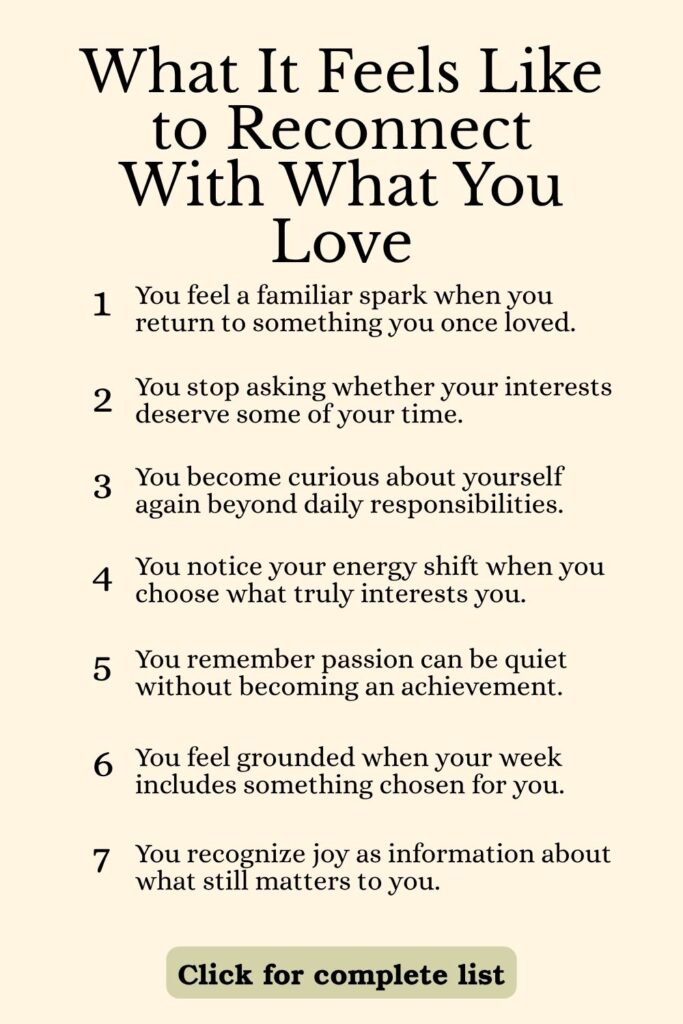
Twenty-minute options:
- Take a walk without running an errand
- Sketch, knit, build, or play an instrument
- Call someone who makes conversation easy
- Play a short card or video game
- Read one chapter of a novel
One-hour options:
- Try a class
- Visit a museum, market, park, or bookstore
- Cook something unfamiliar with another person
- Work on a creative project
- Organize a casual game night
Mark each option as low-energy or high-energy. A long hike may sound appealing on Sunday morning and impossible on Wednesday night. Both situations deserve workable choices.
Remove options that belong to your fantasy self but never appeal to your real self. You do not need to keep pottery on the list because you like the idea of being someone who makes pottery.
A wellness coach could help you test the menu for a week and examine what you actually chose. That evidence is more useful than building a perfect list you never open.
What Have You Stopped Doing Just Because You Enjoy It?
You can reconnect with a neglected interest by restarting its smallest enjoyable version.
Think about what you used to do before every activity needed an outcome. Reading novels. Playing basketball. Singing. Fixing old bicycles. Taking photographs. Making elaborate desserts for no occasion.
Do not begin by buying equipment, registering for an advanced course, or announcing a major project. Those actions can create pressure before enjoyment has had a chance to return.
Instead, find the smallest live version of the interest.
If you want to get more from your life, and are looking for concrete action steps to get you there, check out our Request a Coach page. It’s a “cut the fence-sitting and take action” way to tackle your issues and actually find success. To get off the fence and start to take action, click or tap here.
If you miss writing, write 100 words. If you miss music, play one song. If you miss painting, sketch for 15 minutes with whatever supplies you already own.
The first goal is not improvement. It is contact.
Pay attention to what happens while you are doing it. Do you become absorbed? Do you lose track of your phone? Do you feel curious enough to continue?
That response tells you more than nostalgia does. Some old passions still fit. Others belonged to an earlier season of your life and can be released without regret.
When Does a Passion Stop Feeling Fun?
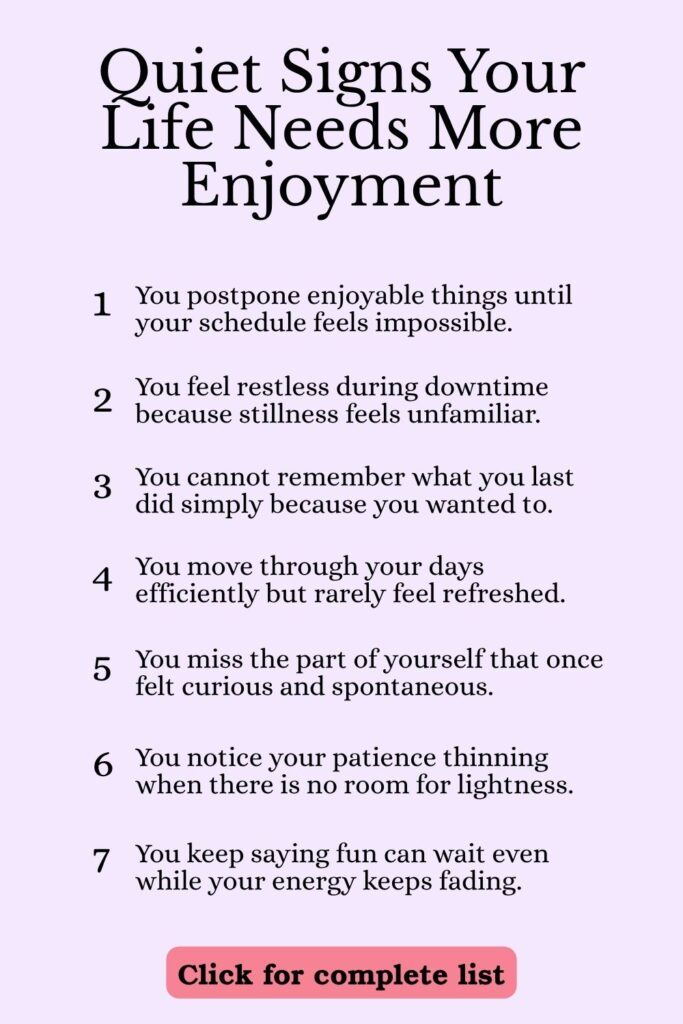
A passion stops feeling fun when the outcome becomes more important than the experience.
This often happens gradually. You start running because you enjoy moving outdoors, then every run needs a faster pace. You enjoy baking, then begin judging each dessert by whether it is attractive enough to post.
Several pressures can change the activity:
- You measure every session.
- You compare your progress with strangers.
- You turn the activity into content.
- You try to make money from it.
- You feel guilty when you skip it.
- You only value visible improvement.
Try creating a protected session with three rules: no audience, no metric, no required output.
If you want to get more from your life, and are looking for concrete action steps to get you there, check out our Request a Coach page. It’s a “cut the fence-sitting and take action” way to tackle your issues and actually find success. To get off the fence and start to take action, click or tap here.
Play guitar without recording it. Exercise without checking performance data. Write something you will not publish. Make food that does not need to look impressive.
You do not have to reject ambition. You can keep goal-focused practice and unmeasured recreation in separate containers.
A career coach may help when every interest has become a potential business idea. The work could involve separating income goals from personal recreation and creating boundaries around activities that are allowed to remain economically useless.
Why Does Shared Fun Feel Different?
Shared fun feels different because it gives people something to notice, attempt, and remember together.
Being in the same room is not automatically shared time. Four people can sit on one couch while each person looks at a separate screen.
Shared fun requires some mutual attention. You respond to the same joke, solve the same problem, learn the same skill, or experience the same surprise.
The activity does not need to be elaborate. Try:
- Cooking one unfamiliar recipe
- Taking turns choosing a movie
- Playing a card game after dinner
- Walking somewhere neither person has explored
- Completing a puzzle over several evenings
- Trying a beginner class together
- Creating a recurring trivia or karaoke night
Take turns choosing. If one person plans every activity, shared fun can quietly become another form of unpaid work.
If you want to get more from your life, and are looking for concrete action steps to get you there, check out our Request a Coach page. It’s a “cut the fence-sitting and take action” way to tackle your issues and actually find success. To get off the fence and start to take action, click or tap here.
Also notice whether everyone is participating willingly. A forced family activity may produce attendance without connection. Ask each person to suggest one option they would genuinely choose.
A relationship or family coach might help a couple or family design a repeatable ritual, especially when their current time together revolves around logistics, chores, or conflict. The focus could be participation, feedback, and trying a different structure when the first idea falls flat.
How Can You Find More Humor in Everyday Life?
You can experience more humor by placing reliable sources of laughter within easy reach.
Do not rely on every difficult situation to become funny. Build a regular supply.
Save a short list of comedians, podcasts, books, shows, cartoons, or people who consistently make you laugh. When you need something light, choose from the list instead of searching through hundreds of options.
You can also collect funny moments from ordinary life. Write down an absurd typo, an overheard comment, a minor mistake, or something a child said. Retelling small moments helps you notice them more often.
A 2023 systematic review and meta-analysis by Caroline Kaercher Kramer and Cristiane Bauermann Leitao examined eight studies with 315 adult participants. Spontaneous laughter interventions were associated with greater reductions in cortisol than control activities, although the researchers rated the evidence as moderate to low for clinical recommendations.
That does not make laughter a treatment for every form of stress. It does support the narrower idea that genuine laughter may create a measurable short-term stress response.
If you want to get more from your life, and are looking for concrete action steps to get you there, check out our Request a Coach page. It’s a “cut the fence-sitting and take action” way to tackle your issues and actually find success. To get off the fence and start to take action, click or tap here.
When Does Humor Help, and When Can It Backfire?
Humor helps when it creates perspective or connection without dismissing what someone is experiencing.
Laughing about a missed train may release tension once everyone is safely on the next one. Making a joke while a friend is describing fresh grief may communicate that you do not want to hear their pain.
Use two questions:
- Does this joke make the situation easier to hold?
- Does it make someone feel smaller, ignored, or exposed?
Be careful with self-directed humor too. Laughing at a harmless mistake can reduce embarrassment. Repeatedly calling yourself stupid trains other people to treat contempt as part of the conversation.
Timing matters. The same story may feel painful today and funny six months later. Let the person closest to the experience set the pace.
A communication coach might use role-play to help someone practice warmth and humor without minimizing another person. That can be especially useful for people who joke automatically whenever a conversation becomes uncomfortable.
How Can You Run a 7-Day Fun Audit?
A seven-day fun audit shows which activities genuinely improve your experience and which ones only look appealing in theory.
For one week, record any activity you expected to enjoy. Include intentional plans and unplanned moments.
If you want to get more from your life, and are looking for concrete action steps to get you there, check out our Request a Coach page. It’s a “cut the fence-sitting and take action” way to tackle your issues and actually find success. To get off the fence and start to take action, click or tap here.
Track five details:
- Activity: What did you do?
- Choice: Did you freely choose it?
- Engagement: Did it hold your attention?
- Connection: Did you share it with someone?
- After-effect: How did you feel 10 minutes later?
Also note your anticipation. Some activities are difficult to start but satisfying afterward. Others seem irresistible beforehand but leave you restless or dissatisfied.
For example, you may resist going to a beginner dance class, enjoy it once you arrive, and feel energized afterward. You may look forward to an hour of scrolling, lose track of time, and feel flat afterward.
At the end of the week, make three decisions:
- Repeat: The activity was enjoyable and realistic.
- Modify: Something worked, but the timing, length, cost, or company needs to change.
- Remove: You consistently did not enjoy it.
Do not score yourself on how much fun you had. The audit is a decision tool, not another performance review.
Frequently Asked Questions About Having More Fun
Why don’t I enjoy the things I used to enjoy?
Your interests, energy, circumstances, or reasons for doing the activity may have changed. Try the smallest version again and observe your response instead of assuming you must recover the old passion.
A persistent loss of interest in nearly everything can also occur with depression and other health conditions. Consider speaking with a qualified healthcare professional when the change is broad, ongoing, or affecting daily functioning.
How can I have fun when I am too busy?
You can have fun during short, protected windows rather than waiting for a completely free day. Choose a specific five-minute or 20-minute activity and place it before optional chores or habitual scrolling.
If you want to get more from your life, and are looking for concrete action steps to get you there, check out our Request a Coach page. It’s a “cut the fence-sitting and take action” way to tackle your issues and actually find success. To get off the fence and start to take action, click or tap here.
Does scheduling fun make it feel forced?
Scheduling fun does not have to make it feel forced when the calendar protects an activity you freely chose. Keep the plan flexible and change it when it starts feeling like an assignment.
What are some fun things adults can do alone?
Adults can enjoy reading, puzzles, creative projects, walking, gaming, cooking, photography, music, museums, classes, or exploring unfamiliar places alone. Choose based on the experience you want, such as curiosity, movement, mastery, or quiet absorption.

How can adults rediscover their sense of play?
Adults can rediscover play by doing something with flexible rules and no useful outcome. Experiment, improvise, make something badly, or try an activity where success has no serious consequence.
Is watching television a good way to relax and have fun?
Watching television can be enjoyable when you choose it intentionally and feel satisfied afterward. It becomes less useful when it is the automatic answer to every free moment or regularly leaves you restless.
How can couples or families have more fun together?
Couples and families can have more fun by choosing activities that require shared attention and rotating who chooses them. Start with a simple recurring ritual rather than an expensive or complicated event.
Can laughter really reduce stress?
Laughter may reduce short-term physiological stress responses, including cortisol, according to a 2023 systematic review. It should be treated as a complementary source of enjoyment, not a replacement for medical or mental health care.
How Will You Make Room for Fun This Week?
More fun does not require a dramatic lifestyle change. It requires one specific choice that survives contact with your real schedule.
Choose something small enough to do this week. Put it on the calendar, notice how you feel during and afterward, then decide whether it deserves another place in your life.
If you want to get more from your life, and are looking for concrete action steps to get you there, check out our Request a Coach page. It’s a “cut the fence-sitting and take action” way to tackle your issues and actually find success. To get off the fence and start to take action, click or tap here.
Simple does not mean powerless. Repeated moments of choice, challenge, connection, and laughter can change what an ordinary week feels like.
Sources
Kramer, Caroline Kaercher, and Cristiane Bauermann Leitao. “Laughter as Medicine: A Systematic Review and Meta-Analysis of Interventional Studies Evaluating the Impact of Spontaneous Laughter on Cortisol Levels.” PLOS ONE, vol. 18, no. 5, 23 May 2023, e0286260. PLOS, https://journals.plos.org/plosone/article?id=10.1371/journal.pone.0286260.
Pressman, Sarah D., et al. “Association of Enjoyable Leisure Activities with Psychological and Physical Well-Being.” Psychosomatic Medicine, vol. 71, no. 7, Sept. 2009, pp. 725-732. PubMed Central, https://pmc.ncbi.nlm.nih.gov/articles/PMC2863117/.
Ryan, Richard M., and Edward L. Deci. “Self-Determination Theory and the Facilitation of Intrinsic Motivation, Social Development, and Well-Being.” American Psychologist, vol. 55, no. 1, 2000, pp. 68-78. PubMed, https://pubmed.ncbi.nlm.nih.gov/11392867/.
If you want to get more from your life, and are looking for concrete action steps to get you there, check out our Request a Coach page. It’s a “cut the fence-sitting and take action” way to tackle your issues and actually find success. To get off the fence and start to take action, click or tap here.
Read this next

Finding Your Purpose in Life
Finding your life’s purpose is not hard, and this article will reveal just how you can find yours.
Read More
How to Stop Hating your Job
There are a lot of reasons why you may hate your job like poor management, atrocious hours, or being poorly suited for the work; if any of these are the […]
Read More
What is a Life Coach and Do I Need One?
An article giving you a clearer perspective on life coaching.
Read More