


Talk to a coach about Career coaching

Dr Soraya Sawicki, DSW, CPC, RMT
DSW, CPC, CSC, RMT
Personalized wellness coaching for stress relief, energy, and inner harmony.

Robert Bradley Singleton
Certified Master Spiritual Life Coach, Neuropsychologist, and Existential Therapist
Train with the best to be the best you! Don't...

Crystal Faulk
ACC
I help overwhelmed women in transition gain clarity, confidence, and...

Sqa Coach QA
test test
test test
Shauntice Wood MS, MPA
Certified Life & Resilience Coach
Certified life coach focused on resilience, purpose development, and structured...

Charity Archie
Several Life Coaching Certifications-Intentional Holistic Life Coach
Charity Aumora dedicated to promoting a positive clear & intentional...

Vibeke Pedersen
Certified Life Coach / ThetaHealer®
Crush 2025
Candice Crosgrove
MA
Resilience coach helping individuals recover, rebuild, and reignite their purpose...


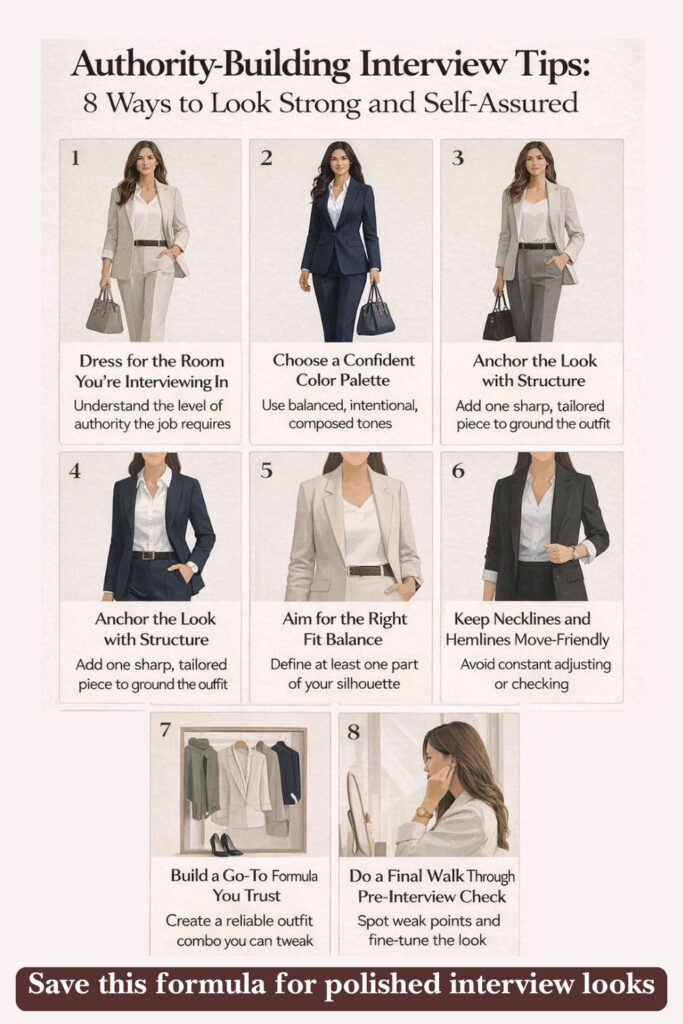
Interview Outlines That Help You Look More Authoritative in the Room
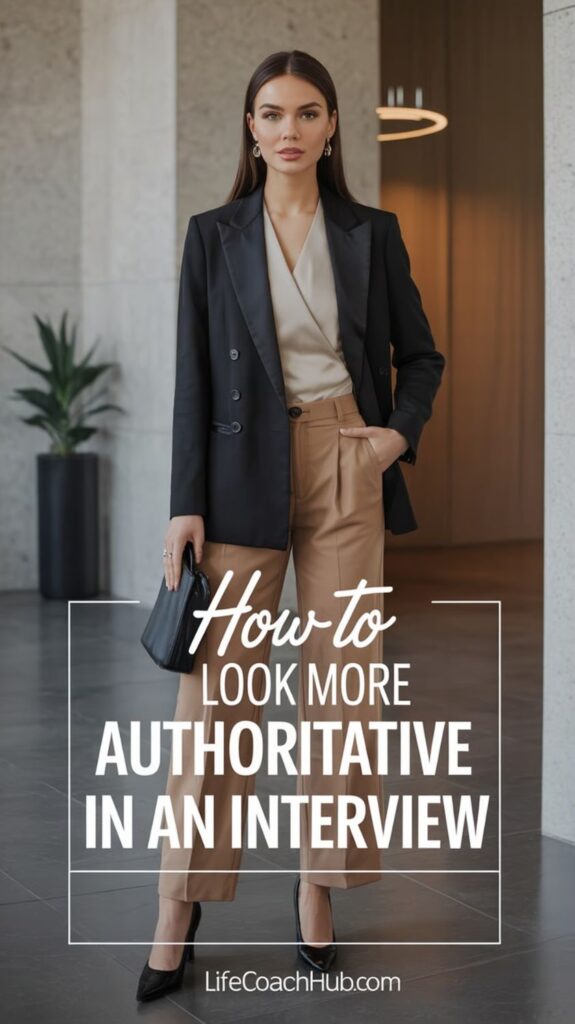
Some interview outfits look polished on the hanger but lose their power the minute you put them on. They might be technically professional, but they do not create that grounded, capable, leadership-ready first impression people often mean when they say someone has “presence.” That is the gap this article is here to fix.
Looking more authoritative in the room is not about dressing older, harsher, or more expensively. It is about sending a clearer signal. Before you answer the first question, your outfit is already communicating something about how you see yourself, how seriously you take the opportunity, and whether you look comfortable carrying responsibility.
Need some style or career guidance? Drop on by our directories choc full of image coaches and career coaches to get your look and career on point. Or click here to have us match you to the best.
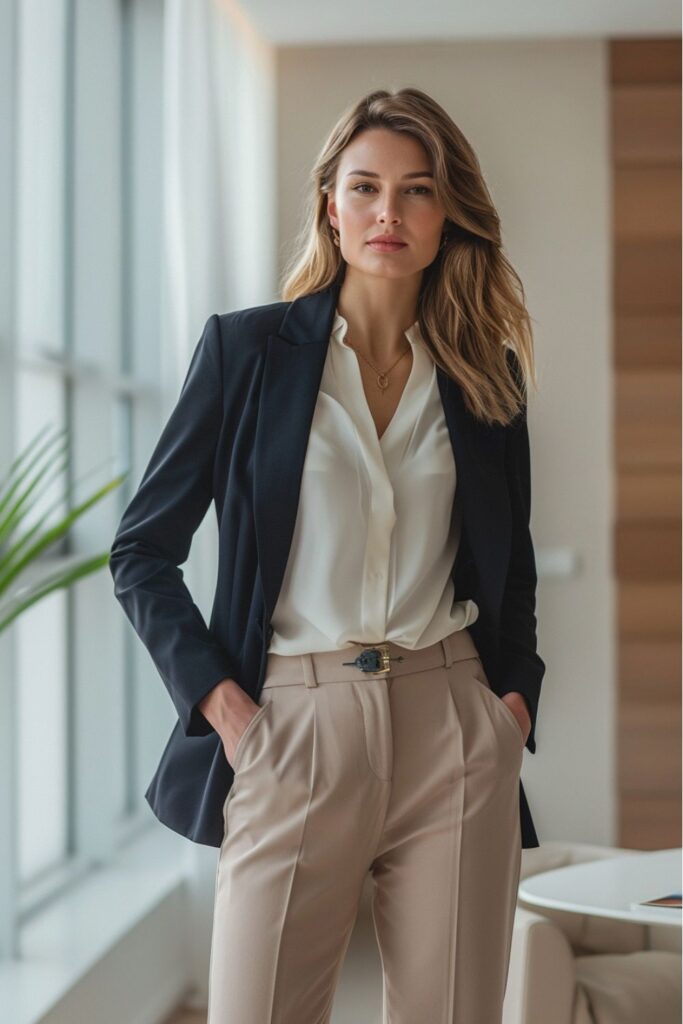
That effect usually comes from three things working together:
- color
- structure
- fit balance
If even one of those is off, the outfit can start reading unsure instead of strong. A beautiful blouse can feel too soft when paired with an unstructured bottom. A great blazer can lose impact if the fit underneath feels bulky or distracting. A polished look can still feel weak if the color palette washes you out or looks too casual for the setting.
The good news is that authority in dressing is often built through simple, very fixable choices. You do not need a giant wardrobe overhaul. You need a better understanding of what makes an outfit feel intentional and steady.
In this article, we are going to walk through how to build that effect on purpose. You will learn how to choose the right kind of authority for the role, how to use color without looking severe, how to bring in structure without feeling stiff, and how to balance proportions so the whole outfit feels composed. We will also cover the subtle details that quietly weaken an otherwise strong interview look.
The goal is not to make you dress like someone else. It is to help your outfit support the version of you that already belongs in the room.
If you want to get more from your life, and are looking for concrete action steps to get you there, check out our Request a Coach page. It’s a “cut the fence-sitting and take action” way to tackle your issues and actually find success. To get off the fence and start to take action, click or tap here.
Start With the Kind of Authority the Job Actually Calls For
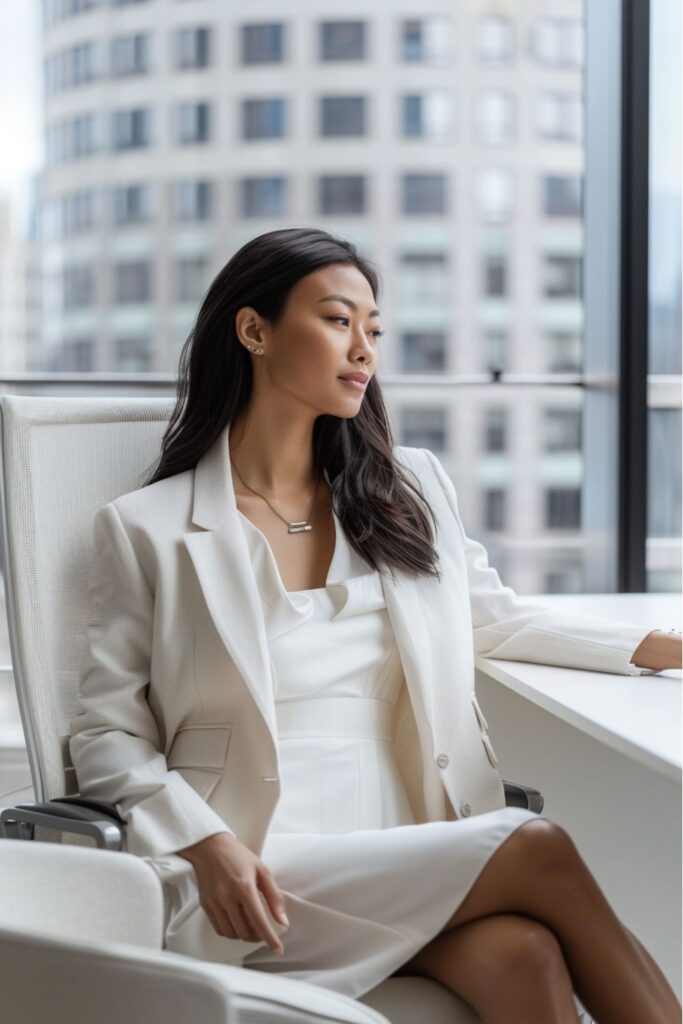
Before you choose a blazer, a shoe, or even a color palette, you need to decide what kind of authority the role actually calls for. This step matters because authority does not look identical in every interview setting. A strong outfit for a law office and a strong outfit for a creative brand may both feel polished, but they will not communicate in exactly the same way.
This is where many people get stuck. They hear “dress professionally” and either go too corporate for the room or too relaxed because they want to seem approachable. Neither choice helps much if it misses the culture of the role. The most convincing interview outfits do not just look nice. They look like they belong in that specific environment.
Start by thinking about the job through a few simple lenses:
- Is this role more traditional or more modern?
- Is it client-facing, behind the scenes, or leadership-track?
- Does the company value polish, creativity, authority, warmth, or speed?
- Would the room expect restraint or a little more personality?
A structured navy blazer and slim trousers may feel exactly right in one setting and overly formal in another. A softer monochrome outfit with refined layers might feel perfect for a modern office, but too vague for a role where decisiveness needs to come across instantly.
You are not trying to mimic the company in a costume-like way. You are trying to translate your credibility into a version that fits the context. That is a very different goal.
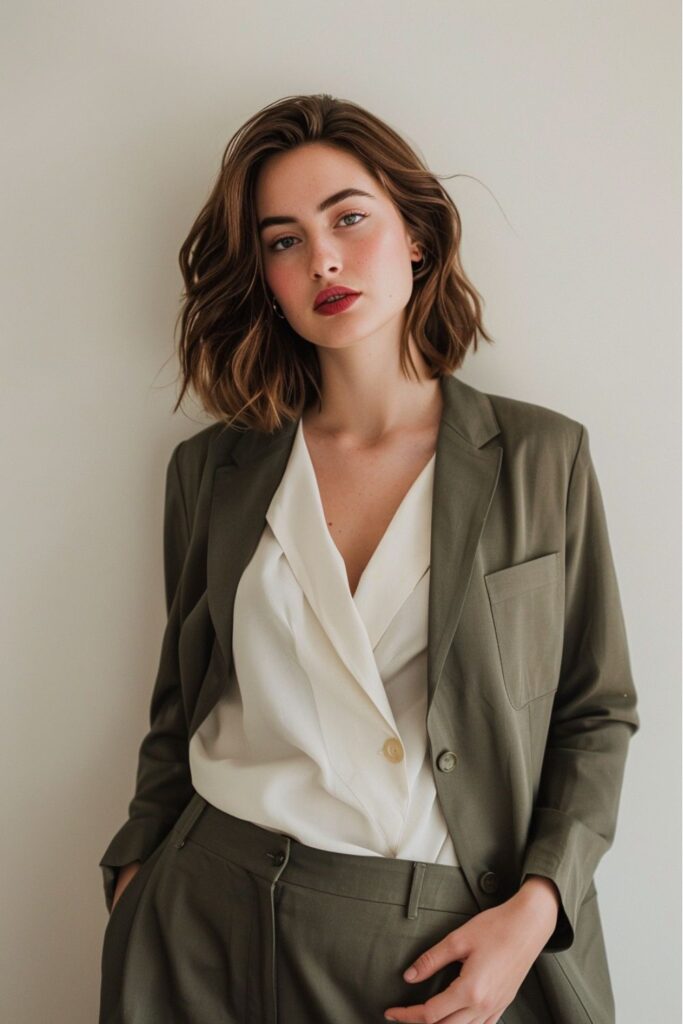
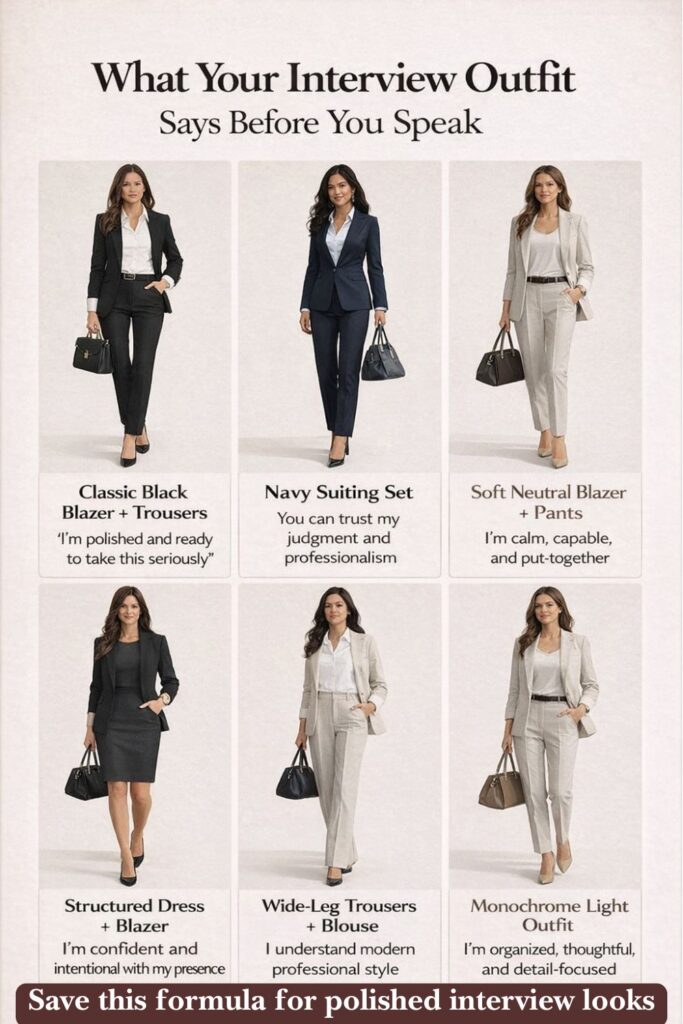
A helpful way to frame it is this: what do you want your outfit to say before you speak? Maybe the answer is:
- organized and reliable
- creative but grounded
- sharp and ready for leadership
- calm under pressure
- polished and client-safe
Once you know the message, the rest of the styling gets easier. You stop asking, “What should I wear?” and start asking, “What would make that message visible in one glance?”
That shift is powerful. It turns interview dressing from random shopping into strategic communication. And when your outfit matches the energy of the role, your presence starts to feel much more believable the second you walk in.
If you want to get more from your life, and are looking for concrete action steps to get you there, check out our Request a Coach page. It’s a “cut the fence-sitting and take action” way to tackle your issues and actually find success. To get off the fence and start to take action, click or tap here.
Use Color to Create Instant Credibility
Color shapes first impressions faster than most people realize. Before someone notices the cut of your blazer or the quality of your shoes, they often register the overall mood of your outfit. That is why color can either strengthen your authority or soften it in ways you did not intend.
For interview dressing, the goal is not to wear the darkest or most serious thing you own. It is to choose colors that feel steady, intentional, and easy to read. When the palette is too scattered, too sweet, or too casual, the outfit can start to feel less grounded. When the palette is too harsh for you, it can look stiff rather than strong.
Some of the most reliable authority-building colors are:
- navy
- charcoal
- black
- cream
- ivory
- taupe
- deep olive
- espresso
- muted burgundy
- soft steel blue
These tones tend to communicate control and polish without requiring a lot of explanation. They also mix well together, which helps the outfit feel cohesive instead of pieced together at the last minute.
That said, color authority is not only about which shade you wear. It is also about where you place it. A darker outer layer often creates a clearer frame around the body and face. A lighter top under a structured jacket can brighten you up while still keeping the overall outfit grounded. Tonal outfits can also work beautifully because they remove visual clutter and make the whole look feel more confident.
A few combinations that often work well are:
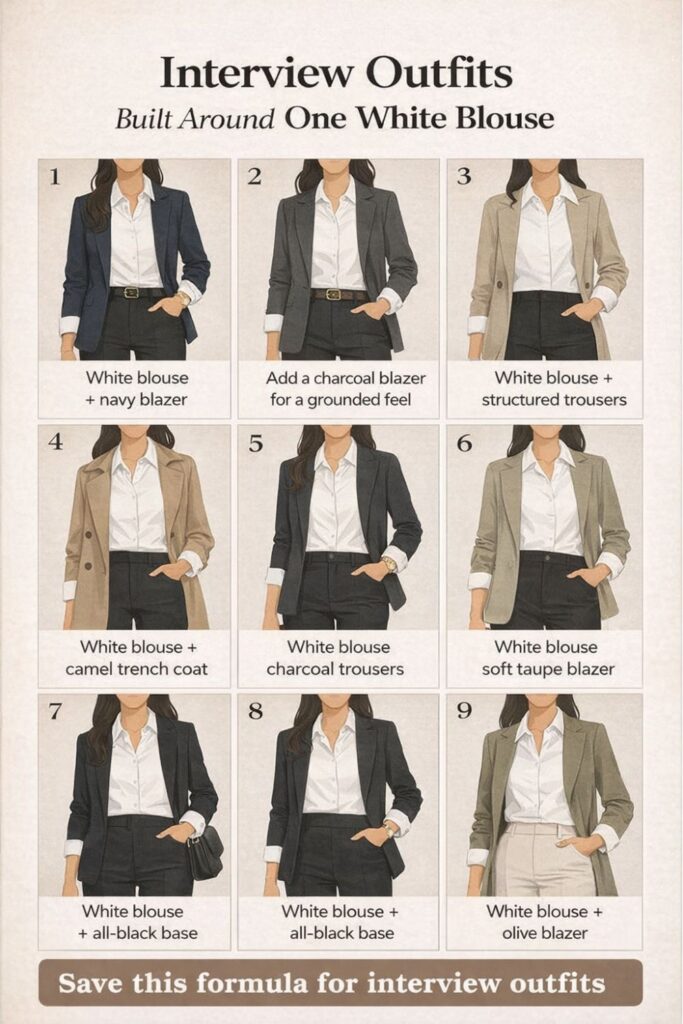
- navy blazer + cream top + dark trousers
- charcoal trousers + soft blue shirt + black shoe
- all-black base + textured neutral layer
- deep olive blazer + ivory knit + tailored pants
Try to avoid colors that make the outfit feel distracted from the interview itself. Neon, overly sugary pastels, or a lot of competing shades can pull attention away from your presence. Even if the pieces are nice individually, the whole look can start to feel more social than authoritative.
The best interview colors usually do one quiet job very well. They make you easier to take seriously. They do not need to be boring. They just need to help the room see you as composed, clear, and ready for real responsibility.
If you want to get more from your life, and are looking for concrete action steps to get you there, check out our Request a Coach page. It’s a “cut the fence-sitting and take action” way to tackle your issues and actually find success. To get off the fence and start to take action, click or tap here.
Anchor the Outfit With One Structured Piece
If you want an outfit to read more authoritative, structure is usually the fastest way to get there. Structure gives clothes shape, direction, and a sense of purpose. It creates cleaner lines on the body and makes an outfit feel more deliberate, even when the rest of the look is simple.
This is why one strong structured piece can carry an entire interview outfit. You do not need every item to be stiff or tailored. In fact, that can make the outfit feel overly rigid. What works better is choosing one piece that sets the tone, then letting the rest of the outfit support it.
Some of the best authority-building anchor pieces include:
- a blazer with defined shoulders
- tailored trousers with a crisp line
- a clean sheath or column dress
- a structured vest
- a sharp button-front shirt
- a jacket with a clean waist and strong lapel shape
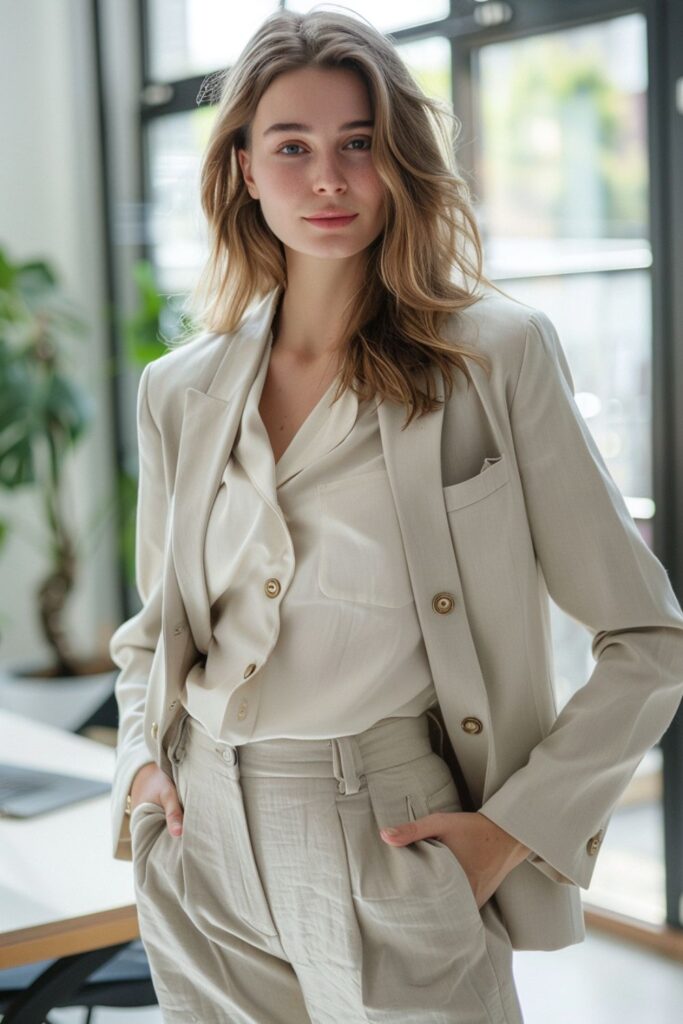
The point is not to look severe. The point is to create visual clarity. Structure helps the eye understand the outfit quickly, and that quick readability often translates into a stronger first impression.
A soft knit top can look more leadership-ready when paired with tailored pants. A simple dress can look far more commanding with a jacket over it. Even a basic blouse becomes more convincing when tucked neatly into a structured bottom rather than left to float without definition.
When choosing your anchor piece, look for details that suggest control:
- fabric that holds its shape
- seams that sit where they should
- a shoulder line that feels clean
- a hem that looks intentional
- closures that lie flat
- no pulling, collapsing, or sagging
It is also worth noting that structure does not have to mean discomfort. Some of the best modern workwear pieces feel relaxed while still looking clean. A softly tailored blazer can be just as effective as a very sharp one if the line is clear and the fit is right.
If your outfit feels too soft, vague, or casual, ask yourself one simple question: what is anchoring this look? If the answer is “nothing really,” that is often the missing piece. Add one item with line and shape, and the entire outfit usually starts to feel more capable immediately.
If you want to get more from your life, and are looking for concrete action steps to get you there, check out our Request a Coach page. It’s a “cut the fence-sitting and take action” way to tackle your issues and actually find success. To get off the fence and start to take action, click or tap here.
Balance Fit So the Outfit Reads Deliberate
Fit balance is one of the least flashy but most important parts of looking authoritative. You can have the right colors and a beautiful jacket, but if the proportions feel off, the outfit can still read uncertain. This happens all the time. Clothes do not need to be expensive to look convincing, but they do need to relate to each other well.
A balanced outfit usually gives the eye something clear to follow. One area may have volume, while another brings definition. One piece may be relaxed, while another adds shape. That contrast is often what makes the whole look feel thoughtful instead of accidental.
For example, wide-leg trousers can look strong and elegant when paired with a more fitted knit or a jacket with structure. A fuller blazer can work beautifully when the base layer underneath is cleaner and closer to the body. Straight-leg pants often pair well with slightly softer tops because the line underneath is already doing some of the work.
A few fit principles help a lot here:
- avoid everything tight
- avoid everything oversized
- define at least one part of the silhouette
- make sure layers can sit cleanly together
- check that hems and sleeve lengths support the line
When everything is body-hugging, the outfit can start to feel tense rather than powerful. When everything is loose, it can feel swallowed or underfinished. The sweet spot is usually somewhere in between.
This is especially important in interviews because authority is often read through ease. If your outfit looks like it is fighting your body, being pulled on, or hanging without intention, it can create a visual feeling of discomfort. People may not consciously name that, but they do register it.
One useful trick is to take a photo of the outfit from the front, side, and sitting down. You will often catch proportion problems much faster that way. Maybe the blazer is longer than you realized. Maybe the trousers are perfect standing up but bunch strangely when seated. Maybe the blouse looks fine tucked in until a jacket goes over it.
Fit balance is where a lot of authority gets built quietly. It tells the room that you did not just put on workwear. You edited the outfit until it made sense. That kind of visual control reads as maturity, and in an interview, that can go a long way.
If you want to get more from your life, and are looking for concrete action steps to get you there, check out our Request a Coach page. It’s a “cut the fence-sitting and take action” way to tackle your issues and actually find success. To get off the fence and start to take action, click or tap here.
Keep the Neckline, Hemline, and Shoe Choice Interruption-Free
An authoritative outfit should let the focus stay on you, not on the maintenance of your clothes. That is why interruption-free dressing matters so much. If something shifts, gaps, pinches, rides up, slips down, or makes you walk differently, it chips away at the calm, capable impression you are trying to build.
This is one of the biggest differences between an outfit that looks good in the mirror and an outfit that performs well in an interview. Interviews are movement-based situations. You sit, stand, reach for a bag, shake hands, cross a room, and adjust in your chair. Clothes that cannot handle that reality often stop feeling authoritative very quickly.
Pay close attention to these areas:
- necklines that dip or gape when seated
- skirts or dresses that ride up
- trousers that drag or bunch
- sleeves that need constant pushing
- shoes that alter your posture or pace
- straps, waistbands, or closures that need checking
A strong interview outfit should feel stable when you move. That stability reads as confidence because it removes visual distraction. You are not tugging at a blazer hem or wondering whether your shoe is too casual or too painful. You can actually stay present.
Shoes deserve special attention here. A polished shoe can absolutely elevate authority, but only if it supports the way you walk. A sleek flat, loafer, block heel, or low pump often works better than a shoe that looks impressive but changes your body language. If you walk more stiffly or cautiously, the shoe is not helping the interview even if it looks elegant.
Do a full movement test before the day arrives:
- sit down for ten minutes
- stand up and walk across the room
- bend slightly to pick something up
- try the outfit with your interview bag
- practice the shoes on a hard floor
- check the outfit in natural light and while seated
These steps sound simple, but they catch a surprising number of problems. An outfit that survives all of them usually feels much more credible in the room.
Authority is often about removing friction. The less your outfit interrupts you, the more your presence can come through clearly. And that is the whole point. You want the interviewer remembering your answers, your composure, and your energy, not the fact that you were adjusting your sleeve every three minutes.
If you want to get more from your life, and are looking for concrete action steps to get you there, check out our Request a Coach page. It’s a “cut the fence-sitting and take action” way to tackle your issues and actually find success. To get off the fence and start to take action, click or tap here.
Use Accessories to Reinforce Clarity, Not Add Noise
Accessories can either sharpen an interview outfit or quietly weaken it. The difference usually comes down to whether they add clarity or create competition. In an interview setting, your accessories should help the outfit feel finished, not busier.
This matters because authority often relies on visual restraint. When too many details are asking for attention at once, the outfit can lose its center. A strong bag, a clean belt, or a simple watch can absolutely support the overall message. But if the jewelry is too loud, the bag too casual, or the shoes pulling in a totally different direction, the outfit starts to feel less sure of itself.
Think of accessories as support players. Their job is to reinforce the main idea of the outfit, not introduce a new one.
The most useful accessory choices tend to be:
- clean-lined bags
- simple metal jewelry
- polished loafers or flats
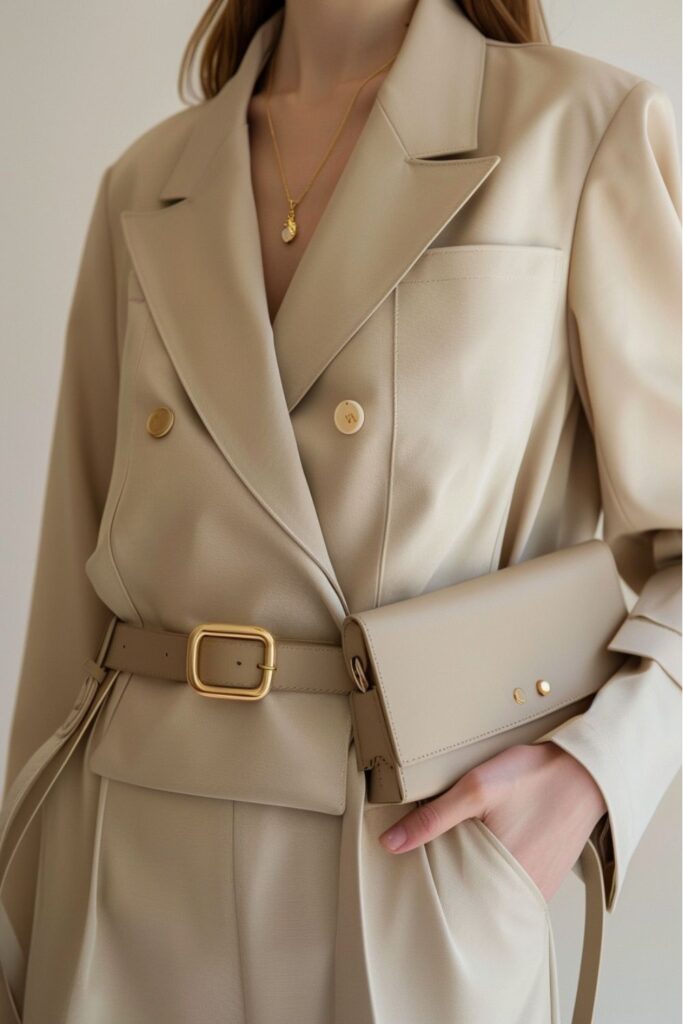
- refined belts
- understated watches
- minimal scarves or hair accessories
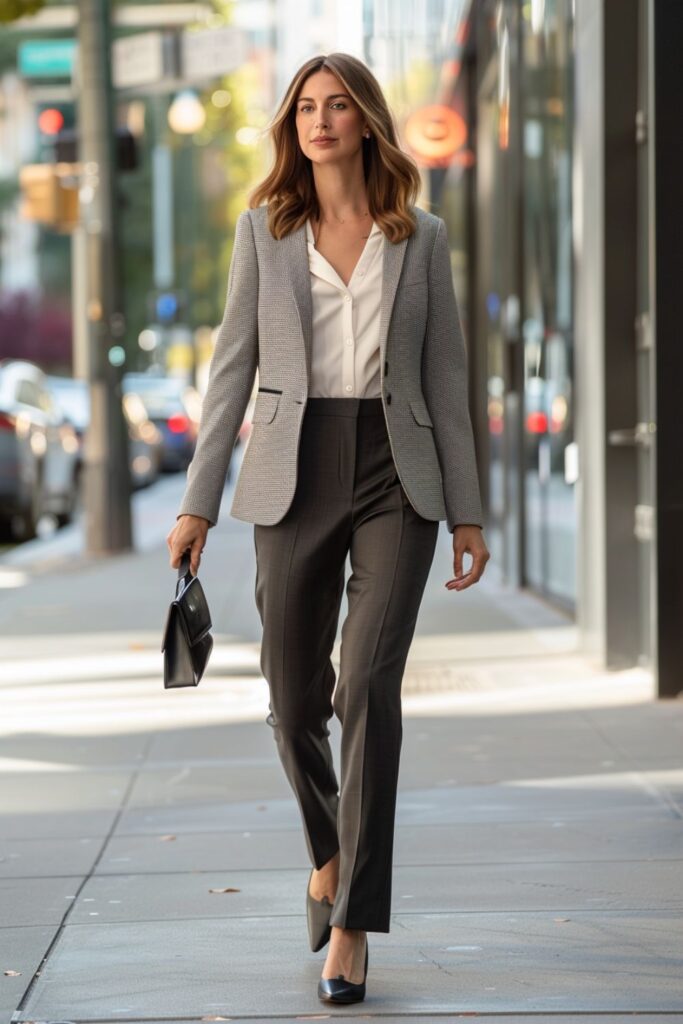
These items work because they create finish without confusion. They suggest that you notice details and know how to edit yourself, which is a very authority-building quality.
A structured bag is especially helpful because it contributes to the overall shape language of the look. If your outfit already has good line and structure, a floppy or overly casual tote can soften that effect too much. The same goes for shoes. Even when the outfit itself is strong, overly casual footwear can shift the whole impression.
Jewelry should also feel intentional. That does not mean tiny or invisible. It just means edited. One pair of earrings and a watch may do more for the outfit than multiple rings, layered necklaces, and a statement bracelet all at once.
A good rule is to ask whether each accessory makes the look feel more:
If you want to get more from your life, and are looking for concrete action steps to get you there, check out our Request a Coach page. It’s a “cut the fence-sitting and take action” way to tackle your issues and actually find success. To get off the fence and start to take action, click or tap here.
- polished
- coherent
- grown-up
- stable
- interview-ready
If the answer is no, it probably does not need to be there.
This is also where personal style can still show up beautifully. A classic gold hoop, a sleek bag in a rich tone, or a signature pair of loafers can all add personality without costing you authority. The key is that the personality feels contained and deliberate.
Strong interview styling is rarely about adding more. It is usually about keeping what helps and removing what does not. Accessories are no exception. When they support the outfit’s message instead of distracting from it, they make your whole presence feel more settled.
Build One Repeatable Formula You Can Trust
One of the smartest things you can do for interview dressing is create a repeatable formula. This gives you something reliable to return to instead of reinventing your outfit every time a high-stakes situation comes up. And when the goal is authority, reliability matters. Random styling choices tend to create random results.
A formula is not the same thing as wearing the exact same outfit forever. It is more like having a structure that consistently works for you. Once you know your best proportions, strongest colors, and most convincing shapes, you can swap pieces in and out while keeping the overall effect intact.
That is especially useful before interviews because stress has a way of making people overcomplicate things. They suddenly doubt their best pieces, try something unfamiliar, or build an outfit around one item that does not really fit the role. A trusted formula protects you from that spiral.
A few strong formulas might look like this:
- tailored trousers + fitted knit + blazer + polished loafer
- column dress + structured jacket + simple bag + sleek flat
- straight-leg pants + button-front shirt + belt + low heel
- tonal separates + strong outer layer + minimal accessories
The best formula for you depends on your body, industry, and comfort level. But every good formula tends to have the same qualities:
If you want to get more from your life, and are looking for concrete action steps to get you there, check out our Request a Coach page. It’s a “cut the fence-sitting and take action” way to tackle your issues and actually find success. To get off the fence and start to take action, click or tap here.
- one structured anchor
- one clean base
- balanced proportions
- a controlled color palette
- shoes you can actually move in
Once you land on a formula that works, test it in slightly different versions. Maybe the navy blazer becomes charcoal. Maybe the knit becomes a crisp blouse. Maybe the loafer becomes a low block heel. The silhouette and message stay steady, even though the pieces vary.
This is also helpful for confidence. Familiarity changes how you carry yourself. When you know the outfit works, you spend less energy second-guessing it. That gives you more room to focus on your answers, your body language, and your ability to connect in the room.
If you are building an interview wardrobe from scratch, start smaller than you think. You do not need ten great outfits. You need one strong formula you trust, then a few strategic variations around it.
That is how authority becomes easier to wear. It stops being something you hope happens and becomes something your clothes help create on purpose.
Adjust the Authority Level Without Losing Yourself
A lot of people hear “look more authoritative” and immediately picture an outfit that feels too stiff, too corporate, or too far from how they normally dress. That is understandable, but it misses an important point. Authority does not have to erase your personality. It just has to make your presence easier to read.
The goal is not to become someone else in a blazer. The goal is to dial the outfit to the right level for the room while still feeling like yourself inside it. That is what makes the authority believable. If you feel disguised, people often sense that too.
This is where small adjustments matter more than dramatic changes. Often, one switch is enough to move the outfit in the right direction without making it feel forced.
You might adjust the authority level by:
If you want to get more from your life, and are looking for concrete action steps to get you there, check out our Request a Coach page. It’s a “cut the fence-sitting and take action” way to tackle your issues and actually find success. To get off the fence and start to take action, click or tap here.
- swapping a soft cardigan for a blazer
- choosing a darker trouser instead of a faded one
- replacing casual shoes with a loafer or sleek flat
- tucking in the top for more structure
- trading a slouchy bag for a cleaner shape
- simplifying accessories
These are not huge style changes, but they can make the outfit feel much more intentional.
It also helps to think about what part of your personal style you actually want to keep. Maybe you love softer neutrals. Maybe you prefer minimal jewelry. Maybe you feel best in trousers rather than dresses. Great. None of those things prevent authority. The key is just making sure the version you wear still has enough line, polish, and control to support the setting.
For example, a softer palette can still feel strong if the silhouette is clean. A more feminine outfit can still look leadership-ready if the fit is sharp and the details are edited. A more relaxed style can still work if the fabrics and shoes keep it grounded.
The question is not “Does this look like me?” The better question is “Does this look like the most credible version of me in this room?”
That framing gives you more freedom. It keeps you from overcorrecting into something that feels heavy or unnatural. And it helps you build authority in a way that is sustainable, not costume-based.
The strongest interview outfits usually do not scream authority. They communicate it quietly and consistently. That is often why they work. They feel aligned, not performed. And when your outfit feels aligned with who you are and where you want to go, your confidence tends to show up in a much steadier way.
Use a Pre-Interview Styling Check to Spot Weak Points
Even a well-planned outfit can have weak points you do not notice until the last minute. That is why a pre-interview styling check is so useful. It helps you catch the quiet details that can make a polished look feel less authoritative once you are actually in motion.
A styling check is not about becoming hypercritical. It is about giving yourself one final layer of clarity. When you are nervous about an interview, it is easy to miss obvious issues because you are focused on the big picture. But the big picture is often shaped by small things.
If you want to get more from your life, and are looking for concrete action steps to get you there, check out our Request a Coach page. It’s a “cut the fence-sitting and take action” way to tackle your issues and actually find success. To get off the fence and start to take action, click or tap here.
Start by looking at the outfit the way a stranger would. Ask yourself what comes through in one glance. Does the outfit read clear, steady, and professional? Or does it read soft, uncertain, incomplete, or slightly off?
Check these areas carefully:
- does anything wrinkle too fast
- does any layer bunch under another
- do the shoes match the authority level of the outfit
- does the color balance feel intentional
- do any pieces compete with each other
- does the outfit still work when seated
Then go a step further and test for visual friction. This is where you look for things that are not exactly wrong, but not fully helping either. Maybe the pants are good, but not quite sharp enough. Maybe the blouse is pretty, but a little too floaty under the blazer. Maybe the earrings are nice, but they add more movement than the look needs.
It helps to take photos and ask simple questions like:
- what is the strongest part of this outfit
- what is the weakest part
- where does the eye go first
- does that first impression match the message I want
Sometimes the fix is tiny. Hem the pants. Change the shoe. Switch the bag. Add a belt. Remove one accessory. Use a different top under the jacket. These kinds of edits can turn a decent interview outfit into a much more convincing one.
Try to do this check at least a day early so you still have room to adjust something. Last-minute styling usually creates more stress, not more authority.
This step is worth taking seriously because it closes the gap between intention and reality. You may think your outfit says composed and leadership-ready, but the styling check is where you confirm whether it actually does. That kind of preparation creates calm, and calm is one of the most authoritative things you can bring into the room.
Match Your Outfit to the Leadership Story You Want to Tell
Interview outfits are not just about dress codes. They are also about narrative. The way you dress can support the story you want the room to believe about you. That story might be that you are dependable, strategic, creative, calm under pressure, highly organized, ready for more responsibility, or already functioning at the next level.
If you want to get more from your life, and are looking for concrete action steps to get you there, check out our Request a Coach page. It’s a “cut the fence-sitting and take action” way to tackle your issues and actually find success. To get off the fence and start to take action, click or tap here.
This matters because authority is often linked to coherence. When your appearance, body language, and answers all seem to belong to the same person, you feel more convincing. When those things feel disconnected, the room has to work harder to understand you.
Start by asking yourself what kind of leadership energy you want to project. Not every role requires the same story. Sometimes you want to look like someone who can manage complexity. Sometimes you want to look like someone clients will trust. Sometimes you want to signal that you are ready to move from support role to decision-making role.
Your outfit can quietly reinforce those messages.
For example:
- crisp tailoring can suggest organization and precision
- tonal dressing can signal maturity and control
- a strong jacket can imply readiness and command
- minimal accessories can support focus and clarity
- refined shoes can suggest attention to detail
What matters is that your clothes do not contradict the impression you want to create. If your goal is to look like someone ready for leadership, but the outfit feels too tentative or overly casual, there is a mismatch. If your goal is to seem modern and strategic, but the outfit looks dated or fussy, that mismatch shows too.
This does not mean overthinking every detail into a performance. It means choosing an outfit that supports your strongest professional qualities. That way, your clothes are helping the room read you correctly faster.
A helpful exercise is to finish this sentence before you get dressed: “By the time I sit down, I want them to feel that I am someone who is ________.” Then choose your outfit with that answer in mind.
Possible words might be:
If you want to get more from your life, and are looking for concrete action steps to get you there, check out our Request a Coach page. It’s a “cut the fence-sitting and take action” way to tackle your issues and actually find success. To get off the fence and start to take action, click or tap here.
- capable
- credible
- grounded
- sharp
- thoughtful
- steady
Once you know the story, styling becomes easier. You stop choosing pieces just because they are technically workwear. You start choosing pieces because they help communicate the role you are ready to play.
That is a much more powerful way to dress. It turns authority from a vague aesthetic into something specific, visible, and connected to your actual professional direction.
Know the Small Details That Quietly Weaken Authority
Sometimes an outfit looks close to right, but still does not land with the strength you wanted. Usually, the problem is not one huge mistake. It is a collection of smaller details that soften the impression too much or make the outfit feel less resolved.
These details matter because authority is fragile. It is built through signals of clarity, control, and readiness. When too many little things pull in the opposite direction, the whole look starts to feel less grounded, even if every individual piece seems fine.
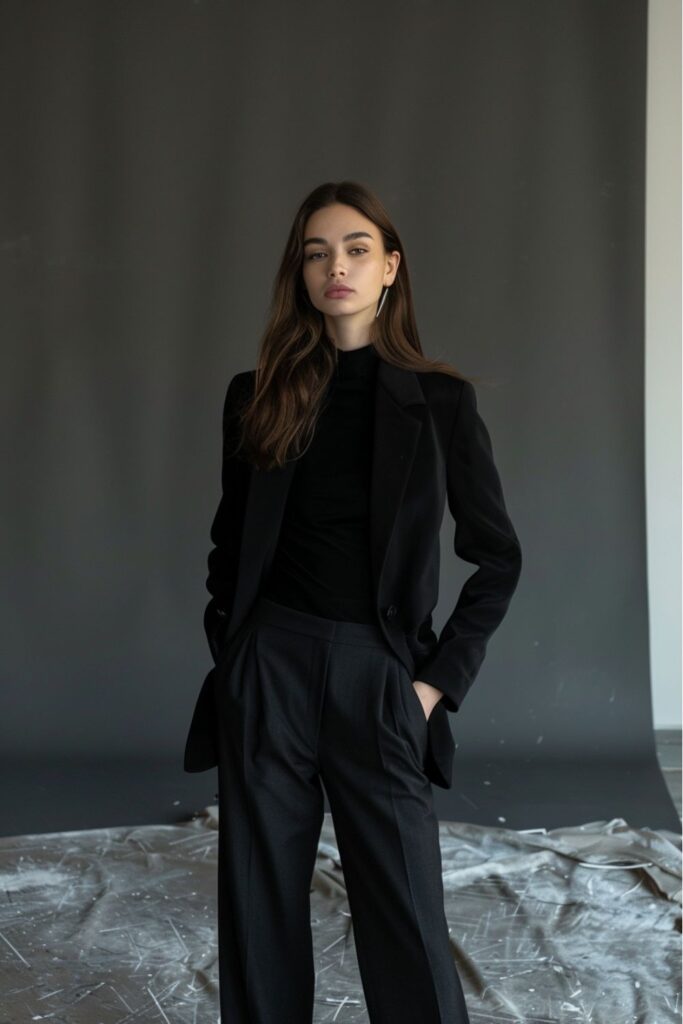
A few of the most common authority-weakeners are:
- clingy fabric that shows every shift underneath
- tops that feel too delicate or fluttery
- jackets with no shape at all
- pants that are too long or too cropped for the shoe
- shoes that read weekend instead of interview
- too many “cute” details in one outfit
- visible discomfort in movement or posture
This is especially common with soft pieces. Softness itself is not the problem. The issue is when softness shows up everywhere at once. A drapey blouse, unstructured cardigan, loose trousers, and casual shoe can create an outfit that feels pleasant, but not particularly commanding. It may look nice, yet still fail to project leadership energy.
The same goes for trend-heavy styling. A piece can be current and flattering, but if it pulls too much attention toward fashion rather than presence, it can weaken the authority effect. Interviews usually reward polish over novelty.
Pay attention to the emotional tone of the details too. Some outfit elements feel playful, romantic, or casual by nature. That does not make them wrong, but it does mean they need to be balanced carefully. Too many soft bows, ruffles, flimsy fabrics, or overly sweet colors can shift the outfit away from strength and toward charm, which is not always the message you want leading.
If you want to get more from your life, and are looking for concrete action steps to get you there, check out our Request a Coach page. It’s a “cut the fence-sitting and take action” way to tackle your issues and actually find success. To get off the fence and start to take action, click or tap here.
If you are not sure what is weakening the look, do a subtraction test. Remove one detail at a time and see whether the outfit gets stronger. Sometimes taking away a necklace, swapping a cardigan, or changing the shoe is all it takes.
Authority often comes from editing. It is rarely about piling on more polish until the outfit looks expensive. It is about stripping away what confuses the message.
That is good news, because it means your strongest interview look may already be in your closet. It just may need a little less softness, a little more structure, and a few smarter decisions in the details.
Work With a Coach if Outfit Confidence Drops in High-Stakes Moments
Sometimes the real problem is not the outfit. It is what happens to your decision-making when the situation feels high-stakes. You second-guess everything. Clothes that looked good yesterday suddenly feel wrong. You worry about looking too much, not enough, too formal, too casual, too memorable, too plain. By the time the interview arrives, the outfit is carrying way more pressure than it should.
That is where a coach can help.
A good coach will not just tell you what to wear. They can help you understand the patterns underneath your outfit choices. Maybe you default to dressing smaller when you want to be liked. Maybe you overcorrect and choose clothes that feel too hard because you are afraid of being underestimated. Maybe you keep trying to solve confidence problems by buying new pieces instead of building a system you trust.
A coach can help in a few different ways:
- clarify the impression you want to create
- identify what weakens your presence under pressure
- build repeatable outfit formulas
- connect wardrobe choices to body language and self-trust
- help you prepare for interviews in a more grounded way
This kind of support can be especially useful if you are changing industries, returning to work, stepping into leadership, or interviewing after a long break. In those moments, outfit anxiety is often about identity as much as clothes.
If you want to get more from your life, and are looking for concrete action steps to get you there, check out our Request a Coach page. It’s a “cut the fence-sitting and take action” way to tackle your issues and actually find success. To get off the fence and start to take action, click or tap here.
A career coach may help you align your visual presentation with your professional goals. An image coach may help you spot the shapes, colors, and styling patterns that make you look more credible immediately. A confidence or communication coach may help you understand how clothing interacts with posture, voice, and energy in the room.
What makes this valuable is that it takes the pressure off guessing. Instead of trying to decode authority alone, you have someone helping you see yourself more clearly.
Even one or two sessions can make a difference if the issue is not lack of clothing but lack of clarity. Sometimes what changes everything is hearing, “This silhouette works for you,” or “This is the message your current outfit is sending,” or “You are dressing for safety, not leadership.”
That kind of outside perspective can save a lot of time, money, and mental spiraling. And in an interview setting, that mental calm matters.
Clothes can support confidence, but they are not supposed to carry all of it. If interview dressing keeps turning into stress, support may be the smartest move, not another shopping trip.
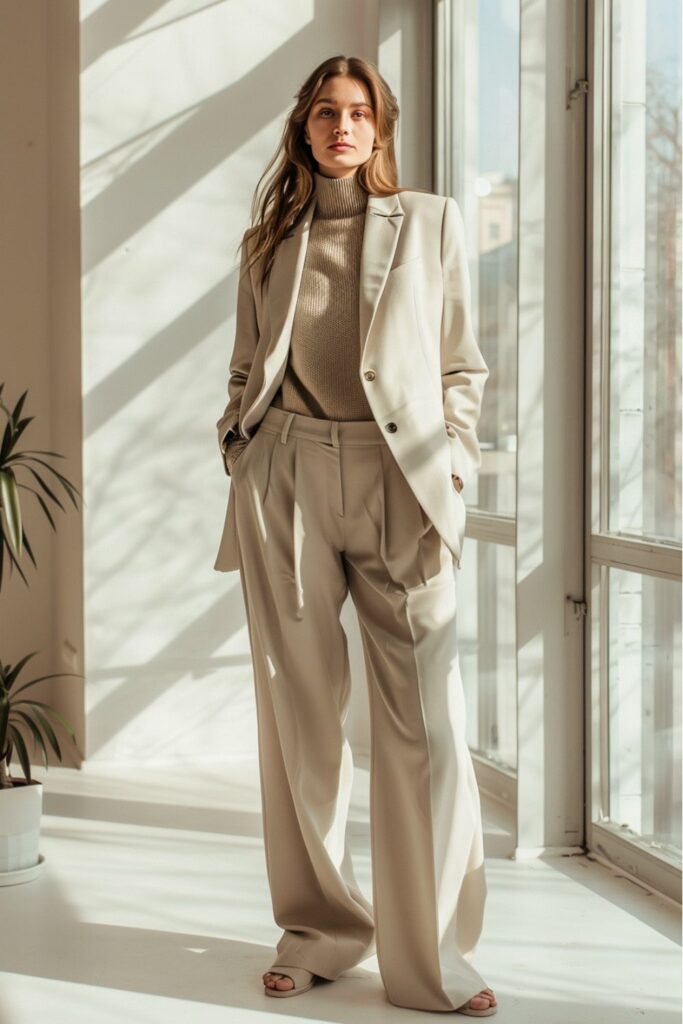
Let Your Outfit Support Your Voice
Need some style or career guidance? Drop on by our directories choc full of image coaches and career coaches to get your look and career on point. Or click here to have us match you to the best.
The most authoritative interview outfits do not work because they look intimidating. They work because they look clear. They tell the room that you understand the setting, that you can carry yourself well in it, and that your choices are intentional. That kind of clarity creates trust fast.
By the time you walk into an interview, your outfit has already started the conversation. Color tells the room how grounded or scattered the look feels. Structure tells the room whether the outfit has shape and direction. Fit balance tells the room whether you look composed in your clothes or slightly at war with them. Small details either support that story or quietly pull against it.
If you want to get more from your life, and are looking for concrete action steps to get you there, check out our Request a Coach page. It’s a “cut the fence-sitting and take action” way to tackle your issues and actually find success. To get off the fence and start to take action, click or tap here.
That is why dressing with more authority is not really about chasing one perfect outfit. It is about understanding the signals your clothes are sending and learning how to edit them in your favor. Once you know how to do that, you do not need to rely on guesswork.
The strongest takeaway is simple:
- choose the kind of authority the role actually needs
- use a steady, readable color palette
- anchor the outfit with one structured piece
- balance proportions so the look feels deliberate
- remove anything that interrupts movement or focus
- keep accessories polished and restrained
- build a formula you can repeat and trust
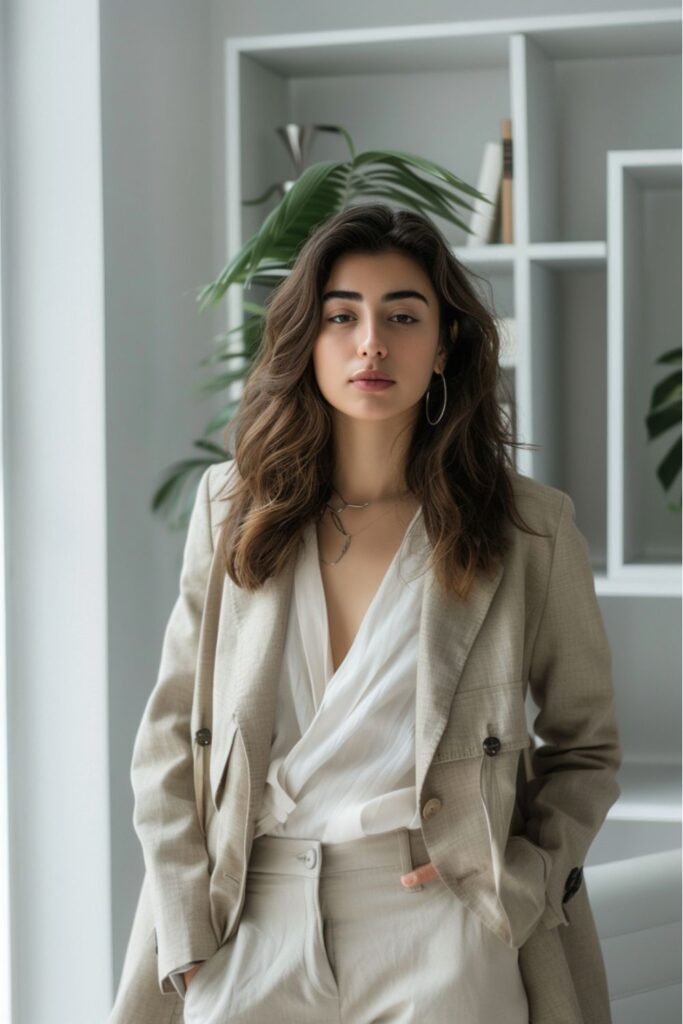
None of this requires you to stop being yourself. In fact, the whole point is the opposite. You want the outfit to support the version of you that is already capable, thoughtful, and ready for the room. Authority lands best when it feels aligned, not performed.
That is also why comfort matters. Not casualness. Not softness for its own sake. Real comfort. The kind that lets you walk in, sit down, and focus on what you came to say. When your clothes are doing their job, you are freer to do yours.
So if you are planning an interview outfit soon, do not ask only whether it looks nice. Ask whether it helps people read you as someone who can handle responsibility. Ask whether it brings out steadiness instead of hesitation. Ask whether it supports your presence instead of competing with it.
That is when an outfit starts doing something powerful. It stops being decoration and starts becoming reinforcement. And when your clothes reinforce your voice instead of distracting from it, you tend to show up with a lot more authority before the first question even begins.
If you want to get more from your life, and are looking for concrete action steps to get you there, check out our Request a Coach page. It’s a “cut the fence-sitting and take action” way to tackle your issues and actually find success. To get off the fence and start to take action, click or tap here.
Read this next
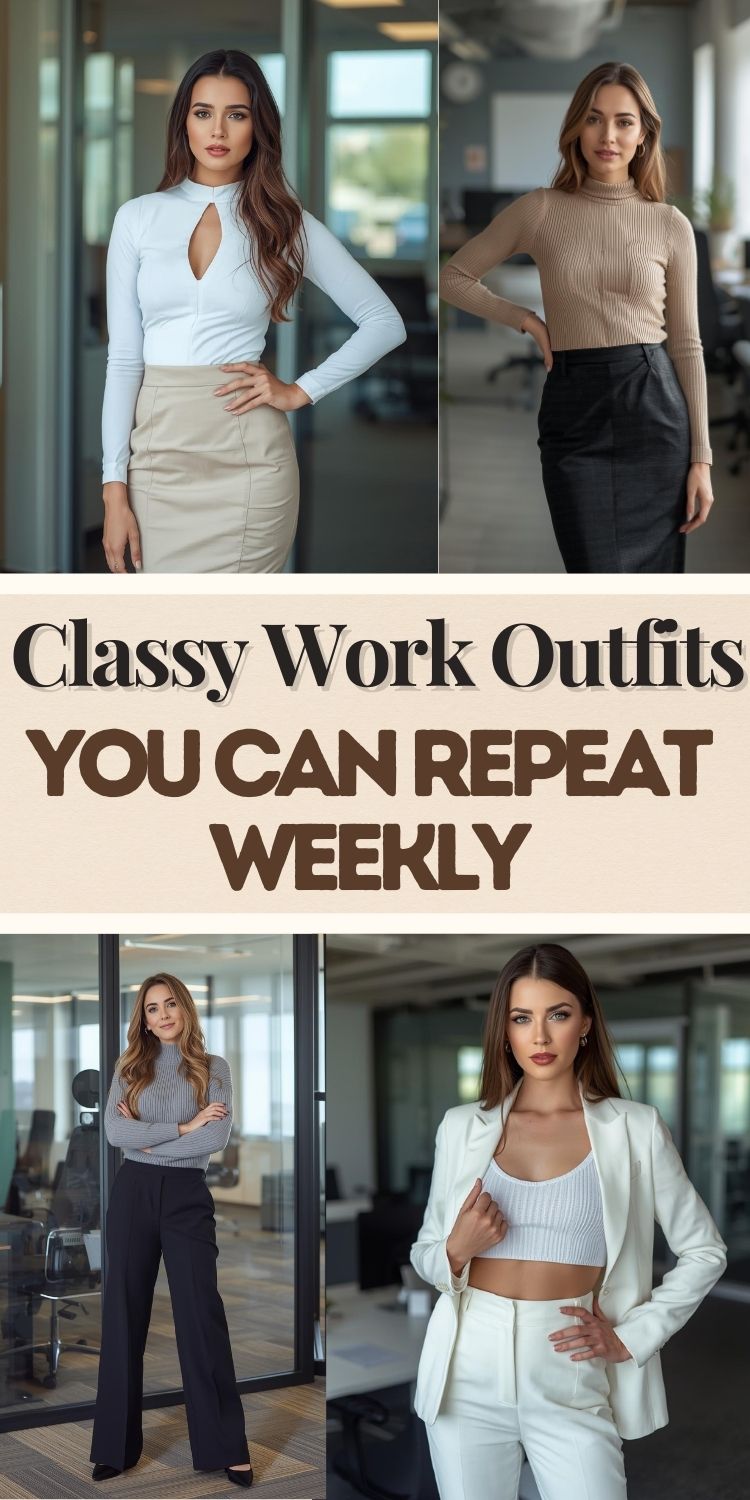
Unlock the Style Secrets of Career Elite and Level Up Your Look
Why Career Elites Rely on Outfit Formulas, Not Guesswork Career elites don’t spend their mornings wondering what to wear. Not because they love fashion more than everyone else—but because they […]
Read More
Taking time for yourself (while you seek out your dream job)
Do you want to arrive at an interview looking washed-out & tired? I thought not! Don’t be afraid to take time for yourself.
Read More
Negotiating Your Salary: Do You Know Your Value?
What you really need to know about negotiating your salary…
Read More