



How to Make a Vision Board for One Goal Instead of Your Whole Life
Want to try this at home? No worries! Download a copy of our SMART Goals PDF Worksheet.
****
Most vision boards fail quietly.
They look beautiful. They feel inspiring for a day or two. Then they fade into the background and stop influencing anything.
The problem isn’t motivation. It’s focus.
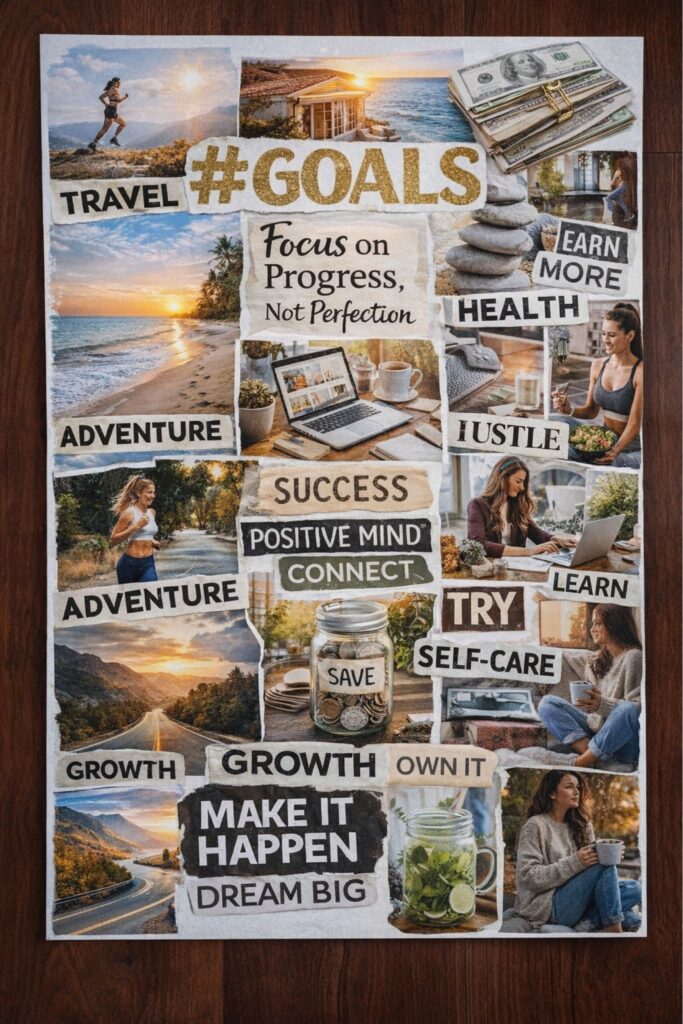
When your board tries to represent your entire life, your brain doesn’t know what to prioritize. It sees too many signals competing at once, so nothing stands out enough to drive action. The result is passive inspiration instead of real change.
A single-goal vision board works differently.
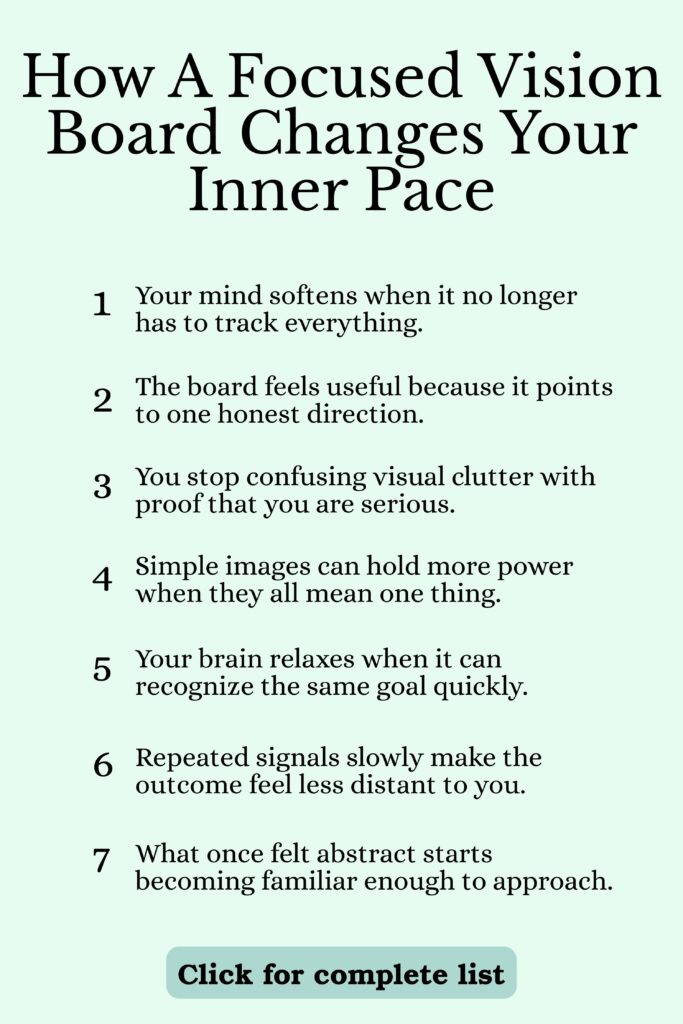
It gives your brain one clear target to recognize, reinforce, and move toward. Instead of scanning a mix of unrelated desires, your mind starts picking up patterns tied to that one outcome. It becomes easier to notice opportunities, make aligned decisions, and take consistent steps forward.
This is less about visualization and more about conditioning.
If you want to get more from your life, and are looking for concrete action steps to get you there, check out our Request a Coach page. It’s a “cut the fence-sitting and take action” way to tackle your issues and actually find success. To get off the fence and start to take action, click or tap here.
You’re training your brain to repeatedly see, recognize, and act on one result until it becomes familiar. And familiarity is what turns something from “nice idea” into something that feels real and attainable.
There’s also a practical advantage.
When your focus is narrowed, your actions become simpler. You’re no longer asking, “What should I do next?” You already know the direction. The only question becomes, “What’s the next small step toward this?”
That shift removes a lot of hidden resistance.
You don’t need a bigger plan. You don’t need more inspiration. You just need a system that keeps bringing your attention back to the same outcome, over and over, until your behavior starts to match it.
In our original roundup of vision board ideas, we introduced the idea of focusing your board, and now we’re walking through how to build a vision board around one goal so it actually supports follow-through.
That’s what this approach is designed to do.
Need some in depth help with goal settings, motivation or productivity ? Drop on by our directories choc full of productivity coaches, accountability coaches, and goal-setting coaches, and start reaching those goals! Or click here to have us match you to the best.
If you want to get more from your life, and are looking for concrete action steps to get you there, check out our Request a Coach page. It’s a “cut the fence-sitting and take action” way to tackle your issues and actually find success. To get off the fence and start to take action, click or tap here.

Step 1: Define One Clear, Measurable Goal
Start by choosing one outcome that actually matters right now.
Not five. Not a category. One.
This is where most people go wrong. They pick something broad like “get healthier” or “improve my career,” which feels productive but doesn’t translate into anything concrete. Your brain can’t latch onto something vague, so it never becomes actionable.
Instead, choose something you could recognize instantly if it happened.
It might be fitting into a specific outfit, reaching a certain income level, launching a finished project, or completing a defined milestone. The key is that it has a clear “this is done” moment.
Specificity creates traction.
Once your goal is defined in a way that’s visible, your brain can start identifying what aligns with it and what doesn’t. That’s what makes daily decisions easier. You’re no longer guessing what matters.
Keep the timeframe relatively short.
If you want to get more from your life, and are looking for concrete action steps to get you there, check out our Request a Coach page. It’s a “cut the fence-sitting and take action” way to tackle your issues and actually find success. To get off the fence and start to take action, click or tap here.
A goal that’s too far away doesn’t create urgency. When something feels distant, it’s easy to delay action because there’s no immediate pressure to move. Choosing something achievable in the next few months keeps the goal active in your mind.
This isn’t about thinking smaller. It’s about thinking closer.
You’re building momentum, not trying to solve your entire life at once. Once this goal is complete, you can choose the next one. That sequence is what creates long-term progress.
Also, make sure the goal is yours.
Not something you think you should want. Not something that looks good externally. If there’s no real pull toward it, the board won’t hold your attention long enough to matter.
Clarity here determines everything that follows.
If the goal is sharp, the rest of the process becomes simple. If it’s unclear, no amount of visuals or effort will compensate for that.
Step 2: Translate the Goal Into Visual Signals
Once your goal is defined, you need to convert it into something your brain can recognize instantly.
If you want to get more from your life, and are looking for concrete action steps to get you there, check out our Request a Coach page. It’s a “cut the fence-sitting and take action” way to tackle your issues and actually find success. To get off the fence and start to take action, click or tap here.
This is where many vision boards lose their effectiveness. They rely too heavily on words or abstract ideas, which require effort to interpret. The more effort something takes, the less likely your brain is to engage with it repeatedly.
Visuals solve that problem.
Your brain processes images faster than text. When you see something that clearly represents your goal, it doesn’t need explanation. It registers immediately, which makes repetition more powerful.
Think in scenes, not labels.
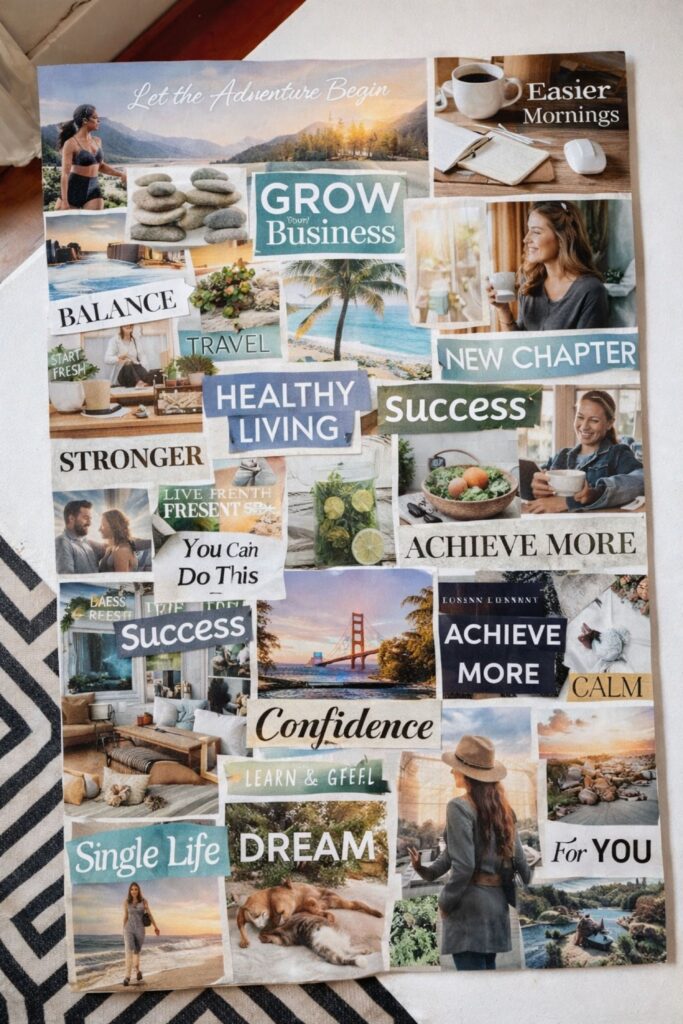
Instead of choosing generic images or motivational phrases, look for visuals that show what success actually looks like in real life. If your goal is tied to a specific result, find images that reflect that exact outcome or environment.
The closer the visual is to reality, the stronger the effect.
Consistency also matters.
If your board contains mixed styles, colors, or unrelated imagery, your brain has to work harder to process it. That friction weakens the signal. A cohesive set of visuals makes the message clearer and easier to absorb at a glance.
If you want to get more from your life, and are looking for concrete action steps to get you there, check out our Request a Coach page. It’s a “cut the fence-sitting and take action” way to tackle your issues and actually find success. To get off the fence and start to take action, click or tap here.
Less is better here.
You don’t need dozens of images. You need a few that clearly reinforce the same idea. When everything on the board points to the same outcome, it becomes easier for your brain to lock onto it.
Avoid adding images just to fill space.
Every element should earn its place by reinforcing the goal. If something feels loosely related or decorative, it’s likely diluting the message instead of strengthening it.
This step is where your goal becomes tangible.
You’re taking something abstract and turning it into something your brain can repeatedly see and recognize without effort. That’s what allows the board to influence you over time instead of becoming something you ignore.
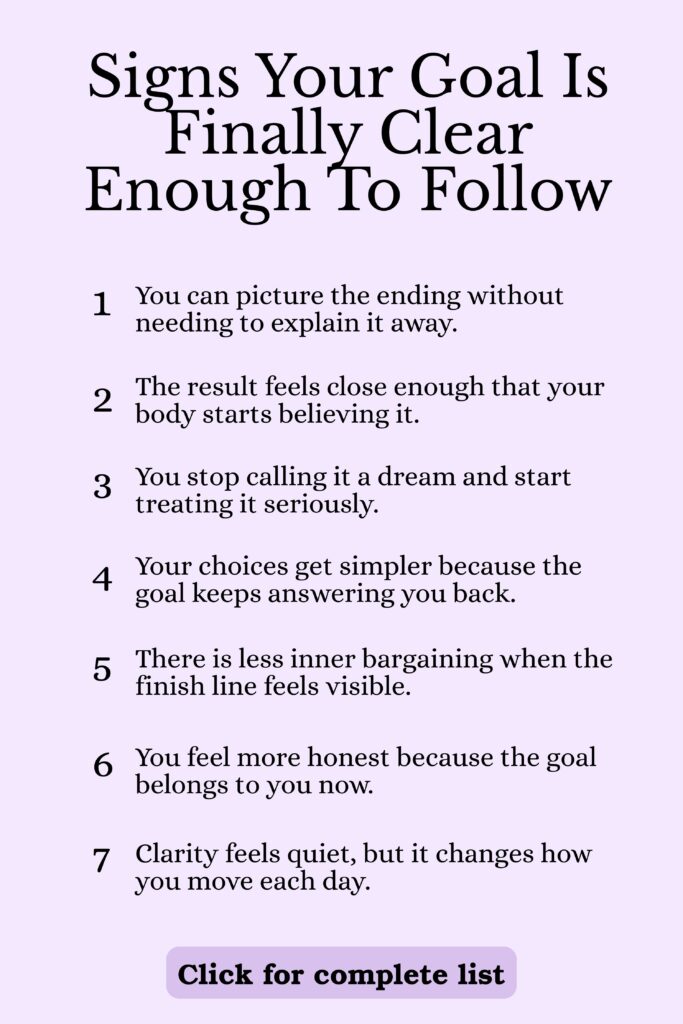
Step 3: Build a Board That’s Easy to Scan Daily
Now you’re assembling everything into a format your brain can process quickly.
This matters more than it seems.
If you want to get more from your life, and are looking for concrete action steps to get you there, check out our Request a Coach page. It’s a “cut the fence-sitting and take action” way to tackle your issues and actually find success. To get off the fence and start to take action, click or tap here.
If your board takes effort to look at or understand, you won’t engage with it consistently. And without consistent exposure, it loses its effect. The goal is to make it so simple that your brain can absorb it in seconds.
Start by limiting what goes on the board.
Too many elements create noise. When everything is competing for attention, nothing stands out. Keeping the number of visuals low ensures that each one has impact and reinforces the same message.
Think in terms of hierarchy.
Your most important image should be the one your eye lands on first. This acts as the anchor for the entire board. Supporting images should guide your attention without distracting from that central focus.
Placement influences behavior.
If your board is organized intentionally, your brain will follow the same visual path each time you look at it. That repetition strengthens recognition and makes the message feel more familiar over time.
Avoid mixing unrelated themes.
If you want to get more from your life, and are looking for concrete action steps to get you there, check out our Request a Coach page. It’s a “cut the fence-sitting and take action” way to tackle your issues and actually find success. To get off the fence and start to take action, click or tap here.
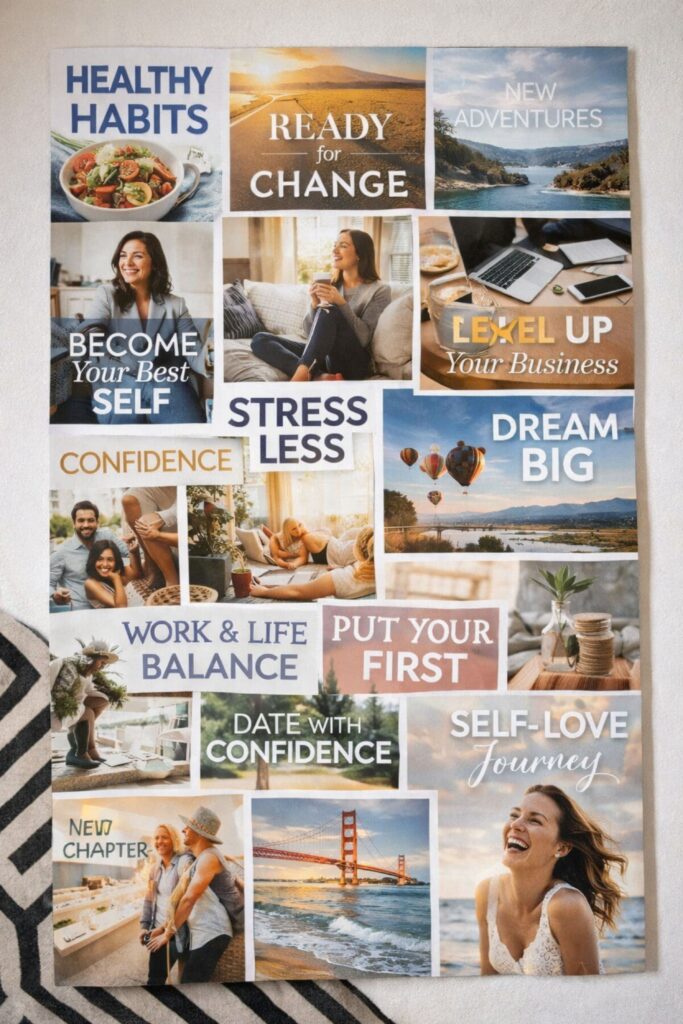
Even if an image is appealing, it shouldn’t be included unless it directly supports the goal. A clean, focused board is far more effective than one that tries to be visually impressive but lacks clarity.
Whitespace helps.
Leaving some space around your images prevents overwhelm and makes each element easier to process. It also makes the board feel more intentional instead of crowded.
You’re designing for repetition.
This isn’t about making something you admire occasionally. It’s about creating something your brain can scan quickly, recognize instantly, and return to without resistance.
When done well, your board doesn’t feel like something you have to “use.”
It becomes something your brain naturally engages with, simply because it’s easy to process and clearly communicates one idea.
Step 4: Place the Board Where You’ll See It Without Effort
Even the best vision board won’t work if you don’t see it consistently.
If you want to get more from your life, and are looking for concrete action steps to get you there, check out our Request a Coach page. It’s a “cut the fence-sitting and take action” way to tackle your issues and actually find success. To get off the fence and start to take action, click or tap here.
Placement is what turns it from an idea into a system.
If your board is tucked away or only viewed intentionally, it relies on motivation. And motivation is unreliable. The goal is to remove that dependency by placing it somewhere you already look every day.
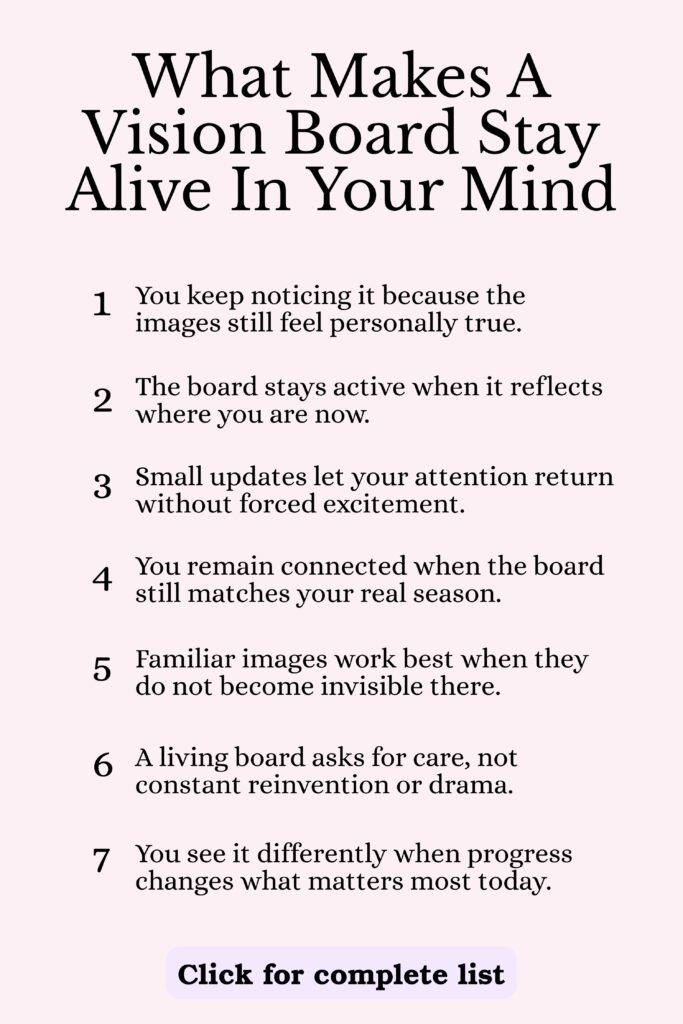
Think about your existing habits.
Where do your eyes naturally go without thinking? It might be where you get ready in the morning, your workspace, or any area you interact with multiple times a day. These are the ideal locations because they require no extra effort.
Frequency matters more than duration.
You don’t need to stare at your board for long periods. Brief, repeated exposure is enough. Each time you see it, your brain reinforces the same visual pattern, which strengthens recognition over time.
Make it hard to ignore, but not disruptive.
If it feels intrusive, you’ll start avoiding it. If it blends in too much, you’ll stop noticing it. The right placement sits somewhere in between, where it’s consistently visible but still feels natural in your space.
If you want to get more from your life, and are looking for concrete action steps to get you there, check out our Request a Coach page. It’s a “cut the fence-sitting and take action” way to tackle your issues and actually find success. To get off the fence and start to take action, click or tap here.
Pair it with a routine.
When your board becomes part of something you already do daily, it stops being optional. It’s simply there, reinforcing the same message every time that routine happens.
This is where consistency builds.
You’re not relying on willpower to engage with your goal. You’re creating an environment where the goal is always present, always visible, and always reinforcing itself in the background.
Over time, this repetition compounds.
What starts as something you occasionally notice becomes something your brain automatically registers. And that shift is what allows the board to influence your decisions without you needing to think about it.
Step 5: Turn the Board Into a Daily Cue for Action
A vision board only works if it leads to action.
Without that, it stays at the level of inspiration, which fades quickly. The goal is to use the board as a trigger, not just something you look at.
If you want to get more from your life, and are looking for concrete action steps to get you there, check out our Request a Coach page. It’s a “cut the fence-sitting and take action” way to tackle your issues and actually find success. To get off the fence and start to take action, click or tap here.

Each time you see it, let it prompt a question.
“What’s one small step I can take toward this today?”
This keeps the board connected to behavior. Instead of being a passive reminder, it becomes an active cue that directs your attention toward action.
Link visuals to specific steps.
If your board shows a result, think about what leads to that result. Identify small, repeatable actions that move you closer, and mentally connect those actions to the images you see.
This creates a bridge between seeing and doing.
You’re training your brain to associate the visual with movement, not just desire. Over time, that association becomes automatic. Seeing the board starts to trigger action without requiring as much effort.
Keep the actions simple.
If you want to get more from your life, and are looking for concrete action steps to get you there, check out our Request a Coach page. It’s a “cut the fence-sitting and take action” way to tackle your issues and actually find success. To get off the fence and start to take action, click or tap here.
If the steps feel too big, you’ll hesitate. Small actions reduce resistance and make it easier to stay consistent. Consistency matters more than intensity here.
This is where momentum builds.
When you act regularly, even in small ways, the goal starts to feel more real. Progress reinforces motivation, which makes the next action easier to take.
The board supports that loop.
It keeps bringing your attention back to the same outcome, which keeps your actions aligned. Without that reinforcement, it’s easy to drift or lose focus.
This is the difference between a board that looks good and one that works.
It’s not about what’s on it. It’s about what it consistently leads you to do.
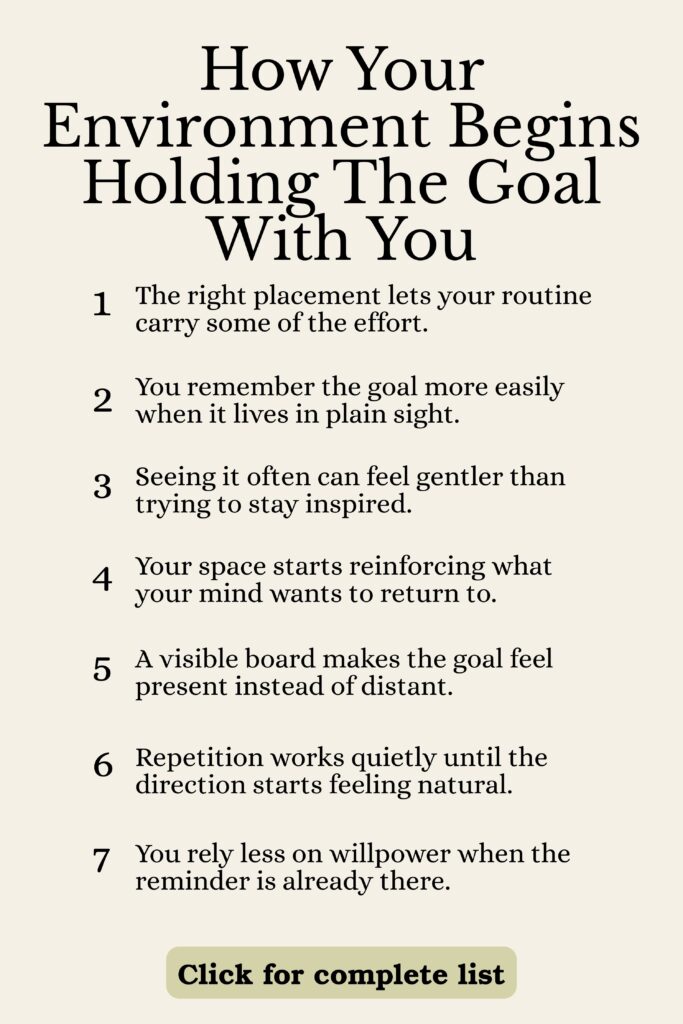
How to Keep Your Vision Board From Becoming Background Noise
Over time, anything you see repeatedly can lose its impact.
If you want to get more from your life, and are looking for concrete action steps to get you there, check out our Request a Coach page. It’s a “cut the fence-sitting and take action” way to tackle your issues and actually find success. To get off the fence and start to take action, click or tap here.
Your brain adapts. What once stood out starts to blend in. This is normal, but if it happens with your vision board, it stops influencing your behavior.
The goal is to keep it noticeable.
One way to do this is by refreshing your visuals. If you find yourself no longer really seeing the board, swap out images while keeping the goal the same. This brings back a sense of novelty, which helps your brain re-engage.
You can also change its position.
Even a small shift in placement can make something feel new again. If your routine changes or your environment shifts, adjust the board so it stays in a high-visibility area.
Pay attention to your reactions.
If you stop feeling anything when you see the board, that’s a signal. It doesn’t mean the goal is wrong, but it may mean the way it’s presented is no longer effective.
Reconnection matters.
If you want to get more from your life, and are looking for concrete action steps to get you there, check out our Request a Coach page. It’s a “cut the fence-sitting and take action” way to tackle your issues and actually find success. To get off the fence and start to take action, click or tap here.
Take a moment occasionally to consciously notice what the board represents. This doesn’t need to be a long exercise. A brief pause to acknowledge the goal can reset your attention and make the board feel relevant again.
Avoid letting it become decoration.
The moment it blends into the background completely, it stops functioning as a tool. Keeping it active requires small adjustments, not a complete overhaul.
This is part of maintaining the system.
You’re not creating something static. You’re managing something that supports your focus over time. Small updates keep it working without disrupting your progress.
How to Evolve Your Board as You Make Progress
Want to try this at home? No worries! Download a copy of our SMART Goals PDF Worksheet.
Need some in depth help with goal settings, motivation or productivity ? Drop on by our directories choc full of productivity coaches, accountability coaches, and goal-setting coaches, and start reaching those goals! Or click here to have us match you to the best.
As you move closer to your goal, your board should change with you.
If you want to get more from your life, and are looking for concrete action steps to get you there, check out our Request a Coach page. It’s a “cut the fence-sitting and take action” way to tackle your issues and actually find success. To get off the fence and start to take action, click or tap here.
If it stays fixed while your situation evolves, it can start to feel disconnected. The visuals may no longer reflect where you are, which weakens their relevance.
Update as you progress.
Replace images to reflect your current stage instead of only the end result. This keeps the board aligned with what’s actually happening, not just what you’re aiming for.
Remove what no longer applies.
If something on the board feels outdated or irrelevant, take it off. Keeping it there adds noise and reduces clarity. The board should always represent your present focus.
This keeps the signal clean.
When everything on the board matches your current direction, it’s easier for your brain to process and act on it. Misalignment creates friction, even if it’s subtle.
Recognize completion.
If you want to get more from your life, and are looking for concrete action steps to get you there, check out our Request a Coach page. It’s a “cut the fence-sitting and take action” way to tackle your issues and actually find success. To get off the fence and start to take action, click or tap here.
Once you reach your goal, don’t just leave the board as it is. Acknowledge that it served its purpose. This reinforces the idea that the process works.
Then rebuild intentionally.
Choose the next goal and start again with the same level of focus. Avoid adding new goals to the existing board. That dilutes the clarity you’ve built.
This creates a cycle.
Each board supports one goal. Each completed goal builds momentum for the next. Over time, this approach leads to steady, focused progress instead of scattered effort.
That’s the real advantage.
You’re not relying on bursts of motivation. You’re using a repeatable system that keeps your attention and actions aligned, one goal at a time.
If you want to get more from your life, and are looking for concrete action steps to get you there, check out our Request a Coach page. It’s a “cut the fence-sitting and take action” way to tackle your issues and actually find success. To get off the fence and start to take action, click or tap here.
Read this next

10 DIY Closet Organization Ideas That Make Everyday Storage Easier
A practical roundup of DIY closet upgrades that solve clutter, messy piles, and hard-to-reach storage without requiring a full custom build. You know that annoying moment when getting dressed should […]
Read More
Sentimental Father’s Day Keepsakes That Mean Something
Engraved, handmade, and photo-based keepsakes organized by sentiment level and turnaround time. You know that weird gift-buying moment when you want something meaningful for Father’s Day, but every “gift idea” […]
Read More
Career Vision Board Ideas for People Who Want Clarity, Not Just Motivation
Turn a pretty career vision board into a clear next-step plan that helps you stop guessing, choose your direction, and move forward with focus.
Read More