



Vision Board Prompts to Use When You Know You Want Change but Not the Exact Goal
Want to try this at home? No worries! Download a copy of our SMART Goals PDF Worksheet.
****
Most vision boards don’t fail because you lack motivation.
They fail because you start collecting images before you actually know what you want.
You scroll, you pin, you save things that feel good in the moment. A dream office. A beach. A quote about success. A morning routine that looks calm and put together. But when you step back, nothing connects. It’s all just… nice ideas.
That’s where the confusion starts.
Instead of giving you clarity, your board quietly pulls you in ten different directions. Part of you wants freedom. Another part wants stability. Another part wants recognition. And without realizing it, you’ve built something that reflects your indecision instead of your direction.
The problem isn’t that you’re unclear. It’s that you skipped the step where clarity actually gets built.
Before visuals, you need language.
If you want to get more from your life, and are looking for concrete action steps to get you there, check out our Request a Coach page. It’s a “cut the fence-sitting and take action” way to tackle your issues and actually find success. To get off the fence and start to take action, click or tap here.
You need to put words to what feels off, what you want more of, and what kind of change would actually matter right now. That’s what prompts are for. They slow you down just enough to turn vague feelings into something you can work with.
This isn’t about having the perfect answer right away.
It’s about creating enough clarity that when you do start collecting images, they point in the same direction. They reinforce something real instead of competing for your attention.
In this guide, you’ll use simple but focused prompts to figure out what you actually want first.
In our original roundup of vision board ideas, we touched on finding direction, and now we’re diving into specific prompts that help you create clarity when you know you want change but aren’t sure what that looks like yet.
Then, and only then, you’ll build a vision board that reflects it.
Need some in depth help with goal settings, motivation or productivity ? Drop on by our directories choc full of productivity coaches, accountability coaches, and goal-setting coaches, and start reaching those goals! Or click here to have us match you to the best.
Prompts That Help You Get Honest About What You Actually Want
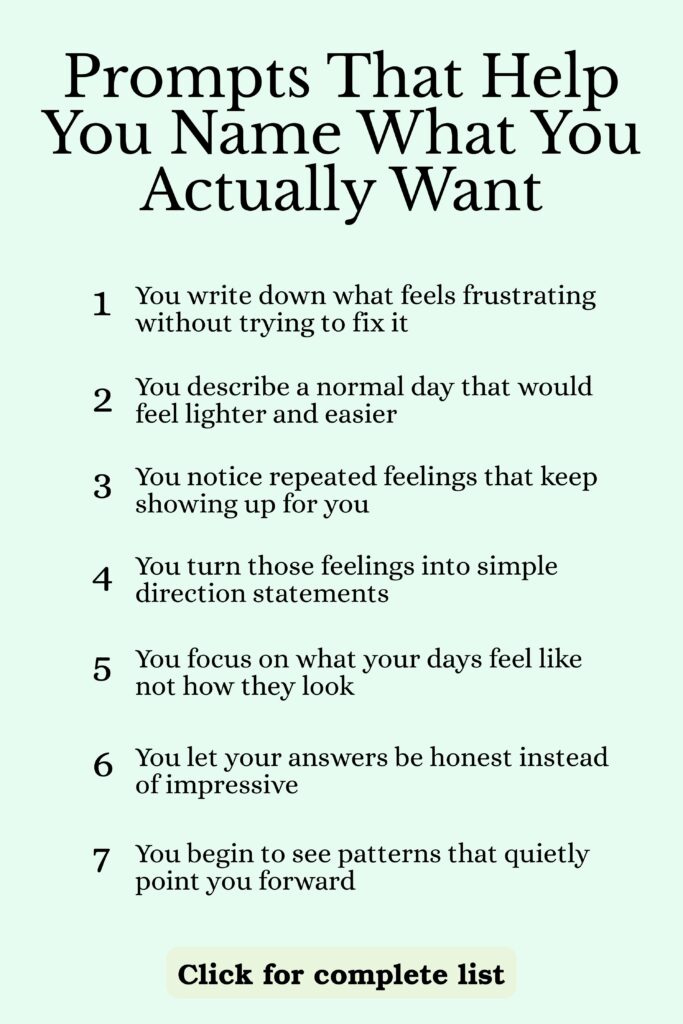
- Start with what feels off right now: Write down 3–5 things in your life or career that feel frustrating, draining, or unclear, even if you can’t fix them yet.
- Ask what “better” would look like in real life: For each frustration, describe a normal day where that problem is gone or improved, focusing on specifics instead of big dreams.
- Notice emotional patterns instead of outcomes: Look for repeated feelings like wanting freedom, stability, recognition, or flexibility rather than focusing only on job titles or achievements.
- Turn those patterns into simple direction clues: Rewrite your answers into phrases like “I want more ___ in my day” or “I want less ___ in my work,” which will later guide your board visuals.
The fastest way to figure out what you want isn’t to ask, “What’s my dream life?”
If you want to get more from your life, and are looking for concrete action steps to get you there, check out our Request a Coach page. It’s a “cut the fence-sitting and take action” way to tackle your issues and actually find success. To get off the fence and start to take action, click or tap here.
It’s to start with what’s not working.
When something feels off, your brain already knows it. You feel it in small ways. The drag when you open your laptop. The frustration when your day gets filled with things that don’t matter. The quiet sense that something isn’t aligned.
Start there.
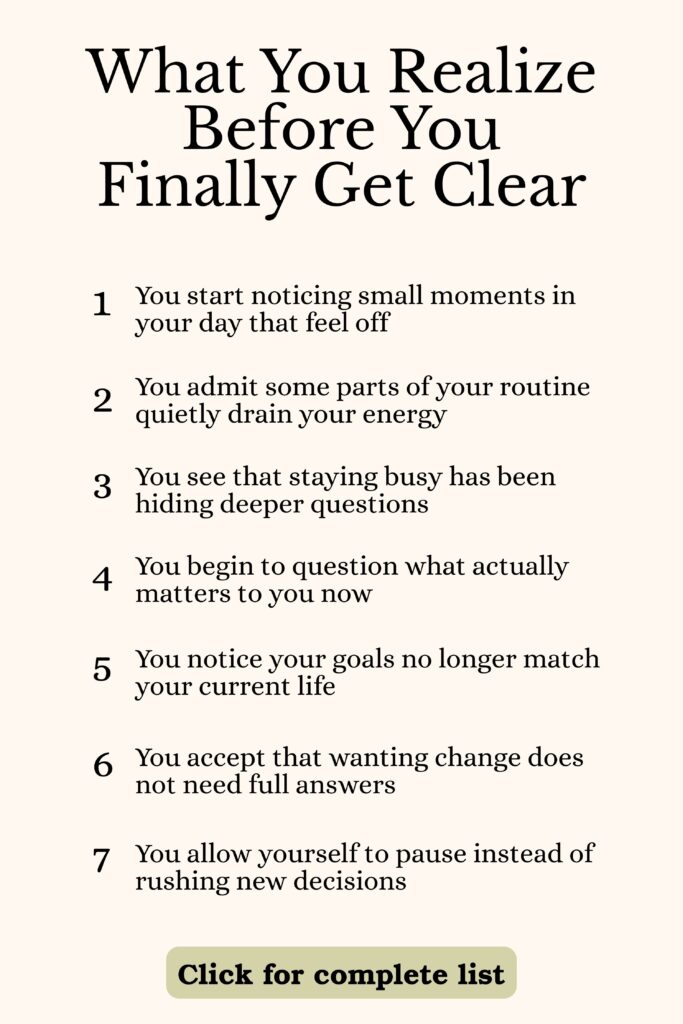
Write it down without filtering. You’re not trying to sound impressive. You’re trying to be accurate.
Then shift the question.
Instead of jumping to big, abstract goals, ask what “better” would look like in a normal day. Not a fantasy version of your life, but a Tuesday. What would be different? What would feel easier? What would feel lighter?
This is where clarity starts to form.
As you write, patterns will show up. You might notice that everything points to wanting more flexibility. Or more structure. Or more creative work. Or fewer interruptions.
If you want to get more from your life, and are looking for concrete action steps to get you there, check out our Request a Coach page. It’s a “cut the fence-sitting and take action” way to tackle your issues and actually find success. To get off the fence and start to take action, click or tap here.
These patterns matter more than specific outcomes.
Because a job title can look perfect on paper and still feel wrong if it doesn’t match what you actually need day to day.
Take those patterns and simplify them.
“I want more control over my schedule.”
“I want less reactive work.”
“I want more time to think.”
These are the building blocks of your vision board.
Not polished goals. Direction.
Prompts That Narrow Your Focus So Everything Stops Competing
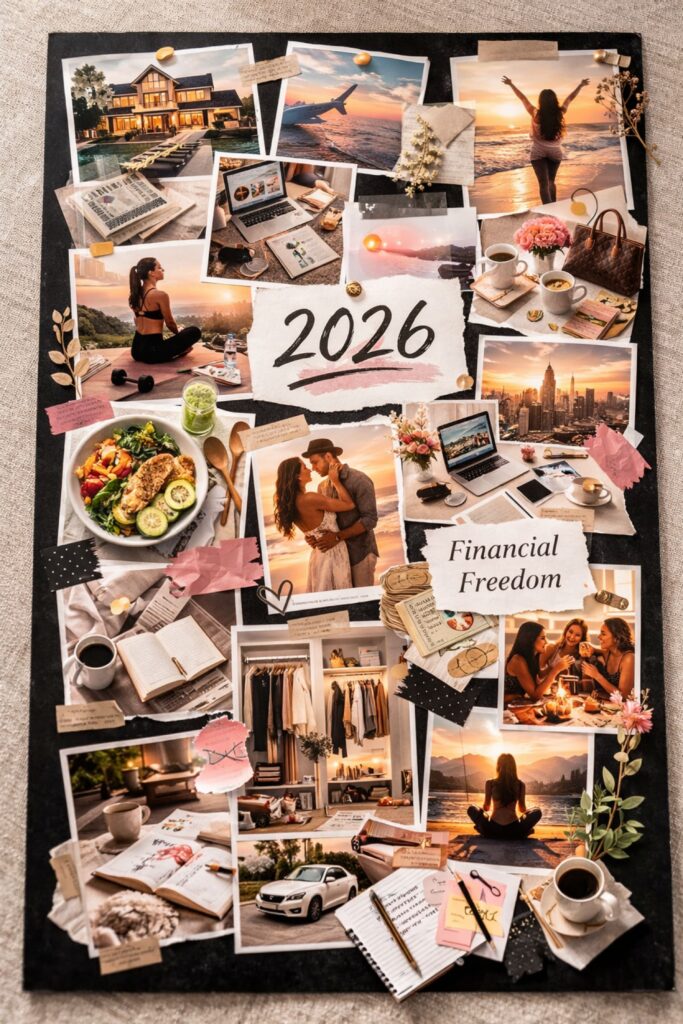
- Choose one area that matters most right now: Pick between career, lifestyle, money, or personal growth based on where change would make the biggest difference.
- Ask what progress would look like in 90 days: Define a short-term shift that feels realistic and meaningful instead of jumping straight to long-term life changes.
- Identify what to ignore (for now): List goals or ideas you’re intentionally not focusing on so your board doesn’t become cluttered or overwhelming.
- Translate your focus into visual direction: Decide what kinds of images would represent this one area clearly, such as environments, routines, or outcomes tied to that focus.
Once you have direction, the next challenge is focus.
Because most people don’t struggle with having too few ideas. They struggle with having too many.
If you want to get more from your life, and are looking for concrete action steps to get you there, check out our Request a Coach page. It’s a “cut the fence-sitting and take action” way to tackle your issues and actually find success. To get off the fence and start to take action, click or tap here.
You want a better career. And better health. And more money. And a calmer routine. And a more organized home. And suddenly your board turns into a mix of everything that matters… which means nothing stands out.
Clarity gets lost in the overlap.
That’s why you need to choose one area.
Not forever. Just for now.
Ask yourself where change would have the biggest impact on your daily life. Where things feel most stuck, most frustrating, or most important to shift.
That’s your focus.
Then bring it closer.
Instead of asking what your life should look like in five years, ask what progress would look like in the next 90 days. What would feel like movement? What would make your current situation noticeably better?
If you want to get more from your life, and are looking for concrete action steps to get you there, check out our Request a Coach page. It’s a “cut the fence-sitting and take action” way to tackle your issues and actually find success. To get off the fence and start to take action, click or tap here.
This keeps your board grounded.
It turns it into something that supports action, not just imagination.
Just as important is deciding what you’re not focusing on.
This is the step most people skip.
Write down the ideas, goals, or directions you’re setting aside. Not because they don’t matter, but because they don’t matter right now.
This clears space.
Now, when you start thinking about visuals, they have a job. They represent one direction, one area, one kind of change.
And that’s what makes a vision board actually useful.
If you want to get more from your life, and are looking for concrete action steps to get you there, check out our Request a Coach page. It’s a “cut the fence-sitting and take action” way to tackle your issues and actually find success. To get off the fence and start to take action, click or tap here.
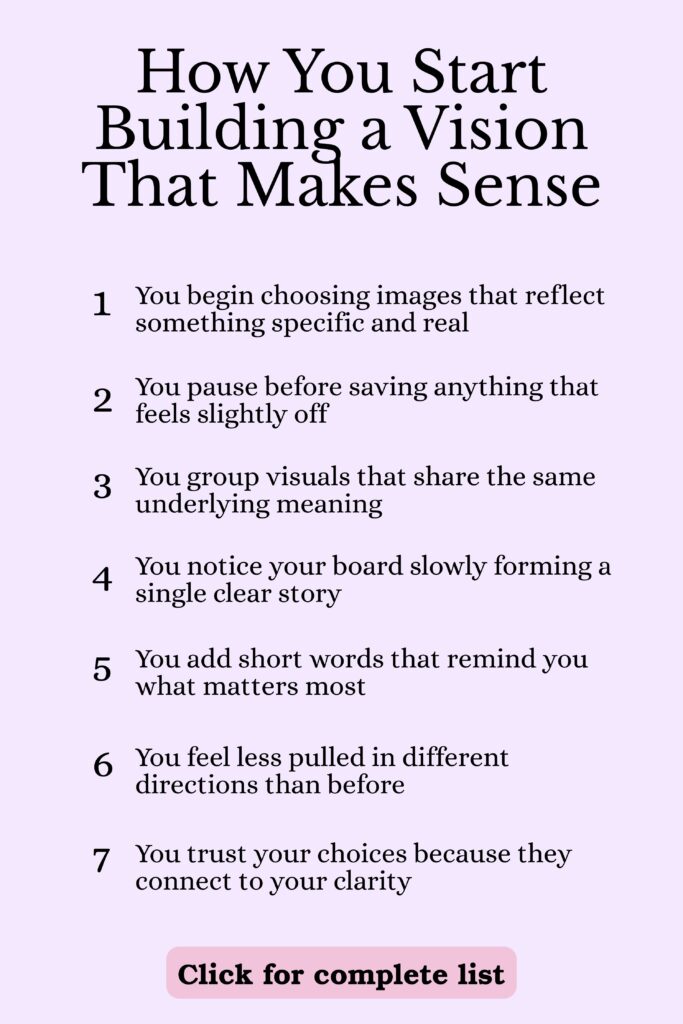
Prompts That Turn Clarity Into a Vision Board That Actually Makes Sense
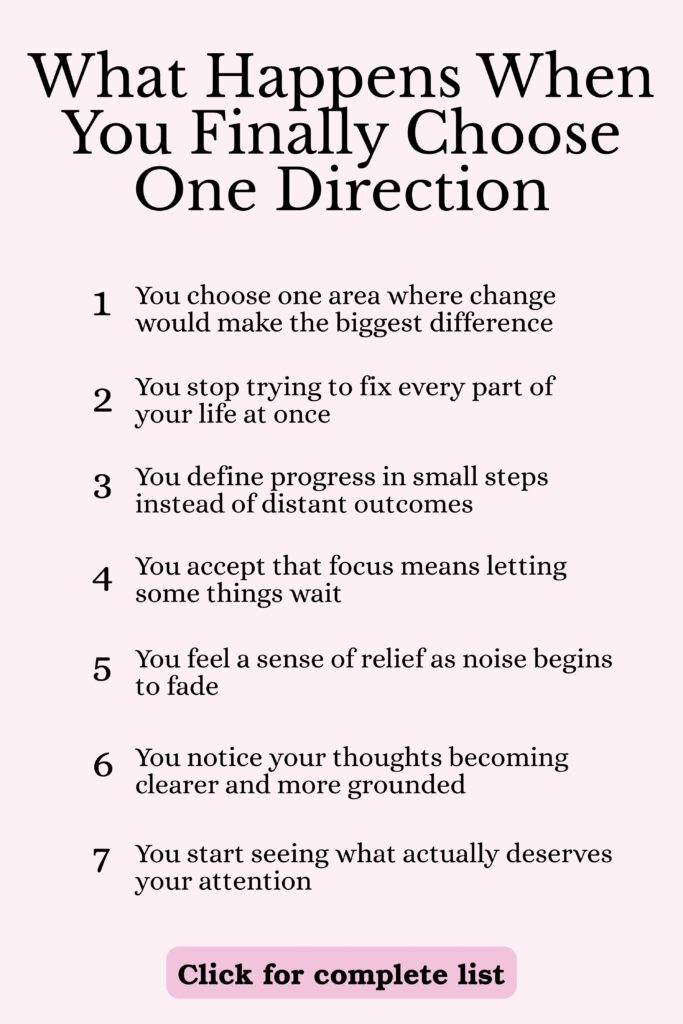
- Match each prompt answer to a type of visual: For every insight you wrote, choose whether it’s best represented by a place, a routine, a result, or a feeling.
- Filter out anything that doesn’t match your direction: As you collect images, remove anything that feels inspiring but doesn’t connect to your specific focus.
- Group visuals so they tell one clear story: Arrange your board so everything points toward the same direction instead of scattered goals.
- Add a few words that anchor your intent: Include short phrases from your prompts to keep the meaning behind the visuals clear and grounded.
Now you can start building your board.
But this time, you’re not starting from scratch.
You’re starting with clarity.
Each insight you wrote becomes a filter for what belongs and what doesn’t. Instead of asking, “Do I like this image?” you’re asking, “Does this represent what I want more of?”
That one shift changes everything.
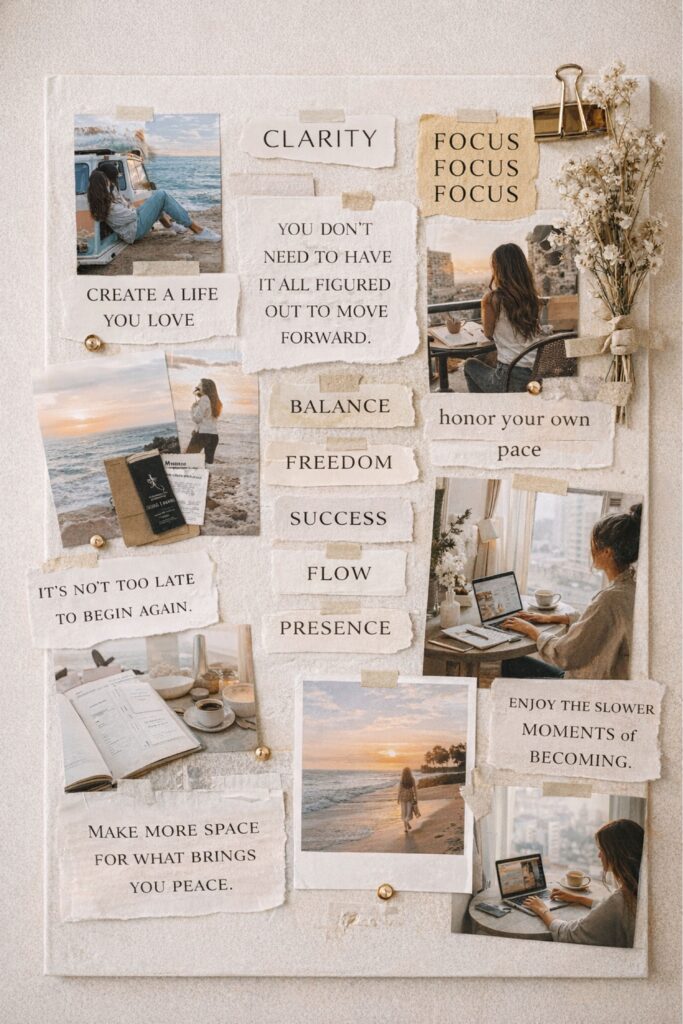
Take each direction you identified and match it to a type of visual. If you want more focused work time, that might look like a clean workspace. If you want more flexibility, it might be a laptop in different environments. If you want less pressure, it might be slower routines or open space.
You’re translating meaning into visuals.
As you collect images, you’ll notice something.
If you want to get more from your life, and are looking for concrete action steps to get you there, check out our Request a Coach page. It’s a “cut the fence-sitting and take action” way to tackle your issues and actually find success. To get off the fence and start to take action, click or tap here.
Some things will feel inspiring but slightly off.
That’s your cue to filter them out.
They might be good ideas. Just not your direction.
Once you have a set of visuals that align, group them.
Your board should feel like one story, not multiple competing ones. When you look at it, it should be obvious what kind of change it represents.
Then anchor it.
Add a few short phrases from your earlier prompts. Not long explanations. Just enough to remind you what each part actually means.
Because without that, even a clear board can slowly turn into something vague again.
If you want to get more from your life, and are looking for concrete action steps to get you there, check out our Request a Coach page. It’s a “cut the fence-sitting and take action” way to tackle your issues and actually find success. To get off the fence and start to take action, click or tap here.
This is what makes it stick.
How to Tell If Your Vision Board Is Still Too Vague
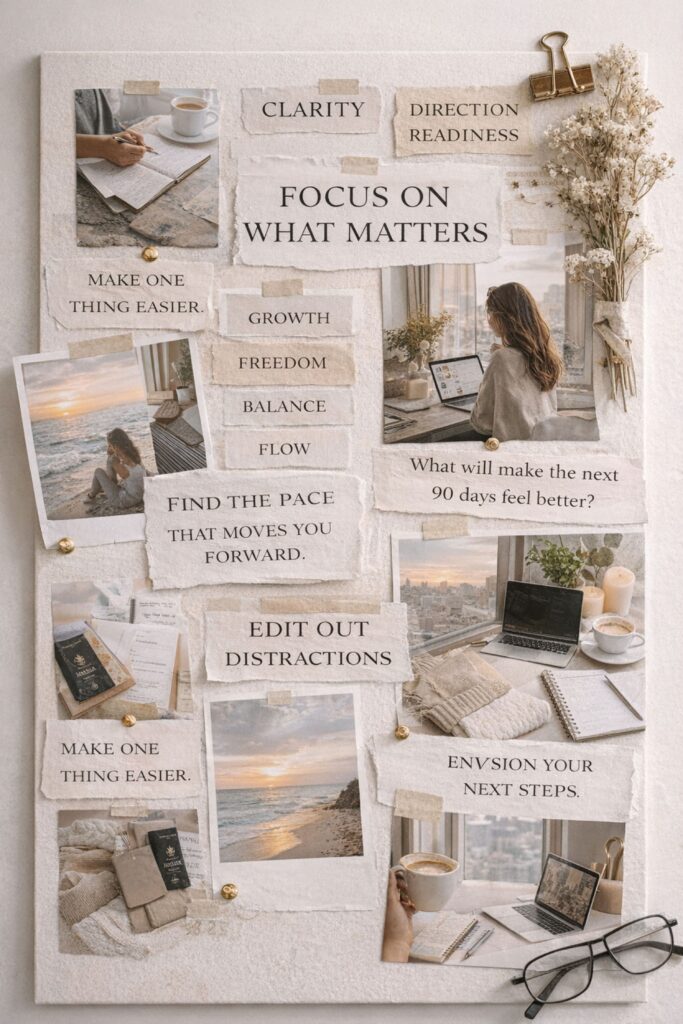
- Step back and ask what action it suggests: Look at your board and check if it naturally points to a next step or if it just feels generally “nice.”
- Check for mixed signals: Notice if your images suggest conflicting lifestyles or priorities that would be hard to pursue at the same time.
- Test it with a simple question: Ask, “If I followed this board, what would I actually do differently this week?” and refine anything that doesn’t answer clearly.
- Remove before you add more: Instead of adding new images, take away anything that creates confusion or dilutes your direction.
A vision board can look clear and still be vague.
That’s the tricky part.
It can feel cohesive, aesthetic, even motivating… but still not guide you toward anything specific.
The easiest way to check is to look for action.
When you see your board, does it suggest something you would actually do? Not someday, but this week. Does it hint at how you’d spend your time, what you’d prioritize, or what you’d change?
If it doesn’t, it’s probably too broad.
Another sign is mixed signals.
If you want to get more from your life, and are looking for concrete action steps to get you there, check out our Request a Coach page. It’s a “cut the fence-sitting and take action” way to tackle your issues and actually find success. To get off the fence and start to take action, click or tap here.
If part of your board shows a fast-paced, high-output lifestyle, and another part shows slow, flexible days, those directions might conflict. Individually, they both make sense. Together, they create friction.
That friction shows up as hesitation in real life.
You don’t know which direction to move in, so you stay where you are.
Ask yourself a simple question.
“If I followed this, what would I do differently this week?”
If the answer is unclear, go back and refine.
And instead of adding more, start removing.
Most unclear boards aren’t missing something. They have too much.
If you want to get more from your life, and are looking for concrete action steps to get you there, check out our Request a Coach page. It’s a “cut the fence-sitting and take action” way to tackle your issues and actually find success. To get off the fence and start to take action, click or tap here.
Clarity often comes from subtraction.
How to Revisit and Refine Your Prompts as You Gain Clarity
- Re-run the prompts after taking action: Once you’ve made small changes, answer the same questions again to see what has shifted.
- Update your board based on real feedback: Replace visuals that no longer match your direction with ones that reflect your current priorities.
- Let clarity evolve instead of forcing it upfront: Accept that your vision board is a working tool, not something you have to get perfect on day one.
- Keep the board aligned with your current season: Adjust your focus as your needs change so it continues to guide decisions instead of becoming background noise.
Want to try this at home? No worries! Download a copy of our SMART Goals PDF Worksheet.
Need some in depth help with goal settings, motivation or productivity ? Drop on by our directories choc full of productivity coaches, accountability coaches, and goal-setting coaches, and start reaching those goals! Or click here to have us match you to the best.
Clarity isn’t something you figure out once.
It’s something that evolves as you take action.
What you think you want before you start is often different from what actually feels right once you begin. That’s not a mistake. That’s feedback.
Your prompts should evolve with you.
After you’ve made a few changes, even small ones, go back and answer the same questions again. What still feels off? What feels better? What matters more now than it did before?
If you want to get more from your life, and are looking for concrete action steps to get you there, check out our Request a Coach page. It’s a “cut the fence-sitting and take action” way to tackle your issues and actually find success. To get off the fence and start to take action, click or tap here.
You’ll notice the answers get sharper.
More specific. Less hypothetical.
That’s the kind of clarity you can trust.
Your board should reflect that.

Replace visuals that no longer fit. Add ones that match your current direction. Rearrange things so the story stays aligned with where you are now, not where you thought you’d be.
This isn’t about starting over.
It’s about adjusting.
The biggest shift is letting go of the idea that your vision board needs to be finished.
If you want to get more from your life, and are looking for concrete action steps to get you there, check out our Request a Coach page. It’s a “cut the fence-sitting and take action” way to tackle your issues and actually find success. To get off the fence and start to take action, click or tap here.
It doesn’t.
It needs to stay relevant.
As your priorities change, your board should change with them. Otherwise, it slowly turns into background noise. Something you stop seeing because it no longer reflects your reality.
Used this way, your vision board becomes less about motivation and more about direction.
Something you return to, not just something you made once.
If you want to get more from your life, and are looking for concrete action steps to get you there, check out our Request a Coach page. It’s a “cut the fence-sitting and take action” way to tackle your issues and actually find success. To get off the fence and start to take action, click or tap here.
Read this next
10 DIY Closet Organization Ideas That Make Everyday Storage Easier
A practical roundup of DIY closet upgrades that solve clutter, messy piles, and hard-to-reach storage without requiring a full custom build. You know that annoying moment when getting dressed should […]
Read More
Career Vision Board Ideas for People Who Want Clarity, Not Just Motivation
Turn a pretty career vision board into a clear next-step plan that helps you stop guessing, choose your direction, and move forward with focus.
Read More
How to Build a Thanksgiving Table With Pumpkins and Harvest Finds
Turn pumpkins, fruit, herbs and simple harvest finds into a warm Thanksgiving table that feels abundant, beautiful and easy to pull together.
Read More