



Career Vision Board Ideas for People Who Want Clarity, Not Just Motivation
Want to try this at home? No worries! Download a copy of our SMART Goals PDF Worksheet.
****
Most career vision boards look inspiring… but don’t actually help you make a decision.
They’re filled with aesthetic images, dream offices, and vague success quotes. You feel motivated for a moment, but nothing changes about what you actually do next.
That’s the real problem. Motivation without direction keeps you stuck.
A career vision board should not just make you feel good. It should help you figure out your next move. Whether that’s a pivot, a promotion, a new skill, or a completely different path.
The shift is simple but powerful. Instead of asking, “What looks like success?” you start asking, “What direction am I testing right now?”
This article walks you through how to build a board that gives you clarity, not just inspiration.
You’ll use it to compare options, notice patterns, and turn what you see into real steps you can take.
If you want to get more from your life, and are looking for concrete action steps to get you there, check out our Request a Coach page. It’s a “cut the fence-sitting and take action” way to tackle your issues and actually find success. To get off the fence and start to take action, click or tap here.
In our original roundup of vision board ideas, we included career-focused boards, and now we’re exploring how to build a career vision board that helps you make real decisions, not just feel motivated.
By the end, your board won’t just sit there looking pretty. It will quietly guide your decisions every day.
Need some in depth help with goal settings, motivation or productivity ? Drop on by our directories choc full of productivity coaches, accountability coaches, and goal-setting coaches, and start reaching those goals! Or click here to have us match you to the best.
1. Define the Career Direction You’re Actually Exploring
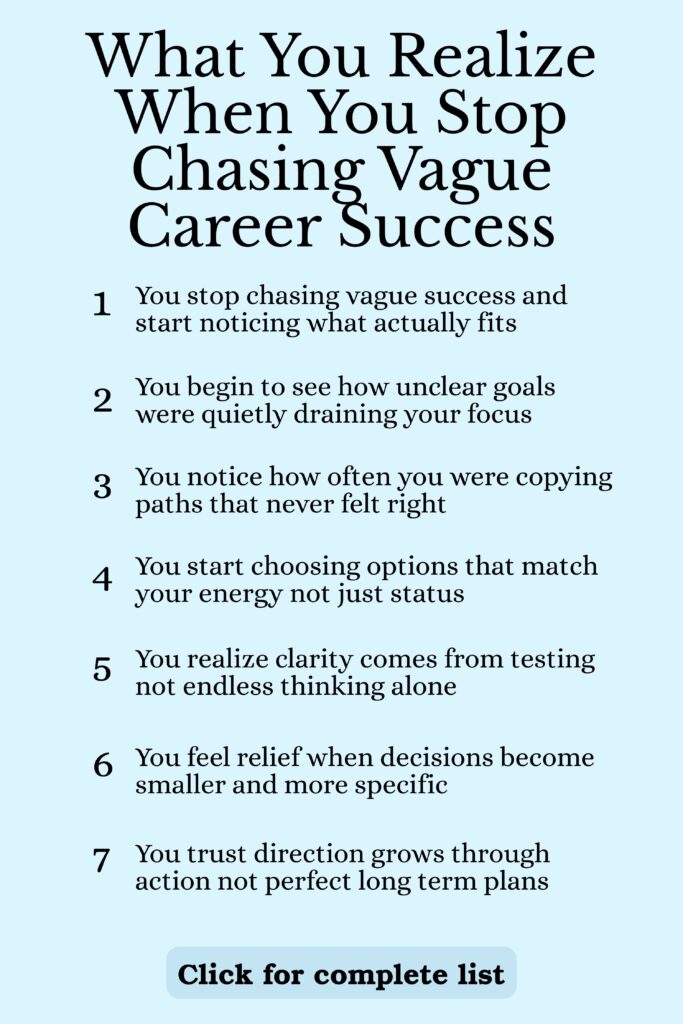
Pick a decision focus, not a dream outcome: Instead of building a board around “my dream career,” choose one question you’re trying to answer. It could be whether to switch industries, move into leadership, go remote, or start something on your own.
This keeps your board grounded. It becomes a tool for clarity, not a place to collect fantasies.
Translate that into 2–3 possible paths: Write out a few realistic directions you’re considering. For example, staying in your role and growing, pivoting to a related field, or starting freelance work on the side.
Now your board has structure. You’re not just dreaming. You’re comparing.
Set a short time horizon: Focus on the next 6–12 months instead of your entire future. This forces you to think in terms of decisions you can actually act on soon.
If you want to get more from your life, and are looking for concrete action steps to get you there, check out our Request a Coach page. It’s a “cut the fence-sitting and take action” way to tackle your issues and actually find success. To get off the fence and start to take action, click or tap here.
A short timeline makes everything sharper. You start noticing what feels doable versus what feels distant.
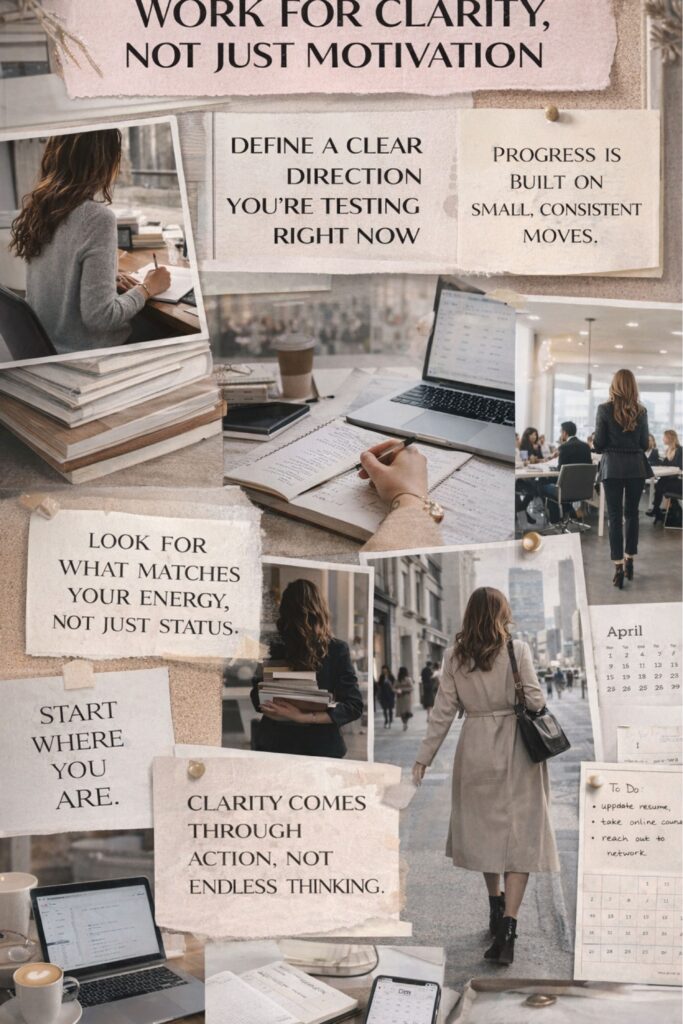
When you do this step well, your board immediately feels different.
Instead of being full of random inspiration, it becomes focused. Every image you add now has a purpose.
You’re not asking, “Do I like this?”
You’re asking, “Is this part of the direction I’m exploring?”
That one shift changes everything.
2. Collect Images That Represent Real Work, Not Aesthetic Vibes
Search for “day-in-the-life” visuals: Look for images that show actual tasks, environments, and tools. Think meetings, workflows, laptops with real work on the screen, collaboration, or solo deep work.
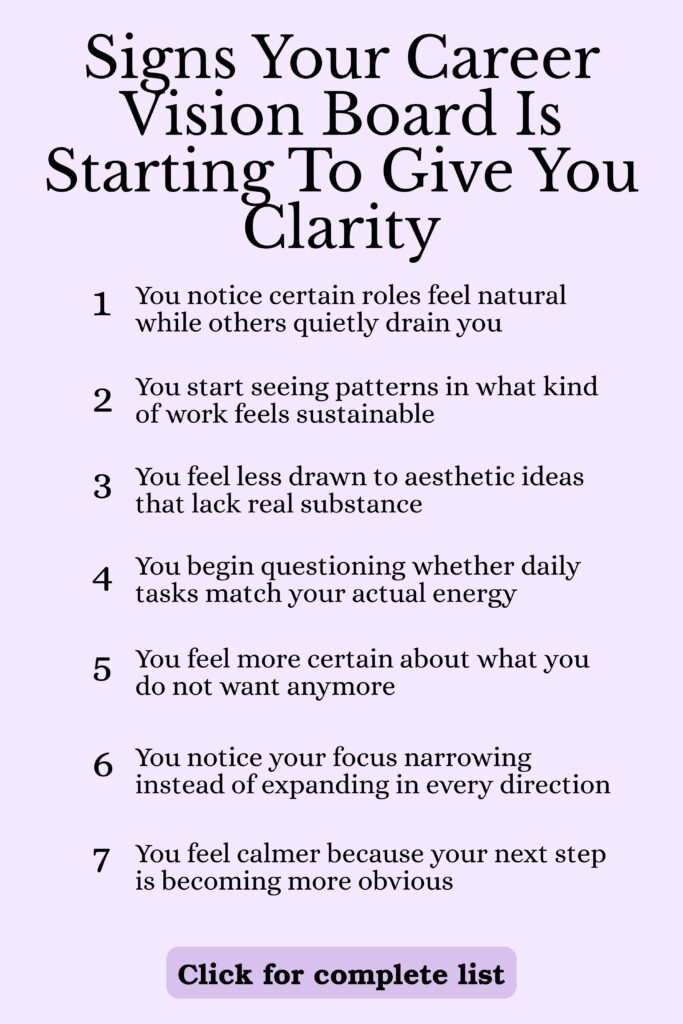
These images tell you what the job feels like, not just how it looks.
If you want to get more from your life, and are looking for concrete action steps to get you there, check out our Request a Coach page. It’s a “cut the fence-sitting and take action” way to tackle your issues and actually find success. To get off the fence and start to take action, click or tap here.
Filter out anything that feels too aspirational: If an image is just a beautiful desk, a beach laptop, or a generic quote, remove it. If it doesn’t show what you’d actually be doing all day, it won’t help you decide.
This is where most boards go wrong. They prioritize mood over reality.
Balance lifestyle with responsibility: Include both the appealing parts and the demanding parts. For example, not just flexible hours, but also client calls, deadlines, or presentations.
This keeps your board honest. It helps you see the full picture, not just the highlight reel.
As you build, notice your reactions.
Some images will feel energizing. Others will feel draining or neutral. That contrast is valuable.
You’re not just collecting visuals. You’re collecting signals.
Over time, patterns start to show.
If you want to get more from your life, and are looking for concrete action steps to get you there, check out our Request a Coach page. It’s a “cut the fence-sitting and take action” way to tackle your issues and actually find success. To get off the fence and start to take action, click or tap here.
You might realize you’re drawn to autonomy more than status. Or creative work more than structured environments.
That’s the real purpose of this step.
To move from “this looks nice” to “this is what my daily life would actually involve.”
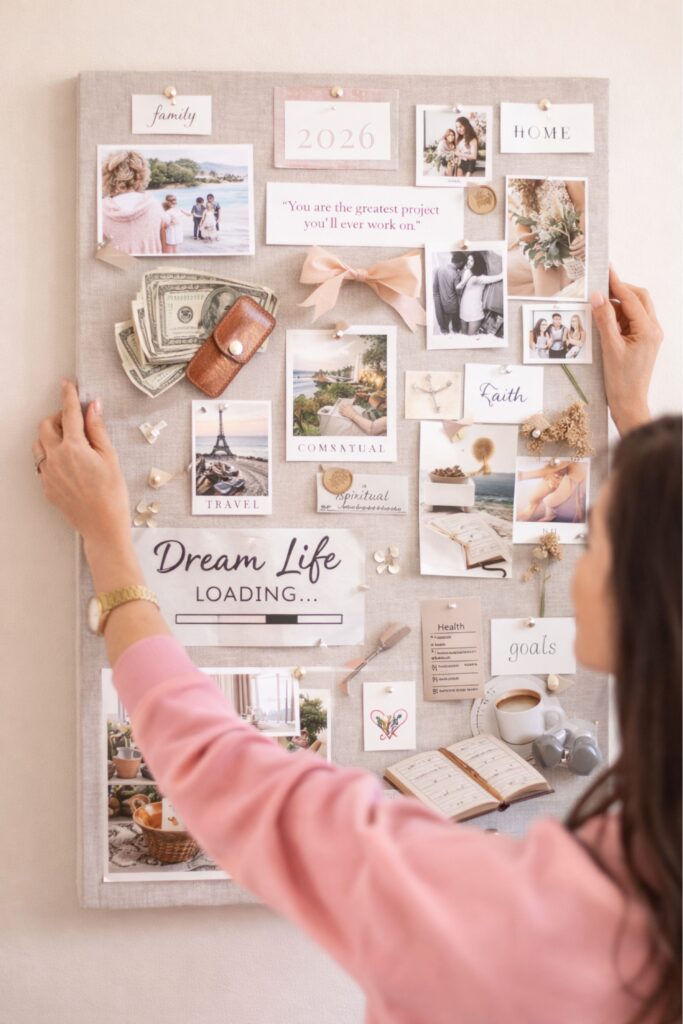
3. Add Clarity Prompts Directly Onto the Board
Write questions next to each section: Add simple prompts like “Would I enjoy this daily?”, “What would stress me here?”, or “Does this match how I want to spend my time?”
These questions slow you down in a good way. They turn passive viewing into active reflection.
Turn images into decisions: Don’t just look at an image and move on. Add quick notes like “exciting,” “boring,” “unclear,” or “not for me.”
This makes your reactions visible instead of vague.
Highlight patterns, not just preferences: As you annotate your board, you’ll start to see themes. Maybe you consistently mark collaborative work as draining. Or independent work as energizing.
If you want to get more from your life, and are looking for concrete action steps to get you there, check out our Request a Coach page. It’s a “cut the fence-sitting and take action” way to tackle your issues and actually find success. To get off the fence and start to take action, click or tap here.
That’s where clarity comes from. Not one image, but repeated signals.
This step is what transforms your board from visual inspiration into a thinking tool.
Without prompts, you can stare at a board for weeks and still feel unsure.
With prompts, every time you look at it, you learn something about your preferences, your fears, and your direction.
It also helps you catch contradictions.
You might love the idea of flexibility but dislike the kind of work that usually comes with it.
Or want leadership, but feel resistance toward the responsibilities you see.
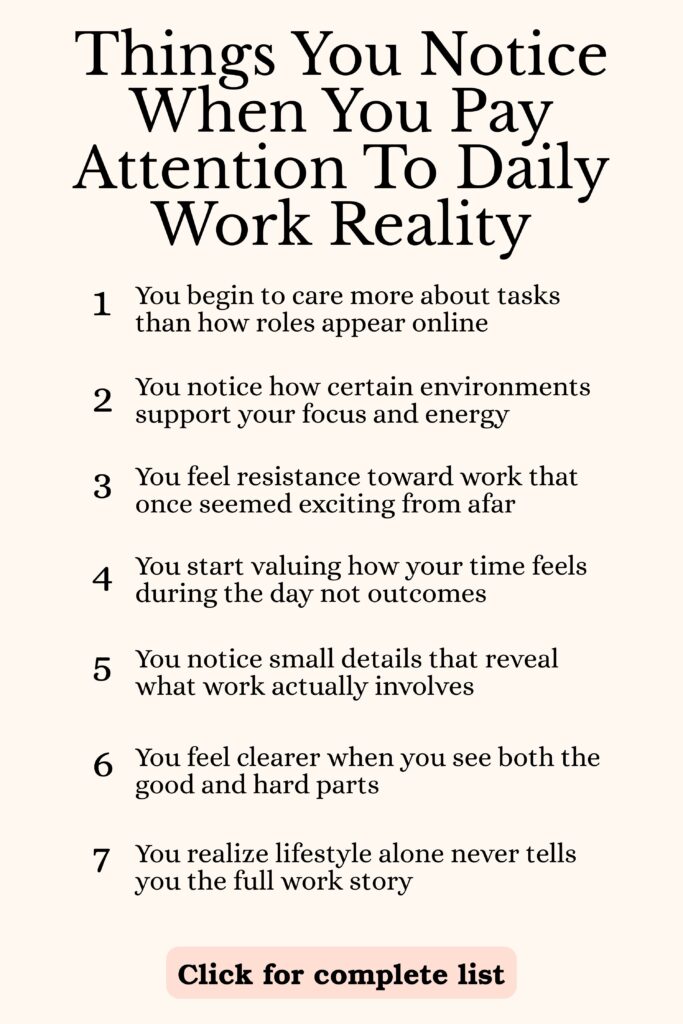
These insights are what actually move you forward.
If you want to get more from your life, and are looking for concrete action steps to get you there, check out our Request a Coach page. It’s a “cut the fence-sitting and take action” way to tackle your issues and actually find success. To get off the fence and start to take action, click or tap here.
Because now you’re not just inspired.
You’re informed.
4. Identify the Skills and Gaps Hidden in Your Board
List what each path requires: Look at your images and ask, “What skills or tools are showing up here?” It could be communication, design, management, analytics, or specific software.
Write these down for each path.
Mark what you already have vs. what’s missing: Be honest here. Some things you’ll already know how to do. Others will feel unfamiliar or intimidating.
This is where your board becomes real.
You’re no longer just imagining a path. You’re understanding what it takes.
Circle the smallest gap to close first: Instead of trying to fix everything, pick one skill or step that feels manageable. Something you can start this week or month.
If you want to get more from your life, and are looking for concrete action steps to get you there, check out our Request a Coach page. It’s a “cut the fence-sitting and take action” way to tackle your issues and actually find success. To get off the fence and start to take action, click or tap here.
This keeps you from getting overwhelmed.
Many people stop at inspiration because they never translate it into action.
This step bridges that gap.
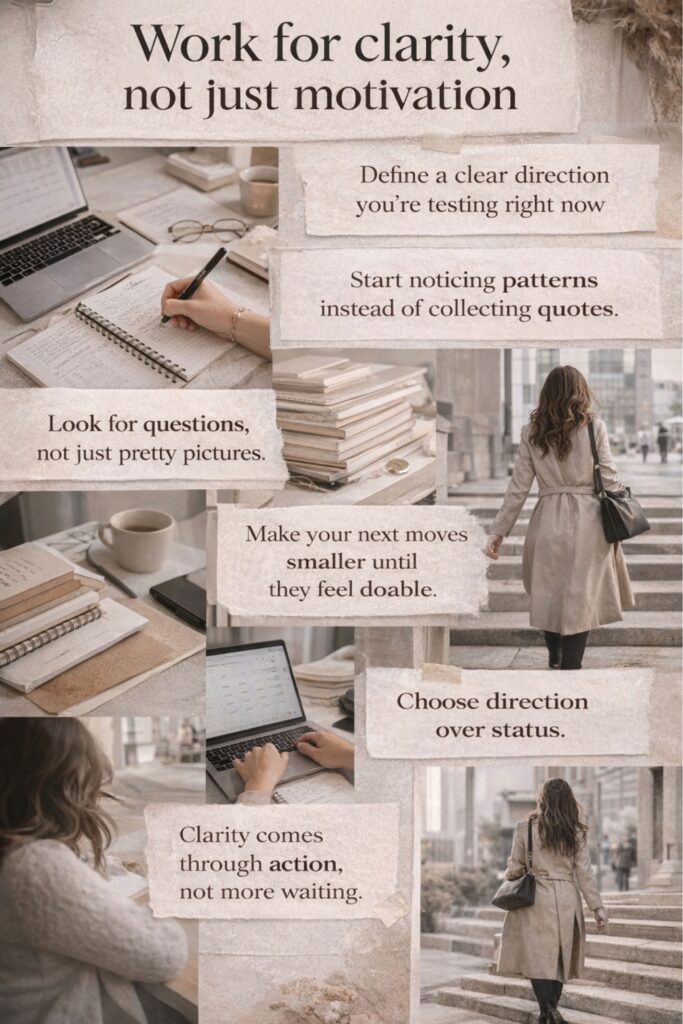
It shows you that most career moves are not about one big leap. They’re about small, specific upgrades.
You might realize you don’t need a full career change.
You just need one new skill, one project, or one connection to test a direction.
That realization is powerful.
It turns something that felt abstract into something you can actually do.
If you want to get more from your life, and are looking for concrete action steps to get you there, check out our Request a Coach page. It’s a “cut the fence-sitting and take action” way to tackle your issues and actually find success. To get off the fence and start to take action, click or tap here.
And once you take one step, the next step becomes easier to see.
5. Turn Your Board Into a Next-Step Action Plan
Extract 2–3 concrete actions: Look at everything you’ve gathered and ask, “What is the next obvious step for me?” This could be taking a course, reaching out to someone, updating your portfolio, or testing a side project.
Keep it simple and specific.
Attach a timeline to each step: Decide when you’ll start and when you’ll finish. Even a loose timeline creates momentum.
Without this, your board stays passive.
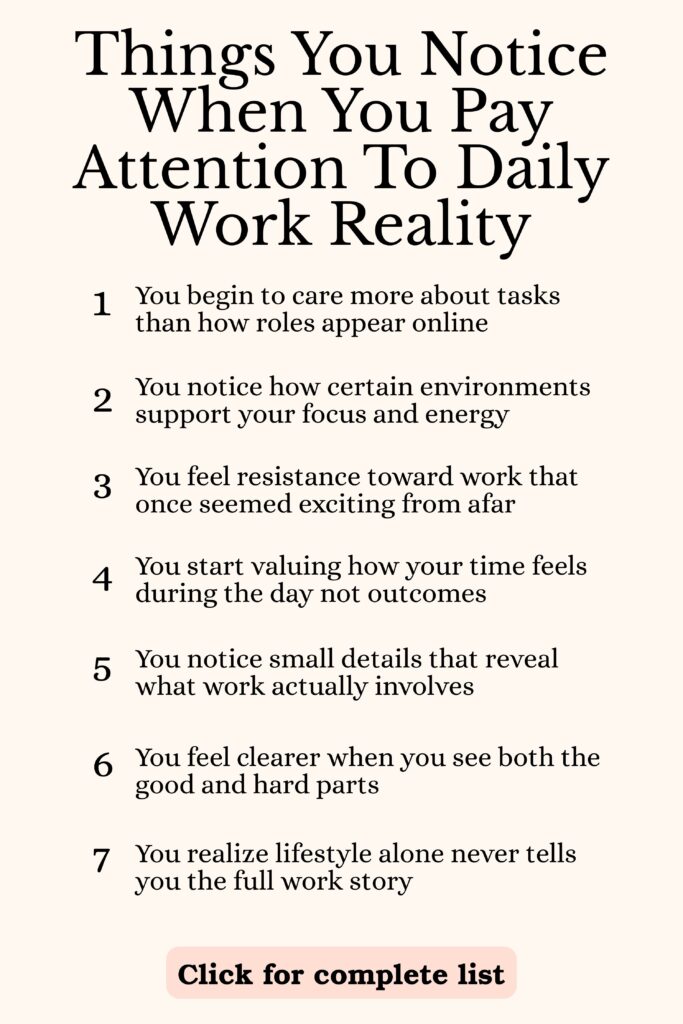
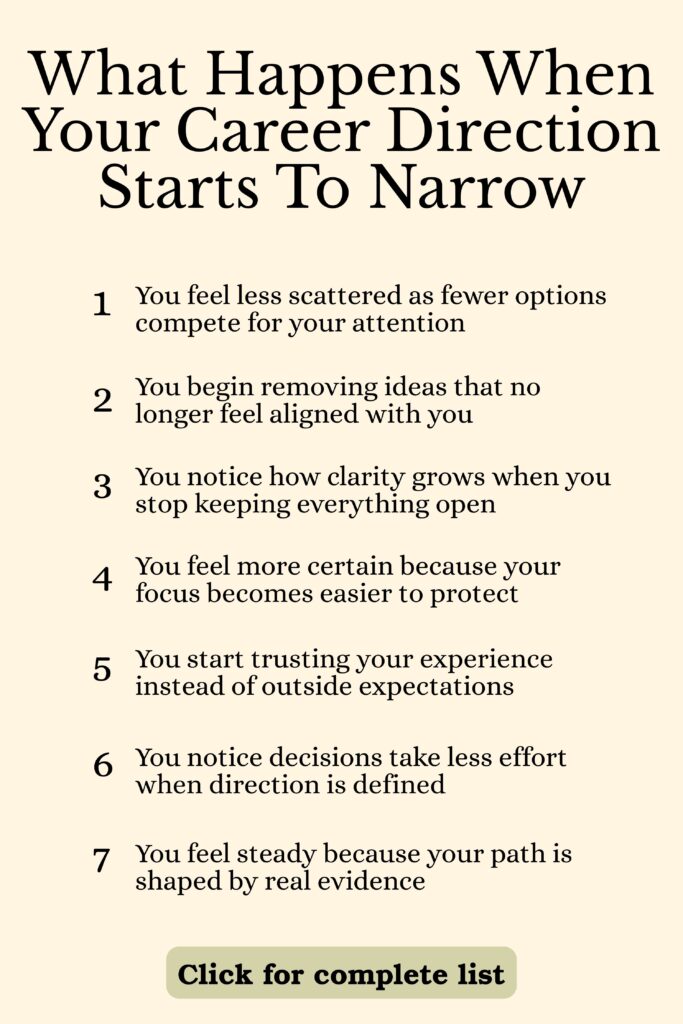
Place actions visibly on the board: Add them directly onto your board so you see them every day. This keeps your focus on doing, not just thinking.
Now your board has a new role.
It’s not just showing you possibilities. It’s reminding you what you’ve committed to.
If you want to get more from your life, and are looking for concrete action steps to get you there, check out our Request a Coach page. It’s a “cut the fence-sitting and take action” way to tackle your issues and actually find success. To get off the fence and start to take action, click or tap here.
This is where clarity turns into movement.
You stop asking, “What should I do with my career?”
And start saying, “This is what I’m trying next.”
That shift builds confidence.
Because you’re no longer waiting for certainty before acting.
You’re using action to create clarity.
And over time, those small actions compound.
They give you feedback, experience, and direction.
If you want to get more from your life, and are looking for concrete action steps to get you there, check out our Request a Coach page. It’s a “cut the fence-sitting and take action” way to tackle your issues and actually find success. To get off the fence and start to take action, click or tap here.
Which is something no amount of inspiration alone can do.
6. Follow-Up: How to Edit Your Board as You Learn More
Schedule regular check-ins: Set a time each week or every two weeks to revisit your board. Look at it with fresh eyes and notice what feels stronger or weaker.
Clarity evolves as you take action.
Remove images that no longer resonate: As you learn more, some paths will feel less relevant. Take those images off your board.
This creates space for sharper focus.
Refine your focus to one path over time: In the beginning, it’s helpful to explore multiple directions. But as patterns emerge, start narrowing in on one.
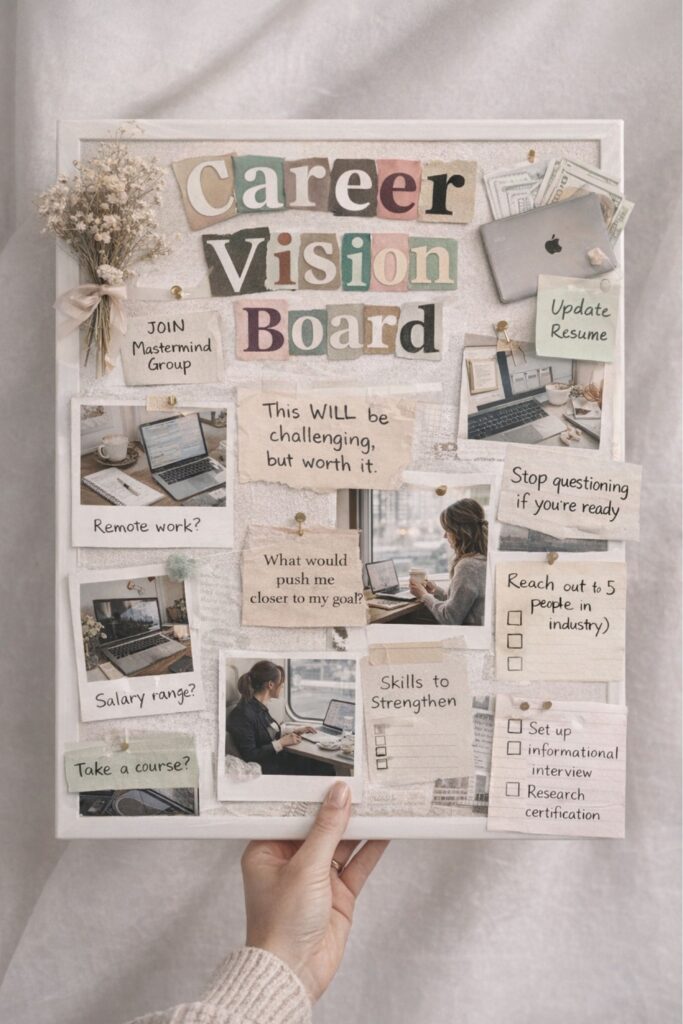
Your board should become simpler, not more crowded.
This step prevents a common mistake.
If you want to get more from your life, and are looking for concrete action steps to get you there, check out our Request a Coach page. It’s a “cut the fence-sitting and take action” way to tackle your issues and actually find success. To get off the fence and start to take action, click or tap here.
Keeping everything “just in case.”
When you do that, your attention stays divided.
But when you start removing what no longer fits, your direction becomes clearer.
You also build trust in your decisions.
Because you’re not constantly second-guessing.
You’re adjusting based on what you’ve actually experienced and learned.
Your board becomes a living tool.
Not something you make once and forget.
If you want to get more from your life, and are looking for concrete action steps to get you there, check out our Request a Coach page. It’s a “cut the fence-sitting and take action” way to tackle your issues and actually find success. To get off the fence and start to take action, click or tap here.
But something that evolves as you do.
7. Follow-Up: How to Use Your Board Daily Without Overthinking It
Want to try this at home? No worries! Download a copy of our SMART Goals PDF Worksheet.
Need some in depth help with goal settings, motivation or productivity ? Drop on by our directories choc full of productivity coaches, accountability coaches, and goal-setting coaches, and start reaching those goals! Or click here to have us match you to the best.
Place it where you naturally look: Keep your board somewhere visible. On your desk, your wall, or even as your digital background.
You don’t need to study it. Just see it regularly.
Use it as a quick decision filter: When an opportunity, idea, or distraction comes up, glance at your board and ask, “Does this align with the direction I’m exploring?”
This keeps you grounded.
Avoid constant rebuilding: It’s tempting to keep tweaking your board. But clarity comes from action, not endless editing.
If you want to get more from your life, and are looking for concrete action steps to get you there, check out our Request a Coach page. It’s a “cut the fence-sitting and take action” way to tackle your issues and actually find success. To get off the fence and start to take action, click or tap here.
Let your board guide you, not distract you.
Over time, it becomes something subtle but powerful.
A quiet reminder of what matters right now.
You don’t need to overthink it.
You just need to stay connected to it.
Because the goal isn’t to create the perfect board.
It’s to use it to make better decisions, one step at a time.
If you want to get more from your life, and are looking for concrete action steps to get you there, check out our Request a Coach page. It’s a “cut the fence-sitting and take action” way to tackle your issues and actually find success. To get off the fence and start to take action, click or tap here.
Read this next

Sentimental Father’s Day Keepsakes That Mean Something
Engraved, handmade, and photo-based keepsakes organized by sentiment level and turnaround time. You know that weird gift-buying moment when you want something meaningful for Father’s Day, but every “gift idea” […]
Read More
10 DIY Closet Organization Ideas That Make Everyday Storage Easier
A practical roundup of DIY closet upgrades that solve clutter, messy piles, and hard-to-reach storage without requiring a full custom build. You know that annoying moment when getting dressed should […]
Read More
How to Make a Vision Board for One Goal Instead of Your Whole Life
Create a one-goal vision board that cuts the clutter and makes your next step feel obvious. Read more for the simple focus shift that helps visuals turn into action.
Read More