








How to Incorporate Journaling into Your Coaching

Journaling is just one of the many different tools that you can use when you want to become a more successful life coach.
As you have probably learned by now as a coach, journaling can be an integral part of your coaching. For some, this is easier said than done, and some life coaches may have trouble coming up with journaling topic ideas and figuring out how to work this practice into their coaching.
The following tips can help you smoothly incorporate journaling into your private coaching and group coaching.
Key Takeaways
- Connect journaling to specific coaching goals. Give clients prompts based on what they are working through in sessions, rather than assigning general reflection topics that have no clear connection to their progress or next steps.
- Use the right journaling method for the situation. Freewriting helps clients explore ideas and identify concerns, while structured prompts help them examine specific behaviors, decisions, and opportunities for change.
- Make journaling part of the coaching process. Connect session discussions to written reflections, practical action items, and follow-up conversations so clients can apply what they discover between appointments.
- Respect privacy and client choice. Explain how entries will be used, let clients decide what they share, and establish appropriate confidentiality boundaries before reviewing personal reflections.
- Track progress through reflection and action. Review changes in client observations, decisions, and behavior over time, using journal entries alongside goals and completed actions to identify meaningful progress and areas needing further attention.
How Do You Incorporate Journaling Into Life Coaching Sessions?
You incorporate journaling into life coaching by assigning reflection prompts that connect directly to your client’s goals, challenges, and session discussions. The client writes between sessions, identifies useful insights, and brings relevant observations into the next coaching conversation.
A simple approach is to identify one issue during a session, assign a focused journal prompt, and help the client turn their reflection into a practical action. At the next appointment, you review what they learned, what they tried, and whether their perspective or behavior changed.
Journaling can be used in individual coaching, group programs, and courses. Clients can keep entries private or choose what to share, while coaches use the reflections clients voluntarily discuss to ask better questions, support accountability, and track progress toward agreed goals.
SEE ALSO: If you’re a coach looking to streamline your administrative tasks and save time, check out our Coaching Administration Software. It’s a simple, effective solution designed to help you focus less on paperwork and more on what matters—coaching your clients. From scheduling to client management, our software gives you the tools to run your business efficiently. Ready to reclaim your time and boost productivity? Click or tap here.
Why Is Journaling a Valuable Coaching Tool?
Journaling is a great tool for your clients. Using journaling in your private coaching and group coaching courses helps your clients get a better grasp on the concepts, techniques, and strategies that you introduce.
Additionally, journaling allows clients to work through issues and problems, and it can help them move toward their goals or dreams.

It is important to note that journaling is helpful for you as a life coach as well. When you use journaling in your private coaching and group coaching courses, you are better able to gauge your clients’ progress and see how well they comprehend and apply the materials you have been helping them discover.
Even though journaling is such a valuable tool for private coaching and group coaching courses, some life coaches struggle with incorporating it into their work. Coming up with journaling topic ideas can be tough, and others struggle with how to guide their clients through this activity.
The following approaches can help you incorporate journaling into your existing and future group coaching courses and private coaching.
How Do You Build Journaling Into Your Coaching Sessions?
The simplest way to incorporate journaling into coaching is to connect each assignment to a specific session discussion and revisit it during the next appointment.
SEE ALSO: If you’re a coach looking to streamline your administrative tasks and save time, check out our Coaching Administration Software. It’s a simple, effective solution designed to help you focus less on paperwork and more on what matters—coaching your clients. From scheduling to client management, our software gives you the tools to run your business efficiently. Ready to reclaim your time and boost productivity? Click or tap here.
Rather than treating journaling as optional homework that clients complete independently, make it part of a repeatable coaching process.
You can use a four-stage approach: Session, Reflection, Action, Review.
1. Session: Identify what needs attention.
During your coaching session, listen for a recurring difficulty, an important realization, or a goal your client wants to pursue.
For example, a leadership coaching client might recognize that they regularly avoid delegating tasks because they believe nobody else will complete them properly.
2. Reflection: Assign a focused journal prompt.
SEE ALSO: If you’re a coach looking to streamline your administrative tasks and save time, check out our Coaching Administration Software. It’s a simple, effective solution designed to help you focus less on paperwork and more on what matters—coaching your clients. From scheduling to client management, our software gives you the tools to run your business efficiently. Ready to reclaim your time and boost productivity? Click or tap here.
Give the client a question that encourages them to examine the issue in a real situation.
For the leadership client, you might ask: “Describe one situation this week when you hesitated to delegate. What did you expect would happen if someone else took responsibility?”
The client now has something specific to observe rather than being asked to write generally about leadership.
3. Action: Connect the reflection to a practical experiment.
Ask the client to identify one action they could take based on what they discover.
In this example, the client might agree to delegate one manageable task and record what actually happens.
SEE ALSO: If you’re a coach looking to streamline your administrative tasks and save time, check out our Coaching Administration Software. It’s a simple, effective solution designed to help you focus less on paperwork and more on what matters—coaching your clients. From scheduling to client management, our software gives you the tools to run your business efficiently. Ready to reclaim your time and boost productivity? Click or tap here.
4. Review: Return to the journal during the next session.
Begin by asking what the client noticed, what they tried, and what surprised them.
You might discover that the client delegated successfully but still felt uncomfortable giving up control. That becomes the next area to explore.
This approach gives journaling a clear purpose. Each assignment creates material for the next coaching conversation, while each session helps the client decide what to observe or try next.
For coaches managing several clients, LCH Core provides assignable journals, goals, and action items that can help keep these activities connected. Its guide to keeping clients engaged between sessions explains how these tools support work beyond the live appointment.
How Do You Choose Journaling Topics for Coaching Clients?
Sometimes choosing topics to assign can be the most difficult part of introducing journaling to your clients.
SEE ALSO: If you’re a coach looking to streamline your administrative tasks and save time, check out our Coaching Administration Software. It’s a simple, effective solution designed to help you focus less on paperwork and more on what matters—coaching your clients. From scheduling to client management, our software gives you the tools to run your business efficiently. Ready to reclaim your time and boost productivity? Click or tap here.
As you select topics, try to stick to content from your coaching niche area or coaching course subject area. You can pick key concepts from a coaching session and ask your clients to write out how they could apply them in their own lives.
You could also ask them to write about times in their past when they could have applied the techniques you have given them.
If you can’t think of any journaling topic ideas based on your coaching sessions, you could give more general assignments. This can be especially helpful early on in a coaching relationship or group coaching course.
Ask your clients to write about their dreams and goals, problems and issues, or why they are seeking life coaching.
You could also assign freewriting. This stream-of-consciousness writing can let your clients explore anything that may be on their minds.
Ask them to think about something related to your group coaching course or their aims, and have them spend ten minutes writing continuously, even if they get off topic.
SEE ALSO: If you’re a coach looking to streamline your administrative tasks and save time, check out our Coaching Administration Software. It’s a simple, effective solution designed to help you focus less on paperwork and more on what matters—coaching your clients. From scheduling to client management, our software gives you the tools to run your business efficiently. Ready to reclaim your time and boost productivity? Click or tap here.
When Should You Use Freewriting Instead of Guided Journaling Prompts?
Freewriting works well when clients need to explore their thoughts, while guided journaling is more useful when you want them to examine a specific issue or take action toward a coaching goal.
Both approaches have a place in coaching, but they serve different purposes.
Use freewriting when the client is still figuring out what matters.
Freewriting allows clients to put their thoughts on paper without following a predetermined set of questions.
This can be particularly useful during the early stages of coaching, when a client knows something needs to change but has difficulty identifying exactly what.
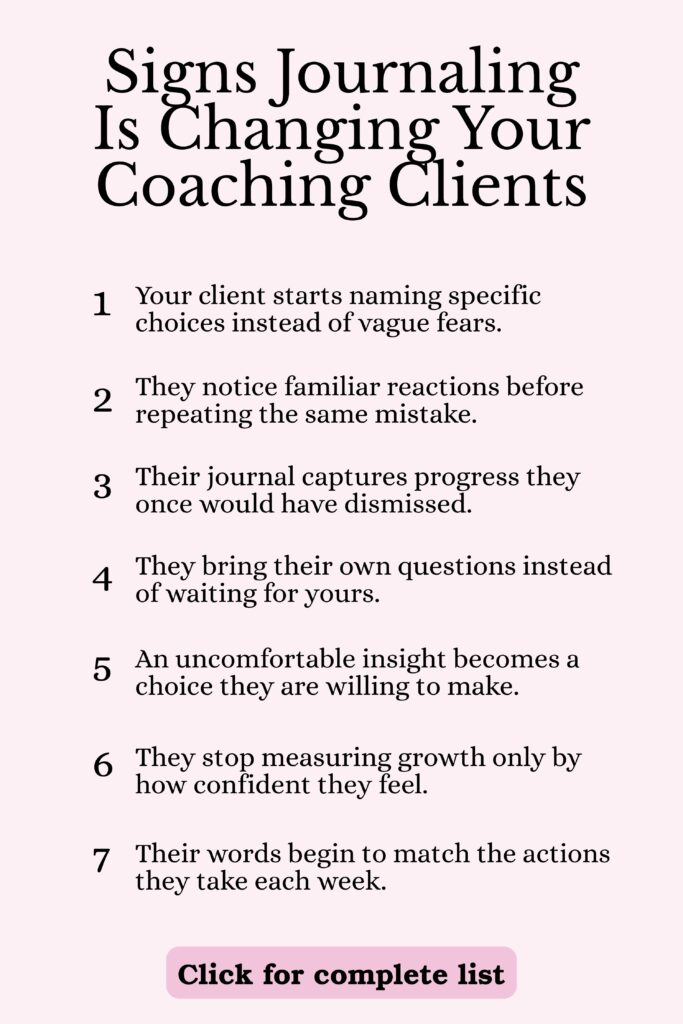
For example, a career coaching client may say they feel dissatisfied with work but cannot explain why.
SEE ALSO: If you’re a coach looking to streamline your administrative tasks and save time, check out our Coaching Administration Software. It’s a simple, effective solution designed to help you focus less on paperwork and more on what matters—coaching your clients. From scheduling to client management, our software gives you the tools to run your business efficiently. Ready to reclaim your time and boost productivity? Click or tap here.
You might ask them to spend ten minutes writing about what comes to mind when they think about their working day. They may discover that their frustration centers on limited responsibility rather than dissatisfaction with their profession.
That distinction gives you a more useful starting point for coaching.
Use guided journaling when the client has a defined challenge or goal.
Guided prompts help clients investigate a particular behavior, belief, or decision.
If that same career coaching client identifies limited responsibility as the problem, you might ask:
- When did you last want more responsibility at work?
- What prevented you from asking for it?
- What opportunities are available in your current role?
- What conversation could you initiate this week?
These questions move the client from a general feeling of dissatisfaction toward a situation they can examine and potentially change.
SEE ALSO: If you’re a coach looking to streamline your administrative tasks and save time, check out our Coaching Administration Software. It’s a simple, effective solution designed to help you focus less on paperwork and more on what matters—coaching your clients. From scheduling to client management, our software gives you the tools to run your business efficiently. Ready to reclaim your time and boost productivity? Click or tap here.
Know when to switch approaches.
A useful pattern is to begin with freewriting when the client needs to explore and move toward structured prompts as their goals become clearer.
You can also reverse the process. If a client repeatedly struggles with a structured assignment, a short freewriting exercise may help reveal an issue that your original questions overlooked.
The goal is not to produce longer journal entries. It is to help clients discover information they can use.
How Do You Write Journaling Prompts That Lead to Real Change?
Effective coaching journal prompts help clients examine a specific experience, recognize their assumptions, consider alternatives, and identify an action they can take.
A question such as “How can you become more confident?” may sound useful, but it leaves the client with a broad subject and little direction.
SEE ALSO: If you’re a coach looking to streamline your administrative tasks and save time, check out our Coaching Administration Software. It’s a simple, effective solution designed to help you focus less on paperwork and more on what matters—coaching your clients. From scheduling to client management, our software gives you the tools to run your business efficiently. Ready to reclaim your time and boost productivity? Click or tap here.
A more focused prompt asks the client to examine something that actually happened.
You can build effective prompts around four elements.
1. Experience: What happened?
Ask the client to describe a particular situation rather than summarize their personality or general habits.
For example: “Describe the last time you wanted to contribute an idea during a meeting but decided to remain silent.”
2. Interpretation: What did you believe or assume?
SEE ALSO: If you’re a coach looking to streamline your administrative tasks and save time, check out our Coaching Administration Software. It’s a simple, effective solution designed to help you focus less on paperwork and more on what matters—coaching your clients. From scheduling to client management, our software gives you the tools to run your business efficiently. Ready to reclaim your time and boost productivity? Click or tap here.
Help the client examine the thinking behind their response.
You might ask: “What did you expect other people would think if you spoke up?”
3. Alternatives: What else could you have done?
Encourage the client to consider other possible responses.
Ask: “What would you have said if you had been willing to risk someone disagreeing with you?”
4. Action: What will you try next?
SEE ALSO: If you’re a coach looking to streamline your administrative tasks and save time, check out our Coaching Administration Software. It’s a simple, effective solution designed to help you focus less on paperwork and more on what matters—coaching your clients. From scheduling to client management, our software gives you the tools to run your business efficiently. Ready to reclaim your time and boost productivity? Click or tap here.
Finish with something the client can test in everyday life.
For example: “What is one contribution you could make during your next meeting, even if you feel uncertain?”
This structure is especially useful because it connects reflection to observable behavior.
A confidence coaching client who initially writes about being afraid to speak up may later describe contributing one idea, handling a disagreement, or discovering that their expectations were inaccurate.
Those experiences give you much more useful material for subsequent coaching sessions.
You can adapt the same questioning approach to career transitions, productivity, relationships, leadership, and other coaching niches.
SEE ALSO: If you’re a coach looking to streamline your administrative tasks and save time, check out our Coaching Administration Software. It’s a simple, effective solution designed to help you focus less on paperwork and more on what matters—coaching your clients. From scheduling to client management, our software gives you the tools to run your business efficiently. Ready to reclaim your time and boost productivity? Click or tap here.
For another way to structure goal-focused reflection, the GROW Model Worksheet for Life Coaches uses Goal, Reality, Options, and Will to help clients examine their circumstances and decide what to do next.
Once you have developed several effective prompts, you can reuse them with appropriate adjustments. LCH Core supports reusable and assignable journals, allowing you to build a collection of prompts around the situations that come up repeatedly in your coaching.
Its guide to building a reusable library of coaching tools explains how to organize prompts so you don’t have to create every assignment from scratch.
How Can You Help Clients Feel Comfortable With Journaling?
Many of your clients may not feel comfortable writing. It could be that they don’t feel like competent writers, or they may not feel at ease expressing their thoughts and feelings in print.
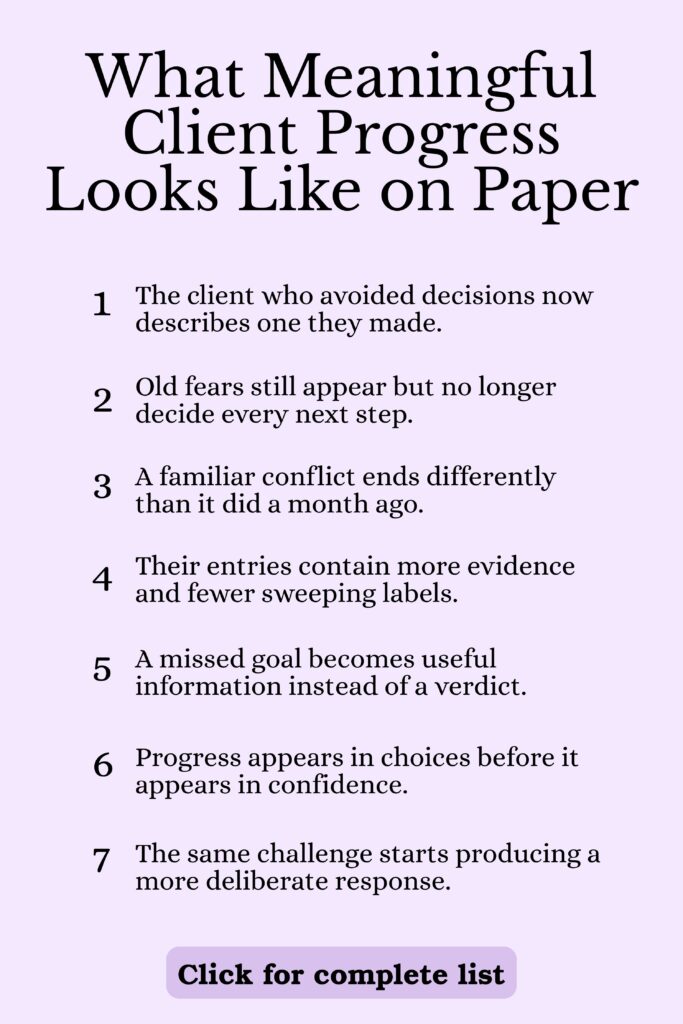
Whatever the reason for their hesitation, you can help your clients with their journaling.
First, assure your clients that their spelling and grammar don’t matter. They just need to express themselves as best they can and not worry about those little details. This isn’t school.
SEE ALSO: If you’re a coach looking to streamline your administrative tasks and save time, check out our Coaching Administration Software. It’s a simple, effective solution designed to help you focus less on paperwork and more on what matters—coaching your clients. From scheduling to client management, our software gives you the tools to run your business efficiently. Ready to reclaim your time and boost productivity? Click or tap here.
This can help many clients write with greater ease, and those who are uncomfortable with their writing skills may become more willing to participate.
You may want to see what your clients write, but journal assignments can become quite personal, and clients may not want to share everything.
Explain how you handle information they choose to share, including the confidentiality protections and limitations described in your coaching agreement.
Encourage clients to share relevant insights, but let them know that they don’t have to show you every entry.
When using digital journaling tools that support privacy settings, clients can keep entries private and share only those they feel comfortable discussing.
By not forcing clients to share, you give them more control over the process and make it easier for them to use journaling in a way that works for them.
SEE ALSO: If you’re a coach looking to streamline your administrative tasks and save time, check out our Coaching Administration Software. It’s a simple, effective solution designed to help you focus less on paperwork and more on what matters—coaching your clients. From scheduling to client management, our software gives you the tools to run your business efficiently. Ready to reclaim your time and boost productivity? Click or tap here.
How Do You Review Client Journals Without Crossing Boundaries?
Review client journals by focusing on the observations clients have agreed to discuss, rather than treating their private reflections as material you are automatically entitled to examine.
Journaling can reveal sensitive information about relationships, family circumstances, work conflicts, and personal experiences. That makes it especially important to establish clear expectations before you begin assigning journal topics.
Agree on what will be shared.
Some clients may want you to read complete entries. Others may prefer to discuss one observation or summarize what they learned.
You can establish this preference during onboarding and revisit it whenever the nature of the journaling changes.
For example, a client working on career confidence might write privately about difficult experiences with a former manager.
SEE ALSO: If you’re a coach looking to streamline your administrative tasks and save time, check out our Coaching Administration Software. It’s a simple, effective solution designed to help you focus less on paperwork and more on what matters—coaching your clients. From scheduling to client management, our software gives you the tools to run your business efficiently. Ready to reclaim your time and boost productivity? Click or tap here.
The coaching conversation does not need to explore every detail of that experience.
Instead, you might ask: “What did you notice in your writing that seems relevant to how you approach your current role?”
This keeps the discussion connected to the client’s coaching goals.
Ask questions rather than interpreting entries for the client.
A journal entry is the client’s account of an experience, not an assessment that tells you what their behavior means.
Suppose a client writes that they became angry when a colleague challenged one of their ideas.
SEE ALSO: If you’re a coach looking to streamline your administrative tasks and save time, check out our Coaching Administration Software. It’s a simple, effective solution designed to help you focus less on paperwork and more on what matters—coaching your clients. From scheduling to client management, our software gives you the tools to run your business efficiently. Ready to reclaim your time and boost productivity? Click or tap here.
Rather than concluding that the client has difficulty accepting criticism, you could ask:
- What part of that interaction stood out to you?
- What did you think your colleague was questioning?
- What would you like to handle differently next time?
These questions give the client room to examine their experience without being told what to think.
Establish confidentiality and record-handling boundaries.
The International Coaching Federation’s Code of Ethics requires ICF professionals to establish clear agreements about information sharing, explain relevant confidentiality limits, and handle records in ways that protect privacy and comply with applicable laws.
For journaling, this means clients should understand who can access their entries, what information you retain, how it is stored, and when disclosure could be legally required.
It also means recognizing the boundary between coaching and mental health treatment. A coach should not use journal entries to diagnose a client or attempt to provide therapy outside their professional competence.
SEE ALSO: If you’re a coach looking to streamline your administrative tasks and save time, check out our Coaching Administration Software. It’s a simple, effective solution designed to help you focus less on paperwork and more on what matters—coaching your clients. From scheduling to client management, our software gives you the tools to run your business efficiently. Ready to reclaim your time and boost productivity? Click or tap here.
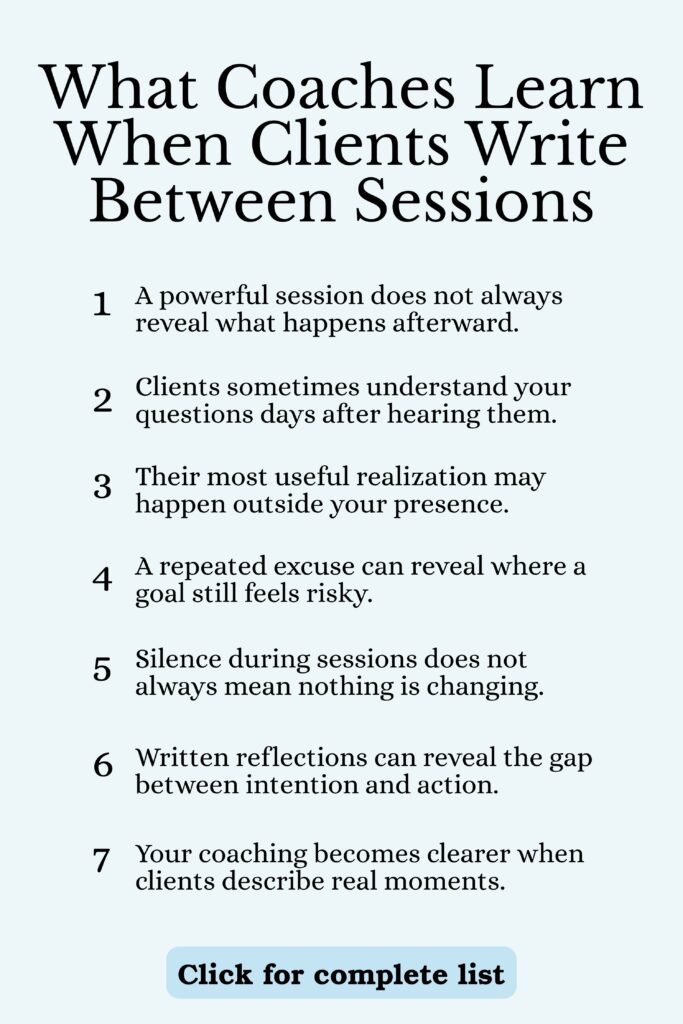
Keep the client’s goals at the center.
When a client voluntarily shares a journal entry, look for the questions, decisions, or behavioral patterns they want to explore.
You do not need access to every private thought to provide effective coaching.
In LCH Core, clients can choose whether their journal entries are private or shared. Its journaling support guide explains the available privacy settings and how coaches can review entries clients have chosen to share.
How Should You Use Journaling Differently in Group Coaching?
Group coaching journaling should give every participant a common learning objective while allowing individuals to decide how much personal information they want to share.
In private coaching, you can tailor every prompt to one client’s circumstances. Group coaching requires a different approach because participants may be at different stages of development and may not feel comfortable discussing the same personal experiences publicly.
SEE ALSO: If you’re a coach looking to streamline your administrative tasks and save time, check out our Coaching Administration Software. It’s a simple, effective solution designed to help you focus less on paperwork and more on what matters—coaching your clients. From scheduling to client management, our software gives you the tools to run your business efficiently. Ready to reclaim your time and boost productivity? Click or tap here.
Choose a shared topic with room for individual interpretation.
Suppose you are running a group coaching program on career development.
You could give everyone the same prompt: “Describe a recent professional decision you found difficult. What influenced your choice, and what would you do differently if you faced that decision again?”
Participants can explore the assignment through their own experiences without needing identical goals or circumstances.
Separate private reflection from group discussion.
Give participants time to write privately before inviting discussion.
SEE ALSO: If you’re a coach looking to streamline your administrative tasks and save time, check out our Coaching Administration Software. It’s a simple, effective solution designed to help you focus less on paperwork and more on what matters—coaching your clients. From scheduling to client management, our software gives you the tools to run your business efficiently. Ready to reclaim your time and boost productivity? Click or tap here.
Rather than asking everyone to read their entries aloud, invite volunteers to share one insight, one question, or one strategy they discovered.
For example, one participant might realize they make decisions primarily to avoid disappointing others. Another might discover they repeatedly delay decisions because they are waiting for complete certainty.
Both observations can contribute to a useful group conversation without requiring participants to disclose the circumstances behind them.
Use journaling to connect group sessions.
You can assign a recurring question at the end of each meeting and revisit the general theme at the beginning of the next one.
For example, participants in a leadership development group might reflect on one communication technique they practiced during the week.
SEE ALSO: If you’re a coach looking to streamline your administrative tasks and save time, check out our Coaching Administration Software. It’s a simple, effective solution designed to help you focus less on paperwork and more on what matters—coaching your clients. From scheduling to client management, our software gives you the tools to run your business efficiently. Ready to reclaim your time and boost productivity? Click or tap here.
At the following session, ask what they tried, what happened, and what they might adjust.
This gives the group a shared learning process while preserving individual ownership of personal reflections.
If you deliver structured group programs through courses, reusable journals can help maintain consistent assignments. LCH Core supports journaling within courses, and its guide to journaling with course members explains how participants can manage their entries and sharing preferences.
How Can You Use Journaling to Track Client Progress?
You can use journaling to track coaching progress by comparing a client’s reflections over time and looking for changes in their decisions, behavior, and ability to follow through on agreed goals.
A single journal entry shows what the client noticed at one point in time. A series of entries about the same goal can reveal patterns that are difficult to recognize in individual coaching conversations.
Start with a clear baseline.
SEE ALSO: If you’re a coach looking to streamline your administrative tasks and save time, check out our Coaching Administration Software. It’s a simple, effective solution designed to help you focus less on paperwork and more on what matters—coaching your clients. From scheduling to client management, our software gives you the tools to run your business efficiently. Ready to reclaim your time and boost productivity? Click or tap here.
When a client begins working on a goal, ask them to describe their current situation in concrete terms.
For example, a business coaching client who wants to become more confident approaching potential customers might write about their last three outreach opportunities.
Ask them to record what they did, what they avoided, and what they expected would happen.
This creates a starting point for later comparison.
Review the same goal over several weeks.
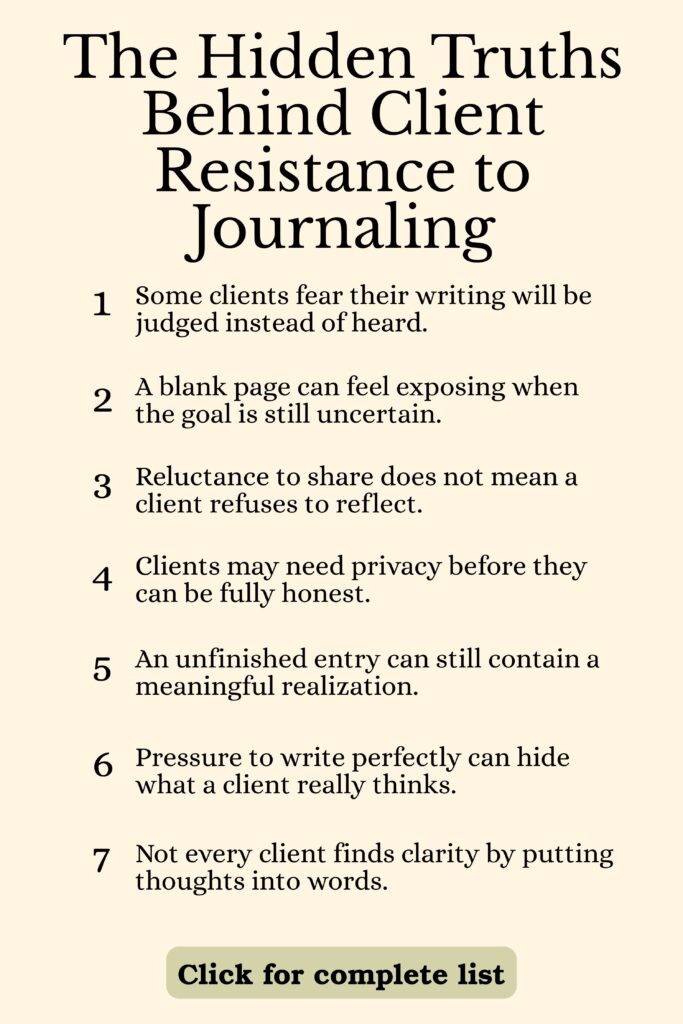
You could use a four-week review sequence:
SEE ALSO: If you’re a coach looking to streamline your administrative tasks and save time, check out our Coaching Administration Software. It’s a simple, effective solution designed to help you focus less on paperwork and more on what matters—coaching your clients. From scheduling to client management, our software gives you the tools to run your business efficiently. Ready to reclaim your time and boost productivity? Click or tap here.
- Week 1: Describe the current challenge and what usually happens.
- Week 2: Record one attempt to respond differently.
- Week 3: Examine what worked, what didn’t, and what the client learned.
- Week 4: Compare current behavior with the starting point and identify the next action.
The client might begin by writing that they avoid contacting potential customers because they expect rejection.
By the fourth week, they may be able to describe five outreach attempts, the responses they received, and how they adjusted their approach.
That provides a more useful picture than simply asking whether the client feels more confident.
Look for behavioral evidence alongside reflection.
Useful progress indicators include completed actions, decisions made, conversations initiated, or new approaches tested.
Also pay attention to changes in how specifically clients describe problems. A client who once wrote “I never manage my time well” might later identify that unplanned meetings interrupt their most important work.
SEE ALSO: If you’re a coach looking to streamline your administrative tasks and save time, check out our Coaching Administration Software. It’s a simple, effective solution designed to help you focus less on paperwork and more on what matters—coaching your clients. From scheduling to client management, our software gives you the tools to run your business efficiently. Ready to reclaim your time and boost productivity? Click or tap here.
That more precise observation can help you design a better coaching intervention.
Research supports the broader value of progress monitoring. In a 2016 meta-analysis published in Psychological Bulletin, Benjamin Harkin and colleagues examined 138 studies involving 19,951 participants and found that interventions encouraging people to monitor their progress improved goal attainment on average.
The research examined progress monitoring across different settings, not journaling in coaching specifically. Its practical implication is that recording and reviewing progress deserves a deliberate place in goal-focused coaching.
Use periodic reviews to make progress visible.
At the end of a four-week period, invite the client to compare their initial reflections with what they are doing now.
Ask what has changed, which approaches helped, and what still needs attention.
SEE ALSO: If you’re a coach looking to streamline your administrative tasks and save time, check out our Coaching Administration Software. It’s a simple, effective solution designed to help you focus less on paperwork and more on what matters—coaching your clients. From scheduling to client management, our software gives you the tools to run your business efficiently. Ready to reclaim your time and boost productivity? Click or tap here.
Journal entries can provide examples of growth, but they should be considered alongside the client’s actual behavior and agreed success measures. Writing frequently is not the same as making progress.
This also creates a useful opportunity to review the value of the coaching relationship. For a broader approach to retention and progress reviews, see A Bird in the Hand: The Simple Math of Client Lifetime Value (for Coaches).
When you use LCH Core, the Progress Stream helps you review coaching tools and client activity in one place. The Engagement Report provides a broader view of client participation, helping you notice when someone has become less active.
These tools answer different questions. Journaling helps you explore what the client is learning, while engagement information helps you assess whether the client is participating in the coaching process.
The Progress Stream support guide and Engagement Report guide explain how to review this information.
Where LCH Core Fits
LCH Core helps you incorporate journaling into coaching by connecting client reflections with the goals, action items, and progress reviews that are already part of your coaching process.
SEE ALSO: If you’re a coach looking to streamline your administrative tasks and save time, check out our Coaching Administration Software. It’s a simple, effective solution designed to help you focus less on paperwork and more on what matters—coaching your clients. From scheduling to client management, our software gives you the tools to run your business efficiently. Ready to reclaim your time and boost productivity? Click or tap here.
The practical advantage is that journaling doesn’t have to operate as a separate activity with no clear connection to your sessions.
You can build a simple workflow around the tools you use most often.
Create and assign journals.
Develop prompts around common coaching challenges such as career decisions, time management, confidence, leadership, or accountability.
You can reuse effective prompts with other clients and adapt them when a particular situation calls for a different approach.
Connect reflection to goals and action items.
SEE ALSO: If you’re a coach looking to streamline your administrative tasks and save time, check out our Coaching Administration Software. It’s a simple, effective solution designed to help you focus less on paperwork and more on what matters—coaching your clients. From scheduling to client management, our software gives you the tools to run your business efficiently. Ready to reclaim your time and boost productivity? Click or tap here.
If a client’s journal reflection identifies something they want to change, help them turn that observation into a specific commitment.
For example, a client who recognizes they avoid difficult conversations might agree to prepare for one conversation and record what happens afterward.
Review activity and progress.
Use the Progress Stream to follow the coaching activities and responses clients choose to share.
The Engagement Report can help you see whether clients are continuing to participate between appointments. If engagement decreases, you have a reason to check whether the assignments remain useful, realistic, and connected to their goals.
Make journaling part of a repeatable coaching process.
SEE ALSO: If you’re a coach looking to streamline your administrative tasks and save time, check out our Coaching Administration Software. It’s a simple, effective solution designed to help you focus less on paperwork and more on what matters—coaching your clients. From scheduling to client management, our software gives you the tools to run your business efficiently. Ready to reclaim your time and boost productivity? Click or tap here.
A career coach, for example, might assign a weekly reflection on professional decisions, connect each entry to one action item, and conduct a more detailed progress review after four sessions.
For coaches delivering structured courses, journals and worksheets can also provide reflection activities that connect learning material to practical application.
You can see how these features work in the LCH Core Coaching Tools video tutorial or follow the step-by-step journaling instructions.
The purpose is to give clients a consistent way to reflect, take action, and recognize how their coaching work is developing over time.
Frequently Asked Questions About Journaling in Coaching
How often should a life coach ask clients to journal?
A weekly journaling assignment is a practical starting point for many coaching relationships. You can increase or reduce the frequency based on the client’s goals, the type of exercise, and how the reflections are being used. A focused entry connected to a current challenge is often more useful than frequent writing with no clear purpose.
What are the best journaling prompts for life coaching clients?
The most useful coaching journal prompts connect to a specific goal, experience, or decision the client is working through. Questions such as “What did you try this week?”, “What influenced your response?”, and “What will you do differently next time?” encourage reflection that can feed directly into coaching sessions.
SEE ALSO: If you’re a coach looking to streamline your administrative tasks and save time, check out our Coaching Administration Software. It’s a simple, effective solution designed to help you focus less on paperwork and more on what matters—coaching your clients. From scheduling to client management, our software gives you the tools to run your business efficiently. Ready to reclaim your time and boost productivity? Click or tap here.
How long should a coaching journal entry be?
A coaching journal entry can be as short as a few sentences if it captures a useful observation. A five-to-ten-minute writing exercise is a reasonable starting point for clients who are new to journaling. The quality and relevance of the reflection matter more than its length.
What should a coach do if a client doesn’t complete their journaling assignments?
A coach should explore why the assignment wasn’t completed and decide with the client whether to adjust it. Ask whether the prompt was relevant, whether the time commitment was realistic, and whether a different reflection method would be more useful. Repeatedly missed assignments may indicate that the exercise needs to change.
Should life coaches read their clients’ journal entries?
Life coaches should read journal entries only when clients have agreed to share them. Some clients benefit from discussing full entries, while others prefer to summarize their reflections verbally. Sharing expectations, confidentiality limits, and privacy arrangements should be established before journaling becomes part of the coaching process.
Can journaling replace coaching sessions?
Journaling can supplement coaching sessions, but it does not provide the same interactive questioning, feedback, and collaborative exploration as a coaching conversation. It is particularly useful between appointments, when clients have opportunities to observe their behavior, test new approaches, and prepare questions for their coach.
How can coaches tell whether journaling is helping clients achieve their goals?
Coaches can evaluate journaling by looking for changes in client observations, decisions, and actions over time. Compare earlier entries with later reflections, review completed commitments, and ask clients which insights have influenced their behavior. Journal activity alone does not establish progress, so it should be considered alongside agreed goals and observable results.
How Can You Get Your Clients Started With Journaling?
Journaling is a great tool that can help you and your clients. Hopefully these tips on how to come up with journaling topic ideas and how to encourage your clients will help.
SEE ALSO: If you’re a coach looking to streamline your administrative tasks and save time, check out our Coaching Administration Software. It’s a simple, effective solution designed to help you focus less on paperwork and more on what matters—coaching your clients. From scheduling to client management, our software gives you the tools to run your business efficiently. Ready to reclaim your time and boost productivity? Click or tap here.
This is such a valuable skill that can benefit your clients far beyond their coaching. Journaling can help them continue examining their decisions, recognizing patterns, and working through challenges long after a coaching program ends.
You don’t need to introduce complicated assignments to begin. Choose one question connected to your client’s current goal, give them time to reflect, and discuss what they discovered during your next session.
As clients become more comfortable with the process, you can introduce guided prompts, action-focused reflections, and periodic progress reviews.
The real value comes from what clients do with their reflections. When journaling helps them recognize an unhelpful pattern, make a decision, or follow through on a commitment, it becomes a practical part of the coaching relationship.
For a simple way to organize journals alongside goals, action items, and progress tracking, try LCH Core free and start building a repeatable journaling process for your clients.
Sources
Harkin, Benjamin, et al. “Does Monitoring Goal Progress Promote Goal Attainment? A Meta-Analysis of the Experimental Evidence.” Psychological Bulletin, vol. 142, no. 2, Feb. 2016, pp. 198–229. American Psychological Association, https://doi.org/10.1037/bul0000025. Available through PubMed.
SEE ALSO: If you’re a coach looking to streamline your administrative tasks and save time, check out our Coaching Administration Software. It’s a simple, effective solution designed to help you focus less on paperwork and more on what matters—coaching your clients. From scheduling to client management, our software gives you the tools to run your business efficiently. Ready to reclaim your time and boost productivity? Click or tap here.
International Coaching Federation. “ICF Code of Ethics.” International Coaching Federation, effective 1 Apr. 2025, https://coachingfederation.org/credentialing/coaching-ethics/icf-code-of-ethics/.

Read this next

Killer Coaching Questions: 36 Powerful Queries by Niche (+ PDF)
Being an effective life coach requires asking the right things. Make sure to stock up with killer coaching questions!
Read More
Coaching Techniques: Asking Life Coaching Questions
Help your clients gain clarity by playing devil’s advocate when asking coaching questions.
Read More
Good Listening Habits to Develop as a Coach
Three core strategies to help you listen to your coaching clients better.
Read More